You are here
G2. Local Greens
Hidden Heroes 2026: Champions Empowering Communities for Action
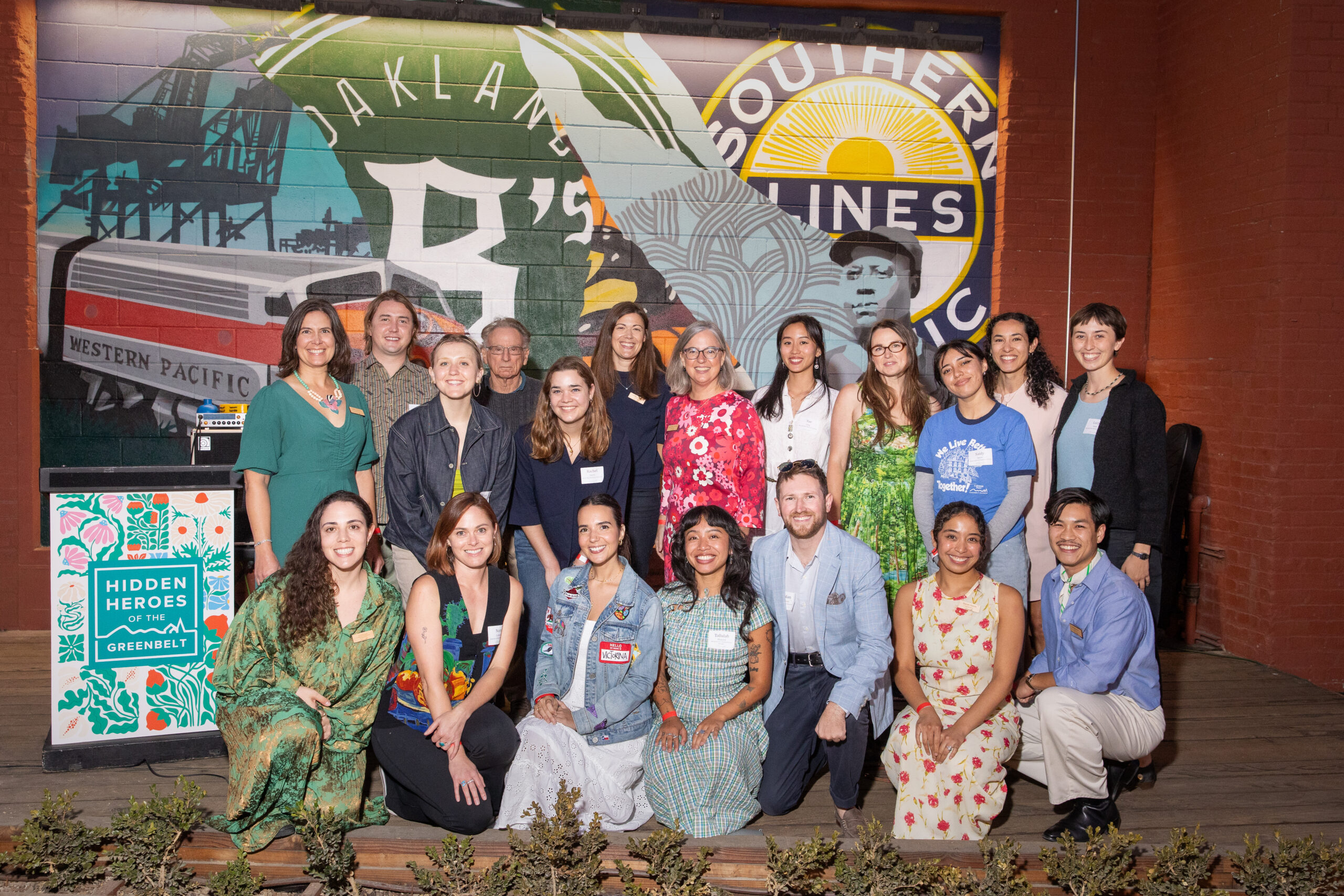
On September 23, more than 200 people came together at Prescott Market in West Oakland for the 6th Annual Hidden Heroes of the Greenbelt Benefit and Awards, an evening celebrating the people working tirelessly behind the scenes to make our Bay Area communities more resilient to climate change.
Relive the highlights of the evening CHECK OUT THE FULL ALBUM A Celebration of CommunityHidden Heroes is about more than the people we honor. It’s a gathering for everyone who believes this work matters: neighbors, advocates, funders, and friends who show up year after year because they know the Bay Area’s future depends on people like this.
Throughout the evening, guests explored virtual reality experiences from Virtual Planet and connected with our tabling partners Hood Planning, Watershed Project, and REAP Climate Center. We’re proud to work alongside organizations like these to advance our shared mission across the region.
We’re also incredibly grateful to the 35 sponsors who helped make this celebration possible and raised funds to advance our mission-driven work.
Support goes far beyond one evening. It helps us continue the work of protecting our region’s open spaces, advancing climate resilience, and building a Bay Area where people and nature can thrive together. You can contribute today to accelerating our mission-driven work. Donate here.
To every sponsor, guest, partner, volunteer, and supporter who helped make the night happen: Thank you.
Championing HopeLocal government workers rarely receive public recognition, yet their work directly shapes how millions of Bay Area residents experience climate impacts and housing security. From county-wide plans to tackle flooding from sea level and groundwater rise to infrastructure conversion to provide housing for vulnerable populations, these leaders are spearheading the plans and initiatives that protect millions of people in the Bay Area from the impacts of the combined climate and housing crises.
This year, we celebrated three outstanding local government leaders for pioneering solutions at the intersection of climate resilience and land use:
Kate HagemannClimate Adaptation and Resilience Planner, City of San Rafael
Kate was honored for her work advancing climate change resilience and adaptation planning, helping communities prepare for the challenges of a changing climate.
Wayne ChenDirector of Housing Department,
City of Mountain View
Wayne was recognized for his work promoting climate-smart housing and demonstrating how housing and climate resilience can be part of the same conversation.
Ryan HernandezAssistant Deputy Director,
Contra Costa County
Ryan was honored for his work advancing nature-based climate adaptation, showing how nature itself can be an important part of how communities respond to a changing climate.
Some evenings stay with you. An evening with Kate, Wayne, and Rayne will do that you: leave you convinced that the Bay Area is in good hands, and those hands are busy.
The Power to Make a Difference Is LocalAt a time when we’re seeing rollbacks on the federal level, Hidden Heroes reminds us that there is still so much we can do, right here at home.
That’s what Hidden Heroes is all about: we shine a light on the people making a difference in their communities, spark curiosity and action elsewhere, and prove that local action matters, especially when the work ahead is urgent.
Thank you for celebrating with us, supporting our mission, and being part of a community that believes we can make a difference right here at home.
The work continues. And we’re in it together.
.elementor-39197 .elementor-element.elementor-element-3007a9da > .elementor-element-populated{padding:30px 0px 30px 0px;}.elementor-39197 .elementor-element.elementor-element-7b48ef7d > .elementor-widget-container{padding:0px 0px 30px 0px;}.elementor-39197 .elementor-element.elementor-element-7b48ef7d{text-align:center;}.elementor-39197 .elementor-element.elementor-element-7b48ef7d .elementor-heading-title{font-size:35px;color:var( --e-global-color-54e1dff );}.elementor-39197 .elementor-element.elementor-element-6604725c{text-align:center;}.elementor-39197 .elementor-element.elementor-element-517afbb{text-align:center;}.elementor-39197 .elementor-element.elementor-element-26d468b{text-align:center;}.elementor-39197 .elementor-element.elementor-element-96da833{text-align:center;}.elementor-39197 .elementor-element.elementor-element-b5671ce{text-align:center;} THANKS TO OUR 2026 HIDDEN HEROES SPONSORS Climate Advocate Sponsors Land Steward SponsorsEast Bay Municipal Utility District | East Bay Regional Park District | Housing Action Coalition | Marin Community Energy (MCE) | The Morley Bros | Skidmore, Owings & Merrill LLP | SPUR | Triad Development
Community Friend SponsorsAlta Housing | Brookfield Properties | Eden Housing | Fairbank, Maslin, Maullin, Metz & Associates | Hanson Bridgett LLP | HOK | MidPen Housing | Nonprofit Housing Association of Northern California | PlaceWorks | Port of San Francisco | San Francisco Bay Area Rapid Transit District – BART | Santa Clara Valley Open Space Authority | Santa Clara Valley Water District | SCAPE Landscape Architecture | Second Nature Ecology + Design | Singer Associates Public Relations | Shute, Mihaly & Weinberger LLP | SOMO Village | Sonoma County Agricultural Preservation & Open Space District | Sonoma Land Trust | Team CivX | The Nature Conservancy | WRT
Greenbelt Ambassador SponsorEnterprise Community Partners | Mithun
The post Hidden Heroes 2026: Champions Empowering Communities for Action appeared first on Greenbelt Alliance.
Scientists and Skeptics Gathered at Climate Week NYC for Serious Exploration of Solar Geoengineering
NEW YORK, NY – Once a fringe topic in the climate community, a solar reflection methods (SRM) educational event hosted by the Chesapeake Climate Action Network (CCAN) convened nearly 100 scientists, policymakers, civil society organizations, and other climate leaders at Climate Week NYC on Wednesday, September 23.
Traditionally discussed primarily in technical and academic settings, SRM is increasingly prompting broader public-policy debate. This week, CCAN’s SRM Research Hub Crawl: Building a Community for Responsible Research and Governance demonstrated a growing demand for a seat at the table as the research moves forward. While SRM is not a substitute for rapidly cutting greenhouse gas emissions, participants explored how research, public engagement, oversight, and governance should shape any consideration of the field.
“Climate change is already forcing societies to confront difficult choices, and at the same time SRM research is growing,” said Quentin Scott, Senior Federal Policy Director at CCAN. “That does not mean deployment is inevitable or desirable. It means the public deserves a transparent, inclusive conversation about what research is taking place, what uncertainties remain, and what governance safeguards would be required. Decisions about whether, how, and under what conditions research proceeds must be informed by rigorous science, strong safeguards, public accountability, and the people most affected by climate change.”
At the “Hub Crawl,” participants moved between interactive “hubs” hosted by participating organizations. The hubs examined the science of SRM, emerging governance frameworks, policy debates, and approaches to meaningful public engagement. CCAN’s convening created space for participants with different perspectives to engage directly with the research and governance challenges surrounding the topic.
The Federation of American Scientists (FAS), one of the nation’s leading science-policy organizations, joined CCAN as a co-host. “The science is clear: from glacier collapse and flash flooding in the Himalayas to unbearable heat around the world, climate change is making our world more extreme and more dangerous,” said Dr. Hannah Safford, Associate Director of Climate and Environment at FAS. “We owe it to ourselves, our neighbors, and our kids to rigorously, responsibly explore tools like SRM that could help reduce climate risks, even as we continue to ramp up mitigation and adaptation. CCAN has been a leader in this work, and we look forward to continued collaboration.”
“I’ve been following the field of solar radiation modification closely since 2010, from conferences to field experiments,” said Ben Kalina, Director and Producer of Plan C For Civilization Documentary. “It’s always been dangerously shrouded in mystery, dominated by a small number of researchers and personalities. But then came the SRM Hub Crawl. Not only was it designed with the public as the audience rather than the usual suspects of insiders, but it was FUN. Standing on the roof, talking about the earth’s reflectivity, it was like a Sci-Fi mini-convention sharing what we’ve learned – and what we don’t know – with a curious and questioning climate week community.”
Through this event and other convenings on SRM, CCAN continues to move the needle on climate intervention technology discussions. Participating organizations included: Federation of American Scientists, University of Chicago, Reflective, Degrees Initiative, Alliance for Just Deliberation on Solar Geoengineering, Environmental Defense Fund, Plan C For Civilization Documentary, and SRM360.
###
Chesapeake Climate Action Network is the first grassroots organization dedicated exclusively to raising awareness about the impacts and solutions associated with global warming in the Chesapeake Bay region. Founded in 2002, CCAN has been at the center of the fight for clean energy and wise climate policy in Maryland, Virginia, Washington, DC and beyond.
The post Scientists and Skeptics Gathered at Climate Week NYC for Serious Exploration of Solar Geoengineering appeared first on Chesapeake Climate Action Network.
The Hub 9/25/2026: Clean Air Council’s Weekly Round-up of Transportation News
“The Hub” is a weekly round-up of transportation related news in the Philadelphia area and beyond. Check back weekly to keep up-to-date on the issues Clean Air Council’s transportation staff finds important.
It’s the last week of the Pretzel Pedal Challenge! Log your bike rides during September to automatically earn points that qualify you for gift card drawing and prizes! Create a Share-A-Ride profile to join!
Week Without Driving starts next week Thursday, October 1st. There are a few events that Philadelphians can take part in during this week. Click here for how to get involved!
Image Source: WHYYWHYY: SEPTA unveils wishlist for improvements and upgrades, but no sign of funding to make it happen – SEPTA released a list of goals and ideas in their “Accelerate” plan this week. Accelerate highlights the ideal future for SEPTA if there was a more reliable funding source from the state. Accelerate focuses on a few main ideas: increasing the number Philadelphians served with frequent transit, increasing the number of accessible stations, and connect more jobs in the city with frequent transit. The lack of dedicated funding sources has stalled long-term improvements to the system.
Image Source: WESA NPRWESA NPR: Pittsburgh transit advocates call for bolder plan, ask riders to weigh in on bus line update – Pittsburgh’s Bus Line Refresh, a cost-neutral plan, will rework service to improve and boost ridership. Routes with low ridership are in danger of being cut, but transit advocates warn against cutting people off from service. Pittsburgh Regional Transit faces a fiscal cliff at the end of this state budget year without a dedicated funding source from the PA Legislature. Comments are requested to improve the plan by September 30 and can be submitted here.
Image Source: The InquirerThe Inquirer: SEPTA got 24 commuter trains from Montreal, but it could be months before you can ride one – SEPTA purchased surplus train cars from Montreal’s transit system, and they have arrived in PA. The cars are in Malvern for some modifications before joining the Regional Rail fleet late this year. SEPTA avoided paying the estimated $3.5 million extra in tariffs after research showed U.S. Customs and Border Protection that the cars were not subject to import duties.
Other StoriesTransit Forward Philadelphia: We Rode Transit for 24 Hours!
Philadelphia Today: Roosevelt Boulevard Gets $134M in Upgrades as Subway Debate Continues
Philly Tribune: SEPTA’s new bus network drives ridership growth across city
Formal complaint against Environment Agency on Burniston permit
A formal complaint has been made against the Environment Agency (EA) over the way it has handled plans for gas drilling and lower-volume fracking at Burniston in North Yorkshire.
Campaign poster in Burniston. Photo: DrillOrDropThe complaint, by campaigner Dennis May, said the EA had provided “inaccurate, inconsistent and contradictory information”.
He called for the withdrawal of the current consultation on a draft decision by the EA to grant an environmental permit for the site.
He also said there should be a review of onshore oil and gas permitting in England and the EA should establish scientific definitions that were then universally applied.
The EA has been criticised locally and nationally for the Burniston draft decision document, published on 3 August 2026.
Yesterday, Friends of the Earth formally objected to the decision. Last week, DrillOrDrop reported on concerns that the draft decision document contained errors, uncertainty and missing information.
This morning, the EA announced on its website that the Burniston permit consultation, due to end on 26 September 2026, would close instead 25 days later on 21 October 2026. There was no explanation about why the consultation had been extended.
DrillOrDrop asked the EA why it had delayed the closing date. We have received no response.
“Not acting in the public interest”Mr May, a member of the Nottinghamshire campaign group Frack Free Misson, accused the EA of failing to act in the public interest and of regarding the public consultation as “a mere formality, irrespective of evidence”.
In his complaint, submitted last week, he said:
“The EA has conveyed inaccurate, inconsistent and contradictory information to the public.”
He said the EA had “aligned with misleading, confected, and conflated terminology employed by the applicant”, Europa Oil & Gas plc.
He also said the EA had failed to remain impartial and had “fallen short of its stated aims to provide information correctly, clearly and in a professional manner”.
Mr May added:
“It is disappointing a statutory regulator has allowed the applicant to set the standard of its discourse with the public. In this, the EA could be seen as acting under the influence of lobbyists and thereby not in the public interest.”
He concluded:
“It is a reasonable expectation for a statutory regulator to demonstrate a consistent and structured scientific approach to the processes it oversees; such is clearly not evident in this case. A recognisable and structured taxonomy, containing terms with robust definitions is a primary requirement.
“Given this evidence, the current consultation should be withdrawn while a review of onshore oil and gas permitting is conducted, with the aim of establishing robust, scientific definitions and parameters, set by the regulator and universally applied.”
The Environment Agency has said it will respond to the complaint within 20 working days (approximately 16 October 2026). DrillOrDrop will report on the response.
DetailsMr May’s complaint focuses on three main areas:
Inconsistent and contradictory informationThe complaint gave examples from the draft decision document and draft permit including:
- Contradictory information on the type of hydraulic fracturing fluid to be used
- Contradictory information on which formations would be fracked
- Misidentification of the purpose and targets of the permit application
- Inconsistent and contradictory use of terms to explain the proposed fracking process
Mr May said:
“Such a lack of accuracy and precision in terms of identifying both target formations and the nature of the fracturing fluid is a failure to correctly and professionally convey the most basic of information, a fundamental requirement of any public agency.”
Incorrect and misleading informationThe complaint said the draft decision document and draft permit contained incorrect and vague terminology. It said:
“EA propagated and/or failed to amend both incorrect and misleading information regarding the scale of intended operations along with a misconception of the terms ‘conventional’ and ‘unconventional.’”
It accused the EA of being “party to a PR exercise, a role which a statutory regulator should not be involved in”. The complaint added:
“The use of vague, undefined terms is unscientific and thereby inappropriate.”
Mr May said:
“The granting of permits should be undertaken impartially, in a logical, scientific and evidence-based manner. Appropriate terminology should also be framed around a recognisable taxonomy so based, not adopted to suit the whims of an applicant’s PR campaign. To do otherwise could compromise the EA’s position in enforcement proceedings.”
Lack of definition and denialThe complaint also said the EA’s responses to an earlier consultation, summarised in the draft decision document, continued to “perpetuate the lack of definition, misleading information and denial that the target formations are unconventional”.
Mr May said this included:
- Lack of distinction between well and reservoir stimulation
- Arbitrary use of the term proppant squeeze across well and reservoir stimulation
- Claims that seismicity [earthquakes] occurred in previous shale fracks because of the use of “far higher injection volumes” compared to what is proposed at Burniston
On the third example, Mr May said this was not based on fact because the quantities proposed at Burniston were similar stage volumes to those used in fracking at Cuadrilla’s PNR2 well in Lancashire in 2019 that led to earthquakes and a moratorium on associated hydraulic fracturing in England.
He said the EA had:
“adopted a position whereby it is relying upon what has proven to be ineffective shale gas legislation, with thresholds which have never been attained, as a datum upon which to base its assessment of risk.”
EA under fireThe Burniston complaint is the second current challenge to the EA on its permit process in the onshore oil and gas sector in England.
In East Yorkshire, another campaigner, Peter Lomas, is seeking a judicial review of the decision by the EA to grant a permit variation allowing lower-volume fracking at the West Newton-A site.
Yesterday, we reported that Mr Lomas had also applied to the High Court for an interim injunction to stop the fracking operation at West Newton until his legal challenge with the EA had been decided.
STATEMENT: New analysis finds 99.0 percent of public comments oppose Travel Management Rule rewrite
DENVER—A new analysis by the Center for Western Priorities found that 99.0 percent of the 134,312 public comments posted on the U.S. Forest Service’s (USFS) proposed revision of the Travel Management Rule oppose the Trump administration’s plan. The 30-day comment period closed September 23.
USFS manages more than 380,000 miles of roads and 165,000 miles of trails. The 2005 Travel Management Rule requires national forests to designate the roads, trails, and areas open to motor vehicles and keeps other routes closed. The proposed revision to the rule would reverse that, presuming existing roads, trails, airfields, and other access routes are open to motorized vehicles by default unless a closure is required by law or justified by documented resource, safety, use-conflict, or maintenance concerns. It would also require annual review of every closed or highly restricted route, and allow aerial imagery to serve as evidence that a route existed. It also proposes new rules for e-bike use and off-route motor vehicle use for big-game retrieval, firewood collection, and dispersed camping.
Key findings:-
99.0 percent of posted comments opposed the revision
-
0.4 percent supported it
-
0.6 percent were neutral or off-topic
-
Of the 0.4 percent of comments supporting the revision, nearly a third supported it solely because of the proposal to reclassify Class 1 e-bikes as non-motorized vehicles
The Center for Western Priorities released the following statement from Creative Content and Policy Manager Lilly Bock-Brownstein, who performed the analysis:
“Once again, Americans have shown up in overwhelming numbers to oppose reckless actions on public lands. The Trump administration asked the public whether every road and trail in our national forests should be open to motorized vehicles by default, and the answer was a resounding no.
“There are places where motorized vehicles belong and places they don’t. The American public clearly gets it. But the Trump administration either doesn’t understand, or doesn’t care.”
The results align with earlier CWP analyses that found universal opposition to the Trump administration’s public lands rollbacks. In September 2025, more than 99 percent of approximately 183,000 comments opposed repealing the Roadless Rule. In November 2025, 98 percent of comments opposed rescinding the Bureau of Land Management’s Public Lands Rule. The Forest Service is currently accepting public comments on the proposal to rescind the 2001 Roadless Rule, which protects the more than 44 million acres of national forest land outside of Colorado and Idaho, where state-specific roadless rules apply. The agency extended that comment period deadline to October 6. Comments can be submitted on regulations.gov.
Methodology:CWP downloaded all 134,312 comments posted to docket FS-2026-0100 on regulations.gov as of September 24, 2026, 07:57 AM MT. Each comment was classified as supporting, opposing, or neutral/off-topic using a combination of keyword matching and a large language model. CWP staff manually audited the labels on a random sample of 300 comments, which oversampled for “support” and “neutral/off-topic” comments. The audit revealed a labeling accuracy rate estimated at 99.9 percent accurate.
Learn more:-
Trump wants to open nearly all national forest trails to dirt bikes and ATVs — Grist
-
Off-roading on federal lands in Colorado could expand with expected Trump reversal — The Colorado Sun
-
USFS’s own analysis shows Roadless Rule repeal would harm wildlife, water, and rural communities — Westwise
-
Comment analysis finds over 99% opposition to repealing 2001 Roadless Rule — Center for Western Priorities
The post STATEMENT: New analysis finds 99.0 percent of public comments oppose Travel Management Rule rewrite appeared first on Center for Western Priorities.
Vote Yes for the Regional Transit Measure (RTM)
After a successful signature-gathering campaign by Connect Bay Area, the Regional Transit Measure (RTM) will appear on the November ballots for many Bay Area voters, and Greenbelt Alliance is excited to endorse a YES vote on RTM.
If the Regional Transit Measure passes, the roughly $1 billion in revenue per year will support public transit agencies’ improvements to safety, cleanliness, convenience, seamless integration of transit services, and specific capital projects. The new revenue will be sourced from a 1% sales tax in San Francisco County and a 0.5% sales tax in Santa Clara, San Mateo, Alameda, and Contra Costa counties.
The measure aims to prevent catastrophic funding cuts that could impact regional public transit as soon as 2027. These major impacts will particularly hurt BART, Muni, AC Transit, and Caltrain, but will have many downstream consequences for our entire region. If we don’t approve it, the Bay Area will lose its transit backbone, making our weekly commutes longer, causing a dramatic increase in pollution, and leaving us with less time to be with our friends and family.
RTM supports a resilient and sustainable future where our communities are able to use public transit with ease, and we can protect our environment from further greenhouse gas emissions from cars. Please join Greenbelt Alliance, alongside organizations such as 350 Bay Area, SPUR, and Public Advocates, in endorsing the Regional Transit Measure! Vote YES on RTM in November to save the Bay Area’s public transit and fight against climate change.
Additionally, learn more about Proposition H in San Francisco to further strengthen the Muni transit system in San Francisco.
Why It MattersThe Bay Area is facing its biggest threat to public transportation in decades. With a looming fiscal cliff, major transit agencies—including BART, Muni, Caltrain, and AC Transit—may soon have to make difficult decisions to close stations, reduce frequencies, and shorten hours of operation.
To avert this looming crisis, a coalition of advocates came together to launch the Connect Bay Area campaign. Earlier in May, the campaign announced it collected more than 305,000 signatures to qualify a regional transit funding measure for the November ballot—crushing the minimal threshold of 186,000 required signatures.
Greenbelt Alliance was proud to be part of this grassroots coalition and endorse the Connect Bay Area Campaign.
How We Got Here"The Bay Area's public transit is a core pillar of our region's ability to usher in a climate-smart, affordable, and just future. Greenbelt Alliance is excited to be a part of this grassroots coalition to help protect and enhance our public transportation and reduce pollution."
Amanda Brown-Stevens, Executive DirectorFunding for transit agencies in the Bay Area relies heavily on fares and local revenue sources, so when the COVID-19 pandemic hit and ridership plunged, a substantial amount of that funding disappeared. For a while, agencies were able to stay afloat due to the federal relief stimulus, but that has quickly dried up, and California has not stepped in to address those deficits. Without yearly State funding and with ridership only slowly recovering to pre-pandemic levels, agencies are not seeing the revenue needed to continue operating at full capacity.
To put this into perspective, here is what will happen in 2027 if we do not pass the transit measure:
Bay Area Rapid Transit (BART)- Red and Green lines will be phased down to just peak hours in January 2027. The Grey line will close at this time, too. The blue line will close in July 2027.
- 15 stations with the lowest ridership will close, including Millbrae and Warm Springs, by July 2027.
- 70% reduction in train hours and 25% reduction in system miles by July 2027.
- 30% fare increase in January 2027, and a 50% increase in July 2027.
- The agency will face a $355-$385 million budget deficit (30% of the operating budget)
- Without a funding pathway by mid-2028, BART may have to stop all operations. See more details here.
- There will be a 50% cut of Muni services
- There will be an elimination of fare discounts and pass programs for youth and seniors
- The agency will face a $322-$398 million budget deficit (25% of the operating budget)
- There will be a nearly 40% cut to services
- The agency will face a $51-$72 million budget deficit (10% of the operating budget)
- The agency will run 1 train per hour and cut all weekend service
- The agency will face a $65-$76 million budget deficit (42% of the operating budget)
These monumental disruptions to operations are direct consequences of the fiscal cliff. However, it does not account for the myriad ramifications down the road for managing traffic, tackling climate change, meeting our housing needs, and ensuring an affordable California for all.
“Fuming” with Greenhouse GasesWith 41% of California’s greenhouse gas emissions coming from the transportation sector, losing major parts of our public transit system will allow for even more cars on the road and weaken our ability to fight the climate crisis. Without BART, drivers can expect their commute to extend by 12 more hours per week and see traffic across the Bay Bridge surging by 73%. This means less time with family and friends doing the things we love.
In the long term, this may lead to worsening climate hazards, including droughts, flooding, and wildfires. More cars will also be a direct threat to our health and well-being, causing more air pollution, compromising air quality, and increasing respiratory-related illnesses. By maintaining our public transit system, we can reduce GHG emissions and avoid these catastrophic changes to our communities.
Communities Connected to TransitThree words encapsulate our housing abundance strategy: transit-oriented development (TOD). In the last two decades, many urbanists have turned their attention to creating walkable, affordable, and resilient communities that are well-connected to the places where people work, study, and play. A cornerstone of this vision is built on the idea that we should promote more homes near our public transit corridors.
BART TOD projects like MacArthur Station provide residents access to the vibrant Temescal neighborhood, while allowing easy access to commute to downtown Oakland or San Francisco. Even new project proposals like the Caltrain-adjacent Hillsdale Reimagined in San Mateo demonstrate the durability of TOD in renovating underutilized buildings and turning them into lively community spaces.
That is why Greenbelt Alliance co-sponsored Senate Bill 79 in the California legislature, which makes it easier and faster to build homes near public transit. While SB 79 is now law, the risks of public transit’s fiscal cliff diminish the law’s application by making fewer sites viable for TOD upzoning. Other proposed TOD projects funded by transit agencies will likely be reevaluated, too. This could all delay much-needed affordable housing in the Bay Area and worsen the housing crisis.
Saving public transit goes far beyond just our means of commuting. A healthy public transit system reduces traffic, protects us from pollution, reduces GHG emissions, creates resilient neighborhoods, and supports new housing.
This November, vote YES on the Regional Transit Measure.
The post Vote Yes for the Regional Transit Measure (RTM) appeared first on Greenbelt Alliance.
Vote Yes on Proposition H to Keep Muni Going Strong in San Francisco
For healthier and well-connected communities, Greenbelt Alliance encourages voters in San Francisco to say YES to Proposition H to secure funds for Muni and keep light rail, buses, and cable cars running.
Proposition H, or Stronger Muni for All, is focused on providing financial support for public transit in San Francisco and preventing a once-in-a-generation funding crisis. The proposition will address Muni’s major annual deficit of over $300 million and ensure that the agency is safe, reliable, and affordable. If it passes, Prop H would establish a fair tiered parcel tax that charges 95% of single-family residences a flat $129 annual fee. Larger homes would pay progressively more, and the largest commercial properties would pay up to $400,000 annually. This ensures that average San Franciscans are not burdened by higher taxes while the biggest properties are paying the most.
Along with organizations such as Transform, SF Transit Riders, and the Sierra Club, we endorse Prop H because a healthy, resilient, interconnected, and sustainable future necessitates a strong public transit system.
This ballot measure is complementary to the Regional Transit Measure (RTM)‘s goals and will support the region by significantly reducing traffic congestion, reducing greenhouse gas emissions, and protecting downtown and citywide economic recovery. Vote YES to save Muni and protect our environment.
Photo: L Taraval shuttle bus during Twin Peaks Tunnel construction. By Pi.1415926535 – Own work, CC BY-SA 3.0, https://commons.wikimedia.org/w/index.php?curid=69525140
The post Vote Yes on Proposition H to Keep Muni Going Strong in San Francisco appeared first on Greenbelt Alliance.
Vote No on Measure G to Keep Sunset Dunes Park Open in San Francisco
Greenbelt Alliance says NO to Measure G in San Francisco to save the Sunset Dunes Park and keep the 2-mile stretch of the Upper Great Highway along Ocean Beach closed to cars and open for people every day. Measure G proposes to reopen the road on weekdays. The campaign says the road would remain part of the car-free park on weekends.
In 2024, we endorsed Proposition K to close this segment of the highway to first establish this stretch of Ocean Beach as a park open to the public. Prop K was successful and won on the ballots, and since then has seen a huge turnout of people, as the city’s 3rd most visited park.
According to KQED, “the majority of voters who live closest to the Great Highway opposed its closure in 2024, and its status remains at the center of west side politics, leading to the recall of District 4 Supervisor Joel Engardio in 2025 and a now-dismissed lawsuit challenging Proposition K.” Measure G campaign claims that reopening this stretch of the road would lead to better road safety; however, this claim is being denied by pedestrian-safety advocates, including partners like SPUR, who say the campaign’s “new branding misappropriates street-safety imagery and falsely suggests that the proposition would increase neighborhood safety.”
Why It MattersDuring the COVID-19 pandemic, in 2020, a portion of the Upper Great Highway along Ocean Beach closed to cars and welcomed residents to enjoy the highway as a recreational and social public space. But this arrangement was set to expire in 2025, and Proposition K established a permanent closure and oceanside park
Climate change is currently causing parts of Ocean Beach to erode and making the highway unreliable and threatening its longevity and safety. Before the permanent closure, the highway was already closed up to 65 days per year due to sand removal, costing the City nearly $2 million annually.
Voters have just recently weighed in on the same question, and they said YES to open spaces for public recreation. We support Sunset Dunes again in 2026 and urge voters to vote No on Measure G in San Francisco.
Photo from Friends of Sunset Dunes website.
The post Vote No on Measure G to Keep Sunset Dunes Park Open in San Francisco appeared first on Greenbelt Alliance.
Data center proposals on Western public lands face growing scrutiny
Concern about data centers on public lands is building in the West as the Trump administration weighs at least 12 proposals covering more than 17,600 acres across six states. Earlier this week, members of Arizona’s congressional delegation demanded answers from the Bureau of Land Management about four data center proposals covering roughly 3,000 acres of public land in the state. In a letter to Interior Secretary Doug Burgum, congressional members asked for details on each project and for the plans for public input and environmental review.
“There’s been, unfortunately, a lack of transparency by the Trump administration. We found out about the proposed four data centers on BLM land in Arizona from a media source in Washington, D.C.,” said Representative Greg Stanton of Arizona.
In Idaho, there is a proposal for a four-million-square-foot data center and natural gas power plant on up to 3,700 acres of BLM land southeast of Boise, near the Blacks Creek Reservoir bird reserve. “I honestly don’t know how we would be able to keep up with that in terms of energy demand, water demand, in the region, which is already so tight,” said Lisa Young, director of the Sierra Club’s Idaho Chapter.
Meanwhile, in Nevada, BLM has asked the Interior Board of Land Appeals to set aside its approval of a right-of-way amendment that would put a data center near Boulder City on land permitted for a solar plant. Boulder City opposes returning the decision to BLM without commitments to environmental review and public involvement. A recent Pew Research Center survey showed that nationally, 60 percent of Americans say they would be uncomfortable with a new data center in their area, including 54 percent of Republicans and 68 percent of Democrats.
Pitkin County approves Maroon Bells permitPitkin County commissioners voted on Wednesday to approve a special use permit to take over daily operations of the Maroon Bells Scenic Area from the U.S. Forest Service starting in 2027. The permit still needs final approval from the Forest Service and the U.S. Department of Agriculture, and the agency has not said how many acres the county would manage or released a map of the permit area. The Forest Service’s 15-day comment period has not yet been published in the Federal Register. “Pitkin County is stepping in because the federal government failed to fund one of the most iconic landscapes in the country,” said Aaron Weiss, CWP’s executive director. “Congress sets the Forest Service’s budget, and it’s Congress’s job to fund our public lands so the federal government can manage them for everyone.”
Quick hits DOGE memoir skips the part where children died and taxpayers got ripped off Colorado regulators approve stronger rules to cut methane emissions from oil and gas production Opinion: The grassroots revolt against pollution is growing Interior department blocks $428k for cultural resource projects in Yellowstone National Trust, after battling with Trump, to announce legal defense fundWashington Post | Washington Sun | Associated Press
Nearly 6M gallons of oil, gas, and waste product spilled in these western states Opinion: A nature-friendly clean energy future As bears ‘spin out’ in southern Montana, wildlife managers are at wit’s end Quote of the dayOur national inheritance hangs in balance today. It is not an exaggeration to say that this moment is existential. For our field, for the communities we serve, and for generations to come.”
—Brent Leggs, President and CEO of the National Trust for Historic Preservation, Associated Press
Picture This@usinteriorChub in the tub,
Chunk in the trunk,
Salmon gets spotted,
Salmon gets dunked.
Big on the belly,
Thick through the thighs,
Winter is coming,
Supersize.
Tune is to the live-cameras for all the fat bear fun. See who can pack on the pounds to be the winner of this year’s Fat Bear Week contest: https://explore.org/
Photo of bear 747 by L. Law
Featured photo: Lake Mead and Boulder City, Nevada. Source: Doc Searls/Wikimedia
The post Data center proposals on Western public lands face growing scrutiny appeared first on Center for Western Priorities.
Trump hands Burgum a new way to bypass public lands protections
Earlier this month, President Donald Trump signed an executive order making changes to how presidential authority under the Defense Production Act (DPA) is delegated. Previously, the president delegated a variety of authorities under the DPA to the Secretary of Energy. Trump’s executive order amends the delegation of some authorities to include both the Secretary of Energy and the Secretary of the Interior, “with respect to all forms of energy under their purview, each of whom may exercise such delegated authority independently of the other.” At a time when our national public lands are already under attack, this hands Interior Secretary Doug Burgum a new way to ignore land protections and avoid following environmental laws under the guise of national security, with few guardrails or opportunities for the public to weigh in.
First passed in 1950, the DPA was originally designed to give the president limited authority to ensure that domestic industry can meet the country’s national defense needs. Over time, the DPA has been reauthorized and modified to expand the definition of “national defense” to include preparedness for national emergencies and other non-military needs. Presidents have also delegated some of these authorities to executive branch agencies. But why delegate authority to the Secretary of the Interior, whose job is to manage national parks and public lands? And why go to the trouble of stating explicitly that the Interior secretary can act independently?
One likely answer is that this is part of the larger Trump-Burgum agenda to dismantle national parks and other public lands that for-profit companies see as a nuisance standing in the way of expanded exploitation and the pursuit of greater private profits. While there are a number of legal and valid ways for companies to extract natural resources from national public lands, there are processes and guardrails in place to give the public an opportunity to review proposals and weigh in, and to ensure that other resources on those lands are being appropriately considered and protected. The Trump administration, however, has been working hard to eliminate as many of these as possible, to make it easier for companies to extract resources without having to engage with the public or conduct environmental reviews.
Oak Flat in Arizona, near the site of a proposed copper mine; Elias Butler/CC BY-SA 4.0
Another possible answer is that Doug Burgum just isn’t that interested in being Interior secretary and is looking around for assignments that bring him closer to Trump, such as personally overseeing Trump’s vanity projects in Washington D.C., or that would give him a more prominent role in global conversations about topics he finds more interesting, such as energy extraction to serve the AI industry. Early on in his time as Interior secretary, Burgum delegated most of his responsibilities to DOGE operatives, who immediately attempted to dismantle the agency through a variety of funding and staffing cuts.
Burgum also took on the job of chair of the National Energy Dominance Council, a new entity created by a February 2025 Trump executive order. The NEDC exists primarily to hold meetings on energy issues and hasn’t had much of an impact, but it gives Burgum some fancier hats to wear. Being Interior secretary makes him chair of the NEDC, and being chair of the NEDC gives him a seat on the National Security Council, a long-standing and legitimate entity with influence on U.S. foreign policy.
Burgum’s resume-building aside, expanded delegation of DPA authority is concerning for national public lands for a few reasons. Many DPA authorities become available during a “national emergency,” and during what most Americans would consider a true emergency, this makes sense. However, the Trump administration has abused the concept of an “emergency” to create open-ended blanket justifications for not following laws it finds inconvenient. The “national energy emergency,” put in place by the Trump administration in January 2025, has been used to justify policy actions to boost oil and gas drilling, prop up coal, and increase domestic mining and mineral processing, among other things. Similarly, the “border emergency” has been used to justify the militarization of public lands across the southern U.S., including the construction of a border wall through Big Bend National Park and the bulldozing of a sacred Tribal site in Arizona for border wall expansion.
With these “emergencies” in place, it’s already easy to use DPA authorities to advance the Trump administration’s policy priorities. The latest executive order gives an additional agency head the power to lean on national security to justify policy changes that will impact over 500 million acres of national public lands. Burgum would have at his disposal a new set of tools that could enable him to use national security as an excuse to prioritize oil and gas production, expand mining, or approve data centers on national public lands.
Clark Mountain in the Mojave National Preserve, near the site of a proposed gold and rare earths mine; Matthew Dillon via Flickr/CC BY-SA 2.0
This is concerning enough under the existing DPA. What if the DPA were updated to give agency heads even greater authority to waive laws in the name of national security? A proposal considered earlier this year would have done exactly that. The DPA Modernization Act would have expanded the authority agency heads have to waive regulations that implement environmental laws and the authorities available during a national emergency. While this particular proposal was shelved in favor of a “clean” reauthorization of the DPA without these changes, this proposal or one like it could come back in the future, including later this year when Congress considers the National Defense Authorization Act.
Between the “national energy emergency” and the “AI arms race,” it’s clear that Trump and Burgum are looking for any way they can tie national public lands to national security so that they can get environmental protections out of the way of extracting resources and building data centers, all while avoiding taking public comment on proposals they know are overwhelmingly unpopular with the public. They’re also failing: despite policies put in place to address the “energy emergency” and escalate the development of AI, energy prices are persistently high, and opposition to the data centers that support AI is intensifying. Perhaps the Trump administration should focus on something Westerners actually want: policies to ensure that outdoor recreation, clean water, and wildlife habitats on national public lands are protected for future generations.
Featured image: Bears Ears National Monument, an area that has drawn interest from uranium and coal mining companies; BLM Utah
The post Trump hands Burgum a new way to bypass public lands protections appeared first on Center for Western Priorities.
Contact Gov. Newsom Today:Voice Your Support for AB 2218 and SB 872!
Dear friends,
The 2026 legislative session concluded on August 31, and the next important deadline is quickly approaching. Governor Newsom now has until Wednesday, September 30, to sign or veto bills passed by the Legislature.
With AB 2218 and SB 872 now on the Governor’s desk, we need your help urging the Governor to sign both bills into law.
Read more about each bill below and learn how you can call or write the Governor’s office today to voice your support forAB 2218 and SB 872!
Help Support SB 872: The Delta Levees and Canal Subsidence Fund
SB 872, a bill designed to safeguard California’s water supply for decades to come, has been unanimously approved by the Legislature.
The bill brings together Northern and Southern California legislators, environmental groups including Restore the Delta, and water interests to protect the state’s primary water source.
If signed into law by Governor Newsom, SB 872 would address two major threats to California’s water supply: aging levees in the Sacramento-San Joaquin River Delta and sinking canals in the State Water Project (SWP). Many Delta levees are at risk of failure, raising the threat of catastrophic flooding and ecosystem damage, while sinking land is jeopardizing SWP canals and reliable water deliveries.
Now that SB 872 has moved to the Governor’s desk for signature, we need your help to sign this bill into law!
Two Easy Ways You Can Take Action:
1. Call the Governor at (916) 445-2841, urging his signature on SB 872.
When calling the Governor’s Office, please tell them:
- As a constituent, I urge you to sign SB 872 into law.
- You support advancing legislation that prioritizes safeguarding California’s water supplies, protecting critical infrastructure, and preparing the state’s water system for future challenges.
2. Alternatively, you can also write to the Governor’s Office, asking for their support on SB 872.
- Click this link to send a comment urging the Governor’s Signature on SB 872.
Support AB 2218: Water policy: California Native American tribes
On February 19, 2026, Assemblymember Kalra introduced AB 2218, the Indigenous Water Rights Bill sponsored by the Shingle Springs Band of Miwok Indians and the Karuk Tribe.
AB 2218 would establish a clear statewide policy directive acknowledging and seeking to remedy the inequities inflicted upon Tribes in California through historical state-sanctioned acts of termination, removal, and forced assimilation.
The bill directs relevant state agencies, including the Department of Water Resources and the State Water Board, to incorporate this policy into water rights decisions, regulatory actions, permitting, and grantmaking to address identified inequities. Recognizing historic harms and directing state agencies to center Tribal equity in water policy is not simply a symbolic act; it is a pathway toward stronger relationships, more inclusive decision-making, and better outcomes for the ecosystems we all depend on.
Now that AB 2218 has moved to the Governor’s desk for signature, we need your help to sign this bill into law!
Two Easy Ways You Can Take Action:
1. Call the Governor at (916) 445-2841 urging his signature on AB 2218.
When calling the Governor’s Office, please tell them:
- As a constituent, I urge you to sign AB 2218 into law.
- AB 2218 supports the State’s progress towards equitable water management.
- AB 2218 is an important step toward addressing inequities affecting California Native American Tribes in state water policy and ensuring Tribal interests are meaningfully considered in decisions affecting water.
2. Alternatively, you can also write to the Governor’s Office, asking for their support on AB 2218.
- Click this link to send a comment urging the Governor’s Signature on AB 2218.
Support SB 872: The Delta Levees and Canal Subsidence Fund
SB 872, a bill designed to safeguard California’s water supply for decades to come, has been unanimously approved by the Legislature.
The bill brings together Northern and Southern California legislators, environmental groups including Restore the Delta, and water interests to protect the state’s primary water source.
If signed into law by Governor Newsom, SB 872 would address two major threats to California’s water supply: aging levees in the Sacramento-San Joaquin River Delta and sinking canals in the State Water Project (SWP). Many Delta levees are at risk of failure, raising the threat of catastrophic flooding and ecosystem damage, while sinking land is jeopardizing SWP canals and reliable water deliveries.
Now that SB 872 has moved to the Governor’s desk for signature, we need your help to sign this bill into law!
Two Easy Ways You Can Take Action:
1. Call the Governor at (916) 445-2841, urging his signature on SB 872.
When calling the Governor’s Office, please tell them:
- As a constituent, I urge you to sign SB 872 into law.
- You support advancing legislation that prioritizes safeguarding California’s water supplies, protecting critical infrastructure, and preparing the state’s water system for future challenges.
2. Alternatively, you can also write to the Governor’s Office, asking for their support on SB 872.
- Click this link to send a comment urging the Governor’s Signature on SB 872.
University of Toronto could generate 25% of its electricity with solar power
The University of Toronto could generate a quarter of its electricity from on-site solar power, according to our new report. Despite U of T’s ambitious climate and sustainability goals, existing solar installations currently supply less than 1% of the university’s total electricity needs. Our new report, Scaling Solar Power at the University of Toronto, finds
The post University of Toronto could generate 25% of its electricity with solar power appeared first on Ontario Clean Air Alliance.
NSW government must withdraw support for Narrabri gas, after Santos admits project depends on high gas prices
Lock the Gate Alliance says Santos CEO Kevin Gallagher’s admission that the Narrabri gas project will be economically unviable without high gas prices should prompt the NSW Government to withdraw its support for the project.
STATEMENT: Pitkin County votes to approve special use permit for operations of Maroon Bells Scenic Area
DENVER — Pitkin County commissioners voted unanimously today, September 23, to approve a special use permit for the county to take over daily operations of the Maroon Bells Scenic Area from the U.S. Forest Service (USFS) starting in 2027. The permit, which does not specify how many acres of public land the county would manage, still needs final approval from USFS and the United States Department of Agriculture (USDA).
The Forest Service says the Maroon Bells Scenic Area runs at a deficit of more than $300,000 a year, and White River National Forest officials cited budget constraints, hiring difficulties, and deferred maintenance as reasons it can no longer afford to manage the area. Pitkin County Open Space and Trails has been partnering with the federal government at Maroon Bells for decades and the county has the resources and experience to take on day-to-day operations. But to help cover operating costs, the county has proposed increasing the vehicle day-use fee from $10 to $30 and the nightly campground fee from $15 to $33.
Last week, USFS said it would add a 15-day public comment period before approving the permit, changing its original plan to approve it without public input. The Forest Service intends to approve the permit using a categorical exclusion, which allows the agency to bypass the environmental review usually required under the National Environmental Policy Act. As of today, USFS has not released a map of the permit area.
Center for Western Priorities released the following statement from Aaron Weiss, executive director for the Center for Western Priorities:
“The Forest Service actually listened to the public and plans to open a comment period, and that’s an important precedent to uphold. But a comment period only works if people know what they’re commenting on. We still haven’t seen a map or been told how many acres the county would manage. The public can’t meaningfully weigh in when they don’t even know the scope of this proposal.
“Pitkin County is stepping in because the federal government failed to fund one of the most iconic landscapes in the country. Handing operations of public lands to whoever wants to cover the bill sets a dangerous precedent. It’s only a matter of time until an agreement like this one comes to a county that isn’t interested in prioritizing conservation and recreation—and the Trump administration is eager to privatize our public lands whenever it can. Congress sets the Forest Service’s budget, and it’s Congress’s job to fund our public lands so the federal government can manage them for everyone.”
The Forest Service comment period has not yet been published in the Federal Register.
Learn more:
- Forest Service adds comment period for PitCo’s Maroon Bells operations takeover — Aspen Journalism
- Advocates are concerned that Maroon Bells move signals shift towards privatization — Aspen Public Radio
- Amid restructuring talk, Forest Service says it can no longer manage popular Maroon Bells recreation area — Aspen Public Radio
- Pitkin County and U.S. Forest Service Explore Expanded Partnership for Management of Maroon Bells Scenic Area — Pitkin County
- Forest Service plan would cut the public out of Maroon Bells management decision — Westwise
- The Maroon Bells belong to everyone. Why are we treating them like a business? — Westwise
The post STATEMENT: Pitkin County votes to approve special use permit for operations of Maroon Bells Scenic Area appeared first on Center for Western Priorities.
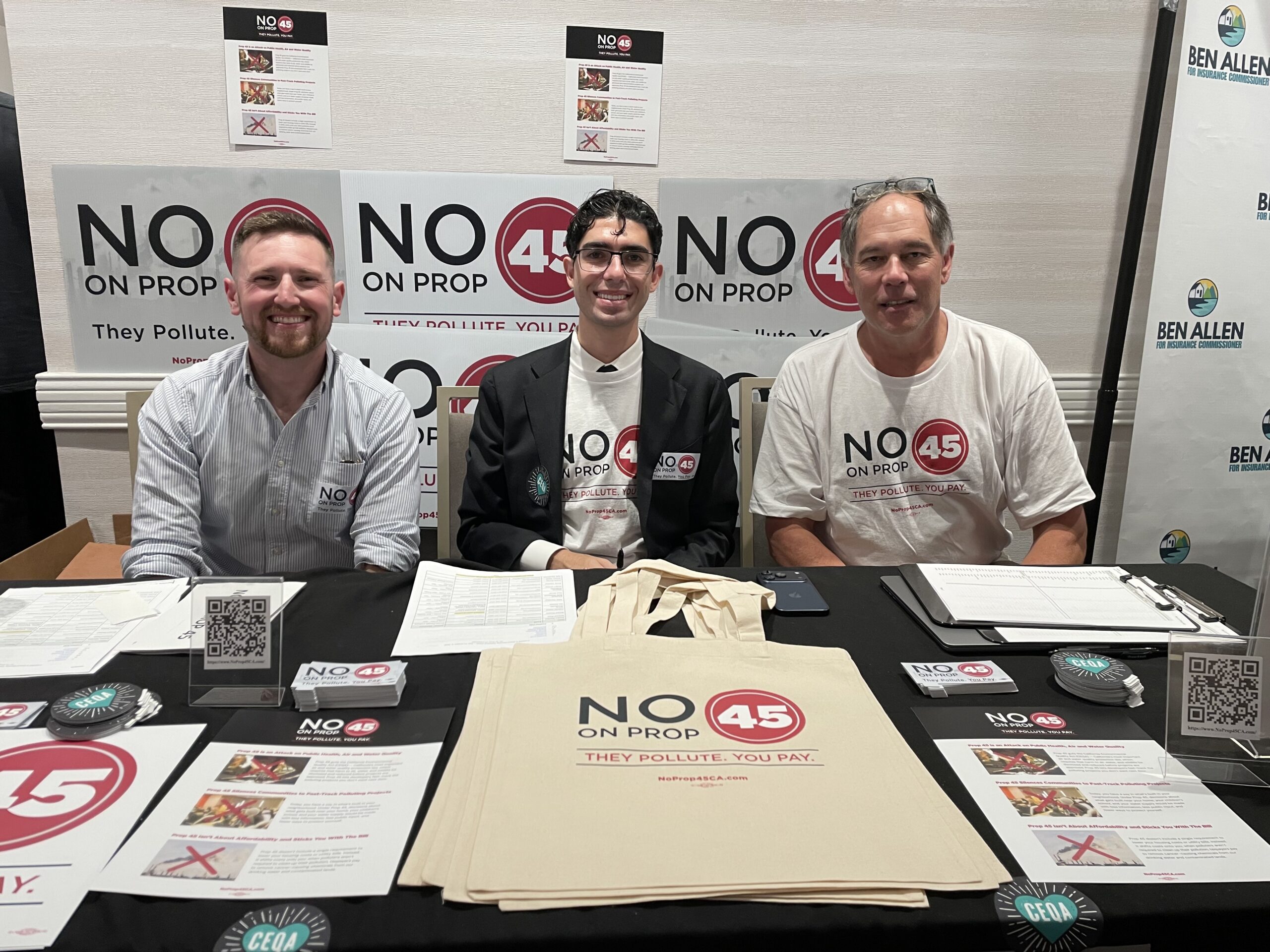
Vote No on Prop 45: Rolling Back CEQA Is A Proposition Californians Can’t Afford
Updated on September 23 to include links and additional information. Originally published on January 16, 2026.
For advocates working at the intersection of environmental protection and climate-smart growth, the California Environmental Quality Act (CEQA) has long been a source of both pride and frustration. While it has been a critical tool to protect our natural and working lands, its procedural delays have often been used to stall projects essential to a low-carbon future: dense infill housing and transit-oriented development in our existing communities.
In July 2025, however, at the urging of Governor Newsom, the California legislature passed some of the most impactful changes to CEQA since its inception. Taken together, the two bills (AB 130 and SB 131) provide robust statutory CEQA exemptions for infill housing and housing element rezonings, require the state to map infill areas where exemptions would apply, and narrow the scope of the administrative record, helping to curtail anti-housing litigation.
Despite these monumental changes that address the barriers to critical infill development, California’s business lobby and sprawl developers were left unsatisfied. Now, they are proposing a ballot initiative that would make far more radical changes to the law. After gathering enough signatures to qualify for the November ballot, this is now called Proposition 45.
While the rhetoric of the measure (initially called Building an Affordable California Act, or BACA) seems to be aligned with urbanist goals and those of the broader abundance and affordability movements, the actual policy details and mechanics of the initiative—and the progress we’ve already achieved in the legislature last year—suggest that the costs it brings far outweigh any potential benefits.
Below, we outline seven reasons why the measure should be rejected (click to read more):
1. Major Reforms Have Already Been EnactedFor years, a primary objective for California’s urbanists was to stop the abuse of environmental law against projects that genuinely help the environment: dense, transit-oriented housing.
In a landmark shift for the state, that goal has largely been realized. Following years of advocacy by urbanists, the legislature passed a clean statutory CEQA exemption for infill housing. AB 130, which Greenbelt Alliance was proud to support, is already being utilized across California, allowing builders to move forward with climate-friendly housing in high-opportunity areas like Palo Alto or Beverly Hills without the threat of being endlessly delayed by the environmental review process. While there is room for technical refinements, the fundamental issue at hand—the misuse of environmental laws to delay environmentally-friendly housing projects—has largely been addressed.
As the saying goes, “the devil is in the details”, and that’s certainly true for the BACA initiative. While modest on the surface, BACA creates a completely new set of rules for what it calls “essential” projects. So what, exactly, is an “essential project”?
The list is incredibly broad. Under Article 2, Section 21013, “essential projects” include housing, water, transportation, clean energy, transmission, broadband, and healthcare infrastructure. In practice, this definition encompasses a wide range of large-scale developments. For example, new freeways and existing freeway expansions would qualify as “essential transportation” projects; large greenfield sprawl developments would be treated as “essential” housing projects; and new dams and reservoirs would qualify as “essential” water projects. The definition even includes all “related and ancillary infrastructure,” meaning that highway interchanges, utility extensions, and water pipelines that enable sprawl developments also receive streamlined approval. All of these are enormous projects in terms of size and scale, with major potential environmental impacts. Yet, just like an apartment building in an urban area, under BACA, they would qualify for a significantly truncated review process.
In effect, this new CEQA process mirrors the fundamental flaw of its predecessor. While the old system failed to exempt low or no-impact projects from excessive review, the new one errs in the opposite direction, fast-tracking high-risk developments with significant potential for harm.
3. All Timelines Are Not Created EqualThe BACA initiative imposes strict timelines for this new class of projects that it deems “essential”: the environmental review process can take no more than one year. On the surface, a one-year limit on an Environmental Impact Report (EIR) seems reasonable. And for certain projects, like an apartment building on a parking lot in downtown San Francisco, or a townhome development in an LA suburb, it would be.
However, the measure’s definition of “essential” includes highways, dams, large-scale subdivisions, and other major projects. The environmental review required for projects at this scale cannot be done in a single year. Surveying hundreds if not thousands (or even tens of thousands) of acres of undisturbed and undeveloped land for species nesting patterns and habitat, water pollution impacts, and other environmental concerns physically cannot be accomplished within the timeframe laid out in the initiative. By forcing these projects into such a condensed timeline, we will be creating a system that overlooks genuine environmental harm in favor of speed.
For projects with unambiguous environmental benefits, such as housing developments within already urbanized areas, such speed makes sense. Many of the project types considered by this measure do not have the same clear, unambiguous benefits.
4. Restrictive AlternativesOne of CEQA’s most critical tools for preventing environmental harm is its alternative analysis provision, which allows for the identification of better project locations and designs. Currently, CEQA requires agencies to analyze a “reasonable range of alternatives” that could reduce environmental impacts, including different sites, reduced intensity options, and designs that avoid sensitive resources. This is how agencies can say, “this housing should be built downtown on a parking lot instead of on farmland,” or “this highway expansion has an alternative transit solution.”
BACA restricts this to just three options: the proposed project, one alternative designed by the applicant themselves (which doesn’t even need to be at a different location), and “no project.” The applicant’s alternative can be a slightly modified version of their original proposal on the same site. This eliminates the core mechanism for steering projects away from environmentally sensitive locations toward more appropriate sites, exactly the tool needed to prevent sprawl, protect open space, and ensure development happens in the right places.
5. The Evidentiary StandardMaybe the most radical change incorporated in the ballot measure is to CEQA’s standard of review. Right now, CEQA allows a lead agency (generally a city or county) to use its own discretion to explore project alternatives and negotiate environmental mitigations. BACA proposes to eliminate this by requiring that environmental impacts only be found significant if they violate objective, quantifiable standards already in existing law when the project was proposed, which doesn’t sound inherently unreasonable!
However, the measure doesn’t actually require jurisdictions to adopt such standards; instead, it exploits their absence. If numerical thresholds don’t already exist for resources like oak woodlands, groundwater, or wildlife corridors, impacts to them essentially can’t be found significant regardless of severity. A genuine objective standards approach would mandate jurisdictions adopt protective thresholds and update them as science improves. This measure rewards weak standards, freezes them at application date, and prevents improvements based on new knowledge.
6. Ballot Box PermanenceFinally, one of the greatest flaws of the measure is its rigidity. Should it pass, BACA would require a 2/3rds vote of the legislature to amend.
California has a long, storied history with ballot box governance, where initiatives become impossible to adjust as new problems arise. The 2/3rds requirement virtually guarantees the law could never be changed, regardless of what issues may arise. An unchangeable measure, with foreseeable negative impacts for the state, may have lasting consequences for generations.
Some of the project types included in this measure, such as clean energy or transmission infrastructure, may benefit from the types of streamlining being considered if careful, targeted changes were made. Rather than a broad, clunky initiative that will be extremely difficult to change, we should advocate for those reforms through the legislative cleanup process already underway.
7. The Costs Are Just Too HighCalifornia faces converging affordability crises: insurers fleeing the state, utility rates climbing, and municipal budgets straining under unsustainable costs. All of these issues stem from the same source: decades of sprawling outward, often into fire-prone areas, leaving us with infrastructure we cannot afford to maintain and risks we cannot afford to insure.
BACA will accelerate these failures by trading short-term speed for permanent costs. By gutting CEQA’s alternatives analysis—the primary tool for steering projects away from costly, high-risk locations—this limits agencies to the developer’s preferred site, one alternative the developer designs themselves, and “no project.” It freezes environmental standards at the date of application, rewarding jurisdictions with weak protections. And it requires agencies to approve permits within strict timelines regardless of fiscal consequences, because most cities lack the quantitative standards BACA requires to find fiscal impacts “significant.”
The result: even if we build some things faster today, we’ll be paying the tab forever. Even more homes in fire zones will continue to destabilize our insurance markets. More infrastructure extensions will push up our utility rates. More sprawling subdivisions that generate less revenue than they cost to maintain will ensure even higher taxes. BACA promises affordability through speed but delivers the opposite: cheaper to build, but financially ruinous to sustain.
At a time when people are struggling to make ends meet, and when the federal government is doing all it can to roll back our environmental protections, the last thing we need is to double down on the failed policies we have tried for decades and know do not work.
Proposition 45 will hurt the environment and your wallet.
Greenbelt Alliance strongly opposes Proposition 45 and urges voters to vote NO on 45 this November.
The post Vote No on Prop 45: Rolling Back CEQA Is A Proposition Californians Can’t Afford appeared first on Greenbelt Alliance.
New analysis of Hunter coal history shows mine approvals don’t guarantee job security
Coal mining companies shed thousands of jobs with little warning during the Hunter’s last coal downturn, and an extension to Hunter Valley Operations can’t substitute a proper plan to protect workers, says Hunter Renewal.
Campaigner seeks injunction against West Newton frack
An environmental campaigner has applied to the High Court for an interim injunction to halt lower-volume fracking at the West Newton-A site in East Yorkshire.
West Newton-A site. Photo: Used with the owner’s consentThe application, by Peter Lomas, is linked to his earlier legal challenge against the Environment Agency (EA) over its permission for the fracking operation.
A court document reveals that Mr Lomas sought an undertaking a fortnight ago from the West Newton-A operator not to start work until his case against the EA had been decided.
But we understand the operator, Rathlin Energy, refused to give the undertaking and indicated that it intended to carry out the work in November 2026.
Earlier this month, we reported that Rathlin Energy said the lower-volume fracking, which aimed to improve the flow of gas and hydrocarbon fluids, was scheduled for the fourth quarter of 2026.
The first phase of work, the construction of passing places on one of the roads to West Newton-A, was due to start today.
Lawyers for Mr Lomas said he had no option but to apply for an urgent interim injunction given what was described as Rathlin Energy’s “intransigence”.
The High Court was asked to issue an interim injunction prohibiting Rathlin from carrying out the work before the related legal challenge to the EA had been settled.
No date has yet been set for a hearing.
DrillOrDrop invited Rathlin Energy to respond to the injunction application. The company told us (24/9/26) it would not be commenting on the application for an interim injunction.
Seismicity concernsIn his challenge to the EA, Mr Lomas is seeking a judicial review of the organisation’s decision in February 2026 to grant a variation to the West Newton-A environmental permit .
His case centres on his concerns that the lower-volume frack at West Newton-A could risk seismic activity and groundwater contamination.
He also claims that the EA breached its climate responsibilities and failed to take into account Rathlin Energy’s hydraulic fracture plan (HFP) in its decision-making process.
An HFP must be produced by any company planning to carry out fracking. It seeks to assess the risk of seismic activity and show how it would be mitigated and monitored.
The West Newton-A HFP was published about three hours after the EA announced the permit variation. The EA did not discuss the HFP with the North Sea Transition Authority, the industry regulator responsible for seismicity.
Mr Lomas lodged his challenge to the EA with the High Court in May 2026.
The lower-volume frack on the West Newton-A2 well seeks to establish permeability in the Kirkham Abbey formation. Rathlin Energy had said the operation was needed to “create and reinstate natural fractures”.
Liquid would be pumped into the well at pressures high enough to fracture the surrounding rocks. Proppant, such as sand or tiny ceramic beads, would hold open the fractures, allowing any hydrocarbons to flow.
September 2026 Redrock Report
SUWA Files Lawsuit, Mining Claims Begin as Backlash Grows Over Attack on National Monuments
SUWA and Partners Sue Over Monument Reductions
On September 2, SUWA and longtime partners Earthjustice and the Natural Resources Defense Council (NRDC) jointly filed litigation in U.S. District Court in Washington, DC against Trump’s illegal reductions of Grand Staircase-Escalante and Bears Ears National Monuments (Earthjustice is representing several other conservation groups in the case). We have asked the court to reopen our previous lawsuit against President Trump’s 2017 monument rollbacks (which was put on hold following President Biden’s restorations) and have updated the case to challenge both sets of illegal proclamations. Two additional coalitions also filed to reopen their litigation defending the monuments, and we expect Tribal Nations to file their own litigation soon.
First Mining Claims Filed on Lands Cut from Bears Ears
Lands cut from both national monuments became subject to mining claims on September 11 (60 days after Trump slashed them by 90%). By noon of that day, 16 new claims were filed on lands previously protected as part of Bears Ears National Monument, and another seven have been filed since. The 23 new claims are in three general areas: Lockhart Basin; Cheese and Raisins Hills near the old, reburied Easy Peasy Mine; and near Natural Bridges National Monument (see our press release). As of today, there have been no claims filed in Grand Staircase-Escalante.
SUWA is committed to defending both landscapes against new mining activity within the monuments’ original boundaries. Stay tuned for future updates.
Members of Congress Sign Letters Opposing Trump’s Actions
Earlier this month, 71 members of the U.S. House of Representatives signed onto Rep. Jared Huffman’s (D-CA-02) letter opposing the illegal reductions of Grand Staircase-Escalante and Bears Ears. A similar letter was signed by 37 senators in August, led by Senators Ben Ray Luján (D-NM), Martin Heinrich (D-NM), and Dick Durbin (D-IL).
The letters argue that the Trump administration’s removal of national monument protections from nearly three million acres of public land threatens irreplaceable cultural, historical, ecological, and recreational resources and undermines the Antiquities Act. They also raise serious concerns about the lack of consultation with Tribal Nations and the termination of the Bears Ears Commission (composed of five Tribal Nations), which works collaboratively with federal agencies to manage and steward Bears Ears.
New Poll Shows Two-Thirds of Utah Voters Support Restoration of Monuments
According to a recent poll conducted by public opinion research firm New Bridge Strategy, two-thirds of Utah voters say greater protections should be restored to all of Bears Ears and Grand Staircase-Escalante National Monuments. Additionally, 73% support the ability of presidents to protect public lands as national monuments, and 82% believe it’s important for Native American Tribes to have a strong role in managing public lands containing sacred or culturally significant sites.
The survey is consistent with results from the firm’s 2024 poll, which revealed overwhelming support for both monuments. Yet Utah’s elected officials remain so completely out of touch with their constituents that they stood behind President Trump and applauded as he slashed the monuments’ boundaries by 90%.
Grand Staircase-Escalante Turns 30!
Amid the turmoil and uncertainty caused by Trump’s actions, it’s important that we pause to celebrate the 30th anniversary of Grand Staircase-Escalante National Monument. Its original designation by President Bill Clinton on September 18, 1996 was the culmination of decades of grassroots action to protect this magnificent landscape from drilling, coal mining, and other threats. The first national monument to be managed by the Bureau of Land Management, it soon became world-renowned for its remarkable paleontological discoveries, stunning scenery, and diverse natural ecosystems. Though the entrance signs have been dismantled by the Trump administration, love for “the science monument” remains strong, and so does our resolve to see its protections fully restored.
Photo © Mark Teague
Deadline Alert: Submit Your Comments in Support of Quiet, Roadless Forests!
As part of its systematic dismantling of America’s public lands, the Trump administration is proposing to rescind or revise two separate rules that affect the health and safety of national forest lands nationwide. In Utah, this includes the important watersheds of the Manti-La Sal, Dixie, Fishlake, Ashley, and Uinta-Wasatch-Cache National Forests.
The U.S. Forest Service’s Travel Management Rule determines where off-road vehicles (ORVs) can travel across national forests and grasslands. The administration’s proposed revision places a heavy thumb on the scale to prioritize ORV use at the expense of all other uses and values, including the protection of wildlife, cultural sites, healthy streams, and the solitude of wild places. The deadline for submitting public comments is TODAY, Wednesday, September 23. Please tell the Forest Service to keep the Travel Management Rule intact!
A separate proposal to rescind the Roadless Rule puts nearly 45 million acres of roadless public land nationwide (including roughly 4 million acres of Forest Service land in Utah) at greater risk of logging, roadbuilding, mining, and other industrial development. The comment deadline for this one is Tuesday, October 6. Please tell the Forest Service to preserve the Roadless Rule!
Photo © Tim Peterson
Support Continues to Grow for America’s Red Rock Wilderness Act
The latest cosponsors of America’s Red Rock Wilderness Act (HR 2467/S 1193) are Rep. Gabe Amo (D-RI-1), Rep. Becca Balint (D-VT-At Large), Rep. Robin Kelly (D-IL-2), and Rep. Rick Larsen (D-WA-2). If any of these legislators represent you, please thank them for their support! The full list of cosponsors in the 119th Congress can be found here.
America’s Red Rock Wilderness Act aims to permanently protect over 8 million acres of Bureau of Land Management land in Utah as federally designated wilderness. Congressional support for this visionary legislation provides a powerful counterweight to the political forces seeking to develop and privatize public lands in Utah. If your representative and/or senators have not signed onto the bill, please ask them to cosponsor today!
Photo © Ray Bloxham/SUWA
What We’ve Been Reading
We wanted to share with you some interesting perspectives on politics and public lands the SUWA staff has been reading (and listening to) lately.
- What Are We Doing to Our World of Wonder? – A New York Times Op-Ed on the Trump administration’s defanging of the Endangered Species Act by author and SUWA Board Member Emerita Terry Tempest Williams.
- What’s the Matter with Utah? How a state trapped by its own history became Congress’ most aggressive threat to public lands—and suddenly out of step with a changing conservative West – A Re:Public piece by freelance journalist Christopher Solomon.
- The quiet process that protects Utah’s heritage is under threat – A Salt Lake Tribune Op-Ed by Brandy Strand and Tina Hart, leaders of Preservation Utah and the Utah Professional Archaeological Council.
- On Common Ground: An American Inheritance – A podcast episode on the Trump administration’s public land giveaways, hosted by Bill Hedden (former executive director of the Grand Canyon Trust) and John Leshy (former Interior Department Solicitor).
The post September 2026 Redrock Report appeared first on Southern Utah Wilderness Alliance.
Film About the Hermits Peak/Calf Canyon Fire at the Santa Fe Film Festival
Announcing our New Mexico premiere!
Dear friends,
After learning this weekend that burn, scar took home the “Best Documentary Feature” award at the Kansas City International Film Festival, we’re back with even more good news– burn, scar will have its New Mexico premiere at the Santa Fe International Film Festival on October 15th!
Tickets will go on sale 9/25 here; get yours before they’re gone!
We’ll be releasing a trailer for the film & announcing more local screenings in the next couple of weeks as well– stay tuned!
With deep appreciation and anticipation,
Hillary + the burn, scar team
Pages
The Fine Print I:
Disclaimer: The views expressed on this site are not the official position of the IWW (or even the IWW’s EUC) unless otherwise indicated and do not necessarily represent the views of anyone but the author’s, nor should it be assumed that any of these authors automatically support the IWW or endorse any of its positions.
Further: the inclusion of a link on our site (other than the link to the main IWW site) does not imply endorsement by or an alliance with the IWW. These sites have been chosen by our members due to their perceived relevance to the IWW EUC and are included here for informational purposes only. If you have any suggestions or comments on any of the links included (or not included) above, please contact us.
The Fine Print II:
Fair Use Notice: The material on this site is provided for educational and informational purposes. It may contain copyrighted material the use of which has not always been specifically authorized by the copyright owner. It is being made available in an effort to advance the understanding of scientific, environmental, economic, social justice and human rights issues etc.
It is believed that this constitutes a 'fair use' of any such copyrighted material as provided for in section 107 of the US Copyright Law. In accordance with Title 17 U.S.C. Section 107, the material on this site is distributed without profit to those who have an interest in using the included information for research and educational purposes. If you wish to use copyrighted material from this site for purposes of your own that go beyond 'fair use', you must obtain permission from the copyright owner. The information on this site does not constitute legal or technical advice.
 This site is not the official webpage of the Industrial Workers of the World.