You are here
Southern Utah Wilderness Alliance
SUWA Statement on approval of Keg Knoll airstrip in the Labyrinth Canyon Wilderness – 6.16.26
June 16, 2026 – FOR IMMEDIATE RELEASE
SUWA Statement on approval of Keg Knoll airstrip in the Labyrinth Canyon Wilderness – 6.16.26 Action by the Bureau of Land Management (BLM) is unnecessary and unlawfulContacts:
Grant Stevens, Communications Director, Southern Utah Wilderness Alliance (SUWA); (319) 427-0260; grant@suwa.org
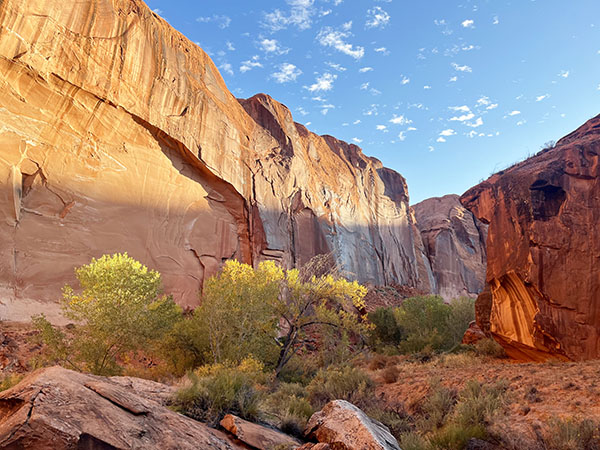
Salt Lake City, UT – Last Friday, the Bureau of Land Management (BLM) released a decision authorizing private airplanes to take off and land in the Labyrinth Canyon Wilderness by designating the previously unauthorized Keg Knoll backcountry airstrip as open for aircraft use. The airstrip is located on the west side of Labyrinth Canyon and north of Canyonlands National Park. Below is a statement from SUWA Wildlands Director Neal Clark and additional information.
“Wilderness is a finite resource and should be managed in a way that protects the reasons it’s designated in the first place—the preservation of natural soundscapes, solitude, wildlife habitat, and non-motorized recreational opportunities,” said Neal Clark, Wildlands Director at the Southern Utah Wilderness Alliance (SUWA). “Unfortunately, the Trump administration BLM seems unable to say no to activities that are fundamentally incompatible with wilderness, including motorized aircraft use. Degrading the Labyrinth Canyon Wilderness so a handful of private pilots can land their planes at one more backcountry airstrip is a disservice to the landscape and public lands users seeking a wilderness experience. We’ll be exploring every possible way to right this decision and protect the Labyrinth Canyon Wilderness from the impacts of private aircraft use.”
Additional information:
The Labyrinth Canyon Wilderness was designated by Congress in 2019, as part of the Dingell Act. While the Wilderness Act gives the BLM some discretion to allow (or prohibit) continued use at airstrips that were legally established prior to wilderness designation, it does not allow the agency to authorize aircraft use when the airstrip was not legally open prior to the wilderness designation.
The BLM Price Field Office’s 2008 management plan—the land use plan in effect when the Labyrinth Canyon Wilderness was established—specifically lists five “existing and currently used backcountry airstrips” for continued noncommercial and limited commercial aviation use; Keg Knoll is not on the list. And for good reason, as it was unused and reclaiming at the time. The agency’s 1999 wilderness inventory of Labyrinth Canyon confirms as much, noting “abandoned airstrips” in the Keg Knoll area.
SUWA’s members sent over 3,000 comments in opposition to the decision.
###
The Southern Utah Wilderness Alliance (SUWA) is a nonprofit organization with members and supporters from around the country dedicated to protecting America’s redrock wilderness. From offices in Moab, Salt Lake City, and Washington, DC, our team of professionals defends the redrock, organizes support for America’s Red Rock Wilderness Act, and stewards a world-renowned landscape. Learn more at www.suwa.org.
The post SUWA Statement on approval of Keg Knoll airstrip in the Labyrinth Canyon Wilderness – 6.16.26 appeared first on Southern Utah Wilderness Alliance.
Lawsuit Launched to Challenge Oil Highway That Threatens World-Renowned Nine Mile Canyon – 6.15.26
FOR IMMEDIATE RELEASE
June 15, 2026
Lawsuit Launched to Challenge Oil Highway That Threatens World-Renowned Nine Mile CanyonContacts:
Grant Stevens, Communications Director, Southern Utah Wilderness Alliance (SUWA); (319) 427-0260; grant@suwa.org
Deeda Seed, Center for Biological Diversity, (801) 803-9892, dseed@biologicaldiversity.org
Salt Lake City, UT – The Center for Biological Diversity today filed a notice of intent to sue the Trump administration’s Bureau of Land Management for quietly approving a hydrocarbon highway through Utah’s scenic, culturally and historically significant Gate Canyon in the West Tavaputs Plateau region of eastern Utah.
“This lawsuit targets the Trump administration’s disgraceful plan to transform a quiet, meandering backcountry road into a highway clogged with speeding oil tankers,” said Deeda Seed, Senior Utah Campaigner at the Center. “Blasting through Gate Canyon’s walls threatens the area’s iconic rock art and will be a disaster for nearby animals, including threatened Mexican spotted owls. We’re prepared to go to court to protect this irreplaceable cultural treasure and the animals that call it home.”
Gate Canyon feeds into Nine Mile Canyon — a world-renowned archaeological area that contains more than 10,000 unique, irreplaceable cultural, historical and archaeological resources. The Southern Utah Wilderness Alliance (SUWA)filed a similar 60-day notice in April. Both notices say the BLM and the U.S. Fish and Wildlife Service violated the Endangered Species Act by not considering the project’s threats to Mexican spotted owls, despite the fact that the BLM identified the cliffs near the proposed blasting areas as potential owl habitat.
“The BLM knew that prior versions of this same proposal were extremely controversial and faced fierce public headwinds,” said Landon Newell, Staff Attorney with SUWA. “This time around, instead of facing the public, they hid their decision from scrutiny, rushing their analysis and approval, all under the guise of Trump’s “Energy Dominance” agenda.”
The project, known as the “Wells Draw Road Amendment – Gate Canyon,” was proposed by Duchesne County and approved by the BLM on April 28, 2026. It involves the blasting and destruction of cliff walls and other large rock features in Gate Canyon to straighten and pave a 5.3-mile dirt road that winds through the scenic canyon as it climbs from Nine Mile Canyon to the Badland Cliffs region of the southern Uinta Basin.
The project is intended to provide an alternative route for transporting oil out of the Uinta Basin. The road would accommodate 70-foot oil tanker trucks traveling between the oil fields and transloading facilities in Carbon County, Utah. It is estimated that once the destruction of Gate Canyon is complete as many as 1,000 vehicles could pass through each day — the equivalent of “[a] tanker truck every 7 minutes,” according to news reports.
This marks the third attempt by the county to destroy Gate Canyon. In 2015 and 2022, the BLM received similar applications to realign Gate Canyon Road, but those projects were abandoned amid significant public opposition. The BLM quietly posted the latest iteration of the project in March 2026 without issuing public notice or opening a formal comment period. After learning of the project, conservation groups requested that the BLM allow for public participation in the decision-making process. The agency denied those requests and quickly approved the project in April.
Nine Mile Canyon is often referred to as “the world’s longest art gallery” because of its extensive collection of rock art and archeological sites. Previous BLM studies describe the area as containing “a significant and high density of historic, cultural, and archeological sites joined together in several overlapping historic landscapes” and saying it “is known to contain the country’s highest concentration of rock art panels, remnants of the prehistoric Archaic, Freemont, and Ute cultures . . . The rock structural remains of Fremont homes, granaries, and ‘forts’ are more visible in Nine Mile Canyon than almost anywhere in the Fremont cultural area.”
###
The Southern Utah Wilderness Alliance (SUWA) is a nonprofit organization with members and supporters from around the country dedicated to protecting America’s redrock wilderness. From offices in Moab, Salt Lake City, and Washington, DC, our team of professionals defends the redrock, organizes support for America’s Red Rock Wilderness Act, and stewards a world-renowned landscape. Learn more at www.suwa.org.
The post Lawsuit Launched to Challenge Oil Highway That Threatens World-Renowned Nine Mile Canyon – 6.15.26 appeared first on Southern Utah Wilderness Alliance.
Breaking News: Mike Lee Fails, Grand Staircase-Escalante Protections Remain in Place!
Incredible news: the attempt to undo the Grand Staircase-Escalante National Monument Management Plan has failed! Together, we have defeated the efforts of Senator Mike Lee (R-UT) and Representative Celeste Maloy (R-UT-02)! This is a major victory for the entire Protect Wild Utah movement, public lands advocates across the country, and most importantly, the landscape itself.
How did we get here? In March, Sen. Lee and Rep. Maloy introduced “joint resolutions” to disapprove the monument management plan. They did this using the Congressional Review Act (CRA), a little-known law with a provision that allows Congress to pass a CRA joint resolution by simple majority votes—but the Senate must act within 60 session days. Thursday, June 11, was Day 60, so Lee’s resolution is now subject to the Senate’s 60-vote filibuster and we are confident it will not pass.
I couldn’t be prouder of SUWA’s national network of activists and our whole-of-organization response to this unprecedented attack. For all of 2026, defeating the Grand Staircase-Escalante CRA resolution has been our #1 priority. SUWA’s remarkable grassroots organizing team led efforts to reach persuadable members of Congress, fanning out across the country and working with members and supporters to hold in-district meetings with congressional staff. We became experts in arcane congressional procedures. We worked with the Grand Staircase-Escalante Inter-Tribal Coalition and brought Tribal leaders, alongside grassroots activists and local business owners, to Washington, DC. We coordinated with friends in the conservation and recreation communities. SUWA’s Utah-based staff were frequent visitors to Washington, working day in and day out with our DC Team.
We gave it 110%, week after week, month and month, grinding away while the odds were stacked against us—with the Republicans controlling the House, the Senate, and the White House. This outcome was far from guaranteed; Republicans used the CRA six other times during this Congress to undo land management plans and a seventh time to undo a protective mineral withdrawal at the headwaters of the Boundary Waters Canoe Area Wilderness. But love for Grand Staircase-Escalante was strong and opposition to what Lee and Maloy were trying was widespread and overwhelming, across Utah and nationwide (see this webpage for highlights).
We are also clear-eyed: while we’ve defeated one major attack, both Grand Staircase-Escalante and Bears Ears National Monuments, as well as the rest of the redrock wilderness, remain under attack from the Trump administration and Congress. But what we’ve said before bears repeating: SUWA has never backed down from a hard fight, and we’re not going to start now.
By raising your voice in opposition to Lee and Maloy you made a difference. We’re going to keep calling on you—your voice and advocacy will continue to be crucial in defending the wild public lands that inspire, heal, and renew us in the best and worst of times. Powered by love and hope, we know that we can still make the critical difference to protect the places and values that matter. Together, we just did! And we’ll continue to do so.
Thank you for standing with Grand Staircase-Escalante and SUWA at this critical moment. Take time to celebrate the important victory we just achieved together. And if you’re able, please consider financially supporting our work.
For Grand Staircase-Escalante,
Scott Braden
SUWA Executive Director
Southern Utah Wilderness Alliance
The post Breaking News: Mike Lee Fails, Grand Staircase-Escalante Protections Remain in Place! appeared first on Southern Utah Wilderness Alliance.
Senator Lee’s Attempt to Fast-track Attack on Grand Staircase-Escalante National Monument Management Plan Fails
FOR IMMEDIATE RELEASE
June 12, 2026
Senator Lee’s Attempt to Fast-track Attack on Grand Staircase-Escalante National Monument Management Plan Fails Opposition from across Utah and the nation leads to failure of Senator Lee’s efforts to attack one of the nation’s iconic national monumentsContacts:
Grant Stevens, Communications Director, Southern Utah Wilderness Alliance (SUWA); (319) 427-0260; grant@suwa.org
Keri Gilliland, Communications Manager, The Wilderness Society; (303) 386-2243; kgilliland@tws.org
Perry Wheeler, Earthjustice, (202) 792-6211, pwheeler@earthjustice.org
Tim Peterson, Cultural Landscapes Director, Grand Canyon Trust; (801) 550-9861; tpeterson@grandcanyontrust.org
Andrew Scibetta, NRDC, (202) 289-2421; ascibetta@nrdc.org
Kris Deutschman, Conservation Lands Foundation, 505-498-0212; kris@conservationlands.org
Brian Willis, Sierra Club; 202-253-7486; brian.willis@sierraclub.org
Caitlyn Burford, Senior Communications Manager, National Parks Conservation Association, cburford@npca.org, 541-371-6452
Taylor McKinnon, Center for Biological Diversity, (801) 300-2414, tmckinnon@biologicaldiversity.org
Washington, DC – Senator Mike Lee’s (R-UT) effort to fast-track an attack on the Grand Staircase-Escalante National Monument Management Plan using the Congressional Review Act (CRA) has failed. The CRA includes a provision that allows the Senate to pass a “joint resolution of disapproval” targeting an administrative action via a simple majority, but it must act within 60 Senate session days after that action is entered into the Congressional Record. Thursday, June 11, was day 60, meaning Senator Lee’s resolution is now subject to the 60-vote filibuster should he attempt to bring it up for consideration. This setback of Senator Lee’s attack on the monument comes the same week as the anniversary of the Antiquities Act, which was used to protect the 1.9-million-acre landscape.
The elected officials leading the effort to attack the Grand Staircase-Escalante National Monument Management Plan, Senator Mike Lee and Rep. Celeste Maloy (R-UT-02), were some of the same members behind the 2025 failed public lands sell-off attempts. Then, as now, their ideas are deeply unpopular and have been fiercely opposed. If the CRA resolution were to pass, the management plan – which sets expectations for how these remarkable public lands will be managed for recreation, camping and outdoor access; collaboration with Tribal Nations; dark night skies; grazing and other uses – would be undone, and the Bureau of Land Management (BLM) would be barred from issuing another plan that is “substantially the same” in the future. This assault on a national monument marked a significant escalation in Congress’ use of the CRA and – if it had been successful – would have led to chaos on the ground.
“Senator Mike Lee’s misguided attack on Grand Staircase-Escalante National Monument has failed. This is a major victory for the millions of Americans who care deeply about the Grand Staircase and for everyone who supports our nation’s wildest public lands and want to see them protected,” said Scott Braden, Executive Director at the Southern Utah Wilderness Alliance. “While together we’ve defeated one major attack, both Grand Staircase-Escalante and Bears Ears National Monuments, as well as the rest of the redrock wilderness in Utah, remain under attack from the Trump Administration and this Republican Congress. The lesson for politicians is clear: Americans cherish their public lands and want to see them conserved for current and future generations to enjoy, not attacked and exploited.”
“Just like the defeat of Senator Lee’s unpopular public land sell-off attempt last year, the dearth of support for this attack on Grand Staircase – Escalante reflects Americans’ fierce love for our public lands,” said Thomas Delehanty, senior attorney with Earthjustice’s Rocky Mountain Office. “No one except extractive industry CEOs wants these special places destroyed. Senator Lee and Representative Maloy should take note.”
“The Utah delegation knows that our national monuments are well-loved by Americans and protecting them is overwhelmingly popular among Utahns regardless of party affiliation,” said Tim Peterson, Cultural Landscapes Director at the Grand Canyon Trust. “The public would not have stood for legislation that gets rid of Grand Staircase-Escalante National Monument outright, so the Utah delegation tried to eliminate the commonsense management plan that affords day-to-day protections to the monument. We’re so grateful that didn’t happen.”
“Sen. Mike Lee and Rep. Celeste Maloy’s failed attempt to overturn the Grand Staircase- Escalante land-use plan was out of step with what Americans want,” said Axie Navas, director of designation campaigns at The Wilderness Society. “The current plan, built on years of engagement with Tribes and local communities, balances the freedom to recreate with traditional uses and conservation in a way that benefits all. The public has made it clear they want these lands protected—and managed—so that future generations may experience Grand Staircase-Escalante as we do today.”
“Grand Staircase-Escalante’s protections are still standing today because people would not let them fall,” said Bobby McEnaney, Director of Land Conservation, NRDC. “This was never really about land management. It was an attempt to make it easier to dismantle every national monument in the country, and that threat has not gone anywhere. Tribes, local communities, and voters saw this attack for what it was and spoke up. We owe it to them, and to the generations who will inherit these lands, to stay in this fight for as long as it takes.”
“While this is a welcome pause, we have no reason to believe Sen. Lee will stop his attack on the country’s national monuments and Grand Staircase,” said Chris Hill, CEO of the Conservation Lands Foundation. “Tens of thousands of people registered their opposition to this particular Congressional power grab–as hundreds of thousands have done over the past several years in support of conserving the country’s public lands. Local communities, business owners, and Tribes support and rely on the balanced management of national monuments and the overwhelming majority of voters in Utah and across western states want their Congress members to protect these places, not sell them off. We are here to make sure that Sen. Lee and other anti-public lands members of Congress cannot ignore the fact that Americans of all political identities don’t want what they’re selling and are fighting like hell to stop it.”
“Today, the Grand Staircase-Escalante National Monument management plan will remain intact, and that’s a testament to the chorus of voices that showed up to protect this incredible landscape from attacks in Congress,” said Cory MacNulty, Southwest Campaign Director for the National Parks Conservation Association. “This management plan is more than a policy document. It reflects years of engagement with communities, Tribes and stakeholders to shape how the monument would be cared for. We know this monument, and all monuments across the nation, still face threats from Congress and the administration. But this is a reminder that public lands should reflect all of us, and people on both sides of the political aisle will continue to show up to protect them.”
“This outcome is bigger than one monument,” said Athan Manuel, Director of Sierra Club’s Lands Protection Program. “Had this effort succeeded, it would have created a dangerous roadmap for dismantling management plans and undermining protections for public lands across the country. Instead, the broad coalition that came together to defend Grand Staircase-Escalante proved once again that Americans will unite to protect the places that belong to all of us. This failed fast-track attack should serve as a warning to anyone looking to weaken our public lands: people are paying attention, and they are prepared to fight back.”
“Veterans and military families understand what it means to protect something that belongs to all Americans. The failure of Senator Mike Lee’s attempt to fast-track an attack on Grand Staircase-Escalante National Monument is an important victory for those who believe our public lands should remain public. Places like Grand Staircase-Escalante are part of our shared national heritage and serve as places where veterans heal, reconnect with their families, recreate, and continue serving their communities. While we are encouraged to see this effort fall short, the broader threats facing Grand Staircase-Escalante, Bears Ears, and other treasured public lands remain very real. Veterans will continue standing up for these places because they are worth protecting for future generations, just as they were for ours.” — Janessa Goldbeck, U.S. Marine Corps veteran and CEO, Vet Voice Foundation
“Lee’s attempt to weaponize the Congressional Review Act to strip protections from Grand Staircase-Escalante National Monument was an affront to all Americans and I’m thrilled he failed,” said Taylor McKinnon, Southwest director of the Center for Biological Diversity. “Like Grand Canyon and Zion, this iconic landscape and its extraordinary animals deserve permanent protection, not to be used as political pawns.”
A compilation of opposition to the use of the CRA on Grand Staircase-Escalante Monument Management Plan can be found here; some highlights include:
- Inter-tribal Coalition members call for stop to proposal to use Congressional Review Act (CRA) to harm Grand Staircase-Escalante National Monument
- The National Congress of American Indians (NCAI) issued a statement and the Navajo Utah Commission of the Navajo Nation Council issued a resolution opposing the use of the CRA resolution.
- Over 40 local businesses in gateway communities like Boulder, Escalante, Tropic, Cannonville, Kanab, and Page (AZ) support the Monument. Local business owners respond in this video montage after Rep. Maloy claimed the 2025 Management plan is bad for business.
- Faith Leaders across Utah and the American West oppose the use of the CRA, as do over 125 local, state, and national groups, and over 150 scientists.
- The Salt Lake Tribune, the Grand Junction Sentinel, the Durango Herald, the Las Vegas Sun, the Arizona Daily Star, and the Idaho Statesman have editorialized against the CRA and in support of the Monument. Letters to the editor have gone into papers across the country; particular powerful op-eds include “The strike on Grand Staircase is a strike on my culture and my history” by Autumn Gillard; “Stop Trying to Utah our Nevada” by Dackota York; “GOP leaders say local interests were ignored in the Grand Staircase-Escalante planning process. That’s not what I saw” by Erik Stanfield; “A Utah Monument Comes Under Attack – Again” by Stephen Trimble; and “Congress in gunning for a National Monument in Utah” by Scott Braden.
About Grand Staircase-Escalante National Monument & the Monument Management Plan
Since its establishment, heightened protections for the Monument’s geology, paleontology, wildlife, plant communities, and ancestral sites have succeeded in preserving these unique values for generations to come, and local communities on the Monument’s doorstep have benefited as well. Nearly 30 years later, the numerous benefits of protecting Grand Staircase-Escalante are clear: the Monument preserves a remarkable ecosystem at the landscape level and sets the stage for future discovery about human, paleontological, and geological history on the Colorado Plateau.
On December 4, 2017, President Trump ignored millions of public comments and unlawfully eliminated large swaths of the Monument, slashing it by 47 percent – roughly 900,000 acres. Thankfully, on October 8, 2021, President Biden signed a proclamation restoring Grand Staircase-Escalante National Monument to its full, original boundaries. In 2023, BLM began developing a new management plan for the full Monument. As a part of that work, the BLM engaged in extensive outreach to Tribal Nations, the State of Utah, local governments, stakeholders (including local outfitters, guides, ranchers, and utilities), and the public. During the planning process, BLM received overwhelming support from throughout Utah and the nation for a holistic, conservation-based management plan worthy of this remarkable place.
In August 2023, a Federal District Court Judge in Utah dismissed lawsuits brought by the state of Utah and others challenging President Biden’s use of the Antiquities Act to restore the boundaries of Grand Staircase-Escalante and Bears Ears national monuments. The state and other plaintiffs quickly appealed that decision to the Tenth Circuit Court of Appeals, which held oral argument on September 26, 2024, and may issue a decision at any time. Conservation organizations intervened on behalf of the United States to defend President Biden’s restoration of the Monuments, as have four Tribal nations.
National monuments are overwhelmingly popular.Seventy-five percent of Utah voters support the President’s ability to protect public lands as national monuments. Three in four Utah voters, including a majority of Republicans, want to keep Grand Staircase-Escalante as a national monument.
About the Congressional Review Act (CRA)
The CRA is a federal statute enacted in March 1996 that requires federal agencies to submit “rules” to Congress for a mandatory review period “before they may take effect.” If Congress votes to overturn, or “disapprove,” the rule, it “may not be reissued in substantially the same form. . . .” The BLM has long maintained that its land management plans are not “rules” subject to the CRA. Other federal land management agencies, including the U.S. Forest Service and National Park Service, have similarly not submitted their land management plans to Congress under the CRA.
However, emboldened by a series of non-binding Government Accountability Office (GAO) opinions, Republican members of Congress have embraced the novel theory that federal land management plans are in fact “rules” subject to the CRA. This year, Congress has passed seven CRA resolutions overturning previously finalized land management plans or other types of public lands management decisions. The GAO issued an opinion regarding the Grand Staircase-Escalante Monument Management Plan on January 15, 2026.
- While overturning the Grand Staircase-Escalante Monument management plan would not change the boundaries of the monument or alter President Biden’s proclamation establishing the monument, it is a serious threat with potential implications for all national monuments.
- Monument management plans set expectations for how the land will be managed for wildlife, outdoor access, dark night skies, grazing, and other uses. The Utah delegation’s gambit threatens that certainty. Using the CRA to overturn the Grand Staircase-Escalante management plan disregards years of public input on how these lands are managed for the public, including hunters, hikers, scientists, ranchers, and others who hold permits to use public lands inside the monument.
- Congress is ignoring Tribal Nations. Multiple Native American Tribes are connected to Grand Staircase-Escalante National Monument. The Grand Staircase-Escalante Inter-Tribal Coalition advocates for the conservation of their ancestral lands and for the continued protection and preservation of the cultural and environmental resources found within the monument. Tribes provide deeply valuable perspectives related to the management of Monument lands and cultural resources that tell the story of their peoples, and are integral to the history of the United States, and should be consulted before any changes are made to the Monument’s management plan.
Additional Information
- March 4, 2026 Press Release – Senator Lee, Rep. Maloy Introduce Joint Resolution to Undo Grand Staircase-Escalante National Monument Management Plan
- February 26, 2026 Press Release – Senator Lee formally begins process to fast-track the destruction of Grand Staircase-Escalante National Monument in Utah
- The Grand Staircase-Escalante National Monument Inter-Tribal Coalition who have spoken against using the CRA on the Monument Management Plan
###
The Southern Utah Wilderness Alliance (SUWA) is a nonprofit organization with members and supporters from around the country dedicated to protecting America’s redrock wilderness. From offices in Moab, Salt Lake City, and Washington, DC, our team of professionals defends the redrock, organizes support for America’s Red Rock Wilderness Act, and stewards this world-renowned landscape. Learn more at www.suwa.org.
The post Senator Lee’s Attempt to Fast-track Attack on Grand Staircase-Escalante National Monument Management Plan Fails appeared first on Southern Utah Wilderness Alliance.
Tell BLM to Keep the High Desert Trail Away from Wilderness and Critical Tortoise Habitat
The Bureau of Land Management (BLM) is proposing to designate the High Desert Trail, a roughly 810-mile off-road vehicle (ORV) route running north to south across western Utah.
The trail is meant to drive ORV users and groups to some of the most remote areas of western Utah. In Washington County, the proposed route would thread a narrow passage between the designated Cougar Canyon and Slaughter Creek Wilderness Areas, continue through the Beaver Dam Wash National Conservation Area (NCA), and terminate in “Zone 6” of the Red Cliffs Desert Reserve near St. George—a world-class recreation area and important habitat for the threatened Mojave desert tortoise.
The BLM’s 15-day comment window ends on Tuesday, June 16. Please tell the agency to reroute the High Desert Trail away from wilderness, tortoise habitat, and the Beaver Dam Wash NCA.
As currently proposed, the High Desert Trail would push a highly promoted ORV route through one of the most sensitive landscapes in southwestern Utah. Even though the trail does not technically enter wilderness (it follows a narrow “cherrystem” route between two wilderness areas), the National Environmental Policy Act (NEPA) requires the agency to take a hard look at real-world impacts to wilderness character, solitude, quiet, wildlife, and adjacent wilderness-quality lands.
The BLM’s Draft Environmental Assessment (EA) also makes clear that designation of this trail is intended to increase use. In fact, the agency expects use to increase by about 30 to 40 percent in the first one to three years. More promotion, more traffic, and more organized use will mean more noise, dust, user conflict, and greater pressure on nearby wilderness, cultural resources, and tortoise habitat.
Importantly, the BLM is considering two crucial reroutes—Colie Flat and Manganese Road—which would avoid bisecting wilderness areas, bypass most Mojave desert tortoise critical habitat, steer clear of the Beaver Dam Wash NCA, and mitigate user conflicts in the Red Cliffs Desert Reserve by relocating the route’s terminus at Manganese Wash, near Gunlock Reservoir, instead of in Zone 6.
This proposal is not just about a line on a map. The High Desert Trail is being planned as a continuous, promoted, point-to-point ORV route across western Utah, complete with signage, maps, kiosks, and coordinated permitting designed to increase travel and visitation. The BLM should not route this trail through wilderness-adjacent lands and some of the most ecologically sensitive parts of Washington County when a less damaging alternative is already available.
The post Tell BLM to Keep the High Desert Trail Away from Wilderness and Critical Tortoise Habitat appeared first on Southern Utah Wilderness Alliance.
SUWA Statement on new San Rafael Swell Management Agreement – 6.8.26
June 8, 2026 – FOR IMMEDIATE RELEASE
SUWA Statement on new Cooperative Management Agreement for the San Rafael Swell – 6.8.26 Latest effort by State of Utah to exert control over federal public landsContacts:
Grant Stevens, Communications Director, Southern Utah Wilderness Alliance (SUWA); (319) 427-0260; grant@suwa.org
Salt Lake City, UT– Today, the State of Utah announced it signed a Cooperative Management Agreement with the federal Bureau of Land Management (BLM) regarding the San Rafael Swell Recreation Area in southern Utah; the Area was established as part of the 2019 Dingell Act. Below is a statement from SUWA Legal Director Steve Bloch and additional information.
“Today’s announcement has all the hallmarks of the fox being put in charge of the henhouse,” said Steve Bloch, Legal Director for the Southern Utah Wilderness Alliance (SUWA). “Under Governor Cox’s leadership, the state has conspired to place control of American public lands into the hands of politicians who have their own agenda: prioritizing off-road vehicle use over everything else. Gov. Cox has found a willing parter in the Trump administration, who sees public lands as little more than figures on a “balance sheet” to be dismantled and monetized for short-term gain. We will be watching closely for any shenanigans that stem from this agreement.”
Additional information:
The John D. Dingell Jr. Conservation, Management, and Recreation Act, which was signed into law on March 12, 2019, designated 663,000 acres of BLM-managed wilderness within 17 new wilderness areas. In addition, the legislation established the 117,000-acre San Rafael Swell Recreation Area, added 63 miles of the Green River to the National Wild and Scenic River System, designated the John Wesley Powell National Conservation Area and the Jurassic National Monument, and directed a land exchange between the BLM and Utah’s Trust Lands Administration. Additional information can found here.
The Bureau of Land Management (BLM), a federal agency, is part of the Department of the Interior, a Cabinet-level department headed by Secretary Doug Burgum. In Utah, the BLM manages 22.8 million acres of public land, ranging from “spectacular red-rock canyons and roaring rivers to high mountain peaks and expansive salt flats,” including Grand Staircase-Escalante National Monument (designated in 1996 and the first monument managed by the BLM) and Bears Ears National Monument (designated in 2017 and jointly managed with the US Forest Service).
The BLM manages several congressionally-designated wilderness areas in Utah, including remarkable places such as Muddy Creek (Emery County), Canaan Mountain (Washington County), and the Cedar Mountains (Tooele County). BLM-Utah also manages more than 80 Wilderness Study Areas and other significant public landscapes including Nine Mile Canyon, Red Cliffs National Conservation Area, and the Desolation Canyon and Labyrinth Canyon stretches of the Green River (designated Wild and Scenic Rivers). SUWA’s signature bill, America’s Red Rock Wilderness Act, would designate more than 8 million acres of BLM land in Utah as wilderness.
###
The Southern Utah Wilderness Alliance (SUWA) is a nonprofit organization with members and supporters from around the country dedicated to protecting America’s redrock wilderness. From offices in Moab, Salt Lake City, and Washington, DC, our team of professionals defends the redrock, organizes support for America’s Red Rock Wilderness Act, and stewards a world-renowned landscape. Learn more at www.suwa.org.
The post SUWA Statement on new San Rafael Swell Management Agreement – 6.8.26 appeared first on Southern Utah Wilderness Alliance.
Trump Administration Takes Aim at Public Lands . . . Again
Last Friday, after most people left work, President Trump announced the repeal of two executive orders (11644 and 11989) that govern off-road vehicle (ORV) use on public lands nationwide. He also directed federal land management agencies to rescind or revise their regulations implementing these orders, setting the stage for chaos and confusion across the country.
For a bit of background, Presidents Nixon and Carter issued those executive orders in response to an explosive increase in ORV use in the 1960s and 70s across public lands and the corresponding environmental damage and conflict. Together, the orders directed federal land management agencies to develop regulations to address that increasing ORV use by “minimizing” the resultant impacts. This included locating ORV areas and trails to minimize damage to public land resources and wildlife as well as conflicts between different recreationists. The orders also empowered agencies to act swiftly to close areas to ORVs when they are causing or will cause considerable damage to natural and cultural resources.
For roughly 50 years, these orders have helped protect streams, wildlife and their habitats, and opportunities for safe recreation by providing clear and consistent guidance for motorized and nonmotorized users on Bureau of Land Management (BLM), U.S. Forest Service and National Park Service lands. And each of those agencies subsequently issued regulations to implement the Nixon and Carter orders.
Trump’s latest action marks a significant shift in public lands management, one that prioritizes ORV use over all other activities and at the expense of clean water, wildlife habitat, cultural sites, and the experience of motorized and non-motorized recreationists alike.
Off-road vehicle tracks in the Factory Butte area. © Ray Bloxham/SUWASUWA is no stranger to the problem of excessive ORV use. BLM lands and redrock country have been at the center of ORV issues for decades, and SUWA has been on the front lines of this issue the entire time. In the late 1990s and early 2000s, we challenged extensive cross-country ORV use in wilderness study areas and BLM’s hands off approach to ORV use across the state. More recently, SUWA successfully challenged unbalanced travel management plans that prioritized ORVs to the detriment of cultural sites, wildlife habitat, desert waterways and those seeking quiet and solitude in redrock country. And we are not going to stop now.
While motorized groups and the Trump administration like to throw around words like “access,” what they really mean is they want ORV use anywhere and everywhere regardless of the impact to natural and cultural resources or other public land visitors. Simply put, “access” does not only mean motorized access. In Utah alone, right now there are tens of thousands of miles of dirt routes and trails open to ORV use in addition to more than 130,000 acres open to cross-country ORV use (meaning vehicles can literally drive anywhere within those designated areas).
Trump’s actions won’t make public lands more accessible but will make the public land experience worse for everyone. It will create confusing and unsafe conditions, while at the same time damaging wildlife habitat and cultural resources. Hikers, hunters, bikers, equestrians, and those seeking quiet time with friends and family in the outdoors will end up being overwhelmed by the dust, noise, and damage caused by unregulated ORV use.
For now, regulations implementing the two executive orders—requiring local land managers to minimize damage from ORVs and conflicts between different public land users—remain in place, as do existing travel management plans. We expect, however, that the Trump administration will work quickly to weaken if not outright eliminate both the regulations and individual plans. SUWA will be there every step of the way, fighting to protect Utah’s incredible wild places.
If you haven’t already, please submit comments via our San Rafael Swell and San Rafael Desert advocacy actions; proposals for these areas would add new routes or re-open previously closed routes to ORVs. The comment period closes on Monday, June 8.
The post Trump Administration Takes Aim at Public Lands . . . Again appeared first on Southern Utah Wilderness Alliance.
Actions You Can Take to Defend Grand Staircase-Escalante National Monument
The elected officials behind 2025’s failed public lands sell-off attempts – Senator Mike Lee (R-UT) and Rep. Celeste Maloy (R-UT-02) – introduced a joint resolution to undo the Grand Staircase-Escalante National Monument Management Plan using the Congressional Review Act (CRA).
If both chambers of Congress pass the measure by simple majority votes, the plan – which sets expectations for how these remarkable public lands will be managed for recreation, camping and outdoor access, collaboration with Tribal Nations, dark night skies, grazing, and other uses – will be undone and the Bureau of Land Management (BLM) will be barred from issuing another plan that is “substantially the same” in the future. This would be a devastating blow to the monument and could turn it into a wildly different place. We cannot let this happen.
View our StoryMap and learn more
Here are ways you can join us and fight back:Visit our action page and email your members of Congress, telling them to vote NO on the joint resolution.
- Reach out to your friends, family, neighbors, and colleagues who you know also love the redrock, Grand Staircase-Escalante, and southern Utah. Send them a link to our action alert and encourage them to join our email list too!
Share this action on social media – be sure to tag our accounts on Facebook, Instagram, Bluesky, and TikTok.
- Call your Representative and both of your Senators (find office numbers here), saying something along the lines of: “Hi my name is _____, and I’m a constituent from ______. I am calling to urge you to vote NO on the Congressional Review Act Resolution targeting the Grand Staircase-Escalante National Monument management plan. The monument — a crown jewel of America’s public lands and a place like nowhere else in the world — should be protected for its rich biodiversity, unique geology, and remarkable cultural values. The resolution to disapprove the plan puts everything that is special about Grand Staircase-Escalante at risk. Please vote NO. Thank you.”
If you live outside of Utah, reach out to a member of SUWA’s Grassroots Organizing Team to get more involved and find out if your member of Congress is one who could cast a deciding vote.
View and share our Grand Staircase-Escalante StoryMap.
- Watch our recent Virtual Rally for Grand Staircase-Escalante and learn about ways to take effective action from wherever you live.
If you’re able, consider financially supporting SUWA. Our members and supporters make our work possible.
- If you’re looking for another way to participate, we encourage you to get creative! We’re seeking artistic works for use in an interactive map for Grand Staircase-Escalante. Create something new or share a piece you’ve already made. This can range from short stories about your experiences in the monument, to quick sketches, to your favorite photographs! Email files to loveforgse@suwa.org.
For over 40 years, SUWA and the nationwide Protect Wild Utah movement have worked tirelessly to protect wilderness-quality lands, including the monument. That work continues, undeterred. Thank you for standing with us at this critical moment.
View Our “Love for Grand Staircase-Escalante” StoryMap of Art Submissions
The post Actions You Can Take to Defend Grand Staircase-Escalante National Monument appeared first on Southern Utah Wilderness Alliance.
Grand Staircase-Escalante National Monument CRA Vote – Live Updates
Resolutions to undo the Grand Staircase-Escalante National Monument’s Management Plan using the Congressional Review Act (CRA) have been introduced by Senator Mike Lee (R-UT) and Rep. Celeste Maloy (R-UT-02). Once either chamber of Congress takes up the legislation, we’ll post live updates as they consider this legislation, with the most current information at the top of this webpage (as well as a link to watch the proceedings live). If you haven’t already, review our actions you can take to defend the monument. A timeline and additional information can be found below.
(All times are MT. These updates come from SUWA staff and our best interpretations of proceedings)
- March 4, 2026 – Senator Mike Lee (R-UT) and Rep. Celeste Maloy (R-UT-02) – introduced joint resolutions to undo the Grand Staircase-Escalante National Monument Management Plan using the Congressional Review Act (CRA). If both chambers of Congress pass the measure by simple majority votes, the plan – which sets expectations for how these remarkable public lands will be managed for recreation, camping and outdoor access, collaboration with Tribal Nations, dark night skies, grazing, and other uses – will be undone and the Bureau of Land Management (BLM) will be barred from issuing another plan that is “substantially the same” in the future.
- February 26, 2026 – Senator Mike Lee formally begun the process to fast-track the destruction of Grand Staircase-Escalante National Monument byadding the Government Accountability Office (GAO) opinion regarding the Monument’s Management Plan to the Congressional Record (see page 51). Conservation groups began sounding the the alarm regarding the GAO opinion, requested by Rep. Maloy, on January 22, 2026.
- January 7, 2025 – Following two and a half years of work, anew Monument Management Plan was finalized for Grand Staircase-Escalante National Monument. As a part of that work, the Bureau of Land Management (BLM) engaged in extensive outreach to Tribal Nations, the State of Utah, local governments, stakeholders (including outfitters and guides, ranchers, local utilities), and the public. During the planning process, BLM received overwhelming support from throughout Utah and the nation for a holistic, conservation-based management plan worthy of this remarkable place.
In March 2026, the elected officials behind 2025’s failed public lands sell-off attempts – Senator Mike Lee (R-UT) and Rep. Celeste Maloy (R-UT-02) – introduced a joint resolution to undo the Grand Staircase-Escalante National Monument Management Plan using the Congressional Review Act (CRA).
If both chambers of Congress pass the measure by simple majority votes, the plan – which sets expectations for how these remarkable public lands will be managed for recreation, camping and outdoor access, collaboration with Tribal Nations, dark night skies, grazing, and other uses – will be undone and the Bureau of Land Management (BLM) will be barred from issuing another plan that is “substantially the same” in the future. This would be a devastating blow to the monument and could turn it into a wildly different place. We cannot let this happen.
Actions you can take to defend the monument.The post Grand Staircase-Escalante National Monument CRA Vote – Live Updates appeared first on Southern Utah Wilderness Alliance.
President Trump Revokes Executive Orders Protecting Public Lands from Unmanaged Motorized Recreation
FOR IMMEDIATE RELEASE
June 2, 2026
President Trump Revokes Executive Orders Protecting Public Lands from Unmanaged Motorized Recreation Repeal threatens wildlife, public safety, and outdoor recreation across federal landsContacts:
Laura Peterson, Senior Attorney, Southern Utah Wilderness Alliance (SUWA); (801) 236-3762; laura@suwa.org
Washington, D.C. – Last Friday, after most people left work for the weekend, President Trump announced the repeal of two executive orders (11644 and 11989) that govern off-road vehicle (OHV) and over-snow vehicle (OSV) use on public lands. He further directed federal land management agencies to rescind or revise their regulations implementing these orders, risking chaos and confusion on public lands across the country.
For 54 years, these orders have helped protect streams, wildlife and their habitats, and opportunities for safe recreation by providing clear and consistent guidance for motorized and nonmotorized users on Bureau of Land Management, U.S. Forest Service, and National Park Service lands. In response, numerous conservation organizations cried foul over this latest attack on public lands.
Below are quotes and background information:
“These executive orders provided the foundation for common-sense management of motorized vehicles on public lands, recognizing the detrimental impact unmanaged motor vehicles have on cultural sites, wildlife, waterways and other public land users,” said Laura Peterson, Senior Attorney at the Southern Utah Wilderness Alliance. “In Utah alone, there are tens of thousands of miles of dirt roads and trails open to motorized vehicles. Far from motorized vehicles being kept out of public lands, it’s quite the opposite: it’s the wildlife and visitors trying to picnic or camp with their families that are being chased out at every turn. The impacts of repealing these executive orders will be long-lasting and devastating.”
“Removing or weakening regulations for properly managing motorized recreation will endanger at-risk fish and wildlife, particularly grizzly bears and bull trout, because off-road vehicles choke streams with dirt and damage sensitive habitats,” said Adam Rissien, rewilding manager with WildEarth Guardians. “Today’s off-road vehicles are even more powerful, more damaging than when the first orders were put in place to protect public lands from unfettered motorized recreation, and removing long-standing protections will only make matters worse.”
“Nobody wants national parks damaged by off road vehicles. The administration is making sweeping changes that could throw open the doors to unchecked off-road vehicle use that puts at risk the very resources national parks were created to protect,” said Cory MacNulty, Southwest Region Campaign Director for the National Parks Conservation Association (NPCA). “With thousands of miles of roads and trails across public lands already open to off-road vehicles, what is at stake here is not access – it’s the future of the places that Americans love most.”
“Public lands are big enough for hikers, hunters, horseback riders, mountain bikers, motorized users and families looking for quiet places to camp, if we are wise about how we share them,” said Alison Flint, Acting Vice President for Federal Policy at The Wilderness Society. “For more than 50 years, common-sense safeguards have helped land managers reduce conflicts, protect clean water and wildlife habitat, and make sure public lands can be enjoyed by everyone. This administration is working to destroy this foundation, which has been in place since Richard Nixon. This is a cynical attempt to pit public land users against one another while weakening the rules that protect the land itself. Our children and grandchildren deserve public lands that are healthy, shared and cared for—not places where decades of balanced management are tossed aside for special interests.”
“The intent of these executive orders was to minimize environmental damage and user conflict from motorized vehicle use (including snowmobiles) on public lands,” said Anneka Williams, Winter Wildlands Alliance Policy Director. “They were established in the 1970s in response to widespread and increasing off-road vehicle use on public lands to balance motorized and non-motorized recreation and protect natural ecosystems and wildlife. Without these orders, there is no guidance to minimize impacts from motorized recreation, a loss that will have lasting consequences for decades to come.”
“This rescission is yet another loss for wildlife and natural places,” said Vera Smith, director of national forests and public lands for Defenders of Wildlife. “Removing common-sense tools for managing all-terrain vehicles, dirt bikes and other off-road vehicles on public lands is reckless and nonsensical.”
“If you want to make the public land experience worse for everyone – motorized and non-motorized – blowing up travel management is a good place to start,” said Hilary Eisen, federal policy director at Wild Montana. “It’s how we keep public lands working for everyone. These EOs are the foundation land managers rely on to provide motorized access while protecting wildlife, natural resources, and opportunities for quiet, non-motorized recreation. Getting rid of them to satisfy a tiny minority of users just invites more use conflict, makes public lands more dangerous, and degrades public lands and waters. This is a reckless move that could set off a chain reaction that undermines everything we love about our public lands.”
“Recreationists of all types enjoy camping next to clean mountain streams, seeing wildlife, and enjoying the great outdoors with their friends and family. Public lands managers have relied on the previous executive orders to protect water quality, ensure wildlife have space to roam, and preserve high-quality recreation opportunities for everyone,” said John Robison, public lands and wildlife director at the Idaho Conservation League. “If agencies no longer have to minimize the impacts of motorized recreation to water quality, wildlife, and other recreationists, we are in danger of degrading the very values of our public lands that draw us there again and again. In the end, everyone will be worse off.”
“Loud engines stress wildlife, displacing them from feeding and breeding areas. Tire damage speeds erosion and harms ecosystems,” said Chris Bachman, Conservation Director at the Yaak Valley Forest Council. “Vehicle tires and undercarriages carry seeds into forests and grasslands, disrupting natural systems and food resources. The Roadless Rule has been rescinded, and every effort is being made to weaken the Endangered Species Act. Now this? This administration appears determined to cause significant harm to our public lands at every turn.”
“As we see in nature, balance needs to be our rule. More and more we are seeing the scales of regulation be tipped wildly in one direction, towards extraction and deregulation of public lands,” said Allison Weber, Policy Director for Friends of the Inyo. “We support the protection of ecosystems and species, and we know that regulation of various activities on public lands are necessary to achieve that goal, to obtain balance between natural and recreational values. Deregulating recreation like OHV use ultimately leads to degradation of the landscapes and the routes themselves, followed by additional labor and money by our public lands agency staff to restore them to working order. If we want to all enjoy these landscapes for years to come, we are moving in the wrong direction.”
“This executive order puts America’s wild places at risk by prioritizing motorized vehicle access over the protection of wildlife, clean water, and public lands. For decades, commonsense safeguards have helped land managers balance motorized recreation with conservation and other types of recreation, ensuring that public lands remain healthy and accessible for everyone,” said Athan Manuel, Director of Sierra Club’s Lands Protection Program. “Eliminating responsible motorized management threatens fragile habitats, increases damage to sensitive landscapes, and undermines the experiences of people seeking quiet recreation in nature. America’s public lands belong to all of us, and future generations deserve the chance to experience wild and thriving places. Instead of weakening protections, we should be strengthening our commitment to conserving the natural heritage that makes these lands so special.”
“For decades off-road vehicles have had an outsized impact on BLM-managed lands and that’s especially true today as faster and louder vehicles blanket the landscape,” said retired BLM Director Jim Baca. Baca served as BLM Director from 1993-94. “ORVs harass wildlife, degrade streams and destroy cultural sites, and are generally a nuisance to other public land visitors. BLM has struggled mightily to control this use and its job has only gotten harder under Trump’s second term as career BLM personnel have been fired and the agency’s budget decimated. Trump’s latest Order – undoing Nixon and Carter-era Executive Orders that directed BLM to ‘minimize’ the impacts these vehicles have on public lands and resources – is only going to make BLM’s job harder at a time when it needs to be doing more than ever to rein in this activity.”
“Without proper management, off-road vehicles tear up vegetation, disrupt wildlife, damage streams, and lead to conflicts among recreational users,” said Thomas Delehanty, attorney at Earthjustice. “President Trump is discarding the long-standing, common-sense framework for managing off-road vehicle use to cater to a narrow set of interests. Our public lands, streams, and wildlife will pay the price.”
Background
In response to the growing use of dirt bikes, snowmobiles, all-terrain vehicles, and other off-road vehicles (ORVs), and corresponding environmental damage and conflicts with non-motorized users, Presidents Nixon and Carter issued Executive Orders 11644 and 11989 in 1972 and 1977, respectively. These executive orders require federal land management agencies to plan for ORV use to protect resources and other recreational uses. Specifically, the executive orders require that, when designating areas or trails available for ORV use, the agencies locate them to:
(1) minimize damage to soil, watershed, vegetation, and other resources of the public lands;
(2) minimize harassment of wildlife or significant disruption of wildlife habitats; and
(3) minimize conflicts between off-road vehicle use and other existing or proposed recreational uses of the same or neighboring public lands.
###
The Southern Utah Wilderness Alliance (SUWA) is a nonprofit organization with members and supporters from around the country dedicated to protecting America’s redrock wilderness. From offices in Moab, Salt Lake City, and Washington, DC, our team of professionals defends the redrock, organizes support for America’s Red Rock Wilderness Act, and stewards a world-renowned landscape. Learn more at www.suwa.org.
The post President Trump Revokes Executive Orders Protecting Public Lands from Unmanaged Motorized Recreation appeared first on Southern Utah Wilderness Alliance.
Virtual Rally for Grand Staircase-Escalante!
With less than two weeks for the Senate to take up Senator Mike Lee’s Congressional Review Act (CRA) joint resolution to undo the management plan for Grand Staircase-Escalante National Monument, our staff in DC are closely watching the Senate’s calendar. In the meantime, we’re throwing a Virtual Rally for Grand Staircase-Escalante this Wednesday evening! Please join us—and bring any friends, family, neighbors, and colleagues who also love the redrock, Grand Staircase-Escalante, and southern Utah.
Virtual Rally for Grand Staircase-Escalante!
Wednesday, June 3, at 6 pm MT on Zoom
Click here to register
We know the ongoing uncertainty and “hurry up and wait” feeling surrounding the CRA fight has been hard. But our love of the monument keeps us grounded in a world filled with distractions.
During this virtual rally, you’ll hear from SUWA’s Organizing Team and executive director, as well as some of the many voices speaking out to defend the monument—Native leaders, scientists, former Bureau of Land Management staff, and others! We’ll share the latest on the CRA timeline, hear stories from grassroots activists, and, of course, send you off with the latest actions you can take to protect this remarkable place.
Thank you for all you’re doing to speak up and protect Grand Staircase-Escalante National Monument. Need some inspiration? Check out our “Love for Grand Staircase-Escalante” StoryMap and review this interactive piece from the More Than Just Parks Substack.
The post Virtual Rally for Grand Staircase-Escalante! appeared first on Southern Utah Wilderness Alliance.
SUWA Statement on President Trump’s Repeal of Travel Management Executive Orders – 5.29.26
May 29, 2026 – FOR IMMEDIATE RELEASE
SUWA Statement on President Trump’s Repeal of Travel Management Executive Orders – 5.29.26 Will bring unregulated motorized recreation and chaos across public landsContacts:
Grant Stevens, Communications Director, Southern Utah Wilderness Alliance (SUWA); (319) 427-0260; grant@suwa.org
Washington, DC – Friday evening, in his latest attack on federal public lands, President Trump announced the repeal of Executive Order 11644 of February 8, 1972 (Use of Off-Road Vehicles on the Public Lands), and Executive Order 11989 of May 24, 1977 (Off-Road Vehicles on Public Lands). He further directed federal land management agencies including the Bureau of Land Management and Forest Service to rescind or revise their regulations implementing these Orders. Below is a statement from SUWA Legal Director Steve Bloch and additional information.
“The reality is that there are tens of thousands of miles of dirt roads and trails in Utah’s canyon country open today to motorized vehicles. Far from motorized vehicles being kept out of public lands, it’s quite the opposite: it’s the wildlife and visitors trying to picnic or camp with their families that are being chased out at every turn,” said Steve Bloch, Legal Director at the Southern Utah Wilderness Alliance (SUWA). “These executive orders provided the foundation for common-sense management of motorized vehicles on public lands. They recognized the destructive impact unmanaged motor vehicles have on our public lands and required federal agencies to minimize the damage. The impacts of today’s Order will be significant, long-lasting, and devastating.”
About Executive Orders 11644 and 11989
Presidents Nixon and Carter issued Executive Orders 11644 and 11989 in 1972 and 1977, respectively, in response to the growing use of dirt bikes, snowmobiles, all-terrain vehicles, and other off-road vehicles (ORVs) and corresponding environmental damage and conflicts with non-motorized recreationists. These executive orders require federal land managers to plan for ORV use to protect resources and other recreational uses. Specifically, the executive orders require that, when designating areas or trails available for ORV use, the agencies locate them to:
(1) minimize damage to soil, watershed, vegetation, and other resources of the public lands;
(2) minimize harassment of wildlife or significant disruption of wildlife habitats; and
(3) minimize conflicts between off-road vehicle use and other existing or proposed recreational uses of the same or neighboring public lands.
###
The Southern Utah Wilderness Alliance (SUWA) is a nonprofit organization with members and supporters from around the country dedicated to protecting America’s redrock wilderness. From offices in Moab, Salt Lake City, and Washington, DC, our team of professionals defends the redrock, organizes support for America’s Red Rock Wilderness Act, and stewards a world-renowned landscape. Learn more at www.suwa.org.
###
The Southern Utah Wilderness Alliance (SUWA) is a nonprofit organization with members and supporters around the country dedicated to protecting America’s redrock wilderness. From offices in Moab, Salt Lake City, and Washington, DC, our team of professionals defends the redrock, organizes support for America’s Red Rock Wilderness Act, and stewards a world-renowned landscape. Learn more at www.suwa.org.
The post SUWA Statement on President Trump’s Repeal of Travel Management Executive Orders – 5.29.26 appeared first on Southern Utah Wilderness Alliance.
An Update on the Hole-in-the-Rock Road
We’re disheartened to report that Garfield County has begun chip sealing (effectively paving) the first 10 miles of Hole-in-the-Rock Road within Grand Staircase-Escalante National Monument. Below we share some information about why this is happening—and why our fight to preserve the character of this rugged backroad at the heart of the monument matters.
Hole-in-the-Rock Road runs from the junction of Highway 12, east of the town of Escalante, to the top of the cliffs above the Colorado River within the Glen Canyon National Recreation Area; it provides access to popular destinations like Spooky and Peek-A-Boo slot canyons, Devil’s Garden, and Coyote Gulch. Surrounded by wilderness-quality lands, 57 of the road’s 62 miles are within the monument (the remaining are in the recreation area) and 16 miles are in Garfield County. It is an unpaved, primarily dirt road that is core to the remote experience that defines the monument.
In February, SUWA filed a lawsuit in federal court, alleging that Garfield County and the Bureau of Land Management (BLM) violated federal law when the county began making unauthorized “improvements” to the road. While Garfield County has title to a right-of-way for the road, it does not own the road or the land beneath it (this remains federal public land) and it cannot lawfully take unilateral action to improve the road. Instead, the county is required to consult with the BLM before making any improvements, such as widening or realigning the road, installing new culverts, or chip sealing the surface.
The BLM, for its part, is required by law to protect the things that make the monument so special, and to make sure that activities like these do not cause unnecessary damage to public lands. Sadly, the agency entirely failed in those duties, idly standing by while the county conducted weeks of unauthorized work that will forever change the character of this area.
When SUWA learned that the BLM had completed its consultation for the chip sealing and authorized the county to proceed, we immediately swung into action and sought a temporary restraining order from the court; late last Friday a federal judge denied our request. This week we’ve filed another motion seeking an emergency injunction to pause the county’s chip seal work. Meanwhile, the county is rushing to complete the paving before the court has a chance to rule on that motion.
Despite all of this, our pending case will continue to proceed in federal court on its merits, and we expect to prevail. But by then the changes to the road and damage to the monument will be done. Paving will lead to more, faster, and louder traffic, changing the remote, serene backcountry experience the monument was created to protect, and that draws visitors from around the world.
In the future, we hope to share more positive news. SUWA’s work to Protect Wild Utah and the national monument—which is also currently at risk—continues on, thanks to people like you. At SUWA we take the long view, and we firmly believe that these places are worth fighting for. If you’re able, please consider a donation to support SUWA’s work.
For Grand Staircase-Escalante,
Hanna Larsen & Steve Bloch
Staff Attorney & Legal Director
The post An Update on the Hole-in-the-Rock Road appeared first on Southern Utah Wilderness Alliance.
The Fine Print I:
Disclaimer: The views expressed on this site are not the official position of the IWW (or even the IWW’s EUC) unless otherwise indicated and do not necessarily represent the views of anyone but the author’s, nor should it be assumed that any of these authors automatically support the IWW or endorse any of its positions.
Further: the inclusion of a link on our site (other than the link to the main IWW site) does not imply endorsement by or an alliance with the IWW. These sites have been chosen by our members due to their perceived relevance to the IWW EUC and are included here for informational purposes only. If you have any suggestions or comments on any of the links included (or not included) above, please contact us.
The Fine Print II:
Fair Use Notice: The material on this site is provided for educational and informational purposes. It may contain copyrighted material the use of which has not always been specifically authorized by the copyright owner. It is being made available in an effort to advance the understanding of scientific, environmental, economic, social justice and human rights issues etc.
It is believed that this constitutes a 'fair use' of any such copyrighted material as provided for in section 107 of the US Copyright Law. In accordance with Title 17 U.S.C. Section 107, the material on this site is distributed without profit to those who have an interest in using the included information for research and educational purposes. If you wish to use copyrighted material from this site for purposes of your own that go beyond 'fair use', you must obtain permission from the copyright owner. The information on this site does not constitute legal or technical advice.