Earthworkers Unite!

By members - Earthworks Unite, January 17, 2024

The following statement was issued on September 12, 2024

We, the eligible staff of Earthworks, are excited to announce that we have formed a union with the Industrial Workers of the World (IWW), Earthworkers Unite. We ask that the Leadership Team (LT) and Board recognize Earthworkers Unite and agree to come to the bargaining table with us immediately. We currently have 21 workers signed up in the union, which we believe represents at least 77% of eligible staff.

We have formed this union in solidarity with our fellow workers, colleagues, and partners. Core to creating a just world is deep democracy and we cannot work towards this future without first modeling it within our own organization. We deserve a workplace where we are respected, empowered to create the strategy which determines our work, and know that when there is conflict there is a just and impartial process available to us. We believe deeply in the work we do and love the communities we work with, and have organized this union to do this work more sustainably and equitably. This announcement is an invitation for Earthworks to continue to align its actions with its mission to promote a just future and address systems of oppression both within and outside the organization.

We know Earthworks can and must be better for its workers and for the communities we serve. We can only effectively organize, advocate, or support partners when we are respected and supported by our workplace. We unionize in solidarity with peer organizations including the Sierra Club, Food and Water Watch, Friends of the Earth, and the League of Conservation Voters, and the more than 9,000 workers IWW represents in the so-called United States. The next great labor movement is here, and we are proud to be a part of it.

IWW Stop COP CITY and its investors

Renewable Energy is (Mostly) Green and Not Inherently Capitalist, Volume 1: Wind Power (REVISED)

By That Green Union Guy - IWW Eco Union Caucus, Revised January 16, 2024

Is renewable energy actually green? Are wind, solar, and storage infrastructure projects a climate and/or envi­ronmental solution or are they just feel-good, greenwashing, false "solutions" that either perpetuate the deep­ening climate and environmental crisis or just represent further extractivism by the capitalist class and the privileged Global North at the expense of front-line communities and the Global South? 

This document argues that, while there is no guarantee that renewable energy projects will ultimately be truly "green", there is nothing inherent in the technology itself that precludes them from being so. Ultimately the "green"-ness of the project depends on the level of rank-and-file, democratic, front-line community and working-class grassroots power with the orga­nized leverage to counter the forces that would use renewable energy to perpetuate the capitalist, colonialist, extractivist system that created the cli­mate and environmental crisis in which we find ourselves.

In‌ order to do that, we mustn't fall prey to the misconceptions and inaccuracies that paint renewable energy infrastructure projects as inherently anti-green. This series attempts to do just that. This first Volume, on utility scale wind power addresses several arguments made against it, including (but not limited to) the following misconceptions:

  • Humanity must abandon electricity completely;
  • Degrowth is the only solution;
  • New wind developments only expand overall consumption;
  • Wind power is unreliable and intermittent;
  • Wind power is just another form of "green" capitalism;
  • The extraction of resources necessary to build wind power negates any of their alleged green benefits;
  • Wind power is an extinction-level event threat to birds, bats, whales, and other wildlife (and possibly humans);
  • Only locally distributed renewable energy arrayed in microgrids should be built without any--even a small percentage--of utility scale wind developments;
  • Only nationalized and/or state-owned utility scale renewable energy developments should be built;
  • No wind power developments will be green unless we first organize a socialist revolution, because eve­rything else represents misplaced faith in capitalist market forces.

In fact, none of the above arguments are automatically true (and the majority are almost completely untrue). However, they're often repeated, sometimes ignorantly, but not too infrequently in bad faith. This document is offered as an inoculation and antidote to these misconceptions and misinformation.

Download a copy of this publication here (PDF).

Chapter 28 : Letting the Cat Out of the Bag

By Steve Ongerth - From the book, Redwood Uprising: Book 1

Download a free PDF version of this chapter. At their first meeting, the members of IWW Local #1 had agreed upon a policy that they would not consent to interviews in the press because—while Earth First!ers could be open about their militant radicalism, since they didn’t have a direct economic relationship with the big timber companies or the gyppos—the workers, on the other hand, risked the loss of their job, or even their standing in the community if they spoke out. The G-P mill workers hit by the PCB spill were the exception, of course, because by the time they had turned to IWW Local #1, they had already had their standing taken away from them, and some—such as Treva Vandenbosch and Frank Murray—had been forced to quit. On the other hand, the P-L dissidents—such as Kelly Bettiga, Pete Kayes, Les Reynolds, and Bob Younger were already under intense scrutiny for the ESOP campaign and their unsuccessful appeals to the NLRB—and the L-P workers feeding information to Bari—including Don Beavers and Randy Veach, all could be fired in a heartbeat if they were linked to the “unwashed-out-of-town-jobless-hippies-on-drugs.” [1]

After the FBI sting operation that entrapped five of their comrades in Arizona, North Coast Earth First!ers were understandably wary of their dealings with the press, with good reason. With the region increasingly resembling a pressure cooker on overdrive due to the Corporate Timber reaction to Earth First!’s direct actions, EPIC’s lawsuits, the potential listing of the spotted owl as endangered, L-P’s outsourcing, and several ballot initiatives, the bosses were more likely than ever to ramp up their propaganda mill. The added pressures of underground IWW union organizing activity required especially tight security from the activists. Sometimes even the left-liberal press, small and limited though its circulation tended to be, could cause more harm than good. Judi Bari was especially aware of this fact.

Even if a press interview was sympathetic to the efforts of IWW Local 1 and the workers’ privacy respected, there was a sense that reporters might sensationalize the matter. In December of 1989, freelance reported Julie Gilden, whose articles often ran in publications such as The Village Voice approached Judi Bari about conducting just such an interview with her and timber-worker members of IWW Local #1. Bari informed Gilden of the branch’s aforementioned policy, and the latter claimed to agree to respect the IWW members’ wishes, but wanted to ask Bari some background questions on the IWW’s history and the local culture of Humboldt and Mendocino County. Bari consented, assuming that Gilden was completely forthright. She wasn’t. [2]

Heat Waves and Wildcat Strikes

By Jeff Shantz - LibCom, January 4, 2024

Green syndicalism puts the connectedness of ecological crises and crises of working-class life at the center of analysis—as outcomes of capitalism. It emphasizes ways in which exploitation of labor and the exploitation of nature go hand in hand and develop together. It also centers the importance of working-class resistance in ending the capitalist social system that causes, and thrives on, both.

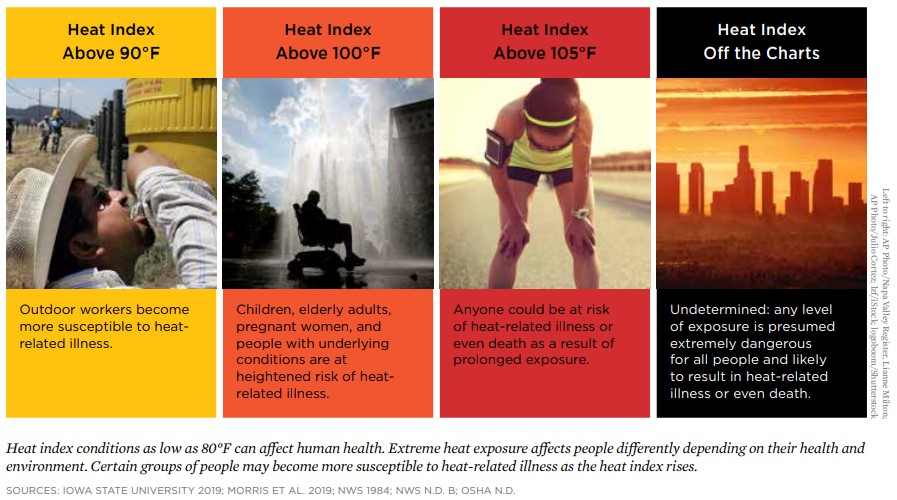
Climate crises, which have moved beyond crisis to pose an existential threat to numerous life forms on the planet, disproportionately impact the working class—especially the poorest, most precarious, racialized sectors of the working class globally. Appropriately, heat waves have become a focus of labor action in a range of industries.

According to data from the US Bureau of Labor Statistics, 53 workers died in the US due to temperature extremes in 2019, and the climate crisis is creating more, and new, hazardous conditions for workers, as heat waves, heat domes, and extreme heat become more regular and extensive. Between 1992 and 2017, heat stress killed 815 US workers while seriously injuring more than 70,000. Extreme heat kills more people each year than floods, hurricanes, and tornadoes, all of which are also becoming more frequent, in the US, according to the National Weather Service. On the whole, about 700 people die from heat-related illnesses each year. And the situation is only getting worse.

The number of “hot days” recorded in the United States has been increasing over decades. The 2018 National Climate Assessment, a major scientific report by 13 federal agencies, found that the frequency of heat waves increased from an average of two per year in the 1960s to six per year by the 2010s. It is not only the frequency of heat waves that is increasing, but the duration of each heat wave. The National Climate Assessment concluded that the season for heat waves is now a full 45 days longer than it was in the 1960s.

The impacts of capitalist climate crises, which disproportionately harm working class people, impel new strategies and tactics for working class organizing, as well as novel deployments of tried-and-true actions—such as wildcat strikes. Notably, we are seeing a revival of walkouts and wildcats against unsafe and unhealthy working conditions in the context of heat waves and heat domes, especially as these become more intense and more frequent.

Chapter 27 : Murdered by Capitalism

By Steve Ongerth - From the book, Redwood Uprising: Book 1

Download a free PDF version of this chapter.

“They intimidate the workers by fear and that’s why they have him there. Everybody around here is so afraid that if something gets crossed up…lumber gets crossed up…they will try to fix it without stopping the machine for fear of being yelled at by the foreman if they do not stop the machine. It’s a constant environment of fear, totally.”

—Randy Veach, L-P Millworker, interviewed by Judi Bari, August 1992 [1]

“Management doesn’t care about our feelings—it’s insignificant to them. OK? Basically we’re nothing but a paid robot. And we’ve been told…our jobs are graders…both of us we’ve been told graders are a dime a dozen.”

—Don Beavers, L-P Millworker, interviewed by Judi Bari, August 1992 [2]

Earth First! – IWW Local #1 knew about the state of affairs in G-P’s and P-L’s mills, thanks to the efforts of its members, but what were conditions like at L-P? Local 1 had tried, unsuccessfully, to try and get one of their members, Allen Anger—who had relocated from Washington—hired at an L-P mill in order to try and organize the mill from within. [3] Without a willing organizer in the plants, IWW Local #1 had to settle for using information supplied by underground dissidents within the mill to provide a picture of what took place on the inside. Luckily, thanks to the coalition being forged in opposition to L-P’s outsourcing, at least two, Don Beavers (a grader who had once worked in the Potter Valley Mill before it closed) and Randy Veach, were able to reveal that if safety and working conditions were bad enough in the nominally union Georgia-Pacific mill in Fort Bragg, they were substantially worse in Louisiana-Pacific’s nonunion mills. Yet, the L-P workers were least likely to openly declare their opposition to such repression. As Judi Bari explained in 1991, it wasn’t difficult to understand why:

“How does a company as cold and crass as (L-P) keep their workforce so obedient? A look behind the barbed wire fence that surrounds their Ukiah mill might yield some clues.

“‘It’s their little world, and when you step through the gate you do what they say or you don’t stay in their little world,’ says one millworker. The work rules are designed to turn you into an automaton. There’s a two-minute warning whistle, then the start-up whistle. You have to be at your work station ready to go when the start-up whistle blows, or you can be written up for lateness (three white slips in a year for the same offense and you’re fired). You stay at your work station doing the same repetitive job over and over for two and a half hours (two hours in the planing mill and a half hour in the sawmill) until the break whistle blows. Then you get a ten-minute break, except that it takes you two minutes to walk to the break room and two minutes to walk back, so you only get to sit down for six minutes. And don’t get too comfortable, because there’s a two-minute warning whistle before the end of break time, then you have to get back to your station ready to go when the start-up whistle blows again. If you ever wondered what they were training you for with all those bells in public school, here’s the answer—life at L-P.

“In the Land of the Free, democracy stops at the plant gates. The Bill of Rights is supposed to protect against unreasonable or warrantless searches. But not at L-P. Their drug policy reads like the Gestapo: ‘entry onto company property will be deemed as consent to inspection of person, vehicle, lockers or other personal effects at any time at the discretion of management. Employee refusal to cooperate in alcohol and other drug testing, or searches of other personal belongings and lockers are subject to termination [sic].’ And, before you even get hired you have to submit to a urine test and sign a consent form to let them test your urine any time ‘for cause,’ again at the discretion of management.” [4]

Such rules were obviously designed to maximize production and quell dissent, particularly about the lax safety standards, which—had they been stronger—would have threatened Harry Merlo’s “log-to-infinity” profit-oriented forestry.

“Loss of life or limb is a constant danger at L-P, but it doesn’t happen every day. What does happen every day is the mind numbing tedium of the job, and L-P’s constant rush for production. Take the job of lumber grader. Rough cut lumber, 2x12 and up to 20 feet long, comes up on the chain, and the grader has to scan it, turn it over, decide the best way to trim it for length and split it for width, and put the grade marks and trim marks on the board. You have two to three seconds to perform all these tasks, while the chain keeps moving and the next board comes up. All night long. Back injuries, tendonitis, and shoulder strains, common among graders and other millworkers, are caused by turning over the heavy lumber. But the company just wants its production quotas. ‘We broke a production record in our section,’ said one of my sources. ‘We used to get pizzas and beer for that, but this time they just got us one of those six-feet submarine sandwiches. We probably made them $200,000 in L-P’s pocket that night and they gave us a sandwich.’

“...In such a petty, dictatorial atmosphere, some petty dictators are bound to arise. And there is none better known at L-P than Dean Remstedt, swing shift foreman in the planing mill. Remstedt runs his shift with threats and favoritism and is known as a racist. A few years ago he passed out a flyer making racist jokes about Jesse Jackson. It offended some of the millworkers so much they took it to the Ukiah Daily Journal (anonymously of course). Remstedt denied that there was a problem. ‘It was something laying in the break room that we was laughing about,’ Remstedt told the Journal. But Hispanic workers, who make up about one-third of the shift, were not laughing. ‘To me, when I got that, that was from the company,’ One of them told the Journal reporter. And of course, L-P’s upper management did nothing to change that impression. [5]

This wasn't just a case of a petty dictator throwing his weight around however. Evidently such behavior was rampant throughout L-P. For instance, in April 1989, African-American sawblade filer Cigam Nam X sued L-P for five years of racial discrimination he experienced while working at the Samoa mill. In his complaint, he stated that he was routinely called “nigger” and even subjected to images of lynched blacks with the slogan “KKK all the way!” at his workstation. His supervisor dismissed his concerns by telling him that KKK was “just letters of the alphabet.” He was also demoted from his job and told that the company “would make it hard on him” if he complained. [6] Remstedt was the rule rather than the exception, and he did not especially set a good example either:

“Millworkers say Remstedt is ‘a fanatic about production’ and that he ‘intimidates people into taking chances [with safety] for fear of being disciplined or of losing their job.’ He sets the example with his own reckless behavior, which has led to him having several on-the-job accidents himself. He once climbed onto an automatic lumber stacking machine that was not properly turned off, and he was knocked to the ground when the auto-cycle started up and the lumber moved forward, sending him to the hospital with minor injuries. Another time he stood on the forks of the forklift raised to a high position so he could reach something overhead. He fell off and knocked himself out cold. They wrote up the forklift driver for that one, but they never write up Remstedt, even though the injuries to others on his shift have been a lot more serious than his own, including a woman who lost her leg walking between roller cases on a machine that bands lumber.” [7]

Randy Veach and Don Beavers elaborated further a year later when they finally openly criticized the company. According to Veach,

“…A board got crossed up on what’s called the landing table that comes out of the planer. We had to stop the landing table chains to get this cross up fixed. Well, one of the workers was trying to do it, the chains were turned off and he was trying not to get up on the landing table, he was trying to do it from his work station so he wouldn’t have to lock everything out...because he was safe from where he was. (Remstedt) came along and started yelling at that particular employee. He told him, ‘We don’t have all night to run this stuff.’ And that intimidated that employee to jump up there and fix it immediately. And that’s what happened. The employee jumped up on the landing table. Nothing was shut down.” [8]

Under such conditions it was inevitable that someone would eventually be killed, and sure enough, that is exactly what happened.

Socialize the Railways!

By Tom Wetzel - East Bay Syndicalists, November 13, 2023

The downward slide of the major (Class 1) American freight railroads in recent years shows how capitalist ownership of the railway system is dangerous and inefficient — and fails to make use of the potential of the railways as a solution to the global warming crisis.

Downward slide has been accelerated over the past decade due to the adoption of “Precision Scheduled Railroading” (PSR). This has no precise definition but the aim is to reduce costs. As in “lean production” management theory, any expense not directly needed for profit is regarded as “waste.” PSR is a cost-cutting strategy that puts short-term profits for stockholders as the controlling priority. To maximize the rate of return, the railroads cut corners on maintenance, constantly work to reduce the number of railroad employees, and actively discourage shipments that are less profitable for them to haul. To keep Wall Street investors happy, they work to maximize short term profit. To enrich stockholders, the rail companies have poured billions of dollars into stock buybacks rather than invest in system improvements.

Union Busting in Fast Fashion: IWW Cork

By staff - IWW Union Ireland, November 7, 2023

To improve working conditions in the garment industry, we must support organised garment workers in advocating for better conditions for themselves!

This was the main message emphasised by IWW member Kirsten in their presentation to the UCC Global Justice Society in Cork as part of the event "Union Busting in Fast Fashion" on Wednesday 11th October. The Global Justice Society invited a local IWW member to speak about union busting generally and what forms it can take, as well as examples both more locally, in regards to the firing of workers at Saramago in Glasgow, and in the garment industry particularly in Myanmar. While union members face intimidation and various union busting tactics in all countries where fast fashion is produced, the situation is particularly dire in Myanmar where the Federation of General Workers Myanmar (FGWM) are facing repression by the military regime which seized power on February 1, 2021.

The FGWM is an association of (grassroots) unions that are organised primarily by the workers themselves, which makes it even more pressing for IWW members and the public to support them, since they represent the workers on the ground in Myanmar who are standing up to the regime despite great personal cost.

The cause of the FGWM was included as a particularly relevant example because the fast fashion industry directly profits from the worsening of conditions and wages that are keeping production costs low in Myanmar, as union members are directly targeted by the regime and are subject to violent methods of union busting, limiting their ability to advocate for their own conditions.

The Speech Biden Won’t Give

By Dan Fischer - Promoting Enduring Peace, November 2023

Nov. 11. President Biden could prevent many further Palestinian and Israeli deaths by giving this speech insisting on an immediate ceasefire in Gaza along with a release of hostages. It would be widely popular among the two-thirds of eligible voters—including 80% of Democrats, 57% of independents, and 56% of Republicans—who favor a ceasefire. It’s unlikely that Biden will give such a speech, since he sees Israel as an enforcer for the U.S. and global elite. Thus, massacres will likely continue and the “genocide” designation could become less and less ambiguous. If there’s anything that might force Biden to stop the bloodshed, it’s the peaceful uprisings worldwide demanding mutual security and a swift transition to a democracy between the Jordan River and Mediterranean Sea.

Good evening. Earlier this month, I was challenged by one Rabbi Jessica Rosenberg: “Mr. President, if you care about Jewish people, as a rabbi, I need you to call for a ceasefire right now.” I have been thinking about these words ever since.

When I ran for vice president in 2008 and for president in 2020, I promised to be a steadfast friend of the Israeli people. Being a good friend sometimes means stepping up to offer criticism. It means not enabling self-destructive behaviors. As true friends of the Israeli people, we Americans must demand an immediate end to the massacres of Palestinians, a mutual release of all Israeli and Palestinian hostages and prisoners, and a policy shift toward respecting universal human rights as guaranteed under international law.

It’s been nearly five weeks since October 7, and it’s estimated that more than 1,200 Israelis and 11,000 Palestinians are dead. The full death toll may be higher, with many Palestinian bodies lying under the rubble of destroyed and damaged homes, schools, hospitals, mosques, and marketplaces. It is clear that the vast majority of fatalities on each side were civilians. In Gaza, more than two-thirds of the dead are estimated to be women and children.

Frontlines to Big Greens: Stand with us in calling for #Ceasefire now and Justice for Palestine

By Hendrik Voss - It Takes Roots, October 31, 2023

Over 2 million Palestinian people have suffered under a 16 year blockade on Gaza and now endure a complete siege, as Israel bombs, starves, and displaces them. Israel has cut off food, water, and electricity to Gaza and has engaged in bombing of residential buildings, markets, schools, health facilities, and mosques – all with the support of the United States and other governments. Palestinians are forced between two decisions, stay and try to survive, or try to flee into exile, but will never see their home again. Our solidarity as environmental justice and human rights defenders globally is vital, as we are witnessing genocide before our eyes. Israel is the largest recipient of U.S. foreign assistance at $3.8 billion a year, totaling more than $260 billion to date. Five of the top six global defense corporations based in the United States are profiting from and enabling the ongoing bombardment against Palestinians in Gaza.

As environmental justice frontline communities that have experienced violence and displacement at the hands of settler-colonialism, we stand in unwavering solidarity with the Palestinian freedom struggle for self-determination and to live freely with their human rights fully intact on their lands.

Our It Takes Roots alliances comprise over 200 groups in more than 50 states, provinces and Indigenous territories across North America, Puerto Rico and Guåhan. Since the beginning of the most recent escalation in the 75-year history of settler-colonialism and violence across historic Palestine, many of our members have drawn upon their extensive grassroots organizing experience and we have taken our grief and outrage to the streets, into the halls of Congress, engaged in direct action, and educated our communities. Together, we continue our practice of international solidarity, and call for an end to the siege of Gaza, and an end to the occupation.

Further, we call on the larger environmental and climate movement to stand with frontline and Indigenous Movements around the world by calling for a ceasefire, an end to all violence and warfare, insisting that Israel allow humanitarian aid into Gaza, and calling on our governments to refuse to send any additional weapons or funding to the Israeli military. Now is the time to build on our cross-sector relationships, and to appeal to all our partners and allies who might still be on the sidelines, to join the international struggle for a free Palestine. We must build momentum to prevent further loss of life.

Life is sacred. We mourn the devastating loss of all Palestinian and Israeli lives, and all casualties of colonialism and rising militarism around the world. It Takes Roots is determined to continue our work for justice and peace at home and globally. Liberation of one is only possible with the liberation of all.

Pages

The Fine Print I:

Disclaimer: The views expressed on this site are not the official position of the IWW (or even the IWW’s EUC) unless otherwise indicated and do not necessarily represent the views of anyone but the author’s, nor should it be assumed that any of these authors automatically support the IWW or endorse any of its positions.

Further: the inclusion of a link on our site (other than the link to the main IWW site) does not imply endorsement by or an alliance with the IWW. These sites have been chosen by our members due to their perceived relevance to the IWW EUC and are included here for informational purposes only. If you have any suggestions or comments on any of the links included (or not included) above, please contact us.

The Fine Print II:

Fair Use Notice: The material on this site is provided for educational and informational purposes. It may contain copyrighted material the use of which has not always been specifically authorized by the copyright owner. It is being made available in an effort to advance the understanding of scientific, environmental, economic, social justice and human rights issues etc.

It is believed that this constitutes a 'fair use' of any such copyrighted material as provided for in section 107 of the US Copyright Law. In accordance with Title 17 U.S.C. Section 107, the material on this site is distributed without profit to those who have an interest in using the included information for research and educational purposes. If you wish to use copyrighted material from this site for purposes of your own that go beyond 'fair use', you must obtain permission from the copyright owner. The information on this site does not constitute legal or technical advice.