

You are here

COVID-19

Aiming for the Sky: A Just Transition for the Aviation Industry

Solidarity with strikers at the Chevron refinery in Richmond, California

By Workers' Voice, East Bay - Socialist Resurgence, March 28, 2022

On March 23, members of Workers’ Voice went out to support striking refinery workers at the Chevron facility in Richmond, Calif. This strike is taking place in the wake of the United Steel Workers’ national oil pattern bargaining agreement with the oil companies, which covers some 30,000 workers at refineries and chemical plants across the country. The pattern bargaining agreement now only covers those 30,000 USW-organized oil and chemical workers whose contract expired this year on Feb. 1, which union locals had to ratify.

In Richmond, over 500 oil workers represented by USW Local 5 rejected the tentative agreement, as it was insufficient to meet their needs. They are thus striking over wages, hours, and other workplace issues, including being forced to work during the peak of the COVID pandemic. They have set up 24-hour pickets, with six-hour shifts. The union has created a solidarity fund and will cover basic expenses of workers who can’t pay their mortgage or get health care or food costs covered.

When we visited, the workers were picketing in shifts of a few dozen workers in front of the refinery gate, keeping up an optimistic mood of camaraderie and humor on a chilly, foggy day.

Many of the drivers of vehicles passing by the picket line honked their horns in support. However, a bothersome Richmond cop and one or two surly truckers wanting to drive into the facility—which the workers were trying to block—attempted, unsuccessfully, to dampen the positive atmosphere.

The grievances of the workers relate to wages and to other grievances as well. They need a raise to keep up with cost of living increases, especially in the brutally expensive Bay Area. They’re also confronting increased health-care costs. A worker told us that their new health-care plan would barely be covered by the wage increase of 2.5% currently on offer. This increase would also not keep up with inflation, which was 7% last year alone. Shopping for groceries is much more expensive now, workers we talked to said. In fact, they added, everything is more expensive.

Workers also talked about a manager who got a 10 percent raise to move up from Los Angeles. This upset workers because that manager is already making a good salary. Moreover, Chevron recently reported billions in profits, the most since 2014; but the boss always says there’s no money for workers.

But workers say they’re not just striking about money.

On The Line In The Fight For Justice: USW 5 Chevron Richmond Refinery Workers Strike

By Steve Zeltser - The Valley Labor Report - March 28, 2022

USW Local 5 striking Richmond Chevron refinery workers rallied with community members and supporters on March 28 2022 in front of the plant. Operators talked about the attack on health and safety conditions, 30% increases in healthcare costs and increasing stress, dangerous long hours and rotating shifts. Last year Chevron made $15.6 billion but obviously that is not enough for the company. Community and labor supporters also talked about health issues for workers and the community and the ongoing efforts that have been made to keep the plant safe.

The strike which included 500 union members started on Monday March 25, 2022 after the company according to workers continued to demand concessions and even wanted to negotiate away health and safety inspectors to keep the plant safe. In 2012, a major explosion nearly killed a fireman. The company managers even though they knew of a serious leak refused to shut he plant down to protect their profits according to workers. It also heavily contaminated the community which is still facing flaring and other dangerous practices by the company.

Additional media:

Understanding Sunrise, Part 2: Organizing Methods

By Dyanna Jaye and William Lawrence - Convergence, March 24, 2022

Sunrise melded mass protest, electoral work, and distributed organizing to great effect, but 2020 upended its plans and forced a reassessment.

Sunrise Movement grew from a labor of love by 12 young people, including the two of us, into the most prominent climate justice organization in the country. We put the Green New Deal on the map, strengthened the Left insurgency in the Democratic Party, and helped drive youth turnout to defeat Trump in 2020. Climate change became a political priority for the Democratic Party, and Sunrise directly influenced Biden’s Build Back Better agenda.

In the last year, though, despite a few impactful protests demanding ambition and urgency from Congress, Sunrise members and observers alike have noted a loss of strategic clarity and organizing power compared to 2017 through 2020. And it’s not just Sunrise: the entire Left has struggled to make the jump from punching upwards in the Trump era to winning material reforms in the Biden era.

In this essay, we’ll pull back the layers of Sunrise’s organizing model: how we actually recruited young people and united them in a structure for collective action. We’ll first discuss the major influences on Sunrise’s organizing and run through how it all played out in practice, the good and the bad.

We share a diagnosis that a central shortcoming in Sunrise’s organizing model was the absence of a sustained method of mass organizing at a local level, which left us nowhere to go once we could no longer rely on the fast-but-shallow growth of distributed organizing methods. We’re proud of the movement’s accomplishments while humble about its shortcomings. We offer our reflection in the practice of learning together in public; we hope our transparency can empower the next generation of movement builders—in Sunrise and across movements—to lead transformative organizing for the next era.

Alaska's Renewable Energy Future: New Jobs, Affordable Energy

By Kay Brown, Carly Wier, et. al. - Alaska Climate Alliance, March 21, 2022

Alaska has a vast endowment of renewable energy resources that can be tapped in its transition to a renewable energy future. Benefits of accelerating the energy transition in Alaska include more jobs, lower energy prices, higher energy security and the potential for renewable resources to support zero carbon hydrogen-based fuels for the aviation and maritime industries.
The state has already begun to develop its renewable energy resources and continues to support renewable technology development for Alaska’s challenging environment. The scale of Alaska’s vast undeveloped renewable energy resource endowment remains more than 14 times the total U.S. energy consumption.

Renewable energy technologies, including wind, solar, geothermal, and ocean and river hydrokinetic, along with complementary energy storage technologies, are continuing to exhibit declining costs which make them increasingly attractive as a primary energy source to substitute for fossil fuels in the electric sector and to support the electrification of buildings and the transformation of the transportation sector to electrification and renewable hydrogen-based fuels.

As local fossil fuel costs escalate across Alaska, from 2.5X higher in the Railbelt to as much as 4X higher in Rural Alaska (as compared to the U.S. average), renewable energy technologies are increasingly attractive investments and are poised to affordably replace legacy fossil fuel energy systems in the 2030-to-2050 time horizon while providing greater energy security, increased energy resiliency especially in rural Alaska, and broad environmental, economic and health benefits.

Independent studies have confirmed that the development of Alaska’s renewable energy potential will generate thousands of jobs – at least comparable in magnitude to the fossil fuel jobs that may be displaced by the transition to a clean renewable energy sector.

Read the report (PDF).

Three years after the first global school strike, signs of the youth climate movement’s success are everywhere

By Nick Engelfried - Waging Nonviolence, March 17, 2022

Instead of succumbing to the challenges of the past few years, young climate activists are learning to adapt and build on their past actions.

Three years ago this week — on March 15, 2019 — an estimated 1.4 million young people and supporters in 128 countries skipped school or work for what was then the largest youth-led day of climate protests in history. That record was soon eclipsed by even larger demonstrations later that year, with 1.8 million joining a May 24 day of action, and 7.6 million protesting for the climate over the course of Sept. 20 and the week that followed. The school strikes for climate movement, launched by 15-year-old Greta Thunberg of Sweden in late 2018, had reinvigorated the global climate movement and brought public participation to levels never seen before.

By early 2019, thousands of young people were already skipping school to protest for the climate each week in Europe, but the school strikes had only just begun to catch on in the United States. March 15 of that year was arguably when Thunberg’s campaign truly became a global phenomenon, with large demonstrations in cities all over the world. The youth-led strikes went on to revolutionize and grow the climate movement, helping to popularize concepts like the Green New Deal and grab the attention of policymakers and the media. Three years on, it’s a good time to assess what this flood of activism accomplished and how the youth climate movement has adapted to the challenges of the early 2020s.

Understanding Sunrise, Part 1: Strategy

By William Lawrence - Convergence, March 14, 2022

Sunrise Movement made climate change a key political issue, but new conditions require new theory and strategy.

The state of Sunrise Movement, one of the more successful and visible U.S. Left organizations to emerge in the last five years, reflects trends in the broader Left. We hit a high-water mark with Sen. Bernie Sanders’ February 2020 victory in the Nevada caucus. Shortly after, the revenge of the Democratic establishment and the COVID pandemic halted all momentum and put Sunrise into a rear-guard attempt to salvage what could be won in a Biden administration. The underwhelming first year of that administration has left us floundering.

Today, a private and public reckoning is well underway. A new generation of leaders is taking account of Sunrise’s successes and failures, and working to design the next life of the movement. Early Sunrise leaders—of which I am one—are in the process of moving on, and handing over leadership of this youth organization to a more youthful cohort.

As a leader in Sunrise’s development from its founding in 2017 through early 2021, I feel obliged to offer an evaluation of our strategy and methods. My aim is to offer a detailed account of Sunrise’s aims and influences, in order that the next generation of strategist-organizers both inside and outside Sunrise may learn from what we did well, while overcoming our limitations.

You can consider just about every word of this essay as a self-critique and a practice of learning in public. As ever, I write with deep appreciation for all the climate justice fighters who find a place to place their hope amidst the looming dread of this crisis.

Part 1 of this essay, which you are reading now, focuses on Sunrise’s strategy, including our demands, rhetoric, and relation to the US party system. Part 2 will look at Sunrise’s methods of organizing.

I hope these essays not only illuminate our specific choices and why we made them, but demonstrate how the theoretical concepts on which we build our organizations actually shape their development. Sunrise’s successes owe much to the theories underpinning our strategy and methods, and our failures reveal much about where these theories fall short. I hope my reflections on these recent experiences may aid in developing better theory to face the challenges of the 21st century.

California Climate Jobs Plan Continues to Gain Union Endorsements

By That Green Union Guy - IWW Environmental Union Caucus - March 11, 2022

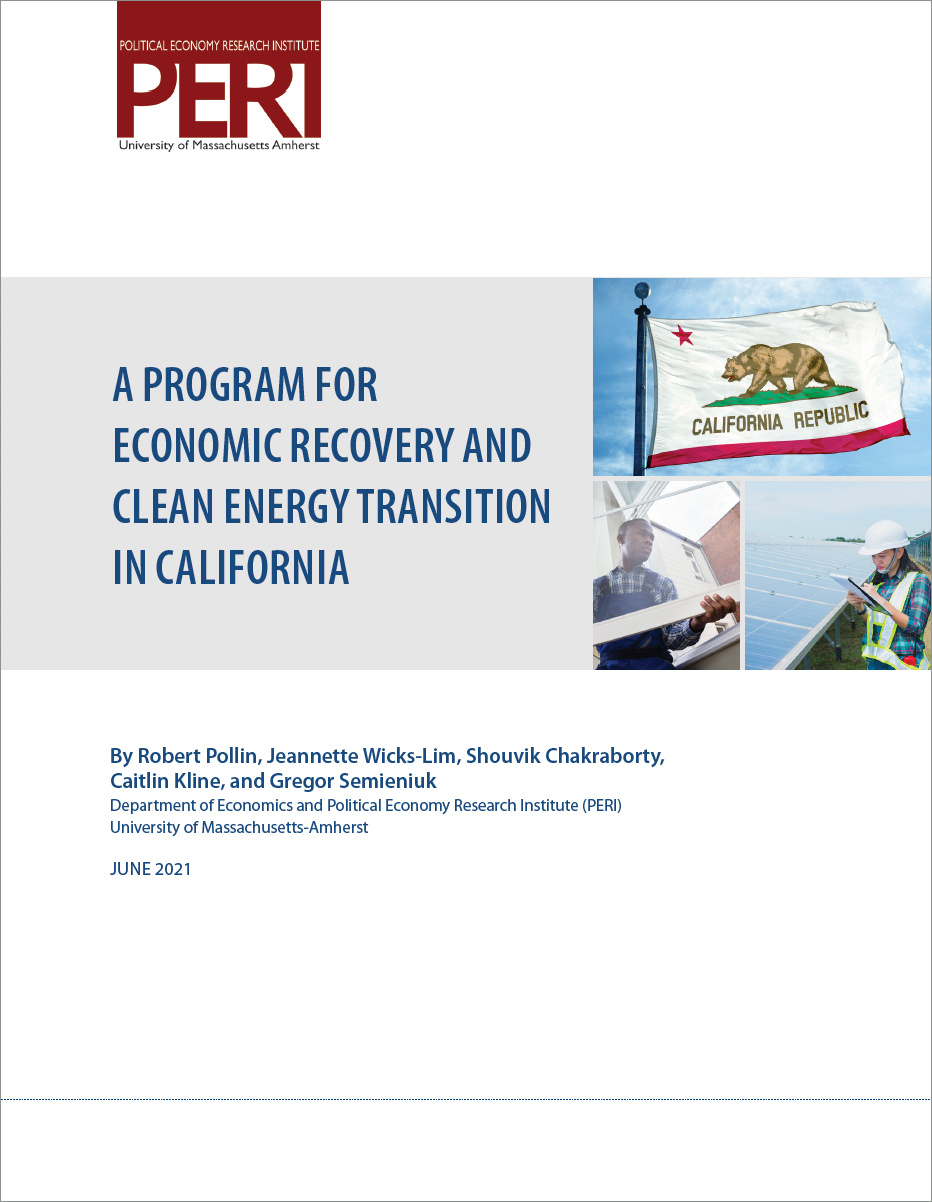
The California Climate Jobs Plan, popularly known as "the Pollin Report"--which has been described as a "sholvel ready just transition/Green New Deal" plan--and was immediately endorsed by nineteen California based labor unions, including three United Staeelworkers Union locals which primarily represent refinery workers upon its unveiling has since gained the support of many additional unions. The following unions (so far) have since endorsed the plan (knowing that while the plan isn't perfect, it's at least a step in a positive direction):

November 2021:

  • Inland Boatmen's Union (IBU), SF Bay Region (an affiliate of the ILWU)
  • Railroad Workers United
  • IWW San Francisco Bay Area General Membership Branch

February 2022:

  • International Lonshore and Warehouse Union (ILWU) Northern California District Council (NCDC)

The council is composed of delegates from the following ILWU Locals:

  • ILWU Local 6 (Bay Area Warehouse)
  • ILWU Local 10 (Bay Area Longshore)
  • ILWU Local 34 (Bay Area Shipping Clerks)
  • ILWU Local 75 (Bay Area Dock Security Guards)
  • ILWU Local 91 (Bay Area “Walking Bosses”)
  • ILWU Local 14 (Eureka; combined)
  • ILWU Local 18 (Sacramento; ditto)
  • ILWU Local 54 (Stockton)
  • Bay Area IBU (already endorsed individually)
  • and the pensioners from all of the above.

However, the NCDC's endorsement does not automatically mean that each of its constituent locals have individually endorsed the plan.

The more unions that endorse and take an active role in motivating the proposal either by lobbying at the California state level, engaging in public actions to promote the goals of the plan, or even engaging in workplace actions (whereaver relevant and practiceble), the greater chances the plan has of being realized.

(That said, it should be noted that this is not an IWW organizing project, although IWW members have been active in securing additional union endorsements).

A sample resolution (a copy of the text adopted by the SF Bay Area IBU) is available here.

Download the plan - here.

Challenges and perspectives of a just transition in Europe

Maine Climate Jobs Report

By J. Mijin Cha, Hunter Moskowitz, Matt Phillips, and Lara Skinner - Maine Labor Climate Council, March 2022

This report, written in consultation with researchers at Cornell University’s Worker Institute, examines the interrelated crises of climate breakdown and inequality, and lays out an ambitious roadmap for how Maine can build a renewable energy economy, create good union jobs, and tackle racial and economic inequality.

The report’s science-based recommendations will broadly help our state achieve four goals: quickly decarbonizing Maine’s economy; ensuring that the tens of thousands of new jobs that get created as part of Maine’s energy transition adhere to high labor standards in terms of pay, benefits, training, and job security; bringing underrepresented workers into the clean-energy workforce through well-run apprentice and pre-apprentice programs; and ensuring a just transition for workers and communities most affected by these changes. 

The report sets bold objectives for building out Maine’s renewable energy economy, including:

  • Electrifying all state and local vehicles, including school and city buses, by 2040;

  • Building a high speed rail corridor from Bangor to Boston while connecting to Lewiston/Auburn;

  • Doing deep energy-efficiency retrofits and installing solar on all K-12 public schools and publicly owned buildings by 2035; and

  • Installing 3GW of renewable energy by 2030 and upgrading Maine’s energy transmission and storage capacity

Read the report (PDF).

Pages

The Fine Print I:

Disclaimer: The views expressed on this site are not the official position of the IWW (or even the IWW’s EUC) unless otherwise indicated and do not necessarily represent the views of anyone but the author’s, nor should it be assumed that any of these authors automatically support the IWW or endorse any of its positions.

Further: the inclusion of a link on our site (other than the link to the main IWW site) does not imply endorsement by or an alliance with the IWW. These sites have been chosen by our members due to their perceived relevance to the IWW EUC and are included here for informational purposes only. If you have any suggestions or comments on any of the links included (or not included) above, please contact us.

The Fine Print II:

Fair Use Notice: The material on this site is provided for educational and informational purposes. It may contain copyrighted material the use of which has not always been specifically authorized by the copyright owner. It is being made available in an effort to advance the understanding of scientific, environmental, economic, social justice and human rights issues etc.

It is believed that this constitutes a 'fair use' of any such copyrighted material as provided for in section 107 of the US Copyright Law. In accordance with Title 17 U.S.C. Section 107, the material on this site is distributed without profit to those who have an interest in using the included information for research and educational purposes. If you wish to use copyrighted material from this site for purposes of your own that go beyond 'fair use', you must obtain permission from the copyright owner. The information on this site does not constitute legal or technical advice.
