






You are here
food
 Based on the video Together we can cool the planet! co-produced by La Vía Campesina and GRAIN in 2015, we have created a comic book to support training activities of social movements and civil society organisations around climate change. This comic book looks at how the industrial food system impacts our climate and also explains what we can do to change course and start cooling the planet.
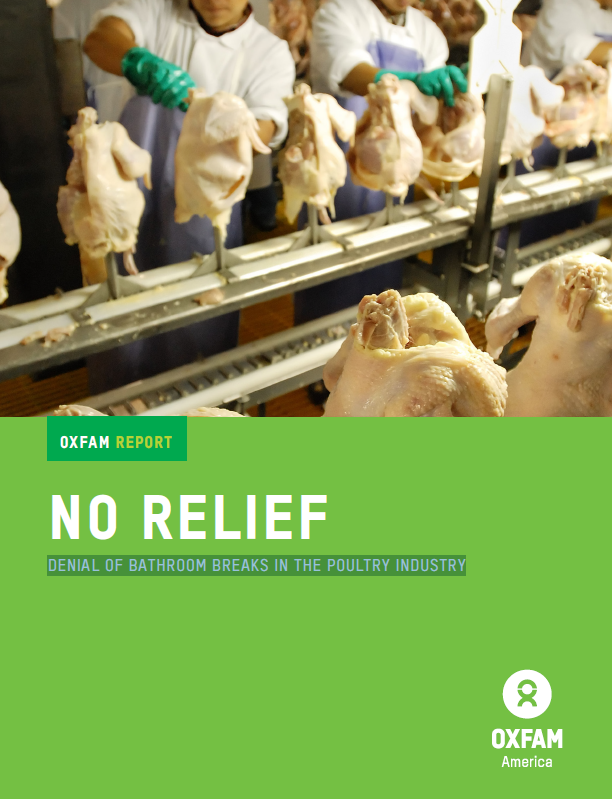 As poultry workers are routinely denied adequate bathroom breaks, they face dangers to their health and blows to their dignity.
 Today’s food and farming systems have succeeded in supplying large volumes of foods to global markets, but are generating negative outcomes on multiple fronts: widespread degradation of land, water and ecosystems; high GHG emissions; biodiversity losses; persistent hunger and micro-nutrient deficiencies alongside the rapid rise of obesity and diet-related diseases; and livelihood stresses for farmers around the world.
 The food justice movement -- a loose but expansive conglomeration of organizations working to create a more just food system in the United States -- has accomplished a great deal over the last 30 years. But can it manage to converge in its diversity and create a countermovement potent enough to transform the current food regime? Or is it too shallow and too spread, destined to disappear in its disjointedness.
 It is no secret that global trade is going through a major transformation. The EU-US TTIP agreement under consideration has been compared in scale by negotiators to the European internal market, while Hillary Clinton has
  The following news items feature issues, discussions, campaigns, or information potentially relevant to green unionists:
 The following news items feature issues, discussions, campaigns, or information potentially relevant to green unionists:
 The following news items feature issues, discussions, campaigns, or information potentially relevant to green unionists:
 Do the rich and poor eat the same? Do our incomes determine our diet? Today, who is overweight? Although often, and from certain quarters, the call for healthy and wholesome food is viewed with disdain, as “a fad” “posh”, “hippy” or “flower power” the reality is rather different than these short-sighted comments imply. To defend ecological, local, peasant food is most “revolutionary”.
The Fine Print I:
Disclaimer: The views expressed on this site are not the official position of the IWW (or even the IWW’s EUC) unless otherwise indicated and do not necessarily represent the views of anyone but the author’s, nor should it be assumed that any of these authors automatically support the IWW or endorse any of its positions.
Further: the inclusion of a link on our site (other than the link to the main IWW site) does not imply endorsement by or an alliance with the IWW. These sites have been chosen by our members due to their perceived relevance to the IWW EUC and are included here for informational purposes only. If you have any suggestions or comments on any of the links included (or not included) above, please contact us.
The Fine Print II:
Fair Use Notice: The material on this site is provided for educational and informational purposes. It may contain copyrighted material the use of which has not always been specifically authorized by the copyright owner. It is being made available in an effort to advance the understanding of scientific, environmental, economic, social justice and human rights issues etc.
It is believed that this constitutes a 'fair use' of any such copyrighted material as provided for in section 107 of the US Copyright Law. In accordance with Title 17 U.S.C. Section 107, the material on this site is distributed without profit to those who have an interest in using the included information for research and educational purposes. If you wish to use copyrighted material from this site for purposes of your own that go beyond 'fair use', you must obtain permission from the copyright owner. The information on this site does not constitute legal or technical advice.
 This site is not the official webpage of the Industrial Workers of the World.