You are here

capital blight

Workers At Coal Waste Landfill Told That Coal Ash Is ‘Safe Enough To Eat,’ Lawsuit Says

By Emily Atkin - Think Progress, September 5, 2014

Disclaimer: The views expressed here are not the official position of the IWW (or even the IWW’s EUC) and do not necessarily represent the views of anyone but the author’s.
Employees of an Ohio landfill used primarily for disposing of toxic coal waste byproducts like coal ash were told that the waste was “safe enough to eat” and weren’t required to wear protective gear, resulting in numerous illnesses and some deaths, according to a lawsuit filed on behalf of 77 people last month.

Doug Workman, a supervisor at the General James M. Gavin Residual Waste Landfill landfill in North Cheshire, Ohio, allegedly responded to worker inquiries about whether working with the coal waste was safe “by sticking his finger into the coal waste and then placing his fly-ash covered finger into his own mouth,” thereby implying that “that coal waste was ‘safe enough to eat,’” according to a report in the West Virginia Record. Both Workman and American Electric Power — the power company that owns the landfill — are targets of the lawsuit, which claims that workers who handled the waste were not adequately protected from its toxic properties.

“Repeatedly, individuals were not provided with protective equipment, such as overalls, gloves or respirators when working in and around coal waste,” the lawsuit reads. “These working men and women, already exposed to the contaminants at the job site, then, in turn, carried the coal waste home to their families on their clothes and shoes, thus even exposing family members to the deadly toxins.”

The lawsuit was filed on behalf of 77 people, 39 of whom were direct employees of the landfill and others who claim they were harmed by contact with those employees. The West Virginia Record notes that most of the workers were actually employees of contractor companies that worked for AEP.

AEP owns the landfill because it is directly next to one of its coal-fired power plants, and is therefore used to dispose of the waste that comes from that plant. One of the biggest forms of waste from burning coal is called coal ash, which is usually stored with water in large ponds, or in landfills. The black sludgy substance is known to contain arsenic, lead, and mercury.

However, workers at the Gavin landfill were allegedly told that the coal ash was only a mixture of “water and lime,” and that it contained “such low levels of arsenic, it made no difference.” The workers were allegedly told that the “lime neutralizes the arsenic,” according the the Record’s report.

The Urgent Case for a Ban on Fracking

By staff - Food and Water Watch, September 2014

The term “fracking” has come to mean far more than just the specific process of hydraulic fracturing, when companies inject large volumes of fracking fluid composed of water, sand and chemicals deep underground, at extreme pressure, to create fractures in targeted rock formations to bring oil and gas to the surface.

Today, the term “fracking” represents the host of problems that this dangerous process entails. This report details evidence on the many reasons why fracking is unsafe and should be banned, including:

  • Fracking water contamination destroys families’ drinking water. Pollution from fracking chemicals contaminates drinking water and puts peoples’ health at risk.
  • Fracking produces massive volumes of toxic and radioactive waste. The disposal of this waste is causing earthquakes and putting drinking water resources at risk.
  • Fracking pumps hazardous pollutants into the air. Fracking uses over 100 dangerous chemicals known to cause life-threatening illnesses, including cancer.
  • Fracking destabilizes the climate. Fracking wells release large amounts of methane gas, which is known to trap 87 times more heat than carbon dioxide in the atmosphere in the decades after it is emitted, contributing greatly to climate change.
  • Fracking disrupts local communities. Fracking presents a broad number of consequences for people living in areas where it is occurring, including damage to public roads, declines in property value, increased crime and an increased demand on emergency services.
  • Fracking causes thousands of accidents, leaks and spills. More than 7,500 accidents related to fracking occurred in 2013, negatively impacting water quality in rivers, streams and shallow aquifers.

Read the report (PDF).

Wrong Side of the Tracks: Why Rail is Not the Answer to the Tar Sands Market Access Problem

By Lorne Stockman, et. al. - Oil Change International, September 2014

Tar sands pipelines face increasing resistance both in the United States and Canada. As existing pipelines reach capacity, the delay and possible cancellation of new pipelines is costing tar sands producers billions of dollars and reducing investment in the sector. The success of anti-pipeline campaigns has forced industry to look to rail in an attempt to address these losses and open new markets for their product.

The crude oil produced from the Albertan tar sands is a semi-solid substance called bitumen, rather than a liquid crude oil. Shipping bitumen by rail is more expensive than shipping it by pipeline and the added cost is a substantial challenge to the long-term viability of the tar sands industry. Despite significant evidence, market analysis, and real world experience to the contrary, some prominent institutions - including the U.S. Department of State - continue to assert that rail has the potential to replace tar sands pipeline capacity, and thus the rapid pace of tar sands development will continue regardless of whether new pipeline capacity is built or not.

This report details why this is not the case.

Read the report (English PDF).

The Global Ocean Grab

By Carsten Pedersen, et. al. - World Fishers, September 2014

The term ‘ocean grabbing’ aims to cast new light on important processes and dynamics that are negatively affecting the people and communities whose way of life, cultural identity and livelihoods depend on their involvement in small-scale fishing and closely related activities. Small-scale fishers and fishing communities in both the Global South and the Global North are increasingly threatened and confronted by powerful forces that are dramatically reshaping existing access rights regimes and production models in fisheries. This process is leading not only to the dwindling of control by small-scale fishers over these resources, but also in many cases to their ecological destruction and very disappearance.

Today we are witnessing a major process of enclosure of the world’s oceans and fisheries resources, including marine, coastal and inland fisheries. Ocean grabbing is occurring mainly through policies, laws, and practices that are (re)defining and (re)allocating access, use and control of fisheries resources away from small-scale fishers and their communities, and often with little concern for the adverse environmental consequences. Existing customary and communal fisheries’ tenure rights systems and use and management practices are being ignored and ultimately lost in the process. Ocean grabbing thus means the capturing of control by powerful economic actors of crucial decision-making around fisheries, including the power to decide how and for what purposes marine resources are used, conserved and managed now and in the future. As a result, these powerful actors, whose main concern is making profit, are steadily gaining control of both the fisheries’ resources and the benefits of their use.

Read the report (English PDF).

Climate Crisis Connects Us, Climate Justice Requires Unity

By Margaret Flowers and Kevin Zeese - Popular Resistance, August 26, 2014

Disclaimer: The views expressed here are not the official position of the IWW (or even the IWW’s EUC) and do not necessarily represent the views of anyone but the author’s.

What do rigged corporate trade agreements like the Trans-Pacific Partnership and the Paris Treaty, an international climate agreement to be signed in 2015, have in common? They are both tools being pushed by the power elite to rip away our hopes for democracy and to commodify all things to monetize them for profit.

It is this drive by multinational corporations to patent and control even living beings such as plants and animals and to privatize even elements that are essential to life such as water which connects all human beings on the planet. We are in a global battle of the people versus the plutocrats and this battle has a ticking timer called the climate crisis.

The global financial elites meet regularly to plan their strategy and tactics. If they can’t push their agenda through the World Bank, International Monetary Fund and World Trade Organization, they move to secret massive trade agreements. The Obama Administration is negotiating three such agreements right now: the Trans-Pacific Partnership (TPP), the Transatlantic Trade and Investment Partnership (TAFTA) and the Trade in Services Agreement (TISA). Those agreements are stalled thanks to a movement of movements coming together to stop Congress from giving Obama fast track trade promotion authority.

Similarly, in response the climate crisis, the United Nations has been involved in what is called the Conference of the Parties (COP) which is part of the UN Framework Convention on Climate Change (UNFCCC). Big corporations have taken over this process and are using it in their relentless drive to plunder the planet and exploit its living beings which knows no limits. It will take people power to apply the brakes.

Now, with the Paris Treaty, a binding international climate agreement, set to be concluded in December of 2015, we must build a similarly unified movement that stops this rigged corporate agreement and puts in place real solutions to the climate crisis. We must understand that climate change affects and connects all of us and we must be as organized as the opposition.

The United Nations Climate Summit in New York this September 23 provides an opportunity to further build this unified movement in the United States. Thousands of activists are planning to come to New York City for a march on September 21. In the days prior to that, the Global Climate Convergence in partnership with System Change not Climate Change will host a conference to discuss real solutions and obstacles to change, share skills and connect our sub-movements. This will be another step in the growing movement seeking real climate solutions in the face of the corruption and dysfunction of the United Nations and United States which have failed to address the climate crisis in meaningful ways.

Indigenous Resistance Grows Strong in Keystone XL Battle

By Crysbel Tejada and Betsy Catlin - Waging Nonviolence, May 8, 2013

Disclaimer: The views expressed here are not the official position of the IWW (or even the IWW’s EUC) and do not necessarily represent the views of anyone but the author’s.

On cloudy days, heavy smoke fills the air of Ponca City, Okla., with grey smog that camouflages itself into the sky. The ConocoPhillips oil refinery that makes its home there uses overcast days as a disguise to release more toxins into the air. These toxins are brimming with benzene — a chemical that, according to the Centers for Disease Control, can cause leukemia, anemia and even decrease the size of women’s ovaries. According to the Environmental Protection Agency, in 2008 the ConocoPhillips refinery released over 2,000 pounds of this chemical into the air in Ponca City.

“Of the maybe 800 of us that live locally, we have averaged over the last five to seven years maybe one funeral a week,” explained Casey Camp-Horinek, a Ponca woman and longtime activist. “Where we used to have dances every week, now most people are in mourning.”

The refinery is located only 1,000 yards behind Standing Bear Park, which is named after the Ponca chief who, in 1877, led his people on their Trail of Tears, from the Ponca homelands in northern Nebraska to present day Oklahoma. But the park is more than a memorial to the distant past. In 1992, the oil giant’s tank farm spilled and contaminated ground water in a nearby predominantly Ponca neighborhood. As a result, ConocoPhillips agreed to purchase the contaminated land and tear down the 200 homes that were on it. In its place, the company built Standing Bear Park — a bitter testament to the Ponca people’s history of forced relocation and genocide.

“We live in a situation that could only be described as environmental genocide,” said Camp-Horinek. Beyond the refineries, she explained, “We also have had the misfortune of living on top of a spider web of pipelines as a result of ConocoPhillips being here.”

Some of these pipelines are transporting Canadian tar sands bitumen, which carries chemicals such as natural gas, hydrogen sulfide, benzene and toluene. This highly toxic diluted substance runs through large pipelines such as Enbridge’s Pegasus line, which recently burst in Mayflower, Ark., and would also flow through TransCanada’s contested Keystone XL pipeline if completed.

“It will not only come through the original territory of the Ponca people [but] it will follow the Trail of Tears of the Ponca people from the 1800s,” said Camp-Horinek. “As a Ponca woman these things are not far removed from us. My own grandfather, my mother’s father, was on this Trail of Tears of the Ponca.”

Ash in Lungs: How Breathing Coal Ash is Hazardous to Your Health

By Alan H Lockwood, Physicians for Social Responsibility and Lisa Evans, Earth Justice - Report, August 2014

Take a deep breath. But if you live near a coal-burning power plant that dumps coal ash into a nearby landfill or lagoon, don’t inhale too deeply because you’re probably breathing fugitive dust made up of airborne coal ash filled with dangerous and toxic pollutants. Whether blown from an uncovered dump site or from the back of an open truck, toxic dust contaminates hundreds of fence line communities across the country. Acrid dust stings residents’ eyes and throats, and asthmatics, young and old, are forced to reach for inhalers. Breathing this toxic dust can be deadly, and yet no federal standards exist to protect affected communities.

This report describes the health impacts of the pollution found in coal ash dust. It also points to the imminent need for federal controls to limit exposure and protect the health of millions of Americans who live near coal ash dumps. Coal combustion waste (or coal ash), particularly fly ash, a major component of coal ash waste, poses significant health threats because of the toxic metals present in the ash, such as arsenic, mercury, chromium (including the highly toxic and carcinogenic chromium VI), lead, uranium, selenium, molybdenum, antimony, nickel, boron, cadmium, thallium, cobalt, copper, manganese, strontium, thorium, vanadium and others. Ironically, as coal plant pollution controls like electrostatic precipitators and baghouse filters become more effective at trapping fly ash and decreasing coal plant air pollution, the waste being dumped into coal ash waste streams is becoming more toxic.

Read the report (PDF).

Capital Blight - LIUNA Official Declares, "the Earth is flat; I saw it with my own eyes!"

By x344543 - IWW Environmental Unionism Caucus July 21, 2014

Those familiar with the IWW EUC will recall that we pull no punches in attacking the shortcomings of the business unions (the building trades in particular) on matters of both class and ecology, particularly the Keystone XL pipeline.

In late April of this year, Sean McGarvey, president of the North American Building Trades' Unions issued this statement calling for the expediting of the Keystone XL Pipeline and defending Alberta tar sands mining (which Keystone XL would facilitate, and a key--no pun intended--reason for widespread opposition to it by environmentalists).

In it, he declared:

"I've just spent several days with other building trades union leaders visiting the oil sands region and meeting with officials from the Canadian government as well as industry representatives and contractors...and what we heard, and more importantly what we saw with our own eyes, is nowhere near what the American public is being told by the radical environmental movement."

The assorted labor fakirs referenced by McGarvey included:

  • Terry O'Sullivan, General President; LiUNA
  • Ed Hill -International President; IBEW
  • Bill Hite - General President; United Association of Plumbers and Pipefitters
  • Joe Nigro - General President; SMART (International Association of Sheet Metal, Air, Rail and Transportation Workers)
  • Eric Dean - General Secretary; International Association of Ironworkers
  • Mike Pleasant - Administrative Assistant to the General President; United Association of Plumbers and Pipefitters
  • Terry Healy- Vice President and Special Assistant to the President; LiUNA

There's little doubt that McGarvey is openly hostile to the environmental movement, evidenced by his attempts to marginalize the vast and growing popular opposition to Keystone XL (as well as many other) pipeline(s), tar sands mining, fracking, mountaintop removal coal mining, offshore drilling, and crude-by-rail (all of which are inevitably interconnected due to the current capitalist push to extract every known source of carbon before the impending carbon bubble bursts and strands $trillions in assets) as "radical" (read: fringe) environmentalists.

He claims (without any peer reviewed studies, corroborating evidence from independent sources, or even so much as a single citation) that Canadian government officials, industry representatives and contractors, and his own eyes tell him:

  • The development of the oil sands accounts for only 7.8% of Canada's annual overall GHG emissions; and only 1/640th of global GHG emissions.
  • The government of Alberta implemented stringent GHG regulations in 2007, becoming the first jurisdiction in North America to do so. Since 2007, these regulations have resulted in GHG reductions of 23 million tons, the equivalent of taking 4.8 million cars off the road for one year.
  • Since 1990 GHG emissions from oil sands development have been reduced by 26%.
  • The Royal Society in Canada has studied water quality impacts and its conclusions suggest that oil sands development are not a current threat to aquatic ecosystem viability.
  • Alberta law requires all lands disturbed by oil sands operations be reclaimed. All companies are required to develop a reclamation plan that spans the life of the project.
  • McGarvey wants us to believe that if the capitalists say something is "green" and "safe" that we should trust that information, especially if it's backed up by the (arch conservative, pro-fossil fuel extraction) Canadian government. There couldn't any conflict of interest there right? And of course, we can trust McGarvey's own eyes, because...well...he sees with them, and seeing is believing! (or so McGarvey wants us to think).

    If I were him, I'd get my eyes checked, because there's a whole bunch right in front of his eyes that he's not seeing. Either that, or he chooses not to see it.

    Capital Blight: The More Things Change...

    By x344543 - IWW Environmental Unionism Caucus, July 12, 2014

    Disclaimer: The views expressed here are not the official position of the IWW (or even the IWW’s EUC) and do not necessarily represent the views of anyone but the author’s.

    A recent article from the folks over at the Rocky Mountain Institute--a pro renewable energy, green capitalist think tank founded by Amory Lovins, Lessons from Australia: How to Reduce US Solar PV Costs through Installation Labor Efficiency, written by Robert McIntosh and Koben Calhoun, demonstrates all too clearly why it's not enough just to replace the existing fossil fuel energy system with renewable alternatives. To sufficiently transform our world, we must confront the root of the problem, and that's hierarchical command / control political-economic systems like capitalism itself.

    Yes, it's certainly a good idea to strive for a reasonable degree of efficiency in accomplishing one's desired goals by minimizing input and maximizing output. Doing so is human nature. If this weren't true, humans wouldn't have developed tools and machines to minimize throughputs. The flaw in this concept is the tendency to "externalize" the negative consequences of maximizing this efficiency and to unfairly distribute the fruits of such efforts. A several thousand (or perhaps million) year history of combined and cumulative efforts has created hierarchical class structure and nearly brought about a sixth mass terrestrial extinction event.

    The idea that such practices can somehow be reconciled with both a sense of fairness and with ecological sustainability is simply another way in which capitalism has poisoned our minds and our environment.

    Capital Blight - Smoke and Mirrors

    By x344543 - IWW Environmental Unionism Caucus, July 11, 2014

    Disclaimer: The views expressed here are not the official position of the IWW (or even the IWW’s EUC) and do not necessarily represent the views of anyone but the author’s.

    This past week reports of a recent trend (but hardly a new phenomena), called "rolling coal", have gone viral in the green media--in particular on Grist and the Huffington Post. Essentially, predominantly white, working class, rural truck drivers are venting their frustrations on "effete, latte sipping, Prius driving, city-dwelling, liberals" by installing devices in their trucks that actually belch smoke and lower their own gas mileage on command. This display of reactionary machismo is detailed in a recent article by Elizabeth Kulze. As the famous comedian, Jack Benny would probably say--in the complete opposite context--"Only in America...".

    As one would expect, the comments sections following these articles are full of harshly critical comments directed at these coal rollers, and not entirely without justification, but the anger is misdirected.

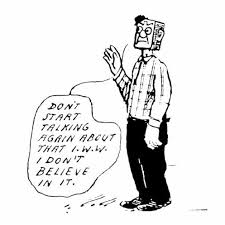
    To be sure, it's not a classist or elitist slur to properly refer to attitudes such as these as retrograde. Back in the day the Wobblies had a nickname for members of our own class who would side with the bosses. We called them "blocks" (after the block-headed Ernest Riebe cartoon character, "Mr. Block") or "scissorbills", cultural memes which may have influenced both Charles Schulz (Think of Lucy Van Pelt calling Charlie Brown "blockhead") and the Beatles ("Billy Shears" possibly derives from "William Shears), but our fellow workers never forgot who the real enemy was: the employing class.

    Why would anyone in their right mind go to such lengths to actually pay money to install such a moronic device on their vehicle and vent their anger at members of their own class? Clearly this is not logical in any sense. Only a fool would deliberately set their own house on fire, crap in their own bed, or piss in their own beer, but that is precisely what these coal rollers are doing. No matter how much they hate those "Commie tree hugging unwashed-out-of-town-jobless-hippies-on-drugs" or whatever, they're ultimately shooting themselves in the foot by spewing more greenhouse gasses into the Earth's atmosphere. Even if the effect is mostly negligible by itself, it still enables the capitalist class by enabling the latter's divide and conquet tactics which keep the 99% divided and at each other's throats.

    We've seen this type of behavior before. In 1989, in timber dependent communities, after the US Government (finally) announced intentions to consider listing the Northern Spotted Owl as a "threatened" species (after years and years of lawsuits, campaigning, and frustration by environmentalists), the big timber corporations used a combination of propaganda, pseudoscientific nonsense, and false front astroturf "wise use" groups (as well as a few compliant business union officials) to whip timber workers into a vigilante mob hysteria against the environmental community.

    Unfortunately, many environmentalists foolishly vented their frustration at the timber workers and not the timber workers employers, but this was a tactical mistake. Most timber workers didn't actually support this vigilante mob hysteria (though the corporate controlled media made it seem otherwise), but the capitalists wanted us all to think that the divisions were greater than they actually are, and things are no different now. This whole, sorry affair is simply more smoke and mirrors from the employing class.

    Pages

    The Fine Print I:

    Disclaimer: The views expressed on this site are not the official position of the IWW (or even the IWW’s EUC) unless otherwise indicated and do not necessarily represent the views of anyone but the author’s, nor should it be assumed that any of these authors automatically support the IWW or endorse any of its positions.

    Further: the inclusion of a link on our site (other than the link to the main IWW site) does not imply endorsement by or an alliance with the IWW. These sites have been chosen by our members due to their perceived relevance to the IWW EUC and are included here for informational purposes only. If you have any suggestions or comments on any of the links included (or not included) above, please contact us.

    The Fine Print II:

    Fair Use Notice: The material on this site is provided for educational and informational purposes. It may contain copyrighted material the use of which has not always been specifically authorized by the copyright owner. It is being made available in an effort to advance the understanding of scientific, environmental, economic, social justice and human rights issues etc.

    It is believed that this constitutes a 'fair use' of any such copyrighted material as provided for in section 107 of the US Copyright Law. In accordance with Title 17 U.S.C. Section 107, the material on this site is distributed without profit to those who have an interest in using the included information for research and educational purposes. If you wish to use copyrighted material from this site for purposes of your own that go beyond 'fair use', you must obtain permission from the copyright owner. The information on this site does not constitute legal or technical advice.


