You are here
News Feeds
Op-Ed | The Nutritionists Are Right. We Must End Hunger Differently.
In 1946, more than half the world’s population faced hunger. Today, this figure has fallen dramatically—to 8 percent—even as the global population has tripled. Progress the past 20 years has been significant with, for example, Cambodia bringing its hunger levels down from 25 percent in 2000 to 5 percent in 2025.
Unfortunately, progress has not only stalled—it has reversed in some regions. At the same time, we are facing colossal health and environmental problems worldwide because of an approach used to end hunger that focused heavily on a few staple crops: wheat, rice and corn. Today, one out of three people in the world suffer from malnutrition with overweight and obesity rates skyrocketing. An estimated 20 percent of global mortality is now attributed to poor-quality diets.
This is further compounded by an affordability crisis. Healthy diets remain economically out of reach for most people living in low- and middle-income countries, estimated to cost US$4.50 per day (global mean) while 45 percent of the global population lives below US$6.85 a day, and 10 percent lives below US$3.00 a day. Poverty and a lack of access to healthy diets go hand in hand.
These results are not accidental. They reflect decades of policy choices that promote the production and marketing of staple and oilseed crops through price incentives, procurement measures and subsidies. These policies have subsidies overwhelmingly favor staple foods and limited incentives for farmers to diversify their production systems.
The problem is not a lack of calories. It is a lack of diverse foods needed for healthy diets, the discrepancies between where food is produced and where it is consumed, and the inability of vulnerable populations to afford healthy food options. This is the hunger problem we face today.
But this problem can be fixed. Agriculture remains the first line of defense against hunger and malnutrition. Investing in nutrition-sensitive agriculture ensures that these systems deliver not just more food, but more healthy food. This needs to be driven by a multi-sector approach with co-investments in health, education, as well as water, sanitation, and hygiene alongside agriculture and food systems.
A new report published by researchers from CABI, the U.N. Food and Agriculture Organization (FAO) and the Shamba Centre for Food & Climate, shows how we can integrate nutrition into current agriculture and food aid programs. It identifies 10 high-impact nutrition-sensitive interventions based on a review of scientific evidence spanning 1,732 individual studies across 83 countries and published in 52 high quality systematic reviews over the past 20 years.
According to the report, we first need to enhance household-level food production to increase the availability of nutrient-dense foods. We do not produce enough fruits, vegetables, and pulses for everyone to be able to access and afford them. And while we produce enough proteins, they remain over-consumed in some places and under-consumed in others. We need to support those that do not produce enough animal source foods to sustainably increase the production of aquaculture and poultry—two animal-source foods that can be relatively cheap, relatively low-emissions, and high in nutrients.
Second, we need to focus on improving access, efficiency, and safety within agriculture and food systems. Infrastructure is lacking—from storage and processing to roads and electricity—to preserve nutritious food for longer, get the missing micronutrients to consumers and ensure that food is safe to eat. This is particularly important when considering fresh fruits and vegetables as well as animal-sourced proteins.
And we need to address consumer choice. As we start to produce and market healthy food options, consumers need to be accompanied and understand the change in their food environment. We need to directly shift and influence diet choices at the household level.
Every intervention brings trade-offs. Poorly designed interventions and policies can reinforce existing inequities. For example, infrastructure investments could uphold the exclusion of marginalized groups. Food safety reforms can unintentionally push small-scale out of formal markets. At the household level, power dynamics can influence who consumes nutrient-dense foods. Environmental sustainability is also key. For this reason, production should focus on agroforestry and diversification towards fruit and vegetables to enhance resilience while improving diets.
The evidence makes clear that single interventions rarely work on their own. We have learned that outcomes and design matter. In practice, this means combining multiple interventions together to reduce costs and enhance effectiveness and being intentional in nutrition objectives. School meals, for example, may be more effective at improving education outcomes than nutrition outcomes. But when designed with nutrition objectives and using local procurement, they can also enhance children’s diet quality and dietary diversity, particularly in low-income countries.
Unfortunately, all too often, agriculture and food security projects omit the integration of nutrition objectives. The report found that 80 percent of agriculture and food security aid projects screened with the OECD nutrition policy marker did not target nutrition—only 20 percent of projects included significant or principal nutrition objectives. Better integration of nutrition objectives in agriculture and food security aid projects is quickly achievable.
We also need to accelerate the nascent blended finance strategies and get better at using aid to catalyze much larger resource flows from the domestic public and private sectors. And let’s make sure that our economies work well so that all producers have the opportunity to thrive.
Articles like the one you just read are made possible through the generosity of Food Tank members. Can we please count on you to be part of our growing movement? Become a member today by clicking here.
Photo courtesy of Andy Arbiet, Unsplash
The post Op-Ed | The Nutritionists Are Right. We Must End Hunger Differently. appeared first on Food Tank.
Inside Buffalo Go Green’s Approach to Food, Health, and Care
In Buffalo, New York, Buffalo Go Green has spent years advancing food equity by linking food access, education, and health outcomes in communities shaped by long-standing disinvestment—and is now building a platform to ensure those services reach people in ways that reflect their real lives.
Founded by Allison DeHonney, the organization operates primarily on Buffalo’s East Side, where limited access to affordable, nutritious food contributes to high rates of diet-related disease including diabetes, hypertension, and obesity. 28.3 percent of Buffalo’s population lives below the poverty line, and 24 percent is food-insecure.
DeHonney launched Buffalo Go Green without formal training in agriculture or healthcare, instead drawing on experience in business and insurance to address structural drivers of poor health.
“The impetus of the organization, after doing research on health disparities, was addressing the lack of access to fresh fruits and vegetables and the lack of knowledge surrounding healthy food choices,” DeHonney tells Food Tank.
DeHonney began by starting a farm, focusing on healthy soil, non-GMO seeds, and growing practices designed to produce nutrient-dense food. To fight health disparities and their effects, Buffalo Go Green developed produce prescription programs, where patients are provided with prescriptions for fruits and vegetables to bolster their health, and prepared meal programs for the underserved.
The organization operates year-round growing facilities that yield hundreds of pounds of organic fruits and vegetables. It also runs mobile produce markets to ensure Buffalo residents can access nutritious food where and when they need it.
As DeHonney spent time engaging with community members at markets and on the farm, education became a focal point. She found that access alone was insufficient, particularly in dense urban neighborhoods with limited growing space. “So much harm has been done in these communities,” DeHonney explains, noting that education helps build lasting skills and confidence around food choices.
Buffalo Go Green’s education programs now span home growing, greenhouse management, nutrition, cooking, and food systems literacy. Participants receive hands-on training, books for guidance, and exposure to the institutions working to improve food access in the area.
As New York expands Food is Medicine through a Medicaid 1115 Waiver, Buffalo Go Green has identified a critical gap between screening patients for food insecurity and delivering effective services. When individuals are deemed eligible under the waiver program, they are directed to a community-based organization, regional non-profits, or health care providers for support.
“Once people are screened as food insecure and navigated to us, life doesn’t stop,” DeHonney says, pointing to changes in housing, caregiving responsibilities, allergies, and weekly needs. Existing systems, she notes, are not designed to track those shifting realities over the months someone receives services. Without that information, providers risk missing opportunities to support the nuances of participants’ lives and sustained behavior change around shopping, cooking, and nutrition.
To address this gap, Buffalo Go Green is launching a new platform designed to strengthen service delivery under the 1115 waiver. Originally developed as a point-of-sale and inventory system for farmers markets, the updated platform will include a new layer focused on individual service delivery. The tool allows staff to capture what a participant needs week to week, while also generating aggregate data to inform program design and policy discussions.
“It’s based on the individual, but we can aggregate all of that,” DeHonney says, citing insights such as housing instability that are often invisible in traditional reporting systems. The platform is expected to launch imminently.
Along with on-the-ground service delivery, Buffalo Go Green participates in food policy coalitions and national networks, lending on-the-ground insight into how policy decisions affect implementation. DeHonney views this role as essential to ensuring Food Is Medicine policies translate into real-world impact.
The organization’s commitment to co-production with universities and partners has shaped both its programming and research collaborations. “These relationships don’t have to be complicated,” DeHonney says, emphasizing trust, responsiveness, and shared problem-solving.
Looking ahead, Buffalo Go Green is expanding through a holistic wellness and agricultural education campus that will include a teaching kitchen, a small market, a juice bar, and indoor hydroponic growing. The goal, DeHonney says, is to grow without losing the community-centered approach that has defined the organization’s work from the beginning.
Articles like the one you just read are made possible through the generosity of Food Tank members. Can we please count on you to be part of our growing movement? Become a member today by clicking here.
Photo courtesy of David Lang, Unsplash
The post Inside Buffalo Go Green’s Approach to Food, Health, and Care appeared first on Food Tank.
Le droit international peut-il mourir ou renaître à Gaza ?
Politiste et maître de conférences à l’Université Paris-Dauphine, Jérôme Heurtaux est un universitaire spécialisé sur la sociologie politique des changements de régime, en particulier en Europe centrale et au Maghreb. Ces différentes recherches l’ont amené à réfléchir aux effets du droit sur les sociétés. C’est ainsi qu’il a voulu s’emparer du sujet de Gaza dans son dernier ouvrage, Le droit international est-il mort à Gaza ? aux éditions Riveneuve. L’auteur y analyse comment la destruction de la bande de Gaza par l’armée israélienne constitue un enjeu fondamental pour l’ensemble des normes juridiques internationales. Nous l’avons rencontré en marge de sa conférence au Salon du livre de Genève, le 18 mars dernier.
Benjamin Joyeux : Pourquoi cet ouvrage maintenant, alors que vous n’êtes pas un spécialiste du Proche-Orient mais plutôt de l’Europe de l’Est ?
Jérôme Heurtaux : Je voudrais avant tout souligner à quel point il est important de parler de Gaza, y compris dans le contexte actuel de guerre en Iran. Compte tenu de l’escalade militaire au Moyen-Orient, l’intérêt pour la Palestine en général, et pour Gaza en particulier, reste évidemment trop insuffisant et très inférieur à ce qu’il devrait être. Cette attention à la Palestine est de toute façon, en général, structurellement discontinue, fluctuante et très souvent biaisée. La multiplication des entraves au droit international dans l’ensemble de la région, qui sont évidemment manifestes et qui nous touchent, ne doivent pas occulter chacun des théâtres particuliers sur lesquels ces violations interviennent.
D’où la nécessité de revenir à Gaza. Ce retour à Gaza, il est important pour de multiples raisons et tout d’abord parce que le crime commis à Gaza par l’armée israélienne, en réponse aux attaques des groupes armés palestiniens le 7 octobre 2023, est un crime « majuscule ». La brutalité militaire exceptionnelle, l’ampleur et le caractère systématique des atteintes et des violations contre les civils, la mortalité sans précédent des enfants, l’usage de la famine comme une arme militaire, la destruction des écoles, des hôpitaux, des universités, des lieux de culte et l’ensemble des formes de déshumanisation contre les Palestiniens, ont conduit un certain nombre d’acteurs politiques, mais surtout d’acteurs de la société civile, notamment des juristes internationaux, à mobiliser en masse des catégories du droit international pénal, en particulier celle de « crimes de guerre », de « crimes contre l’humanité » mais aussi et pour la première fois depuis bien longtemps, celle de crime de « génocide ». Le massacre de Sabra et Chatila en 1982 avait déjà été qualifié de génocide par l’Assemblée Générale des Nations Unies. Mais c’est véritablement la première fois que, de manière répétée et convergente, un grand nombre d’acteurs qui ne cessent d’ailleurs de grossir, concluent au crime de génocide à Gaza. De fait, un crime de très grande ampleur qui a fait reculer l’espérance de vie à Gaza de l’ordre de 35 ans en 2 ans, selon des études très sérieuses. À titre de comparaison, la France, entre 1913 et 1918, avait vu son espérance de vie chuter de 17 ans. Et cette très forte baisse de l’espérance de vie est due à la surmortalité chez les plus jeunes à Gaza. C’est aussi l’endroit au monde où on l’on compte le plus grand nombre d’enfants amputés par habitant.
Benjamin Joyeux : C’est donc principalement l’ampleur des crimes commis à Gaza qui nécessite selon vous d’y porter une attention toute particulière en tant qu’universitaire ?
Jérôme Heurtaux : Ce n’est pas seulement l’ampleur des crimes commis à Gaza qui suppose qu’on y revienne, mais c’est aussi pour dire que, quand on parle de crime, il faut parler de justice. Qui dit « crime » dit « criminel ». Ce n’est pas parce qu’actuellement il y aurait moins de crimes à Gaza, puisqu’il n’y a plus les bombardements systématiques comme avant, que les crimes disparaissent pour autant. Leurs traces sont nombreuses et les auteurs des crimes, eux, sont toujours là, et ils devront peut-être rendre compte de leurs actes devant la justice. D’une certaine manière, plus on parle de Gaza, plus on s’autorise à penser à un horizon possible de justice à l’avenir, une justice pénale, nationale et internationale, qui puisse juger tous ceux qui ont été auteurs de crimes de guerres, de crimes contre l’humanité et de crimes de génocide.
Et puis il y a une autre raison tout aussi importante : ces crimes de masse ont été perpétrés sous nos yeux, sous les yeux des dirigeants des pays occidentaux, sous ceux de notre classe politico-médiatique, sous nos yeux à nous, citoyens. Didier Fassin a ainsi écrit avec raison que « Le consentement à l’écrasement de Gaza a créé une immense béance dans l’ordre moral du monde. »
Gaza est donc une épreuve pour le droit international, mais c’est aussi une épreuve morale qui s’impose à toute la société. Et je pense que nous avons une exigence éthique de ne pas baisser les yeux et de soutenir le regard face à ce qui se passe à Gaza. D’une certaine manière, Gaza nous tend un miroir, un miroir individuel et collectif. Ce que j’ai vu personnellement dans ce miroir, c’est le désarroi d’un enseignant-chercheur et citoyen français impuissant face aux crimes commis, indigné par les discours qui l’ont justifié et révolté par l’assentiment implicite et souvent explicite de nos dirigeants face à ces crimes, qui ont été commis en notre nom.
La dernière raison est que même si Gaza n’est plus sous un tapis de bombes, étant donné le cessez-le-feu de l’automne dernier, l’écrasement des Gazaouis continue, mais sous des formes moins visibles et d’autant moins visibles que les médias s’en détournent. Il y a encore des bombardements, certes moins intenses, mais qui auraient causé au moins 600 morts et plus de 1600 blessés depuis le cessez-le-feu. Les conditions de vie à Gaza continuent de se dégrader du fait de la poursuite du blocus, de la destruction du système économique, du système sanitaire et du système scolaire avec des effets à long terme, parce qu’Israël continue d’entraver l’aide humanitaire en contrôlant ou en criminalisant les ONG. Face à cela, nos États se contentent de publier des communiqués où ils condamnent avec des mots, mais sans jamais passer aux actes. Conséquence, le président de Médecins du Monde, Jean-François Corty, disait récemment que nous avions à Gaza plus d’1,5 million de personnes en insécurité alimentaire et plus de 20 000 blessés en train de mourir à petits feux, faute de soins.
Les chiffres officiels, basés sur la comptabilité des administrations obtenues par le Hamas, estiment à 73 000 le nombre de morts directs. Ces chiffres sont fiables mais ils sont sous-estimés, parce qu’il y a une mortalité directe qui n’a pas été attestée du fait qu’un grand nombre de corps sont toujours sous les décombres et une mortalité indirecte qui est plus difficile à mesurer. Les plus basses estimations plausibles estiment à au moins 100 000, c’est-à-dire presque 5% de la population, le nombre de morts à Gaza. 5% de la population, pour faire une comparaison absolument macabre, c’est à peu près le niveau de mortalité des migrants qui ont cherché à traverser la Méditerranée.
Benjamin Joyeux : Comment expliquez-vous que la majorité de nos gouvernements en Europe aient pu cautionner de tels massacres et continuent plus ou moins de le faire ?
Jérôme Heurtaux : Le soutien de nos gouvernements à l’armée israélienne et à son écrasement de Gaza a reposé sur trois arguments qui, à mon avis, manifestent une inversion totale des valeurs.
Le premier, c’est qu’on a soutenu cette guerre au nom de la paix. C’est un raisonnement classique, évidemment, que de faire la guerre en prétendant obtenir la paix. C’est en tout cas le discours tenu par nos gouvernements pour justifier le soutien inconditionnel ou quasi inconditionnel à Netanyahou. Or comment justifier, au nom d’une paix à établir, une guerre qui soit aussi punitive, comment justifier qu’un tel régime de terreur se soit abattu sur les Palestiniens ? Parce qu’il faut toujours se souvenir que ce conflit est asymétrique.
Le deuxième argument mis en évidence, c’est la justification de cette guerre au nom de la lutte antiterroriste. Pour rappel, Emmanuel Macron a d’abord proposé de mettre à profit la coalition antiterroriste internationale mise en place contre Daesh pour combattre le Hamas, avant de reculer. Faisant fi de toutes les complexités des mouvements armés palestiniens, on a soutenu cette guerre au nom de la lutte antiterroriste. On sait à quel point cet argument peut être légitime dans la société française qui a été l’objet précisément de terribles attaques terroristes dans son histoire récente. Mais comment dès lors justifier au nom de cette lutte ces atteintes massives au droit international ayant conduit à l’écrasement de la population de Gaza, considérée par l’armée israélienne comme toute entière composée de terroristes ?
Le troisième argument, enfin, est le soutien à cette guerre au nom d’un principe encore plus fragile, celui de la solidarité entre les « démocraties », faisant donc un partage du monde entre d’un côté les « démocraties », dont ferait partie Israël, et de l’autre les régimes autoritaires. Les premières feraient un usage vertueux de la violence, à la différence des seconds. Ce grand partage du monde a été très largement mobilisé par nos dirigeants pour justifier le soutien à Israël. Mais qu’est-ce qu’une démocratie qui soutient la poursuite violente de la colonisation de la Cisjordanie et qui est décrite par des acteurs internationaux, comme Amnesty International, comme un régime d’apartheid ? Qu’est-ce qu’une démocratie qui se livre à une campagne militaire sans retenue contre toute une population civile ?
Benjamin Joyeux : Comment analysez-vous le fait qu’on puisse en France aujourd’hui soutenir une campagne militaire et un gouvernement qui ne respectent pas les droits humains, et quels sont les effets concrets de ce qui se passe à Gaza sur la société française?
Jérôme Heurtaux : Plutôt que provoquer un choc moral et une prise de conscience en France, les crimes commis par l’armée israélienne ont non seulement été justifiés et leur critique voire leur dénonciation a été disqualifiée, parfois même criminalisée. Or le conflit israélo-palestinien, contrairement à ce qui est asséné par une partie des médias, n’est pas importé en France par « l’extrême gauche » ou par calcul cynique de Jean-Luc Mélenchon. C’est en réalité un conflit qui, depuis ses origines, imprègne la société française, étant en réalité un baromètre des tensions qui agitent notre pays.
Les effets de cette guerre contre Gaza en France sont nombreux. On assiste d’abord à une banalisation du droit international, de plus en plus considéré comme une variable d’ajustement, comme un outil politique parmi d’autres dans les rapports de force internationaux, y compris en France, qui s’est longtemps présentée comme la patrie des droits de l’homme. L’idée de mon livre est d’ailleurs née le jour où la France a décidé qu’elle ne ferait pas appliquer la décision prise par la Cour pénale internationale (CPI) de délivrer les mandats d’arrêt contre deux dirigeants israéliens, dont Benjamin Netanyahou.
On observe ensuite une critique croissante de la soi-disant « partialité » des ONG nationales et internationales, caricaturées comme militantes. Certains acteurs politiques dénoncent l’aide extérieure de l’État au nom d’une préférence budgétaire nationale. L’ONU et les acteurs qui agissent dans sa nébuleuse sont de plus en plus critiqués. Ainsi de Francesca Albanese, la Rapporteuse spéciale des Nations Unies sur les territoires palestiniens occupés. Elle a récemment fait les frais d’une polémique appuyée par le ministre de l’Europe et des Affaires étrangères, Jean-Noël Barrot, stigmatisant son travail de juriste internationale, présenté comme du militantisme pro palestinien. Ce que certains appellent désormais en France le « palestinisme », un néologisme pour disqualifier immédiatement comme relevant d’une idéologie militante toute promotion du droit international en général et tout soutien aux Palestiniens en particulier.
On a en outre observé un durcissement législatif en France visant à pénaliser, au nom de la lutte contre l’antisémitisme, celles et ceux qui dénoncent les crimes commis par Israël. Une loi visant à lutter contre l’antisémitisme dans l’enseignement supérieur a été votée l’an dernier. Une nouvelle loi dite loi Yadan contre « les formes renouvelées de l’antisémitisme » est actuellement en cours de discussion et vise en réalité non pas à lutter contre toutes les formes de racisme, de xénophobie et d’antisémitisme, mais bien à empêcher la critique d’Israël. Ce texte, s’il était voté, porterait atteinte à la fois à la liberté d’expression et à la liberté académique.
Ces évolutions se conjuguent dans l’intensification d’une « activité définitionnelle » consistant à redéfinir ce qu’est l’antisémitisme, l’antisionisme, le terrorisme et son apologie. Un certain nombre de militants, de syndicalistes ou de chercheurs sont désormais poursuivis pour « apologie du terrorisme » alors qu’ils ne font que dénoncer des crimes.
Tout ceci est très préoccupant car la négation pure et simple du droit international, l’instrumentalisation de la lutte contre l’antisémitisme et l’activisme judiciaire contre les militants propalestiniens, forment un combinatoire très préoccupant pour l’État de droit et notre démocratie.
Benjamin Joyeux : Qu’est-ce que votre livre cherche-t-il à apporter de plus au débat en cours sur Gaza, notamment au niveau du droit international ?
Jérôme Heurtaux : – Au fond, Gaza est une épreuve et un test grandeur nature pour le droit international, mettant en évidence à la fois ses atouts et surtout ses limites. Les limites sont évidentes, mais il y a aussi des atouts que le grand public n’a pas suffisamment perçus : il s’agit des effets indirects, induits, symboliques voire dissuasifs du droit international. On attend en général du droit – du moins ceux qui agissent en son nom – qu’il puisse empêcher les crimes ou qu’il en punisse les coupables. Mais en réalité, il peut aussi faire toute autre chose.
Je consacre le premier chapitre de mon livre à mobiliser l’ensemble des rapports qui ont été publiés pendant toute la guerre à Gaza, par des ONG nationales et internationales, par les rapporteurs spéciaux et les commissions des experts indépendants de l’ONU, mais aussi les articles produits par les médias. Il faut savoir qu’à Gaza, des télévisions internationales comme Al Jazeera sont présentes ainsi qu’un grand nombre de journalistes dont certains travaillent de manière quasi bénévole. Les journalistes ont payé un très lourd tribut à cette guerre, puisqu’on compte au moins 293 journalistes tués à Gaza. Ces articles et ces rapports très substantiels ont permis de produire une connaissance en temps réel du conflit. Nous savons ce qu’il se passe à Gaza depuis le premier jour : on sait le nombre d’hôpitaux visés, on sait le nombre d’enfants qui devraient être vaccinés, on sait exactement le taux de malnutrition de la population de Gaza, etc.
On dispose également du dossier judiciaire de l’Afrique du Sud en appui à la requête déposée contre Israël auprès de la Cour internationale de justice (CIJ) pour violation de la Convention de 1948 sur la prévention et la répression du crime de génocide, en décembre 2023. Ce dossier très documenté a permis d’identifier un certain nombre de crimes internationaux et surtout de les qualifier, au regard des catégories du droit pénal international. C’est aussi cela à quoi sert le droit : à produire une connaissance critique juridiquement établie. Plus on avance dans le temps, plus a été affinée la qualification juridique de ces crimes.
Au printemps 2024, avec le premier rapport de Francesca Albanese depuis le 7 octobre 2023, le terme de « génocide » est utilisé pour qualifier l’action d’Israël à Gaza. Depuis lors, malgré le brouillard entretenu par certains médias et politiques qui accusent la juriste italienne d’être « une militante politique qui agite des discours de haine » selon les termes de Jean-Noël Barrot, la plupart des « acteurs de l’incrimination », ceux qui cherchent à qualifier juridiquement ce qui se passe à Gaza, convergent dans leur analyse et accusent Israël de génocide, au terme d’un raisonnement juridique somme toute classique, qui consiste à analyser une situation de conflit au regard des normes du droit international.
Benjamin Joyeux : Est-ce que tout cela n’est pas un peu vain, puisque le droit international n’a pas empêché les crimes d’être commis ?
Jérôme Heurtaux : Je ne pense pas que ce travail de mise en forme juridique soit vain, bien au contraire. Le droit offre un langage commun à tous les acteurs qui se mobilisent pour Gaza et au-delà aux citoyens du monde. Il forme une langue universelle, qui permet d’établir et de constater des crimes, sans se contenter de décrire une réalité. Tout le monde, partout dans le monde, peut comprendre ce qu’il se passe, à condition bien évidemment de bien vouloir l’entendre. La convention de 1948 pour la prévention et la répression du crime de génocide a, comme son nom l’indique, un volet préventif. Cela veut dire que dès lors qu’un État repère un risque de génocide, l’ensemble des États parties à la convention doivent tout faire pour empêcher la commission de ces crimes. C’est un droit qui est complexe et qui autorise à parler de « génocide » même si celui-ci n’a pas encore eu lieu. C’est ce qui fait sa force. Certes, la décision de la CIJ concernant Israël, en janvier 2024, n’a pas été suivie d’effet mais elle a au moins donné des arguments à ceux qui se sont opposés à Israël au nom du droit international.
Le droit international est donc un instrument de connaissance, un outil de dénonciation, un levier de mobilisation et c’est aussi une possibilité de justice. Je consacre le dernier chapitre de mon livre aux procédures judiciaires en cours, tant auprès des juridictions internationales que nationales. Des procédures sont en cours auprès de la CIJ, qui règle les litiges entre État et de la CPI, qui poursuit des individus. Certains tribunaux nationaux, comme en France, en Allemagne, en Angleterre, aux Pays-Bas, en Belgique, etc., ont reçu des plaintes et parfois ouvert des enquêtes, soit contre des soldats israéliens, notamment binationaux, soit contre des personnes accusées de complicité. Des communications accusant de complicité des responsables politiques et des dirigeants d’entreprise ont également été adressées à la CPI. Tout ceci relève de la bonne volonté de la mobilisation de la société civile organisée.
Il s’agit pour le droit international d’une sorte de moment historique. Il est désormais de plus en plus saisi par les États et les populations victimes. On en a vu les prémices avec la guerre en Syrie et le conflit en Ukraine. On assiste à une sorte d’appropriation du droit international par des États issus de la décolonisation et par des États en position périphérique à l’épicentre de l’ordre mondial. Ainsi par exemple du Nicaragua qui pose une requête devant la Cour internationale de Justice contre l’Allemagne pour complicité de crime de génocide à Gaza. Symboliquement, ce n’est pas rien ! Et puis, des populations peuvent désormais se saisir du droit international comme d’un outil de contestation, de mobilisation mais également de mémoire.
Plus on parlera du génocide à Gaza dans les catégories du droit international, plus on a des chances que tous ces crimes ne disparaissent jamais de notre mémoire collective. Ainsi, malgré l’horreur de la situation, il y a toute une série de raisons de croire et d’espérer en la possibilité d’une renaissance du droit international à travers la guerre menée contre Gaza. »
Red Rosa’s “Reform or Revolution”
“What do you mean ‘or’ revolution? Surely we want to have both?” The Spring Toronto West branch book club just finished reading Rosa Luxemburg’s Reform...
The post Red Rosa’s “Reform or Revolution” first appeared on Spring.
ATTENTION: DAKOTA GOLD’s BUSY IN THE NORTHERN BLACK HILLS – NEW MAP OF THEIR TEN PROJECTS!
Contra Costa Health nurses demand Board of Supervisors stop drastic budget and service cuts
Union nurses to protest Palantir and HCA collaboration at Frist Gala
Expression of Interest: Social Media Consultancy for AFSA Campaigns & Podcast
The Alliance for Food Sovereignty in Africa (AFSA) is inviting expressions of interest from qualified, Africa-based firms to provide social media consultancy services for a period of 12 months, renewable based on performance.
AFSA is Africa’s largest civil society network, uniting 48 member organisations across 50 countries and advancing agroecology and food sovereignty for over 200 million people across the continent. As we scale our digital presence, we are seeking a creative, experienced, and mission-aligned social media partner to help amplify our work.
The consultancy covers two key areas. The first is the promotion and digital campaign management of AFSA’s four major Pan-African flagship campaigns — My Food Is African, Agroecology4Climate Action, Seed Is Life, and Defend Our Land, Restore Our Soil. The selected firm will be expected to develop campaign strategies, produce short-form videos, design visual assets, manage content across platforms, and deliver regular performance reports.
The second area covers the production and promotion of AFSA’s newly launched podcast, The Battle for African Agriculture, hosted by AFSA General Coordinator Dr. Million Belay. The consultancy will manage end-to-end weekly episode recording, professional audio and video editing, multi-platform promotion across YouTube, Spotify, Apple Podcasts, Facebook, Instagram, LinkedIn, and TikTok, as well as audience growth and analytics reporting.
Interested firms are required to submit a company profile, portfolio evidence of previous campaigns and podcast production experience, team and influencer profiles, a pilot social media plan, and a detailed budget proposal.
Proposals must be submitted to afsa@afsafrica.org by 27 April 2026 at 23:59 East Africa Time, with the subject line: EOI – Social Media Consultancy for AFSA Campaigns & Podcast. For technical inquiries, please contact kirubel.tadele@afsafrica.org.
For full details on the scope of work, submission requirements, and evaluation criteria, please refer to the Terms of Reference (TOR) attached.
Download the TOR Télécharger les Termes de RéférenceTransitioning to Organic: Lessons from TendWell Farm
Getting your farm certified as USDA Organic takes time, investment, and careful planning — but can bring big payoffs for your farm. Danielle Hutchinson of TendWell Farms, the largest organic farm in Western NC, shares some lessons learned about organic certification.
The post Transitioning to Organic: Lessons from TendWell Farm appeared first on RAFI.
Out of Pocket: the real cost of fossil fuels on our water
This is a guest blog by Lucia Simmons, Marketing & Communications Lead at the Carbon Literacy Project. The Carbon Literacy Project is an UN-recognised global initiative, delivered by UK charity The Carbon Literacy Trust, providing a day’s worth of accredited climate action training and certification. Over 155,000 people and 14,000 organisations across 47 nations are certified Carbon Literate. Find out more at www.carbonliteracy.com.
Imagine waking up to find no water running from your taps. No water to drink. To flush the toilet. Wash your clothes. Your body. Your plates. That was the reality for Zofia, and thousands of other local home and business owners in the South of England in January this year, with no warning from the water company over supply failures.
Water is part of our daily lives. We drink it, cook with it, clean with it, and grow food with it. We expect it to be there when we need it with a twist of a tap. Unfortunately, that won’t be our reality forever if we continue as we are. For many, it already isn’t.
A UN report released at the start of this year declared that we’re now living in an era of ‘global water bankruptcy’. What does this mean?
Around the world, reservoirs and lakes are shrinking, floods and droughts are intensifying, and water supply is becoming less reliable. This isn’t random. Our burning of fossil fuels is heating the planet and disrupting the systems that keep water flowing. We are already paying the price.
How are water supply and fossil fuels connected?Water systems depend on a naturally balanced cycle of evaporation, rainfall, and replenishment, and global heating driven by burning fossil fuels is breaking that delicate balance.
Burning fossil fuels releases greenhouse gas emissions, which in turn increase global temperatures. Hotter air pulls more moisture from land and water. This speeds up evaporation and dries out rivers, lakes, and reservoirs.
Rainfall also becomes less predictable as the planet heats. Some places face longer droughts. Others see heavier downpours that overwhelm drains and flood homes, roads and green spaces. The same community can face both within a year. Nearly 1 in 4 people experienced drought conditions between 2022 and 2023 alone. The number of people exposed to floods around the world has risen by 25% from 1970 to 2020.
Low water levels in Woodhead Reservoir, Derbyshire, England, in June 2025, following the driest spring in England since 1893. Image credit: Alastair Johnstone-Hack / Climate Visuals
Rising global temperatures are melting glaciers and increasing flood risks in the short term. Around 2 billion people rely on water from mountains and glaciers for drinking water, farming, and energy generation. As glaciers shrink and disappear, so does their water supply. Communities from the Himalayas in Asia to the Andes in South America are already living with severe water shortages.
Fossil fuel extraction also directly harms the local water. Mining and drilling pollute rivers and groundwater, leaving local communities without safe water and forcing costly treatment or replacement.
Who pays the price for water losses?When water supply becomes less reliable, everyday costs rise for all of us. Here are just a few ways how:
- Household bills creep up: Water companies have to do more, already energy-intensive work to treat and supply water, as climate change disrupts water sources. But, to preserve profits, they pass on those costs to consumers, showing up in our household bills. In New Orleans, US, water bills now average $115 a month, more than twice that of comparable Southern cities. This is partly because ageing infrastructure must treat drinking water from the Mississippi River for pollutants and saltwater intrusion linked to sea level rise.
- Food gets more expensive: When drought reduces crop yields, food prices increase. Intense drought in Southern Europe from 2022 to 2023 severely reduced olive production, causing a 50% price increase in olive oil across the EU from January 2023 to January 2024. Agriculture uses around 70% of global water, so any disruption hits food systems quickly.
- Energy becomes less stable — and pricier: Water is needed to cool power plants and data servers. Power plant cooling is responsible for 43% of total freshwater withdrawals in Europe and nearly 50% in the USA. When water levels fall, energy supply becomes less stable and more expensive. Heatwaves in 2022 forced French Energy supplier EDF to reduce power output as high water temperatures and low river levels threatened cooling systems. The projected water and electricity demand from the many new AI data centres being built by big tech firms worldwide will make this even worse.
- Flooding caused by unpredictable rainfall patterns, as well as sea level rise, sends costs spiralling: Homes are damaged. Insurance premiums rise or become unavailable. Taxes are spent on repairs. We are paying for all of this through bills, taxes, and lost income. Initial costs of the devastating floods in Valencia in 2024 were estimated at €31.4 billion.
Extensive flooding submerges agricultural land in Somerset, England. Image credit: Alastair Johnstone-Hack / Climate Visuals
The good news though? People are already aware and taking action.
Across the world, Carbon Literacy training is helping people to understand these connections and take action to reduce these costs.
An international cruise operator has reviewed water use across its fleet and identified ways to reduce consumption by 12% each year, with associated cost savings. At a beach resort in Kenya, staff are working to cut water use per guest by up to 15%. This reduces pressure on local water supplies and lowers operating costs.
In Britain, a ballet company is installing water butts to collect rainwater for green spaces. This reduces reliance on mains water and cuts bills. Meanwhile, a racecourse grounds team is learning how to harvest and store rainwater. This helps manage dry periods and reduces both water costs and emissions linked to mains supply.
It’s not a fair shareNot everyone experiences this crisis in the same way. In wealthier areas, people can adapt more easily. The cost of higher bills might not be crippling; installation costs for new water-saving systems can be fronted.
Lower-income communities don’t have the same options. Around four billion people experience severe water scarcity for at least one month each year. When supplies become unreliable, the impacts are immediate. Crops fail. Jobs are lost. Health risks increase.
Communities in the Global South, which have contributed least to climate change, are facing the highest costs. Many depend directly on natural water systems for farming and daily life. When those systems change, there is little to buffer the impacts.
Water contamination also hits hardest where regulation is weaker. Communities living near extraction sites often face polluted water without the resources to fix it. For example, decades of oil spills and illegal oil leaks by fossil fuel giant Shell have contaminated the primary drinking water sources for the Agore and Bele communities in Nigeria, leading to poison levels 90 times higher than elsewhere in the country. This has rendered water unsafe for consumption and washing, forcing residents to buy water they cannot afford.
Who has the control?Governments continue to support fossil fuels through subsidies and incentives. At the same time, water infrastructure is often underfunded and unprepared for a changing climate. So fossil fuel conglomerates and private water companies keep the profits while communities pay the price.
But we’re not powerless. We can all use our unique roles to drive change. In Wales, after completing Carbon Literacy training, one specialist advisor is requiring water companies to report on expected emissions linked to infrastructure proposals. This helps shift responsibility back to those driving the problem.
Meanwhile, one Carbon Literate project manager is working to clean up water pollution from historic mining sites and bring low-carbon design and carbon management into all construction projects. This not only improves water quality in the short term but also reduces long-term costs for communities.
With more awareness, we can hold those responsible to account, and share knowledge and best practice, so the burden does not fall solely on individual households or businesses.
Action builds resilienceAcross sectors, through Carbon Literacy training action plans, people are building solutions that make water systems more resilient.
Throughout Britain, local authorities that have embedded Carbon Literacy are working to improve drainage and reduce flood risk. Many projects focus on sustainable urban drainage systems (SuDS) that slow water flow and reduce pressure on infrastructure.
The Grey to Green Development in Sheffield, England, is the UK’s largest retrofit sustainable urban draining scheme (SuDs). Planting beds take rain and surface water back into Sheffield’s rivers. Image credit: Alastair Johnstone / Climate Visuals
One Carbon Literate engineer at a local council is designing developments with features like overland flow routes and water recycling systems. These reduce flood risk and make better use of available water.
One county council planning team is mandating that new planning applications include drainage systems that support biodiversity and community wellbeing alongside flood protection.
One district council enterprise team is creating short videos to show how local businesses are reducing operational costs through water-saving strategies, creating models that other businesses can adopt.
Such actions are some practical solutions that protect homes and local businesses, reduce damage costs, and strengthen communities. Born from Carbon Literate people gaining the understanding, motivation and confidence to apply specialist skills they already have.
Scaling up solutionsBut more permanent solutions to protect our water already exist. What is needed is speed, scale and support for those bearing the brunt of the costs.
- The most obvious one is switching to clean, renewable energy that reduces the emissions that are putting water under threat. More stable temperatures mean more predictable water systems. That means lower costs for households, businesses, and governments.
- Ending fossil fuel subsidies would free up resources to invest in water systems that can cope with a changing climate.
- Holding polluters accountable would reduce the financial burden on the public.
We are all paying for fossil fuels through higher bills, damaged homes, and growing uncertainty. But we all have agency and a voice to demand more action from our governments and big corporations. Together, we are harder to ignore than any of us alone.
The post Out of Pocket: the real cost of fossil fuels on our water appeared first on 350.
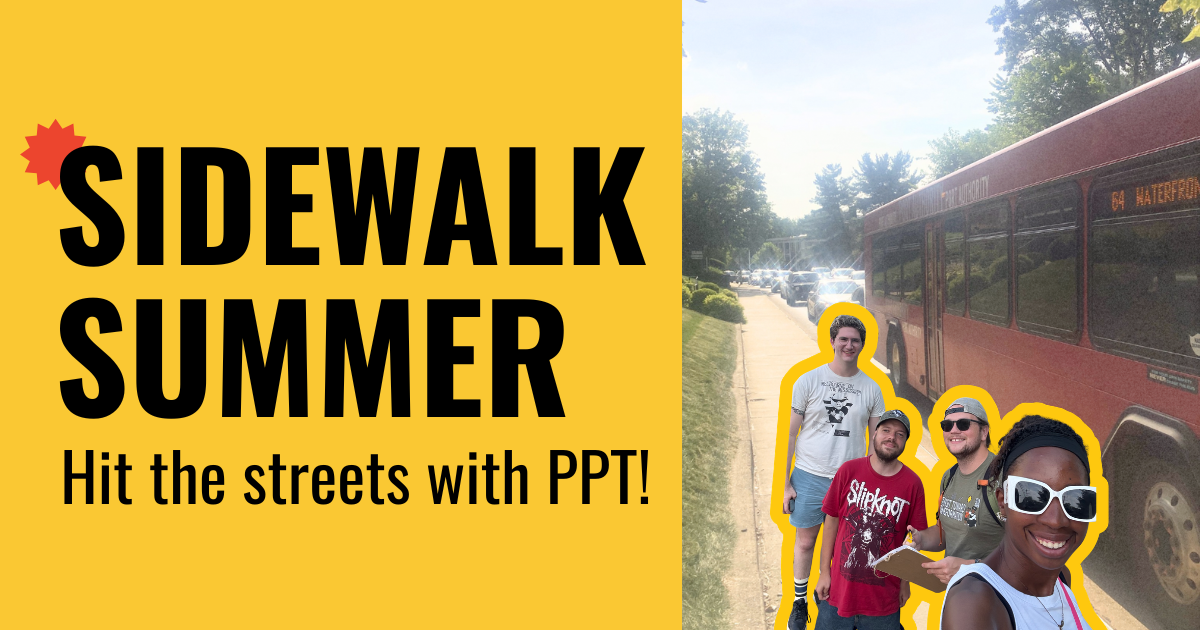
Sidewalk summer is back: hit the streets with PPT for sidewalk audits
Image Description: PPT members highlighted in yellow, on a glowy background of a bus stop on a summer day.
Bust out those cell phones and lace up those sneakers!Transit riders in Pittsburgh want more bus shelters, better bus stop amenities and connected sidewalks that take us to and from where we need to go! Our biggest takeaway from two years of bus shelter audits is that we cannot have bus shelters, benches and other amenities installed at our bus stops if our sidewalks are in poor or nonexistent condition.
Following the lead of our friends Pittsburgh Walks, PPT will host a series of sidewalk audits this spring and summer focusing on neighborhoods with high rider bus stops and busy transit corridors.
We will assess the quality of sidewalks in Pittsburgh and record findings via a mobile survey developed by the City of Pittsburgh. The collected data helps the City identify where sidewalks need to be improved or built, prioritize pedestrian infrastructure projects, and make the case for sidewalk funding.
The goal of these sidewalk audits is for participants to learn how to use this new tool and go on to gather data independently. Ultimately we aim to collect information about sidewalks (or where they’re missing) for every street in the City. This is a group effort and WE NEED YOU!
Audit Dates & Registration:Saturday May 16th 10am – 12pm, Sheraden
Saturday June 27th 10am-12pm, Hazelwood
Saturday August 29th 10am -12pm, Hill District
- Before the event, participants must watch this 15 minute video.
- Have a lesson on what makes sidewalks safe and accessible, how to use the web application.
- Pair up to walk several blocks of neighborhood streets, and record our observations using an online survey on our cell phones.
- Must have charged cell phone that can reach the internet and take photos.
- Must be able to navigate web browsers and privacy settings on cell phone.
- Pittsburgh weather can be unpredictable this time of year! Come dressed for the elements (good walking shoes, winter coats, hats, gloves, etc.). We will be outside for about an hour.
- We cannot guarantee the accessibility or safety of these walks as some of the terrain may have broken to no sidewalks. Some regions may be hilly and harder to walk on.
- Blind and low vision people will not be able to use the mobile survey application, but your input is of great value. You will be paired with a sighted person so that you can access the survey.
- If you have individual accessibility questions, or to request ASL interpretation, please reach out to Nicole@pittsburghforpublictransit.org.
- ASL interpretation must be requested at least 2 weeks in advance.
You can attend on your own, or bring a group of neighbors, friends, family, or coworkers! This is a great way to get your steps in, meet fellow community members, and help make our streets safe, accessible, and enjoyable for everyone!
The post Sidewalk summer is back: hit the streets with PPT for sidewalk audits appeared first on Pittsburghers for Public Transit.
AFSA Newsletter | January – March, 2026
This first quarter 2026 edition of the AFSA Newsletter captures a period of intense reflection, sharpened advocacy, and strategic action across Africa and beyond. From Lilongwe to Dakar, Garuga to Cartagena, AFSA and its members engaged critical questions shaping the future of African food systems, including school meals, land justice, seed sovereignty, public agricultural finance, cross border agroecological trade, territorial markets, and citizen mobilisation. Across these interventions, one message stands out clearly: the struggle for food sovereignty is not only about production, but also about power, policy, markets, culture, and the right of African people to define their own food futures.
In these pages, readers will see how AFSA continued to link grassroots realities with continental and global advocacy. This edition highlights the adoption of the Lilongwe Declaration on agroecology based school and college meals, AFSA’s participation in ICARRD+20 in Colombia, the launch of a major report on the African Development Bank’s role in reshaping African agriculture, renewed calls to centre farmers in regional seed policy processes, and important internal moments of alignment through the AFSA staff retreat, the Citizens Working Group on Agroecology meeting, and the TAFS annual review workshop. It also documents growing momentum in public campaigns and movement spaces, including the #MyFoodMyIdentity online campaign and continued efforts to strengthen agroecological trade, territorial markets, and African food cultures.
What this edition reflects most of all is AFSA’s continued commitment to building a food systems movement rooted in justice, resilience, dignity, and African knowledge. Whether confronting corporate capture, defending land and seed rights, supporting local markets, or reshaping public narratives around food, AFSA’s work remains anchored in the conviction that Africa’s food future must be led by its farmers, communities, women, youth, and social movements. We invite you to read, reflect, and continue walking with us as we strengthen the movement for agroecology and food sovereignty across the continent.
Download the newsletter hereTransit Riders & Workers Skill Up at Organizing Spring Training
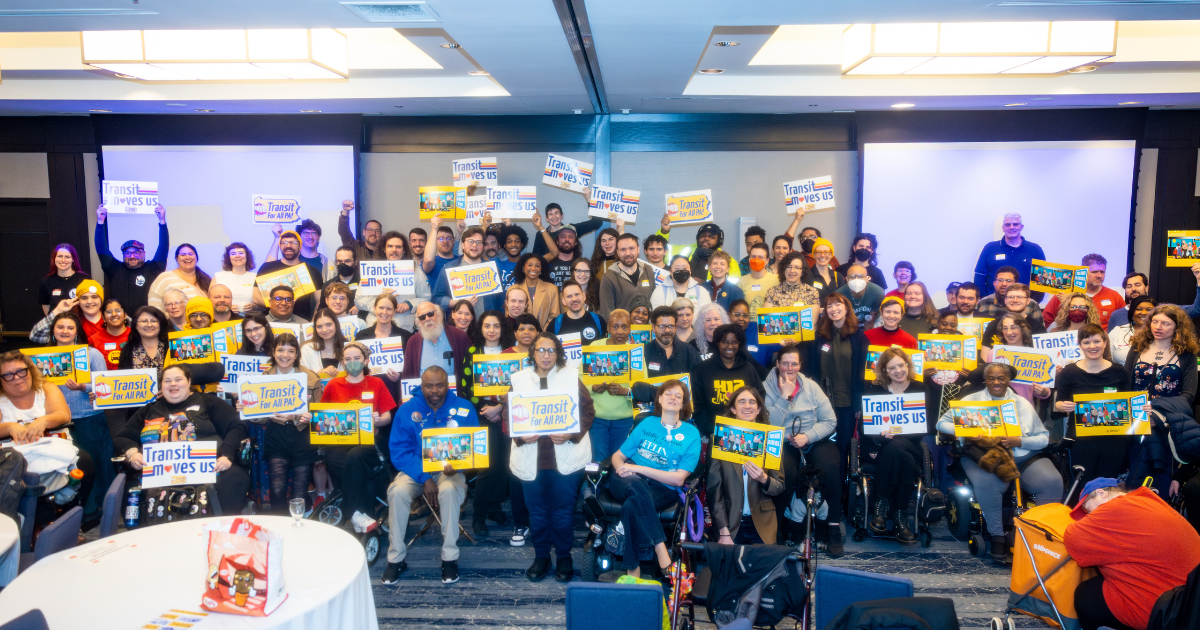
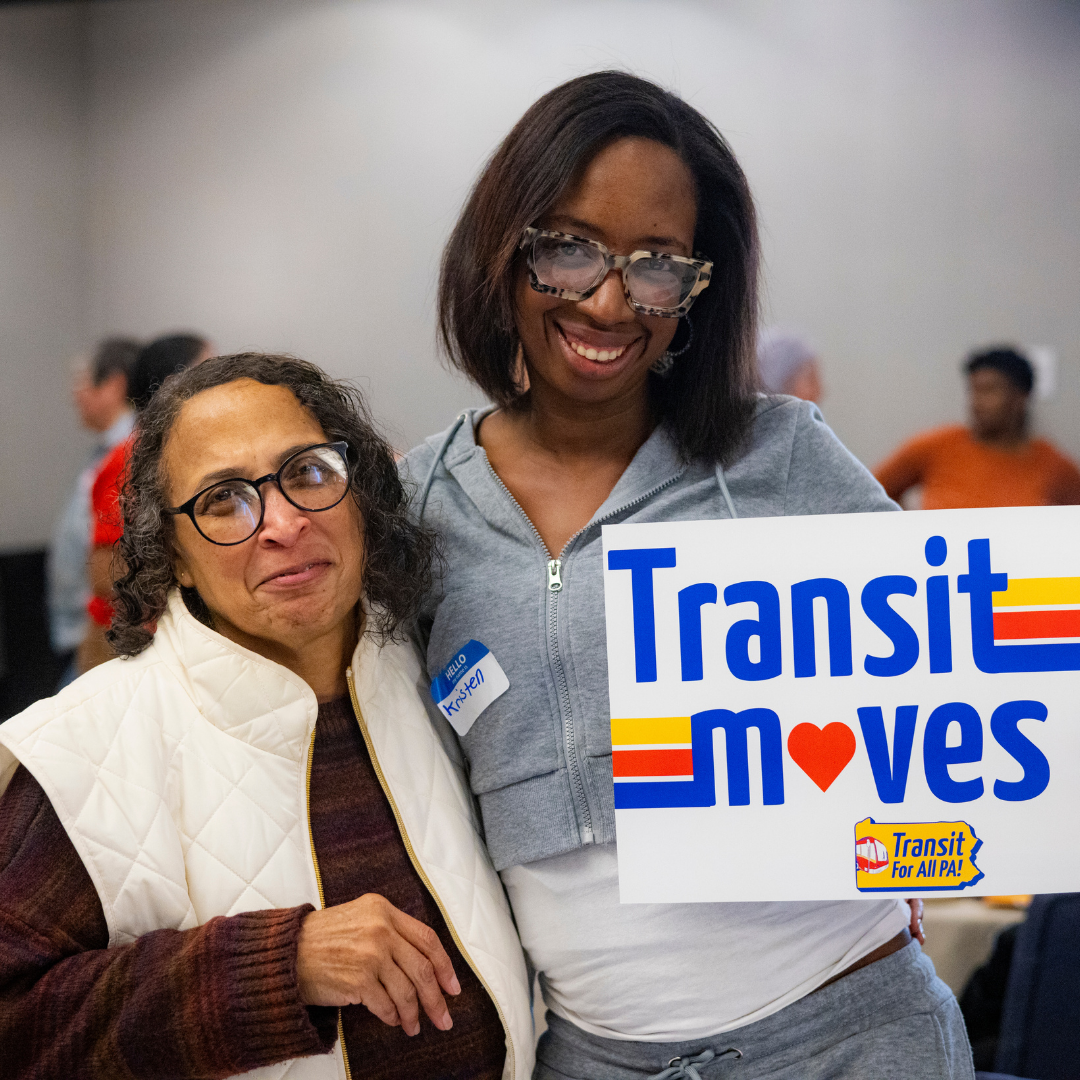
Image Description: Group photo at spring training has 100 people holding up signs and smiling with fists up.
Transit for All means every community – urban and rural, large and small – and thats who the movement is fighting for!
150 transit riders and transit workers from across Pennsylvania and the United States gathered at the end of March to build organizing skill and strengthen community.
The movement keeps on growing! For two days at the end of March, 150 transit riders and transit workers gathered in Pittsburgh for the third-annual Transit for All Organizing Spring Training. Attendees and speakers came from all across PA and the United States. Their purpose was clear: they were there to build organizing skills to strengthen a movement that’s fighting for transit for all – whether in rural communities, small towns or big cities.
The training was organized by Pittsburghers for Public Transit, who leads the Transit for All PA! campaign. The program was jam-packed with opportunities for attendees to learn new skills, learn from victories won in other cities, and meet inspiring new friends from other communities!
Read on for a recap of the two-days or check out photos here!
Day 1 Recap: Welcome to Pittsburgh & the Transit Justice Movement image description: County Executive Sara Innamorato addreses transit riders and transit workers at the 2026 Transit for All Organizing Spring Training Welcoming Happy HourOn Friday, attendees from out of town met at the PPT office for a Transit Tour led by PPT Members. The Transit Tour ended at the Welcome Happy Hour hosted at Aslin Brewery in the Strip District.
More than 100 people were in attendance for delicious food and drinks. Some people were new to transit organizing but many were veteran organisers for better public transit. Allegheny County Executive Sara Innamorato even stopped by to welcome people to town and encourage advocates to keep organizing for better transit access!
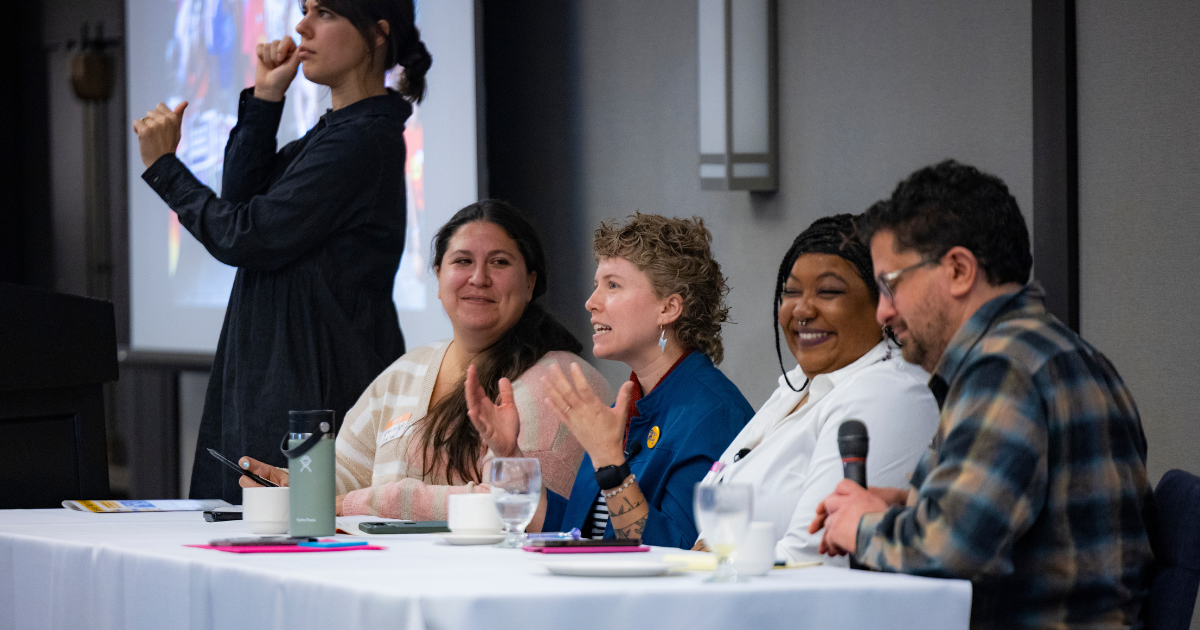
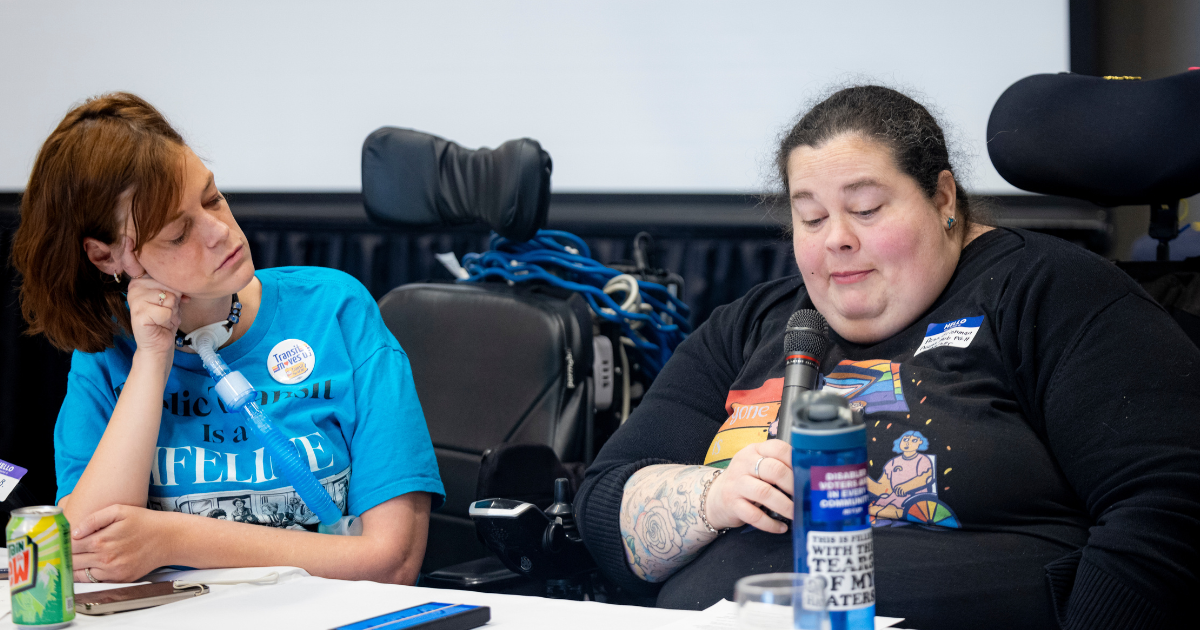
Day 2 Recap: Training Day!Image Description: Four panelists sit behind a table. One is speaking dynamically and moving their hands as the others smile and laugh. A sign language interpreter is translating in the background.
Day 2 was where the magic happened. Folks woke up bright and early to join for an 8am breakfast and some artmaking with Arts Excurions Unlimited, a community arts group from Pittsburgh’s Hazlewood neighborhood.
By 9am the plenary kicked off, led by Veronica Coptis, Senior Advisor, Taproot Earth. She began the day by driving home a theme that would be central to the training: that rural and urban communities must work together to change a system that moves us all. Veronica leads a number of rural organizing projects and shared that regardless of the community she’s working in, transportation is always a top need. Veronica was joined by Andrew Slack, a PA-based facilitator who led a panel discussion with Kearasten Jordan and Laura Pauls-Thomas, both Transit for All PA! Organizing Fellows from Lancaster, about transit needs in PA’s rural communities and small towns.
image description: Alisa Grishmand and Dr. Jose Badger present on a Transit for All Organizing Spring Training panelAfter the Plenary discussion, the energy didn’t stop. There were 7 workshops throughout the day, led by PPT Members and transit organizing experts from PA and across the US:
- Narrative Change: Our Stories Build the World We Want, led by Nadia Awad, Content Director, Narrative Initiative, Andrew Slack, PA-based narrative strategist, facilitator, and storyteller, and Clair Hopper, Digital Organizer, Pittsburghers for Public Transit and Transit for All PA!
- VoteTransit: Bus Mayor Elections and Beyond, led by Betsy Plum, Executive Director of Riders Alliance (New York City), Barb Warwick, Pittsburgh City Council member, District 5, and facilitated by Laura Chu Wiens, Executive Director of Pittsburghers for Public Transit/Transit for All PA!
- Mobile Workshop! Field Communications: Storytelling from the Street, led by Joe Conniff, Video Editor, Educator, and Producer, withremote support from Marcelese Cooper, Teaching Assistant Professor in the Film and Media Studies Program at the University of Pittsburgh
- Bargaining for the Common Good: Worker/Community Solidarity, led by Connor Chapman, University of Pittsburgh Graduate Workers Union and Pittsburghers for Public Transit and Ronni Getz, UPMC Magee Women’s Hospital, SEIU Healthcare Pennsylvania
- Organizing with Disability Justice at the Center, led by Anna Zivarts, a leading author, transit rider organizer and founder of the Nondriver Alliance out of Washington state, and Dr. Josie Badger, director of the national RSA-Parent Training, Information, technical assistance center (RAISE), and founder of several orgs including the Pennsylvania Youth Leadership Network (PYLN), the Children’s Hospital Advocacy Network for Guidance and Empowerment (CHANGE), and J.Badger Consulting, moderated by Alisa Grishman, founder of Access Mob Pittsburgh and PPT Board member
- Big Tech in Transit: Automation, Microtransit, Surveillance, and Data, led Dr. Sarah Fox, Assistant Professor in the Human-Computer Interaction Institute at Carnegie Mellon University; Director, Tech Solidarity Lab, Sue Scanlon, Transit Operator, Pittsburgh Regional Transit; Pittsburghers for Public Transit board member, and Ziggy Edwards, Leader, Mon-Oakland Connector Campaign
- Transit Isn’t Just Urban: Organizing in Small Systems & Everywhere, led by Connor Descheemaker (they/them), Statewide Campaign Manager, Transit for All PA!/Pittsburghers for Public Transit, andT4APA! Organizing Fellows Angela Adler and Laura Pauls-Thomas (Lancaster), Benjamin Felker-Quinn and Andria Ahrens (Lehigh Valley)
You can learn more about all of these great workshops and speakers on the 2026 Transit for All Organizing Spring Training homepage! And you can access the slides from each of these presentations at this Google Folder – feel free to share them, just please credit the presenters on each panel.
Attendees took a break from that great lineup and enjoyed some delicious lunch, snacks, and event took time out for a Movement Moment: Grounding, Accessible Yoga Practice led by PPT Member Mona Meszar, who is a yoga instructor, massage therapist, and community activist!
Spring Training was a blast! And now with these new skills and connections, transit riders and workers are ready to grow this movement.
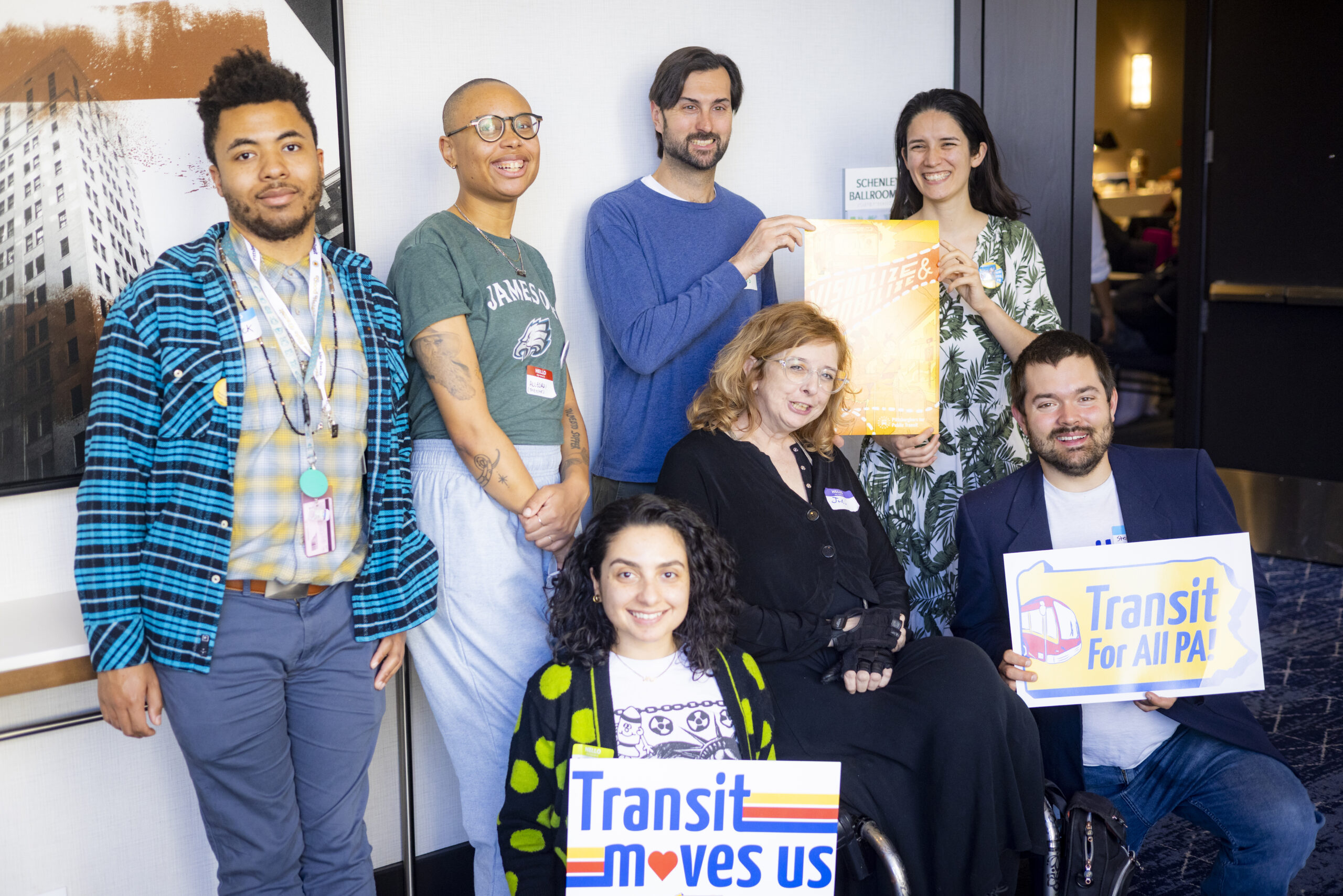
Missed the training or want to get involved? Join us at the next transit organizing meeting to join the community! Join the next meeting here! image description: 7 organizers from Philadelphia pose with signs at the 2026 Transit for All Organizing Spring TrainingThe post Transit Riders & Workers Skill Up at Organizing Spring Training appeared first on Pittsburghers for Public Transit.
Explore How the Bus Line Refresh Could Affect Your Commute
The Bus Line Refresh could be the biggest service change in a generation. Your chance to make it better is right now! Learn how the proposals could impact you—and tell PRT how you feel about it.
Explore the service changes that affect youThere are many ways to explore the changes PRT is proposing under the Bus Line Refresh. You can:
- Review an interactive map of the proposed system changes (works best on a computer or tablet)
- Find your frequented routes from a list of affected routes, then click on their new names to learn about how they might change
- Model your frequent journeys on the Transit App on your mobile device (check out our tutorial below)
- Attend a public meeting with PRT (we’re hosting one on April 8th!)
After you do any of these options, it’s critical that you submit a public comment telling PRT how these changes would affect you. They need to know your thoughts in order to incorporate them into the proposal!
Join the April 8th meeting to learn more about transit changes How to model your journeys on the Transit AppNote that this method requires access to a mobile device, like a smartphone. If you don’t have access to one, we recommend using the other tools listed above to explore the proposed Bus Line Refresh.
- Download the Transit App to your mobile device. The app is available on both iPhone and Android. (Bonus: the app can be used to plan your future transit trips, and can even give you notifications when service changes or advocacy opportunities are available!)
- You may need to make an account to use the app.
- In the app’s main screen, type a destination in the “Where to?” bar. Select it from the list of results when it appears.
- Once you’ve selected your destination, you can also edit your starting location—for example, you might want to understand how your commute from your workplace to your doctor’s office might change.
- In the white portion of the screen, you’ll see a selection of potential routes you could take to reach your destination.
The trips at the top are those you could take under the current PRT system.
If you scroll down below these, you’ll see a section titled “PRT Preview Mode”, with potential future routes listed. - Click on a future route you’d like to explore. The app will then show you a map of the route, with details on how long the trip would take you, as well as scheduled frequencies and stops.
- At the bottom of this window, there is a banner with a button titled “Give feedback”. This will take you to PRT’s feedback page for the entire Bus Line Refresh project.
- When you’re done exploring this route, be sure to press the red “X” button at the top right of the screen to exit preview mode.
A post shared by Pittsburghers 4 Public Transit (@pgh4publictransit)
Don’t miss your chance to shape the bus networkIf you or someone you know takes transit frequently, PRT needs to know your thoughts. There are a lot of ways to give feedback on the proposed Bus Line Refresh:
- Find your routes from an online list, click their new names, and leave route-specific feedback
- Send an email to PRT with your comments
- Call PRT at 412-442-2000
- Fill out a paper survey at home or at your nearest Carnegie Library location
- También puedes descargar una encuesta en papel en español!
- Attend a public meeting with PRT
And of course, the best way (because it comes with community):
- Join our next monthly meeting on April 8th to hear PRT present, and give them your feedback in person
The post Explore How the Bus Line Refresh Could Affect Your Commute appeared first on Pittsburghers for Public Transit.
7 times ordinary people changed the world
Your salary doesn’t stretch like it used to. The air in your city is getting worse. Politicians promise change, and then nothing changes. At some point, most of us have the same thought: what’s the point? The status quo will never change because the forces behind it are too entrenched, too powerful, too far gone.
But history tells a different story. Every unjust system has looked permanent and untouchable until ordinary people challenged it. All major shifts in society start the same way: someone refuses to accept things as they are. They organize. Others join them. And they don’t stop.
Again and again, local citizens have come together through peaceful, nonviolent organizing — strikes, marches, sit-ins, boycotts, blockades — and changed the course of history. Here are seven moments that show that people power can change the rules:
1. The US civil rights movement dismantled legal segregationIn 1950s America, segregation was the social custom and the law. Black Americans were barred from attending the same schools, eating in the same restaurants, or even using the same restrooms as white Americans. Simple acts like even sitting in the “wrong” bus seat, could lead to arrest, violence, or worse.
American civil rights activist Rosa Parks on a bus in Montgomery, Alabama. © Bettmann Archive / Getty Images
On 1 December 1955, Rosa Parks, a seamstress and activist, refused to give up her bus seat to a white person in Montgomery, Alabama. She was arrested. Within days, 42,000 Black residents boycotted the city’s buses for 381 days. They walked miles to work. Racial segregation on public transportation was abolished soon after, in 1956. The Civil Rights Act followed in 1964 making discrimination illegal once and for all.
2. The women’s global liberation movement rewrote the rulesUntil 1974, women in the US couldn’t get a credit card in their own name. In the UK, a married woman needed her husband’s signature for a bank loan until 1975. In France, women couldn’t open a bank account or get a passport without their husband’s permission until 1965. These weren’t just “rules”, they controlled women’s everyday lives, locking millions out of economic independence, healthcare, and political power.
Women’s Strike for Peace-And Equality, Women’s Strike for Equality, Fifth Avenue, New York, New York, August 26, 1970. Photo: Eugene Gordon/The New York Historical Society/Getty Images
Until women themselves organized for change. In 1968, women machinists at Ford walked out over unequal pay, halting car production across the UK and forcing the government to pass the Equal Pay Act two years later. In 1970, tens of thousands of women marched in New York for the Women’s Strike for Equality demanding equal pay, free childcare, and abortion rights. And in 1971, Swiss women won the right to vote after decades of campaigning, one of the last countries in Europe to grant it. In 1975, 90% of Icelandic women refused to work, in offices, at home, everywhere, for a single day. The country stopped working. In 1979, the UN adopted CEDAW — the first international treaty to define discrimination against women and oblige governments to end it, now ratified by 187 countries. Women demanded these rights loudly, collectively, and across generations.
3. The anti-apartheid movement brought down a regime in South AfricaApartheid was one of the most brutal systems of racial control ever built. Introduced in 1948, it dictated where Black South Africans could live, work, travel, and whom they could marry. The government enforced it with arrests, bans, torture, and killings.
Fed up with the system, ordinary workers went on strike. Then, in 1976, Soweto’s students marched against being forced to learn in Afrikaans and were met with live ammunition. Nelson Mandela, the leader of the African National Congress, the liberation movement that had been fighting apartheid since 1912, was locked away for 27 years to silence the movement. But it didn’t work. In 1994, after years of internal resistance, international pressure, and hard-won negotiations, South Africa held its first democratic elections with Mandela becoming president. For the first time in decades, Black South Africans could vote, run for office, and access public services without restrictions. Segregation laws were dismantled, neighborhoods and schools were legally integrated, and the country began rebuilding a more equitable society.
Young men protest in front of police photographers in Soweto in June 1976. Photo: Doing Violence to Memory: The Soweto Uprising
4. Standing Rock said no to a destructive pipeline in the USThe Dakota Access Pipeline was first planned to cross near Bismarck, North Dakota — a predominantly white city. Residents raised environmental concerns, and the route moved. This time, that meant crossing half a mile upstream from the Standing Rock Sioux Reservation’s only water supply, meaning any leak or rupture would contaminate the drinking water of thousands of people with oil, with no alternative source to fall back on. The Standing Rock Sioux tribe set up camp and refused to move. The protests became the largest gathering of Indigenous nations in over 150 years, with 300+ tribal nations standing together leading to the Obama administration halted construction in December 2016. The pipeline ultimately went ahead under Trump but Standing Rock changed what the world understands about whose land and water fossil fuels actually cost. The legal fight continues.
Women and children plant willow trees and corn along the pipeline route. Photo: Indigenous Environmental Network
5. Millions took to the streets to defend democratic freedoms in Hong KongWhen Britain handed Hong Kong back to China in 1997 after 156 years of colonial rule, the deal came with a promise: the city would keep its own laws, courts, and civil liberties for 50 years under the principle of “one country, two systems.”
By 2019, many people in Hong Kong felt that promise slipping away. A proposed extradition law would allow residents to be sent to mainland China to face trial in a legal system with no independent judiciary and conviction rates close to 100%. For many, it felt like the beginning of the end for the city’s freedoms.
In June 2019, over two million people took to the streets, in a city of just 7.5 million. They kept marching for months, despite arrests, tear gas, and escalating repression. Beijing eventually imposed sweeping national security laws. While the movement didn’t win all its demands, it galvanized a generation, forced international attention on Hong Kong’s freedoms, and inspired ongoing efforts to protect civil liberties.
Millions gather on the streets of Hong Kong. Photo: By Studio Incendo – Hong Kong anti-extradition bill protest, CC BY 2.0
6. Indian farmers defeated three unjust laws by a government that wouldn’t budgeNearly 60% of India’s population depends on agriculture. The government’s 2020 farm laws, framed as market liberalisation, proposed to dismantle a guaranteed minimum price system protecting small farmers from destitution. In a country where farmer suicides are already a public health crisis, the stakes were existential. Farmers responded with one of the largest protests in modern history. They set up camps outside Delhi and blocked highways for more than a year, in the cold, the heat, the rain and through COVID. Women were on the frontlines and around 700 farmers died during the protest. In November 2021, the government repealed all three proposed laws. Organised, patient, collective power worked against a government that looked immovable.
Indian farmers protesting in the national capital. Photo: Randeep Maddoke
7. A global movement put the climate crisis on the agenda, and kept it thereScientists had been warning about climate change since the 1980s. By the 2000s, the evidence was overwhelming: burning coal, oil, and gas was heating the planet and pushing ecosystems toward collapse. But governments were still stalling, and fossil fuel companies were still expanding. So ordinary people organized. In 2009, ahead of the UN climate summit in Copenhagen, people in 181 countries took to the streets. In 2014, 400,000 people marched in New York — the largest climate march in history at the time. The following year, that pressure helped deliver the Paris Agreement, the first deal to unite nearly every country on earth around a shared commitment to limit warming to 1.5°C, the threshold beyond which climate scientists warn the consequences will become catastrophic and irreversible. Addressing the climate crisis and switching to renewable energy is now a priority on the global political agenda, because millions of people refused to stay silent.
But the fight is far from over. Today, climate disasters might still feel distant. Something happening somewhere else. But they’re getting closer. To our cities. Our homes. Our lives. And just like every movement before us, we have a choice: Watch them happen or change what happens next. See what we can do:
The post 7 times ordinary people changed the world appeared first on 350.
New Report: Who Is Financing the Future of African Agriculture?
The Alliance for Food Sovereignty in Africa (AFSA) launches a new report asking a critical question: Is the African Development Bank (AfDB) financing food systems that truly serve Africa’s people?
Based on an analysis of 20 AfDB-supported agricultural projects, this study, researched by Dr Keiron Audain for AFSA, reveals a troubling pattern. Despite strong rhetoric around food security and climate resilience, a significant share of AfDB financing continues to reinforce agro-industrial models built on monocultures, synthetic inputs, and corporate value chains. Meanwhile, farmer-managed seed systems, agroecological practices, territorial markets, and Indigenous knowledge remain underfunded and marginalised.
The report exposes persistent gaps in transparency and participation. Communities are frequently consulted but rarely empowered to shape decisions. Investments that affect land, livelihoods, and diets are too often designed without meaningful co-creation with the smallholder farmers who feed the continent.
At a time when Africa faces escalating climate shocks, biodiversity loss, and food insecurity, public finance cannot continue to support systems that deepen dependency, degrade soils, and concentrate power in corporate hands. Africa does not need a blind expansion of industrial agriculture. It needs investment in agroecology, crop diversity, resilient seed systems, and local food economies that strengthen sovereignty and community control.
This report is not just an analysis. It is a call to redirect agricultural finance toward justice, ecological integrity, and food sovereignty. AfDB and African governments must ensure that public resources build resilient, community-rooted food systems rather than entrenching models that undermine them.
Download the full report here.ICARRD+20: Joint Civil Society Statement
Protect Our Land, Restore Our Soil: Collective Territorialities for Land Justice, Pastoralist Futures, and Ecological Restoration
As civil society organisations, social movements, faith-based actors, Indigenous Peoples, pastoralist and peasant organisations from Africa and across the Global South, we come to ICARRD+20 at a moment of deep crisis and urgent possibility.
Twenty years after the first International Conference on Agrarian Reform and Rural Development, rural communities across the world continue to face dispossession, land concentration and ecological destruction. Despite global commitments to end hunger and poverty, land and food systems are increasingly controlled by corporate and financial interests, while communities that produce food remain marginalised and insecure.
Across Africa and other regions, customary and collective land systems are being undermined in the name of development, conservation, climate mitigation and large-scale investment. Carbon offset projects, extractive industries, agribusiness expansion and speculative land markets are accelerating dispossession, soil degradation and social inequality, often excluding communities from territories they have governed collectively for generations. At the same time, agribusiness corporations and financial investors are driving the rapid expansion of factory farming and industrial livestock production across Africa, concentrating land and resources, degrading ecosystems, and undermining pastoralist and small-scale livestock systems essential to food sovereignty.
Pastoralist communities are among those most severely affected. As 2026 is the International Year of Rangelands and Pastoralists, this conference must recognise pastoralists as central to sustainable food systems and ecological resilience. Policies that restrict livestock mobility, privatise communal rangelands or convert grazing lands to agribusiness, conservation or carbon-offset projects undermine pastoralist livelihoods while intensifying conflict, poverty and environmental degradation. Yet pastoralism remains one of the most climate-resilient land-use systems in drylands. Through mobility and communal rangeland management, pastoralists sustain livelihoods, supply vital meat and milk production, and maintain ecological balance in areas where crop farming is often unsustainable.
Meanwhile, communities defending their territories face criminalisation and violence. Women pastoralists and small-scale producers, youth, and Indigenous Peoples remain excluded from decision-making processes, despite being central to food production and environmental stewardship.
ICARRD+20 must therefore not be a commemorative event. It must become a turning point.
Our Calls to Governments and International Institutions
Ahead of ICARRD+20, we call on governments, international institutions, and development partners to commit to the following:
- Recognise and protect collective and customary land tenure systems, including individual and collective land rights as affirmed in CESCR, UNDRIP and UNDROP.
- Protect pastoralist rangelands and livestock mobility, including cross-border corridors essential for climate adaptation and peace, and prevent conversion of rangelands to inappropriate uses such as monoculture tree plantations.
- Implement genuine agrarian reform and equitable land redistribution, prioritising landless farmers, women, youth, pastoralists and Indigenous communities, while addressing the historical and political drivers of land degradation and induced land scarcity.
- End land speculation and financialisation, including large-scale land acquisitions and carbon or biodiversity credit schemes that dispossess communities.
- Redirect agricultural and climate finance toward agroecology, rangeland restoration and community-led food systems, and integrate pro-pastoralist strategies into National Biodiversity Strategies and Action Plans (NBSAPs) and Nationally Determined Contributions (NDCs). Promote conservation models that uphold pastoralists’ rights and ensure restoration strengthens pastoralist livelihoods as part of a just green transition.
- Invest in decentralised infrastructure and services compatible with mobile pastoralist systems, including water, veterinary care, markets, education and health.
- Guarantee meaningful participation of affected communities, and free prior and informed consent of Indigenous Peoples, in land, agriculture and climate decision-making.
- Protect land and environmental defenders, and end violence, criminalisation and forced displacement.
- Establish binding corporate accountability mechanisms for human rights violations and ecological harm across global value chains.
Toward Land Justice, Pastoralist Futures and Ecological Restoration
The future lies not in further commodifying land and food systems, but in restoring community control over territories, securing pastoralist mobility and commons, and supporting agroecological transitions rooted in justice and ecological integrity.
ICARRD+20 must renew global commitments to agrarian reform, land justice, and food sovereignty, led by communities that sustain the world’s food systems and ecosystems.
Land justice is climate justice. Pastoralist mobility is ecological resilience.
Transit is the Ticket to a Winning NFL Draft
On April 23-25 of this year, Pittsburgh will take the national stage by hosting the NFL draft. This will be an unprecedented opportunity to showcase our region: the event is estimated to draw between 500,000-700,000 attendees across three days, around twice the total population of the City of Pittsburgh. The NFL draft events will be located primarily at the Point and at Acrisure Stadium, and success will depend in part on whether hundreds of thousands of residents and visitors will be able to efficiently access the festivities.
Because our beautiful region is hemmed in with rivers and hills, the arterial roadways and bridges to reach these sites are limited. If the majority of these hundreds of thousands of event attendees plan to drive themselves Downtown or to the North Shore, the NFL Draft will be an unmitigated disaster, with delays lasting for hours in all directions. It is therefore critical that both event workers and the NFL Draft visitors are both supported and incentivized to take public, mass transit.
In other words, well-advertised, easy to use, and abundant transit service must be the heart of any winning strategy for the NFL Draft.
There are a number of key stakeholders who must play a role in order for transit to be the easy and obvious choice for stadium and hospitality workers, local attendees and out-of town visitors through the NFL draft days. Below we offer our recommendations for each:
Recommendations for Pittsburgh Regional Transit:
Recommendations for the NFL/Visit Pittsburgh/Stadium Authority:
Recommendations for City of Pittsburgh, Allegheny County and PennDOT:
Recommendations for Pittsburgh Regional Transit:Service:
- PRT must provide both robust regular transit service and event shuttle service. Pittsburgh Regional Transit should ensure that all routes, throughout the County, run at least as frequently as their current rush hour service during the entire event. Frequent transit service needs to serve local residents as well as out-of-town visitors. Hundreds of thousands of Pittsburgh area residents are anticipated to attend and work the Draft events and staff local businesses, and visitors to the City will be staying in every available hotel room and Airbnb across the region.
- Transit workers should be provided additional compensation during the NFL draft in order to incentivize workers to pick up extra shifts and to diminish call offs.
Marketing: Pittsburgh Regional Transit must have a marketing campaign to encourage transit use during the NFL draft.
- PRT should deploy a slogan like, “PRT is your ticket to the action”, “PRT is your valet to the game,” “PRT makes it easy,” or ”Transit riders get the red carpet,” which would be memorable and would show that PRT has plans to support rider access to the event.
- PRT should communicate clearly on its channels – social media, Ready2Ride, its website- and third party apps to help riders navigate the system during the event. There should be an NFL draft landing page on the PRT website that includes fares/fare payment, and service/schedules/maps.
- PRT should advertise at the airport, through Airbnb, at Downtown and North Shore restaurants/bars/coffee shops (WMATA in DC has advertisements on coasters in Washington DC bars), in local hotel “welcome guides to Pittsburgh”, and on bus shelters.
- PRT’s canvass team could table at the Pittsburgh airport, on the North Shore, at Acrisure Stadium and at the Point to provide personalized information on fares and service.
–The NFL Draft One Pass Mobile App should prominently feature a link to a (future) Pittsburgh Regional Transit NFL Draft landing page as the top recommendation for how to get around. Parking information should be secondary.
–Other portals for NFL Draft information including the Steelers App and the Visit Pittsburgh page should prominently link to and recommend Pittsburgh Regional Transit for locals and out-of-town visitors to get around during the Draft.
–Buses should get priority access to the front of the stadium. Reducing overall traffic congestion, excessively long commute times and walks to access the event – by rolling out the red carpet for public transit- will make for a successful event and happier attendees.
Recommendations for City of Pittsburgh, Allegheny County and PennDOT:–Buses must not be stuck in mixed traffic during the event. There should be a careful audit of where buses experience delays during stadium events and events at the Point, and specific interventions made to address them. For instance, one lane of Reedsdale Street should be made bus-only, and one lane on North Ave should be made bus-only. The bus only lanes downtown -particularly Liberty Ave- should have no exceptions for cars during the event, and should have traffic enforcement officers to ensure that they are kept clear for buses. The HOV lanes on 279 should remain open for buses throughout the three days of the NFL draft.
Conclusion: The City of Pittsburgh and Pittsburgh Regional Transit have the opportunity to shine at this year’s NFL Draft, and we’re eager to see it happen.We’re calling on Pittsburgh Regional Transit, the NFL and Pittsburgh tourism bureau, and our municipal champions to ensure that our transit service, PRT’s communications and marketing efforts, and our region’s infrastructure is primed to make transit the easiest and best option for locals and visitors alike. Of course, these are not comprehensive recommendations—we trust that many other good proposals are being brought to the table. But we hope that together, these institutions can play their part towards making abundant, efficient transit the ticket to a winning NFL Draft.
The post Transit is the Ticket to a Winning NFL Draft appeared first on Pittsburghers for Public Transit.
2026 Transit for All Organizing Spring Training
Image description: Black text highlighted in yellow reads “Transit for All Organizing Spring Training 2026”, interspersed with blue-filtered images of transit advocates at rallies, holding signs, and boarding the bus. Smaller text below reads “March 20-21, 2026, Pittsburgh, PA”, with the Pittsburghers for Public Transit and Transit for All PA logos.
You’re invited: Join transit riders, workers, and supporters from across PA and the country for the 2026 Transit for All Organizing Spring Training!Transit can transform our communities – but it is up to us as organizers to build the grassroots movement to make it happen!
This March, you are invited to join Pittsburghers for Public Transit, Transit for All PA!, and advocates from across the country at the third annual Transit for All Organizing Spring Training.
It’s going to be bigger and better than ever before. This organizing training day will have workshops led by local advocates and advocates outside of Pittsburgh, and will have topics relevant to transit organizers at all levels and all regions.
Join peers and leaders from Pennsylvania and across the country for a Transit Tour through Pittsburgh, a Happy Hour, and a full day jam-packed with an inspiring plenary, engaging workshops, field visits, and lots of community building with comrades from near and far. Learn more about our workshops below!
For transit riders, workers, and advocates, there’s no other event like this. Space is limited and pre-registration is required for all events, so reserve your spot now!
Pre-registration is required for all events. The last day to register for Spring Training is Friday, March 13th, 2026.
TICKERS ARE SOLD OUT Table of Contents- Schedule at a Glance
- Tickets are sold out
- Logistics
- Workshop and Event Descriptions
- About Our Presenters
Click the link in each event title to learn more!
More information on each workshop and event can be found below.
With special welcoming remarks by Allegheny County Executive Sara Innamorato! Saturday, March 21st: Training Day 8:00-9:00 AMContinental breakfast and networking9:00-9:45 AMOpening Plenary10:00-11:30 AMBLOCK 1:
Narrative Change: Our Stories Build the World We Want
OR
#VoteTransit: Bus Mayors and Beyond11:45-12:50 PMLunch
Art-making and accessible movement activities included!1:00-2:30 PMBLOCK 2:
Mobile workshop! Field Communications: Storytelling from the Street (pre-registration required)
OR
Bargaining for the Common Good: Worker/Community Solidarity
OR
Organizing with Disability Justice at the Center2:45-4:15 PMBLOCK 3:
Big Tech in Transit: Automation, Microtransit, Surveillance, and Data
OR
Transit Isn’t Just Urban: Organizing in Small Systems and Everywhere4:30-5:00 PMClosing Statements Tickes are sold out Tickets are sold out
Tickets are sold out. The last day to register was Spring Training is Friday, March 13th, 2026.
Logistics Location InformationThe Courtyard Pittsburgh University Center is located at 100 Lytton Ave, Pittsburgh PA 15213, in the amenity-rich Oakland neighborhood.
The hotel is very easily accessible from the airport via public transit. It is about a four-minute walk or roll from the Fifth Ave and Tennyson Ave PRT stop, which is serviced by the following routes:
- 54 Northside-Oakland-Southside
- 58 Greenfield
- 61A North Braddock
- 61B Braddock-Swissvale
- 61C McKeesport-Homestead
- 61D Murray
- 67 Monroeville
- 69 Trafford
- 71A Negley
- 71B Highland Park
- 71C Point Breeze
- 71D Hamilton
- 75 Ellsworth
- 81 Oak Hill
- 83 Bedford Hill
- 93 Lawrenceville-Hazelwood
- P3 East Busway-Oakland
We have secured a discounted hotel room block at the venue, so that those joining from outside Pittsburgh can stay overnight.
Discounted rooms are available for $189 per night, only for those who book before Friday, February 27, 2026.
If you’d like to reserve a hotel room in our block, please use this link.
AccessibilityThe Courtyard Pittsburgh University Center has accessible onsite parking and an accessible main entrance. All meeting areas are accessible, and there are elevators throughout the building. More information about the hotel’s accessibility features can be found on their web page.
ASL interpretation will be provided at all events.
Food and DrinkAt happy hour on Friday, let PPT buy your first round! Drink tickets will be provided to all those who pre-register. Snacks will be available from 5:15-5:45, first-come-first-serve.
On Saturday, PPT will provide a continental breakfast for participants in the morning, lunch, and mid-day snacks—as well as coffee and tea, all day.
PPT will label provided food with common allergens.
COVID-19 ProceduresMasks are encouraged indoors at our events and will be available on-site at check-in. We also encourage everyone to take an at-home COVID-19 rapid test before arriving. Please stay home if you are feeling sick or have come into contact with someone who has COVID-19.
More InformationIf you have any questions, please email info@pittsburghforpublictransit.org, and a member of the team will get back to you!
Workshops and Events Friday, March 20 3:30 PM: Transit TourStarting point: 4836 Ellsworth Ave, Pittsburgh PA, 15213
Come on a transit tour of Pittsburgh, tailored to you! Local transit advocates and members will lead this tour, beginning at the Pittsburghers for Public Transit office, and ending near our final destination: our attendee Happy Hour in the Strip District. Guides will lead us through local landmarks, service issues, our geography’s impact on the transit system, and new visions for the system’s potential.
5:00-7:00 PM: Happy HourAslin Beer Company, 1801 Smallman St.
You’re invited to mingle with the crew before the big day of workshops! Join up for chit-chat, cocktails, snacks, and activities in Pittsburgh’s historic Strip District. We will be welcomed to the weekend by special remarks from Allegheny County Executive and transit champion Sara Innamorato!
Food will be served between 5:15 and 5:45 PM, first-come, first-served. Pre-registration is required, and comes with one drink ticket! RSVP at the form above.
Saturday, March 21Courtyard Pittsburgh University Center
100 Lytton Ave., Pittsburgh PA, 15213
9:00-9:45 AM
Presenters:
Veronica Coptis, Senior Advisor, Taproot Earth
Andrew Slack, PA-based narrative strategist, facilitator, and storyteller
T4APA! Organizing Fellows Kearasten Jordan (Lancaster) and Laura Pauls-Thomas (Lancaster)
Block 1 (10:00-11:30 AM)
Presenters:
Nadia Awad, Content Director, Narrative Initiative
Andrew Slack, author, comedian, facilitator, and advocate
Clair Hopper, Digital Organizer, Pittsburghers for Public Transit and Transit for All PA!
Our stories are like stars spread across the night sky: bright, but too numerous to make sense of each one. When our stories share values and themes, we start to create constellations of shared narratives. These narratives have the power to drive public opinion shifts and real policy improvements. Join this workshop to learn how our movement can use Narrative Change Theory to transform our stories into victories.
#VoteTransit: Bus Mayor Elections and BeyondBlock 1 (10:00-11:30 AM)
Presenters:
Betsy Plum, Executive Director of Riders Alliance (New York City)
Barb Warwick, Pittsburgh City Council member, District 5
In New York City, Seattle, Boston and here in Pittsburgh, City leaders have shown that faster, more affordable public transit is a winning electoral issue. In this workshop, Riders Alliance Executive Director Betsy Plum will share how transit riders supported now-NYC Mayor Zohran Mamdani to center transit justice in his campaign and how that helped propel him to a historic victory. Betsy Plum and Pittsburgh Councilwoman Barb Warwick will also lay out both the challenges and opportunities for transit riders to collaborate with—and hold accountable—municipal elected officials to make our transit dreams a reality.
Art-making Activity: Craft a Beautiful Rally Sign!Lunchtime (11:45 AM-12:50 PM)
Facilitated by Arts Excursions Unlimited, exercise your creative mind and use your hands to create a sign for your next transit rally—one that inspires, moves, and (of course) looks great!
Movement Moment: Grounding, Accessible Yoga PracticeLunchtime (11:45 AM-12:50 PM)
Facilitated by yoga instructor, massage therapist, community activist, and PPT member Mona Meszar (she/they), use this short, chair-based practice to ground in your body, and refresh your mind for the day ahead.
Mobile Workshop! Field Communications: Storytelling from the StreetBlock 2 (1:00-2:30 PM)
Presenters:
Joe Conniff, Video Editor, Educator, and Producer
Remote support from Marcelese Cooper, Teaching Assistant Professor in the Film and Media Studies Program at the University of Pittsburgh
Our stories are our power, and organizing with stories can help the movement win big. Join this workshop to learn how to make in-the-field videos that develop our transit justice narrative and help us build power for this movement. We strongly suggest that participants take the Narrative Change workshop earlier that day, or have prior experience in our volunteer Communications Committee. Pre-registration is required; reserve your spot at the form above!
Bargaining for the Common Good: Worker/Community SolidarityBlock 2 (1:00-2:30 PM)
Presenters:
Connor Chapman, University of Pittsburgh Graduate Workers Union and Pittsburghers for Public Transit
Ronni Getz, UPMC Magee Women’s Hospital, SEIU Healthcare Pennsylvania
Learn how unions and community organizations can join together to win demands far beyond traditional union labor contracts, advancing the public good! Explore case studies from the Philadelphia Federation of Teachers and SEIU Healthcare Pennsylvania, unions whose members not only challenged the boss, but took on inequitable systems within their professions. Participants will learn strategies for developing demands that benefit workers and the wider community—as well as ideas for using these principles to boost labor’s demands before the next contract fight.
Organizing with Disability Justice at the CenterBlock 2 (1:00-2:30 PM)
Presenters:
Anna Zivarts, a leading author, transit rider organizer and founder of the Nondriver Alliance out of Washington state
Dr. Josie Badger, director of the national RSA-Parent Training, Information, technical assistance center (RAISE), and founder of several orgs including the Pennsylvania Youth Leadership Network (PYLN), the Children’s Hospital Advocacy Network for Guidance and Empowerment (CHANGE), and J.Badger Consulting
Moderator:
Alisa Grishman, founder of Access Mob Pittsburgh and PPT Board member
Disability justice is a core part of transit justice. In this workshop, organizers Anna Zivarts from Washington State and Dr. Josie Badger from New Castle, Pennsylvania will share practical ways to organize for better transit in both rural and urban communities—led by disabled riders themselves. They will discuss how to build strong coalitions and support disabled transit riders to move into leadership and decision-making roles, putting the principle “nothing about us, without us” into action.
Big Tech in Transit: Automation, Microtransit, Surveillance, and DataBlock 3 (2:45-4:15 PM)
Presenters:
Dr. Sarah Fox, Assistant Professor in the Human-Computer Interaction Institute at Carnegie Mellon University; Director, Tech Solidarity Lab
Sue Scanlon, Transit Operator, Pittsburgh Regional Transit; Pittsburghers for Public Transit board member
Ziggy Edwards, Leader, Mon-Oakland Connector Campaign
Across the United States, AI and private tech firms are playing an increasing role in our transportation systems- with serious consequences for transit workers and riders. In this workshop, CMU Professor Dr. Sarah Fox will share insights from her work alongside unionized transit workers to identify emerging tech challenges to transit jobs, and share strategies to ensure these technologies support worker rights, safety, and autonomy. A Pittsburgh transit worker and rider will also highlight lessons learned from the successful campaign – entitled “Our Money, Our Solutions” against the autonomous vehicle microtransit project “The Mon-Oakland Connector.”
Transit Isn’t Just Urban: Organizing in Small Systems & EverywhereBlock 3 (2:45-4:15 PM)
Presenters:
Connor Descheemaker (they/them), Statewide Campaign Manager, Transit for All PA
T4APA! Organizing Fellows Angela Adler and Laura Pauls-Thomas (Lancaster), Benjamin Felker-Quinn and Andria Ahrens (Lehigh Valley)
We always say transit exists in all 67 counties across Pennsylvania, but what does that really mean, and who does it represent? Data shows us that there are just as high a percentage of non-drivers in our most rural communities as our most urban, and those in power need to serve those riders with reliable, accessible service for work, healthcare and communities. Right now, Transit For All PA is base-building in small cities to identify what service looks like, and what it should look like. Learn from six local organizers about what transit is like in their communities, and how they are reaching workers and peers to identify how to make it better.
About Our Presenters Sara Innamorato, Allegheny County ExecutiveSara Innamorato was sworn in as the first woman to serve as the Allegheny County Executive on January 2, 2024. The Innamorato Administration’s guiding principle is to build a strong Allegheny County for All – one that serves all 1.3 million residents – built on a foundation of dignity and respect.
Sara has been a champion for transit riders locally, appointing a Pittsburghers for Public Transit member to the Pittsburgh Regional Transit Board of Directors, directing her Department of Human Services to start a half-fare transit program, and leading efforts to expand transit funding from the state.
Arts Excursions Unlimited is dedicated to increasing the cultural connectivity of the citizens of the greater Hazelwood community. They have collaborated closely with Pittsburghers for Public Transit to create art that transforms people’s understanding of transit justice & energizes a movement fighting for all peoples’ needs.
Mona Meszar (she/they), Massage Therapist & Yoga Instructor, Monasa MassageMona Meszar is a Pittsburgh based massage therapist & yoga instructor whose work seeks to center TLGBQIA communities, as well as those involved in anti-repression and anti-fascist organizing. Regardless of who you are or what you are facing, choosing stillness and rest is an active choice. It gives us the agency we require to reclaim our space and time from the banality of capitalism, white supremacy, and militarism. She seeks to help others find the strength, resilience, compassion, and persistence to heal from that trauma.
Veronica Coptis, Senior Advisor, Taproot EarthVeronica Coptis is a rural organizer in Appalachia from Greene County, Pennsylvania. For the last nine years, her most important role has been raising two spirited children and instilling in them strong values to fight for everyone’s freedom. For over 15 years, she has been organizing around the intersection of environmental/climate justice and economic justice. Veronica is currently the Senior Advisor with Taproot Earth, a frontline-rooted organization based in the Gulf South that works in Appalachia and amplifies solutions from the global Black diaspora. Taproot Earth invests in frontline communities, facilitates processes that build power and cultivates climate solutions advancing justice, democracy, climate reparations and community stewardship so we can all live, rest, and thrive in the places we love. In her early organizing Veronica worked with the Center for Coalfield Justice and the Mountain Watershed Association. She also owns Redneck Strategies LLC, which provides strategic guidance, facilitation, and training services. Additionally, she is the treasurer of the Rural People Rising Political Action Committee, creating independent political infrastructure to support everyday people taking the bold step to govern our communities.
Andrew Slack, PA-Based Narrative Strategist, Facilitator, and StorytellerAndrew Slack is a narrative strategist, facilitator, and storyteller from Philadelphia, Pennsylvania, where he lives with his wife and son. His family roots run through Altoona, in the heart of rural PA, and Pittsburgh holds a special place in his story as Mr. Rogers Neighborhood helped shape his entire worldview and inspired him to co-author Save Santa’s Home, a children’s book that playfully inspires young people to advocate for climate action. Growing up with a beloved grandmother who lived with a significant disability from polio deepened his understanding of how access and dignity are inseparable.
Andrew came up through sketch comedy and theater, performing across the country and producing some of the earliest viral videos on YouTube. Twenty-five years ago, he cut his teeth in activism at a spiritual center for peace and reconciliation in Northern Ireland, helping people who had been traumatized tell their stories. He went on to co-found the Harry Potter Alliance, spending a decade inspiring over a million fans to become first-time activists through the power of shared stories. His work connecting popular culture to social change, from The Hunger Games to economic inequality, Superman to immigrant rights, has spanned over 30 countries and earned him fellowships at Ashoka and the Nathan Cummings Foundation.
Andrew’s writing and speaking have been featured in The New York Times, The New Yorker, CNN, and the Hollywood Reporter, where he recently co-authored a piece on Superman as an immigrant with Pulitzer Prize-winning journalist Jose Antonio Vargas. He has spoken at TEDx, SXSW, Harvard, Yale, the Illinois Holocaust Museum, and over 100 other venues, and recently appeared on Doug Rushkoff’s acclaimed podcast Team Human. As an international activist, satirist, and narrative strategist, he has organized A-list celebrities and Indigenous leaders across the Global South; co-launched a satirical organization against oligarchy; and has advised the Ford Foundation, Atlantic Philanthropies, Netflix, the Teamsters, and the nation’s top immigration lawyers. His social impact campaigns have reached over 100 million views, and a curriculum he created around an Oscar-qualifying Indigenous animated short was distributed to over 20,000 educators. He now runs Imagine Better Stories LLC, working to elevate the stories we tell about ourselves and our world.
Nadia Awad, Content Director, Narrative InitiativeNadia Awad is an interdisciplinary artist and writer, whose work focuses on narrative and justice. For over fifteen years, she has produced media on the lives of LGBT, HIV-affected, and MENA communities. She contributed 20 oral histories, many with Muslim and Arabic-speaking narrators, for the New York Trans Oral History Project, and created photographs and videos on trans athletes, HIV criminalization, and healthcare access for Lambda Legal. Nadia has written about film, memory, and power for The New Inquiry, The Journal of Palestine Studies, and Camera Obscura. Two forthcoming scholarly works, Terrorism in American Memory and a study on Middle Eastern asylum seekers, will feature her art. Nadia received a B.A. from York University. She lives in New York with her partner, and an ever-expanding collection of succulents.
Clair Hopper, Digital Organizer, Pittsburghers for Public Transit & Transit for All PA!Clair Hopper is a disabled human person who makes a happy living designing data systems and communications for a very cool organization. She comes to Transit Justice work via Climate Justice work, having lived through many climate-change-induced megastorms in her adoptive hometown of Houston, Texas. She spends her free time touching grass at the beautiful Garfield Community Farm, and sewing.
Betsy Plum, Executive Director, Riders’ AllianceBetsy Plum is the Executive Director of Riders Alliance, New York’s grassroots organization of subway and bus riders fighting for reliable, affordable, world-class public transit. A strategic organizer and policy expert, Betsy has led the charge to win and defend transformative victories for riders—including the historic implementation of North America’s first congestion pricing program, alongside sustained organizing to elevate buses as a core component of the city’s transit and political agenda. Under her leadership, Riders Alliance has mobilized thousands of New Yorkers, shaped major state and city decisions, and built lasting political power for the millions who rely on public transit every day.
Barb Warwick, Pittsburgh City Council member, District 5Barb Warwick is the Pittsburgh City Council member for District 5. She first became engaged in City politics through her neighborhood’s fight against the Mon Oakland Connector, a proposed road for private autonomous shuttles that would have run through a public park. Working closely with Pittsburghers for Public Transit as well as community and transit advocates across the city, the MOC was defeated. Barb then ran for City Council, where she quickly passed legislation to both protect City parks from private development and reallocate MOC funding to long-needed community projects, including traffic calming, new sidewalks, and renovating a local rec center. Barb continues to be a strong supporter of public transit in Pittsburgh, including funding bus shelters across the city and free transit passes for city employees.
Joe Conniff, Video Editor, Educator, and ProducerJoe’s entertainment industry experience spans across motion pictures, commercials, theater, indie web series, and other mediums. He has done locations work for Lionsgate, The Walt Disney Company, and Revolver Entertainment, and taught media arts and filmmaking to schoolchildren in Los Angeles.
Marcelese Cooper, Teaching Assistant Professor in the Film and Media Studies Program, University of PittsburghMarcelese Cooper is an artist and educator originally from Santa Clarita, California, and has practiced throughout the Midwest and the South for nearly a decade. Influenced by their experiences as a young, black, queer individual, Cooper explores themes of identity, community, and the black/brown narrative through mediums like animation, performance art, and experimental video. They blend the DNA of dreams, science-fiction, and surreal art-house cinema in their work.
Connor Chapman, University of Pittsburgh Graduate Workers Union, Pittsburghers for Public TransitConnor Chapman is a labor/community organizer based in Pittsburgh, PA. Committed to building strong labor-community coalitions, he believes that robust connections between unions and community groups are key to preserving and expanding access to public goods. With the PPT Organizing Committee, Connor helped develop trainings for PPT members that draw on tried and true tactics from the labor movement. As a doctoral candidate in sociology, he also organized with the Pitt Graduate Workers Organizing Committee (United Steelworkers), where he helped secure union representation for 2,300 graduate workers at the University of Pittsburgh.
Anna Zivarts, Founder, Nondriver Alliance; author, transit rider organizerAnna Zivarts is a visually impaired parent and author of When Driving Is Not an Option: Steering Away from Car Dependency (Island Press). Zivarts is a leader in the nondriver movement, organizing disabled transit riders in Washington State through the Nondriver Alliance and supporting the growth of the Week Without Driving, which she launched in 2021.
Dr. Josie Badger DHCE, CRCDr. Josie Badger received her Bachelor’s degree from Geneva College in Disability-Law-and-Advocacy, a Master’s from the University of Pittsburgh in Rehabilitation Counseling, and a Doctorate from Duquesne University in Healthcare Ethics. In 2012, Dr. Badger was crowned Ms. Wheelchair America. In 2014 Josie founded J Badger Consulting Inc. where she provides youth development and disability consulting services. She is the National-Transition-Director for SPAN Parent-Advocacy-Network, working with RAISE and the National Healthcare-Transition Center for Youth with ID/DD. She is the Campaign Manager of the United Way of Southwestern PA’s #IWantToWork Campaign, to improve the employment of people with disabilities, is the lead Field Organizer for the Family Care Act that supports paid family leave, and is the developer of SAIL, a statewide advocacy and lobbying training program. Josie recently founded PEACOCK, a nonprofit that will further support the needs of the disability community and our underserved populations.
Alisa Grishman, Founder, Access Mob Pittsburgh; Pittsburghers for Public Transit board memberAlisa Grishman is a disability activist and founder of Access Mob Pittsburgh, an advocacy group that utilizes positive approaches to making change, such as education and economic incentives. A self-described shameless agitator, Grishman has also been arrested multiple times fighting for disability rights with ADAPT, a national advocacy group. Her work has been recognized locally and nationally in such outlets as the Rachel Maddow Show, NPR, Huffington Post, Esquire Magazine, WTAE, KDKA News, and the Pittsburgh Post Gazette.
Along with her direct advocacy work, Grishman co-runs Ballots for Patients and Care to Vote, sister efforts that respectively collect emergency absentee ballots from hospitalized peoples on election day and work with nursing and personal care homes to help residents register to vote and fill out ballots. She also sits on the board of directors of the Keystone Progress Education Fund.
In her free time, Grishman enjoys knitting and collecting antique books. She lives in the Uptown neighborhood of Pittsburgh, PA.
Dr. Sarah Fox, Assistant Professor, Human-Computer Interaction, Carnegie Mellon University; Director, Tech Solidarity LabSarah Fox is an Assistant Professor at Carnegie Mellon University in the Human Computer Interaction Institute, where she directs the Tech Solidarity Lab. Her work examines the impacts of AI and automation on essential work sectors, with a focus on developing systems that center workers’ needs and expertise.
Ziggy Edwards, Leader, Mon-Oakland Connector CampaignZiggy Edwards is a lifelong Pittsburgher who writes and edits for her local paper, along with the literary zine she co-founded.
Sue Scanlon, Transit Operator, Pittsburgh Regional Transit; Pittsburghers for Public Transit board memberSue Scanlon has been a public transit operator for 25 years with Pittsburgh Regional Transit. She is also a 16 year member of Pittsburghers for Public Transit. She was part of the successful pushback campaign against Pittsburgh’s Mon-Oakland Connector which was a plan for an automated ‘bus’ to transport people from the Hazelwood neighborhood to CMU.
Connor Descheemaker (they/them), Statewide Campaign Manager, Transit for All PA!Connor Descheemaker has over a decade of experience building and facilitating diverse coalitions to change policy, support local communities, and provide professional education and development. Born in Phoenix, they came of age as the area opened its first light rail line, and the changing city ignited their interest in mobility and community-building. There, they ran multiple all-ages art and performance spaces, and founded a business coalition to support walkable, sustainable, and affordable urban development. After four intermediary years in Seattle supporting architects in their professional development, and housing and transportation advocacy, they arrived in Philadelphia in 2022 to manage the Transit Forward Philadelphia coalition. There, they grew the group to 35 community-based organizations covering environmental justice, immigrant and refugee support, community development, political advocacy, and elder and disability rights. Now, they organize transit riders and workers across Pennsylvania to build rural-urban solidarity for accessible and reliable public transportation in all 67 counties.
The post 2026 Transit for All Organizing Spring Training appeared first on Pittsburghers for Public Transit.
Advocacy Hot Take on Busline Refresh: Riders Should Help Shape a Good Plan, but Our Agency Needs to Fix the Basics Before Implementing It
Outline of this blog:
- You Gotta Take a Look at This: Pittsburgh Regional Transit’s Busline Redesign Refresh
- Pittsburgh Regional Transit Needs to Get its House in Order Before Overhauling the System
- Pittsburgh Regional Transit Doesn’t Have to Wait to Implement Common-Sense Improvements
Two weeks ago, Pittsburgh Regional Transit dropped their “Busline Refresh” Draft 2.0, a proposed redrawing of our transit system’s bus network. This will have major impacts on our entire region – not only on transit riders and transit workers yes, but also our schools, healthcare providers, employers, our road congestion and our county’s economy. It is very important that everyone carefully review and give feedback on Pittsburgh Regional Transit’s Busline Refresh online or at their upcoming meetings. Pittsburghers for Public Transit participatory research committee will be spending the next few weeks evaluating the proposal route-by-route. We’ll also be hosting Pittsburgh Regional Transit to review and discuss the draft plan in our April monthly meeting-you should join us there too!
Public Feedback Matters: Riders Spoke Up about Busline Redesign Draft 1.0 and Pittsburgh Regional Transit listened to a lot. Over the past year, transit riders and workers have been organizing to improve the Busline Redesign and make it more of a Busline Refresh. Together, we called we called for a Bus Line Redesign that Benefits All. In our 2025 report, A Roadmap to a Busline Redesign for All, we told the agency to scale back the proposed disruption to our routes – most importantly, not to fix what’s not broken. We also called on the Agency to provide riders with a commute “calculator” so that we could model the proposed changes to our trips, and to ensure that the proposed “microtransit zone” communities like McKeesport, the Southern Hilltop and Natrona Heights are provided with expanded fixed route buses, not irregular on-demand shuttles. Riders and workers drove this message home with a petition that garnered more than 1,000 signatures, and a rally held on a cold and rainy January morning before delivering public feedback at the transit agency’s board meeting.
To PRT’s credit, they heard you, and have incorporated this feedback in the new proposal. There’s still a lot to review, however, and we expect that there will be both gems and concerns about this Draft 2.0.
Check out the Busline Refresh 2.0 here and see PRT’s schedule of community meetings here. Pittsburgh Regional Transit Needs to Get Its House in Order Before Overhauling the System Even the Best Service Plan Won’t Succeed if There’s No Money for Implementing ItIt is currently almost inconceivable that politicians in Harrisburg will pass a dedicated, long-term transit funding bill by 2027, the proposed implementation date for the Busline Refresh. The last time Pittsburgh Regional Transit did a Busline Redesign (the Transit Development Plan, also known as Connect ‘09), it was aborted in the middle because of a transit funding fiscal cliff.
At that time, new routes that had just started were rolled back, and others were never implemented. In fact, Pittsburgh Regional Transit had to cut 15% of overall transit service due to a lack of dedicated, expanded state funding (eliminating 29 routes, reducing 37 routes, and closing a bus garage). Riders cannot be asked to endure major service changes only to have them abandoned halfway through the process.
Frankly, even just stable funding is not good enough- the resources should be in place to reverse our cuts.
We need more than this status quo. Our transit service is now beyond austere. Allegheny County currently has the lowest levels of transit service since the first half of the 20th century. Implementing this “cost-neutral redesign” will lock in the 20% service cuts we’ve experienced just in the last five years of the pandemic, and the nearly 40% cuts we’ve endured over the last 20 years.
With a cost-neutral redesign, Pittsburgh Regional Transit is shuffling deck chairs on the sinking Titanic and forcing unconscionable choices about which community will get more transit service at the expense of others, when all communities need and deserve more.
It’s Not Just the Funding- Pittsburgh Regional Transit Needs to Grow Ridership, Improve Reliability and its Communications Before Upending the SystemPittsburgh Regional Transit must significantly grow ridership and improve service reliability before implementing the entirety of the Busline Refresh. Major bus changes, no matter how positive those changes are, will cause ridership loss at the outset. The Agency cannot afford to upend our bus system and lose more riders when it is starting at such a deficit.
PRT’s ridership has declined the last two years in a row, to 59% of pre-pandemic ridership. By contrast, transit agencies nationwide have restored ridership to between 75%-85% of 2019 levels and are seeing ridership growth every year; PRT’s ridership recovery places them 136th out of 150 U.S. transit agencies (in the bottom 10%!) for restoration of ridership since the pandemic started.
There is no shortage of ways that Pittsburgh Regional Transit can meaningfully grow ridership now – even under its current fiscal constraints. They can start by becoming unabashed champions of their new fare programs (Allegheny Go and the PRTner pass) which will make it cheaper and easier for more riders to access the bus. They can also restore the 71 and 61 bus lines to Downtown which resulted in huge ridership loss, and they can capitalize on the massive influx of visitors for the NFL Draft and other huge events this year.
Moreover, until Pittsburgh Regional Transit can run its existing service effectively and reliably, riders have little faith that a wholly-redesigned bus system schedule can be successfully implemented.
In PRT’s 2025 annual service report, it showed that PRT’s bus system on-time performance hovers at 66%. That means that 1 in every 3 buses do not show up when expected. Riders need to trust that they can get to their jobs, their doctors’ appointments, their schools and childcare facilities on time and reliably through transit.
PRT can improve schedule reliability principally by writing more realistic schedules. Riders and transit workers have been calling on the agency to write more realistic schedules for years (see our 2022 report, Representing our Routes). PRT’s routes have been largely the same for generations, and every day the agency acquires more real-time data about how much time it takes for operators to drive these routes. All of this information should ensure that their schedule reliability and that their on-time performance gets closer to 100%.
Also, Pittsburgh Regional Transit must improve their communications around schedule changes. Even with much smaller changes than the Busline Redesign, riders are very frequently left stranded because of inaccurate information on bus stops or the printed schedule, on their website’s service change notices and even what is communicated to the operators around routing. Over the past year, that was a common refrain around the Downtown and Oakland construction detours, and even around regularly scheduled service adjustments. Pittsburgh Regional Transit’s rider communications around transit schedule and stop changes must be on point before they execute a system-wide change of this scale that will upend service frequencies and span, route names, and bus stop locations.
Pittsburgh Regional Transit Doesn’t Have to Wait to Implement Common-Sense ImprovementsFinally, the smaller, good elements of the plan – adding service frequency, modifying existing routings- that can be implemented during a regular upcoming service change, should. Riders should not have to wait years for service improvements that will grow ridership, alleviate overcrowding or improve service reliability.
The agency already has the ability to change service frequencies and completely change bus routing during the thrice-yearly schedule changes. If anything, Pittsburgh Regional Transit is already overzealous in changing schedules (sometimes for more than 50 routes) in a “regular service change.” Nothing inhibits PRT from making critical adjustments or improvements to the bus routes and schedules immediately.
Other aspects of the Busline Refresh plan, including rebranding (PAT and Port Authority of Allegheny County, anyone?) and the relocation and elimination of bus stops (see our article from 2019!) are obviously already within their power to implement anytime.
We agree that change is needed: we have organized transit riders and workers for years to ensure that our transit system makes needed changes to address its concurrent ridership, service reliability, and funding crises. We have put forward solutions around service improvements and fare strategies that would grow ridership and revenue in our current funding “status quo” environment, and authored reports around service reliability that highlight schedule reliability issues so that they can be fixed.
The Busline Refresh is an important opportunity for transit riders and workers to weigh in on our bus network in the future. But while we weigh in on this plan, Pittsburgh Regional Transit must address its concurrent funding, ridership and reliability crises so that a good “refreshed” bus network builds upon a stable and resilient foundation.
Check out the Busline Refresh 2.0 here and see PRT’s schedule of community meetings here.The post Advocacy Hot Take on Busline Refresh: Riders Should Help Shape a Good Plan, but Our Agency Needs to Fix the Basics Before Implementing It appeared first on Pittsburghers for Public Transit.
Pages
The Fine Print I:
Disclaimer: The views expressed on this site are not the official position of the IWW (or even the IWW’s EUC) unless otherwise indicated and do not necessarily represent the views of anyone but the author’s, nor should it be assumed that any of these authors automatically support the IWW or endorse any of its positions.
Further: the inclusion of a link on our site (other than the link to the main IWW site) does not imply endorsement by or an alliance with the IWW. These sites have been chosen by our members due to their perceived relevance to the IWW EUC and are included here for informational purposes only. If you have any suggestions or comments on any of the links included (or not included) above, please contact us.
The Fine Print II:
Fair Use Notice: The material on this site is provided for educational and informational purposes. It may contain copyrighted material the use of which has not always been specifically authorized by the copyright owner. It is being made available in an effort to advance the understanding of scientific, environmental, economic, social justice and human rights issues etc.
It is believed that this constitutes a 'fair use' of any such copyrighted material as provided for in section 107 of the US Copyright Law. In accordance with Title 17 U.S.C. Section 107, the material on this site is distributed without profit to those who have an interest in using the included information for research and educational purposes. If you wish to use copyrighted material from this site for purposes of your own that go beyond 'fair use', you must obtain permission from the copyright owner. The information on this site does not constitute legal or technical advice.
 This site is not the official webpage of the Industrial Workers of the World.