You are here
News Feeds
As Canada builds more homes, cleaner materials won’t cost more—and would benefit domestic industries: report
TORONTO — As Canada moves forward with plans to build millions of new homes, the carbon emissions associated with the materials that make up houses and other major infrastructure are substantial. But a new Clean Energy Canada report released today finds that building with lower-carbon materials and methods doesn’t need to make housing more expensive—and even has the added benefit of supporting Canadian industries at a time of high tariffs and trade tension.
Manufacturing the construction materials that make up our buildings, from the concrete foundations to the drywall, creates significant carbon pollution. Meeting the previous federal government’s housing plan (which would support nearly four million houses by 2030) was expected to generate the equivalent of more than a year’s worth of Canada’s total emissions by 2030.
Thankfully there are a number of cleaner material options, many of which are made in Canada, from steel produced in Electric Arc Furnaces to low-carbon concrete mixes. This report looks at the price of using these cleaner products, finding that lower-carbon equivalents are available in Canada at the same cost or for a negligible cost premium across almost all building materials and case studies explored.
In a world where the U.S. is an increasingly unreliable trading partner, choosing these lower-carbon materials can help scale up domestic industries, enabling them to become more competitive exporters to other global jurisdictions, like the EU, that are seeking low-carbon products.
There is one key way to help set up these industries for success, the report argues: “Buy Clean” policies, where governments require that cleaner materials are used in public construction projects. By using this approach in public procurement policy, Canada could avoid up to 4 million tonnes of emissions by 2030 (the equivalent of 850,000 cars). Such a policy can offer a trade-compliant route to supporting Canadian industries at a time of tariffs and uncertainty.
Head to the report for more on why building clean homes and infrastructure doesn’t need to cost the earth.
KEY FACTS- Material emissions savings of up to 32% for concrete, 100% for structural steel, 53% for rebar, 55% for drywall, and 98% for insulation were identified at no or negligible cost increases in the case study analysis.
- More efficient design of buildings can already reduce both cost and carbon by reducing the quantity of construction materials needed. Simplifying or streamlining building designs can also speed up construction.
- The federal government has adopted policies requiring concrete and steel used in federally procured projects to be lower-carbon. Major construction projects funded by the federal government also require emissions reduction of 30% across the whole project.
- With building operations such as heating and cooling getting electrified, the emissions from construction will make up a larger share. The embodied emissions of an efficient electrically heated building can make up as much as 93% of the building’s cumulative emissions impact by 2050.
Report | Building Toward Low Cost and Carbon
Report | Building Success: Implementing Effective Buy Clean Policies
Report | Money Talks
The post As Canada builds more homes, cleaner materials won’t cost more—and would benefit domestic industries: report appeared first on Clean Energy Canada.
A LANDWORKERS’ ALLIANCE LAND USE VISION FOR AGROECOLOGY AND FOOD SOVEREIGNTY
The post A LANDWORKERS’ ALLIANCE LAND USE VISION FOR AGROECOLOGY AND FOOD SOVEREIGNTY appeared first on Landworkers Alliance.
Climate injustice as intersectional heat experience: the case of Neukölln, Berlin
By Eva Camus & Panagiota Kotsila
Heatwaves expose deep inequalities, hitting racialized migrants hardest due to race, gender, class, and poor housing. In Neukölln, Berlin, we see the urgent need for inclusive, locally-informed climate adaptation strategies that prioritize migrant voices, housing justice, and equitable access to cooling resources.
The numbers are staggering. Last month, the Climate Risk Index 2025, published by Germanwatch, documented the growing impact of extreme weather events globally. Between 1993 and 2022, more than 765,000 people have lost their lives due to extreme climate events, while over 9,400 climate-related disasters, including hurricanes, floods, storms, and heatwaves, caused economic damages exceeding $4.2 trillion (Climate Risk Index, 2025). But behind these figures lie deeper questions: Who is most at risk when disaster strikes? Who shoulders the weight of climate?
While some stay cool in air-conditioned offices, shaded neighborhoods, or public cooling centers, others, including migrants, low-income workers, and racialized communities, endure the heat in overcrowded apartments, precarious workplaces, and public spaces where they are often unwelcome. Across European cities, adaptation strategies often overlook these inequalities, reinforcing existing patterns of environmental injustice and exclusion.
Who gets to stay cool? Heatwaves and climate injustice in European citiesHeatwaves are not just a weather event; they are a crisis of inequality (Anguelovski et al. 2025). As temperatures rise, cities become heat traps, where dense infrastructure and the urban heat island effect push temperatures higher than their rural counterparts and disallow urban neighborhoods from cooling down during the night. In Europe, risks are growing as it has become the fastest warming continent (Climate Risk Index, 2025). While Mediterranean cities have long coped with high temperatures, northern European cities are now also struggling. Many buildings, designed to retain warmth, make cooling difficult, and where air conditioning is scarce both in private homes and public buildings, heat stress is an increasing concern.
Not everyone experiences extreme heat the same way. As political ecologies of risk have long noted (see Collins 2008;Wescoat 2019; Huber et al.), vulnerability to environmental and climate impacts is socially produced. Power relationships are reflected in how such impacts and the subsequent policies of mitigating or adapting to them are governed, and social structures determine who will be most at risk and whose voice will be heard in processes of risk assessment, prevention and policy. The risks that climate change poses to human health and well-being are no exception.
Extreme and prolonged heat impacts places and communities by building on and magnifying existing inequalities related to urban planning and zoning decisions, historical patterns of socio-spatial exclusion and segregation, as well as to everyday patterns of life and work, hitting those at the most precarious positions the hardest. Research has identified children, older adults, and those with pre-existing conditions as particularly at risk, taking into account the biological predisposition of different people to the effects of heat (Rebetez et al., 2009; Kovats and Hajat, 2008). However, we need to take a closer look at the role of deeper and historical social, economic and cultural determinants of such vulnerability, including how race, gender, class, and living conditions are just as decisive of factors when defining vulnerability as biological predisposition (Abi Deivanayagam et al., 2023; Anguelovski & Kotsila, 2023; Anguelovski et al. 2025).
In the context of urban life in cities in Europe, some of the most socially vulnerable groups are racialized migrants; people that come from countries of a majority world context and now live in Europe. Despite increased attention to how racialization and marginalization shapes heat injustice, we have seen limited attention on the topic from scholars in Europe. In response to this gap in our understanding of climate injustice in EU cities, we designed a pilot research project to examine how migrants experience, understand and react to extreme and prolonged heat in the context of Neukölln neighborhood in Berlin, Germany.
Created by: Jana Dabelstein
@mentalnotearchive (Instagram)
http://www.linkedin.com/in/janadabelstein
During May and June 2024, we held 2 participatory workshops with 11 majority-world migrant residents. We adapted the Relief Maps method, to capture intersectional dynamics of heat-related dis/comfort in everyday spaces, and the contradictions often faced by migrants regarding thermal versus emotional comfort.
Firstly, we found out that ten out of eleven participants find public transport uncomfortable in relation to heat, mainly due to poor ventilation, high temperatures, and overcrowding. Gender significantly influences these experiences, with public transport showing the highest average discomfort in the gender dimension. Five of eight women and gender-nonconforming individuals reported insecurity due to harassment, with a young woman from Mexico, describing “a lot of sexual and sexist harassment.” The results also reveal that race and ethnicity contribute to discomfort on public transport, with four participants experiencing stereotyping, judgment, and overt racism.
Agreeing with scholars who have identified migrants working in construction, agriculture and manufacturing as particularly vulnerable due to their exposure to long hours in direct sunlight, or poorly ventilated environments with minimal protections against extreme temperatures (Hansen et al., 2014; Venugopal et al., 2014; Messeri et al., 2019), we found that beyond physical conditions, deeper socio-cultural structures and circumstances—such as language barriers—also significantly influence their access to thermal comfort. Five participants in our study noted that limited German proficiency restricted their job options, made it difficult to communicate with employers, and left them unable to advocate for better conditions. The exclusion from workplace decision-making processes mirrors broader patterns of labor control in migrant economies, where language is often a barrier to social mobility and labor rights advocacy (Collins, 2012).
We also found that for migrant women, these vulnerabilities were even more pronounced. Many are overrepresented in caregiving, cleaning, and service jobs, where gendered expectations of emotional and physical labor heighten their exposure to heat. One participant, a childcare worker, described how the burden of protecting others during heatwaves made her own discomfort secondary:
“If I have to go to work on a hot day, then it’s kind of annoying because I work with kids, and we have to go to the park. Then it’s like I’m stressed about the bodies of 20 kids instead of mine. I’m stressed about whether they have sunscreen, if they have their hats, if they’re drinking water, if they’re not burning themselves on the metallic parts of the park. And then I’m super exhausted. […]”
Her experience reflects a broader reality of gendered workplace precarity, where migrant women are expected to manage heat exposure not only for themselves but for those under their care, often while earning low wages and receiving little institutional support (see also Sultana, 2014; Truelove & Ruszczyk, 2022).
Furthermore, housing conditions turned out to be a key determinant of climate vulnerability. Yet, for many migrants, their home offers very little protection from extreme heat. Scholars in urban political ecology emphasize that thermal comfort is not just about the level of air temperature, but also about access to safe, affordable and stable housing which is in turn deeply shaped by economic and social inequalities (Anguelovski et al. 2025; Checker, 2020).
Our workshops, indeed, revealed that while some participants found relief in good ventilation or cooling infrastructure, others faced overcrowding, poor airflow, and noise pollution at home, making heat waves unbearable. One participant, living with five others, described her home as “impossible to endure” without air conditioning, underscoring how housing conditions shape thermal comfort as much as outdoor temperatures. This is compounded by the constant struggle connected to securing an affordable home, let alone one that offers relief during times of heat. Many participants described constantly moving in search of affordable rent, reinforcing the argument that housing precarity compounds climate risk (Rolnik, 2019). With rising rents and few housing options, cooling often became a secondary concern, demonstrating how heat vulnerability is inseparable from economic instability and displacement. As one participant shared:
“I’m paying a lot for a small studio, and this is the fourth time I’ve moved in a year. Most housing is overpriced for the little space it offers.”
Exclusionary adaptation: who gets to benefit from green cities?
At a systemic level, migrants’ ability to adapt to extreme heat is shaped not just by economic hardship but by policies that reinforce exclusion. Neoliberal climate strategies, rooted in historical racism and capitalist exploitation, limit access to resources, making it harder for migrant communities to cope with rising temperatures (Kotsila et al., 2023). While European cities promote sustainability and climate adaptation, these efforts often mask, and indeed exacerbate, deep-rooted inequalities. Green infrastructure projects (including parks, permeable surfaces, green roofs, regeneration of waterfronts, etc.) are celebrated as solutions to urban heat. However, these are seen to frequently drive-up property values, displacing low-income and migrant residents and making public spaces less accessible (Anguelovski et al., 2018).
Parks and cooling green corridors offer relief from extreme heat, yet for many migrants, these spaces remain unwelcoming due to harassment, discrimination, and police surveillance, as participants in our study described. Eight participants said they seek heat comfort in parks, and green spaces were also valued for their financial accessibility, particularly by those unable to afford private cooling options. Despite their cooling benefits however, experiences of exclusion and racial profiling severely also shape access to these environments. Three women and non-binary participants reported feeling unsafe in parks due to histories of sexual harassment and cultural judgment.
Access to life-saving information is another barrier. Many migrants struggle to access heat warnings, emergency resources, and public health information due to language barriers and weak institutional support (Kotsila et al., 2023; Lebano et al., 2020). Even when cooling centers exist, social exclusion and lack of networks prevent many from using them. Our findings revealed a significant gap in awareness regarding municipal or NGO-provided heat relief locations. As one participant shared:
“Honestly, I do not know about these spaces. I have not heard about these places and did not know they existed in Berlin or Germany.”
The absence of commentary from other participants suggests that this lack of awareness is widespread. Beyond information gaps, social dynamics also played a role in limiting access. One participant, described feeling “very foreign in this place”, highlighting how migrants may feel unwelcome or out of place in institutional spaces designed for heat relief.
Rethinking climate adaptation: from exclusion to justiceIf European cities are to adopt adaptation strategies that benefit all and prioritize the most vulnerable, adaptation must move beyond mainstream technocratic approaches that treat the city as a blank slate and assume “trickle-down” benefits. Local context, the history of neighborhoods and the realities of those who inhabit them, need to be the pillars of climate adaptation, including knowledge and practices from networks and collectives that have long sustained, involved, and provided care for and with the most vulnerable.
Migrants, often framed as passive victims of risks, hold crucial knowledge about surviving adversity and detecting risks of social exclusion and injustice, because they often have long experience of such processes. Heat knowledge, for example, consists of histories of adaptation in hotter climates and resource-scarce environments, but also by years or generations of people living in conditions were heat often becomes a health-threatening factor during or after the migration journey.
Understanding climate health vulnerability through the experiences of migrants requires centering their situated knowledge and everyday adaptation practices. In our efforts to capture this through the workshops in Neukölln, we heard participants’ proposals for more shaded pedestrian and cycling routes, increased public water fountains, and capped-price fruit and drink vendors to ensure equitable access to cooling. They also suggested developing an app to map shaded park pathways, helping residents navigate cooler routes during extreme heat.
Urban adaptation strategies remain shaped by top-down processes and resulting policies that exclude the communities mostly at risk. This is not just a procedural or coincidental oversight. It is the result of the socio-economic production of urban nature, including how ecosystems have been managed, altered and commodified, within and outside of cities for the purpose of urbanization and urban economic growth; of how communities of color and the working class have been assigned certain roles and social positions, reflecting on the formation of certain types of neighborhoods and housing complexes; as well as of how nature is being increasingly instrumentalized to proxy urban health and climate protection in order to promote powerful interests such as those of the tourist or real estate industries.
Instead of climate policies that raise property values and displace vulnerable communities, adaptation must prioritize housing justice, labor protections, and equitable access to cooling infrastructure. Public spaces should be designed with inclusivity and safety in mind, ensuring migrants and racialized communities feel welcomed rather than policed or excluded. Most importantly, cities must create spaces where migrants’ experiences and adaptation strategies are valued as essential. In the face of intensifying heatwaves, relief cannot remain a privilege. Climate adaptation must be about redistributing resources, dismantling systemic inequalities, and ensuring that no one is left to endure the heat alone.
The post Climate injustice as intersectional heat experience: the case of Neukölln, Berlin appeared first on Undisciplined Environments.
Hands Off - April 5th
Along with millions across the country, Team Backbone joined in the nationwide protests.
Hands Off Projection
One of our long time Solidarity Brigade members from LA took to the streets for a projection for the April 5th Hands Off nationwide protest.
Migration is a Human Right
A recent multi-city pro immigrants and workers projection across the country was done in partnership with SEIU.
EV rebates work but B.C. is shutting out the middle class
News recently broke that B.C.’s electric vehicle rebate is under government review, a decision some have tied to the removal of B.C.’s consumer carbon tax and whether it creates a funding gap for the program.
It helps to start with the facts. B.C.’s EV rebate was not funded by the province’s late consumer carbon tax and, in fact, the policy isn’t funded by taxpayers at all.
B.C.’s EV rebate is funded by BC Hydro, which collects revenue as a result of another climate measure called the low-carbon fuel standard. Fuel producers regulated under the standard can either make their fuel cleaner—for example, by blending in biofuels or distributing electricity—or purchase credits from cleaner fuel producers.
BC Hydro earns money from these credits, which the electric utility uses to help British Columbians purchase money-saving, pollution-cutting electric cars.
But in conducting a review, B.C. has a critical opportunity to ensure more families benefit from EV rebates. We should absolutely not walk away from a program that saves considerable costs for British Columbians, our health-care system and our climate—especially when our friends in Quebec and California are stepping up, not back.
When B.C. removed its consumer carbon tax, it was crystal clear that the province would need programs in place to help households make the switch. Experience time and again has proven that EV rebates are incredibly effective—and frankly necessary if B.C. wishes to still consider itself a North American climate leader.
Change, however, is indeed needed. Roughly two years ago, B.C. introduced an income cutoff for its full EV incentive ($80,000) that is now below the average income of full-time workers in the province between the ages of 25 and 54. It also has not kept up with annual wage increases.
In short, many retirees qualify, but middle-class working parents struggling to buy their first townhouse often do not. This is even more disharmonious than it sounds, given that more than three in four Metro Vancouverites under 44 are inclined to buy an EV as their next car, according to a survey Clean Energy Canada undertook with Abacus Data due for public release this spring.An overwhelming 80 per cent of respondents also say they support incentives for clean technologies such as EVs, while those who did not qualify for the full rebate were twice as likely to say their exclusion was unfair than fair.
It almost goes without saying that we shouldn’t be excluding teachers and nurses from incentives to buy new EVs, but in many cases, that is exactly how the policy in its current form functions. The EV rebate is a distinctly middle-class measure that excludes much of the working middle class.
It’s also worth noting that the current policy includes a vehicle price limit of $50,000, so luxury vehicles like Teslas are already excluded. This restriction we agree with, as it more elegantly excludes fancy cars and the people who buy them.
Truly lower-income, lower-wealth individuals are not buying new cars of any powertrain, period. What will benefit them is a healthier used car market. How do we create the conditions for a better used market? Simple: get more EVs into the province. Every new car is destined to become a used one.
Today, you can buy a used Chevrolet Bolt—a popular electric hatchback with impressive range—with relatively low mileage for around $25,000 in the province. Not a bad deal for a car that could save you $2,000-3,000 a year on fuel. That kind of used EV at that price point wasn’t available even a few years ago, but B.C.’s historically high EV adoption rate has fed a more abundant and competitive used market.
Unfortunately, once Canada’s EV king, B.C. now ranks a distant second behind Quebec. In 2024, S&P Global reports EV sales in Canada’s French province reached an impressive 33 per cent compared with just 23 per cent in B.C. Two years ago, those numbers were 20 per cent and 23 per cent, respectively.
Sales in B.C. are flatlining because the program is excluding its most willing adopters: young, working British Columbians. People who could be enjoying considerable fuel savings every year, which they instead might spend at local businesses rather than lining the pockets of fossil fuel companies.
The other hidden costs of gas cars are considerable. A Health Canada study found that air pollution from road transportation leads to $1.3 billion in health-care impacts annually in the province.
Or roughly the value of BC Hydro incentivizing half a million EV sales with a widely accessible $2,500 rebate. Now there’s an idea.
This post was co-authored by Evan Pivnick and first appeared in Business in Vancouver.
The post EV rebates work but B.C. is shutting out the middle class appeared first on Clean Energy Canada.
NEW REPORT: LOCAL FOOD GROWTH PLAN – A COLLABORATIVE PLAN FOR ACTION
The post NEW REPORT: LOCAL FOOD GROWTH PLAN – A COLLABORATIVE PLAN FOR ACTION appeared first on Landworkers Alliance.
You are the Resistance
Seattle area bannering returned once again with a few messages to commuters.
BIL/IRA Implementation Digest — April 3, 2025
Massive Cuts to the Low-Income Home Energy Assistance Program
‘It’s a bloodbath’: Massive wave of job cuts underway at US health agencies – By Nick Valencia, Brenda Goodman, Meg Tirrell, Tami Luhby and Sean Lyngaas, CNN – Wed April 2, 2025 – Also terminated was the entire staff of the Low-Income Home Energy Assistance Program, or LIHEAP, according to Mark Wolfe, executive director of the National Energy Assistance Directors Association. The program provides about $4 billion to help millions of Americans with their heating and cooling bills. “It will definitely hamper program operations,” Wolfe said, noting that he doesn’t see how the agency can “allocate the remaining $387 million in funds for this year without federal staff.”
Home energy assistance program gutted in HHS mass firings – By Lisa Martine Jenkins – April 1, 2025 – Latitude Media – LIHEAP is among the latest victims of the Trump administration’s dismantling of the federal government. The Trump administration has gutted the federal home energy assistance program as a part of the mass firing of 10,000 Department of Health and Human Services workers. The staff in charge of administering the Low-Income Home Energy Assistance Program, or LIHEAP, were let go earlier today, according to a statement shared via email by the National Energy and Utility Affordability Coalition. Going forward, the status of the program, which provides roughly $4 billion per year to help low-income families with heating and cooling costs, is unclear. Mark Wolfe, executive director of the National Energy Assistance Directors Association, told CNN that the firings could cause the program to “grind to a halt” with $387 million left to distribute.
PA Public Utility Commission’s Phase V Tentative Implementation Order
PA CPC Comment document is linked here. Comments on all aspects of the Public Utility Commission’s Phase V Tentative Implementation Order and potential impacts on Act 129 Phase V Energy Efficiency and Conservation Programs. Sign on letter deadline is: Monday, April 7, by 4 PM, so please fill out the below form by Monday April 7, 2025 at noon!
SIGN ON HERE: https://forms.office.com/r/PJ5PdJPuD0
Please contact John Kolesnik (jkolesnik@keealliance.org) or Madi Keaton (mkeaton@pautilitylawproject.org) with any questions!
Hearing on PA HB 109 – Environmental Justice/Cumulative Impacts
April 7, 2025 [Agenda] House Environmental & Natural Resource Protection Committee will meet to consider House Bill 109 (Vitali-D-Delaware) establishing an environmental justice permit review program in DEP to consider cumulative impacts of pollutants on communities – Environmental & Natural Resource Protection will Meet at 11:00 AM on April 7, 2025 in Room 205, Ryan Office Building.
Rep. Vitali Introduces Bill To Establish DEP Environmental Justice Permit Review Program In Law, Analyze Cumulative Impacts Of Pollution From Facilities, Supported By DEP – On January 14, Rep. Greg Vitali (D-Delaware) introduced House Bill 109 that would establish DEP’s Environmental Justice Permit Review Program in law and require an analysis of the cumulative impacts of pollution from certain facilities before a permit could be issued. The legislation is supported by PA DEP. Read more here.
See Supporting Report from Assessing Strengths, Stressors and Environmental Justice in SoutheaStern (ASSESS) Pennsylvania Community and Environmental Health Study
The ASSESS study is a collaboration of Marcus Hook Area Neighbors for Public Health, Clean Air Council, Johns Hopkins University, and community co-investigators. The study utilized a Community Based Participatory Research (CBPR) model in which residents were full partners in the design, implementation, evaluation, and publication of the study results. View presentation slides. View handouts/fliers here and here.
Abandoned Well Plugging Funding Cuts – Dept of Interior
Thursday, March 27, 2025 – by David Hess – DEP: US Interior Dept. Withdraws Orphan Oil & Gas Well Regulatory Improvement Grant Program To Help Prevent Future Well Abandonments. – On March 20, PA DEP told the Oil and Gas Technical Advisory Board the US Department of the Interior has “withdrawn” the Orphan Oil and Gas Well Regulatory Improvement Act Grant Program designed to help states strengthen their programs, in particular to prevent future oil and gas well abandonments.https://paenvironmentdaily.blogspot.com/2025/03/dep-interior-dept-withdraws-orphan-oil.html
Trump halts historic orphaned well-plugging program – By Nick Bowlin – March 27, 2025 – High Country News – The billions of dollars approved by Congress to clean up abandoned oil and gas wells have been frozen as part of Pres. Trump’s sweeping cuts to government. ORPHANED WELLS represent the final stage in what ProPublica recently described as the oil industry’s “playbook”: When oil wells are no longer productive, large companies sell them off to smaller companies and thereby shed their obligation to plug those wells. The increasingly marginal wells change hands, eventually landing with operators who lack the financial means to plug them. And when these companies go bankrupt, the wells become orphaned, meaning that the plugging costs then fall on American taxpayers.
Copy of March 19, 2025 – Letter to Honorable Doug Burgum, U.S. Secretary of the Interior is Here. – On March 20, more than 30 House Democrats sent a letter to Interior Secretary Doug Burgum, asking him to clear up the lingering confusion surrounding orphaned well funding and restart the grant program.
Federal money to plug Pa.’s dangerous wells is unfrozen, but Trump admin uncertainty plagues contractors – by Kate Huangpu and Katie Meyer of Spotlight PA | March 20, 2025 — HARRISBURG — As Pennsylvania celebrates plugging 300 abandoned oil and gas wells since 2023, ongoing lawsuits against the Trump administration over hundreds of millions of federal dollars are creating uncertainty for those doing the work on the ground.
Green Bank Updates – Litigation Updates
Federal judge questions whether EPA move to rapidly cancel ‘green bank’ grants was legal – by MICHAEL PHILLIS, Associated Press – April 2, 2025 – A federal judge pressed an attorney for the EPA about whether the agency broke the law when it swiftly terminated $20 billion worth of grants awarded to nonprofits for a green bank by allegedly bulldozing past proper rules and raising flimsy accusations of waste and fraud. In a nearly three-hour hearing, U.S. District Judge Tanya Chutkan said the government had provided no substantial new evidence of wrongdoing by the nonprofits and considered technical arguments that could decide whether she is even the right person to hear the case.
E.P.A. Hunt for Shady Deals and ‘Gold Bars’ Comes Up Empty by Lisa Friedman and Claire Brown – New York Times – April 2, 2025 – The agency head said a $20 billion Biden climate program was marred by fraud and abuse. Documents filed for a court hearing this week don’t support that. Over the last few months, Lee Zeldin, EPA administrator has made explosive accusations against the Biden administration, accusing it of “insane” malfeasance in its handling of $20 billion in climate grants. Now, as a legal battle ensues, many of Mr. Zeldin’s claims remain unsupported, and some are flat-out false.
How We Got a Green Bank, How Trump Is Trying to Kill It and Who Gets Hurt By Marianne Lavelle, Dan Gearino – Inside Climate News – April 1, 2025: A faith-based Indiana group and heating contractors in Maine are among hundreds of businesses and organizations stymied by EPA’s attempt to claw back $20 billion of the Greenhouse Gas Reduction Fund.
EPA asked us 35 questions. We want everyone to have our responses. Statement by Climate United – March 28, 2025 – Earlier this month, the EPA posed 35 questions to Climate United and other awardees as part of an oversight request. In alignment with our deep commitment to transparency, Climate United is pleased to share our formal responses to their questions. Our responses are built on nearly 12 months of working with the EPA to shape our goals, policies, & investment strategy while ensuring strong oversight and controls. EPA has had access to hundreds of documents, transaction-level visibility into our bank accounts, and robust budget and compliance requirements.
Republicans seek documents from climate grant recipients – March 27, 2025 Press Release – The House Oversight and Government Reform Committee is requesting documents from environmental groups that received EPA grants — including some that are now suing the Trump administration. All eight groups received grants from the $20 billion Greenhouse Gas Reduction Fund (GGRF) established through the 2022 IRA.
Republicans seek documents from climate grant recipients – By Andres Picon | 03/27/2025 E&E News – The House Oversight probe comes as some of the environmental groups are suing to maintain their grant contracts.
EPA insists it has the right to cancel climate grants – GreenWire – 3/27/25 EPA continued to argue that it is under no legal obligation to honor $20 billion in climate grants because the awards conflict with Trump administration policy. EPA’s legal brief states it has the right to terminate contracts “for consideration of its priorities.”
The Trump admin accuses EPA of squirreling away $20 billion in ‘gold bars.’ Here’s what’s really going on. – By Ella Nilsen, CNN Mar 27, 2025
EPA – Waivers On Clean Air Act & More Background On Budget Cuts
E.P.A. Offers a Way to Avoid Clean-Air Rules: Send an Email – By Hiroko Tabuchi – March 27, 2025 – New York Times – Referring to a little-known provision, it said power plants and others could write to seek exemptions to mercury and other restrictions and that “the president will make a decision.” The Biden administration required coal- and oil-burning power plants to greatly reduce emissions of toxic chemicals including mercury, which can harm babies’ brains and cause heart disease in adults. Now, the Trump administration is offering companies an extraordinary out: Send an email, and they might be given permission by President Trump to bypass the new restrictions, as well as other major clean-air rules. The Environmental Protection Agency this week said an obscure section of the Clean Air Act enables the president to temporarily exempt industrial facilities from new rules if the technology required to meet those rules isn’t available, and if it’s in the interest of national security.
How Lee Zeldin Went From Environmental Moderate to Dismantling the E.P.A. By Lisa Friedman – New York Times – March 29, 2025 – He once talked about the need to fight climate change. Now, he embraces Elon Musk, lavishes praise on the president and strives to stand out in a MAGA world. Over the past nine weeks, Mr. Zeldin has withheld billions of dollars in climate funds approved by Congress, tried to fire hundreds of employees, recommended the elimination of thousands more E.P.A. scientists, and started trying to repeal dozens of environmental regulations that limit toxic pollution. He has filled the leadership ranks at the agency with lobbyists and lawyers from industries that have fought environmental regulations.
EPA knew it wrongfully canceled dozens of environmental grants, documents show – By Amudalat Ajasa – Washington Post – March 25, 2025 – According to an internal email, EPA officials knew they had no contractual right to cancel dozens of grants. They did it anyway. Trump officials knew their legal justification for terminating dozens of Environmental Protection Agency grants was flawed, according to documents and internal emails reviewed by The Washington Post.
US Senate Letter & Full List of Project Cuts from EPA
Whitehouse, Blunt Rochester Lead EPW Democrats in Demanding EPA Reverse Unlawful Termination of Grants for Clean Air and Water – March 25, 2025 — New documents reveal 400 grantees are being illegally targeted for termination and expose EPA’s willful violation of congressional appropriations law, contractual agreements, and multiple court orders. The EPW press release from yesterday also included the list of 400 grants EPA plans to terminate (far right column indicates if IRA funding, and there’s a column by state) and internal emails that show how EPA violated its own contracts and court orders. PA cuts are listed here; See Full Spreadsheet: https://docs.google.com/spreadsheets/d/1Bfq08WBcX1i8W2vCBUw46UiIpDwZSZXqR4PA2aUT4ts/edit?pli=1&gid=0#gid=0
USDA Funding Cuts: Energy Programs for Farms & Rural Areas
Trump moves goalposts for farmers counting on clean energy grants – By Mario Alejandro Ariza, Ames Alexander, Joe Engleman – Canary Media – March 31, 2025: The USDA is demanding grant rewrites favoring fossil fuels over renewables, leaving some rural recipients doubtful they’ll ever see the money they were promised. The U.S. Department of Agriculture announced on March 25th that it would release previously authorized grant funds to farmers and small rural business owners to build renewable energy projects — but only if they rewrite applications to comply with President Donald Trump’s energy priorities. A lawsuit filed earlier this month challenges the legality of the freeze on IRA funding for REAP projects. Earthjustice lawyer Hana Vizcarra, one of the attorneys who filed the suit, called the latest USDA announcement a “disingenuous stunt.”
Potential DOE Funding Cuts
Secret Energy Department “hit list” targets renewable energy industry – by Emily Atkin – Heated – Mar 27, 2025 – Among many other proposed cuts, the “hit list” includes six long-duration energy storage projects that have already had $156 million in federal funding obligated under the bipartisan Infrastructure Law. The grants for those projects were awarded in 2023, and “seen as vital for turning variable wind and solar production into a reliable, round-the-clock power source,” Canary Media reported at the time.
The post BIL/IRA Implementation Digest — April 3, 2025 appeared first on Ohio River Valley Institute.
Wasted dunes: open-air landfills feeding Tunisian ruminants
Grazing in open-air landfills is a common practice in various parts of the world, especially for goats. Yet, this practice can have devastating consequences for both the health of the animals and the humans who consume their products. Driven by curiosity, I wanted to explore how this dynamic worked in intersection with environmental colonialism within the socio-ecological context where I found myself: at the edge of the Sahara Desert.
It’s the final stretch of our annual winter escape – the trip my boyfriend and I try to take every year to break free from the monotony of the coldest, most stressful season. Our rental car is carrying us north along the highway that slices through the country, winding through the pre-desert landscapes surrounding the city of Gafsa.
Suddenly, a flock of goats grazing among the dunes catches our attention – not because of the animals themselves, but because we slowly realize the sand of the dunes has been replaced by piles of waste. To make things worse, a sharp, nauseating smell begins creeping into the car, growing stronger by the minute. Driven by curiosity, we decide to pull over and walk towards the flock, determined to figure out what kind of bizarre place we’ve stumbled upon.
Columns of smoke rising from burning waste in Gafsa’s open-air landfill. Credits: Alexandra D’Angelo
«Don’t you have them in your country?» the shepherd asks, pointing to his goats, trying to grasp the reason behind our interest in his grazing.
«Yes, we have them in Italy too – he works with goats», I reply, pointing to my boyfriend. Only then does the shepherd seem to make sense of our unusual behaviour: “this white guy must be a shepherd too”, he probably thought. Whether it’s true or not doesn’t really make a difference. What seems important is that, between the two of them, they’ve found a common ground of knowledge and interest, making it easier to carry on a conversation full of brief words and plenty of gestures.
We are on the outskirts of Gasfa, a Tunisian city with 120,000 inhabitants and the capital of the eponymous governorate. Here, to greet anyone arriving from the southwestern regions of the country, there are around 35 hectares of waste, the equivalent of 50 football fields.
Columns of smoke rise from burning waste here and there, while herds of goats and sheep graze, hopping among plastic and metal debris between one dune and another.
«They find cellulose in the paper» the shepherd informs us. Cellulose, typically found in plants, is an essential element for the survival of goats and sheep. However, when vegetation is scarce, as in desert ecosystems, the animals are forced to seek it elsewhere. This is how cardboard packaging, canned goods, or piles of unused paper documents end up in the diet of Tunisian ruminants, not without repercussions on their health and, consequently, on the health of humans who consume their milk and meat.
A group of sheep chewing sheets of paper to ingest the cellulose essential for their diet. Credits: Alexandra D’Angelo
A High-Risk Diet
Paper may seem like an innocuous source of nutrition, but it rarely is. This is largely due to the industrial process used in its production, which involves numerous chemicals. Among them, chlorine and other bleaching agents are commonly used to achieve a white, uniform appearance, but their use can leave behind traces of toxic residues.
Additionally, paper discarded in landfills is often contaminated by a variety of potentially dangerous substances, including inks, glues, heavy metals, and other chemicals used during processing and printing. These can accumulate in the tissues of organisms that ingest them. Dioxins, polychlorinated biphenyls (PCBs), and heavy metals, in fact, are not eliminated from the body but instead progressively accumulate in fatty tissues, causing harmful effects both on animals and on those who consume their products.
In fact, the ingestion of waste can have devastating effects on animal health, extending well beyond immediate damage, as it can compromise the reproductive system, reducing fertility and hindering their ability to produce healthy offspring. In the long term, such alterations undermine the stability of populations, making it more difficult to maintain balanced and sustainable ecosystems.
A shepherd crouching on piles of waste while his flock grazes. Credits: Giovanni Bailo.
Moreover, one of the main and most dangerous characteristics of dioxins is their persistence in the environment and their high ability to bioaccumulate along the food chain. This means that people who consume meat or dairy products from goats and sheep grazing in landfills may also accumulate these substances in their bodies. Dioxins are linked to a wide range of negative health effects, including hormonal disorders, immune system damage, reproductive problems, and an increased risk of cancer.
In addition to dioxins, landfills often contain heavy metals such as lead, mercury, cadmium, and arsenic, found in common items like batteries, electronic devices, paints, and pesticides. In this case too, these substances can accumulate in internal organs, bones, and tissues. Heavy metals are known for their toxic effects, including neurological damage, kidney problems, cardiovascular disorders, and, in some cases, teratogenic effects (i.e., harm to the foetus during pregnancy).
Among the potentially most dangerous contaminants are microplastic residues, which accumulate in landfills in significant quantities. These tiny fragments, once ingested, can cause severe inflammation in the gastrointestinal tract, impairing digestive function. Furthermore, microplastics act as carriers for other toxic substances, amplifying the health risks for exposed organisms, especially for the most vulnerable populations such as children, pregnant women, and the elderly. For instance, in the case of pregnant women, exposure to dioxins and heavy metals through the diet can have negative effects on fetal development, causing growth delays, cognitive issues, and other congenital malformations.
Waste and Phosphates: The two sides of Tunisian Environmental Colonialism
The issue of illegal landfills and, more broadly, the hazardous management of waste, is a pressing topic in Tunisia’s recent history, often sparking protests and mobilization led by the country’s environmental movements.
First and foremost, Tunisia has never implemented any recycling system.
Indeed, it has recently come to light that there has been an illicit trade between Tunisia and Italy surrounding the illegal disposal of waste. In 2020, a judicial investigation discovered the export of approximately 7,892 tons of unsorted municipal waste packed in 70 containers traveling from the southern-Italian region of Campania to the port of Soux, on the western Tunisian coast. These waste materials, falsely declared as recyclable, were destined for a company called Soreplast, which lacked the proper facilities for treatment.
As a result, the waste was either burned along roadsides or buried in the outskirts of cities—practices that are unfortunately common when waste disposal is controlled by organized crime, and which have severe consequences for the ecosystem and the health of local communities. On one hand, burning waste releases highly toxic substances into the air, including dioxins, furans, and polycyclic aromatic hydrocarbons (PAHs). On the other hand, burying waste in areas lacking adequate soil sealing systems can lead to soil and groundwater contamination through the liquids produced by waste piles (known as “leachate”).
The open-air landfill near Gasfa is just one of the countless examples scattered across the country.
However, the uniqueness of the region that stretches from the Gasfa mountains to the border with Algeria lies in its phosphate rocks, which have been targeted by mining companies for over a century to produce phosphate fertilizers, which are essential for global industrial agriculture.
The ingestion of waste can have devastating effects on animal health. Credits: Giovanni Bailo
In fact, Gasfa’s phosphate leads the global market in terms of quality and purity. Since 2022, the Tunisian market has become even more competitive after phosphate prices skyrocketed with the onset of the Russia-Ukraine war, as both countries, along with Belarus, are among the world’s largest phosphate exporters.
Tunisia is now aiming to significantly increase its production and, consequently, its export to Western countries. This represents a potential massive economic gain for the country, but with minimal impact on the local economy of Gasfa, the region with the highest poverty rate in Tunisia – an imbalance that has been at the root of protests and mobilization in this mining basin since 2008.
Indeed, phosphate extraction does not create jobs but causes significant environmental damage and risks to human health. The mining process releases heavy metals like cadmium and arsenic, which contaminate the soil and groundwater, posing a serious threat to the health of ecosystems and nearby communities.
Waste and phosphates represent two sides of the same coin of relentless environmental colonialism – where external powers exploit and deplete local ecosystems for profit, while exporting wealth, importing disease, and perpetuating poverty.
The post Wasted dunes: open-air landfills feeding Tunisian ruminants appeared first on Undisciplined Environments.
Tesla Takedown
Members of our Yesler bannering crew recently took their last banner on tour to a Tesla Takedown protest.
Growing Numbers
Our bannering friends in Fife continue to have success and growing numbers week after week.
Rise Up!
Our Thursday morning Seattle area bannering teams were back on the overpasses!
Tariffs and Appalachia
On March 3, 2025, 25% tariffs were set to be enacted on US imports from Mexico and non-energy imports from Canada. These tariffs were subsequently delayed by President Trump and are expected to be implemented on April 2, 2025. A 10% tariff was enacted on imports from China and planned for Canadian energy imports. Additionally, the administration has planned “reciprocal tariffs” on other US trading partners, meaning that all industries would be subject to new tariffs equivalent to the tariff rate those countries impose on US exports. If fully implemented across all sectors, this bundle of tariffs has the potential to disrupt long-integrated global supply chains for key industries in the Ohio River Valley region and, in the short run, will likely lead to higher consumer prices and reduced US employment.
This report analyzes US Trade import data, maintained by the US Census Bureau, to study how imports subject to the new Canada, Mexico, and China tariffs could affect the economies of Kentucky, Ohio, Pennsylvania, and West Virginia. Notably, this report attempts to minimize assumptions and therefore does not attempt to estimate the impacts of any retaliatory tariffs imposed by Canada, Mexico, or China nor does it attempt to assess reciprocal tariffs which have been much more in flux and may have sectoral carve-outs (Gavin, Dawsey, & McGraw, 2025). There is virtually no precedent or existing research that studies what a sudden and universal implementation of tariffs will do to economies in the context of modern globalization.
Key Findings:▶ China, Canada, and Mexico are the three largest trading partners of the Ohio River Valley states. Collectively, these three countries represented over $100 billion in imports in 2024 which is just under one-third (33%) of total imports to the region.
▶ Total imports from Canada, Mexico, and China represent a sizable share of each state’s overall economy, ranging from approximately 2% of gross domestic product (GDP) in West Virginia and over 8% of Kentucky’s GDP. Tariffs, therefore, have the potential to be highly disruptive for businesses in our region’s states.
▶ If the proposed 2025 Trump Administration Tariffs had been in effect for 2024, they
would have represented a new import tax of over $21 billion on businesses across the four Ohio River Valley states. This dollar amount would be the equivalent of the federal government suddenly raising taxes by $2,307 on every Kentucky household, by $1,753 on every Ohio household, by $1,609 on every Pennsylvania household, and by $797 on every West Virginia household.
▶ Tariffs on Canada, Mexico, and China will likely be passed by the importing US businesses onto consumers by US companies, resulting in higher prices. Nationally focused studies have estimated that these price hikes would cost the typical US household over $1,200 annually (Clausing & Lovely, 2025).
▶ Tariffs on Canada, Mexico, and China will likely reduce state GDP growth, domestic employment, and consumption in the short term. Businesses effectively have three responses to choose from when responding to new, sudden tariffs: use fewer of the imported inputs, find new, more expensive alternative suppliers for the inputs where possible, or pay the tariff outright. The first option would come with a scale-back in US production and potentially idling capacity would mean laying off workers and cutting costs. This would reduce GDP growth. The latter two options would both mean more expensive inputs, raising producer costs. Most peer-reviewed, empirical evidence from recent tariff data suggests that these higher costs will be passed through consumers (Fajgelbaum et. al., 2019). This would raise consumer prices and accelerate inflation as well as reduce consumption, further lowering GDP growth in the short- and medium-run.
▶ There may be opportunities in the long run for positive economic impacts if tariffs are strategically implemented and in place long enough, with enough certainty, to spur significant domestic capital investment. If producers believe the tariffs are not temporary, they may choose to “re-shore,” or relocate, parts of their supply chain to the region. This could create new jobs and raise wages, so long as new trade agreements do not result in the subsequent elimination of the tariffs. Otherwise, producers may choose to “wait out” the tariffs rather than invest billions in manufacturing facilities. At this stage, haphazard and uncertain implementation signals indicate that tariffs may be intended to create leverage in renegotiating free trade agreements. In such a use-case, they would be unlikely to generate significant re-shoring of American production.
▶ Positive economic impacts in the Ohio River Valley could be either partially or totally negated by either retaliatory tariffs or sustained price increases for consumers in industries that cannot easily re-shore their supply chains. These effects could mean that even with new job creation and the reshoring of some industries, the net economic impact of the tariffs on the economy could be negative.
The post Tariffs and Appalachia appeared first on Ohio River Valley Institute.
Canada’s housing buildout a critical moment to ensure new condos include EV charging: report
VANCOUVER — A third of Canadians live in apartment or condo buildings. In most major cities, that proportion is even higher. But charging an EV can be more challenging for apartment dwellers, posing a barrier to adoption for some. As Canada embarks on a generational housing buildout, the time is now to support EV charging in condos, argues a new Clean Energy Canada report, Electrifying the Lot.
Installing EV charging in new builds is three to four times cheaper than upgrading an existing building. But there are currently no federal regulations requiring EV readiness in new construction despite a new housing plan promising four million new homes over the next decade.
Younger Canadians are particularly affected, being generally more likely to live in an apartment and also more inclined to go electric. Thankfully, there is plenty that can be done. Many municipalities, particularly in B.C., and Quebec, have introduced “EV ready” bylaws that require new buildings to includeEV charging, while some provinces also support the installation of EV chargers in pre-existing buildings.
But a piecemeal approach led by municipalities isn’t the best option for anyone—residents, charging station providers, developers, or our climate. And varied and sometimes contradictory regulations add complexity and bureaucratic red tape, delaying installations.
Governments at all levels should up their game and introduce stronger policies and programs to ensure everyone can access the huge cost-savings of driving an EV, regardless of their living situation. To that end, the report highlights a number of best practices that should be introduced at the federal, provincial and municipal levels.
After all, driving an EV is one of the best ways for Canadian families to save money on gas. Now is the time to make sure all Canadians can reap the rewards of going electric.
KEY FACTS- Three out of five (60%) people aged 20 to 44 live in apartment buildings in Metro Vancouver compared to half of people aged over 44. And yet, younger people are generally more interested in EVs: 77% of those aged 18 to 44 are inclined to go electric, according to a Clean Energy Canada and Abacus Data study to be released later this spring, compared to around 62% for those aged 45 or older.
- Quebec is currently the only province with EV readiness requirements for new homes in its building code and is in the process of extending the requirement to all apartment buildings before the end of 2025, with new draft regulations just released this month.
- Apartment buildings are found in the majority of communities in Canada (34% of total), though they are particularly prevalent in cities. They make up 40% of all households in Toronto and 52% in Vancouver proper.
The post Canada’s housing buildout a critical moment to ensure new condos include EV charging: report appeared first on Clean Energy Canada.
Earth Day to May Day 2024
“Earth Day to May Day” Marcha Campesina, Skagit County, WA. Photo credit: David Bacon
Happy Earth Day!
Started in 1970, the original Earth Day is often credited to Wisconsin Governor/Senator Gaylord Nelson, but there is actually a lot more grassroots action behind this story. Spurred by the warnings of Silent Spring and 1969 catastrophes such as the Santa Barbara offshore oil spill and the Cuyahoga River catching fire, the young environmental movement organized a national day of campus teach-ins, mass demonstrations, and public school activities such as tree planting and beach cleanup. An estimated 20 million people participated. Given the tenor of the counterculture and anti-war movement at that time, a protest that focused on affirmative, solution-oriented actions was widely embraced by all – a little known fact is that the United Auto Workers (UAW) were the single largest financial supporter of the first Earth Day.
Earth Day actions led to the creation of the EPA, Clean Air Act and Clean Water Act. Over 50 years the idea has spread to nearly every country in the world. But now, it has mostly lost the fierce and urgent edge that it once had. If you attended Earth Day events over the weekend, you likely saw a pavilion with Exxon plastered on it or a stage sponsored by Chevron. Every channel shows ads implying that “BP” stands for “Beyond Petroleum” (to that we say: “BS”). Corporate co-optation and disinformation have neutered and ruined Earth Day, to the point where many in the environmental justice movement ignore it.
But EJ needs to reclaim Earth Day, to make it once again a day of protest, to exceed its inoffensive image by engaging in direct action and demanding the necessary policy changes and redistribution of resources to the grassroots communities and local economies that are fighting to protect their lived environments while also building real solutions from the bottom up.
Next week we will celebrate another holiday that is very important to our movements. May Day has a much longer history, and over the centuries it has become complex and multi-faceted. Originally a fertility ritual rooted in pre-Christian European cultures, May Day was a signal of the beginning of the planting season, and therefore it is inherently “green.” In the 1880’s it gained its “red” aspect after May 1st was declared an international day of demonstration for all workers to demand respect and dignity, and it became firmly entrenched in the early labor movement as a commemoration of the Haymarket martyrs. Ironically, International Workers’ Day has been pretty effectively suppressed in the United States where it originated, but it is a cherished reprieve from work and a vibrant day of action in many other countries. Beginning in 2006, May Day became also “brown” after immigrant workers, mostly Latino and many undocumented, organized marches all over the US declaring that they were unafraid and demanding the human rights they deserved. To this day, our comrades at Familias Unidas por la Justicia organize an annual Marcha Campesina to call attention to farmworkers’ rights.
This “green/red/brown” vision of May Day is so important to us at the Just Transition Alliance. It vibes perfectly with our history and our perspective. We seek to bring together Labor and EJ movements, to center the voices of those on the frontlines and fencelines of production, and to build grassroots power as we restore health to the workers and families who keep our economies running, repair relationships with our neighbors and comrades in struggle, and regenerate thriving ecosystems in the places we call home.
Let’s make “Earth Day to May Day” a continuous ten-day festival. A festival of action and organizing to make a better world possible. A festival of resistance where we raise our voices, not allowing anyone to go on complacently accepting business as usual, where we demonstrate our visions by celebrating our grassroots solutions, and where we recognize our strength by joining together from many perspectives to become unified in our shared need to transcend beyond colonization, extractivism, and oppression.
Content Earth Day to May Day 2024 appears first in Just Transition Alliance.
Successful Trainings with JTA Partners
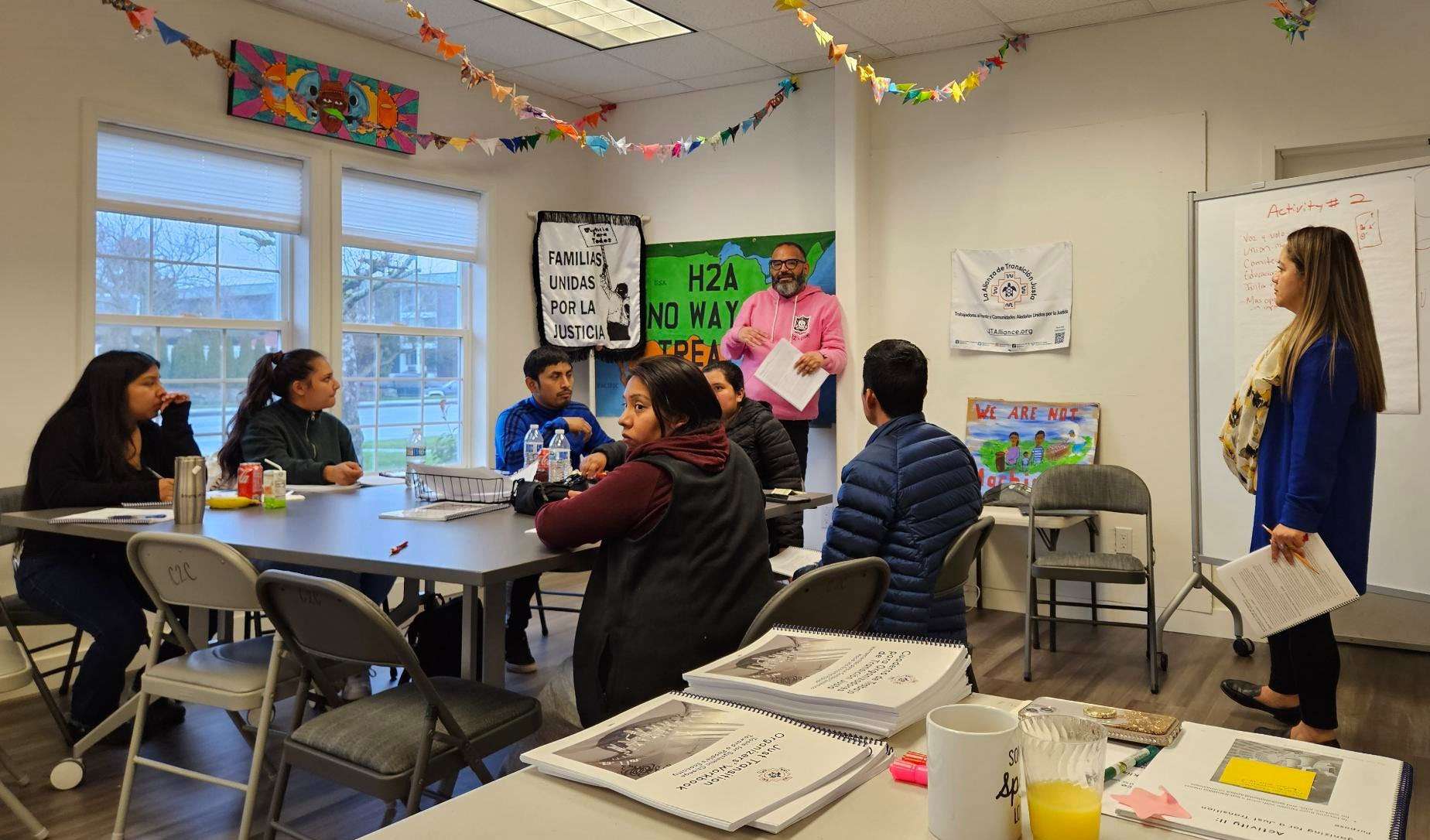
JTA’s José Bravo with trainers Edgar Franks of Familias Unidas por la Justicia and Elizabeth Martinez of Comunidades Aliadas Tomando Acción. Photo credit: José Bravo
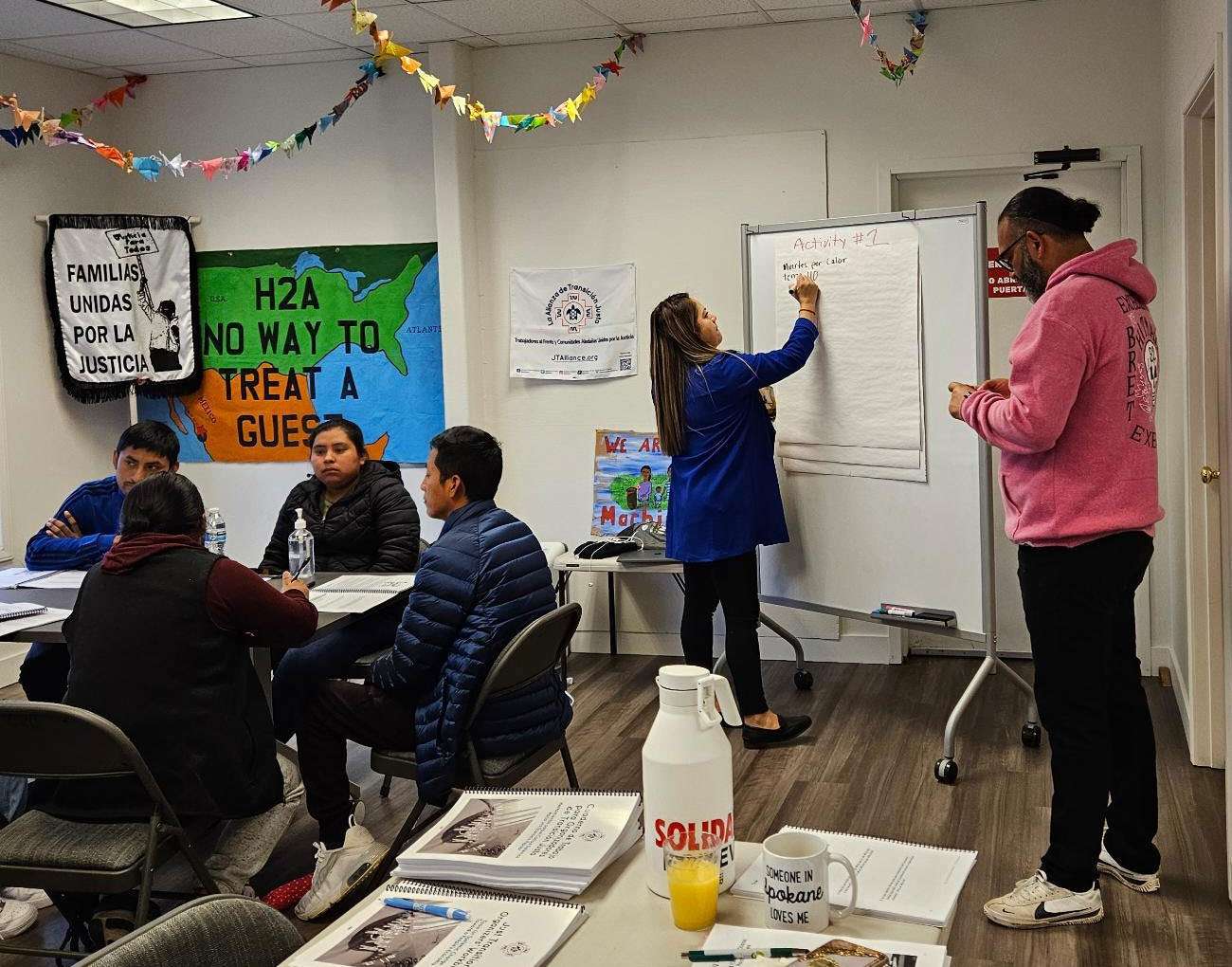
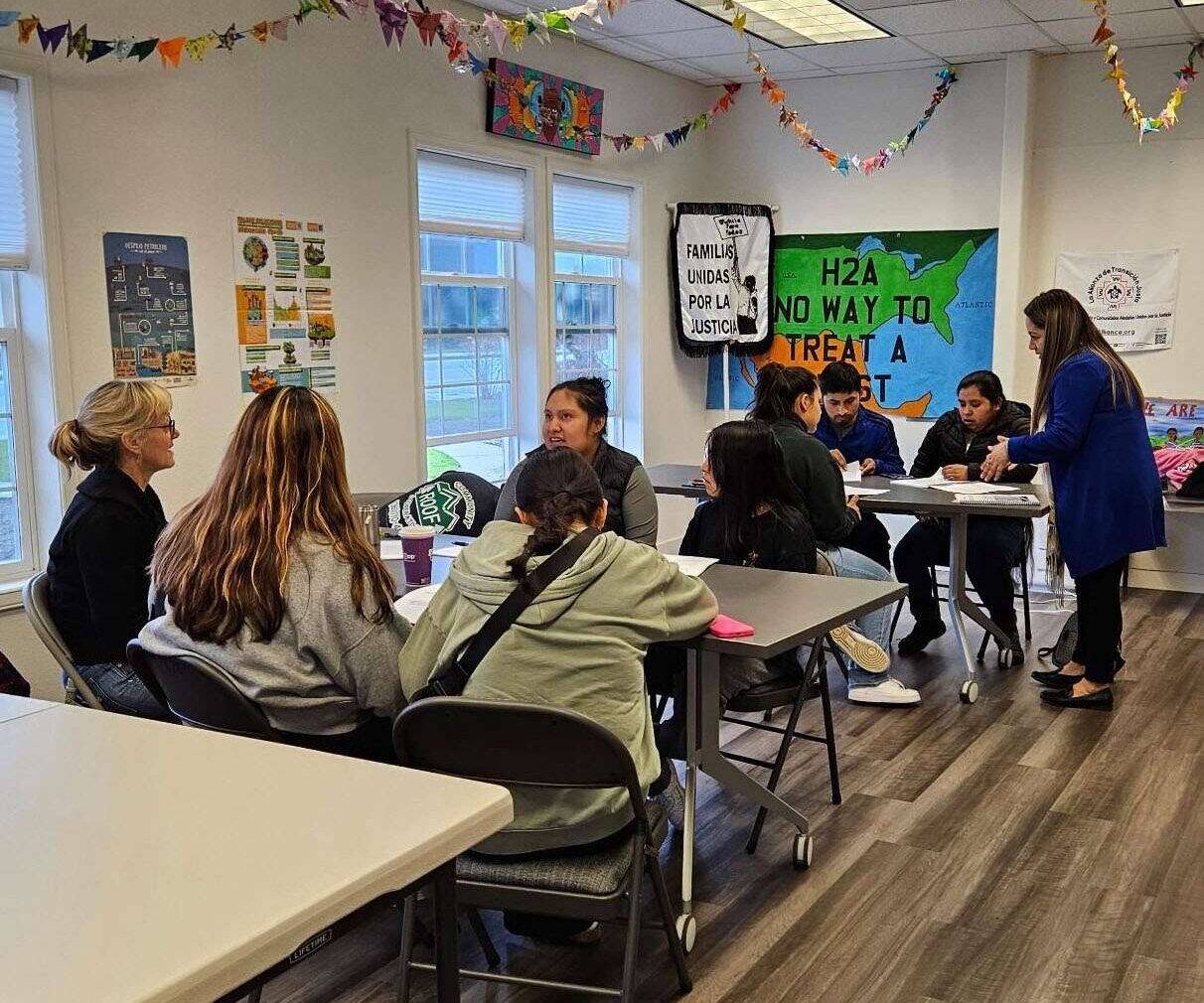
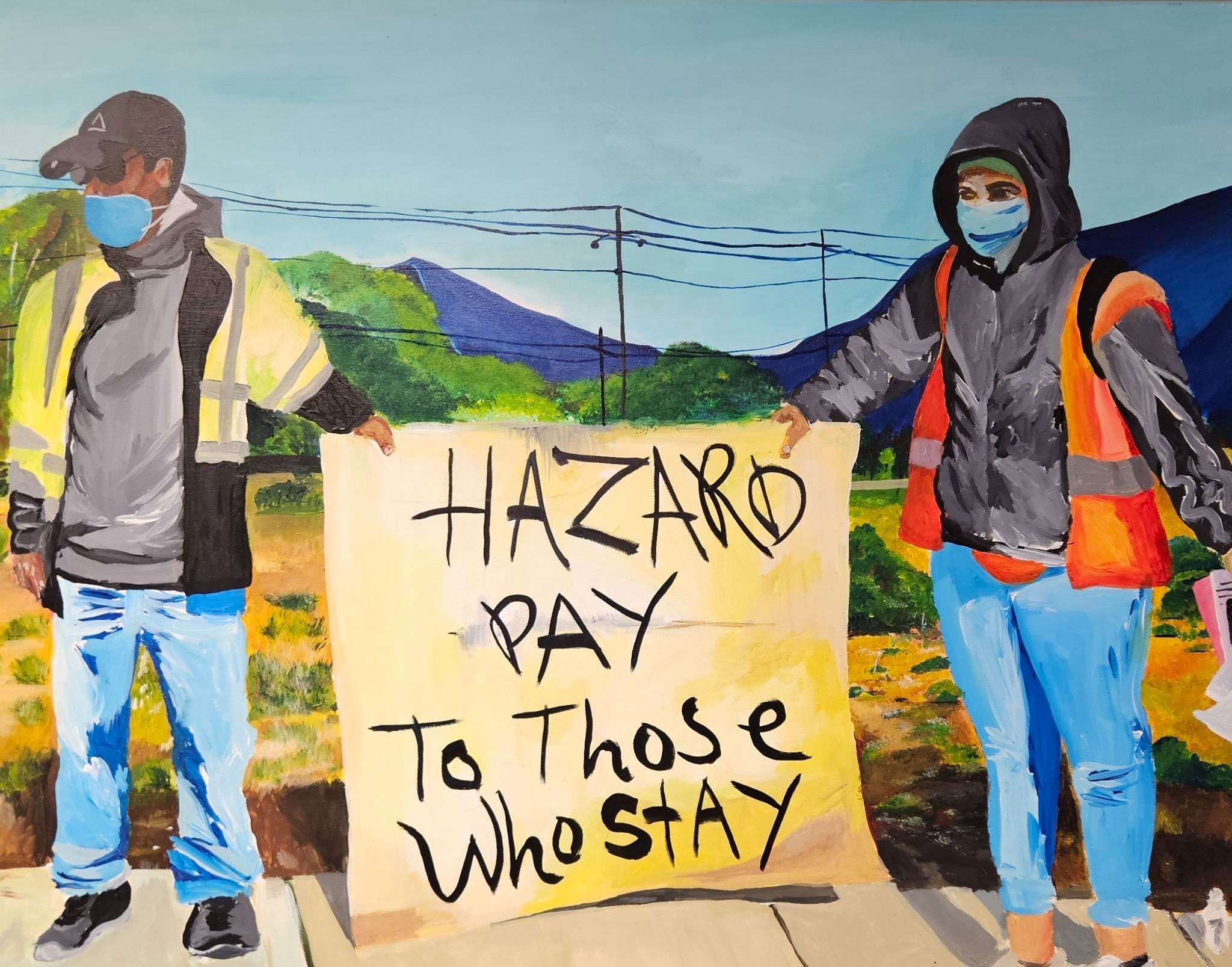
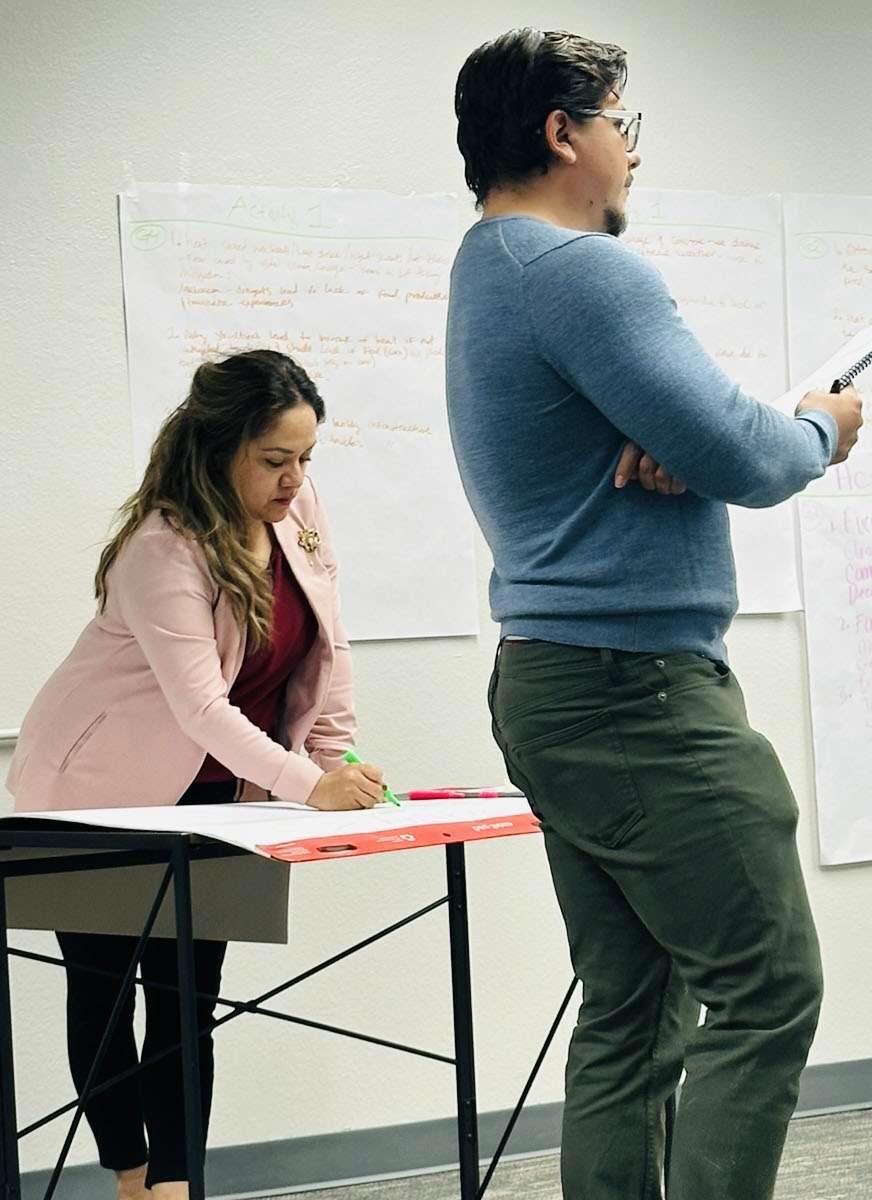
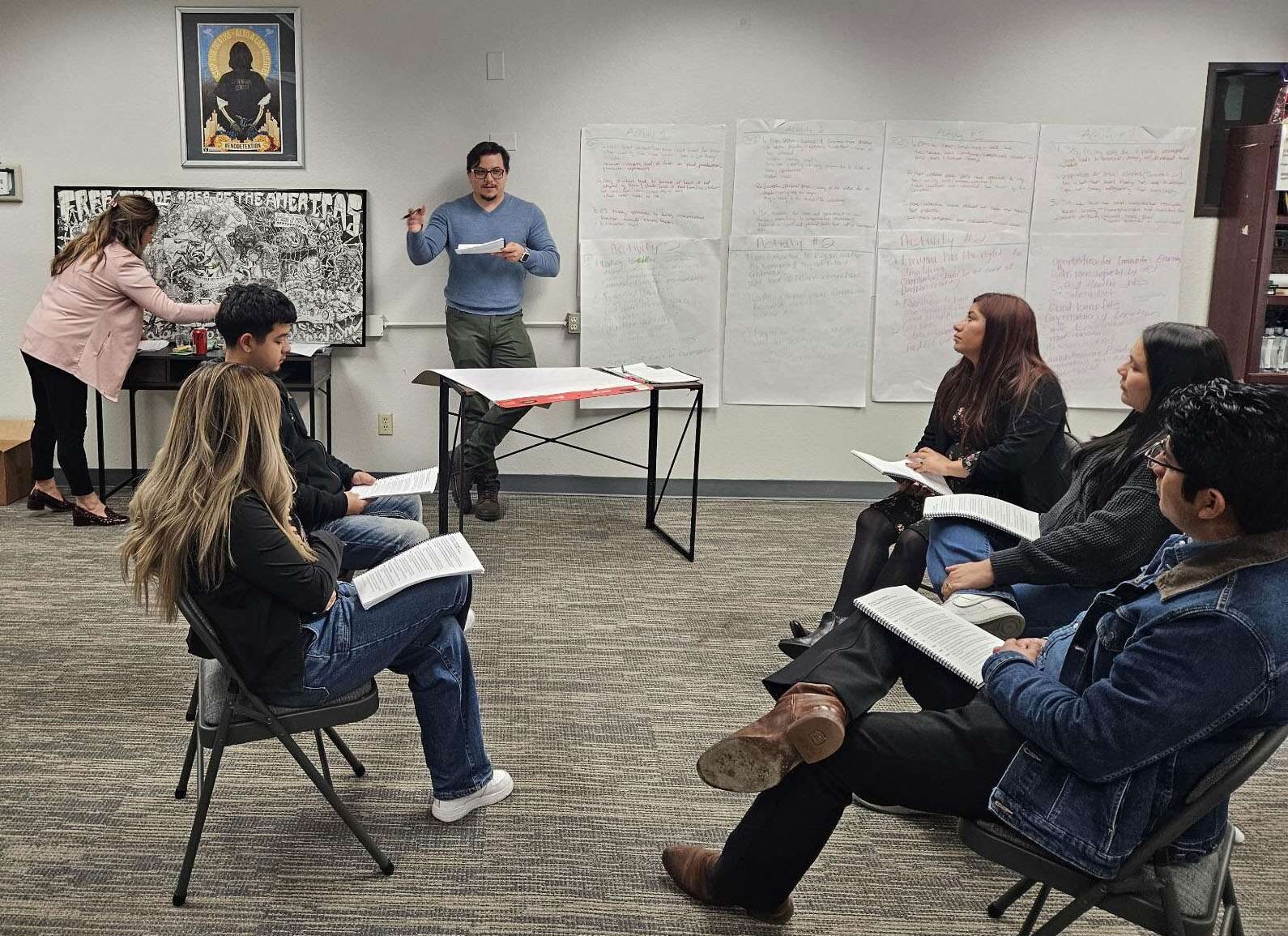
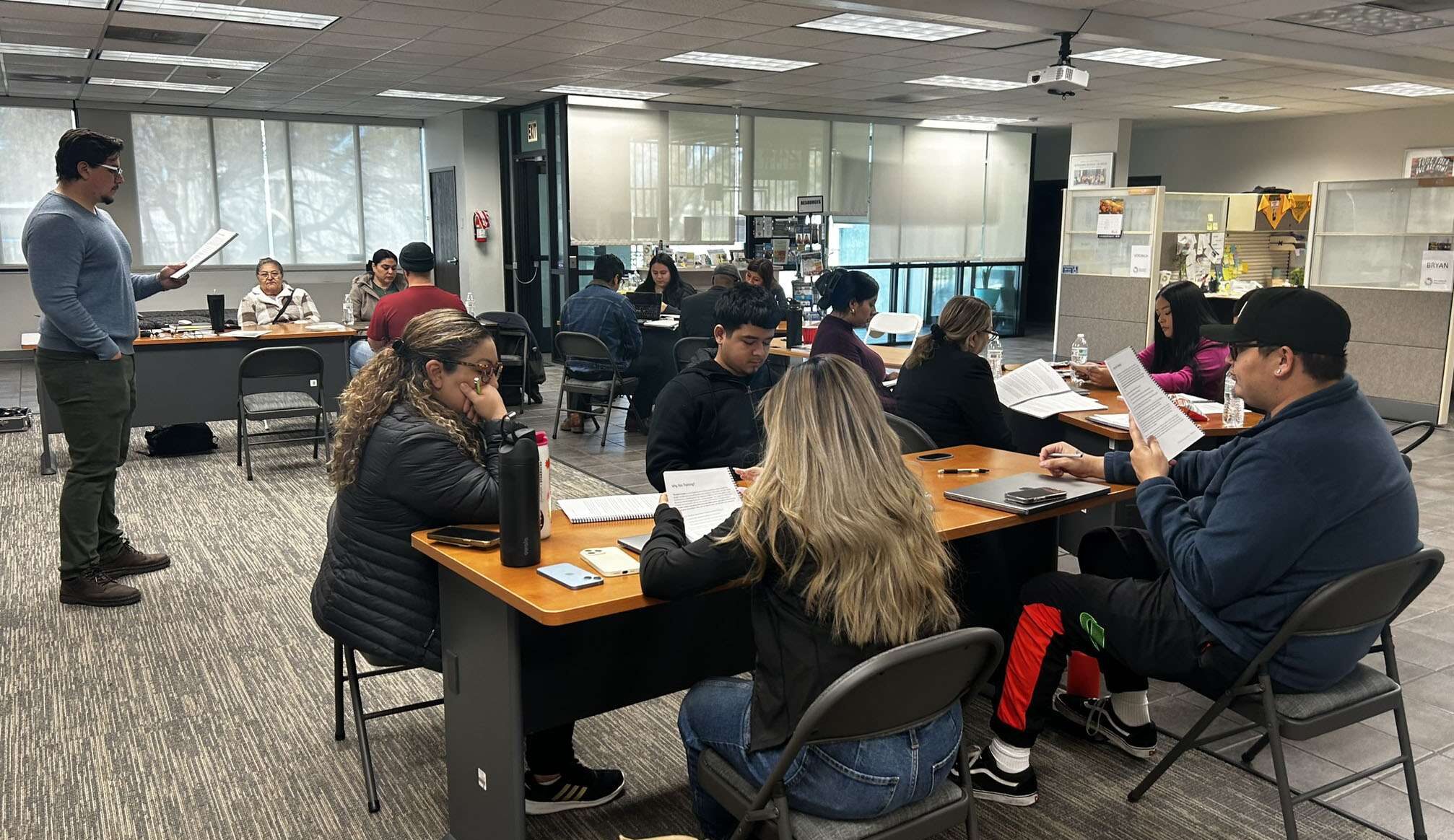
We are so pleased to celebrate our first two trainings of 2024, using our newly updated and expanded program Tools for Systemic Change Toward a People’s Economy. Our talented new cadre of popular education trainers are working together fabulously and raising the bar for engaging participant-driven education.
In February, Familias Unidas por la Justicia hosted a training in Mt. Vernon, WA. And just last week Inland Communities for Immigrant Justice held one in San Bernadino, CA. We have lots more trainings planned throughout the year, so stay tuned for updates!
Scenes from the training with Familias Unidas por la Justicia. Photo credits: José Bravo
Scenes from the training with Inland Communities for Immigrant Justice. Photo credits: José Bravo and Elizabeth Martinez
Content Successful Trainings with JTA Partners appears first in Just Transition Alliance.
The Red Nation Podcast #Throwback
Reconciliation is dead. But how and why did it start in Canada? Kahnawake Mohawk scholar Audra Simpson argues reconciliation between settlers and Indigenous was meant only to heal the settler and to forever suspend the question of Indigenous revolution.
Listen to The Red Nation Podcast on Spotify, SoundCloud, and Apple Podcasts. Listen and download for free on Libsyn.
The Red Nation Podcast is produced by Red Media and is sustained by comrades and supporters like you, power our work here: www.patreon.com/redmediapr
@therednationpodcast #Throwback ♬ original sound – The Red Nation PodcastThe post The Red Nation Podcast #Throwback appeared first on The Red Nation.
From Burning to Building Our Future
Recently closed Covanta incinerator in Long Beach, CA. Photo credit: East Yard Communities for Environmental Justice
EJ Communities force California’s last two waste incinerators to shut downThese are historic times. As the world wakes up to the intersectional nature of environmental racism, climate chaos, genocide and war, thousands of frontline communities continue to engage in pitched battle against those who are destroying people and planet. And while stepping up efforts to stop colonial genocide, we also need to take the time to acknowledge some of our hard-fought movement victories against common foes.
This year marks a couple of historic victories for environmental justice (EJ) communities in the US. After over three decades of struggle, East Yard Communities for Environmental Justice (EYCEJ) and Valley Improvement Projects (VIP), in collaboration with numerous allies, have forced the closure of California’s two remaining waste incinerators. This marks a turning point in an age-old battle with an industry that still operates scores of garbage burning facilities that dump high levels of dioxins, heavy metals, acid gasses and particulate matter in Black, Brown, migrant and poor communities around the US.
Since the 1980s, EJ communities have been hugely successful in thwarting the waste incinerator industry, stopping hundreds of proposals to build these dioxin factories. Still, over a 100 were built in the late 80s and early 90s, predominantly in racialized and poor communities. Despite the severe lack of philanthropic support for EJ groups over the years, our struggles persisted. Between 2000 and 2023, our movement has been able to shut down a number of these incinerators, leveraging a growing public awareness that zero waste alternatives creates far more jobs for a fraction of the cost of building and running a billion dollar incinerator.
Detroit EJ groups and Michigan Teamsters protest the Detroit Incinerator, which was shut down in 2019. Photo credit: Brooke Anderson
In the early 2000s, in a desperate bid to survive such losses, the incinerator industry launched a clever campaign – rebranding their trash burners as “Waste to Energy” (WtE) facilities. This greenwashing ploy allowed the industry to access public subsidies by duping lawmakers into believing they produced renewable energy (RE). Despite the fact that these WtE incinerators are some of the most toxic, carbon intensive and costly energy facilities in the world, the industry has been able to keep over 66 incinerators burning, buoyed by RE subsidies from the federal government and a number of states.
Fifteen years ago, when I worked with the Global Alliance for Incinerator Alternatives (GAIA), I facilitated a workshop for EYCEJ who (at the time) were a relatively young collective of community organizers committed to EJ principles and serving their communities in East Los Angeles and the City of Commerce, CA. At this workshop we discussed the state and federal subsidies that had propped up the incinerator industry, and how Covanta, the largest incinerator company in the US, had been accessing energy and waste policy subsidies by targeting gullible lawmakers and even big green NGOs. East Yard organizers had long been inspired by campaigns led by veteran EJ groups, such as the Mothers of East Los Angeles, who had successfully stopped a number of incinerator proposals back in the day. Some East Yard organizer’s mothers and grandmothers had led these campaigns, so they were inspired to carry on the struggle against polluting corporations like Covanta. A similar story was playing out in Stanislaus County, where a decades-long fight against a Covanta waste incinerator had been taken up in recent years by a young EJ formation – VIP.
The intergenerational leadership of our EJ movement: Juana Beatriz Gutiérrez of the Mothers of East Los Angeles and grandson mark! Lopez, organizing to protect their communities for over 4 decades. Photo credit: mark! Lopez
In 2018, EYCEJ, GAIA and other allies were able to stop the State of California from providing RE credits to incinerators, which forced the closure of the Commerce incinerator. Then, in 2022, EYCEJ, VIP, EarthJustice and other allies, successfully passed a state bill (AB 1857) that removed waste diversion credits from the last two incinerators in Long Beach and Stanislaus County. This removal of state subsidies has forced Covanta to announce the closure of these final two facilities this year. This is a huge win for EJ communities everywhere, and a highly instructive victory, especially since 26 of the 42 state Renewable Portfolio Standards continue to incentivize waste burning.
If EJ groups and their allies in these states were to go after those perverse subsidies, we could see this dinosaur fleet of toxic smoke stacks finally toppled in the coming years! And along with reducing these pollution burdens, this direction could see communities working with local governments and waste and recycling workers to build reuse, recycling and composting infrastructure that could provide millions of well-paying jobs through local, regenerative, zero waste economies. EYCEJ and VIP and other EJ communities are presently leading the way, by working with allies to develop zero waste plans to move away from burning precious resources and move towards long-term community solutions. Now, elected officials and government agencies need to stop giving public dollars to such polluting corporations, and start following the lead of communities and workers on the frontlines of such transformative change!
Content From Burning to Building Our Future appears first in Just Transition Alliance.
Pages
The Fine Print I:
Disclaimer: The views expressed on this site are not the official position of the IWW (or even the IWW’s EUC) unless otherwise indicated and do not necessarily represent the views of anyone but the author’s, nor should it be assumed that any of these authors automatically support the IWW or endorse any of its positions.
Further: the inclusion of a link on our site (other than the link to the main IWW site) does not imply endorsement by or an alliance with the IWW. These sites have been chosen by our members due to their perceived relevance to the IWW EUC and are included here for informational purposes only. If you have any suggestions or comments on any of the links included (or not included) above, please contact us.
The Fine Print II:
Fair Use Notice: The material on this site is provided for educational and informational purposes. It may contain copyrighted material the use of which has not always been specifically authorized by the copyright owner. It is being made available in an effort to advance the understanding of scientific, environmental, economic, social justice and human rights issues etc.
It is believed that this constitutes a 'fair use' of any such copyrighted material as provided for in section 107 of the US Copyright Law. In accordance with Title 17 U.S.C. Section 107, the material on this site is distributed without profit to those who have an interest in using the included information for research and educational purposes. If you wish to use copyrighted material from this site for purposes of your own that go beyond 'fair use', you must obtain permission from the copyright owner. The information on this site does not constitute legal or technical advice.
 This site is not the official webpage of the Industrial Workers of the World.