You are here
Southern Utah Wilderness Alliance


Northern Corridor Highway Risks Irreversible Harm to Mojave Desert Tortoise – 5.11.26
ADVOCATES FOR THE WEST
CENTER FOR BIOLOGICAL DIVERSITY
CONSERVE SOUTHWEST UTAH
CONSERVATION LANDS FOUNDATION
SOUTHERN UTAH WILDERNESS ALLIANCE
THE WILDERNESS SOCIETY
WILDEARTH GUARDIANS
FOR IMMEDIATE RELEASE
May 11, 2026
Northern Corridor Highway Risks Irreversible Harm to Mojave Desert Tortoise – 5.11.26 Conservation Groups Amend Lawsuit over Federal Agencies’ Failure to Protect Threatened Wildlife in Reapproving Controversial HighwayContacts:
Grant Stevens, Communications Director, Southern Utah Wilderness Alliance (SUWA); (319) 427-0260; grant@suwa.org
Washington, DC – Conserve Southwest Utah, along with six Utah-based and national conservation organizations, amended their February lawsuit today over the Bureau of Land Management (BLM) and U.S. Fish and Wildlife Service’s failure to adequately protect the threatened Mojave desert tortoise when reapproving the Northern Corridor Highway in January 2026. The long-opposed highway would tear through critical habitat for the Endangered Species Act (ESA)-protected tortoise within Red Cliffs National Conservation Area near St. George, Utah.
In addition to other laws, the newly filed complaint alleges new violations of the ESA by the Fish and Wildlife Service and BLM — including for the unlawful disposal of lands purchased using federal funding intended to protect the tortoise to make way for the highway. Fish and Wildlife Service’s final environmental analysis supporting the land disposal was issued on the same day in February 2026 that the conservation groups, represented by Advocates for the West, filed their lawsuit challenging the illegal highway’s reapproval. The amended complaint was filed now to comply with the required 60-day notice to federal agencies of ESA violations.
“The proposed Northern Corridor Highway would carve through one of the last strongholds of the threatened Mojave desert tortoise, permanently destroying the very habitat this species needs to survive,” said Stacey Wittek, Conserve Southwest Utah’s Executive Director. “St. George can have smart economic growth without accelerating the irreversible loss of a species already on the brink of extinction.”
The Mojave desert tortoise is a keystone species, providing the supporting structure and stability for its desert environment. Its population decline signals significant risk for the overall ecological health of the desert. The number of tortoises within the core of the Red Cliffs Desert Reserve has declined over 50% since 1998, and the proposed Northern Corridor Highway would bisect the only remaining high-density cluster of tortoises in the Reserve.
“The federal agencies’ environmental analysis has shown that punching a high-speed highway through Red Cliffs National Conservation Area would permanently eliminate designated tortoise habitat and increase threats like wildfire and invasive species,” said Hannah Goldblatt, staff attorney at Advocates for the West and counsel for the conservation groups. “Moving forward anyway ignores both science and the law — and pushes the Mojave desert tortoise closer to extinction.”
Conservation groups’ amended complaint follows the U.S. District Court’s issuance of an injunction this March prohibiting the Utah Department of Transportation (UDOT) from starting construction-related activities that would cause irreparable harm to the ESA-protected tortoise.
A Route Rejected Seven Times
The Department of the Interior has rejected the controversial Northern Corridor Highway route seven times, determining that it would be “biologically devastating” to the threatened Mojave desert tortoise.
Since 2006, local residents have also strongly opposed the highway, pointing out transportation alternatives outside of Red Cliffs National Conservation Area that would do a better job of relieving traffic congestion, supporting economic growth and protecting wildlife, scenic beauty and local access to trails.
Despite the immense local opposition, the BLM and Fish and Wildlife Service approved a right-of-way for the Northern Corridor Highway in the final days of the first Trump administration. Conservation groups sued, arguing that the approval violated multiple federal laws.
In 2021, 6,800 acres west of St. George designated “Zone 6” were added to the Red Cliffs Desert Reserve as mitigation for the Northern Corridor Highway. Zone 6 contains the Greater Moe’s Valley outdoor recreation area, and its ownership is split between the BLM and the state Trust Lands Administration. While conservation groups support protection of the Moe’s Valley area for both recreation and conservation, they agree with federal agencies’ assessment that its geographic isolation from the rest of the tortoise’s protected habitat, along with other factors, diminishes its conservation value and does not adequately offset the damage caused by the Northern Corridor Highway.
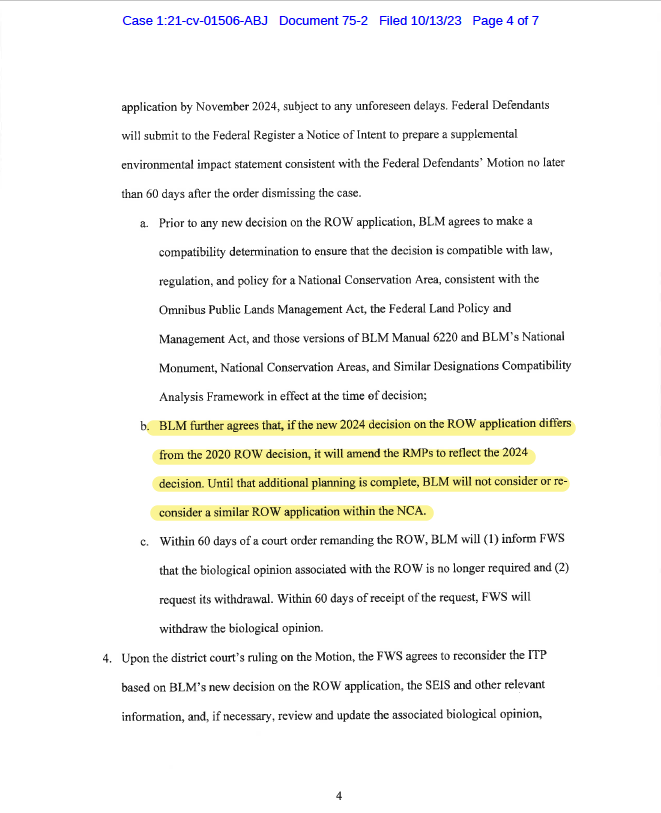
Conservation groups’ 2021 lawsuit resulted in a settlement agreement and a U.S. District Court decision sending back the project’s right-of-way approval for reconsideration. Agencies acknowledged that the approval did not comply with the law and required additional environmental analysis in light of recent wildfires that further degraded Mojave desert tortoise habitat and native vegetation. After updating its environmental analysis, the BLM rejected the project in late 2024.
The agency’s2024 Supplemental Environmental Impact Statement found the project would permanently eliminate designated critical tortoise habitat, increase wildfire probability and frequency, spread noxious weeds and invasive plants, and harm more cultural and historical resources than any alternative considered.
In October 2025, the BLM said it would reconsider the highway right-of-way application after UDOT argued that the federally endorsed alternative was not economically viable, despite documented environmental and community costs associated with the Northern Corridor.
Abandoning their previous scientific findings, the BLM and Fish and Wildlife Service reapproved the Northern Corridor Highway in January 2026. The decision reverses federal agencies’ December 2024 rejection of the same proposal and marks the eighth time the controversial highway has been considered.
Conservation groupssued in February 2026, challenging federal agencies’ reapproval of UDOT’s highway proposal for violating multiple federal laws, including the Omnibus Public Land Management Act, Land and Water Conservation Fund Act, Endangered Species Act, and National Environmental Policy Act.
About Red Cliffs National Conservation Area
The 44,724-acre Red Cliffs National Conservation Area overlaps the larger Red Cliffs Desert Reserve, which is jointly managed by the BLM, the Fish and Wildlife Service, the state of Utah, Washington County, and local municipalities. The reserve was established under a 1995 Habitat Conservation Plan as a compromise to protect roughly 61,000 acres of public lands for the threatened Mojave desert tortoise while allowing development on about 300,000 acres of state and private land. Congress designated the Red Cliffs National Conservation Area in 2009 to “conserve, protect, and enhance for the benefit and enjoyment of present and future generations the ecological, scenic, wildlife, recreational, cultural, historical, natural, educational, and scientific resources” of the public lands within the unit.
The region supports key populations of the threatened Mojave desert tortoise and other at-risk plants and animals, including the Gila monster, burrowing owl, and kit fox. Researchers say the Mojave desert tortoise is on a path to extinction, and its habitat in southwest Utah –– which houses some of the densest tortoise populations –– is especially vulnerable amid rapid growth in the region.
Additional Information and Resources:
- Informational website: protectredcliffs.com
- Lawsuit Challenges Illegal Highway Through Utah’s Red Cliffs National Conservation Area – February 4, 2026
- Federal Agency Re-Approves Highway Through Red Cliffs National Conservation Area, Abandons Own Scientific Findings – January 21, 2026
- BLM Again Considering Four-Lane Highway Through the Red Cliffs National Conservation Area – October 7, 2025
- Decades-Long Highway Fight Ends with Victory for Red Cliffs NCA – December 20th, 2024
- Local and National Organizations Applaud Plan Signaling Denial of Highway Right-of-Way – November 7, 2024
- Conservation Organizations Respond to Washington County’s Continued Attacks on Red Cliffs National Conservation Area – August 7, 2024
- Federal Agencies Release Draft Supplemental Environmental Impact Statement on a Highway Right-of-Way Through Red Cliffs National Conservation Area – May 9, 2024
- BLM and FWS Press Release – November 15, 2023
- Report – Washington County at a Crossroads: An analysis of the proposed Northern Corridor Highway project in Southwest Utah
- Summary of Desert Tortoise Study in Red Cliffs NCA: Population Trends, Threats to Persistence, and Conservation Significance
###
The Southern Utah Wilderness Alliance (SUWA) is a nonprofit organization with members and supporters from around the country dedicated to protecting America’s redrock wilderness. From offices in Moab, Salt Lake City, and Washington, DC, our team of professionals defends the redrock, organizes support for America’s Red Rock Wilderness Act, and stewards a world-renowned landscape. Learn more at www.suwa.org.
The post Northern Corridor Highway Risks Irreversible Harm to Mojave Desert Tortoise – 5.11.26 appeared first on Southern Utah Wilderness Alliance.
SUWA Statement on the Trump Administration’s Rescission of the BLM Public Lands Rule – 5.11.26
May 11, 2026 – FOR IMMEDIATE RELEASE
SUWA Statement on the Trump Administration’s Rescission of the BLM Public Lands Rule – 5.11.26 The Rule reiterated that conservation is one of many uses of the nation’s public landsContacts:
Grant Stevens, Communications Director, Southern Utah Wilderness Alliance (SUWA); (319) 427-0260; grant@suwa.org
Washington, DC – The Department of the Interior has announced the rescission of the Bureau of Land Management’s (BLM) Public Lands Rule. Among other things, the Rule reiterated that conservation is a key component of the BLM’s multiple-use mission and ensured that the agency consistently managed for that use. Below is a statement from SUWA Legal Director Steve Bloch and additional information.
“America’s wildest public lands face unprecedented threats from the Trump administration and its repeated decisions to prioritize fossil fuel development and extractive industry over clean water, wildlife habitat, and wild open spaces. This is especially the case in Utah, where Trump’s policies are having direct and irreversible impacts on the nation’s redrock wilderness,” said Steve Bloch, legal director for the Southern Utah Wilderness Alliance (SUWA). “The Public Lands Rule reiterated that the Bureau of Land Management (BLM) had to put conservation on equal footing with other uses and laid out a framework for the agency to restore degraded landscapes and protect intact public lands for current and future generations. Americans and Utahns widely supported the Rule and we are deeply disappointed to see the Trump administration’s shortsighted effort to undo it. Our work to Protect Wild Utah continues, undeterred.”
Additional information:
The Public Lands Rule established a “… framework to ensure healthy landscapes, abundant wildlife habitat, clean water, and balanced decision-making on our nation’s public lands.” It did not preclude any uses on BLM-managed public lands; it puts conservation on equal footing with grazing, mining, and energy production, and promoted restoration, provided for responsible development, and conserved intact healthy landscapes. The Rule was the product of an extensive, years-long public process with multiple in-person and online meetings and opportunities for public comment. 92% of the comments received by BLM supported the Rule.
The Public Lands Rule is the subject of litigation brought by Republican-led states and industry groups in several federal district courts around the country; additional information can be found here. In February 2025, Congresswoman Celeste Maloy (UT-02) and Congressman Russ Fulcher (ID-01) re-introduced the Western Economic Security Today (WEST) Act; this federal legislation would require the Director of the BLM to withdraw the Rule. Senator John Curtis (R-UT) is an original co-sponsor of S.530 (WEST Act of 2025), companion legislation in the Senate, which was introduced in February 2025.
- BLM’s webpage on the Public Lands Rule.
- SUWA’s 9.10.25 Statement on the Trump Administration’s Plan to Rescind the Bureau of Land Management’s (BLM) Public Lands Rule; Advocacy Action from SUWA during the public comment period
- 10.1.24 Press Release – Utah and National Conservation Groups Move to Defend Balanced Management of Public Lands from Mining and Oil Industry Lawsuit
- SUWA’s 4.18.24 Statement when the Final Rule was announced.
- “The BLM Public Lands Rule is a common-sense solution” June 25, 2023 Editorial from the Salt Lake Tribune
- 3.30.23 SUWA Statement on the Proposed Rule; Advocacy Action from SUWA during the public comment period
- Information regarding public comments received by BLM – 92% of which were supportive.
- Utah-specific polling data from the 2024 Conservation in the West Poll, which shows a clear and resounding preference for conservation when voters are given a choice over how public lands are used.
###
The Southern Utah Wilderness Alliance (SUWA) is a nonprofit organization with members and supporters from around the country dedicated to protecting America’s redrock wilderness. From offices in Moab, Salt Lake City, and Washington, DC, our team of professionals defends the redrock, organizes support for America’s Red Rock Wilderness Act, and stewards a world-renowned landscape. Learn more at www.suwa.org.
The post SUWA Statement on the Trump Administration’s Rescission of the BLM Public Lands Rule – 5.11.26 appeared first on Southern Utah Wilderness Alliance.
Tell BLM: No More Airstrips in Utah’s Wild Places!
Last week we asked you to take action to protect the Labyrinth Canyon area from a Bureau of Land Management (BLM) proposal to authorize the Keg Knoll backcountry airstrip for private aircraft takeoffs and landings. Now, the BLM’s Canyon Country District is proposing to designate ten additional backcountry airstrips in the Moab and Monticello areas and authorize periodic machine maintenance in remote locations. Once again, we need your help to keep these quiet, wild places free of aircraft noise and mechanical intrusions.
These airstrips, most of which show no signs of recent use, are scattered across some of the most remote and ecologically sensitive landscapes in southern Utah—including the Gemini Bridges/Labyrinth Canyon area and the remote backcountry immediately adjacent to Bears Ears National Monument.
Click image to enlarge
None of these airstrips have ever been officially designated, and despite past use, many of these locations are essentially reclaimed and no longer functional for takeoff or landing. Reopening them would require removal of mature native plants like blackbrush, rabbitbrush, and junipers, fragmenting habitat and degrading wilderness characteristics that took years to recover. Several locations sit within BLM-identified wilderness-quality lands or directly adjacent to Bears Ears National Monument, where aircraft noise and visual intrusions would diminish the solitude, natural soundscapes, and cultural landscapes these areas were meant to protect.
The Spring Canyon and Big Flat airstrips lie within bighorn habitat along the Green River corridor and near Canyonlands National Park—the same landscape where the BLM already restricts other recreation activities to protect these important species during lambing season. Similarly, raptors nesting near Big Flat, Nokai Dome, and other sites are highly sensitive to aviation noise, which discourages use of otherwise suitable nesting habitat.
Click here to urge the BLM to reject designation of the most sensitive airstrip locations.
These remote canyon country landscapes deserve protection, not rubber-stamping of aircraft use that degrades recovering ecosystems and introduces chronic noise into some of Utah’s last remaining quiet, wild places. The BLM has decided not to open a formal public comment period on this action, so please submit your comments as soon as possible to ensure they’re taken into account.
Thank you for your support!
P.S. If you haven’t taken action yet on the Keg Knoll backcountry airstrip, please click here to submit a separate comment to the BLM’s Price field office.
The post Tell BLM: No More Airstrips in Utah’s Wild Places! appeared first on Southern Utah Wilderness Alliance.
SUWA Statement on BLM’s Intent to Expand Destructive Motorized Use in the San Rafael Swell and San Rafael Desert – 5.7.26
May 7, 2026 – FOR IMMEDIATE RELEASE
SUWA Statement on BLM’s Intent to Expand Destructive Motorized Use in the San Rafael Swell and San Rafael Desert – 5.7.26 Proposal would damage cultural sites, wildlife habitat, and non-motorized visitors at the behest of Utah politicians and extreme off-road vehicle groupsContacts:
Grant Stevens, Communications Director, Southern Utah Wilderness Alliance (SUWA); (319) 427-0260; grant@suwa.org
Washington, DC – Today, the Bureau of Land Management (BLM) announced that it would be reconsidering the San Rafael Desert and San Rafael Swell Travel Management Plans. Those two plans were finalized in 2022 and 2025, respectively, and guide where motorized vehicle use is allowed across more than 1.5 million acres of BLM-managed lands in central Utah’s redrock country. Those plans designated hundreds of miles of new motorized vehicle routes and authorized public motorized use on them. Now the Trump Administration’s BLM plans to go even further, increasing motorized recreation at the expense of all other public lands users. Below is a statement from SUWA Staff Attorney Laura Peterson and additional information.
“This is yet another naked political decision to appease radical off-road vehicle groups and Utah politicians. Their vision for public lands in Utah is one where landscapes are blanketed by off-road vehicle routes, transforming quiet, wild places into motorized playgrounds and ignoring significant damage to cultural sites, desert waterways, and wildlife habitat,” said Laura Peterson, Staff Attorney with the Southern Utah Wilderness Alliance (SUWA). “The San Rafael Swell and Desert are beloved southern Utah redrock landscapes with endless opportunities for hiking, camping and spending time with family and friends. These areas should be known for their stunning vistas, cultural sites and opportunities for solitude, not off-road vehicle damage.”
The San Rafael Swell:
The San Rafael Swell Travel Management Area (TMA) encompasses roughly 1,150,000 acres of BLM-managed lands within the Price and Richfield field offices. A much-loved backcountry area, the Swell is home to irreplaceable cultural and historic resources, important wildlife habitat, and outstanding recreation opportunities. The Swell’s sinuous slot canyons, soaring red rock cliffs, and prominent buttes provide countless opportunities for hikers, canyoneers, campers, river runners, climbers, bikers, photographers, and other visitors. This TMA also encompasses designated wilderness areas and the San Rafael Swell Recreation Area.
In December 2024, the BLM released the final San Rafael Swell Travel Management Plan. Rather than selecting an alternative that would have balanced motorized recreation and non-motorized recreation while also minimizing damage to natural and cultural resources, the agency chose an alternative that prioritized motorized vehicle use. The plan designated nearly 1,500 miles of routes and opened a substantial number of new routes to motorized vehicle use. While the BLM’s plan got many things wrong, one thing it did right was not opening roughly 650 miles of trails in places like stream corridors and wash bottoms, cultural sites and where use would lead to serious documented environmental damage. It also included “routes” that are simply lines on a map that do not exist on the ground.
Despite a plan that expanded ORV use in the Swell, the Idaho-based BlueRibbon Coalition and others sued the BLM in March 2025 alleging the agency did not go far enough. The group sought a preliminary injunction to stop the BLM from implementing the San Rafael Swell plan. The court has not granted the preliminary injunction. The case has been stayed at the request of the Trump Administration.
The San Rafael Desert:
The San Rafael Desert Travel Management Area (TMA) encompasses more than 375,000 acres of sublime Utah backcountry, including the designated Labyrinth Canyon Wilderness and wilderness-quality lands such as Sweetwater Reef and the San Rafael River. It features stunning redrock canyons, important cultural sites, and an outstanding diversity of native bee species, many found nowhere else but this corner of Utah.
In the last few months of the first Trump Administration, the BLM approved a destructive travel management plan that—by the agency’s own account—emphasized maximum mileage available for off-road vehicle recreation and more than doubled the miles of dirt two-tracks and trails for motorized use from 300 miles to more than 765 miles. SUWA challenged that unbalanced plan in federal court. SUWA and the BLM ultimately settled that lawsuit in February of 2022 and the BLM agreed to reconsider the designation of certain routes. The BLM eventually took corrective action and revised the San Rafael Desert TMP to close 120 miles of erroneously designated routes – routes the BLM acknowledged were reclaimed, redundant or non-existent on the ground and with no public purpose or need.
In 2024, the state of Utah and others challenged BLM’s San Rafael reconsideration decision in federal court. That case has been stayed for over a year.
Travel Management Plans:
The San Rafael Swell and San Rafael Desert Travel Management Plans are two of 11 travel plans the BLM is completing as part of a court-supervised settlement agreement between the agency, conservation, and ORV groups. Covering more than 6 million acres of BLM-managed lands in eastern and southern Utah, these plans will determine where motorized vehicles will be allowed on some of Utah’s wildest public lands. Including this plan, the BLM has completed five of the 11 plans. Read more about SUWA’s litigation to ensure these travel plans follow federal laws to protect public lands and resources.
###
The Southern Utah Wilderness Alliance (SUWA) is a nonprofit organization with members and supporters from around the country dedicated to protecting America’s redrock wilderness. From offices in Moab, Salt Lake City, and Washington, DC, our team of professionals defends the redrock, organizes support for America’s Red Rock Wilderness Act, and stewards a world-renowned landscape. Learn more at www.suwa.org.
The post SUWA Statement on BLM’s Intent to Expand Destructive Motorized Use in the San Rafael Swell and San Rafael Desert – 5.7.26 appeared first on Southern Utah Wilderness Alliance.
Unprecedented Alliance Highlights Need for Real Affordable Housing Solutions Without Sacrificing Public Lands – 4.29.26
FOR IMMEDIATE RELEASE
April 29, 2026
Unprecedented Alliance Highlights Need for Real Affordable Housing Solutions Without Sacrificing Public Lands – 4.29.26 Leaders of the Affordable Housing and Public Lands Community unveil “Shared Ground” affirming that protecting public lands and expanding affordable housing are complementary, not competing, priorities.Contacts:
Grant Stevens, Communications Director, Southern Utah Wilderness Alliance (SUWA), grant@suwa.org, 319-427-0260
Ben Finzel, RENEWPR, ben@renewpr.com, 202-277-6286
Annette Larkin, RENEWPR, annette@renewpr.com, 703-772-6427
Washington, DC – Leaders from the affordable housing and public lands communities today unveiled a joint principles framework rejecting the fallacy that selling off America’s public lands is a solution to the housing affordability crisis, while highlighting the need for real, equitable housing solutions.
Shared Ground: Aligning Affordable Housing & Public Lands Priorities is a policy framework endorsed by a broad coalition of national, regional, and local organizations. The effort underscores that protecting public lands and expanding access to affordable housing are complementary, not competing priorities. Shared Ground brings together leaders from both communities to advance real solutions, reject false tradeoffs, and promote policies that engage local communities and support strong, livable communities nationwide.
This partnership comes amid escalating pressures on both issues, including continued underinvestment in federal housing programs, increasing proposals to sell or transfer public lands without public benefit, and growing bipartisan frustration with ineffective, politically driven solutions.
The joint framework outlines key principles to guide policy decisions:
- Rejecting mass public land selloffs as a housing solution
- Prioritizing proven strategies, including increased funding, zoning reform, and community-based development
- Ensuring any use of public land for housing is limited, targeted, and includes enforceable affordability requirements
- Protecting public lands as shared resources that support recreation, local economies, and community well-being
The principles are endorsed by a diverse coalition of housing advocates, conservation groups, and community-based organizations nationwide—reflecting the shared stakes and urgency of this issue.
Learn more about Shared Ground and read the principles here.
Quotes from participating organizations below:
“The affordable housing crisis is serious but placing the blame on public lands will not solve it. Instead of focusing on actual solutions, shortsighted politicians keep pushing public lands sell off under the guise of affordable housing as they simultaneously cut effective and proven housing programs. There’s no need for a false choice: we can keep and protect public lands while also investing in creative housing solutions.” Neal Clark, Wildlands Director, Southern Utah Wilderness Alliance
“Protecting our public lands and ensuring every American has a safe, affordable place to call home are complementary goals. We must reject the false choice between conservation and housing. Any use of public land must come with legally enforceable requirements to ensure it serves the public interest, providing permanent affordability and equitable access for local communities.” – Donald Whitehead, Executive Director, National Coalition for the Homeless
“Americans love public lands and the freedom they provide to hunt, fish and hike—and we want them to stay as they are, public and accessible, for future generations. Backed by more than 60 organizations, these principles reject the false choice the administration is trying to force between protecting these places and addressing the housing crisis. Americans deserve real solutions on both.” – Tracy Stone-Manning, President, The Wilderness Society
“National Low Income Housing Coalition’s (NLIHC) research finds a gap between wages and rental housing costs in the U.S. Affordable rental homes are out of reach for millions of low-wage workers, seniors, families, and other renters. Governments often turn to public lands to build affordable housing in an effort to safely house residents amid shortages. These efforts are viable but must align with responsible public lands stewardship. NLIHC joins our partners in environmental and conservation spaces in opposing the mass sell-off of federal land without key guardrails or affordability requirements. Many proven solutions exist to increase housing affordability without sacrificing public lands, including preserving existing affordable housing. We encourage policymakers to adopt balanced solutions to the affordable housing crisis that advance long-term affordability and protect irreplaceable natural and cultural resources while safeguarding America’s public lands.” – Renee M. Willis, President and CEO, NLIHC
“The housing crisis demands urgent, evidence-based action, not the short-sighted liquidation of the country’s remaining natural and wild landscapes. This framework looks beyond political ideologies and prioritizes proven strategies to ensure that any use of public land is strictly targeted, limited, and bound by enforceable affordability requirements. It recognizes the reality that most of these public lands lack the infrastructure and accessibility required for viable development, and their true value lies in the clean water, recreation, and economic stability they provide to our communities.” – Chris Hill, CEO, Conservation Lands Foundation
“Land is necessary to the development of affordable housing and local governments should look to well-located surplus lands as a resource for building housing. However, preserving public land for conservation and recreation is a critical priority for our country. Current federal proposals to sell off public land are thinly veiled attempts to line the pockets of politicians’ friends and to undermine public parks, public forests and other public lands. The National Housing Law Project is pleased to release this framework that advances our shared interests in preserving public lands and making housing more affordable.” – Shamus Roller, Chief Executive Officer, National Housing Law Project
“Veterans and military families understand that strong communities require both stable housing and protected public lands. We have seen how these resources support local economies, create jobs, and improve quality of life for the people who live there. We can and should pursue practical solutions that expand housing while keeping public lands in public hands.” – Janessa Goldbeck, CEO, Vet Voice Foundation
“A powerful model during a particularly challenging time – public interest advocates from different sectors coming together to both affirm our shared values and to commit to finding ways to mutually support real solutions to expand affordable housing and to preserve the American birthright of public lands ownership. We stand together to reject the transparent attempt by cynical politicians in DC to divide us through false choices.”- Mark Allison, Executive Director, New Mexico Wild and former Chair of the Board, National Low Income Housing Coalition
“Solving one crisis doesn’t mean creating another. The national housing crisis should not be used as a stalking horse to sell off our public lands to private developers and industry. Our communities thrive when they have both abundant housing and abundant access to the nature that unites us. Sierra Club supports the common-sense policies that increase our country’s supply of affordable housing while preserving the public lands that are our true common ground.” – Dan Ritzman, Conservation Campaign Director, Sierra Club
“People across the country have stood up time and time again to reject the sell-off of our public lands and the notion that they are simply a corporate asset on a balance sheet. Our public lands are our shared inheritance and our legacy. They are vital to sustaining our local economies, wildlife, and communities. Anyone suggesting we must sacrifice them to solve the housing crisis is offering a false choice. We need real, community-based housing solutions, and we need to keep public lands in public hands.”- Brien Webster, Senior Public Lands Campaign Manager, Conservation Colorado
“Large-scale sell-off of public land is not the solution to the affordable housing crisis. In Wyoming, public lands strengthen our communities and are part of our way of life. We stand behind the idea that protecting public lands and addressing the affordability crisis need to be simultaneously prioritized by those in our nation’s leadership.” – Gabrielle Yates, Public Lands Program Manager, Wyoming Outdoor Council
“Our public lands are a part of our nation’s shared resources—offering unmatched opportunities to enjoy outdoor experiences, protect natural ecosystems, and bring tourism revenue to our towns. This administration and its industry allies are attempting to create a false choice between our spectacular public lands and affordable housing. SELC is proud to join in this broad coalition of organizations that reject the idea of an unnecessary conflict between those values and to stand in solidarity with both public lands protection and common sense housing reforms.” – Alyson R. Merlin, Staff Attorney, Southern Environmental Law Center
“Addressing the real need for affordable housing in our communities and opposing ongoing efforts to sell off our federal public lands are both issues with broad and bipartisan support,” said Tom Uniack, Executive Director for Washington Wild. “Advocates for both of these important issues have found common ground that solutions for both can be achieved but not at the expense of the other.”
“Our nation’s public lands are largely remote, far from any infrastructure, often steep, and if human encroachment occurs in them, they are highly susceptible to fire. Rather than proposing housing which would inevitably be expensive and risky in the Wildland/Urban Interface, the principles we adopt here will lead to real affordable housing in the places where it belongs. The highest and best use of our public lands is as wildlife habitat, places for recreation and cultural experience, and as the engines that create clean water and air for all of us.”—Mark Green, Executive Director, CalWild.
“Our national public lands belong to all Americans, providing opportunities for recreation, preserving wildlife habitat, supplying clean water, and more. While affordable housing is a critical need, selling off our common heritage is not the answer. Cities and states need to look to infill development and appropriate local lands. Furthermore, simply increasing the housing supply is not enough; strategies must be employed to ensure that the housing built is actually affordable. There is no need to sacrifice our public lands to do this.”—Michael J. Painter, Coordinator, Californians for Western Wilderness
“Over 95% of Idahoans want public lands to stay in public hands. Proposals to sell off large tracts of public lands don’t meet affordable housing needs or public desires to protect open space. By encouraging infill and by building up – and not out – we are protecting the trailheads and trail systems that make Idaho communities great places to raise families. We are also creating opportunities for our kids and future generations to stay in Idaho and enjoy the same quality of life we do today.” – John Robison, Public Lands and Wildlife Director, Idaho Conservation League
“While access to affordable housing should be one of the highest priorities in the US, it does not need to come at the cost of despoiling public lands. We can balance the need to provide housing without causing irreparable harm to the environment for future generations.” – Michelle Taylor, Vice President of Social Health Services, Community Care Alliance
Government agencies at the federal, state and local level often own land within urban boundaries. These properties can and should be considered for affordable housing, if not serving other needed functions. Urban properties usually have needed infrastructure like roads and utilities, and accessibility to community services such as jobs, schools, shopping and health care for future residents. However, public lands outside of urban areas should be preserved for wildlife, recreation, domestic drinking water resources, and climate mitigation. – Darlene Chirman, Great Old Broads for Wilderness, Cascade Volcanoes Chapter
###
The Southern Utah Wilderness Alliance (SUWA) is a nonprofit organization with members and supporters from around the country dedicated to protecting America’s redrock wilderness. From offices in Moab, Salt Lake City, and Washington, DC, our team of professionals defends the redrock, organizes support for America’s Red Rock Wilderness Act, and stewards a world-renowned landscape. Learn more at www.suwa.org.
The post Unprecedented Alliance Highlights Need for Real Affordable Housing Solutions Without Sacrificing Public Lands – 4.29.26 appeared first on Southern Utah Wilderness Alliance.
Tell BLM: No Active Airstrip in the Labyrinth Canyon Wilderness!
The Bureau of Land Management’s (BLM) Price field office is proposing to authorize aircraft takeoffs and landings in the Labyrinth Canyon Wilderness by designating the unauthorized Keg Knoll backcountry airstrip as open for aircraft use. The airstrip is located on the west side of Labyrinth Canyon and north of Canyonlands National Park.
The Labyrinth Canyon Wilderness was designated by Congress in 2019. While the Wilderness Act gives the BLM some discretion to allow (or prohibit) continued use at airstrips that were legally established prior to wilderness designation, it does not allow the agency to authorize aircraft use when the airstrip was not legally open prior to the wilderness designation. That’s the situation here.
The Price office’s 2008 management plan—the land use plan in effect when the Labyrinth Canyon Wilderness was established—specifically lists five “existing and currently used backcountry airstrips” for continued noncommercial and limited commercial aviation use; Keg Knoll is not on the list. And for good reason, as it was unused and reclaiming at the time. The agency’s 1999 wilderness inventory of Labyrinth Canyon confirms as much, noting “abandoned airstrips” in the Keg Knoll area. The airstrip was also never identified on the legislative map that accompanied the 2019 bill designating the Labyrinth Canyon Wilderness.
Click here to tell the BLM that aircraft use at Keg Knoll is unnecessary and unlawful.
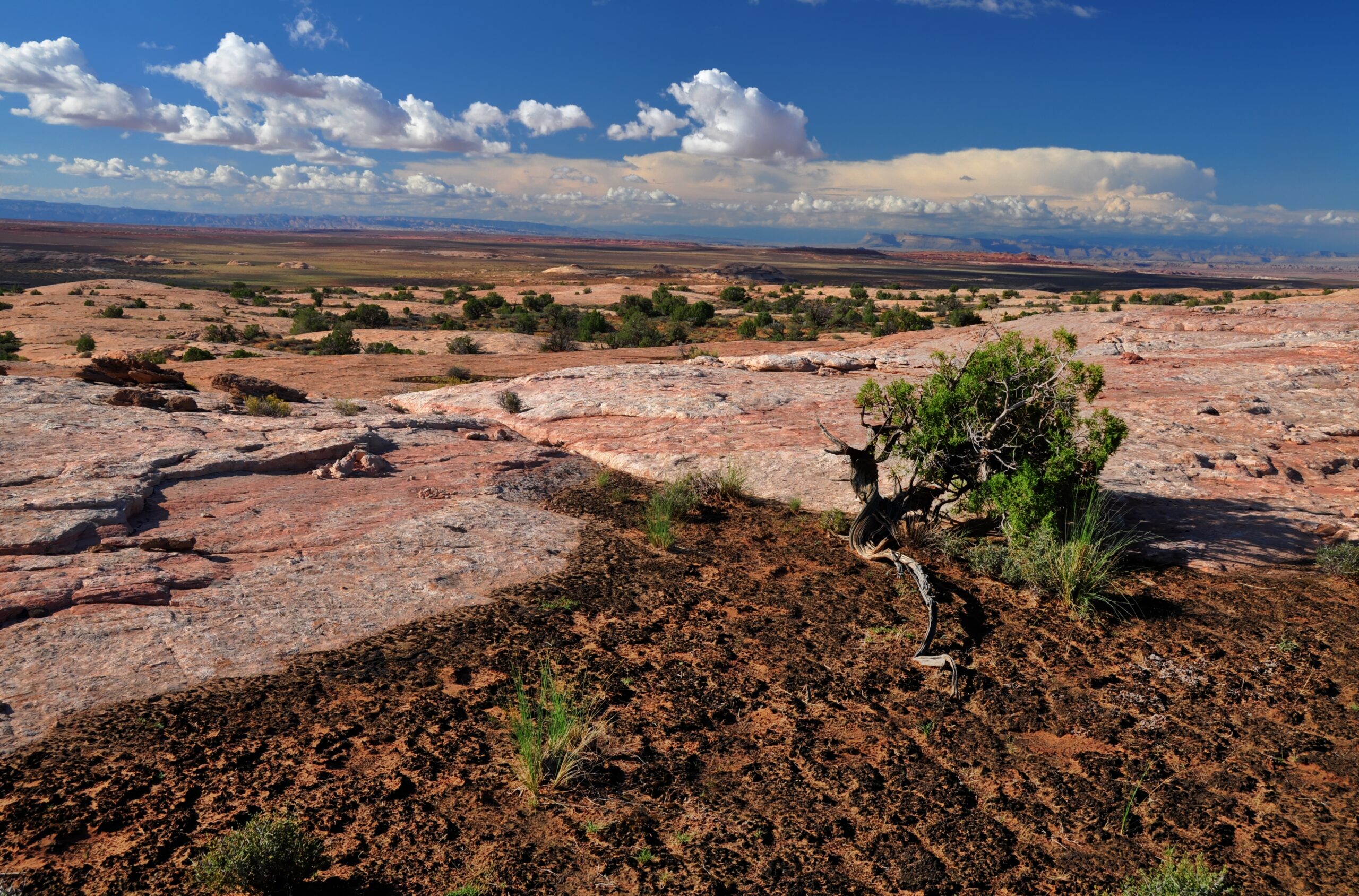
Near the airstrip site in the Labyrinth Canyon Wilderness. © Ray Bloxham/SUWABackcountry airstrips and aircraft use conflict with the reasons most people seek out wilderness in the first place: solitude, natural soundscapes, wildlife, and an experience of remoteness that often can’t be found on other public lands. What’s more, there are plenty of backcountry airstrips throughout Utah that don’t impact designated wilderness areas (only around 4% of BLM land in Utah is designated wilderness).
The BLM is preparing an environmental assessment (EA) and is intending to issue a decision in mid-May. At the Trump administration’s direction, the agency is not planning to release a draft EA to the public or hold a formal public comment period—so please submit your comments as soon as possible.
The Labyrinth Canyon Wilderness is a gem of the American West and should be managed for the benefit and enhancement of the wilderness values it was designated to protect. With your help, we can ensure that the BLM takes seriously its obligation to protect this world-class wilderness area.
Thank you for your support.
The post Tell BLM: No Active Airstrip in the Labyrinth Canyon Wilderness! appeared first on Southern Utah Wilderness Alliance.
April 2026 Redrock Report
Redrock Report: Earth Week Edition
Happy Earth Week! Here at SUWA we remain laser-focused on defending Grand Staircase-Escalante National Monument from congressional attacks. But this week we’re also celebrating the power of our collective action, which is fueled by our love for this magnificent landscape.
Please continue to speak out for Utah’s wild places in any way you can, and if you live in Utah, see below for some local opportunities to support the Protect Wild Utah movement, celebrate Earth Day, and help shape a better future through civic engagement. Thanks for all you do!
Latest Updates on Grand Staircase-Escalante and the Congressional Review Act
Boundary Waters Suffers Major Blow, Grand Staircase-Escalante Could Be Next
First, the bad news. Last week, the U.S. Senate voted 50-49 to pass H.J. Res. 140, which overturns the 20-year mining ban in the headwaters of the Boundary Waters Canoe Area Wilderness in northern Minnesota, the most visited wilderness area in America. As you know, Grand Staircase-Escalante National Monument faces a similar threat (undoing of the monument management plan) using the same legislative tool: the Congressional Review Act (CRA). If this obscure law can be weaponized against public lands in Minnesota and Utah, it can happen anywhere in the country.
“Today is a tragic day for the Boundary Waters and all who care about stewarding public lands and wilderness,” said SUWA Executive Director Scott Braden in a recent press statement. “Using the Congressional Review Act to undo protections is a short-sighted mistake—whether it’s the Boundary Waters or Grand Staircase-Escalante National Monument. Congress should stop attacking cherished public lands.”
Our work to protect Grand Staircase-Escalante is unwavering—and now with more clarity than ever before. You’ve heard us say this before and it remains true: SUWA has never backed down from a hard fight, and we’re not going to start now.
Photo © Dave Freeman
Outcry Grows Over Misuse of CRA
The good news is that there is widespread and growing opposition to use of the CRA against Grand Staircase-Escalante National Monument. We’ve seen statements, letters, and resolutions from the Grand Staircase-Escalante Inter-Tribal Coalition; the Navajo Utah Commission; local businesses; outdoor companies; faith leaders; the town of Boulder, UT; and more than 125 local, state, and national organizations (a compilation can be found here). Meanwhile, the Salt Lake Tribune, Grand Junction Sentinel, Idaho Statesman, and Durango Herald have all editorialized in support of the monument.
Your Involvement Remains Critical
We know we’ve been asking a lot of you lately, but now is not the time to let up. If you’ve emailed or called your members of Congress, please encourage friends and family to do the same. Write or call again yourself, submit a letter to the editor, meet with your elected officials, view and share our Grand Staircase-Escalante StoryMap, or create artwork celebrating the monument and send it to loveforgse@suwa.org. No matter where you live, our Grassroots Organizing Team can help you find the most effective ways to take action. Click here to learn more.
Live in Utah? Get Involved Locally
Attend a Candidate Debate for Utah’s New 1st Congressional District
Utah’s elected officials at the federal Level—our senators and representatives—have the power to determine what happens on our treasured public lands. With new maps being used for U.S. House races this November, your vote in the congressional elections could matter more than ever. If you live in the new 1st District (which covers most, but not all, of Salt Lake County), we encourage you to join SUWA and our partners at Stewardship Utah for a 1st District Candidate Debate in Salt Lake City this Wednesday, April 22 (Earth Day) from 6:00 – 8:30 pm. Click here to learn more and RSVP.
Take Part in a Clean-Up Day on the Navajo Nation
Join us on Saturday, April 25 for a trash clean-up on the Navajo Nation! SUWA is partnering with C 4Ever Green to show care for the natural world this Earth Week. Meet us at the Red Mesa Chapter House (155 Red Mesa Rd #35, Montezuma Creek, Utah) at 8:30 am. We’ll spend the morning cleaning up and share a meal together in the afternoon. A group of us will be camping out in the Bluff area the night before. Email Mimi (mimi@suwa.org) or Nicole (nicole@suwa.org) for more information and to let us know you’re coming. Carpooling is encouraged.
Participate in the Earth Action Rally at the State Capitol
On Sunday, April 26, from 1:30 – 3:30 pm, Salt Lake Valley residents will gather on the Utah State Capitol steps for this year’s Earth Action Rally: Our Power, Our Planet. Local issues on this year’s agenda include air quality, the shrinking Great Salt Lake, nuclear energy, data centers, and more. Come listen to speakers, chat with local nonprofits, enjoy musical performances, and connect with your community to create change.
Act Locally, Give Locally
This year, communities across Utah are coming together for UTAHGIVES—a 24-hour celebration of generosity that puts the spotlight on nonprofits doing the essential work that makes this state stronger. Across Utah, from Logan to Moab to St. George, people are supporting what they love and showing up for the places and organizations that matter to them. SUWA is proud to be part of this community event on Thursday, April 30!
Early giving is already open. From now through April 30, please visit our our UTAHGIVES page and make your gift. Then tell a friend! Every donation, whatever the size, is a direct investment in the Protect Wild Utah movement. Thank you!
The post April 2026 Redrock Report appeared first on Southern Utah Wilderness Alliance.
SUWA Statement on Passage of Legislation Attacking Boundary Waters Canoe Area Wilderness Using the CRA – 4.16.26
April 16, 2026 – FOR IMMEDIATE RELEASE
SUWA Statement on Passage of Legislation Attacking Boundary Waters Canoe Area Wilderness using the Congressional Review Act (CRA) – 4.16.26 Threat remains to Grand Staircase-Escalante National MonumentContacts:
Grant Stevens, Communications Director, Southern Utah Wilderness Alliance (SUWA); (319) 427-0260; grant@suwa.org
Washington, DC – Today, the U.S. Senate voted 50-49, passing H.J. Res. 140, which overturns the 20-year mining ban in the headwaters of the Boundary Waters Canoe Area Wilderness in Northern Minnesota, the most visited wilderness area in America. Another iconic landscape – Grand Staircase-Escalante National Monument in Southern Utah – faces a similar threat (undoing of the Monument Management Plan) using the same nefarious legislative tool: the Congressional Review Act (CRA). Below is a statement from SUWA Executive Director Scott Braden:
“Today is a tragic day for the Boundary Waters and all who care about stewarding public lands and wilderness. Using the Congressional Review Act to undo protections is a short-sighted mistake – whether it’s the Boundary Waters or Grand Staircase-Escalante National Monument,” said Scott Braden, Executive Director of the Southern Utah Wilderness Alliance (SUWA). “Congress should stop attacking cherished public lands.”
Additional information re: H.J. Res 140 and the Boundary Waters Canoe Area Wilderness can be found here. There is widespread and growing opposition to this outrageous use of the Congressional Review Act (CRA) to attack Grand Staircase-Escalante National Monument. A compilation can be found here.
About Grand Staircase-Escalante National Monument & the Monument Management Plan
Since its establishment, heightened protections for the Monument’s geology, paleontology, wildlife, plant communities, and ancestral sites have succeeded in preserving these unique values for generations to come, and local communities on the Monument’s doorstep have benefited as well. Nearly 30 years later, the numerous benefits of protecting Grand Staircase-Escalante are clear: the Monument preserves a remarkable ecosystem at the landscape level and sets the stage for future discovery about human, paleontological, and geological history on the Colorado Plateau.
On December 4, 2017, President Trump ignored millions of public comments and unlawfully eliminated large swaths of the Monument, slashing it by 47 percent – roughly 900,000 acres. Thankfully, on October 8, 2021, President Biden signed a proclamation restoring Grand Staircase-Escalante National Monument to its full, original boundaries. In 2023, BLM began developing a new management plan for the full Monument. As a part of that work, the BLM engaged in extensive outreach to Tribal Nations, the State of Utah, local governments, stakeholders (including outfitters and guides, ranchers, local utilities), and the public. During the planning process, BLM received overwhelming support from throughout Utah and the nation for a holistic, conservation-based management plan worthy of this remarkable place.
In August 2023, a Federal District Court Judge in Utah dismissed lawsuits brought by the state of Utah and others challenging President Biden’s use of the Antiquities Act to restore the boundaries of Grand Staircase-Escalante and Bears Ears National Monuments. The state and other plaintiffs quickly appealed that decision to the Tenth Circuit Court of Appeals, which held oral argument on September 26, 2024, and may issue a decision at any time. Conservation organizations intervened on behalf of the United States to defend President Biden’s restoration of the Monuments, as have four Tribal nations.
National monuments are overwhelmingly popular. Seventy-five percent of Utah voters support the President’s ability to protect public lands as national monuments. Three in four Utah voters, including a majority of Republicans, want to keep Grand Staircase-Escalante as a national monument.
About the Congressional Review Act (CRA)
The CRA is a federal statute enacted in March 1996 that requires federal agencies to submit “rules” to Congress for a mandatory review period “before they may take effect.” If Congress votes to overturn, or “disapprove,” the rule, it “may not be reissued in substantially the same form. . . .” The BLM has long maintained that its land management plans are not “rules” subject to the CRA. Other federal land management agencies, including the U.S. Forest Service and National Park Service, have similarly not submitted their land management plans to Congress under the CRA.
However, emboldened by a series of non-binding Government Accountability Office (GAO) opinions, Republican members of Congress have embraced the novel theory that federal land management plans are in fact “rules” subject to the CRA. This year, Congress has passed six CRA resolutions overturning previously finalized land management plans or other types of public lands management decisions. The GAO issued an opinion regarding the Grand Staircase-Escalante Monument Management Plan on January 15, 2026.
- While overturning the Grand Staircase-Escalante Monument management plan would not change the boundaries of the monument or alter President Biden’s proclamation establishing the monument, it is a serious threat with potential implications for all national monuments.
- Monument management plans set expectations for how the land will be managed for wildlife, outdoor access, dark night skies, grazing, and other uses. The Utah delegation’s gambit threatens that certainty. Using the CRA to overturn the Grand Staircase-Escalante management plan disregards years of public input on how these lands are managed for the public, including hunters, hikers, scientists, ranchers, and others who hold permits to use public lands inside the monument.
- Congress is ignoring Tribal Nations. Multiple Native American Tribes are connected to Grand Staircase-Escalante National Monument. The Grand Staircase-Escalante Inter-Tribal Coalition advocates for the conservation of their ancestral lands and for the continued protection and preservation of the cultural and environmental resources found within the monument. Tribes provide deeply valuable perspectives related to the management of Monument lands and cultural resources that tell the story of their peoples, and are integral to the history of the United States, and should be consulted before any changes are made to the Monument’s management plan.
Additional Information
- March 4, 2026 Press Release – Senator Lee, Rep. Maloy Introduce Joint Resolution to Undo Grand Staircase-Escalante National Monument Management Plan
- February 26, 2026 Press Release – Senator Lee formally begins process to fast-track the destruction of Grand Staircase-Escalante National Monument in Utah
- The Grand Staircase-Escalante National Monument Inter-tribal Coalition who have spoken against using the CRA on the Monument Management Plan
- Additional quotes can be found here.
###
The Southern Utah Wilderness Alliance (SUWA) is a nonprofit organization with members and supporters from around the country dedicated to protecting America’s redrock wilderness. From offices in Moab, Salt Lake City, and Washington, DC, our team of professionals defends the redrock, organizes support for America’s Red Rock Wilderness Act, and stewards a world-renowned landscape. Learn more at www.suwa.org
The post SUWA Statement on Passage of Legislation Attacking Boundary Waters Canoe Area Wilderness Using the CRA – 4.16.26 appeared first on Southern Utah Wilderness Alliance.
The Fine Print I:
Disclaimer: The views expressed on this site are not the official position of the IWW (or even the IWW’s EUC) unless otherwise indicated and do not necessarily represent the views of anyone but the author’s, nor should it be assumed that any of these authors automatically support the IWW or endorse any of its positions.
Further: the inclusion of a link on our site (other than the link to the main IWW site) does not imply endorsement by or an alliance with the IWW. These sites have been chosen by our members due to their perceived relevance to the IWW EUC and are included here for informational purposes only. If you have any suggestions or comments on any of the links included (or not included) above, please contact us.
The Fine Print II:
Fair Use Notice: The material on this site is provided for educational and informational purposes. It may contain copyrighted material the use of which has not always been specifically authorized by the copyright owner. It is being made available in an effort to advance the understanding of scientific, environmental, economic, social justice and human rights issues etc.
It is believed that this constitutes a 'fair use' of any such copyrighted material as provided for in section 107 of the US Copyright Law. In accordance with Title 17 U.S.C. Section 107, the material on this site is distributed without profit to those who have an interest in using the included information for research and educational purposes. If you wish to use copyrighted material from this site for purposes of your own that go beyond 'fair use', you must obtain permission from the copyright owner. The information on this site does not constitute legal or technical advice.
 This site is not the official webpage of the Industrial Workers of the World.