You are here
News Feeds
Bioregional regeneration: Lessons from Whatcom County and Cascadia
How human ecology education can counter learned social hierarchies — Cont’d
Hurricane Helene haunts the midterms in North Carolina
Lunch hour was busy at the Haywood County Public Library in Canton, North Carolina, where the midterm election wasn’t the only thing on people’s minds as they cast early ballots on October 19. The region has seen a lot of natural disasters in the past few years, and many residents are still rebuilding after Hurricane Helene. Repeated flooding has unsettled Sandra Moody, a straight-ticket Republican voter.
“Well, we’re not weather people,” Moody said with a hoarse laugh, “but these floods that keep coming — they’re supposed to be 500-year floods. You’re like, ‘What is going on?’”
Two years after the storm, recovery remains far from complete. Helene caused nearly $60 billion in damage and recovery needs, and about $10 billion in federal assistance has been provided so far. Even after accounting for state funding and insurance payments, the state pegs the unmet need at roughly $41 billion.
Half of all North Carolinians are dissatisfied with the government’s response, compared to 37 percent who are satisfied, according to a poll commissioned by television stations WRAL and WSOC. In western North Carolina, which bore the brunt of Helene’s fury, just 5 percent said they are “very satisfied” with how officials are handling things.
The lingering dissatisfaction looms over two surprisingly competitive races closely tied to the recovery. North Carolina’s 11th Congressional District, which includes much of the area hit hardest by Helene, is considered a toss-up. In the state’s Senate race, Democrat Roy Cooper, who was governor when the storm hit, has maintained a double-digit lead over Republican Michael Whatley, whom President Donald Trump tapped as his point person on the recovery.
This is something of a reversal from the 2024 election. As Republicans campaigned in Helene’s immediate aftermath, the party hammered the Biden administration over its response to the disaster. Two years later, Republicans control the White House, Congress, and the federal agencies responsible for the recovery.
Trump, who joked that he wouldn’t send North Carolina additional aid if Whatley lost, has drawn connections between aid and the election in other races. He announced $17.9 million in disaster assistance for Wisconsin while promoting Republican gubernatorial candidate Tom Tiffany. He also approved an Ohio disaster declaration just before campaigning with Republican Senator Jon Husted but left 15 others pending. Vice President JD Vance, meanwhile, promised $858 million to North Carolina during a recent campaign stop near Asheville.
The White House has denied that disaster decisions are politically motivated, but the episodes underscore a question hanging over the midterms: Politicians are treating recovery as an electoral issue. It is much less clear whether voters are doing the same.
Western North Carolina offers one place to look for an answer. NC-11 encompasses 16 largely rural, mountainous counties along with solidly Democratic Asheville. Trump carried the district by 9.5 points in 2024, and its voters have sent three successive Republicans to Congress: Mark Meadows, Madison Cawthorn, and Chuck Edwards.
But Republican Jennifer Balkcom, who entered the race three months ago after Edwards withdrew, is running even with Democrat Jamie Ager. A pro-Trump political action committee recently canceled more than $1 million in television advertising supporting Balkcom, and the race is considered a toss-up.
For some voters, Helene figures into the election for reasons beyond the recovery. Maggie Panther, a Democrat voting early in Canton, said the storm reinforced her concerns about climate change and the increasingly severe weather it is bringing. “I hate to sound totally partisan, but I know that there’s one party that’s trying to do something about climate change, and there’s one party that is denying it,” she said. “And so, I vote accordingly.”
Ager, a fourth-generation farmer whose grandfather served three terms in Congress, has focused on the economic impact of the storm and on the many residents who are still awaiting FEMA reimbursement and struggling to rebuild.
“We were trying to do everything we could to get back up on our feet here at the farm and everywhere else,” Ager said. “As time kept dragging on and recovery was clearly insufficient, [we were] hearing from neighbors and folks in the community about their frustrations.”
Helene has become an issue in the Senate race as well, though the questions about recovery center more directly on Whatley’s role in the federal response.
Whatley’s role in the recovery — widely described as Trump’s “Helene recovery czar” — has haunted him in the campaign. A recent investigation by the Asheville Citizen-Times found no communication between Whatley and FEMA in the two years after the storm, with only six text messages and five phone calls documented between Whatley and a state official coordinating hurricane recovery. The Senate Leadership Fund, a Republican super PAC, has pulled its financial support from the race as Cooper maintains a healthy lead in the polls.
Cooper and Whatley have blamed each other for the slow pace of Helene aid while defending their own records. Neither agreed to an interview, but commented by email. Whatley’s campaign said he helped “deliver more aid for Hurricane Helene than any other natural disaster” in the state’s history. Cooper’s campaign argued that Whatley “has completely failed in his role as federal recovery czar” and said the state has received just 16 percent of the funding it needs.
But despite sparring over Helene, mailers and ads for both campaigns are shifting attention to economics and crime.
Political scientist Chris Cooper at Western Carolina University said Helene has figured less prominently in campaign ads and mailers than he expected. That may be because neither candidate has much to gain from drawing attention to an unpopular recovery.
“One reason why Hurricane Helene hasn’t come up quite as much during this election is because both candidates have some experience that might allow folks to blame them for what almost everyone agrees was a poor response,” said Cooper, who is not related to the former governor.
Read Next Two years after Hurricane Helene, survivors are taking lessons for the future Katie Myers & Laura HackettThe WRAL/WSOC poll supports that idea. Despite the candidates’ attempts to blame one another, it found no meaningful difference between Cooper and Whatley supporters in their views of the government’s response to Helene. It follows a pattern that Cooper has previously seen after hurricanes, which until Helene had largely impacted the eastern part of the state.
“I cannot think of a single disaster in North Carolina or elsewhere, where afterward public opinion was, ‘Boy, we really got this recovery right,’” he said. Generally speaking, voters tend to blame the government, he said, which means someone who wasn’t involved with the response, like Ager, may have a better shot at winning.
Research suggests that disasters can influence how voters judge elected officials. Penny Liao, an economist at the think tank Resources for the Future, said incumbents can benefit from a strong response and timely aid, while a poor recovery can work against them.
“The disaster itself is usually not very good news for the incumbent, but if there is large aid or a timely response, generally the incumbent can potentially benefit from it,” she said. On the other hand, a failure to prepare for a disaster or a poor response “is not going to be rewarded.”
Whether that dynamic is playing out in North Carolina may become clearer after the election. Political responsibility for Helene spans parties and levels of government: ADemocratic administration was in the White House when the storm hit, a Republican one has overseen much of the recovery, while a Democratic governor and Republican-controlled Legislature share power in Raleigh.
Residents remain deeply dissatisfied with the recovery, and two races closely linked to Helene have become unexpectedly competitive. But so far, voters’ frustration is easier to measure than its effect on their votes, and it may well be that whoever is in office during a troubled recovery, regardless of party, will pay a political price.
This story was originally published by Grist with the headline Hurricane Helene haunts the midterms in North Carolina on Oct 28, 2026.
For Indigenous peoples in Brazil, the election results offer a reprieve — not a resolution
Luiz Inácio Lula da Silva’s reelection as president of Brazil gave Indigenous communities a measure of relief after a campaign in which his opponent, Flávio Bolsonaro, promised to halt recognition of new Indigenous territories and push for more mining and development.
“For Indigenous peoples, the reelection of Luiz Inácio Lula da Silva is more than a victory, and it is bigger than Brazil,” said Edson Krenak, who is Indigenous Krenak. “It is not about victory; it is about the possibility to dream and to fight without fear of death.”
But Sunday’s runoff election strengthened Bolsonaro’s movement in Congress, where his Liberal Party won the largest number of seats in both houses and the broader right gained a Senate majority. Leaders warned that this could open their territories to mining, weaken environmental protections, and roll back land rights, making it much harder for Lula to advance his Indigenous and environmental agendas.
Climate Observatory, a nonprofit coalition of 172 organizations, said 70 percent of the incoming lawmakers oppose the climate and environmental agenda, according to The Associated Press.
The stakes were especially high for Indigenous peoples because Bolsonaro campaigned on policies aligned with those of his father, Jair Bolsonaro, whose presidency from 2019 to 2023 saw an increase in mining, land grabs, deforestation, and attacks on their rights. Amazon deforestation reached a record in 2022, and Indigenous leaders say their communities endured unchecked violence from illegal mining operations during the elder Bolsonaro’s time in office.
His son finished more than 2 million votes ahead of Lula in the first election earlier this month, but neither candidate secured the 50 percent required to win outright. That result sparked fear in Indigenous communities and environmental advocates, who warned that the future of the Amazon was at stake. Lula came back to win Sunday’s runoff by roughly 4.4 million votes, securing a fourth nonconsecutive term as president.
In an interview between the two rounds of voting, Toya Manchineri, the general coordinator of the Coordination of Indigenous Organizations of the Brazilian Amazon, or COIAB, said Indigenous peoples across the rainforest were deeply concerned about the possibility of a Bolsonaro win. Much of the last three years of Lula’s administration were spent undoing the damage the Bolsonaro administration caused, Manchineri said.
Manchineri said Lula’s term has largely been a period of rebuilding as Indigenous peoples gained greater roles in decision-making. “We were only beginning to see the resources returning,” he said.
In 2023, the administration established the Ministry of Indigenous Peoples and appointed Sônia Guajajara to lead it. Lula also revitalized the federal Indigenous affairs agency FUNAI after Bolsonaro had used it to support agribusiness, despite Indigenous resistance. The government also announced just before the election that Amazon deforestation had fallen to its lowest level since recordkeeping began in 1988, according to the AP.
Still, Indigenous leaders said the progress made under Lula has not resolved deeper conflicts over land, development, and decision-making.
“Lula’s victory prevents a president who promised to halt Indigenous land demarcation from taking office, but our territories are far from safe,” Alessandra Korap Munduruku, coordinator of the Munduruku Pariri Indigenous Association, said in a statement. “We have demanded that Lula’s government respect our decisions and listen to Indigenous peoples before advancing projects that affect our rivers and forests. Congress has become more dangerous for us, and we must remain organized. Our struggle does not end with an election’s outcome.”
For Indigenous organizations, Lula’s victory is cause for hope, but they must now work with a Congress dominated by lawmakers who have already voted in favor of easing environmental protections and against Indigenous land claims. Given that dynamic, Krenak expressed concern about the difficulty Lula may face advancing his agenda. “The costs of negotiating with the Congress and Senate will be very high, if ever successful,” he said.
The election also came amid years of Indigenous voters struggling to access the polls. Earlier this month, a court denied a request for transportation assistance filed by Indigenous peoples in the Javari Valley in northern Brazil. Other efforts were more successful: Court rulings elsewhere helped secure government transportation for Indigenous voters in remote areas, while Indigenous communities across the Amazon organized to increase turnout, AP reported.
“Despite the challenges faced throughout the electoral process, Indigenous peoples of the Amazon made their voices heard at the polls across all nine states of the Brazilian Amazon, reaffirming their commitment to democracy, national sovereignty, and the defense of Indigenous rights. We marked the ballot boxes in defense of life, our territories, and Brazil’s future!” COIAB said in a statement. “Brazil’s future is Indigenous, and it begins in our territories! WE ARE THE ANSWER!”
For Krenak, however, Lula’s victory is only the beginning. He said he wants to see more meaningful progress during the president’s next term.
“By 2030, success should not be measured by how many Indigenous leaders stand beside officials at summits,” he said, “but by whether Indigenous peoples gain real authority to prevent their territories [from becoming] sacrifice zones, but territories of life, reciprocity, and generosity.”
This story was originally published by Grist with the headline For Indigenous peoples in Brazil, the election results offer a reprieve — not a resolution on Oct 28, 2026.
Revealed: UK relied on £2bn of ‘questionable accounting’ to hit its climate-aid goal
The UK has beaten its target to provide £11.6bn of climate aid to developing countries by 2026 – but only through “questionable accounting”.
As part of its obligations under the Paris Agreement, the UK pledged to give at least £11.6bn in overseas “climate finance” between 2021 and 2026.
Now, Carbon Brief analysis reveals that around £2.1bn of the funds the UK counted towards this goal did not come from new spending.
Instead, the government relabelled existing funding for development banks, private-sector investment and aid for Afghanistan, Sudan and other war-torn nations as “climate finance”.
Without these changes, the UK would have fallen nearly £1bn short of its target.
Carbon Brief’s analysis is based on numerous FOI requests and reveals the otherwise-unpublished details of the UK’s climate-finance spending.
Experts and MPs say the use of “questionable” accounting shows the UK is “cutting corners” to hit its climate goals, while making unprecedented cuts to its foreign aid budget.
‘Moving the goalposts’The UK and other developed countries are obliged under UN climate treaties to provide “new and additional” climate finance to help developing countries tackle climate change.
They also have specific targets to “mobilise” $100bn of climate finance per year through to 2025 and “at least” $300bn by 2035.
As the UK’s contribution to international climate finance, in 2019 the Conservative government pledged to provide £11.6bn between the financial years 2021-22 and 2025-26. This amounted to “doubling” its previous five-year target.
Since then, successive governments have slashed the amount of money going towards foreign aid, citing economic strain and a need for more defence spending. This has placed great pressure on the £11.6bn target, which comes from the UK aid budget.
In order to retain the target while cutting aid, the Conservative government decided in 2023 to loosen the criteria for what it defined as “climate” spending.
This enabled the UK to remain committed to the £11.6bn goal, without spending more on new climate projects, by simply relabelling existing funds. The current Labour government has opted to maintain this approach, while pledging to cut aid spending even further.
The move has been strongly criticised by campaigners, MPs and even the UK’s official aid watchdog, who have described it as “creative accounting” and “moving the goalposts”.
‘£1bn shortfall’The UK government has announced that it met the £11.6bn target, but has not released the full details of how it did so – or even the total amount provided by 2025-26.
FOI data obtained by Carbon Brief over the course of several months reveals that, in fact, total climate finance over the past five years reached £12.8bn – with a record £4bn in the past year alone.
However, Carbon Brief analysis of government data also shows that around £2.1bn – nearly a fifth of the total – comes from the government’s accounting changes.
Without these changes, as the chart below shows, cumulative UK climate finance would only have reached around £10.7bn by 2026, leaving a shortfall of £924m.
This final figure of £2.1bn is higher than forecast by the UK Independent Commission for Aid Impact (ICAI), which estimated in 2024 that the total amount of “reclassified” climate finance would reach £1.7bn.
The government has stressed that its accounting changes are “consistent” with “internationally agreed ways of calculating ICF”, used by other major donors.
(Experts have noted that, traditionally, the UK was viewed as taking a more rigorous approach to climate-finance accounting, which is notoriously unregulated and opaque.)
A recent International Development Committee (IDC) report noted that developed countries have committed to providing “new and additional” climate finance to developing countries, which is generally interpreted as extra funds on top of existing aid.
Evidence gathered by the IDC concluded that, alongside aid cuts, the UK’s accounting changes have “eroded” the “additionality and credibility” of its climate finance.
Responding to Carbon Brief’s findings, IDC chair Sarah Champion said the data “shines a new light” on the committee’s findings:
“The picture is not getting any better. If questionable accounting has been used to get around a £1bn shortfall on ICF spend between 2021-22 and 2025-26, this only underlines my concerns that the government has been cutting corners to maintain headline climate-spending commitments, rather than working to deliver genuine climate and nature outcomes.”
These accounting changes remain relevant as the UK begins its next phase of international climate finance, while cutting the aid budget further.
The government has pledged £6bn of foreign aid for climate projects over the next three years. This makes the UK one of the only major donor countries to set out a new climate-finance target for the period after 2025, despite a global pledge to scale up support.
Nevertheless, the new UK goal amounts to a halving from £4bn in the financial year 2025-26 to £2bn a year, on average. Previous Carbon Brief analysis also shows that the continued use of “questionable accounting” is likely to make up around a third of the new target.
Responding to Carbon Brief’s analysis, a UK government spokesperson says:
“We are proud to have both hit, and exceeded, our third international climate-finance target – and will continue to work hard on protecting climate and nature.
“Climate change and nature loss pose a real and significant threat to global security and prosperity. That is why the UK is leading action on climate and nature, and prioritising climate finance in its aid budget.”
Accounting changesThe UK’s accounting changes break down into three major components, which are behind most of its upward revision in climate-finance spending.
The first is counting a share of “core” funding for multilateral development banks (MDBs) as climate finance.
This refers to un-earmarked contributions that governments provide to support these banks in their work, which includes providing loans and grants to developing countries.
Counting this spending as “climate finance” adds £1.1bn to the total of £12.8bn, split mainly between the World Bank and the African Development Bank.
As the chart below shows, this is by far the largest chunk of extra climate finance resulting from the UK’s accounting changes.
A spreadsheet with details of these accounting changes can be viewed here.This revision has been justified on the grounds that the World Bank and other banks have clear targets for funding climate-relevant projects, using their core funding.
However, MDBs have also faced criticism for their lack of transparency around climate finance and their reliance on loans, rather than grants. (In contrast, nearly all of the UK’s climate finance so far has been grant-based.)
Moreover, the US has been pressuring MDBs to drop their climate plans altogether. Indeed, the Trump administration has already forced the World Bank to abandon its overall target to put 45% of its funds towards climate finance.
Jon Sward, environment project manager at the Bretton Woods Project NGO, tells Carbon Brief:
“One thing removing the overall [World Bank] target definitely does is it adds…a lack of predictability of the flows going forward.”
The second-largest UK accounting change – contributing nearly £600m – comes from automatically counting 30% of humanitarian aid as climate finance, if it is going to one of the countries judged most vulnerable to climate change.
This includes some of the most war-torn and low-income nations in the world, such as Afghanistan, Sudan and the Democratic Republic of the Congo.
Crucially, this means projects are counted even if they have no discernible link to climate change, such as helping “conflict-affected” people in Yemen and orphans in Zimbabwe.
The Center for Global Development (CGD) has described this revision as “arbitrary”, given every aid project is already screened for any climate-relevant components.
The third significant portion comes from counting more of the government’s private-sector investments via British International Investment (BII) as climate finance. BII is a publicly owned, for-profit company that invests in developing-country businesses and is partially funded with injections of UK aid money.
The UK government decided to start calculating the climate share of its BII spending based on real-world BII investments, rather than a default, fixed share of 30%.
Data obtained by Carbon Brief via FOI suggests that £133m of extra BII funding was labelled as climate finance over the first four years of the £11.6bn target.
However, government records of BII climate finance have been inconsistent, making it difficult to estimate the total impact of accounting changes. Therefore, Carbon Brief has used an earlier internal government forecast that estimated this change would add a total of £266m over the five-year target period.
BII has increasingly turned its attention to investing in clean power in recent years, reaching more than £1bn in “climate investments” in 2025.
However, the company has faced criticism for investments that “conflict” with UK priorities – including legacy fossil-fuel investments – as well as channelling aid money to “billionaires”.
There was also some extra spending that the government decided to count as climate aid – notably, £99m of “spending on COP26”, from when the UK hosted the climate summit.
Shruti Agarwal, senior climate finance adviser at Save the Children UK, tells Carbon Brief the reduction in overall “financial effort” by the UK is a “concerning pattern that must cease”. She adds:
“[The UK should] strengthen transparency by publishing timely, detailed data on international climate spending and stop classifying expenditure as climate finance retrospectively, as seen with COP26 expenses.”
MethodologyCarbon Brief obtained the full datasets of international climate-finance spending via FOI, covering the five-year period 2021-22 to 2025-26. For more details and to access the full dataset, see Carbon Brief’s analysis of the £12.8bn in spending over this period.
In addition, Carbon Brief requested details from the Foreign, Commonwealth and Development Office (FCDO) of what climate-finance spending would have been prior to the 2023 accounting changes, for the period 2021-22 to 2024-25.
Carbon Brief then used this information to calculate the impact of accounting changes in 2025-26, combining the figures to work out the full impact.
A spreadsheet with the full details of the accounting changes can be viewed here.
UK climate-finance figures have been subject to regular revisions. While this analysis is based on final figures provided via FOI requests in recent months, it is possible that departments will still change the figures in future releases.
Related UK budget 2026: Key climate and energy announcements 28.10.2026 UK policy Analysis: How the UK spent more than £11.6bn on climate aid since 2021 28.10.2026 UK policy Q&A: Why are UK energy bills so high – and how could they be lowered? 27.10.2026 Oil and gas Revealed: Expensive gas behind ‘nearly 90%’ of rise in UK electricity bills 21.10.2026 Oil and gasThe post Revealed: UK relied on £2bn of ‘questionable accounting’ to hit its climate-aid goal appeared first on Carbon Brief.
Analysis: How the UK spent more than £11.6bn on climate aid since 2021
- The UK has supported around 500 climate projects since 2021
- UK climate aid has reached record levels – but is set to drop
- Afghanistan received more bilateral climate aid than any other country
- Development banks and private-sector funders are among the biggest beneficiaries
- Methodology
The UK has spent £12.8bn on climate aid for developing countries since 2021, according to official figures obtained by Carbon Brief.
Freedom-of-information (FOI) requests reveal how the UK has used its “climate finance” to support everything from solar projects in Mozambique to carbon offsets in the Amazon.
UK climate funding, which reached a record £4bn this year, has supported roughly 500 aid projects, climate funds and private-investment initiatives over the past five years.
With this spending, the UK has surpassed its £11.6bn climate-finance target for this period, although Carbon Brief analysis shows that it has partly relied on “questionable accounting”.
This target is part of the UK’s ongoing responsibility under UN climate treaties to financially support developing countries in their efforts to tackle climate change.
Despite being central to its international climate policy, the UK government does not routinely release data on progress towards its climate-finance goals.
Here, Carbon Brief has published the data in full for the first time and pulled out key trends since 2021.
The UK has supported around 500 climate projects since 2021According to the FOI data obtained by Carbon Brief, at least 493 projects, funds and institutions received UK climate finance between 2021-22 and 2025-26.
These included £45m to help Ukraine curb its reliance on fossil fuels, £40m in cash transfers for Kenyans affected by drought and £30m to provide flood resilience in Nepal.
Larger sums were provided to projects spread across multiple countries, often with the stated goal of “mobilising” additional finance from the private sector.
For example, the UK channelled £198m into a World Bank-backed project to help Colombia, Cambodia and others create and sell “high-integrity” carbon offsets.
The UK also provided £229m to a group that uses foreign aid to attract private capital for projects in predominantly low-income nations, such as a solar farm in Uganda and a “sustainable aviation fuel” project in Pakistan.
All of the funded projects can be viewed in the interactive table below.
(function(){function e(){window.addEventListener(`message`,function(e){if(e.data[`datawrapper-height`]!==void 0){var t=document.querySelectorAll(`iframe`);for(var n in e.data[`datawrapper-height`])for(var r=0,i;i=t[r];r++)if(i.contentWindow===e.source){var a=e.data[`datawrapper-height`][n]+`px`;i.style.height=a}}})}e()})();The UK has been criticised by campaigners and MPs for its lack of transparency around climate finance data.
In line with its international obligations, the government routinely releases its climate-finance figures to the UN – albeit with a two-year delay.
However, it does not publish this data broken down by financial year, making it impossible to accurately gauge progress towards the £11.6bn goal.
The data gathered by Carbon Brief is therefore the most comprehensive attempt to track this information to date. Carbon Brief has been periodically tracking this data since 2017.
UK climate aid has reached record levels – but is set to dropThe UK government committed in 2019 to spending £11.6bn of the nation’s aid budget on “climate finance”, between 2021-22 and 2025-26.
This is the nation’s contribution to an international goal to mobilise $100bn of climate finance a year between 2020 and 2025.
Developed countries are obliged under UN climate treaties to financially support developing countries, assisting their efforts to cut emissions and adapt to climate change.
However, alongside other major donors, such as the US, the UK has dramatically cut its aid budget, placing significant strain on the nation’s climate finance.
Despite this, FOI data shows that UK climate finance reached a record £4bn in 2025-26, as shown in the chart below.
Not accounting for inflation, this amounts to a tenfold increase from 2011-12, when the UK started providing climate finance.
The £11.6bn target was met comfortably, with £12.8bn provided over the five-year period.
However, as separate Carbon Brief analysis shows, the target was only met due to the government reclassifying £2.2bn of existing foreign aid as climate finance, without spending any more.
Rather than setting a new five-year goal, in March 2026 the Labour government committed to spending “around £6bn” of UK aid as climate finance over the next three years. On average, this would mean £2bn in climate aid annually – roughly half the level achieved in the financial year 2025-26.
#gform_wrapper_7[data-form-index="0"].gform-theme,[data-parent-form="7_0"]{--gf-color-primary: #204ce5;--gf-color-primary-rgb: 32, 76, 229;--gf-color-primary-contrast: #fff;--gf-color-primary-contrast-rgb: 255, 255, 255;--gf-color-primary-darker: #001AB3;--gf-color-primary-lighter: #527EFF;--gf-color-secondary: #fff;--gf-color-secondary-rgb: 255, 255, 255;--gf-color-secondary-contrast: #112337;--gf-color-secondary-contrast-rgb: 17, 35, 55;--gf-color-secondary-darker: #F5F5F5;--gf-color-secondary-lighter: #FFFFFF;--gf-color-out-ctrl-light: rgba(17, 35, 55, 0.1);--gf-color-out-ctrl-light-rgb: 17, 35, 55;--gf-color-out-ctrl-light-darker: rgba(104, 110, 119, 0.35);--gf-color-out-ctrl-light-lighter: #F5F5F5;--gf-color-out-ctrl-dark: #585e6a;--gf-color-out-ctrl-dark-rgb: 88, 94, 106;--gf-color-out-ctrl-dark-darker: #112337;--gf-color-out-ctrl-dark-lighter: rgba(17, 35, 55, 0.65);--gf-color-in-ctrl: #fff;--gf-color-in-ctrl-rgb: 255, 255, 255;--gf-color-in-ctrl-contrast: #112337;--gf-color-in-ctrl-contrast-rgb: 17, 35, 55;--gf-color-in-ctrl-darker: #F5F5F5;--gf-color-in-ctrl-lighter: #FFFFFF;--gf-color-in-ctrl-primary: #204ce5;--gf-color-in-ctrl-primary-rgb: 32, 76, 229;--gf-color-in-ctrl-primary-contrast: #fff;--gf-color-in-ctrl-primary-contrast-rgb: 255, 255, 255;--gf-color-in-ctrl-primary-darker: #001AB3;--gf-color-in-ctrl-primary-lighter: #527EFF;--gf-color-in-ctrl-light: rgba(17, 35, 55, 0.1);--gf-color-in-ctrl-light-rgb: 17, 35, 55;--gf-color-in-ctrl-light-darker: rgba(104, 110, 119, 0.35);--gf-color-in-ctrl-light-lighter: #F5F5F5;--gf-color-in-ctrl-dark: #585e6a;--gf-color-in-ctrl-dark-rgb: 88, 94, 106;--gf-color-in-ctrl-dark-darker: #112337;--gf-color-in-ctrl-dark-lighter: rgba(17, 35, 55, 0.65);--gf-radius: 3px;--gf-font-size-secondary: 14px;--gf-font-size-tertiary: 13px;--gf-icon-ctrl-number: url("data:image/svg+xml,%3Csvg width='8' height='14' viewBox='0 0 8 14' fill='none' xmlns='http://www.w3.org/2000/svg'%3E%3Cpath fill-rule='evenodd' clip-rule='evenodd' d='M4 0C4.26522 5.96046e-08 4.51957 0.105357 4.70711 0.292893L7.70711 3.29289C8.09763 3.68342 8.09763 4.31658 7.70711 4.70711C7.31658 5.09763 6.68342 5.09763 6.29289 4.70711L4 2.41421L1.70711 4.70711C1.31658 5.09763 0.683417 5.09763 0.292893 4.70711C-0.0976311 4.31658 -0.097631 3.68342 0.292893 3.29289L3.29289 0.292893C3.48043 0.105357 3.73478 0 4 0ZM0.292893 9.29289C0.683417 8.90237 1.31658 8.90237 1.70711 9.29289L4 11.5858L6.29289 9.29289C6.68342 8.90237 7.31658 8.90237 7.70711 9.29289C8.09763 9.68342 8.09763 10.3166 7.70711 10.7071L4.70711 13.7071C4.31658 14.0976 3.68342 14.0976 3.29289 13.7071L0.292893 10.7071C-0.0976311 10.3166 -0.0976311 9.68342 0.292893 9.29289Z' fill='rgba(17, 35, 55, 0.65)'/%3E%3C/svg%3E");--gf-icon-ctrl-select: url("data:image/svg+xml,%3Csvg width='10' height='6' viewBox='0 0 10 6' fill='none' xmlns='http://www.w3.org/2000/svg'%3E%3Cpath fill-rule='evenodd' clip-rule='evenodd' d='M0.292893 0.292893C0.683417 -0.097631 1.31658 -0.097631 1.70711 0.292893L5 3.58579L8.29289 0.292893C8.68342 -0.0976311 9.31658 -0.0976311 9.70711 0.292893C10.0976 0.683417 10.0976 1.31658 9.70711 1.70711L5.70711 5.70711C5.31658 6.09763 4.68342 6.09763 4.29289 5.70711L0.292893 1.70711C-0.0976311 1.31658 -0.0976311 0.683418 0.292893 0.292893Z' fill='rgba(17, 35, 55, 0.65)'/%3E%3C/svg%3E");--gf-icon-ctrl-search: url("data:image/svg+xml,%3Csvg width='640' height='640' xmlns='http://www.w3.org/2000/svg'%3E%3Cpath d='M256 128c-70.692 0-128 57.308-128 128 0 70.691 57.308 128 128 128 70.691 0 128-57.309 128-128 0-70.692-57.309-128-128-128zM64 256c0-106.039 85.961-192 192-192s192 85.961 192 192c0 41.466-13.146 79.863-35.498 111.248l154.125 154.125c12.496 12.496 12.496 32.758 0 45.254s-32.758 12.496-45.254 0L367.248 412.502C335.862 434.854 297.467 448 256 448c-106.039 0-192-85.962-192-192z' fill='rgba(17, 35, 55, 0.65)'/%3E%3C/svg%3E");--gf-label-space-y-secondary: var(--gf-label-space-y-md-secondary);--gf-ctrl-border-color: #686e77;--gf-ctrl-size: var(--gf-ctrl-size-md);--gf-ctrl-label-color-primary: #112337;--gf-ctrl-label-color-secondary: #112337;--gf-ctrl-choice-size: var(--gf-ctrl-choice-size-md);--gf-ctrl-checkbox-check-size: var(--gf-ctrl-checkbox-check-size-md);--gf-ctrl-radio-check-size: var(--gf-ctrl-radio-check-size-md);--gf-ctrl-btn-font-size: var(--gf-ctrl-btn-font-size-md);--gf-ctrl-btn-padding-x: var(--gf-ctrl-btn-padding-x-md);--gf-ctrl-btn-size: var(--gf-ctrl-btn-size-md);--gf-ctrl-btn-border-color-secondary: #686e77;--gf-ctrl-file-btn-bg-color-hover: #EBEBEB;--gf-field-img-choice-size: var(--gf-field-img-choice-size-md);--gf-field-img-choice-card-space: var(--gf-field-img-choice-card-space-md);--gf-field-img-choice-check-ind-size: var(--gf-field-img-choice-check-ind-size-md);--gf-field-img-choice-check-ind-icon-size: var(--gf-field-img-choice-check-ind-icon-size-md);--gf-field-pg-steps-number-color: rgba(17, 35, 55, 0.8);} FacebookThis field is for validation purposes and should be left unchanged.Free weekly newsletter
.preheader p{ margin-top: 0; font-family: 'PT Sans', sans-serif; font-weight: var(--type--3--font-weight--bold); color: var(--button--color); font-size: var(--button--font-size, inherit); } .newsletter-inline{ display: flex; border: solid 1px #333333; padding: 1em; background: #ffffff; } .inline-email{ display:inline-block; margin-right:1em; margin-top:0 !important; margin-bottom:0.5em; } #field_submit{ display:inline-block; margin-top:0 !important; } .gform_wrapper .gfield+.gfield{ margin-top:0 } Email gform.initializeOnLoaded( function() {gformInitSpinner( 7, 'http://www.carbonbrief.org/wp-content/plugins/gravityforms/images/spinner.svg', false );jQuery('#gform_ajax_frame_7').on('load',function(){var contents = jQuery(this).contents().find('*').html();var is_postback = contents.indexOf('GF_AJAX_POSTBACK') >= 0;if(!is_postback){return;}var form_content = jQuery(this).contents().find('#gform_wrapper_7');var is_confirmation = jQuery(this).contents().find('#gform_confirmation_wrapper_7').length > 0;var is_redirect = contents.indexOf('gformRedirect(){') >= 0;var is_form = form_content.length > 0 && ! is_redirect && ! is_confirmation;var mt = parseInt(jQuery('html').css('margin-top'), 10) + parseInt(jQuery('body').css('margin-top'), 10) + 100;if(is_form){jQuery('#gform_wrapper_7').html(form_content.html());if(form_content.hasClass('gform_validation_error')){jQuery('#gform_wrapper_7').addClass('gform_validation_error');} else {jQuery('#gform_wrapper_7').removeClass('gform_validation_error');}setTimeout( function() { /* delay the scroll by 50 milliseconds to fix a bug in chrome */ jQuery(document).scrollTop(jQuery('#gform_wrapper_7').offset().top - mt); }, 50 );if(window['gformInitDatepicker']) {gformInitDatepicker();}if(window['gformInitPriceFields']) {gformInitPriceFields();}var current_page = jQuery('#gform_source_page_number_7').val();gformInitSpinner( 7, 'http://www.carbonbrief.org/wp-content/plugins/gravityforms/images/spinner.svg', false );jQuery(document).trigger('gform_page_loaded', [7, current_page]);window['gf_submitting_7'] = false;}else if(!is_redirect){var confirmation_content = jQuery(this).contents().find('.GF_AJAX_POSTBACK').html();if(!confirmation_content){confirmation_content = contents;}jQuery('#gform_wrapper_7').replaceWith(confirmation_content);jQuery(document).scrollTop(jQuery('#gf_7').offset().top - mt);jQuery(document).trigger('gform_confirmation_loaded', [7]);window['gf_submitting_7'] = false;wp.a11y.speak(jQuery('#gform_confirmation_message_7').text());}else{jQuery('#gform_7').append(contents);if(window['gformRedirect']) {gformRedirect();}}jQuery(document).trigger("gform_pre_post_render", [{ formId: "7", currentPage: "current_page", abort: function() { this.preventDefault(); } }]); if (event && event.defaultPrevented) { return; } const gformWrapperDiv = document.getElementById( "gform_wrapper_7" ); if ( gformWrapperDiv ) { const visibilitySpan = document.createElement( "span" ); visibilitySpan.id = "gform_visibility_test_7"; gformWrapperDiv.insertAdjacentElement( "afterend", visibilitySpan ); } const visibilityTestDiv = document.getElementById( "gform_visibility_test_7" ); let postRenderFired = false; function triggerPostRender() { if ( postRenderFired ) { return; } postRenderFired = true; gform.core.triggerPostRenderEvents( 7, current_page ); if ( visibilityTestDiv ) { visibilityTestDiv.parentNode.removeChild( visibilityTestDiv ); } } function debounce( func, wait, immediate ) { var timeout; return function() { var context = this, args = arguments; var later = function() { timeout = null; if ( !immediate ) func.apply( context, args ); }; var callNow = immediate && !timeout; clearTimeout( timeout ); timeout = setTimeout( later, wait ); if ( callNow ) func.apply( context, args ); }; } const debouncedTriggerPostRender = debounce( function() { triggerPostRender(); }, 200 ); if ( visibilityTestDiv && visibilityTestDiv.offsetParent === null ) { const observer = new MutationObserver( ( mutations ) => { mutations.forEach( ( mutation ) => { if ( mutation.type === 'attributes' && visibilityTestDiv.offsetParent !== null ) { debouncedTriggerPostRender(); observer.disconnect(); } }); }); observer.observe( document.body, { attributes: true, childList: false, subtree: true, attributeFilter: [ 'style', 'class' ], }); } else { triggerPostRender(); } } );} );This amounts to a significant reduction from the £11.6bn pledge, especially once accounting changes and inflation are factored in, as Carbon Brief analysis shows.
Alongside the £6bn in climate aid, the government has also pledged to invest £6.7bn from outside the aid budget to “drive climate and nature outcomes”.
Rather than grant funding, this support will include private investments, export credit and guarantees to development banks. The UK already provides such finance, but has not previously counted it towards its climate-finance targets.
Afghanistan received more bilateral climate aid than any other countryThe vast majority of UK climate finance was delivered “multilaterally”, meaning it supports large funds or institutions working in multiple countries.
More than 80% of the funding since 2021 is therefore listed as helping “developing countries” in general, or whole regions such as “Africa”.
Of the £2.1bn (17%) that was delivered “bilaterally”, with the UK directly supporting climate projects in specific countries, the biggest beneficiaries are nations in east Africa and south Asia. Around two-thirds of this funding goes to nations classified as “least developed”.
For many years, Ethiopia has been the top recipient of bilateral UK climate finance, largely due to long-running projects supporting ecosystem restoration and drought resilience.
However, Afghanistan overtook Ethiopia over the £11.6bn period, with £256m of its aid labelled as climate-related, compared to Ethiopia’s £226m. (The UK does not provide aid via the Taliban, instead channelling it through partners, such as UN agencies.)
Afghanistan is struggling with floods and low electricity access. However, the UK’s apparent surge in support for the nation is not, in fact, due to new climate-related initiatives.
Instead, it is the result of the UK automatically labelling 30% of aid for all humanitarian projects in this country as “climate finance”, following a controversial accounting change.
This shift affected other climate-vulnerable and war-torn nations, meaning Somalia (£139m), Sudan (£136m) and Yemen (£130m) were also among the top recipients of “climate aid”.
Where the UK has provided large sums of climate finance to projects in middle-income nations, they are typically aimed at “mobilising” private-sector investment, rather than achieving humanitarian goals.
Examples include £83m to support Brazil’s Amazon Fund – a carbon offsetting initiative – and £43m to boost UK investment in India’s low-carbon infrastructure.
Development banks and private-sector funders are among the biggest beneficiariesThe largest chunks of UK climate finance are channelled via international climate funds and other bodies, which in turn use that funding to support climate projects in developing countries.
Despite recently cutting its 2024-27 support for the Green Climate Fund, the UK still provided £1.5bn to this flagship UN fund – more than any other initiative.
British International Investment (BII), a publicly owned, for-profit company that invests in developing-country businesses and is partially supported with UK aid money, received almost £1.4bn.
The UK has increasingly been relying on BII to meet its climate-finance goals, partly reflecting the body’s decision to prioritise clean-energy investments, rather than fossil fuels.
Other major recipients of UK climate finance are multilateral development banks, particularly the various arms of the World Bank and the African Development Bank. This reflects the UK’s decision to start counting “core” funding for these banks as climate finance.
The government’s accounting changes – which have boosted the significance of BII and MDBs in UK climate finance – have faced criticism from experts, MPs and the UK’s aid watchdog. For more, see Carbon Brief’s full analysis of these changes.
MethodologyAll of the international climate-finance data used in this piece was obtained via FOI requests. Carbon Brief has compiled the data into a spreadsheet, which can be accessed here.
UK climate finance comes from the aid budgets of four departments, with the Foreign, Commonwealth and Development Office (FCDO) providing three-quarters of the total.
The remainder comes predominantly from the Department for Energy Security and Net Zero (DESNZ), with much smaller sums from the Department for Environment, Food and Rural Affairs (Defra) and the Department for Business, Innovation, Science and Trade (BIST).
BIST has also released a dataset detailing the hundreds of climate-science projects in developing countries – or benefiting those countries – that have been supported with UK climate funds.
UK climate-finance figures have been subject to regular revisions. While this analysis is based on final figures provided via FOI requests in recent months, it is possible that departments will still change the figures in future releases.
Related COP17: Key outcomes agreed at the UN biodiversity conference in Yerevan 31.10.2026 COP17 Yerevan Experts: What China wants from the COP31 climate talks 29.10.2026 China policy Analysis: China’s clean-tech exports in 2026 to avoid as much CO2 as Brazil emits in a year 29.10.2026 China policy UK budget 2026: Key climate and energy announcements 28.10.2026 UK policyThe post Analysis: How the UK spent more than £11.6bn on climate aid since 2021 appeared first on Carbon Brief.
The carbon colonialism frontline
COP 31: Resisting Erdoğan’s Authoritarian Greenwashing
As Turkey prepares to host the world’s largest climate summit in Antalya, its official rhetoric masks a long-running policy of expanding fossil fuel exploration and accelerating nuclear projects under foreign dependency. In this context, COP31 is bound to become yet another greenwashing spectacle. Still, Turkey’s grassroots movement continue to resist the government’s authoritarian push for more extraction, fighting instead for energy democracy and ecological justice.
The 31st United Nations Climate Change Conference (COP31) will be held from 9 to 20 November in the Turkish city of Antalya. Touted as the “implementation COP”, the hope is that it will provide a platform for forging global consensus on realistic emission cuts and fossil fuel phaseout.
This edition of the world’s largest climate summit will be held against a backdrop of intense geopolitical rivalry and tension. China, the world’s foremost producer of green energy, has signalled its intent to use the conference to push back against Western tariffs on its clean technology, including solar panels, wind turbines, batteries, and electric cars. Meanwhile, the US under Trump 2.0 has cast its lot with fossil fuels, while the EU faces energy insecurity due to oil and gas supply chain disruptions, and slashes green policies in the name of competitiveness despite growing climate impacts.
Turkey itself is heading to this COP as a country that imports two-thirds of its primary energy – nearly all of it fossil fuels. Still, a centrepiece of the summit is Ankara’s “35 by 35” proposal, a global target for electricity to meet 35 per cent of the world’s energy demand by 2035 (compared to today’s approximately 20 per cent). This comes even as, under President Recep Tayyip Erdoğan, Turkey has made no secret of its ambitions to become a major fossil fuel transit hub between the Middle East and Europe. And while Ankara has struck deals with China covering mining, critical minerals, renewables, and nuclear power, it has also intensified oil and gas exploration in the Mediterranean, putting it at loggerheads with Greece and the EU.
For the Turkish government, COP31 is an opportunity to divert attention from a prolonged macroeconomic crisis. Climate diplomacy serves Erdoğan not as a genuine ecological commitment but as a pragmatic instrument of governance, designed to attract foreign capital and secure international legitimacy in a domestic context where social opposition has already been silenced.
Greenwashing continuesJust as Egypt (COP27), the UAE (COP28) and Azerbaijan (COP29) used their host status to pursue energy deals worth billions, and Brazil (COP30) pressed ahead with oil licensing and auctions in the run-up to its summit, Turkey is approaching COP31 with a dual strategy: it is leveraging the global electrification narrative to mask deep-seated policy contradictions and position itself as a hub for clean technology.
On the one hand, the Turkish government has negotiated with China on battery investments, urging Western donors to shift defence spending toward climate finance, and staging high-profile domestic events including the state-sponsored “NextGenCOP30.5” youth summit on Yassi Island (renamed Democracy and Freedom Island in commemoration of the 1960 coup). On the other hand, rather than outlining a coal phaseout strategy, Ankara has said it would raise national emissions through 2035, signed new international natural gas agreements, and regularly issues emergency expropriation decrees for domestic oil and gas exploration activities. In other words, COP31 will be another act of greenwashing by a government that is actively increasing carbon emissions and promoting fossil fuels.
This contradiction became most evident on 10 October, when a presidential decree authorised urgent land expropriations across Antalya and the Mediterranean coast to accelerate oil and gas exploration led by the Turkish Petroleum Corporation (TPAO). Indeed, this institutional greenwashing was already embedded in Turkey’s official climate commitments for the 2053 net-zero goal, as the state’s updated Nationally Determined Contribution (NDC) promised a 41 per cent reduction by 2030, which in fact implies an additional 11 per cent increase beyond the roughly 30 per cent emission level that would occur without mitigation measures. After the launch of Turkey’s Emissions Trading System (ETS) in August, this policy environment became even more complex, as the system risks legitimising continued industrial pollution through tradable allowances instead of enforcing real emissions limits.
In fact, with Turkey’s emissions expected to rise by 16 per cent by 2035, absolute reduction targets have been deferred to an unspecified future date. This trend is also confirmed by 2026 data from the European Commission’s Emissions Database for Global Atmospheric Research. According to these data, Turkey rose two places in the global emitter ranking, now accounting for 1.13 per cent of greenhouse gas emissions and standing as the world’s 14th-largest greenhouse gas emitter.
Ultimately, behind Ankara’s climate diplomacy lies a familiar calculus of regime survival. Just as growth in the construction and energy sectors was leveraged to maintain political hegemony in the aftermath of the 2008 crisis, the government now regards ESG funds, green loans, and the revenues expected from COP31-related economic activity as vital liquidity to manage macroeconomic tensions before the 2028 presidential election. These pressures stem from inflation, which peaked at 85 per cent in late 2022 before stabilising at around 30 percent, as well as the roughly 80 percent depreciation of the Turkish lira.
Murky renewablesBeyond political rhetoric, an analysis of the Turkish Electricity Transmission Corporation’s national power grid data reveals that these contradictions have roots in the energy system itself. At first glance, while fossil fuels constitute 38 per cent of total installed capacity – with imported natural gas alone making up 19 per cent – the remaining 62 per cent is officially labelled as renewable energy. However, 40 per cent of this renewable share comes from hydroelectric projects that disrupt river flows, exacerbate regional water stress, and face persistent local opposition, while solar and wind account for only 21 per cent and 15 per cent of installed capacity, respectively.
But that is not the full picture. According to Ember Climate data, actual production levels reveal the structural limitations of Turkey’s renewable energy production more clearly. For instance, solar energy accounted for only 6 per cent in January 2026; in June, one of the peak summer months, solar contributed just 16.5 per cent of total generation, while wind contributed 13.5 per cent. In contrast, countries with broadly comparable solar resources, such as Portugal and Italy, regularly derive around 20 to 30 per cent of their monthly electricity generation from solar during peak months. Italy’s renewable energy output can exceed 40 per cent of total electricity demand during high-generation summer periods, while Germany, despite having only a third of Turkey’s solar potential, generates more than 20 per cent of its summer electricity from solar through more effective use of its infrastructure.
Addressing these structural shortfalls requires a drastic acceleration: as officially declared in its 2053 net-zero targets, Turkey must urgently develop a concrete roadmap to deploy 120 GW of solar and wind energy by 2035. This has not been done so far, and current solar generation capacity remains limited due to institutional barriers. Moreover, the lack of mechanisms within the current legal framework to encourage households or local communities to feed the electricity they generate back into the grid has left small-scale projects mired in licensing procedures, bureaucratic delays, and inadequate grid capacity.
Complicating these problems is the fact that while small-scale initiatives are systematically obstructed, land allocations and financial support flow directly to large corporations and foreign capital. For example, despite having 185 GW of solar energy potential and 300 sunny days per year, Turkey has instead signed an intergovernmental agreement with Saudi Arabia, akin to the Akkuyu nuclear deal with Russia, for energy production on its own territory. In domestic discourse, the government portrays such projects as cost‑free investments that will leave Turkey with new facilities. Yet these agreements in fact oblige Turkey to purchase the energy from the producing state, turning these ventures into a source of economic loss in the long run, even if they appear beneficial in the short term before elections. What is more, when renewable energy projects are pursued through centralised state‑backed deals, they also trigger dispossession, which in turn fuels social opposition.
The nuclear gambleThe critical reliance on foreign sources embedded in Turkey’s energy policy is most evident in its long-standing nuclear ambitions, officially framed as a 20-GW capacity target under the 2053 net-zero strategy. Beyond the 4.8-GW Akkuyu plant currently under construction, revised plans include a 5.6-GW facility in Thrace, a 4.8-GW plant on the Black Sea coast in Sinop, and a 4.8 GW allocation for Small Modular Reactors (SMRs).
As the Akkuyu project illustrates, this ambitious roadmap faces serious limits: 16 years after the intergovernmental agreement with Russia to complete the plant was signed, not a single reactor has entered commercial operation. That is more than double the global average construction timeframe of seven to eight years. As the world’s first nuclear power plant built under the “Build-Own-Operate” (BOO) model, Akkuyu does not reduce dependence on Russian energy, as Turkish officials initially claimed. On the contrary, by granting a foreign state ownership over sovereign national territory, it deepens Turkey’s strategic dependence on Russia. Moreover, while officials often claim Akkuyu NPP will meet 10 per cent of national electricity demand, long-term energy projections suggest that its contribution will be lower. With electricity consumption projected to approach 500 TWh by 2035, Akkuyu’s expected annual generation of 35 TWh would cover only about 7 to 8 percent of demand.
This structural mismatch is compounded by severe ecological risks: Akkuyu relies on cooling water from the Mediterranean Sea, which is warming 20 per cent faster than the global average, heightening the risk of climate-driven operational disruptions. Yet, instead of adapting ecological safeguards to these climate realities, the government has granted regulatory exemptions. Crucially, the discharge water temperature from the Akkuyu plant has been exempted from the 35°-Celsius thermal limit set by the national Water Pollution Control Regulation.
The project’s waste management framework exposes another structural inequality in the allocation of risk. Although official statements suggest that spent fuel will be managed domestically, existing regulations and international practice indicate that fuel from the VVER‑1200 reactors, which are also used at Akkuyu, will instead be shipped to Russia for reprocessing. Under Russian federal law, foreign radioactive waste cannot be permanently stored on Russian territory. Consequently, once plutonium and uranium are extracted, the remaining high-level waste must be returned to Turkey. As a result, while Russia extracts usable materials for strategic and industrial purposes, Turkey is left with the burden of managing high-level radioactive waste that will remain hazardous for up to a million years.
This waste will force Ankara to confront the question of long-term disposal, and there is even a possibility that the management of long-lived isotopes may ultimately compel Turkey to build a deep geological repository; a multi-billion-euro infrastructure project akin to Finland’s Onkalo facility, which is designed to isolate waste for 100,000 years. Under centralised and authoritarian governance, however, even the siting of a radioactive waste management facility follows a rigid top-down approach. Indeed, in 2022, Turkey’s Ministry of Energy was reportedly considering Polatlı, an agrarian region near the capital Ankara with relatively lower seismic activity, as a potential site for a radioactive waste facility, without consulting local populations or securing community consent.
In addition to environmental and strategic risks, the Akkuyu project fails to integrate with Turkey’s labour market and technical infrastructure. While official sources reported that construction employment once approached 30,000, Russia’s economic bottlenecks due to the ongoing war in Ukraine have already reduced this figure to 10,000; it will decline even further upon operational launch, requiring only about 4,000 long-term workers. Because the specific terms of the BOO agreement with Turkey explicitly exclude technology transfer, local engineers and workers will be confined largely to mid-level technical support roles, reinforcing structural dependence on foreign expertise. This institutional gap is tied to a longer historical legacy: during the restructuring that followed the 1980 military coup, the ranks of experienced scientists in Turkey’s public nuclear research sector were severely diminished.
Resistance and repressionBetween 2018 and 2025, Turkey issued 22,855 mining licenses and received 13,342 initial applications, systematically converting agricultural land and ecologically sensitive zones into industrial sites. This expansion of extractive concessions and large-scale energy projects unfolded alongside escalating administrative and legal pressures on civil society and local environmental movements. By narrowing the channels of public participation in environmental decision-making and repressing opposition in the public sphere, the central government has systematically suppressed local resistance to secure compliance with large state-backed initiatives.
In recent years, a common thread among COP host countries has been not only high carbon emissions but also authoritarian forms of governance that refuse dialogue with social opposition and systematically rely on administrative coercion. In Turkey, grassroots activism against ecologically destructive projects has faced severe repression, particularly since the 2016 state of emergency, proclaimed after an attempted coup. Environmental activism is not merely a debate among urban intellectuals; as state-backed mining and energy projects steadily expand into rural areas, it has evolved into a direct struggle by local communities to defend their land, water, and livelihoods. As Human Rights Watch has documented in the lead‑up to COP31, the state increasingly employs criminal investigations, arbitrary detentions, and administrative fines to suppress this local resistance.
For instance, in Mugla’s Akbelen Forest, where local villagers have mobilised against coal mine expansion since 2019, state authorities have deployed law enforcement to safeguard corporate extraction. Security forces have repeatedly dispersed nonviolent protesters with tear gas, water cannons, and pepper spray. Turkish activists and residents also face arbitrary detentions, administrative fines, and continuous identity checks around their protest encampments; a police strategy of spatial surveillance designed to intimidate the community and erode ongoing resistance.
Similar dynamics unfolded in the Black Sea region during the 2026 protests against gold mining on the Perşembe Plateau. Situated across the Korgan and Aybastı districts of Ordu city, this high-altitude plateau sustains pastoral livelihoods and livestock farming. Although the area holds legally protected pasture status, the Ministry of Environment granted a mining permit in 2024 without public consultation. Residents only became aware of the project after preliminary site operations directly contaminated their drinking and irrigation water supplies. In June 2026, a court-appointed expert report validated these concerns, warning that gold extraction through cyanide leaching posed a lasting threat to the region’s groundwater reserves. Yet, despite these judicial findings and ongoing legal challenges, security forces repeatedly suppressed peaceful local demonstrations with pepper spray, tear gas, and arbitrary detentions.
Meanwhile, In Rize province’s İkizdere Valley, state intervention assumed an explicitly coercive form when a limestone quarry was opened to supply raw materials for a state-backed logistics port. The quarry directly threatened local tea cultivation, old-growth forests, and essential water sources. To bypass community opposition, the government issued urgent expropriation decrees and imposed district-wide movement restrictions under the pretext of maintaining public order. Despite heavy security blockades and administrative fines, residents, spearheaded by rural women, sustained road blockades, direct physical interventions to protect trees, and legal petitions against the project.
Autocratic greenwashing vs. energy democracyThese cases demonstrate that Turkish state institutions and security forces have acted in tandem to guarantee corporate access to natural resources. By bypassing community consultations, disregarding judicial and scientific assessments, and criminalising nonviolent protest, the central government systematically shuts down public participation. Under the guise of regional development and energy security, state authority dispossesses local populations of their land, water, and livelihoods.
In countries where domestic opposition is suppressed, international climate conferences provide host governments with an opportunity to project a progressive image and secure foreign capital in a politically sanitised environment. For foreign investors and state delegations, this authoritarian arrangement ensures predictability and shields large‑scale energy and infrastructure deals from public scrutiny.
At the same time, grassroots initiative networks such as the People’s Climate Summit (PCS) – formed as a collective platform for excluded civil society to articulate a common voice against COP31, encompassing the local struggles discussed above in Akbelen, Persembe, and Ikizdere – are building solidarity across environmental, labour, and human rights movements. By confronting extractivist projects and demanding community‑led energy democracy, these alliances articulate the most vital alternative vision of a just transition: they embody alternative imaginaries of ecological justice and democratic transition.
Tensions set to flare over trade at COP31 as China makes it a priority
Trade measures that impose tariffs and penalties on cleantech and emissions-intensive goods are poised to re-emerge as a challenging issue at the UN climate talks in Türkiye next month, after China signalled it wants COP31 to focus on ensuring the free flow of green technologies.
China, which dominates global manufacturing of cleantech equipment, has staunchly denounced US and EU tariffs and measures restricting the import of Chinese green technologies, which Washington and Brussels argue receive unfair government subsidies that threaten their nascent domestic industries.
China’s vice-minister of ecology and environment, Li Gao, told a press conference last week that COP31 should discuss the free flow of green technology as well as trade “unilateralism and protectionism”, warning that Beijing would give a “firm response” to attacks against it.
Trade tensions spilled over into the climate negotiations at COP30 in Brazil last year, quickly becoming one of the talks’ major flashpoints after large emerging economies, including China, India and South Africa, pushed to get “unilateral trade measures” on the agenda of the UN climate negotiations.
Observers of the UN talks told Climate Home News trade is likely to re-surface as a major sticking point between the EU and emerging economies, including China, during COP31 this November after newly created spaces for dialogue on climate and trade adjacent to the formal negotiations have so far failed to yield practical solutions on a way forward.
“We should be prepared for the climate-trade issue to be one of the prominent issues in Antalya,” said Li Shuo, director of the China Climate Hub at the Asia Society Policy Institute.
China’s game plan unclearAlthough there is currently no designated track in the negotiations to discuss trade issues, China and other large emerging economies have repeatedly used the climate conference to air their grievances over trade barriers. How far China is willing to push the issue within the UN climate process and what it hopes to achieve remain unclear, however.
The vehemence which characterised the trade discussions at COP30 could be tempered in Antalya next month, Li said.
“My expectation is that all sides will be mindful of the trade issue creating more frictions to the multilateral system and will be more measured at COP31,” Li told Climate Home News. “That said, we should continue to expect rhetoric around this issue. Domestic politics in different countries will demand emotions on this issue to be unleashed.”
An EU-China deal struck earlier this month to halve exports of Chinese hybrid vehicles to the bloc could also help ease tensions, with further talks planned in March.
The Trump administration did not send an official delegation at COP30 and is not expected to attend COP31 either, after it quit the Paris Agreement and is also withdrawing from the UN climate convention.
A space for dialogueAt COP30, China and other large emerging economies used the trade discussions to take aim at the EU’s Carbon Border Adjustment Mechanism (CBAM), which they staunchly oppose.
The mechanism imposes a border levy on imports of high-emitting products from countries with less stringent emissions regulations to protect European industries from unfair competition and help drive down emissions. The UK is set to implement its own version from January.
But China and other developing countries argue that the levy violates international trade rules and disproportionately punishes countries with fewer resources to clean up their industries or pay a premium for greener products in their supply chains.
Delegates during the session on trade and climate change in Bonn in June (Photo: IISD/ENB – Kiara Worth)To keep the issue outside the formal negotiations, the COP30 Brazilian presidency bundled trade with other contentious issue into an overarching political decision, in which governments agreed to establish the first UN climate and trade dialogue.
The “Global Mutirão” decision repeated previously agreed language that unilateral measures to address climate change “should not constitute a means of arbitrary or unjustifiable discrimination or a disguised restriction on international trade”. Brazil also launched a voluntary climate and trade forum for countries to discuss how trade can support sustainable economic growth.
But recent discussions “have remained stuck at the level of principled debate and have failed to identify practical solutions”, said Ellie Belton, who tracks climate and trade issues for think-tank E3G.
Voluntary dialogue off on wrong footDuring the first of three trade dialogues scheduled annually between now and COP33, countries largely reiterated their existing positions at the June session in Bonn.
The EU defended its carbon border mechanism, and noted that the dialogue “should not become a space to address trade disputes or make judgements about the legitimacy of climate measures”. A spokesperson for the European Commission told Climate Home News that the bloc “welcomes continued dialogue” to enhance cooperation on measures to prevent carbon leakage.
Russia and the group of African countries suggested the creation of a formal negotiation track for trade discussions at the UN climate talks. But the EU and other developed economies will be reluctant to reopen the matter in Antalya, said Belton.
Meanwhile, the first meeting of the Integrated Forum on Climate Change and Trade (IFCCT) – also held during the Bonn climate talks – was poorly attended after last-minute participation by Russia, which led many developed countries skipping the dialogue, three attendees told Climate Home News.
Countries that joined the session “had a useful discussion but it wasn’t the meeting it was originally envisioned to be”, one delegate said.
Can UN climate talks deliver trade progress?Although the World Trade Organization is the obvious venue to discuss trade issues, it does not assess the climate impacts of trade interventions – a gap the UN climate talks could help bridge, observers say.
“Trade can generate real economy benefits to help advance global climate action – failing to address this at the UNFCCC is a missed opportunity,” said Belton, of E3G. “Unfortunately, it is likely to remain challenging to focus attention on the positive role of trade co-operation at COP31 if these longstanding tensions continue to consume so much bandwidth,” she added.
Some of the solutions proposed by countries in the first trade dialogue included ways to make different carbon markets work together, including by exchanging data, and using free trade agreements to lower barriers for clean technologies.
Access to affordable clean energy technologies such as solar panels, EVs and batteries has become a key issue for developing countries seeking to wean their economies off expensive and polluting fossil fuels. At the same time, nations want a share of cleantech value chains to create jobs and spur development.
A background paper for the climate and trade forum, seen by Climate Home News, shows that some of the areas identified for co-operation include reducing the cost of low-carbon trade, protecting trade flows after climate-induced disasters, and better connecting systems to report and verify the sustainability of traded goods.
Alden Meyer, a senior associate at E3G, said the forum is meant for countries to “hold hands and move together in a more ambitious and faster way” without the need for global consensus required by formal negotiations.
Meanwhile, the accompanying trade dialogues are designed to “feed into the negotiations over the second Global Stocktake” at COP33, where countries will issue a set of recommendations to ramp up global climate policies. This package could include trade provisions for the first time.
“That could be useful if the next two years demonstrate that there’s a willingness to look for ways in which the UNFCCC can be constructive in the trade space, and make trade a driver of climate ambition rather than a finger-pointing exercise and an irritant,” Meyer said.
The post Tensions set to flare over trade at COP31 as China makes it a priority appeared first on Climate Home News.
We are the Lorax and must speak for the trees
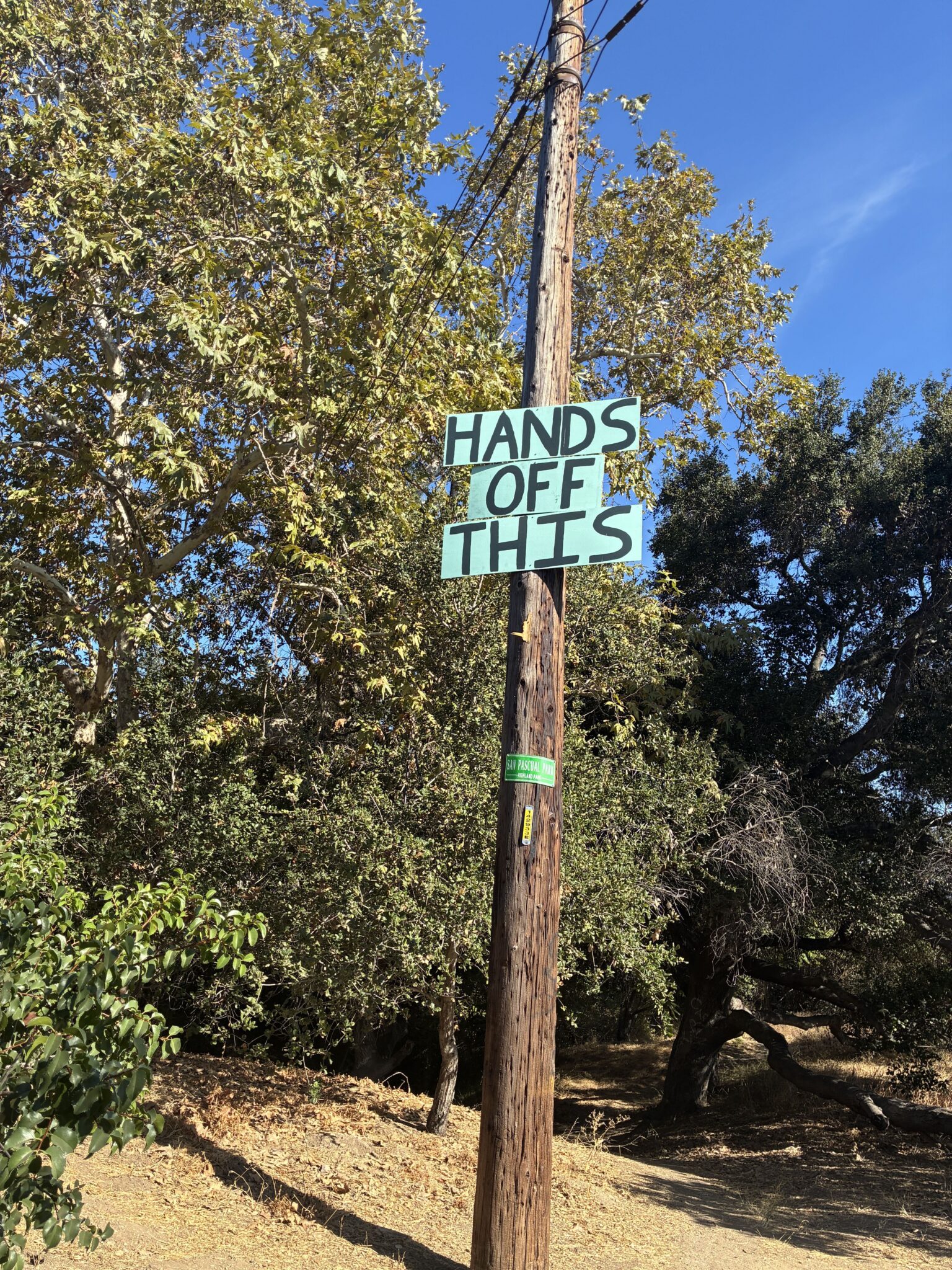
I sit down on a thick wooden fence-post under a native coastal live oak at the mouth of the hidden oasis that is a section of San Pascual Park. Joining me are Amada Segura and Josh Kashapata, two stellar LA resident volunteers with the Save San Pascual Park group.
For Amada and Josh, their Save San Pascual Park journey started with spotting yard signs in their neighborhood. Soon after, they attended a land defense meeting at the Coyotl + Macehualli Lending Library community space in El Sereno. There they met one of the main organizers in the defense of this park: a proud long-time Angeleno and land defender hailing from East LA, Clara Solis.
Since then, Amanda and Josh have joined the park defense, offering their talents to aid in the battle against corrupt city governments, golf course management, and major media outlets.
Just as a single spark can start a prairie fire, a single neighbor—Steve Crouch—raised the alarm to others upon receiving mail about the Arroyo Seco Water Reuse Project. Among those was his childhood friend Clara Solis. This collaborative project by the cities of Pasadena and South Pasadena—both cities boasting significant affluent areas—requires the destruction of a natural space containing 136 trees, a biologically active waterway, and a safe haven for species including the majestic great blue heron. The parcel of lush land would be replaced with artificial pools and water-purifying systems to filter out bacterial contamination in the Arroyo Seco channel. Also included will be enough carefully landscaped native foliage to suitably cover the project in green paint and call it environmentally aligned.
The project claims to be a community-oriented and nature-based solution….However, the city’s efforts, which have refused to educate and include the public in the process, reveal a different pattern.The project claims to be a community-oriented, nature-based solution and receives funding from the Safe Clean Water Program, Measure W. However, the city’s own efforts, which have refused to educate and include the public, in the process reveal a different pattern. Los Angeles is almost 50% Hispanic or Latinx, but the outreach was only in English until people started calling them out. The pamphlets themselves contain so much misinformation; Save San Pascual Park went line by line on their social media and debunked them using the city’s own sources. One of these sources includes an environmental impact report completed by other cities, which only happened because they were sued by Clara Solis.
“There’s no ecological basis for any of their projects,” says Josh. “It’s kind of like a lot of them ignoring the root causes of issues but using those issues as justifications for projects. So like, runoff from the golf course or Rose Bowl is still going to be coming through here. This [project] is a band-aid for that; it’s not treating the problem at the source, which is obviously the ideal.”
The environmental impact report itself points to two golf courses as the sources of pollution for the waterways, but the cities have targeted this specific area instead. “They admit themselves, that they cannot conduct a nature-based system yet,” Amada adds. Meanwhile, groups like the Stewards of the Arroyo Seco, who are committed to natural restoration, have not been approached by either city.
Importantly, the Kizh Nation has been involved since the beginning, working through the AB 52 CEQUA process. AB 52 requires tribal consultation for projects such as the Arroyo Seco Water Reuse Project.
“They say they’ve had the consultation,” Amada states. “Chief Salas can tell you, and he has stated multiple times that all the consultation was [the tribe] receiving the initial project plans and the Kizh Nation saying ‘we’re not ok with this’ and Pasadena basically saying ‘Ok. We’re still gonna do it though.’
Image credit: author.In addition, public records requests have gone unanswered, with no explanation as to why. A city administrator has run multiple public campaigns to slander members of Save San Pascal Park. The City of South Pasadena has been falsely claiming that parcel of land as its own, even though the official LA County zoning information says otherwise. Several media outlets, including The Los Angeles Times, have suspiciously biased articles in favor of the cities and golf courses.
Active SGV, a nonprofit based in several cities and 15 miles away, has allegedly been contracted by the City of Pasadena to do outreach for the Arroyo Reuse Project.”1A member of the nonprofit, Active SGV, admitted to being contracted and encouraged by the City of Pasadena to advocate for the Arroya Water Reuse project. As this group tabled at the same farmer’s market as Save San Pascual Park, market-goers told members of Save San Pascual Park that Active SGV was telling people that the people of Save San Pascual Park were lying and should not be talked to.
Through all this and more, Amada and Josh have been contributing to the group’s growing numbers and impact.
The Lorax Must Mobilize for the Trees: Lessons in Building an ImpactWhat started as neighborly communication and yard signs is now a thriving volunteer-based social media success.
What started as neighborly communication and yard signs is now a thriving volunteer-based social media success.“As much as I hate Instagram, it really did what it needed to do for us,” says Amada, who found their niche in the group as a social media savant with previous nonprofit experience. “Within the first month of taking over the socials, we grew to over 100k viewers on our page. We went from 46 followers to over 1000 in like a month and a half.” You might not be able to use the master’s tools to dismantle the master’s house, but you sure can get more people to know about why the house needs to be torn down.
Their farmers’ market tabling has also seen success. They use the time to educate the public about the ongoing struggle, gather signatures, and sell merchandise to raise funds for their legal fees.
“Being at the farmers market and being able to connect with folks and just kind of just see people, you know, connect the dots right then and there and be like, this is messed up,” Amada relates. “Realizing that people can see through corruption and can really see the importance and value of our parks . . . that’s not something that’s been difficult to convince people.”
Amada also stresses the importance of reaching out to other groups, as they have received support from environmental groups such as Citizens for Los Angeles Wildlife (CLAW), the Los Angeles Audubon Society, and the Sierra Club.
“Realizing that there are so many groups that are willing to pitch in in the way that they can help is just a matter of actually connecting with them and getting them in.”
Democratic, community-based groups willing to fight for a future that benefits the people—not profits—are how we build our mobilizing muscles. They teach us to rally around shared causes—even if we might not totally agree politically. They inspire more to take action in their neighborhoods.
Nearby in Pasadena, people are chaining themselves to trees to prevent the Pasadena Unified School District (PUSD) from cutting them down. People are rallying against the removal of trees at the Santa Anita Park for the LA Olympics.
These groups connect us to other related struggles. The outcry for the trees at Santa Anita Park could easily lead someone to connect with the NOlympics LA campaign. The NOlympics campaign highlights the displacement of low-income tenants and increasing militarization of Los Angeles. The PUSD debacle is related to toxins from the devastating Eaton Fire—which leads to a rabbit hole about environmental devastation caused by poor land management and private companies prioritizing profit over safety.
Every struggle that brings people together to fight for what is right matters. For we all are the Lorax and all must speak for the trees.
This has been a report and interview from Los Angeles.
Opinions expressed in signed articles do not necessarily represent the views of the editors or the Tempest Collective. For more information, see “About Tempest Collective.”
Featured Image credit: Edward Kimmel and author; modified by Tempest.
The post We are the Lorax and must speak for the trees appeared first on Tempest.
Seattle Aims to Turn Vision Zero Dreams Into ‘Durable Law’
Seattle just passed a pair of bills aimed at giving the city’s theoretical commitment to Vision Zero real teeth— and the pressure is on to pass the third part of the package, which proponents say could really take the Emerald City’s street safety aspirations to the next level.
On Monday, the Seattle City Council unanimously approved two out of three of the policies collectively known as the SAFER Streets package — short for “Safe, Accountable, Flexible, Equitable and Responsive” — which sponsor and transportation committee Chair Rob Saka said could help “move Vision Zero from an aspirational policy into durable law.”
Those approved policies include a push to get city contractors to install “side guards” that prevent pedestrians and bicyclists from being swept under the wheels of trucks, as well as granting the city’s Traffic Engineer the dual title of “Chief Safety Officer” and new powers to install quick-build safety improvements after a crash.
The third policy — whose vote Seattle Bike Blog’s Tom Fucoloro says was punted until “at least November 10” due to concerns about historic districts — would make even more ambitious changes.
Those include requiring “daylighting” treatments every time certain roads are repaved to make it easier for drivers to see oncoming cyclists and walkers; upping the frequency at which the city updates its Vision Zero action plan from every five years to every three; and enhancing data collection and reporting requirements for traffic safety concerns across the board, among other measures.
Taken together, Chair Saka said those initiatives would represent a leap forward in the city’s fight to end traffic deaths and serious injuries, which critics warn may be stalling out. Pedestrian deaths nearly doubled in Seattle between 2024 and 2025, despite a groundswell of demand for more action to stop the bloodshed.
“At least in Seattle, we know the tools that can save lives,” Saka added. “This is about putting those tools into municipal law, empowering people to act faster, and just making safety a part of how Seattle operates every single day.”
Recommended ‘I’m Always on the Bus’: How Transit Advocacy Helped Katie Wilson Become Seattle’s Next Mayor Kea Wilson December 8, 2025Saka said the SAFER Streets package was directly inspired by Seattle advocates, who demanded policy change following a rash of recent road deaths in the cycling and pedestrian communities.
In particular, he cited the killing of Christian Sayler, 30, who died on June 1 at the hands of a turning garbage truck driver, as well as the death of 76-year-old Maridee Bonadea, who a different truck driver killed in Saka’s district just two weeks later. Some advocates say both riders could have been saved if the vehicles had been equipped with side guards.
“We’re reminded all the time that there’s more work to do,” Saka said. “I’ve personally been to a fair amount of tribute rides and ghost bike memorials, and spoken extensively with impacted families and victims of car violence … Local advocates are demanding immediate changes.”
Seattle may be uniquely primed for those sorts of changes since the election of Mayor Katie Wilson, whose background as a transit organizer helped propel her into office last year. Wilson signed a Vision Zero executive order in August, many measures of which heavily overlap with the SAFER Streets package; it’s also bolstered by an eight-year, $1.55 billion transportation levy enacted in 2024, hundreds of millions of which are specifically earmarked to save lives.
Much of the money could sit on the shelf, however, if the council doesn’t take action to spend it, Saka said. And Wilson’s orders could easily be rolled back if they’re not codified into law before she leaves office.
“The truth of the matter is that personnel change … and elected officials change [too],” he added. “Just because the mayor acts or does not act, that doesn’t absolve me as a lawmaker of my responsibility to keep people safe on our roads and our streets.”
Recommended Truck Deaths Are Up 71% — Will NHTSA Require New Tech? Kea Wilson May 15, 2023In addition to truck side guards — which have been a goal for safety advocates across the country for years, and which Boston has required on city-owned at city-contracted vehicles since 2014 — Saka said his package would pave the way for broader change, especially if its stalled elements can find passage. He’s particularly passionate about the bill’s potential to speed the city’s response to installing infrastructure after fatal crashes, which he says often takes far too long.
As the self-proclaimed “unapologetic King of Potholes” — a moniker he even lists on his LinkedIn bio — Saka says he’s proud that his district addresses 80 percent of the reported road defects within 72 hours, and doesn’t accept that the city can’t act with similar urgency when someone dies.
“It could be six-plus months between the time of a fatality and when any actual remediation or safety upgrade is made to address the root causes of that fatality,” he added. “This [bill] puts us on a path to a faster response time.”
Recommended Steal This Idea: ‘Emergency Streets’ Strategy Gets First Real-World Pilot Kea Wilson October 1, 2026Even if every component of the SAFER Streets package passes, Saka said there will still be more work to do to ensure Seattle becomes the first large US city to actually achieve Vision Zero. Considering how local historic boards have opposed the kind of daylighting measures the bill proposes in the past, that’s a big “if.”
“There’s no legislation there’s no piece of single piece of legislation — or legislative package, or executive order — that can guarantee no more traffic deaths or serious injuries,” he said. “But I do know that without [this package], we’re going to continue floundering.”
Still, he said that the time is ripe to pick this low-hanging fruit — and hopefully, inspire other US cities to get more aggressive about saving lives, too.
“At least in Seattle, I think Vision Zero is moving beyond an ideological constituency and becoming basic municipal public safety governance,” he added. “That’s a good thing. People win; taxpayers win; the residents and visitors of the city of Seattle win.”
Cutting ultra-processed foods may ease depression, new study finds
- Diets with less ultra-processed food may help to relieve depression symptoms.
- A small new pilot study adds to a growing body of evidence linking UPF to mental health.
- EWG’s Food Scores flags ultra-processed foods to help you make simple, healthy swaps.
Cutting back on ultra-processed food, or UPF, may help improve symptoms of depression, according to a new study.
UPF such as sugary drinks, salty snacks and frozen meals have already been shown to be strongly tied to chronic diseases like Type 2 diabetes and heart disease.
These findings add to the growing evidence that what we eat may also play a role in our mental health.
Get your free guide: EWG's Guide to Food Additives Study links eating less UPF to fewer depression symptomsThe study, published in JAMA Psychiatry in September, is among the first to examine whether cutting back on UPF can improve symptoms of depression and ease some symptoms of anxiety.
It involved 20 participants with depression who regularly consumed large amounts of UPF. They were told to follow either their usual diet or a low-UPF diet for four weeks, then switched to the other diet for another four weeks.
Researchers then measured changes in their self-reported depression and anxiety symptoms.
Study participants who cut their UPF intake by about 85% percent experienced moderate to large improvements on three measures of depression. Anxiety symptoms also improved modestly.
The findings may reveal some new insights about the way food affects our mood and mental health.
But this was a small pilot study, and improvements in depression and anxiety symptoms were self-reported. More research is needed to determine whether reducing UPF can directly improve depression symptoms.
Why might ultra-processed foods affect mental health?Researchers are still trying to understand why a diet high in UPF may be linked to depression. One possibility is that some UPF contain additives that may affect the gut microbiome. Because the gut and brain communicate with one another, researchers are investigating whether changes in the gut microbiome could influence mood.
Another possibility is that diets high in UPF may displace minimally processed foods that provide fiber, vitamins and minerals important for overall health.
States are taking action on ultra-processed foodsScientific evidence has done little to persuade the federal government to protect us from harmful chemicals in our food. But action at the state level is forcing the issue and driving meaningful change.
California’s Real Food, Healthy Kids Act last year created the nation’s first legal definition of UPF. The law also requires schools to phase the worst UPF out of meals.
Gov. Gavin Newsom also recently signed AB 2244, an EWG co-sponsored law that creates the first state-backed “non-ultraprocessed certified” label. This voluntary seal is designed to help shoppers in California more easily identify foods that aren’t ultra-processed – a big step toward making healthier choices more accessible.
How to cut back on UPFAbout 70% of packaged food in the U.S. is ultra-processed, which makes it difficult to avoid. It’s also designed to be craveable and hard to resist.
Cooking from scratch takes time and energy, which can be tough for those trying to balance nutrition, convenience and cost. And experts say that can be especially challenging for people with depression.
You don’t have to aim for perfection. Cutting back on ultra-processed foods in any amount is a good place to start. Begin by swapping some packaged snacks for fruit, nuts or other minimally processed options. And at the grocery store, make a point to check ingredient lists to find products with fewer additives.
EWG’s Food Scores can help take some of the guesswork out of grocery shopping. The database rates foods based on nutrition, ingredient concerns and degree of processing, making it easier to compare products and find healthier options.
You can also use EWG’s Healthy Living™ app to check products while you’re at the store.
Nicole Pajer is a freelance journalist.
Areas of Focus Ultra-Processed Foods Guest Authors Nicole Pajer (for EWG) October 28, 2026Wednesday’s Headlines Are On the Ballot
- More than 20 communities in 11 states have transportation referendums on the ballot this November (Smart Cities Dive).
- One is a 0.5 percent sales tax in Seattle to support bus service (Seattle Times; paywall).
- Another is in the Bay Area, where Max Mautner notes that residents pay more in taxes to subsidize highways than they do for transit.
- …and in Florida, an amendment to cut property taxes would devastate transit funding (Tampa Bay Times).
- A National Highway Traffic Safety Administration proposal would require autonomous vehicles to use cyan lights to indicate there’s no human driver. (The Verge)
- Parking in a garage is much more expensive than parking on the street in most big cities, which is the opposite of the way it should be. (Government Technology)
- Amtrak will have an online public hearing about its restructuring next month. (Trains)
- Chicago’s new transit agencies has broad powers to develop land. (Sun-Times)
- The new Crosslake Connection in Seattle is shifting transit riders from buses to trains, allowing Sound Transit to beef up bus service elsewhere. (Seattle Transit Blog)
- Dallas Area Rapid Transit’s newly hired CEO is under investigation by authorities in Florida, where he previously led Jacksonville’s transit agency. (Dallas Observer)
- Valley Metro is asking for public input on the West Phoenix light rail line’s route. (KJZZ)
- Only one third of New Orleans jobs are accessible by transit, severely limiting opportunities for residents who don’t own cars. (Lens)
- The Birmingham suburb of Clay lacks sidewalks, but Jefferson County has no plans to build any. (ABC 33/40)
- Albuquerque installed a protected bike lane on Martin Luther King Jr. Avenue. (Journal)
- Seoul started running a self-driving shuttle. (Korea Times)
- London has officially closed shop-filled Oxford Street to vehicular traffic. (The Guardian)
Living Sin Patron: Recuperating Work and Life from Argentina to Europe - created
The basic form a sustainable and just alternative society must take
Solidarity Economy: A Historical Overview - created
Trump’s EPA is letting America’s leakiest oil and gas companies off the hook
At a campaign rally on Tuesday, President Donald Trump said his administration is going to dismantle restrictions on methane, one of the most common and potent planet-warming greenhouse gases.
The new rule, proposed by the Environmental Protection Agency in response to complaints from the oil and gas industry, revises a Biden-era rule targeting methane leaks and would relax methane monitoring and emission-control requirements.
The agency has planned to repeal these rules for months, saying that they posed a “monumental threat” to the economy and an “undue burden” on the oil and gas industry. But it wasn’t until the rally on Tuesday night in Lubbock, Texas, where Trump was campaigning on behalf of Ken Paxton’s bid for the Senate, that the president announced the long-awaited changes.
“Tonight, I’m officially terminating Biden’s expensive and unnecessary methane regulations to save consumers and energy producers $45 billion in costs, unlock vast quantities of Texas natural gas, and produce 210 million barrels of oil,” Trump said in between rants in which he described praise from Chinese President Xi Jinping and claimed to have more “Indian blood” than Elizabeth Warren, the Democratic senator from Massachusetts.
The EPA’s proposal follows other sweeping reversals of Biden-era environmental policies that are also likely to exacerbate global warming, pushing the planet closer to a climate hotter than any humans have experienced before. Just last month, the EPA repealed a rule that limits carbon emissions from power plants, a move which is likely to extend the lifespan of coal-fired power plants. Environmental groups say weaker restrictions on methane would also worsen air pollution in communities that live near oil and gas operations.
“Any proposed rollback to the federal methane rule is a slap in the face to families who are exposed to oil and gas pollution where they live, work, and play,” said Celerah Hewes, a campaign manager at the nonprofit Moms Clean Air Force. Hewes recently protested alongside other environmental activists outside of an industry conference in New Mexico where Lee Zeldin, the head of the EPA, spoke about the agency’s plan earlier this month.
Methane, the greenhouse gas at the center of the EPA’s new proposal, is emitted by oil and gas operations, landfills, and cattle farms. It’s also the primary component of natural gas used to heat homes. Methane emissions make up about 12 percent of the greenhouse gases released by the United States every year and are roughly 80 times more potent at warming the planet than carbon dioxide over a period of 20 years.
“Cutting methane emissions from the oil and gas industry is the fastest way to fight climate change,” said Tsion Amare, a policy expert at the Environmental Defense Fund. “This rule could severely set back the advances we’ve made over the years.”
The earlier methane rule, finalized at the end of 2023 under the Clean Air Act, was among the Biden administration’s most ambitious attempts to reform the oil and gas industry. It required operators to monitor their overall emissions, inspect their wells and pipelines for leaks, and upgrade their equipment to prevent escaping gas. They were also required to phase out or sharply cut back the routine practice of flaring, in which excess methane is burned off rather than being captured for use as natural gas.
Amare said these limits were some of the “strongest in the world“ and positioned the United States as an international leader in curbing the climate pollutant. The EPA estimated the rule would prevent 58 million tons of methane from being emitted in the next 15 years, as well as prevent 400 billion cubic feet of natural gas — enough to heat nearly 8 million American homes during winter — from being wasted every year.
In March 2025, Trump’s EPA said it would no longer enforce the methane rule and began the process of formally rescinding it. The newly released proposal would cancel the Biden administration’s Super Emitter Program, which used satellite imagery and other remote-sensing methods to catch large leaks, and required operators to investigate and address them. It also reverses Biden-era limits on routine flaring, loosens requirements on certain types of wells, and gives operators a 30-day window to repair a leak.
The recent changes are all part of President Trump’s so-called “energy dominance” agenda, a catchphrase used to justify similar roll backs since the first hours of his second term in office. In a recent action proclaiming this October as “National Energy Dominance Month,” the president boasted that his administration has “unleashed” millions of acres for oil, gas, and coal, approved thousands of drilling permits, “saved” more than 100 coal plants, and pulled out of international climate agreements.
Read Next Trump vowed to stop an ‘energy emergency.’ Then he created a real one. Jake Bittle“The Trump EPA is committed to fixing this so the U.S. can reach its full energy potential,” Zeldin said in a statement about the Biden administration’s methane regulations earlier this month.
The weakened methane restrictions will especially benefit companies that run low-producing “stripper” wells by allowing them to pollute more. These wells account for just 5 percent of the country’s oil and gas but more than half of the industry’s emissions. According to reporting by ProPublica, lobbyists from this industry have gained “unprecedented influence” during the second Trump administration. One owner of a company that buys up stripper wells, Jeffery Hildebrand, has also been one of the oil industry’s biggest donors to Trump’s political campaigns.
“Under crooked Joe Biden, Democrats crushed the small oil and gas operators,” Trump said while announcing the changes. “They’re great operators, too.”
The president’s statement leans into a false narrative about these operators, experts said. Stripper-wells are often discussed as if they’re run by small, mom-and-pop companies that don’t have the financial means to comply with the stricter regulations. But in reality, more than half of them are owned by large companies that operate more than a thousand wells, said Darin Schroeder, the methane legal and regulatory director at the Clean Air Task Force, an environmental nonprofit. Hildebrand’s Hilcorp Energy Company, for instance, is thought to own nearly 19,000 low-producing wells. Another company, Diversified Energy, owns more than 50,000 of them. “Just because they’re a marginal producer doesn’t mean they’re a marginal polluter,” Schroeder said.
An oil pumpjack in the Permian Basin oil field in 2022 in Crane, Texas.Joe Raedle / Getty Images
Because these stripper wells make up more than half of the oil and gas industry’s emissions, letting them off the hook is going to have a significant climate impact, Schroeder said. Allowing more of these emissions gives the world less time to tackle climate change before the worst consequences take hold. “Reducing methane in the short term really gives you a big bang for your buck, and gives us more of an on-ramp to address carbon dioxide,” he said.
Pollutants released alongside methane also pose a health risk to people living in oil-producing regions by contributing to the buildup of ground-level ozone, which can damage lungs and worsen asthma. The Biden-era rule would have incidentally filtered out these toxins, such as benzene, a known carcinogen, and other volatile organic compounds, which can also cause ozone to form, along with methane.
Nearly 1 in 10 Americans live in a county with more than 1,000 stripper wells. And Texans may have the most to lose, said Amare, who is based in Dallas and specializes in the state’s energy and environmental issues. The state has more oil and gas than any other and an estimated 136,000 stripper wells. The public health consequences tend to disproportionately affect people of color who live near wells in places such as Texas’s Eagle Ford, she said.
The Biden administration had tasked states with implementing its regulations. But Texas has repeatedly delayed creating and adopting the necessary plans. Now, experts like Amara say that without pressure from the federal government the state is unlikely to curb its methane emissions, which amount to 19 percent of the U.S. total.
Other states, including Colorado and New Mexico, already have more stringent methane regulations on the books, and some, like Pennsylvania, are making plans to comply with the former Biden administration’s rule. Experts say that makes them less likely to lower their standards just because the federal government has.
And states may be financially motivated to capture methane anyway. An Environmental Defense Fund analysis found that New Mexico has saved an estimated $125 million worth of natural gas each year that would have otherwise been leaked, vented, or flared. The nonprofit also estimates that the entire industry has lost some $7 billion worth of natural gas since the Trump administration stopped enforcing the methane rule last year. “All of this waste of gas is something that definitely needs to be discussed more,” Amare said.
toolTips('.classtoolTips3','Carbon dioxide, methane, nitrous oxide, and other gases that prevent heat from escaping Earth’s atmosphere. Together, they act as a blanket to keep the planet at a liveable temperature in what is known as the “greenhouse effect.” Too many of these gases, however, can cause excessive warming, disrupting fragile climates and ecosystems.'); toolTips('.classtoolTips7','A powerful greenhouse gas that accounts for about 11% of global emissions, methane is the primary component of natural gas and is emitted into the atmosphere by landfills, oil and natural gas systems, agricultural activities, coal mining, and wastewater treatment, among other pathways. Over a 20-year period, it is roughly 84 times more potent than carbon dioxide at trapping heat in the atmosphere.');This story was originally published by Grist with the headline Trump’s EPA is letting America’s leakiest oil and gas companies off the hook on Oct 27, 2026.
Who Will be Left Behind if the Bus Stops Running?
Growing up in San Francisco, the 48 Quintara was my lifeline. It got me across the city to school in the Sunset, to hang out with friends in West Portal, and then back to the Mission for soccer practice.
Whether I sat up front with the seniors and their grocery carts or was crammed in the back, wishing someone would crack the window, 35 cents got me wherever I wanted to go, surrounded by a microcosm of San Francisco’s wonderful people and cultures.
My son is two years old now, and the 29 Sunset is his lifeline. We take it to daycare, the playground, to the pediatrician, and to see his grandparents on the other side of the city. But if the Bay Area fails to pass the two transit measures on the ballot this November, his lifeline will go away.
RTM, the Regional Transit Measure, will add a half-percent sales tax in Alameda, Contra Costa, Santa Clara, and San Mateo Counties and a 1-percent tax in San Francisco. For transit agencies facing a downward spiral of insufficient funding, RTM is a critical lifeline. BART could close up to 15 stations and cut service by 70 percent. Caltrain would run one train per hour, and Muni could cut one-third of their service. In San Francisco, Measure H also needs to pass to prevent further Muni cuts that could eliminate up to 20 routes, double wait times, and end regular nighttime services.
My organization, Transform, works with low-income communities throughout the Bay Area, providing ‘Know-how-to-go’ travel trainings and signing folks up for transit benefits programs to help them get around easily and affordably. When we ask the people we serve what would happen if their bus line was cut, the answers are harrowing:
“I wouldn’t be able to get my shopping necessities.”
“Seeing a doctor would be difficult.”
“I don’t know…it’s necessary for survival.”
Public transit is essential for everyone in the Bay Area, but it is a lifeline for our most vulnerable residents. According to the Metropolitan Transportation Commission’s Snapshot Survey, 44 percent of transit riders have a household income under $50,000 a year. For two-thirds of all transit trips, the bus or train is the only way they can get around.
The cost of living in the Bay Area is so high; it’s tough to ask residents to pay new taxes. But the cost of losing transit is much higher. A new SPUR report found that families would pay $3,280 more per year in transportation costs if the Regional Transit Measure fails. For the 30 percent of households that don’t own a car, that cost could skyrocket as high as $20,000. Failing to pass the Regional Transit Measure would also drive up housing costs. To meet our growing housing need, we need to build 441,176 new units by 2031, including 180,000 units at 30-80 percent below market-rate.
California has recently passed numerous laws encouraging housing development near transit for middle- and low-income residents. These include exemptions and streamlined approvals, waiving minimum parking requirements to lower building costs, and loosening zoning restrictions for affordable housing. If the regional measure fails and transit service gets cut, these landmark housing laws will be significantly weakened or rendered ineffective, further increasing the cost of living as housing and transportation costs spike.
That’s why Transform and our partners have spent almost a decade building a strong coalition of housing, labor, and community organizations to bring the Regional Transit Measure to the ballot. We know transit is often the fastest and most cost-effective way to get where you need to go, and that the Bay Area’s economy, housing, and climate goals depend on it. Public transit is a lifeline for many, but it is also a joy for all. I cherish the smiles when my toddler shimmies up onto an open seat, the honks from friendly bus drivers as we depart, and the sense of belonging that riding the bus brings in our increasingly polarized world. I want a future where my son can enjoy all the people, cultures, and opportunities the Bay Area has to offer. I want him to grow up in a place with enough housing so everyone can afford a home. I want transit to be the lifeline for him that it was for me.
Please vote yes on Measure RTM and Measure H this November.
***
Zack Deutsch-Gross is the Executive Director of Transform, a Bay Area nonprofit that works to reshape housing and transportation decision-making around equity, climate, and community. He lives in Ingleside with his wife and two-year-old son.
Environment for Sale: Trump Administration Threatens California’s Coastal Protections
The Trump administration is threatening to strip California of its authority to protect its coastline unless state regulators agree to demands that could benefit offshore oil companies and other powerful interests. The move could make it easier to restart dormant oil operations and expand offshore development, while limiting California’s ability to challenge projects that threaten its coast.
While the state has not publicly discussed legal options should the administration move forward with its threats, there is no legal precedent for the federal government to act in this manner with the dozens of states that have similar deals. It doesn’t take a fortune teller to see this story ending up in court like the administration’s other pro-pollution, anti-California actions.
What HappenedThe National Oceanic and Atmospheric Administration (NOAA) issued draft findings demanding that California’s coastal agencies complete more than a dozen “corrective actions” or risk losing federal approval of the state’s coastal management program. Federal funding for the program has also been suspended pending resolution of the alleged deficiencies. The report is not yet available online, but the Los Angeles Times received a copy through a public records request.
The demands seem more political than anything having to do with protecting the environment. Among them are a requirement the California Coastal Commission must meet with SpaceX, which happens to be owned by Trump ally and GOP mega-donor Elon Musk. The commission must also meet with Sable Offshore Corp., a Texas-based oil company seeking to restart a dormant oil operation off Santa Barbara County. Sable has been under investigation by California’s Senator Adam Schiff for using political donations to influence federal policy. Sable gave $300,000 to a Super PAC supporting Trump’s last campaign.
“This is a five-alarm warning to every job and industry that relies on our sandy beaches and beautiful bluffs for its livelihood,” Schiff told the Los Angeles Times. “Soon, you too could see your environment for sale to Big Oil, Elon Musk, and any other high bidder that buys its way into the White House ballroom.”
California has participated in the federal Coastal Zone Management Act since 1978. The law gives the state a role in reviewing federally regulated projects that could affect its coast, including development in federal waters. While the administration tries to paint the state and the California Coastal Commission as obstacles to progress, the Commission has approved 96% of the permit applications it receives as submitted.
A Review With a Predetermined Outcome?The administration has portrayed its investigation as a response to what it calls California’s “environmental extremism” and alleged political bias against offshore drilling and SpaceX’s launch activities. But an earlier federal review reached a very different conclusion.
According to the Los Angeles Times, a review conducted during the Biden administration found that California was successfully implementing its coastal management program and gave its agencies high marks. The Trump administration nevertheless ordered a new evaluation focused on industries and projects the White House wants to advance.
As part of the legal requirement to complete its review, NOAA was required to hold a public hearing and take written input. Public feedback overwhelmingly favored preserving California’s coastal authority. More than 23,000 written comments were submitted, with approximately 95% supporting the state’s ability to protect its coast, according to the Surfrider Foundation. Hundreds of Californians also spoke at an August public hearing in Santa Monica.
Surfrider says the agency relied on roughly a dozen comments critical of California when developing its proposed corrective actions, even as the draft report acknowledged that parts of the state’s program are excellent.
California’s Coast Is Not a Bargaining ChipIn an October 24 statement published by the Surfrider Foundation, California Policy Associate Director Jennifer Savage argued that the review was designed to benefit companies favored by the White House.
“[The review] was never about coastal management. It was about making it easier to develop controversial projects favored by the White House and which benefit the administration’s allies, including SpaceX and Sable Offshore Corp.,” Savage wrote.
She added: “It’s a demand that a state agency promise outcomes to specific companies before it has seen their applications.”
California’s coastal protections do not automatically prohibit offshore projects. They give regulators a process for evaluating environmental impacts and determining whether development complies with state coastal policies.
What Happens Next?The California Coastal Commission, State Coastal Conservancy, and San Francisco Bay Conservation and Development Commission have been given until November 16 to respond to the draft findings. The Coastal Commission requested a 15-day extension, according to the Los Angeles Times.
NOAA will then issue its final findings. The federal government can pursue withdrawal of its approval of California’s coastal program if the state fails to address the identified deficiencies, potentially weakening its ability to challenge projects affecting the coastline.
Surfrider is urging NOAA to drop corrective actions unrelated to coastal management and preserve the federal-state partnership that has helped protect California’s coast for nearly 50 years.
How Serbian students toppled an authoritarian
This article How Serbian students toppled an authoritarian was originally published by Waging Nonviolence.
On Oct. 25, Serbia voted and the Student List won. Late that evening, President Aleksandar Vučić — the man who has dominated the country’s politics since 2012, steadily hollowing out its courts, media and elections along the way — went on television and admitted that his Serbian Progressive Party and its allies had lost. The final count isn’t in yet, but the result is not in doubt. Candidates selected by the Students List protest movement have more than half the vote and a majority in the 250-seat parliament.
For more than 20 years, our team at the Belgrade-based Center for Applied NonViolent Actions and Strategies, or CANVAS, has worked with activists from dozens of countries on one question: How do ordinary people defeat a government that looks unbeatable? This time the answer came from our own streets, again. We want to explain what happened, because movements elsewhere will try to learn from it, and we’d like them to learn the right lessons.
#newsletter-block_245f62a2211df0282ffb11948ca6c6e2 { background: #ECECEC; color: #000000; } #newsletter-block_245f62a2211df0282ffb11948ca6c6e2 #mc_embed_signup_front input#mce-EMAIL { border-color:#000000 !important; color: #000000 !important; } Sign Up for our NewsletterYou can’t understand Sunday without understanding the 14 years before it, since Vučić first came to power.
Most people in Serbia learned to live with a low, constant fear. You assumed your phone wasn’t really yours. Amnesty International later confirmed what many suspected: Spyware was being installed on the phones of activists and journalists, sometimes while they sat in a police station. If you spoke up, a tabloid might put your face on the front page the next morning with a story about who was supposedly bankrolling you. People lost jobs and contracts for being on the wrong side. Plenty stopped saying what they thought, even at the kitchen table.
We see this pattern in almost every country we work in. That kind of power doesn’t have to arrest everyone. It only needs everyone to believe they could be next.
How it startedOn Nov. 1, 2024, the concrete canopy at the Novi Sad railway station fell and killed 16 people. The station had just been renovated. Everyone understood immediately what that meant: The money meant to keep people safe had gone into someone’s pocket. Within days, “Corruption kills” was written on walls across the country.
Students shut down their colleges and refused to go back to class. Many observers abroad missed how important this was. A march lasts an afternoon. The blockade of the universities lasted for months and took a whole part of society out of normal life. In our field we call that noncooperation, and it is far more powerful than protest alone. Every regime depends on people showing up and doing what is expected of them. The students stopped.
For two years the students were arrested, followed, slandered and called foreign agents. Cars drove into crowds. People were beaten. The government gave them every excuse to respond with violence, and they didn’t.
A protest marshal at the front of a crowd during the largest march in Serbia’s history on March 15, 2025 in Belgrade. (Gavrilo Andrić / protesti.pics)At the largest protest in Serbia’s history, in Belgrade on March 15, 2025 — with between 275,000 and 325,000 people, according to the independent Archive of Public Gatherings — student marshals in yellow vests kept the crowd calm and blue flares showed people the way out if things went wrong. None of that was improvised. The students organized themselves. The assembly of each fakultet (a specialized college within a university) chose its marshals. Before every big action they went over the same things again and again: how to spot provocateurs, how to calm a tense moment, how to move a crowd out safely. At CANVAS, we teach this in every training we run: Nonviolent discipline doesn’t happen by itself. It is planned, practiced and repeated until it’s second nature. The students did exactly that.
Here is why it mattered so much. Violence was the one thing the regime wanted from them. A single burning car would have given the government its “terrorists” and sent the cautious middle class back indoors.
Because the students stayed nonviolent, everyone could join. Grandmothers did. Farmers did. People who had never been to a protest in their lives did.
What it costPeople sometimes talk about nonviolent action as if it were the soft option. Anyone who watched these students over the past two years knows better.
They walked across Serbia. They arrived with bloody socks and taped-up blisters, slept wherever someone offered a floor, and set off again in the morning. In village after village people stood by the road with bread, hot tea and blankets, and a lot of them were crying. Those marches reached places that no rally in Belgrade ever could, places the government thought it owned.
Wherever they stopped, they talked with people. In town squares, school yards and village halls, they explained why they were marching and listened to what local people were angry about. They also urged residents to set up their own citizens’ assemblies, and in many towns people did, often for the first time in their lives.
Their professors paid a price, too. When fakultets sided with their students, the government cut university salaries to a small fraction of what they had been. Some professors received nothing at all for months. The president went on television and said that instead of salaries, they would get potatoes. Schoolteachers who backed the protests were punished the same way. These are people with children, mortgages and parents to look after, and they stayed with their students anyway.
A list with no politicians on itThen the students did something we had not seen done quite like this anywhere.
They didn’t hand their momentum over to the opposition parties, and they didn’t run for office themselves. They wrote their own rules for the slate of candidates that they would support. No students could be on the list. Nobody from the ruling coalition. No officials from the opposition parties. No extremists.
For more than a year, over 80 student assemblies in six university cities proposed names, argued about them, interviewed people and vetoed the ones they didn’t trust. It was slow, messy and deeply democratic. We think that is exactly why it worked. Nobody could say it was cooked up in a back room.
What came out was a list of 250 people, one name for every seat in parliament, who were respected long before politics: professors, teachers, doctors, actors, artists and athletes.
Serbia doesn’t have local districts. The whole country votes as one constituency for party lists, seats are shared out by each list’s share of the vote, and they are filled in the order the names appear. So the order matters, and the first name on the list was a cardiologist from Novi Sad. A former governor of the National Bank shared the list with one of the best basketball players this country has ever produced. Several opposition parties pulled their own lists and backed the students instead, which could not have been easy for them.
Tens of thousands gathered at Slavija Square in Belgrade on Oct. 22 ahead of the general election. (Gavrilo Andrić / protesti.pics)The people on that list don’t agree about much. Some are on the left, some on the right, and some have never thought of themselves as political at all. State-owned media called that chaos.
We see it the other way around. Movements win by bringing huge numbers of people on board, and huge numbers of people never share one ideology. If the list had looked like one camp, it would have attracted one camp. Because it looked like Serbia, almost anyone could find someone on it they trusted.
What held it together was simple. Nobody wants another leader the whole country has to obey and adore. Nobody wants to live again in a place where a handful of people get rich off everyone else. The students put it on their posters in three words: “Serbia or Mafia.”
Healing from a cancerThe best way we can describe where Serbia is today is this: we’ve had the diagnosis, and treatment has just started.
For years the country lived with a cancer — with captured courts, captured media, public money flowing into private pockets, and fear as the normal background of life. It spread slowly into nearly every institution.
Sunday’s defeat of Vučić didn’t cure it. Sunday made treatment possible.
#support-block_9f83eec4bbfc2eca6749f90ce6711033 { background: #000000; color: #ffffff; } Support UsWaging Nonviolence depends on reader support. Make a donation today!
DonateAnyone who has sat next to someone they love during chemotherapy knows what comes next. It takes a long time. It hurts. Some weeks the treatment feels worse than the illness. There will be setbacks and bad results, and people saying things were better before. The old networks won’t leave quietly, and some reforms will fail the first time they are tried.
But this cancer can be beaten. And the whole body has to heal, including the neighbors, relatives and colleagues who voted for the other side on Sunday. They aren’t the disease. They’re part of the country that has to get well.
What we ask of each of usNo government can do this healing by itself. Here is what we think it will take, and from whom.
1. The new governing majority: Start with institutions, not with settling scores. Establish courts that are actually independent, a public broadcaster that tells the truth, and clean elections — all of which will outlast any government. And open a full, public investigation into the surveillance of citizens, so no one is tempted to do it again.
2. The movement: Don’t let the assemblies fade away. They built this list, and they are the best protection Serbia has against the next strongman, including one who might come from inside the movement itself.
3. Friends abroad: Support Serbian institutions and citizens rather than personalities. In practice, that means long-term funding for independent media, watchdog groups and local citizens’ assemblies; sending judges, auditors and prosecutors from your own countries who can work alongside Serbian colleagues rebuilding theirs; and support tied to concrete rule-of-law results rather than to warm words for whoever is in office. And please stay for the whole treatment, not only the first week.
4. Activists in other countries: Don’t copy the slogan. Copy the method. Go beyond marching to real noncooperation, train for discipline instead of hoping for it, and build unity out of your differences.
Serbia has just shown that nonviolent action still works when it’s planned, patient and carried by many hands. Now it has to show that a country can heal. We intend to be part of that work: training the next generation of organizers, writing down honestly what worked and what didn’t, and holding the new government to the same standard the students held the old one.
A version of this article first appeared on CANVAS’ newsletter.
This article How Serbian students toppled an authoritarian was originally published by Waging Nonviolence.
Pages
The Fine Print I:
Disclaimer: The views expressed on this site are not the official position of the IWW (or even the IWW’s EUC) unless otherwise indicated and do not necessarily represent the views of anyone but the author’s, nor should it be assumed that any of these authors automatically support the IWW or endorse any of its positions.
Further: the inclusion of a link on our site (other than the link to the main IWW site) does not imply endorsement by or an alliance with the IWW. These sites have been chosen by our members due to their perceived relevance to the IWW EUC and are included here for informational purposes only. If you have any suggestions or comments on any of the links included (or not included) above, please contact us.
The Fine Print II:
Fair Use Notice: The material on this site is provided for educational and informational purposes. It may contain copyrighted material the use of which has not always been specifically authorized by the copyright owner. It is being made available in an effort to advance the understanding of scientific, environmental, economic, social justice and human rights issues etc.
It is believed that this constitutes a 'fair use' of any such copyrighted material as provided for in section 107 of the US Copyright Law. In accordance with Title 17 U.S.C. Section 107, the material on this site is distributed without profit to those who have an interest in using the included information for research and educational purposes. If you wish to use copyrighted material from this site for purposes of your own that go beyond 'fair use', you must obtain permission from the copyright owner. The information on this site does not constitute legal or technical advice.
 This site is not the official webpage of the Industrial Workers of the World.