You are here
News Feeds
Pre-COP draws attention to Pacific’s climate plight and 1.5C goal
After witnessing and hearing stories of Pacific islands’ vulnerability to climate change, senior climate officials have promised to strengthen efforts to limit global warming to 1.5C, despite an expected overshoot, and to help the region adapt to rising seas and other impacts.
More than 30 world leaders, ministers, climate negotiators and international development bankers travelled to the sinking atoll nation of Tuvalu on Tuesday before attending the pre-COP31 talks in Fiji, where schoolchildren told them about the effects warming-driven droughts, heatwaves and storms are having on their education.
Australia and the Pacific nations hoped to use the pre-COP to reinforce the urgency of tackling climate change to the officials from around 50 countries who travelled to the region. Fiji’s climate minister, Lynda Tabuya, told a closing press conference on Thursday they had wanted to “bring decision-makers to the climate frontlines”.
Many of those decision-makers said they had been moved by what they had seen and heard this week, and their speeches emphasised the importance of limiting global warming to 1.5C above pre-industrial levels, a key goal of the 2015 Paris climate agreement.
In September, a UN report acknowledged that the 1.5C threshold will be breached but said temperatures could still be brought back down to that level by the end of the century with stepped-up climate action.
A month ago, Türkiye’s COP31 President Murat Kurum told a press conference in the northern Turkish city of Trabzon that limiting global warming to 1.5C “does not really look possible”, adding that “around 1.5C, that will be a success”.
But after seeing the “anxiety” of Tuvaluan children and mothers caused by rising seas and the threat to their lives from high tides, Kurum told reporters in Fiji that 1.5C is a “matter of survival – the survival of cultures, history, memories, your homeland, your homes – it’s that important.”
“The 1.5C target is in jeopardy and we do not have a single minute, a single day to lose,” he added through an interpreter.
Jacobo Ocharan, head of political strategies at Climate Action Network International, warned that “words of concern will not protect anyone”. “The Pacific has shown the world what is at stake. Now governments must show they are ready to act,” he said. “[COP31 in] Antalya must deliver decisions that change people’s lives for the better.”
$1.5 billion for 1.5CIn Fiji, Kurum echoed the call of Australia and Pacific nations for contributions to the fledgling Pacific Resilience Facility (PRF), which aims to use the returns on its investments to fund community climate adaptation projects like water storage, building sea walls and protecting homes from storms. “$1.5 billion for 1.5 degrees will save the Pacific,” he said. “It’s that easy. Life will continue in Tuvalu. Children will be smiling again.”
COP31 President Murat Kurum (left) speaks at a press conference on Thursday 8 October alongside Lynda Tabuya, Chris Bowen and Simon StiellSitting next to him, Fiji’s Tabuya said she was “encouraged” by his words. “$1.5 billion for 1.5. We will hold COP 31 to that,” she said. The PRF has been promised just under $200 million so far – including about $15 million pledged by European and Pacific governments at pre-COP – and is aiming for $500 million by COP31. It has a longer-term target of mobilising $1.5 billion in capital.
After Pacific leaders on Tuesday aired a litany of concerns about the barriers to accessing the global climate finance system, Kurum joined in at Thursday’s press conference. “Justice in climate finance is essential,” he said. “Resources must reach those in need in a timely and accessible manner, not through a lot of red-tape, and we cannot accept that the same countries should always bear the burden.”
Plan for easier access to climate financeAustralian climate and energy minister Chris Bowen, who is COP31’s president of negotiations, also lamented that “the countries that need the finance the most get it the least”. He said he would ask governments and multilateral development banks to support an access to finance plan for small island states and the world’s poorest nations, launched by Australia on Thursday.
The plan says that while there has been progress in making it easier and quicker to obtain international climate funding, “multiple persistent challenges have continued to limit access to climate finance for developing countries”.
It adds that the amounts available are insufficient to meet climate goals and stresses the need for “grant-based and highly concessional financing”, especially for adaptation and responding to loss and damage. The plan proposes an annual high-level forum on climate finance access to track implementation.
The pre-COP summit closed with an emotional plea from Fiji’s host minister Tabuya. Fighting back tears before finally succumbing, she asked delegates to “carry something of the Pacific with you”.
“Remember the people you met, the stories you heard and why we gathered. This pre-COP draws to a close tonight. Our responsibility does not,” she said to applause.
The post Pre-COP draws attention to Pacific’s climate plight and 1.5C goal appeared first on Climate Home News.
Brazil | Towards the massification of agroecology
Land, collective work, and organization are the pillars of an unprecedented cooperative experience: 14,000 tons of pesticide-free rice, reaching thousands of people, purchased by the government, and even exported.
The post Brazil | Towards the massification of agroecology appeared first on La Via Campesina - EN.
France: Workers mobilize to support student revolt
Tuesday, October 6, saw vibrant mass demonstrations in dozens of French towns, as five of the nation’s six main trade union confederations mobilized in support...
The post France: Workers mobilize to support student revolt first appeared on Spring.
The U.S. Public Is Losing Its Say on Environmental Policy
Federal agencies have long been required to seek public comment when writing new regulations or approving large projects, from highways to data centers. The Trump administration is systematically undercutting that process, stifling public input while skirting federal laws.
Thursday’s Headlines Are Another Front in the Culture War
- Transportation used to be a relatively nonpartisan issue — see President Obama’s appointment of Republican Ray LaHood as his first transportation secretary, or George W. Bush tapping Democrat Norm Mineta — but not anymore. Sean Duffy and the rest of MAGA revel in revving V8 engines while attacking “DEI bike lanes,” suing over congestion pricing, and withholding funding for transit and pedestrian projects. (Bloomberg CityLab)
- It’s not just in the U.S. Worldwide, the far right is railing against sustainable transportation, according to Christian Wolmar. (Transport News)
- A recent poll shows that a Bay Area transit tax referendum only has 48 percent support. A majority are at least willing to consider decimating the region’s transit system. (SFGate)
- Michigan police are arresting immigrants on minor traffic and jaywalking charges, then turning them over to ICE. (Michigan Public)
- The Washington, D.C. city council approved $300 million for Metro improvements around the new RFK football stadium (Post). However, neighborhood residents are unhappy with a planned nine-story parking deck (The Cool Down).
- An Atlanta Journal-Constitution contributor argues that the city is obligated to build light rail along the Beltline because over 70 percent of voters approved it.
- Suburban Minneapolis communities are asking the Trump administration to help them get more local road funding. (Star Tribune)
- Can Boston’s electric trains replace overhead wires? (Grist; Streetsblog MASS)
- With 10 million riders as of late September, Seattle’s scooter- and bikeshare ridership is on pace to shatter last year’s record. (PubliCola)
- There’s a lot of tension in Minneapolis between drivers who are rudely blocking walkways and homeowners who are putting up homemade, nonenforceable no-parking signs. (Axios)
- Former Pittsburgh Steelers coach Mike Tomlin is a big Minecraft fan. (The Ringer)
Does the ‘Week Without Driving’ Give Car-Free Living A Bad Rap?
Every year, the Week Without Driving floods social media with stories of how punishing life without a car can be in America. And every year, I wonder whether that gives motorists the wrong message about how good life can be without driving at its center.
Don’t get me wrong: since advocates in Washington state first challenged their neighbors to hang up their keys in 2021, the Seattle-born event has become one of my favorite national advocacy campaigns. I love the way it pushes motorists to undertake a radical act of empathy that’s far harder to ignore than a policy brief — and when those motorists are also public officials, the initiative can be even more transformative. If I had my way, every mayor, councilperson and transportation leader in the country would have to do it, ideally for at least seven days out of every month.
Now that this year’s Week Without Driving is coming to a close, though, I’ve found myself reflecting on what should come next — and what it will take for the Week Without Driving to become a celebration of the benefits of car-free transportation, rather than the challenges, and a call to action to demand more of them. Because as important as it is to condemn the conditions that put those advantages out of reach, our advocacy cannot stop there.
Recommended How the ‘Week Without Driving’ Helped CHI Elected Officials Understand The Challenges of Being Car-Free Cameron Bolton October 12, 2023Here’s the thing: most U.S. residents have been undertaking an involuntary “week without active or shared transportation” challenge every week for their entire adult lives, give or take the walk to and from the parking lot. And while a recent study found that 53 percent of them want more mobility options than policymakers are delivering, a staggering 47 percent are apparently happy with the status quo.
To understand why, just look at the more negative entries from the Week Without Driving challenge. Missing sidewalks, near-miss bike crashes, buses that never come; it can all make getting around without a car look like nothing more than a gauntlet of dangers and indignities that only a masochist would willingly undertake.
Without an understanding of the universe of solvable, structural reasons why non-automotive transportation in America can suck so much — a universe that doesn’t fit neatly into a social media post — the campaign isn’t a particularly good advertisement for car-free living, or even skipping a single trip behind the wheel.
But it can be.
Recommended Transportation Reform Has an Imagination Problem Kea Wilson September 28, 2026Invariably, my favorite Week Without Driving posts are those that name what’s wonderful about walking, biking and transit — and those that demand policymakers give us even more of the good stuff.
The specific amount of money saved on gas in just seven days. The extra chapters of the novel read on the train, instead of dodging road-raging drivers in the rush hour crawl. The precious memories made biking a kid to a neighborhood school, instead of plunking them in the back seat with an iPad. The subtle health benefits that start to accumulate with just a week of walking to work, but can snowball until they literally add years to your life.
These are the kind of stories that I love seeing during this campaign, and I wish I saw more of them.
Recommended Opinion: Slow Transportation Should Be a Human Right Kea Wilson August 12, 2022What if next year, a whole flank of the Week Without Driving effort focused exclusively on places where forgoing driving isn’t a challenge, or on people who have happily done it for years? How can we reach people who are skeptical that joyful, car-free living is possible — and not just in the Netherlands or New York City, but in Tempe, Arizona, suburban Houston and other neighborhoods across America? How can we reach people for whom skipping short trips in a car would authentically make life better, if they only thought to try it?
And if it’s truly not possible to enjoy life without driving in your specific town, how can we give you a glimmer of how wonderful things could be — after a few achievable policy and infrastructure shifts that give you other options?
Recommended Bill McKibben Talks How Walking Can Help End the Climate Crisis — And Make Americans Happier Streetsblog October 31, 2023Look, I won’t pretend that this type of positive framing would work for everyone, and the research on this stuff is incredibly mixed. If we’d prefer to go negative, though, why not aim that negativity at the mode of transportation that’s killing our neighbors, our budgets, our natural environment, and so much more?
After all, as soon as the Week Without Driving challenge ends, many US residents will begin the “51 Weeks of Forced Driving” challenge that’s functionally become our national default. That means an average of $1,025 month just to own, insure, and maintain a vehicle, plus the long list of other financial, social, emotional, planetary, and public health costs of near-compulsory mass car dependency.
It would not be hard to log a social media post every day documenting the downsides of constant driving that so many of us have no choice but to experience every day — and to start doing the hard work of denormalizing them.
The Week Without Driving should expose not just the injustices endured by people outside cars, but the joys they experience, too. But the real challenge is to help our neighbors imagine what else is possible for our transportation system – and to build the collective power necessary to bring it to life.
How Your City Can Pass Its Federal Transit Equity Test and Still Fail Riders
Imagine you’re a worker on the late shift, and you just finished your job for the day. Your car has been at the shop for two weeks; you still have to pay the repair bill, and the estimate the mechanic gave you was a staggering amount you just don’t have right now. There is a bus stop across from your apartment complex ,and the route even runs near your job. On paper, you have transit access — but your shift ended at 11 p.m., and the last bus left at 7 p.m.
So you stand in the parking lot and do the math. What an Uber costs at this hour. How much of tonight’s pay that will leave you to buy groceries and pay rent. Whether to text someone for a ride again, and how many times you’ve already asked this week.
There is a bus. It just won’t get you home.
It takes very little to put someone in this position. Only 63 percent of U.S. adults said they could cover a $400 emergency expense entirely with cash or an equivalent. When your car goes, the bus is usually what’s left — even if it leaves you stranded.
Legally, transit agencies that receive federal funding a Title VI equity analysis before implementing major service changes. This analysis compares how a proposed change will hit minority and low-income neighborhoods compared to everyone else. If the gap stays under a certain threshold, the change is allowed. If it doesn’t, the change can’t be made.
But Title VI requires agencies to measure whether the pain is shared evenly — not whether the bus runs at all. If everyone is equally stranded, the analysis comes back clean, the service cut goes into effect, and you and every other late-shift worker still be stranded in the parking lot at 11 p.m.
Recommended Advocates Warn Short-Term Transit Cuts Could Foreshadow Deeper Long-Term Slashing Kea Wilson September 29, 2026To better understand “transit desserts” — or neighborhoods where the demand for transit exceeds the service provided — and what that label hides, I and my fellow researchers at Syracuse University recently conducted a study where we mapped transit access in Baltimore, Philadelphia, Nashville and Dallas.
Our comparison flagged neighborhood after neighborhood in Philadelphia, specifically, as starved for shared mobility options, and many were far worse off than the rest of the cities. That is exactly what an equity analysis like Title VI is built to catch — at least in theory.
But then we ran a basic service screen. We asked five basic questions about each neighborhood: Is there a transit route you can walk to? Is enough of the neighborhood within a walk of a stop? Does a bus come every 30 minutes at rush hour? Does service run at least 12 hours a day? Can you reach a decent number of jobs in 45 minutes? Fail three of those five tests, and the neighborhood is not being “served,” whatever the equity analysis says.
According to the results of this test, Philadelphia’s “transit deserts” disappeared. None of its flagged neighborhoods failed the screen. In Dallas, about four in ten did; in Nashville, more than half.
Title VI, by contrast, asks whether a given service cut falls harder on some riders than others. It doesn’t ask whether what’s left is enough to get anyone to work. A cut can clear a Title VI test and still take away the last bus someone needed. And when you make enough of those cuts, eventually no one has a bus they can rely on.
Recommended Myth-Buster: Uber and Lyft Aren’t Addressing Transit Deserts John Greenfield November 24, 2020In a car-dependent city, the logic behind a Title VI analysis can do something even worse: it can make the places with the worst transit service look the fairest on paper.
In car-dependent regions, anyone who can find a way to buy, borrow, finance or keep a car has usually done it. Standard measures count neighborhoods with a high concentration of households that drive every day as “not needing transit.” Once almost everyone has been pushed into a car, the gap between neighborhoods’ relative “transit need” shrinks.
What the numbers leave out is why: the people who could leave transit behind already did.
The same cut lands differently depending on money and flexibility, too. Some riders call an Uber when the bus doesn’t come. Others wait longer, miss work, or don’t make the trip at all. A traditional equity analysis might miss that while transit deserts often look similar on paper, some of their riders might be hit harder by service cuts: a senior who no longer drives, a teenager getting to class, anyone whose car is stuck at the dealer.
Recommended Workers Remind Philadelphia Pols That Transit Cuts Kill Kea Wilson September 2, 2025This isn’t a hypothetical. Just last month, TriMet in Portland eliminated or reworked 33 bus lines against an originally projected $300 million shortfall. Cleveland slashed its own service in August.
Each cut is judged on its own. Nobody adds up how these cuts collectively impact low-income riders: a route gone here, a line cut short there, one defensible decision at a time.
Agencies will say late-night service costs too much for too few riders, and offer on-demand rides instead. Fine. But the van has to actually show up at 11 p.m. — and when it doesn’t, that has to impact how an agency grades itself.
Fortunately, there is something any advocate can do right now. Every agency that receives federal funding files a Title VI Program, usually on its website. Look yours up. Does it promise when the buses will run, or just draw lines where the routes go? If it is only lines, tell your agency’s board to screen for basic service before the next service cut.
A neighborhood should not count as “served” by transit just because a route exists on a map. The pipeline behind this analysis is open and runs on public data. Push them to run it for your city.
A city should not be able to pass its equity analysis while someone is still standing in that parking lot at 11 p.m.. A system that looks fair on paper only because it pushed everyone else into a car is not equitable.
MAGA Tech-Aligned Group Offers Advice To Alberta Separatists
One month before a referendum vote that will include a question on Alberta independence, a free-market organization promoted “free cities” as a solution to separatist grievances at a Calgary conference. Free cities have received backing from MAGA tech CEOs.
“Here in Alberta, I know that you have questions about sovereignty, decentralization, provincial authority, and political distance”, said Mailyn Salabarria, senior advisor on U.S. Development and Strategic Partnerships for the Free Cities Foundation. “The free cities movement in general pushes your questions and your concerns a little step forward.”
The Free Cities Foundation promotes the creation of self-governing cities through conferences, media, and a global directory of Free Cities. Salabarria made these comments at the Capitalism and Morality conference in Calgary in early September.
The Free Cities Foundation is part of a broader effort to create autonomous jurisdictions as low-tax, private enclaves attractive to investors and entrepreneurs. There are many different names for and formations of these projects, including special economic zones, charter cities, startup cities, and network states. The movement has significant backing from tech CEOs close to the Trump administration.
This pitch to Alberta separatists is “not surprising”, said Quinn Slobodian, Professor of International History at Boston University. “[T]he possibility of breaking up existing nation-states, especially very large ones like Canada, has been on the mind of these radical libertarians now for at least 30 plus years,” he told DeSmog in an interview. Slobodian traced the history of free marketeers and libertarians designing special economic zones and charter cities in his 2023 book Crack up Capitalism.
Salabarria pitched free cities to the Calgary crowd as something smaller and more nimble than a breakaway state: “How small can the political decision-making be for ordinary people to actually have meaningful choices? For some of you, the answer might be greater provincial autonomy. For others, it could be a general seccession. For another group, it can be charter jurisdictions, especially economic zones, competitive municipalities, or private communities,” said Salabarria.
Subscribe to Desmog Email Address Sign Up Send me intelligence from: All US/Global team UK/Europe team Sign Up --> (function($){ $('.newsletter-container .ijkidr-us').click(function() { $('.js-cm-form').attr('data-id', '2BE4EF332AA2E32596E38B640E905619D07B21962C5AFE16D3A2145673C82A3CEE9D9F1ADDABE965ACB3CE39939D42AC9012C6272FD52BFCA0790F0FB77C6442'); $('.js-cm-email-input').attr('name', 'cm-vdrirr-vdrirr'); }); $('.newsletter-container .ijkidr-uk').click(function() { $('.js-cm-form').attr('data-id', '2BE4EF332AA2E32596E38B640E905619BD43AA6813AF1B0FFE26D8282EC254E3ED0237BA72BEFBE922037EE4F1B325C6DA4918F8E044E022C7D333A43FD72429'); $('.js-cm-email-input').attr('name', 'cm-ijkidr-ijkidr'); }); })(jQuery); Tech CEOs and PrósperaThe Free Cities Foundation’s founder and president is Titus Gebel, a German entrepreneur and thought leader on special economic zones. Between 2017 and 2019, he served as chief legal officer for the company operating Próspera, a special economic zone (known as a ZEDE) in Honduras. Located on the island of Roatán, Próspera was first pitched in 2017 and broke ground in 2020, promoted as a libertarian paradise where businesses can choose from a list of regulatory frameworks, or mix and match their own.
Companies can be set up by e-residents without stepping foot on Roatán. Those companies then pay taxes to the economic development zone, not the municipality or Honduran government. Bitcoin is accepted as legal tender and innovative experimental medical clinics allowed Milton Friedman’s grandson Patri Friedman get a Tesla key implanted in his hand.
Some of Próspera’s most prominent backers are Silicon valley Tech CEOs who have ingratiated themselves with U.S. President Donald Trump. Peter Thiel and Marc Andreessen have both invested in Próspera through Pronomos Capital, a fund for charter cities.
Thiel has provided capital for a similar venture that the Free Cities Foundation promotes, called “seasteading”, which entails creating “autonomous ocean communities”. Thiel’s software company Palantir has been assisting the Trump administration’s massive deportation campaign, has said that freedom and democracy are incompatible, and has called Greta Thunberg the antichrist.
Venture capitalist Marc Andreessen is now a new member of the U.S. Pentagon Defense Policy board. OpenAI CEO Sam Altman has also backed Próspera, along with Praxis, another free city. Praxis’ architects wanted to site the project in Greenland before settling on Uruguay. Altman donated $5M to Trump’s Super PAC ahead of the 2025 inauguration through his Tools for Humanity company. Thiel and Andreessen are also invested in Praxis through Pronomos Capital.
Residents of Roatán have fiercely opposed Próspera. According to Human Rights Watch, “Indigenous and Afro-Honduran organizations say that such zones were created within their traditional territories without proper consultation, including free, prior, and informed consent”. Locals reported they were not approached by Próspera until 2019, two years after the project was approved, and at that point it was presented as a resort.
Locals grew more concerned that their land could be expropriated when Próspera posted development designs on its website that included Crawfish Rock, an adjacent community. Honduras has faced a long history of U.S. and corporate incursion; it is where the term “Banana Republic” was invented in response to the control of the United Fruit and Standard Fruit companies. Salabarria told DeSmog in a statement that “Free Cities Foundation does not support any project involved in expropriation of land from any community, including First Nations communities”.
Honduras’ Supreme Court struck down the zone laws which allowed for the creation of Próspera in September 2024 and ruled that the framework violated human rights. Próspera is suing Honduras for nearly US $11B, equivalent to almost two thirds of Honduras’ national budget in 2022. The case is still pending at the International Centre for Settlement of Investment Disputes.
Juan Orlando Hernández, the Honduran president who pushed the special economic zones initially, was extradited to the U.S. on drug trafficking charges, and a U.S. court later sentenced him to 45 years. He was pardoned by U.S President Donald Trump and returned to Honduras, where he was cleared of criminal charges.
Salabarria told DeSmog in a statement “Free Cities Foundation has no direct financial relationship with Peter Thiel, Marc Andreessen, Sam Altman, or their companies. We have worked with Próspera in limited, time-bound ways in the past”. Salabarria shared that Free Cities Foundation is independent from Próspera, though the foundation held its most recent conference in the ZEDE in September 2026, and Próspera has sponsored some Free Cities Foundation events.
Free Cities, for Whom?In Alberta, Salabarria urged conference attendees: “Please don’t buy [into] the stereotype that these alternative forms of governance are only for rich people fighting or trying to look for tax havens”.
Salabarria presented free cities as an opportunity to strengthen Albertans’ rights and freedoms. “It is mostly a concept, an umbrella, a legal framework where territories can be created by a contract within a host nation, with meaningful local autonomy, stronger protection of individual rights, and much more freedom on how people can live, work, conduct their business, innovate, build, invest, and organize their communities,” she said.
According to Slobodian, there are two sides to the Free Cities Foundation’s proposal. One is the creation of special economic zones to create opportunities for private investors. The other side is the promise of gated communities that “offer their residents a certain sense of increased security, often cultural and class homogeneity, stability for their real estate investments.” Slobodian explained that service provision within these communities can become quite costly when publicly funded services are privatized. In that way, free cities are for the wealthy few who “already have many, many options for living according to [their] preferences,” he said.
Salabarria told DeSmog that “free cities are not only for the wealthy” and named another special economic zone in Honduras, Ciudad Morazán, as providing affordable housing to local residents. She also said these zones offer employment and higher earnings to locals.
The conference was organized by Econ Americas, a Colorado based financial consulting firm, and talks ranged from banning trans athletes from competitive sports and managing diabetes through the paleo diet, to getting rid of government altogether.
Credit: Danielle ParadisAt the opening evening of the conference Freedom Convoy organizer Tamara Lich was given a “Good Rebel” award. In a Substack post ahead of the conference, Econ Americas founder Fergus Hodgson wrote that “[t]here is an incredibly rare opening in Alberta to peacefully build a state-of-the-art nation that can lead the world for freedom.” Conference sponsors included Bow Valley Credit Union and Alberta Women for Independence, as well as right-wing websites Western Standard and Juno News.
“I personally see Alberta nationhood as tremendously beneficial,” Hodgson said in response to DeSmog’s request for comment, explaining that it would increase government accountability and individual choice for Albertans.
“Ottawa loyalists who push the notion that Americans are behind the movement demonstrate a lack of understanding and an eagerness to turn a blind eye to the disaffected, homegrown, and highly motivated movement that is staring them in the face”, said Hodgson.
Salabarria wasn’t the only speaker calling for an end to government as we know it. “Democracy is not reformed. It is progressively displaced by property-based decision-making,” said Darcy Gerow, former deputy leader of the Libertarian Party of Canada, in a talk he called “The Anarcho-Capitalist Case For Alberta”. Gerow argued in favour of an independent Alberta where “[a]ll public assets should be privatized by distributing shares to the people who funded them and rightfully owned them, the taxpayers”.
Gerow said the same logic that is applied to privatizing education and healthcare should be extended to security, the courts, and finance. He also proposed that only property owners and net tax contributors should have a say over local taxes and regulation, with private contracts taking the place of a constitution, and competition and secession standing in for elections.
Gerow did not respond to DeSmog’s questions.
According to Slobodian, American investors would be very interested in the creation of free cities or special economic zones in Alberta, especially in the context of the Canada- U.S. trade war and increasing energy demands for artificial intelligence. This could be “part of like a U.S. driven oil grab that’s driven by the energy demands of the tech sector …which is exploiting this secessionist energy and exploiting culture war issues for very direct economic ends.”
Meanwhile, Alberta separatist leaders have visited the U.S. State Department to offer up resources including water and oil royalties. Republican political operatives visited Calgary to present software to identify Albertans likely to vote yes in a referendum on separation.
Salabarria stated “We are not currently working with any specific investors, groups or proposals to establish a Free City or Special Economic Zone in Alberta. We are, however, open to engaging with serious proposals aimed at creating new zones with greater autonomy where these are based on voluntary participation and lawful agreement.”
Slobodian argued that “I can see tons of reasons why a tech-adjacent investor, of which most of these network state people are, would see this as an opportunity to grab access within the continent.”
CORRECTION (10/14/26): The original version of this article referred to Próspera as a “fully privatized city state”. The article has been updated to clarify the proper terminology of special economic zone or ZEDE. The original version of this article stated that the Free Cities foundation is a “free-market organization with links to MAGA-tech CEOs”. The language has been updated to better reflect the relationship between the foundation and these individuals.
UPDATE (10/14/26): This article has been updated to include an example of a startup city that Peter Thiel and Marc Andreessen are invested in through Pronomos Capital, Praxis.
The post MAGA Tech-Aligned Group Offers Advice To Alberta Separatists appeared first on DeSmog.
Jonathan, a 192-Year-Old Giant Tortoise, Holds Insights for Aging Well
At 192 years old, Jonathan the giant tortoise is the oldest known living land animal. A new study offers clues as to his incredible longevity.
Do coyotes thrive in cities more than in the wild?
Coyotes, it seems, prefer the roar of the garbage truck to the call of the wild.
While pigeons, rats and cockroaches might be more emblematic city-dwelling wildlife, coyotes have shown an aptitude for urban living. In just the last year they’ve made the news for taking up residence in such places as West Hollywood, Chicago and suburban Miami. Their presence near cities is so routine that it takes something unusual to generate headlines.
Much as humans pack together in cities, it turns out coyotes inhabit at least one urban area at roughly 9 times the density they do in the wild, according to research in Washington state published recently in the journal Environmental Research: Ecology.
“That might surprise people who think of coyotes as afraid of humans, but I think it just shows how ideal the urban setting is for coyotes,” said Laura Prugh, a University of Washington wildlife ecologist who led the new research.
This isn’t the first time scientists have noted that cities boast higher concentrations of coyotes, nor is the phenomenon confined just to these canines. Other research has found that raccoons, red foxes and (improbably) leopards live in cities at densities five times that of their counterparts in the countryside.
But in the case of coyotes, much of the evidence is incomplete, without the scientific rigor that could get at just how coyote life varies between paved streets and remote forest.
To get a more accurate comparison, Prugh and her collaborators tracked coyotes through their scat. In 2021, they repeatedly scoured 34 green spaces in Seattle, such as parks and cemeteries, for feces left behind by coyotes. They did the same in forests and open country in a mountainous north central part of the state, some 120 miles away from Seattle.
.IRPP_ruby , .IRPP_ruby .postImageUrl , .IRPP_ruby .centered-text-area {height: auto;position: relative;}.IRPP_ruby , .IRPP_ruby:hover , .IRPP_ruby:visited , .IRPP_ruby:active {border:0!important;}.IRPP_ruby .clearfix:after {content: "";display: table;clear: both;}.IRPP_ruby {display: block;transition: background-color 250ms;webkit-transition: background-color 250ms;width: 100%;opacity: 1;transition: opacity 250ms;webkit-transition: opacity 250ms;background-color: #eaeaea;}.IRPP_ruby:active , .IRPP_ruby:hover {opacity: 1;transition: opacity 250ms;webkit-transition: opacity 250ms;background-color: inherit;}.IRPP_ruby .postImageUrl {background-position: center;background-size: cover;float: left;margin: 0;padding: 0;width: 31.59%;position: absolute;top: 0;bottom: 0;}.IRPP_ruby .centered-text-area {float: right;width: 65.65%;padding:0;margin:0;}.IRPP_ruby .centered-text {display: table;height: 130px;left: 0;top: 0;padding:0;margin:0;padding-top: 20px;padding-bottom: 20px;}.IRPP_ruby .IRPP_ruby-content {display: table-cell;margin: 0;padding: 0 74px 0 0px;position: relative;vertical-align: middle;width: 100%;}.IRPP_ruby .ctaText {border-bottom: 0 solid #fff;color: #0099cc;font-size: 14px;font-weight: bold;letter-spacing: normal;margin: 0;padding: 0;font-family:'Arial';}.IRPP_ruby .postTitle {color: #000000;font-size: 16px;font-weight: 600;letter-spacing: normal;margin: 0;padding: 0;font-family:'Arial';}.IRPP_ruby .ctaButton {background: url(https://www.anthropocenemagazine.org/wp-content/plugins/intelly-related-posts-pro/assets/images/next-arrow.png)no-repeat;background-color: #afb4b6;background-position: center;display: inline-block;height: 100%;width: 54px;margin-left: 10px;position: absolute;bottom:0;right: 0;top: 0;}.IRPP_ruby:after {content: "";display: block;clear: both;}Recommended Reading:Coyotes gamble on human company to avoid wolves. It's a bad bet.
All told, they gathered more than 800 samples. Genetic analysis told them the scat came from 48 different Seattle coyotes and 213 wildland coyotes.
While that might make it seem like there were more coyotes in the wild, that’s not adjusting for the size of the locations where they looked for scat. Relying on statistical techniques commonly used to estimate wildlife population demographics, the scientists found that urban coyotes were, in fact, much more closely packed together.
There are a host of reasons why coyotes might thrive more in a city. They are much less likely to encounter animals that prey on them, such as wolves, bears and mountain lions. Among radio-collared wolves in the wildland study area, 3 were killed by cougars and one by a black bear. Coyote pups were also killed by wolves.
While cars present a danger on city streets, armed humans bent on killing coyotes in rural areas might well be more lethal than any vehicles. Of the 47 collared wildland coyotes whose deaths could be confirmed, slightly more than half were killed by hunters or trappers. A single coyote was killed by a vehicle.
Then, there’s the urban smorgasbord of food. Between overflowing trash cans, fast-food burgers dropped in the gutter and ubiquitous urban bunny rabbits, Seattle coyotes have a far more diverse, and potentially much more abundant, food supply. The same research group found that coyote scat in Seattle contained genetic matches for more than twice as many species or groups of species than their wild counterparts±64 to 27.
Despite these results, coyotes appear conflicted about urban life. While there are more of them per square mile, the scientists found that when you compared different parts of Seattle, the places with the highest coyote density were the ones with the fewest people. They’re drawn to much of what the city offers, just not the humans that built it.
So how should we react to the idea that coyotes appear to thrive more in cities than in the wild? Perhaps acceptance or resignation are best. It’s repeatedly been shown that the animals defy efforts to control their numbers, said Prugh. We might just need to add them to the pantheon of urban animals.
“Whether there are too many or too few coyotes is sort of a societal question, but ultimately our answer might not matter,” said Prugh. “Coyotes are here to stay in cities, and it is up to us to learn how to live with them.”
Prugh, et. al. “Urbanization increases coyote density 9-fold in Washington state despite negative effects of human density within Seattle, USA.” Environmental Research: Ecology. Sept. 10, 2026.
Image: ©Robert McGouey/Alamy
October 7 Green Energy News
Headline News:
- “Invasive Plant Spreads Across Portugal And Lengthens Allergy Season” • Pampas grass, Cortaderia selloana, has large feathery plumes that make it a familiar in decorative arrangements in gardens. But what many regard as a showy plant is, in Portugal, an invasive alien species that can spread rapidly with potential consequences for health. [Euronews]
Pampas grass (Arnim Littek, CC BY-SA 4.0, cropped)
- “Physicist Raises Alarm Over Proposed Massive Nuclear Power Project” • A proposal for a huge industrial project in Utah would be powered by over 450 nuclear reactors. Dr Robert Davies, a professor of physics at Utah State University, worries that current regulations do not consider the massive thermal footprints that facilities like this can leave behind. [KSL News]
- “Von Der Leyen Turns To Europe’s Refineries As Shrinking Capacity Raises Energy Security Concerns” • President Ursula von der Leyen of the European Commission announced a new “strategic dialogue” on European refineries, drawing attention to a growing vulnerability for the EU: Its refining capacity has been declining since 2009. [Euronews]
- “GWEC Alliance Unveils Floating Wind Action Plan” • The Global Wind Energy Council and more than fifty companies and organizations have set out an industry action plan aimed at commercializing floating wind. The plan focuses on reducing costs and demonstrating value, scaling the supply chain and expanding access to finance and insurance. [reNews]
- “Heart’s Electric Airliner Still Needs Fuel” • For 27 minutes, batteries flew a machine roughly the size of the regional aircraft Heart Aerospace eventually wants airlines to operate. There was no engine aboard aside from the electric motors, but by adding a turbogenerator, the airplane can fly as a hybrid aircraft. Further development will doubtless come. [CleanTechnica]
For more news, please visit geoharvey – Daily News about Energy and Climate Change.
Eichmann in Tel-Aviv: NAZA and the banality of evil
NAZA, the new documentary by Yuval Abaraham and Rachel Szor, is a movie about Israelis. Their previous movie — the critically acclaimed No Other Land...
The post Eichmann in Tel-Aviv: NAZA and the banality of evil first appeared on Spring.
Wednesday’s Headlines Come Not to Bury Caesar
- Like a Roman emperor, President Trump is obsessed with all manner of monuments and other public buildings. Unlike Rome, though — which built 186,000 miles of roads throughout Europe— he seems entirely uninterested in public transportation, refusing to distribute grants or move projects forward. (WBUR)
- In fairness, the Trump administration is prepared to fund some passenger rail and bus rapid transit … but they plan to privilege communities with high marriage and birth rates. (Politico)
- Trump signed an executive order during a visit to Nebraska allowing everyone who drives a diesel vehicle to use tax-free fuel meant for farmers. But it won’t help lower prices much, because the real culprit is a lack of supply. (WRAL)
- Transit is often difficult for seniors to use at a time when many stop driving and need it the most. (The Conversation)
- Walkable cities are usually more enjoyable for drivers, too. (Streetsblog USA)
- Antonia Malchik ties the tactics AI companies are using to the ones used by the automobile industry to overcome opposition in the early 20th century. (Trespassing)
- New walking and biking projects in Seattle’s Pinehurst neighborhood can help health the scars left by I-5. (Seattle Bike Blog)
- Apparently nobody really knows when Maryland’s Purple Line will open. (Maryland Matters)
- Amtrak’s second daily train between Pittsburgh and New York City will launch Nov, 18. (Tribune-Review)
- A new California law lets Valley Transportation Authority employees move into affordable apartments built on VTA-owned land. (San Jose Spotlight)
- Some jerk in Nashville set up a device that screeches at people whenever they walk down the sidewalk in front of his house. (WKRN)
- Electric vehicle sales hit a record high in Europe, but have yet to put much of a dent in car-related emissions. (Transport & Environment)
- Asia’s new high-speed metros could represent a paradigm shift for urban rail because they’re fast enough to compete with highways. (The Transit Brief)
- At 200 miles, Japan’s longest walking trail connects six cities, rural villages, beaches, mountains and historic sites. (Euro News)
NYC to Test-Run Bus-Mounted Cameras To Catch Bike Lane Blockers
The city and state are gearing up to use the MTA’s existing bus-mounted cameras to ticket drivers who illegally park in bike lanes, more than three years after state legislators gave the city Department of Transportation and MTA authority to do so.
DOT and the MTA have have had the power to ticket drivers for blocking bus lanes, blocking bus stops and double parking on bus routes and blocking bike lanes since the state expanded the on-board bus camera system to allow for enforcement outside of bus lanes in 2023. The agencies refer to the whole system as automated camera enforcement, or ACE.
RecommendedSay Cheese! State Budget Lets MTA Bus Cameras Zap Bus, Loading Zone and Bike Lane Blockers
Dave Colon May 1, 2023
ACE cameras have ticketed drivers for the three bus-related offenses since August 2024, starting with 623 buses on 14 routes. The program has since grown to cover 2,000 buses on 70 routes.
But in all of that time, the agencies have never ticketed drivers in bike lanes, despite having the authority to do so. Last year, the MTA did not directly address Streetsblog’s question of why the bike lane enforcement hadn’t begun, but suggested it was more focused on getting more cameras onto more buses rather than expanding what the cameras could do.
Now though, the agency said it’s ready to start using the awesome powers of cameras to get drivers out of bike lanes.
“We’ve tested this on the ACE system hardware and look forward to advancing a public pilot with DOT,” said MTA spokesperson Eugene Resnick.
RecommendedOut Of Focus: MTA Slow-Walking Bike Lane Bus-Mounted Camera Enforcement
Dave Colon September 29, 2025
The MTA and DOT needed to collaborate to piece together the new ticketing system. The MTA is responsible for installing the cameras on buses, and those cameras have to capture a driver committing the same traffic infraction over a five minute period. DOT employees then review and process the resulting camera footage. The city told Streetsblog that it recently completed an internal bike lane enforcement test in its own back-end, and will soon begin a public pilot.
“We’ve recently worked with MTA to complete a successful test of this concept with its ACE system and look forward to advancing a public pilot as soon as possible,” said DOT spokesperson Vin Barone.
Both DOT and street safety advocates have pursued camera enforcement against bike lane blockers for years.
In 2021, the city asked vendors for ideas on how they would set up a system to automatically ticket bike lane scofflaws, despite the fact that the agency would ultimately require Albany’s permission to ding drivers. The 2023 state budget finally expanded the authority of bus cameras to monitor traffic infractions outside the bus lane.
RecommendedDOT Wants Cameras to Catch Bike-Lane Blockers (But Will Albany Allow It?)
Julianne Cuba September 24, 2021
Camera enforcement works. MTA Executive Vice President for Buses Frank Farrell credited ACE for helping buses hit their highest citywide speed in four years this August. And in Hoboken, automated cameras that ticketed drivers in bike lanes cut the number of cars in bike lanes by 59 percent during a 2025 pilot. The Square Mile City also found that 93 percent of drivers who received a ticket for blocking a bike lane didn’t pick up a second one.
Advocates who have waited patiently for the enforcement to finally begin praised the forward movement, but also called for a clearer public timeline and for the state legislature to further expand camera enforcement to cover parking violations.
“We’re excited to hear that testing has concluded on automated bike lane enforcement under ACE, but we need a clear and transparent timeline for swift implementation,” said Michael Sutherland, the senior policy and legislative analyst at Open Plans.
“Once live, this enforcement will have a major positive impact for cyclist safety; every day without it means another day that cyclists’ safety is at risk. These camera programs work, proven by the massive success of the ACE, red light, and speed camera programs, and we also urge the state to expand automated enforcement to parking violations with S8665/A5440.”
RecommendedHoboken’s Camera Program Got Drivers Out of Bike and Bus Lanes — But New Mayor Won’t Commit
Kevin Duggan January 20, 2026
Pittsburgh Goes All-In On ‘Week Without Driving’ By Celebrating New Bus Lanes
Pittsburgh is shouting for car-free travel options — and as city leaders install new bus lanes, actions are speaking even louder than words.
Steel City leaders and transit advocates gathered last week to celebrate Week Without Driving, the annual nationwide event bringing awareness to the pitfalls of American car dependency. The convening occurred next to one of the city’s newest bus lanes, still shiny from their installation in August.
“This is the result of transit riders, people without cars, being put at the center of public policy,” said Dan Yablonsky, the digital organizing director of Pittsburghers for Public Transit.
Student, senior, and disability advocates were among the crowd calling for improved car-free travel options in Pittsburgh last week.Week Without Driving began in 2021 to show local leaders the challenges that their non-driving constituents experience regularly. Elected officials, transportation planners and policymakers are all encouraged to hang up the keys for a week and put themselves in their neighbors’ shoes — and on their bikes, buses and trains.
“For people who can grab their keys and go, transportation often isn’t a major concern,” according to the campaign’s website. “But for those of us who can’t drive or can’t afford to, transportation is something we think about daily.”
While the week traditionally highlights the burden of getting around for the one-third of Americans who can’t drive, Pittsburghers highlighted the potential to improve other mobility options — and the progress their city has already made.
“Riders are really excited about these lanes,” Yablonsky said. “The buses breeze by these previously congested roadways that always made [trips] late or unreliable.”
Jacob Evangelista, a safe streets advocate and student at the University of Pittsburgh, speaks as a public bus passes by on a newly-installed bus lane.It’s no secret that frequency and reliability can make or break how well a transit system works — and by extension, how willing people are to ride it. Very few people will willingly wait for a bus that takes an hour to arrive, or one they’re not certain is coming at all.
By contrast, the kind of bus lanes winning applause in Pittsburgh can insulate transit from car traffic, ensuring on-time pickups and faster drop-offs for riders. Put another way: more bus lanes plus more transit riders equals less driving.
Pittsburgh’s new red paint runs along the University Line, a proposed rapid bus corridor operated by Pittsburgh Regional Transit. The line will feature upgraded shelters, real-time arrival screens and safer walk and bike connections, as well as the bus lanes. The University Line will serve one of Pittsburgh’s most important corridors, connecting the University of Pittsburgh and the Downtown, Uptown, and Oakland neighborhoods.
The bus lanes are not done yet, with several blocks still awaiting upgrades, and a highly-anticipated expansion still in the planning stage. Still, Yablonsky says Pittsburghers are feeling the investment.
“It’s night and day,” he said.
Pittsburgh is upgrading a series of bus corridors in Downtown, Uptown, and Oakland neighborhoods, with future expansions being planned. Map: Pittsburgh Regional Transit via Remix
Pittsburgh’s Week Without Driving celebration also marked city leaders’ commitment to expanding car alternatives — even as their federal and state counterparts disappoint.
Rather than encouraging the development of bus lanes, the Trump administration spent its summer urging lawmakers to “prioritize [spending for] motor vehicle travel” and dismissing bike lanes as tools of harmful “DEI” initiatives. Meanwhile, Congress just passed an extension of its transportation spending bill — but not without gutting transit funding first.
Allegheny County Executive Sara Innamorato reaffirms the county’s commitment to fully-funded public transit in her country.Pennsylvania legislators have played a similar card for years. State funding for public transit has dropped to what advocates describe as “crisis levels”, ensuring service cuts, layoffs, and even trains catching on fire.
Like many other cities, that’s effectively left Pittsburgh to fend for themselves. But as Allegheny County Executive Sara Innamorato pointed out at the event, local governments aren’t powerless to improve transit and deter driving — even without much help from higher levels of government.
“We will keep pushing for [state funding],” said Innamorato. “We will not pause until we get the funding that our neighbors deserve to build the transit system that works for all of us.”
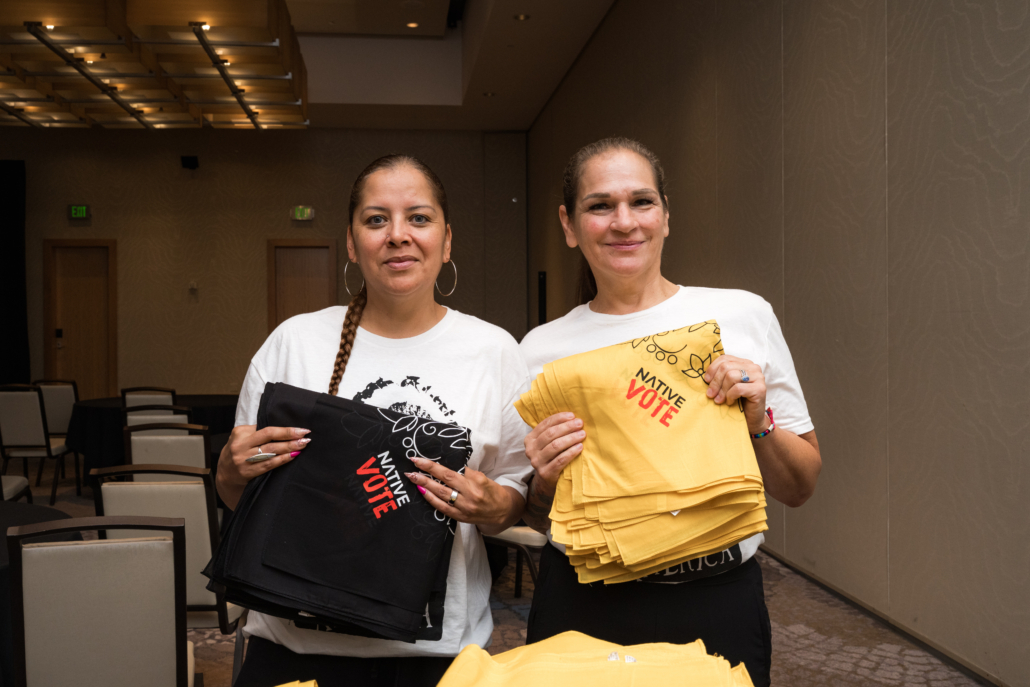
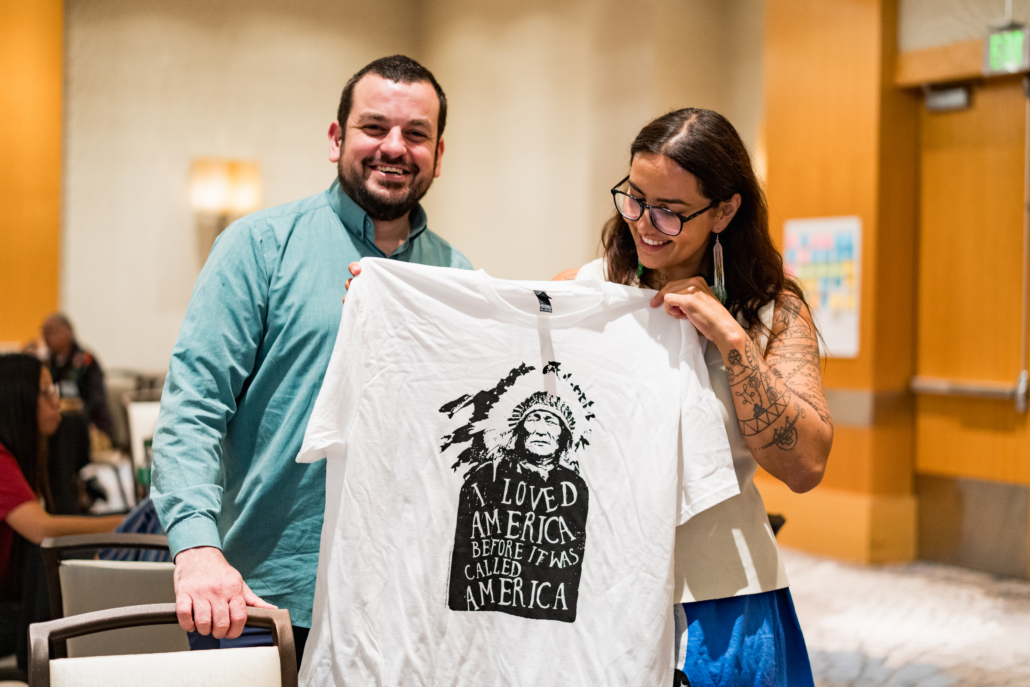
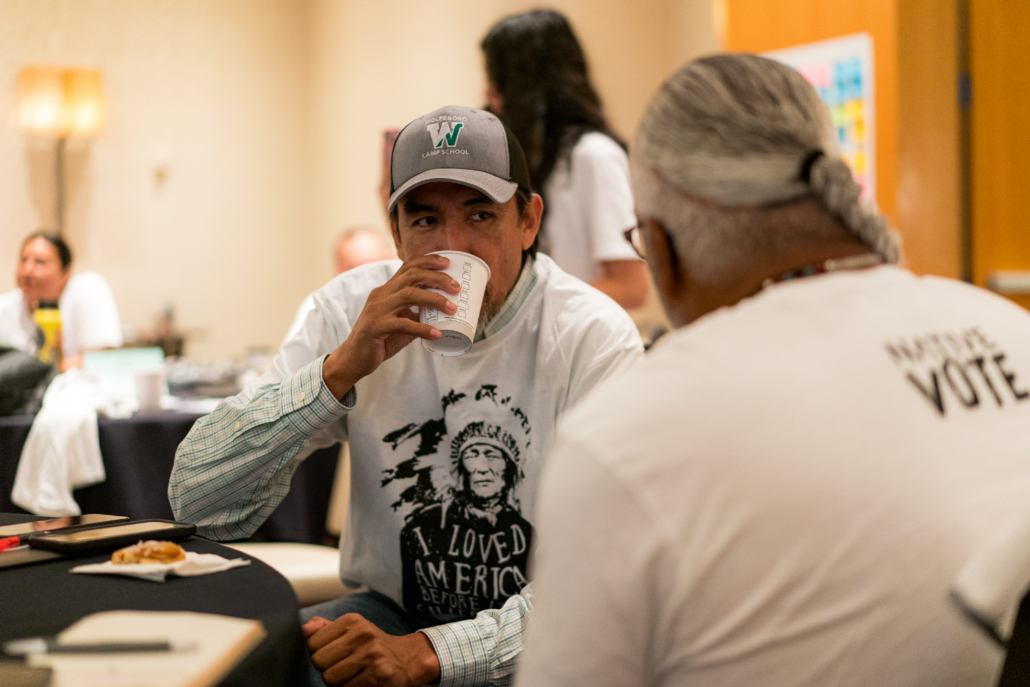
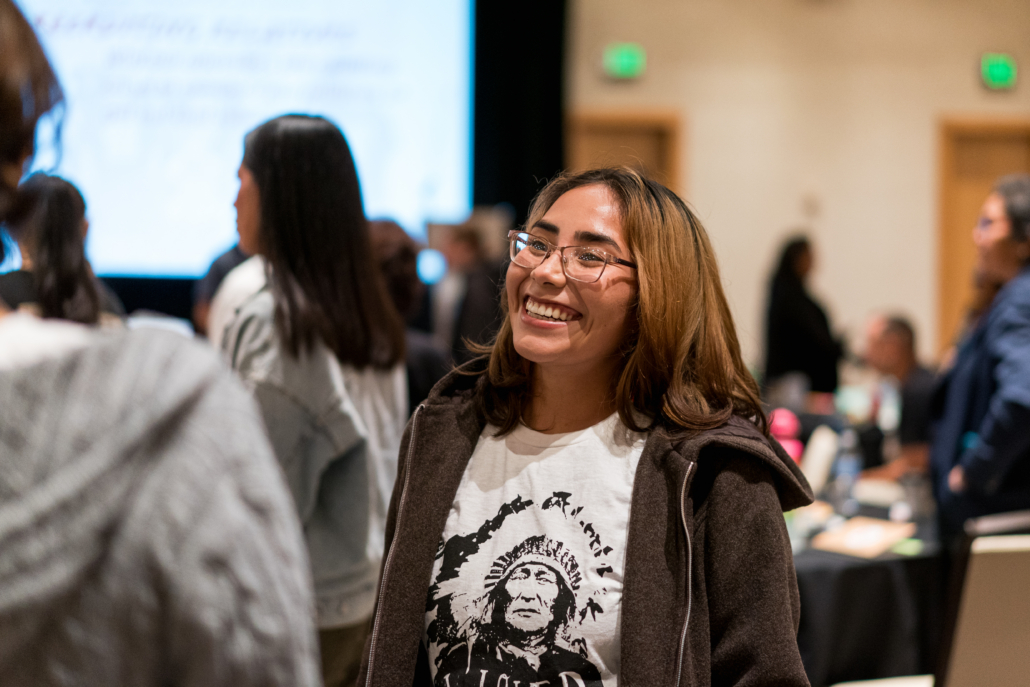
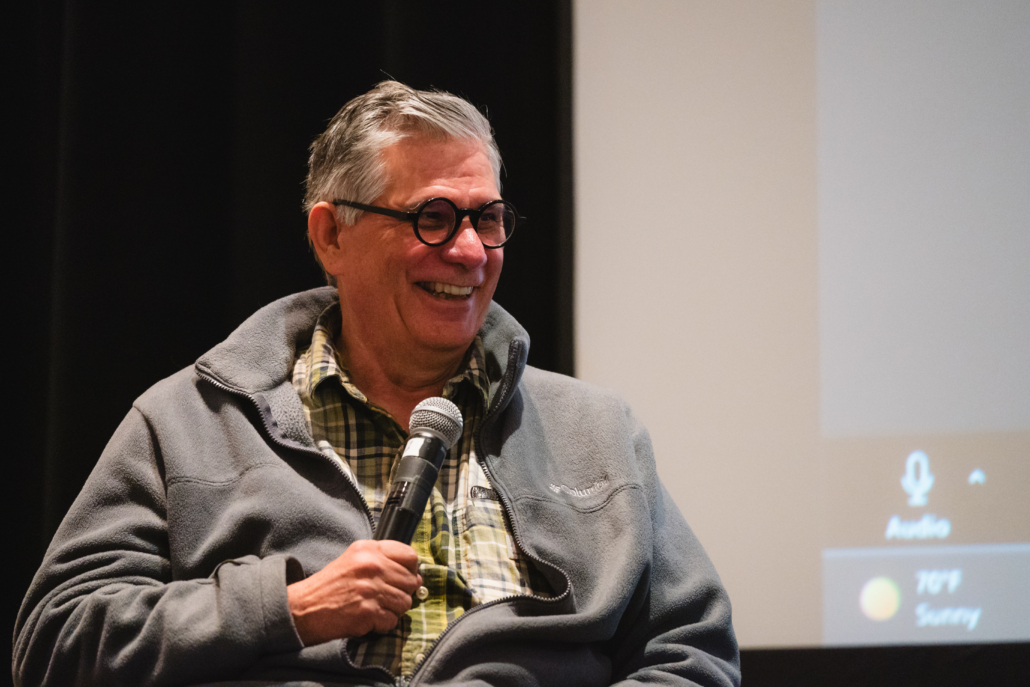
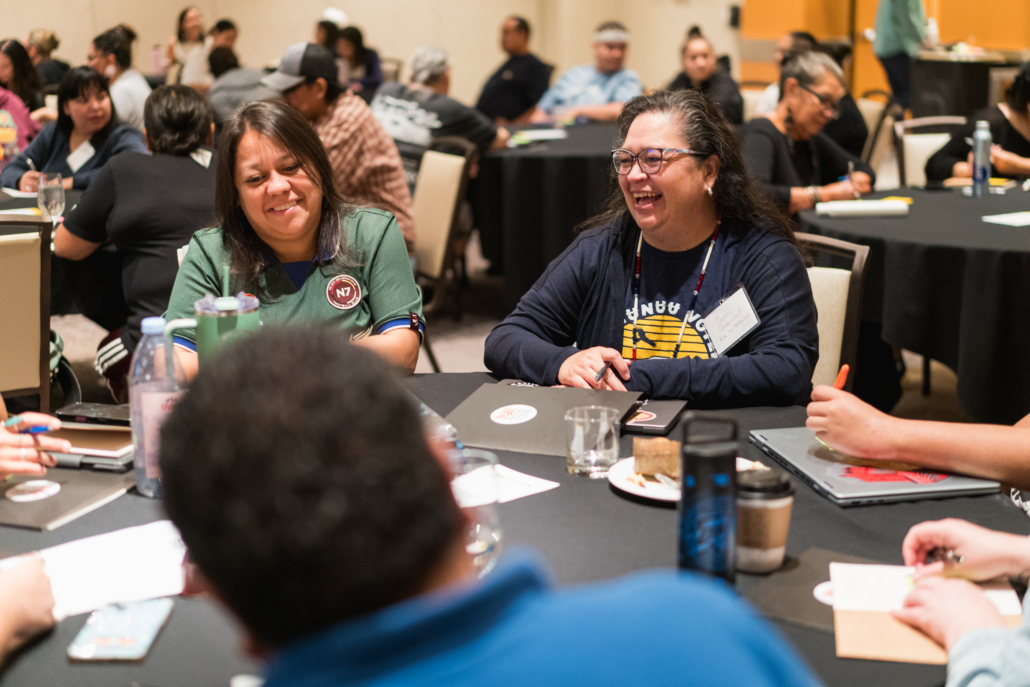
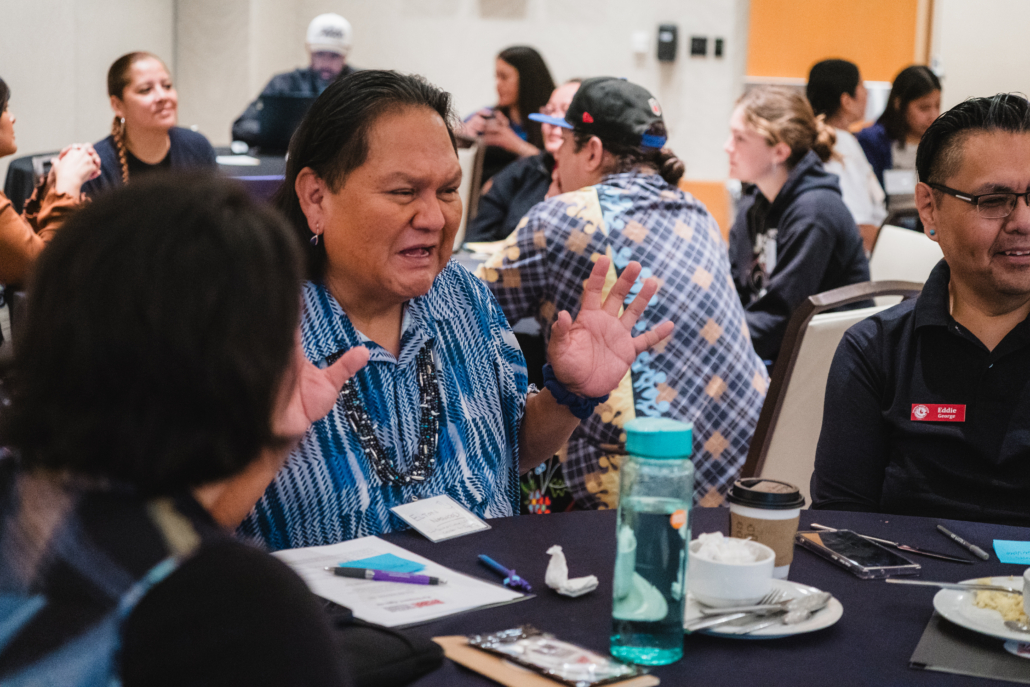
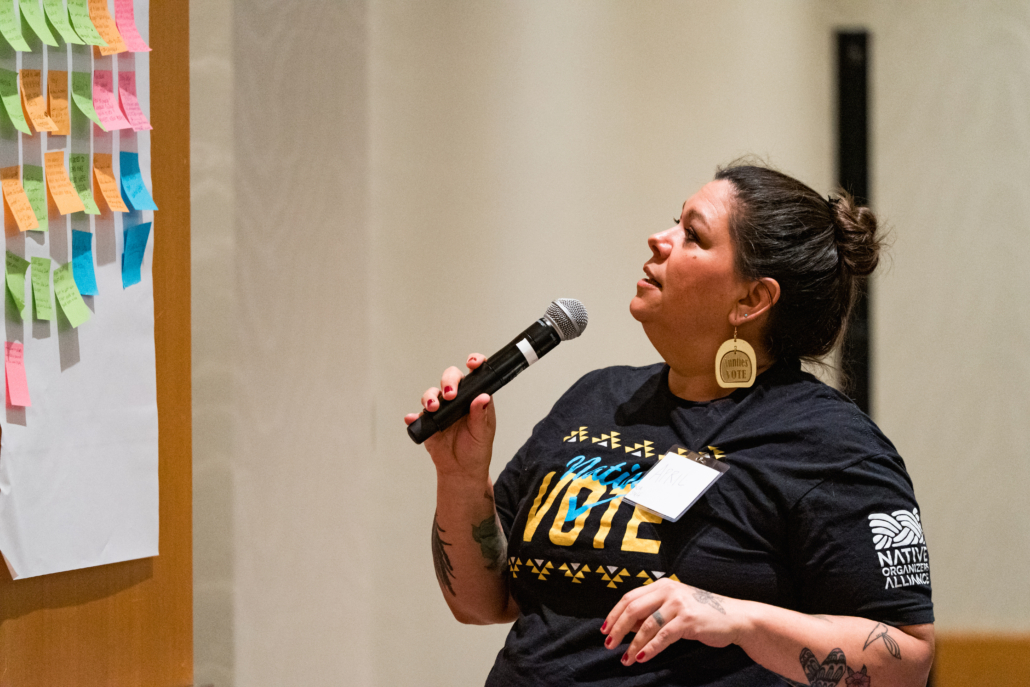
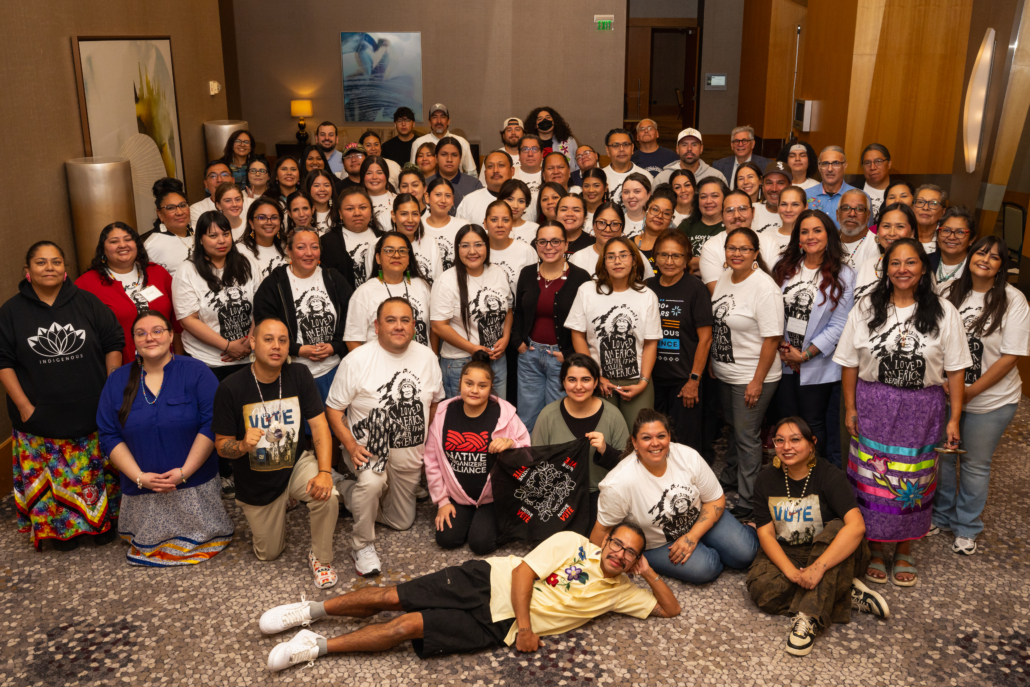
80 Native leaders and organizers working to get out the vote!
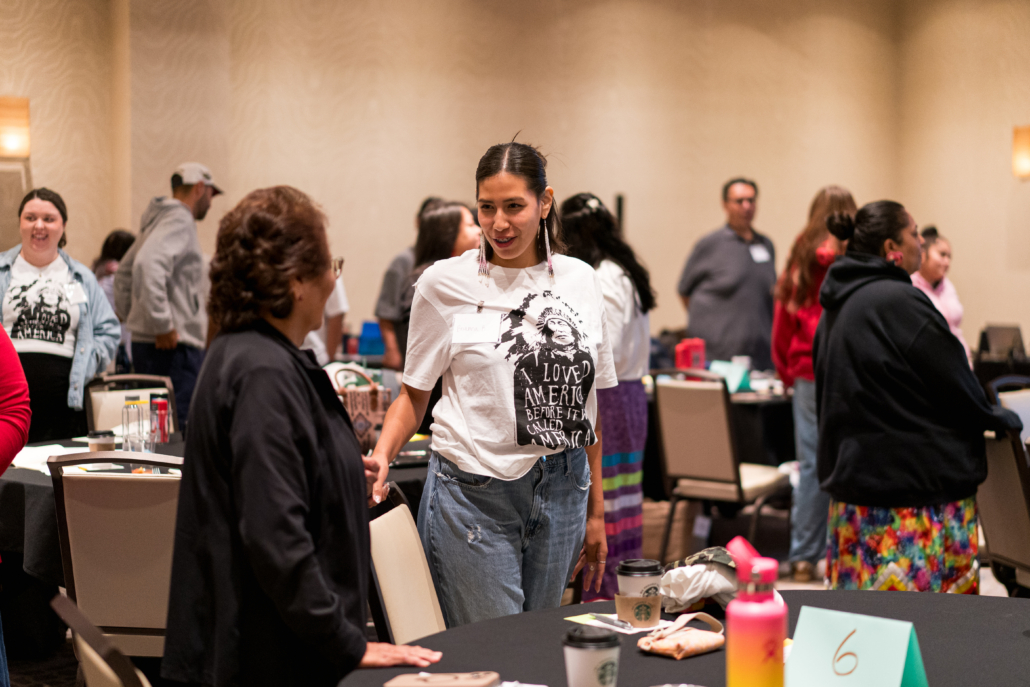
We brought 80 Native leaders and organizers from 24 different communities to Detroit for a Know Your Rights and Civic Engagement training to learn and unite for our communities.
Our Native partner organizations and leaders have been practicing traditional relational organizing from Alaska to North Dakota to North Carolina to the Navajo Reservation, holding conversations with 1,500 of their neighbors and relatives as part of our Seven Generations Community Survey project. We covered the cost of lodging, food, and travel for participants from across Turtle Island. And we’re continuing to support organizing on the ground with paid NOA Organizing Fellows who will work with Tribes and partner organizations on non-partisan civic engagement through Election Day and beyond.
At the training, we shared our collective history of organizing for voting rights. We learned skills for maintaining a peaceful atmosphere at the polls and to prepare to respond to forms of voter suppression — including de-escalating potential conflicts.
This work is powerful. Ensuring the safety of our communities when they vote, protecting air, water, land, and sacred places is not a small task. It’s a mission with meaning and purpose in honor of our ancestors, our relatives, and generations to come.
It’s also spiritually uplifting. It’s rewarding. The sense of empowerment is contagious. Everyone is a teacher and an organizer.
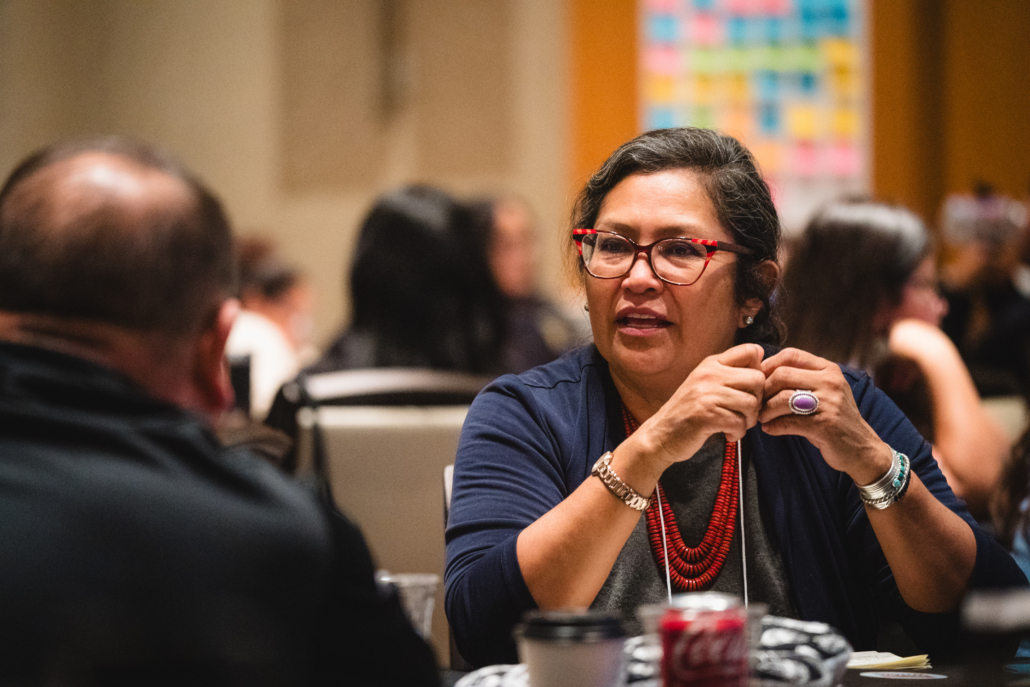
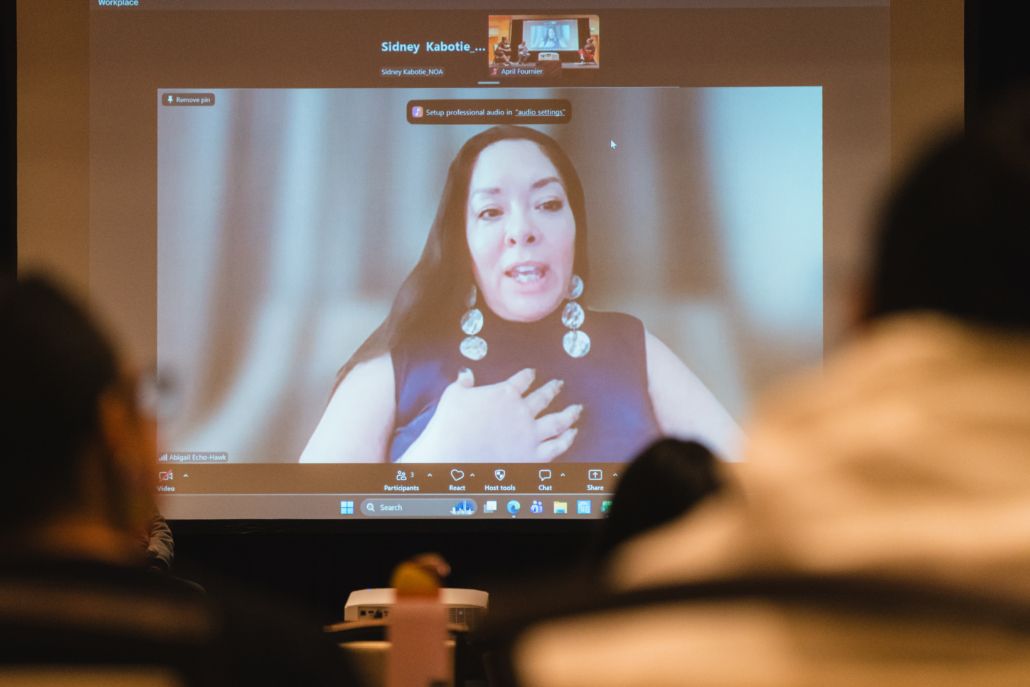
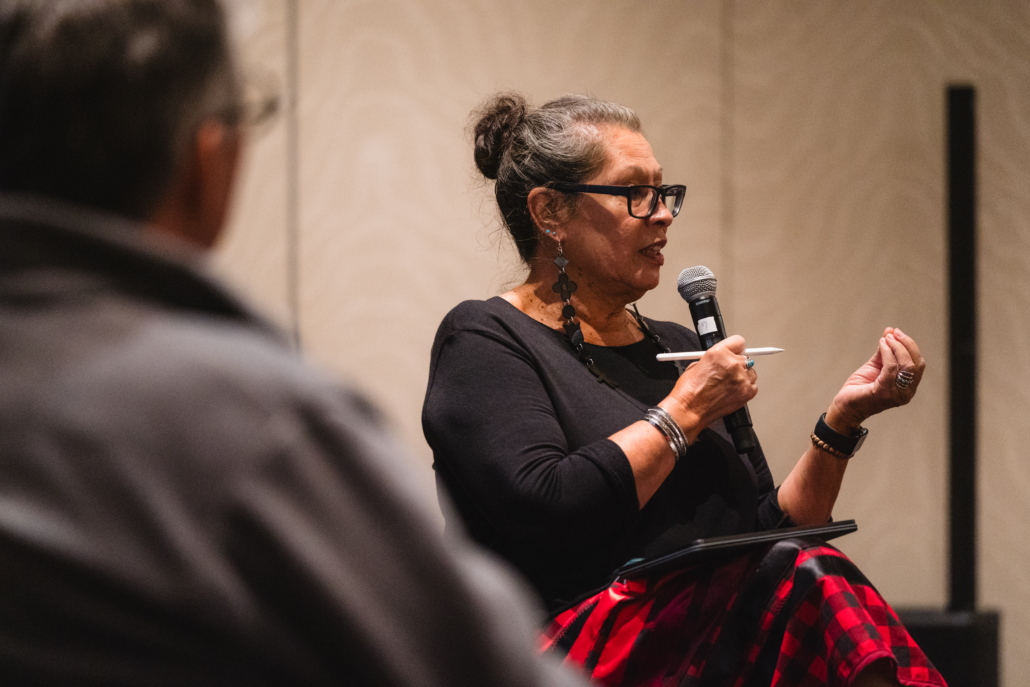
The photos and testimonies from some of the 80 Native leaders and organizers who came to Detroit for our recent Voting rights training speak for themselves.
“My priority ballot issue is to encourage our Two-Spirit and Native LGBTQ+ community members to be part of the voting process, to ensure they have a plan… to make informed decisions… Being able to be engaged in this way is really important.” – Elton Naswood, Diné,LGBTQ2S Center for Equity
“I think it’s really valuable work… representation does matter, to have my children see me in these types of roles and that I make my time and space valuable.” – Blaine Parce, Assiniboine and Sioux of the Fort Peck Tribe
“It was so cool to meet other Native people across the country doing the same work.” – Kaia Aiello, White Mountain Apache, Arizona Native Vote
“This election is very important for Crow Country. We really hope to get more Native Americans in office… everything sacred is on the ballot.” – David Blaine, Crow Nation
The post 80 Native leaders and organizers working to get out the vote! appeared first on Native Organizers Alliance.
Trump Must Reimburse Treasury for Public Funds Wasted on Partisan Ads
Facing significant backlash to his recent TV ads, Trump recently declared he will no longer use taxpayer funds to pay for partisan advertisements. He has not indicated that he will reimburse the U.S. Treasury for public funds wasted so far.
Public Citizen has filed multiple complaints against the Trump administration for using taxpayer dollars for the ads, which lavishly praise the character of Trump and boost congressional Republicans ahead of the midterm elections. AdImpact estimates $10.1 million in taxpayer funds was spent on the production and airing of these ads. The complaints allege that the payments violate federal laws against using taxpayer funds for “propaganda” purposes and the involvement of White House staff in producing and distributing the ads violate the Hatch Act.
Craig Holman, Ph.D., government affairs lobbyist with Public Citizen, issued the following statement:
“It apparently took weeks for the Trump administration to realize it is illegal to use taxpayer dollars to pay for campaign commercials.
“But what of the millions of taxpayer dollars already spent on these self-adulation campaign ads? The act of having wasted taxpayer dollars on these ads remains a violation of law. At the very least, Trump and his administration must reimburse the Treasury and face the consequences for violating federal law and the Hatch Act.”
After October 7, I learned that movements need grief spaces
This article After October 7, I learned that movements need grief spaces was originally published by Waging Nonviolence.
Since the massacres on Oct. 7, now three years ago, the news has brought a steady stream of horror and broken promises. The ceasefire in Gaza has been broken thousands of times; the ceasefire with Iran only holds until the next strike. Many of us have responded by going numb or turning away. Over these three years, I’ve come to believe that collective mourning can help movements build sturdier organizing infrastructure, move through paralysis and numbness, and get back to the long-term work of creating systemic change.
I’ve spent nearly two decades living and working as a human rights defender, mostly in Palestine and Israel. For years, I responded to atrocities the way much of the dominant organizing culture did at the time: strategically. I prepared statements, launched campaigns and mobilized our base. I worked through several wars and the ongoing ethnic cleansing and genocide. Even though my colleagues and I were often physically together, we rarely had the opportunity to collectively mourn. In fact, mourning was often seen as something only the privileged could afford. As organizers and solidarity activists, we were the ones who needed to push past the pain and keep mobilizing.
And then, after each war, large swaths of colleagues and organizers would burn out, and our movement would suffer a setback. Movement researchers Paul Gorski and Cher Chen, studying U.S. human rights and social justice activists, found that an estimated 50 to 60 percent of organizers eventually walk away from movement work and never return, burned out by a culture that treats overwork and self-sacrifice as necessary. That culture also leaves no room to mourn and process the secondary trauma that accumulates, hastening burnout. These kinds of cycles make it especially hard for movements seeking systemic change to sustain themselves.
#newsletter-block_df468591cfe12f9c48e21bb5b68a8027 { background: #ECECEC; color: #000000; } #newsletter-block_df468591cfe12f9c48e21bb5b68a8027 #mc_embed_signup_front input#mce-EMAIL { border-color:#000000 !important; color: #000000 !important; } Sign Up for our NewsletterWhen Hamas attacked Israel in October 2023 and I was waiting in anticipation of the retaliation against Gaza, I knew I couldn’t respond with the same kind of organizing strategy that we usually use: preparation of advocacy statements, social media campaigns and fundraising appeals. I knew that while some people should and would continue that work, there also needed to be spaces for organizers and our base to mourn. And so, on Oct. 8, I opened a space for collective mourning online, sharing it in the many community, political and religious groups I was a part of, for anyone who needed somewhere to process what they were witnessing and feeling. Dozens of people joined: primarily my Jewish community at first, and then people from many faiths and chapters of my life, from Palestine to Palo Alto.
As the assault on Gaza and the genocide continued, the room stayed open. More colleagues, including community organizers, artists, chaplains and psychologists, joined me in facilitating, and we held space for hundreds of people from across our communities to mourn together. We formed a collective called the Social Change Sanctuary and developed a format that included facilitation and participation from attendees. Over time, we were invited to hold spaces for other communities in mourning. We’ve held spaces to grieve the ongoing genocide; climate catastrophes like the fires in Los Angeles; ICE raids, arrests and murders; and the war on Iran.
The Social Change Sanctuary hosts an Interdependence Day circle in 2025. (Alison Avigayil Ramer)Participants repeatedly shared the difference it made in their lives to know they had a consistent space to mourn.
“In daily life, when something hurts, I turn away, I distract myself,” one participant told us. “But the collective mourning practice helped me move through the frozenness that constant news induced — helped me stop doomscrolling — and I’m able to return to my work.”
That participant went on to organize her community and raised $20,000 for refugees in Gaza.
Another participant returned to their role as a chaplain, and extended her work to include “movement chaplaincy” holding one-on-one spaces for people doing solidarity work.
Many participants also shared how witnessing the news with others enabled them to feel the emotions provoked by the headlines, leaving them feeling less isolated and more connected. That is co-regulation happening at the communal level, increasing people’s capacity. People who could barely stay in the room during the earliest, rawest sessions after Oct. 7 can now sit with the news longer, witness without shutting down and understand what is theirs to carry and what is not.
A historical movement of mournersWhile many of the collective mourning groups that have come together in recent years are new, they’re built on generations of organizing that already knew how to fold community care and grief into the work itself.
Previous CoverageDuring the civil rights movement, Southern organizers mourned the murdered publicly and loudly, treating funerals as organizing events rather than sites of private grief to be managed quietly. Decades later, AIDS activists advocating for government support built the NAMES Project Quilt, which memorialized the dead one quilt square at a time. And ACT UP’s “political funerals,” where activists carried the actual ashes of the dead to the White House lawn, were a vigil and a protest at the same time.
For years, Black Lives Matter’s Los Angeles chapter has opened its meetings and protests with a mourning ritual in which members stand in a circle and speak aloud the names of people killed by police, while one person at the center pours out water for each name and the group answers “ashe” after every pour.
Over the past three years, IfNotNow, a Jewish organization that mobilized thousands to oppose the genocide in Gaza, has built something they call ceasefire circles: small, ongoing groups organized around what researchers studying the practice term “solidaristic grief,” designed less as a single vigil than as a longer-term way of holding people inside the movement over time.
In February, as ICE violence escalated, a coalition that included the NDN Collective, the Brave Heart Society, the Indigenous Protector Movement, the American Indian Movement, Sunrise Movement and Project South circulated a public toolkit for grieving those killed by federal agents, built explicitly so that any group, anywhere, could hold its own public mourning.
How mourning helps us keep goingIn an environment dominated by negative news, many of us are starting to turn away, rather than experiencing a kind of secondary, media-induced trauma that can leave us anxious, depressed or numb.
Both avoidance and numbness are the nervous system’s way of protecting us — an involuntary, evolutionarily produced reaction. They are also what makes the news cycle so useful to the people who want to immobilize us and our movements. Steve Bannon named the strategy “flood the zone.” Scholars of authoritarianism describe this as a deliberate exploitation of the public’s limited attention, engineered to produce fatigue and an inadequate or absent response. The aim is to overwhelm and exhaust the opposition.
We do not need to feel guilty for having this response, but we do need a way through it. So we ran an experiment: Could listening to the news become an opportunity for co-regulation instead of dysregulation?
Collage of grief practices from Minneapolis after federal agents shot and killed Renee Good and Alex Pretti in January 2026. (Art: Alison Avigayil Ramer / Photo: Lorie Shaull)We called the practice Good Mourning. We held the 30-minute practice once a week for 40 weeks with six to 10 people. For 15 minutes, we listened to the day’s news together, usually “Democracy Now!,” mixed with music. People wrote, drew, danced or sat still while they listened. Then, for the other half of the session, we turned to each other and shared what moved through us, without offering to fix or resolve anything.
Why listen to the news at all? It may seem like a counterintuitive ask of people who are already overwhelmed by news. But tuning out isn’t a neutral act for organizers. If we numb ourselves to avoid the pain, we also lose contact with the reality we’re trying to change. We lose sight of the people being harmed, the urgency and the stakes. Scrolling by yourself doesn’t help either; it keeps the nervous system braced without ever letting it process.
But practices like Good Mourning offer a third option: Take in the news deliberately, in a bounded container, alongside others, with room for the body to respond. This helps us stay informed and connected to what’s happening without being flooded by it, and that connection is what fuels action.
“I started Good Mourning because I wanted to hold myself accountable to listening to the news, instead of giving in to the temptation to block it out completely,” Eva Orbuch, a community organizer and one of the founders of Good Mourning, told me recently. “It became so much more — a community, a creative practice, a way to take in the news mindfully, a place to recommit to what supports my own resilience and makes things a little better in the world.”
Talking about the news activates the same analytical mind that has been narrating the news to us all week. But moving the body or creating something, even just doodling, helps us use another part of the brain to process it. That’s the basic premise of expressive arts therapy: Grief and trauma often live below language, stored in the body as tension or bracing, and adding expressive arts to the practice of listening to the news helps us move through it.
Listening together also creates an opportunity to co-regulate communally. Stephen Porges’ polyvagal theory describes how nervous systems calibrate against each other: Being near someone else in a state of relative safety can shift your own breathing and stress response toward theirs. A structured, repeated practice gives that calibration somewhere to happen, week after week.
“The practice helps me to compost whatever I’m holding, and to move through all the grief,” one participant said.
Making your own Good Mourning practiceThis year, several of my friends contacted me before Oct. 7. “What could we possibly do this year? I’m tired of organizing events,” an organizer who has held dozens of peace vigils in the past year told me.
“Why don’t we create our own space for collective mourning?” I offered. We can look at some of the stories, news and art from the day together. Make something of our own?
She agreed.
#support-block_5ff39021481b2a0e77a0248db2c04ce8 { background: #000000; color: #ffffff; } Support UsWaging Nonviolence depends on reader support. Make a donation today!
DonatePerhaps this is also a practice that can accompany you. Creating your own space for collective mourning doesn’t require much. Ideally, form a small group and commit to 30 minutes. Read the news to each other, or play it aloud, mixed with music, or anything that isn’t just more thinking. Invite people to pair the listening with something for the body, like movement, drawing or dancing. Then turn to each other and share your grief, without trying to resolve it, fix it or offer advice. At the end, share one way you will nourish yourself and others in this hard time, and wish each other well.
This simple act of witnessing your community in grief has been powerful for so many. Perhaps it can be a way for you and your community to move through mourning and keep on mobilizing.
This article After October 7, I learned that movements need grief spaces was originally published by Waging Nonviolence.
AFSA Releases Its 2025–2026 Annual Report: African Solutions, Collective Action and Food Sovereignty
The Alliance for Food Sovereignty in Africa (AFSA) is pleased to release its 2025–2026 Annual Report, documenting a year of collective action to advance agroecology, defend farmers’ rights and strengthen community-led food systems. Covering 1 July 2025 to 30 June 2026, the report marks the first year of implementation of AFSA’s 2025–2029 Strategic Framework. It brings together achievements, experiences and lessons from an alliance of 48 member organisations, showing how local knowledge and community leadership inform action from farmers’ fields to national, regional and global policy spaces.
The report highlights efforts to protect farmers’ rights to save and exchange seeds, advance agroecology in climate policy, celebrate African food cultures and strengthen local economies. Key developments include the Seed Is Life and My Food Is African campaigns, Healthy Soil Healthy Food work across six countries, and support for 222 agroecological enterprises and 21 territorial markets. Member stories bring these achievements to life: young farmers and women restoring land and water systems in Zambia, communities expanding farmer-led agroecology across West Africa, and farmers in Malawi rebuilding soil fertility and improving maize harvests through locally produced organic manure. Together, these experiences demonstrate the practical value of African-led solutions for livelihoods, resilience and food sovereignty.
Reflecting on the communities behind this work, AFSA Board Chairperson Rev. Dr. Tolbert Thomas Jallah Jr. writes: “Their experiences remind us that food sovereignty is not simply a policy aspiration; it is lived every day through the stewardship of land, seeds, biodiversity, livelihoods and human dignity.” General Coordinator Dr. Million Belay sets out the ambition guiding the alliance: “Our task is not only to respond to crisis, but to build power, alternatives and hope.”
Alongside these achievements, the report shares the challenges, institutional developments and lessons shaping AFSA’s next steps, including the need to translate policy commitments into implementation and sustain investment in community-led change. AFSA thanks its members, communities, partners, donors and allies for their commitment and invites policymakers, researchers, civil society and the wider public to explore and share the report.
Hundreds of Organizations Oppose Endangered Species Attacks in Permitting Legislation
More than 200 conservation organizations sent a letter today urging Congress to oppose the “Bipartisan American Affordability and Jobs Act of 2026,” introduced by Sens. Sheldon Whitehouse (D-RI), Martin Heinrich (D-NM), Shelley Moore Capito (R-WV), and Mike Lee (R-Utah). The bill includes sweeping attacks on the Endangered Species Act that would gut protections for nearly every endangered species across the country.
The legislation would weaken the Act’s gold-standard “best available science” mandate, making it substantially harder to protect imperiled species and the places they live. It would also surrender authority to states to conduct Section 7 consultations — one of the most important safeguards against harm from federal agency actions.
“We don’t have to choose between protecting our most endangered animals and plants and building a clean energy future,” said Stephanie Kurose, deputy director of government affairs at the Center for Biological Diversity. “Hollowing out the Endangered Species Act only benefits energy-hungry data centers and the fossil fuel industry while leaving monarchs, manatees, and countless other species to pay the ultimate price.”
The bill also includes judicial review provisions that would make meaningful review of certain Endangered Species Act challenges much more difficult.
“Friends of the Earth US is proud to stand beside our NGO partners in the fight to uphold our country’s bedrock environmental laws,” said Hallie Templeton, legal director for Friends of the Earth. “It’s paramount that Congress keeps things in perspective as it continues to navigate our desperate need for a clean energy future. There is no reason to throw endangered species under the bus to secure what falls short of even a half-measure approach to achieving justly sourced, renewable energy access and affordability.”
Today’s letter notes that “real environmental champions do not trade away the world’s strongest conservation law in pursuit of a legislative mirage that does nothing more than grease the wheels for pipelines, data centers, petrochemical buildouts, and the next generation of energy-guzzling tech infrastructure.”
Pages
The Fine Print I:
Disclaimer: The views expressed on this site are not the official position of the IWW (or even the IWW’s EUC) unless otherwise indicated and do not necessarily represent the views of anyone but the author’s, nor should it be assumed that any of these authors automatically support the IWW or endorse any of its positions.
Further: the inclusion of a link on our site (other than the link to the main IWW site) does not imply endorsement by or an alliance with the IWW. These sites have been chosen by our members due to their perceived relevance to the IWW EUC and are included here for informational purposes only. If you have any suggestions or comments on any of the links included (or not included) above, please contact us.
The Fine Print II:
Fair Use Notice: The material on this site is provided for educational and informational purposes. It may contain copyrighted material the use of which has not always been specifically authorized by the copyright owner. It is being made available in an effort to advance the understanding of scientific, environmental, economic, social justice and human rights issues etc.
It is believed that this constitutes a 'fair use' of any such copyrighted material as provided for in section 107 of the US Copyright Law. In accordance with Title 17 U.S.C. Section 107, the material on this site is distributed without profit to those who have an interest in using the included information for research and educational purposes. If you wish to use copyrighted material from this site for purposes of your own that go beyond 'fair use', you must obtain permission from the copyright owner. The information on this site does not constitute legal or technical advice.
 This site is not the official webpage of the Industrial Workers of the World.