


You are here
News Feeds
Friday Video: The Three Ingredients to a Great Trick-or-Treating Neighborhood
Few U.S. neighborhoods are living up to their full Halloween potential — but they could with a few long-term urban planning tricks and short-term community activation treats.
Check out the latest from City Beautiful, which breaks down how to make communities not just more walkable for spooky season, but more connected and neighborly year-round. And it’s not just about giant Home Depot skeletons and full-sized candy bars … though that certainly doesn’t hurt.
It’s essential viewing as we enter into the one night of the year that transforms everyone into a pedestrian.
Friday’s Headlines (Except Spooky)
- Halloween is one of the most dangerous nights for pedestrians. In the absence of safe streets for walking, Quartz has tips for reducing the odds that your child will be run over, or that you kill a child while behind the wheel.
- The World Cup showed that ramping up transit for major events can have positive lasting effects for residents when the surge is over. (Smart Cities Dive)
- Housing and transportation policy must be mixed to make each more affordable, according to Yonah Freemark. (Urban Institute)
- A Florida referendum on reducing property taxes would cost Miami-Dade transit $29 million in revenue, forcing cuts to routes and hours. (CBS News)
- Caltrain’s ridership grew by more than 50 percent last year, thanks to electrification. (Metro Magazine)
- Future California Gov. Xavier Becerra is likely to fire the head of California’s high-speed rail project, and is open to vehicle-miles-driven tax. (KCRA)
- Chicago passed an ordinance banning car-centric businesses like drive-throughs and gas stations near transit-oriented developments. (CNU Public Square)
- Utah is adopting the Michigan left, where drivers turn right and then make a U-turn. (Salt Lake Tribune)
- The South Carolina DOT is spending $300 million to make sure Columbia drivers don’t have to wait on trains. (WLTX)
- The Dallas city council approved $2.8 million in streetcar funding while still questioning the return on investment. (Observer)
- Omaha has spent more than $400 million acquiring downtown parking garages, about the same amount as it’s spending to build a streetcar. (Flatwater Free Press)
- Boise chip manufacturer Micron promises that a $50 billion investment will benefit transit and housing. (Boise Dev)
- There is some vague reason behind Detroit bikeshare MoGo suspending service, other than not socializing. (Axios)
- A high-speed train collision in Spain killed almost 70 people. (ABC News)
- If the Canadian province of Alberta forces Edmonton to rip out bike lanes, it would cost at least $150 million. (CBC)
Webinar: Supersizing Australia’s solar rooftops and battery storage
Join our experts to explore how expanded rebates could unlock an 80 GW market and reshape Australia’s energy grid.
The post Webinar: Supersizing Australia’s solar rooftops and battery storage appeared first on Renew Economy.
Almost 100 new data centres in the works, adding more than 2 GW of demand by 2030, market update finds
Australia is home to 163 operational data centres with almost 100 more in the national pipeline, an industry update shows.
The post Almost 100 new data centres in the works, adding more than 2 GW of demand by 2030, market update finds appeared first on Renew Economy.
Australia’s most powerful turbines – up to 9.5 MW – mooted for giant wind project outside steel city
One of Australia's leading wind farm developers is considering the most powerful turbines seen in the country for a 1.2 GW project near steel city of Whyalla.
The post Australia’s most powerful turbines – up to 9.5 MW – mooted for giant wind project outside steel city appeared first on Renew Economy.
Tribes and environmental groups slam State Water Board’s anticipated adoption of updated Bay-Delta Plan, vow further action
Groups condemn the Newsom administration’s voluntary agreement framework, pledging to fight for water rights, environmental protections, and due process
For Immediate Release:
October 39, 2026
Contact:
Ashley Castaneda, ashley@restorethedelta.org
SACRAMENTO — In anticipation of the State Water Resources Control Board’s vote to adopt the updated Bay-Delta Plan, tribal leaders, environmental advocates, and Delta residents gathered at a press conference to condemn the decision and pledge further action to defend California’s water rights, protect critical ecosystems, and ensure meaningful public participation in decisions affecting the state’s water future.
Representatives from the Shingle Springs Band of Miwok Indians, the Winnemem Wintu Tribe, Little Manila Rising and Restore the Delta, alongside Delta community members, denounced the plan, arguing that it entrenches the very inequities and ecological damage the update should address while sidelining tribes and environmental justice communities.
At the center of the plan newly adopted by the State Water Board are so-called “voluntary agreements”, privately negotiated deals allowing powerful water districts to offer limited flow commitments and funding in exchange for exemptions from stronger, enforceable regulatory requirements.
“For years we have raised our voices against a plan based on exclusionary voluntary agreements. For years we have explained how this plan would undermine our sovereignty and ways of life. For years we have asked the State Water Board to do its part to repair the legacy of atrocities committed against California tribes. And for years our pleas have fallen on deaf ears,” said Vice Chair Malissa Tayaba, Shingle Springs Band of Miwok Indians. “But despite the Board’s approval of this discriminatory and destructive plan, we will continue to speak up and demand the state government do right by native people. We hope that the next Governor will give meaning to the apologies by stopping these voluntary agreements, establishing regulations to keep rivers flowing, and giving tribes a seat at the table.”
Tribal leaders and environmental groups have long warned that the voluntary agreements fall short of what science demands and lack the enforceable protections needed to safeguard threatened fish species, restore critical freshwater flows, and address harmful algal blooms (HABs).
“This plan fails the four million people living in the Delta, the 12 million more who live in the greater San Francisco Bay Area, and all Californians. Implementing the voluntary agreements will further diminish their economies, public health, and access to clean water,” said Barbara Barrigan-Parrilla, Executive Director at Restore the Delta. “Governor Newsom has failed in his responsibility to protect people, safeguard all beneficial uses of water, and preserve the health of the Bay-Delta watershed. By approving this plan, his administration is leaving behind an implementation nightmare. When this plan fails, the next Governor will be left to clean up the mess.”
“When the future of Bay-Delta water is stretched between so many competing uses, enforceable protection from harmful algal blooms is what waits. And the cost of waiting doesn’t land evenly. The board must adopt statewide cyanotoxin standards and objectives on a firm and public timeline,” said Gloria Valencia Cruz, Environmental Justice Advocacy Coordinator with Little Manila Rising.
Advocates also condemned the secretive process through which the agreements were negotiated, citing the exclusion of tribes and environmental justice organizations from key discussions. They further criticized state agencies for using confidentiality agreements to restrict access to scientific data and discussions central to the plan’s development.
“If Donald Trump was the Governor of California today he would be ‘bigly’ thrilled. The Bay-Delta Plan update is going just the way he would want. Give all his cronies much if not all of what they want and dismiss the wants and needs of everyone else. He would probably say, ‘I don’t care about those whiny environmental groups, or tribes, or fishermen, or disadvantaged groups, or even the average citizen, that’s all DEI anyway. Heck, we’re going to make and are making a fortune.’ Humm, maybe he is Governor,” said Gary Mulcahy, Government Liaison with the Winnemem Wintu Tribe.
The groups contend that the plan places an excessive financial burden on California taxpayers while failing to provide critical protections needed for the Bay-Delta ecosystem, native fish populations, and communities that depend on healthy freshwater flows.
They also warned that the cost of voluntary agreements could escalate dramatically if other landowners secure concessions similar to those in the Newsom administration’s controversial Fair Ranch water agreement, which drew scrutiny over its $180 million price tag. Under that scenario, the total cost of the voluntary agreements could reach $5.6 billion, more than five times the initial estimate of $1.1 billion, with taxpayers ultimately footing the bill.
Speakers vowed to continue fighting the plan and its voluntary agreement framework, nodding to further action to defend tribal and public water rights, protect California’s already imperiled ecosystems, and demand transparency, accountability, and a meaningful role for affected communities in major water management decisions.
“The law should serve as a baseline for equity and reparative justice to address California’s history of discriminatory water governance,” said Eli Calhoun, Student Attorney, Yale Environmental Justice Law and Advocacy Clinic, Counsel for the Delta Tribal Environmental Coalition (DTEC). “Instead, this plan entrenches historical inequities by ensuring that those who historically monopolized the watershed continue to dictate flow and temperature regimes at the expense of Tribes, environmental justice communities, and local ecosystems.”
###
###
Re-linking the NEM: could fungible ESEM ‘bulk energy’ contracts be bankable?
Almost three decades after its inception, the NEM has a rare chance to re-link the markets its designers envisioned.
The post Re-linking the NEM: could fungible ESEM ‘bulk energy’ contracts be bankable? appeared first on Renew Economy.
Crossing 1.5°C is a call to urgent action
Every fraction of a degree matters and increases risks to people, communities and ecosystems.
The post Crossing 1.5°C is a call to urgent action appeared first on Renew Economy.
Bank of Canada Drives Rates Higher, When Canada Needs Lower
On October 28, the Bank of Canada increased its policy interest rate by one-quarter percentage point, to 2.5%. Commercial banks increased their lending rates in tandem, with their prime mortgage rates rising to 4.7% (and higher than that for credit cards and most other loans). Higher rates will slow down a national economy already staggering from the effects of the Canada-U.S. trade war and other shocks.
The Bank blamed a surge in inflation resulting from the latest global oil price shock, the result of U.S. President Donald Trump’s war in the Persian Gulf. Oil prices have stayed high for 8 months (despite Trump’s repeated promises the war would end soon). Given Canada’s policy of domestic petroleum prices to the world roller-coaster, this has caused dramatic increases in domestic gasoline, diesel, and fuel oil prices. The longer oil prices stay high, the greater will be the pass-through of higher energy costs into other parts of the economy. Some of this pass-through is already visible (in higher air fares, delivery charges, etc.). More is likely in coming months, as businesses in other industries pass on their own higher energy bills to customers through higher prices for everything from food to housing to services.
With the hike in interest rates (the first since 2023), Canadians will now pay twice for the current oil shock: first at the pumps, and now through higher interest rates. The Bank admits that Canada’s economy has excess capacity and too much unemployment, but it is lifting rates anyway. The real economy needs lower rates. But monetary policy is going the other way, to fight an external price shock that has no relation to domestic employment, growth, or production costs.
The Centre for Future Work’s False Profits research project has documented how much Canadians needlessly pay because of Trump’s war: $3 billion extra on gasoline alone in the second quarter of 2026, a toll which grows each week. Canada’s dependence on fossil fuels, and our policy (dating back to the 1980s) of mirroring the global oil roller coaster in our own petroleum prices (even for petroleum produced, refined, and consumed in Canada) are now the biggest threats to affordability and the cost of living in Canada.
The Bank of Canada expects the pass-through of oil prices into broader inflation will intensify in coming months (the same thing occurred in 2022-23, following the oil price shock resulting from Russia’s invasion of Ukraine). But the Bank’s only answer is to throw more Canadians out of work to offset inflation caused by global chaos and oil industry greed. This is deeply wrong.
Centre for Future Work Director Jim Stanford appeared on CTV News Channel to discuss the rate hike, its causes, and the inadequacy of current monetary policy (which fights any and all inflation, no matter what its causes, with contractionary rate hikes).
He argued that we need a broader understanding of the causes of inflation (which cannot always be blamed on ‘excess demand’) and a broader toolkit of responses. Preventing price shocks in the first place is vital. To that end, rethinking petroleum prices (the biggest culprit in recent inflation) is essential. Electricity prices in most parts of Canada have been very stable through the multiple economic disruptions of recent years, because they are regulated by provincial authorities on the basis of cost of production (rather than speculative futures markets). As a country which produces far more petroleum than it uses, Canada has the capacity to manage petroleum prices more stably and fairly.
The post Bank of Canada Drives Rates Higher, When Canada Needs Lower appeared first on Centre for Future Work.
“Tipping point”: Australia’s appeal to global offshore wind farm investors hangs in the balance, conference hears
Australia's appeal to potential international offshore wind farm investors won't last forever, All Energy conference hears.
The post “Tipping point”: Australia’s appeal to global offshore wind farm investors hangs in the balance, conference hears appeared first on Renew Economy.
How to Identify Bird Eggs by Color, Size, and Markings
As Rising Costs Push Farmers to the Brink, John Boyd, Jr. Calls on Voters to Stop this ‘Runaway Train’
As supply chain disruptions and tariffs continue to strain farmers, producers like John Boyd, Jr. are calling on eaters to use their vote to protect the future of agriculture in the United States.
Diesel prices are hovering around US$6.35 per gallon—just below the record high of US$6.53 seen in September—according to AAA. Boyd, the President and Founder of the National Black Farmers Association, reports that it recently cost him around US$1,000 to fill his combine.
“I found myself letting some bills go right now, and I made the choice to get my crop harvested out of the field while I can,” Boyd tells Food Tank. “Healthcare had to go.”
Boyd points to the Trump-Vance Administration, whose trade policies and decision to launch a war in Iran are pushing food producers to the brink. A report from North Dakota State University’s (NDSU) Center for Agricultural Policy and Trade Studies finds that market disruptions are resulting in significant costs to farmers, causing greater instability.
Most producers, Boyd says, are “really working in the red.”
The conditions are reminiscent of the 1980s farm crisis. Boyd managed to keep his farm afloat as debt soared and many families were forced from their land four decades ago. “But this is different,” he says about today. “It’s intentional.”
To Boyd, American agriculture can’t survive if the country stays on course. “There is no way that you continue to support this type of agriculture for our country because there won’t be any left,” he tells Food Tank. “There’ll be a handful of corporate farmers and a lot of data centers if you don’t change your thinking and look the other way.”
As the midterm elections approach, he urges people everywhere to vote, arguing the future of the country’s agriculture sector depends on it. “That’s the only way to put any sort of pressure on this runaway train,” he says. “So my message is: Go out and vote, vote early, and let’s put some checks and balances back in our country.”
Listen to the full conversation with John Boyd, Jr. on Food Talk with Dani Nierenberg to hear more about the urgency Boyd sees, his advice to Black farmers frustrated with the political system, and what it will take to stop farm foreclosures.
Articles like the one you just read are made possible through the generosity of Food Tank members. Can we please count on you to be part of our growing movement? Become a member today by clicking here.
Photo courtesy of Yurii Hetsko, Unsplash
The post As Rising Costs Push Farmers to the Brink, John Boyd, Jr. Calls on Voters to Stop this ‘Runaway Train’ appeared first on Food Tank.
News and Information – October 29 2026
The next meeting will be November 6. The agenda and link will be sent to the mail list. If you need the link, email admin@climaterailalliance.org.
Amtrak is exploring a corporate restructuring, intending to improve service. There is detailed information on Amtrak’s website. Deadline for feedback is Oct. 30, 2026. –
TOMORROW
See submitted comments https://climaterailalliance.org/970-2/
It took 18 years, but the Seattle Amtrak car service building is complete. Preliminary design in 2008 and a long wait for funds to build it. The new Airo trainsets require a specialized facility, moving this project from lines on paper to a real building. This will improve the ability to maintain Amtrak trains in Seattle.
Failed again!
Once again, a big service disruption on the Seattle Link light rail service. Dependable rail service is vastly more important than technocool rail service. Riders need to not think about whether it is working and just go to the station.
Federal Railroad Administration has announced Consolidated Rail Infrastructure and Safety Improvements (CRISI) program grant recipients:
- Wisconsin, the FRA awarded $218 million for an expansion of the Amtrak Hiawatha passenger-rail service.
- Massachusetts will receive $130 million in CRISI grant funding for the Springfield Hub Modernization Project
- $27 million in CRISI grant funding to modernize rail infrastructure owned by the Alabama & Gulf Coast Railway.
- In North Dakota, the FRA has awarded the Red River Valley & Western Railroad (RRVW) a $23.6 million grant to modernize aging infrastructure
- The Maine Department of Transportation has been awarded just over $37 million for the Northern Aroostook Rail Gateway Modernization and Safety Project.
Caltrain, the San Francisco – San Jose – Gilroy commuter rail agency tried a new radical approach to declining ridership. When commuter rail service began in the US, well over 160 years ago, the majority of suburban dwellers traveled into the central city in the morning and left in the evening, Monday through Friday. Commuter rail service was structured for exactly those people. A very large percentage of people traveling to or from suburban areas are not traveling for a 9-5 job in the central city. Some people see the response to the decline as less service. Caltrain took the opposite approach.
Metra, the Chicago area commuter rail agency is purchasing eight to 16 battery-electric trains. The trains will use the Beverly branch of the Chicago-Blue Island route. This route is perfect for this type of train. Stations are about four blocks apart. There is a limited amount of parking; it’s mostly walk-up or bus transfer passengers. They will be in service in 2028. The purchase is part of Metra’s plan to convert from 9 to 5er commuter railroad to all day regional service.
On Friday, September 25, SeaPort air published a full page press release/advertisement in “businesswire:” ““Billions in New Trains, Same Slow Route: Boeing Field Air Service SeaPort Airlines is Making New Amtrak Trains Obsolete.”” Here is our response to that propaganda piece.
The UP-NS merger application is live at Surface Transportation Board. CRA opposes this merger. There are many ways in which this merger will have a bad outcome. Wall Street activist investors will be thrilled, however. Our colleagues at Solutionary Rail and Public Rail Now have an ongoing campaign that allows comments on the merger to be made anonymously to Surface Transportation Board.
This coming election day, Colorado will be voting an a ballot measure to provide a dedicated funding source for rail passenger service. In a Trains.com article, former Federal Railroad Administration Administrator Amit Bose and former US Department of Transportation General Counsel John Putnam promote the Colorado program as model for the next generation of passenger rail. A successful dedicated measure depends upon demonstrating that the proposed program will work. Colorado has done the homework with successful light rail and commuter service in the Denver region, laying solid groundwork for this next step.
The 2027 Washington State Legislative Session is about to begin. CRA, along with the other members of the Rail Can’t Wait Coalition have developed our Legislative Priorities for Washington, the list of things that rail transportation needs that we would like legislators to fund and enable.
The New Cascades Airo sets started service between Vancouver BC and Eugene OR on October 30. Trains will be introduced as they arrive from testing. Right now, you can see and ride them on Trains 503 and 508 between Seattle and Eugene and trains 516 and 519 between Portland and Vancouver BC.
CRA joined Solutionary Rail, Duwamish River Community Coalition, Reconnect South Park, and Georgetown Community Council in a comment letter responding to the 2026 Washington State draft Freight System Plan. The plan was effectively a plan for trucking. It contained almost no reference to rail at all, about which we commented at length.
Remembering Mr. Whitekeys: An Alaska Original and Champion for Birds
THE SHELL LEAKS FILES — 29 OCTOBER 2026
Archive reference: SLF-2007-102
Publication date: 29 October 2026
Collection: The Sakhalin Papers — Shell, Gazprom and Russia
Previous instalment: SLF-2007-101, The Sakhalin Papers XCI, 28 October 2026
Principal authenticated records: Shell plc announcement of 28 February 2022; Shell’s Nord Stream 2 financing announcement of 24 April 2017; Shell’s operational update of 7 April 2022; first-quarter financial results of 5 May 2022; Shell Annual Report and Form 20-F 2022; Shell Annual Report and Form 20-F 2025, filed with the US Securities and Exchange Commission on 12 March 2026.
Contemporaneous reporting: Reuters, February–April 2022; Interfax, 5 May 2022; contemporary financial reporting on Shell’s Russian withdrawal and subsequent impairment charges.
Related legal record: The Russian restructuring of Sakhalin II under Presidential Decree No. 416 of 30 June 2022; subsequent Moscow proceedings identified as Case No. A40-241354/2024.
Evidence classification: Authenticated Shell corporate announcements, contemporaneous financial disclosures, SEC filings, independent reporting, official Russian measures and separately identified editorial commentary. Corporate intentions are distinguished from completed transactions. Financial impairments are distinguished from cash payments. Pending legal allegations are not presented as judicial findings.
Introduction: Four days that ended decades of commercial ambitionOn 24 February 2022, Russian armed forces launched their full-scale invasion of Ukraine.
Four days later, Shell made an announcement that would have been almost unimaginable during the earlier years of its partnership with Gazprom.
The company declared that it intended to withdraw from its Russian joint ventures.
Its decision encompassed Sakhalin II, Salym Petroleum Development and the Gydan exploration venture.
Shell also announced that it intended to end its involvement in Nord Stream 2.
The implications extended beyond the abandonment of individual investments.
Shell had spent decades developing commercial relationships with Russia.
Sakhalin II had been one of its most ambitious international projects.
Nord Stream 2 represented another major commitment to the future of Russian natural gas supplies.
Now both were being brought to an end from Shell’s perspective.
But there is a documentary distinction that matters.
On 28 February 2022, Shell announced an intention to withdraw. It did not announce that every Russian investment had already been sold, every contract terminated or every financial obligation extinguished.
That distinction becomes central to understanding the financial and legal consequences that followed.
The original announcement survives in Shell’s corporate records.
It was also reproduced contemporaneously by RoyalDutchShellPlc.com.
The documents allow us to reconstruct the company’s position without relying upon retrospective interpretations.
Primary sources: Shell’s original announcement, 28 February 2022 and RoyalDutchShellPlc.com’s contemporary publication.
1. The original announcement: Shell makes its decisionThe announcement was issued by Shell plc on 28 February 2022.
It identified the company’s principal Russian interests and confirmed that the Board intended to withdraw from its partnerships involving Gazprom and related entities.
The company’s chief executive, Ben van Beurden, condemned the Russian invasion.
He described the military aggression as senseless and said that Shell was shocked by the resulting loss of life in Ukraine.
Van Beurden declared:
“Our decision to exit is one we take with conviction.”
He also emphasised Shell’s immediate concern for the safety of its personnel in Ukraine and Russia.
The announcement recognised the importance of maintaining secure energy supplies to European and other markets.
It acknowledged that Shell would need to work through the commercial implications in discussions with governments and in accordance with applicable sanctions.
These qualifications were significant.
Shell was making a political and commercial decision in response to an extraordinary international crisis.
But the company was also acknowledging that implementation would involve complex questions concerning energy supplies, investment rights and contractual obligations.
The distinction between making the decision and completing the withdrawal was present from the beginning.
That is apparent from the language of Shell’s own announcement. GlobeNewswire
2. What Shell was actually leavingThe four principal investments identified in the announcement were not legally or financially identical.
Understanding their different structures is essential to understanding the subsequent losses.
Sakhalin II
Shell held a 27.5% interest in the Sakhalin II oil and liquefied natural gas development.
The other shareholders were Gazprom, Mitsui and Mitsubishi.
Gazprom held the controlling interest, acquired through the transaction negotiated in December 2006 and completed in April 2007.
Shell remained a substantial minority shareholder and continued to contribute technical expertise.
The investment was therefore an equity participation in an operating energy development.
Salym Petroleum Development
Shell held a 50% interest in Salym Petroleum Development, operating with Gazprom Neft in western Siberia.
This was a producing oil venture rather than an LNG export development.
It had its own assets, operating arrangements and accounting treatment.
Gydan
Shell held a 50% interest in the Gydan exploration venture with Gazprom Neft.
Unlike Sakhalin II and Salym, Gydan was still at the exploration stage.
Shell’s February announcement expressly stated that the venture had no production.
Nord Stream 2
This was fundamentally different.
Shell was not an equity shareholder in Nord Stream 2 AG under the financing arrangements established in April 2017.
Gazprom remained the sole shareholder.
Shell was one of five European energy companies that had agreed to provide financing and guarantees.
Its maximum commitment was approximately €950 million.
The five participants were Shell, ENGIE, OMV, Uniper and Wintershall.
Their combined commitments covered up to half of the project’s estimated €9.5 billion cost.
The distinction is crucial.
Shell’s Sakhalin II exposure was an equity investment. Its Nord Stream 2 exposure was principally a financing arrangement.
The subsequent impairments therefore reflected different financial assets and different accounting considerations.
Sources: Shell’s February 2022 investment summary and Contemporaneous account of the April 2017 Nord Stream 2 financing agreement. Ocean News & Technology
3. The financial position before the exitShell’s 28 February announcement contained two figures that deserve particular attention.
At the end of 2021, the company reported approximately:
$3 billion in non-current assets associated with the Russian ventures identified in its announcement.
Shell also disclosed that its share of adjusted earnings from the Sakhalin Energy and Salym joint ventures during 2021 amounted to approximately:
$700 million.
Those figures demonstrate that the Russian investments were not merely historical interests awaiting disposal.
They were still contributing to Shell’s financial performance.
Sakhalin II was an established LNG producer.
Salym was producing oil.
Nord Stream 2 was intended to become an important additional route for Russian gas exports to Europe.
But the figures should not be confused.
The $3 billion represented a reported balance-sheet amount for non-current assets in the relevant Russian ventures.
The $700 million represented adjusted earnings attributable to Shell from two operating ventures during 2021.
Neither figure constituted the total market value of all Shell’s Russian commercial relationships.
Nor did either establish the amount that Shell would eventually lose.
The company’s subsequent financial charges included exposures extending beyond those non-current investments.
That helps explain why the eventual withdrawal-related charges exceeded the approximately $3 billion figure highlighted in February. GlobeNewswire
4. The historical question: How did Shell reach this point?It would be misleading to portray Shell’s Russian exposure as a sudden development.
The relationship had accumulated over decades.
In December 2006, Shell and its Japanese partners agreed that Gazprom would acquire control of Sakhalin Energy.
The agreement followed months of environmental controversy, regulatory pressure and negotiations concerning the project’s costs and ownership.
Shell retained a substantial minority stake.
The transaction was worth approximately $7.45 billion.
The earlier instalments of The Sakhalin Papers have examined the circumstances surrounding that agreement in considerable detail.
They have also examined the internal Shell correspondence disclosed during the Sakhalin controversy and the subsequent involvement of Russian environmental regulator Oleg Mitvol.
Those documents establish a complicated history.
They do not establish that the 2006 transaction was legally invalid.
Nor do they prove that the leaked correspondence caused Gazprom to obtain control.
But they demonstrate that Shell’s relationship with Russian state-controlled energy interests had already encountered serious political and regulatory difficulties.
The Nord Stream 2 relationship developed against another background of controversy.
Poland objected to the project’s proposed ownership arrangements.
The original structure was replaced by financing agreements.
European legislation subsequently changed.
American sanctions disrupted construction.
Ukraine repeatedly expressed concern about the strategic consequences of additional Russian gas transportation routes bypassing its territory.
Germany’s certification process became increasingly complicated.
By February 2022, Shell had invested financially in a completed pipeline that was still unable to begin commercial operations.
These developments were documented before Russia’s full-scale invasion.
The invasion dramatically transformed the circumstances, but it did not create every underlying political and commercial risk from nothing.
The relevant distinction is between risks that were identifiable beforehand and the precise consequences that could reasonably have been predicted.
The surviving public documents do not establish Shell’s complete internal assessment of those risks.
They do establish that the controversies were already visible.
See The Sakhalin Papers XCI — 28 October 2026 and The Sakhalin Papers LXXVI — The Nord Stream 2 Financing Arrangement.
5. April 2022: The first financial warningOn 7 April 2022, Shell issued a trading and operational update ahead of its first-quarter results.
The announcement included a warning about the financial consequences of withdrawing from Russia.
Shell estimated that impairments and additional charges relating to its Russian activities could amount to:
$4 billion to $5 billionThe estimate was expressed on a post-tax basis.
It included possible impairments of non-current assets and additional charges arising from matters such as receivables, credit losses and onerous contracts.
This was a broader assessment than the approximately $3 billion balance-sheet figure disclosed in February.
The announcement also explained an important accounting distinction.
The anticipated charges would be treated as identified items and excluded from the company’s adjusted earnings measure.
That meant that Shell could report strong adjusted earnings while simultaneously recognising substantial Russia-related losses in its statutory financial statements.
The market circumstances made that possibility especially significant.
Oil and gas prices had risen sharply.
Shell’s trading businesses were operating in unusually volatile conditions.
The financial impact of abandoning Russian investments was therefore occurring alongside favourable developments elsewhere in the company’s global portfolio.
This was not necessarily contradictory.
It reflected the structure of a large international energy business, with different activities exposed to different financial consequences.
Authenticated source: Shell — First Quarter 2022 Update Note, 7 April 2022.
6. May 2022: The audited accounting trail begins to emergeOn 5 May 2022, Shell published its unaudited first-quarter results.
The figures provided the first detailed accounting breakdown of the Russian withdrawal.
Shell reported pre-tax charges of:
$4.235 billionThe corresponding post-tax charge was:
$3.894 billionThe results identified the principal components.
The Sakhalin II impairment amounted to $1.614 billion.
The Nord Stream 2 loan write-down amounted to $1.126 billion.
Further impairments and charges related to Salym, Gydan, Russian marketing operations, trading contracts and other assets.
The significance of the document is not simply the size of the loss.
It demonstrates that Shell was dealing with several different forms of exposure simultaneously.
Some involved investments in producing assets.
Some involved a loan.
Others involved leases, receivables, marketing operations and contractual commitments.
The company had not simply written a cheque for $3.894 billion.
Much of the charge reflected reductions in the accounting values of assets and other recognition of losses.
Impairment charges are not necessarily equivalent to immediate cash expenditure.
This matters when assessing the economic cost of the decision. Shell Plc
7. Sakhalin II: The $1.614 billion impairmentThe Sakhalin II charge deserves separate examination because it concerns the investment at the centre of this documentary series.
Shell’s first-quarter accounts recorded an impairment of:
$1.614 billionThe company explained how it had assessed the recoverable value of its interest.
The calculation was based upon risk-adjusted dividends declared in relation to Sakhalin Energy’s 2021 results.
The first part of those dividends was received in April 2022.
This is a revealing accounting detail.
Shell was no longer valuing its Sakhalin investment as though it would continue to participate normally in the project’s future profits.
Instead, the recoverable amount was being assessed in the context of withdrawal and the cash distributions that might still be obtained.
Another significant development followed.
From 1 April 2022, Shell considered that it had lost significant influence over Sakhalin Energy.
The company identified the resignation of its executive directors and the withdrawal of managerial and technical personnel as the reasons.
That resulted in a change in accounting classification.
The investment was no longer treated as an associate under the equity method.
It became a financial asset measured at fair value.
Shell specified that the reclassification itself had no immediate financial impact.
The distinction is important.
The impairment, the loss of significant influence and the later restructuring of the project were separate accounting and corporate events.
They should not be collapsed into a single supposed sale. SEC
8. Nord Stream 2: The $1.126 billion loan disappears from the balance sheetThe second major charge concerned Nord Stream 2.
Shell’s accounts recorded a complete write-down of its outstanding loan:
$1.126 billionThis figure should be understood in the context of Shell’s original financing agreement.
On 24 April 2017, the company committed to provide financing and guarantees of up to approximately €950 million.
The arrangement did not make Shell a shareholder in Nord Stream 2 AG.
It made Shell a financier.
The original agreement distinguished between an initial long-term funding facility and further financing or guarantees available according to the project’s requirements.
Shell’s 2022 annual report subsequently confirmed that its final loan instalments had been made during the second quarter of 2020.
That date matters.
By then, the project had already encountered substantial regulatory and political difficulties.
American sanctions had disrupted construction.
European gas legislation had changed.
Legal proceedings concerning the pipeline’s regulatory treatment were continuing.
Shell nevertheless completed its financing contributions under the arrangements then applicable.
Following the events of February 2022, the company reassessed the recoverability of the loan.
It concluded that the full outstanding amount should be written down.
A write-down does not necessarily mean that the underlying legal debt has been extinguished.
It means that the company has recognised the relevant reduction in the asset’s accounting value.
The documentary record therefore establishes a financial loss recognised by Shell.
It does not, by itself, establish that every potential contractual recovery right was legally cancelled.
Authenticated sources: Shell’s 2022 first-quarter results and the SEC-hosted 2022 annual-report note on withdrawal from Russia.
9. The other Russian ventures: More than Sakhalin and Nord Stream 2The first-quarter accounts also recorded impairments relating to Shell’s other Russian operations.
Salym Petroleum Development incurred an impairment of approximately $233 million.
Gydan incurred an impairment of approximately $153 million, together with additional charges.
Shell’s Russian marketing business incurred substantial charges relating to non-current assets and other obligations.
These included the company’s service-station network and lubricants activities.
Other charges concerned contractual exposures and rights-of-use assets.
Together, these items help explain why Shell’s withdrawal-related charges extended beyond its two most prominent Russian investments.
They also demonstrate that the February announcement affected a range of operating activities.
Sakhalin II was a mature LNG development.
Salym was an operating oil business.
Gydan was an exploration venture.
Nord Stream 2 was a pipeline-financing exposure.
Shell’s retail and lubricants operations were another category entirely.
Different exit mechanisms were therefore required.
Some operations could be sold.
Others required withdrawal from management.
Some contractual relationships had to be wound down.
Still others became entangled in Russian legislation introduced after the invasion.
The financial statement does not support treating all these exposures as interchangeable. Shell Plc
10. The final 2022 figure: $4.170 billion before taxThere is an important difference between Shell’s first-quarter charges and its final reported position for 2022.
The first-quarter results recorded:
$4.235 billion before tax and $3.894 billion after tax.
The full-year accounts subsequently recorded net charges of:
$4.170 billion before taxThe corresponding full-year post-tax amount was:
$3.804 billionThese are the figures reported in Shell’s 2022 annual accounts.
The difference reflects subsequent accounting movements during the year.
The first-quarter and full-year charges should not be added together.
The annual figure represents the net withdrawal-related charges recognised for 2022.
It incorporates the effects recorded during the year, including later adjustments.
The full-year note allocates the charges across several income-statement categories.
It records $1.614 billion under the share of profits and losses of joint ventures and associates.
It records $1.116 billion under interest and other income or expenses.
It also records charges in revenue, depreciation and amortisation, administrative expenses and other categories.
The full-year amount in the interest category should not be confused with the original $1.126 billion Nord Stream 2 loan write-down.
The latter is the amount specifically identified in Shell’s first-quarter disclosure.
The full-year income-statement line reflects the net balance of relevant items recorded in that category.
This distinction is essential for an accurate financial chronology.
The authenticated full-year figures establish the scale of Shell’s recognised Russia-related losses.
They do not establish that the entire amount was attributable to Sakhalin II, Nord Stream 2 or any single Russian operation.
Primary accounting source: US Securities and Exchange Commission — Shell’s 2022 Russia Withdrawal Disclosures.
11. The apparent paradox: Billions written off while profits surgedShell’s first-quarter 2022 results contained another striking figure.
Adjusted earnings reached:
$9.130 billionThis was a substantial increase from the previous quarter.
The company attributed the improvement primarily to higher realised energy prices, stronger trading contributions and other favourable financial developments.
The same results included the approximately $3.9 billion post-tax charge associated with withdrawing from Russia.
At first sight, the two figures appear difficult to reconcile.
But they measure different aspects of financial performance.
Adjusted earnings exclude certain identified items.
The Russian withdrawal charges were classified among those items.
Shell’s statutory income attributable to shareholders was approximately $7.116 billion for the quarter.
It would therefore be misleading to suggest that the Russia-related losses eliminated Shell’s profitability.
It would be equally misleading to suggest that strong adjusted earnings meant the Russian losses were insignificant.
Both figures were relevant.
The company was recognising substantial losses from particular investments while generating considerable profits from its remaining global operations.
The same quarter’s results showed operating cash flow of approximately $14.8 billion.
Shell also continued its shareholder-distribution programme.
In its February announcement, the company had reiterated an $8.5 billion share buyback programme for the first half of 2022.
The financial consequences of withdrawal were therefore significant but did not prevent Shell from maintaining substantial shareholder distributions.
That is an important distinction for investors examining the company’s capital allocation and risk management. Shell Plc
12. The exit was not instantaneousShell’s subsequent annual report provides a clearer picture of how the withdrawal unfolded.
On 1 April 2022, Shell recorded the loss of significant influence over Sakhalin Energy.
On 30 June, Russia issued Presidential Decree No. 416.
The decree required the transfer of Sakhalin Energy Investment Company Ltd’s project rights and obligations to a newly created Russian company.
Shell’s accounts later stated that the relevant transfers purportedly occurred on 17 August 2022.
On 1 September, Shell formally advised the Russian authorities that it would not apply for shares in the replacement company.
It also objected to the transfers and reserved its rights and remedies.
This was not an ordinary negotiated divestment in which Shell identified a purchaser, agreed a price and completed the transaction on conventional commercial terms.
The original decision to leave was Shell’s.
The subsequent restructuring was imposed through Russian presidential action.
The company’s refusal to participate in the replacement structure was another distinct decision.
Shell’s annual report recorded the carrying value of its Sakhalin II investment as zero at 31 December 2022.
Yet Shell continued to hold shares in the original Bermuda-incorporated Sakhalin Energy Investment Company.
The legal and financial consequences were therefore more complicated than the simple statement that Shell had left Russia.
These events were examined separately in our September 2026 Sakhalin investigations.
Their relevance here is that they demonstrate the practical consequences of the February announcement.
Announcing withdrawal was an event. Completing the disentanglement was a prolonged process. SEC
13. The legal aftermath: Russia’s 2024 claimThe consequences did not end with the 2022 financial statements.
On 2 October 2024, Russia’s Prosecutor General filed proceedings in Moscow against eight Shell-group entities.
The proceedings are identified as:
Case No. A40-241354/2024.
Shell’s subsequent annual reporting describes allegations relating to its withdrawal from Sakhalin Energy Investment Company.
The Russian prosecutor also seeks approximately €1.5 billion from Shell Energy Europe Limited for alleged unpaid gas deliveries during 2022.
A further element concerns approximately 94 billion roubles said to have been reserved for Shell as compensation associated with its former Sakhalin interest.
The prosecutor seeks to have those funds applied against part of the alleged gas debt.
These are separate commercial relationships that became entangled in the Russian proceedings.
One concerns Sakhalin equity.
Another concerns a gas-supply relationship involving Gazprom Export and Shell Energy Europe.
They should not be mistaken for the same transaction.
Most importantly, the Russian allegations are contested.
Shell’s latest annual report available for this review — covering 2025 and filed with the SEC on 12 March 2026 — states that the proceedings remain ongoing.
The company says it cannot reliably estimate the amount or timing of any eventual payment obligation.
The existence of the proceedings does not establish Shell’s liability.
Nor does it establish that Russia’s proposed use of the Sakhalin compensation is legally justified.
The case nevertheless illustrates the extraordinary legal complexity of Shell’s withdrawal.
More than four years after the February 2022 announcement, the company’s historical Russian relationships continued to feature in litigation and financial disclosures.
Authenticated record: Shell’s 2025 Form 20-F, filed 12 March 2026. The Russia litigation disclosure is reproduced in the SEC-hosted filing note.
14. The difficult question of commercial responsibilityThe decision to leave Russia followed circumstances of exceptional gravity.
Shell’s position was that Russia’s invasion of Ukraine made continued participation in the identified ventures unacceptable.
Its chief executive publicly condemned the aggression.
The company also had responsibilities to employees, customers and shareholders.
But for a documentary history, the question of why Shell eventually withdrew must be separated from the question of how the company managed its exposure beforehand.
The Sakhalin II investment had survived the political and regulatory confrontation of 2006.
Shell had subsequently continued working with Gazprom.
Nord Stream 2 was financed despite substantial controversy over its geopolitical consequences.
The pipeline’s construction proceeded while European and American objections intensified.
These are established elements of the historical record.
They raise legitimate questions about corporate risk assessment.
How did Shell evaluate the possibility of a major deterioration in relations between Russia and the West?
What weight did it give to warnings concerning Russian state influence over strategic energy infrastructure?
How did it assess the potential consequences of sanctions?
What assumptions supported the recoverability of its Nord Stream 2 financing?
And what contingency arrangements existed for withdrawing from an operating venture such as Sakhalin II?
These are reasonable questions for shareholders.
But the publicly available documents examined for this instalment do not establish the complete deliberations of Shell’s Board.
They do not disclose every internal risk assessment.
They do not establish that the company’s directors anticipated the full-scale invasion.
Nor do they justify an allegation that Shell knowingly accepted certain financial losses in advance.
The evidence supports scrutiny of the decisions.
It does not establish improper motives.
15. An overlooked detail: Shell’s announcement already contained the limits of the withdrawalThe February announcement concerned equity partnerships and Nord Stream 2.
It did not initially constitute an unconditional promise to cease every commercial purchase of Russian oil and gas immediately.
That distinction became important within days.
On 4 March 2022, Shell purchased a cargo of Russian crude oil.
Reuters subsequently reported that the cargo had been bought at a substantial discount.
The purchase attracted criticism, including from Ukraine’s foreign minister.
Shell initially defended the decision by referring to the need to maintain supplies of essential petroleum products.
On 8 March, the company issued a broader announcement.
It committed to ending spot purchases of Russian crude oil and outlined a phased withdrawal from other Russian hydrocarbons.
Ben van Beurden apologised for the earlier cargo purchase.
This was another significant stage in Shell’s response.
It demonstrated the difference between withdrawing from Russian equity investments and disengaging from the country’s wider oil and gas trade.
The two actions involved different commercial, contractual and logistical questions.
The March controversy also provides a revealing test of the public language used in February.
Shell had declared its decision to exit with conviction.
Days later, it was defending a Russian crude purchase as necessary for energy security.
The company subsequently acknowledged that the purchase had been a mistake.
That sequence is documented.
Whether the original decision was commercially justified is a separate question.
The detailed evidence deserves its own instalment.
Sources: Reuters — Shell’s Russian crude purchase and humanitarian fund, 5 March 2022 and Shell’s formal apology and expanded withdrawal announcement, 8 March 2022.
DOCUMENTARY FINDINGS Established factsShell announced its intention to withdraw from major Russian ventures and Nord Stream 2 on 28 February 2022.
The announcement followed Russia’s full-scale invasion of Ukraine on 24 February.
Shell held a 27.5% interest in Sakhalin II, a 50% interest in Salym Petroleum Development and a 50% interest in the Gydan venture.
Shell was a financier of Nord Stream 2, not an equity shareholder in Nord Stream 2 AG under the 2017 financing arrangement.
At the end of 2021, Shell reported approximately $3 billion in non-current assets associated with the Russian ventures identified in its February announcement.
The company reported approximately $700 million in adjusted earnings attributable to it from the Sakhalin Energy and Salym joint ventures during 2021.
Shell’s first-quarter 2022 accounts recorded a $1.614 billion impairment relating to Sakhalin II.
They also recorded a $1.126 billion write-down of the Nord Stream 2 loan.
Total first-quarter withdrawal-related charges were $4.235 billion before tax and $3.894 billion after tax.
The final 2022 accounts recorded net withdrawal-related charges of $4.170 billion before tax and $3.804 billion after tax.
Shell lost significant influence over Sakhalin Energy from 1 April 2022 following the resignation of its executive directors and withdrawal of managerial and technical personnel.
Russia subsequently transferred the project’s operating arrangements to a newly created Russian entity under Presidential Decree No. 416.
Shell declined to participate in that replacement company.
The company’s 2025 annual report, filed in March 2026, continued to identify unresolved Russian litigation arising from the wider consequences of its withdrawal.
Important distinctionsThe February 2022 announcement was an intention to withdraw, not confirmation of an immediately completed sale.
The Sakhalin II impairment and Nord Stream 2 loan write-down concerned different forms of investment.
The financial charges were not all immediate cash expenditures.
The first-quarter and full-year withdrawal charges are not separate amounts to be added together.
Shell’s adjusted earnings excluded the identified Russia-related charges.
The Russian presidential restructuring was not a court judgment determining that Shell had acted unlawfully.
The subsequent Russian prosecutor’s allegations remain contested and are not treated as established liabilities.
Not establishedThe documents examined do not establish that Shell’s directors knew Russia would launch a full-scale invasion in February 2022.
They do not establish that Shell concealed internal assessments predicting the precise consequences of such an invasion.
They do not prove that the Nord Stream 2 financing arrangement was unlawful.
They do not establish that Shell’s 2022 decision extinguished every contractual or ownership right associated with its former Russian investments.
They do not establish that Shell will ultimately be liable for the sums claimed in the subsequent Moscow litigation.
EDITORIAL COMMENTARY The Russian exit was a financial reckoning with decisions made over many yearsThe February 2022 announcement can be understood as a response to an extraordinary geopolitical event.
Shell’s decision followed the invasion of Ukraine.
The company condemned Russia’s actions.
It announced that it would withdraw from major partnerships involving Gazprom.
Those facts are clear.
But the significance of the decision extends beyond the circumstances of February 2022.
The Sakhalin and Nord Stream 2 investments had been developed over many years.
They reflected corporate assessments concerning access to energy resources, future demand, international partnerships and the commercial importance of Russian supplies.
Those decisions were made in a world in which governments and multinational companies continued to maintain substantial commercial relationships with Russia despite repeated political controversies.
Shell was not alone.
Other major European energy companies had also invested in Russian ventures or committed financing to Nord Stream 2.
But that wider participation does not eliminate Shell’s responsibility for its own investment decisions.
For shareholders, the key question is not simply whether Shell was right to withdraw after the invasion.
It is how the company assessed the risks of its commitments before that point.
The documentary record establishes that significant warning signs existed.
Sakhalin II had experienced a politically charged ownership confrontation.
Nord Stream 2 had become the subject of regulatory disputes, sanctions and objections from European governments.
Those events did not make a full-scale invasion inevitable.
But they formed part of the environment in which Shell continued to operate.
The financial consequences ultimately recognised in 2022 demonstrate the scale of the exposure.
They also expose the limitations of a simple narrative in which Shell made a clean break with Russia on 28 February.
The actual sequence was considerably more complex.
The company announced its intention to leave.
It impaired investments.
It withdrew management personnel.
It abandoned participation in certain operating arrangements.
Russia restructured assets.
Trading and contractual relationships continued in modified forms.
Some were terminated.
Others generated disputes.
And years later, the legal consequences had still not been fully resolved.
The financial statements are the most important witnessesShell’s original announcement explains why the company said it was leaving.
The subsequent accounts explain what leaving cost.
The two records should be read together.
The February statement is a declaration of corporate intention.
The May results quantify the initial financial consequences.
The annual accounts document the subsequent adjustments.
The later SEC disclosures reveal the continuing legal consequences.
Taken together, they provide a more reliable historical account than any single headline.
The documentary conclusion is straightforward: Shell’s departure from Russia was announced in February 2022, but its financial and legal consequences extended far beyond that announcement.
The Sakhalin Papers have followed Shell’s Russian relationships from the struggle for control of a major energy development to their partial unwinding after a war.
The next question concerns what happened when Shell’s stated determination to withdraw encountered the immediate demands of the international oil market.
And that brings us to one of the most controversial transactions of March 2022.
SOURCE RECORD1. Shell plc — Original Russian Withdrawal Announcement, 28 February 2022
The principal authenticated corporate document for this instalment. It identifies the ventures Shell intended to leave, records Ben van Beurden’s explanation and discloses the company’s Russian non-current assets and 2021 joint-venture earnings.
Read Shell’s original announcement
2. RoyalDutchShellPlc.com — Contemporary Publication, 28 February 2022
The Donovan–Shell archive preserved Shell’s announcement on the day it was issued. This provides a useful contemporaneous reference showing that the withdrawal was documented by the website at the time, rather than reconstructed exclusively from later reporting.
Read the original archive publication
3. Nord Stream 2 Financing Agreement, 24 April 2017
The original financing arrangements established commitments by five European energy companies of up to approximately €950 million each. Gazprom remained sole shareholder of the pipeline company.
Contemporaneous account of Shell’s financing agreement
4. Shell plc — First Quarter 2022 Operational Update, 7 April 2022
Shell estimated post-tax Russia-related impairment and additional charges of $4 billion to $5 billion and explained their anticipated treatment as identified items excluded from adjusted earnings.
Read the original Shell update
5. Shell plc — First Quarter 2022 Results, 5 May 2022
The detailed contemporary financial disclosure records the $1.614 billion Sakhalin II impairment, the $1.126 billion Nord Stream 2 loan write-down and the overall first-quarter withdrawal-related charges.
Read the full first-quarter financial announcement
6. Interfax — Shell Writes Off $3.9 Billion in Russia-Exit Losses, 5 May 2022
Contemporaneous independent reporting summarising the company’s accounting disclosures and the main financial components of its withdrawal.
7. US Securities and Exchange Commission — Shell Annual Report and Form 20-F 2022
The principal authenticated full-year accounting record. It establishes the net 2022 withdrawal-related charges and details the consequences for Sakhalin II, Nord Stream 2 and other Russian interests.
Read the SEC filing’s Russia withdrawal note
8. Shell plc — Annual Report and Form 20-F 2025, filed 12 March 2026
Provides the subsequent authenticated corporate account of the unresolved Russian litigation, including the claim concerning approximately €1.5 billion in alleged unpaid gas deliveries and the proposed use of Sakhalin-related compensation funds.
Read the SEC filing information
9. Shell plc — Expanded Withdrawal Announcement, 8 March 2022
Records Shell’s apology for purchasing a Russian crude cargo and its decision to cease spot purchases and undertake a phased withdrawal from Russian hydrocarbons.
Read Shell’s statement of 8 March 2022
Archive disclaimerThis instalment relies principally upon authenticated Shell corporate disclosures, financial statements filed with the United States Securities and Exchange Commission, contemporaneous reporting and identified official Russian measures.
The original 28 February 2022 announcement is treated as evidence of Shell’s declared intention at that date, not as evidence that every affected transaction or contractual relationship had already been terminated.
Financial impairments are distinguished from cash payments and realised disposal proceeds.
The accounting treatment of Sakhalin II is distinguished from Shell’s financing exposure to Nord Stream 2.
The post-tax and pre-tax figures for the first quarter of 2022 are distinguished from the final reported figures for the full financial year.
No allegation is made that Shell violated sanctions through its original participation in Nord Stream 2.
No allegation is made that Shell’s directors possessed advance knowledge of Russia’s February 2022 invasion.
The subsequent Russian litigation is identified as contested proceedings. Allegations made by the Russian prosecutor are not treated as established legal findings.
The article does not characterise Shell’s Russian withdrawal as a single completed sale, nor does it assume that the recognised accounting losses extinguished every associated legal right.
Editorial commentary concerning corporate risk management is separately identified and does not represent a judicial or regulatory determination of misconduct.
Relevant factual corrections, additional primary documents and responses from Shell and other interested parties are welcome.
The website’s general disclaimer also applies.
NEXT IN THE SHELL LEAKS FILES SLF-2007-103 — The Sakhalin Papers XCIII: The Discounted Cargo — Shell’s Russian Oil Purchase, the Ukrainian Protest and the Apology That FollowedOn 28 February 2022, Ben van Beurden announced that Shell intended to withdraw from its partnerships with Gazprom.
He declared that Shell was acting with conviction.
Four days later, on 4 March, the company purchased a cargo of Russian crude oil.
According to contemporaneous Reuters reporting, the cargo was acquired at a substantial discount.
The purchase attracted immediate criticism.
Ukraine’s foreign minister, Dmytro Kuleba, publicly challenged the company.
Shell initially explained its decision by referring to Europe’s need for secure supplies of petroleum products.
It subsequently promised to direct profits associated with the limited remaining Russian oil it would process towards humanitarian assistance for Ukraine.
Then, on 8 March, Shell issued an apology.
The company’s chief executive acknowledged that the purchase had been wrong.
Shell also announced a much broader programme for withdrawing from Russian oil, petroleum products, pipeline gas and LNG.
The documentary questions are unavoidable.
Why did Shell purchase Russian crude after announcing its intention to leave its major Russian partnerships?
What commercial circumstances led to the decision?
What did Shell say at the time?
What did the Ukrainian government say?
Was the purchase prohibited by sanctions?
And what changed between Shell’s initial defence of the transaction and its subsequent apology?
The next instalment will reconstruct those events using Shell’s original statements, Reuters reporting, contemporary government reactions and the company’s subsequent financial disclosures.
It will distinguish the legality of the transaction from the ethical controversy surrounding it.
The question is not whether Shell eventually apologised.
That is established.
The question is how a company that had publicly committed itself to withdrawing from major Russian partnerships came to purchase Russian crude only days later — and what the documentary record reveals about the decision.
The Sakhalin Papers continue.
THE SHELL LEAKS FILES — 29 OCTOBER 2026 was first posted on October 29, 2026 at 10:32 pm.©2018 "Royal Dutch Shell Plc .com". Use of this feed is for personal non-commercial use only. If you are not reading this article in your feed reader, then the site is guilty of copyright infringement. Please contact me at john@shellnews.net
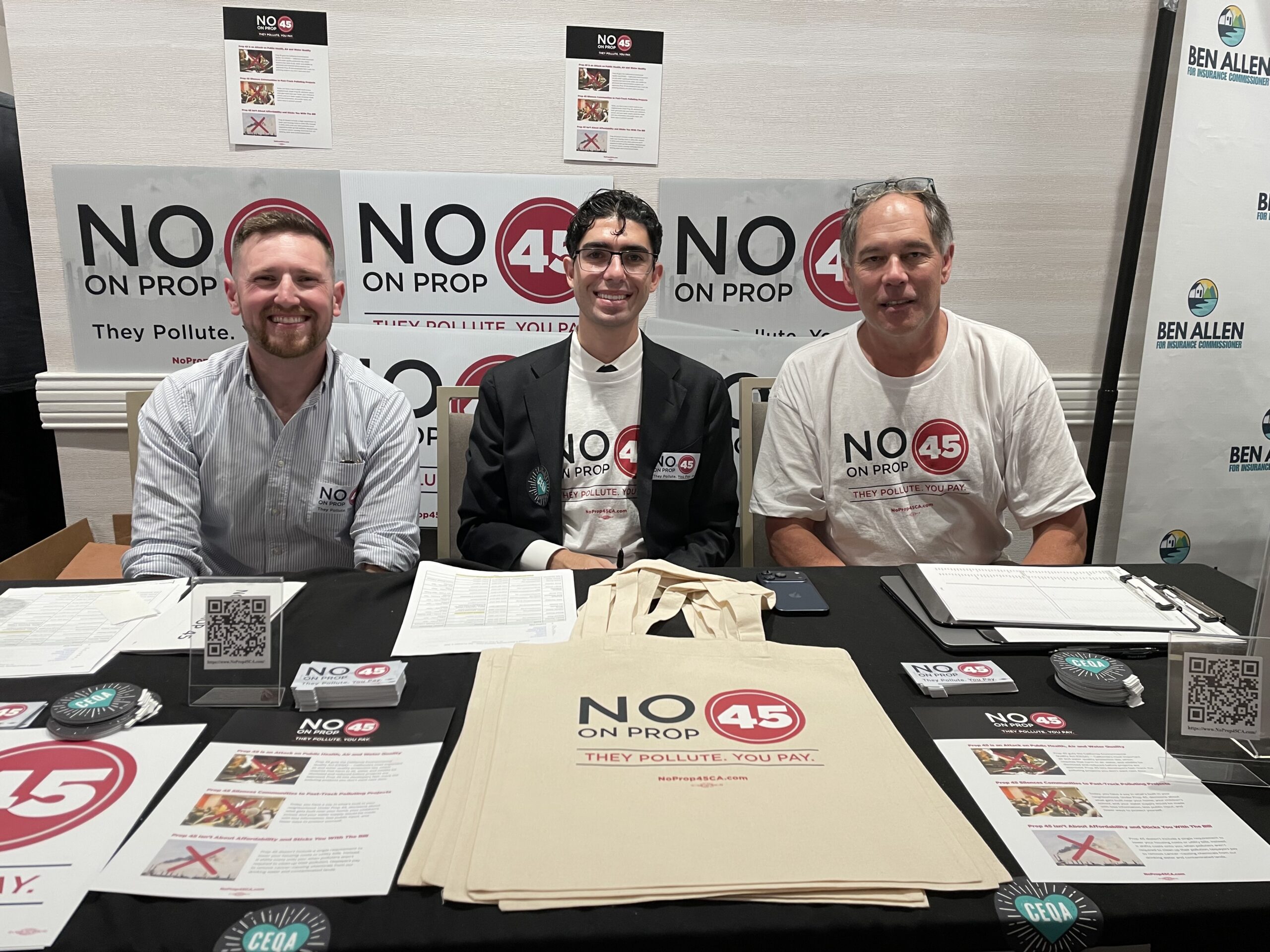
Vote No on Prop 45: Rolling Back CEQA Is A Proposition Californians Can’t Afford
Updated on October 29 to include links. Originally published on January 16, 2026.
For advocates working at the intersection of environmental protection and climate-smart growth, the California Environmental Quality Act (CEQA) has long been a source of both pride and frustration. While it has been a critical tool to protect our natural and working lands, its procedural delays have often been used to stall projects essential to a low-carbon future: dense infill housing and transit-oriented development in our existing communities.
In July 2025, however, at the urging of Governor Newsom, the California legislature passed some of the most impactful changes to CEQA since its inception. Taken together, the two bills (AB 130 and SB 131) provide robust statutory CEQA exemptions for infill housing and housing element rezonings, require the state to map infill areas where exemptions would apply, and narrow the scope of the administrative record, helping to curtail anti-housing litigation.
Check out some highlights of Greenbelt Alliance’s commentary in local and regional press:
- Prop. 45: Will California Vote to Trade Environmental Regulation for Quicker Housing Development? – Forum KQED
- Will Prop. 45 Fix California’s Housing Crisis or Roll Back a Valuable Environmental Law? – Political Breakdown KQED
- Why are pro-housing groups split on Proposition 45? – CalMatters
- Sonoma County stakeholders, cities eye Prop. 45’s potential to broadly reform California’s bedrock environmental law – The Press Democrat
Despite these monumental changes that address the barriers to critical infill development, California’s business lobby and sprawl developers were left unsatisfied. Now, they are proposing a ballot initiative that would make far more radical changes to the law. After gathering enough signatures to qualify for the November ballot, this is now called Proposition 45.
While the rhetoric of the measure (initially called Building an Affordable California Act, or BACA) seems to be aligned with urbanist goals and those of the broader abundance and affordability movements, the actual policy details and mechanics of the initiative—and the progress we’ve already achieved in the legislature last year—suggest that the costs it brings far outweigh any potential benefits.
Below, we outline seven reasons why the measure should be rejected (click to read more):
1. Major Reforms Have Already Been EnactedFor years, a primary objective for California’s urbanists was to stop the abuse of environmental law against projects that genuinely help the environment: dense, transit-oriented housing.
In a landmark shift for the state, that goal has largely been realized. Following years of advocacy by urbanists, the legislature passed a clean statutory CEQA exemption for infill housing. AB 130, which Greenbelt Alliance was proud to support, is already being utilized across California, allowing builders to move forward with climate-friendly housing in high-opportunity areas like Palo Alto or Beverly Hills without the threat of being endlessly delayed by the environmental review process. While there is room for technical refinements, the fundamental issue at hand—the misuse of environmental laws to delay environmentally-friendly housing projects—has largely been addressed.
As the saying goes, “the devil is in the details”, and that’s certainly true for the BACA initiative. While modest on the surface, BACA creates a completely new set of rules for what it calls “essential” projects. So what, exactly, is an “essential project”?
The list is incredibly broad. Under Article 2, Section 21013, “essential projects” include housing, water, transportation, clean energy, transmission, broadband, and healthcare infrastructure. In practice, this definition encompasses a wide range of large-scale developments. For example, new freeways and existing freeway expansions would qualify as “essential transportation” projects; large greenfield sprawl developments would be treated as “essential” housing projects; and new dams and reservoirs would qualify as “essential” water projects. The definition even includes all “related and ancillary infrastructure,” meaning that highway interchanges, utility extensions, and water pipelines that enable sprawl developments also receive streamlined approval. All of these are enormous projects in terms of size and scale, with major potential environmental impacts. Yet, just like an apartment building in an urban area, under BACA, they would qualify for a significantly truncated review process.
In effect, this new CEQA process mirrors the fundamental flaw of its predecessor. While the old system failed to exempt low or no-impact projects from excessive review, the new one errs in the opposite direction, fast-tracking high-risk developments with significant potential for harm.
3. All Timelines Are Not Created EqualThe BACA initiative imposes strict timelines for this new class of projects that it deems “essential”: the environmental review process can take no more than one year. On the surface, a one-year limit on an Environmental Impact Report (EIR) seems reasonable. And for certain projects, like an apartment building on a parking lot in downtown San Francisco, or a townhome development in an LA suburb, it would be.
However, the measure’s definition of “essential” includes highways, dams, large-scale subdivisions, and other major projects. The environmental review required for projects at this scale cannot be done in a single year. Surveying hundreds if not thousands (or even tens of thousands) of acres of undisturbed and undeveloped land for species nesting patterns and habitat, water pollution impacts, and other environmental concerns physically cannot be accomplished within the timeframe laid out in the initiative. By forcing these projects into such a condensed timeline, we will be creating a system that overlooks genuine environmental harm in favor of speed.
For projects with unambiguous environmental benefits, such as housing developments within already urbanized areas, such speed makes sense. Many of the project types considered by this measure do not have the same clear, unambiguous benefits.
4. Restrictive AlternativesOne of CEQA’s most critical tools for preventing environmental harm is its alternative analysis provision, which allows for the identification of better project locations and designs. Currently, CEQA requires agencies to analyze a “reasonable range of alternatives” that could reduce environmental impacts, including different sites, reduced intensity options, and designs that avoid sensitive resources. This is how agencies can say, “this housing should be built downtown on a parking lot instead of on farmland,” or “this highway expansion has an alternative transit solution.”
BACA restricts this to just three options: the proposed project, one alternative designed by the applicant themselves (which doesn’t even need to be at a different location), and “no project.” The applicant’s alternative can be a slightly modified version of their original proposal on the same site. This eliminates the core mechanism for steering projects away from environmentally sensitive locations toward more appropriate sites, exactly the tool needed to prevent sprawl, protect open space, and ensure development happens in the right places.
5. The Evidentiary StandardMaybe the most radical change incorporated in the ballot measure is to CEQA’s standard of review. Right now, CEQA allows a lead agency (generally a city or county) to use its own discretion to explore project alternatives and negotiate environmental mitigations. BACA proposes to eliminate this by requiring that environmental impacts only be found significant if they violate objective, quantifiable standards already in existing law when the project was proposed, which doesn’t sound inherently unreasonable!
However, the measure doesn’t actually require jurisdictions to adopt such standards; instead, it exploits their absence. If numerical thresholds don’t already exist for resources like oak woodlands, groundwater, or wildlife corridors, impacts to them essentially can’t be found significant regardless of severity. A genuine objective standards approach would mandate jurisdictions adopt protective thresholds and update them as science improves. This measure rewards weak standards, freezes them at application date, and prevents improvements based on new knowledge.
6. Ballot Box PermanenceFinally, one of the greatest flaws of the measure is its rigidity. Should it pass, BACA would require a 2/3rds vote of the legislature to amend.
California has a long, storied history with ballot box governance, where initiatives become impossible to adjust as new problems arise. The 2/3rds requirement virtually guarantees the law could never be changed, regardless of what issues may arise. An unchangeable measure, with foreseeable negative impacts for the state, may have lasting consequences for generations.
Some of the project types included in this measure, such as clean energy or transmission infrastructure, may benefit from the types of streamlining being considered if careful, targeted changes were made. Rather than a broad, clunky initiative that will be extremely difficult to change, we should advocate for those reforms through the legislative cleanup process already underway.
7. The Costs Are Just Too HighCalifornia faces converging affordability crises: insurers fleeing the state, utility rates climbing, and municipal budgets straining under unsustainable costs. All of these issues stem from the same source: decades of sprawling outward, often into fire-prone areas, leaving us with infrastructure we cannot afford to maintain and risks we cannot afford to insure.
BACA will accelerate these failures by trading short-term speed for permanent costs. By gutting CEQA’s alternatives analysis—the primary tool for steering projects away from costly, high-risk locations—this limits agencies to the developer’s preferred site, one alternative the developer designs themselves, and “no project.” It freezes environmental standards at the date of application, rewarding jurisdictions with weak protections. And it requires agencies to approve permits within strict timelines regardless of fiscal consequences, because most cities lack the quantitative standards BACA requires to find fiscal impacts “significant.”
The result: even if we build some things faster today, we’ll be paying the tab forever. Even more homes in fire zones will continue to destabilize our insurance markets. More infrastructure extensions will push up our utility rates. More sprawling subdivisions that generate less revenue than they cost to maintain will ensure even higher taxes. BACA promises affordability through speed but delivers the opposite: cheaper to build, but financially ruinous to sustain.
At a time when people are struggling to make ends meet, and when the federal government is doing all it can to roll back our environmental protections, the last thing we need is to double down on the failed policies we have tried for decades and know do not work.
Proposition 45 will hurt the environment and your wallet.
Greenbelt Alliance strongly opposes Proposition 45 and urges voters to vote NO on 45 this November.
The post Vote No on Prop 45: Rolling Back CEQA Is A Proposition Californians Can’t Afford appeared first on Greenbelt Alliance.
Tell the Forest Service to Follow Bears Ears Plan for Fire Recovery
In late June, the Babylon Fire burned roughly 107,000 acres of the Elk Ridge landscape within the Manti-La Sal National Forest west of Monticello, Utah. This is the high country above Dark Canyon Wilderness, lying almost entirely within Bears Ears National Monument. The U.S. Forest Service is now proposing a fast-tracked public process for a sprawling “post-fire recovery” project, including commercial timber harvest, hazardous fuels reduction, road reconstruction, new temporary roads, and other vegetation removal and manipulation activities across a 95,000-acre project area.
The agency is accepting public comments on the project through Tuesday, Nov. 3. Click here to let them know you oppose this reckless approach to fire recovery.
The problem isn’t the idea of helping the burned landscape recover; it’s how the Forest Service wants to do it. Instead of analyzing the specifics of this unique and extremely important landscape, including its soils, cultural sites, wildlife, and recovery needs, the agency proposes to rely on a generic, nationwide post-fire environmental assessment prepared in Washington, DC.
Even more frustratingly, the project proposal never once mentions that it must conform to the Bears Ears National Monument Management Plan. Despite the Trump administration’s illegal reduction of the monument this summer, that plan remains the governing policy for the entire Bears Ears landscape at present. Fire recovery in Bears Ears should follow the plan written to protect this landscape, not sidestep it.
In your comments, please tell the Forest Service to:
- Follow the Bears Ears plan’s protections for fire recovery and logging.
- Meaningfully involve Tribes in planning and implementation.
- Allow logging only when it protects monument resources and supports ecological recovery.
- Disclose exactly where logging and other work would occur and what methods would be used.
- Protect steep slopes, fragile soils, and streams from further damage.
- Identify and protect cultural sites, wildlife habitat, and culturally-significant plants before work begins.
The agency needs to follow the existing management plan and reject a one-size-fits-all framework for this unique and remarkable landscape.
Click here to take action by November 3The post Tell the Forest Service to Follow Bears Ears Plan for Fire Recovery appeared first on Southern Utah Wilderness Alliance.
126th Christmas Bird Count High Counts of Species in Canada
The 126th Christmas Bird Count High Counts of Species in the United States
126th Christmas Bird Count in Canada
Pages
The Fine Print I:
Disclaimer: The views expressed on this site are not the official position of the IWW (or even the IWW’s EUC) unless otherwise indicated and do not necessarily represent the views of anyone but the author’s, nor should it be assumed that any of these authors automatically support the IWW or endorse any of its positions.
Further: the inclusion of a link on our site (other than the link to the main IWW site) does not imply endorsement by or an alliance with the IWW. These sites have been chosen by our members due to their perceived relevance to the IWW EUC and are included here for informational purposes only. If you have any suggestions or comments on any of the links included (or not included) above, please contact us.
The Fine Print II:
Fair Use Notice: The material on this site is provided for educational and informational purposes. It may contain copyrighted material the use of which has not always been specifically authorized by the copyright owner. It is being made available in an effort to advance the understanding of scientific, environmental, economic, social justice and human rights issues etc.
It is believed that this constitutes a 'fair use' of any such copyrighted material as provided for in section 107 of the US Copyright Law. In accordance with Title 17 U.S.C. Section 107, the material on this site is distributed without profit to those who have an interest in using the included information for research and educational purposes. If you wish to use copyrighted material from this site for purposes of your own that go beyond 'fair use', you must obtain permission from the copyright owner. The information on this site does not constitute legal or technical advice.
 This site is not the official webpage of the Industrial Workers of the World.