You are here
News Feeds
LCAW 2026: Integrating Climate Risk into Investment Decisions and Risk Management: Roundtable for Investors
24 June | London
In partnership with MSCI, this roundtable will bring together experts from insurance, pension funds, and investment management firms for a discussion focusing on how to better integrate climate science into investment practices, prompted by the launch of Carbon Tracker’s latest report, Recalibrating Climate Risk.
Following an introduction by expert speakers, we’ll be discussing the methods asset owners are using to assess their exposure to climate risks and identify opportunities in the transition. Most importantly, we want to explore the barriers that are hindering the re-allocation of capital towards low-carbon sectors.
Meet the speakersActive participation is encouraged; we’ll be circulating discussion points in advance of the event. Join us to share your insights and hear from other asset owners about how what role climate scenario analysis is playing in informing investment strategies, what policy solutions are needed to drive investment in low-carbon sectors, and other key issues facing progressive asset owners.
The post LCAW 2026: Integrating Climate Risk into Investment Decisions and Risk Management: Roundtable for Investors appeared first on Carbon Tracker Initiative.
In the Rising Tide, Episode 5. Raviraj Shetty: Rewriting the Stories We Live By
Iran war analysis: How 60 nations have responded to the global energy crisis
Key outcomes from the first summit on ‘transitioning away’ from fossil fuels
How climate change could help hantavirus find more hosts
The cruise ship departed Ushuaia, Argentina, in April with plans to ferry 147 passengers and crew members to some of the most remote places on earth, including Antarctica. But the ship, named the MV Hondius, had its voyage cut short by a rare virus that has killed three and infected several others.
Hantaviruses are an ancient family of rodent-borne pathogens that likely caused disease in humans long before they first appeared in medical records in the 1950s. The viruses infect people via rodent waste — often through the inhalation of dust containing trace amounts of the excreta. Andes hantavirus, the strain that gripped the MV Hondius on its polar cruise, is one of a few hantaviruses known to cause hantavirus pulmonary syndrome, a rare but often deadly illness.
The Andes strain is also the only known hantavirus that can be transmitted human-to-human — a characteristic turning a rare rodent-borne infection into a multinational emergency, just a few years after the world was caught flat-footed by the COVID-19 pandemic.
The good news is that the Andes hantavirus, while uniquely deadly, is likely nowhere nearly as transmissible as COVID-19. Nevertheless, the outbreak is illuminating the complexity of responding to infectious disease outbreaks as international cooperation on public health issues has become fractured and contentious — all while global pandemics are only becoming more likely overall. A month before the first patients onboard the MV Hondius became symptomatic, Argentina officially completed the process of withdrawing from the World Health Organization, joining the U.S. in leaving a global health alliance that exists in large part to coordinate responses to these very kinds of cross-border disease outbreaks.
The emergency also points to another growing challenge for global public health: Climate change is altering the rainfall, vegetation, and habitat conditions that influence rodent populations — changes that experts say boost the odds that the pathogens these animals carry will spill over into human populations.
While the hantavirus’s one-to-six-week incubation period means the outbreak could have originated in any of the passengers’ home countries, a possible culprit is the ship’s stop for a birding expedition near Ushuaia, which is home to a landfill that attracts rodents looking for food. Argentina’s health authorities have already documented a sharp rise in hantavirus this season: 101 infections have been recorded since June 2025, about twice as many as there were in the same period a year earlier.
The country’s health ministry hasn’t yet determined what’s behind the surge, but research suggests that climate change may play a role. Argentina and neighboring countries in South America endured years of severe drought between 2021 and 2024, including Argentina’s worst dry spell in more than 60 years in 2023, followed by extreme rainfall last year. Weather extremes exacerbated by global warming change how rodents behave, according to Kirk Douglas, a senior scientist who studies hantaviruses and climate change at the University of the West Indies, Cave Hill, in Barbados.
Prolonged drought sends rats and mice into populated areas in search of food, which can put people at higher risk of contracting the virus. Sudden rainfall following drought causes trees and shrubs to produce a windfall of nuts and seeds, which tend to benefit rodents and boost their numbers — all the while increasing the risk of transmission from animal to human.
That doesn’t mean there’s a one-to-one relationship between global temperature rise and rodent-driven risk, however, and climate change is hardly the only force at play. A complex web of natural and human-made landscape changes can increase or decrease contact between humans and rodents. Increased temperatures and humidity, for example, don’t seem to influence the disease ecology of hantavirus in the same way that drought and precipitation do.
“Hantavirus is sensitive to the changes climate change will bring,” Douglas emphasized. “It’s all dependent on what the prevailing climate impact is.”
That complexity makes hantavirus risk difficult to predict — and easy to overlook. In the United States, hantavirus has been rare since federal surveillance began in 1993. There were fewer than 1,000 total confirmed cases up to 2023, the latest year that data is available. About 35 percent of those cases, almost all of which occurred west of the Mississippi River, resulted in death.
As in South America, the dynamics of hantavirus in the U.S. may be shifting. The places most at risk, federal scientists reported in a study published last year, are dry landscapes where homes are spread out, many kinds of rodents live nearby, and communities may have fewer resources to prevent or respond to disease — conditions that describe broad swaths of the American West.
This story was originally published by Grist with the headline How climate change could help hantavirus find more hosts on May 12, 2026.
Behind the ‘intelligent’ chatbot
Angela Chukunzira, Tyler Finken and Finn Jetses highlight multinational resistance to AI’s social and ecological impact
The post Behind the ‘intelligent’ chatbot appeared first on Red Pepper.
'All politics is theatre'
Scientists warn El Niño could intensify climate extremes in 2026
The emergence of a strong El Niño weather pattern this year in a world that is warming as a result of human-caused climate change could fuel “unprecedented” weather extremes, climate scientists have warned.
Meteorologists expect El Niño – the natural climate phenomenon characterised by unusually warm sea-surface temperatures in the Pacific Ocean – to develop as early as this month. Some forecasters say that this time around the event could become particularly powerful.
Scientists say the combination of El Niño and rising global temperatures could push 2026 to either the warmest or second-warmest year on record. A previous El Niño helped drive average global temperatures in 2024 to a record 1.55C above preindustrial levels.
Researchers warn that a strong El Niño risks supercharging extreme weather conditions, contributing to more severe fires and droughts in some regions and storms and floods in others.
El Niño meets global warmingFriederike Otto, professor in climate science at Imperial College London, said El Niño itself is “not the reason to freak out” but rather the fact that it is now happening on an increasingly warmer baseline.
“El Niño is a natural phenomenon that comes and goes,” she told journalists this week. “What makes it so dramatic is not the event itself and whether it’s a ‘Super El Niño’ or not, but that it is happening in a dramatically changing climate.”
“The records will still be broken because of human-induced climate change and the continued burning of fossil fuels,” Otto added.
The World Meteorological Organization will issue its next update on the prospects for an El Niño in late May, which it says will provide more robust guidance for decision-making on how to protect people and nature from associated impacts.
Even before the likely arrival of the El Niño pattern, 2026 has already been an “extraordinary” year for weather extremes, scientists at the World Weather Attribution (WWA) research group said.
Sea surface temperatures neared all-time highs in April, while Arctic sea ice reached its lowest level for a second-year running. In March, the United States saw a record-breaking heatwave that would have been “virtually impossible” without climate change, according to WWA analysis.
Dramatic wildfire riskAcross the globe, the wildfire season got off to a dramatic start. Record-breaking fires in Western Africa and the Sahel, as well as big outbreaks in India, Southeast Asia and parts of China, contributed to the world recording its largest burned area ever for the January-April period, according to Theodore Keeping, a WWA researcher.
He noted that the emergence of a powerful El Niño event could have a major effect on supercharging wildfires by increasing the likelihood of seeing “severe” hot and dry conditions in Australia, the US and Canada, as well as the Amazon rainforest.
“The likelihood of harmful extreme fires potentially could be the highest we have seen in recent history, if a strong El Niño does develop,” Keeping added.
The post Scientists warn El Niño could intensify climate extremes in 2026 appeared first on Climate Home News.
Chapters' Corner, May 2026
Tackling the World’s Surging Cooling Demand
Between now and 2030, the increase in electricity demand for air conditioning systems alone will exceed that for data centers, one of the fastest-growing energy uses globally. By 2050, cooling electricity demand is expected to match the combined annual electricity consumption of the United States, China, India, Germany, and Japan today. Yet, cooling hasn’t made it to the top of energy transition conversations and receives far less attention than is needed.
This year is proving to be yet another hot and humid one. But this comes as no surprise, as it joins the warmest decade in recorded history. Just last month, several regions in South Asia and the Southwest United States already experienced pre-summer heatwaves, with temperatures exceeding historical averages by several degrees.
Now more than ever, tackling extreme heat is about more than just comfort. It’s also about productivity, survivability, and safely being able to operate outdoors and live inside our homes and other essential buildings and facilities such as data centers, factories, hospitals, and schools.
The scale of the cooling challengeIn 2022, cooling equipment consumed an estimated 5,000 terawatt-hours (TWh) of electricity globally — about the same as the entire electricity consumption of the United States today. By 2050, this demand is projected to triple to 18,000 TWh.
Cooling also carries a significant emissions impact due to the use of electricity (still generated from fossil fuel-based power plants in most regions) and refrigerants that leak into the environment during servicing or at the end of life. It already accounts for 7% of global greenhouse gas emissions — roughly equal to the cement sector — and could rise to 15% by 2050. As increasing cooling drives energy and peak power demand and need for refrigerants , it will create more emissions and warming, feeding a dangerous cycle.
An integrated approach to solving the cooling challengeNo one technology can solve this unprecedented cooling challenge. An integrated approach is foundational to ensure that people can better respond and adapt to extreme heat events as well as adopt sustainable cooling solutions that reduce planet warming emissions.
RMI and our partners around the world have prioritized three core pillars to tackle the rising heat stress issue and enhance thermal comfort for people: build resilience, enhance comfort, reduce emissions.
- Build Resilience — Build urban heat resilience through heat mitigation strategies, including nature-based solutions such as urban greening and reflective materials.
- Enhance comfort — Enhance affordable thermal comfort through passive design strategies and other low-cost, scalable solutions that reduce cooling needs and make cooling accessible to more people.
- Reduce emissions — Reduce energy use and emissions through super-efficient technologies, improved system design, and better refrigerant management, while scaling next-gen, innovative solutions that lower life-cycle costs and emissions.
When key actors across policy, technology and market align around this framework, it helps create the conditions needed to scale the right solutions that benefit the people and the planet.
Putting the approach into actionBuild Resilience — Mitigating urban heat at the source
Reducing cooling demand effectively begins with understanding where heat poses the greatest risk. In many cities, responses are still guided by temperature thresholds rather than real-world impacts on people, infrastructure, and livelihoods.
But cities also need tools that help identify priority hotspots and target interventions to help prepare communities and infrastructure in advance, reducing exposure and managing cooling demand during the hottest periods when grids may otherwise fail. To address this, India’s National Disaster Management Authority developed the Heat Impact Assessment (HIA) Framework and a digital dashboard, empowering cities to identify priority hotspots and target interventions where they can deliver the greatest benefit.
Additionally, urban areas are often hotter than surrounding regions due to the urban heat island effect, where buildings and infrastructure trap heat. Expanding tree cover, improving ventilation, deploying heat-rejecting surfaces, and using thermally efficient materials can help reduce the impact of heat.
At scale, these solutions offer broader system-level benefits by reducing heat buildup across urban areas, lowering neighborhood temperatures, and helping mitigate the urban heat island effect.
Insights from work in communities highlight how combining building-level interventions like cool roofs with neighborhood-scale strategies — and including heat-sensitive urban design — can reduce heat exposure more effectively than stand-alone solutions. Layering interventions like cool corridors across neighborhoods using nature-based solutions, building materials, and urban form is critical to delivering sustained cooling at scale. Together, these approaches are key to improving heat resilience while easing grid stress during extreme heat days.
Enhance comfort — Reducing cooling needs affordably
Enhancing thermal comfort for people begins with helping people stay cool without relying on mechanical cooling systems. One key solution is to use materials that not only reflect sunlight but also actively shed heat. Pilots in Chennai, India, have demonstrated how “cool” roofs and surfaces can significantly reduce indoor temperatures, improving comfort — especially for those without access to air conditioning.
RMI’s climate tech accelerator, Third Derivative, is advancing passive daytime radiative cooling (PDRC) technologies, including specialized paints, films, and membranes. Unlike conventional cool roofs that primarily reflect solar radiation, PDRC materials are engineered to both reflect sunlight and emit heat as mid-infrared radiation that passes through the atmosphere into space. This dual mechanism enables them to cool surfaces below ambient temperatures, with the potential to lower indoor temperatures by up to 18°F (10°C) on hot days — without using electricity.
Passive design strategies, including PDRC, cool roof coatings, efficient building envelopes, solar shading, and proper ventilation, reduce the need for active cooling solutions, improving comfort and making cooling more affordable and accessible for all.
Reduce Emissions — Advancing efficiency and accelerating innovation
Today’s air conditioners (ACs) need to be re-designed to fully optimize the refrigeration cycle and deliver better comfort and energy performance using high-efficiency components. The Global Cooling Efficiency Accelerator, supported by RMI and partners, conducted extensive prototype field testing in Palava City, India, where super-efficient AC prototypes maintained consistent comfort (below 27°C/80.6°F and 60% relative humidity) even in extreme conditions, while cutting peak power demand by up to 50%. Additionally, they used 60% less energy than today’s common models and delivered better dehumidification, reducing the need for overcooling the indoor spaces, which means dramatically lower total cost of ownership for consumers. This is particularly important as many households buy their first AC to seek respite from high wet-bulb temperatures that are reaching critical human survivability thresholds.
However, scaling these improvements requires more than better technology. Updated testing and performance standards are needed to enable fair comparison and clear differentiation of efficient technologies. At the same time, aligned procurement specifications and strong demand signals from like-minded buyers give manufacturers the confidence that the market is ready — helping drive a fundamental shift in how technologies are produced and purchased.
RMI and partners are actively working across both the demand and supply sides to help shape the market for products that ease the tension between people’s comfort, grid reliability, and emissions.
As ACs get widely adopted globally, addressing refrigerant emissions is as critical as improving energy efficiency. Transitioning to low-GWP and natural refrigerants, as well as improved life-cycle refrigerant management — including leak reduction, recovery, and reclamation — is essential to prevent significant climate impacts from cooling systems.
And as we improve today’s AC technology to become super-efficient, there is an opportunity to go even further. Innovation across the cooling sector is essential to unlocking the full range of solutions needed to address this challenge. For example, desiccant-based systems and hybrid solutions using membrane technologies can separately and independently manage dehumidification from cooling, enabling more efficient operation in humid climates. Solid-state technologies, which use an applied field or pressure instead of refrigerants, can offer improved efficiency and comfort, quieter operation, lower energy costs, and reduced emissions.
RMI’s Third Derivative program is actively sourcing and supporting these emerging cooling innovations, working with eight startups globally that are developing innovative active cooling technologies, from optimized system design to highly efficient humidity management with liquid desiccants and refrigerant-free solid-state cooling.
The path forwardIn the coming years, we will continue to deepen our engagement with key stakeholders to support them in implementing national and sub-national policies and to adopt low-cost scalable passive design strategies and solutions that reduce cooling demand at the source.
We will also continue working to accelerate the development and scale of super-efficient cooling technologies, advance refrigerant management efforts, and unlock next-generation innovations. We aim to deepen our understanding of the rapidly evolving cooling technology landscape to identify the most relevant and impactful opportunities for intervention. We will work closely with policymakers, manufacturers, buyers, and startups to pilot solutions, strengthen performance standards, and build the market confidence needed to drive widespread adoption.
Taking a holistic, whole-systems approach — build resilience, enhance comfort, and reduce emissions — can deliver significant impact, on both the building level and across the entire cooling sector. This could translate into electricity savings of up to 8,500 TWh by 2050 — more than the current annual consumption of the United States and the European Union combined — while reducing peak demand and avoiding the need for thousands of new power plants. And improving AC efficiency levels by over 50% means people can cool their homes when they need to without stressing the grid, driving up electricity bills, or adding to emissions.
In a warming world where heat stress is rising and rapid urbanization and increasing incomes will drive significant growth in cooling demand, accelerating these efforts is critical. By working collaboratively, we can ensure cooling needs are met for all without accelerating the warming of our planet.
We would like to thank Ankit Kalanki, Tarun Garg, and Tess Healy for their contributions to this article.
The post Tackling the World’s Surging Cooling Demand appeared first on RMI.
Towhee Terrace Takes FLIGHT at Debs
Delta Flows: The tunnel, an audit, an election, the unending loop
By: Barbara Barrigan-Parrilla
Our team has been working tirelessly to defend the Delta and our communities against the Delta Conveyance Project (DCP).
While we have secured victories in the courts regarding bond financing, the Delta Stewardship Council (DSC) has unfortunately approved the California Department of Water Resources’ (DWR) Certification of Consistency for the proposed the DCP, even though the project fails to meet the co-equal goals of protecting the Delta and reducing water reliance on the Delta.
Last week, Restore the Delta along with Tribes, expert witnesses and multiple coalition partners also filed rebuttal testimony with the Administrative Hearing Office for the State Water Resources Control Board (SWRCB). In our testimony, we disputed numerous claims made by DWR regarding the “merits” and planning for the DCP.
A revelatory point in our case elucidates how hundreds of thousands of impacted water users, both local residents and Tribes, were written out of the footprint of the project as a way for DWR to bypass investigating any harm and having to provide the appropriate level of mitigation. Our argument is that DWR must prove that with the Change in Point of Diversion they are proposing – allowing for two new intakes along the Sacramento River in the North Delta – would not negatively impact water users in the Delta watershed.
But importantly, the effort doesn’t end there if we are to prevent the tunnel from being frontloaded in continuing business for the next Governor, whoever that may be.
We have two important items that you can help take action on by calling your State Senators and Assemblymembers.
Supporting a DWR financial audit
Assembly Member Rhodesia Ransom has been the primary legislative proponent of an audit of DWR for its spending on the DCP. To date, DWR “has spent over $700 million on planning and public engagement related to the Delta Conveyance Project and past iterations of the project. Despite this substantial expenditure, critical public information remains inaccessible, and significant questions remain unanswered—particularly regarding whether DWR has done its due diligence to ensure the fiscal integrity of the project, and whether hundreds of millions of dollars are being appropriately allocated,” alleviating financial pressure and impact on ratepayers, and any risks that could be attributed to California ratepayers and property taxpayers.
The next Joint Legislative Audit Committee is scheduled to meet June 1. Although the hearing time and agenda have not yet been made public yet, we are asking our supporters to call their State Senator and Assembly Members to express their support of the audit, even if they are not part of the Audit Committee since elected officials should ALL be advocating for financial accountability of DWR.
If you don’t know who your representatives are, you can find them here. Next, call their office to voice your support for the DWR Audit. Here’s a script that you can opt to use:
“I expect Senator/Assembly Member [Official’s Name] to support the audit of the Department of Water Resources and their spending on the Delta Conveyance Project. Please urge your colleagues on the Audit Committee to support this important audit. The Delta Conveyance Project is set to financially mirror the out of control spending on High Speed Rail, and without benefit for increased water delivery.”
It is our duty to keep the legislature accountable, and we must make sure they hear us and our concerns about the impact of failed water planning. A bad project like the DCP should not be left on the books for our next governor.
We are also hoping that our supporters can take the time on June 1 to join us to voice support with the committee. Although these hearings can be long and difficult with the public usually being relegated to only stating whether or not they support the item without additional commentary, it is important for us to have a sizable presence. We know that water contractors and special interest water industry leaders will all appear in large numbers (as they did last year) to oppose financial transparency. We’ve learned time and time again that “big water” provides fat paychecks for those who thwart public interest, protection of the Delta, and responsible water management in California.
A huge thank you to Assemblymember Ransom for her efforts to lead and bring accountability to the project. Once we learn more, we will continue to share updates about the audit and the hearing schedule.
Opposition to AB2215
The State Water Contractors are advancing AB2215 as a legislative solution to DWR’s expired water rights for the State Water Project and the DCP, rather than through proper procedure at the State Water Board. The bill, authored by Assemblymember Calderon, is moving for a floor vote in the Assembly and could happen at any time. If it passes, it will then move to the State Senate.
Now that you know who your State Senator and Assemblymember are (if you didn’t already), here’s a script you can use to call their office about opposing AB2215:
“I am calling to ask that you oppose AB2215 and legislative interference in water rights, especially in relation to the Delta Conveyance Project. The Delta Conveyance Project is a $100 billion boondoggle that California cannot afford. I ask that you side with our community that will be negatively impacted by this project rather than State Water Contractors who continuously work to undermine transparency and full inclusion of Californians in water management. The tunnel is a dangerous symptom of ineffective California water management.”
The Legislature, in many ways, is still beholden to Governor Newsom, and the special interests that have driven his failed water policies for the Bay-Delta watershed, urban water users, and San Joaquin Valley drinking water communities. His intent is clear – leave the system filled with bad projects and programs to drive this failed water agenda forward, despite whoever becomes the next Governor.
In a recent press release, Governor Newsom provided more political spin that falls short of stating what the true devastating impact of the DCP would be and what it really means for Californians. While the administration celebrates restoring salmon habitat on the Klamath River, it also champions a massive tunnel project that would divert freshwater away from the Delta and further threaten fish populations and the communities that rely on a healthy bay-delta with adequate water flows.
It is time to stop the machine. Raise your voices and help us fight for the watershed, the Delta, fisheries, Tribes, Delta farming communities, the San Francisco Bay, and the people throughout the state who are impacted one way or another by the Delta Tunnel Boondoggle.
Lawmakers and Advocates Demand Reforms from PJM, Regional Grid Manager
BALTIMORE, MD — PJM Interconnection (PJM), the regional grid operator for Maryland and a dozen other states, is holding its annual conference at the Baltimore Marriott Waterfront from May 11 to 13. State lawmakers and advocates held a press conference today on the sidewalk outside the hotel to call out PJM’s mismanagement of the grid, which has led directly to surging energy prices.
“Maryland families are already seeing higher electric bills, driven in part by rapid growth in energy-hungry data centers. Ratepayers shouldn’t have to compete with global corporations for power,” said Senator Katie Fry Hester (D-Maryland).
“Pennsylvania produces the energy that powers much of the PJM region, yet our residents should not be asked to subsidize the explosive growth of private data centers,” said Rep. Danielle Otten (D-Pennsylvania). “We need fairness and accountability — making sure new industrial demand brings new supply with it. Protecting reliability while keeping electricity affordable is essential for our households, our manufacturers, and our economic future.”
“Clean energy is chomping at the bit to lower energy bills, but PJM is artificially slowing clean energy from coming onto the grid in order to benefit fossil fuel interests,” said Delegate Lorig Charkoudian (D-Maryland).
“PJM needs to more swiftly and efficiently greenlight clean energy projects and hold data centers responsible for paying for their own energy needs instead of further burdening already stretched ratepayers,” said Senator Shelly Hettleman (D-Maryland)
PJM’s policies are delaying lower-cost clean energy projects while keeping more expensive power sources on the system – contributing to higher electricity bills across the region. A recent analysis found that if PJM were to allow more clean energy to connect to the grid, it would save each of its customers $500 a year in reduced energy bills. Advocates shared recent cost savings from clean energy in other regions, such as Massachusetts’ recent announcement that residents are saving $1.4 billion over the next 20 years with the completion of the Vineyard Wind offshore wind project. Meanwhile, PJM is forcing ratepayers to pay coal plants just south of Baltimore hundreds of millions of dollars to stay open, when cleaner alternatives would be less expensive.
“PJM is failing us not by accident, but by design. It has been co-opted by fossil fuel energy generators and utilities and is quickly being overtaken by Big Tech and their data center companies as well. All the while, PJM’s members have been raking in massive revenues due to energy market dysfunction. PJM won’t help energy bills decrease until there is meaningful governance reform within PJM. And, they missed an opportunity by selecting their Board Chair and interim President as their new President and CEO just last month,” said Jake Schwartz, Federal Campaigns Manager for Chesapeake Climate Action Network.
“If PJM were truly focused on lowering soaring energy bills, the solution would be clear: invest in clean energy. Instead, PJM continues to prioritize energy sources that are neither clean nor affordable, while Marylanders face growing pressure from rising utility, fuel, and healthcare costs. It’s time for PJM to listen to its customers and deliver the reliable, affordable clean energy Maryland families deserve,” said Rebecca Rehr, Director of Climate Policy & Justice for Maryland LCV.
Find a recording of today’s press conference here.# # #
The post Lawmakers and Advocates Demand Reforms from PJM, Regional Grid Manager appeared first on Chesapeake Climate Action Network.
‘Just’ Cruising Around Copenhagen? Insights at the nexus of queer intimacy and public green area management
Trump’s deals extort trade partners for mining company profits. There is a better way.
This is part two of a two-part series on the Trump Administration’s mineral trade deals. Read part one here.
New mineral trade “deals” that the Trump administration is pushing are extortion, not foreign policy. A deal being considered between Zambia and the United States that would make lifesaving medical aid contingent on access to minerals is just the latest in a series of these exploitative deals, including between the U.S. and Indonesia and the U.S., Rwanda, and the Democratic Republic of the Congo (DRC).
Holding a sustainable future hostageThe minerals that the Administration demands, often called critical minerals, are used for renewable energy and military technologies. Mining and processing minerals has severe negative impacts on communities, Indigenous Peoples, ecosystems, the climate, and water. Making sure a renewable energy future is truly just and sustainable means cutting back on the need for newly mined minerals wherever possible, and investing in recycling, reuse, and other circular economy solutions. But the Trump administration seems more interested in profits for mining companies and a limitless supply of minerals for war.
Exploiting a war in Rwanda and the DRCEarthworks and allies in civil society voiced our concerns in a letter to an administration forcing critical minerals deals upon other countries. Like the Zambian proposal, many of these “deals” more resemble extortion than equitable trade policy, much less how one would treat a partner nation.
For example, the Strategic Partnership Agreement between the DRC, Rwanda, and the United States tries to leverage a peace deal in the recent war between Rwanda and the DRC as a means to secure exclusive rights for mining companies to access DRC’s minerals–namely cobalt. The war has killed at least 7,000 people and displaced at least 600,000 (as of March 2026).
According to Public Citizen, the core purpose of this Agreement is to make sure mining companies access the DRC’s minerals the United States government wants for war, energy, and other applications. The Agreement is arguably unconstitutional in both countries, and the process is deeply undemocratic. It creates a shopping list of mine sites where the United States subsidizes companies and investors to choose, or refuse, DRC’s minerals. The deal worsens the DRC’s economic reliance on industrial-scale mining, without suitably consulting the artisanal miner collectives who would most stand to benefit from high labor, environmental, and human rights safeguards that could be implemented as part of a truly equitable trade deal.
Exploitation disguised as trade agreementsBefore the Supreme Court struck down the Trump administration’s so-called reciprocal tariffs, the Administration signed Agreements on Reciprocal Trade (ARTs) with many nations. These deals generally insisted on several commitments that tend to benefit various pharmaceutical, tech, mining, and oil companies.
For minerals, the most recent ART with Indonesia removes any trade restrictions for U.S. imports and compels Indonesia to “facilitate U.S. investment in its territory to mine, extract, refine, process, transport, distribute, and export critical minerals.” Unlike the DRC SPA, the Indonesia deal did not give U.S. companies the right of first refusal to Indonesia’s nickel. Yet, the deal clearly encourages U.S. companies to invest in more Indonesian nickel. As of this writing, Indonesia has neither ratified nor annulled their ART.
Increasing Indonesian nickel production also increases risks to communities. Earthworks recently released research on the risks to communities, workers and the environment of mine waste from nickel processing. Multiple tailings failures at nickel industrial parks have resulted in flooding and multiple worker deaths. We are calling for a moratorium on permitting new tailings facilities until the Indonesian government can hold operators accountable and achieve proper oversight. Nickel production in Indonesia has also been connected with displacement, deforestation, and water contamination.
Building off centuries of inequalityTrade between countries in the Global North and Global South has been unequal for centuries. Even though many Asian, African, and Latin American countries won their independence from colonial governments, the economies designed to extract resources from some countries while making profits for others remain. The result is that residents of our trading partners live with mining impacts while mining companies make a profit and the U.S. sells weapons to its military and others’.
A future built on something betterEquitable and sustainable trade policy requires acknowledging that the US government, historically and regularly, prioritizes companies that take advantage of extraction-affected communities, including in Global North countries. The status quo remains fundamentally unjust. In building a better system, governments must, among other things, prioritize Free, Prior, and Informed Consent for Indigenous Peoples; community consultation; best available technologies; low- and zero-waste plans; and enforceable high labor, environmental, and governance standards. We must demand reparations for chattel slavery, colonialism, and the climate crisis, and ensure newly-generated wealth stays within the communities and countries with whom the U.S. trades.
People in the DRC, Indonesia, and everywhere else have the right to healthy, dignified lives. They have the right to governments responsive to their interests. Advocates in the Global North must commit to solidarity with mining-affected communities and their organizations, like those in the DRC, Indonesia, and elsewhere are fighting for that future and standing up to irresponsible mining that threatens their homes and families. As the Trump administration intensifies that threat, people and organizations in the United States must speak up for our shared future too.
The post Trump’s deals extort trade partners for mining company profits. There is a better way. appeared first on Earthworks.
Demanding minerals in exchange for lives in Zambia
This is part one of a two-part series on the Trump administration’s mineral trade deals. Read part two here.
A trade deal proposed by the United States could end life-saving humanitarian aid to Zambia unless the United States gets access to minerals, which are useful for renewable energy, military technology, and more. Like the other so-called critical minerals “deals” that the Trump administration is signing, this agreement would be extortion, not foreign policy.
On 16 March, The New York Times broke the story that the Trump administration was considering withholding foreign aid–specifically HIV treatment and tuberculosis and malaria medications. More than 1 million Zambians rely on these medications. According to a draft U.S. State Department memo, the administration is considering cutting off decades of life-saving medical aid unless the Zambian government gives the United States more access to their minerals.
An economy dependent on miningZambia, a country of about 20 million people located in south-central Africa, is largely dependent on mining as an economic driver dating back to the beginning of British colonial rule. Reliance on a destructive and dirty extraction-based economy is common in formerly colonized countries, which also often rely on humanitarian aid due to the inequality established by centuries of imperialism.
Now, Zambia is seeking to capitalize on the increased demand for mining linked to minerals for the renewable energy transition. Currently, Zambia produces 3% of the global copper supply and it aims to triple that by 2031. It is also investing in and expanding production of other key minerals for the renewable energy transition, including cobalt manganese, nickel, lithium, and graphite extraction.
Cutting a lifeline for millionsThe threat to cut lifesaving medical aid programs is devastating and dangerous. The U.S. President’s Emergency Plan for AIDS Relief (PEPFAR), which was founded by George W. Bush, has saved more than 26 million lives and prevented 8 million babies from being born with HIV. Access to medicine, driven by grassroots advocates around the world, has changed HIV from a death sentence to a treatable condition. Medications are expensive, but reliable treatment can transform lives and stop the spread of the virus.
In Zambia, more than 1.2 million people have received lifesaving medications through PEPFAR. Cutting that lifeline would be in line with previous Trump administration policy: DOGE’s cuts to USAID could needlessly result in death for more than 14 million people by 2031.
Threatening the lives of millions of people in a foreign country is not a trade deal. Reducing PEPFAR and other aid would guarantee worsening poverty and mass death in Zambia and surrounding areas. These cuts would have disastrous consequences not only for Zambia, but for other African countries, and U.S. interests in the region for decades.
Pushback from global civil societyOn March 26, more than ninety public health, environmental, development, and faith organizations, including Earthworks, signed onto a letter criticizing the Zambia “proposal” and arguing that any critical minerals policy should prioritize job creation and environmental and sustainable development for both countries. Four days later, the State Department responded in a predictably antisemetic and condescending way, saying we are “a predictable roster of woke advocacy groups, George Soros–backed organizations.”
Denial and insults from the Trump AdministrationShortly after The New York Times broke the story, the State Department’s Bureau of African Affairs, called it “fake news.” The State Department went on to say, “unequivocally, we are not seeking anything at Zambia’s expense” only to later demand that “the Government of Zambia must make accountability reforms and take steps to modernize its key industries, including mining. Otherwise, private sector investment in Zambia will not happen.” This condescending tone is unsurprising from an administration that regularly insults Black, Indigenous, and other People of Color, and Global South (particularly African) countries.
On 20 April PEPFAR’s chief science officer Mike Reid resigned from his post in protest of the extortion proposal. Reid explained his reasoning in a Substack post. He wrote, “When access to treatment or prevention becomes entangled with access to critical minerals or geopolitical positioning, the work is no longer what it claims to be…It is a different model. And I do not believe that model is consistent with the purpose of global health. I do not believe it serves patients, or countries, or ultimately even the long-term interests of the United States.”
And on 5 May the foreign minister of Zambia, Mulambo Haimbe, criticized the U.S. for the proposed deal. Zambia, he said, “takes the view, first and foremost, that Zambians must have a say on how her critical minerals are used.”
A call for solidarityPeople in Zambia, like people everywhere, have the right to healthy, dignified lives. They have a right to a sovereign government that can respond to their needs. Communities on the frontlines of mining in Zambia are standing up for a more sustainable future built on respect for human rights and the environment. As the Trump administration’s actions intensify the threat of increased harms from mining, people and organizations in the United States must add our voices.
The post Demanding minerals in exchange for lives in Zambia appeared first on Earthworks.
The Henry Ford Brings Farm to School Film to New York City
On May 13, 2026, The Henry Ford is hosting a screening of their new film documenting the success of their Farm to School Lunch Across America initiative in New York City.
The event, taking place at the Tribeca Film Center, begins at 6:30PM ET. A panel discussion featuring author and nutritionist Marion Nestle, Chef Michel Nischan of Wholesome Wave, former USDA Midwest Public Affairs Director Alan Shannon, and journalist Kate Bittman will kick off the evening. This will be followed by a screening of the documentary “The Henry Ford’s Farm To School Lunch Across America” and a reception.
“This documentary is more than a film—it is an invitation. Through Farm to School Lunch Across America, we are shining a light on communities proving that school meals can nourish students, strengthen local economies, and support farmers caring for the land,” Spence Medford, Senior Vice President and Chief Advancement Officer for The Henry Ford, tells Food Tank. “Our hope is to spark a national conversation around school-supported agriculture and inspire more communities to adapt what’s already working.”
The Henry Ford’s program brings together culinary experts and chefs, farmers, food advocates, and policymakers to amplify the importance of fresh, seasonal meals for students across the United States. Through this work, they try to underscore the need for free, regeneratively grown school lunches for all.
The pilot program, launched in 2024, reached seven schools in six communities to connect farmers, chefs, and fresh food resources during National Farm to School Month in October. During visits, a film crew captured model school meal programs and interviewed chefs, including Alice Waters and Rick Bayless, along with school meal leaders and innovators.
Articles like the one you just read are made possible through the generosity of Food Tank members. Can we please count on you to be part of our growing movement? Become a member today by clicking here.
Photo courtesy of the U.S. Department of Agriculture
The post The Henry Ford Brings Farm to School Film to New York City appeared first on Food Tank.
Northern Corridor Highway Risks Irreversible Harm to Mojave Desert Tortoise – 5.11.26
ADVOCATES FOR THE WEST
CENTER FOR BIOLOGICAL DIVERSITY
CONSERVE SOUTHWEST UTAH
CONSERVATION LANDS FOUNDATION
SOUTHERN UTAH WILDERNESS ALLIANCE
THE WILDERNESS SOCIETY
WILDEARTH GUARDIANS
FOR IMMEDIATE RELEASE
May 11, 2026
Northern Corridor Highway Risks Irreversible Harm to Mojave Desert Tortoise – 5.11.26 Conservation Groups Amend Lawsuit over Federal Agencies’ Failure to Protect Threatened Wildlife in Reapproving Controversial HighwayContacts:
Grant Stevens, Communications Director, Southern Utah Wilderness Alliance (SUWA); (319) 427-0260; grant@suwa.org
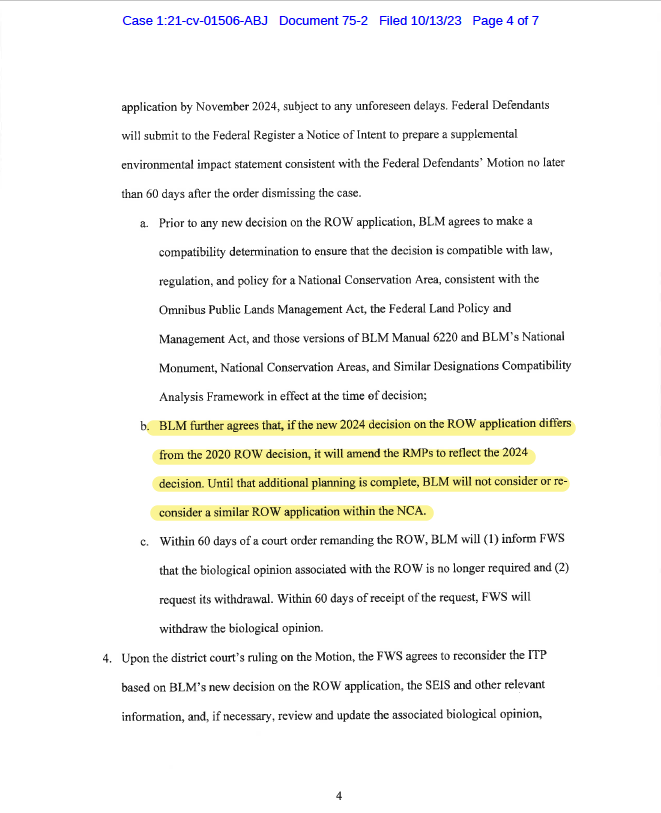
Washington, DC – Conserve Southwest Utah, along with six Utah-based and national conservation organizations, amended their February lawsuit today over the Bureau of Land Management (BLM) and U.S. Fish and Wildlife Service’s failure to adequately protect the threatened Mojave desert tortoise when reapproving the Northern Corridor Highway in January 2026. The long-opposed highway would tear through critical habitat for the Endangered Species Act (ESA)-protected tortoise within Red Cliffs National Conservation Area near St. George, Utah.
In addition to other laws, the newly filed complaint alleges new violations of the ESA by the Fish and Wildlife Service and BLM — including for the unlawful disposal of lands purchased using federal funding intended to protect the tortoise to make way for the highway. Fish and Wildlife Service’s final environmental analysis supporting the land disposal was issued on the same day in February 2026 that the conservation groups, represented by Advocates for the West, filed their lawsuit challenging the illegal highway’s reapproval. The amended complaint was filed now to comply with the required 60-day notice to federal agencies of ESA violations.
“The proposed Northern Corridor Highway would carve through one of the last strongholds of the threatened Mojave desert tortoise, permanently destroying the very habitat this species needs to survive,” said Stacey Wittek, Conserve Southwest Utah’s Executive Director. “St. George can have smart economic growth without accelerating the irreversible loss of a species already on the brink of extinction.”
The Mojave desert tortoise is a keystone species, providing the supporting structure and stability for its desert environment. Its population decline signals significant risk for the overall ecological health of the desert. The number of tortoises within the core of the Red Cliffs Desert Reserve has declined over 50% since 1998, and the proposed Northern Corridor Highway would bisect the only remaining high-density cluster of tortoises in the Reserve.
“The federal agencies’ environmental analysis has shown that punching a high-speed highway through Red Cliffs National Conservation Area would permanently eliminate designated tortoise habitat and increase threats like wildfire and invasive species,” said Hannah Goldblatt, staff attorney at Advocates for the West and counsel for the conservation groups. “Moving forward anyway ignores both science and the law — and pushes the Mojave desert tortoise closer to extinction.”
Conservation groups’ amended complaint follows the U.S. District Court’s issuance of an injunction this March prohibiting the Utah Department of Transportation (UDOT) from starting construction-related activities that would cause irreparable harm to the ESA-protected tortoise.
A Route Rejected Seven Times
The Department of the Interior has rejected the controversial Northern Corridor Highway route seven times, determining that it would be “biologically devastating” to the threatened Mojave desert tortoise.
Since 2006, local residents have also strongly opposed the highway, pointing out transportation alternatives outside of Red Cliffs National Conservation Area that would do a better job of relieving traffic congestion, supporting economic growth and protecting wildlife, scenic beauty and local access to trails.
Despite the immense local opposition, the BLM and Fish and Wildlife Service approved a right-of-way for the Northern Corridor Highway in the final days of the first Trump administration. Conservation groups sued, arguing that the approval violated multiple federal laws.
In 2021, 6,800 acres west of St. George designated “Zone 6” were added to the Red Cliffs Desert Reserve as mitigation for the Northern Corridor Highway. Zone 6 contains the Greater Moe’s Valley outdoor recreation area, and its ownership is split between the BLM and the state Trust Lands Administration. While conservation groups support protection of the Moe’s Valley area for both recreation and conservation, they agree with federal agencies’ assessment that its geographic isolation from the rest of the tortoise’s protected habitat, along with other factors, diminishes its conservation value and does not adequately offset the damage caused by the Northern Corridor Highway.
Conservation groups’ 2021 lawsuit resulted in a settlement agreement and a U.S. District Court decision sending back the project’s right-of-way approval for reconsideration. Agencies acknowledged that the approval did not comply with the law and required additional environmental analysis in light of recent wildfires that further degraded Mojave desert tortoise habitat and native vegetation. After updating its environmental analysis, the BLM rejected the project in late 2024.
The agency’s2024 Supplemental Environmental Impact Statement found the project would permanently eliminate designated critical tortoise habitat, increase wildfire probability and frequency, spread noxious weeds and invasive plants, and harm more cultural and historical resources than any alternative considered.
In October 2025, the BLM said it would reconsider the highway right-of-way application after UDOT argued that the federally endorsed alternative was not economically viable, despite documented environmental and community costs associated with the Northern Corridor.
Abandoning their previous scientific findings, the BLM and Fish and Wildlife Service reapproved the Northern Corridor Highway in January 2026. The decision reverses federal agencies’ December 2024 rejection of the same proposal and marks the eighth time the controversial highway has been considered.
Conservation groupssued in February 2026, challenging federal agencies’ reapproval of UDOT’s highway proposal for violating multiple federal laws, including the Omnibus Public Land Management Act, Land and Water Conservation Fund Act, Endangered Species Act, and National Environmental Policy Act.
About Red Cliffs National Conservation Area
The 44,724-acre Red Cliffs National Conservation Area overlaps the larger Red Cliffs Desert Reserve, which is jointly managed by the BLM, the Fish and Wildlife Service, the state of Utah, Washington County, and local municipalities. The reserve was established under a 1995 Habitat Conservation Plan as a compromise to protect roughly 61,000 acres of public lands for the threatened Mojave desert tortoise while allowing development on about 300,000 acres of state and private land. Congress designated the Red Cliffs National Conservation Area in 2009 to “conserve, protect, and enhance for the benefit and enjoyment of present and future generations the ecological, scenic, wildlife, recreational, cultural, historical, natural, educational, and scientific resources” of the public lands within the unit.
The region supports key populations of the threatened Mojave desert tortoise and other at-risk plants and animals, including the Gila monster, burrowing owl, and kit fox. Researchers say the Mojave desert tortoise is on a path to extinction, and its habitat in southwest Utah –– which houses some of the densest tortoise populations –– is especially vulnerable amid rapid growth in the region.
Additional Information and Resources:
- Informational website: protectredcliffs.com
- Lawsuit Challenges Illegal Highway Through Utah’s Red Cliffs National Conservation Area – February 4, 2026
- Federal Agency Re-Approves Highway Through Red Cliffs National Conservation Area, Abandons Own Scientific Findings – January 21, 2026
- BLM Again Considering Four-Lane Highway Through the Red Cliffs National Conservation Area – October 7, 2025
- Decades-Long Highway Fight Ends with Victory for Red Cliffs NCA – December 20th, 2024
- Local and National Organizations Applaud Plan Signaling Denial of Highway Right-of-Way – November 7, 2024
- Conservation Organizations Respond to Washington County’s Continued Attacks on Red Cliffs National Conservation Area – August 7, 2024
- Federal Agencies Release Draft Supplemental Environmental Impact Statement on a Highway Right-of-Way Through Red Cliffs National Conservation Area – May 9, 2024
- BLM and FWS Press Release – November 15, 2023
- Report – Washington County at a Crossroads: An analysis of the proposed Northern Corridor Highway project in Southwest Utah
- Summary of Desert Tortoise Study in Red Cliffs NCA: Population Trends, Threats to Persistence, and Conservation Significance
###
The Southern Utah Wilderness Alliance (SUWA) is a nonprofit organization with members and supporters from around the country dedicated to protecting America’s redrock wilderness. From offices in Moab, Salt Lake City, and Washington, DC, our team of professionals defends the redrock, organizes support for America’s Red Rock Wilderness Act, and stewards a world-renowned landscape. Learn more at www.suwa.org.
The post Northern Corridor Highway Risks Irreversible Harm to Mojave Desert Tortoise – 5.11.26 appeared first on Southern Utah Wilderness Alliance.
MEDIA ADVISORY
ALBANY, N.Y. – State lawmakers and public health advocates will hold a rally at the New York Capitol on Wednesday, May 13, from 1 to 2 p.m. EST, to urge passage of legislation to ban the use of the toxic herbicide paraquat, a chemical linked to Parkinson’s disease.
Momentum for the bill is building in the New York Legislature. The Assembly version of the paraquat ban bill, A.10074A, was reported to the floor calendar last week. The identical Senate version, S.9094A, is slated for consideration by the Senate Environmental Conservation Committee soon.
WHO
Assemblymember Linda Rosenthal (D/WF-Assembly District 67), bill sponsor
Sen. Pete Harckham (D/WF-40th Senate District), bill sponsor
Dr. Rebecca Gilbert, Ph.D., chief mission officer, American Parkinson Disease Association
Mike Mooney, former landscaper living with Parkinson’s disease
Wes Gillingham, organic farmer, Northeast Organic Farming Association of New York
Sarah Teale, an Emmy-nominated documentary filmmaker and farm owner, who discovered that 36 of her neighbors and her husband, Gordon Chaplin, had Parkinson’s disease. They are all from a small farming community in Hebron, N.Y., where paraquat was widely used.
Jud Eson, an artist living with Parkinson’s disease and member of the Albany Parkinson’s disease community involved at the Capital District YMCA
Nancy Eson, wife and care partner of Jud Eson
Representatives from the Environmental Working Group, The Michael J. Fox Foundation and the Parkinson’s Foundation will emcee the event.
WHAT
Rally urging passage of legislation to ban paraquat in New York.
WHEN
Wednesday, May 13, from 1 to 2 p.m. EST
WHERE
3rd floor staircase, outside of the Assembly Lobby, inside New York State Capitol, Albany, N.Y.
WHY
Paraquat is one of the most toxic herbicides still in use in the U.S. and has been associated with a significantly increased risk of Parkinson’s disease.
The chemical has been banned in more than 70 countries over its outsize risks to human health, including in China, where most of it is produced. Advocates and lawmakers urge swift legislative action to protect public health, farmworkers and communities across New York.
###
The Environmental Working Group is a nonprofit, non-partisan organization that empowers people to live healthier lives in a healthier environment. Through research, advocacy and unique education tools, EWG drives consumer choice and civic action.
Areas of Focus Paraquat Lawmakers, advocates to rally at New York Capitol supporting ban on toxic Parkinson’s pesticide Press Contact Alex Formuzis alex@ewg.org (202) 667-6982 May 11, 2026Donald Trump’s chaotic mess: When U.S. power serves the ‘sultan,’ global rules erode
By Christopher Collins, Cascade Institute
The version of record of this column appeared in The Conversation.
Historically, the United States hasn’t always been easy to deal with, but it was consistent. Even countries that disagreed with American policies knew there was a logic underlying its actions, and this predictability gave the country some credibility.
But now, under U.S. President Donald Trump’s second administration, American foreign policy has become haphazard and contradictory, driven by a leader who believes his ability to exercise power around the world is constrained only by his own morality.
This is new and, for observers around the world, perplexing. As Canadian Prime Minister Mark Carney recently said: “Washington has changed. There is almost nothing normal now in the United States.”
Trump maelstromSome, like U.S. Vice President JD Vance, are labouring to erect a retroactive, pseudo-intellectual scaffolding around this chaotic mess, seeking to frame it as a coherent doctrine. But it’s become increasingly clear there’s no grand plan, just a Trumpian maelstrom of impulsive reactions, extractive transactions and personal grudges that shift with the news cycle.
To understand this political dysfunction, a German thinker from more than 100 years ago, Max Weber, offers a helpful guide.
Most famous today for his theory of “the Protestant work ethic,” Weber’s writing also explored the concept of “patrimonialism.”
This is a system of governance in which a ruler treats the state as personal property, governs by whim and uses the state’s resources to reward cronies and enrich family. Drawing largely on his understanding of the Ottoman Empire, Weber called the most extreme form of this system “sultanism.”
Reading Weber today, it seems the best description of how the U.S. engages the wider world could be termed “sultanism with American characteristics.”
Loyalty over experienceConsider Iran. Following the start of Operation Epic Fury, the Trump administration cycled through so many conflicting war aims that CNN was able to assemble a montage of the contradictions.
Senior administration officials worked feverishly to build a strategy around the operation, but it soon became clear that this “war of choice” was started based on little more than the president’s whim.
Weber’s framework extends to the people around Trump. In sultanistic systems, staff are selected based on loyalty, not merit, and serve the ruler, not the state.
As Weber wrote, this leads to “an administration and a military force which are purely personal instruments of the master.”
We see this pattern vividly illustrated by the Trump administration’s approach to staffing senior roles, including those leading high-stakes diplomatic negotiations.
Look at Steve Witkoff, a real estate developer and longtime Trump friend with no foreign policy experience, who has served as the administration’s lead envoy on some of the most sensitive negotiations in the world.
Or Jared Kushner, the president’s son-in-law, who, despite having no background in foreign policy, was entrusted with key roles in Middle East diplomacy, while his investment firm pursues deals with the same Gulf states he is negotiating with on behalf of his country.
Serving the sultanThese are not appointments that a merit-based system would produce. But right now in America, officials serve the sultan, not the republic, which is why their speeches are regularly given for an “audience of one.”
Furthermore, in seeking the sultan’s favour, appointees regularly debase themselves on television, such as when Kevin Warsh, Trump’s pick to be the next head of the Federal Reserve, refused to admit Trump lost the 2020 election.
This sultanistic pattern of rewarding loyalty and punishing defiance is expanding. Federal disaster relief, long treated as a non-partisan obligation of the government, has become a stark illustration of this logic.
Since the start of his second term, Trump has approved just 23 per cent of disaster funding requests from blue states, compared to 89 per cent for red states. In some cases, the conditionality for disaster aid has been made explicit: for example, in 2025, as fires ravaged Los Angeles, Trump threatened to withhold aid unless California enacted voter ID laws — a condition with no relationship to disaster recovery.
This fear of punishment also helps explain why, fearing for their businesses, many media companies are bowing to “the court of King Trump.”
‘Orgy of corruption’Finally, Weber’s framework sheds light on what may be the most defining feature of the Trump administration: a blurring of the lines between public office and private enrichment. Under sultanism, the distinction between the ruler’s personal wealth and the state’s treasury is, at best, notional.
Trump and his team have governed accordingly, with perhaps the most egregious example being hundreds of millions of dollars of insider trading around the Iran war. In a healthy democracy, this “orgy of corruption” would be investigated and prosecuted. But in a patrimonial system this is simply how things work: the state exists to serve the ruler and his inner circle.
This is what the world must now manage. A sultanistic system does not respond to appeals to shared values or long-standing agreements. It responds to leverage, personal relationships with the ruler and transactional incentives.
Policymakers and business leaders increasingly understand they are dealing with a court that rewards fealty and punishes defiance. That’s why the Swiss gave Trump a gold bar in exchange for lower tariffs, and why the Qataris gave him a “palace in the sky.”
In 2026, appeals to shared democratic values or common national interests are pointless; bring the sultan something he wants or face punishment. Weber helps explain why.
The post Donald Trump’s chaotic mess: When U.S. power serves the ‘sultan,’ global rules erode appeared first on Cascade Institute.Pages
The Fine Print I:
Disclaimer: The views expressed on this site are not the official position of the IWW (or even the IWW’s EUC) unless otherwise indicated and do not necessarily represent the views of anyone but the author’s, nor should it be assumed that any of these authors automatically support the IWW or endorse any of its positions.
Further: the inclusion of a link on our site (other than the link to the main IWW site) does not imply endorsement by or an alliance with the IWW. These sites have been chosen by our members due to their perceived relevance to the IWW EUC and are included here for informational purposes only. If you have any suggestions or comments on any of the links included (or not included) above, please contact us.
The Fine Print II:
Fair Use Notice: The material on this site is provided for educational and informational purposes. It may contain copyrighted material the use of which has not always been specifically authorized by the copyright owner. It is being made available in an effort to advance the understanding of scientific, environmental, economic, social justice and human rights issues etc.
It is believed that this constitutes a 'fair use' of any such copyrighted material as provided for in section 107 of the US Copyright Law. In accordance with Title 17 U.S.C. Section 107, the material on this site is distributed without profit to those who have an interest in using the included information for research and educational purposes. If you wish to use copyrighted material from this site for purposes of your own that go beyond 'fair use', you must obtain permission from the copyright owner. The information on this site does not constitute legal or technical advice.
 This site is not the official webpage of the Industrial Workers of the World.