






You are here
New Report from Fair World Project Evaluates Certification Programs that Seek to Ensure Transparency and Integrity of Working Conditions for Farmworkers
By Api Podder - MySocialGoodNews, October 25, 2016
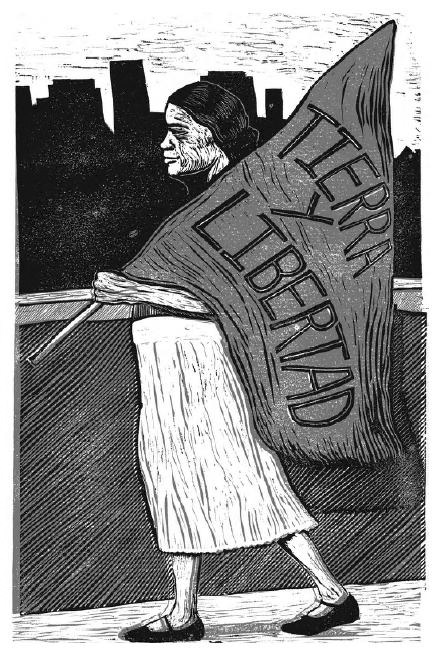 Leading Advocacy Group Evaluates Impact and Effectiveness of Seven Certification Programs in the Interest of Farmworker Justice
Press Release – PORTLAND, OR – Fair World Project, a project of the Organic Consumers Association, the nation’s largest network of green and ethical consumers, has released a new report titled, Justice in the Fields: A report on the Role of Farmworker Justice Certification and an Evaluation of the Effectiveness of Seven Labels. The new report evaluates seven certification programs that consumer brands use to provide a level of transparency to consumers on the social impact of their supply chain on workers. The findings in the report are based on the criteria farms must meet, how these standards are enforced and what role farmworkers and their representatives play in both program development and on-farm enforcement.
To read the Justice in the Fields report, go to: http://fairworldproject.org/campaigns/farmworker-justice/
The report details the realities of agricultural work globally: it’s difficult, dangerous, and can be poorly compensated. Farmworkers are often excluded from laws that protect other workers and even when they are included, the laws are often not well enforced. Labor unions can provide the function of negotiating better pay and conditions on behalf of workers they represent, but in reality union membership on farms is low, in part because of anti-union organizing. The report illuminates how, in recent years, certification programs have stepped in to fill the void and ensure justice and fair treatment for farmworkers on farms.
“It is tempting to see certification as a silver bullet,” says Kerstin Lindgren, Campaign Director of Fair World Project, “but any certification is only as good as its standards and enforcement mechanisms. Ultimately, any good program empowers farmworkers and works together with existing regulations and unions to strengthen their voice.”
Of the seven certification labels evaluated in the report, Fair World Project strongly recommends two of them: Agricultural Justice Project’s Food Justice Certified and Coalition of Immokalee Workers’ Fair Food Program. Two others are recommended with qualifications: Equitable Food Initiative’s Responsible Grown, Farmworker Assured, and Fairtrade International’s Fairtrade Certified.
“At their best, certification labels can raise the bar for worker justice on farms and lead consumers to purchase products that empower farmworkers,” said Dana Geffner, Executive Director of Fair World Project. “But conscious consumerism is just a small part of what’s needed—we hope that this report can inform and inspire people to engage in activism on behalf of all the people who grow our food, whether they work on a certified farm or not,” continues Geffner.
Disclaimer: The views expressed here are not the official position of the IWW (or even the IWW’s EUC) and do not necessarily represent the views of anyone but the author’s.
The Fine Print I:
Disclaimer: The views expressed on this site are not the official position of the IWW (or even the IWW’s EUC) unless otherwise indicated and do not necessarily represent the views of anyone but the author’s, nor should it be assumed that any of these authors automatically support the IWW or endorse any of its positions.
Further: the inclusion of a link on our site (other than the link to the main IWW site) does not imply endorsement by or an alliance with the IWW. These sites have been chosen by our members due to their perceived relevance to the IWW EUC and are included here for informational purposes only. If you have any suggestions or comments on any of the links included (or not included) above, please contact us.
The Fine Print II:
Fair Use Notice: The material on this site is provided for educational and informational purposes. It may contain copyrighted material the use of which has not always been specifically authorized by the copyright owner. It is being made available in an effort to advance the understanding of scientific, environmental, economic, social justice and human rights issues etc.
It is believed that this constitutes a 'fair use' of any such copyrighted material as provided for in section 107 of the US Copyright Law. In accordance with Title 17 U.S.C. Section 107, the material on this site is distributed without profit to those who have an interest in using the included information for research and educational purposes. If you wish to use copyrighted material from this site for purposes of your own that go beyond 'fair use', you must obtain permission from the copyright owner. The information on this site does not constitute legal or technical advice.
 This site is not the official webpage of the Industrial Workers of the World.