You are here
News Feeds
Winter Newsletter: Standing Together, Celebrating Black History and More
Hello Coalition of Communities,
In times of crisis, it's those who stay calm, think clearly, and remain determined who often emerge stronger. As the Coalition of Communities of Color, we believe that both we and the communities we serve must embody this steadiness and resolve, especially now, as we face escalated attacks to our rights and livelihoods. Together, we can navigate the noise and uncertainty with purpose and clarity.
Local and state racial equity and justice matters—while the onslaught of federal actions will have profound impacts on the lives of Oregonians, we remain hopeful because so many of the policies and programs that shape the lives of BIPOC Oregonians are implemented at the local level. Mandates and political pressure to eliminate Diversity, Equity, and Inclusion means it’s all the more important that we protect these values here in Oregon.
CCC is existentially committed to protecting and advancing those values, always. One modest way we're doing this is through releasing a video series that will highlight key actions from our research justice report, Cultivating Belonging in Clackamas County. We will continue to work alongside our partners to inform and share and involve you, the community and our constituents, about efforts that will protect and empower our communities.
Taking care of yourself, your loved ones, and your community is just as important as staying informed. We hope we can all find ways, big and small, to feel connected, protected and cared for.
Warm regards and ever at your service,
Marcus C. Mundy,
Executive Director
February is Black History MonthBlack History Month is a time to celebrate, uplift, and honor the rich contributions of the Black community. Join us this month in celebrating in meaningful ways—by supporting Black-owned businesses, joining local events, donating to organizations making an impact, and diving deeper into the incredible stories and history that have shaped our country, including Oregon. For more than 30 years, Oregon Black Pioneers have dedicated themselves to preserving the history of Black Oregonians. Read their stories on their website and check out their upcoming events for Black History Month across the state.
Community-driven data is a powerful tool for shaping policies that reflect the unique needs of diverse communities, but how exactly do we identify it and understand its value? Read our new report, Introducing Community Data, to learn the principles of community data and how you can use it to improve your data systems. Targeted at a broad audience, this is an accessible primer intended for anyone interested in how to approach community data. You can download the report on our website.
Learn the principles of community data in our new report.
Community-data is at the forefront of many of our projects, including the Modernized Anti-Racist Data Ecosystem (MADE) tool we are building with local government and community partners to impact health and climate equity policies. Watch this video to learn more.
Save the Date: Summer Soirée 2025Our Summer Soirée returns on Friday, June 13th at the OHSU Robertson Collaborative Life Sciences Building atrium, as OHSU is our Venue Sponsor this year. Stay tuned as we share more information on what to expect, and how you can purchase tickets, or become a sponsor. If you have any questions regarding our event, please contact our Development Manager, Lucero at lucero@coalitioncommunitiescolor.org.
To take a look at last year’s Summer Soirée and get a glimpse at what is to come in June. Click the link here to view our full gallery of photos from 2024.
Thank you for supporting CCC!
We want to extend a heartfelt THANK YOU to everyone who made our 2024 end-of-year giving campaign such a success. Our 2024 theme, "Celebrating Stories," spotlighted the groundbreaking work happening across our programs. We're grateful to have shared this journey with you, offering a glimpse into the collective effort driving racial justice and systems change. Click here to donate and read our stories of impact of 2024.
Celebrating Stories: Representation matters, Portland made history
On November 5th, Portland made history. With ranked-choice voting, we now have the most representative city council in Oregon’s history—one that is more reflective of Portlanders than ever before.
For the first time, East Portland, which has had little representation at the city, now has three councilors representing their diverse communities and unique concerns. The diversity of the new council is unprecedented: 5 people of color, 6 women, 3 renters, with ages ranging from 28 to 70.
Following the success of the 2024 election, we are proud to report that 91% of Portland voters found this system easy to use and that it has achieved our goal of greater representation.
This achievement didn’t happen by chance. It is the result of years of community-driven organizing, advocacy, and mobilization for systemic change.
Back in 2018, as the city prepared for its 2020 charter review, the Coalition of Communities of Color (CCC) advocacy staff began participating in research and policy development. As more established stakeholders expressed interest in building a new system, we quickly realized that if Portland's communities of color weren't at the table, no one would ensure the system worked for us and not just the status quo.
So, we stepped up. As a coalition of culturally specific organizations deeply affected by Portland’s governance, we set out to build a system that better reflected all Portland residents. In the years that followed, we held over 20 workshops to hear from BIPOC Portlanders about representation and the policy changes they wanted. We learned that a more equitable system was needed, so we advocated for an expanded city council and a new voting system where voters could rank candidates in order of support.
Working alongside many incredible partners, we successfully led the campaign to pass Measure 26-228 in November 2022, bringing these reforms to reality.
When we began, we had no dedicated grant funding for the project: donors made the launch of this work possible. We relied on grassroots contributions to fuel our work of breaking down systemic barriers for communities of color.
But this was just the beginning. We quickly pivoted to focus on the implementation of the new system, ensuring that BIPOC voters felt confident using it in the November 5th election.
As part of a comprehensive voter education effort led by our outstanding partners at Next Up, over 20 staff and volunteers canvassed neighborhoods, knocking on over 677 doors to directly connect with voters about the new system.
After we returned to the office, our group reflected on the canvassing experience. Story after story highlighted how strongly voters believed in the power of their ballot to bring about change. In a time when so much of politics is met with cynicism, these conversations were a powerful reminder of hope, especially from young BIPOC canvassers who had meaningful, real conversations with voters.
At CCC, we carry that hope forward through our mission of advancing racial justice through cross-cultural action. We know our work goes beyond a single victory or a single election—it is rooted in creating meaningful, long-lasting systemic change.
We invite you to join this legacy by contributing to this work and supporting CCC today.
Leadership Update & Preparing for 2025
Dear Friends,
Five years ago, we were excited to step up as Co-Directors of the Food Chain Workers Alliance, taking the reins from longtime leaders Joann Lo and Jose Oliva. FCWA had just celebrated its tenth anniversary, and it was an opportune moment for a transition to ensure the organization’s long-term health and vitality.
As Co-Directors, we’ve remained committed to FCWA’s founding mission to bring worker voices into the food movement and fight corporate consolidation. We’ve also worked with staff and members to further prioritize member-led, worker-led organizing and economic, racial, and gender justice. From responding to the pandemic to expanding educational programs and creating new spaces for members to collaborate and seed collective work, we’re proud of the work FCWA and our members have accomplished in the past five years.
Today, the Alliance is ready for a new chapter, and it is bittersweet to announce that we will step down from our roles as Co-Directors in early 2025. We know that FCWA will continue to build power for food workers under new leadership, and we are embarking on a process to find that leadership with staff, the board, and a newly-formed transition committee. Stay tuned for updates in the coming months.
In this transitional moment, we hope you’ll support FCWA Member Funds so food workers are ready to spring into action in 2025. This program started as a one-off drive in 2019 to provide direct assistance to poultry workers impacted by ICE workplace raids. As part of our priority to support member organizing, we now have three ongoing funds making grants of $500 – $5,000 to members for Immigration Rapid Response, Language Justice, and Organizing & Capacity Building. Our goal is to raise $10,000 to replenish these funds by December 31, and we’re more than halfway there!
Thank you for supporting the Food Chain Workers Alliance, and most importantly, for supporting workers’ rights across the food chain and beyond.
Suzanne Adely & Sonia Singh
Co-Directors, Food Chain Workers Alliance
The post Leadership Update & Preparing for 2025 appeared first on Food Chain Workers Alliance.
Celebrating Stories: Beyond a Report, Building Belonging Together
Thank you to our Steering Committee for championing equity and inclusion efforts in Clackamas county.
On an early fall night, a diverse group of community leaders, local government officials, institutional partners, and members of the Coalition of Communities of Color (CCC) gathered at Clackamas Community College for a powerful evening of connection and celebration.
Cover art by Annie Hoang/ Instagram: @annie.hng
The event marked the launch of the “Cultivating Belonging in Clackamas County,” a research justice report led by the Research Justice Institute at CCC. This collaborative effort, developed over four years and guided deeply by community, focused on engaging Black, Indigenous, and people of color (BIPOC) in the county to gather insights about their experiences, needs, and desires. What we found was a strong desire to have places and spaces where BIPOC communities can connect with both their own communities and cross-culturally.
This night was about much more than the completion of the report—it was about building personal connections, sharing insights, and reaffirming our collective commitment to advancing equity and inclusion in Clackamas County, despite the recent setbacks they’ve faced.
Today, we are continuing to move this work forward through a series of community-driven calls to action that support and strengthen racial equity efforts while fostering new initiatives for greater inclusion. If you’re interested in getting involved, take our mobilization survey for opportunities to advance these efforts collaboratively in Clackamas County.
TAKE further ACTION:- Download Cultivating Belonging in Clackamas County
- Watch the Cultivating Belonging Intro Presentation
- Donate to CCC
Dr. Mira Mohsini, PhD, CCC Senior Researcher
Read our Q&A with CCC’s Dr. Mira Mohsini, PhD, lead author of “Cultivating Belonging”:Can you share why was this report is necessary?
We often hear statements like “Oregon is so white,” “Portland is the whitest large city in the country,” “Clackamas county is the least racially and ethnically diverse county in the tri-county region.” While these statements are not false, and often spoken with good intentions, they can erase the presence of communities of color and Indigenous communities from these places. Taken as fact, these statements can stop us from asking why there are relatively fewer people of color here. This report challenges these narratives by centering the experiences and histories of communities of color in Clackamas county.
The report is the first of its kind to tell the stories of people of color from across Clackamas county – what they care about, what changes they want to see in their communities and the institutions meant to serve them, and what a thriving present and future looks like for them. It’s an essential body of knowledge that comprehensively takes stock of the needs and desires of communities of color, as understood and articulated on their own terms. It’s a culmination of over four years of research guided by deep relationships and led by people of color who are closest to, and have lived experiences of, some of the most pressing issues the county faces. Finally, the report turns a diversity of evidence – stories, lived experiences, and relevant statistical and geographic data – into a set of community-desired calls to action that can support existing organizing efforts for racial equity and justice and catalyze new ones.
What are some challenges that BIPOC community members expressed to you?
As we developed more and stronger relationships with Clackamas county residents, we kept hearing how disconnected people of color are from each other. They often travel to other counties to find community, to access services in their languages, to worship, and to buy culturally appropriate foods, for example. We heard that there just aren’t the opportunities and spaces to connect. We heard from youth and students of color about how adults, teachers, and school administrators don’t take their experiences of hate and discrimination seriously or don’t respond in supportive and meaningful ways. We heard about the challenges that newly arrived immigrants face with finding work, navigating bureaucratic systems, and accessing culturally responsive services. We heard from employees of color working within dominant institutions and across the county about their unaddressed and persistent experiences of discrimination, othering, and intimidations. But despite these challenges, we heard so many people of color say that they want to stay in Clackamas county and be a part of its future where everyone feels like they belong.
Personally, what challenges did you face when completing this report?
Honestly, the hardest part was writing it. After spending four years being in relationship with so many generous and amazing people, hearing their stories, going to community events, hosting meetings with community-based organizations and dominant institution partners, organizing data collection engagements, and working to accurately interpret all this data with our steering committee members, we, the researchers, were faced with the huge responsibility of translating all this knowledge and wisdom onto the written page. The pressure was amplified because we knew we were not just writing a technical report that is driven by dominant forms of evidence, like statistics and other quantitative data. Rather, we were committed to writing the report in ways that center lived experiences and stories as trusted evidence for understanding realities and for making better decisions to address community needs and desires. This is not to say we don’t value dominant quantitative data – we understand its role in exposing disparities and holding dominant institutions accountable – but we wanted to write the report in a way that doesn’t privilege dominant data at the expense of people’s lived experiences. In writing up a research justice study – where the research is led by those most impacted by the issues being researched – we wanted to demonstrate how lived experiences and stories have the power to illuminate concerns and desired solutions. I believe we succeeded in this, but it was definitely the hardest part of this process. Ultimately, the learning that this process reaffirmed for me is to let the stories, the lived experiences, speak their truths.
Why is this issue important to those outside of Clackamas County?
Partners and community members gathered at Clackamas Community College earlier this year to celebrate the completion of the report.
Most of us recognize the power of stories and the power of sharing our lived experiences to build and strengthen relationships, community, and a sense of belonging. We care about stories because they’re fundamentally about how people have experienced the world, continue to experience it, and desire to experience it. In other words, stories can tell us about “what was,” “what is,” and “what should be.” The power of stories is why folks should care about this report. It details what it takes to design a community-led process that centers stories in all of their complexities – telling us what’s working, what’s not, and what repair and healing mean for different communities; how to gather stories using a diversity of methods and approaches; what it looks like to pair stories with other kinds of evidence; and how to use stories responsibly to create meaningful changes. If you’ve ever wondered how to uplift the power of stories, and qualitative data broadly, this report provides one model for doing this.
What are we doing to move the calls to action forward and how can people get involved?
We’ve been hosting calls with folks working in dominant institutions and community-based organizations and coalitions to provide guidance on what calls to action they can advance and how. Each conversation is tailored to the organization’s specific needs, access to resources, and experiences.
We’ve also launched a mobilization survey for Clackamas county community members who are both unaffiliated and affiliated with organizations in the county. In the survey, folks can tell us which calls to action they are most interested in advancing and what (if any) organizing experience they have. We’ll use this information to organize community gatherings in 2025 to discuss strategies for mobilizing around one or several calls to action. These are also spaces to grow and strengthen community, since the lack of connection was one of the main concerns that people of color in Clackamas expressed.
The antidote to fear is grassroots organizing.
In the weeks since the disastrous results of the 2024 election were announced, I’ve had the opportunity to sit down and strategize with grassroots leaders across movements for climate, environmental justice, and indigenous liberation, among others.
In space after space, something beautiful is happening: instead of isolating or playing the blame game, people in our movements are turning toward each other. In the face of violence and repression, what is heartening to me is how we keep coming back to our values and our connections with one another.
In the coming years, all of us will need to deepen our connections and practice solidarity to build strong, resilient movements that can defeat the far right and keep our communities safe. At APEN, building solidarity and connection across people and movements is at the core of our work.
APEN members at our Leaders Advance last month. Photo by Joyce Xi.
One place I’ve found strength and hope these last few weeks is in the herstories and resilience of our communities — from my own family to our APEN members.
When the future seems dark, I remember our Asian immigrant and refugee ancestors. I think of my own family — from my parents, who experienced and eventually fled the Marcos dictatorship in the Philippines to my cousins, who live there today under a new and brutally repressive regime yet keep showing up for their families and communities even when it puts their own lives at risk.
I think of our members who fled war, repression, and refugee camps to build a new life in California, only to face racism, pollution and displacement here. Who found each other in this new country and helped each other find housing, buy groceries and get their kids to school. Who have shown up again and again—from testifying at city council to running community meetings and marching in the street—to fight for a world where all of us have what we need to thrive.
It’s no secret that the threats we face are growing. Far-right politicians have weaponized fear, isolation, and misinformation to turn people against each other. Now, they are preparing to dismantle our few remaining environmental and climate protections while threatening deportation on a scale that would tear apart immigrant and refugee communities like ours.
But here’s the thing: our members know the antidote to fear. The antidote to fear is grassroots organizing.
Organizing is simply the practice of building power through connection across difference. Organizing is about having intentional conversations with your neighbor or coworker, even if you don’t agree with them about everything – because you know that through connection, you can find shared values and begin to work toward a shared vision for the future. Our organizers help members with housing applications, know their cousins’ names and their favorite boba spots, and check in to make sure our members are safe when there is a flaring incident or heat wave.
As law-and-order rhetoric flooded the media in Oakland this year, our organizers responded by listening to and building deep relationships with working-class elders in Chinatown who felt unsafe in their neighborhood. We listened to what makes people feel safe, developed trust, and built support for real, community-led solutions – which we’re excited to share more about in the coming weeks.
We know that grassroots organizing works – because we’ve seen it happen. This year, our members and other communities living near the Chevron refinery in Richmond won a historic $550 million settlement from Chevron – building on decades of grassroots organizing in the community and becoming a model for refinery communities across the country.
APEN members at our Leaders Advance last month. Photo by Joyce Xi.
The years ahead will be tough, but this is how we will get through them: by investing in grassroots organizing and building solidarity for the long haul.
To do that, we need your support. Your donation will help us hire organizers, pay for food and supplies at member meetings, and bring our members to Sacramento.
In the words of our Richmond member Richelle, who spoke at APEN’s 30th anniversary celebration this year:
Since joining APEN, I find myself feeling consistently supported and valued by other APEN leaders and have felt called to step into my own leadership, to use my voice and unique skill sets to create ripples towards a healthier future for Richmond.
DONATE
Christine Cordero is one of APEN’s two Co-Directors. Raised by a Filipino immigrant family in the working class town of Pittsburg (no “h”), CA, Christine acts from the deep belief that we are stronger together and can go farther together than we ever could alone.
The post The antidote to fear is grassroots organizing. appeared first on Asian Pacific Environmental Network.
Celebrating Stories: Shaping a healthier future through a community-led data ecosystem
On a bright summer day, the Coalition of Communities of Color’s (CCC's) Climate and Health Coordinator stands in the blistering heat of East Portland. With barely a tree in sight—an unusual scene for a state like Oregon—it's a stark reminder of the environmental inequities that exist and vary by neighborhood. As we walked around Portland, we couldn’t help but wonder who were our communities really designed for?
At CCC, our mission is simple yet powerful: to advance racial justice through cross-cultural collaboration.
We work closely with 18 diverse and culturally-specific member organizations and a broad group of partners on a shared goal of driving meaningful change for our communities.
One of the key ways we’re making progress collaboratively this year is through the Modernized Anti-racist Data Ecosystem (MADE) for Health Justice initiative.
MADE for Health Justice seeks to create an ecosystem rooted in community data—data that reflects the lived experiences of those most affected—to influence decision-making and address racial, health and environmental inequities in Multnomah County.
By centering the lived experiences of the community, we’re not just gathering data—we’re shaping a future where decisions are informed by those who have been historically marginalized by dominant systems.
Supporting CCC means you’ll be helping to bring this vision to life and making a real impact for climate and health justice.
Join our mission this Giving Tuesday and make a donation today.
This year, we’re proud of the progress we’ve made, including:
Convening an Advisory Council composed of 19 community-based organizations, alongside the City of Portland’s Bureau of Planning and Sustainability and Multnomah County’s Office of Sustainability and Health Department.
Gaining a deeper understanding of local data resources and enhancing our knowledge of how government data systems operate.
Drafting our first-ever values-based data charter.
Supporting the City and County in preparing their systems to expand the use of community data and foster a cultural shift in how this data is viewed and utilized.
We’ve got exciting things in store for 2025, starting with the technical design and creation of our data ecosystem! Join our mailing list to stay updated for upcoming gatherings in the new year.
Celebrating Stories: Amplifying Community Voice in Environmental Policymaking
At a community meeting earlier this year, we met with and heard from different Portland residents about their experiences coping with extreme weather events:
A mother bundles her children in layers of clothing—long sleeves, thick sweaters, and fleece pants—while grabbing every blanket she can find to keep them warm in their home during the winter time.
Someone else is shutting all their doors and windows, restricting themselves to only specific areas of their home to stay cool, and drawing curtains all day to block out the heat on a record-breaking summer day.
Another person moves all their food from the fridge to their car outside when the power goes out, trying to save whatever they can.
What do these experiences have to do with environmental justice policy?
While all Oregonians are experiencing the effects of climate change, Black, Brown, and low-income communities are disproportionately enduring the consequences of more extreme weather, increasing energy costs, and growing environmental hazards.
That’s why we are committed to amplifying the voices of those on the frontlines of the climate crisis and ensuring that community input drives policymaking decisions.
CCC’s Environmental Justice team presenting at the Environmental Grantmakers Association Retreat.
This year, we made significant strides in advancing energy justice. We remained committed to centering community voices by partnering closely with BIPOC leaders and the City of Portland to advocate for prospective tenants to have access to critical information about potential energy costs, indoor air quality risks, and access to cooling, and plan to continue our efforts in the coming years.
CCC Climate & Health Coordinator, Santi Sanchez, presenting at the intergeneration climate justice panel hosted by the Kresge Foundation.
As a result of this collaborative work, we are now sharing best practices for deep, community-driven environmental justice policy development with other jurisdictions across the state and working to show that equitable policies must be grounded in the lived experience of the most impacted communities.
Join us: Your generosity will strengthen our efforts so that the voices of frontline communities and their experiences shape how policies are formed and resources are distributed. Make a contribution to our end of year giving campaign. Thank you!
Donate to CCC
2024 Giving Campaign: Celebrating Stories
We’re excited to launch our 2024 giving campaign: Celebrating Stories. From now through the end of the year, we’ll be sharing powerful stories that highlight our ongoing efforts to advance racial justice and drive meaningful, transformative change.
We invite you to join us on this journey. By reading, sharing, and contributing an end-of-year gift to CCC, you can help sustain and strengthen our mission. Come back every week for a new story shared!
Together, we are shaping our story for generations to come.
Read the stories:- CELEBRATING STORIES: REPRESENTATION MATTERS, PORTLAND MADE HISTORY
- Beyond a report, building belonging together
- Shaping a healthier future through a community-led data ecosystem
- Amplifying Community Voice in Environmental Justice Policy
Come back every week for a new story shared!
A Message From Our Executive Director: Here for the Long Haul
“Sing a song full of the faith that the dark past has taught us,
Sing a song full of the hope that the present has brought us;
Facing the rising sun of our new day begun,
Let us march on till victory is won.”
Lift Every Voice and Sing by James Weldon Johnson
Tuesday left me numb, Wednesday barely functional, but today I feel resolved.
For the past few months, I had allowed myself to hope in the promise of America’s better angels. I believed that America could not and would not choose to go backwards.
Sadly, I was wrong. But not defeated.
Yesterday was spent in shock like many fellow Americans, who were shaken by the anxieties of the future and the unsettling reality that so many would support an agenda that will work directly against their own interests.
Today, we exhale. It’s important to remember not all is lost. Here in Oregon, we saw positive change: a diverse group of community-focused candidates were elected locally, with real geographic representation for the first time in the City of Portland. And Portland voters made history using ranked-choice voting to fully express their choices on their ballot, strengthening our democratic system. This is the song we sing today.
At the Coalition of Communities of Color, we are reminded that our strength, wisdom and resilience will move us forward, no matter the challenges ahead. We remember how our ancestors faced even more cruelty and injustice in their lifetimes, and still pushed ahead. We all have a shared responsibility to resist, recharge, and organize so that we can turn these next challenging years into the start of a better, more unified future for all of us. The work continues and our commitment remains unwavering.
The Coalition has been in the fight since 2001, and though the path has never been easy, we’re here for the long haul.
Let us march on, till victory is won.
In Solidarity,
Marcus C. Mundy
Executive Director
How to Use Your Ranked-Choice Ballot in Portland
The Coalition of Communities of Color has worked since 2018 to advance democracy in the City of Portland through the adoption of more representative electoral systems that will help ensure the voices of BIPOC community members are more fully reflected in our city government. In 2022, we worked as part of the Portland United for Change coalition to pass Measure 26-228, moving Portland’s democracy forward.
Now, in this election, Portland voters will be using ranked-choice voting to elect its Mayor, Auditor, and City Councilors for the first time. By ranking candidates, your voice will be more powerful.
Here’s a quick guide on ranked-choice voting. Go to bit.ly/pdx-votes for full information on our new system!
With ranked-choice voting in Portland, you can rank up to 6 candidates in order of preference.
Rank your favorite candidate 1st.
You can only have one candidate be your #1. Do not rank more than one candidate as your first ranking, or that ranking won’t count.
Select any other candidates you like and rank them in order of preference, up to 6.
Once you’ve selected your 1st choice candidate, you can then choose a 2nd choice in the second column, then a 3rd, and keep making choices up to 6. Rank only one candidate per column.
Ranking all 6 of your choices is the most powerful way to use your ballot, but it’s okay to choose fewer. Ranking more candidates will never hurt your 1st choice.
Key tips:
Don’t rank a candidate that you do not support.
You will be voting in a geographic district and 3 City Council candidates will win. Ranking at least three people will help make sure you have a say about the winners. But remember, you can only rank one candidate #1.
If you make a mistake, it’s okay! Simply mark an X over the incorrect choice. You can also call 3-1-1 for help between 7:00 AM–8:00 PM every day.
You can find tips, instructions, and more information on how to fill out your ballot at bit.ly/pdx-votes.
Why rank candidates?
If your 1st choice candidate doesn’t get enough votes, your vote can still help determine the winner.
You can vote for your favorite candidate, without worrying about wasting your vote.
You can support candidates with different backgrounds and ideas.
Return your ballot by TUESDAY, NOVEMBER 5. Drop your ballot off at any official drop box location by 8:00 pm (find a location here) or by mail (no stamp required). Ballots must be postmarked by November 5.
If you have not yet received your ballot or have any problems, call 3-1-1 if you need help.
Portland voters, it’s time to make your voices heard in this election! Go to bit.ly/pdx-votes for all the information you need on ranked-choice voting.
Land is Life: Three Lessons from Bai Bibyaon Ligkayan and the Lumad Community
October 2024. Here we are: one full year since the genocide in Gaza ignited, the presidential elections are a month away, and people across the country are grieving and rebuilding in the wake of life-threatening wild fires and hurricanes.
Some days, I feel overwhelmed by devastation after devastation, injustice after injustice. It feels like nothing we do is enough to make a difference.
In times like this, I look to my kapwa, family and community in the Philippines.
Our people have prevailed against land grabs by colonial powers and big corporations, periods of martial law declared by authoritarian presidents, and horrific climate disasters sweeping our homes and villages. This year, we celebrated the 38th Anniversary of the EDSA People Power Revolution where kasamas, students, workers, people of faith, families, activists, rallied to end the 20 year dictatorship of former President Ferdinand Marcos Sr.
We are courageous in the face of adversity. We take care of one another. Together, we create new possibilities for our future.
Bai Bibyaon Quote, from Sabokahan Unity of Lumad Women’s Instagram
This Filipino American History Month, I honor the revolutionary legacy of Bai Bibyaon Ligkayan Bigkay, the first woman chieftain of the Lumad Talaingod Manobo tribe. The Lumad people span many different sectors and language backgrounds — 18 tribes all throughout Mindanao, the southern region of the Philippines. Bai Bibyaon helped unify the tribes during the 1986 Assembly of the Mindanao Peoples Federation.
She passed away November of last year but has left an undeniable mark in my homeland’s history. She fought against the logging of the ancestral lands, advocated for the self-determination and rights of the indigenous, and reshaped the future of not only the Lumad women and children but of all of the Philippines.
These are three lessons I‘ve learned from Bai Bibyaon Ligkayan and the Lumad Community:
1. Land is Life
The Lumad people continue to be stewards of the land. They cultivate their own crops and make food from their harvest. They practice many sustainability measures in their agriculture: from using coconut husks to slope the land to recycled bottles for insect attractants with molasses and vinegar.
Excerpts from Scent of Rain, Sun and Soil: Stories of Agroecology by Lumad Youth in The Philippines, design by Ali Wright
I am in awe of their partnership with nature, their surrounding environment. Working in the South Bay & Harbor Region of Los Angeles, I am saddened by how the residents here are not able to access their own coasts and beaches. The Ports of Long Beach and LA instead pollute the area alongside the refineries of Marathon, Phillips 66, and Valero. The Lumad fight to protect their land against logging and mining by companies such as Alcantara & Sons. They make their own fertilizers, tend to the seedlings daily, and not only preserve the land, but strengthen its nutrients and fruits. How can we do the same?
“Everything that we need to create a sustainable future is already here. We have to learn to build with nature and not against it.” — Mai Thi, APEN LA Academy 2023 participant and APEN Action Statewide Member
Mai’s words remind me of our work to clean neighborhoods and decommission refineries. How we can protect our land, water, and people. How we can foster an accessible, affordable and green community. How we are doing this work with our members and coalition partners all throughout the state.
2. Culture is a Source of Strength
T’boli, Bisaya, Cebuano, Manobo, and Subanen are just some of the many languages that the Lumad tribes speak. They come together to share recipes on how to make delicious Filipino dishes such as Tinola and Pinakbet. They have beautiful intricate colors and patterns in their clothing. They show great pride in their traditions, and their culture is a source of strength in resisting the increasing land grabs, militarization, and policing of their people.
I wish I was taught more and knew more about my own indigenous roots. I moved from the Philippines when I was 11. Like so many Asian immigrants and refugees in the Los Angeles area, my parents wanted me to have a brighter future here in America, to have more job opportunities. But those opportunities meant separating from our family and community in the Philippines, and it was hard to know that while we were building a life here, our relatives back home were struggling to get their basic needs met. For the Philippine government, Overseas Filipino Workers are seen as commodities, exported to generate money to send back home. In Filipino communities here, working for a better life often means losing connection to the land and ways of living that sustained our communities historically.
By learning from our culture, we can return to practices that build stability and resilience in our neighborhoods.
When I was young, my mom would make food for our whole block of neighbors, we would deliver food to each of them, and we would check in on how they were doing. A beautiful practice I had learned growing up in Mindanao.
In our APEN LA organizing, we experience great joy in sharing our cultures during our member meetings. We envision a future for our neighborhoods where all people have what they need, where our cultural foods and practices are celebrated, and there are community cultural centers and spaces to continue these traditions.
Here are some snapshots of what APEN LA members have shared as part of their vision for the future of their communities:
3. Youth are Our Future
Bai Bibyaon and the Lumad people built entire educational systems for the Lumad youth. At a time when the Philippine government was trying to rewrite history to prop up the existing power structure, the Lumad people established over two hundred schools where young people could learn about their history as indigenous people, and build the skills they would need to sustain land and life in their communities. The Community Technical College of Southeastern Mindanao (CTCSM) was the biggest in Mindanao, graduated over 90 midwives, teachers, healthworkers, and farmers, and educated over 300 elementary to high school students.
Sadly the schools have been raided and shut down by the government. Students like Kuni Cuba a Dulangan Monobo have been killed by paramilitary forces and many others have been jailed like the Talaingod 18.
However, the Lumad tribes continue to fight for their young people. They have successfully gotten charges dropped against Lumad leader Datu Benito from a raid on Lumad Bakwit School Cebu, held more paralegal and rights trainings to protect further persecution of their communities, and are reporting abuses to United Nations Special Rapporteur on the Rights of Indigenous Peoples. Importantly, more and more Sabokahan Lumad youth are graduating from the national universities and shedding light on the Philippine government’s oppression of the country’s indigenous peoples.
Lumad youth are shaping the future of their tribes and demanding an education that serves their communities.
As we build our environmentally just future here in LA, we are learning from the Lumad peoples.
Our members have developed a values statement that will shape our future projects and campaigns:
The Los Angeles South Bay & Harbor area is and will be an abundant, and tenacious community that shares culture through food, stories, traditional knowledge and joy. This community centers family, trust, and sustainability that honors our uniqueness, creates fun community spaces, and connects with the land and water. It will be an accessible, affordable and green community where immigrants, refugees, workers, students and people of all ages feel safe, resourced and cared for.
We honor Bai Bibyaon’s legacy by defending the land and growing our community.
APEN LA and Richmond youth members exchange February 2024.
Join us and be a part of the movement for environmental justice in LA!
More resources and information:
- More about CTCSM and Scent of Rain, Sun, and Soil
- Listen to a radio interview with a delegation of Lumad People on KPFA
- More about Lumad Youth’s Recent Graduation from the University of the Philippines
- Lumad’s Solidarity with Palestine
- More about Filipino American History Month and the Filipino Migrant Center’s Current Campaigns
- List of Hurricane Helene Relief & Mutual Aid
- Bai Bibyaon and other Asian notable icons featured in our APEN LA Mural
Janielle Torregosa is APEN’s Los Angeles Community Organizer. She is mixed Filipina, Chinese, and Spanish and moved here from Ozamiz City, Philippines. She graduated from CSULB with a Spanish major and International Studies minor.
The post Land is Life: Three Lessons from Bai Bibyaon Ligkayan and the Lumad Community appeared first on Asian Pacific Environmental Network.
[Updated] SOS: Short & Long Term Relief Support Needed
You’ve seen the news. Yes, it’s as bad as it looks, and worse! Climate disasters are becoming more frequent and more devastating, thanks to fossil fuel companies’ power and greed. We’ll dig into this more in upcoming posts but for now, we want to highlight some immediate needs and ways you can help, including heeding this call to action:
Tell Congress, Fund FEMA.Our members know something about resilience. They’ve jumped into rapid response for folks impacted by the storms across our beautiful region. Below are a few mutual aid efforts being organized by our member organizations and close community friends. The Highlander Center is also tracking a more comprehensive list of needs, resources and ways to support here.
Please, find a local group and give what you can- time, money, supplies. We need every one of us.
Immediate & Emergency Needs:If you need support, the Partnership’s Disability & Disaster Hotline (https://disasterstrategies.org/hotline/) provides information, referrals, guidance, technical assistance and resources to people with disabilities, families, allies, and organizations assisting disaster impacted individuals with disabilities and others seeking assistance with immediate and urgent disaster-related needs.
Disability & Disaster Hotline:Call/Text: 1 (800) 626-4959
The Disaster Hotline is always available for intake calls, 24 hours a day, 7 days a week, 365 days a year. The hotline team is led by experts on the many issues affecting people with disabilities in disasters and strategies for meeting those immediate needs. The team will respond to your call as soon as possible, often immediately, and we intend to respond to all callers within 24 hours.
They can provide accessible and multilingual information to callers, including via videophone for Deaf callers, upon request to hotline@disasterstrategies.org.
- Facebook group for Missing People in East TN & Western NC due to flooding.
- AYUDA PARA PERSONAS QUE HABLAN ESPAÑOL:
-
- Poder Emma Community Ownership – Asheville, NC
-
-
- Market & Distribution: James Vester Miller Park 477 North Louisiana Ave – Asheville
- Email: info@poderemma.org
-
- The Mountain Movement Hub (and ecosystem of community-based organizations working in coordination for just recovery)
- Amazon Wishlist (buy directly to have shipped to the distribution site in Big Stone Gap, VA)
- To request assistance or coordinate large quantity donations, contact rstallard84@gmail.com or taysha@theallianceforappalachia.org
- Lonesome Pine Mutual Aid– Wise County, VA
- Call (or text) for assistance: 276-395-1644
- Email: lonesomepinemutualaid@gmail.com
- Facebook: https://www.facebook.com/lonesomepinemutualaid/
- *We have power and a shower at our Big Stone location, and community members are welcome to come charge devices, use Wi-Fi, and shower. No documentation of any kind is requested to access aid or resources.
-
- Cumberland Mountain Mutual Aid – Dickenson, Buchanan, and Wise Counties, Virginia
-
- The Care Collective of Southwest Virginia – Community collective of care workers
- Facebook: https://www.facebook.com/profile.php?id=61553444581180
- Venmo: @carecollectiveofswva
- The Care Collective of Southwest Virginia – Community collective of care workers
-
- The Stay Project – Regional Youth Project
- Facebook: https://www.facebook.com/thestayproject/
- Email for assistance: connect@thestayproject.net
- Message on IG for assistance: https://www.instagram.com/stayproject/
- The Stay Project – Regional Youth Project
- Holler 2 Holler
- Facebook: https://www.facebook.com/profile.php?id=61566386083301
- Venmo: @Holler2Holler
- Giles County Mutual Aid- online-based mutual aid network connecting neighbors in Giles County, VA
- Facebook: https://www.facebook.com/profile.php?id=61566627481126
- Request Aid
- CashApp: $GCVAma
- Pulaski County Free Store- (650 Giles Ave., Dublin, VA)- volunteer run Free Store geared towards helping people regain self sufficiency
- Tri-Cities TN/VA Mutual Aid – Tennessee and Virginia
- Facebook: https://www.facebook.com/tricitiesmutualaid/
- Email: tricitiesmutualaid@gmail.com
- Helene Response Map
- Resource Database
- New Disabled South
- https://www.facebook.com/NewDisabledSouth
- Request Support
- Donate here or via venmo: @NewDisabledSouth
- East Kentucky Mutual Aid – Newport, TN
- Disaster relief help at Webb Baptist Church (335 Wilton Springs Rd, Newport, TN 37821)
-
- From October 8-12, 2024: Breakfast 7am-9am | Lunch 11am-1pm | Dinner 5pm-7pm
- Water, toiletries, hygiene items, and more are available.
- Instagram: @hillbillieshelpinghillbillies
- Facebook: https://www.facebook.com/groups/2557126217948530/
- First Aid Collective Knox – autonomous first-aid/wound care and mutual aid collective Knoxville, TN
-
- Tractor Supply Wishlist: tinyurl.com/fackwish
- Venmo: @firstaidcollectknox
- Clean Water Expected for East Tennessee (CWEET)- Cosby, TN
- Facebook: https://www.facebook.com/cweet4water/
- **Immediate need (this week Oct. 14!!) Donate to help fund lab testing of water & mud after flooding.
- Rise Erwin– Erwin, TN
Western North Carolina
- Pansy Collective – Asheville, NC- all trans artist collective
-
- Venmo: @pansycollective
- Pansy Collective has also curated this incredible resource switchboard: [insert graphic]
- Barnardsville, NC direct aid
- Hood Huggers– Asheville, NC
- RSSA (Reparations Stakeholder Authority of Asheville) – Asheville, NC
-
- Request for relief form here: https://www.rsaasheville.org/helene-relief
- Marshall Mutual Aid – Marshall, NC
-
- Support Hub: 1685 Hwy 213, Marshall, NC (next to DMV)
-
- Contact: ruralorganizingandresilience@gmail.com
- Cornbread and Roses – Sylva, Western North Carolina
-
- LGBTQ+ service org
-
- Facebook: https://www.facebook.com/cornbread.roses
-
- Call for assistance: (828) 283-0235
-
- Email: info@cbrcounseling.org
- Holler Harm Reduction Madison and North Buncombe County, North Carolina
-
- Supply Delivery, Call for assistance: (828) 290-9066 or use the contact form
-
- Operating Tuesday – Sunday, 10am-4pm
- Smoky Mountain Harm Reduction – Franklin, NC
-
- Call for assistance: (828) 475-1920
-
- Email: stephanie@radicalloveheals.org
- Poder Emma Community Ownership – Asheville, NC
-
- Market & Distribution: James Vester Miller Park 477 North Louisiana Ave – Asheville
-
- Email: info@poderemma.org
- Mental Health ProBono Referrals – This list is comprised of providers willing to offer pro bono individual sessions or groups for individuals impacted by Hurricane Helene in WNC. The first section is providers offering telehealth only. The second section is providers offering both in person and Telehealth in descending order of city: Mental Health Pro bono Providers
Washing With Little Water
Your body: Use a dampened or slightly wet rag with a little soap to get all the important parts. Then, make the rag wetter and go back over everywhere.
Your dishes: The three tub method. Get three tubs filled with same amount of water. Try to scrape as much food off dishes beforehand. 1st tub – Do most of the scrubbing. Scrub off all residue. 2nd tub – Rinse the dishes to make sure all residue comes off. 3rd tub- final rinse
Your clothes: Fill a gallon bag with clothes needing cleaning. Add a bit of detergent and some water – do not over fill. Shake bag well – rub and mix – for 5-10min. Dump soapy water our and refill with clean water. Shake bag again and then hang clothes to air dry.
Dry Toilet Instructions
WHAT YOU NEED:
5 or 6 gallon bucket
Trash bag
Split pool noodle or pipe insulation
Wood shavings, wood chips or dry leaves
Bin for wood shavings
WHERE TO GET IT: Hardware store, Animal Feed Store, Wood chip pile
INSTRUCTIONS
- ABSOLUTELY NO PEE IN BUCKET PEE INTO A CUP FIRST AND SPREAD PEE OUT IN YARD/PLANTS
- LINE THE BUCKET WITH A TRASH BAG AND COVER THE BOTTOM OF BAG W/ SHAVINGS
- POOP ON SHAVINGS. NO PEE! TOILET PAPER OK
- SPRINKLE SOME SHAVINGS TO COVER POOP
- WHEN BAG IS FULL, TIE IT UP WELL AND DISPOSE IN MUNICIPAL TRASH (CITY TRASH)
Our 2024 Ballot Measure Endorsements
This election, the stakes couldn’t be higher.
While the presidential election is top of mind for many voters, in California working-class communities of color are leading bold campaigns for a better future – a future where all of us have the resources we need to thrive.
This election, we have an opportunity to invest in affordable housing, schools, and climate justice. To finally end slavery in California. To expand rent control and keep people in their homes.
However, the rich and powerful are trying to use this election to buy our democracy and turn back the clock on so much of what our communities have fought for.
Super-rich donors, landlords, and big corporations are funding ballot measures that would expand mass incarceration, cut funding for housing and mental health services, unfairly target progressive organizations, and skew future elections toward candidates with more money in their pockets.
Luckily, they don’t decide California’s future – we do.
That’s why we are excited to share APEN’s endorsements for key ballot measures in the Bay Area, Los Angeles and across California this year.
California Los Angeles Oakland RichmondPhoto by Joyce Xi Photography
CALIFORNIA NO POSITION on Proposition 2 Your Title Goes HereYour content goes here. Edit or remove this text inline or in the module Content settings. You can also style every aspect of this content in the module Design settings and even apply custom CSS to this text in the module Advanced settings.
Learn more$10 billion for public schools
This $10 billion bond would pay for repairs and upgrades at CA public school buildings, some of which have languished with rot, mold, leaks, and other hazards due to lack of funds. K-12 schools would receive $8.5 billion and $1.5 billion would go to community colleges.
Vote YES on Proposition 3 Your Title Goes HereYour content goes here. Edit or remove this text inline or in the module Content settings. You can also style every aspect of this content in the module Design settings and even apply custom CSS to this text in the module Advanced settings.
Learn moreReaffirm the right of same-sex couples to marry
This constitutional amendment would remove outdated language from Proposition 8, passed by voters in 2008, that characterizes marriage as being between a man and a woman.
Vote YES on Proposition 4 Your Title Goes HereYour content goes here. Edit or remove this text inline or in the module Content settings. You can also style every aspect of this content in the module Design settings and even apply custom CSS to this text in the module Advanced settings.
Learn more$10 billion for climate programs
This $10 billion bond would pay for water projects (to provide safe drinking water, recycle wastewater, store groundwater, control floods), wildfire protection, protection from sea level rise, create parks, protect wildlife and habitats, and address extreme heat events.
Vote YES on Proposition 5 Your Title Goes HereYour content goes here. Edit or remove this text inline or in the module Content settings. You can also style every aspect of this content in the module Design settings and even apply custom CSS to this text in the module Advanced settings.
Learn moreLower approval requirements for housing & infrastructure
This would lower the supermajority vote requirement from two-thirds (66.67%) vote to 55% for local jurisdictions to issue bonds or impose special taxes for affordable housing and public infrastructure projects.
Vote YES on Proposition 6 Your Title Goes HereYour content goes here. Edit or remove this text inline or in the module Content settings. You can also style every aspect of this content in the module Design settings and even apply custom CSS to this text in the module Advanced settings.
Learn moreBan slavery in state prisons
This constitutional amendment would end indentured servitude in state prisons, one of the last remnants of slavery.
Vote YES on Proposition 32 Your Title Goes HereYour content goes here. Edit or remove this text inline or in the module Content settings. You can also style every aspect of this content in the module Design settings and even apply custom CSS to this text in the module Advanced settings.
Learn moreRaise the state minimum wage to $18/hr
This would increase the state minimum wage to $18/hr from $15/hr for all employees in California.
Vote YES on Proposition 33 Your Title Goes HereYour content goes here. Edit or remove this text inline or in the module Content settings. You can also style every aspect of this content in the module Design settings and even apply custom CSS to this text in the module Advanced settings.
Learn moreAllow local governments to impose rent controls
This would repeal the Costa-Hawkins Rental Housing Act (1995) which prevents cities and counties from limiting rents in many properties in California.
NO POSITION on Proposition 34 Your Title Goes HereYour content goes here. Edit or remove this text inline or in the module Content settings. You can also style every aspect of this content in the module Design settings and even apply custom CSS to this text in the module Advanced settings.
Learn moreRequire AIDS Healthcare Foundation to use revenue from a federal prescription drug program on patient care
This is a CA Apartment Association-backed attack on AIDS Healthcare Foundation, meant to prevent the organization from funding rent control measures in the future.
NO POSITION on Proposition 35 Your Title Goes HereYour content goes here. Edit or remove this text inline or in the module Content settings. You can also style every aspect of this content in the module Design settings and even apply custom CSS to this text in the module Advanced settings.
Learn morePermanent tax on managed healthcare insurance plans
This initiative is sponsored by California’s health care industry to raise more money for Medi-Cal and block lawmakers from using the money raised for purposes outside of supporting Medi-Cal.
Vote NO on Proposition 36 Your Title Goes HereYour content goes here. Edit or remove this text inline or in the module Content settings. You can also style every aspect of this content in the module Design settings and even apply custom CSS to this text in the module Advanced settings.
Learn moreMass Incarceration Initiative: Increase penalties for nonviolent drug and theft crimes
This initiative would undo Prop 47, which voters decided in 2014 to reclassify nonviolent felonies to misdemeanors and redirect funds toward schools. This measure would further criminalize addiction and poverty, increase mass incarceration, and reduce funding for education, mental health, and homelessness prevention.
LOS ANGELES COUNTY Vote YES on Measure A Your Title Goes HereYour content goes here. Edit or remove this text inline or in the module Content settings. You can also style every aspect of this content in the module Design settings and even apply custom CSS to this text in the module Advanced settings.
Learn more$10 billion for public schools
This $10 billion bond would pay for repairs and upgrades at CA public school buildings, some of which have languished with rot, mold, leaks, and other hazards due to lack of funds. K-12 schools would receive $8.5 billion and $1.5 billion would go to community colleges.
OAKLAND Vote YES on Measure MM Your Title Goes HereYour content goes here. Edit or remove this text inline or in the module Content settings. You can also style every aspect of this content in the module Design settings and even apply custom CSS to this text in the module Advanced settings.
Learn moreWildfire Prevention Zone Tax
Creates a “wildfire protection zone” in the Oakland Hills to protect our communities from wildfires and smoke. Paid for through a parcel tax that only applies to Oakland Hills residents.
Vote YES on Measure NN Your Title Goes HereYour content goes here. Edit or remove this text inline or in the module Content settings. You can also style every aspect of this content in the module Design settings and even apply custom CSS to this text in the module Advanced settings.
Learn moreCitywide Violence Reduction Services
Extends and increases property and parking taxes to fund fire, police, vital violence prevention services, 911 dispatch, and more. Measure NN isn’t perfect, but our public safety services depend on it.
Vote YES on Measure OO Your Title Goes HereYour content goes here. Edit or remove this text inline or in the module Content settings. You can also style every aspect of this content in the module Design settings and even apply custom CSS to this text in the module Advanced settings.
Learn moreModernize and Strengthen Ethics Oversight
Updates the procedures of the Public Ethics Commission to ensure stronger government transparency and fairness.
RICHMOND Vote NO on Measure J Your Title Goes HereYour content goes here. Edit or remove this text inline or in the module Content settings. You can also style every aspect of this content in the module Design settings and even apply custom CSS to this text in the module Advanced settings.
Learn moreCreate Municipal Primary Elections
This measure would create municipal primaries for City of Richmond elections. This would create an extra step in our election process, allowing a smaller group of citizens voting in Primary elections to potentially decide our election outcomes. Working-class voters of color are less likely to turn out for primary elections, and adding primaries would make campaigns more costly — giving an upper-hand to corporate-backed candidates.
Vote YES on Measure L Your Title Goes HereYour content goes here. Edit or remove this text inline or in the module Content settings. You can also style every aspect of this content in the module Design settings and even apply custom CSS to this text in the module Advanced settings.
Learn moreInstitute Ranked-Choice Voting Elections
This measure would create rank choice voting elections for Richmond, allowing voters to rank their top candidates in order of preference.
A Rank Choice Voting election process delivers more representative and equitable election outcomes, as it elects a majority-supported candidate, increases voter participation, and gives voters more power to express their preferences.
The post Our 2024 Ballot Measure Endorsements appeared first on Asian Pacific Environmental Network.
“It was always our intention to set a precedent.”
Richmond refinery communities made the front page of the internet this week with a Politico feature on our Polluters Pay campaign and the local organizing that made it possible. Read that article here.
Building on decades of organizing against Chevron, this year our communities came together behind a new idea: a #PollutersPay tax that would make big polluters pay for the damage they’ve caused.
By forcing the oil giant to offer up $550 million with the threat of losing at the ballot box, working families made history here in California.
We got creative, and Chevron got scared — to the tune of $550 million. Together with our long-time partners Communities for a Better Environment and the city-workers’ union, SEIU 1021, our coalition fought and won a model for other refinery communities.
APEN youth members and Senior Youth Richmond Organizer Katherine Lee at a #PollutersPay rally. Photo by Denny Khamphanthong.
Let’s be clear: we wanted to go all the way to November. We know you were ready to knock doors, join us at phone banks, and get out the vote for the Polluters Pay campaign.
We wish we could have gone to the ballot, but we’re clear: refinery communities can take on multi-billion dollar corporations with huge results. If Richmond can do it, we know others can, as well.
From here, our Richmond team is organizing to ensure that Chevron’s millions actually invest in priorities for working families – like essential services and a fund to clean up Chevron’s toxic mess.
Can you take two actions today to amplify our work?
SIGN UP NOWThe post “It was always our intention to set a precedent.” appeared first on Asian Pacific Environmental Network.
Thank You for an Incredible Summer Soirée 2024!
Thank you to everyone who made CCC’s 2024 Summer Soirée a wonderful success, with a record-breaking $269,000 raised for racial justice, 82 sponsors, over 400 guests, and one mission to bring it all together. This year’s Summer Soirée was a major success, and it is all thanks to you, our wonderful supporters, our member organizations, sponsors, partners, and the entire community.
We celebrated our annual Summer Soirée gala at Avenue Portland on May 31. The dynamic and charismatic Poison Waters charged the room with her charisma and energy. We had the pleasure of featuring two local BIPOC owned restaurants, Plant Based Papi and Hapa Barkada. Devil’s Food was our lead caterer and also provided guests with three signature cocktails. DJ Just Jeff helped us wrap up the night in style with all the best tunes, and Feddy Torres from FTJPhotograpy, and Conrad McKethan captured the night's essence in images you can find here and here. Relive the fun or see what you missed.
Thank you for being a part of this year’s Summer Soirée, and we hope to see there in 2025! Keep a look out for our save the date coming soon.
We are grateful to all of our sponsors who showed up and showed out at our event, and a special thank you to our Diamond Sponsors:
Celebrate Earth Day with CCC's Environmental Justice Team!
Our team’s mission is centered around elevating the community knowledge and lived experience of frontline communities — those who experience the first and worst impacts of the climate crisis and other environmental injustices — in policy and planning efforts. We work to broaden the understanding of environmental justice as a holistic and tangible issue. Extreme heat waves, wildfires, and rising utility costs are among just a few of many environmental justice issues that our communities are contending with. Ultimately, we seek to shift power to the most impacted and lessen burdens and increase benefits for frontline communities.
Taren Evans, Environmental Justice Director
I appreciate how holistic environmental justice is; it considers all the ways in which people are interconnected with the world and the systems around us. From the buildings we work and live in, and the energy we use throughout our day, to the way we get around, the water we drink, and the parks we play in — environmental justice touches almost every part of our daily lives. I am grateful to be able to work on policies and processes to ensure that everyone has access to the resources they need to survive and thrive!
Nikita Daryanani, Climate and Energy Policy Manager
Our EJ team played a critical role in bringing a unique government planning model to Multnomah County. We partnered with the Multnomah County Office of Sustainability, the Health Department, and community partners to create the county's first community-driven climate justice plan. Our main focus was on ensuring that underrepresented voices were heard throughout the multi-year planning process by engaging community members. We’re proud to be contributing authors of the climate justice planning framework as well as the climate justice storytelling and data zine that highlights the strength of communities of color and the combination of quantitative and qualitative data.
Santi Sanchez, Health and Climate Coordinator
Strengthen our impact this Earth Day: your donation of $10 today will support EJ efforts in our community. Donate today!Earth Day to May Day 2024
“Earth Day to May Day” Marcha Campesina, Skagit County, WA. Photo credit: David Bacon
Happy Earth Day!
Started in 1970, the original Earth Day is often credited to Wisconsin Governor/Senator Gaylord Nelson, but there is actually a lot more grassroots action behind this story. Spurred by the warnings of Silent Spring and 1969 catastrophes such as the Santa Barbara offshore oil spill and the Cuyahoga River catching fire, the young environmental movement organized a national day of campus teach-ins, mass demonstrations, and public school activities such as tree planting and beach cleanup. An estimated 20 million people participated. Given the tenor of the counterculture and anti-war movement at that time, a protest that focused on affirmative, solution-oriented actions was widely embraced by all – a little known fact is that the United Auto Workers (UAW) were the single largest financial supporter of the first Earth Day.
Earth Day actions led to the creation of the EPA, Clean Air Act and Clean Water Act. Over 50 years the idea has spread to nearly every country in the world. But now, it has mostly lost the fierce and urgent edge that it once had. If you attended Earth Day events over the weekend, you likely saw a pavilion with Exxon plastered on it or a stage sponsored by Chevron. Every channel shows ads implying that “BP” stands for “Beyond Petroleum” (to that we say: “BS”). Corporate co-optation and disinformation have neutered and ruined Earth Day, to the point where many in the environmental justice movement ignore it.
But EJ needs to reclaim Earth Day, to make it once again a day of protest, to exceed its inoffensive image by engaging in direct action and demanding the necessary policy changes and redistribution of resources to the grassroots communities and local economies that are fighting to protect their lived environments while also building real solutions from the bottom up.
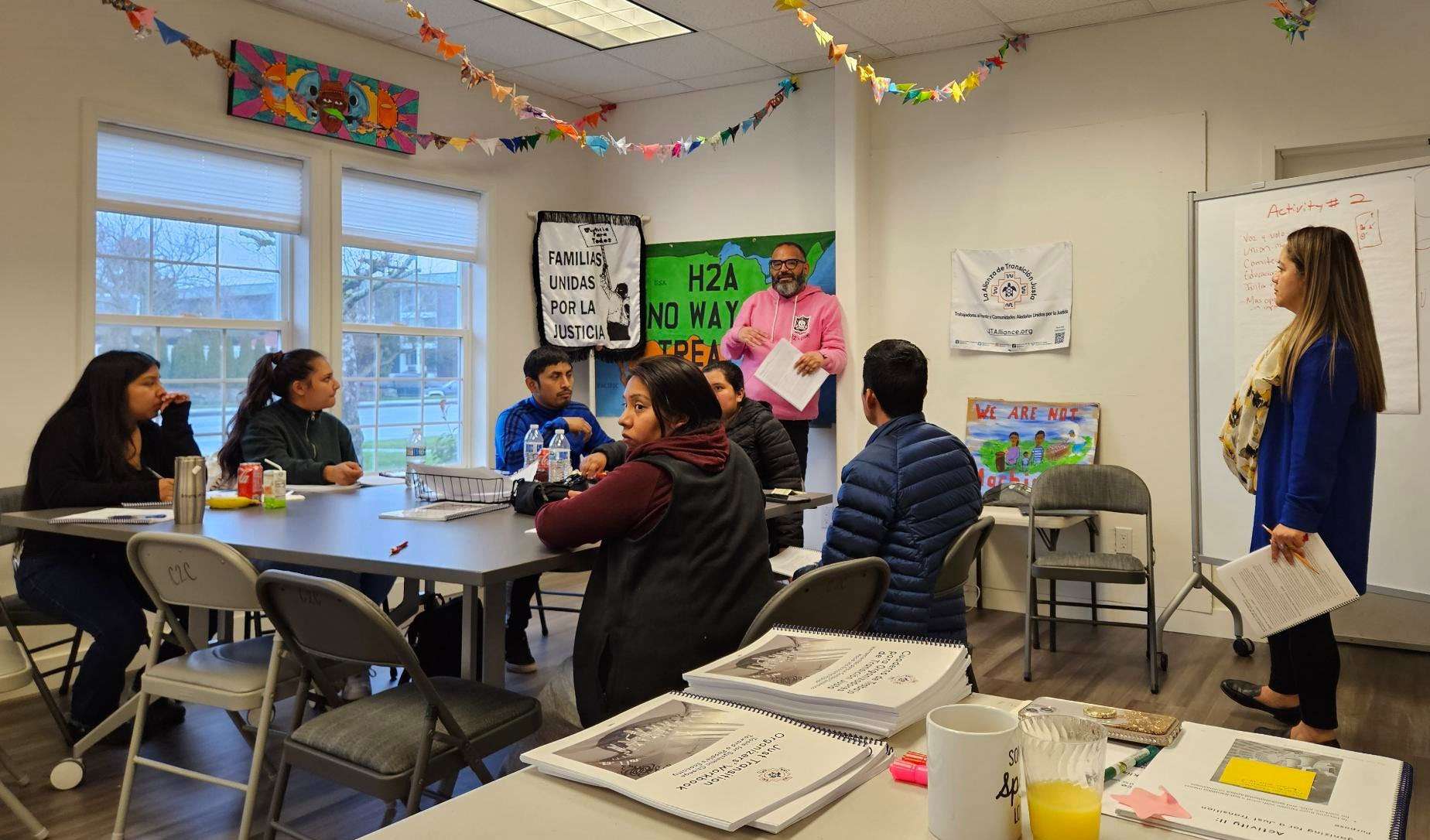
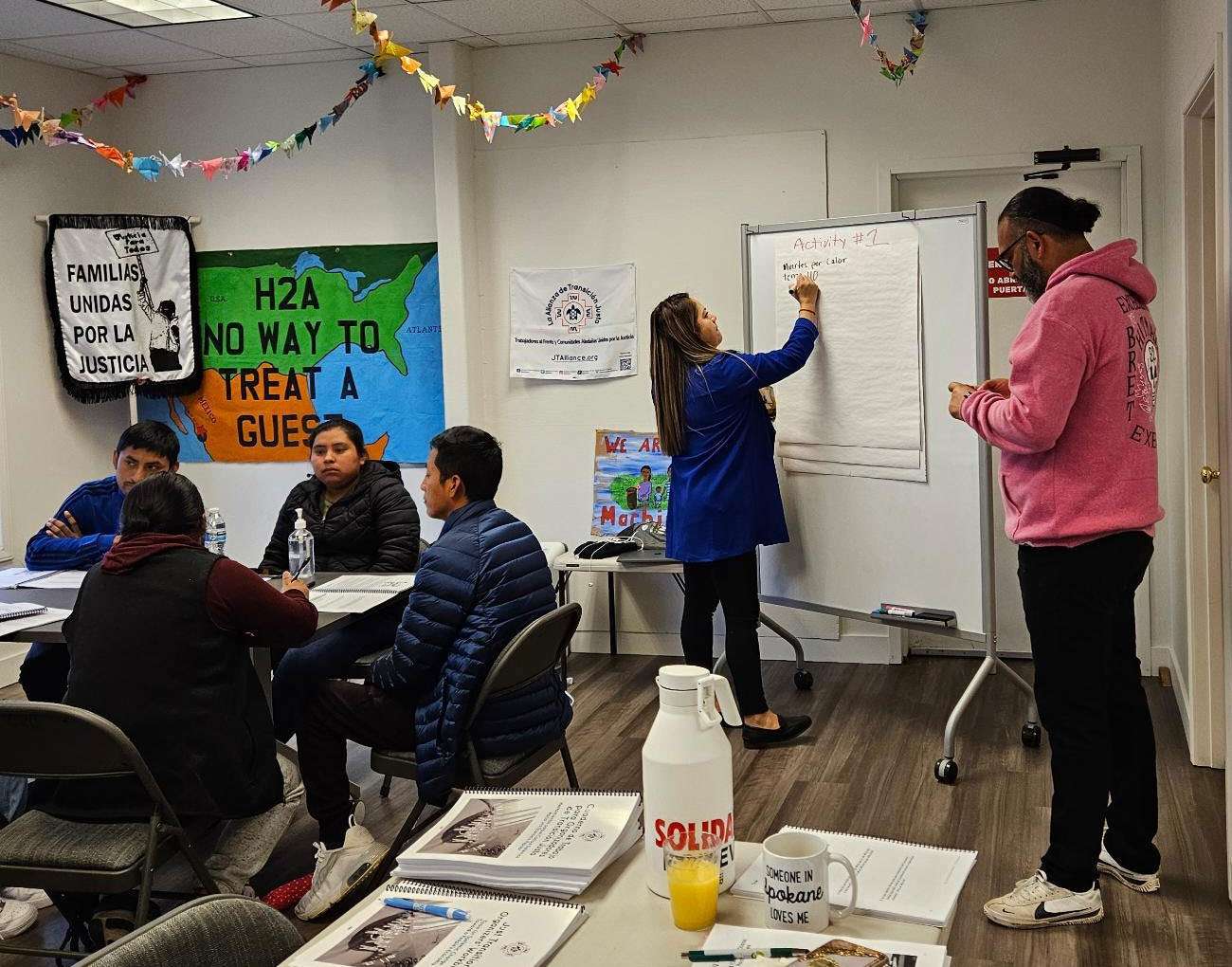
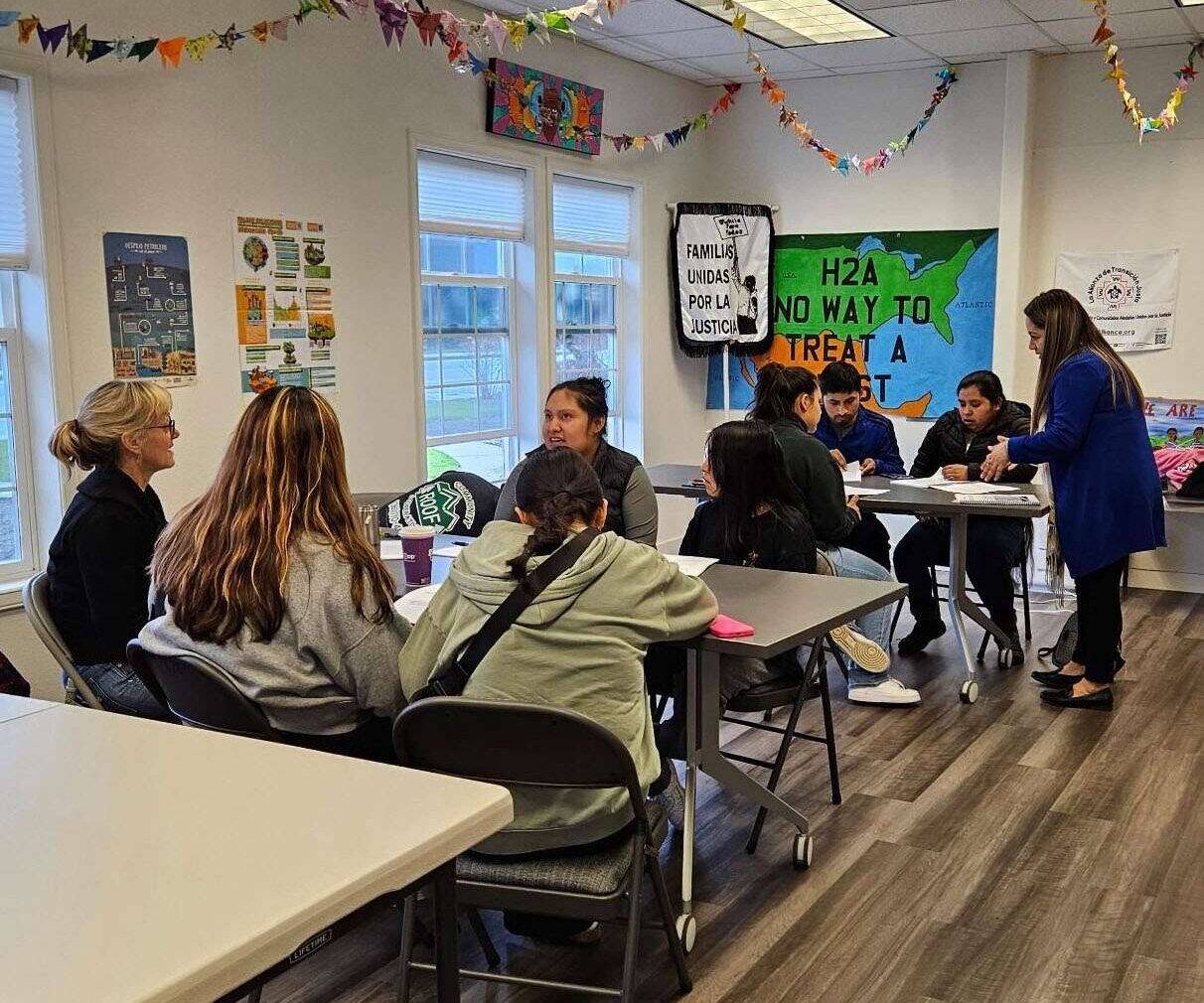
Next week we will celebrate another holiday that is very important to our movements. May Day has a much longer history, and over the centuries it has become complex and multi-faceted. Originally a fertility ritual rooted in pre-Christian European cultures, May Day was a signal of the beginning of the planting season, and therefore it is inherently “green.” In the 1880’s it gained its “red” aspect after May 1st was declared an international day of demonstration for all workers to demand respect and dignity, and it became firmly entrenched in the early labor movement as a commemoration of the Haymarket martyrs. Ironically, International Workers’ Day has been pretty effectively suppressed in the United States where it originated, but it is a cherished reprieve from work and a vibrant day of action in many other countries. Beginning in 2006, May Day became also “brown” after immigrant workers, mostly Latino and many undocumented, organized marches all over the US declaring that they were unafraid and demanding the human rights they deserved. To this day, our comrades at Familias Unidas por la Justicia organize an annual Marcha Campesina to call attention to farmworkers’ rights.
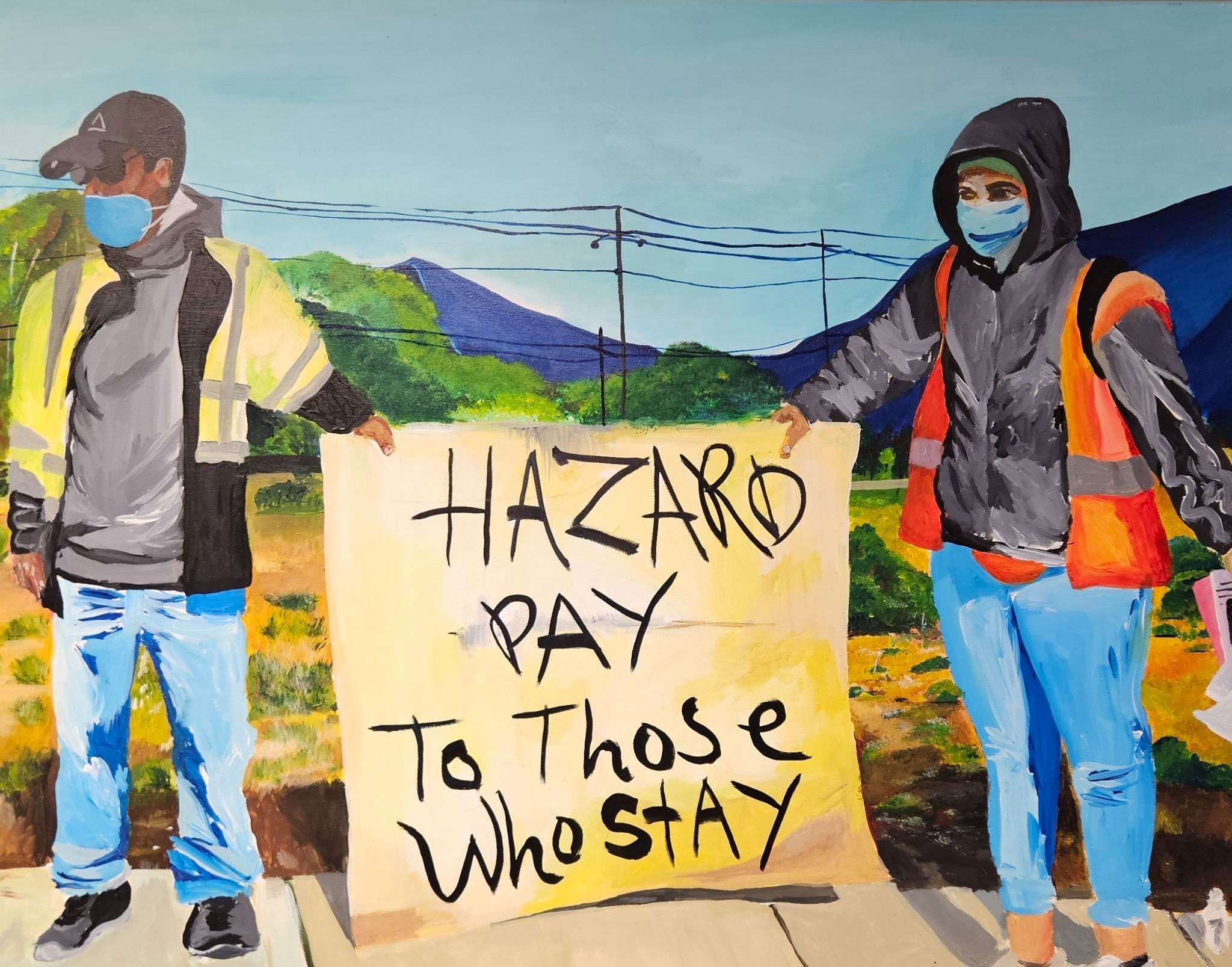
This “green/red/brown” vision of May Day is so important to us at the Just Transition Alliance. It vibes perfectly with our history and our perspective. We seek to bring together Labor and EJ movements, to center the voices of those on the frontlines and fencelines of production, and to build grassroots power as we restore health to the workers and families who keep our economies running, repair relationships with our neighbors and comrades in struggle, and regenerate thriving ecosystems in the places we call home.
Let’s make “Earth Day to May Day” a continuous ten-day festival. A festival of action and organizing to make a better world possible. A festival of resistance where we raise our voices, not allowing anyone to go on complacently accepting business as usual, where we demonstrate our visions by celebrating our grassroots solutions, and where we recognize our strength by joining together from many perspectives to become unified in our shared need to transcend beyond colonization, extractivism, and oppression.
Content Earth Day to May Day 2024 appears first in Just Transition Alliance.
We're Hiring :: Research Associate (Closed)
Job Announcement: Research Associate
Applications are now closed.
The Coalition of Communities of Color’s (CCC) Research Justice Institute seeks an outstanding researcher to join our team as a Research Associate.
The Research Associate will help lead and support a wide range of research projects and activities, such as collecting and analyzing qualitative data, directly engaging community members, and drafting reports and literature reviews. Our research encompasses a wide range of topics related to racial justice, including health, environmental justice, education, transportation, and beyond.
In addition to the core work of research and data analysis, the Research Associate will also build out the public presence of the Research Justice Institute by launching and creating our new blog, drafting research briefs accessible to our communities, and convening a network of BIPOC researchers.
The ideal candidate will have strong writing and communication skills and be committed to working with communities of color. Experience using and analyzing qualitative data and outstanding writing skills are essential for this role. This position is a unique opportunity to build expertise in community data and research justice for BIPOC communities.
The Research Associate’s work will contribute to CCC’s efforts for systems change as we take on urgent issues, build capacity among our BIPOC partners and community members, and use our research to move policymakers and institutions toward racial equity.
For full details on this position, please visit www.coalitioncommunitiescolor.org/jobs.
Research and Analysis: Your role will focus on a wide range of research projects and data analysis, all in close collaboration with the research team. Your work will help power our research projects by:
Co-constructing every aspect of the research process, from project design and data collection methods to community involvement and sharing our research with key audiences
Leading or co-leading parts of the components of the research and data lifecycle
Conducting qualitative analysis for research projects
Drafting elements of our research reports
Completing literature reviews and searching for data on topics to inform our current and upcoming research projects
Engaging and recruiting community members and partners to participate in our research and data collection efforts
Building the Research Justice Institute’s public presence: You will increase the impact of our work and amplify the visibility of our research by:
Launching and leading our new Research Justice Institute blog, generating original content addressing key research justice and equity issues
Drafting new community briefs to more effectively communicate our research projects to the public, the communities we serve, and the broader public
Leading CCC’s BIPOC Research Network: You will build and strengthen relationships between CCC and BIPOC researchers, data workers, evaluators, students, and community outreach/engagement experts across Oregon by:
Managing and administering the new CCC BIPOC Researcher Network, including establishing a member database
Regularly communicating to the network and public through our website content
Convening members of the network at annual gatherings
Qualifications
A successful candidate will have the following qualifications:
Bachelors or Masters degree in a social science or humanities discipline and/or 2–4 years of work experience leading and supporting research projects that engage the public and, in particular, communities of color
Clear, concise, and accessible research writing, with the ability to produce high-quality research reports
Excellent project management skills with the ability to lead the implementation of major projects and work on multiple projects simultaneously
An understanding of how institutional use of data and research can benefit or harm communities of color
Ability to effectively communicate with partners verbally and in writing
Ability to work closely with colleagues in a dynamic environment
Commitment to racial justice and building power for communities of color
These qualifications are a plus:
Familiarity with quantitative data systems methods and analysis as well as the role of community-based data
Knowledge of conducting, visualizing, and explaining qualitative data analysis
An understanding of how institutional use of data and research can benefit or harm communities of color
Experience working with culturally specific community-based organizations, local government, and nonprofit partners
Compensation:
This is a full-time, exempt position with a salary range of $65,386–$74,467. CCC works to provide our staff with support for their health and well-being and recognize the value of their work through the following benefits:
Paid time off: 15 days paid vacation in the first year of employment, increasing with tenure at the organization; 10 days of paid sick leave; 12 paid holidays and a one week office closure in December.
Insurance: CCC pays 100% of premiums for medical, dental, vision, short- and long-term disability, and life insurance for the employee.
Additional benefits include a flexible Spending Account (health savings and daycare), a Transportation Savings Account, an Employee Assistance Program, monthly phone and transportation stipends, and full reimbursements for the employee’s Paid Leave Oregon contributions. Employees may enroll in a matching 401k retirement plan after one year of employment.
CCC also provides resources to support our staff’s training, skill-building, and professional development.
Work Environment: CCC has a hybrid work schedule, with our office located in downtown Portland. You must live in or be willing to move within commuting distance of the office.
To Apply: Please send a cover letter (no more than two pages) and resume to HR@coalitioncommunitiescolor.org, with the subject line “Research Associate — [your name].” Applications are now closed. You will be contacted if selected for an interview.
That's a Wrap: CCC’s 2024 Legislative Session Recap
The short legislative session ran just over a month. Although the “short session” usually sees less momentous legislation, this session we saw many of the Coalition’s endorsed legislation and budget investments pass, particularly those for economic opportunity and language access. Other landmark issues were the passage of state campaign finance limits that will begin to address money in politics and major investments in housing across the state. However, the highest profile issue of the session—Measure 110 reform—ended with the recriminalization of drug possession, a rollback that will disproportionately impact Black and brown Oregonians through convictions and incarceration. Our excitement at the overall success of our priorities is tempered by the impact HB 4002 will have on our BIPOC communities.
See our original legislative agenda here and read on for highlights below.
2024 CCC Legislative Highlights:Economic OpportunityTwo existing programs to advance economic opportunity received new infusions of funding. The Economic Equity Investment Program received $8 million; this investment was the top priority for the BIPOC Caucus. This program provides grants and technical assistance to community-based programs. At a time where Oregon’s racial wealth gap is increasing, we must make ongoing investments to build generational wealth for the BIPOC Oregonians who have faced systemic discrimination in employment and asset-building.
The Oregon Individual Development Account Initiative was allocated $5 million, an investment that increased the overall amount of funds so IDA providers statewide can enroll more savers this year. IDAs are a powerful tool to economic prosperity for BIPOC Oregonians with low incomes. These matched savings accounts enable participants to work toward their own financial goals, such as homeownership or higher education. Many of CCC’s member organizations provide IDAs with culturally specific and relevant financial education, helping support the long term economic prosperity for savers. We will continue to advocate for ongoing investments in IDAs and the Economic Equity Investment Program as key strategies to address Oregon’s racial wealth gap.
Economic opportunity for Oregon families also relies on quality, affordable child care for all children. This year, key bills and investments will help stabilize and prepare Oregon’s child care supply for expansion. The Employment Related Daycare (ERDC) program received $171.2 million, helping to ensure stability for families enrolled in the program. With the passage of HB 4098 and a $5 million allocation, Oregon is also better prepared to expand child care capacity when seeking federal funds through the CHIPS Act by adapting existing state programs to increase child care supply in priority areas.
While legislation to create a Child Care Infrastructure Fund - HB 4158 did not pass, $1.5 million was allocated to the Provider Services Fund, helping continue their support of family care providers. While much remains to be done to meet Oregon families’ child care needs, the Child Care for Oregon coalition continues to build momentum and move policymakers toward meaningful action and investments in this critical system.
Our final endorsed piece of legislation that was passed in economic opportunity was The Family Financial Protection Act - SB 1595. The business practices of the debt collection industry worsen the racial wealth gap and can devastate Oregonians by putting their homes and savings at risk. This legislation will strengthen protections for Oregonians who are sued by debt collectors that garnish their wages or bank accounts, or place liens on their home and imperil their financial stability. With the passage of this bill, consumers will be better equipped to fight back against unfair debt proceedings and maintain their financial stability.
Immigrant Justice and Language AccessIn the arena of immigrant justice and language access, SB 1533 increased the number of languages for the Voters’ Pamphlet to the top ten languages spoken statewide, up from just five. Counties will also be required to include any language that has over 100 speakers. These changes will enable thousands more Oregonians to make informed decisions when they vote and opportunities for greater democratic participation.
Another new policy to advance immigrant justice and language access was Healthcare Interpreter Reform - SB 1578. Quality care requires in-language communication, which is often provided by medical interpreters. This legislation will expand access to health care interpreters and make the system more equitable for interpreters—many of whom are BIPOC immigrants themselves—increasing their earning potential. This legislation is awaiting the Governor’s signature.
Finally, the Immigrant and Refugee Student Success plan - SB 1532 passed, directing the Department of Education to develop a plan for our education system to better meet the needs of immigrant and refugee students and set them on a path to educational success. Student Success Plans have been developed to support Black, Indigenous, Latine, Pacific Islander students, and our schools should be similarly equipped with strategies to support learning for immigrant and refugee students.
Reflections on the 2024 Legislative SessionMuch of the session was dominated by HB 4002, which rolled back key provisions of Measure 110 and recriminalized possession of drugs; the legislation is expected to be signed by Governor Kotek. We know that this return to the War on Drugs will have a disproportionate impact on Black and brown communities, resulting in thousands of convictions and jailings of people struggling with substance use. Many of CCC’s member organizations engaged in fierce advocacy and showed the power of community voices, mobilizing hundreds of BIPOC Oregonians to show up and weigh in on this legislation. We are grateful to Unite Oregon and Imagine Black for their leadership in this movement and the many CCC organizations who played a critical role. While the legislature ultimately did not heed this message, we will look to implementation to mitigate the harm this measure will cause and maximize investments toward real treatment and services.
While we were deeply disappointed by the passage of HB 4002, the Legislature did finally address the longstanding issue of money in politics, imposing campaign finance limits. These reforms will help more diverse candidates run on a level playing field and limit the corrupting influence of wealthy donors. This legislation earned the support of a diverse range of advocates, meaning that there will not be any campaign finance measures on the ballot in November. We were also heartened to see an investment of over $350 million to address our state’s housing crisis, particularly the $7 million allocation to support our member the Urban League of Portland in their work to provide homelessness prevention services.
What’s next? CCC is now looking to prepare for the November election and to the 2025 legislative session to develop new policy priorities, advocate for critical investments, and take up unfinished business from previous sessions. You can learn more about missed opportunities from the 2023 legislative session in our recap here. We look forward to working with our coalition and many partners to advance racial equity and justice in Oregon.
Successful Trainings with JTA Partners
JTA’s José Bravo with trainers Edgar Franks of Familias Unidas por la Justicia and Elizabeth Martinez of Comunidades Aliadas Tomando Acción. Photo credit: José Bravo
We are so pleased to celebrate our first two trainings of 2024, using our newly updated and expanded program Tools for Systemic Change Toward a People’s Economy. Our talented new cadre of popular education trainers are working together fabulously and raising the bar for engaging participant-driven education.
In February, Familias Unidas por la Justicia hosted a training in Mt. Vernon, WA. And just last week Inland Communities for Immigrant Justice held one in San Bernadino, CA. We have lots more trainings planned throughout the year, so stay tuned for updates!
Scenes from the training with Familias Unidas por la Justicia. Photo credits: José Bravo
Scenes from the training with Inland Communities for Immigrant Justice. Photo credits: José Bravo and Elizabeth Martinez
Content Successful Trainings with JTA Partners appears first in Just Transition Alliance.
Pages
The Fine Print I:
Disclaimer: The views expressed on this site are not the official position of the IWW (or even the IWW’s EUC) unless otherwise indicated and do not necessarily represent the views of anyone but the author’s, nor should it be assumed that any of these authors automatically support the IWW or endorse any of its positions.
Further: the inclusion of a link on our site (other than the link to the main IWW site) does not imply endorsement by or an alliance with the IWW. These sites have been chosen by our members due to their perceived relevance to the IWW EUC and are included here for informational purposes only. If you have any suggestions or comments on any of the links included (or not included) above, please contact us.
The Fine Print II:
Fair Use Notice: The material on this site is provided for educational and informational purposes. It may contain copyrighted material the use of which has not always been specifically authorized by the copyright owner. It is being made available in an effort to advance the understanding of scientific, environmental, economic, social justice and human rights issues etc.
It is believed that this constitutes a 'fair use' of any such copyrighted material as provided for in section 107 of the US Copyright Law. In accordance with Title 17 U.S.C. Section 107, the material on this site is distributed without profit to those who have an interest in using the included information for research and educational purposes. If you wish to use copyrighted material from this site for purposes of your own that go beyond 'fair use', you must obtain permission from the copyright owner. The information on this site does not constitute legal or technical advice.
 This site is not the official webpage of the Industrial Workers of the World.