






You are here
Silent Epidemic of Workplace Chemical Exposures Rages on; New Worker Right-to-Know Database Maps All OSHA Health Inspection Readings
By Kirsten Stade - Public Employees for Environmental Responsibility, May 28, 2015
Disclaimer: The views expressed here are not the official position of the IWW (or even the IWW’s EUC) and do not necessarily represent the views of anyone but the author’s.
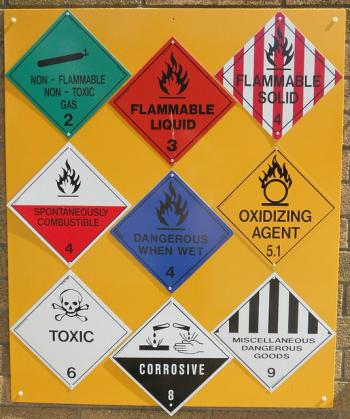 Washington, DC — Workplace chemical exposures are the nation’s eighth leading cause of death but the U.S. lacks any strategy for preventing the more than 40,000 premature deaths each year, according to Public Employees for Environmental Responsibility (PEER). Today the group unveiled a Worker Right-to-Know website displaying 30 years of Occupational Safety & Health Administration (OSHA) chemical exposure readings from inspections back to 1984 so workers can see what substances they encountered and to help guide OSHA in improving safeguards for worker health.
Occupational exposures kill malignantly, from cancer, neurological breakdown, cardiopulmonary disease, and other chronic maladies. While this toll claims the lives of more than 10 times the workers killed in all on-the-job accidents combined, OSHA spends in excess of 90% of its budget on safety issues.
“More Americans die each year from workplace chemical exposure than from all highway accidents, yet we have no national effort to stem this silent occupational epidemic,” stated PEER Executive Director Jeff Ruch, pointing out that allowed chemical exposure on-the-job is roughly 1000 times higher than in the general ambient environment. “In the U.S., environmental protection stops at the factory door.”
The new PEER database allows comprehensive workplace exposure data to be searched by year, by state, by establishment type and by substances detected. Individual inspection data may also be viewed. It also provides a geospatial display of all OSHA workplace monitoring sampling results. PEER hopes the readings will give workers and their doctors clues about the origins of otherwise mysterious illnesses.
These occupational risks may be on the rise as thousands of new chemicals are introduced in U.S. workplaces each year. Yet OSHA figures show a slow decline in health sampling. At its current rate of health inspections, it would take OSHA nearly 600 years to sample chemical exposure at half the nation’s industrial facilities that handle hazardous substances.
On a policy level, PEER is asking responsible agencies to come to grips with the problem by calling for –
- OSHA to start using its own air sampling data to pinpoint where health inspections are most needed and to increase the number of such inspections; and
- The National Institute for Occupational Safety and Health to conduct an updated national survey of occupational exposures, a survey it last did thirty-five years ago.
“Reversing this long lethal trend requires a national commitment to ‘green’ the American workplace,” added Ruch. “Above all, OSHA needs to rediscover its ‘H’ by taking affirmative steps to sharply reduce the slow poisoning of American workers.”
###
The Fine Print I:
Disclaimer: The views expressed on this site are not the official position of the IWW (or even the IWW’s EUC) unless otherwise indicated and do not necessarily represent the views of anyone but the author’s, nor should it be assumed that any of these authors automatically support the IWW or endorse any of its positions.
Further: the inclusion of a link on our site (other than the link to the main IWW site) does not imply endorsement by or an alliance with the IWW. These sites have been chosen by our members due to their perceived relevance to the IWW EUC and are included here for informational purposes only. If you have any suggestions or comments on any of the links included (or not included) above, please contact us.
The Fine Print II:
Fair Use Notice: The material on this site is provided for educational and informational purposes. It may contain copyrighted material the use of which has not always been specifically authorized by the copyright owner. It is being made available in an effort to advance the understanding of scientific, environmental, economic, social justice and human rights issues etc.
It is believed that this constitutes a 'fair use' of any such copyrighted material as provided for in section 107 of the US Copyright Law. In accordance with Title 17 U.S.C. Section 107, the material on this site is distributed without profit to those who have an interest in using the included information for research and educational purposes. If you wish to use copyrighted material from this site for purposes of your own that go beyond 'fair use', you must obtain permission from the copyright owner. The information on this site does not constitute legal or technical advice.
 This site is not the official webpage of the Industrial Workers of the World.