You are here
News Feeds
May Day Webinar: Workers’ Safety In The Climate Crisis
Hi there
After a brief period of hiatus we’re very happy to announce that we will be returning to regular programing on May Day, May 1 at 1pm EST for a webinar on protecting workers’ safety in the climate crisis.
Our panelists, to be announced shortly, will speak about the vital work trade unions do to protect workers from rising temperatures, new pollutants and other stresses on the job and what they are doing to ensure that their members are safe.
We will have a Zoom link to RSVP shortly but if you would like to discuss joining the panel, please reach out to convener@greeneonnet.ca
See you there.
Our Guests:
Alex Callahan: National Director of Health, Safety and Environment with the Canadian Labour Congress.
Anne Tennier: President and Chief Executive Officer of the Canadian Centre for Occupational Health and Safety
Roger Duffy: Health & Safety Representative Canadian Union of Public Employees
Registration info:
You are invited to register for a Zoom webinar!
When: May 1, 2026 01:00 PM Eastern Time (US and Canada)
Topic: Green Economy Network
Register in advance for this webinar.
See you there
New Report: Who Is Financing the Future of African Agriculture?
The Alliance for Food Sovereignty in Africa (AFSA) launches a new report asking a critical question: Is the African Development Bank (AfDB) financing food systems that truly serve Africa’s people?
Based on an analysis of 20 AfDB-supported agricultural projects, this study, researched by Dr Keiron Audain for AFSA, reveals a troubling pattern. Despite strong rhetoric around food security and climate resilience, a significant share of AfDB financing continues to reinforce agro-industrial models built on monocultures, synthetic inputs, and corporate value chains. Meanwhile, farmer-managed seed systems, agroecological practices, territorial markets, and Indigenous knowledge remain underfunded and marginalised.
The report exposes persistent gaps in transparency and participation. Communities are frequently consulted but rarely empowered to shape decisions. Investments that affect land, livelihoods, and diets are too often designed without meaningful co-creation with the smallholder farmers who feed the continent.
At a time when Africa faces escalating climate shocks, biodiversity loss, and food insecurity, public finance cannot continue to support systems that deepen dependency, degrade soils, and concentrate power in corporate hands. Africa does not need a blind expansion of industrial agriculture. It needs investment in agroecology, crop diversity, resilient seed systems, and local food economies that strengthen sovereignty and community control.
This report is not just an analysis. It is a call to redirect agricultural finance toward justice, ecological integrity, and food sovereignty. AfDB and African governments must ensure that public resources build resilient, community-rooted food systems rather than entrenching models that undermine them.
Download the full report here.ICARRD+20: Joint Civil Society Statement
Protect Our Land, Restore Our Soil: Collective Territorialities for Land Justice, Pastoralist Futures, and Ecological Restoration
As civil society organisations, social movements, faith-based actors, Indigenous Peoples, pastoralist and peasant organisations from Africa and across the Global South, we come to ICARRD+20 at a moment of deep crisis and urgent possibility.
Twenty years after the first International Conference on Agrarian Reform and Rural Development, rural communities across the world continue to face dispossession, land concentration and ecological destruction. Despite global commitments to end hunger and poverty, land and food systems are increasingly controlled by corporate and financial interests, while communities that produce food remain marginalised and insecure.
Across Africa and other regions, customary and collective land systems are being undermined in the name of development, conservation, climate mitigation and large-scale investment. Carbon offset projects, extractive industries, agribusiness expansion and speculative land markets are accelerating dispossession, soil degradation and social inequality, often excluding communities from territories they have governed collectively for generations. At the same time, agribusiness corporations and financial investors are driving the rapid expansion of factory farming and industrial livestock production across Africa, concentrating land and resources, degrading ecosystems, and undermining pastoralist and small-scale livestock systems essential to food sovereignty.
Pastoralist communities are among those most severely affected. As 2026 is the International Year of Rangelands and Pastoralists, this conference must recognise pastoralists as central to sustainable food systems and ecological resilience. Policies that restrict livestock mobility, privatise communal rangelands or convert grazing lands to agribusiness, conservation or carbon-offset projects undermine pastoralist livelihoods while intensifying conflict, poverty and environmental degradation. Yet pastoralism remains one of the most climate-resilient land-use systems in drylands. Through mobility and communal rangeland management, pastoralists sustain livelihoods, supply vital meat and milk production, and maintain ecological balance in areas where crop farming is often unsustainable.
Meanwhile, communities defending their territories face criminalisation and violence. Women pastoralists and small-scale producers, youth, and Indigenous Peoples remain excluded from decision-making processes, despite being central to food production and environmental stewardship.
ICARRD+20 must therefore not be a commemorative event. It must become a turning point.
Our Calls to Governments and International Institutions
Ahead of ICARRD+20, we call on governments, international institutions, and development partners to commit to the following:
- Recognise and protect collective and customary land tenure systems, including individual and collective land rights as affirmed in CESCR, UNDRIP and UNDROP.
- Protect pastoralist rangelands and livestock mobility, including cross-border corridors essential for climate adaptation and peace, and prevent conversion of rangelands to inappropriate uses such as monoculture tree plantations.
- Implement genuine agrarian reform and equitable land redistribution, prioritising landless farmers, women, youth, pastoralists and Indigenous communities, while addressing the historical and political drivers of land degradation and induced land scarcity.
- End land speculation and financialisation, including large-scale land acquisitions and carbon or biodiversity credit schemes that dispossess communities.
- Redirect agricultural and climate finance toward agroecology, rangeland restoration and community-led food systems, and integrate pro-pastoralist strategies into National Biodiversity Strategies and Action Plans (NBSAPs) and Nationally Determined Contributions (NDCs). Promote conservation models that uphold pastoralists’ rights and ensure restoration strengthens pastoralist livelihoods as part of a just green transition.
- Invest in decentralised infrastructure and services compatible with mobile pastoralist systems, including water, veterinary care, markets, education and health.
- Guarantee meaningful participation of affected communities, and free prior and informed consent of Indigenous Peoples, in land, agriculture and climate decision-making.
- Protect land and environmental defenders, and end violence, criminalisation and forced displacement.
- Establish binding corporate accountability mechanisms for human rights violations and ecological harm across global value chains.
Toward Land Justice, Pastoralist Futures and Ecological Restoration
The future lies not in further commodifying land and food systems, but in restoring community control over territories, securing pastoralist mobility and commons, and supporting agroecological transitions rooted in justice and ecological integrity.
ICARRD+20 must renew global commitments to agrarian reform, land justice, and food sovereignty, led by communities that sustain the world’s food systems and ecosystems.
Land justice is climate justice. Pastoralist mobility is ecological resilience.
Transit is the Ticket to a Winning NFL Draft
On April 23-25 of this year, Pittsburgh will take the national stage by hosting the NFL draft. This will be an unprecedented opportunity to showcase our region: the event is estimated to draw between 500,000-700,000 attendees across three days, around twice the total population of the City of Pittsburgh. The NFL draft events will be located primarily at the Point and at Acrisure Stadium, and success will depend in part on whether hundreds of thousands of residents and visitors will be able to efficiently access the festivities.
Because our beautiful region is hemmed in with rivers and hills, the arterial roadways and bridges to reach these sites are limited. If the majority of these hundreds of thousands of event attendees plan to drive themselves Downtown or to the North Shore, the NFL Draft will be an unmitigated disaster, with delays lasting for hours in all directions. It is therefore critical that both event workers and the NFL Draft visitors are both supported and incentivized to take public, mass transit.
In other words, well-advertised, easy to use, and abundant transit service must be the heart of any winning strategy for the NFL Draft.
There are a number of key stakeholders who must play a role in order for transit to be the easy and obvious choice for stadium and hospitality workers, local attendees and out-of town visitors through the NFL draft days. Below we offer our recommendations for each:
Recommendations for Pittsburgh Regional Transit:
Recommendations for the NFL/Visit Pittsburgh/Stadium Authority:
Recommendations for City of Pittsburgh, Allegheny County and PennDOT:
Recommendations for Pittsburgh Regional Transit:Service:
- PRT must provide both robust regular transit service and event shuttle service. Pittsburgh Regional Transit should ensure that all routes, throughout the County, run at least as frequently as their current rush hour service during the entire event. Frequent transit service needs to serve local residents as well as out-of-town visitors. Hundreds of thousands of Pittsburgh area residents are anticipated to attend and work the Draft events and staff local businesses, and visitors to the City will be staying in every available hotel room and Airbnb across the region.
- Transit workers should be provided additional compensation during the NFL draft in order to incentivize workers to pick up extra shifts and to diminish call offs.
Marketing: Pittsburgh Regional Transit must have a marketing campaign to encourage transit use during the NFL draft.
- PRT should deploy a slogan like, “PRT is your ticket to the action”, “PRT is your valet to the game,” “PRT makes it easy,” or ”Transit riders get the red carpet,” which would be memorable and would show that PRT has plans to support rider access to the event.
- PRT should communicate clearly on its channels – social media, Ready2Ride, its website- and third party apps to help riders navigate the system during the event. There should be an NFL draft landing page on the PRT website that includes fares/fare payment, and service/schedules/maps.
- PRT should advertise at the airport, through Airbnb, at Downtown and North Shore restaurants/bars/coffee shops (WMATA in DC has advertisements on coasters in Washington DC bars), in local hotel “welcome guides to Pittsburgh”, and on bus shelters.
- PRT’s canvass team could table at the Pittsburgh airport, on the North Shore, at Acrisure Stadium and at the Point to provide personalized information on fares and service.
–The NFL Draft One Pass Mobile App should prominently feature a link to a (future) Pittsburgh Regional Transit NFL Draft landing page as the top recommendation for how to get around. Parking information should be secondary.
–Other portals for NFL Draft information including the Steelers App and the Visit Pittsburgh page should prominently link to and recommend Pittsburgh Regional Transit for locals and out-of-town visitors to get around during the Draft.
–Buses should get priority access to the front of the stadium. Reducing overall traffic congestion, excessively long commute times and walks to access the event – by rolling out the red carpet for public transit- will make for a successful event and happier attendees.
Recommendations for City of Pittsburgh, Allegheny County and PennDOT:–Buses must not be stuck in mixed traffic during the event. There should be a careful audit of where buses experience delays during stadium events and events at the Point, and specific interventions made to address them. For instance, one lane of Reedsdale Street should be made bus-only, and one lane on North Ave should be made bus-only. The bus only lanes downtown -particularly Liberty Ave- should have no exceptions for cars during the event, and should have traffic enforcement officers to ensure that they are kept clear for buses. The HOV lanes on 279 should remain open for buses throughout the three days of the NFL draft.
Conclusion: The City of Pittsburgh and Pittsburgh Regional Transit have the opportunity to shine at this year’s NFL Draft, and we’re eager to see it happen.We’re calling on Pittsburgh Regional Transit, the NFL and Pittsburgh tourism bureau, and our municipal champions to ensure that our transit service, PRT’s communications and marketing efforts, and our region’s infrastructure is primed to make transit the easiest and best option for locals and visitors alike. Of course, these are not comprehensive recommendations—we trust that many other good proposals are being brought to the table. But we hope that together, these institutions can play their part towards making abundant, efficient transit the ticket to a winning NFL Draft.
The post Transit is the Ticket to a Winning NFL Draft appeared first on Pittsburghers for Public Transit.
Collective Political Statement on Dumpsite Closures
Across the world, governments and private actors are shutting down dumpsites in the name of modernization, climate action, or urban order. But for the millions of waste pickers who have sustained recycling systems for decades, these closures do not feel like transitions. They are evictions. They mean losing the right to work, being pushed out of the city, being excluded from decisions that shape our lives, and being blamed for environmental problems we did not create. What is presented as progress often results in repression: sites close overnight, police arrive before social services, and companies take control of materials without acknowledging the workers who made those materials valuable in the first place.
From Africa to the Asia-Pacific, from the Americas to Europe, our affiliates report the same pattern when their workplaces are closed: no consultation, no guarantees, and no place for waste pickers in the so-called “new systems.” Environmental narratives, technical language, and regulatory frameworks are repeatedly used to justify the exclusion of workers—especially women, migrants, and racialized communities who already face multiple forms of inequality. These are not isolated cases; they represent a global political trend that threatens our livelihoods, our dignity, and the continuity of organized waste picker movements worldwide.
We reject the idea that waste pickers are a problem to be removed. For generations, we have diverted enormous quantities of materials from dumpsites, reduced emissions, and protected ecosystems—long before recycling, reusing, and repairing became part of official environmental agendas. Today, despite vast amounts of valuable materials being wasted or captured by corporations, waste pickers are increasingly denied access to recyclables, reusable materials, and repairable goods. A system that discards workers while protecting profits is neither modern nor sustainable.
No dumpsite closure can be legitimate without the full participation of waste pickers from the outset. We demand recognition as workers who need rights, and a decisive role in the planning, implementation, and monitoring of any waste system reforms. Any restructuring must guarantee secure livelihoods, continued access to materials, and real alternatives for those who choose different pathways. Anything less is forced displacement.
We denounce all forms of criminalization and repression. Sudden closures, violent evictions, and narratives that portray waste pickers as obstacles to environmental progress are incompatible with a just and democratic transition.
We draw a clear line: we will not accept closures that erase our work, deny our access to materials, projects that dispossess us of value, or models that treat poor workers as disposable. Our vision is of cities where waste pickers are recognized as environmental workers, with dignified working conditions, stable incomes, political voice, and shared control over the systems they sustain.
We speak with one global voice: Work with us. Invest in us. Recognize us. Partner with us. A world without waste pickers is a world with more waste—and less justice.
Collective Political Statement on Dumpsite ClosuresDownloadDownload in:
English, Spanish, French, Nepali, Hindi, Indonesian, Filipino, Portuguese
The post Collective Political Statement on Dumpsite Closures appeared first on International Alliance of Waste Pickers.
Waste Pickers: Guardians of the Circular Economy – Severino Lima Jr. Statement on March 1°
The post Waste Pickers: Guardians of the Circular Economy – Severino Lima Jr. Statement on March 1° appeared first on International Alliance of Waste Pickers.
International Waste Pickers Day: honoring lives lost and fighting for dignity, safety and a just transition
The post International Waste Pickers Day: honoring lives lost and fighting for dignity, safety and a just transition appeared first on International Alliance of Waste Pickers.
PRESS RELEASE: Civil Society Organisations Raise Alarm Over Exclusion of Farmers from Regional Seed Strategy Discussions in West and Central Africa
Thiès, Senegal, 12 February 2026
The Alliance for Food Sovereignty in Africa (AFSA), in collaboration with civil society organisations and farmers from West and Central Africa, has expressed deep concern about the sub-regional workshop on the seed sector organised in Abidjan by CORAF (West and Central African Council for Agricultural Research and Development) and FAO (Food and Agriculture Organisation of the United Nations) from 11 to 13 February 2025.
While recognising the importance of regional dialogue on seed systems, AFSA and its partners warn that the current process risks violating farmers’ rights by marginalising the peasant seed systems that are the foundation of food production in Africa. Their rights are, in fact, guaranteed internationally by major legal instruments, namely the United Nations Declaration on the Rights of Peasants and Other People Working in Rural Areas (UNDROP) and Article 9 of the International Treaty on Plant Genetic Resources for Food and Agriculture (ITPGRFA).
The workshop, which aims to define regional strategies for the seed sector, has largely excluded peasant organisations and civil society actors with long experience of peasant seed systems, including community seed banks and seed boxes, seed fairs and participatory seed development initiatives throughout the region.
“Any seed strategy that excludes farmers and their organisations is fundamentally flawed,” said Alihou Ndiaye, coordinator of the West African Farmers’ Seed Committee (COASP), a member organisation of AFSA. “Farmers are not peripheral actors. They are the guardians and innovators of the seed systems that feed Africa. Policies must be developed with them, not for them.”
AFSA also expressed concern about the continued use of the term “informal seeds” in policy discussions, even though African Union processes under the Comprehensive Africa Agriculture Development Programme (CAADP) recognise peasant seed systems as essential to agricultural transformation and climate resilience.
According to recent African Union studies, between 80 and 90 per cent of the seeds used by African farmers come from peasant seed systems, but these systems remain poorly supported, if at all, by policies and regulations.
“To label farmers’ seeds as ‘informal’ or inferior is to ignore the reality that these systems provide the majority of seeds used in Africa,” said Famara Diédhiou, coordinator of the AFSA seed working group. “Farmers’ seeds are diverse, resilient and adapted to local conditions. The African Union’s CAADP process now recognises farmers’ seed systems and indigenous seed systems as essential to Africa’s agricultural future, and regional strategies must align with this shift by recognising farmers as the legitimate custodians of our seed diversity.”
Civil society organisations have also criticised current proposals to simplify certification systems, which risk treating farmers’ varieties as inferior. Instead, they advocate for regulatory systems based on equal recognition, but with rules adapted to the nature and diversity of farmers’ seed systems.
CSOs and POs remain very vigilant about the threat posed by UPOV to the seed system in African countries, whose governments are under constant pressure from agribusiness lobbies. This requirement is non-negotiable, as Jean-Paul Sikeli of COPAGEN put it: “We cannot allow the UPOV regime to destroy Africa’s genetic heritage. Our seed systems must protect diversity and farmers’ rights, not impose industrial uniformity.”
AFSA and its partner organisations call on CORAF, FAO and regional institutions to ensure that future processes fully include farmers’ organisations and civil society, to align strategies with the African Union’s new policy directions, and to strengthen peasant seed systems as the foundation of resilient African food systems.
“The future of seeds in Africa cannot be decided in rooms where farmers are absent,” added Mr Ndiaye. “If we want resilient food systems, farmers must be at the centre of policy and investment decisions.”
AFSA and allied organisations remain ready to engage constructively with regional institutions to develop inclusive, farmer-centred seed policies across Africa.
###
See AFSA’s Position Statement here.Media contacts:
Famara Diedhiou, Alliance for Food Sovereignty in Africa (AFSA) famara.diedhiou@afsafrica.org, WhatsApp +221 77 539 89 28
Jean Paul Sikeli, Coalition for the Protection of African Genetic Heritage (COPAGEN) sikelijeanpaul3@gmail.com, WhatsApp +225 05 92 50 06
The Lilongwe Declaration on agroecology-based School and College meals
We, the over 80 delegates from Kenya, Uganda and Malawi, including educators, school administrators, entrepreneurs, researchers, civil society organisations, development partners, and policy actors, convened in Lilongwe, Malawi, on 22nd January 2026, to deliberate on ‘Agroecology-based School and College Food Procurement Systems in East and Southern Africa’
WE THANK the Government and People of Malawi for the warm welcome and support we have received during this event. We also appreciate the International Development Research centre of the Canadian government and their partners for making this event possible, and urge them to continue supporting the development of agroecology-based school meal programmes in Africa.
We RECOGNIZE that school meal programmes across our three countries play a critical role in advancing nutrition, education, gender equality, social protection and local economic development, particularly for children from marginalized and food-insecure households. We further acknowledge that these programmes operate within complex and evolving contexts, shaped by climate change, rising food prices, environmental degradation, policy gaps, and structural inequalities.
We note that:
- Malawi is implementing multi stakeholder school meals system, while confronting constraints related to agricultural productivity, procurement systems, and institutional coherence
- Uganda relies largely on community- and parent-led school feeding arrangements, in the absence of a comprehensive national policy, resulting in uneven access, nutritional disparities, and heavy burdens on households.
- Kenya has articulated strong policy ambitions through its National School Meals and Nutrition Strategy and emerging agroecology frameworks, yet continues to face challenges related to funding stability, climate shocks, and farmer–school coordination.
Across all three countries, we recognize that women, youth, and other marginalized groups remain central to food production and preparation, yet continue to be underrepresented in decision-making and benefit-sharing within school food systems.
Guided by the principles of agroecology, food sovereignty, participatory action research (PAR), and gender equality and social inclusion (GESI), we affirm that school meal programmes are strategic leverage points for transforming local food systems, strengthening resilience, and advancing social justice across Africa.
OUR SHARED REGIONAL VISION
We collectively envision school and college meal systems in Malawi, Uganda and Kenya that are:
- Agroecology-based, environmentally sustainable, and climate-resilient
- Home-grown and territorially embedded, prioritizing local producers and local markets
- Inclusive and gender-transformative, ensuring equitable participation and benefits
- Educationally integrated, linking food, learning, culture, and livelihoods
- Institutionally supported, through coherent policies, adequate financing, and accountable governance
COMMITMENT
- We affirm agroecology as a scientific, practical, cultural, and political approach that supports biodiversity, nutrition, climate adaptation, and community agency. We commit to:
- Advancing agroecological production as a preferred foundation for school and college food supply
- Promoting diversified, indigenous, and culturally appropriate foods across menus
- Integrating school gardens, food forests, and Integrated Land Use Design (ILUD) as learning and food production spaces in all three countries
- We recognize that sustainable school feeding depends on short, transparent, equitable, sustainable and inclusive supply chains. We therefore commit to:
- Strengthening direct linkages between schools, smallholder farmers, cooperatives, aggregators, and territorial markets in Kenya, Uganda and Malawi
- Supporting procurement mechanisms that are flexible enough to accommodate small-scale, seasonal, and agroecological production
- Reducing over-reliance on imported or conventionally produced foods while safeguarding food quality, safety, and reliability.
- We acknowledge that unequal power relations continue to shape access, participation, and benefits within school feeding value chains. We commit to:
- Ensuring women’s leadership and decision-making power in procurement committees, producer organisations, and school governance structures
- Creating meaningful opportunities for youth employment, entrepreneurship, and skills development across the value chain
- Applying an intersectional GESI lens that recognizes how gender, age, disability, poverty, and geography interact to shape exclusion
- We recognize the role of producers, entrepreneurs, processors, traders, caterers, and service providers in making school feeding systems viable. We commit to:
- Supporting agroecology-aligned enterprises
- Promoting appropriate technologies for storage, processing, clean cooking, and post-harvest loss reduction
- We reaffirm the value of participatory, action-oriented research in generating locally relevant solutions. We commit to:
- Co-producing knowledge with schools, farmers, communities, and policymakers across the three countries
- Using evidence to refine models, inform policy dialogue, and guide scaling strategies
- Ensuring that research outputs are accessible, context-sensitive, and usable by all stakeholders.
- We recognize that agroecology-based school feeding requires enabling policy and institutional environments. We commit to:
- Advocating for integration of agroecology into school feeding programmes in Malawi, Uganda & Kenya
- Strengthening coordination among the actors involved in school feeding programmes
- Promoting transparent, accountable, and participatory governance of school feeding systems.
CALL TO ACTION
We call upon:
- Governments of Kenya, Uganda and Malawi to provide sustained political, policy, institutions and financial support for agroecology-based home-grown school feeding
- Farmers and producer organisations to organize collectively and engage proactively with schools
- Civil society organisations to facilitate inclusion, capacity building, and policy advocacy
- Researchers to facilitate the generation of data that support evidence based design of agroecology-based school feeding models
- Development partners to support long-term, locally grounded, and gender-transformative food system transition.
Done on 22nd January 2026, Lilongwe, Malawi
UNEA-7 STATEMENT
In nearly every country on earth, waste pickers are active in the recovery of materials for reuse and recycling, with great benefit to human and environmental health. Globally, we are responsible for handling 60% of the plastics collected for recycling, diverting materials that would otherwise be burned in uncontrolled fire (Velis, 2022), and filling critical gaps and cost savings across waste management systems. Furthermore, our livelihoods are both dependent on, and victims of the culture of disposability.
Our unpaid and underpaid labor feeds industrial profits and subsidizes the cost of a convenient society. We waste pickers are innovative in our ability to find uses and markets for things, including hard-to-recycle materials like textiles, which we recover for daily use, resale, mending, upcycling, washing, and redistribution, rag and rug-making, and recycling.
Through our work in recycling we contribute substantially to the mitigation of greenhouse gas emissions. Tentative estimates suggest that each waste picker prevents the emission of approximately 44 tonnes of CO2eq each year, with waste pickers overall preventing between 7 and 17 percent of the 2.3 billion tonnes generated by the waste sector (Cook and Cass Talbott, forthcoming).
Our work is essential to our survival, and yet comes at a considerable cost to our health. We are exposed to dangerous chemicals, dust, sharps- even radiation- through our work, with waste management ranking among one of the world’s most dangerous occupations.
As part of the working poor, we are more likely to live in low-income and informal settlements that lack adequate waste management services- compromising our right to a clean and healthy environment as we are forced to burn, bury, and open dump our waste. Meanwhile, a growing share of packaging is low-value, low-recyclability plastics with no incentive for collection (Tearfund 2019). We know very well the sight and smell of burning plastic and the threat of losing our jobs.
In the face of these injustices, the International Alliance of Waste Pickers stands for the phasing out of single-use plastics and fast fashion. But for such a transition to be just, we must prioritize in the planning and implementation of the shift back towards reuse- and repair-based economies, including creating alternative pathways to work for workers engaged in the production, reuse, and recycling of single-use plastics and fast fashion.
For this to be possible, we need adequate financial mechanisms that prioritize direct and predictable access through simplified application and approval processes (Tearfund and IAWP 2025), and supportive partnerships.
Meanwhile, the phase-out of chemicals of concern, especially those associated with plastic waste and recycling (Brosché et al, 2025), is essential and urgent. In a rapidly changing, and fast digitalizing, world, we need recognition in public policy, but also cannot wait for it to protect us. The right and opportunity to organize and bargain collectively is therefore critical in order for us to gain protections to our health and safety.
Brosché, s., et al. 2025. Plastics Poison the Workplace II: Chemical exposures to plastic waste and recycling workers in Kenya and Thailand. IPEN, Arnika, EARTH, and CEJAD. https://ipen.org/sites/default/files/documents/ipen-wristbands_report-kenya_thailand-final-3_small.pdf
Cook and Cass Talbott. Forthcoming. Mitigating from the Margins: Waste Picker Impact on Greenhouse Gas Emissions: A quantitative appraisal and evaluation of the Waste Picker Greenhouse Gas Calculator (WPGGC). WIEGO and the International Alliance of Waste Pickers.
Pew and SYSTEMIQ. 2022.Breaking the Plastic Wave: A Comprehensive Assessment of Pathways Towards Stopping Ocean Plastic Pollution. https://www.systemiq.earth/wp-content/uploads/2020/07/ BreakingThePlasticWave_MainReport.pdf
Tearfund. 2019. No Time to Waste. https://learn.tearfund.org/-/media/learn/resources/reports/2019-tearfund-consortium-no-time-to-waste-en.pdf
Tearfund and IAWP. 2025. The plastics treaty finance mechanism: Lessons from other Multilateral Environmental Agreements regarding access for waste pickers and other grassroots groups
Velis, C.A., 2022. Plastic pollution global treaty to cover waste pickers and open burning? Waste Manage. Res. 40(1), 1-2.
The post UNEA-7 STATEMENT appeared first on International Alliance of Waste Pickers.
Call for Facilitators: Training of Trainers (ToT) on Integrating Agroecology into African Territorial Markets
The Alliance for Food Sovereignty in Africa (AFSA) invites applications from qualified and experienced facilitators to support the delivery of a Training of Trainers (ToT) on Integrating Agroecology and Sustainable Food Systems into African Territorial Markets, scheduled for 18th–20th February 2026 in Entebbe, Uganda.
This Training of Trainers is part of AFSA’s African Agroecological Entrepreneurship (AAE) initiative and aims to strengthen the capacity of national partners and territorial market actors to advance agroecology-driven, inclusive, and resilient territorial market systems across Africa.
AFSA is seeking facilitators with strong experience in agroecology, sustainable food systems, territorial markets, participatory training, and adult learning methodologies. Applicants may apply to facilitate one or more sessions and must clearly indicate the specific session(s) of interest by title, demonstrating relevant prior experience aligned to those sessions.
Application Requirements
Interested applicants should submit:
- A signed cover letter indicating the session(s) of interest;
- A brief technical proposal (maximum 2 pages) outlining relevant experience and proposed facilitation approach;
- A Curriculum Vitae (CV);
- Two samples of relevant facilitation or training work (where applicable);
- A financial proposal indicating facilitation fees (USD), inclusive of all costs.
Submission Details
Applications should be submitted by email to afsa@afsafrica.org no later than 6th February 2026 (5:00 pm EAT).
Email subject line:
Facilitator Application – Training of Trainers (ToT) on Integrating Agroecology and Sustainable Food Systems into African Territorial Markets
For detailed information on the scope of work, session descriptions, and qualifications, applicants are encouraged to consult the full Terms of Reference.
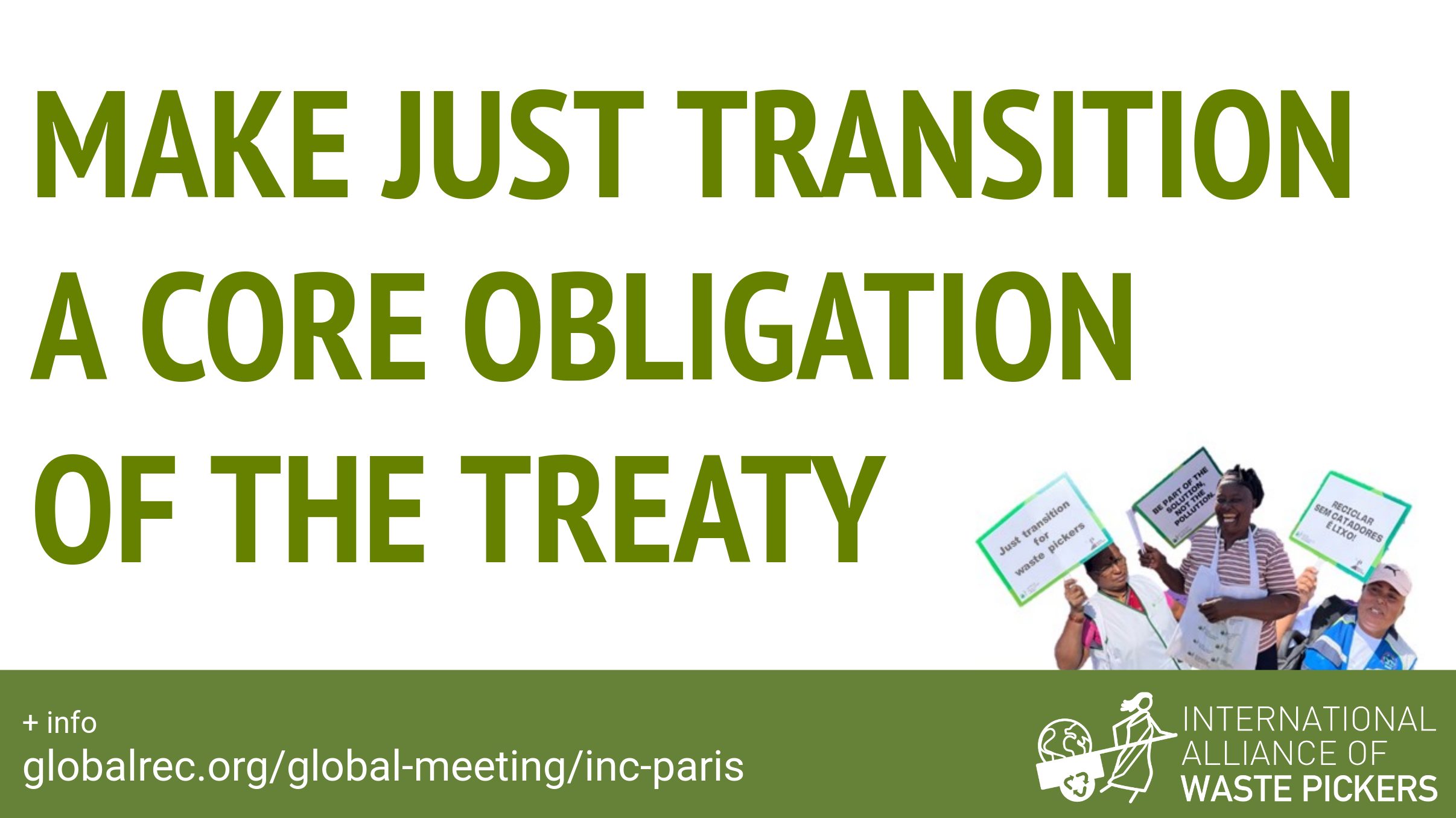
Download Terms of Reference HereDay 2 at INC-2: Make Just Transition a Core Obligation
Make just transition a core obligation of the plastic treaty!
An Intergovernmental Negotiating Committee (INC) is the space where countries discuss and decide in the plenary, in this case about the plastic pollution problem to agree on a legal binding International treaty.
The International Alliance of Waste Pickers (IAWP), together with other organizations (NGO, foundations, etc.) share the convention space to try to influence the countries that have access and right to vote in the plenary.
This second day of the INC-2 in Paris, the plenary continued the debate over the INC’s rules of procedure, wanting to reverse precedent and agreed processes from other Multilateral Environmental Agreements by eliminating voting procedures.
The IAWP, together with Just Transition Initiative, organized a side meeting [in a venue close to the UNESCO building, where the convention takes place] to discuss What must the treaty text contain to deliver a just transition?
We invited member states and observers to focus on what the treaty text must contain to deliver a just transition. The discussion benefitted from insights from the Governments of Kenya, South Africa, and Brazil, the International Labour Organization, and members of the International Alliance of Waste Pickers. The event was organized with the support of WWF, WIEGO, and Tearfund.
https://www.facebook.com/GlobalRec/videos/580285577556161/
(Choose photo https://drive.google.com/drive/folders/1aLR2DvVJiaxiyMrQosDQQrIHMMjW46xc?usp=share_link)
Waste pickers at the heart of South Africa’s recycling economy
The event was opened by Tshilidzi Ligaraba, Chief Director, Integrated Waste Management (South Africa), who reiterated the importance of participation of all stakeholders in the process towards a just transition, including governments, international organizations, businesses, and waste pickers across the world. Ligaraba shared that waste pickers are recognized in South Africa’s national waste management strategy, which provides guidelines for municipalities to integrate waste pickers through separation at source initiatives, waste picker registration, and Extended Producer Responsibility (EPR). The guidelines are built on principles of recognition, respect, and meaningful engagement, emphasizing the need to build on existing networks for waste management and improving working conditions for the 60-90.000 waste pickers that are at the heart of South Africa’s recycling economy, said Ligaraba.
Just transition must be a core obligation of this treaty
Johnson Doe, president of Green Waste Pickers Cooperative and member of the International Alliance of Waste Pickers , provided insights into the challenges faced by waste pickers in Kpone dumpsite in Ghana, including the closure of dumpsites, the privatization of waste management, and the lack of inclusion by the government. Doe explained that circular economy policies tend to divert valuable recyclables from waste pickers and into the hands of private businesses, whilst plans are in place to close the landfill where Doe and his colleagues have been recovering waste for years, without a strategy to safeguard livelihoods. With entrepreneurial drive and in the pursuit of alternative livelihood opportunities, waste pickers began providing door-step collection to households in a nearby community lacking waste collection services and drafted a proposal for the municipality to be contracted for the same. Despite reducing the environmental and societal burden of mismanaged waste, the municipality required waste pickers to form a cooperative to be contracted for municipal waste collection.
However, nearly a year after its registration, the municipality has not yet contracted the association for doorstep waste collection. Johnson Doe highlighted the lack of participation of waste pickers in discussions around waste management in the country and the need for waste pickers to speak for themselves. A just transition includes legal recognition of the rights of waste pickers to maintain a role in the system, which must be mandatory and a core obligation of both national laws and in the plastic treaty, said Johnson, and argued that if a just transition is left as a voluntary measure, it will not happen for the majority of waste pickers around the world.
Ensuring that resources reach waste pickers
Ending plastic pollution is not just about the environment, but part of a sustainable development strategy to end poverty, stated Adalberto Maluf, Vice-minister of Environment, Brazil, and highlights that the integration of waste pickers across the value chain is a priority for the government. Maluf emphasized that the treaty should address how waste pickers can be empowered and fairly remunerated. Waste pickers are not getting a fair share of the resources, despite handling around 90% of waste in Brazil, says Maluf. He identified that there is a need to channel funding from the private sector through EPR and reverse logistics systems that ensures transparency, improved labour rights, and that funding goes directly to waste pickers and their cooperatives. He identified that global virgin plastic prices and standards for recycled content can severely disrupt local recycling markets and the income of waste pickers. To open importation of recyclable waste in Brazil, in the past years, has strongly impacted waste pickers by reducing the price of recyclables.
Maluf is hopeful that with new policies to control this situation by the new government, new recycling certificates, and the establishment of a global fund could contribute to channel resources to those who need it the most and hopes that Brazil’s 20 years of experience working on the integration of waste pickers can inspire other countries.
Providing mechanisms supporting a just transition across the value chain
Informal workers play an important role in recycling economies, said Ed Shepherd from Unilever. He argues for the treaty to provide mechanisms supporting a just transition across the value chain, including for waste pickers and informed by the workers themselves. Unilever has partnered with other companies in the Fair Circularity Initiative, which contains a set of principles for the engagement of the informal sector to reach broader objectives of higher levels of recycled content, better material qualities, and transparency across the value chain, as well as mitigating and preventing negative impacts on human rights while supporting livelihoods. On behalf of the Business Coalition, Shepherd voiced support for the just transition to be a core obligation of the treaty.
“Criteria for decent jobs, social security, social dialogue, and labour standards”
Social justice means different things to different people, said Yasuhiko Kamakura, International Labour Organisation (ILO), and elaborated that for ILO, social justice is embedded in the decent work agenda, including criteria for decent jobs, social security, social dialogue, and labour standards. These standards are part of ILOs fundamental human and labour standards, which member states are already committed to. This means that regardless of the treaty being ratified, members of the ILO must commit to ensuring decent work for everyone. A just transition in the context of a global treaty needs to be meaningful, beyond words on a paper, Kamakura argues, which demands implementation measures and core obligations.
“Waste pickers are the most important link in the value chain”
Soledad Mella, International Alliance of Waste Pickers and ANARCH (Chile), also called on delegations to make a just transition a core obligation of the treaty, protecting all the actors in the plastic value chain, particularly the 20 million waste pickers and other frontline communities whose social, labour and human rights are at risk. Acknowledging the difficult task of developing a plastic treaty, Soledad highlighted the need for recognizing waste pickers in the process of reducing plastic pollution for the treaty to have a global impact from environmental to humanitarian levels. Financial support, infrastructure, technology, education, training, and strengthening of organizations and cooperatives are essential aspects of ensuring a just transition for grassroot waste pickers, Soledad said. Further, Soledad explicitly called upon member states to empower waste pickers to expand reuse and repair systems, for waste picker organizations to be considered for municipal waste collection contracts, and to be clear that waste pickers are the most important link in the value chain. A just transition without waste pickers is garbage, she concludes, before the floor was opened for discussion.
“Just transition initiative”
During the discussions, the representatives from South Africa and Kenya reiterated their support of waste pickers through the just transition initiative. They indicated that a just transition should be a core obligation and suggested that guidelines for the just transition of waste pickers could be developed as a tool to support the implementation of National Action Plans (NAPs). Johnson Doe emphasized the importance of leaving no one behind in the transition towards reducing plastic pollution across the value chain, whilst Soledad Mella recognized the precarious working and living conditions amongst informal waste pickers and invited all workers to become part of the just transition movement.
Other meetings:
- Johnson Doe meeting with Ghana’s Ministry of environment.
- Severino Lima Jr (MNCR, Brazil) was present at ISWA side event. Adalberto Maluf, National Secretary of Environment of Brazil, highlighted the role and need for empowering waste pickers in Brazil, being a key priority for the current government. He mentioned this after he shared that the treaty is more than ending plastic pollution, that it is part of a sustainable development strategy and ending poverty. He shared that the Brazilian president spends Christmas with the waste picker cooperative every year, and pointed to Severino in the audience!
- Barbara at…
The post Day 2 at INC-2: Make Just Transition a Core Obligation appeared first on International Alliance of Waste Pickers.
Canada’s Climate Actions Do Not Match COP30 Commitments
Ahead of COP30, climate scientists called out governments for retreating on emissions reduction measures in the face of a deepening climate emergency – and, with the 2025 budget, Canada’s government signalled its intent to do the same.
In a pre-COP30 brief, Canada’s Environment and Climate Change Minister Julie Dabrusin announced her government’s intent to “to advance international efforts to address climate change” on the 10th anniversary of the Paris Agreement. Yet, the same government has expressed ambivalence towards the Paris Agreement’s targets, with Mark Carney previously stating that he is more interested in “results rather than targets and investments rather than bans.”
Given these inconsistent positions, how serious is the Canadian government really about addressing the climate crisis? What direction is the Carney government heading?
One of the biggest challenges of finding clarity in Canada’s climate policy is cutting through the technical minutiae that often obscures politics and policy. Behind the targets, agreements, policy papers, press conferences and, apparently, COP30 branded cruise ships, it is difficult for anyone to see what has actually been accomplished.
Under the Paris Agreement, Canada committed to reduce its greenhouse gas emissions to a maximum of 440 megatonnes by 2030. The 2024 emissions data shows that Canada remains stalled at 694 megatonnes and is not on track to meet its target. This kind of failure appears to present two options for the Carney government: perform better or promise less.
The new budget’s Climate Competitiveness Strategy cancels climate rules and initiatives, while cutting billions of dollars in planned program spending in favor of tax credits and corporate subsidies. What counts for climate competitiveness in this budget are tax credits for liquified natural gas (LNG) facilities and carbon capture schemes, totalling $325 million over the next five years.
Programs that were intended to either monitor pollution or store emissions to meet Canada’s Paris Agreement targets are all facing cuts as part of Carney’s austerity and investment plan. Environment and Climate Change Canada is expected to take a $1.3 billion cut in annual program spending by 2030. The Impact Assessment Agency of Canada and the Canada Water Agency – federal regulators meant to safeguard the environment – are also facing cuts. Former Prime Minister Justin Trudeau’s $3 billion plan to plant two billion trees, a legacy program meant to build a potential carbon sink to help reduce future emissions, has also been scrapped by Carney’s budget.
Carney has signalled that the levies polluters pay as part of the industrial carbon price, where the average industry pays the comparatively-low price of $8.40 per tonne of emissions, may not increase despite the commitment needed to meet Paris Agreement targets. Somehow, the federal government is also confident that the planned oil and gas emissions cap will “no longer be required” even though data from the Parliamentary Budget Officer stated clearly that, in the absence of the cap, “upstream oil and gas emissions will exceed the legal upper bound” by 2030.
Capping upstream emissions from production activities, i.e from the extraction of fossil fuels, without capping the actual volume of oil and gas going to market was always questionable. But now Carney’s budget is combining talk of real climate action with commitments to “maximise carbon value for money” and “protect the competitiveness of oil and gas.” Even if one understands this charitably, it would seem to preclude any plan to seriously reduce total emissions any further. One can have the cleanest oil extraction process in the world, but if the actual volume of fossil fuels getting burned remains constant or increases, say, in the interest of maximizing carbon value for money, it’s a rather moot point. Total emissions will still rise, the climate crisis will intensify and the poorest in the world will bear the brunt of the costs.
When Carney promised a budget of “sacrifice” he clearly did not mean a sacrifice for energy company owners. What this does mean, however, is sacrifice for Canadians in the form of cuts to programs, cuts to public sector jobs, and climate inaction.
2025 federal budget analysis roundup
This page exists to bring together progressive policy organizations’ responses to the 2025 federal budget. Keep an eye on this page, as it will continue to be updated in the coming days.
Commentary and analysisPost-election budget could plunge Canada into another federal election by Canadian Centre of Policy Alternatives
Oil and gas trumps climate action in brutal federal budget by Hadrian Mertins-Kirkwood (National Observer)
Organizational responsesCanadian Alliance to End Homelessness
Canadian Housing and Renewal Association
Canadian Labour Congress | Congrès du travail du Canada
Canadian Mental Health Association
Cooperation Canada | Coopération Canada
Institut de recherche et d’informations socioéconomiques
National Union of Public and General Employees
National Right to Housing Network
Public Service Alliance of Canada | L’Alliance de la Fonction publique du Canada
The Professional Institute of the Public Service of Canada | L’Institut professionnel de la fonction publique du Canada
WATCH: GEN Member Hadrian Mertins-Kirkwood discusses Green Industrial Policy on CPAC
Canadian Centre For Policy Alternatives Senior Researcher and GEN board member Hadrian Mertins-Kirkwood was on CPAC, this week.
He discussed the failures of Canada’s existing EV subsidy scheme and the path to building up Canada’s green industrial capacity.
See the video, below.
RJI Community Reports: Research Justice 101
“Research justice” can sound like a big concept, but at its core it’s about valuing the lived experiences and desires of marginalized community members as essential pieces of evidence and data. Incorporating it into your research practices means ensuring meaningful community participation in every step of the research process. Furthermore, research justice centers the desires of communities as key to understanding their circumstances, rather than relying on narratives that present communities as broken or as problems (i.e., deficit narratives).
To gain a deeper understanding of what research justice is, the Research Justice Institute looks to the work of BIPOC (Black, Indigenous, and People of Color) scholars and researchers. Read on to unpack four key terms, along with some suggested readings, that are integral to understanding research justice.
1.Research oppressionTo understand research justice, it is important to start by unpacking what research justice is not. As pointed out by DataCenter in their 2015 report “Introduction to Research Justice,” there is a power imbalance within research practices, wherein dominant institutions control the production of knowledge, resulting in marginalized communities being unable to control or access information produced about them. Research oppression occurs when community members are viewed solely as subjects of research, rather than as active participants in the research process (DataCenter 2015). Social science research has long been used as a tool of oppression. In his book Thicker than Blood: How Racial Statistics Lie, Tufuku Zuberi points to the role that white supremacy plays in our understanding of society. White logic grants objectivity to white scholars while devaluing BIPOC experience and expertise, often framing it as too subjective or anecdotal. Community members’ lived experiences are dismissed as invalid to the research process, leading to dominant institutions controlling the data and the stories that are told about marginalized communities, without the community’s input (Zuberi 2001). When we refuse to use white supremacist logics and tools in our research practices, we envision an alternative to research oppression: research justice. Research justice places community experiences and desires at the forefront of the research process, uplifting community members as integral to every step. Research justice is a process and platform that affirms that marginalized communities are the experts in their own lives.
2.Dominant data vs community dataIt is important to understand the distinction between dominant data and community data, and how each may be utilized to advance the aims of research justice. Dominant data is gathered by dominant institutions such as governments and universities, and is often gathered in service of the dominant institution. These data are typically gathered using large population-level surveys like the Census or through the collection of information an individual provides in exchange for a service (i.e., administrative data). Dominant data, which are often quantitative, can highlight trends within populations, but often perpetuates deficit narratives. Numbers and statistics do not always capture the social, political, economic, and historical contexts of the data, often leading to conclusions that lack nuance and place the blame on marginalized communities for their own marginalizations. For example, without the context of institutional racism, a statistic proving the high amount of police violence in Black neighborhoods might imply that Black neighborhoods are inherently dangerous, or that Black people themselves are violent, rather than acknowledging the many social and political factors that lead to over-policing of Black communities (Lanius 2015).
On the other hand, a key aspect of community data is that it is contextual. At CCC, we define community data as evidence generated by communities about their everyday lives, realities, and desires. Examples of evidence can include numbers, words, art, music, maps, and stories. Community data is collected, interpreted, and used on the terms of the community. By working with communities to understand their everyday experiences, we can gain a true sense of community needs and desires.
3.Community-led researchCommunity control is a key tenet of research justice. Research justice uplifts and values marginalized communities as experts of their own lived experiences and, therefore, as leading experts in how to improve their everyday realities and overall well-being. When conducting research with marginalized communities, it is important to not only include community members, but to treat them as authorities in the research process. Trust and collaboration between researchers and community members are paramount, as demonstrated through the work of anthropologist Mariana Mora. Mora worked with a Zapatista community in Chiapas, Mexico to shape her research on Zapatista politics, autonomy, and self-determination. In her article “The Production of Knowledge on the Terrain of Autonomy: Research as a Topic of Political Debate”, Mora takes readers through her research process, describing the ways in which community members helped to shape and evaluate her research at every step, from research design to reviewing drafts of her 2017 book, Kuxlejal Politics: Indigenous Autonomy, Race, and Decolonizing Research in Zapatista Communities. Mora’s experience highlights the importance of community-led research, and provides a key example of how research can be designed and conducted in collaboration with community members.
4.Damage- vs desire-centered researchIn an open letter to communities, researchers, and educators, Eve Tuck, Unangax̂ scholar, calls for a moratorium on damage-centered research – research that documents pain and oppression in an attempt to leverage change for marginalized communities. Tuck argues that damage-centered research frames marginalized communities as depleted and broken, perpetuating deficit narratives and defining communities solely by their marginalization. Tuck instead proposes a desire-based framework for research, in which lived realities are acknowledged alongside hopes and visions for the future (Tuck 2009). Research justice should employ a desire-based framework in order to avoid framing marginalized communities solely by what they lack, and to acknowledge the full spectrum of inequality, oppression, wisdom, hope, and the potential for change that exists within all communities.
Check out RJI’s reading library to dig deeper into these concepts and more:These concepts and readings provide an overview of the key components of research justice, and it is only the tip of the iceberg. To continue exploring these ideas and access a wider range of resources, we encourage you to visit our growing RJI Zotero library.
A look back: 2025 Summer Soirée "Rooted in Resilience"
State Sen. Khanh Pham sharing meaningful remarks as our featured speaker. Watch the full speech on our YouTube!
“Building community is what gets us through these times,” shared State Senator Khanh Pham to a packed room at this year’s Summer Soirée on June 13.
“It’s being in relationship with people who share our vision and our values – that is what helps us move out of fear and into collective action.”
At the Coalition of Communities of Color, this belief is at the heart of our mission. Our theme Rooted in Resilience was an important reminder that our strength is most powerful when shared, and grows when we’re together – even in the hard times, like the one we’re facing now.
We are so grateful to everyone who joined and supported our 2025 fundraising gala. We filled the night with a festive and meaningful atmosphere, with tunes by DJ Just Jeff, and folks enjoyed bites from our diverse selection of vendors that were both culturally rich and delicious.
A special thank you to our featured speaker, State Senator Khanh Pham, and our guest speakers, Mayor of Portland Keith Wilson and Oregon Community Foundation’s (OCF) Michael McIntosh, for their powerful and inspiring remarks.
Watch State Sen. Pham’s full speech at CCC’s Summer Soirée here!
View Full Album A Successful Summer SoirÉe
We extend a heartfelt thank you to OCF for being our presenting sponsor and for their support in helping make this night a success.
Together, with the power of community, we raised over $270,000 to sustain our work of transforming systems so that every Oregonian – across race, gender, or zip code – can thrive. At a time when our values are being attacked, your support means more than ever. Thank you!
Thank you to everyone who joined our CCC team at the Summer Soirée!
Because of these generous donations, we will be able to continue our efforts to provide research grounded in lived experience, solutions shaped by community voices, and policies that build a more just and resilient environment for those facing the first and worst of the climate crisis. See our work in action: watch our MADE for Health Justice video.
Didn’t have a chance to donate but want to support? Click here to make a donation today. Every donation makes a difference.
We hope you will join us next year as we celebrate our 25th anniversary! Details will be shared as they become available. Subscribe to our email list to stay in the loop.
Take a look at our event details:Our special night took place at the OHSU Robertson Life Sciences Building. We are so grateful to OHSU for being our venue sponsor and for generously supporting our event.
A special shoutout to our host and vendors:
Poison Waters as our Emcee and Auctioneer
Devil’s Food Catering
Plant Based Papi
Annam VL
DJ Just Jeff
And a special thank you to those who donated items for our raffle prizes and auction packages!
Thank you to our Summer Soirée sponsors!Support CCC
Green Economy Network – National Convenor 2025
The Green Economy Network (GEN) is a coalition of labour, environmental, and social justice organizations working to build a green economy in Canada. We are hiring a National Convenor to work with the GEN Management Committee and the GEN Members’ Council to convene GEN members for collaborative advancement of our organizational goals.
Compensation: $27/hour part-time (average of 20 hours/week) with the possibility of increasing hours over time.
Location: remote first with preference for Ottawa or Toronto based candidates
Duties+ Maintain regular contact with members in between scheduled meetings to ensure consensus and progress on GEN priorities.
+ Organize and facilitate GEN meetings, symposia, and public-facing events.
+ Build and execute a communication and media strategy to promote GEN’s policies as a consensus of labour unions and environmental and social justice organizations.
+ Maintain GEN’s website and social media presence.
+ Synthesize communications products from research and engagement developed by member organizations.
+ Develop fundraising among stakeholders and non-member organizations.
+ Other duties as required, such as coordinating lobby meetings with Members of Parliament and writing briefs, backgrounders, or popular education materials for members and the public.
Qualifications and Experience+ Solid understanding and experience with climate change issues and policy, and the Canadian climate and labour movements.
+ Experience with internal and external communications.
+ Experience working with either labour unions and/or environmental groups and/or Indigenous communities will be an asset.
+ Organizing experience is an asset.
+ Strong written and verbal communication skills. Demonstrable skill in both official languages will be a further asset.
+ Proficiency with WordPress, or similar CMS, and social media.
+ Fundraising experience.
Please send expressions of interest (resume and cover letter) to convenor@greeneconomynet.ca by August 21, 2025 at 3pm ET/12pm PT.
GEN is committed to employment equity and encourages members of equity-seeking groups to apply.
CLOSED: We're hiring: Data Systems Administrator
**This opening is now closed. We are not accepting any further applications at this time. Thank you.
Applications due by August 27. Click here to view a full description of the job post.
JOIN OUR TEAM: The Coalition of Communities of Color (CCC) is excited to announce a new role within our Research Justice Institute! We’re looking to hire a dedicated and experienced Data Systems Administrator to lead the development and management of a robust, community-led, environmental justice data system. This role requires someone with technical expertise in developing data systems with a strong focus on equity.
Position OverviewAs the Data Systems Administrator, you will lead the development, management, security, and accessibility of our community-led environmental justice data system. This is a first-of-its-kind opportunity to ensure that qualitative and quantitative data collected by community-based organizations is stored and made available in a way that supports equitable policy decision-making while respecting community ownership.
We are seeking a data platform engineer and community-minded leader that understands both data systems and the ethical considerations of handling dominant institution quantitative and community-generated qualitative data, and shares our values and commitments to research and data justice.
The Data Systems Administrator will play an integral role in advancing CCC’s Modernizing Anti-Racist Data Ecosystems (MADE) local level data ecosystem that will advance regional responses and approaches to extreme weather and climate justice needs. They will lead the development, implementation, and management of CCC’s environmental justice data systems, including selection and oversight of technical vendor(s) and building the back end of our data platform. They will also play a key support role in the Research Justice Institute’s quantitative research and data projects and reports.
For complete details about responsibilities, qualifications and compensation, view the full job posting here.
About the Coalition of Communities of Color
Formed in 2001, the Coalition of Communities of Color is an alliance of culturally specific, community-based organizations engaged in collective action for racial justice. We work to improve outcomes for communities of color through advocacy, environmental justice, and research. Learn more about the Coalition of Communities of Color, its member organizations, and our Research Justice Institute.
TO APPLYPlease send a cover letter (max one page) and resume (max two pages) in one PDF file to HR@coalitioncommunitiescolor.org, with the subject line and file name “[Your name] — Data Systems Administrator.”
Applications are due Wednesday, August 27.
View Full Job PostJuly 2025 Advocacy Update
In 2025 the Coalition of Communities of Color worked tirelessly to champion equity and opportunity for all communities of color, immigrants and low income people. From the Oregon State legislature to local government budget processes, we've faced considerable hurdles but also achieved important victories.
State Legislative Session: Facing Fiscal Headwinds
The 2025 Oregon Legislative Session was characterized by fiscal uncertainty, stemming from a state budget shortfall and concerns over potential federal cuts. This challenging environment led to substantial budget reductions, with communities of color and low-income individuals disproportionately affected. Key state agencies, including the Oregon Department of Education, Department of Early Learning and Care, and Oregon Housing and Community Services, experienced significant cuts to vital programs such as student success initiatives, childcare, and emergency rent assistance.
Despite these statewide challenges, we celebrate the passage and funding of critical initiatives like the Immigrant Justice Package, which includes Universal Representation and Farmworker Disaster Relief, and the Fair Housing for All initiative. These successes underscore the power of focused advocacy even in difficult times.
Learning Opportunity: Water Justice Legislative Recap and Celebration
How did this year’s Legislative Session impact water justice? Join Oregon Water Futures July 29th 12:00-1:00PM in a conversation with environmental justice advocates to celebrate water policy wins, get real about challenges and opportunities, and hear personal experiences about policy and advocacy work. This panel is for anyone interested in Oregon’s water justice future, frontline advocates, and community members. Our sessions are accessible to those new to policy and is a great time to connect with others!
When: Tuesday, July 29 at 12 pm
Reigster here: Bit.ly/456SdXY
Panel Includes: Verde, Crag Law Center, Oregon Just Transition Alliance, and the Joint Water Caucus.
City of Portland: Defending Essential Programs for Communities of Color
During the City of Portland budget process, CCC and its members' advocacy was crucial in defending the Civic Life Diversity and Civic Leadership program, which initially faced severe cuts exceeding $600,000. Through dedicated advocacy, CCC and culturally specific organizations successfully restored $179,000 in funds for the program. Additionally, our collective voice played a vital role in advocating for the protection of Portland Clean Energy Fund (PCEF) and Parks funding, underscoring our unwavering commitment to equitable and well-resourced community programs
Multnomah County: Securing Vital Investments
The Coalition of Communities of Color and our dedicated members achieved significant wins during the recent Multnomah County budget process! Through strategic advocacy and successful amendments, we were able to defend crucial programs and secure vital funding for initiatives such as Voter Outreach and Education, School Based Mental Health, Homeless Employment Programs, Housing Immigration Legal Services, and Culturally-Specific Community Food Systems. We remain optimistic about continuing to engage with the county to ensure equitable investments that truly serve all communities.
Looking Ahead: Protecting Our Progress
CCC staff joined our member Unite Oregon on their 2025 Day of Action in.Salem.
Our community's commitment to equity, inclusion, and opportunity is currently at risk due to attacks on Diversity, Equity, and Inclusion (DEI) initiatives and potential federal funding cuts that could impact vital services provided by the City of Portland and Washington County like transportation and housing. We've seen this manifest in Washington County's struggle to uphold an Equity Resolution and sanctuary laws in conflict with federal executive orders, and there's an ongoing need to protect programs like Multnomah County Preschool for All that increase access for communities of color and low income people.
This situation demands action: we must fiercely defend DEI initiatives, advocate for the codification of sanctuary protections in local governments, and actively work to strengthen the Preschool for All program by ensuring continued funding and community involvement in its advisory processes.
Your continued participation is crucial to safeguard our progress and build a future where equity, opportunity, and safety are guaranteed for everyone. We urge you to attend public meetings, contact elected officials, share information, and engage with community organizations. Together, we can continue to make a difference. If you have any questions or would like to get in touch, reach out to our Advocacy Manager Alex Riedlinger at Alex@coalitioncommunitiescolor.org.
Pages
The Fine Print I:
Disclaimer: The views expressed on this site are not the official position of the IWW (or even the IWW’s EUC) unless otherwise indicated and do not necessarily represent the views of anyone but the author’s, nor should it be assumed that any of these authors automatically support the IWW or endorse any of its positions.
Further: the inclusion of a link on our site (other than the link to the main IWW site) does not imply endorsement by or an alliance with the IWW. These sites have been chosen by our members due to their perceived relevance to the IWW EUC and are included here for informational purposes only. If you have any suggestions or comments on any of the links included (or not included) above, please contact us.
The Fine Print II:
Fair Use Notice: The material on this site is provided for educational and informational purposes. It may contain copyrighted material the use of which has not always been specifically authorized by the copyright owner. It is being made available in an effort to advance the understanding of scientific, environmental, economic, social justice and human rights issues etc.
It is believed that this constitutes a 'fair use' of any such copyrighted material as provided for in section 107 of the US Copyright Law. In accordance with Title 17 U.S.C. Section 107, the material on this site is distributed without profit to those who have an interest in using the included information for research and educational purposes. If you wish to use copyrighted material from this site for purposes of your own that go beyond 'fair use', you must obtain permission from the copyright owner. The information on this site does not constitute legal or technical advice.
 This site is not the official webpage of the Industrial Workers of the World.