You are here
News Feeds
Currents in an Arctic Sea Accelerate the Sinking of Carbon-Carrying Phytoplankton
Documenting the seasonal fate of these tiny marine organisms is a step toward understanding how ecosystems in the world's fastest-warming region may change as ice recedes.
Delaying Cherry Blossom to Reduce Frost Damage
A new study found more than half of the city’s bike-share trips replace car trips, with each bike reducing annual CO2 emissions by up 120 kilograms (kg) per year.
Adding Limestone to Mississippi River Basin Farmlands Acts as a Major Carbon Sink, Study Finds
In a discovery as broad and far-reaching as the Big Muddy itself, a new, Yale-led study says farmers along the Mississippi River Basin are storing more carbon dioxide (CO2) in the soil than they are emitting when they add limestone to their fields, an agricultural practice known as “liming.”
Past Emissions From Top Polluters Will Continue Warming the Planet for Decades to Come
If someone leaves the faucet running in your bathroom and the house floods, it’s easy to assign responsibility for the damage.
Inside the fight to stop prepaid disconnections | Solar Insiders
Original Power is leading a push to protect people using prepaid meters from being disconnected when temperatures rise above 40ºC.
The post Inside the fight to stop prepaid disconnections | Solar Insiders appeared first on Renew Economy.
Out Now: Low-tech Magazine Volume IV
Low-tech Magazine presents the fourth volume in the chronological book series. It contains twenty articles that were published online between 2022 and 2026. Three earlier volumes collect articles written and published online between 2007 and 2021, which are also bundled in the “Compressed Edition”.
This new volume is a bit different from the earlier books: eight of the articles are DIY guides or manuals, and we have grouped them together in the second part of the book. This volume covers the period that Marie Verdeil joined Low-tech Magazine, which partly shifted the focus from writing articles to building prototypes inspired by historical research. These prototypes also led us to conduct workshops in universities and participate in museum exhibitions.
As is the case with all of our books, the articles have been edited and improved compared to the original web versions. Some articles gained extra or better images. We rewrote two manuals, based on further experiences we gained since the publication of the originals. The book has 500 pages and contains 405 images in black and white.
You can order Low-tech Magazine Volume IV at our online bookstore, available as paperback and hardcover. The ebook is not yet available.
Image: Low-tech Magazine Volume IV (2022-2026). Photo: Juliette Demaret. Contents table ARTICLES:- The Revenge of the Hot Water Bottle
- When Lethal Weapons Grew on Trees
- What if We Replace Guns and Bullets with Bows and Arrows?
- Can We Make Bicycles Sustainable Again?
- Low-tech Magazine: The Comic
- Direct Solar Power: Off-Grid Without Batteries
- Plastic Waste in the Fuel Tank?
- How to Escape From the Iron Age?
- Communal Luxury: The Public Bathhouse
- The Compressed Book Edition
- How to Dress and Undress your Home
- Rediscovering the Handcart
- How to Build a Small Solar Power System
- How to Build an Electrically Heated Table
- How to Build a Solar Powered Electric Oven
- How to Brew Solar Powered Coffee
- Winter is Coming: Build a Solar Powered Foot Stove
- How to Assemble an Electric Heating Element from Scratch
- How to Build a Practical Household Bike Generator
- Human Powered Air Compressor and Energy Storage System
With contributions by: Kris De Decker, Marie Verdeil, Guillaume Lion, Kozimo, Andy Lagzdins.
The book design is a collaborative effort by Laia Comellas, Marie Verdeil, and Johanna Gratzer. Marie Verdeil made the cover, Vaiva Vinskaitė did the typesetting.
Earlier volumes:- Low-tech Magazine Volume I: paperback / hardcover.
- Low-tech Magazine Volume II: paperback / hardcover.
- Low-tech Magazine Volume III: paperback / hardcover.
- The Compressed Edition: paperback / hardcover.
- The Comments: paperback / hardcover.
- Thematic book series.
Patrons have free access to all ebooks, and early access to print books at a reduced price. They also receive exclusive content, which includes previews of new building projects and behind-the-scenes news.
Image: Low-tech Magazine Volume I, II, III & IV (2022-2026). Photo: Juliette Demaret.Vertical-axis floating wind turbines may be tested in Australian offshore renewable zone
Swedish floating wind innovator may build a 20 MW demonstration project in Australia using its unique vertical-axis turbines.
The post Vertical-axis floating wind turbines may be tested in Australian offshore renewable zone appeared first on Renew Economy.
STATEMENT: Pitkin County votes to approve special use permit for operations of Maroon Bells Scenic Area
DENVER — Pitkin County commissioners voted unanimously today, September 23, to approve a special use permit for the county to take over daily operations of the Maroon Bells Scenic Area from the U.S. Forest Service (USFS) starting in 2027. The permit, which does not specify how many acres of public land the county would manage, still needs final approval from USFS and the United States Department of Agriculture (USDA).
The Forest Service says the Maroon Bells Scenic Area runs at a deficit of more than $300,000 a year, and White River National Forest officials cited budget constraints, hiring difficulties, and deferred maintenance as reasons it can no longer afford to manage the area. Pitkin County Open Space and Trails has been partnering with the federal government at Maroon Bells for decades and the county has the resources and experience to take on day-to-day operations. But to help cover operating costs, the county has proposed increasing the vehicle day-use fee from $10 to $30 and the nightly campground fee from $15 to $33.
Last week, USFS said it would add a 15-day public comment period before approving the permit, changing its original plan to approve it without public input. The Forest Service intends to approve the permit using a categorical exclusion, which allows the agency to bypass the environmental review usually required under the National Environmental Policy Act. As of today, USFS has not released a map of the permit area.
Center for Western Priorities released the following statement from Aaron Weiss, executive director for the Center for Western Priorities:
“The Forest Service actually listened to the public and plans to open a comment period, and that’s an important precedent to uphold. But a comment period only works if people know what they’re commenting on. We still haven’t seen a map or been told how many acres the county would manage. The public can’t meaningfully weigh in when they don’t even know the scope of this proposal.
“Pitkin County is stepping in because the federal government failed to fund one of the most iconic landscapes in the country. Handing operations of public lands to whoever wants to cover the bill sets a dangerous precedent. It’s only a matter of time until an agreement like this one comes to a county that isn’t interested in prioritizing conservation and recreation—and the Trump administration is eager to privatize our public lands whenever it can. Congress sets the Forest Service’s budget, and it’s Congress’s job to fund our public lands so the federal government can manage them for everyone.”
The Forest Service comment period has not yet been published in the Federal Register.
Learn more:
- Forest Service adds comment period for PitCo’s Maroon Bells operations takeover — Aspen Journalism
- Advocates are concerned that Maroon Bells move signals shift towards privatization — Aspen Public Radio
- Amid restructuring talk, Forest Service says it can no longer manage popular Maroon Bells recreation area — Aspen Public Radio
- Pitkin County and U.S. Forest Service Explore Expanded Partnership for Management of Maroon Bells Scenic Area — Pitkin County
- Forest Service plan would cut the public out of Maroon Bells management decision — Westwise
- The Maroon Bells belong to everyone. Why are we treating them like a business? — Westwise
The post STATEMENT: Pitkin County votes to approve special use permit for operations of Maroon Bells Scenic Area appeared first on Center for Western Priorities.
Origin dusts off plan for one of Australia’s biggest peaking power plants, using gas and diesel
Origin Energy, the country's biggest retailer and already the owner of the biggest gas generation portfolio, unveils plans for one of the biggest peaking plants in Australia.
The post Origin dusts off plan for one of Australia’s biggest peaking power plants, using gas and diesel appeared first on Renew Economy.
From the Mountains to the Coast: Communities Exchange Birdwatching Tourism Experiences in Oaxaca, Mexico
Germany unveils plan to end use of fossil fuels in energy sector by 2045
Germany wants to stop using fossil fuels in its energy sector by 2045 at the latest, with plans for how to do that set out in the country’s transition roadmap published on Wednesday on the sidelines of the UN General Assembly in New York.
The blueprint focuses on electrifying transport, home heating and industry, while gradually replacing fossil fuel power generation with renewables. Renewables supplied about 55% of Germany’s electricity last year and the government wants that to reach at least 80% by 2030.
All coal-fired power stations – which generated almost a quarter of Germany’s electricity in 2025 – must close by 2038 at the latest. That deadline has been set in German law since 2020, but the roadmap says the government is exploring the possibility of bringing the end date forward to 2035.
New gas-fired plants that receive state funding must be “hydrogen-ready” and run on climate-neutral fuels by 2045. The roadmap does not specify what those fuels are but they generally include biofuels and green hydrogen.
At the same time, Berlin wants to install 2,000 more wind turbines and reduce the need for power plants by boosting the use of batteries.
UN SUMMIT LIVE: UN chief says world has tools to end the fossil fuel age
Speaking at the UN chief’s climate summit in New York, environment minister Carsten Schneider said the plan will allow Germany to lower its imports of fossil fuels and reduce its dependence on “supply chains vulnerable to geopolitical crisis” – and called on more countries to do the same.
“It is important to ensure that transitioning away from fossil fuels remains high up on the international agenda,” he said, adding that Germany would seek to “improve the overall framework” for mobilising more funds to help developing countries phase out fossil fuels.
“We want to enable countries to chart their own course towards energy security and prosperity,” he said.
On Tuesday, addressing the UN General Assembly, UN Secretary-General António Guterres urged all countries to submit national roadmaps to end the production and consumption of fossil fuels with “clear timelines and protection for affected workers and communities”.
A group of around 80 countries led a failed push at last year’s COP30 in Belém to create a global roadmap on transitioning away from fossil fuels. While the initiative was not adopted at the summit, some countries like France and the Netherlands opted to move forward with their own national plans.
Subsidies for EVs and heat pumpsTo cut reliance on petrol for transport, the German government says it will make available 2.8 billion euros to subsidise the cost of buying electric vehicles for lower and middle income households.
Official projections suggest that by 2035, every new car sold in Germany will be electric, according to the document. Freight, shipping and aviation are expected to shift to a mix of electric vehicles, “sustainable” biofuels and hydrogen-based fuels.
For homes, the roadmap relies mainly on replacing gas and oil boilers with heat pumps, backed by state subsidies. Anyone who installs a new gas or oil heating system will have to use a rising share of “climate-neutral fuels” from 2029, reaching 60% by 2040. A proposed quota would require fuel suppliers to switch entirely to climate-neutral heating fuels from 2045.
Industry is expected to decarbonise by switching to electricity and hydrogen, becoming more energy efficient, and capturing carbon where emissions are hard to avoid.
UN backs push to upgrade grids slowing clean power uptake in Africa and SE Asia
Schneider said the roadmap is not just a climate strategy, but also an economic policy strategy. “The money we currently spend on importing oil and gas will increasingly flow into local value creation,” he added in a written statement. “Moving away from fossil fuels combines independence, affordability and climate protection”.
In 2024, Germany spent about 76 billion euros on importing fossil fuels. Around two-thirds of that went on oil and petroleum products, and the rest on gas and coal.
Campaigners call for faster phase-outReactions to the roadmap from analysts and campaigners were mixed – both praising the country’s initiative for launching its plan voluntarily but also calling for an even faster fossil fuel phase-out.
Jennifer Morgan, former German climate envoy, said the roadmap is a “welcome step” but to truly deliver, the strategy should be backed by “a faster, more deliberate and just phase-out, paired with the rollout of green electrification”.
Laurie Van Der Burg, public finance lead at campaign group Oil Change International, said Germany deserves credit for publishing the roadmap, but its efforts are “not commensurate with the reality of the crisis, or its responsibility as a wealthy, historic emitter”. She urged the country to end its financing for fossil fuels, strengthen the roadmap and redirect public money toward renewable energy.
Germany is the third European country to publish a national fossil fuel transition roadmap following France and the Netherlands. France has set end dates for coal (2030), oil (2045) and gas (2050), though its plan mostly brings together existing policies. The Dutch government has not set a binding end date for the country’s fossil fuel production and use, indicating only that it should be “minimised” by 2050.
Linda Kalcher, executive director at think-tank Strategic Perspectives, said the targets in the three national roadmaps still fall short of what is needed to achieve energy security, but they still send a powerful message to fossil fuel exporters. “A huge share of the European market is planning for a future in which demand for coal, oil and gas declines,” she added.
The post Germany unveils plan to end use of fossil fuels in energy sector by 2045 appeared first on Climate Home News.
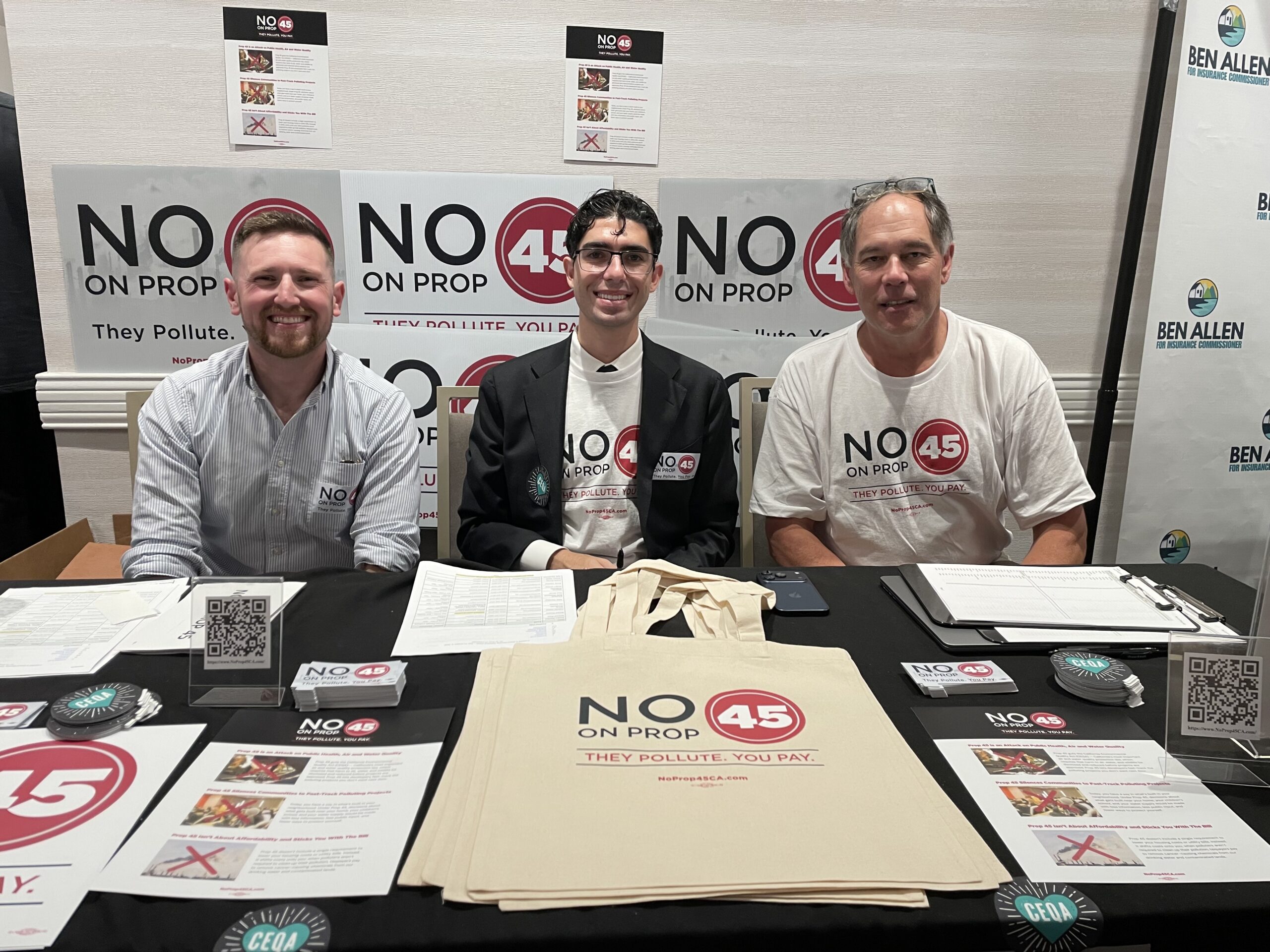
Vote No on Prop 45: Rolling Back CEQA Is A Proposition Californians Can’t Afford
Updated on September 23 to include links and additional information. Originally published on January 16, 2026.
For advocates working at the intersection of environmental protection and climate-smart growth, the California Environmental Quality Act (CEQA) has long been a source of both pride and frustration. While it has been a critical tool to protect our natural and working lands, its procedural delays have often been used to stall projects essential to a low-carbon future: dense infill housing and transit-oriented development in our existing communities.
In July 2025, however, at the urging of Governor Newsom, the California legislature passed some of the most impactful changes to CEQA since its inception. Taken together, the two bills (AB 130 and SB 131) provide robust statutory CEQA exemptions for infill housing and housing element rezonings, require the state to map infill areas where exemptions would apply, and narrow the scope of the administrative record, helping to curtail anti-housing litigation.
Despite these monumental changes that address the barriers to critical infill development, California’s business lobby and sprawl developers were left unsatisfied. Now, they are proposing a ballot initiative that would make far more radical changes to the law. After gathering enough signatures to qualify for the November ballot, this is now called Proposition 45.
While the rhetoric of the measure (initially called Building an Affordable California Act, or BACA) seems to be aligned with urbanist goals and those of the broader abundance and affordability movements, the actual policy details and mechanics of the initiative—and the progress we’ve already achieved in the legislature last year—suggest that the costs it brings far outweigh any potential benefits.
Below, we outline seven reasons why the measure should be rejected (click to read more):
1. Major Reforms Have Already Been EnactedFor years, a primary objective for California’s urbanists was to stop the abuse of environmental law against projects that genuinely help the environment: dense, transit-oriented housing.
In a landmark shift for the state, that goal has largely been realized. Following years of advocacy by urbanists, the legislature passed a clean statutory CEQA exemption for infill housing. AB 130, which Greenbelt Alliance was proud to support, is already being utilized across California, allowing builders to move forward with climate-friendly housing in high-opportunity areas like Palo Alto or Beverly Hills without the threat of being endlessly delayed by the environmental review process. While there is room for technical refinements, the fundamental issue at hand—the misuse of environmental laws to delay environmentally-friendly housing projects—has largely been addressed.
As the saying goes, “the devil is in the details”, and that’s certainly true for the BACA initiative. While modest on the surface, BACA creates a completely new set of rules for what it calls “essential” projects. So what, exactly, is an “essential project”?
The list is incredibly broad. Under Article 2, Section 21013, “essential projects” include housing, water, transportation, clean energy, transmission, broadband, and healthcare infrastructure. In practice, this definition encompasses a wide range of large-scale developments. For example, new freeways and existing freeway expansions would qualify as “essential transportation” projects; large greenfield sprawl developments would be treated as “essential” housing projects; and new dams and reservoirs would qualify as “essential” water projects. The definition even includes all “related and ancillary infrastructure,” meaning that highway interchanges, utility extensions, and water pipelines that enable sprawl developments also receive streamlined approval. All of these are enormous projects in terms of size and scale, with major potential environmental impacts. Yet, just like an apartment building in an urban area, under BACA, they would qualify for a significantly truncated review process.
In effect, this new CEQA process mirrors the fundamental flaw of its predecessor. While the old system failed to exempt low or no-impact projects from excessive review, the new one errs in the opposite direction, fast-tracking high-risk developments with significant potential for harm.
3. All Timelines Are Not Created EqualThe BACA initiative imposes strict timelines for this new class of projects that it deems “essential”: the environmental review process can take no more than one year. On the surface, a one-year limit on an Environmental Impact Report (EIR) seems reasonable. And for certain projects, like an apartment building on a parking lot in downtown San Francisco, or a townhome development in an LA suburb, it would be.
However, the measure’s definition of “essential” includes highways, dams, large-scale subdivisions, and other major projects. The environmental review required for projects at this scale cannot be done in a single year. Surveying hundreds if not thousands (or even tens of thousands) of acres of undisturbed and undeveloped land for species nesting patterns and habitat, water pollution impacts, and other environmental concerns physically cannot be accomplished within the timeframe laid out in the initiative. By forcing these projects into such a condensed timeline, we will be creating a system that overlooks genuine environmental harm in favor of speed.
For projects with unambiguous environmental benefits, such as housing developments within already urbanized areas, such speed makes sense. Many of the project types considered by this measure do not have the same clear, unambiguous benefits.
4. Restrictive AlternativesOne of CEQA’s most critical tools for preventing environmental harm is its alternative analysis provision, which allows for the identification of better project locations and designs. Currently, CEQA requires agencies to analyze a “reasonable range of alternatives” that could reduce environmental impacts, including different sites, reduced intensity options, and designs that avoid sensitive resources. This is how agencies can say, “this housing should be built downtown on a parking lot instead of on farmland,” or “this highway expansion has an alternative transit solution.”
BACA restricts this to just three options: the proposed project, one alternative designed by the applicant themselves (which doesn’t even need to be at a different location), and “no project.” The applicant’s alternative can be a slightly modified version of their original proposal on the same site. This eliminates the core mechanism for steering projects away from environmentally sensitive locations toward more appropriate sites, exactly the tool needed to prevent sprawl, protect open space, and ensure development happens in the right places.
5. The Evidentiary StandardMaybe the most radical change incorporated in the ballot measure is to CEQA’s standard of review. Right now, CEQA allows a lead agency (generally a city or county) to use its own discretion to explore project alternatives and negotiate environmental mitigations. BACA proposes to eliminate this by requiring that environmental impacts only be found significant if they violate objective, quantifiable standards already in existing law when the project was proposed, which doesn’t sound inherently unreasonable!
However, the measure doesn’t actually require jurisdictions to adopt such standards; instead, it exploits their absence. If numerical thresholds don’t already exist for resources like oak woodlands, groundwater, or wildlife corridors, impacts to them essentially can’t be found significant regardless of severity. A genuine objective standards approach would mandate jurisdictions adopt protective thresholds and update them as science improves. This measure rewards weak standards, freezes them at application date, and prevents improvements based on new knowledge.
6. Ballot Box PermanenceFinally, one of the greatest flaws of the measure is its rigidity. Should it pass, BACA would require a 2/3rds vote of the legislature to amend.
California has a long, storied history with ballot box governance, where initiatives become impossible to adjust as new problems arise. The 2/3rds requirement virtually guarantees the law could never be changed, regardless of what issues may arise. An unchangeable measure, with foreseeable negative impacts for the state, may have lasting consequences for generations.
Some of the project types included in this measure, such as clean energy or transmission infrastructure, may benefit from the types of streamlining being considered if careful, targeted changes were made. Rather than a broad, clunky initiative that will be extremely difficult to change, we should advocate for those reforms through the legislative cleanup process already underway.
7. The Costs Are Just Too HighCalifornia faces converging affordability crises: insurers fleeing the state, utility rates climbing, and municipal budgets straining under unsustainable costs. All of these issues stem from the same source: decades of sprawling outward, often into fire-prone areas, leaving us with infrastructure we cannot afford to maintain and risks we cannot afford to insure.
BACA will accelerate these failures by trading short-term speed for permanent costs. By gutting CEQA’s alternatives analysis—the primary tool for steering projects away from costly, high-risk locations—this limits agencies to the developer’s preferred site, one alternative the developer designs themselves, and “no project.” It freezes environmental standards at the date of application, rewarding jurisdictions with weak protections. And it requires agencies to approve permits within strict timelines regardless of fiscal consequences, because most cities lack the quantitative standards BACA requires to find fiscal impacts “significant.”
The result: even if we build some things faster today, we’ll be paying the tab forever. Even more homes in fire zones will continue to destabilize our insurance markets. More infrastructure extensions will push up our utility rates. More sprawling subdivisions that generate less revenue than they cost to maintain will ensure even higher taxes. BACA promises affordability through speed but delivers the opposite: cheaper to build, but financially ruinous to sustain.
At a time when people are struggling to make ends meet, and when the federal government is doing all it can to roll back our environmental protections, the last thing we need is to double down on the failed policies we have tried for decades and know do not work.
Proposition 45 will hurt the environment and your wallet.
Greenbelt Alliance strongly opposes Proposition 45 and urges voters to vote NO on 45 this November.
The post Vote No on Prop 45: Rolling Back CEQA Is A Proposition Californians Can’t Afford appeared first on Greenbelt Alliance.
New analysis of Hunter coal history shows mine approvals don’t guarantee job security
Coal mining companies shed thousands of jobs with little warning during the Hunter’s last coal downturn, and an extension to Hunter Valley Operations can’t substitute a proper plan to protect workers, says Hunter Renewal.
Can Teshekpuk Lake, a Vital Arctic Refuge, Be Saved? Gerrit Vyn Hopes His Images Will Help
Act 181 and Criterion 8C: A New Mechanism to Maintain Forests and Habitat
Campaigner seeks injunction against West Newton frack
An environmental campaigner has applied to the High Court for an interim injunction to halt lower-volume fracking at the West Newton-A site in East Yorkshire.
West Newton-A site. Photo: Used with the owner’s consentThe application, by Peter Lomas, is linked to his earlier legal challenge against the Environment Agency (EA) over its permission for the fracking operation.
A court document reveals that Mr Lomas sought an undertaking a fortnight ago from the West Newton-A operator not to start work until his case against the EA had been decided.
But we understand the operator, Rathlin Energy, refused to give the undertaking and indicated that it intended to carry out the work in November 2026.
Earlier this month, we reported that Rathlin Energy said the lower-volume fracking, which aimed to improve the flow of gas and hydrocarbon fluids, was scheduled for the fourth quarter of 2026.
The first phase of work, the construction of passing places on one of the roads to West Newton-A, was due to start today.
Lawyers for Mr Lomas said he had no option but to apply for an urgent interim injunction given what was described as Rathlin Energy’s “intransigence”.
The High Court was asked to issue an interim injunction prohibiting Rathlin from carrying out the work before the related legal challenge to the EA had been settled.
No date has yet been set for a hearing.
DrillOrDrop invited Rathlin Energy to respond to the injunction application. The company told us (24/9/26) it would not be commenting on the application for an interim injunction.
Seismicity concernsIn his challenge to the EA, Mr Lomas is seeking a judicial review of the organisation’s decision in February 2026 to grant a variation to the West Newton-A environmental permit .
His case centres on his concerns that the lower-volume frack at West Newton-A could risk seismic activity and groundwater contamination.
He also claims that the EA breached its climate responsibilities and failed to take into account Rathlin Energy’s hydraulic fracture plan (HFP) in its decision-making process.
An HFP must be produced by any company planning to carry out fracking. It seeks to assess the risk of seismic activity and show how it would be mitigated and monitored.
The West Newton-A HFP was published about three hours after the EA announced the permit variation. The EA did not discuss the HFP with the North Sea Transition Authority, the industry regulator responsible for seismicity.
Mr Lomas lodged his challenge to the EA with the High Court in May 2026.
The lower-volume frack on the West Newton-A2 well seeks to establish permeability in the Kirkham Abbey formation. Rathlin Energy had said the operation was needed to “create and reinstate natural fractures”.
Liquid would be pumped into the well at pressures high enough to fracture the surrounding rocks. Proppant, such as sand or tiny ceramic beads, would hold open the fractures, allowing any hydrocarbons to flow.
UN Climate Summit: UN chief says world has tools to end fossil fuel age
UN chief António Guterres urged countries to break their dependency on fossil fuels at a climate summit on the sidelines of the UN General Assembly on Wednesday, where host nations Türkiye and Australia set the tone for COP31 and vulnerable countries called for more and faster finance to boost resilience in a warming world.
As the world faces extreme climate impacts turbocharged by a “super El Niño” event and fossil fuel prices soar amid conflict in the Middle East, Guterres said reliance on fossil fuels “wreaks havoc”, and urged governments to boost their renewable energy capacity as a way out.
“Doubling down on oil and gas will only lock in vulnerability for decades. Fortunately, we have a way out. Because the crisis is accelerating – but so are the solutions,” he said.
Reiterating a point made in his farewell speech to the UN General Assembly on Tuesday, Guterres urged all countries to submit “credible” national roadmaps to end their production and consumption of coal, oil and gas – “with clear timelines”.
“The G20, responsible for 80 percent of global emissions, must lead. The principle of common but differentiated responsibilities must apply. But all countries must raise their ambition,” he added.
Germany plans to end use of fossil fuels in energy sector by 2045
At last year’s COP30 climate summit in Belém, a group of some 80 governments led a failed push to develop a global roadmap to transition away from fossil fuels. Brazil instead will draft a voluntary report to be presented this year ahead of COP31, incorporating views from a range of countries and organisations.
Governments first agreed to transition away from fossil fuels in energy systems at COP28 in Dubai in 2023, but have since been unable to agree at UN climate talks on how to move forward with that commitment, as efforts to do so have been effectively blocked by large fossil fuel-producing countries.
The UN chief urged the world to match the accelerating climate crisis “with accelerating action”, by matching the revolution in clean energy with a revolution in finance and rising impacts with rising protection.
“I ask you all to deliver – then over-deliver,” he said. “We are the first generation with the tools to end the fossil fuel age – and the last who can avert climate catastrophe.”
Nepal flood a warning of global impacts to come, says ministerAfter being hit by devastating flash floods last month in its Himalayan region that left around 1,500 people dead and 6,000 missing, Nepal’s Minister of Foreign Affairs Shisir Khanal warned the catastrophe is “not merely a local tragedy but a warning to the world of what might be coming next”.
“The crisis has dragged vulnerable communities back into poverty,” Khanal said, adding that the crisis has “shattered the dream of many who saw hope in our steady development path”.
Preliminary assessments estimate that losses could reach up to $5 billion – equivalent to 15% of the country’s GDP or a third of its annual budget. “This is not merely a humanitarian emergency, it’s a development emergency dismantling years of progress,” said Khanal.
He called on the international community to “act not only differently but decisively” by delivering on an existing commitment to double adaptation finance and capitalising the new Fund for Responding to Loss and Damage Fund, which currently has only several hundred million dollars to disburse to countries hit hard by climate impacts.
Vulnerable countries, he said, need “scaled-up, front-loaded and accessible climate finance that reaches communities before disaster strikes, not after devastation has already occurred”. For countries like Nepal, “adaptation is not optional; it is a lifeline,” he added.
Comment: The response to Nepal’s disaster is a test for global climate institutions
Khanal also urged countries to double down on efforts to keep the 1.5C global warming goal within reach. “This is a matter of survival for mountain and coastal communities,” he said, calling for universal access to early warning systems, affordable technologies tailored to mountain ecosystems, climate information services and resilient infrastructure.
Sharing a stage with Khanal, the prime minister of Pacific island state Tuvalu, Feleti Teo, said the Nepal flash flood is a testament that the “devastating and indiscriminate” impacts from climate change are no longer a matter for forecasts. “They are happening now and no one country will be spared,” he said.
“The process and modality of access to climate financing must be simple and easily accessible. – particularly for small administrations like Tuvalu. We do not have the luxury of capacity and time to navigate through complex and convoluted procedures,” he added.
Türkiye’s president says countries can’t all move at the same paceTurkish President Recep Tayyip Erdoğan urged countries to deliver an “implementation COP” in Antalya, noting that the “devastating floods in Nepal already demonstrate we no longer have time to lose”.
However, he stressed that developing countries cannot be rushed into taking measures outside of their capacity, adding that “in Antalya, we must bring ambition closer to capacity and targets closer to implementation”.
It is “not realistic to expect all countries to move forward all at the same pace”, he added, emphasising that “any proposal that fails to reconcile climate objectives with social and economic realities will be doomed to fail”.
The Turkish COP31 co-presidency has prioritised a voluntary target to increase electricity’s share of final energy consumption to 35% by 2035, up from the current level of 23%. Erdoğan also flagged a proposed target to reduce global waste, which is being championed by his wife.
IEA head: Strait of Hormuz pushing countries towards clean energyAs governments prepare for COP31 – where one of the flagship targets will be to boost electricity’s share of global energy consumption to 35% by 2035 – International Energy Agency (IEA) chief Fatih Birol said the Middle East conflict presents an opportunity not seen in years.
The closure of the Strait of Hormuz, due to tensions between the US and Iran, has led countries to reassess their energy sources and partners, Birol said. Their response, he added, has been in “a big chunk if not all” cases to pick clean energy as the most secure, affordable and green option.
“In the energy world, we have three choices in front of us: shall I choose the most secure option, the most economic energy option or the cleanest? We have to make choices and tradeoffs. When I look at the world today, for the first time in years, all three objectives hit very close to each other,” he said.
An aerial view shows the largest solar plant in Bangladesh, built on a 350-acre site. The plant began to supply electricity from 25 December 2021. The photo was taken from Borodurgapur village of Mongla upazila in Bagerhat October 26, 2023. (Photo: Mushfiqul Alam/NurPhoto via Reuters Connect) An aerial view shows the largest solar plant in Bangladesh, built on a 350-acre site. The plant began to supply electricity from 25 December 2021. The photo was taken from Borodurgapur village of Mongla upazila in Bagerhat October 26, 2023. (Photo: Mushfiqul Alam/NurPhoto via Reuters Connect)The IEA chief said an electrification target at COP31, proposed by Turkiye, would send “a very strong and unmistakable signal to investors, financiers, utilities, governments and beyond”.
“This, in turn, will not only make the world much more secure, and offer a more affordable option to consumers, but at the same time it will bring emissions down, which would be a major outcome and major good news,” he said.
UN backs push to upgrade grids slowing clean power uptake in Africa and SE Asia
His words were borne out by Ursula von der Leyen, president of the European Commission, who said the closure of the Strait of Hormuz had made the bloc bitterly aware of the effects and the additional costs of its dependence on imported fossil fuels.
She added that Europe has assets in the form of electricity produced from home-grown renewables and nuclear. “This clean electricity gives us independence, energy security, and it is affordable,” she said. Europe already gets 70% of its electricity from clean energies, “but more has to be done”, she added, including better integrating clean power into the energy system.
Europe needs to boost clean energy storage and flexibility, and accelerate grid connections, in order to reach its goal of doubling the share of electricity by 2040, Von der Leyen said.
“With this, Europe could cut its fossil fuel import bill by 260 billion euros a year and invest it in the clean transition,” she added.
Ursula von Der Leyen, President of the European Commission, addresses the High-level Meeting on Climate Action and the Just Transition at the United Nations in New York, September 23, 2026 (UN Photo/Laura Jarriel) Ursula von Der Leyen, President of the European Commission, addresses the High-level Meeting on Climate Action and the Just Transition at the United Nations in New York, September 23, 2026 (UN Photo/Laura Jarriel) Australian PM promotes Pacific climate resilienceAnthony Albanese, Australia’s Prime Minister, whose country is co-hosting the COP31 climate summit in Türkiye, offered firm support to the Pacific region which will host pre-COP discussions next month in Fiji. He called on countries to contribute to the new Pacific Resilience Facility (PRF), a regional climate financing mechanism intended to provide money for community climate action.
Australia has contributed $100 million towards the fund’s goal of reaching a capitalisation of $1.5 billion. So far the PRF has raised $180 million against an interim goal of $500 million by COP31.
“It is a fact that those countries which are least responsible for the rise in emissions and the change in temperatures, such as our Pacific Island family, are those who are most affected by climate change,” he said.
He noted that for island nations such as Tuvalu and Kiribati, “it is literally an existential threat”. “So we must act, and we must act as a matter of urgency,” he added.
Palau’s President Surangel Whipps Jr. told the summit that the PRF will allow finance “to go directly to the communities that need it the most”, adding that “speed and agility are essential” for Pacific islands to adapt to extreme climate impacts. The low-lying Marshall Islands, for example, said it had taken 10 years to plan, fund and build a sea wall to protect its people from rising waters – time it does not have.
At regional summit, Pacific islands ask for COP31 support for clean energy and finance
Albanese added that Australia is seeking a non-permanent seat on the UN Security Council for 2029-30, and if elected, aims to “elevate the importance of climate security, particularly in the Pacific, but more broadly as well”.
He stressed that while the cost of not acting would be “too high”, there are also economic – as well as environmental – benefits from tackling global warming.
“The truth is that it makes good macroeconomic policy to shift to a renewable-led clean energy revolution,” he said, adding that it also helps families. Some 540,000 Australian households have taken up subsidies to install solar panels with battery storage in the past year, he noted, slashing the cost of their power.
UN launches country platforms to support mineral-rich nationsMore than two years after a UN panel of experts called for justice and equity to underpin the development of the mineral supply chains needed for the energy transition, the UN is starting to follow up with concrete action.
On Wednesday, UN chief António Guterres announced that six countries – Guinea, Indonesia, Madagascar, Nigeria, Zambia and Zimbabwe – will be the first to receive dedicated support to turn their mineral wealth into engines for sustainable industrialisation, job creation and revenue generation so that it “drives local development, with added value remaining there”.
The country support mechanism, launched at the UN Climate Summit, will identify what individual recipient countries need to improve mineral governance, boost value addition and protect environmental and human rights and respond with coordinated technical assistance and capacity building from across the UN system.
Zambia’s Minister of Foreign Affairs Mulambo Haimbe said the initiative will support the country’s ambition “not simply to produce more, but to create greater value at home through investment, value addition, industrialisation and jobs”.
Booming demand for minerals such as copper, lithium, cobalt, nickel and rare earths that are needed to build the equipment the world needs to move away from fossil fuels offer real development opportunities for the countries that hold them. But communities living near extraction sites often shoulder most of the costs while seeing few of the benefits.
The UN panel’s recommendations set out a vision for more just and sustainable mineral value chains. But implementation has been slow to follow.
China keeps Indonesia’s battery dream afloat but future less certain
China’s deputy UN representative Sun Lei told the climate summit on Wednesday that critical minerals governance is a key issue for the country, which holds a firm grip on the mining and processing of most critical minerals. Last year at COP30 in Belém, China was one of the countries that blocked a mention of the social and environmental risk linked to energy transition minerals.
“All states must strengthen cooperation to build a governance system on critical minerals that is fair, reasonable, open, inclusive, clean and openly beneficial with win-win results,” he said.
Suneeta Kaimal, president and CEO of the Natural Resource Governance Institute, welcomed the announcement of the country platforms, adding that to succeed must be driven by local concerns.
The new support mechanism “could enable countries to lead on the design of strategies, safeguards and policies that will allow them to shift from rule-takers to rule-shapers and unlock prosperity for all their people”, she said.
UK minister defends climate multilateralismAfter hosting a meeting of foreign ministers on Wednesday to discuss climate change as an issue of national security, Britain’s foreign minister Ed Miliband put up a spirited defence of global efforts to tackle climate change and slammed what he called “the defeatists”.
Those, he said, are people who maintain that climate negotiations have been going on for 30-40 years, and nothing has changed, so there’s no point in continuing. “The defeatists, I think, actually are now a bigger problem than the deniers and the delayers” and they should be told they are “wrong”, Miliband said.
He noted that at the time of the failed Copenhagen COP in 2009 the world was headed for warming of 4C or more, while now the prediction has been reduced to around 2.5C. This, while still “very bad”, is proof that multilateralism has worked, he said.
“At a time when it is more under question than it has been for generations, I actually think that the climate efforts that we are making together and the will that I see from countries across the world to tackle this problem should give us confidence and optimism about the future,” he argued.
The post UN Climate Summit: UN chief says world has tools to end fossil fuel age appeared first on Climate Home News.
How Women Hunters Are Reviving a Fading Tradition—and a Vital Conservation Tool
A mineração suja da Sigma não vai salvar nosso clima
Em uma decisão descaradamente fora de contexto, a Sigma Lithium foi convidada a tocar o sino de encerramento da Nasdaq pela segunda vez, por ocasião da Semana do Clima de Nova York, em “reconhecimento à sua liderança ambiental e social na industrialização e mineração de minerais críticos”. A cerimônia de toque do sino ocorreu enquanto comunidades indígenas, quilombolas, e afrodescendentes afirmam que a empresa está transformando suas terras em uma zona de sacrifício para a transição energética. As licenças da mina foram suspensas no último ano devido a preocupações com segurança, poluição e violações de direitos.
Nesta semana, diplomatas, funcionários das Nações Unidas, ONGs e comunidades afetadas pelas mudanças climáticas se reúnem na cidade de Nova York com o objetivo de conectar ideias, decisões e parcerias para enfrentar a crise climática e buscar soluções.
As empresas de mineração, cujas operações contribuem com 11% das emissões globais de gases de efeito estufa e poluem o ar, a água e o solo, estão competindo para se posicionar como parte da solução.
O contraste entre os comunicados à imprensa da Sigma Lithium, repletos de autoelogios sobre a Semana do Clima de Nova York, e as vozes dos líderes das comunidades indígenas e tradicionais traz à tona questões urgentes sobre qual liderança leva a soluções duradouras, à medida que enfrentamos a crise urgente das mudanças climáticas. Ativistas planejam protestar contra a participação da Sigma Lithium na cerimônia de toque do sino na tarde desta sexta-feira, nos escritórios da Nasdaq, para exigir que a justiça climática comece pelos direitos dos povos indígenas e pelos direitos humanos.
Comunidades se manifestam contra os impactos da SigmaDesde 2023, a Sigma Lithium opera uma mina de lítio chamada Grota do Cirilo, no Vale do Jequitinhonha, no estado de Minas Gerais, Brasil.
As comunidades indígenas, quilombolas e afrodescendentes têm sofrido os impactos das operações de mineração. Entre os povos indígenas afetados pela mina estão os Aranã, os Pankararu e os Pataxó. O Vale do Jequitinhonha também possui uma das maiores densidades de comunidades afrodescendentes do Brasil, segundo o governo brasileiro.
Há forte oposição à mina por parte das comunidades indígenas e quilombolas, que não deram seu Consentimento Livre, Prévio e Informado (CLPI) para o projeto, apesar da legislação brasileira exigir o CLPI para ambos os grupos. As comunidades locais afirmam “que a promessa de energia limpa trouxe poeira, barulho incessante e doenças”.
Novas reportagens no Brasil documentaram que famílias nas proximidades da mina têm poeira entrando em suas casas, proveniente do local da mina e de suas pilhas de resíduos, e que as explosões realizadas pela empresa causam danos e rachaduras em suas residências. Esses impactos são sentidos de forma aguda nas comunidades vizinhas, que estão extremamente próximas da mina. Em um caso, os resíduos da mina pairam sobre a escola local.
Uma reportagem publicada nesta semana revelou que as internações de crianças por doenças respiratórias aumentaram 628% e 350% nas cidades mais próximas à mina (Araçuaí e Itinga), valores particularmente superiores aos aumentos regionais (221%), estaduais (157%) e nacionais (102%) registrados no mesmo período.
O “greenwashing” da Sigma não faz sentidoA SIGMA tem feito diversas alegações sobre a sustentabilidade das práticas da empresa e tenta se posicionar como uma solução “verde” para as mudanças climáticas. A empresa afirma que suas operações têm “zero barragens de rejeitos” e adotam uma “estratégia de zero rejeitos,”. Isso não é verdade.
Os rejeitos são os resíduos da mina que sobram após o processamento do lítio. A Earthworks documentou pessoalmente suas instalações de armazenamento de rejeitos em várias ocasiões. A empresa continua a empilhar resíduos de mineração próximo a comunidades e rios, embora afirme que esses resíduos acabam sendo removidos do local. As comunidades continuam arcando com os impactos.
Além disso, nenhuma empresa no mundo realiza atividades de mineração sem produzir resíduos. Um relatório divulgado pela Earthworks este ano afirma categoricamente que não há operações conhecidas em nenhum lugar do mundo que tenham eliminado os rejeitos.
Desafios jurídicos crescentesEm várias ocasiões, as autoridades brasileiras instauraram processos contra a empresa, o que resultou em multas ou na suspensão das operações.
- Em janeiro de 2026, o Ministério do Trabalho do Brasil fechou as pilhas de rejeitos e resíduos da mina, alegando um risco “grave e iminente” para os trabalhadores e a comunidade local, de acordo com documentos analisados pela Reuters. Um inspetor do trabalho relatou uma “ruptura parcial” de uma das pilhas próxima à escola na pequena cidade de Poço Dantas. A Sigma supostamente continuou a utilizar as pilhas de resíduos e foi multada pelo governo brasileiro. A empresa recebeu permissão para retomar o uso das instalações em fevereiro.
- Em maio, um juiz decidiu a favor de uma ação civil pública movida pelo Ministério Público de Minas Gerais contra a SIGMA, com base em anos de investigações e pesquisas. A ação alegava que as comunidades vizinhas enfrentavam poluição por poeira e ruído, que elas estavam extremamente próximas da infraestrutura de mineração e que as explosões das operações de mineração estavam causando danos às residências. Inicialmente, a Sigma foi condenada a pagar quase US$ 10 milhões em indenização. No entanto, a empresa recorreu da decisão e obteve vitória em instância superior.
- Em julho, a Fundação Estadual do Meio Ambiente (FEAM), órgão regulador ambiental do Brasil, ordenou a suspensão das operações em duas cavas e revogou três licenças ambientais da SIGMA. O órgão emitiu 16 autuações. Uma visita de campo realizada pela agência constatou que uma das pilhas de estéril havia se rompido. A FEAM ordenou que a SIGMA suspendesse as operações. A SIGMA negou algumas das constatações da FEAM, mas não todas, concordou em pagar US$ 540.000 em multas e em assinar um termo de ação corretiva. As operações foram retomadas em agosto.
- Em setembro, um juiz ordenou a suspensão da licença ambiental da Sigma, alegando que uma comunidade quilombola na área de impacto da mina não foi levada em consideração no processo de licenciamento e não deu seu consentimento livre, prévio e informado para o projeto. A SIGMA não suspendeu as operações e continua suas atividades de mineração, alegando que não recebeu uma ordem judicial. No entanto, baseado na decisão do juiz, a FEAM voltou suspender as licenças da empresa e publicou a notificação no diário oficial do estado no dia 24 de setembro.
As acusações contra a Sigma não se limitam aos tribunais. Em outubro de 2025, o Observatório de Mineração publicou uma reportagem exclusiva em que o cofundador da Sigma, Calvyn Gardner, ex-marido da atual CEO Ana Cabral, afirmou que trabalhadores da empresa de mineração relataram para ele “preocupações urgentes” sobre a segurança das operações em Minas Gerais. Ele alegou que a empresa não estava seguindo seu plano de lavra e destacou os riscos associados ao possível desabamento das paredes das cavas da mina.
Uma exigência urgente de justiça climáticaOs verdadeiros líderes climáticos defendem os direitos dos povos indígenas, os direitos humanos e os direitos dos trabalhadores. Eles protegem o meio ambiente e garantem um futuro saudável para as comunidades locais. Isso não é possível com a mineração poluente. A Sigma Lithium é um exemplo de como uma empresa pode usar a retórica da sustentabilidade para tentar ocultar os danos que causa. Os líderes indígenas e tradicionais que se manifestam para defender suas comunidades contra os danos são exemplos para todos no movimento climático.
Na sexta-feira, os manifestantes exigirão que a Sigma corrija sua conduta, respeite os direitos dos povos indígenas e das comunidades tradicionais e pare de usar o “greenwashing” para disfarçar suas operações.
The post A mineração suja da Sigma não vai salvar nosso clima appeared first on Earthworks.
Sigma’s Dirty Mining Won’t Save Our Climate
In a brazenly out-of-touch move, Sigma Lithium rung the closing Nasdaq bell yesterday during NY Climate week in “recognition of their environmental and social leadership in critical minerals industrialization and mining.” The ceremonial bell-ringing took place as Indigenous and Afro-Descendant communities say the company is turning their lands into a sacrifice zone for the energy transition. The mine has had licenses suspended in the last year due to concerns about safety, pollution, and rights violations.
This week diplomats, United Nations staff, NGOs, and climate-impacted communities descend on New York City with the goal of connecting ideas, decisions and partnerships to address the climate crisis and look for solutions.
Mining companies, whose operations contribute 11% to global greenhouse gas emissions and pollute the air, water and soil, are vying to position themselves as part of the solution.
The contrast between Sigma Lithium’s self-congratulatory NYC Climate Week press release and the voices of Indigenous and traditional community leaders bring to light urgent questions about whose leadership leads to lasting solutions as we face the urgent crisis of climate change.
Activists plan to protest Sigma Lithium’s participation in the bell ringing ceremony on Friday afternoon at the Nasdaq offices to demand that climate justice start with Indigenous Peoples’ rights and human rights.
Communities Speak Out Against Sigma’s ImpactsSigma Lithium has operated a lithium mine, called the Grota do Cirilo, in the Jequitinhonha Valley in the state of Minas Gerais, Brazil since 2023.
Indigenous and Afro-Descendent communities have felt the impacts of the mining operations. The Indigenous people impacted by the mine include the Aranã, Pankararu, and Pataxó People. The Jequitinhonha Valley also has one of the largest densities of Afro-descendent communities in Brazil, according to the Brazilian government.
There is strong opposition to the mine from Indigenous and Afro-descendant communities who have not given their Free, Prior and Informed Consent (FPIC) for the project, despite Brazilian regulation requiring FPIC for both groups of people. Local communities say “that the promise of clean energy has brought dust, incessant noise, and illness.”
New reporting in Brazil has documented households around the mine where dust blows into their homes from the mine site and its waste piles, and where the blasting from the company damages and cracks to their in houses. These impacts are felt acutely in neighboring communities, which are extremely close to the mine. In one case, the mine waste looms over the local school.
Reporting published this week found that infant hospitalizations for respiratory illness increased 628% and 350% in the towns closest to the mine (Araçuaí and Itinga), which were notably higher than the regional (221%), state (157%) and national (102%) increases for the same time period.
Sigma’s Greenwashing Doesn’t Add UpSIGMA has made many claims about the sustainability of the company’s practices and tries to position itself as a “green” solution to climate change. They say their operations have “Zero tailing dams” and use a “Zero Tailings strategy,” This is not true.
Tailings are the mine’s waste that is left over after processing for lithium. Earthworks has documented their tailings storage facilities in person on multiple occasions. The company continues to pile mine waste next to communities and rivers, even though it claims that waste will eventually be sent off site. Communities are still left with the impacts.
Beyond that, no company in the world mines without producing waste. A report released by Earthworks this year categorically states that there are no known operations anywhere in the world that have eliminated tailings.
Mounting Legal ChallengesOn multiple occasions, the Brazilian authorities have brought charges against the company that have resulted in fines or the suspension of operations.
- In January 2026, Brazil’s Labor Ministry shut down the mine’s tailings and waste piles, citing a “grave and imminent” risk to workers and the local community, according to documents seen by Reuters. A labor inspector reported a “partial rupture” of one of the piles near the school in the small town of Poço Dantas. Sigma allegedly continued to use the waste piles and was fined by the Brazilian government. The company was given permission to resume use of the facilities again in February.
- In May a judge found in favor of a public civil lawsuit brought by the Public Prosecutor’s office in Minas Gerais against SIGMA based on years of investigations and research. The suit alleged surrounding communities faced dust and noise pollution, that communities were extremely close to mining infrastructure and that blasting from mining operations were damaging homes. Sigma was initially ordered to pay almost $10M USD in compensation. However they appealed the judgement and won in a higher court.
- In July, the Fundação Estadual do Meio Ambiente [State Environmental Foundation] (FEAM), Brazil’s environmental regulatory agency, ordered the suspension of operations in two mine pits and revoked three of SIGMA’s environmental licenses. The agency issued 16 citations. A field visit by the agency found that one of the waste rock piles had failed. The FEAM ordered Sigma stop operations. Sigma denied some of FEAM’s findings, but not all, agreed to pay US$540,000 in fines and to sign a corrective action agreement. Operations resumed in August.
- In September, a judge ordered the suspension of Sigma’s environmental license stating an Afro-Descendant community in the area of impact of the mine was not considered in the permitting and did not give its Free, Prior and Informed consent for the project. SIGMA has not suspended operations and continues its mining activities, stating they haven’t received a court order. However, based on the judge’s ruling, the FEAM again suspended the company’s licenses and published the notification state register on September 24th.
The allegations against Sigma don’t stop at the courts. In October of 2025, the Observatorio de Mineracao published an exclusive exposé where Sigma co-founder Calvyn Gardner, the ex-husband of the current CEO Ana Cabral, said employees of the mining company approached him and reported “urgent concerns” about the safety of operations in Minas Gerais. He claimed the company was not following its mining plan and highlighted risks associated with the possible collapse of pit walls.
An Urgent Need for Climate JusticeReal climate leaders stand up for Indigenous Peoples’ rights, human rights and workers’ rights. They safeguard the environment and ensure a healthy future for local communities. This cannot happen with dirty mining. Sigma Lithium is an example of how a corporation can use the language of sustainability to attempt to hide the damage it does. Indigenous and traditional leaders who are speaking up to defend their communities from harm are examples for everyone in the climate movement.
On Friday, protesters will call on Sigma to clean up its act, respect the rights of Indigenous peoples and traditional communities, and stop greenwashing their operations.
The post Sigma’s Dirty Mining Won’t Save Our Climate appeared first on Earthworks.
Pages
The Fine Print I:
Disclaimer: The views expressed on this site are not the official position of the IWW (or even the IWW’s EUC) unless otherwise indicated and do not necessarily represent the views of anyone but the author’s, nor should it be assumed that any of these authors automatically support the IWW or endorse any of its positions.
Further: the inclusion of a link on our site (other than the link to the main IWW site) does not imply endorsement by or an alliance with the IWW. These sites have been chosen by our members due to their perceived relevance to the IWW EUC and are included here for informational purposes only. If you have any suggestions or comments on any of the links included (or not included) above, please contact us.
The Fine Print II:
Fair Use Notice: The material on this site is provided for educational and informational purposes. It may contain copyrighted material the use of which has not always been specifically authorized by the copyright owner. It is being made available in an effort to advance the understanding of scientific, environmental, economic, social justice and human rights issues etc.
It is believed that this constitutes a 'fair use' of any such copyrighted material as provided for in section 107 of the US Copyright Law. In accordance with Title 17 U.S.C. Section 107, the material on this site is distributed without profit to those who have an interest in using the included information for research and educational purposes. If you wish to use copyrighted material from this site for purposes of your own that go beyond 'fair use', you must obtain permission from the copyright owner. The information on this site does not constitute legal or technical advice.
 This site is not the official webpage of the Industrial Workers of the World.