You are here
News Feeds
The Hub 4/24/2026: Clean Air Council’s Weekly Round-up of Transportation News
“The Hub” is a weekly round-up of transportation related news in the Philadelphia area and beyond. Check back weekly to keep up-to-date on the issues Clean Air Council’s transportation staff finds important.
Celebrate Cobbs Creek Trails Day this Sunday, 4/26 from 10am to 2pm, at the park at Thomas Ave & Cobbs Creek Parkway north of Whitby Ave. More information and activities can be found here.
Are you interested in improving the health and built environment of Philadelphia? The Nutrition and Physical Activity Team in the Health Department of Philadelphia is hiring a Built Environment Coordinator, and a Community Health Infrastructure Coordinator. Click the links in the titles to learn more about these roles and their impact!
Image Source: BillyPennBillyPenn: Advocates push for around-the-clock access to public transit for kids in Philadelphia – Councilmember Rue Landau and Transit Forward Philly held a press conference for expanding the student fare program. The SEPTA card provided for students, the student fare program, is currently limited by distance, time of day, and days of the week. Limiting factors can include going to summer jobs, living too close to their school, and even involvement in sports. Advocates pointed out that universal access benefits kids, giving them opportunities in education, professional development, summer opportunities, and more.
Image Source: ABC21PhillyVoice: PA Turnpike is testing a system that will warn drivers of slow traffic – Pennsylvania Turnpike drivers will be alerted of upcoming traffic jams, due to a pilot program that began this week. Drivers can expect two alerts, the first being an electronic sign about 2 miles away, and another screen alert placed about half a mile out from the slowdown. The pilot program is initially along the Northeast Extension of I-476, with review planned afterwards, to see if outward expansion would be beneficial.
Image Source: The InquirerThe Inquirer (via MSN): Why city council is threatening to block Mayor Cherelle Parker’s ‘Uber tax’ if it doesn’t get its way on school closures – Philadelphia’s Board of Education has pushed the vote to cancel schools to April 30th, instead of this week as it was originally scheduled. During the past week, Philadelphia City Council members have pushed to delay the vote, as the facilities plans as written contain some concerning flaws. Mayor Parker introduced legislation that would add a $1-per-ride tax on services like Uber and Lyft to try and patch the Philadelphia School District’s budget. This tax would generate an estimated $50 million per year, but that would not offset the closures of several schools. Uber has also begun a public campaign to make clear that it will be passing along this tax directly to the rider.
City & State Pennsylvania: Ask the Experts: Local transit leaders mind the gaps
Pittsburghers For Public Transit: Transit is the Ticket to a Winning NFL Draft
The Inquirer: I-95 South exit ramp to Packer Avenue will be closed into May, disrupting traffic to sports complex
KYW News Radio: No tickets necessary: PATCO riders will soon be able to pay with credit cards or smart phones
Railway Age: Transit Briefs: San Diego MTS/NICTD, MDOT MTA, NJ Transit, Amtrak
WHYY: Reported crime on SEPTA continues to drop in 2026 after decade lows last year
Plastic Policy is Public Health Policy
Since Philadelphia banned single-use plastic bags in 2021, more than 200 million of them have been kept out of the city’s waste stream, streets, and tree branches.
This is huge progress and a clear example of the power of public policy. But the harm of plastics is not limited to our natural environment. We urge Philadelphians to consider how plastics affect our health, too.
When the Clean Air Council was founded in 1967, Americans were fighting smog and rivers so polluted that they caught fire. Those problems have not disappeared, but today we also face less visible dangers. Chemicals used in plastics, including bisphenols and phthalates, have been linked to reproductive harm, metabolic disorders, diabetes, and some cancers.
That growing concern is reflected in the new Netflix documentary The Plastic Detox, which follows couples trying to reduce their exposure to endocrine-disrupting chemicals while navigating infertility.
The film raises a question that should concern all of us: How can we protect ourselves from harmful plastic-related chemicals when plastic is woven into so much of daily life?
There are steps individuals can take. People can avoid thermal paper receipts, choose natural fibers over synthetic ones, and replace plastic food and drink containers with glass, stainless steel, wood, or ceramic when possible. But individual choices can only go so far.
The burden should not fall on people to “detox” from a system they did not create. Public policy should make healthier choices easier and safer materials more available and affordable.
And we should be honest about how little of our plastic waste is actually recycled: only about 6%. Millions of tons are still sent to landfills, and millions more are burned.
That matters here in Philadelphia, where city officials are negotiating new waste disposal contracts.
Chester residents, along with Clean Air Council and other advocates, are urging the city to stop sending trash to the Reworld incinerator – the nation’s largest. The Stop Trashing Our Air Act, introduced by Councilmember Jamie Gauthier, would prohibit Philadelphia from contracting with companies that burn municipal waste.
If we are serious about reducing the harm of plastics, we cannot act as though disposal is someone else’s problem.
Philadelphia’s plastic bag ban showed that local action works. Now the city and the state should build on that progress by reducing unnecessary plastic use, expanding policies that limit exposure, and making safer alternatives more common once again. Pennsylvania should also stop lagging behind other states on actions to reduce single-use plastics.
Plastic policy is public health policy, we need to treat it that way.
USDA’s new Regenerative Agriculture Initiative: A step forward or greenwashing?
The guest blog by Michael Happ of the Institute for Agriculture and Trade Policy (IATP) below provides an overview of what...
The post USDA’s new Regenerative Agriculture Initiative: A step forward or greenwashing? appeared first on CalCAN - California Climate & Agriculture Network.
On Earth Day, Trump and Shapiro Administrations Extend Lives of Pennsylvania’s Most Polluting Coal Plants
PENNSYLVANIA (April 22, 2026) – On Earth Day, when we should be focused on protecting our planet, the Trump and Shapiro administrations announced plans to extend the life of two of the dirtiest coal plants in the Commonwealth: Conemaugh Station in Indiana County and Keystone Station in Armstrong County.
Simply put, the state is extending the lives of old coal plants while cutting short the lives of the people living around them.
Originally slated to cease operations in 2028, these plants will remain open through 2032. They are a significant source of climate pollution, emitting over 5.5 million tons of greenhouse gases in 2023. They also emit tons of air and toxic pollutants like nitrogen oxides, sulfur dioxide, and mercury, which puts public health at risk and makes Pennsylvanians sick.
Clean Air Council’s Executive Director Alex Bomstein issued the following statement:
“Governor Shapiro says he is defending Pennsylvanians’ constitutional right to clean air and water, but this decision contradicts that. Key-Con had years to comply with federal wastewater rules, and now the state is extending the lives of aging coal plants while cutting the lives short of people living nearby. Pennsylvania should be accelerating the stable, affordable, renewable energy projects already in the pipeline, not doubling down on coal, more pollution, and more climate chaos to address an electricity crunch driven in part by the data centers Shapiro’s administration is promoting.”
Environmentalism 101: An Earth Day starter guide for people who care about the planet
This Earth Day, we’re bringing it back to basics with Environmentalism 101.
If you care about the environment, climate change, public health, and protecting the places and people you love, this is for you.
We’ve compiled books, movies/documentaries, and podcasts that can help you learn more about environmental issues, better understand the systems behind them, and find inspiration for action.
Whether you’re just getting started or looking to deepen your knowledge, these are resources to help you grow as an environmental advocate.
BooksWant to build a stronger foundation in environmental issues? Start with a good book.
Written by Rachel Carson, this groundbreaking book exposed the environmental harm caused by pesticides, especially DDT. It helped spark the modern environmental movement by revealing how human actions were damaging ecosystems and public health.
In this blend of science and storytelling, Robin Wall Kimmerer weaves Indigenous wisdom with ecological knowledge to show a more reciprocal relationship with the natural world. The book emphasizes gratitude, respect, and interconnectedness as essential to environmental stewardship.
Alan Weisman imagines what would happen to Earth if humans suddenly disappeared, exploring how cities, infrastructure, and ecosystems would change over time. It highlights both the resilience of nature and the lasting impacts of human activity on the planet.
In this forward-looking work, Ayana Elizabeth Johnson explores hopeful and actionable visions for addressing the climate crisis. The book centers optimism, creativity, and justice as key ingredients for building a sustainable future.
Edited by Ayana Elizabeth Johnson and Katharine Wilkinson, this anthology brings together essays and poems by women leading climate work. It offers a powerful, collective vision for climate action rooted in equity, resilience, and community.
MoviesSometimes a film can make an environmental issue feel real in a way nothing else can.
This documentary explores the environmental and health impacts of plastic pollution while following individuals attempting to reduce plastic use in their daily lives. It highlights both the scale of the problem and practical solutions for creating a more sustainable future.
This short film breaks down the lifecycle of consumer goods, from extraction to disposal, revealing the hidden environmental and social costs of mass consumption. It encourages viewers to rethink their habits and advocate for more sustainable systems.
FernGully: The Last Rainforest
Set in a magical rainforest, this animated film follows a fairy and a human who work together to stop destructive logging and save their home. It delivers a strong environmental message about conservation and the importance of protecting ecosystems.
Based on a true story, this 2000 movie starring Julia Roberts follows a determined legal assistant who uncovers a major case of water contamination affecting a small community. Her persistence leads to a landmark legal victory against a powerful corporation.
This documentary investigates the effects of fracking on communities across the United States. Through personal stories and striking evidence, it raises serious concerns about environmental damage and public health risks.
PodcastsWant to learn on the go? Podcasts are a great way to stay informed and inspired.
This podcast from Clean Air Action focuses on exposing environmental injustice and pollution, highlighting the communities most affected and the fight for accountability. It combines storytelling with advocacy to push for cleaner, healthier environments.
An investigative true-crime style podcast about climate change, examining the history of fossil fuel companies and their role in spreading misinformation. It uncovers the people, politics, and strategies behind decades of climate denial.
A practical and approachable podcast that explores how individuals can live more sustainably without aiming for perfection. It emphasizes small, realistic lifestyle changes that collectively make a meaningful impact.
A podcast that dives into breaking down systems of environmental harm and injustice, often centering frontline voices and grassroots activism. It explores how communities are working to challenge and rebuild inequitable structures.
A lively, expert-driven discussion on the latest news and trends in energy, climate policy, and clean technology. The hosts analyze complex topics with insight and humor, making the energy transition accessible and engaging.
A podcast that blends candid conversations about the climate crisis with a focus on solutions and hope. Hosted by influential climate leaders, it explores how urgency and optimism can work together to drive change.
Behold the Light: Farms, Photons, Futures
Dairy Producers Show Policymakers that AMMP Funding is Critical to Meeting Methane Reduction Goals and Staying Viable in California
On April 8, dairy producers and advocates from CalCAN and the California Dairy Campaign met with more than twenty legislative offices...
The post Dairy Producers Show Policymakers that AMMP Funding is Critical to Meeting Methane Reduction Goals and Staying Viable in California appeared first on CalCAN - California Climate & Agriculture Network.
The Hub 4/17/2026: Clean Air Council’s Weekly Round-up of Transportation News
“The Hub” is a weekly round-up of transportation related news in the Philadelphia area and beyond. Check back weekly to keep up-to-date on the issues Clean Air Council’s transportation staff finds important.
Join Transit Forward Philadelphia for events and actions to fight for transit funding and other wins in the City Budget. Attend City Council Budget Hearings, and learn how to advocate with Transit Forward Philadelphia.
Are you interested in improving the health and built environment of Philadelphia? The Nutrition and Physical Activity Team in the Health Department of Philadelphia is hiring a Built Environment Coordinator, and a Community Health Infrastructure Coordinator. Click the links in the titles to learn more about these roles and their impact!
Image Source: BillyPennBillyPenn: ‘Pop-up concrete’ event shows what bike lane protection on Spruce and Pine could be – Philly Bike Action (PBA) members set up their ideal bike lane protections, eight-in tall concrete barriers. Models made of cardboard were placed out on Spruce and Pine on Saturday, along with four pop-up stands, handing out coffee and pretzels for free, as well as information about safety improvements. The event’s goal was to highlight what proposed safety measures would look like and dispel common misunderstandings of cyclist and pedestrian safety initiatives.
Image Source: The InquirerThe Inquirer: SEPTA will keep $2.90 fare for World Cup transit rides. Boston is charging $80 – There is no plan to increase the base fare of $2.90 for SEPTA riders on the Broad Street Line to Lincoln Financial Field for World Cup matches. This is different from other World Cup host cities in the United States. NJ Transit will be charging over $100 for the 18-mile train ride from NY Penn Station to NJ Meadowlands. Boston transit will be increasing its prices from $20 to $80. SEPTA will be handling demand by operating extra trains to support sports complex lines, but regular service hours and open stations can be expected. Additional buses are also being dispatched to serve the FIFA Fan Festival in East Fairmount Park from mid-June through mid-July.
Image Source: The Philadelphia TribuneThe Philadelphia Tribune: SEPTA reports progress on crime, need for capital funding – SEPTA reported on Wednesday that the system has seen 51 consecutive months of rider growth. They also reported crime is down 30% for the first quarter of 2026, and fare evasion dropped 37%. Over the next decade, billions in improvements are planned, including new fleets for the Market-Frankford Line, trolleys, and regional rail lines. The New Bus Network will streamline bus service across the city, and these changes will result in 660 service hours to the system.
NBC: PennDOT crews to repair potholes on more than 35 highways in Philly region
PhillyVoice: NJ Transit unveils first of 40 new train cars expected to enter service this year
The Inquirer via MSN: Waymo robotaxis are helping cities map potholes. Could Philly be next?
PhillyVoice: Speed cameras activated on stretch of Route 13 in Northeast Philly
The Inquirer: Comcast Spectacor reveals new location for Sixers and Flyers arena
Amtrak Media: Amtrak Joins SEPTA to Celebrate Completion of Ardmore Station Improvements
NBC Philadelphia: SEPTA Transit Police welcoming four new K-9 recruits this spring
Expression of Interest: Social Media Consultancy for AFSA Campaigns & Podcast
The Alliance for Food Sovereignty in Africa (AFSA) is inviting expressions of interest from qualified, Africa-based firms to provide social media consultancy services for a period of 12 months, renewable based on performance.
AFSA is Africa’s largest civil society network, uniting 48 member organisations across 50 countries and advancing agroecology and food sovereignty for over 200 million people across the continent. As we scale our digital presence, we are seeking a creative, experienced, and mission-aligned social media partner to help amplify our work.
The consultancy covers two key areas. The first is the promotion and digital campaign management of AFSA’s four major Pan-African flagship campaigns — My Food Is African, Agroecology4Climate Action, Seed Is Life, and Defend Our Land, Restore Our Soil. The selected firm will be expected to develop campaign strategies, produce short-form videos, design visual assets, manage content across platforms, and deliver regular performance reports.
The second area covers the production and promotion of AFSA’s newly launched podcast, The Battle for African Agriculture, hosted by AFSA General Coordinator Dr. Million Belay. The consultancy will manage end-to-end weekly episode recording, professional audio and video editing, multi-platform promotion across YouTube, Spotify, Apple Podcasts, Facebook, Instagram, LinkedIn, and TikTok, as well as audience growth and analytics reporting.
Interested firms are required to submit a company profile, portfolio evidence of previous campaigns and podcast production experience, team and influencer profiles, a pilot social media plan, and a detailed budget proposal.
Proposals must be submitted to afsa@afsafrica.org by 27 April 2026 at 23:59 East Africa Time, with the subject line: EOI – Social Media Consultancy for AFSA Campaigns & Podcast. For technical inquiries, please contact kirubel.tadele@afsafrica.org.
For full details on the scope of work, submission requirements, and evaluation criteria, please refer to the Terms of Reference (TOR) attached.
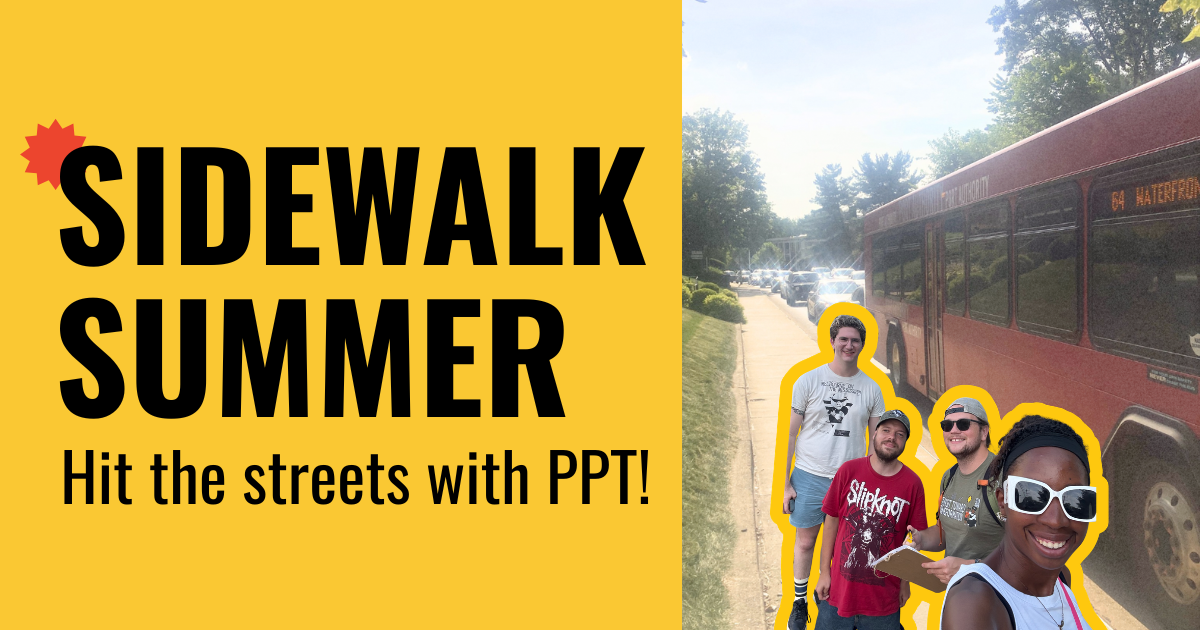
Download the TOR Télécharger les Termes de RéférenceSidewalk summer is back: hit the streets with PPT for sidewalk audits
Image Description: PPT members highlighted in yellow, on a glowy background of a bus stop on a summer day.
Bust out those cell phones and lace up those sneakers!Transit riders in Pittsburgh want more bus shelters, better bus stop amenities and connected sidewalks that take us to and from where we need to go! Our biggest takeaway from two years of bus shelter audits is that we cannot have bus shelters, benches and other amenities installed at our bus stops if our sidewalks are in poor or nonexistent condition.
Following the lead of our friends Pittsburgh Walks, PPT will host a series of sidewalk audits this spring and summer focusing on neighborhoods with high rider bus stops and busy transit corridors.
We will assess the quality of sidewalks in Pittsburgh and record findings via a mobile survey developed by the City of Pittsburgh. The collected data helps the City identify where sidewalks need to be improved or built, prioritize pedestrian infrastructure projects, and make the case for sidewalk funding.
The goal of these sidewalk audits is for participants to learn how to use this new tool and go on to gather data independently. Ultimately we aim to collect information about sidewalks (or where they’re missing) for every street in the City. This is a group effort and WE NEED YOU!
Audit Dates & Registration:Saturday May 16th 10am – 12pm, Sheraden
Saturday June 27th 10am-12pm, Hazelwood
Saturday August 22nd 10am -12pm, Hill District
- Before the event, participants must watch this 15 minute video.
- Have a lesson on what makes sidewalks safe and accessible, how to use the web application.
- Pair up to walk several blocks of neighborhood streets, and record our observations using an online survey on our cell phones.
- Must have charged cell phone that can reach the internet and take photos.
- Must be able to navigate web browsers and privacy settings on cell phone.
- Pittsburgh weather can be unpredictable this time of year! Come dressed for the elements (good walking shoes, winter coats, hats, gloves, etc.). We will be outside for about an hour.
- We cannot guarantee the accessibility or safety of these walks as some of the terrain may have broken to no sidewalks. Some regions may be hilly and harder to walk on.
- Blind and low vision people will not be able to use the mobile survey application, but your input is of great value. You will be paired with a sighted person so that you can access the survey.
- If you have individual accessibility questions, or to request ASL interpretation, please reach out to Nicole@pittsburghforpublictransit.org.
- ASL interpretation must be requested at least 2 weeks in advance.
You can attend on your own, or bring a group of neighbors, friends, family, or coworkers! This is a great way to get your steps in, meet fellow community members, and help make our streets safe, accessible, and enjoyable for everyone!
The post Sidewalk summer is back: hit the streets with PPT for sidewalk audits appeared first on Pittsburghers for Public Transit.
AFSA Newsletter | January – March, 2026
This first quarter 2026 edition of the AFSA Newsletter captures a period of intense reflection, sharpened advocacy, and strategic action across Africa and beyond. From Lilongwe to Dakar, Garuga to Cartagena, AFSA and its members engaged critical questions shaping the future of African food systems, including school meals, land justice, seed sovereignty, public agricultural finance, cross border agroecological trade, territorial markets, and citizen mobilisation. Across these interventions, one message stands out clearly: the struggle for food sovereignty is not only about production, but also about power, policy, markets, culture, and the right of African people to define their own food futures.
In these pages, readers will see how AFSA continued to link grassroots realities with continental and global advocacy. This edition highlights the adoption of the Lilongwe Declaration on agroecology based school and college meals, AFSA’s participation in ICARRD+20 in Colombia, the launch of a major report on the African Development Bank’s role in reshaping African agriculture, renewed calls to centre farmers in regional seed policy processes, and important internal moments of alignment through the AFSA staff retreat, the Citizens Working Group on Agroecology meeting, and the TAFS annual review workshop. It also documents growing momentum in public campaigns and movement spaces, including the #MyFoodMyIdentity online campaign and continued efforts to strengthen agroecological trade, territorial markets, and African food cultures.
What this edition reflects most of all is AFSA’s continued commitment to building a food systems movement rooted in justice, resilience, dignity, and African knowledge. Whether confronting corporate capture, defending land and seed rights, supporting local markets, or reshaping public narratives around food, AFSA’s work remains anchored in the conviction that Africa’s food future must be led by its farmers, communities, women, youth, and social movements. We invite you to read, reflect, and continue walking with us as we strengthen the movement for agroecology and food sovereignty across the continent.
Download the newsletter hereTransit Riders & Workers Skill Up at Organizing Spring Training
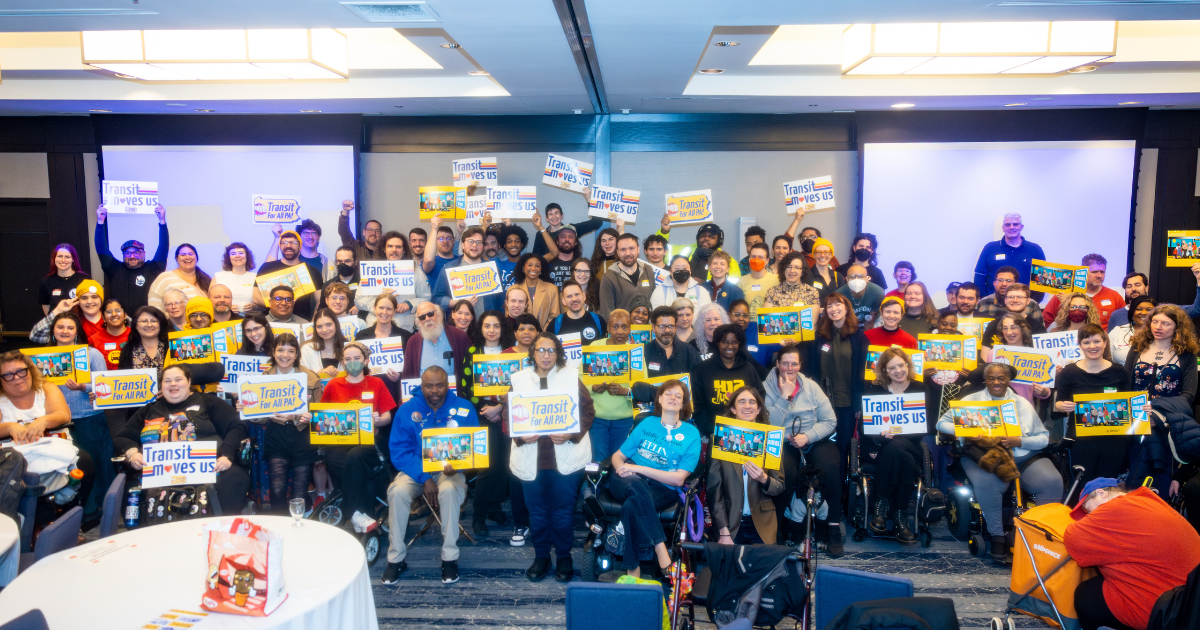
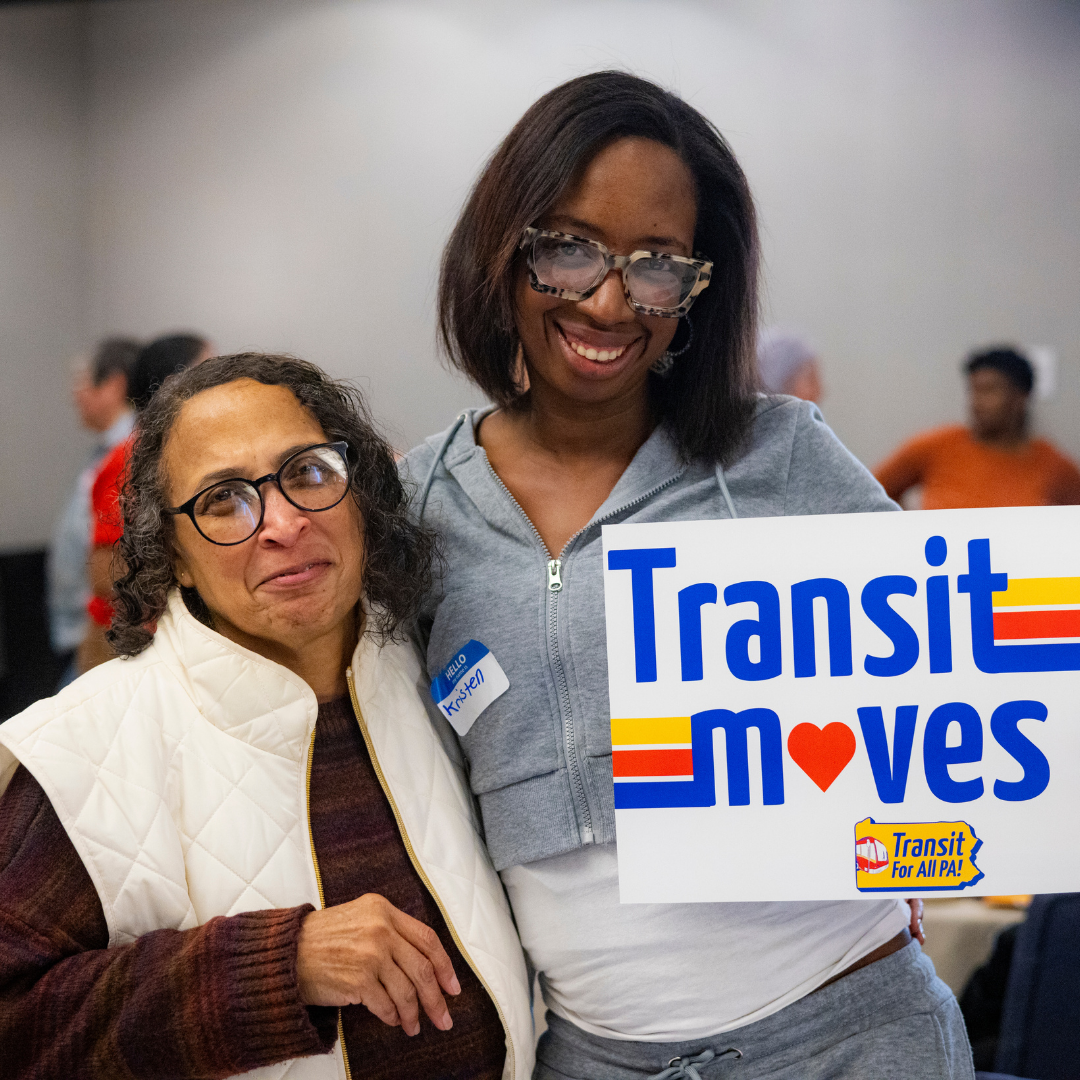
Image Description: Group photo at spring training has 100 people holding up signs and smiling with fists up.
Transit for All means every community – urban and rural, large and small – and thats who the movement is fighting for!
150 transit riders and transit workers from across Pennsylvania and the United States gathered at the end of March to build organizing skill and strengthen community.
The movement keeps on growing! For two days at the end of March, 150 transit riders and transit workers gathered in Pittsburgh for the third-annual Transit for All Organizing Spring Training. Attendees and speakers came from all across PA and the United States. Their purpose was clear: they were there to build organizing skills to strengthen a movement that’s fighting for transit for all – whether in rural communities, small towns or big cities.
The training was organized by Pittsburghers for Public Transit, who leads the Transit for All PA! campaign. The program was jam-packed with opportunities for attendees to learn new skills, learn from victories won in other cities, and meet inspiring new friends from other communities!
Read on for a recap of the two-days or check out photos here!
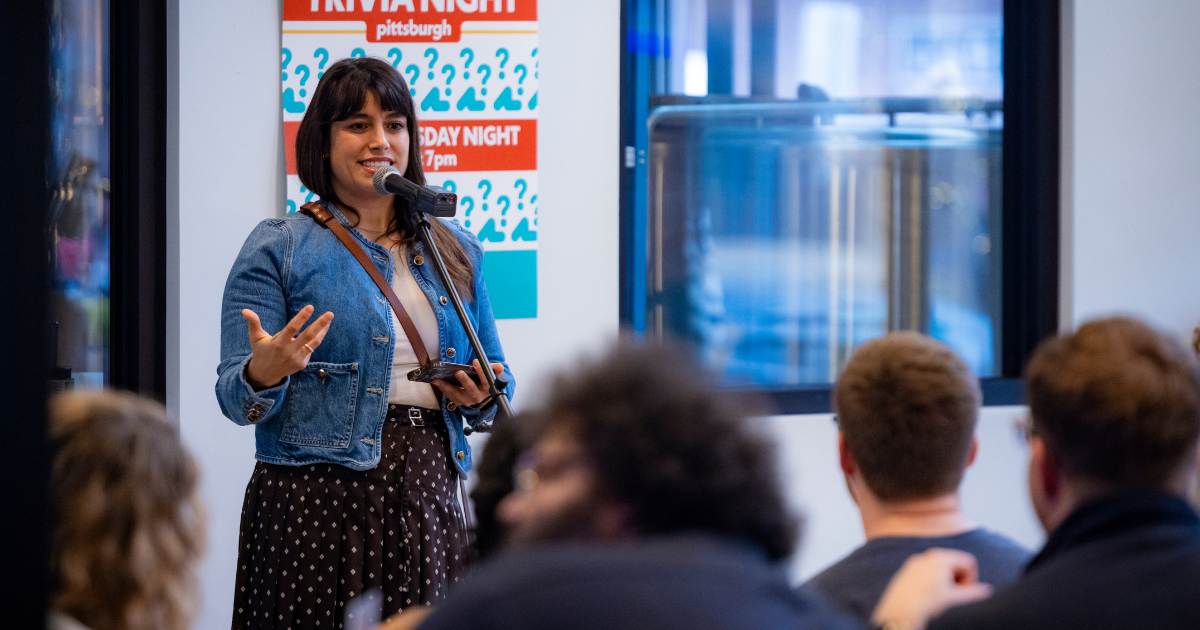
Day 1 Recap: Welcome to Pittsburgh & the Transit Justice Movement image description: County Executive Sara Innamorato addreses transit riders and transit workers at the 2026 Transit for All Organizing Spring Training Welcoming Happy HourOn Friday, attendees from out of town met at the PPT office for a Transit Tour led by PPT Members. The Transit Tour ended at the Welcome Happy Hour hosted at Aslin Brewery in the Strip District.
More than 100 people were in attendance for delicious food and drinks. Some people were new to transit organizing but many were veteran organisers for better public transit. Allegheny County Executive Sara Innamorato even stopped by to welcome people to town and encourage advocates to keep organizing for better transit access!
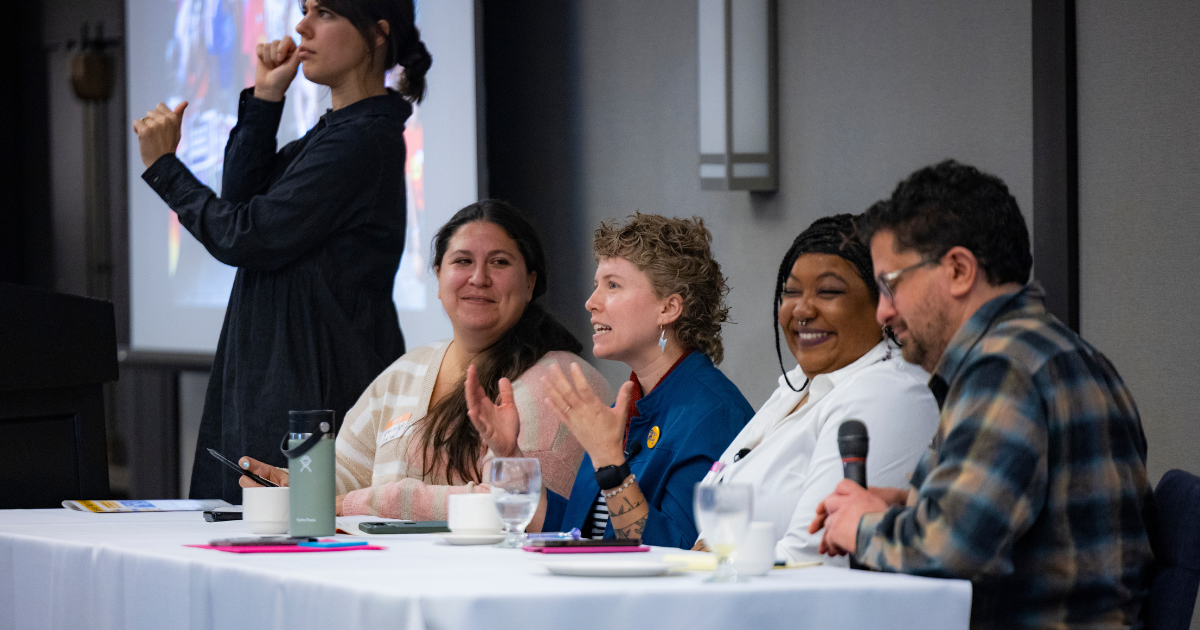
Day 2 Recap: Training Day!Image Description: Four panelists sit behind a table. One is speaking dynamically and moving their hands as the others smile and laugh. A sign language interpreter is translating in the background.
Day 2 was where the magic happened. Folks woke up bright and early to join for an 8am breakfast and some artmaking with Arts Excurions Unlimited, a community arts group from Pittsburgh’s Hazlewood neighborhood.
By 9am the plenary kicked off, led by Veronica Coptis, Senior Advisor, Taproot Earth. She began the day by driving home a theme that would be central to the training: that rural and urban communities must work together to change a system that moves us all. Veronica leads a number of rural organizing projects and shared that regardless of the community she’s working in, transportation is always a top need. Veronica was joined by Andrew Slack, a PA-based facilitator who led a panel discussion with Kearasten Jordan and Laura Pauls-Thomas, both Transit for All PA! Organizing Fellows from Lancaster, about transit needs in PA’s rural communities and small towns.
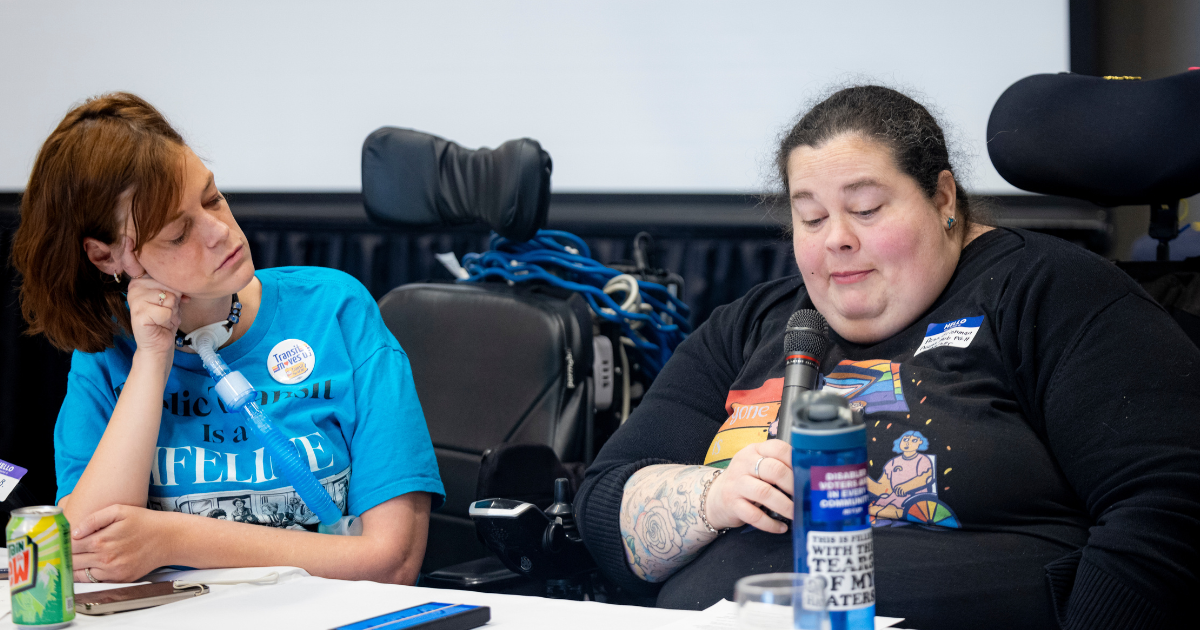
image description: Alisa Grishmand and Dr. Jose Badger present on a Transit for All Organizing Spring Training panelAfter the Plenary discussion, the energy didn’t stop. There were 7 workshops throughout the day, led by PPT Members and transit organizing experts from PA and across the US:
- Narrative Change: Our Stories Build the World We Want, led by Nadia Awad, Content Director, Narrative Initiative, Andrew Slack, PA-based narrative strategist, facilitator, and storyteller, and Clair Hopper, Digital Organizer, Pittsburghers for Public Transit and Transit for All PA!
- VoteTransit: Bus Mayor Elections and Beyond, led by Betsy Plum, Executive Director of Riders Alliance (New York City), Barb Warwick, Pittsburgh City Council member, District 5, and facilitated by Laura Chu Wiens, Executive Director of Pittsburghers for Public Transit/Transit for All PA!
- Mobile Workshop! Field Communications: Storytelling from the Street, led by Joe Conniff, Video Editor, Educator, and Producer, withremote support from Marcelese Cooper, Teaching Assistant Professor in the Film and Media Studies Program at the University of Pittsburgh
- Bargaining for the Common Good: Worker/Community Solidarity, led by Connor Chapman, University of Pittsburgh Graduate Workers Union and Pittsburghers for Public Transit and Ronni Getz, UPMC Magee Women’s Hospital, SEIU Healthcare Pennsylvania
- Organizing with Disability Justice at the Center, led by Anna Zivarts, a leading author, transit rider organizer and founder of the Nondriver Alliance out of Washington state, and Dr. Josie Badger, director of the national RSA-Parent Training, Information, technical assistance center (RAISE), and founder of several orgs including the Pennsylvania Youth Leadership Network (PYLN), the Children’s Hospital Advocacy Network for Guidance and Empowerment (CHANGE), and J.Badger Consulting, moderated by Alisa Grishman, founder of Access Mob Pittsburgh and PPT Board member
- Big Tech in Transit: Automation, Microtransit, Surveillance, and Data, led Dr. Sarah Fox, Assistant Professor in the Human-Computer Interaction Institute at Carnegie Mellon University; Director, Tech Solidarity Lab, Sue Scanlon, Transit Operator, Pittsburgh Regional Transit; Pittsburghers for Public Transit board member, and Ziggy Edwards, Leader, Mon-Oakland Connector Campaign
- Transit Isn’t Just Urban: Organizing in Small Systems & Everywhere, led by Connor Descheemaker (they/them), Statewide Campaign Manager, Transit for All PA!/Pittsburghers for Public Transit, andT4APA! Organizing Fellows Angela Adler and Laura Pauls-Thomas (Lancaster), Benjamin Felker-Quinn and Andria Ahrens (Lehigh Valley)
You can learn more about all of these great workshops and speakers on the 2026 Transit for All Organizing Spring Training homepage! And you can access the slides from each of these presentations at this Google Folder – feel free to share them, just please credit the presenters on each panel.
Attendees took a break from that great lineup and enjoyed some delicious lunch, snacks, and event took time out for a Movement Moment: Grounding, Accessible Yoga Practice led by PPT Member Mona Meszar, who is a yoga instructor, massage therapist, and community activist!
Spring Training was a blast! And now with these new skills and connections, transit riders and workers are ready to grow this movement.
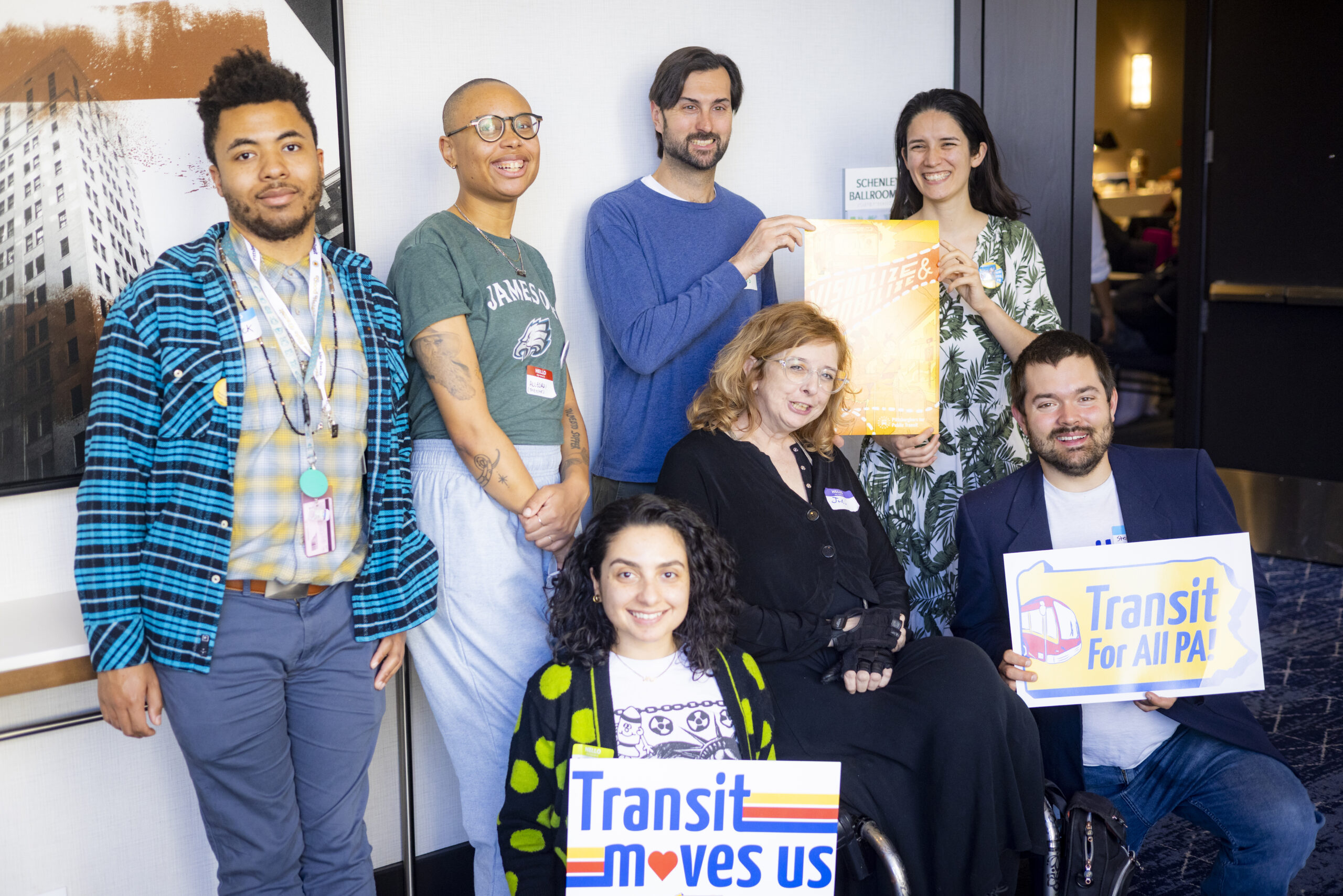
Missed the training or want to get involved? Join us at the next transit organizing meeting to join the community! Join the next meeting here! image description: 7 organizers from Philadelphia pose with signs at the 2026 Transit for All Organizing Spring TrainingThe post Transit Riders & Workers Skill Up at Organizing Spring Training appeared first on Pittsburghers for Public Transit.
Defending the Social and SolidarityEconomy Amid Global Uncertainty
Organizations representing workers in informal employment – waste pickers, home‐based workers, street vendors and domestic workers, including migrant workers – recognize the social and solidarity economy (SSE) as a critical pathway to improving livelihoods, strengthening collective organization and advancing decent work. This is particularly important given that women are disproportionately represented in informal employment due to structural inequalities, including limited access to opportunities and persistent gender and cultural biases.
For global networks such as HomeNet International (HNI), International Alliance of Waste Pickers (IAWP), International Domestic Workers Federation (IDWF), StreetNet International (SNI) and Women in Informal Employment: Globalizing and Organizing (WIEGO), SSE entities including cooperatives, associations, mutuals and self‐help groups have served as practical economic infrastructures through which workers organize production, stabilize incomes, access resources and strengthen their collective voice.
We are concerned that growing global uncertainty is placing renewed strain on international cooperation at a time when multilateral efforts, including those of the International Labour Organization (ILO), remain essential to advancing decent work for workers in informal employment.
Across the world, workers in informal employment face severe decent‐work deficits: unstable incomes, limited access to social protection, restricted bargaining power and persistent barriers to formal recognition as workers. Today, 58% of the global workforce (representing two billion people) are informally employed – in sectors such as waste picking, home‐based work, street vending, domestic work and care services.
For these workers, the social and solidarity economy represents far more than an aspirational concept. For millions of workers in informal employment, SSE entities function as concrete pathways to improve incomes and livelihoods. Through cooperatives, associations, mutuals, self‐help groups and other collective economic organizations, workers are able to coordinate production, reduce costs, stabilize incomes, access solidarity‐based finance and build forms of social protection where formal systems remain inaccessible. These collective and solidarity‐based economic arrangements are particularly crucial for women in informal employment, who face structural inequalities, lower incomes, greater exposure to violence, harassment and discrimination, and a disproportionate burden of unpaid care work.
The experiences of workers in our sectors demonstrate how collective economic organization strengthens workers’ bargaining power with municipalities, governments, employers and enterprises. By pooling resources, knowledge and infrastructure, SSE entities help workers overcome structural barriers that would be impossible to address individually. They do this while reinforcing democratic governance and collective representation.
Our organizations have welcomed the recognition of cooperatives and the wider social and solidarity economy in international labour standards, such as ILO Recommendation 193 on the Promotion of Cooperatives, 2002, and Recommendation 204 concerning the Transition from the Informal to the Formal Economy, 2015. The 2022 ILO Resolution concerning Decent Work and the Social and Solidarity Economy and the 2023 and 2024 UN resolutions to promote the social and solidarity economy also reflect important milestones in recognizing the role of collective economic models in advancing decent work. In addition, the 2025 ILO policy guidelines for the promotion of decent work in recycling highlights the importance of SSE approaches in supporting workers in informal employment, particularly waste pickers.
Leadership within the UN system, particularly through the ILO’s work with its constituents and partners, has played a critical role in furthering research, policy dialogue and international cooperation to advance the social and solidarity economy. We greatly appreciate the partnership that has developed over the years between
our global networks and the ILO, including its Cooperative and Social and Solidarity Economy Unit, and we look forward to continuing and deepening this collaboration in the years ahead.
In the context of tightening fiscal space, competing priorities and heightened global uncertainty, it is essential that the progress made in recognizing and supporting the social and solidarity economy not only continues but expands.
The social and solidarity economy should not be understood as a marginal or secondary approach to economic development. Rather, it represents a set of existing economic practices through which workers in informal employment collectively build more stable livelihoods, strengthen their rights, and contribute to more inclusive and resilient economies and societies.
In this sense, promoting and defending the social and solidarity economy is intrinsically linked to advancing gender equality, not only by expanding women’s economic opportunities, but by contributing to the transformation of structural conditions of exploitation and discrimination that underpin both informal employment and gender inequality.
Maintaining and strengthening policy, legal and programmatic support for the social and solidarity economy within the ILO’s mandate and across the broader multilateral system is essential to ensuring that pathways toward decent work for millions of workers in informal employment remain grounded not only in market mechanisms but also in solidarity, democratic participation and collective economic organization.
We urge governments, workers’ organizations, international institutions and development partners to boost the policy and institutional frameworks that will enable the social and solidarity economy to deploy its full potential.
About HomeNet InternationalHomeNet International is a global network of membership‐based workers’ organizations that represents more than 1.3 million home‐based workers, from 71 organizations spread across 30 countries.
Visit www.homenetinternational.org.
The International Alliance of Waste Pickers (IAWP) is a global union of 50 waste picker organizations, representing more than 460,000 workers across 34 countries. The IAWP is committed to advancing the rights and strengthening the organizing efforts of waste pickers.
Visit www.globalrec.org.
The International Domestic Workers Federation (IDWF) is internationally recognized as a Global Union Federation. Made up of 93 affiliates from 70 countries, the IDWF serves a membership of over 675,900 domestic/ household workers. Most are organized in trade unions and others in associations, networks and worker cooperatives.
Visit www.idwfed.org.
StreetNet International is a global organization of committed informal traders, with the goal to promote and leverage an autonomous and democratic alliance of street vendors, market vendors, hawkers and cross‐border traders. StreetNet International is present in more than 50 countries and represents over 700,000 members worldwide.
Visit www.streetnet.org.za.
Women in Informal Employment: Globalizing and Organizing (WIEGO) is a global network focused on empowering the working poor, especially women, in the informal economy to secure their livelihoods. We believe all workers should have equal economic opportunities, rights, protection and voice. WIEGO promotes change by improving statistics and expanding knowledge on the informal economy, building networks and capacity among informal worker organizations and, jointly with the networks and organizations, influencing local, national and international policies.
Visit www.wiego.org.
The post Defending the Social and SolidarityEconomy Amid Global Uncertainty appeared first on International Alliance of Waste Pickers.
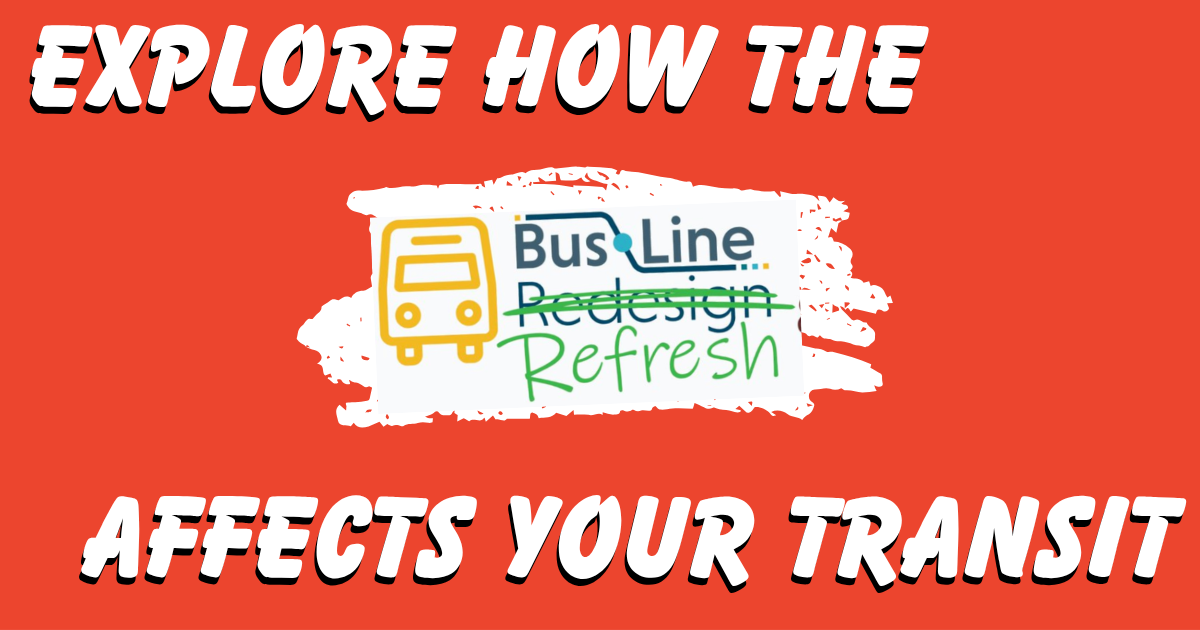
Explore How the Bus Line Refresh Could Affect Your Commute
The Bus Line Refresh could be the biggest service change in a generation. Your chance to make it better is right now! Learn how the proposals could impact you—and tell PRT how you feel about it.
Explore the service changes that affect youThere are many ways to explore the changes PRT is proposing under the Bus Line Refresh. You can:
- Review an interactive map of the proposed system changes (works best on a computer or tablet)
- Find your frequented routes from a list of affected routes, then click on their new names to learn about how they might change
- Model your frequent journeys on the Transit App on your mobile device (check out our tutorial below)
- Attend a public meeting with PRT (we’re hosting one on April 8th!)
After you do any of these options, it’s critical that you submit a public comment telling PRT how these changes would affect you. They need to know your thoughts in order to incorporate them into the proposal!
Join the April 8th meeting to learn more about transit changes How to model your journeys on the Transit AppNote that this method requires access to a mobile device, like a smartphone. If you don’t have access to one, we recommend using the other tools listed above to explore the proposed Bus Line Refresh.
- Download the Transit App to your mobile device. The app is available on both iPhone and Android. (Bonus: the app can be used to plan your future transit trips, and can even give you notifications when service changes or advocacy opportunities are available!)
- You may need to make an account to use the app.
- In the app’s main screen, type a destination in the “Where to?” bar. Select it from the list of results when it appears.
- Once you’ve selected your destination, you can also edit your starting location—for example, you might want to understand how your commute from your workplace to your doctor’s office might change.
- In the white portion of the screen, you’ll see a selection of potential routes you could take to reach your destination.
The trips at the top are those you could take under the current PRT system.
If you scroll down below these, you’ll see a section titled “PRT Preview Mode”, with potential future routes listed. - Click on a future route you’d like to explore. The app will then show you a map of the route, with details on how long the trip would take you, as well as scheduled frequencies and stops.
- At the bottom of this window, there is a banner with a button titled “Give feedback”. This will take you to PRT’s feedback page for the entire Bus Line Refresh project.
- When you’re done exploring this route, be sure to press the red “X” button at the top right of the screen to exit preview mode.
A post shared by Pittsburghers 4 Public Transit (@pgh4publictransit)
Don’t miss your chance to shape the bus networkIf you or someone you know takes transit frequently, PRT needs to know your thoughts. There are a lot of ways to give feedback on the proposed Bus Line Refresh:
- Find your routes from an online list, click their new names, and leave route-specific feedback
- Send an email to PRT with your comments
- Call PRT at 412-442-2000
- Fill out a paper survey at home or at your nearest Carnegie Library location
- También puedes descargar una encuesta en papel en español!
- Attend a public meeting with PRT
And of course, the best way (because it comes with community):
- Join our next monthly meeting on April 8th to hear PRT present, and give them your feedback in person
The post Explore How the Bus Line Refresh Could Affect Your Commute appeared first on Pittsburghers for Public Transit.
May Day Webinar: Workers’ Safety In The Climate Crisis
Hi there
After a brief period of hiatus we’re very happy to announce that we will be returning to regular programing on May Day, May 1 at 1pm EST for a webinar on protecting workers’ safety in the climate crisis.
Our panelists, to be announced shortly, will speak about the vital work trade unions do to protect workers from rising temperatures, new pollutants and other stresses on the job and what they are doing to ensure that their members are safe.
We will have a Zoom link to RSVP shortly but if you would like to discuss joining the panel, please reach out to convener@greeneonnet.ca
See you there.
Our Guests:
Alex Callahan: National Director of Health, Safety and Environment with the Canadian Labour Congress.
Anne Tennier: President and Chief Executive Officer of the Canadian Centre for Occupational Health and Safety
Roger Duffy: Health & Safety Representative Canadian Union of Public Employees
Registration info:
You are invited to register for a Zoom webinar!
When: May 1, 2026 01:00 PM Eastern Time (US and Canada)
Topic: Green Economy Network
Register in advance for this webinar.
See you there
New Report: Who Is Financing the Future of African Agriculture?
The Alliance for Food Sovereignty in Africa (AFSA) launches a new report asking a critical question: Is the African Development Bank (AfDB) financing food systems that truly serve Africa’s people?
Based on an analysis of 20 AfDB-supported agricultural projects, this study, researched by Dr Keiron Audain for AFSA, reveals a troubling pattern. Despite strong rhetoric around food security and climate resilience, a significant share of AfDB financing continues to reinforce agro-industrial models built on monocultures, synthetic inputs, and corporate value chains. Meanwhile, farmer-managed seed systems, agroecological practices, territorial markets, and Indigenous knowledge remain underfunded and marginalised.
The report exposes persistent gaps in transparency and participation. Communities are frequently consulted but rarely empowered to shape decisions. Investments that affect land, livelihoods, and diets are too often designed without meaningful co-creation with the smallholder farmers who feed the continent.
At a time when Africa faces escalating climate shocks, biodiversity loss, and food insecurity, public finance cannot continue to support systems that deepen dependency, degrade soils, and concentrate power in corporate hands. Africa does not need a blind expansion of industrial agriculture. It needs investment in agroecology, crop diversity, resilient seed systems, and local food economies that strengthen sovereignty and community control.
This report is not just an analysis. It is a call to redirect agricultural finance toward justice, ecological integrity, and food sovereignty. AfDB and African governments must ensure that public resources build resilient, community-rooted food systems rather than entrenching models that undermine them.
Download the full report here.ICARRD+20: Joint Civil Society Statement
Protect Our Land, Restore Our Soil: Collective Territorialities for Land Justice, Pastoralist Futures, and Ecological Restoration
As civil society organisations, social movements, faith-based actors, Indigenous Peoples, pastoralist and peasant organisations from Africa and across the Global South, we come to ICARRD+20 at a moment of deep crisis and urgent possibility.
Twenty years after the first International Conference on Agrarian Reform and Rural Development, rural communities across the world continue to face dispossession, land concentration and ecological destruction. Despite global commitments to end hunger and poverty, land and food systems are increasingly controlled by corporate and financial interests, while communities that produce food remain marginalised and insecure.
Across Africa and other regions, customary and collective land systems are being undermined in the name of development, conservation, climate mitigation and large-scale investment. Carbon offset projects, extractive industries, agribusiness expansion and speculative land markets are accelerating dispossession, soil degradation and social inequality, often excluding communities from territories they have governed collectively for generations. At the same time, agribusiness corporations and financial investors are driving the rapid expansion of factory farming and industrial livestock production across Africa, concentrating land and resources, degrading ecosystems, and undermining pastoralist and small-scale livestock systems essential to food sovereignty.
Pastoralist communities are among those most severely affected. As 2026 is the International Year of Rangelands and Pastoralists, this conference must recognise pastoralists as central to sustainable food systems and ecological resilience. Policies that restrict livestock mobility, privatise communal rangelands or convert grazing lands to agribusiness, conservation or carbon-offset projects undermine pastoralist livelihoods while intensifying conflict, poverty and environmental degradation. Yet pastoralism remains one of the most climate-resilient land-use systems in drylands. Through mobility and communal rangeland management, pastoralists sustain livelihoods, supply vital meat and milk production, and maintain ecological balance in areas where crop farming is often unsustainable.
Meanwhile, communities defending their territories face criminalisation and violence. Women pastoralists and small-scale producers, youth, and Indigenous Peoples remain excluded from decision-making processes, despite being central to food production and environmental stewardship.
ICARRD+20 must therefore not be a commemorative event. It must become a turning point.
Our Calls to Governments and International Institutions
Ahead of ICARRD+20, we call on governments, international institutions, and development partners to commit to the following:
- Recognise and protect collective and customary land tenure systems, including individual and collective land rights as affirmed in CESCR, UNDRIP and UNDROP.
- Protect pastoralist rangelands and livestock mobility, including cross-border corridors essential for climate adaptation and peace, and prevent conversion of rangelands to inappropriate uses such as monoculture tree plantations.
- Implement genuine agrarian reform and equitable land redistribution, prioritising landless farmers, women, youth, pastoralists and Indigenous communities, while addressing the historical and political drivers of land degradation and induced land scarcity.
- End land speculation and financialisation, including large-scale land acquisitions and carbon or biodiversity credit schemes that dispossess communities.
- Redirect agricultural and climate finance toward agroecology, rangeland restoration and community-led food systems, and integrate pro-pastoralist strategies into National Biodiversity Strategies and Action Plans (NBSAPs) and Nationally Determined Contributions (NDCs). Promote conservation models that uphold pastoralists’ rights and ensure restoration strengthens pastoralist livelihoods as part of a just green transition.
- Invest in decentralised infrastructure and services compatible with mobile pastoralist systems, including water, veterinary care, markets, education and health.
- Guarantee meaningful participation of affected communities, and free prior and informed consent of Indigenous Peoples, in land, agriculture and climate decision-making.
- Protect land and environmental defenders, and end violence, criminalisation and forced displacement.
- Establish binding corporate accountability mechanisms for human rights violations and ecological harm across global value chains.
Toward Land Justice, Pastoralist Futures and Ecological Restoration
The future lies not in further commodifying land and food systems, but in restoring community control over territories, securing pastoralist mobility and commons, and supporting agroecological transitions rooted in justice and ecological integrity.
ICARRD+20 must renew global commitments to agrarian reform, land justice, and food sovereignty, led by communities that sustain the world’s food systems and ecosystems.
Land justice is climate justice. Pastoralist mobility is ecological resilience.
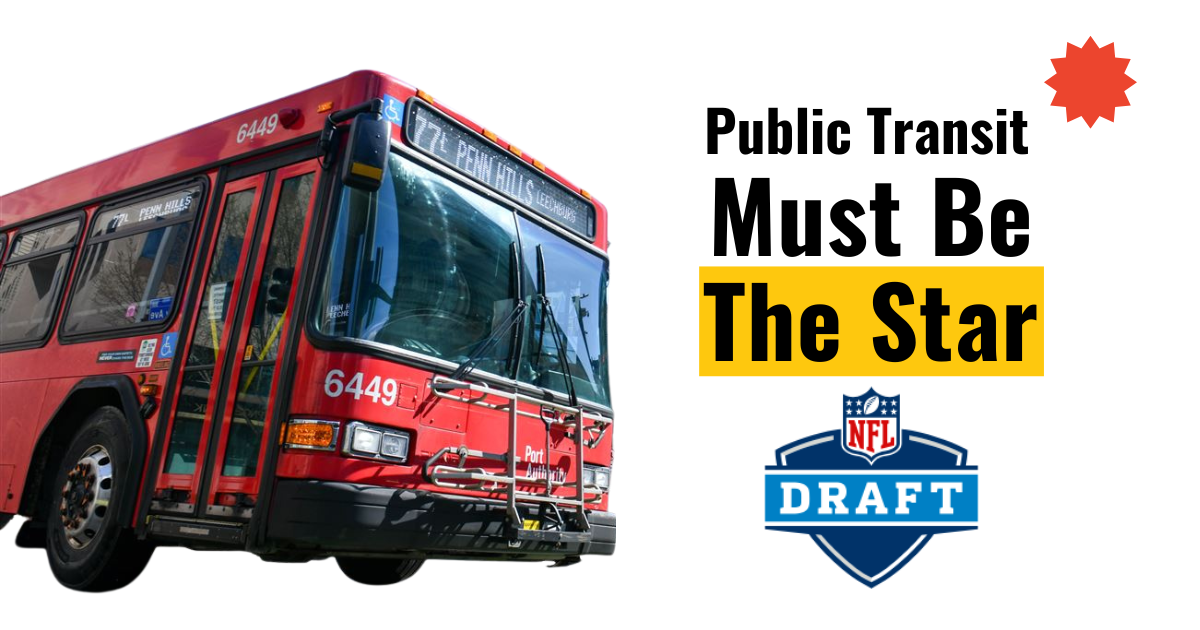
Transit is the Ticket to a Winning NFL Draft
On April 23-25 of this year, Pittsburgh will take the national stage by hosting the NFL draft. This will be an unprecedented opportunity to showcase our region: the event is estimated to draw between 500,000-700,000 attendees across three days, around twice the total population of the City of Pittsburgh. The NFL draft events will be located primarily at the Point and at Acrisure Stadium, and success will depend in part on whether hundreds of thousands of residents and visitors will be able to efficiently access the festivities.
Because our beautiful region is hemmed in with rivers and hills, the arterial roadways and bridges to reach these sites are limited. If the majority of these hundreds of thousands of event attendees plan to drive themselves Downtown or to the North Shore, the NFL Draft will be an unmitigated disaster, with delays lasting for hours in all directions. It is therefore critical that both event workers and the NFL Draft visitors are both supported and incentivized to take public, mass transit.
In other words, well-advertised, easy to use, and abundant transit service must be the heart of any winning strategy for the NFL Draft.
There are a number of key stakeholders who must play a role in order for transit to be the easy and obvious choice for stadium and hospitality workers, local attendees and out-of town visitors through the NFL draft days. Below we offer our recommendations for each:
Recommendations for Pittsburgh Regional Transit:
Recommendations for the NFL/Visit Pittsburgh/Stadium Authority:
Recommendations for City of Pittsburgh, Allegheny County and PennDOT:
Recommendations for Pittsburgh Regional Transit:Service:
- PRT must provide both robust regular transit service and event shuttle service. Pittsburgh Regional Transit should ensure that all routes, throughout the County, run at least as frequently as their current rush hour service during the entire event. Frequent transit service needs to serve local residents as well as out-of-town visitors. Hundreds of thousands of Pittsburgh area residents are anticipated to attend and work the Draft events and staff local businesses, and visitors to the City will be staying in every available hotel room and Airbnb across the region.
- Transit workers should be provided additional compensation during the NFL draft in order to incentivize workers to pick up extra shifts and to diminish call offs.
Marketing: Pittsburgh Regional Transit must have a marketing campaign to encourage transit use during the NFL draft.
- PRT should deploy a slogan like, “PRT is your ticket to the action”, “PRT is your valet to the game,” “PRT makes it easy,” or ”Transit riders get the red carpet,” which would be memorable and would show that PRT has plans to support rider access to the event.
- PRT should communicate clearly on its channels – social media, Ready2Ride, its website- and third party apps to help riders navigate the system during the event. There should be an NFL draft landing page on the PRT website that includes fares/fare payment, and service/schedules/maps.
- PRT should advertise at the airport, through Airbnb, at Downtown and North Shore restaurants/bars/coffee shops (WMATA in DC has advertisements on coasters in Washington DC bars), in local hotel “welcome guides to Pittsburgh”, and on bus shelters.
- PRT’s canvass team could table at the Pittsburgh airport, on the North Shore, at Acrisure Stadium and at the Point to provide personalized information on fares and service.
–The NFL Draft One Pass Mobile App should prominently feature a link to a (future) Pittsburgh Regional Transit NFL Draft landing page as the top recommendation for how to get around. Parking information should be secondary.
–Other portals for NFL Draft information including the Steelers App and the Visit Pittsburgh page should prominently link to and recommend Pittsburgh Regional Transit for locals and out-of-town visitors to get around during the Draft.
–Buses should get priority access to the front of the stadium. Reducing overall traffic congestion, excessively long commute times and walks to access the event – by rolling out the red carpet for public transit- will make for a successful event and happier attendees.
Recommendations for City of Pittsburgh, Allegheny County and PennDOT:–Buses must not be stuck in mixed traffic during the event. There should be a careful audit of where buses experience delays during stadium events and events at the Point, and specific interventions made to address them. For instance, one lane of Reedsdale Street should be made bus-only, and one lane on North Ave should be made bus-only. The bus only lanes downtown -particularly Liberty Ave- should have no exceptions for cars during the event, and should have traffic enforcement officers to ensure that they are kept clear for buses. The HOV lanes on 279 should remain open for buses throughout the three days of the NFL draft.
Conclusion: The City of Pittsburgh and Pittsburgh Regional Transit have the opportunity to shine at this year’s NFL Draft, and we’re eager to see it happen.We’re calling on Pittsburgh Regional Transit, the NFL and Pittsburgh tourism bureau, and our municipal champions to ensure that our transit service, PRT’s communications and marketing efforts, and our region’s infrastructure is primed to make transit the easiest and best option for locals and visitors alike. Of course, these are not comprehensive recommendations—we trust that many other good proposals are being brought to the table. But we hope that together, these institutions can play their part towards making abundant, efficient transit the ticket to a winning NFL Draft.
The post Transit is the Ticket to a Winning NFL Draft appeared first on Pittsburghers for Public Transit.
Collective Political Statement on Dumpsite Closures
Across the world, governments and private actors are shutting down dumpsites in the name of modernization, climate action, or urban order. But for the millions of waste pickers who have sustained recycling systems for decades, these closures do not feel like transitions. They are evictions. They mean losing the right to work, being pushed out of the city, being excluded from decisions that shape our lives, and being blamed for environmental problems we did not create. What is presented as progress often results in repression: sites close overnight, police arrive before social services, and companies take control of materials without acknowledging the workers who made those materials valuable in the first place.
From Africa to the Asia-Pacific, from the Americas to Europe, our affiliates report the same pattern when their workplaces are closed: no consultation, no guarantees, and no place for waste pickers in the so-called “new systems.” Environmental narratives, technical language, and regulatory frameworks are repeatedly used to justify the exclusion of workers—especially women, migrants, and racialized communities who already face multiple forms of inequality. These are not isolated cases; they represent a global political trend that threatens our livelihoods, our dignity, and the continuity of organized waste picker movements worldwide.
We reject the idea that waste pickers are a problem to be removed. For generations, we have diverted enormous quantities of materials from dumpsites, reduced emissions, and protected ecosystems—long before recycling, reusing, and repairing became part of official environmental agendas. Today, despite vast amounts of valuable materials being wasted or captured by corporations, waste pickers are increasingly denied access to recyclables, reusable materials, and repairable goods. A system that discards workers while protecting profits is neither modern nor sustainable.
No dumpsite closure can be legitimate without the full participation of waste pickers from the outset. We demand recognition as workers who need rights, and a decisive role in the planning, implementation, and monitoring of any waste system reforms. Any restructuring must guarantee secure livelihoods, continued access to materials, and real alternatives for those who choose different pathways. Anything less is forced displacement.
We denounce all forms of criminalization and repression. Sudden closures, violent evictions, and narratives that portray waste pickers as obstacles to environmental progress are incompatible with a just and democratic transition.
We draw a clear line: we will not accept closures that erase our work, deny our access to materials, projects that dispossess us of value, or models that treat poor workers as disposable. Our vision is of cities where waste pickers are recognized as environmental workers, with dignified working conditions, stable incomes, political voice, and shared control over the systems they sustain.
We speak with one global voice: Work with us. Invest in us. Recognize us. Partner with us. A world without waste pickers is a world with more waste—and less justice.
Collective Political Statement on Dumpsite ClosuresDownloadDownload in:
English, Spanish, French, Nepali, Hindi, Indonesian, Filipino, Portuguese
The post Collective Political Statement on Dumpsite Closures appeared first on International Alliance of Waste Pickers.
The Hub 3/6/2026: Clean Air Council’s Weekly Round-up of Transportation News
“The Hub” is a weekly round-up of transportation related news in the Philadelphia area and beyond. Check back weekly to keep up-to-date on the issues Clean Air Council’s transportation staff finds important.
Save the SEPTA Zero Fare Program! Follow Transit Forward Philadelphia for events and actions to fight for this program.
Image source: The InquirerThe Inquirer: SEPTA trolleys will use AI cameras to catch drivers breaking no-parking rules in Philly – Starting this week, cars parked illegally in the SEPTA trolley lanes will be issued tickets from automated enforcement cameras. 30 trolleys across six lines will be getting AI-camera systems installed to issue those tickets. Violations will result in a mailed warning until April 1st, afterwards there will be a $51 ticket. This program is in addition to the 152 SEPTA buses with AI-powered cameras issuing tickets for parking in bus lanes which began last year. Trolleys cannot go off track to avoid illegally parked cars, they result in delays to service, and hours of delays total.
Image Source: BillyPennBillyPenn: 30th Street a popular option for Philly’s future intercity bus station – Three potential sites are being evaluated by the City of Philadelphia to build a permanent bus terminal for Greyhound and other intercity carriers. The old Filbert St. site near Chinatown will soon house intercity bus pick up and drop off, with plans to reopen in May. The lease on that site will end in 10 years, with extensions only available for 5 additional years. The sites being evaluated would be a permanent home, and owned by the City. The most popular option at a public meeting last week was the 30th St Station. Wednesday’s open house was a crucial first step for this plan, with plans for more public meetings later this year. An online survey is also available and seeking feedback.
Image Source: PhillyVoicePhillyVoice: SEPTA gets $5.5 million in federal funding to enhance World Cup service – The Federal Transit Administration is awarding the 11 host cities of the World Cup funds to run service and make improvements ahead of the six games scheduled for Lincoln Financial Field. SEPTA is getting around $5.5 million to assist with expenses for the World Cup and other 2026 events. The estimated cost to increase service this summer is expected to be around $21.5 million. SEPTA typically adds 10 extra trips to the Broad Street Line schedule before and after Eagles games, and will probably do the same for World Cup matches. FIFA FanFest is a five week festival at Lemon Hill taking place this summer, and along with the nation’s 250th anniversary, SEPTA will be operating at a much larger capacity. These funds support the operational budget, which has been underfunded for years due to lack of state support.
Pittsburgh Regional Transit: Bus Line Refresh
The Inquirer: Mayor Parker backs legislation to boost housing development around SEPTA stations
PhillyVoice: Waymo is tweaking its self-driving car tech to navigate in heavy snowfall
Philadelphia Today: PA’s Anniversary License Plates Confuse Toll Readers, Sending Out Wrong Bills
The Inquirer: SEPTA chief gets a three-year contract at $395,000 a year
SEPTA: SEPTA Ended Key Tix Sales; Riders Must Use Tickets within 180 Days of Purchase
Pages
The Fine Print I:
Disclaimer: The views expressed on this site are not the official position of the IWW (or even the IWW’s EUC) unless otherwise indicated and do not necessarily represent the views of anyone but the author’s, nor should it be assumed that any of these authors automatically support the IWW or endorse any of its positions.
Further: the inclusion of a link on our site (other than the link to the main IWW site) does not imply endorsement by or an alliance with the IWW. These sites have been chosen by our members due to their perceived relevance to the IWW EUC and are included here for informational purposes only. If you have any suggestions or comments on any of the links included (or not included) above, please contact us.
The Fine Print II:
Fair Use Notice: The material on this site is provided for educational and informational purposes. It may contain copyrighted material the use of which has not always been specifically authorized by the copyright owner. It is being made available in an effort to advance the understanding of scientific, environmental, economic, social justice and human rights issues etc.
It is believed that this constitutes a 'fair use' of any such copyrighted material as provided for in section 107 of the US Copyright Law. In accordance with Title 17 U.S.C. Section 107, the material on this site is distributed without profit to those who have an interest in using the included information for research and educational purposes. If you wish to use copyrighted material from this site for purposes of your own that go beyond 'fair use', you must obtain permission from the copyright owner. The information on this site does not constitute legal or technical advice.
 This site is not the official webpage of the Industrial Workers of the World.