You are here
News Feeds
Community shocked as Australia’s most advanced renewable state moves to end fracking ban
A government's move to end a 10-year moratorium on fracking in a sensitive coastal region will put farm land and water systems at risk, opponents say.
The post Community shocked as Australia’s most advanced renewable state moves to end fracking ban appeared first on Renew Economy.
As tick bites surge, conspiracy theories follow
“Tell you what,” Drew Maciel told his Instagram followers in April, “I’m sick of finding dead moose.” He zoomed in on a dead bull moose lying prone on the ground, running the camera over clusters of ticks nestled within every crevice of the corpse.
Maciel is a shed hunter, meaning he collects antlers that have been naturally “shed” by wildlife. But a winter tick feeding frenzy in Maine, driven by rising temperatures, means that this year he kept finding dead animals. Up to 90 percent of the moose calves tracked by scientists in recent years have been bled to death by ticks — an ongoing crisis in a state that prizes these largest of all deer species.
But where scientists see the hand of climate change at work — average temperatures in Maine have risen 3 degrees Fahrenheit since 1985 — others see the designs of a global cabal.
“Human engineered biological warfare,” read a comment on Maciel’s video posted by Dries Van Langenhove, a far-right former member of the Belgian government who was recently convicted of violating the country’s Holocaust denial laws. The comment got 32,000 likes. “It’s Bill Gates,” someone else posted.
Chuck Lubelczyk, a vector-borne ecologist with Maine Medical Center, collects ticks at a site in Cape Elizabeth. John Ewing / Portland Press Herald / Getty ImagesThese posts are part of a wave of tick-related conspiracy theories garnering millions of views online. In April, a self-proclaimed holistic doctor on Instagram claimed to have spoken with multiple farmers in the Midwest who told her that they were finding boxes of ticks dumped on their properties. “Something is happening with ticks right now, and farmers are starting to talk,” she posted alongside a video that got 10 million views across Facebook, Instagram, and TikTok. The MAHA Moms Coalition, a nationwide group inspired by the Trump administration’s Make America Healthy Again agenda, reposted the claim asking affected farmers to come forward.
The theory dates back to 2023, with viral claims that Pfizer and Valneva, pharmaceutical companies developing a vaccine for Lyme disease, were planting boxes of ticks on farms to drum up demand for their product.
A separate theory that gained traction around the same time linked a British research program to genetically modify cattle ticks, funded in part by the Bill and Melinda Gates Foundation, to rising cases of red meat allergies in the U.S. The biggest problem with that theory is that the allergy, Alpha-gal syndrome, is caused by the bite of a Lone Star tick — a completely different species from the cattle ticks in the research program.
While all these conspiracies involve different ticks, different diseases, and different alleged culprits, they are often treated as interchangeable evidence of the same broader claim: that rising tick encounters are a part of a nefarious human plot.
The theories are right about one thing: Ticks are getting worse. Some of the same ecological changes fueling Maine’s winter tick boom are also making tick encounters more common in broad swaths of the U.S. The arachnids are showing up earlier in the year, expanding into new terrain, and biting people more often than they used to. But the force driving those shifts is not a clandestine bioweapons program, a vaccine plot, or Bill Gates — it’s climate change.
A screenshot of an Instagram post furthering the unproven claim that Midwestern farmers are finding boxes of ticks left behind on their properties. InstagramRichard Ostfeld, an ecologist at the Cary Institute of Ecosystem Studies, said a warming world is “bringing ticks out earlier in the year” in states like New York, where he lives. “It used to be we were pretty safe in the month of May,” he said. “Now, not so much.”
Tick season is off to an unusually early start across most of the U.S. this year, the Centers for Disease Control and Prevention, or CDC, said in an alert published late last month. Emergency room visits for tick bites in four of the five geographic regions the agency tracks are the highest they’ve been for this time of year since the CDC started keeping tabs on tick-borne illness rates in 2017.
While the CDC hasn’t said what’s behind the uptick in bites this spring, ample snow cover earlier in the year helped insulate adult ticks from the cold of winter, and an early spring bloom across much of the U.S. likely brought those hungry adults out of the leaf litter earlier than normal. But regardless of the specific dynamics at play this year, rising average temperatures will lead to more robust tick exposure on balance. That’s because warmer temperatures both coax ticks north into territory that was once too cold to host them and also extend the length of time that ticks are active every year.
More tick bites mean more opportunities for infection — and the list of infections doctors are watching for is getting longer. Positive tests for alpha-gal syndrome have increased 100-fold since 2013; nearly half a million people in the U.S. now carry an allergy to red meat. Cases of anaplasmosis, a disease carried by black-legged ticks that hospitalizes roughly 30 percent of the people who contract it, increased 16-fold between 2000 and 2017. Babesiosis, a malaria-like illness also carried by black-legged ticks, has risen roughly 10 percent year-over-year since 2015. It’s not uncommon now for a single tick to carry two or more diseases.
Ecologists who study ticks see an interwoven mix of factors driving these increases. Land-use and wildlife changes are increasing contact between humans and ticks, invasive and expanding tick species are bringing different disease risks to new parts of the country, and better testing and reporting of tick-borne illnesses is making diseases more visible. But there is widespread agreement in the scientific community that those trends are unfolding against the backdrop of climate change.
Ostfeld worries that the complexity of the factors that lead to higher rates of tick-borne disease, paired with the allure of online conspiracies, will make it harder for people to understand why backyards in some parts of the country are getting more dangerous. “The more I read about people actually believing some of these conspiracy theories, the more I worry that even moderately complex explanations or phenomena we care about — like how likely we are to get bitten by a tick — might be too much,” he said.
Scientists collect Lone Star ticks, which can cause an allergic reaction to red meat, for research. Ben McCanna / Portland Portland Press Herald via Getty ImagesIt doesn’t help that conspiracies about ticks have now been legitimized by federal government officials. Robert F. Kennedy Jr., the Secretary of Health and Human Services, has at various times in his career opined that Lyme disease, which now affects an estimated half a million Americans every year, was created as a byproduct of vaccine research and originally used as a military bioweapon. (This flies in the face of genomic evidence that the bacteria causing Lyme has existed in North America for at least 60,000 years.)
Both Kennedy and Tucker Carlson, one of America’s most prominent Republican-aligned media figures, have hosted the writer Kris Newby on their podcasts in recent years. In both cases, Newby espoused debunked claims about the military origins of Lyme.
The idea that Lyme disease and other tick-borne illnesses were created by a U.S. military bioweapons program is so pervasive that a formal initiative to investigate the origin has twice been introduced by lawmakers in the House of Representatives. Chris Smith, a Republican representative from New Jersey who spearheaded those efforts, was successful on his second attempt. A directive in the National Defense Authorization Act for Fiscal Year 2026, signed by President Donald Trump last December, includes a provision requiring the Government Accountability Office, or GAO, to investigate whether the military used ticks as biological warfare agents in the middle of the twentieth century.
“GAO will be fully empowered to leave no stone unturned, and now it’ll have a congressional mandate to get to the bottom of it, because they were weaponizing ticks,” Smith said at a Lyme disease roundtable convened by Secretary Kennedy last year.
But away from the congressional roundtables and viral videos, the plot begins to lose some of its drama. Even in the Midwest, where millions of social media viewers have been told that boxes of ticks are being dumped on unsuspecting farmers, evidence of foul play is hard to find. Terry Hoerbert and her husband Bob own Little Brown Cow Dairy, a small dairy farm in Delavan, Illinois. The lane down to the farm is short, Terry said, so she would have seen someone dropping off packages of ticks. Had the Hoerberts heard of any other farms in the area receiving packages of live ticks?
“We have not,” Terry told me. “You are the first to enlighten us.”
This story was originally published by Grist with the headline As tick bites surge, conspiracy theories follow on May 14, 2026.
First crypto, now data centers: How tech is reshaping this North Carolina community
This coverage is made possible through a partnership between Grist and BPR, a public radio station serving western North Carolina.
In Murphy, North Carolina, a peaceful mountain town once defined by birdsong and swaying trees, a steady electric hum cuts through the calm. The noise from a nearby cryptocurrency mine has intruded on Rebecca and Tom Lash’s lives since it opened in 2021.
“There was nothing in this little pasture but these electric lines,” Rebecca Lash said, as she and Tom stood on the hill overlooking the mine. “And it was just nice and quiet.”
The Lashes came to Cherokee County eight years ago to settle down and enjoy their older age in view of the Blue Ridge Mountains. They grew more and more incensed as three cryptocurrency mines opened near their home within the last five years.
Now, the landscape is shifting again as one of those mines becomes an artificial intelligence data center.
Western North Carolina is seeing a local manifestation of a national trend. Across the country, communities that spent years trying to stop cryptocurrency mines are confronting a new and potentially larger wave of digital infrastructure that powers AI. As profits from crypto mining have fallen, the companies behind it have begun converting their operations into facilities designed to handle the computing that underpins that burgeoning industry.
“The big AI centers and the big data centers, there’s some horror stories about people that live near those,” said Tom Lash.
This transition is triggering a growing backlash. Residents and local officials in Cherokee County and beyond fear that these immense operations — which consume as much electricity and water as small towns — will alter rural communities with few land-use restrictions. Towns and counties across western North Carolina have begun passing moratoriums and considering new regulations as they scramble to respond to an industry many say arrived faster than local authorities could understand or control it.
The shift is possible because crypto mines and AI data centers rely on the same underlying resources: enormous amounts of electricity, industrial-scale cooling systems, and large buildings capable of housing thousands of servers that run constantly. That infrastructure has made crypto operations attractive targets for companies racing to build AI computing capacity.
Political and environmental conditions of Cherokee County are easing the transition, especially in post-industrial communities that need economic invigoration. In Marble, Core Scientific’s cryptocurrency mining site-turned-data-center once housed American Thread, which produced thread for the garment industry until it closed in 2015, taking hundreds of jobs and hundreds of thousands of dollars in annual taxes with it. The region’s abundant water, mild climate, and lack of zoning restrictions make it attractive.
Late last year, Core Scientific announced plans to merge with CoreWeave, which leases computing power to AI companies. Though that deal fell through in October, Core Scientific has publicly said it is still converting facilities like the one in Marble to handle artificial intelligence workloads. That facility consumes as much power as a medium-sized town.
Core Scientific did not respond to a request for comment. CoreWeave declined to comment.
Becoming an AI data center has required quite an expansion. According to Cherokee County commissioners and a public records request filed by commissioner Ben Adams, the company submitted a site plan last year that included more than 170 diesel generators, most of which would provide backup power. Records released by the North Carolina Department of Environmental Quality after an inquiry by Grist showed that they were exempt from air-quality permitting requirements because they were classified as backup systems.
The site spreads across 250,000 square feet, or 7 acres. The company is working with neighboring utilities to meet its water and sewer needs, and it’s digging three wells to tap the local water table. The data center sought a wastewater contract with the nearby town of Andrews, but Mayor James Reid told Grist officials denied the request because the company lacked an environmental plan.
Read Next Data centers are straining the grid. Can they be forced to pay for it? Naveena SadasivamHe’s also not happy that a soccer complex Core Scientific had promised hasn’t materialized. What’s more, he thinks the facility is an eyesore.
“I wouldn’t wish this on any county or entity, ever,” said Reid. “It’s absolutely destroyed Marble.”
Taxes, at least, are back. The county received $268,000 in 2024 from the Marble facility’s last full year of the crypto operation, with a steep drop last year, mostly because of data center construction. In an email, County Tax Assessor Teresa Ricks said her office is working with a contractor to appraise the value of the Marble data center and its equipment in hopes the community will receive every cent it’s entitled to.
Adams doesn’t think the revenue is worth the impact the operation has on the community. He ran on an anti-crypto campaign in 2022. Although he wants to lure new business, he doesn’t want to see the county’s rural nature change and worries the data centers will bring noise and pollution. During a commissioners’ meeting in January, he begged his colleagues to renew a moratorium on crypto mining that expired a year ago and include AI data centers in the restriction.
“If we don’t do something, our little peaceful town’s going to turn into something else and people are going to come here looking to put stuff in our town,” he said at the time.
Another commissioner expressed concern that the Trump administration’s efforts to discourage local regulation of AI would hamstring any county action. “It would require a tremendous amount of resources, money to fight that back,” one commissioner said.
In the end, nothing happened that evening.
But Cherokee County’s circumstance has alarmed communities throughout the region. Since January, officials across western North Carolina — in towns like Boone and Clyde, and counties like Swain and Clay — and the Eastern Band of Cherokee Indians have adopted temporary bans or moratoriums on new data centers. In Canton, where a recently decommissioned paper mill might become a data center, the town council approved a moratorium in February before a crowd so large it couldn’t fit in the town hall building. The temporary bans, like the one that existed in Cherokee County from 2024 to 2025, are meant to give communities breathing room as they consider more permanent limits.
Like Canton’s ordinance, many of the moratoriums were passed before any formal data center proposals emerged. In April, Democratic state representative Lyndsey Prather introduced legislation that would scale back incentives for data centers and require them to pay the full cost of their energy use.
The tide is also beginning to turn against these operations elsewhere in the U.S. Lawmakers in Maine are considering a statewide ban, and similar bills are under consideration from New York to Oklahoma to Michigan. But as Cherokee County shows, a moratorium can come and go without a clear result, even as data center construction continues to hum.
Adams, who is in his final year in office, is reconvening the county planning board to explore ways to limit new data centers without imposing zoning laws. A pro-business conservative, Adams said he has struggled to reconcile his support for economic growth with what he sees as a need to preserve the county’s rural character and manage its rapid transformation.
“I do believe, one, that we are stewards of our property,” Adams said. “Two, I think we can’t possibly keep out all these bad elements coming in. Three, growth is inevitable, but I hope that we can maintain it and keep it more of a peaceful community.”
This story was originally published by Grist with the headline First crypto, now data centers: How tech is reshaping this North Carolina community on May 14, 2026.
The Brazilian government keeps giving out mining licenses in the Amazon – in spite of evidence of gold ‘laundering’
In the kitchen of Alnice Poxo Munduruku, fresh fish keeps the ancestral traditions of those who live along the vast Tapajós River alive. As the fire burns, the family cleans the fish while keeping a close eye on 11-year-old Aleckson. Born with cerebral palsy, which limits his mobility and speech, he has needed continuous care since birth. Like everyone here, he loves fish.
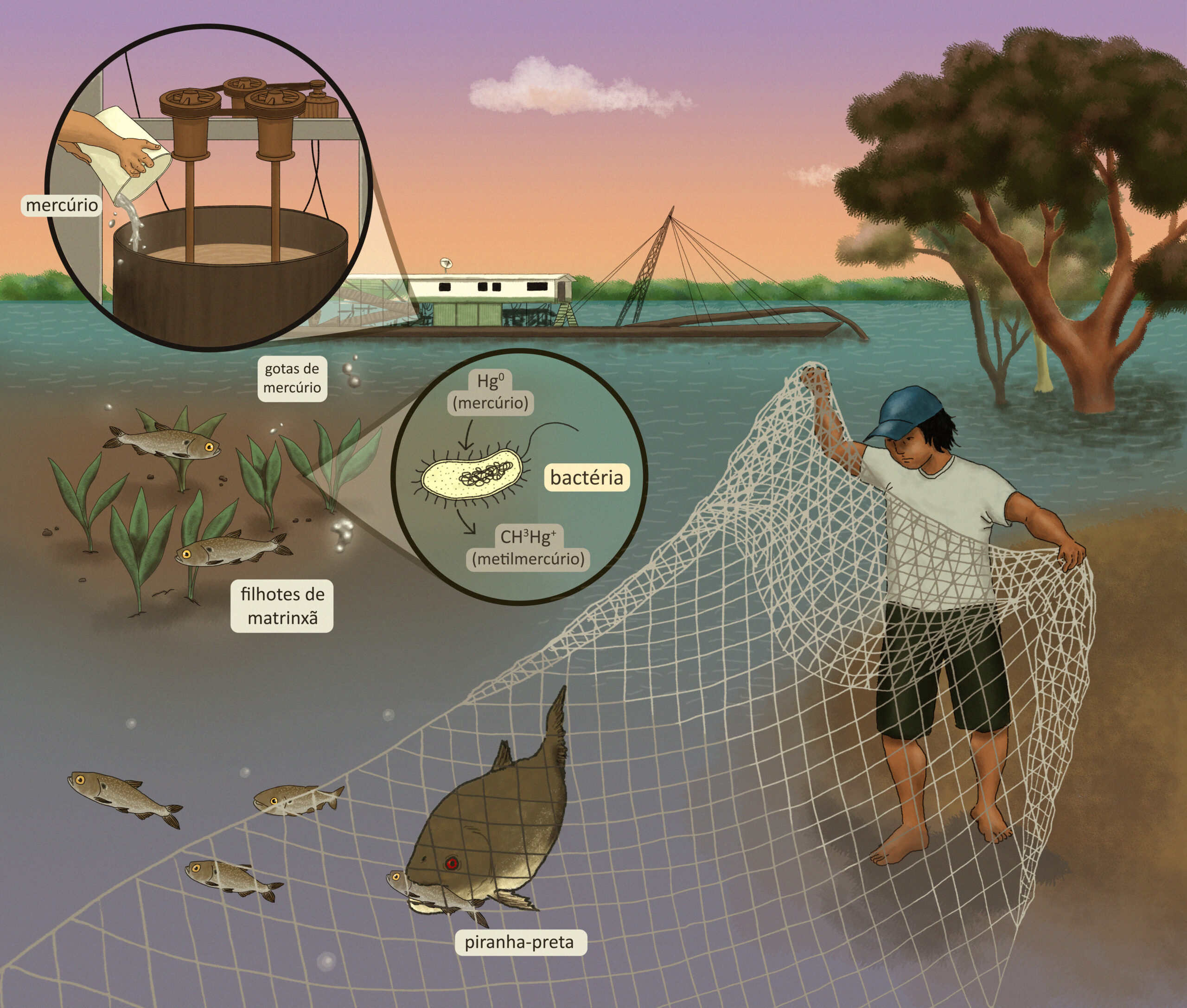
But the village’s food carries an invisible danger. Tests by scientists from the Oswaldo Cruz Foundation, or Fiocruz, show that Aleckson, his parents, and nearly everyone in neighboring communities have mercury levels above the safe threshold. Research by Fiocruz indicates that the contamination stems from gold mining, where mercury is used to separate the metal and then spreads through the rivers into the food chain.
This poisoning results not only from illegal mining but also from decisions and omissions by the Brazilian government. An exclusive InfoAmazonia investigation has found that Brazil’s National Mining Agency, or ANM, still maintains mining permits with signs of irregularities, such as reported gold production with no evidence of extraction consistent with the declared volumes — a practice identified by oversight bodies as illegal gold laundering.
Aleckson has cerebral palsy, a condition that restricts his mobility and speech. He has required continuous care since birth. Luis Ushirobira / InfoAmazoniaCreated in 1989 to regulate mining during the Tapajós gold rush that ran from the late 1970s to the 1990s, Garimpeiro Mining Permits (PLGs) were meant to be a simplified authorization for supposedly small-scale, low-impact operations. Decades later, what began as artisanal mining has become industrial-scale extraction involving heavy equipment, dredges, and mercury. These permits now give a veneer of legality to large-scale illegal mining in Tapajós, sidestepping legal limits.
For more than a decade, oversight agencies have warned the mining authority about the irregular use of PLGs. In 2022, the Comptroller General of the Union uncovered a series of illegalities in an audit. The following year, Operation Sisaque — carried out by Brazil’s Federal Police (PF), Federal Revenue Service, and Federal Public Prosecutor’s Office (MPF) — exposed one of the Amazon’s largest gold-laundering schemes, which relied on PLGs in Tapajós. In 2025, the Federal Court of Accounts reached similar conclusions, identifying structural flaws that enable gold of illegal origin to be legalized.
Even so, our reporting found that between 2022 and 2026, of the 540 PLGs that declared gold sales in the Tapajós River basin, nearly half (263) showed no evidence of extraction consistent with the amounts reported. This suggests these permits may be used to launder gold extracted illegally elsewhere — a practice known as “gold laundering.”
Roughly 70 percent of the mining activity in the region lies within 10 kilometers of the PLGs that declared gold production. This proximity suggests that illegal mining operations, including those operating inside conservation areas and Indigenous lands, may be using these permits to bring their gold into the formal market.
Nearly 60 percent of the gold from legalized mining in Brazil has passed through a Tapajós PLG over the past four years, totaling $2.03 billion (10 billion Brazilian reais) in declared production in the basin during that period.
The information for this investigation comes from the VEIO (Verification and Investigation of Gold Origin) platform, which cross-references mining and deforestation data with mineral production taxes and gold export figures. The tool was developed by InfoAmazonia in partnership with Instituto Dados, with support from the Global Initiative Against Transnational Organized Crime.
The PLG is a “sham document” that sustains this system despite the Brazilian government’s inability to put an end to gold mining in the Amazon, according to Danicley Aguiar, coordinator of Greenpeace Brasil’s Indigenous Peoples Front. “It is environmentally impossible for these permits to meet even minimal conditions. Yet they continue to exist because they are part of a structural problem,” he says.
Gold mining along the Tapajós River impacts the health of communities in the Sawre Muybu Indigenous territory. Here, a dredger operates in an area linked to mercury contamination. Luis Ushirobira / InfoAmazoniaPLGs have become the backbone of illegal mining in Tapajós: Without them, gold would have to be transported through clandestine routes, often across borders, before entering the formal market. With them, gold can be declared as legally sourced and leave the Amazon already carrying a stamp of legitimacy.
Multiple mining frontsGerson Harlei Selzler, president of the Minuano Cooperative of Miners and Prospectors, previously headed the Cooperativa dos Garimpeiros do Brasil, whose members were investigated in Operation Sisaque for “gold laundering.” Among them were his father, Nelson Selzler, accused of supplying gold to the scheme using falsified documents, and Lillian Rodrigues Pena Fernandes, who, according to the PF, owned a company used to launder gold and ran the operation with her husband, Diego de Mello.
Although not indicted in Operation Sisaque, Gerson reported selling $548,780 (2.7 million Brazilian reais) in gold in 2023 through a PLG whose area shows no signs of extraction, such as deforestation characteristic of mining activity. He also jointly administered a PLG with Nelson Selzler in which InfoAmazonia identified declarations of gold unsupported by evidence of exploitation.
Fragmented into seven individual permits, the Minuano Cooperative garimpo authorized inside the Tapajós Environmental Protection Area (APA) reports gold overproduction in only two PLGs, shown in red. Planet Inc. (09/2025). Source: ANMFounded in 2022, Minuano began declaring production only in 2024, coinciding with when the main suspects in Operation Sisaque stopped reporting gold transactions. Since then, the cooperative has declared roughly $9.76 million (48 million Brazilian reais) in gold production linked to two PLGs inside the Tapajós Environmental Protection Area (APA), where it operates without authorization from the Chico Mendes Institute for Biodiversity Conservation, or ICMBio, the office responsible for managing federal protected areas in Brazil. According to VEIO’s analysis, the volume declared in these PLGs exceeds by a factor of 10 the extraction estimates cited in studies, which suggest around 20 grams of gold per hectare explored.
The two PLGs used by Minuano are part of a group of eight permits held by the cooperative inside the Tapajós APA. Seven of them are contiguous, extending along the Creporizinho River, a tributary of the Crepori and Tapajós rivers, which run through the conservation unit.
Satellite images show an operation functioning as an integrated whole, despite being formally divided into parcels of up to 50 hectares, the maximum area allowed for individual mining under an ANM resolution issued in 2025. As a result, the work falls under more permissive environmental rules, since each parcel has its own authorization and environmental license issued by the city government of Itaituba. This arrangement enables large-scale extraction under simplified requirements, and satellite images reveal that the mining has already altered the river’s course.
The February meeting in Brasília regarding PLGs in the Tapajós region brought together, from right to left, Diego de Mello (accused by the Federal Public Prosecutor’s Office of “gold laundering”), Fernando Lucas (president of the Federation of Garimpeiros Cooperatives of Pará), state legislator Wescley Tomáz (Avante), and José Fernando (director of the National Mining Agency — ANM).Minuano holds 15 PLGs in total, including the eight within the Tapajós APA, covering 2,200 hectares. According to ICMBio, the cooperative has requested authorization to operate inside the conservation unit, but the application remains under review.
Beyond Minuano’s PLGs, Gerson also holds mining permits as an individual. He recently obtained from the ANM the transfer of rights to conduct gold prospecting on a 3,200‑hectare area, also within the Tapajós APA. For that area, VEIO found that mining was already underway, yet no production had been reported to the regulator.
Despite mounting evidence and repeated warnings, the ANM continues to engage with suspicious actors in the sector. In March of this year, under the banner of expanding mining legalization in the region, the Pará state government backed the Legal Mining Expedition, an initiative supported by the mining agency and cooperatives.
Itaituba, a city in the Tapajós region, is home to Brazil’s largest mining front. Luis Ushirobira / InfoAmazoniaDiego de Mello, accused by the Federal Police of running the laundering scheme revealed in Operation Sisaque, attended a meeting in Brasília alongside ANM director José Fernando. The expedition held meetings in mining areas and opened channels to help legalize PLGs with applications already filed with the agency.
Mining concentrated in the hands of a fewThere are currently 9,101 mining applications to exploit the Tapajós APA, including 6,255 PLGs. This report found that 21 individuals control more than half (3,382) of these applications. Some have declared gold production in more than 30 different PLGs, a situation the Federal Court of Accounts described as a “real circumvention of the area limits established by law.”
One such figure is lawyer José Antunes, who chairs the Environmental Law Commission of the Brazilian Bar Association in Itaituba and holds 162 PLGs of 50 hectares each within the conservation unit, more than 8,000 hectares in total.
José Antunes holds 162 PLGs in the Tapajós APA, spanning more than 8,000 hectares. In 31 of them, highlighted in red, he has reported production — including in areas with no detectable mining activity. Planet Inc. (09/2025). Source: ANMBetween 2022 and 2023, Antunes reported $13 million (64 million Brazilian reais) in gold sales across 31 PLGs. In several of them, there is no evidence of mining activity; in others, the extraction appears to extend beyond licensed boundaries. In December 2024, inspectors from Ibama, Brazil’s environmental regulator, documented active, unauthorized mining in areas covered by Antunes’s PLGs, including illegal mercury use, river alteration, and deforestation in Permanent Preservation Areas (APPs).
Hot gold on the market, mercury in the bodyAleckson was born already contaminated with mercury. He has never walked, uses a wheelchair, and depends on his mother, Alnice, for nearly every task. Soon after birth, he was diagnosed with spastic tetraparesis, a neurological condition that causes weakness and muscle stiffness in his limbs. The disability was attributed to a lack of oxygen during a long and painful labor.
In his most recent test, Aleckson had 6.9 micrograms of mercury per gram of hair (µg/g) in his system, three times the upper safe limit of 2.3 µg/g defined by the World Health Organization and Brazil’s Ministry of Health.
Indigenous residents prepare fish for a meal in the Sawre Muybu Indigenous territory. Luis Ushirobira/InfoAmazonia
“We eat fish almost every day. It’s very hard to change that, because this is how we were raised,” says Alnice, as her son devours a stew of surubim and barbado prepared by her sisters. In one of her tests, Alnice recorded 9 µg/g of mercury, more than four times the safe limit.
Researcher Isabela Freitas Vaz, from Fiocruz, has followed the case since the first tests. “The signs we’ve observed, not only in Aleckson’s case but in many children, point to a high-risk scenario,” she says.
Although a definitive causal link between mercury exposure and the observed clinical conditions has yet to be proven, researchers say the warning signs are consistent: people with high exposure levels exhibit indicators associated with the potential development of mercury-related diseases.
“The next step is to establish this causal connection between contamination levels and the symptoms we are seeing, so it can guide public policy,” explains Isabela Vaz.
A pregnant woman from the Sawré Muybu Indigenous territory participates in a Fiocruz study with researcher Isabela Freitas Vaz on the effect of mercury on Munduruku health. Luis Ushirobira / InfoAmazoniaThe Tapajós basin lies in western Pará state, extending into northern Mato Grosso and southern Amazonas. It consists of the Tapajós River and major tributaries such as the Jamanxim, Teles Pires, and Juruena, which converge toward Santarém. Mining is concentrated in the Tapajós Gold Province, centered on Itaituba and including Jacareacanga and Novo Progresso. This area is home to Brazil’s largest active mining front.
In February, InfoAmazonia traveled along stretches of the rivers feeding the basin and accompanied Fiocruz researchers as they collected samples from pregnant women and newborns of the Munduruku people.
The researchers are investigating how mercury contamination in the Tapajós may be linked to Minamata disease, a severe neurological syndrome caused by acute exposure to methylmercury, the metal’s most toxic form.
Identified in the 1950s in Minamata, Japan, the disease struck thousands who were acutely poisoned by large volumes of industrial mercury waste dumped into the fishing bay. Many victims were left with lifelong impairments, and more than 900 died.
A sample of a baby’s hair is collected for Fiocruz research into the effect of mercury on Munduruku health. Luis Ushirobira / InfoAmazoniaUnlike the disaster in Minamata, scientists say contamination in the Tapajós occurs slowly and persistently. It is chronic rather than sudden, and its effects can take years to appear.
“The main source of contamination in the Amazon today is fish consumption. The mercury used in mining enters the river, becomes organic [methylmercury], and accumulates in the food chain,” says Pedro Basta, an analyst with the Special Secretariat for Indigenous Health and a member of the Longitudinal Study of Indigenous Pregnant Women and Newborns Exposed to Mercury in the Amazon.
Because the metal accumulates over time, it remains in the environment for decades, even in places where mining has ceased. In the Tapajós basin, it is most concentrated in carnivorous fish such as barbado, surubim, and tucunaré, species widely consumed by local communities.
Since 2019, when studies began in some villages, nearly half of the children examined have shown heavy metal levels above the safe limit. Among pregnant women, concentrations reach up to five times the recommended threshold, passing the substance to the fetus. “Mercury causes irreversible brain damage. It can cause tremors, numbness, muscle weakness, and long-term neurological problems,” says Basta.
The most significant harm may not be visible deformities but progressive neurological impairment, including delayed development, cognitive difficulties, and reduced learning capacity. For those with levels above 6.9 µg/g, considered high risk, the recommendation is to reduce fish consumption. In practice, that means altering the dietary foundation of entire communities.
Pedro Basta, an analyst with the Special Secretariat for Indigenous Health and a member of the Longitudinal Study of Indigenous Pregnant Women and Newborns Exposed to Mercury in the Amazon.Luis Ushirobira / InfoAmazonia
In the Tapajós between the Sawré Muybu and Sawré Bap’in Indigenous lands, the water no longer retains its natural color. When we visited in February, a dozen mining rafts churned the river’s emerald green into a murky brown, five operating within a 6,700-hectare PLG authorized by the National Mining Agency (ANM) for the Cooperativa dos Garimpeiros da Amazônia, or Coogam. One raft worked less than a kilometer from the Daje Kapap village.
The area Coogam exploits along this stretch of the Tapajós forms a kind of barrier between the two territories, where the noise and movement of the mining barges are nearly constant. According to ANM records, the cooperative’s PLG authorization (850.796/2009) expired in January 2025; its environmental license expired in June 2024 and was resubmitted only early this year. Even so, the barges continued operating. ANM scheduled a task force to inspect this and other PLGs on the Tapajós, but says the inspection never occurred because of a lack of funds.
A mining dredger releases sediment into the Tapajós River during gold extraction near the Sawré Muybu Indigenous territory. Luis Ushirobira / InfoAmazoniaBetween 2022 and 2026, this PLG reported $5.49 million (R$27 million) in gold sales. Coogam holds 32 PLGs in the Tapajós region and has declared $22.97 million (R$113 million) from seven of them over the past five years.
‘Regulatory permissiveness’In December 2024, the Federal Prosecutor’s Office (MPF) filed a public civil action seeking to suspend all mining permits within the Tapajós Environmental Protection Area (APA). According to Federal Prosecutor Gilberto Batista Naves Filho, who filed the lawsuit, the permits were issued without prior ICMBio analysis, a requirement explicitly stated in Article 17 of Law 7.805/1989 for activities in conservation units.
“We are facing an evident lack of mercury control, an unacceptable risk for rivers and public health, especially for Indigenous and vulnerable populations who depend on the region’s rivers for their survival,” Naves Filho states in the civil action.
ICMBio told InfoAmazonia that mining activities within the Tapajós APA require prior authorization from the environmental agency, which has not been granted in most cases.
While gold miners use mercury, Indigenous communities in the Tapajós basin consume fish contaminated by it. Luis Ushirobira / InfoAmazoniaThe result, according to the MPF, is an ongoing environmental collapse. With 83,000 hectares already affected, an area larger than New York City or Chicago, the Tapajós APA has become Brazil’s federally protected area most heavily degraded by mining, according to MapBiomas data compiled by Greenpeace at InfoAmazonia’s request.
ICMBio reports that at least 829 PLGs have been authorized by ANM within the Tapajós APA without any review by the management body. ANM interprets the law differently and argues in the MPF lawsuit that environmental authorization is required only when exploration begins, not when permits are issued.
For the MPF, this interpretation nullifies environmental oversight and turns mining permits into tools that give a veneer of legality to illegally extracted gold. The agency describes ANM’s actions as “merely notarial,” issuing permits without assessing environmental feasibility or the cumulative impacts of hundreds of mining fronts.
The lawsuit seeks $20.33 million (R$100 million) in collective moral damages from the ANM. After an unsuccessful conciliation hearing in March, the case awaits a ruling from the Federal Court.
The Federal Court of Accounts reached similar conclusions. In an audit completed in July 2025, the court identified “regulatory permissiveness” and systemic failures in oversight of the gold supply chain. The report notes that ANM’s omissions enable PLGs to launder illegal gold and artificially fragment areas, making large-scale operations viable under rules intended for small-scale mining.
Children play in the Sawré Muybu village. Luis Ushirobira / InfoAmazoniaThe court ordered ANM to cancel irregular authorizations within 90 days. That deadline has passed.
On the ground, the pattern repeats. Between December 2024 and January 2025, Ibama ordered the suspension of 342 PLGs in the Tapajós APA after an operation against illegal mining. Inspectors found multiple violations, including lack of ICMBio authorization, destruction of vegetation, mining in permanent preservation areas, and extensive mercury use.
For Ibama’s director of environmental protection, Jair Schmitt, the issue goes far beyond isolated violations. Even permits considered “regular,” he says, contain structural illegalities, from municipal-level licensing, contested by the federal agency and MPF, to lack of meaningful environmental oversight.
“There is no mercury legally available for mining in Brazil today,” Schmitt says. “For this reason, even PLGs considered regular are not, because there is likely no lawful mercury available for their operations.”
Ibama estimates that producing one gram of gold requires roughly one gram of mercury. But after the Minamata Convention took effect in 2017, Brazil stopped importing the substance and sharply restricted its use. According to Schmitt, this means the current scale of mining cannot be reconciled with any legal scenario.
Although the agency claims it has no authority over the need for prior authorization for exploration in the Tapajós APA, it has begun notifying PLG permit holders within the conservation unit that they must secure ICMBio approval before starting exploration. Still, there is no news of any permits operating within the conservation unit being revoked.
The management plan for the Tapajós APA, in development since 2020, is expected to be completed this year. The proposal includes creating zoning areas within the territory, including an urban-industrial zone, the largest in the unit, to organize landscapes already heavily degraded by mining and deforestation, where ICMBio says there may still be potential for mining. The plan’s drafting has been marked by pressure from groups linked to the mining sector, pushing to formalize the activity within the conservation unit, a move environmentalists criticize because of its environmental and social impacts.
‘Water becomes like milk’In September 2025, the Public Prosecutor’s Office in Santarém recommended annulling 15 PLGs granted in areas adjoining the Sawré Muybu, Sawré Bap’in, Munduruku, and Sai-Cinza territories, including the Coogam PLG documented during our February reporting trip.
According to the MPF, these permits were issued without prior consultation with Indigenous communities, as required by International Labor Organization Convention 169. The agency also notes that barge and mining operations near the villages violate measures ordered by the Inter-American Court of Human Rights to contain mercury contamination. “It is unacceptable for state-licensed projects to inflict the same harm on Indigenous people as illegal mining,” prosecutor Thais Medeiros da Costa wrote in a recommendation sent to ANM in September 2025.
Chief Juarez Saw Munduruku from the Sawré Muybu Indigenous territory. Luis Ushirobira / InfoAmazonia“When the prospectors arrive and start working, the water becomes like milk,” said Chief Juarez Saw Munduruku of the Sawré Muybu Indigenous Land. “We can’t bathe anymore; it causes itching. It used to be joyful; children played along the riverbank. Today that’s over,” he says.
According to the chief, mercury exposure has become part of daily life for families, with symptoms resembling those researchers are investigating as possible effects of poisoning.
“My son’s contamination level has reached the limit. He already feels numbness in his legs and arms. We keep wondering … could this be what’s causing these symptoms?” the chief asks.
Deivison Saw Munduruku, the chief’s son, is among the cases with the highest contamination levels recorded by researchers, nearly 10 times above the safe threshold.
Aldira Akai Munduruku, deputy coordinator of the Pariri Indigenous Association and a teacher in Sawré-Muybu village, believes contamination may be linked to some children’s learning difficulties. “We notice that some children struggle to learn, and this is not normal,” she says.
A classroom at the Sawre Ba’ay school in the Sawré Muybu village. Luis Ushirobira / InfoAmazoniaIn 2019, the Pariri Association approached researcher Paulo Basta — the father of analyst Pedro Basta and coordinator of Fiocruz’s “environment, diversity, and health” research group — after the death of environmentalist Cássio Beda, who had lived among the Munduruku and developed a severe neurological condition. While mercury poisoning has not been confirmed as the cause, the physician who treated him noted the possibility of “secondary motor neuron disease and mercury intoxication” in a July 2017 report, as reported by Repórter Brasil.
“We monitor the results and try to warn people. But it’s not only the Munduruku who can change this. We need more effective public policies,” Aldira says.
Among the Indigenous residents interviewed, suspected miscarriages, numbness in the limbs, memory lapses, and tremors appeared frequently, symptoms the medical literature associates with high mercury levels.
Aldira Akai Munduruku, vice coordinator of the Pariri Indigenous Association and a teacher in the Sawré-Muybu village. Luis Ushirobira / InfoAmazoniaFor Paulo Basta, who coordinates research in the region and is working to determine which symptoms are linked to mercury exposure, one conclusion is clear: continual exposure, combined with precarious living conditions in the villages, creates extreme vulnerability. In this setting, he says, mercury exacerbates existing inequalities, hindering child development and shaping the entire life trajectory of affected populations.
“A child with mental deficits today becomes an adult with mental deficits tomorrow. They will struggle in school and later in the job market,” Basta explains.
Paradoxically, when the Tapajós River swells during the Amazon’s winter rains, access to water becomes even more limited. As the river floods, contamination spreads into the streams supplying the villages, bringing mud and mercury.
Indigenous residents swim, bathe, fish, and wash clothes in the Tapajós River. Luis Ushirobira / InfoAmazoniaOn February 13, a federal court ruling underscored the severity of the health crisis in the Tapajós, ordering the federal government to provide drinking water to Indigenous communities and recognizing the structural abandonment aggravated by mining-related contamination.
The National Mining Agency (ANM) stated that PLGs with environmental licenses are considered valid and that it is not the agency’s role to “question the validity of the documentation submitted,” saying it relies on licenses issued by other authorities. Regarding the Tapajós APA, the agency acknowledged the requirement for ICMBio approval and said it is working to identify and regularize permits lacking it. The agency maintains it is not responsible for identifying illegalities because it received the licenses “in good faith.”
On the issue of irregularities, ANM said it does not authorize mercury use in PLGs. It acknowledged knowing of evidence of the laundering of gold, a practice linked to weaknesses in the self-declaration system, and said it uses inspections, data cross-checking, and satellite monitoring to detect inconsistencies between explored areas and reported production.
The Sawré Muybu village. Luis Ushirobira / InfoAmazonia“There are ongoing administrative investigations, some confidential, others public, into indications of irregularities in the gold production chain, including possible cases of laundering,” the ANM stated.
The agency also said it has discussed prior consultation with Indigenous peoples but noted there is no automatic ban on mining within 10 kilometers of Indigenous lands, considered a direct-impact zone. In a statement to InfoAmazonia, it said it had no knowledge of the so-called “Legal Mining Expedition,” supported by the Pará state government, and did not comment on the meeting between representatives of the initiative and one of its directors.
The report also contacted Coogam president Tânia Oliveira Sena, who declined to be interviewed. We also reached out to the defense of Nelson Selzler, who declined to comment on his mention in the Federal Police investigation and the activities of the Minuano Cooperative in the Tapajós APA. The report was unable to reach Gerson Harlei Selzler, Diego de Mello, or his wife, Lillian Rodrigues Pena Fernandes.
Lawyer José Antunes has contested oversight authorities’ findings that no signs of mining were present in the PLGs where he declared production. He argues that the satellite images used to reach this conclusion “are not reliable for the Tapajós biome.” He also disputes the irregularity arising from lack of ICMBio authorization, saying his operations were licensed by Pará’s state environmental agency. Regarding the concentration of PLGs, Antunes claims it “represents almost nothing compared to the area of the Tapajós APA” and insists they “are all fully up to date.”
Aerial view of the Tapajós River beside the Sawré Muybu village. Luis Ushirobira / InfoAmazoniaResponding to Ibama’s citations for illegal mercury use in the area of his PLGs, Antunes said in a statement that the violations “were committed by miners who have no link to me, as they themselves stated.” He also criticized what he called sweeping generalizations in the investigations and argued for greater legal certainty for the sector, insisting he acts in good faith and within the law.
For Danicley Aguiar of Greenpeace, the state’s failure to address the region’s economic dependence on mining ensures the activity will continue to thrive, even under a veneer of legality, while inflicting ongoing environmental and social harm.
“Mining violates human rights in a widespread and systematic way. How can the state tolerate such an activity? How can it claim this is essential for regional development?” he asked. For the Munduruku, the distinction between “legal” and “illegal” areas does little to change daily life. Mining continues to contaminate the river, and the river remains the center of their existence.
Methodology1 of 1Translated from the Portuguese original by Matt Sandy.
This investigation was carried out with support from the Global Initiative Against Transnational Organized Crime (GI-TOC).
This story was originally published by Grist with the headline The Brazilian government keeps giving out mining licenses in the Amazon – in spite of evidence of gold ‘laundering’ on May 14, 2026.
How to prune cosmos to keep it flowering until frost
**Meta Title:** How to Prune Cosmos to Keep It Flowering Until Frost
**Meta Description:** Learn exactly how to prune cosmos — deadheading, pinching, and hard cutbacks — to keep your plants blooming nonstop until the first hard frost.
—
“`html
How to prune cosmos for non-stop blooms right up until the first frostLast October, I stood in my garden in central Missouri with a pair of snips in one hand and a fat bundle of ‘Sensation Mix’ cosmos in the other. Frost warnings were already popping up on my phone. My neighbor’s cosmos patch — the one she’d planted the same week I planted mine — looked like a tangle of brown sticks and dried seed pods. Mine? Still pumping out blooms like it was July. The difference wasn’t luck. Wasn’t variety. Wasn’t even soil. The difference was pruning.
Knowing how to prune cosmos to keep it flowering until frost sounds like some advanced gardening trick, but honestly, the techniques take minutes a day and zero special equipment. This article covers the exact pruning moves — pinching, deadheading, and hard cutbacks — plus the timing and supporting care that push cosmos plants to produce new flowers from midsummer straight through the first killing freeze.
Why cosmos stop producing flowers by late summerCosmos plants are annuals with one overriding biological mission: make seeds. Every open flower exists to get pollinated, form a seed head, and ensure the next generation. The moment a cosmos flower finishes its job and starts developing seeds, the plant redirects energy away from bud production and toward ripening those seeds. Leave enough seed heads on a cosmos plant, and the entire organism basically retires.
Here’s the thing — this shutdown happens faster than most gardeners expect. By early August, an unpruned cosmos plant in USDA zones 6–7 carries dozens of maturing seed heads. The plant reads those seeds as “mission accomplished” and slows flower production dramatically. In warmer zones (8–10), this slowdown can hit as early as mid-July because the growing season starts sooner. Cooler zones (4–5) get a bit more natural runway, but the same mechanism kicks in eventually.
The result? Tall, leggy plants with a few tired blooms at the very tips and a forest of brown seed pods below. Pruning interrupts this cycle. Removing spent flowers and developing seeds tells the cosmos plant that the mission isn’t finished yet — so the plant pushes out fresh buds.
Pinching young cosmos — the foundation for all-season bloomsCosmos pruning doesn’t start when blooming slows. Smart pruning starts weeks before the first flower opens. When cosmos seedlings reach 12–18 inches tall — roughly 4–6 sets of true leaves — pinch out the top 3–4 inches of the central stem. Use your thumb and forefinger, or a clean pair of snips.
This single action forces the cosmos plant to activate dormant side buds along the remaining stem. Instead of growing one tall central stalk with a single flower at the top, the pinched plant branches into multiple flowering stems. A well-pinched cosmos plant produces roughly three times more blooms than an unpinched plant over the course of the season. That branching structure also creates more sites for rebloom later, which matters enormously when you’re chasing flowers into October.
Timing depends on your planting date. For cosmos sown directly outdoors in late spring, pinching usually happens in early to mid-June. Transplants started indoors may be ready for pinching within a week or two of planting out. The key marker is height, not calendar date — wait for those 12–18 inches of growth.
The 30-second deadheading move that changes everythingDeadheading means snipping off spent cosmos flowers before the seeds fully form. Deadheading takes roughly 5–10 minutes per plant and triggers fresh bud formation within about a week. This is the single most impactful pruning habit for extending cosmos bloom season, and the technique is almost embarrassingly simple.
Where exactly to cutFollow the stem of the faded flower down to the next leaf pair or branching point. Cut just above that leaf node — about a quarter inch above. Cutting at this spot preserves the dormant buds sitting at the leaf junction, and those buds become your next round of flowers. Cutting too high leaves an ugly brown stub that produces nothing. Cutting too low removes the very bud sites the plant needs for reblooming.
So what actually happens is this: the cosmos plant senses the removal of the spent flower, stops channeling resources to seed development at that site, and redirects energy into the nearest viable bud. New flower stems emerge from that node within 7–14 days.
How often to deadheadDuring peak bloom in July and August, deadhead cosmos plants every 2–3 days. A quick evening walk through the cosmos patch — snipping faded flowers into a bucket — takes about ten minutes and keeps the cycle running. By September, bloom pace naturally slows, and once-a-week deadheading usually suffices.
I’ll share what convinced me this actually works. A few summers back, I grew two rows of ‘Double Click’ cosmos along my back fence — same seed packet, same soil, same sun. I deadheaded one row religiously every three days. The other row I left alone because, well, life got busy. By late August, the neglected row was done. Brown seed heads, sparse foliage, maybe two sad little blooms. The deadheaded row? Still cranking out big, fluffy double flowers well into the first week of October. A full six weeks longer. That was all the proof I ever needed.
The hard cutback — when deadheading isn’t enoughCosmos plants sometimes outgrow deadheading. By midsummer, tall varieties like ‘Purity’ or ‘Sensation Mix’ can hit five or six feet, get tangled together, and start flopping over. The lower stems turn woody. Flower production concentrates at the very tips, out of easy reach. Deadheading helps, but the plant needs a reset.
A hard cutback means trimming the entire cosmos plant by one-third to one-half its height. Use sharp garden shears and cut each stem just above a healthy leaf node. This feels aggressive — I get that. Last August I hacked back an entire row of ‘Sensation Mix’ by a third. My neighbors genuinely thought I’d lost my mind. But two weeks later, those plants were covered in fresh basal growth and new buds.
Cosmos plants respond to a hard cutback with a flush of vigorous new branching from lower nodes. Expect a second wave of blooms within 2–3 weeks. The best timing for a hard cutback: mid-August in zones 5–7, late July in zones 8–9. The garden looks rough for about ten days after cutting. Worth every second of awkwardness.
Real talk: this move takes a little nerve. But cosmos plants are tough, fast-growing annuals. The plants recover quickly when warm weather and long days remain.
Watering, feeding, and sunlight — the pruning support crewPruning alone won’t sustain cosmos blooms through frost. The plants need the right conditions to convert every pruning cut into new growth and flowers.
Water deeply, not oftenCosmos plants tolerate drought, but consistent moisture drives stronger rebloom after pruning. Give cosmos plants one deep soaking per week — enough to wet the soil 6–8 inches down. Daily light sprinkles encourage shallow roots and weaker recovery from cutbacks.
Go easy on fertilizerHonestly, I think most gardeners over-fertilize cosmos. Rich soil and heavy nitrogen push cosmos plants to grow massive foliage with disappointing flower counts. A single midsummer application of a low-nitrogen, high-phosphorus fertilizer (something like 5-10-10) supports bloom production without fueling leggy growth. Skip the fertilizer entirely if your soil is already reasonably fertile.
Full sun is non-negotiableCosmos plants need 6–8 hours of direct sunlight daily. Shaded cosmos plants stretch toward light, bloom less, and respond poorly to pruning. A cosmos plant in partial shade simply cannot generate enough energy to push out new buds after deadheading or a hard cutback.
Four telltale signs your cosmos will rebloom after pruningAfter a hard cutback or aggressive deadheading session, watch for these indicators that the cosmos plant has rebloom potential:
- New leaf clusters emerge at lower nodes within 5–7 days of cutting.
- Stems feel firm and green — not woody or brown — at the cut point.
- Small bud nubs appear at branch junctions within 10 days.
- The plant’s base remains leafy and vigorous rather than bare and dried out.
Now, this next part surprises people. Sometimes cosmos plants truly are finished. Woody stems, yellowing leaves at the base, and zero new growth after two full weeks — those signs mean the plant has exhausted its energy reserves. At that point, pull the plant, compost the stems, and let the remaining cosmos carry the show.
Pruning cosmos for cut flowers — a two-for-one strategyCutting cosmos stems for bouquets doubles as pruning. Every long stem you harvest removes an open or spent flower and triggers new bud production at the cut node. Snip stems 12–18 inches long, cutting just above a leaf pair. The cosmos plant reads each cut exactly the same way it reads deadheading — as a signal to produce more flowers.
‘Sensation Mix’ and ‘Double Click’ perform especially well as cut-and-come-again varieties. Both produce sturdy stems, large blooms, and respond aggressively to harvesting. Fresh cosmos stems last 5–7 days in a clean vase with fresh water. There’s something weirdly satisfying about filling your kitchen with flowers and knowing the act of cutting them just guaranteed more blooms in the garden.
A final thought from the cosmos patchThe best gardening advice I ever got was absurdly simple: “Pay attention, and carry your snips.” Cosmos reward that kind of attention more than almost any annual I grow. Ten minutes of deadheading while the coffee cools. A brave cutback in August when the plants look tired. A bucket of spent blooms tossed onto the compost pile. These small, repeated actions compound into something genuinely beautiful — armloads of cosmos flowers in October, when everything else in the garden has already called it a season.
Go out tomorrow morning. Spend ten minutes with your cosmos. Count the new buds a week from now. I think you’ll be surprised.
Common questions about pruning cosmos Can I prune cosmos that have already gone to seed?Yes. Remove all seed heads and cut stems back by one-third. Cosmos plants often produce a late flush of blooms before frost — but the plant needs at least 3–4 weeks of warm weather remaining to generate new flowers. Act quickly once you notice heavy seed set.
What happens if I never pinch or deadhead cosmos?Unpinched cosmos plants grow tall and narrow with fewer blooms concentrated at the top. Without deadheading, cosmos plants stop flowering once enough seed heads form, channeling all remaining energy into seed production rather than new buds.
Should I prune chocolate cosmos (Cosmos atrosanguineus) the same way?Chocolate cosmos is a tuberous perennial, not an annual. Deadheading extends chocolate cosmos bloom season effectively, but hard cutbacks can weaken the tuber. Stick to regular deadheading and light shaping for chocolate cosmos plants.
Is it too late to prune cosmos in September?In USDA zones 7 and warmer, September pruning still works well — cosmos plants have 6–8 weeks before frost in those regions. In zones 4–5, September deadheading helps extend existing blooms, but a hard cutback risks leaving the plant without enough warm days to push out a new round of flowers.
Do I need special tools to prune cosmos?Clean, sharp snips or basic garden scissors handle cosmos stems perfectly. Cosmos stems are soft and thin enough to pinch off spent flowers with your fingers. Disinfect blades between plants only when you notice signs of disease like powdery mildew or leaf spots.
“`
Electricity strategy confirms clean electrification will be backbone of Canada’s economy
Big batteries took a bite out of gas generators’ evening peak party, then they ate the whole dinner
The growth of battery storage in evening peaks has been stunning, and in the last ew months has completely pushed out gas generators in the Sunshine state.
The post Big batteries took a bite out of gas generators’ evening peak party, then they ate the whole dinner appeared first on Renew Economy.
The Bandung spirit and the search for radical futures
Ashish Kothari
Originally publish by Meer on 13 May 2026.
Grassroots movements from across the Global South gather in Indonesia to confront war, inequality, and ecological collapse through collective alternatives.
Hope. Esperanza. Harapan. These words were frequently invoked by …
The power of fungal networks
NSW fast tracks $60m to win over local communities, years before first poles erected in new renewable zone
NSW fast-tracks $60 million in community funds to help head off community concerns about the state's potentially biggest renewable energy zone.
The post NSW fast tracks $60m to win over local communities, years before first poles erected in new renewable zone appeared first on Renew Economy.
Australia’s growing throng of solar panels, home batteries and electric cars to be managed by new regulator
Australia's growing throng of solar panels, batteries and electric cars will be managed by a new regulator in a multimillion-dollar budget commitment welcomed by investment and climate groups.
The post Australia’s growing throng of solar panels, home batteries and electric cars to be managed by new regulator appeared first on Renew Economy.
A “keep out” sign for investment: Alarm bell sounds over new retrospective tax on renewables
Industry says retrospective tax on renewables announced in budget could deter foreign investment when it's needed most.
The post A “keep out” sign for investment: Alarm bell sounds over new retrospective tax on renewables appeared first on Renew Economy.
Diesel backup gensets are big winners from the data centre boom. Our cities would be better off with batteries
One of the segments flowing rivers of gold from the data centre boom is backup diesel gensets. Our major cities could be awash with them. But batteries provide a better solution.
The post Diesel backup gensets are big winners from the data centre boom. Our cities would be better off with batteries appeared first on Renew Economy.
‘Our Roads Are More Than Just Highways’: Democrats Urge U.S. Senate Not to Defund Multimodal Programs
Congress could be days away from passing a bill that strips local communities of stable funding for multimodal transportation and deprives the entire country of predictable rail dollars that the overwhelming majority of Americans demand.
In a letter sent on Tuesday, Senate Democrats pressed the upper chamber’s appropriations committee to resist the Trump administration’s demands and renew multi-year funding for a raft of vital multimodal grant programs when they write the next federal transportation law.
The Bipartisan Infrastructure Law, colloquially known as the BIL, will expire on Oct. 1, and the House Transportation and Infrastructure Committee is scheduled to begin marking up the replacement bill as soon as next week.
That committee’s chairman, Rep. Sam Graves (R-Mo.), said in November that he would lobby for a “traditional highway bill” to replace the BIL, and promised that lawmakers would refrain from “spending money on murals and train stations or bike paths or walking paths” — a suggestion Trump echoed in his budget proposal, which recommends draconian cuts to multimodal programs.
What the BIL Did RightFor all of its flaws, the BIL did at least one thing right: It provided local communities with historic levels of “predictable, multi-year funding” for multimodal transportation projects for five years, thereby insulating projects from the fickle whims of Congress’s annual appropriations process.
Since infrastructure projects generally take several years to plan and complete — especially ambitious ones like new rail lines, high quality bike paths and major road diets to keep pedestrians safe — this funding structure allowed communities to dream bigger about their transportation futures.
It also allowed locals to apply for far more grant money directly, rather than forcing them to rely on state-level Departments of Transportation, who far too often redirect gas tax receipts generated on city roads to pay for highway expansions in the suburban and rural periphery.
The BIL created a similar opportunity for the American rail industry, which secured its first predictable, multi-year funding streams in U.S. transportation history — finally allowing train operators to plan long-term expansions and start building out the expanded network that 92 percent of Americans want.
How Trump’s Proposal Could Halt Transportation ProgressIf Congress accepts the Trump administration’s budget proposal, those rail programs would lose an astonishing 84 percent of their funding in fiscal year 2027, and they wouldn’t be guaranteed any money beyond that year. That would make it impossible for Amtrak and its peers to plan for the future.
Meanwhile, a host of programs that fund multimodal transportation would lose 96 percent of their 2027 funding — with no assurance of more money later. Safe Streets and Roads for All, for instance, would be zeroed out completely in FY2027, while the Capital Investment Grants program, a major source of transit funding, would receive a 48-percent cut.
Sen. Maria Cantwell (D-Wash.), who led the letter’s release and serves as ranking member of the Senate Committee on Commerce, Science and Transportation, recently oversaw the publication of a 26-page report that described these efforts as “Main Street improvement” programs. The same document noted that these programs are especially vulnerable to budget cuts despite attracting so much interest that the Department of Transportation rejected more than 1,000 applications for funding.
“Congress must reject President Trump’s budget cuts and reauthorize surface transportation programs with advance appropriations that continue to provide dependable multiyear funding for our entire transportation system — not just part of it,” Cantwell’s office wrote.
Future-proofing the federal transportation programUnfortunately, in an era of federal clawbacks, the mere existence of robust, multi-year funds for multimodal priorities doesn’t always mean that communities will actually receive their designated money — at least without a lot of lawsuits.
The Trump administration recently gained the dubious distinction of becoming “the first administration in at least three decades to fail to approve a new transit project in its first year,” according to Transportation for America’s Steve Davis. And that’s in addition to months of freezes, clawbacks, delays, and rescissions of programs that the administration deemed too “green” or “woke.”
That’s why advocates have launched parallel efforts to persuade Congress to stop negotiating the next transportation bill until Trump stops holding existing funds hostage — and, when negotiations resume, to build more guardrails to prevent future executive interference.
Recommended Trump Is Holding Affordable Transportation Projects Hostage, and Congress Could Call His Bluff Kea Wilson May 7, 2026Until that happens, though, average Americans will continue to suffer from a lack of affordable, safe and multimodal transportation options — and that’s costing them real money.
Two years ago, the American Society of Civil Engineers estimated that discontinuing infrastructural investment and canceling money for freight priorities — as Trump’s proposed cuts would do — would cost the average U.S. household more than $700 per year. And that’s to say nothing of the missed opportunity costs of everything our transportation network could be if we funded multimodal priorities.
“Our roads are more than just highways — they are also hubs for community activity, hosts to small businesses, routes to and from schools, and drivers of economic activity,” Cantwell’s office wrote in its report. “Our federal investment strategy must reflect that reality and empower communities to make the most of their infrastructure.”
An earlier version of this article misstated Senator Cantwell’s role on the Senate Committee on Commerce, Science and Transportation. We regret the error.
Thursday’s Headlines Pump It Up
- At 18 cents a gallon, suspending the federal gas tax would only save drivers a few pennies on pump prices that have topped $4.50, on average (Wall Street Journal; paywall). Gas stations often pocket the difference, and encouraging people to drive more during a shortage could push prices even higher (CNN). It would also drain the already insufficient highway trust fund (PBS). Even if state gas taxes were suspended, too, gas would still be 35 percent higher than before the war on Iran (NBC News).
- Transportation Secretary Sean Duffy continues to get dunked on for filming a reality TV show funded by companies his department regulates. (NPR)
- Too many transit projects get bogged down because an agency tries to engineer its way around a problem rather than try to work things out with other agencies involved. (Infrastory)
- Electrifying bus fleets involves a lot more than just acquiring the buses. (Metro Magazine)
- Waymo and Waze recently started sharing pothole data with cities, and now a company that sells security cameras for trucks is offering the same service. (TechCrunch)
- After the H Street streetcar was unceremoniously shut down, the D.C. Metro is now considering a bus rapid transit line along H Street to get Commanders fans to the new RFK Stadium because a rail station won’t be open by 2030. (WUSA)
- The board of Vancouver, Washington transit agency C-Tran voted to support light rail along the controversial I-5 bridge connecting the city to Portland. (The Columbian)
- The Charlotte city council reversed course on supporting new toll lanes on I-77. (Observer)
- An Atlanta city council member pulled a bill to separate “heels” and “wheels” on the Atlanta Beltline, which transit advocates said would preclude future rail, but supporters said would protect pedestrians from the scourge of e-scooters. (AJC)
- New Jersey Gov. Mikie Sherrill announced a plan to improve cleanliness, reliability, access and safety for NJ Transit. (NJ Business Magazine)
- Is Florida private passenger rail company Brightline headed for bankruptcy? (Palm Beach Post; paywall)
- A Kansas City program is helping small businesses find empty storefronts along the streetcar line. (KSHB)
- Unfortunately, America’s fondness for oversized SUVs is spreading to Europe. (The Guardian)
- A new report established a baseline for English roads’ carbon footprint to help reduce emissions in the future. (Smart Cities World)
Bizarre planning rules that force new home owners to pay for gas connections, whether they want it or not
The bizarre planning rules that make fossil gas connections a default for new homes, and add costs in a state that leads the world in rooftop PV and home batteries.
The post Bizarre planning rules that force new home owners to pay for gas connections, whether they want it or not appeared first on Renew Economy.
Energy Insiders Podcast: Budget’s fossil fail, and how to fix the CIS
Tim Buckley from Climate and Energy Finance joins to discuss the good, bad and the ugly from the federal budget, how to fix the Capacity Investment Scheme, and other news.
The post Energy Insiders Podcast: Budget’s fossil fail, and how to fix the CIS appeared first on Renew Economy.
May 13, 2026 For Immediate Release: Ute Mountain Utes, Navajos/Dine, Greenaction & Allies to Protest Energy Fuels’ uranium mines and the mill/dump next to White Mesa Ute Community Saturday, May 16, noon
May 13, 2026 For Immediate Release:
Ute Mountain Utes, Navajos/Dine, Greenaction & Allies to Protest Energy Fuels’ uranium mines and the mill/dump next to White Mesa Ute Community – Saturday, May 16, noon
Click Here To Download the Press Advisory –> PRESS-ADVISORY_WMCC_La-Sal_Protest (1)
Click Here to Download Flyer –> May 16 No Uranium Protest at La Sal Junction
Why the Global Flotilla to Gaza is Never Giving Up w/ Writer and Flotilla Participant Zukiswa Wanner
ICYMI: Newsom water board pick draws opposition from enviros ahead of Bay Delta vote
The California Senate Rules Committee voted unanimously to advance Dorene D’Adamo’s reappointment to the State Water Resources Control Board despite vocal opposition from Tribal, environmental, and fishing groups.
Critics accused D’Adamo of favoring powerful agricultural and water interests, arguing during the hearing that those groups have had outsized influence over the Bay-Delta Plan process, while Tribal and environmental voices have been sidelined and ignored.
The reappointment hearing comes ahead of an expected September vote on the updated Bay-Delta Plan, which relies on negotiated “voluntary agreements,” also known as the Healthy Rivers and Landscapes program, that would allow major water users to avoid enforceable regulatory standards intended to restore river flows and protect the Delta ecosystem.
“The State Water Board has consistently tipped the scales on behalf of agriculture and urban water interests, and as a result, we have multiple species headed towards extinction,” Max Gomberg, Senior Policy Advisor to the California Water Impact Network told the committee members. “This committee should not condone the ongoing environmental catastrophe in our Delta via regulatory capture of this board.”
Gary Bobker, Program Director for Friends of the River, stated, “I do want board members who are outraged about this crisis in the Bay Delta and the way it affects many communities, and who push timely and effective action to address the root causes.”
Read more from the Sacramento Bee here.
###
Pages
The Fine Print I:
Disclaimer: The views expressed on this site are not the official position of the IWW (or even the IWW’s EUC) unless otherwise indicated and do not necessarily represent the views of anyone but the author’s, nor should it be assumed that any of these authors automatically support the IWW or endorse any of its positions.
Further: the inclusion of a link on our site (other than the link to the main IWW site) does not imply endorsement by or an alliance with the IWW. These sites have been chosen by our members due to their perceived relevance to the IWW EUC and are included here for informational purposes only. If you have any suggestions or comments on any of the links included (or not included) above, please contact us.
The Fine Print II:
Fair Use Notice: The material on this site is provided for educational and informational purposes. It may contain copyrighted material the use of which has not always been specifically authorized by the copyright owner. It is being made available in an effort to advance the understanding of scientific, environmental, economic, social justice and human rights issues etc.
It is believed that this constitutes a 'fair use' of any such copyrighted material as provided for in section 107 of the US Copyright Law. In accordance with Title 17 U.S.C. Section 107, the material on this site is distributed without profit to those who have an interest in using the included information for research and educational purposes. If you wish to use copyrighted material from this site for purposes of your own that go beyond 'fair use', you must obtain permission from the copyright owner. The information on this site does not constitute legal or technical advice.
 This site is not the official webpage of the Industrial Workers of the World.