You are here
News Feeds
Talking Headways Podcast: Greensboro’s Downtown Greenway
This week on the Talking Headways podcast, we’re joined by Dabney Sanders, the project manager of the Downtown Greenway in Greensboro, North Carolina. We chat about opening the greenway’s final section after 25 years of work, the remarkable art installations along the route, and lessons for other cities that want to build greenways.
There are three ways of following the conversation: The audio player embedded below; a full transcript generated by artificial intelligence; and further down this page, a partial, human-edited transcript.
Jeff Wood: How hard was it to make sure that the whole greenway was connected? Obviously, some of it is in a trail section where it’s off on its own, but then other parts seem to be next to the road, and then others seem to be part of the sidewalk.
Dabney Sanders: We had two opportunities in Greensboro that made us think this was possible to do in a way that maybe some cities wouldn’t be able to do. If you had to purchase all of the right-of-way for this, in your center city, the cost would be prohibitive. But in our case, we had a six-lane divided highway, Morrow Boulevard, which did not carry a lot of traffic on it.
We knew we could take at least a full lane of traffic out of that to convert, so we did not have to do right-of-way purchasing for that because the city owned it. That’s on our east side. On the west side, we had a railroad corridor that had one commercial user, and we had the sense that maybe we could convince that user not to use it any longer, and we could do a rail-to-trail conversion on that line.
We were successful with that. We did have to pay for that. We were naive in the beginning, thinking that the railroad might just abandon it. That’s not how it works.
Wood: They never give it up for free.
Sanders: Exactly. I will say that we did not have to do as much right-of-way acquisition as you might imagine. It was more kind of little bits and pieces that we might need here and there. There were a few properties. One of the properties had been a gas station and a convenience store — and we just knew, being right there in the corner where it was, that we wanted that property, and we were lucky enough to be able to purchase it.
We had a lot of cooperation, even from some private property owners. On the northern section, we had a very tight right-of-way, and we had a property owner who really believed in the project. And when we approached them about needing additional right-of-way from their property, they actually donated the right-of-way instead of asking for that compensation because they knew what this project could do for our community, and they also knew that ultimately this project would increase their own property values.
I feel very fortunate that we were able to acquire most of the right-of-way that we needed in a way that, outside of the railroad negotiations, wasn’t particularly painful.
Wood: Was there anybody that pushed back on it? Was there anybody that was like, “I don’t know about this, having a trail that goes through my property or near my property” or anything along those lines?
Sanders: The final section, the western branch, was the first section in which the greenway is directly adjacent to residential backyards. And we did have a lot of meetings with those residents to talk about the vision and discuss their concerns. Of course, this had been an abandoned railroad corridor, so what we were talking about doing was an incredible improvement to what had been there.
But people did have concerns. Are we gonna have people walking up into our backyards? That sort of thing. And we did work with those residents. We offered to build a fence along all of those backyards, and we offered to put gates in those fences at our expense that the property owners would control so that they would have access, because people were very excited about the greenway happening.
They just wanted to make sure that they had some protections of their property. And of the 16 or so residents, all but one of them requested that gate, and we took that as a real sign of people appreciating the project.
An Update on the Hole-in-the-Rock Road
We’re disheartened to report that Garfield County has begun chip sealing (effectively paving) the first 10 miles of Hole-in-the-Rock Road within Grand Staircase-Escalante National Monument. Below we share some information about why this is happening—and why our fight to preserve the character of this rugged backroad at the heart of the monument matters.
Hole-in-the-Rock Road runs from the junction of Highway 12, east of the town of Escalante, to the top of the cliffs above the Colorado River within the Glen Canyon National Recreation Area; it provides access to popular destinations like Spooky and Peek-A-Boo slot canyons, Devil’s Garden, and Coyote Gulch. Surrounded by wilderness-quality lands, 57 of the road’s 62 miles are within the monument (the remaining are in the recreation area) and 16 miles are in Garfield County. It is an unpaved, primarily dirt road that is core to the remote experience that defines the monument.
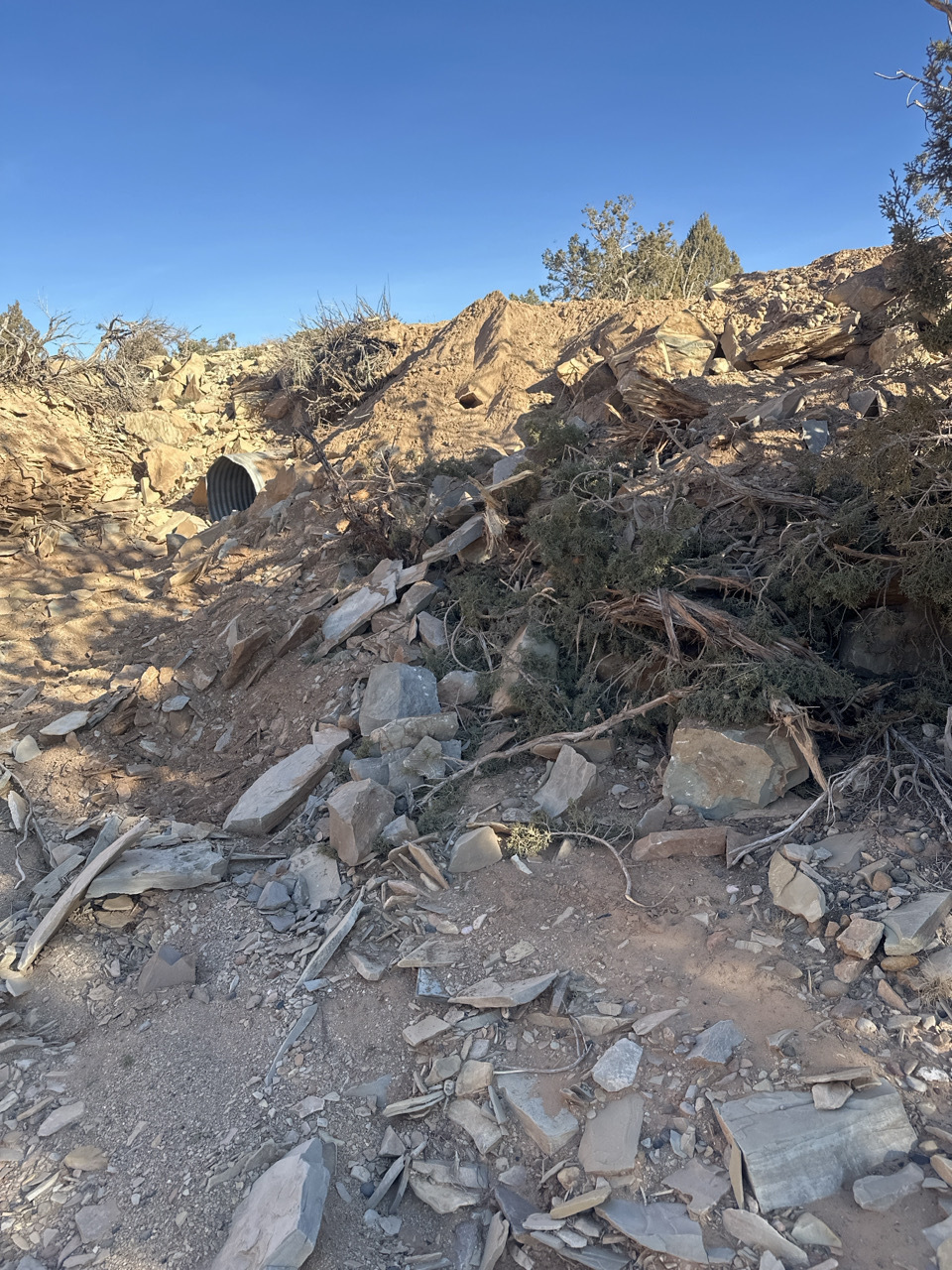
In February, SUWA filed a lawsuit in federal court, alleging that Garfield County and the Bureau of Land Management (BLM) violated federal law when the county began making unauthorized “improvements” to the road. While Garfield County has title to a right-of-way for the road, it does not own the road or the land beneath it (this remains federal public land) and it cannot lawfully take unilateral action to improve the road. Instead, the county is required to consult with the BLM before making any improvements, such as widening or realigning the road, installing new culverts, or chip sealing the surface.
The BLM, for its part, is required by law to protect the things that make the monument so special, and to make sure that activities like these do not cause unnecessary damage to public lands. Sadly, the agency entirely failed in those duties, idly standing by while the county conducted weeks of unauthorized work that will forever change the character of this area.
When SUWA learned that the BLM had completed its consultation for the chip sealing and authorized the county to proceed, we immediately swung into action and sought a temporary restraining order from the court; late last Friday a federal judge denied our request. This week we’ve filed another motion seeking an emergency injunction to pause the county’s chip seal work. Meanwhile, the county is rushing to complete the paving before the court has a chance to rule on that motion.
Despite all of this, our pending case will continue to proceed in federal court on its merits, and we expect to prevail. But by then the changes to the road and damage to the monument will be done. Paving will lead to more, faster, and louder traffic, changing the remote, serene backcountry experience the monument was created to protect, and that draws visitors from around the world.
In the future, we hope to share more positive news. SUWA’s work to Protect Wild Utah and the national monument—which is also currently at risk—continues on, thanks to people like you. At SUWA we take the long view, and we firmly believe that these places are worth fighting for. If you’re able, please consider a donation to support SUWA’s work.
For Grand Staircase-Escalante,
Hanna Larsen & Steve Bloch
Staff Attorney & Legal Director
The post An Update on the Hole-in-the-Rock Road appeared first on Southern Utah Wilderness Alliance.
“Failures of ‘America First Global Health’”: U.S. Global Health Cuts and DRC Conflict Fuel Ebola Crisis
Sweeping U.S. cuts to critical global health programs, including funding and staffing reductions at the Centers for Disease Control and Prevention (CDC), the dismantling of the U.S. Agency for International Development (USAID), and the U.S. withdrawal from the World Health Organization (WHO), have dangerously weakened the world’s ability to respond to rapidly evolving infectious disease threats, including the escalating Ebola outbreak unfolding in the Democratic Republic of the Congo (DRC) and the region, Physicians for Human Rights (PHR) said today.
“This outbreak is unfolding amid devastating cuts to global health and humanitarian assistance in the DRC that have weakened disease surveillance, strained already fragile health systems, and reduced the capacity to detect and respond to infectious disease outbreaks,” said Thomas McHale, SM, public health director at PHR. “Physicians for Human Rights has documented how abrupt U.S. foreign aid cuts disrupted frontline health services and infectious disease programs in conflict-affected eastern DRC, leaving communities more vulnerable at precisely the moment sustained international public health engagement when it is needed most. ”
The current Ebola outbreak, which the WHO declared a “public health emergency of international concern,” involves the rare Bundibugyo strain of Ebola, for which there is no approved vaccine or targeted treatment. Cases have already been identified in and around Bunia, Goma, and Bukavu in eastern DRC as well as in Kampala, Uganda, which are densely populated urban areas, and health workers themselves have become infected. The crisis is unfolding with the rapid and unchecked spread of infections and the sharply rising death toll, with 139 confirmed deaths reported to date.-A devastating set of emergencies are converging in eastern DRC, where ongoing armed conflict, attacks on civilians and health facilities, and mass population displacement have already pushed fragile health systems to the brink. Violence in and around Ituri and Goma, where several cases of Ebola have been detected, has severely disrupted humanitarian access and public health operations precisely as Ebola is spreading rapidly through affected communities.
PHR’s network of medical and humanitarian partners in DRC are reporting mounting tolls from the outbreak and scarce resources to confront the emergency. A doctor in an Ebola-affected area of DRC tells PHR that “…this outbreak is occurring at a time when we are no longer truly able to carry out proper epidemiological surveillance because of the disruption in USAID funding. To continue this surveillance, we are forced to rely on our own personal resources, including purchasing phone credit, fuel, and paying transportation costs. This is extremely difficult given the current level of need.”
Health workers in DRC told PHR that they need support for disease surveillance, materials to support safe disposal of bodies, including body bags, access to laboratories to process samples quickly, and infection prevention and control supplies, including masks, protective suits, face shield and other personal protective equipment to allow health workers care for Ebola patients safely. The same doctor told PHR that “…without rapid support, surveillance, case confirmation, the safe management of bodies, and the protection of health care workers all risk being seriously compromised.”
U.S. global health funding cuts have contributed to the global health emergency posed by the Ebola outbreak. Decades of U.S. investment helped build the disease surveillance systems, laboratory infrastructure, trained workforce, community outreach networks, and emergency coordination mechanisms necessary to detect and contain outbreaks early before they spiraled into regional and global crises. But those systems are now being hollowed out. The Trump administration’s abrupt cuts to U.S. global health funding in January 2025 have undermined public health efforts around the globe, resulting in impacts such as disruptions to HIV and TB prevention and treatment programs, the elimination of services for survivors of conflict-related sexual violence and undermining critical disease monitoring. U.S. funding cuts are degrading public health response capacities in eastern DRC, across Africa, and globally at a moment when rapid response care and robust international coordination is urgently needed.
Public health experts have expressed alarm that the latest outbreak of this rare strain of Ebola likely went undetected for two months, allowing the virus to spread further and losing critical opportunities to trace, isolate, and treat individuals who were exposed or infected.
“The outbreak of Ebola in DRC is another example of the failures of the America First Global Health strategy,” said McHale. “At its best, U.S. global health leadership can help identify, address, and prevent infectious disease outbreaks before they spiral out of control. But this outbreak comes at a time when the United States has shuttered USAID, slashed CDC funding and work force, cut resources for humanitarian response in DRC, including disease surveillance capacity, and hampered the ability of health care workers on the ground to respond to the emerging Ebola crisis.”
PHR’s recent report, “Wasted Investments, Looming Crisis,” documents how reductions in US support for global health have dismantled research platforms, surveillance infrastructure, and frontline health systems that are essential not only for HIV and TB programs, but also for responding to future outbreaks of deadly infectious diseases. A research brief by PHR (“Abandoned in Crisis”) documented the early impacts of U.S. aid cuts on health services in DRC.
“Due to the Trump administration’s cuts, we no longer have the full measure of global coordination and operational capacity needed to rapidly track transmission, monitor cross-border spread, support frontline clinicians, and swiftly identify and treat people who may have been exposed,” said McHale. “In the conflict-affected regions of eastern DRC, where insecurity and displacement are accelerating disease transmission and limiting access to care, these losses are especially dangerous and further deepening the polycrisis. Global health security depends on sustained international cooperation — not retreat.”
As world leaders gather at the World Health Assembly in Geneva this week, governments must urgently promote a rights-based Ebola response that is grounded in science, transparency, and respect for human dignity, while ensuring affected communities have access to timely, evidence-based care and information. Immediate support is needed to protect frontline health workers through the provision of adequate personal protective equipment and infection prevention and control supplies, as health workers remain at heightened risk of exposure. World governments should urgently scale support for epidemiological surveillance, laboratory testing, contact tracing, safe clinical care, community engagement, and dignified and safe burials, including the provision of body bags and other essential supplies for the safe management of the deceased, and essential personal protective equipment for health care workers. Sustained investment in supply chains, local response capacity, and research into Bundibugyo-specific diagnostics, treatments, and vaccines are essential to preventing further spread and protecting the right to health.
The United States should also strengthen coordination with the WHO and fully disburse congressionally-appropriated global health funds to support an effective response to the Ebola crisis, including urgent measures to track and protect exposed individuals and communities, and strengthen frontline response capacities to prevent further spread of the virus. All parties to the conflict in the DRC, including occupying forces, should uphold existing ceasefire agreements and guarantee safe and unhindered access for health care workers and humanitarian personnel to support populations in areas affected by violence. This should include enabling the immediate reopening of Goma International Airport so that life-saving medicines, medical supplies, and humanitarian aid can reach at-risk communities.
EWG: PFAS pesticides contaminate half of California surface water and sediment tests
SACRAMENTO – Pesticides that are the toxic “forever chemicals” known as PFAS are showing up in roughly half of surface water and sediment tests throughout California, a new Environmental Working Group analysis finds, underscoring the need to phase out the use of PFAS pesticides.
The analysis, which examined surface water and sediment test data from the California Department of Pesticide Regulation and the U.S. Geological Survey collected between 2020 and 2024 found that bifenthrin, a PFAS pesticide potentially linked to cancer, was detected in nearly half of all surface water samples and in over half of the sediment samples.
In San Luis Obispo and Stanislaus counties, the chemical was found in over 80% of surface water samples. The data was collected from ten counties across the state, including Santa Barbara and Monterey counties.
“What we are finding in California’s waterways should alarm every Californian, and every American who eats California-grown food,” said Bernadette Del Chiaro, EWG’s senior vice president for California.
“If we’re seeing PFAS pesticides show up this often even in limited surface water and sediment tests, the true scale of this contamination is almost certainly even greater. We need to stop deliberately spraying these toxic chemicals on our crops,” she added.
Millions of Californians are already being exposed to harmful PFAS through pesticide applications on produce grown in the state. EWG’s analysis shows that exposure through surface water and sediment could also be of concern.
More than 2.5 million pounds of PFAS pesticides are applied to California farmland annually. EWG also found frequent detections of these chemicals on produce grown in the state, and that feeds not only California but the rest of the U.S.
Since PFAS never fully break down in the environment, exposure through these two environmental pathways may persist for generations through PFAS’ breakdown products.
Overall sampling data were limited in size and scope, so PFAS contamination from pesticide use is likely more widespread than the data currently suggest. For instance, the data did not include samples from Fresno or Kern Counties, the counties that use the most PFAS pesticides in the state.
“The fact that we are finding potentially carcinogenic chemicals at high rates is a profound public health concern,” said Varun Subramaniam, M.S., EWG science analyst and co-author of the analysis.
“There are data gaps that likely mean PFAS contamination in sediment is underestimated currently. With more frequent and geographically diverse sampling, as well as testing for a wider variety of PFAS, detections would almost certainly rise,” he added.
Breakdown products are concerningThe contamination documented in this analysis may represent only a fraction of the actual PFAS burden in California’s waterways. Many PFAS pesticides transform in the environment into a highly persistent, short-chain form called trifluoroacetic acid, or TFA. Research has linked TFA exposure with reproductive and developmental risks. There are also concerns about TFA’s ability to persist in the environment for an extremely long time.
It remains unknown how long it takes PFAS pesticides to degrade into TFA. It varies according to pesticide types and environmental conditions.
“Since PFAS never fully break down, exposure through surface water and sediment could persist for generations,” said Subramaniam. “In the absence of comprehensive monitoring for TFA and PFAS pesticide breakdown products, we are underestimating how widely these chemicals have spread in the environment and how they are affecting our health.”
This new analysis is a significant step forward in trying to capture the many ways we are exposed to PFAS. And it builds on EWG’s growing efforts to highlight the worrisome broad use of PFAS pesticides in the state that continues unchecked.
A ban would protect people“We already know that PFAS are toxic chemicals that can harm people in a number of serious ways,” said Susan Little, EWG’s California legislative director. “The state needs to move swiftly to phase out PFAS pesticides for agricultural uses.”
EWG is sponsoring a bill moving through the California State Legislature, AB 1603, which would ban the use, sale and manufacture of PFAS pesticides used on crops statewide by 2035.
“Ending the use of PFAS pesticides would safeguard our food and water systems and prevent PFAS pesticide buildup in the environment,” said Little.
###
The Environmental Working Group (EWG) is a nonprofit, non-partisan organization that empowers people to live healthier lives in a healthier environment. Through research, advocacy and unique education tools, EWG drives consumer choice and civic action.
Areas of Focus Farming & Agriculture Pesticides PFAS Chemicals California ‘Forever chemicals’ may expose millions to potential health concerns Press Contact Alex Formuzis alex@ewg.org (202) 667-6982 May 27, 2026Follow the activists fighting powerful interests in the DRC
In the Democratic Republic of Congo, in the Beni region of North Kivu province, activists from local climate justice group Extinction rebellion Rutshuru held a peaceful rally at the end of February 2026 supported by Stay Grounded’s Global Action Pot. With airport expansion projects and aviation growth experiencing an immense boost in the Central African country, they called for an end to the…
Victory at Pe’Sla
In a stunning victory last week, a Federal District Court in South Dakota ordered a graphite mining company to immediately halt an exploration project before destroying a sacred site in the Black Hills National Forest.
Ming threatens a sacred siteIn late April 2026, a mining company started drilling at Pe’ Sla. This landscape has a high mountain meadow, grasslands, and forests sacred to many Lakota, Dakota, and Nakota peoples. In 2016, the US Government recognized this sacred area. It dedicated more than 2,000 acres into trust for four Tribes: the Rosebud Sioux, Shakapee Mdewakanton Sioux Community, Standing Rock Sioux, and Crow Creek Sioux. In 2024, the US Government agreed to protect a two-mile radius surrounding a portion of Pe’Sla. Despite this, a mining company staked claims within the protected area. And, in February 2026, the US Forest Service unlawfully allowed mine exploration.
Legal action and protestsDuring the Spring season, for thousands of years, Native peoples gather at Pe’Sla to perform ceremonies. When members of the NDN Collective discovered new roads, drilling, and blasting activities near Pe’Sla, they filed a lawsuit. Earthworks, Black Hills Clean Water Alliance, and nine federally recognized Great Sioux Nation Tribes joined in the suit. This kicked off a week-long occupation at Pe’Sla by many Tribal leaders and youth, led by NDN Collective.
On May 5, the Court granted an injunction to temporarily stop building and drilling activities until the lawsuit concluded. Two days later, the mining company packed up, withdrew their plans, and pledged not to mine there again. On May 18, the Court issued an order ending mining activities but allowing the operator to clean up and restore the lands to their previous condition.
Mining affects Indigenous Peoples’ rightsGraphite, along with minerals like nickel and lithium, is used for batteries for electric vehicles, cleaner energy projects, and military technology. Pressure to mine more, especially for these minerals, has driven rushed mining. In the US, this rush is happening with support from the Trump administration.
Mining often happens on Indigenous Peoples’ land, and the United States is no exception. Impacts on people and the environment happen everywhere mining occurs, but these mines can also permanently change sacred and culturally significant places.
A just transition to sustainable energy demands solutions that honor Indigenous Peoples’ sovereignty and stewardship. Projects like the exploration at Pe’Sla do the opposite.
Better laws could protect sacred placesWhat happened at Pe’Sla isn’t an isolated incident. It reveals the weakness of the 1872 Mining law, the statute that still governs almost all public lands mining, including in the sacred Black Hills. Under this law, any person may claim public lands as their own for a small fee. They can begin drilling, blasting, construction, and other exploration, sometimes without even asking permission.
To remedy this, Congress should pass durable reforms to the 1872 Mining law to protect Pe’ Sla and all sacred landscapes from mining without public notice nor meaningful consultation with affected Tribes. Senator Lujan’s Mining Waste, Fraud, and Abuse Prevention Act will do just that.
Here, the Tribes and nongovernment organizations won because the Forest Service unlawfully excluded the mine project from environmental review and public and Tribal input. The leadership and organizing from the Tribes and NDN Collective ultimately helped secure this victory.
But asking a judge to step in every time a mine threatens Pe’Sla or any other sacred place is not a good system. Congress should pass meaningful mining reform and provide a better way.
The post Victory at Pe’Sla appeared first on Earthworks.
76% of Americans want stronger utility oversight
A poll from consumer advocacy group PowerLines found broad distrust of elected officials and limited understanding of utilities’ business models. Experts told Utility Dive the disconnect could worsen.
Apply Now! Indigenous Youth Farmers Program
Completing this application should take about 20-30 minutes. Applications are due by 11:59 PM on Friday, June 19, 2026. No farming experience required.
What is the Indigenous Youth Farmers Program?- A unique opportunity for Indigenous youth to learn both urban and rural farming practices, meet and build community, and practice traditional lifeways centering Indigenous knowledge and values.
- Learn from local Indigenous teachers, Imagine Water Works staff, and each other.
- Attend 6 workshops, including two educational field trips.
- Co-steward The Imagination Farm with support from peers and mentors.
- Louisiana youth, ages 16-24 with North, Central, or South American Indigenous ancestry. If you are unclear on this qualification please contact deja@imaginewaterworks.org
- No farming experience is required.
- If you are younger than 16 or are unable to fully participate, we welcome you to attend our field trips! To receive more details and an invitation to our two field trips, share your contact information with us here: https://forms.gle/TVnhvBeZfscnmu4M8.
- A $300 stipend at the end of the program
- A Certificate of Completion
- Food, snacks, and sport drinks while on site
- A sense of belonging and a “home base” at the farm, now and in the future, with continued mentorship from all who are connected to the farm
- Completion of the program qualifies each farmer for IWW’s Imagination Farmers Program, an ongoing paid opportunity to continue stewarding the Imagination Farm, and/or IWW’s Imagination Responder Program which activates during and after major hurricanes and floods.
The Imagination Farm (TIF) is a Two-Spirit, Creole Indigenous farm and sacred intergenerational space where those most impacted by climate change can explore, imagine, and share solutions for our future. TIF feeds both our stomachs and our spirits. We encourage experimentation, collaboration, education, imperfection, and creativity, as we collectively build in the midst of ongoing climate catastrophe. More about the farm can be found HERE.
Where do we meet? The Farm is located at 2718 Painters St., New Orleans. We will be going on site visits and will provide transportation between the farm and field trip sites within New Orleans and Terrebonne Parish, LA. Funds for transportation support are limited. We will do our best to meet everyone’s needs via ride shares and carpooling. Ride share support will be available for the following parishes: Orleans, Jefferson, St. Bernard. When is the program?August-November 2026, plus graduation, with the opportunity to stay connected to volunteering and other paid opportunities through the Imagination Farmers Program and Imagination Responders Program.
What is the application timeline?- Friday, June 19th @ 11:59pm: Applications are due.
- Early July: All applicants will hear back on the status of their application, and select applicants will be invited to the 2nd round.
- Late July: All 2nd round applicants will be notified, and select applicants will be invited into the program. All applicants will receive an invitation to our two field trips.
This program is made possible by many Imagine Water Works friends, with leadership from Ida Aronson, Déja Jones, and Chenier “Klie” Kliebert.
Issues with the application? Try the direct link here: https://forms.gle/k4AHaVx4FZx85z2c7. How can I support this program?Your support will help us pay for meaningful workshops, transportation, first aid, and farm tools, and will ensure that the program can thrive for years to come. To donate, use our donation link here and specify that your donation is for the Indigenous Youth Program. If you are a philanthropic organization and would like to partner with us to help support this program, please email klie@imaginewaterworks.org.
Donate to support our workThe post Apply Now! Indigenous Youth Farmers Program appeared first on Imagine Water Works.
From Best Dressed to Class Clown, These 15 Birds Own Their Spring Migrant Superlatives
New Mexico regulators scrutinize Blackstone-TXNM stock trade in merger review
Consumer and renewable energy advocates say the stock transaction gave Blackstone an early stake in TXNM Energy before regulators could negotiate acquisition-related conditions or customer protections. The companies deny wrongdoing.
Nuclear fuel is the weak link in US energy security: Centrus CMO
America must rebuild its nuclear fuel supply chain to reduce geopolitical risk, writes Centrus Energy CMO John Donelson. “No one company can do it alone.”
What Do GLP-1s Mean for Food Waste?
As adoption of GLP-1s grows, food waste experts expect these drugs to alter food waste patterns. This creates an opportunity for restaurants, retailers, and hotels to adapt and help keep food out of landfills.
Around 12 percent of adults in the United States have tried a GLP-1 drug like Ozempic and Wegovy, according to a study published in JAMA. The nonprofit ReFED reports that their uptake is driving a decrease in demand for groceries, a desire for small portion sizes, and a shift in eaters’ food preferences. As this happens, levels of surplus food are changing as well.
Dana Gunders, ReFED’s Executive Director describes these drugs as “a life change moment.” Adopting is not unlike learning to cook after first leaving home or having a child, she explains. All of these alter the way eaters interact with food.
GLP-1 users tend to be more mindful of surplus food on their plates, ReFED finds. “When people go on GLP-1s, their waste tends to go up,” Gunders tells Food Tank. She adds that it’s not surprising as eaters get used to a new appetite. “But over time, they do tend to get a little bit better and in some cases, waste has gone down a little bit.”
But as eaters shop differently, it may take some time for grocers to adapt. “It’s like an earthquake in the food sector and that’s probably even more true in the retail space,” Emily Broad Leib, a Clinical Professor of Law and Director of Harvard Law School Center for Health Law and Policy Innovation, tells Food Tank.
Eventually, Broad Leib believes that retailers will catch up because “they want to be selling the right things and making the money they can make. But she thinks that incentivizing policies can encourage them to act faster and find ways to manage surplus without sending it to the trash.
Restaurants also have an opportunity as they work to meet the needs of this new demographic. “I anticipate we will see a lot more restaurants coming out with menus and offerings that offer more flexible or customizable portion sizes. And we know there’s a lot of interest in that,” Gunders says.
ReFED’s research shows that three-quarters of people on GLP-1s would prefer one restaurant over another if they can choose their portion size. And restaurants are noticing the trend. But when it comes to hotels and other businesses offering large buffets, the transition may take longer, Gunders and Broad Leib say.
“I feel like that sector has been talked about a lot less,” Broad Leib says. “That message is a lot harder to get directly up the chain in the hospitality sector because individual consumers aren’t the ones paying necessarily.”
Listen to or watch the full conversation with Emily Broad Leib and Dana Gunders on Food Talk with Dani Nierenberg to hear about the business case to help hotels tackle this challenge, policy opportunities to reduce waste, and long-term implications of GLP-1s.
Articles like the one you just read are made possible through the generosity of Food Tank members. Can we please count on you to be part of our growing movement? Become a member today by clicking here.
Photo courtesy of Jay Wennington, Unsplash
The post What Do GLP-1s Mean for Food Waste? appeared first on Food Tank.
Phyllis Hall Mentors the Next Generation
Volunteers Made 4.7M Observations for the North Carolina Bird Atlas! Now What?
FERC Commissioner Chang is ‘not thinking about’ breaking up PJM
“I'm interested in the successful continued operation of PJM, but definitely I want to help them get through this period,” FERC Commissioner Judy Chang told Utility Dive. She called the proposed NextEra-Dominion merger “interesting.”
Governor Hochul Announces $15 Million Is Now Available To Advance Innovative Building Solutions In New York State
Governor Kathy Hochul today announced $15 million is now available to advance innovative building solutions in New York State through the Innovation for Affordable Building Electrification program. The initiative supports the adoption of technologies that can be scaled in existing buildings to improve energy efficiency, electrification or load management to enhance building performance and reduce costs.
“New York State is a leader in advancing scalable building solutions and making the latest efficiency solutions more accessible to building owners,” Governor Hochul said. “Through the Innovation for Affordable Building Electrification program, we are ensuring that modern building solutions work in harmony to make energy go further while balancing reliability with comfort and affordability.”
The Innovation for Affordable Building Electrification program administered by the New York State Energy Research and Development Authority (NYSERDA), provides funding to develop and demonstrate a new or improved product or solution to better control energy use, increase load flexibility, lower emissions, and improve indoor air quality in existing residential and commercial buildings. Eligible applicants include but are not limited to researchers, educational institutions, manufacturers, labs, building owners and managers, or trade associations, among others. Solutions that benefit low- to moderate-income or disadvantaged communities, as identified by New York’s Climate Justice Working Group, will be prioritized.
NYSERDA President and CEO Doreen M. Harris said, “NYSERDA is interested in partnering with innovators and industry leaders to accelerate the development and adoption of next generation building technologies that can deliver real value and benefits for New Yorkers. By investing in solutions that support building electrification and improve energy performance, we are accelerating the delivery of cutting-edge technologies to market that help manage energy demand, reduce strain on the grid and lower costs for occupants and building owners alike.”
Proposals must address one of three energy topic areas that improve building performance:
- Efficiency – permanent load reduction solutions including, but not limited to, building envelope components or materials, ventilation and air sealing.
- Electrification – clean and affordable heating and cooling solutions including, but not limited to, heat pump systems for space conditioning and domestic hot water.
- Load Management – grid-interactive building solutions including, but not limited to, electric load and energy asset management, electrification-enabling equipment and integration of storage.
Proposals are due on July 23, 2026, by 3:00 p.m. ET. For more information on this funding opportunity please visit NYSERDA’s website.
Additionally, all applicants also have the option of submitting a Letter of Intent to NYSERDA to receive feedback on the eligibility, not merits, of their proposal prior to submitting a final version. Proposers interested in submitting the optional Letter of Intent must do so any time prior to July 2, 2026, by 3:00 p.m. ET.
NYSERDA will host a webinar on June 3, 2026, at 1:30 p.m. ET to provide more details on the solicitation, project requirements, and the application process.
Public Service Commission Chair Rory Christian said, “Catalyzing innovative solutions within the buildings sector, which remains one of the largest contributors to the state’s greenhouse gas emissions, is fundamental to achieving the state’s climate goals. The funding announced today by Governor Hochul and NYSERDA will ensure that residential and business consumers experience health, affordability, and other quality of life benefits in tandem with progress toward state goals.”
Building Energy Exchange CEO Richard Yancey said, “New York State’s building stock represents one of our greatest opportunities — and obligations — for climate action. The Innovation for Affordable Building Electrification program reflects exactly the kind of forward-thinking investment needed to move promising technologies from concept to scale in the buildings where New Yorkers live and work. At the Building Energy Exchange, we see every day how critical it is to equip our industry with practical, affordable solutions — and we’re excited to see this initiative prioritize the communities that stand to benefit most.”
State Senator Kevin Parker said, “New York’s clean energy future depends on our ability to invest in innovation that makes sustainability affordable, accessible, and practical for every community. This funding represents a critical step toward modernizing our building infrastructure, lowering energy costs for families and businesses and ensuring that disadvantaged communities are not left behind in the transition to a cleaner economy. By supporting cutting-edge technologies in energy efficiency, electrification, and load management, New York is continuing to lead the nation in building a more resilient, equitable and sustainable future.”
Assemblymember Didi Barrett said, “Today’s energy challenges require innovative solutions. This funding will help develop and demonstrate new solutions to decarbonize our state’s existing building sector, the largest source of statewide emissions, all while increasing efficiency, managing demand and reducing cost.”
Today’s announcement builds on New York State’s investments in energy technologies, new products, and solutions to address energy costs, demand and a reliable electric grid. NYSERDA invests over $96 million per year through its Innovation and Research programs to attract world class energy innovators, reduce risk for private investors and remove barriers to clean energy adoption in New York State. Every $1 of NYSERDA funding leverages $15 in additional investment from private and public sources. NYSERDA has partnered with over 900 companies that have helped make more than 300 products commercially available for consumers, businesses and utilities.
Funding for this program is provided through the New York State Public Service Commission’s 2025 Innovation and Research Order, which funds statewide clean energy innovation and research programs from 2026 through 2030.
New York State’s Climate Agenda
New York State’s climate agenda calls for an affordable and just transition to a clean energy economy that creates family-sustaining jobs, promotes economic growth through green investments, and directs a minimum of 35 percent of the benefits to disadvantaged communities. New York is advancing a suite of efforts to achieve an emissions-free economy by 2050, including in the energy, buildings, transportation, and waste sectors.
Coal plants are dimming the world’s solar panels
Solar power is on the rise around the world as the cost of solar panels goes down and societal acceptance of the technology rises. The world added record-breaking solar power installations in 2025, and capacity is expected to more than double in the next five years, according to the International Energy Agency.
But there’s one inescapable issue darkening the skies for the transition to clean solar energy: dirty coal plants. Researchers in the UK have found that pollution from coal is significantly reducing the amount of power we could be getting from solar panels.
From 2017 to 2023, annual solar energy losses “from existing systems were, on average, equivalent to one-third of the energy added by new PV installations,” the researchers write in a paper published in the journal Nature Sustainability.
When power plant furnaces burn coal, it releases not just carbon dioxide but also sulfur dioxide. This gas reacts with other molecules to become small particles called sulfates. Called aerosols, these tiny particles get suspended in the air and reflect sunlight.
.IRPP_ruby , .IRPP_ruby .postImageUrl , .IRPP_ruby .centered-text-area {height: auto;position: relative;}.IRPP_ruby , .IRPP_ruby:hover , .IRPP_ruby:visited , .IRPP_ruby:active {border:0!important;}.IRPP_ruby .clearfix:after {content: "";display: table;clear: both;}.IRPP_ruby {display: block;transition: background-color 250ms;webkit-transition: background-color 250ms;width: 100%;opacity: 1;transition: opacity 250ms;webkit-transition: opacity 250ms;background-color: #eaeaea;}.IRPP_ruby:active , .IRPP_ruby:hover {opacity: 1;transition: opacity 250ms;webkit-transition: opacity 250ms;background-color: inherit;}.IRPP_ruby .postImageUrl {background-position: center;background-size: cover;float: left;margin: 0;padding: 0;width: 31.59%;position: absolute;top: 0;bottom: 0;}.IRPP_ruby .centered-text-area {float: right;width: 65.65%;padding:0;margin:0;}.IRPP_ruby .centered-text {display: table;height: 130px;left: 0;top: 0;padding:0;margin:0;padding-top: 20px;padding-bottom: 20px;}.IRPP_ruby .IRPP_ruby-content {display: table-cell;margin: 0;padding: 0 74px 0 0px;position: relative;vertical-align: middle;width: 100%;}.IRPP_ruby .ctaText {border-bottom: 0 solid #fff;color: #0099cc;font-size: 14px;font-weight: bold;letter-spacing: normal;margin: 0;padding: 0;font-family:'Arial';}.IRPP_ruby .postTitle {color: #000000;font-size: 16px;font-weight: 600;letter-spacing: normal;margin: 0;padding: 0;font-family:'Arial';}.IRPP_ruby .ctaButton {background: url(https://www.anthropocenemagazine.org/wp-content/plugins/intelly-related-posts-pro/assets/images/next-arrow.png)no-repeat;background-color: #afb4b6;background-position: center;display: inline-block;height: 100%;width: 54px;margin-left: 10px;position: absolute;bottom:0;right: 0;top: 0;}.IRPP_ruby:after {content: "";display: block;clear: both;}Recommended Reading:As coal pollution declines, crops begin to flourish
For their new study, the researchers used satellite data to map and assess more than 140,000 solar installations worldwide. They combined this data with air pollution data to calculate how much sunlight dims and how this reduces electricity generation. The researchers traced the origins of the aerosols and found that they came mainly from coal-fired power plants.
They found that in 2023 aerosols reduced global solar electricity output by 5.8%, or 111 terawatt-hours of energy; that is equal to the amount generated by 18 medium-sized coal-fired power plants. The losses were highest in China, where solar and coal are expanding and are often located close to each other. China had the largest aerosol-related solar energy losses worldwide, reducing national solar power generation by 7.7% in 2023.
The phase-out of coal power around the world has been slow, the researchers write, and this study presents yet another way that coal could interfere with the world’s clean-energy transition. “Looking forward, the physical interaction between coal-based aerosols and solar PV performance is likely to become an increasingly critical constraint on the global energy transition,” they say.
Source: Rui Song et al. Coal plants persist as a large barrier to the global solar energy transition. Nature Sustainability, 2026.
Image: ©Anthropocene magazine/AI-generated
Burgers, Brats, and Busted Budgets: Summer Staples Up 13%, Travel Prices Surging Ahead of Memorial Day
New data released today by Groundwork Collaborative and The Century Foundation shows how President Trump’s reckless economic policies and war in Iran are driving up the costs of summer cookouts and travel season. Prices for backyard barbecue staples jumped 13% on average since last year, more than four times the rate of inflation. Burgers will run families 20% more, Kraft Heinz ketchup jumped 14%, and grilled corn on the cob costs nearly twice as much as it did last year. Even a to-go plate will also cost families more as aluminum foil prices climbed 18%.
If working families manage to get through the holiday weekend within budget, their summer travel plans may still be out of reach. Airfare prices are up 26% and expected to keep rising this summer, while gas prices are hovering around $4.50 nationally. As Transportation Secretary Sean Duffy wraps up his family’s seven-month, all-expenses-paid road trip, working families are wondering whether they’ll be able to afford traveling at all this summer. All in, reports find that the Duffy’s corporate-sponsored vacation would cost at least $900 in fuel expenses – and that’s not including the luxury cruise the family was given to cap off their trip. Trump and his Cabinet couldn’t be more out of touch with working families this Memorial Day weekend.
Groundwork’s Chief Economist, Breyon Williams, released the following statement:
“Trump’s senseless tariffs and illegal war are robbing American families of their relaxing summer vacation. From the ticket counter to the cookout, consumers are scaling back and going without in the face of Trump’s summer sticker shock.”
Janelle Jones, Senior Fellow at The Century Foundation, shared her response:
"Prices are rising because of tariffs and the war—two decisions the president made and can undo whenever he wants but by his own admission he doesn't spend any time thinking about Americans' financial situation. Families are getting squeezed on the price of everything and leaders in Washington don't seem to be paying attention."
Eat Up: Barbecue Essentials More Expensive Thanks to Trump
- Beef, hot dog, and bratwurst prices are through the roof (up 20%, 12%, and 28% respectively) as consumers consider firing up the grill this holiday weekend.
- Fresh produce prices have increased under Trump thanks to higher fertilizer prices and a struggling farm economy. Tomatoes cost 22% more, while corn prices have increased 98% and lettuce is up 19%.
- Trump’s war in Iran has also driven up the price of plasticware popular at cookouts: disposable plasticware prices are up about 20% compared to last year due to the unrest in the Middle East. These price impacts will last beyond summer barbecue season.
Flights, road trips, and even staycations will cost more this summer
- A family of four can expect to pay an extra $300 on plane tickets this summer as Trump’s war drags on. All major U.S. carriers have announced price hikes of about $10 per checked bag heading into vacation season, on top of skyrocketing airfare.
- Budget airline Spirit shut down this month partially due to unexpected increases in jet fuel costs while airline CEOs anticipate passing higher operating costs onto consumers via price hikes.
- Southwest Airlines CEO Andrew Watterson revealed to shareholders in a recent call that there have been five industrywide fare hikes so far this year, and he anticipates more on the way.
- United CEO Kirby also admitted prices will not come down, saying “The longer consumers pay these prices and airlines get used to this revenue stream, the more likely it is [to hold].”
- Flyers who can afford higher prices will be crammed onto smaller planes with fewer flight options.
- Airlines have cut over two million seats and 12,000 flights worldwide in late April and early May, an unprecedented level of cancellations.
- United Airlines has removed over 21,000 flights from its summer schedule, while Delta and American cut nearly 12,000 combined.
- Gas prices are at the highest level since 2022, hitting around $4.55 nationally, up more than 50% from $2.98 before the president’s war in Iran started.
- Working families looking forward to a restful staycation at home may find it more difficult as temperatures rise: Trump’s tariffs have driven up the cost of HVAC systems, and his administration has ended tax credits Americans relied on to upgrade their air conditioning.
To talk to a Groundwork expert about rising prices and the economic fallout of Trump’s agenda, email press@groundworkcollaborative.org.
A Bug’s Life: Almost thirty years later, Pixar’s forgotten film is more relevant than ever
As Trump took to Twitter to threaten a potential nuclear strike on Iran in April, many users on the platform and other social media cried...
The post A Bug’s Life: Almost thirty years later, Pixar’s forgotten film is more relevant than ever first appeared on Spring.
In-state geothermal could save California $44B annually: CATF
The Clean Air Task Force estimates that the state’s need to expand interregional transmission could be reduced by 28% to 53% through enhanced geothermal deployment.
Pages
The Fine Print I:
Disclaimer: The views expressed on this site are not the official position of the IWW (or even the IWW’s EUC) unless otherwise indicated and do not necessarily represent the views of anyone but the author’s, nor should it be assumed that any of these authors automatically support the IWW or endorse any of its positions.
Further: the inclusion of a link on our site (other than the link to the main IWW site) does not imply endorsement by or an alliance with the IWW. These sites have been chosen by our members due to their perceived relevance to the IWW EUC and are included here for informational purposes only. If you have any suggestions or comments on any of the links included (or not included) above, please contact us.
The Fine Print II:
Fair Use Notice: The material on this site is provided for educational and informational purposes. It may contain copyrighted material the use of which has not always been specifically authorized by the copyright owner. It is being made available in an effort to advance the understanding of scientific, environmental, economic, social justice and human rights issues etc.
It is believed that this constitutes a 'fair use' of any such copyrighted material as provided for in section 107 of the US Copyright Law. In accordance with Title 17 U.S.C. Section 107, the material on this site is distributed without profit to those who have an interest in using the included information for research and educational purposes. If you wish to use copyrighted material from this site for purposes of your own that go beyond 'fair use', you must obtain permission from the copyright owner. The information on this site does not constitute legal or technical advice.
 This site is not the official webpage of the Industrial Workers of the World.