You are here
News Feeds
A Conversation with Terry Tempest Williams
Terry Tempest Williams is one of the most celebrated and revered American nature writers. She integrates the musicality of a poet with the passion and purpose of an activist. Terry is also an award-winning conservationist, a fierce defender of her beloved Southwestern desert landscapes.
She has authored over 20 books that are translated worldwide. Her most recent book is The Glorians: Visitations from the Holy Ordinary.
Bioneers co-founder Nina Simons, author of Nature, Culture and the Sacred: A Woman Listens for Leadership, engaged with Terry at a Bioneers conference in a wide ranging conversation between two old friends.
FeaturingTerry Tempest Williams, a writer, educator, and environmental activist known for her lyrical and impassioned prose, is the author of over twenty creative nonfiction books. Her work has appeared widely, including in The New York Times, The New Yorker, The Progressive, and Orion, and has been translated worldwide. Her most recent book is the The Glorians – Visitations from the Holy Ordinary (spring ’26).
Credits- Executive Producer: Kenny Ausubel
- Written by: Kenny Ausubel
- Producer: Teo Grossman
- Senior Producer and Station Relations: Stephanie Welch
- Associate Producer and Show Engineer: Emily Harris
- Host and Consulting Producer: Neil Harvey
- Production Assistance: Mika Anami
The Glorians – Visitations from the Holy Ordinary
Terry Tempest Williams: Noticing the Glorians in a Fractured World
Erosion and Evolution: Our Undoing is Our Becoming | Bioneers Podcast
This is an episode of the Bioneers: Revolution from the Heart of Nature series. Visit the radio and podcast homepage to find out how to hear the program on your local station and how to subscribe to the podcast.
Subscribe to the Bioneers: Revolution from The Heart of Nature podcast TranscriptNeil Harvey (Host): Standing in the lineage of the greatest nature writers, the acclaimed author, naturalist and activist Terry Tempest Williams links her deepest inner experiences with the state of the web of life. She plumbs connections: art and ecology – women and politics – democracy and social healing – wild lands and First Peoples – family and faith.
I’m Neil Harvey. This is “A Conversation with Terry Tempest Williams”
Terry Tempest Williams is one of the most celebrated and revered American nature writers. She integrates the musicality of a poet with the passion and purpose of an activist. Her tender personal reflections and intimate insights as a naturalist braid together with her keen political and spiritual insight in a voice that feels most at home in the liminal – in the space between words.
Her work and her life encompass many dimensions beyond writing. As a socially and politically engaged artist, Terry is also an award-winning conservationist, a fierce defender of her beloved Southwestern desert landscapes. She’s done everything from civil disobedience to testifying before Congress on women’s health issues, to buying gas leases to prevent the desecration of pristine and sacred lands.
She has authored over 20 books that are translated worldwide, including the masterwork Refuge: An Unnatural History of Family and Place. Her most recent book is The Glorians: Visitations from the Holy Ordinary.
Terry has received numerous prestigious literary awards, and her long academic career recently included serving as writer- in-residence at Harvard Divinity School.
Terry Tempest Williams spoke at a recent Bioneers conference, where Bioneers co-founder Nina Simons, author of Nature, Culture and the Sacred: A Woman Listens for Leadership, engaged with her in a free-range conversation between two old friends.
Nina began by asking Terry to describe the story from her book Finding Beauty in a Broken World chronicling her experience making social healing mosaics in Rwanda with the artist Lily Yeh.
Nina Simons (NS): In Finding Beauty in a Broken World, you share the story of Lily Yeh’s work with barefoot artists, helping create healing places in Rwanda and globally through engaged community art creation. And in both her work and your own, my sense is that you each elevate art to a place where its healing capacity for people, society and culture is amplified in community. You wrote that finding beauty in a broken world is creating beauty in the world you find. So now, when the need to transform our culture and society is at an all-time high, and since artists often foresee the future, I wonder if you have any thoughts about the role of artists in times like this, and what you might suggest to artists whose catalytic capacity is so vital, though so often undervalued in this society.
Terry Tempest Williams (TTW): How many of you know the work of Lily Yeh? She’s a phenomenal artist. She’s now 85, almost to be 86 years old, Asian, born in Taiwan, in China, her family. I met her in 2001, after I realized September 11th, my rhetoric had become as brittle as the opposition. And I had forgotten my poetry.
And I remember being in Maine. We were at a family place. And it was high tide. I went out to a rocky point and I said prayers. And basically said to the sea: Give me one wild word and I promise I will follow. And the word that came back to me after listening was mosaic. And I thought, oh no, my life is now going to be relegated to breaking my mother’s dishes and making bad picture frames. You know? I was—I did not understand mosaic.
And I did some research, and Lily Yeh, her name came up. She started the Village of Arts and Humanities just outside Philly, in a very tough neighborhood. And I went on a pilgrimage to meet her. And she really changed my life and showed me the aisle of angels made of mosaics, the safehouses of mosaics, how…her colleague who was—had been a former drug dealer, became a master mosaicist. And they made these beautiful murals, and it—her work has been one of placemaking around the world.
Lily Yeh. Photo: Daniel Traub / Wikimedia CommonsShe later came to Salt Lake to do a mural in one of the poorer neighborhoods that had been invisible to the community. It became highly visible with the Latina and Latino communities. And then she said, “I need to talk to you.” And she said, “Will you come with me as a barefoot artist to Rwanda?” And I said no. My brother had just died a month earlier, and I said I cannot. I did not want to be in any more death. I cannot go. And Nina, she just stared at me. And then I heard myself, and I realized if I said no, I would be saying no to my spiritual life and growth, and I heard myself say yes. And another life-changing moment.
And, I have to tell you, here’s another lesson I learned from her. Very conscientious, you know, if I’ve got a job, I will take it seriously. So knowing we were going to go to Rwanda, I got a map, looked where it was, what it was next to. I read over 60 books, everything I could get my hands on – novels, non-fiction, government reports – went to the Library of Congress, looked at all the maps – fire maps, water maps, war maps – just to get it in my mind. And she called me and she said, “I just want to know how you’re preparing.” And so I gave her this whole list, told her what I just told you. And I said but I just don’t feel like I’m getting anywhere, but I’ve got more books to read. And I said, ‘How are you preparing?’ And there’s this long silence, and she said, “I’m meditating.” And I quit reading. And just sat with that. So she’s a real teacher.
And I think that’s what art does for us, it bypasses rhetoric and pierces the heart, and the heart is really, I think, where all change resides.
And I saw…the power of art, to go into communities…numb with grief, dead with grief, the bones of these women’s children were buried under trees that were still there, that they were carrying in the folds of their skirts. But when Lily got the paint out and the children took over and painted their houses – turquoise, yellow, red, animals – something lifted. And what it led to was the creation of a genocide memorial, where these women – and most of them were women – could bury their beloveds in a place of dignity. And that was Lily.
NS: You know that conversation about Rwanda leads me to ask you, as we are both women who are childless by choice, about your decision to adopt a son, and how that’s changing you.
TTW: My hair’s white. [LAUGHTER] Louis Gakumba is our son. He was our translator in Rwanda. And so, again, Lily. You know?
I think being a mother at 50, as you say, childless by choice… it has brought me to my knees, and I mean in the most beautiful ways, for both Brooke and me. And Louis has been our teacher. It’s been hard. I knew nothing. I still know nothing. I am a grandmother. I have two grandchildren – we do – Malka who is 8, and Shayja who is 7. Shayja loves birds. I love him. He’s constantly calling about what he sees.
Malka, I will share this with you, since you asked how’s it changing me… When she was 5, she said to me, “Do you think I’m too black?” And I said, ‘Malka, you are beautiful.’ And I said, ‘Why do you think that?’ And she gave me her reasons. And I said, ‘Let’s look at all the beautiful Black women.’ And we looked online, and she said, “She’s black like me. She’s black like me. She’s black like me.” And then she said, “Will you show me your body?” And I have to tell you, it was the scariest thing I’ve ever done in my life, was take off my clothes in front of a 5-year old. And turn around. And then, as I am standing before my granddaughter, she says, “What color is your heart?” And I said, ‘The same color as yours.’ And we’ve never had that discussion again.
And the other day, three years later, she said, “Te Te Terry, don’t you think I’m beautiful? And I just said, ‘You are so beautiful.’ And so I think it’s what we learn together.
Terry Tempest Williams at Bioneers 2026. Photo: Boris ZharkovShayja, the other day, we were up in Shenandoah, and he’s staring at me. You know? And I think, okay, this’ll come out. And he goes, “If only you were a little tanner.” And I just—you know, so we are learning about interracial family together, and it’s a beautiful thing. And Louis just wrote his memoir. It’s tough, it’s beautiful, and he said I want my children to know where they come from. And I want them to know who my ancestors are and—so we’re learning.
And my father, who would tell you in this audience, was a true racist. And he is now 92, and he and Louis are closer than I can ever tell you. And it was on a plane from Denver to Salt Lake, and Dad and Louis were sitting together on the exit row, and a flight attendant said, “Yes, yes, yes.” And when Louis said yes, she said, “Get out, you don’t speak English.” And my father stood up and said, “Apologize. He speaks six languages. He’s smarter than anyone on this plane.” And she said, “Get out.” And my father stood up and said, “This plane will not fly until you apologize.”
And when dad came home, I called him to see if they’d gotten home, and the flight attendant let things go, apologized. When I called my father, he was crying. And he said Terry, “I knew racism from the inside out. I never knew racism from the outside in.” And that night, he had a stroke. And I think it was such a shock that he literally was rewired. And it was Louis who took him to the emergency room, sat with him all night, and held his hand. No one holds my father’s hand. So it’s those kinds of changes, Nina. Aside from love and joy and… I’m grateful.
Host: When we return, Terry Tempest Williams and Nina Simons explore how to marry contradictions, being species-fluid, and feeding a spider.
I’m Neil Harvey. You’re listening to the Bioneers: Revolution from the Heart of Nature.
Host: If you’d like to see and hear more from Terry Tempest Williams, you can visit bioneers.org
Let’s drop back into the kitchen table conversation with Terry Tempest Williams and Nina Simons.
NS: Well, years ago, we had a conversation where you spoke of feeling drawn to marrying apparent contradictions. And it landed in me in a big way. And—
TTW: In what way?
NS: Well, in that every time I found myself encountering an apparent contradiction, I thought of you, and I thought, Huh, what does it mean to try to marry these things that seem so polarized. And…it was long before there was so much interest in non-binary gendered identities, and I found it a useful practice, to see how I could imagine them dancing together. Do you still find that resonant for you?
TTW: Every day.
NS: Yeah. [LAUGHS]
TTW: You know, living around Great Salt Lake, and living long enough to have seen her in her historic high, and now at her historic low, in retreat – and I don’t see it as retreat in the military retreat. I see it as a retreat as one goes on retreat or retreat in meditation or retreat in reflection. And I feel she’s inviting us to do the same.
So here is a saline lake that theoretically is dying, and alongside her death will be the death of the Wasatch Front – 2.5 million people if we do nothing. Not to mention the livelihood of 12 million birds. Right now, I have never seen Great Salt Lake so vibrant. I have never seen the Salt Lake area more alive with concern, with creative thinking, with young people, with artists, the Mormon Church. Great Salt Lake now has a new ally – Donald Trump. I don’t know how to deal with that, the paradox, because if I’m saying all hands on deck, that means Donald Trump’s hands too. And then I think, are we losing the lake even as we’re trying to save the lake?
I watch people who are saying it’s not called Great Salt Lake anymore, it’s the Lake. There are those that are saying this is America’s lake… I see them neutering her. And the Native people have said our Sacred Mother Lake. This is how we know her, this is how we want her dressed. I see the tribes not being brought to the table as sovereign nations, as sovereign governments. So it’s this, that and all of it.
And the Wilson’s phalarope, which is now an endangered species, we’ve filed a petition for that species protection. The scientists on one hand say we have five years, seven years. The percentage of a saline lake ever being saved is zero.
Great Salt Lake. Photo: Patrick Hendry / UnsplashBut now, the governor, who’s on board, saying the deadline is 2034, which is the Winter Olympics. So that’s not the lake’s deadline. That’s not the phalarope’s deadline. So how do we juggle all of these things? It’s a paradox that feels like a hologram. And, yet, Great Salt Lake is directing us.
And I think, again, what we were talking about today. If we are present, we’ll know what to do. If we’re listening to the lake, we will hear what she has to say. And, again, the elders, the different tribes, are leading the way, in my mind, and with integrity and a spiritual depth that I’m not seeing elsewhere.
NS: I feel a tremendous connection with you and your writing through the way that you speak to and embody a quality of the feminine in your work. And the “feminine” I want to say, with quotes, because it’s such a weird word, and it’s been so malformed in our culture. And I think of When Women Were Birds. And I’ve recently begun studying the Tao Te Ching, and especially Ursula Le Guin’s version of it.
TTW: I love that.
NS: Which is so wonderful. And it’s reminding me of a long fascination that I’ve had with this quality that’s beyond binary genderism that’s about how one way of seeing how we’ve gone so wrong is the imbalance of the yin and the yang in all of us – in our culture, in our—you know, economy, in our education, in everything. I find myself reaching to expand the gender dialogue to encompass everyone and everything, and the archetypal necessity of rebalancing our inner framework. I wonder if you have any thoughts about that.
TTW: Just for the record, I’m thinking do I dare say this. You know? [LAUGHTER] I won’t have the right language, and I’m sure I will say it wrong and offend someone. But there was a moment in one of my classes, and we were—you know, the students write essays and braided essays, and gender pronouns, all of that comes up, and it’s important, and we’re all learning. And we’ve had some really powerful conversations in terms of what stories do we tell, what’s private, what’s personal, what about families, all of those. And we had an incredible conversation about queerness. And I said, ‘I think I’m queer.’ And you could have heard a pin drop. You know? And they go, “What do you mean?” And I said, ‘Well, we’ve been talking about being gender fluid. I feel I’m species fluid.’ And they got so excited. [LAUGHTER] You know? But I feel that. You know?
And I remember in An Unspoken Hunger, I talked about pansexuality in The Yellowstone: An Erotics of Place, and mentioned bison. And, you know, I think we’re so limited in terms of what we are capable of, in terms of our understanding different genders, in terms of understanding different species, and yet, if we can open ourselves and really be present with whomever we’re with, I think there is a depth of reciprocity and responsibility and empathy that is transferred. And I feel that again and again and again in the natural world. Call it serendipitous, call it the erotics of place, call it species—being species fluid.
Talking to a person on the phone about the Say’s phoebes, that they were so beautiful. And I said, ‘I just love them.’ And then one jumped on my head. You know? And you just think, they know, you know? We’ve all had this experience.
Say’s Phoebe. Photo: Chuck Abbe / Wikimedia CommonsAnd it seems to me that the ultimate act of anthropomorphism is to assume that other species don’t feel, don’t communicate, don’t live and love and grieve. The exceptionalism that we have, I think, is so limiting, whether it’s our own view of gender, whether it’s our own view of the natural world, whether it’s our own view of ourselves.
So how do we keep expanding? How do we live and love with our hearts wide open, even in brokenness?
Host: The deeper story where the sacred dwells, where anything is possible.
As one of our generation’s greatest storytellers, Terry Tempest Williams engages with the world around her by building bridges between the human and other-than-human worlds.
In an excerpt from her recent book, The Glorians, she returns to the landscape she calls home, the Red Rock desert of Utah. She writes about what she calls “visitations from the holy ordinary,” moments and experiences that draw her deeper into relationship with the pulsing, thriving life that surrounds us all.
TTW: This is from The Glorians.
“‘I came from a family of repairers,’ the artist Louise Bourgeois once said, ‘The spider is a repairer. If you bash into the web of a spider, she doesn’t get mad. She weaves and repairs it.’
When I think of black widows in the desert, I wonder if this is true. Their webs are messy and hidden, not at all elegant like the orb weavers’ circular webs that spiral outward in summer fields of goldenrod. Black widows offer a warning. When their web is touched, it crackles like a witch, inspiring panic. The chaotic nest is a morgue of tightly wrapped victims that have had their blood sucked out of them, heightening the red hourglass on the female’s shiny black body.
Here in the Red Rock desert, they are everywhere – in between rocks, nestled in cliffs, and inhabiting our homes. Best to check coat pockets, behind pillows, and inside shoes. We have learned to live with them.
One summer, we had a large female, her abdomen the size of a Costco blueberry.” I wish I’d used a different metaphor. [LAUGHTER] “The size of a Costco blueberry, who lived behind our armoire in our bedroom. Brooke was out of town and I was about to leave for a longer period of time, so I left him a yellow sticky note attached to the wall close to where she would often come out to feed, and wrote: Please take care of her. X X X, T.
When Brooke returned home, he saw the note, and instead of understanding my message to mean please take her outside, he took it to mean please feed her. Which is exactly what he did for weeks. When I returned home, her abdomen was the size of a grape. [LAUGHTER]
The summer progressed, and one night, I was home alone again. It was hot and I couldn’t sleep. Rather than fight it, I decided I would listen to a group of soundscapes a friend had recently sent me as a stay against loneliness and heat-induced insomnia. One recording was from the Arctic in Alaska, one was from the rainforest in Costa Rica, and one was from Arizona Sonoran Desert. I listened to the Arctic. I didn’t think there was anything on it. I turned on the bedroom light and listened more closely. If one can hear cold, it was a faint growl. I changed CDs.
This time, I sat up with a low-wattage lamp. The rain intensified, and without thought, I started having an anxiety attack thinking there might be another flash flood, until I realized that it sounded, to my desert ear, like exactly that, a flash flood. I was two for two with no relief for loneliness or hope of a lullaby.
The final recording was of the Sonoran Desert, with giant saguaros on the cover. I placed the CD in the machine and returned to my chair. It was perfect. The familiar sounds of crickets, bat wings, and the pinpoint peeps, a band of coyotes and some insects I did not recognize. Just then, a shadow appeared on the wall. [LAUGHTER] I turned to see the black widow drawn from her hiding place by sounds of the desert night she inhabits. I was not startled, but welcomed her presence.
I sat in my chair. She was poised on the edge of her web. Together in soft light, we listened to night sounds from the Sonoran, a woman and a spider, comfortable with each other’s company.”
Thank you. Thank you so much. And let’s thank Nina for everything. [APPLAUSE]
NS: Thank you, all. Thank you, Terry, so very much. [APPLAUSE]
Host: “A Conversation with Terry Tempest Williams.”
The post A Conversation with Terry Tempest Williams appeared first on Bioneers.
Why Cities Shouldn’t Fall For the Robotaxi Hype
On Earth Day, Trump and Shapiro Administrations Extend Lives of Pennsylvania’s Most Polluting Coal Plants
PENNSYLVANIA (April 22, 2026) – On Earth Day, when we should be focused on protecting our planet, the Trump and Shapiro administrations announced plans to extend the life of two of the dirtiest coal plants in the Commonwealth: Conemaugh Station in Indiana County and Keystone Station in Armstrong County.
Simply put, the state is extending the lives of old coal plants while cutting short the lives of the people living around them.
Originally slated to cease operations in 2028, these plants will remain open through 2032. They are a significant source of climate pollution, emitting over 5.5 million tons of greenhouse gases in 2023. They also emit tons of air and toxic pollutants like nitrogen oxides, sulfur dioxide, and mercury, which puts public health at risk and makes Pennsylvanians sick.
Clean Air Council’s Executive Director Alex Bomstein issued the following statement:
“Governor Shapiro says he is defending Pennsylvanians’ constitutional right to clean air and water, but this decision contradicts that. Key-Con had years to comply with federal wastewater rules, and now the state is extending the lives of aging coal plants while cutting the lives short of people living nearby. Pennsylvania should be accelerating the stable, affordable, renewable energy projects already in the pipeline, not doubling down on coal, more pollution, and more climate chaos to address an electricity crunch driven in part by the data centers Shapiro’s administration is promoting.”
Rally Targets Pipeline as Enbridge Begins Line 5 Reroute
Rally Targets Pipeline as Enbridge Begins Line 5 Reroute Construction Near Bad River SAINT PAUL, Minn. — A coalition of Indigenous water protectors and climate activists gathered outside the U.S. Army Corps of Engineers St. Paul District headquarters during the Tuesday, April 21st, evening rush hour, demanding a halt to construction on the Enbridge Line […]
The post Rally Targets Pipeline as Enbridge Begins Line 5 Reroute first appeared on Indigenous Environmental Network.Out of Pocket: the real cost of fossil fuels on our groceries
This is a guest blog by Nicole Pita, Programme Manager at IPES-Food, the International Panel of Experts on Sustainable Food Systems, a global think tank and expert group guiding action for sustainable food systems around the world.
If you’ve been feeling like your grocery bills keep climbing, you’re not alone. In the United States, families are paying nearly 25% more for food than they did in 2020. In Germany, food costs 43% more than five years ago, while in Mexico and Brazil prices have jumped 42% and 50%. Now experts are warning of a looming food price crisis as a result of the global energy price spikes triggered by the US and Israeli war on Iran.
Why is this happening? Ultimately, it’s because our food systems run on fossil fuels, and every time there’s a crisis – a pandemic, a war, a drought – we all pay the price. At the International Panel of Experts on Sustainable Food Systems (IPES-Food) we have outlined this in our report, Fuel to Fork.
Food systems consume 15% of global fossil fuels. Source: Global Alliance for the Future of Food. (2023). Power shift: Why we need to wean industrial food systems off fossil fuel.
How is our food connected to fossil fuels?
Food systems consume 15% of all fossil fuels globally. From chemical fertilizers and diesel tractors to long-distance transport and cooking gas, fossil fuels power every step of producing, processing, and consuming food. When oil and gas prices spike, food prices follow.
Food, fertilizer and fossil energy prices are deeply interlinked.
Source: Levi, IMF Primary Commodity Price Index.
This fossil fuel dependence creates a triple threat. First, it makes food vulnerable to oil price spikes. Second, it drives climate breakdown, causing droughts and floods that destroy harvests. Third, a handful of corporations control the system and profit enormously every time there’s a crisis.
This isn’t a new problem, but it’s getting worse. During the COVID-19 pandemic, supply chain disruptions pushed food prices up. When Russia invaded Ukraine in 2022, energy, fertilizer, and wheat prices soared, driving grocery bills higher. Each time, pushing millions of people into hunger, especially in the world’s poorest and most vulnerable regions.
Now, as war erupts in the Persian Gulf, it’s happening again. Global oil and fertilizer prices have increased by 50% since the war began. Food prices haven’t spiked yet – but they will. One-third of crude oil and one-third of fertilizers all normally pass through shipping routes now blocked by the conflict. Even if the war ended tomorrow, it would take months for supply chains to recover.
The shocks of COVID and the Ukraine war accounted for nearly half of all grocery price increases in the US and 35% of price increases in the EU over the past five years. During 2021-2022 alone, 45 million more people went hungry because they couldn’t afford food.
There’s another reason food keeps getting more expensive: the fossil-fueled climate crisis. Droughts in the US Midwest and Canada destroyed harvests in 2022. Floods in India and South Asia pushed up rice prices in 2023 and 2025. The climate crisis is affecting crop production itself, making food harder to grow. The irony is that food systems produce one-third of global greenhouse gas emissions, making them both a victim and a driver of the crisis.
A carefully designed system built to stay dependent on fossil fuelsFossil fuel dependence in food systems didn’t happen by accident. Governments and funding institutions pushed farmers toward growing commodity crops for export using chemical fertilizers made from fossil fuels. Today, governments spend close to $800 billion per year supporting this chemical-intensive agriculture, while sustainable farming gets only a fraction of that support.
And corporate lobbyists are spending hundreds of millions to keep it that way. In Europe alone they spend at least €343 million per year on lobbying – with fossil fuel and agribusiness firms increasing their spending since 2020. Companies like Shell and Bayer follow the same playbook: delay action, weaken regulations, protect profits.
This fossil fuel-dependent system ends up being incredibly profitable for a few corporations. Just a handful of corporations control how food is produced, transported, and sold. They set the prices and we have no choice but to pay them. And when crises hit, they exploit the chaos.
During COVID and the Ukraine war, the largest fertilizer companies hiked prices far beyond their actual costs. Grain traders, food manufacturers, and retailers did the same. In the US, corporate profiteering accounted for 54% of food price increases between 2020 and 2021. During a food price crisis, while families struggled to afford food, these corporations posted record earnings.
These three problems feed each other. Fossil fuel dependence creates vulnerability to shocks. Climate chaos makes food scarce. And corporate concentration lets companies exploit both for profit. Breaking this cycle means completely reconfiguring the way we grow, process, and consume food.
A better, more affordable food system is already taking rootAnother food system is possible – one that’s resilient to shocks, protects the climate, and works for people instead of corporate profits. Across the world – from Cuba to India to France – millions of farmers have already transitioned to agroecology, sustainable farming that doesn’t depend on fossil fuels or chemical inputs. These farmers build fertility naturally by planting beans that enrich soil, rotating crops, and composting waste instead of buying chemicals. Studies show these farms match or exceed conventional yields, can be profitable for farmers, and feed communities better.
The transition takes time and farmers need support, but it makes farming systems more resilient rather than vulnerable to price shocks. It’s also clearly needed as part of the fight to tackle the climate crisis.
The solutions exist, what’s missing is the political will. Governments have the tools to make food affordable right now while building a better food system for the future. Here’s what must happen:
- Tax the corporations that profit from crises. Windfall taxes on fossil fuel and agribusiness firms could immediately bring down costs for consumers and farmers.
- End the subsidies that keep us locked into dependence. Stop giving billions to fossil fuel corporations and chemical-intensive agriculture. Redirect that money to renewable energy and sustainable farming.
- Invest in local and regional food systems that don’t depend on long, fragile supply chains vulnerable to shocks, as outlined in our IPES-Food report Food from Somewhere.
If we want to stabilize food prices, we have to break food’s dependence on fossil fuels. Otherwise, every new crisis will keep showing up at the checkout.
Ending fossil fuel addiction isn’t just about climate – it’s about making food affordable.
Governments won’t change course unless we demand it. Tell your leaders: End fossil fuel subsidies and tax polluters. Invest in renewable energy and sustainable, chemical-free farming.
The post Out of Pocket: the real cost of fossil fuels on our groceries appeared first on 350.
End the War
The wars being waged right now in Iran, Lebanon, Palestine and Ukraine are not abstract. They are children pulled from collapsed buildings. They are families who fled their homes carrying nothing. They are entire neighborhoods reduced to dust by weapons manufactured far away, financed by governments that call themselves defenders of democracy.
Ceasefires come and go, are announced and broken. But ceasefires are not peace – they are pauses in the same ongoing violence. What we are demanding is something far more urgent, far more real: a complete and permanent end to these wars.
As someone born and raised in Puerto Rico, an island that knows what it means to live under the shadow of militarization, colonial extraction, and disaster without accountability, I feel a deep, bone-level solidarity with the people of Palestine, Lebanon, Iran and Ukraine. We may be separated by oceans and languages, but we share the same wound: the wound of being considered expendable by empires that never asked for our consent.
The people of Iran, Lebanon, Palestine, Ukraine and other war zones are not symbols or numbers. They are neighbors, parents, scientists, teachers, humans with lives and dreams. Their suffering demands that governments act, that arms supplies stop, and that the international community treat civilian life as non-negotiable – wherever those lives are lived.
Here in Puerto Rico, I learned that when the hurricane comes, whether it is María or military occupation or economic austerity, it is always the women, the children, and the poor who suffer most. The same is true in all of Palestine, in southern Lebanon, in Iranian cities and Ukrainian villages. And when the fighting drives up food prices and energy costs worldwide, it is working people, families already in debt, communities already stretched thin, who absorb that blow.
This is the deal we were never asked about. That’s enough. Governments must stop hiding behind strategic interests and geopolitical calculations and start protecting the people whose lives hang in the balance. A permanent end to these wars is not a radical demand. It is the bare minimum of human decency.
Solidarity is not sympathy from a distance. It is the recognition that our struggles are connected, that no one is free while others are bombed into hunger and displacement. From Bayamón to Beirut, from San Juan to Kyiv, we stand together in demanding what should never have been in question: peace, dignity, and the right to a future.
Join the global call at https://350.org/they-profit-we-pay-fix-it-now/
The post End the War appeared first on 350.
Environmentalism 101: An Earth Day starter guide for people who care about the planet
This Earth Day, we’re bringing it back to basics with Environmentalism 101.
If you care about the environment, climate change, public health, and protecting the places and people you love, this is for you.
We’ve compiled books, movies/documentaries, and podcasts that can help you learn more about environmental issues, better understand the systems behind them, and find inspiration for action.
Whether you’re just getting started or looking to deepen your knowledge, these are resources to help you grow as an environmental advocate.
BooksWant to build a stronger foundation in environmental issues? Start with a good book.
Written by Rachel Carson, this groundbreaking book exposed the environmental harm caused by pesticides, especially DDT. It helped spark the modern environmental movement by revealing how human actions were damaging ecosystems and public health.
In this blend of science and storytelling, Robin Wall Kimmerer weaves Indigenous wisdom with ecological knowledge to show a more reciprocal relationship with the natural world. The book emphasizes gratitude, respect, and interconnectedness as essential to environmental stewardship.
Alan Weisman imagines what would happen to Earth if humans suddenly disappeared, exploring how cities, infrastructure, and ecosystems would change over time. It highlights both the resilience of nature and the lasting impacts of human activity on the planet.
In this forward-looking work, Ayana Elizabeth Johnson explores hopeful and actionable visions for addressing the climate crisis. The book centers optimism, creativity, and justice as key ingredients for building a sustainable future.
Edited by Ayana Elizabeth Johnson and Katharine Wilkinson, this anthology brings together essays and poems by women leading climate work. It offers a powerful, collective vision for climate action rooted in equity, resilience, and community.
MoviesSometimes a film can make an environmental issue feel real in a way nothing else can.
This documentary explores the environmental and health impacts of plastic pollution while following individuals attempting to reduce plastic use in their daily lives. It highlights both the scale of the problem and practical solutions for creating a more sustainable future.
This short film breaks down the lifecycle of consumer goods, from extraction to disposal, revealing the hidden environmental and social costs of mass consumption. It encourages viewers to rethink their habits and advocate for more sustainable systems.
FernGully: The Last Rainforest
Set in a magical rainforest, this animated film follows a fairy and a human who work together to stop destructive logging and save their home. It delivers a strong environmental message about conservation and the importance of protecting ecosystems.
Based on a true story, this 2000 movie starring Julia Roberts follows a determined legal assistant who uncovers a major case of water contamination affecting a small community. Her persistence leads to a landmark legal victory against a powerful corporation.
This documentary investigates the effects of fracking on communities across the United States. Through personal stories and striking evidence, it raises serious concerns about environmental damage and public health risks.
PodcastsWant to learn on the go? Podcasts are a great way to stay informed and inspired.
This podcast from Clean Air Action focuses on exposing environmental injustice and pollution, highlighting the communities most affected and the fight for accountability. It combines storytelling with advocacy to push for cleaner, healthier environments.
An investigative true-crime style podcast about climate change, examining the history of fossil fuel companies and their role in spreading misinformation. It uncovers the people, politics, and strategies behind decades of climate denial.
A practical and approachable podcast that explores how individuals can live more sustainably without aiming for perfection. It emphasizes small, realistic lifestyle changes that collectively make a meaningful impact.
A podcast that dives into breaking down systems of environmental harm and injustice, often centering frontline voices and grassroots activism. It explores how communities are working to challenge and rebuild inequitable structures.
A lively, expert-driven discussion on the latest news and trends in energy, climate policy, and clean technology. The hosts analyze complex topics with insight and humor, making the energy transition accessible and engaging.
A podcast that blends candid conversations about the climate crisis with a focus on solutions and hope. Hosted by influential climate leaders, it explores how urgency and optimism can work together to drive change.
Behold the Light: Farms, Photons, Futures
Dairy Producers Show Policymakers that AMMP Funding is Critical to Meeting Methane Reduction Goals and Staying Viable in California
On April 8, dairy producers and advocates from CalCAN and the California Dairy Campaign met with more than twenty legislative offices...
The post Dairy Producers Show Policymakers that AMMP Funding is Critical to Meeting Methane Reduction Goals and Staying Viable in California appeared first on CalCAN - California Climate & Agriculture Network.
The Hub 4/17/2026: Clean Air Council’s Weekly Round-up of Transportation News
“The Hub” is a weekly round-up of transportation related news in the Philadelphia area and beyond. Check back weekly to keep up-to-date on the issues Clean Air Council’s transportation staff finds important.
Join Transit Forward Philadelphia for events and actions to fight for transit funding and other wins in the City Budget. Attend City Council Budget Hearings, and learn how to advocate with Transit Forward Philadelphia.
Are you interested in improving the health and built environment of Philadelphia? The Nutrition and Physical Activity Team in the Health Department of Philadelphia is hiring a Built Environment Coordinator, and a Community Health Infrastructure Coordinator. Click the links in the titles to learn more about these roles and their impact!
Image Source: BillyPennBillyPenn: ‘Pop-up concrete’ event shows what bike lane protection on Spruce and Pine could be – Philly Bike Action (PBA) members set up their ideal bike lane protections, eight-in tall concrete barriers. Models made of cardboard were placed out on Spruce and Pine on Saturday, along with four pop-up stands, handing out coffee and pretzels for free, as well as information about safety improvements. The event’s goal was to highlight what proposed safety measures would look like and dispel common misunderstandings of cyclist and pedestrian safety initiatives.
Image Source: The InquirerThe Inquirer: SEPTA will keep $2.90 fare for World Cup transit rides. Boston is charging $80 – There is no plan to increase the base fare of $2.90 for SEPTA riders on the Broad Street Line to Lincoln Financial Field for World Cup matches. This is different from other World Cup host cities in the United States. NJ Transit will be charging over $100 for the 18-mile train ride from NY Penn Station to NJ Meadowlands. Boston transit will be increasing its prices from $20 to $80. SEPTA will be handling demand by operating extra trains to support sports complex lines, but regular service hours and open stations can be expected. Additional buses are also being dispatched to serve the FIFA Fan Festival in East Fairmount Park from mid-June through mid-July.
Image Source: The Philadelphia TribuneThe Philadelphia Tribune: SEPTA reports progress on crime, need for capital funding – SEPTA reported on Wednesday that the system has seen 51 consecutive months of rider growth. They also reported crime is down 30% for the first quarter of 2026, and fare evasion dropped 37%. Over the next decade, billions in improvements are planned, including new fleets for the Market-Frankford Line, trolleys, and regional rail lines. The New Bus Network will streamline bus service across the city, and these changes will result in 660 service hours to the system.
NBC: PennDOT crews to repair potholes on more than 35 highways in Philly region
PhillyVoice: NJ Transit unveils first of 40 new train cars expected to enter service this year
The Inquirer via MSN: Waymo robotaxis are helping cities map potholes. Could Philly be next?
PhillyVoice: Speed cameras activated on stretch of Route 13 in Northeast Philly
The Inquirer: Comcast Spectacor reveals new location for Sixers and Flyers arena
Amtrak Media: Amtrak Joins SEPTA to Celebrate Completion of Ardmore Station Improvements
NBC Philadelphia: SEPTA Transit Police welcoming four new K-9 recruits this spring
They Profit, We Pay. It’s Time to Fix It.
As world leaders gather in Washington this week (April 13–18) for the IMF and World Bank Spring Meetings to discuss debt and economies, a global coalition of 130+ organisations has a clear message for them: the system is failing ordinary people and it needs to change now.
While people in Iran, Lebanon, and across the region are being killed, while families struggle to heat their homes and put food on the table, fossil fuel companies and arms corporations are posting record profits. This is a system working exactly as designed. For them, not for us.
From Bangladesh to Brazil, Zimbabwe to Japan, we are all watching the same thing unfold and but we’re also letting our representatives know through an open letter: enough is enough.
We stand unwavering in our demandsIn just one month of war, over $100 billion was extracted from ordinary people through soaring energy prices. That same money could have powered 150 million homes with renewable energy. Instead, it padded the wallets of fossil fuel executives and weapons manufacturers.
The letter calls for four urgent actions:
- a complete and permanent end to the war
- windfall taxes on the corporations cashing in on the crisis
- investment in food security and homegrown renewable energy
- and cancellation of the crushing debt that leaves Global South countries with nothing left to protect their own people.
Ceasefires are not enough. Temporary pauses don’t rebuild homes, bring back the dead, or lower energy bills. The war must end and those who profited from it must be made to pay. Learn more here.
Why this moment mattersThis represents a genuinely global movement. From trade unions to climate groups, from faith organizations to youth activists — the breadth of voices shows this is not a fringe position. It is the growing consensus of people worldwide who are tired of paying the price for a crisis they didn’t cause.
The connection between war, fossil fuels, debt, and inequality is not abstract. It shows up in your energy bill. In the price of bread. In the public services disappearing around you.
What you can do right nowSimple: share this letter.
Post it on Facebook. Send it on WhatsApp. Put it on Bluesky. The more people who see these demands, the harder they become for governments to ignore. Every share builds the pressure.
This war is their business. Our pain. Our movement.
Share now and help make these demands impossible to ignore.
Share on Facebook
Share on WhatsApp
The post They Profit, We Pay. It’s Time to Fix It. appeared first on 350.
Expression of Interest: Social Media Consultancy for AFSA Campaigns & Podcast
The Alliance for Food Sovereignty in Africa (AFSA) is inviting expressions of interest from qualified, Africa-based firms to provide social media consultancy services for a period of 12 months, renewable based on performance.
AFSA is Africa’s largest civil society network, uniting 48 member organisations across 50 countries and advancing agroecology and food sovereignty for over 200 million people across the continent. As we scale our digital presence, we are seeking a creative, experienced, and mission-aligned social media partner to help amplify our work.
The consultancy covers two key areas. The first is the promotion and digital campaign management of AFSA’s four major Pan-African flagship campaigns — My Food Is African, Agroecology4Climate Action, Seed Is Life, and Defend Our Land, Restore Our Soil. The selected firm will be expected to develop campaign strategies, produce short-form videos, design visual assets, manage content across platforms, and deliver regular performance reports.
The second area covers the production and promotion of AFSA’s newly launched podcast, The Battle for African Agriculture, hosted by AFSA General Coordinator Dr. Million Belay. The consultancy will manage end-to-end weekly episode recording, professional audio and video editing, multi-platform promotion across YouTube, Spotify, Apple Podcasts, Facebook, Instagram, LinkedIn, and TikTok, as well as audience growth and analytics reporting.
Interested firms are required to submit a company profile, portfolio evidence of previous campaigns and podcast production experience, team and influencer profiles, a pilot social media plan, and a detailed budget proposal.
Proposals must be submitted to afsa@afsafrica.org by 27 April 2026 at 23:59 East Africa Time, with the subject line: EOI – Social Media Consultancy for AFSA Campaigns & Podcast. For technical inquiries, please contact kirubel.tadele@afsafrica.org.
For full details on the scope of work, submission requirements, and evaluation criteria, please refer to the Terms of Reference (TOR) attached.
Download the TOR Télécharger les Termes de RéférenceOut of Pocket: the real cost of fossil fuels on our water
This is a guest blog by Lucia Simmons, Marketing & Communications Lead at the Carbon Literacy Project. The Carbon Literacy Project is an UN-recognised global initiative, delivered by UK charity The Carbon Literacy Trust, providing a day’s worth of accredited climate action training and certification. Over 155,000 people and 14,000 organisations across 47 nations are certified Carbon Literate. Find out more at www.carbonliteracy.com.
Imagine waking up to find no water running from your taps. No water to drink. To flush the toilet. Wash your clothes. Your body. Your plates. That was the reality for Zofia, and thousands of other local home and business owners in the South of England in January this year, with no warning from the water company over supply failures.
Water is part of our daily lives. We drink it, cook with it, clean with it, and grow food with it. We expect it to be there when we need it with a twist of a tap. Unfortunately, that won’t be our reality forever if we continue as we are. For many, it already isn’t.
A UN report released at the start of this year declared that we’re now living in an era of ‘global water bankruptcy’. What does this mean?
Around the world, reservoirs and lakes are shrinking, floods and droughts are intensifying, and water supply is becoming less reliable. This isn’t random. Our burning of fossil fuels is heating the planet and disrupting the systems that keep water flowing. We are already paying the price.
How are water supply and fossil fuels connected?Water systems depend on a naturally balanced cycle of evaporation, rainfall, and replenishment, and global heating driven by burning fossil fuels is breaking that delicate balance.
Burning fossil fuels releases greenhouse gas emissions, which in turn increase global temperatures. Hotter air pulls more moisture from land and water. This speeds up evaporation and dries out rivers, lakes, and reservoirs.
Rainfall also becomes less predictable as the planet heats. Some places face longer droughts. Others see heavier downpours that overwhelm drains and flood homes, roads and green spaces. The same community can face both within a year. Nearly 1 in 4 people experienced drought conditions between 2022 and 2023 alone. The number of people exposed to floods around the world has risen by 25% from 1970 to 2020.
Low water levels in Woodhead Reservoir, Derbyshire, England, in June 2025, following the driest spring in England since 1893. Image credit: Alastair Johnstone-Hack / Climate Visuals
Rising global temperatures are melting glaciers and increasing flood risks in the short term. Around 2 billion people rely on water from mountains and glaciers for drinking water, farming, and energy generation. As glaciers shrink and disappear, so does their water supply. Communities from the Himalayas in Asia to the Andes in South America are already living with severe water shortages.
Fossil fuel extraction also directly harms the local water. Mining and drilling pollute rivers and groundwater, leaving local communities without safe water and forcing costly treatment or replacement.
Who pays the price for water losses?When water supply becomes less reliable, everyday costs rise for all of us. Here are just a few ways how:
- Household bills creep up: Water companies have to do more, already energy-intensive work to treat and supply water, as climate change disrupts water sources. But, to preserve profits, they pass on those costs to consumers, showing up in our household bills. In New Orleans, US, water bills now average $115 a month, more than twice that of comparable Southern cities. This is partly because ageing infrastructure must treat drinking water from the Mississippi River for pollutants and saltwater intrusion linked to sea level rise.
- Food gets more expensive: When drought reduces crop yields, food prices increase. Intense drought in Southern Europe from 2022 to 2023 severely reduced olive production, causing a 50% price increase in olive oil across the EU from January 2023 to January 2024. Agriculture uses around 70% of global water, so any disruption hits food systems quickly.
- Energy becomes less stable — and pricier: Water is needed to cool power plants and data servers. Power plant cooling is responsible for 43% of total freshwater withdrawals in Europe and nearly 50% in the USA. When water levels fall, energy supply becomes less stable and more expensive. Heatwaves in 2022 forced French Energy supplier EDF to reduce power output as high water temperatures and low river levels threatened cooling systems. The projected water and electricity demand from the many new AI data centres being built by big tech firms worldwide will make this even worse.
- Flooding caused by unpredictable rainfall patterns, as well as sea level rise, sends costs spiralling: Homes are damaged. Insurance premiums rise or become unavailable. Taxes are spent on repairs. We are paying for all of this through bills, taxes, and lost income. Initial costs of the devastating floods in Valencia in 2024 were estimated at €31.4 billion.
Extensive flooding submerges agricultural land in Somerset, England. Image credit: Alastair Johnstone-Hack / Climate Visuals
The good news though? People are already aware and taking action.
Across the world, Carbon Literacy training is helping people to understand these connections and take action to reduce these costs.
An international cruise operator has reviewed water use across its fleet and identified ways to reduce consumption by 12% each year, with associated cost savings. At a beach resort in Kenya, staff are working to cut water use per guest by up to 15%. This reduces pressure on local water supplies and lowers operating costs.
In Britain, a ballet company is installing water butts to collect rainwater for green spaces. This reduces reliance on mains water and cuts bills. Meanwhile, a racecourse grounds team is learning how to harvest and store rainwater. This helps manage dry periods and reduces both water costs and emissions linked to mains supply.
It’s not a fair shareNot everyone experiences this crisis in the same way. In wealthier areas, people can adapt more easily. The cost of higher bills might not be crippling; installation costs for new water-saving systems can be fronted.
Lower-income communities don’t have the same options. Around four billion people experience severe water scarcity for at least one month each year. When supplies become unreliable, the impacts are immediate. Crops fail. Jobs are lost. Health risks increase.
Communities in the Global South, which have contributed least to climate change, are facing the highest costs. Many depend directly on natural water systems for farming and daily life. When those systems change, there is little to buffer the impacts.
Water contamination also hits hardest where regulation is weaker. Communities living near extraction sites often face polluted water without the resources to fix it. For example, decades of oil spills and illegal oil leaks by fossil fuel giant Shell have contaminated the primary drinking water sources for the Agore and Bele communities in Nigeria, leading to poison levels 90 times higher than elsewhere in the country. This has rendered water unsafe for consumption and washing, forcing residents to buy water they cannot afford.
Who has the control?Governments continue to support fossil fuels through subsidies and incentives. At the same time, water infrastructure is often underfunded and unprepared for a changing climate. So fossil fuel conglomerates and private water companies keep the profits while communities pay the price.
But we’re not powerless. We can all use our unique roles to drive change. In Wales, after completing Carbon Literacy training, one specialist advisor is requiring water companies to report on expected emissions linked to infrastructure proposals. This helps shift responsibility back to those driving the problem.
Meanwhile, one Carbon Literate project manager is working to clean up water pollution from historic mining sites and bring low-carbon design and carbon management into all construction projects. This not only improves water quality in the short term but also reduces long-term costs for communities.
With more awareness, we can hold those responsible to account, and share knowledge and best practice, so the burden does not fall solely on individual households or businesses.
Action builds resilienceAcross sectors, through Carbon Literacy training action plans, people are building solutions that make water systems more resilient.
Throughout Britain, local authorities that have embedded Carbon Literacy are working to improve drainage and reduce flood risk. Many projects focus on sustainable urban drainage systems (SuDS) that slow water flow and reduce pressure on infrastructure.
The Grey to Green Development in Sheffield, England, is the UK’s largest retrofit sustainable urban draining scheme (SuDs). Planting beds take rain and surface water back into Sheffield’s rivers. Image credit: Alastair Johnstone / Climate Visuals
One Carbon Literate engineer at a local council is designing developments with features like overland flow routes and water recycling systems. These reduce flood risk and make better use of available water.
One county council planning team is mandating that new planning applications include drainage systems that support biodiversity and community wellbeing alongside flood protection.
One district council enterprise team is creating short videos to show how local businesses are reducing operational costs through water-saving strategies, creating models that other businesses can adopt.
Such actions are some practical solutions that protect homes and local businesses, reduce damage costs, and strengthen communities. Born from Carbon Literate people gaining the understanding, motivation and confidence to apply specialist skills they already have.
Scaling up solutionsBut more permanent solutions to protect our water already exist. What is needed is speed, scale and support for those bearing the brunt of the costs.
- The most obvious one is switching to clean, renewable energy that reduces the emissions that are putting water under threat. More stable temperatures mean more predictable water systems. That means lower costs for households, businesses, and governments.
- Ending fossil fuel subsidies would free up resources to invest in water systems that can cope with a changing climate.
- Holding polluters accountable would reduce the financial burden on the public.
We are all paying for fossil fuels through higher bills, damaged homes, and growing uncertainty. But we all have agency and a voice to demand more action from our governments and big corporations. Together, we are harder to ignore than any of us alone.
The post Out of Pocket: the real cost of fossil fuels on our water appeared first on 350.
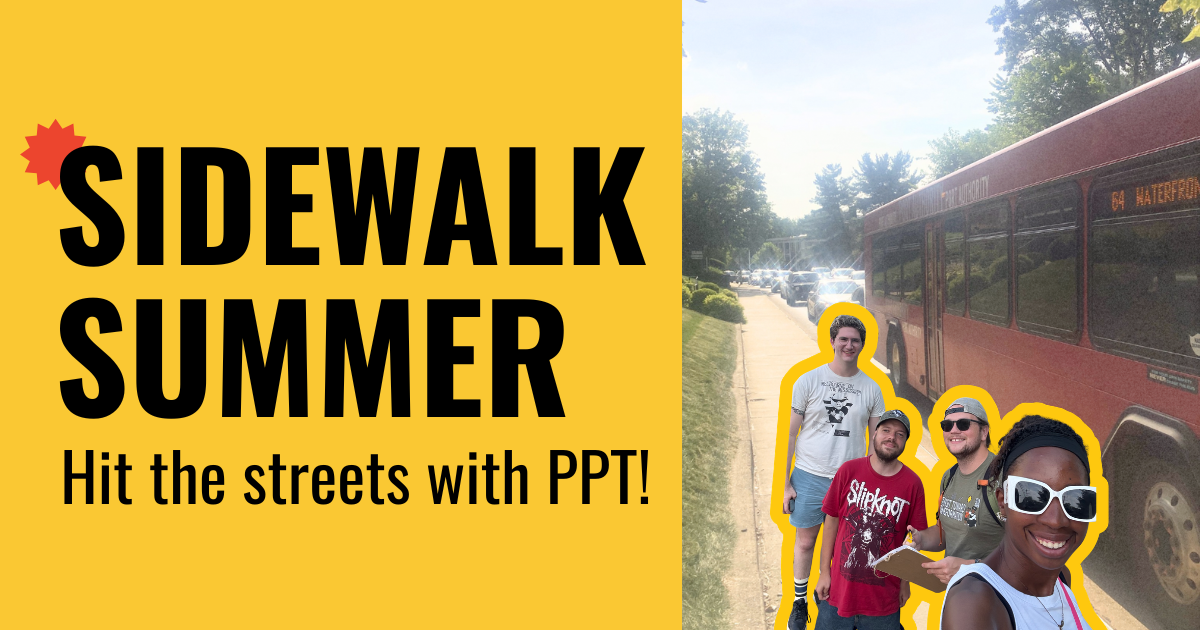
Sidewalk summer is back: hit the streets with PPT for sidewalk audits
Image Description: PPT members highlighted in yellow, on a glowy background of a bus stop on a summer day.
Bust out those cell phones and lace up those sneakers!Transit riders in Pittsburgh want more bus shelters, better bus stop amenities and connected sidewalks that take us to and from where we need to go! Our biggest takeaway from two years of bus shelter audits is that we cannot have bus shelters, benches and other amenities installed at our bus stops if our sidewalks are in poor or nonexistent condition.
Following the lead of our friends Pittsburgh Walks, PPT will host a series of sidewalk audits this spring and summer focusing on neighborhoods with high rider bus stops and busy transit corridors.
We will assess the quality of sidewalks in Pittsburgh and record findings via a mobile survey developed by the City of Pittsburgh. The collected data helps the City identify where sidewalks need to be improved or built, prioritize pedestrian infrastructure projects, and make the case for sidewalk funding.
The goal of these sidewalk audits is for participants to learn how to use this new tool and go on to gather data independently. Ultimately we aim to collect information about sidewalks (or where they’re missing) for every street in the City. This is a group effort and WE NEED YOU!
Audit Dates & Registration:Saturday May 16th 10am – 12pm, Sheraden
Saturday June 27th 10am-12pm, Hazelwood
Saturday August 29th 10am -12pm, Hill District
- Before the event, participants must watch this 15 minute video.
- Have a lesson on what makes sidewalks safe and accessible, how to use the web application.
- Pair up to walk several blocks of neighborhood streets, and record our observations using an online survey on our cell phones.
- Must have charged cell phone that can reach the internet and take photos.
- Must be able to navigate web browsers and privacy settings on cell phone.
- Pittsburgh weather can be unpredictable this time of year! Come dressed for the elements (good walking shoes, winter coats, hats, gloves, etc.). We will be outside for about an hour.
- We cannot guarantee the accessibility or safety of these walks as some of the terrain may have broken to no sidewalks. Some regions may be hilly and harder to walk on.
- Blind and low vision people will not be able to use the mobile survey application, but your input is of great value. You will be paired with a sighted person so that you can access the survey.
- If you have individual accessibility questions, or to request ASL interpretation, please reach out to Nicole@pittsburghforpublictransit.org.
- ASL interpretation must be requested at least 2 weeks in advance.
You can attend on your own, or bring a group of neighbors, friends, family, or coworkers! This is a great way to get your steps in, meet fellow community members, and help make our streets safe, accessible, and enjoyable for everyone!
The post Sidewalk summer is back: hit the streets with PPT for sidewalk audits appeared first on Pittsburghers for Public Transit.
AFSA Newsletter | January – March, 2026
This first quarter 2026 edition of the AFSA Newsletter captures a period of intense reflection, sharpened advocacy, and strategic action across Africa and beyond. From Lilongwe to Dakar, Garuga to Cartagena, AFSA and its members engaged critical questions shaping the future of African food systems, including school meals, land justice, seed sovereignty, public agricultural finance, cross border agroecological trade, territorial markets, and citizen mobilisation. Across these interventions, one message stands out clearly: the struggle for food sovereignty is not only about production, but also about power, policy, markets, culture, and the right of African people to define their own food futures.
In these pages, readers will see how AFSA continued to link grassroots realities with continental and global advocacy. This edition highlights the adoption of the Lilongwe Declaration on agroecology based school and college meals, AFSA’s participation in ICARRD+20 in Colombia, the launch of a major report on the African Development Bank’s role in reshaping African agriculture, renewed calls to centre farmers in regional seed policy processes, and important internal moments of alignment through the AFSA staff retreat, the Citizens Working Group on Agroecology meeting, and the TAFS annual review workshop. It also documents growing momentum in public campaigns and movement spaces, including the #MyFoodMyIdentity online campaign and continued efforts to strengthen agroecological trade, territorial markets, and African food cultures.
What this edition reflects most of all is AFSA’s continued commitment to building a food systems movement rooted in justice, resilience, dignity, and African knowledge. Whether confronting corporate capture, defending land and seed rights, supporting local markets, or reshaping public narratives around food, AFSA’s work remains anchored in the conviction that Africa’s food future must be led by its farmers, communities, women, youth, and social movements. We invite you to read, reflect, and continue walking with us as we strengthen the movement for agroecology and food sovereignty across the continent.
Download the newsletter hereTransit Riders & Workers Skill Up at Organizing Spring Training
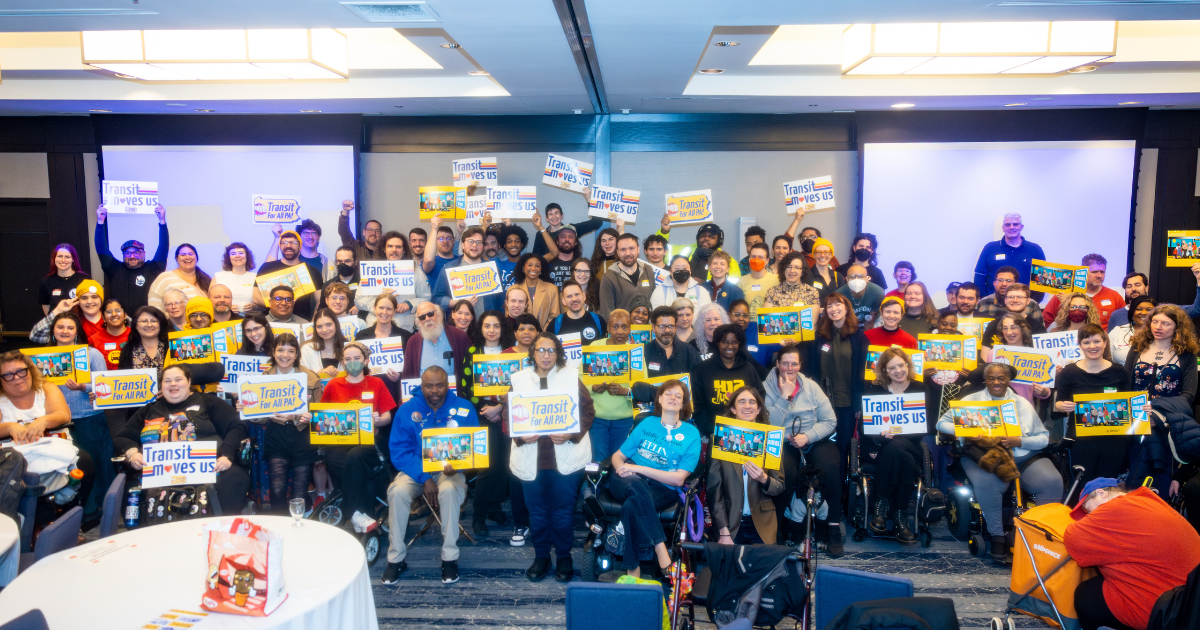
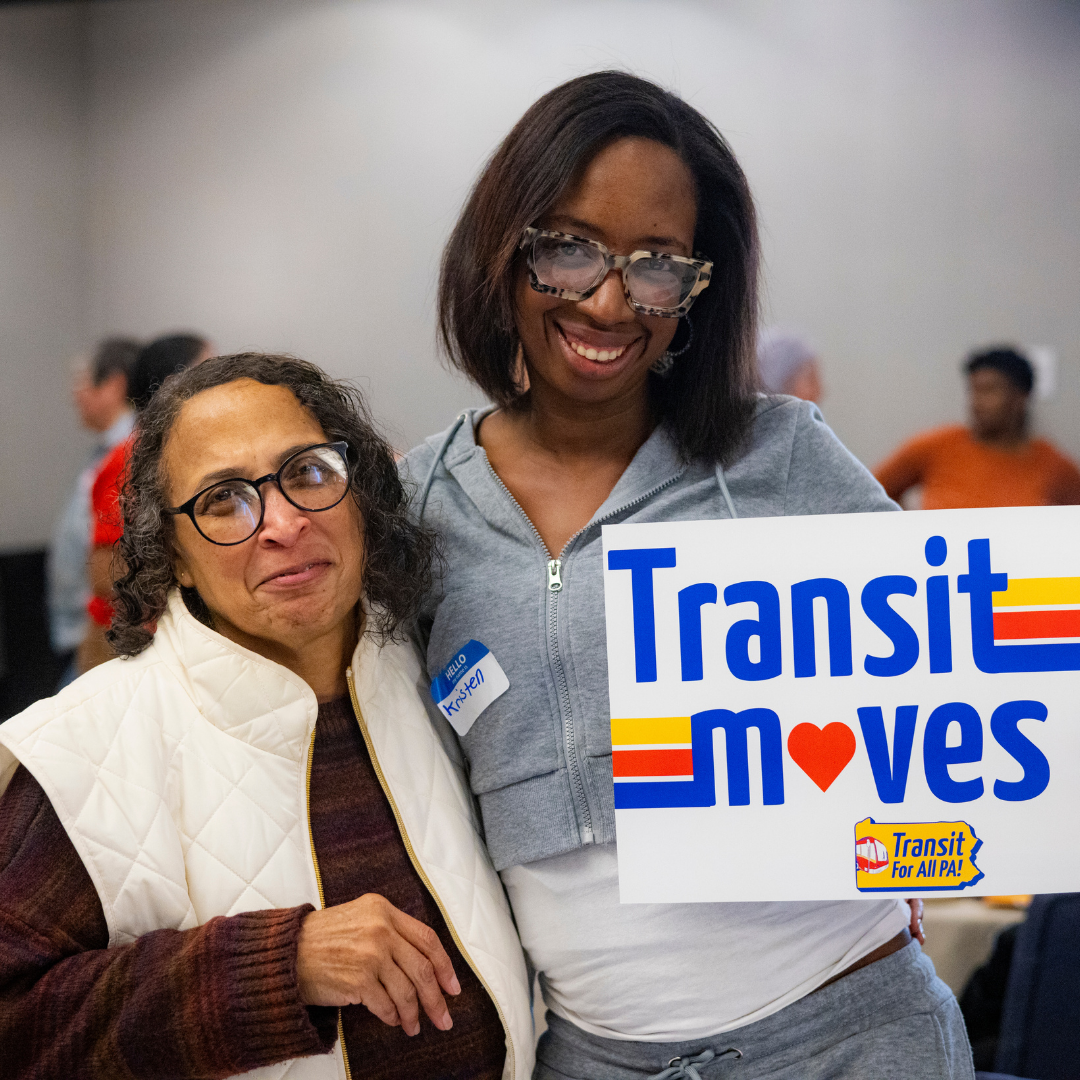
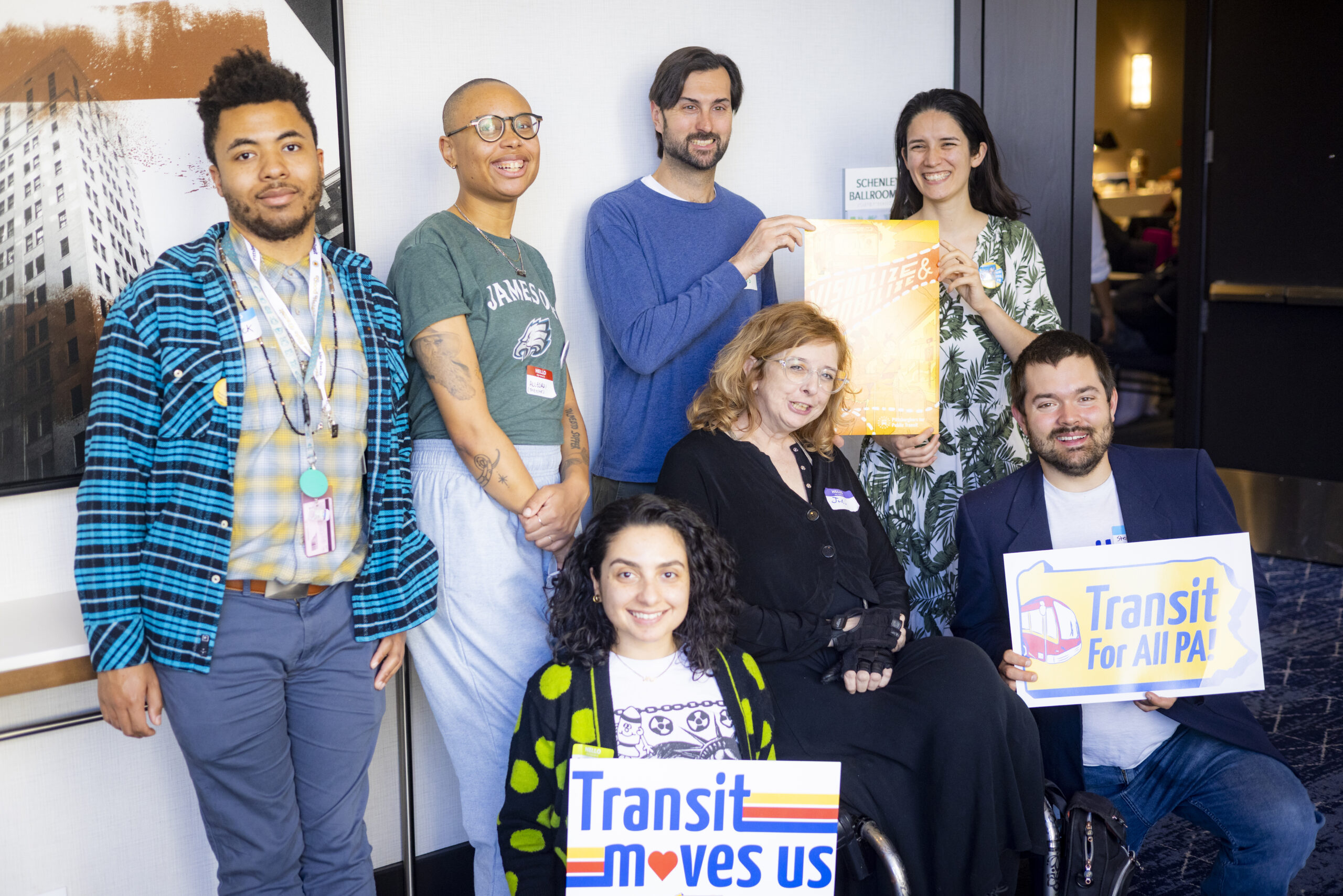
Image Description: Group photo at spring training has 100 people holding up signs and smiling with fists up.
Transit for All means every community – urban and rural, large and small – and thats who the movement is fighting for!
150 transit riders and transit workers from across Pennsylvania and the United States gathered at the end of March to build organizing skill and strengthen community.
The movement keeps on growing! For two days at the end of March, 150 transit riders and transit workers gathered in Pittsburgh for the third-annual Transit for All Organizing Spring Training. Attendees and speakers came from all across PA and the United States. Their purpose was clear: they were there to build organizing skills to strengthen a movement that’s fighting for transit for all – whether in rural communities, small towns or big cities.
The training was organized by Pittsburghers for Public Transit, who leads the Transit for All PA! campaign. The program was jam-packed with opportunities for attendees to learn new skills, learn from victories won in other cities, and meet inspiring new friends from other communities!
Read on for a recap of the two-days or check out photos here!
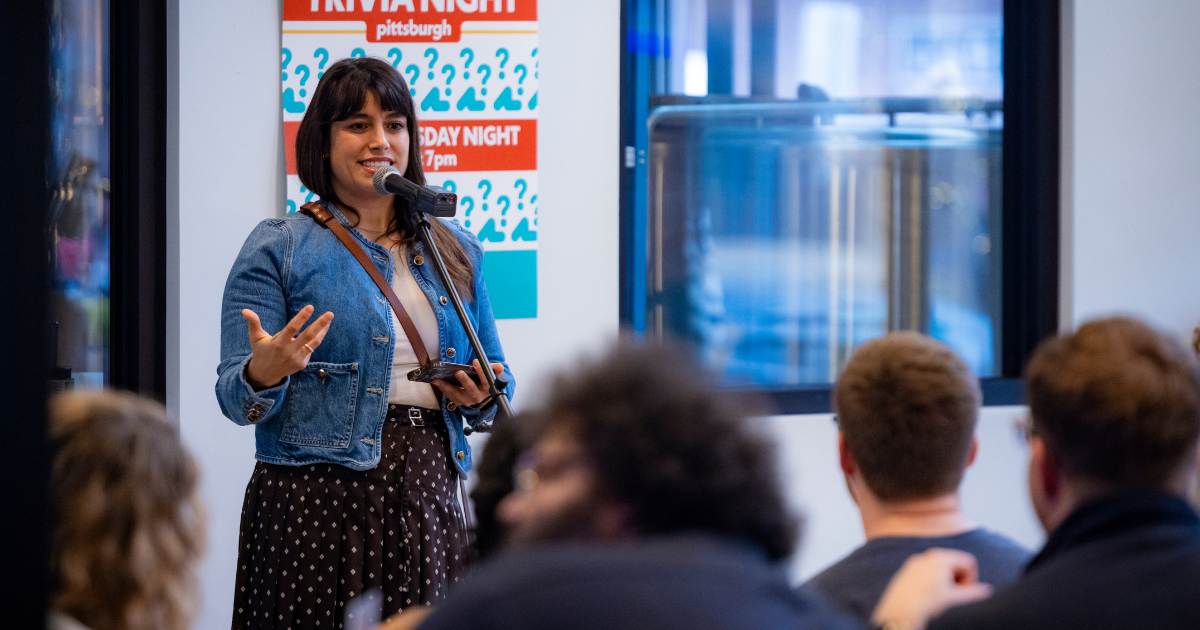
Day 1 Recap: Welcome to Pittsburgh & the Transit Justice Movement image description: County Executive Sara Innamorato addreses transit riders and transit workers at the 2026 Transit for All Organizing Spring Training Welcoming Happy HourOn Friday, attendees from out of town met at the PPT office for a Transit Tour led by PPT Members. The Transit Tour ended at the Welcome Happy Hour hosted at Aslin Brewery in the Strip District.
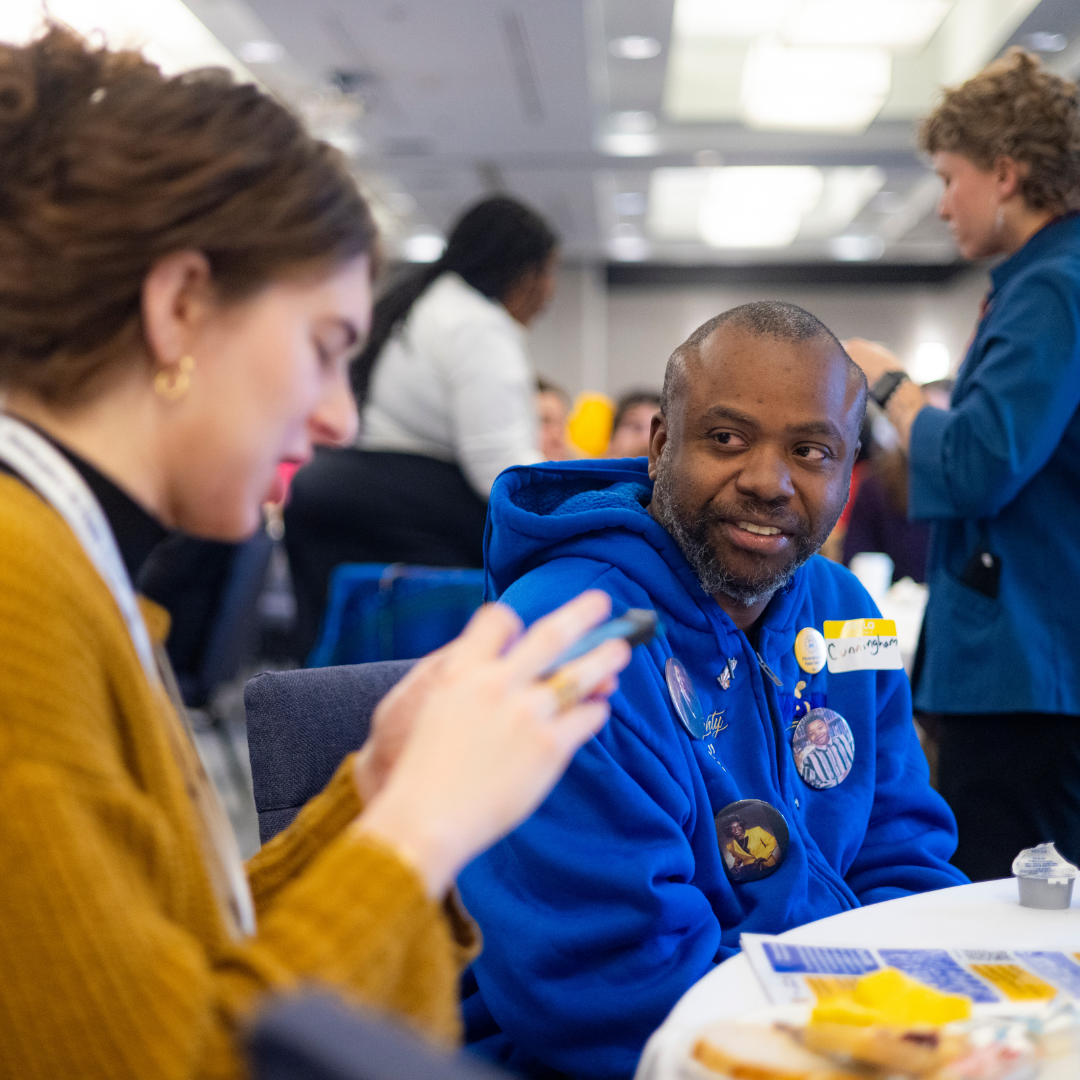
More than 100 people were in attendance for delicious food and drinks. Some people were new to transit organizing but many were veteran organisers for better public transit. Allegheny County Executive Sara Innamorato even stopped by to welcome people to town and encourage advocates to keep organizing for better transit access!
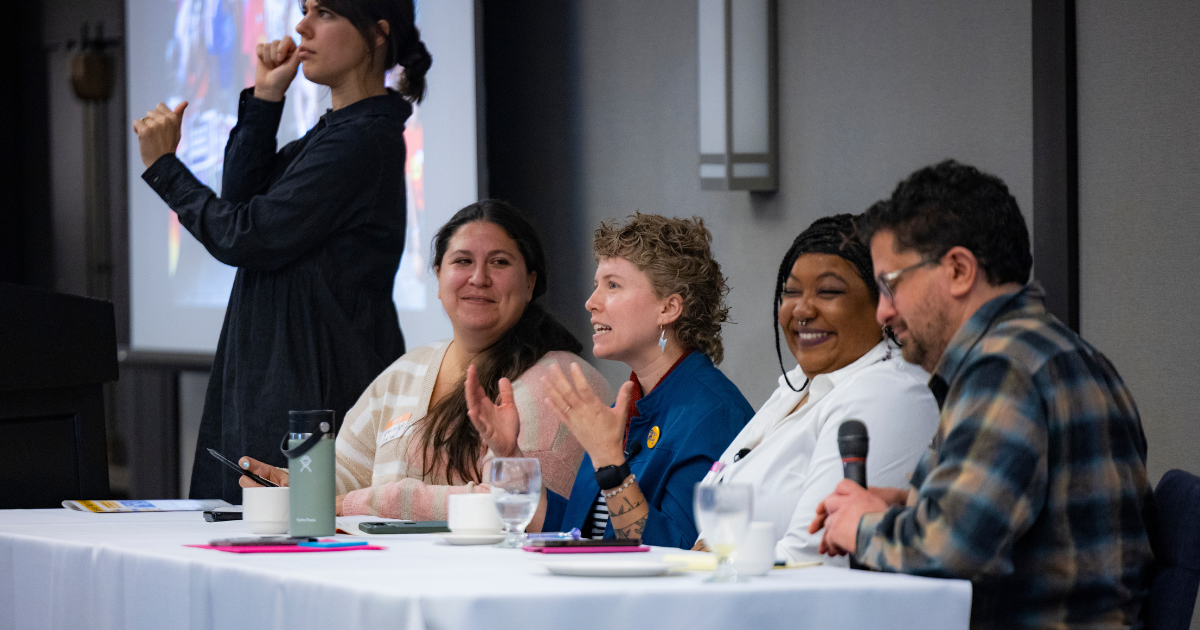
Day 2 Recap: Training Day!Image Description: Four panelists sit behind a table. One is speaking dynamically and moving their hands as the others smile and laugh. A sign language interpreter is translating in the background.
Day 2 was where the magic happened. Folks woke up bright and early to join for an 8am breakfast and some artmaking with Arts Excurions Unlimited, a community arts group from Pittsburgh’s Hazlewood neighborhood.
By 9am the plenary kicked off, led by Veronica Coptis, Senior Advisor, Taproot Earth. She began the day by driving home a theme that would be central to the training: that rural and urban communities must work together to change a system that moves us all. Veronica leads a number of rural organizing projects and shared that regardless of the community she’s working in, transportation is always a top need. Veronica was joined by Andrew Slack, a PA-based facilitator who led a panel discussion with Kearasten Jordan and Laura Pauls-Thomas, both Transit for All PA! Organizing Fellows from Lancaster, about transit needs in PA’s rural communities and small towns.
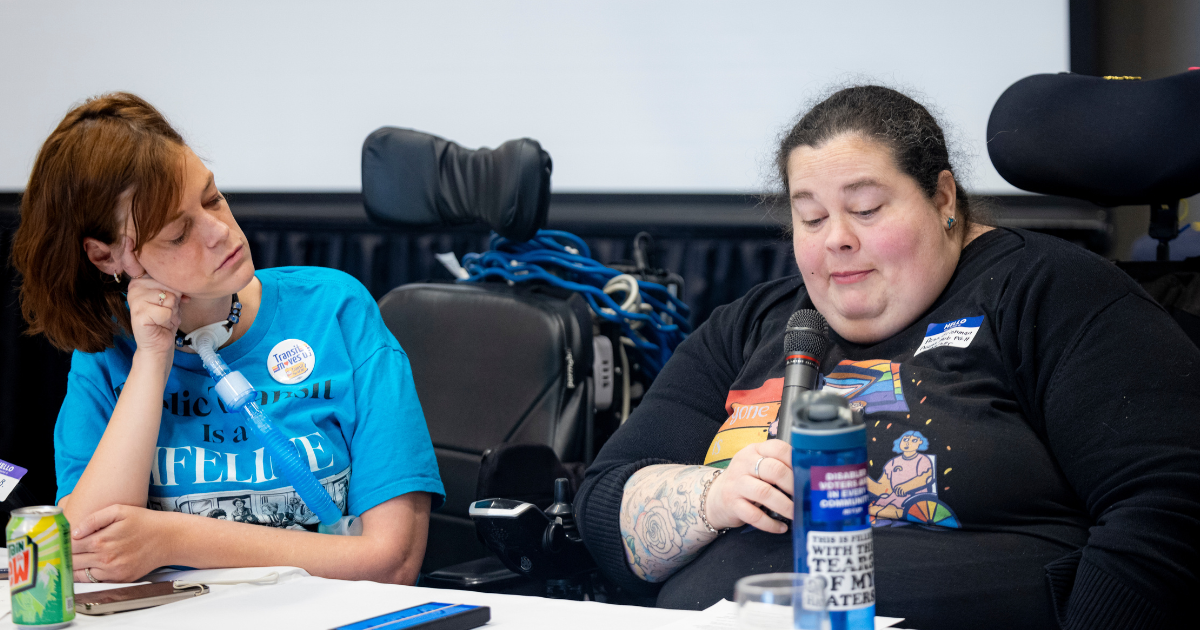
image description: Alisa Grishmand and Dr. Jose Badger present on a Transit for All Organizing Spring Training panelAfter the Plenary discussion, the energy didn’t stop. There were 7 workshops throughout the day, led by PPT Members and transit organizing experts from PA and across the US:
- Narrative Change: Our Stories Build the World We Want, led by Nadia Awad, Content Director, Narrative Initiative, Andrew Slack, PA-based narrative strategist, facilitator, and storyteller, and Clair Hopper, Digital Organizer, Pittsburghers for Public Transit and Transit for All PA!
- VoteTransit: Bus Mayor Elections and Beyond, led by Betsy Plum, Executive Director of Riders Alliance (New York City), Barb Warwick, Pittsburgh City Council member, District 5, and facilitated by Laura Chu Wiens, Executive Director of Pittsburghers for Public Transit/Transit for All PA!
- Mobile Workshop! Field Communications: Storytelling from the Street, led by Joe Conniff, Video Editor, Educator, and Producer, withremote support from Marcelese Cooper, Teaching Assistant Professor in the Film and Media Studies Program at the University of Pittsburgh
- Bargaining for the Common Good: Worker/Community Solidarity, led by Connor Chapman, University of Pittsburgh Graduate Workers Union and Pittsburghers for Public Transit and Ronni Getz, UPMC Magee Women’s Hospital, SEIU Healthcare Pennsylvania
- Organizing with Disability Justice at the Center, led by Anna Zivarts, a leading author, transit rider organizer and founder of the Nondriver Alliance out of Washington state, and Dr. Josie Badger, director of the national RSA-Parent Training, Information, technical assistance center (RAISE), and founder of several orgs including the Pennsylvania Youth Leadership Network (PYLN), the Children’s Hospital Advocacy Network for Guidance and Empowerment (CHANGE), and J.Badger Consulting, moderated by Alisa Grishman, founder of Access Mob Pittsburgh and PPT Board member
- Big Tech in Transit: Automation, Microtransit, Surveillance, and Data, led Dr. Sarah Fox, Assistant Professor in the Human-Computer Interaction Institute at Carnegie Mellon University; Director, Tech Solidarity Lab, Sue Scanlon, Transit Operator, Pittsburgh Regional Transit; Pittsburghers for Public Transit board member, and Ziggy Edwards, Leader, Mon-Oakland Connector Campaign
- Transit Isn’t Just Urban: Organizing in Small Systems & Everywhere, led by Connor Descheemaker (they/them), Statewide Campaign Manager, Transit for All PA!/Pittsburghers for Public Transit, andT4APA! Organizing Fellows Angela Adler and Laura Pauls-Thomas (Lancaster), Benjamin Felker-Quinn and Andria Ahrens (Lehigh Valley)
You can learn more about all of these great workshops and speakers on the 2026 Transit for All Organizing Spring Training homepage! And you can access the slides from each of these presentations at this Google Folder – feel free to share them, just please credit the presenters on each panel.
Attendees took a break from that great lineup and enjoyed some delicious lunch, snacks, and event took time out for a Movement Moment: Grounding, Accessible Yoga Practice led by PPT Member Mona Meszar, who is a yoga instructor, massage therapist, and community activist!
Spring Training was a blast! And now with these new skills and connections, transit riders and workers are ready to grow this movement.
Missed the training or want to get involved? Join us at the next transit organizing meeting to join the community! Join the next meeting here! image description: 7 organizers from Philadelphia pose with signs at the 2026 Transit for All Organizing Spring TrainingThe post Transit Riders & Workers Skill Up at Organizing Spring Training appeared first on Pittsburghers for Public Transit.
Explore How the Bus Line Refresh Could Affect Your Commute
The Bus Line Refresh could be the biggest service change in a generation. Your chance to make it better is right now! Learn how the proposals could impact you—and tell PRT how you feel about it.
Explore the service changes that affect youThere are many ways to explore the changes PRT is proposing under the Bus Line Refresh. You can:
- Review an interactive map of the proposed system changes (works best on a computer or tablet)
- Find your frequented routes from a list of affected routes, then click on their new names to learn about how they might change
- Model your frequent journeys on the Transit App on your mobile device (check out our tutorial below)
- Attend a public meeting with PRT (we’re hosting one on April 8th!)
After you do any of these options, it’s critical that you submit a public comment telling PRT how these changes would affect you. They need to know your thoughts in order to incorporate them into the proposal!
Join the April 8th meeting to learn more about transit changes How to model your journeys on the Transit AppNote that this method requires access to a mobile device, like a smartphone. If you don’t have access to one, we recommend using the other tools listed above to explore the proposed Bus Line Refresh.
- Download the Transit App to your mobile device. The app is available on both iPhone and Android. (Bonus: the app can be used to plan your future transit trips, and can even give you notifications when service changes or advocacy opportunities are available!)
- You may need to make an account to use the app.
- In the app’s main screen, type a destination in the “Where to?” bar. Select it from the list of results when it appears.
- Once you’ve selected your destination, you can also edit your starting location—for example, you might want to understand how your commute from your workplace to your doctor’s office might change.
- In the white portion of the screen, you’ll see a selection of potential routes you could take to reach your destination.
The trips at the top are those you could take under the current PRT system.
If you scroll down below these, you’ll see a section titled “PRT Preview Mode”, with potential future routes listed. - Click on a future route you’d like to explore. The app will then show you a map of the route, with details on how long the trip would take you, as well as scheduled frequencies and stops.
- At the bottom of this window, there is a banner with a button titled “Give feedback”. This will take you to PRT’s feedback page for the entire Bus Line Refresh project.
- When you’re done exploring this route, be sure to press the red “X” button at the top right of the screen to exit preview mode.
A post shared by Pittsburghers 4 Public Transit (@pgh4publictransit)
Don’t miss your chance to shape the bus networkIf you or someone you know takes transit frequently, PRT needs to know your thoughts. There are a lot of ways to give feedback on the proposed Bus Line Refresh:
- Find your routes from an online list, click their new names, and leave route-specific feedback
- Send an email to PRT with your comments
- Call PRT at 412-442-2000
- Fill out a paper survey at home or at your nearest Carnegie Library location
- También puedes descargar una encuesta en papel en español!
- Attend a public meeting with PRT
And of course, the best way (because it comes with community):
- Join our next monthly meeting on April 8th to hear PRT present, and give them your feedback in person
The post Explore How the Bus Line Refresh Could Affect Your Commute appeared first on Pittsburghers for Public Transit.
7 times ordinary people changed the world
Your salary doesn’t stretch like it used to. The air in your city is getting worse. Politicians promise change, and then nothing changes. At some point, most of us have the same thought: what’s the point? The status quo will never change because the forces behind it are too entrenched, too powerful, too far gone.
But history tells a different story. Every unjust system has looked permanent and untouchable until ordinary people challenged it. All major shifts in society start the same way: someone refuses to accept things as they are. They organize. Others join them. And they don’t stop.
Again and again, local citizens have come together through peaceful, nonviolent organizing — strikes, marches, sit-ins, boycotts, blockades — and changed the course of history. Here are seven moments that show that people power can change the rules:
1. The US civil rights movement dismantled legal segregationIn 1950s America, segregation was the social custom and the law. Black Americans were barred from attending the same schools, eating in the same restaurants, or even using the same restrooms as white Americans. Simple acts like even sitting in the “wrong” bus seat, could lead to arrest, violence, or worse.
American civil rights activist Rosa Parks on a bus in Montgomery, Alabama. © Bettmann Archive / Getty Images
On 1 December 1955, Rosa Parks, a seamstress and activist, refused to give up her bus seat to a white person in Montgomery, Alabama. She was arrested. Within days, 42,000 Black residents boycotted the city’s buses for 381 days. They walked miles to work. Racial segregation on public transportation was abolished soon after, in 1956. The Civil Rights Act followed in 1964 making discrimination illegal once and for all.
2. The women’s global liberation movement rewrote the rulesUntil 1974, women in the US couldn’t get a credit card in their own name. In the UK, a married woman needed her husband’s signature for a bank loan until 1975. In France, women couldn’t open a bank account or get a passport without their husband’s permission until 1965. These weren’t just “rules”, they controlled women’s everyday lives, locking millions out of economic independence, healthcare, and political power.
Women’s Strike for Peace-And Equality, Women’s Strike for Equality, Fifth Avenue, New York, New York, August 26, 1970. Photo: Eugene Gordon/The New York Historical Society/Getty Images
Until women themselves organized for change. In 1968, women machinists at Ford walked out over unequal pay, halting car production across the UK and forcing the government to pass the Equal Pay Act two years later. In 1970, tens of thousands of women marched in New York for the Women’s Strike for Equality demanding equal pay, free childcare, and abortion rights. And in 1971, Swiss women won the right to vote after decades of campaigning, one of the last countries in Europe to grant it. In 1975, 90% of Icelandic women refused to work, in offices, at home, everywhere, for a single day. The country stopped working. In 1979, the UN adopted CEDAW — the first international treaty to define discrimination against women and oblige governments to end it, now ratified by 187 countries. Women demanded these rights loudly, collectively, and across generations.
3. The anti-apartheid movement brought down a regime in South AfricaApartheid was one of the most brutal systems of racial control ever built. Introduced in 1948, it dictated where Black South Africans could live, work, travel, and whom they could marry. The government enforced it with arrests, bans, torture, and killings.
Fed up with the system, ordinary workers went on strike. Then, in 1976, Soweto’s students marched against being forced to learn in Afrikaans and were met with live ammunition. Nelson Mandela, the leader of the African National Congress, the liberation movement that had been fighting apartheid since 1912, was locked away for 27 years to silence the movement. But it didn’t work. In 1994, after years of internal resistance, international pressure, and hard-won negotiations, South Africa held its first democratic elections with Mandela becoming president. For the first time in decades, Black South Africans could vote, run for office, and access public services without restrictions. Segregation laws were dismantled, neighborhoods and schools were legally integrated, and the country began rebuilding a more equitable society.
Young men protest in front of police photographers in Soweto in June 1976. Photo: Doing Violence to Memory: The Soweto Uprising
4. Standing Rock said no to a destructive pipeline in the USThe Dakota Access Pipeline was first planned to cross near Bismarck, North Dakota — a predominantly white city. Residents raised environmental concerns, and the route moved. This time, that meant crossing half a mile upstream from the Standing Rock Sioux Reservation’s only water supply, meaning any leak or rupture would contaminate the drinking water of thousands of people with oil, with no alternative source to fall back on. The Standing Rock Sioux tribe set up camp and refused to move. The protests became the largest gathering of Indigenous nations in over 150 years, with 300+ tribal nations standing together leading to the Obama administration halted construction in December 2016. The pipeline ultimately went ahead under Trump but Standing Rock changed what the world understands about whose land and water fossil fuels actually cost. The legal fight continues.
Women and children plant willow trees and corn along the pipeline route. Photo: Indigenous Environmental Network
5. Millions took to the streets to defend democratic freedoms in Hong KongWhen Britain handed Hong Kong back to China in 1997 after 156 years of colonial rule, the deal came with a promise: the city would keep its own laws, courts, and civil liberties for 50 years under the principle of “one country, two systems.”
By 2019, many people in Hong Kong felt that promise slipping away. A proposed extradition law would allow residents to be sent to mainland China to face trial in a legal system with no independent judiciary and conviction rates close to 100%. For many, it felt like the beginning of the end for the city’s freedoms.
In June 2019, over two million people took to the streets, in a city of just 7.5 million. They kept marching for months, despite arrests, tear gas, and escalating repression. Beijing eventually imposed sweeping national security laws. While the movement didn’t win all its demands, it galvanized a generation, forced international attention on Hong Kong’s freedoms, and inspired ongoing efforts to protect civil liberties.
Millions gather on the streets of Hong Kong. Photo: By Studio Incendo – Hong Kong anti-extradition bill protest, CC BY 2.0
6. Indian farmers defeated three unjust laws by a government that wouldn’t budgeNearly 60% of India’s population depends on agriculture. The government’s 2020 farm laws, framed as market liberalisation, proposed to dismantle a guaranteed minimum price system protecting small farmers from destitution. In a country where farmer suicides are already a public health crisis, the stakes were existential. Farmers responded with one of the largest protests in modern history. They set up camps outside Delhi and blocked highways for more than a year, in the cold, the heat, the rain and through COVID. Women were on the frontlines and around 700 farmers died during the protest. In November 2021, the government repealed all three proposed laws. Organised, patient, collective power worked against a government that looked immovable.
Indian farmers protesting in the national capital. Photo: Randeep Maddoke
7. A global movement put the climate crisis on the agenda, and kept it thereScientists had been warning about climate change since the 1980s. By the 2000s, the evidence was overwhelming: burning coal, oil, and gas was heating the planet and pushing ecosystems toward collapse. But governments were still stalling, and fossil fuel companies were still expanding. So ordinary people organized. In 2009, ahead of the UN climate summit in Copenhagen, people in 181 countries took to the streets. In 2014, 400,000 people marched in New York — the largest climate march in history at the time. The following year, that pressure helped deliver the Paris Agreement, the first deal to unite nearly every country on earth around a shared commitment to limit warming to 1.5°C, the threshold beyond which climate scientists warn the consequences will become catastrophic and irreversible. Addressing the climate crisis and switching to renewable energy is now a priority on the global political agenda, because millions of people refused to stay silent.
But the fight is far from over. Today, climate disasters might still feel distant. Something happening somewhere else. But they’re getting closer. To our cities. Our homes. Our lives. And just like every movement before us, we have a choice: Watch them happen or change what happens next. See what we can do:
The post 7 times ordinary people changed the world appeared first on 350.
New Report: Who Is Financing the Future of African Agriculture?
The Alliance for Food Sovereignty in Africa (AFSA) launches a new report asking a critical question: Is the African Development Bank (AfDB) financing food systems that truly serve Africa’s people?
Based on an analysis of 20 AfDB-supported agricultural projects, this study, researched by Dr Keiron Audain for AFSA, reveals a troubling pattern. Despite strong rhetoric around food security and climate resilience, a significant share of AfDB financing continues to reinforce agro-industrial models built on monocultures, synthetic inputs, and corporate value chains. Meanwhile, farmer-managed seed systems, agroecological practices, territorial markets, and Indigenous knowledge remain underfunded and marginalised.
The report exposes persistent gaps in transparency and participation. Communities are frequently consulted but rarely empowered to shape decisions. Investments that affect land, livelihoods, and diets are too often designed without meaningful co-creation with the smallholder farmers who feed the continent.
At a time when Africa faces escalating climate shocks, biodiversity loss, and food insecurity, public finance cannot continue to support systems that deepen dependency, degrade soils, and concentrate power in corporate hands. Africa does not need a blind expansion of industrial agriculture. It needs investment in agroecology, crop diversity, resilient seed systems, and local food economies that strengthen sovereignty and community control.
This report is not just an analysis. It is a call to redirect agricultural finance toward justice, ecological integrity, and food sovereignty. AfDB and African governments must ensure that public resources build resilient, community-rooted food systems rather than entrenching models that undermine them.
Download the full report here.ICARRD+20: Joint Civil Society Statement
Protect Our Land, Restore Our Soil: Collective Territorialities for Land Justice, Pastoralist Futures, and Ecological Restoration
As civil society organisations, social movements, faith-based actors, Indigenous Peoples, pastoralist and peasant organisations from Africa and across the Global South, we come to ICARRD+20 at a moment of deep crisis and urgent possibility.
Twenty years after the first International Conference on Agrarian Reform and Rural Development, rural communities across the world continue to face dispossession, land concentration and ecological destruction. Despite global commitments to end hunger and poverty, land and food systems are increasingly controlled by corporate and financial interests, while communities that produce food remain marginalised and insecure.
Across Africa and other regions, customary and collective land systems are being undermined in the name of development, conservation, climate mitigation and large-scale investment. Carbon offset projects, extractive industries, agribusiness expansion and speculative land markets are accelerating dispossession, soil degradation and social inequality, often excluding communities from territories they have governed collectively for generations. At the same time, agribusiness corporations and financial investors are driving the rapid expansion of factory farming and industrial livestock production across Africa, concentrating land and resources, degrading ecosystems, and undermining pastoralist and small-scale livestock systems essential to food sovereignty.
Pastoralist communities are among those most severely affected. As 2026 is the International Year of Rangelands and Pastoralists, this conference must recognise pastoralists as central to sustainable food systems and ecological resilience. Policies that restrict livestock mobility, privatise communal rangelands or convert grazing lands to agribusiness, conservation or carbon-offset projects undermine pastoralist livelihoods while intensifying conflict, poverty and environmental degradation. Yet pastoralism remains one of the most climate-resilient land-use systems in drylands. Through mobility and communal rangeland management, pastoralists sustain livelihoods, supply vital meat and milk production, and maintain ecological balance in areas where crop farming is often unsustainable.
Meanwhile, communities defending their territories face criminalisation and violence. Women pastoralists and small-scale producers, youth, and Indigenous Peoples remain excluded from decision-making processes, despite being central to food production and environmental stewardship.
ICARRD+20 must therefore not be a commemorative event. It must become a turning point.
Our Calls to Governments and International Institutions
Ahead of ICARRD+20, we call on governments, international institutions, and development partners to commit to the following:
- Recognise and protect collective and customary land tenure systems, including individual and collective land rights as affirmed in CESCR, UNDRIP and UNDROP.
- Protect pastoralist rangelands and livestock mobility, including cross-border corridors essential for climate adaptation and peace, and prevent conversion of rangelands to inappropriate uses such as monoculture tree plantations.
- Implement genuine agrarian reform and equitable land redistribution, prioritising landless farmers, women, youth, pastoralists and Indigenous communities, while addressing the historical and political drivers of land degradation and induced land scarcity.
- End land speculation and financialisation, including large-scale land acquisitions and carbon or biodiversity credit schemes that dispossess communities.
- Redirect agricultural and climate finance toward agroecology, rangeland restoration and community-led food systems, and integrate pro-pastoralist strategies into National Biodiversity Strategies and Action Plans (NBSAPs) and Nationally Determined Contributions (NDCs). Promote conservation models that uphold pastoralists’ rights and ensure restoration strengthens pastoralist livelihoods as part of a just green transition.
- Invest in decentralised infrastructure and services compatible with mobile pastoralist systems, including water, veterinary care, markets, education and health.
- Guarantee meaningful participation of affected communities, and free prior and informed consent of Indigenous Peoples, in land, agriculture and climate decision-making.
- Protect land and environmental defenders, and end violence, criminalisation and forced displacement.
- Establish binding corporate accountability mechanisms for human rights violations and ecological harm across global value chains.
Toward Land Justice, Pastoralist Futures and Ecological Restoration
The future lies not in further commodifying land and food systems, but in restoring community control over territories, securing pastoralist mobility and commons, and supporting agroecological transitions rooted in justice and ecological integrity.
ICARRD+20 must renew global commitments to agrarian reform, land justice, and food sovereignty, led by communities that sustain the world’s food systems and ecosystems.
Land justice is climate justice. Pastoralist mobility is ecological resilience.
Pages
The Fine Print I:
Disclaimer: The views expressed on this site are not the official position of the IWW (or even the IWW’s EUC) unless otherwise indicated and do not necessarily represent the views of anyone but the author’s, nor should it be assumed that any of these authors automatically support the IWW or endorse any of its positions.
Further: the inclusion of a link on our site (other than the link to the main IWW site) does not imply endorsement by or an alliance with the IWW. These sites have been chosen by our members due to their perceived relevance to the IWW EUC and are included here for informational purposes only. If you have any suggestions or comments on any of the links included (or not included) above, please contact us.
The Fine Print II:
Fair Use Notice: The material on this site is provided for educational and informational purposes. It may contain copyrighted material the use of which has not always been specifically authorized by the copyright owner. It is being made available in an effort to advance the understanding of scientific, environmental, economic, social justice and human rights issues etc.
It is believed that this constitutes a 'fair use' of any such copyrighted material as provided for in section 107 of the US Copyright Law. In accordance with Title 17 U.S.C. Section 107, the material on this site is distributed without profit to those who have an interest in using the included information for research and educational purposes. If you wish to use copyrighted material from this site for purposes of your own that go beyond 'fair use', you must obtain permission from the copyright owner. The information on this site does not constitute legal or technical advice.
 This site is not the official webpage of the Industrial Workers of the World.