You are here
News Feeds
Europe Saw Deaths Spike During Brutal June Heat Wave
Western Europe recorded more than 10,000 excess deaths during an unprecedented June heat wave, an analysis finds.
Radical Democracy: recovering the roots of self-governance & autonomy
Op-Ed | How Soil Health Is Promoted Through Traditional Knowledge and Modern Science
Let’s be ecologically and historically honest with ourselves. It’s not a fertilizer crisis we’re facing. It’s a soil health trainwreck brought on by the agricultural inputs industry itself.
In the global debate around food security, climate change, and sustainable agriculture, soil is finally receiving the attention it deserves. For decades, mainstream agriculture and policies around agriculture treated soil as an inert medium, ignoring soil biodiversity, both above and below ground. Understanding of fertility has been exceptionally narrow, with recommendations limited to a small number of nutrients supplied by synthetic fertilizers.
But this model is now showing strain. Across continents, soil has become increasingly degraded by global supply chains that favor monocultures and chemical inputs, perverse public subsidies, and self-serving narratives and advertisements that claim that industrial agriculture feeds the world (even as it ruins our soil). According to the World Atlas of Desertification, 75 percent of the land globally is degraded, with UNESCO warning that 90 percent of the land surface will be degraded by 2050.
Over thousands of years, long before the advent of industrial agriculture, farmers have sought to improve soil to grow nutritious and abundant food. During two days in May 2026, collaborative initiatives from India, Brazil, and Kenya, supported by the Agroecology Fund, shared insights in a conversation circle on soil health management as a climate resilience and food security strategy.
From India, organizations described how farmers they worked with faced soils left sterile by years of heavy chemical input use. Brazil’s Cerrado region, a vast, biodiverse tropical savanna, has been degraded by deforestation and monocultures dependent on the extensive use of synthetic fertilizers and pesticides. In Kenya, organizations highlighted declining soil fertility and the loss of beneficial organisms caused by hazardous agrochemicals.
These initiatives shared techniques to detect and improve soil biodiversity, including by applying participatory methodologies that value local knowledge. From India to Kenya to Brazil, successful soil restoration is emerging from collaboration between farmers, indigenous practitioners, and researchers.
Steve Vanek, a researcher in soil science at Colorado State University, and partner of the Manor House Agricultural Centre in Kenya, said that when farmer groups discuss the difference between good and poor soils, they often identify characteristics that align closely with scientific indicators. Farmers mention soils that are “easy to plough,” not crusty, rich in earthworms, and darker in color—observations linked to aggregation and organic matter.
In 2022, the Agroecology Fund joined a donor field visit to a diversified coffee farm on the slopes of Mt. Kilimanjaro in Tanzania. A foundation’s technical staff inquired about the technologies the farmer applied to measure carbon sequestration. The farmer crouched, scraped soil together with his fingertips, balled it in his palm and said, “this is how we know.”
Scientific research becomes powerful when it helps explain and strengthen farmers’ observations. It becomes more inclusive and accessible when it doesn’t rely on simplistic or reductionist metrics that may be misleading or onerous for farmers to measure.
In Kerala’s Wayanad district, a climate-vulnerable hilly region in southern India, farmers had long grappled with soil erosion, acidity, declining productivity, and the overuse of chemical fertilizers.
In response to this, Thanal Trust, an NGO based in the region and part of the conversation circle, established a local soil testing laboratory, generating soil health cards for farmers, and combining findings with field-level training rooted in agroecological practice. Farmers learned about structure, texture, microbial life, mulching, trap crops, green manures, and intercropping. Thanal invested in the farmer-to-farmer approach, working with a group of farmers—men and women—who became soil management experts, testing and validating the practices, and disseminating them within their communities.
As farmers observed improvements in their soil, they also scaled up traditional engineering practices on their farms, like mud pot irrigation—a traditional practice where water drips through micro-pores of clay pots to maintain moisture exactly where it is needed. Similarly, the practice of husk burial, where coconut husks are buried in trenches, serves to retain moisture and also provide potassium.
Sreelekshmi KJ from Thanal said, “The results were visible not only in yields but also in the soil itself. Organisms such as earthworms reappeared, soil microbes returned, and biodiversity thrived. Fields once described as sterile, lifeless mediums became living laboratories.”
In Kenya, the Manor House Agriculture Centre (MHAC) developed accessible soil health tools that allow farmers to test infiltration, organic matter, and biological activity using low-cost materials.
Vanek, who is a researcher in soil science at Colorado State University, USA, said their work focuses on “the biological and physical aspects as well as some of the major chemical limitations” in smallholder systems while “building based on local knowledge.”
Instead of expensive labs disconnected from communities, MHAC came up with soil health assessment kits for smallholder farmers. These provide simplified methods to test soil health for smallholder farmers, research for development, and citizen science.
The laboratory uses 3D-printed troughs, or even simple sieves made from cardboard and old stockings. With these low-cost methods to measure particulate organic matter, farmers are quantifying the food available for the soil-food web.
These learnings are enhanced through a Farmer Research Network (FRN) supported by the McKnight Foundation, which brings farmers together to diagnose problems, test practices, compare results, and co-produce knowledge. Farmers rank their own soils, identify constraints, and learn simple methods to assess organic matter, infiltration, pH, and biodiversity.
The relationship between scientific research and farming communities is changing in both directions. Farmers are learning from researchers—just as researchers are also learning from farmers.
In Brazil, the Centro Ecologico described partnerships with academics from federal institutes to study soils biologically rather than only chemically.
Joaquim Martins, a family farmer, noted how their approach seeks to understand the vision and perspectives of farming families on soil health while helping strengthen their management practices.
“We conducted a series of interviews with farmers to analyze soils through the lens of their lived experiences, priorities, and local knowledge. The aim was to translate scientific data into the everyday realities of farmers’ lives. It also raises an important question: How can scientific research engage in meaningful dialogue with people’s knowledge systems, and how can we, as scientists, remain self-critical in that process?” he said.
The program has engaged 200 farming families on the northern coast of Rio Grande do Sul, Southern Brazil. It has also involved Indigenous communities, who bring their own traditions of soil care and green manure practices, as well as women farmers who are helping share and strengthen local knowledge across the region.
Researchers applied the BioAS method promoted by the public Brazilian Agricultural Research Corporation (EMBRAPA) to examine respiration, carbon dynamics, and enzyme activity to compare conventional and agroecological systems. But just as importantly, they conducted participatory interviews to understand how families themselves define soil health: porous soils, moisture, insects, worms, easier rooting, and fewer hard crusts.
In other words, scientific research is beginning to respond to farmers’ diverse questions. Some traditional practices long treated as informal are now gaining recognition for their rigor.
Alessandra Karla da Silva from CEDAC, in Brazil, described work on “green nitrogen” produced from Gliricidia sepium biomass, a tree legume capable of fixing atmospheric nitrogen and cycling nutrients through biomass. Researchers from EMBRAPA and farmers supported by CEDAC agroecological center, in a co-creation model, are exploring how it can reduce dependence on synthetic nitrogen fertilizers while maintaining productivity.
These approaches exemplify that the idea is no longer to choose between modern science and traditional wisdom, but rather how to combine them inclusively, intelligently, and effectively.
Simply put, the global soil crisis will not be solved by chemistry and simplistic metrics alone. It requires memory, biodiversity, experimentation, and a trusting collaboration with farmers who know their soils.
Articles like the one you just read are made possible through the generosity of Food Tank members. Can we please count on you to be part of our growing movement? Become a member today by clicking here.
Photo courtesy of Thanal Trust
The post Op-Ed | How Soil Health Is Promoted Through Traditional Knowledge and Modern Science appeared first on Food Tank.
Centring equity in the fight for socialism: A hard lesson from the Human Rights Commission
As recently as 2025, human rights advocate and President of Black Class Action Secretariat (BCAS) Nicholas Marcus Thompson (pictured above, centre) has been publicly discussing...
The post Centring equity in the fight for socialism: A hard lesson from the Human Rights Commission first appeared on Spring.
For 41 years in a row, USDA sent taxpayer-funded payouts to roughly 9,000 farmers, totaling $10.6B
For more than four decades, almost 9,000 farmers have received taxpayer money every year through Agriculture Department payments totaling about $10.6 billion, a new EWG analysis finds.
These massive payouts – farm subsidies and disaster relief between 1985 to 2025 – went in many cases to large and successful farm operations. At the same time, a sizable number of small and specialty crop farms continue to struggle with increasing costs, industry consolidation pressures and soaring bankruptcies.
Farmers can keep getting farm subsidies or disaster payments, even if they have collected a payment for each of the 41 years that EWG reviewed – with some receiving millions of dollars annually.
President Donald Trump’s One Big Beautiful Bill Act, or OBBBA, pushed through last year by Republicans in Congress, changed policy to increase these payouts for a select few farmers.
The law also capped assistance for those who most need it, such as recipients of Supplemental Nutrition Assistance Program food benefits, also known as SNAP. More than half of all SNAP participants leave the program after just a single year of assistance.
USDA data show a total of 8,839 recipients collected farm subsidy payments every year between 1985 and 2025, EWG found. The average amount collected annually, $29,000 per year over the 41-year period.
The top 10 repeat farm subsidy recipients collected between $9 million and $22 million each during this period (see Table 1).
Table 1. The 10 largest recipients of consecutive federal farm payments annually between 1985 to 2025
Recipient
Location
Subsidy total from 1985 to 2025
Frische Brothers
Dumas, Texas
$22,364,716
Molitor Brothers
Cannon Falls, Minn.
$21,919,684
D.L. Robey Farms
Adairville, Ky.
$20,067,473
Fann Farms
Salemburg, N.C.
$14,429,630
Four Oaks Farms
Morganza, La.
$13,588,489
VIP Farms
Thatcher, Ariz.
$11,751,820
Wiggins Farm
Andalusia, Ala.
$10,466,936
Kohler Farms Partnership
Valley City, N.D.
$10,319,263
Adams Farms
Combes, Texas
$10,300,846
Cole Farms & Ranch
Natalia, Texas
$9,699,479
Source: EWG, from USDA data
Some subsidy recipients who received payments for 41 consecutive years neither work nor live on a farm, EWG also found. In fact, 38 of the 8,839 repeat payment recipients live in some of the nation’s largest cities, despite the USDA requirement that farm subsidy recipients be “actively engaged in farming.”
Between 1985 and 2025, farm subsidy programs paid farmers when crop prices fell below price guarantees set in the farm bill or when crop revenues fell below averages. Between 1996 and 2014, farmers also received “direct” subsidy payments linked to historic crop production.
Disaster relief has been paid through annual spending bills and both temporary and permanent disaster programs.
A recent report from the Government Accountability Office examined improper payments made to the agriculture industry. The report found that a tariff relief program started under the first Trump administration had an improper payment rate of 19.3%. The GAO also found that a USDA disaster program had an error rate of 45.2%.
EWG did not obtain data on subsidies distributed before 1985. Farmers are also eligible for crop insurance premium subsidies, but federal law prevents the USDA from disclosing information about the recipients of individual crop insurance subsidies.
Increasing dependency on farm subsidiesTrump’s OBBBA was filled with farm subsidy loopholes and other provisions that will increase farmers’ dependence on federal support. These conditions mean the vast majority of payments are going to the largest, most successful farms. At the same time, they drive up costs for farms, including small farms, which are facing increased likelihood of bankruptcy.
When the largest operations capture most of the money, they can outbid their neighbors for land, inflating rents and land prices for the smaller and beginning farmers, who are already closest to the financial edge.
Only 40% of farms grow crops eligible for payments linked to government-set price guarantees, known as reference prices, and the top 10% of those farmers collected nearly three-quarter of all payments.
But Trump’s law increased the prices guaranteed to those farmers by 10% to 20%. As a result, more farmers – not fewer – will become permanently dependent on subsidies.
The law increased price guarantees so much that most cotton, rice and peanut farmers are all but guaranteed to receive a payment every year.
And the law hiked payment limits, from $125,000 to $155,000 per person, while allowing every member of a farm organized as a joint venture, S corporation or limited liability corporation to collect up to $155,000 a year.
The OBBBA also let farmers who grow “covered commodities” like peanuts, rice and cotton to collectively add 30 million additional acres of farmland to qualify for farm subsidy payments. That’s an 11% increase in the number of eligible acres.
New bailouts will repeat the patternThe Senate is considering a Farm Bill 2.0 this month but it doesn’t contain much-needed changes to subsidy programs.
Instead, the emergency bailouts stacked on top of the OBBBA are following the same script as previous payouts.
In March last year, the Trump administration began issuing $10 billion in “one time” economic relief for farmers. These congressionally authorized payments were available only for covered commodities such as corn, soybeans, cotton and rice. Fruit, vegetable, dairy and livestock producers were largely shut out.
In December, the Trump administration announced another $12 billion “one time” so-called bridge payment, with $11 billion again flowing to farmers of covered commodities only. If the trend from the past three farm bailouts continues, most of the funding will go once again to some of the largest and most successful operations.
This June, the White House asked Congress for an additional $11 billion in farm aid, this time bundled inside an $87.6 billion supplemental request to pay for the war with Iran. Much of the distress these payments are intended to address traces back to the administration’s own trade wars and the war with Iran. Those actions are driving farmers’ fertilizer, fuel and other input costs even higher.
As EWG’s analysis underscores, each round of farm aid has flowed the same way as the subsidies before it: The biggest operations take the largest share year after year, while struggling small and mid-size farms closest to bankruptcy see the least.
Areas of Focus Farming & Agriculture Farm Subsidies Authors Jared Hayes July 13, 2026Mahjong Ways Main 5 Menit Langsung WD, Benarkah Bisa Terjadi?
Mahjong Ways menjadi salah satu permainan bertema oriental yang paling sering diperbincangkan oleh komunitas pecinta game onlien dalam beberapa tahun terakhir. Di berbagai forum maupun media sosial, tidak sedikit pemain yang membagikan pengalaman mereka dengan klaim “main 5 menit langsung WD”. Fenomena tersebut kemudian memunculkan rasa penasaran, terutama bagi pemain baru yang ingin memahami faktor di balik cerita-cerita tersebut.
Mahjong Ways dikenal memiliki tampilan visual yang sederhana dengan sentuhan budaya Tiongkok klasik. Selain desain yang menarik, permainan ini juga menghadirkan sejumlah fitur yang membuat pengalaman bermain terasa lebih dinamis. Kombinasi simbol, efek animasi, hingga fitur pengganda kemenangan menjadi daya tarik yang membuat banyak pemain kembali mencoba berbagai strategi permainan.
Sejumlah pemain berpengalaman menyarankan agar pengguna memahami karakteristik permainan sebelum memulai sesi bermain. Salah satu langkah yang sering diterapkan adalah menentukan batas modal serta target permainan sejak awal. Pendekatan seperti ini dinilai lebih bijak dibandingkan mengejar hasil secara berlebihan tanpa perencanaan yang jelas.
Di sisi lain, komunitas pemain juga menekankan pentingnya memilih platform yang memiliki reputasi baik. Faktor keamanan transaksi, transparansi informasi, layanan pelanggan yang responsif, hingga kemudahan proses penarikan dana menjadi aspek yang tidak boleh diabaikan. Dengan memilih platform yang terpercaya, pemain dapat memperoleh pengalaman bermain yang lebih nyaman sekaligus meminimalkan potensi kendala teknis.
Istilah “langsung WD” sendiri sering kali dikaitkan dengan proses penarikan saldo setelah pemain mencapai target kemenangan. Dalam praktiknya, kecepatan proses penarikan dana bergantung pada kebijakan masing-masing penyedia layanan, metode pembayaran yang digunakan, serta proses verifikasi akun. Oleh karena itu, pemain disarankan untuk membaca seluruh syarat dan ketentuan sebelum melakukan transaksi.
Dari sudut pandang jurnalistik, berbagai klaim mengenai kemenangan besar dalam waktu singkat perlu dipahami secara proporsional. Pengalaman yang dibagikan oleh satu pemain belum tentu akan memberikan hasil yang sama kepada pemain lainnya. Setiap permainan dirancang dengan sistem yang menghasilkan variasi hasil pada setiap putaran sehingga tidak ada pola yang dapat menjamin kemenangan secara pasti.
Prinsip bermain secara bertanggung jawab tetap menjadi hal yang paling penting. Mengatur waktu bermain, mengelola anggaran, serta tidak mengambil keputusan secara emosional merupakan langkah yang dapat membantu menciptakan pengalaman bermain yang lebih sehat dan terkendali.
Pada akhirnya, popularitas Mahjong Ways tidak hanya didorong oleh cerita mengenai “main 5 menit langsung WD”, tetapi juga oleh kualitas desain permainan, fitur interaktif, serta komunitas yang aktif berbagi pengalaman. Bagi pemain, memahami mekanisme permainan dan memilih platform yang kredibel merupakan bagian penting dalam membangun pengalaman bermain yang aman, nyaman, dan sesuai dengan ekspektasi. Pendekatan yang mengutamakan informasi yang akurat serta pengelolaan risiko menjadi landasan utama agar aktivitas bermain tetap berjalan secara bijaksana.
Grid connection is making a big difference on diesel
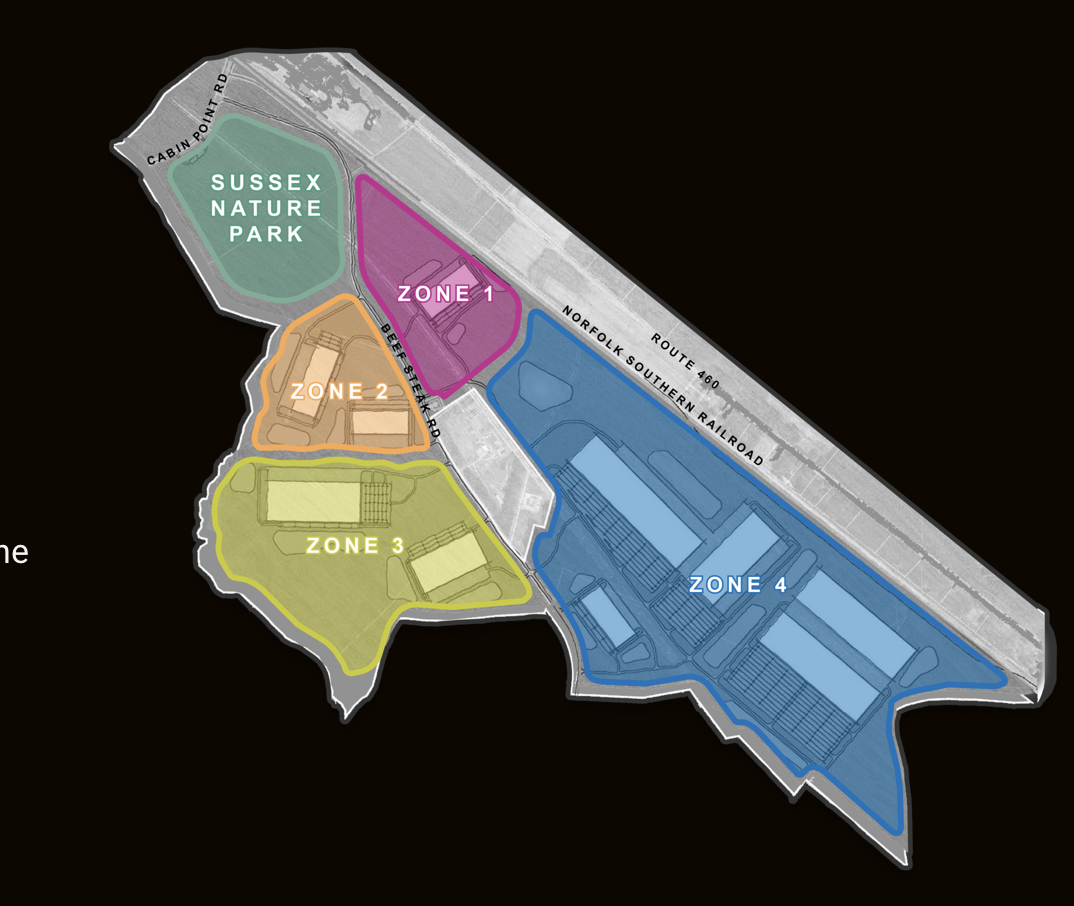
Two proposed projects could help Sussex pay bills, boost EMS
Sussex County supervisors said they cut the funding for the county’s fire chief and deputy fire chief because they lacked the money to pay for increased fire and emergency medical service in the rural county.
That, Supervisor Thomas Baicy told Checks & Balances Project (C&BP), included contracting with the Stony Creek Volunteer Rescue Squad (SCVRS) run by Sussex Board Chairman Steve White despite concerns raised by the lack of information about SCVRS’ finances.
But Sussex supervisors are currently reviewing proposals that could drastically increase their annual EMS revenues and pay for the services they lack like a professionalized EMS service, which could reduce response times, county records show.
A proposed data center in Sussex County could be one of largest sources of local government revenue in the county’s history. According to an economic impact study prepared by Mangum Economics for the project:
The proposed data center would generate approximately $81.5 million annually in new Sussex County tax revenue once fully built in 2036, including $80.5 million in direct property taxes.
Total private investment is estimated at $17 billion ($5 billion in buildings and infrastructure plus about $12 billion in servers and other equipment installed by the eventual operator).
The proposed Blackwater solar project would contribute $170 million in local taxes over the 35-year life on the project, developers say. It would provide enough electricity to power 85,000 homes or the proposed data center.
Broken down annually, the solar project alone would contribute approximately $4.9 million to the county budget each year, which would be more than twice the annual amount Sussex County spends on emergency medical services, according to the county’s 2025-26 budget.
County supervisors will meet at 6 p.m., Thursday, July 16 to discuss economic development opportunities and other business.
Ray Locker is the executive director for Checks & Balances Project, an investigative watchdog blog holding government officials, lobbyists, and corporate management accountable to the public. Funding for C&BP is provided by Renew American Prosperity and individual donors.
You may also want to read:
Sussex supervisor says White drove surprise firing of county administrator
Sussex County Sheriff Ernest Giles Sr. refers C&BP complaint to local prosecutor and state police
Share Post ShareThe post Two proposed projects could help Sussex pay bills, boost EMS appeared first on Checks and Balances Project.
Food Tank’s Weekly News Roundup: India Acts to Empower Women Farmers, $127 Million in USDA Grants Restored, Nigeria’s Hunger Crisis Worsens
Each week, Food Tank is rounding up a few news stories that inspire excitement, infuriation, or curiosity.
USDA Reinstates $127 Million in Land Access Grants
Following a federal court order, the U.S. Department of Agriculture reinstated 24 grants totaling US$127 million under the agency’s Increasing Land, Capital, and Market Access Program.
The program was designed to support underserved producers across the U.S. Amanda Koehler, who manages an informal network of the grantees, calls it “the largest public investment in land access in our nation’s history.”
The Trump-Vance Administration undermined the program for months before officially terminating funds for 49 of the 50 projects this past spring. But organizations fought back. Over two dozen joined a lawsuit last year to argue that the awards were canceled illegally.
This past week, Judge Beryl Howell granted a preliminary injunction and wrote that the plaintiffs, represented by Earthjustice, Farmers Justice Center, and FarmSTAND, demonstrated that they will suffer “irreparable harm in the absence of relief.”
Litigation will continue, but in the meantime, the 24 organizations can expect to hear from Farm Service Agency staff about their restored awards, which will support land access, farmer training, and infrastructure and market development projects.
Indian State Passes Bill to Empower Women Farmers
In India, the Maharashtra state Assembly voted unanimously last week to pass the Women Farmers’ Empowerment Bill.
The first of its kind in the country, the legislation aims to broaden the formal recognition of all women farmers, not just those who own land. This will make it easier for women in agriculture to access bank loans, crop insurance, government subsidies, training programs, farming technology, and more.
As a next step, the Bill will be taken up in the Maharashtra Legislative Council. Agriculture Minister Dattatray Bharane is confident that they will adopt it.
Plant-Forward Procurement Can Unlock €11.6 billion in the EU
Plant-forward public procurement practices in the European Union could generate over €11 billion annually, according to a new study commissioned by ProVeg International.
The study looked at the potential impact for three procurement strategies across all 27 EU Member States. Under the most ambitious plan, the total combined returns includes €3 billion in food budget savings, €4.7 billion in avoided environmental costs, and €4 billion in avoided societal health costs.
To unlock the full benefits, the researchers recommend reforming public procurement rules, updating the EU School Scheme to include more legumes and plant-based drinks, investing in skills and training for public catering teams, supporting farmer diversification, and using behavioral insights to make healthier and sustainable choices easier.
ProVeg calls public procurement “a strategic policy lever hiding in plain sight,” which can shape outcomes across public spending, health systems, food security, and climate.
Nigeria’s Hunger Crisis Deepens
The World Food Programme warns that Nigeria’s food security crisis is worsening faster than previously thought.
In the northern region, hunger levels driven by conflict are rising to levels not seen in nearly a decade. Kinday Samba, WFP’s Regional Director for West and Central Africa is particularly concerned by how the crisis is expanding, stating that “insurgent attacks and violence…are spreading across a much wider area and forcing people from farmland.”
Displacement and restrict, WFP can only reach around 740,000 of the 6.2 million people facing food insecurity in the northeastern states. Samba says “resources are at their lowest at the time they are needed most.”
Articles like the one you just read are made possible through the generosity of Food Tank members. Can we please count on you to be part of our growing movement? Become a member today by clicking here.
Photo courtesy of Unsplash
The post Food Tank’s Weekly News Roundup: India Acts to Empower Women Farmers, $127 Million in USDA Grants Restored, Nigeria’s Hunger Crisis Worsens appeared first on Food Tank.
C&BP offers to brief legislator, attorneys go unanswered
Checks & Balances Project’s (C&BP) offers to brief state Sen. Lashrecse Aird, Sussex County Commonwealth Attorney Regina Sykes and Sussex County Attorney Danielle Powell on the apparent corruption in Sussex County government have gone unanswered.
In the last three weeks, C&BP has revealed that the county has no policy governing when elected officials should recuse themselves, the Stony Creek Volunteer Rescue Squad (SCVRS) run by Board Chairman Steve White lost its nonprofit status and that White routinely votes to send taxpayer money to SCVRS.
C&BP has also shown that White forced the departures of Fire Chief Nick Sheffield and Deputy Fire Chief Chris Bailey after both raised questions about SCVRS and its relationship to the county. White led the supervisors to remove the funding for Sheffield and Bailey’s positions in a September 2025 special retreat.
Despite these issues, Aird, Sykes and Powell have not responded to offers to learn more about the corruption wracking Sussex County.
Ray Locker is the executive director for Checks & Balances Project, an investigative watchdog blog holding government officials, lobbyists, and corporate management accountable to the public. Funding for C&BP is provided by Renew American Prosperity and individual donors.
You may also want to read:
Sussex supervisor says White drove surprise firing of county administrator
Sussex County Sheriff Ernest Giles Sr. refers C&BP complaint to local prosecutor and state police
Share Post Share
The post C&BP offers to brief legislator, attorneys go unanswered appeared first on Checks and Balances Project.
Sink the Superyachts!
Tejido Global de Alternativas: Declaración Popular de Bandung - [Tejido Global de Alternativas: Declaración Popular de Bandung]
Global Tapestry of Alternatives: People’s Bandung Declaration - [Global Tapestry of Alternatives: People’s Bandung Declaration]
Op-Ed | The Food System Is Driving Two Crises at Once—and Could Help Solve Both
Climate change and chronic disease are often treated as separate challenges.
One belongs to environmental policy. The other belongs to healthcare. Different experts study them. Different institutions address them. Different budgets support solutions. But increasingly, both are being shaped by the same system: Food.
Food production contributes substantially to greenhouse-gas emissions (GHGs), land-use change, freshwater use, and biodiversity loss. At the same time, unhealthy dietary patterns are helping drive rising rates of obesity, type 2 diabetes, cardiovascular disease, and other chronic illnesses around the world.
These trends are usually discussed separately. They shouldn’t be.
As a physician and clinical researcher, I spend most of my time studying nutrition and metabolic health rather than climate policy. Recently, my colleagues and I conducted a randomized clinical trial involving people with type 1 diabetes. Participants who adopted a low-fat plant-based diet improved insulin sensitivity, reduced insulin requirements, lost weight, and improved several cardiometabolic measures.
The health benefits were encouraging. But what interested us afterward was a different question. What happened to the environmental footprint of participants’ diets? When we analyzed their dietary records, food-related greenhouse-gas emissions had fallen by more than 50 percent within just 12 weeks.
These findings were not theoretical projections or computer simulations. They reflected the choices of real people living their everyday lives.
One study does not solve the climate crisis. And dietary change alone cannot replace the need for clean energy, transportation reform, or industrial innovation.
But it highlights something important. Food occupies a unique position among climate solutions because it influences both human health and environmental sustainability simultaneously.
The same dietary patterns associated with lower greenhouse-gas emissions are also associated with lower risks of obesity, diabetes, cardiovascular disease, and premature mortality.
Unlike many climate interventions, food can generate benefits that people experience personally and relatively quickly. Weight may decrease. Blood pressure may improve. Insulin sensitivity can increase. And environmental impacts decline at the same time. That alignment matters.
Many sustainability policies ask people to accept short-term sacrifices for long-term societal gains. Food often works differently. Personal and collective benefits can occur together.
This creates a rare opportunity. But food remains surprisingly underrepresented in many climate conversations. Climate discussions understandably focus on energy, transportation, and industry. Food systems deserve a larger place at the table.
Not because food can solve climate change by itself. It cannot. But because meaningful progress on both climate and public health will require addressing some of the same upstream drivers.
Agricultural policy, food marketing, pricing structures, supply chains, and food access influence what people eat. And what people eat affects not only human health, but the health of ecosystems as well.
Food systems are health systems. For decades, policymakers have treated climate change and chronic disease as separate crises. Increasingly, they appear to be two expressions of the same underlying problem.
That should give us hope. Because solutions that improve both human and planetary health are rare. And in an era of growing urgency, we cannot afford to overlook them.
Articles like the one you just read are made possible through the generosity of Food Tank members. Can we please count on you to be part of our growing movement? Become a member today by clicking here.
Photo courtesy of Ella Olsson, Unsplash
The post Op-Ed | The Food System Is Driving Two Crises at Once—and Could Help Solve Both appeared first on Food Tank.
Unmasking Hate: Whose Country, Our Country
What better way to mark the 250th anniversary of a nation founded on lofty ideals now plunged into ugly discrepancies than to double down on hate-and-fear-mongering? Cue a Racist-In-Chief who stays silent when 400 masked Nazis march in D.C. but goes online to assail graduating kindergarteners in Minnesota for wearing hijabs - goading his followers in vicious lockstep to dutifully screech, "Deport them, big and small!" Stay classy, MAGA.
Somehow, we still manage to be shocked at how ludicrously low the bar's sunk. Never mind the unhinged May hearing where House Repubs attacked the Southern Poverty Law Center (SPLC), following up on equally unhinged fraud charges, by directly quoting a letter from the same hate groups unhappy they'd been named hate groups. In a blistering response, a Dem rep called out their "embrace of white nationalist rhetoric" with the melted clock from the KKK’s 1983 firebombing of the SPLC, charging, "They’re trying to turn back the clock (on) some of the darkest days of our past.”
Then there's the Kentucky pastor of a Baptist church "befuddled" by this year's backlash against a 30-year-old ritual of their vacation Bible school wherein men in military garb march down their church aisle, pull "sinners" outside to a mock firing squad and pretend to open fire. Pastor Dewayne Walker blamed "misinformation" - "part of what this generation has become" - for outrage at “nothing more than a small part" of their school helpfully aimed at identifying good and evil. Others called the ritual "depraved" and "appalling abuse," noting, "There’s not enough context in the world to make this okay."
Same, alas, for much of what passes these dark days for political discourse. On America's 250th birthday, it was reported, about 400 neo-Nazis from the white nationalist Patriot Front joined the day's tawdry mayhem in D.C. by marching in masks and uniforms - seeking "the menace of a mob with none of the accountability" - chanting "Reclaim America." They looked unsettling enough that many on the right uneasily dismissed them as bad actors or imaginary Antifa; Laura Ingraham sneered, "I call fake," then righteously, nonsensically added, "No one should be allowed to cover their faces."
One image of the day went viral: A lone, young, tense Black woman, sitting on the Metro, surrounded by Nazis. "I have taught this photograph before," wrote a longtime teacher on I Fucking Love Australia, describing the September day in 1957 in Little Rock, AR. when 15-year-old Elizabeth Eckford, trying to integrate Central High School, was stopped by the National Guard. In the image, she walks alone in the white dress her mother had sewn for her first day through a screaming, snarling white mob. Asked for their response, one of today's students inevitably offers, "Look at their faces. They wanted to be seen."
"They believed history would agree with them," notes the teacher. "The men on that Metro" - in their masks and khakis - "did not." In the 1940s and '50s, states in the Jim Crow South passed laws banning masks in public, their nod to the brutal presence of the KKK; even they understood that a man who covers his face is not expressing an opinion - he is issuing a threat. "In 1957, the mob showed their faces because they thought history was on their side. In 2026 they hide their faces because they know it is not," the teacher wrote. "That is not nothing. That is 69 years of progress, measured in cowardice."
There was another, less widely viewed photo from that day on the train. Roswell Encina, a gay Filipino American, came to the US as an infant; his father served in the U.S. Navy. Roswell is head of the non-partisan U.S.Capitol Historical Society; as part of his job, he places replicas of the Declaration of Independence in embassies, stadiums, public places so ordinary people can read it and see it as their own story. The train on the 4th had been full of red, white and blue families heading to the fireworks; when they got off and the Nazis got on, he said the mood felt "unnerving" and he had to "summon my better angels" to stay put.
The group was civil and chatting; he tried not to make eye contact, looked up their patches on his phone, texted friends in a familiar safety ritual to say where he was. Later, neither wearing nor needing a mask, he spoke to reporters, in part to protect the young Black woman whose name was unknown. As a historian, he said he felt reassured unnerving" reassured a photographer was documenting the moment. "Democracy is very fragile," he said. "We need to stay engaged with history, civics, education. History is a conversation, and this is part of it." Then he cited another name and image from that earlier era: Ruby Bridges.
Ruby Bridges was six years old in November 1960 when she walked between federal marshals into her New Orleans school as its first Black student after a federal court ordered schools to integrate; white parents were so outraged they kept their kids home, and Ruby spent the year alone in her classroom. To memorialize the historic day, Norman Rockwell painted her, small and again set between marshals, walking along a stone wall where a member of another mob had scrawled "NIGGER" and thrown a tomato, which oozed down. Rockwell titled the 1964 painting, "The Problem We All Live With."
Ruby was 6. The 20 or so kids who proudly stood and joyfully sang on a stage in St. Paul, Minnesota last month were all five and six. A brief video clip from Somali TV of Minnesota shows them celebrating their kindergarten graduation at Gateway STEM Academy, a public charter school serving about 180 students, many Somali, most with legal immigration status, not that it should matter. They wore small sweet blue robes and caps, with hijabs under their mortarboards and white stoles around their shoulders whose rainbow letters, under a teddy bear, read, "Kindergarten Graduate."
Theirs was one of several school graduations celebrated around the state, and the country. It was the only one spotlighted online by a right-wing account named “End Wokeness,” which in 2024 went viral with the claim Haitian immigrants in Ohio were stealing and eating people’s pets.This time, it posted a photo of the small celebrants with an enraged, "Public school in St. Paul, Minnesota. Every girl is in a hijab…in kindergarten.” When 400 masked Nazis marched through the nation's capitol on the nation's birthday, the President of the United States said nothing. But hijabs: "He found his voice."
This week, months after he called Minnesota's Somali community "garbage," after vandalism at mosques, women harassed for wearing hijabs, a fire on a school bus at another largely Somali charter school, the ongoing terror of ICE's Metro Surge, he shared the "End Wokeness" post - twice - in hopes of siccing maybe just a modest mob of his 13 million followers, though not the sharpest tools in the shed, on the tiny perps in gowns and terrorist caps. And, oops, when he "pointed at babies," he did not blur their faces, which only takes seconds, and which normal people unthinkingly do to protect babies.
The “anti-human” rhetoric found its mark. From Truth Social, "There are just some cultures that don't belong and for good reason," "I think they have stolen enough money from the US that they can buy their own ticket. I could help them out with a size 13 boot," and "This is the case for literally every single immigrant we unfortunately let in our country. They’re here to take advantage of our system and tell us how great their country is because they can rape their way through the population without consequence," which for damn sure wouldn't happen here in Epstein land, right?
Parents and advocates expressed "shock and horror" at the reckless cruelty of targeting kids in kindergarten. CAIR: Trump "is putting lives at risk (in a) dangerous escalation of religious hatred. Children deserve to feel safe in their schools and communities...to recognize this is their country.” Tim Walz: "The President (is) attacking a group of kindergarteners because of the clothes they wore to school.” A local Imam: "Our children (are) fully part of this state and country. That is the Minnesota we believe in. That is the America we hope for." Educator Ms. Rachel: “Hijabs are beautiful...No matter what we wear, we all belong.”
Online commentators offered, "At least he is attacking his intellectual peers." Outraged parents of kindergarteners protested the insult by noting their kids can "run intellectual circles around that fool," read at higher grade levels, learn new things daily, nicely share without being asked, and are potty-trained. Despite his vast resources, added the teacher at I Fucking Love Australia, he did not find the 60 seconds to at least blur their faces, "Because he was never trying to show you a graduation. He was showing his people where to aim. That is the whole story. Everything else is commentary."
C&BP files Freedom of Information Act request seeking documents related to White serving as acting Sussex County administrator
Checks & Balances Project (C&BP) has filed a Freedom of Information Act request seeking all records, texts, and other communications related to Sussex County Board of Supervisors Chairman Steve White assuming the role of acting county administrator after he apparently engineered the firing of then-County Administrator Richard Douglas.
According to another supervisor, Douglas’ firing was engineered by White after a surprise closed session during the April 16 board of supervisors meeting, Supervisor Thomas Baicy told C&BP.
By serving as acting county administrator, White is in apparent violation of Virginia law that prohibits elected officials from serving in administrative jobs. And, county administrator positions are typically full-time. White has been employed full-time with the state of Virginia’s Department of Behavioral Health & Developmental Services.
This apparent violation of state law is in C&BP complaints filed with Sussex County Commonwealth Attorney Regina Sykes, Sheriff Ernest Giles Sr., the Virginia State Police and Attorney General Jay Jones.
C&BP has filed four Freedom of Information Act requests for the county’s recusal policy, whether any supervisors have recused themselves in the last 25 years, and any records related to Douglas’ firing.
The county has not provided any records sought in those requests as of July 10. An AI-assisted online search suggests that County has no such policy, undercutting the rationale for a delay in providing the policy.
Ray Locker is the executive director for Checks & Balances Project, an investigative watchdog blog holding government officials, lobbyists, and corporate management accountable to the public. Funding for C&BP is provided by Renew American Prosperity and individual donors.
You may also want to read:
Sussex supervisor says White drove surprise firing of county administrator
Sussex County Sheriff Ernest Giles Sr. refers C&BP complaint to local prosecutor and state police
Share Post Share
The post C&BP files Freedom of Information Act request seeking documents related to White serving as acting Sussex County administrator appeared first on Checks and Balances Project.
Hemet nurses ratify new contract with strong measures to improve patient safety and nurse retention
Pennsylvania 2025 Oil & Gas Production Report: Record Gas, Low-Producing Wells, and Long-Term Liabilities
Pennsylvania produced more than 7.8 trillion cubic feet of gas in 2025, with unconventional wells accounting for over 99% of the total. This analysis examines statewide production trends, declining well output, regional differences, and the large number of conventional wells reporting little or no production.
The post Pennsylvania 2025 Oil & Gas Production Report: Record Gas, Low-Producing Wells, and Long-Term Liabilities appeared first on FracTracker Alliance.
Tiny tick bites can cause big health problems – these tips can help
Tick bites are on the rise, and so are the health issues they can cause.
In April all but one region in the U.S. saw the highest level of tick-related emergency room visits since 2017, according to the Centers for Disease Control and Prevention.
Blacklegged ticks can cause Lyme disease, leaving some individuals with lingering brain fog, long-term fatigue, anxiety and depression. Lone star tick bites can lead to alpha-gal syndrome, a lifelong allergy to meat and sometimes dairy products or medicines.
Avoiding getting bitten while you’re outdoors this summer is critical – EWG is here to help you find bug sprays that can maximize safety and effectiveness, while also providing you with important details about ingredients in these products and any health concerns.
Study labels for active ingredientsEWG’s guide to bug repellents suggests three active ingredients as the most effective for keeping ticks (and other insects) at bay.
The guide also gives the safest and most effective concentration levels for different tick and bug repellents, measured as the percentage of active ingredient for different repellents.
DEET (under 30% concentration)
DEET acts as a sensory disruptor for mosquitoes and ticks, repelling both smell and taste receptors. When applied correctly, it has very little health risk. In a 2014 review, the Environmental Protection Agency found that DEET was associated with only low health risks, including to children.
In rare cases, DEET may irritate the skin, usually with highly concentrated formulas – above 75% – and repeated application.
IR3535 (20% concentration)
IR3535 acts much like DEET, repelling insects through its odor. A 2008 study found that 20% IR3535 can offer effective protection against ticks for up to 12.2 hours and mosquitoes for up to 10.3 hours. When used according to label directions, IR3535 has a low risk of causing harmful health effects.
Picaridin (20% concentration)
Picaridin also mimics the effects of DEET, and most evidence suggests it lasts for a similar amount of time – although a Consumer Reports study found it had a slightly shorter window of effectiveness. Like the other ingredients, it’s also relatively safe when used as instructed.
The best of these three ingredients is the one in a product that you’re most likely to use. One study found concentrations exceeding 20% of DEET, IR3535 or picaridin repelled more than 90% of ticks from crossing treated bands on volunteers over a 12-hour period.
If you’re looking for alternatives, oil of lemon eucalyptus at 30% to 40% concentration and 2-undecanone at about 7% concentration have also been shown to be effective – but for less time than the other options.
Apply according to directionsWhile the risks of any of these chemicals are low in comparison to the risk of tick-borne or mosquito-borne illness, as with any chemical, how you are exposed matters.
With DEET especially, there is some risk of irritation from incorrect use – for example, applying it under clothing, on the face or broken skin, in enclosed areas, or near or on food. Swallowing or overapplying might lead to excessive absorption, which can occur in rare cases and cause harm to the nervous system.
Avoid using any of these repellent chemicals on children under 6 months old.
Apply to clothingApplying the insecticide permethrin (at 0.5 concentration) to clothing, along with the use of bug spray on your skin, can effectively reduce the number of tick bites. Some outdoor retailers even sell clothing pre-treated with permethrin.
Permethrin can easily incapacitate ticks that land on the clothing and even kill young ticks within a minute of exposure. But there is some human health risk: While exposure is unlikely to cause any significant acute or chronic symptoms, it is highly toxic to the environment. The EPA classifies it as a likely carcinogen when ingested.
When wearing synthetic clothing, including spandex, or other plastic accessories, like sunglasses, avoid applying DEET or IR3535 to areas near the clothing. Because of their solvent properties, both chemicals can dissolve, stain or permanently cloud certain plastics. Picaridin does not damage plastic.
Wear light-colored clothingIf you plan to spend time outdoors, keep in mind that wearing light-colored clothing makes ticks much easier to spot and remove.
Check dailyBug spray is never 100% effective at repelling ticks. If you’re in a tick-friendly area, checking daily for ticks is one of the best ways to avoid tick bites.
Ticks usually need to stay attached for a day or two to transmit Lyme disease, and despite their small size, they are usually both visible and detectable by touch.
Areas of Focus Personal Care Products Bug Repellent Family Health Women's Health Children’s Health Guest Authors Adam Levin (EWG communications intern) July 10, 2026Pages
The Fine Print I:
Disclaimer: The views expressed on this site are not the official position of the IWW (or even the IWW’s EUC) unless otherwise indicated and do not necessarily represent the views of anyone but the author’s, nor should it be assumed that any of these authors automatically support the IWW or endorse any of its positions.
Further: the inclusion of a link on our site (other than the link to the main IWW site) does not imply endorsement by or an alliance with the IWW. These sites have been chosen by our members due to their perceived relevance to the IWW EUC and are included here for informational purposes only. If you have any suggestions or comments on any of the links included (or not included) above, please contact us.
The Fine Print II:
Fair Use Notice: The material on this site is provided for educational and informational purposes. It may contain copyrighted material the use of which has not always been specifically authorized by the copyright owner. It is being made available in an effort to advance the understanding of scientific, environmental, economic, social justice and human rights issues etc.
It is believed that this constitutes a 'fair use' of any such copyrighted material as provided for in section 107 of the US Copyright Law. In accordance with Title 17 U.S.C. Section 107, the material on this site is distributed without profit to those who have an interest in using the included information for research and educational purposes. If you wish to use copyrighted material from this site for purposes of your own that go beyond 'fair use', you must obtain permission from the copyright owner. The information on this site does not constitute legal or technical advice.
 This site is not the official webpage of the Industrial Workers of the World.