You are here
News Feeds
2026 Transit for All Organizing Spring Training
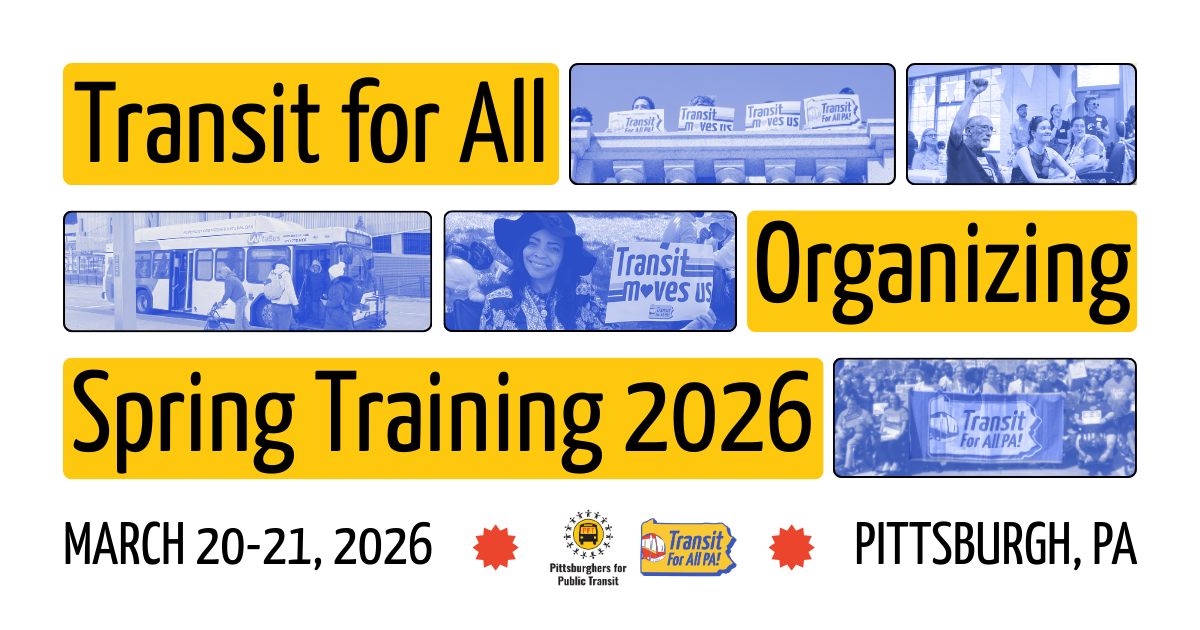
Image description: Black text highlighted in yellow reads “Transit for All Organizing Spring Training 2026”, interspersed with blue-filtered images of transit advocates at rallies, holding signs, and boarding the bus. Smaller text below reads “March 20-21, 2026, Pittsburgh, PA”, with the Pittsburghers for Public Transit and Transit for All PA logos.
You’re invited: Join transit riders, workers, and supporters from across PA and the country for the 2026 Transit for All Organizing Spring Training!Transit can transform our communities – but it is up to us as organizers to build the grassroots movement to make it happen!
This March, you are invited to join Pittsburghers for Public Transit, Transit for All PA!, and advocates from across the country at the third annual Transit for All Organizing Spring Training.
It’s going to be bigger and better than ever before. This organizing training day will have workshops led by local advocates and advocates outside of Pittsburgh, and will have topics relevant to transit organizers at all levels and all regions.
Join peers and leaders from Pennsylvania and across the country for a Transit Tour through Pittsburgh, a Happy Hour, and a full day jam-packed with an inspiring plenary, engaging workshops, field visits, and lots of community building with comrades from near and far. Learn more about our workshops below!
For transit riders, workers, and advocates, there’s no other event like this. Space is limited and pre-registration is required for all events, so reserve your spot now!
Pre-registration is required for all events. The last day to register for Spring Training is Friday, March 13th, 2026.
TICKERS ARE SOLD OUT Table of Contents- Schedule at a Glance
- Tickets are sold out
- Logistics
- Workshop and Event Descriptions
- About Our Presenters
Click the link in each event title to learn more!
More information on each workshop and event can be found below.
With special welcoming remarks by Allegheny County Executive Sara Innamorato! Saturday, March 21st: Training Day 8:00-9:00 AMContinental breakfast and networking9:00-9:45 AMOpening Plenary10:00-11:30 AMBLOCK 1:
Narrative Change: Our Stories Build the World We Want
OR
#VoteTransit: Bus Mayors and Beyond11:45-12:50 PMLunch
Art-making and accessible movement activities included!1:00-2:30 PMBLOCK 2:
Mobile workshop! Field Communications: Storytelling from the Street (pre-registration required)
OR
Bargaining for the Common Good: Worker/Community Solidarity
OR
Organizing with Disability Justice at the Center2:45-4:15 PMBLOCK 3:
Big Tech in Transit: Automation, Microtransit, Surveillance, and Data
OR
Transit Isn’t Just Urban: Organizing in Small Systems and Everywhere4:30-5:00 PMClosing Statements Tickes are sold out Tickets are sold out
Tickets are sold out. The last day to register was Spring Training is Friday, March 13th, 2026.
Logistics Location InformationThe Courtyard Pittsburgh University Center is located at 100 Lytton Ave, Pittsburgh PA 15213, in the amenity-rich Oakland neighborhood.
The hotel is very easily accessible from the airport via public transit. It is about a four-minute walk or roll from the Fifth Ave and Tennyson Ave PRT stop, which is serviced by the following routes:
- 54 Northside-Oakland-Southside
- 58 Greenfield
- 61A North Braddock
- 61B Braddock-Swissvale
- 61C McKeesport-Homestead
- 61D Murray
- 67 Monroeville
- 69 Trafford
- 71A Negley
- 71B Highland Park
- 71C Point Breeze
- 71D Hamilton
- 75 Ellsworth
- 81 Oak Hill
- 83 Bedford Hill
- 93 Lawrenceville-Hazelwood
- P3 East Busway-Oakland
We have secured a discounted hotel room block at the venue, so that those joining from outside Pittsburgh can stay overnight.
Discounted rooms are available for $189 per night, only for those who book before Friday, February 27, 2026.
If you’d like to reserve a hotel room in our block, please use this link.
AccessibilityThe Courtyard Pittsburgh University Center has accessible onsite parking and an accessible main entrance. All meeting areas are accessible, and there are elevators throughout the building. More information about the hotel’s accessibility features can be found on their web page.
ASL interpretation will be provided at all events.
Food and DrinkAt happy hour on Friday, let PPT buy your first round! Drink tickets will be provided to all those who pre-register. Snacks will be available from 5:15-5:45, first-come-first-serve.
On Saturday, PPT will provide a continental breakfast for participants in the morning, lunch, and mid-day snacks—as well as coffee and tea, all day.
PPT will label provided food with common allergens.
COVID-19 ProceduresMasks are encouraged indoors at our events and will be available on-site at check-in. We also encourage everyone to take an at-home COVID-19 rapid test before arriving. Please stay home if you are feeling sick or have come into contact with someone who has COVID-19.
More InformationIf you have any questions, please email info@pittsburghforpublictransit.org, and a member of the team will get back to you!
Workshops and Events Friday, March 20 3:30 PM: Transit TourStarting point: 4836 Ellsworth Ave, Pittsburgh PA, 15213
Come on a transit tour of Pittsburgh, tailored to you! Local transit advocates and members will lead this tour, beginning at the Pittsburghers for Public Transit office, and ending near our final destination: our attendee Happy Hour in the Strip District. Guides will lead us through local landmarks, service issues, our geography’s impact on the transit system, and new visions for the system’s potential.
5:00-7:00 PM: Happy HourAslin Beer Company, 1801 Smallman St.
You’re invited to mingle with the crew before the big day of workshops! Join up for chit-chat, cocktails, snacks, and activities in Pittsburgh’s historic Strip District. We will be welcomed to the weekend by special remarks from Allegheny County Executive and transit champion Sara Innamorato!
Food will be served between 5:15 and 5:45 PM, first-come, first-served. Pre-registration is required, and comes with one drink ticket! RSVP at the form above.
Saturday, March 21Courtyard Pittsburgh University Center
100 Lytton Ave., Pittsburgh PA, 15213
9:00-9:45 AM
Presenters:
Veronica Coptis, Senior Advisor, Taproot Earth
Andrew Slack, PA-based narrative strategist, facilitator, and storyteller
T4APA! Organizing Fellows Kearasten Jordan (Lancaster) and Laura Pauls-Thomas (Lancaster)
Block 1 (10:00-11:30 AM)
Presenters:
Nadia Awad, Content Director, Narrative Initiative
Andrew Slack, author, comedian, facilitator, and advocate
Clair Hopper, Digital Organizer, Pittsburghers for Public Transit and Transit for All PA!
Our stories are like stars spread across the night sky: bright, but too numerous to make sense of each one. When our stories share values and themes, we start to create constellations of shared narratives. These narratives have the power to drive public opinion shifts and real policy improvements. Join this workshop to learn how our movement can use Narrative Change Theory to transform our stories into victories.
#VoteTransit: Bus Mayor Elections and BeyondBlock 1 (10:00-11:30 AM)
Presenters:
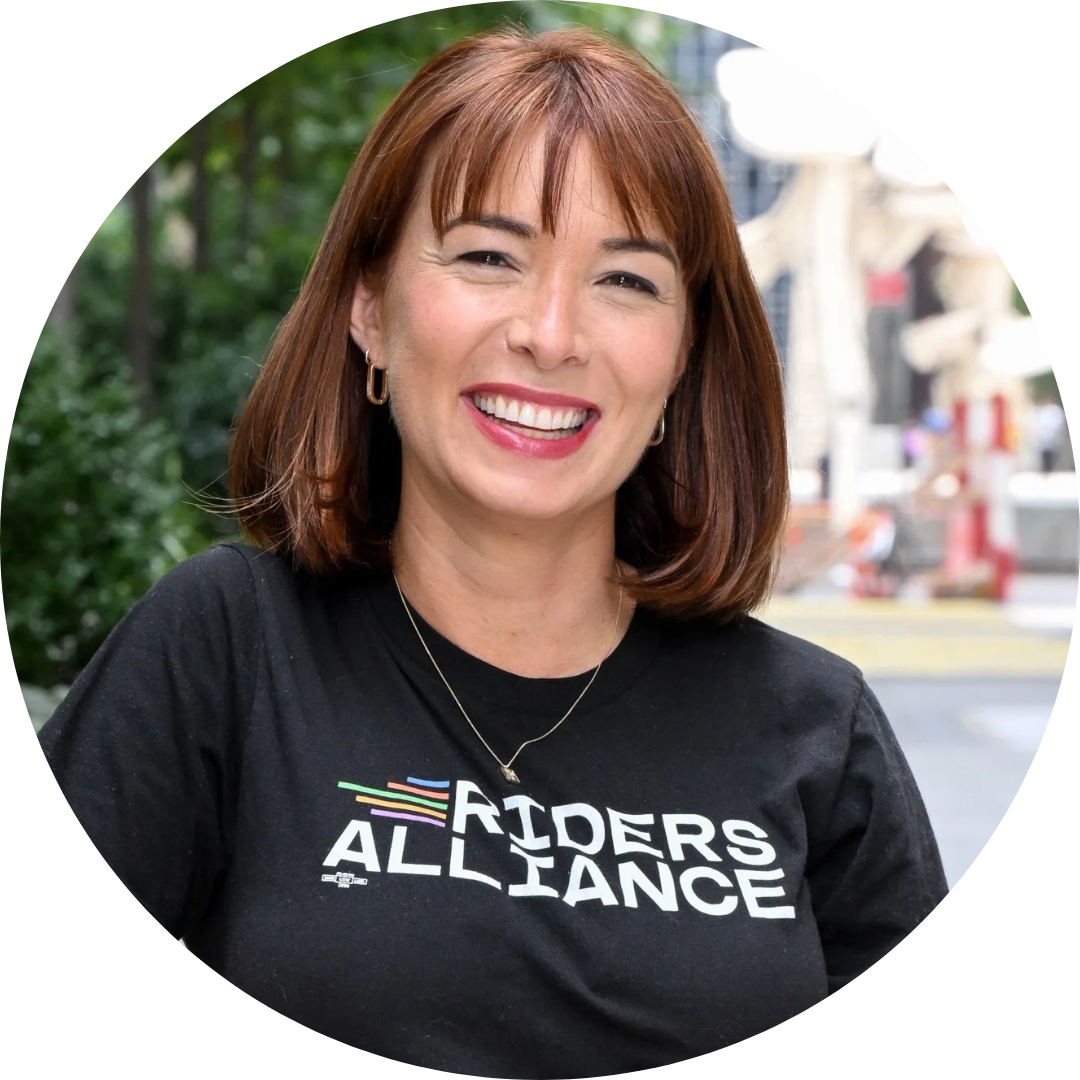
Betsy Plum, Executive Director of Riders Alliance (New York City)
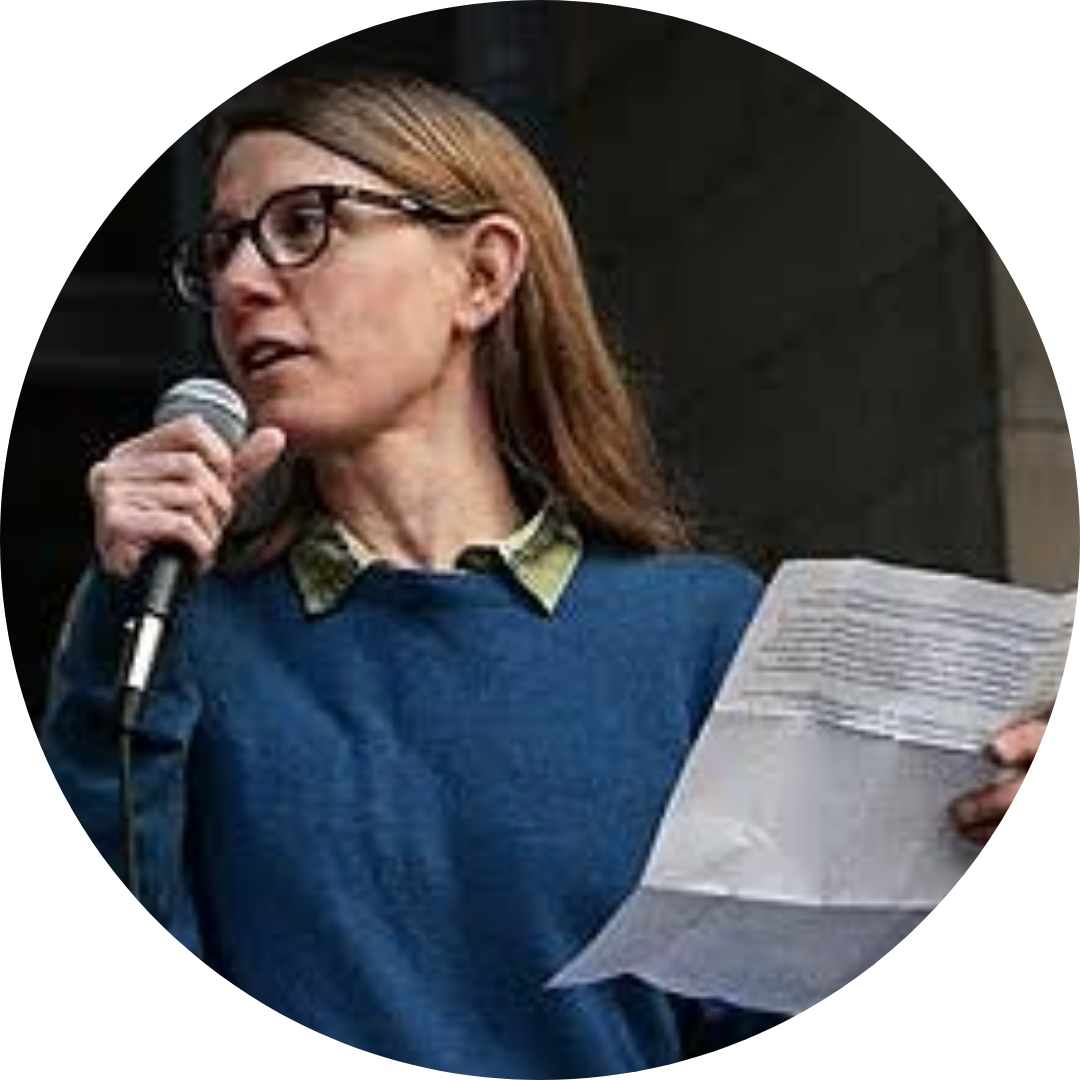
Barb Warwick, Pittsburgh City Council member, District 5
In New York City, Seattle, Boston and here in Pittsburgh, City leaders have shown that faster, more affordable public transit is a winning electoral issue. In this workshop, Riders Alliance Executive Director Betsy Plum will share how transit riders supported now-NYC Mayor Zohran Mamdani to center transit justice in his campaign and how that helped propel him to a historic victory. Betsy Plum and Pittsburgh Councilwoman Barb Warwick will also lay out both the challenges and opportunities for transit riders to collaborate with—and hold accountable—municipal elected officials to make our transit dreams a reality.
Art-making Activity: Craft a Beautiful Rally Sign!Lunchtime (11:45 AM-12:50 PM)
Facilitated by Arts Excursions Unlimited, exercise your creative mind and use your hands to create a sign for your next transit rally—one that inspires, moves, and (of course) looks great!
Movement Moment: Grounding, Accessible Yoga PracticeLunchtime (11:45 AM-12:50 PM)
Facilitated by yoga instructor, massage therapist, community activist, and PPT member Mona Meszar (she/they), use this short, chair-based practice to ground in your body, and refresh your mind for the day ahead.
Mobile Workshop! Field Communications: Storytelling from the StreetBlock 2 (1:00-2:30 PM)
Presenters:
Joe Conniff, Video Editor, Educator, and Producer
Remote support from Marcelese Cooper, Teaching Assistant Professor in the Film and Media Studies Program at the University of Pittsburgh
Our stories are our power, and organizing with stories can help the movement win big. Join this workshop to learn how to make in-the-field videos that develop our transit justice narrative and help us build power for this movement. We strongly suggest that participants take the Narrative Change workshop earlier that day, or have prior experience in our volunteer Communications Committee. Pre-registration is required; reserve your spot at the form above!
Bargaining for the Common Good: Worker/Community SolidarityBlock 2 (1:00-2:30 PM)
Presenters:
Connor Chapman, University of Pittsburgh Graduate Workers Union and Pittsburghers for Public Transit
Ronni Getz, UPMC Magee Women’s Hospital, SEIU Healthcare Pennsylvania
Learn how unions and community organizations can join together to win demands far beyond traditional union labor contracts, advancing the public good! Explore case studies from the Philadelphia Federation of Teachers and SEIU Healthcare Pennsylvania, unions whose members not only challenged the boss, but took on inequitable systems within their professions. Participants will learn strategies for developing demands that benefit workers and the wider community—as well as ideas for using these principles to boost labor’s demands before the next contract fight.
Organizing with Disability Justice at the CenterBlock 2 (1:00-2:30 PM)
Presenters:
Anna Zivarts, a leading author, transit rider organizer and founder of the Nondriver Alliance out of Washington state
Dr. Josie Badger, director of the national RSA-Parent Training, Information, technical assistance center (RAISE), and founder of several orgs including the Pennsylvania Youth Leadership Network (PYLN), the Children’s Hospital Advocacy Network for Guidance and Empowerment (CHANGE), and J.Badger Consulting
Moderator:
Alisa Grishman, founder of Access Mob Pittsburgh and PPT Board member
Disability justice is a core part of transit justice. In this workshop, organizers Anna Zivarts from Washington State and Dr. Josie Badger from New Castle, Pennsylvania will share practical ways to organize for better transit in both rural and urban communities—led by disabled riders themselves. They will discuss how to build strong coalitions and support disabled transit riders to move into leadership and decision-making roles, putting the principle “nothing about us, without us” into action.
Big Tech in Transit: Automation, Microtransit, Surveillance, and DataBlock 3 (2:45-4:15 PM)
Presenters:
Dr. Sarah Fox, Assistant Professor in the Human-Computer Interaction Institute at Carnegie Mellon University; Director, Tech Solidarity Lab
Sue Scanlon, Transit Operator, Pittsburgh Regional Transit; Pittsburghers for Public Transit board member
Ziggy Edwards, Leader, Mon-Oakland Connector Campaign
Across the United States, AI and private tech firms are playing an increasing role in our transportation systems- with serious consequences for transit workers and riders. In this workshop, CMU Professor Dr. Sarah Fox will share insights from her work alongside unionized transit workers to identify emerging tech challenges to transit jobs, and share strategies to ensure these technologies support worker rights, safety, and autonomy. A Pittsburgh transit worker and rider will also highlight lessons learned from the successful campaign – entitled “Our Money, Our Solutions” against the autonomous vehicle microtransit project “The Mon-Oakland Connector.”
Transit Isn’t Just Urban: Organizing in Small Systems & EverywhereBlock 3 (2:45-4:15 PM)
Presenters:
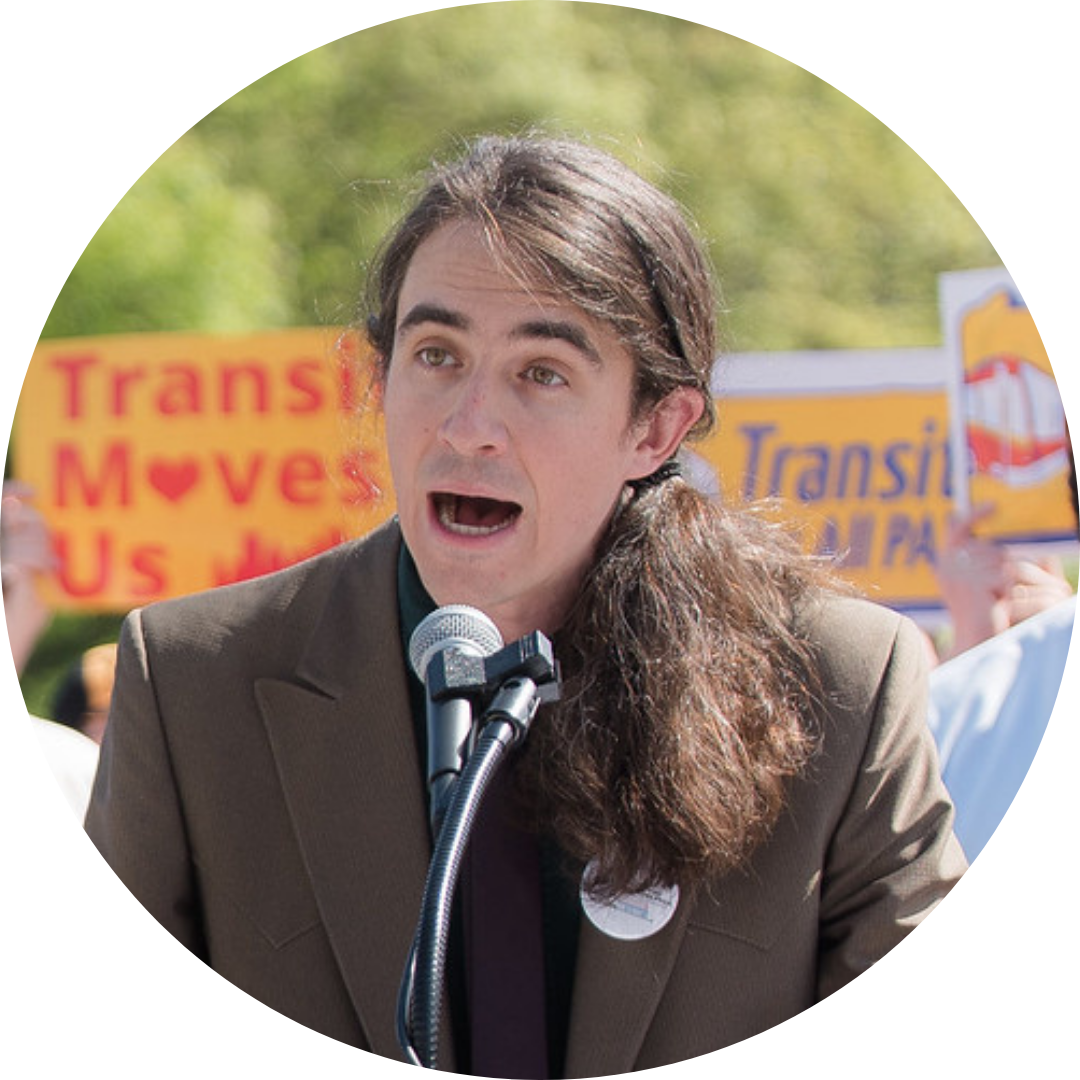
Connor Descheemaker (they/them), Statewide Campaign Manager, Transit for All PA
T4APA! Organizing Fellows Angela Adler and Laura Pauls-Thomas (Lancaster), Benjamin Felker-Quinn and Andria Ahrens (Lehigh Valley)
We always say transit exists in all 67 counties across Pennsylvania, but what does that really mean, and who does it represent? Data shows us that there are just as high a percentage of non-drivers in our most rural communities as our most urban, and those in power need to serve those riders with reliable, accessible service for work, healthcare and communities. Right now, Transit For All PA is base-building in small cities to identify what service looks like, and what it should look like. Learn from six local organizers about what transit is like in their communities, and how they are reaching workers and peers to identify how to make it better.
About Our Presenters Sara Innamorato, Allegheny County ExecutiveSara Innamorato was sworn in as the first woman to serve as the Allegheny County Executive on January 2, 2024. The Innamorato Administration’s guiding principle is to build a strong Allegheny County for All – one that serves all 1.3 million residents – built on a foundation of dignity and respect.
Sara has been a champion for transit riders locally, appointing a Pittsburghers for Public Transit member to the Pittsburgh Regional Transit Board of Directors, directing her Department of Human Services to start a half-fare transit program, and leading efforts to expand transit funding from the state.
Arts Excursions Unlimited is dedicated to increasing the cultural connectivity of the citizens of the greater Hazelwood community. They have collaborated closely with Pittsburghers for Public Transit to create art that transforms people’s understanding of transit justice & energizes a movement fighting for all peoples’ needs.
Mona Meszar (she/they), Massage Therapist & Yoga Instructor, Monasa MassageMona Meszar is a Pittsburgh based massage therapist & yoga instructor whose work seeks to center TLGBQIA communities, as well as those involved in anti-repression and anti-fascist organizing. Regardless of who you are or what you are facing, choosing stillness and rest is an active choice. It gives us the agency we require to reclaim our space and time from the banality of capitalism, white supremacy, and militarism. She seeks to help others find the strength, resilience, compassion, and persistence to heal from that trauma.
Veronica Coptis, Senior Advisor, Taproot EarthVeronica Coptis is a rural organizer in Appalachia from Greene County, Pennsylvania. For the last nine years, her most important role has been raising two spirited children and instilling in them strong values to fight for everyone’s freedom. For over 15 years, she has been organizing around the intersection of environmental/climate justice and economic justice. Veronica is currently the Senior Advisor with Taproot Earth, a frontline-rooted organization based in the Gulf South that works in Appalachia and amplifies solutions from the global Black diaspora. Taproot Earth invests in frontline communities, facilitates processes that build power and cultivates climate solutions advancing justice, democracy, climate reparations and community stewardship so we can all live, rest, and thrive in the places we love. In her early organizing Veronica worked with the Center for Coalfield Justice and the Mountain Watershed Association. She also owns Redneck Strategies LLC, which provides strategic guidance, facilitation, and training services. Additionally, she is the treasurer of the Rural People Rising Political Action Committee, creating independent political infrastructure to support everyday people taking the bold step to govern our communities.
Andrew Slack, PA-Based Narrative Strategist, Facilitator, and StorytellerAndrew Slack is a narrative strategist, facilitator, and storyteller from Philadelphia, Pennsylvania, where he lives with his wife and son. His family roots run through Altoona, in the heart of rural PA, and Pittsburgh holds a special place in his story as Mr. Rogers Neighborhood helped shape his entire worldview and inspired him to co-author Save Santa’s Home, a children’s book that playfully inspires young people to advocate for climate action. Growing up with a beloved grandmother who lived with a significant disability from polio deepened his understanding of how access and dignity are inseparable.
Andrew came up through sketch comedy and theater, performing across the country and producing some of the earliest viral videos on YouTube. Twenty-five years ago, he cut his teeth in activism at a spiritual center for peace and reconciliation in Northern Ireland, helping people who had been traumatized tell their stories. He went on to co-found the Harry Potter Alliance, spending a decade inspiring over a million fans to become first-time activists through the power of shared stories. His work connecting popular culture to social change, from The Hunger Games to economic inequality, Superman to immigrant rights, has spanned over 30 countries and earned him fellowships at Ashoka and the Nathan Cummings Foundation.
Andrew’s writing and speaking have been featured in The New York Times, The New Yorker, CNN, and the Hollywood Reporter, where he recently co-authored a piece on Superman as an immigrant with Pulitzer Prize-winning journalist Jose Antonio Vargas. He has spoken at TEDx, SXSW, Harvard, Yale, the Illinois Holocaust Museum, and over 100 other venues, and recently appeared on Doug Rushkoff’s acclaimed podcast Team Human. As an international activist, satirist, and narrative strategist, he has organized A-list celebrities and Indigenous leaders across the Global South; co-launched a satirical organization against oligarchy; and has advised the Ford Foundation, Atlantic Philanthropies, Netflix, the Teamsters, and the nation’s top immigration lawyers. His social impact campaigns have reached over 100 million views, and a curriculum he created around an Oscar-qualifying Indigenous animated short was distributed to over 20,000 educators. He now runs Imagine Better Stories LLC, working to elevate the stories we tell about ourselves and our world.
Nadia Awad, Content Director, Narrative InitiativeNadia Awad is an interdisciplinary artist and writer, whose work focuses on narrative and justice. For over fifteen years, she has produced media on the lives of LGBT, HIV-affected, and MENA communities. She contributed 20 oral histories, many with Muslim and Arabic-speaking narrators, for the New York Trans Oral History Project, and created photographs and videos on trans athletes, HIV criminalization, and healthcare access for Lambda Legal. Nadia has written about film, memory, and power for The New Inquiry, The Journal of Palestine Studies, and Camera Obscura. Two forthcoming scholarly works, Terrorism in American Memory and a study on Middle Eastern asylum seekers, will feature her art. Nadia received a B.A. from York University. She lives in New York with her partner, and an ever-expanding collection of succulents.
Clair Hopper, Digital Organizer, Pittsburghers for Public Transit & Transit for All PA!Clair Hopper is a disabled human person who makes a happy living designing data systems and communications for a very cool organization. She comes to Transit Justice work via Climate Justice work, having lived through many climate-change-induced megastorms in her adoptive hometown of Houston, Texas. She spends her free time touching grass at the beautiful Garfield Community Farm, and sewing.
Betsy Plum, Executive Director, Riders’ AllianceBetsy Plum is the Executive Director of Riders Alliance, New York’s grassroots organization of subway and bus riders fighting for reliable, affordable, world-class public transit. A strategic organizer and policy expert, Betsy has led the charge to win and defend transformative victories for riders—including the historic implementation of North America’s first congestion pricing program, alongside sustained organizing to elevate buses as a core component of the city’s transit and political agenda. Under her leadership, Riders Alliance has mobilized thousands of New Yorkers, shaped major state and city decisions, and built lasting political power for the millions who rely on public transit every day.
Barb Warwick, Pittsburgh City Council member, District 5Barb Warwick is the Pittsburgh City Council member for District 5. She first became engaged in City politics through her neighborhood’s fight against the Mon Oakland Connector, a proposed road for private autonomous shuttles that would have run through a public park. Working closely with Pittsburghers for Public Transit as well as community and transit advocates across the city, the MOC was defeated. Barb then ran for City Council, where she quickly passed legislation to both protect City parks from private development and reallocate MOC funding to long-needed community projects, including traffic calming, new sidewalks, and renovating a local rec center. Barb continues to be a strong supporter of public transit in Pittsburgh, including funding bus shelters across the city and free transit passes for city employees.
Joe Conniff, Video Editor, Educator, and ProducerJoe’s entertainment industry experience spans across motion pictures, commercials, theater, indie web series, and other mediums. He has done locations work for Lionsgate, The Walt Disney Company, and Revolver Entertainment, and taught media arts and filmmaking to schoolchildren in Los Angeles.
Marcelese Cooper, Teaching Assistant Professor in the Film and Media Studies Program, University of PittsburghMarcelese Cooper is an artist and educator originally from Santa Clarita, California, and has practiced throughout the Midwest and the South for nearly a decade. Influenced by their experiences as a young, black, queer individual, Cooper explores themes of identity, community, and the black/brown narrative through mediums like animation, performance art, and experimental video. They blend the DNA of dreams, science-fiction, and surreal art-house cinema in their work.
Connor Chapman, University of Pittsburgh Graduate Workers Union, Pittsburghers for Public TransitConnor Chapman is a labor/community organizer based in Pittsburgh, PA. Committed to building strong labor-community coalitions, he believes that robust connections between unions and community groups are key to preserving and expanding access to public goods. With the PPT Organizing Committee, Connor helped develop trainings for PPT members that draw on tried and true tactics from the labor movement. As a doctoral candidate in sociology, he also organized with the Pitt Graduate Workers Organizing Committee (United Steelworkers), where he helped secure union representation for 2,300 graduate workers at the University of Pittsburgh.
Anna Zivarts, Founder, Nondriver Alliance; author, transit rider organizerAnna Zivarts is a visually impaired parent and author of When Driving Is Not an Option: Steering Away from Car Dependency (Island Press). Zivarts is a leader in the nondriver movement, organizing disabled transit riders in Washington State through the Nondriver Alliance and supporting the growth of the Week Without Driving, which she launched in 2021.
Dr. Josie Badger DHCE, CRCDr. Josie Badger received her Bachelor’s degree from Geneva College in Disability-Law-and-Advocacy, a Master’s from the University of Pittsburgh in Rehabilitation Counseling, and a Doctorate from Duquesne University in Healthcare Ethics. In 2012, Dr. Badger was crowned Ms. Wheelchair America. In 2014 Josie founded J Badger Consulting Inc. where she provides youth development and disability consulting services. She is the National-Transition-Director for SPAN Parent-Advocacy-Network, working with RAISE and the National Healthcare-Transition Center for Youth with ID/DD. She is the Campaign Manager of the United Way of Southwestern PA’s #IWantToWork Campaign, to improve the employment of people with disabilities, is the lead Field Organizer for the Family Care Act that supports paid family leave, and is the developer of SAIL, a statewide advocacy and lobbying training program. Josie recently founded PEACOCK, a nonprofit that will further support the needs of the disability community and our underserved populations.
Alisa Grishman, Founder, Access Mob Pittsburgh; Pittsburghers for Public Transit board memberAlisa Grishman is a disability activist and founder of Access Mob Pittsburgh, an advocacy group that utilizes positive approaches to making change, such as education and economic incentives. A self-described shameless agitator, Grishman has also been arrested multiple times fighting for disability rights with ADAPT, a national advocacy group. Her work has been recognized locally and nationally in such outlets as the Rachel Maddow Show, NPR, Huffington Post, Esquire Magazine, WTAE, KDKA News, and the Pittsburgh Post Gazette.
Along with her direct advocacy work, Grishman co-runs Ballots for Patients and Care to Vote, sister efforts that respectively collect emergency absentee ballots from hospitalized peoples on election day and work with nursing and personal care homes to help residents register to vote and fill out ballots. She also sits on the board of directors of the Keystone Progress Education Fund.
In her free time, Grishman enjoys knitting and collecting antique books. She lives in the Uptown neighborhood of Pittsburgh, PA.
Dr. Sarah Fox, Assistant Professor, Human-Computer Interaction, Carnegie Mellon University; Director, Tech Solidarity LabSarah Fox is an Assistant Professor at Carnegie Mellon University in the Human Computer Interaction Institute, where she directs the Tech Solidarity Lab. Her work examines the impacts of AI and automation on essential work sectors, with a focus on developing systems that center workers’ needs and expertise.
Ziggy Edwards, Leader, Mon-Oakland Connector CampaignZiggy Edwards is a lifelong Pittsburgher who writes and edits for her local paper, along with the literary zine she co-founded.
Sue Scanlon, Transit Operator, Pittsburgh Regional Transit; Pittsburghers for Public Transit board memberSue Scanlon has been a public transit operator for 25 years with Pittsburgh Regional Transit. She is also a 16 year member of Pittsburghers for Public Transit. She was part of the successful pushback campaign against Pittsburgh’s Mon-Oakland Connector which was a plan for an automated ‘bus’ to transport people from the Hazelwood neighborhood to CMU.
Connor Descheemaker (they/them), Statewide Campaign Manager, Transit for All PA!Connor Descheemaker has over a decade of experience building and facilitating diverse coalitions to change policy, support local communities, and provide professional education and development. Born in Phoenix, they came of age as the area opened its first light rail line, and the changing city ignited their interest in mobility and community-building. There, they ran multiple all-ages art and performance spaces, and founded a business coalition to support walkable, sustainable, and affordable urban development. After four intermediary years in Seattle supporting architects in their professional development, and housing and transportation advocacy, they arrived in Philadelphia in 2022 to manage the Transit Forward Philadelphia coalition. There, they grew the group to 35 community-based organizations covering environmental justice, immigrant and refugee support, community development, political advocacy, and elder and disability rights. Now, they organize transit riders and workers across Pennsylvania to build rural-urban solidarity for accessible and reliable public transportation in all 67 counties.
The post 2026 Transit for All Organizing Spring Training appeared first on Pittsburghers for Public Transit.
Advocacy Hot Take on Busline Refresh: Riders Should Help Shape a Good Plan, but Our Agency Needs to Fix the Basics Before Implementing It
Outline of this blog:
- You Gotta Take a Look at This: Pittsburgh Regional Transit’s Busline Redesign Refresh
- Pittsburgh Regional Transit Needs to Get its House in Order Before Overhauling the System
- Pittsburgh Regional Transit Doesn’t Have to Wait to Implement Common-Sense Improvements
Two weeks ago, Pittsburgh Regional Transit dropped their “Busline Refresh” Draft 2.0, a proposed redrawing of our transit system’s bus network. This will have major impacts on our entire region – not only on transit riders and transit workers yes, but also our schools, healthcare providers, employers, our road congestion and our county’s economy. It is very important that everyone carefully review and give feedback on Pittsburgh Regional Transit’s Busline Refresh online or at their upcoming meetings. Pittsburghers for Public Transit participatory research committee will be spending the next few weeks evaluating the proposal route-by-route. We’ll also be hosting Pittsburgh Regional Transit to review and discuss the draft plan in our April monthly meeting-you should join us there too!
Public Feedback Matters: Riders Spoke Up about Busline Redesign Draft 1.0 and Pittsburgh Regional Transit listened to a lot. Over the past year, transit riders and workers have been organizing to improve the Busline Redesign and make it more of a Busline Refresh. Together, we called we called for a Bus Line Redesign that Benefits All. In our 2025 report, A Roadmap to a Busline Redesign for All, we told the agency to scale back the proposed disruption to our routes – most importantly, not to fix what’s not broken. We also called on the Agency to provide riders with a commute “calculator” so that we could model the proposed changes to our trips, and to ensure that the proposed “microtransit zone” communities like McKeesport, the Southern Hilltop and Natrona Heights are provided with expanded fixed route buses, not irregular on-demand shuttles. Riders and workers drove this message home with a petition that garnered more than 1,000 signatures, and a rally held on a cold and rainy January morning before delivering public feedback at the transit agency’s board meeting.
To PRT’s credit, they heard you, and have incorporated this feedback in the new proposal. There’s still a lot to review, however, and we expect that there will be both gems and concerns about this Draft 2.0.
Check out the Busline Refresh 2.0 here and see PRT’s schedule of community meetings here. Pittsburgh Regional Transit Needs to Get Its House in Order Before Overhauling the System Even the Best Service Plan Won’t Succeed if There’s No Money for Implementing ItIt is currently almost inconceivable that politicians in Harrisburg will pass a dedicated, long-term transit funding bill by 2027, the proposed implementation date for the Busline Refresh. The last time Pittsburgh Regional Transit did a Busline Redesign (the Transit Development Plan, also known as Connect ‘09), it was aborted in the middle because of a transit funding fiscal cliff.
At that time, new routes that had just started were rolled back, and others were never implemented. In fact, Pittsburgh Regional Transit had to cut 15% of overall transit service due to a lack of dedicated, expanded state funding (eliminating 29 routes, reducing 37 routes, and closing a bus garage). Riders cannot be asked to endure major service changes only to have them abandoned halfway through the process.
Frankly, even just stable funding is not good enough- the resources should be in place to reverse our cuts.
We need more than this status quo. Our transit service is now beyond austere. Allegheny County currently has the lowest levels of transit service since the first half of the 20th century. Implementing this “cost-neutral redesign” will lock in the 20% service cuts we’ve experienced just in the last five years of the pandemic, and the nearly 40% cuts we’ve endured over the last 20 years.
With a cost-neutral redesign, Pittsburgh Regional Transit is shuffling deck chairs on the sinking Titanic and forcing unconscionable choices about which community will get more transit service at the expense of others, when all communities need and deserve more.
It’s Not Just the Funding- Pittsburgh Regional Transit Needs to Grow Ridership, Improve Reliability and its Communications Before Upending the SystemPittsburgh Regional Transit must significantly grow ridership and improve service reliability before implementing the entirety of the Busline Refresh. Major bus changes, no matter how positive those changes are, will cause ridership loss at the outset. The Agency cannot afford to upend our bus system and lose more riders when it is starting at such a deficit.
PRT’s ridership has declined the last two years in a row, to 59% of pre-pandemic ridership. By contrast, transit agencies nationwide have restored ridership to between 75%-85% of 2019 levels and are seeing ridership growth every year; PRT’s ridership recovery places them 136th out of 150 U.S. transit agencies (in the bottom 10%!) for restoration of ridership since the pandemic started.
There is no shortage of ways that Pittsburgh Regional Transit can meaningfully grow ridership now – even under its current fiscal constraints. They can start by becoming unabashed champions of their new fare programs (Allegheny Go and the PRTner pass) which will make it cheaper and easier for more riders to access the bus. They can also restore the 71 and 61 bus lines to Downtown which resulted in huge ridership loss, and they can capitalize on the massive influx of visitors for the NFL Draft and other huge events this year.
Moreover, until Pittsburgh Regional Transit can run its existing service effectively and reliably, riders have little faith that a wholly-redesigned bus system schedule can be successfully implemented.
In PRT’s 2025 annual service report, it showed that PRT’s bus system on-time performance hovers at 66%. That means that 1 in every 3 buses do not show up when expected. Riders need to trust that they can get to their jobs, their doctors’ appointments, their schools and childcare facilities on time and reliably through transit.
PRT can improve schedule reliability principally by writing more realistic schedules. Riders and transit workers have been calling on the agency to write more realistic schedules for years (see our 2022 report, Representing our Routes). PRT’s routes have been largely the same for generations, and every day the agency acquires more real-time data about how much time it takes for operators to drive these routes. All of this information should ensure that their schedule reliability and that their on-time performance gets closer to 100%.
Also, Pittsburgh Regional Transit must improve their communications around schedule changes. Even with much smaller changes than the Busline Redesign, riders are very frequently left stranded because of inaccurate information on bus stops or the printed schedule, on their website’s service change notices and even what is communicated to the operators around routing. Over the past year, that was a common refrain around the Downtown and Oakland construction detours, and even around regularly scheduled service adjustments. Pittsburgh Regional Transit’s rider communications around transit schedule and stop changes must be on point before they execute a system-wide change of this scale that will upend service frequencies and span, route names, and bus stop locations.
Pittsburgh Regional Transit Doesn’t Have to Wait to Implement Common-Sense ImprovementsFinally, the smaller, good elements of the plan – adding service frequency, modifying existing routings- that can be implemented during a regular upcoming service change, should. Riders should not have to wait years for service improvements that will grow ridership, alleviate overcrowding or improve service reliability.
The agency already has the ability to change service frequencies and completely change bus routing during the thrice-yearly schedule changes. If anything, Pittsburgh Regional Transit is already overzealous in changing schedules (sometimes for more than 50 routes) in a “regular service change.” Nothing inhibits PRT from making critical adjustments or improvements to the bus routes and schedules immediately.
Other aspects of the Busline Refresh plan, including rebranding (PAT and Port Authority of Allegheny County, anyone?) and the relocation and elimination of bus stops (see our article from 2019!) are obviously already within their power to implement anytime.
We agree that change is needed: we have organized transit riders and workers for years to ensure that our transit system makes needed changes to address its concurrent ridership, service reliability, and funding crises. We have put forward solutions around service improvements and fare strategies that would grow ridership and revenue in our current funding “status quo” environment, and authored reports around service reliability that highlight schedule reliability issues so that they can be fixed.
The Busline Refresh is an important opportunity for transit riders and workers to weigh in on our bus network in the future. But while we weigh in on this plan, Pittsburgh Regional Transit must address its concurrent funding, ridership and reliability crises so that a good “refreshed” bus network builds upon a stable and resilient foundation.
Check out the Busline Refresh 2.0 here and see PRT’s schedule of community meetings here.The post Advocacy Hot Take on Busline Refresh: Riders Should Help Shape a Good Plan, but Our Agency Needs to Fix the Basics Before Implementing It appeared first on Pittsburghers for Public Transit.
All you need to know about the Strait of Hormuz
War impacts us in many more ways than we realise. When conflicts erupt, people suffer immediately. Civilians lose their lives, families flee their homes, and communities are torn apart. But wars also send shockwaves far beyond the front lines: through our energy systems, our economies, and the climate.
Right now, we’re watching this unfold in real time. A few weeks ago, on 28 February 2026, the United States and Israel launched military strikes on Iran, triggering a rapid escalation across the Southwest Asia (the Middle East)*. Iran struck back at US bases, Gulf states, and oil infrastructure across the region — and declared the Strait of Hormuz closed to shipping. This region sits on more than half the world’s oil reserves. What happens there doesn’t stay there. Within days, the price of oil and gas across the world was in chaos, and everyone everywhere started footing the bill.
What is the Strait of Hormuz and why is it so important?The Strait of Hormuz is a narrow strip of sea between Iran and Oman. It connects the Persian Gulf to the Gulf of Oman and rest of the world’s oceans. It is only about 33 km wide at its narrowest point: roughly the sort of distance you could cycle in an hour.
But its size is deceptive. The strait carries one-fifth of all the oil consumed globally every day, as well as large quantities of gas. Oil and gas from Saudi Arabia, Iraq, Kuwait, and the UAE must pass through it before reaching the rest of the world. Any disruption like conflict, attacks, or blockades can instantly shake energy supply worldwide.
The Gulf of Oman connects the Arabian Sea with the Strait of Hormuz. Photo: picture alliance/dpa/NASA/The Visible Earth
Following the strikes on 28 February, Iran shut down the strait, not by a formal blockade but through military actions and threats which have made the strait too dangerous for most commercial vessels and caused major disruption to global oil shipping in March 2026. Around 1000 vessels, including over 400 oil tankers, are currently backed up or waiting near the Strait of Hormuz. Oil traffic has dropped by approximately 70%. Roughly $20 million barrels of oil per day are now off the market, which around 20% of energy the world consumes. Iran also struck a major refinery in Saudi Arabia and a gas facility in Qatar, taking about 20% of the world’s natural gas supply offline.
Analysts warn that if the strait stays closed, oil could spike to $150 a barrel. Every time that number goes up, your bills go up too.
How this conflict is hitting our household billsIn the first week after the conflict began, Europe effectively paid around €1.4 billion extra for gas, according to new analysis by 350.org. Gas prices jumped from around €30 per megawatt hour to nearly €50 — a spike driven purely by market fear about supply disruptions. For households and businesses already struggling with high living costs, these spikes translate quickly into higher bills and deeper economic pressure.
Oil prices also spiked around 8% in a single day. By the end of that week, oil had surged 36% to over $90 a barrel. Diesel prices in Europe doubled. Jet fuel prices in Asia rose by nearly 200%.
Europe is not alone. Around 84% of the oil that flows through the Strait of Hormuz goes to Asia, meaning more import-dependent countries are now all facing supply disruptions. In India, restaurants are warning of shutdowns as governments ration gas. Thailand has suspended civil servant travel. The Philippines and Vietnam have introduced workplace measures to cut energy use.
Fossil fuels are driving both this conflict and the climate crisisWhile the conflict continues and fuel prices spike, the deeper crisis keeps accelerating. Fossil fuel-induced global warming has nearly doubled in pace since 2015 — rising from about 0.2°C per decade to roughly 0.35°C per decade. At this rate, the world could breach 1.5°C of warming within just a few years. New research also suggests sea levels may be significantly higher than previously estimated. All these changes will (and already) have significant impacts on our lives and livelihoods.
The fossil fuelled system driving geopolitical instability is the same one pushing us toward climate breakdown.
The real lesson from the Strait of HormuzThe Strait of Hormuz shows us something we already knew but perhaps keep forgetting: fossil fuels are not just dirty. They are dangerous. They tie the price of heating or cooling your home to wars you have no say in. And they give enormous power to whoever controls the pipelines, the tankers, and the chokepoints.
Oil tankers pass through the Strait of Hormuz, prior to the conflict. Photo: REUTERS/Hamad I Mohammed
Renewable energy offers a fundamentally different way of powering our world. Locally-led solar and wind systems cannot be blockaded at sea. They do not spill into oceans. They do not tie your energy bills to conflicts happening thousands of kilometres away. And once built, renewables provide energy for decades while fossil fuels must be burned and re-supplied every day. They are a long term solution for stability and lower prices.
Every step away from fossil fuels is a step away from the instability and wars that come with them.
*The conflict is first and foremost a human tragedy. As violence escalates in the region, we mourn the lives lost and stand with the communities whose homes and futures are being shattered.
SIGN OUR PETITION: NO BLOOD FOR OIL
The post All you need to know about the Strait of Hormuz appeared first on 350.
The Hub 3/6/2026: Clean Air Council’s Weekly Round-up of Transportation News
“The Hub” is a weekly round-up of transportation related news in the Philadelphia area and beyond. Check back weekly to keep up-to-date on the issues Clean Air Council’s transportation staff finds important.
Save the SEPTA Zero Fare Program! Follow Transit Forward Philadelphia for events and actions to fight for this program.
Image source: The InquirerThe Inquirer: SEPTA trolleys will use AI cameras to catch drivers breaking no-parking rules in Philly – Starting this week, cars parked illegally in the SEPTA trolley lanes will be issued tickets from automated enforcement cameras. 30 trolleys across six lines will be getting AI-camera systems installed to issue those tickets. Violations will result in a mailed warning until April 1st, afterwards there will be a $51 ticket. This program is in addition to the 152 SEPTA buses with AI-powered cameras issuing tickets for parking in bus lanes which began last year. Trolleys cannot go off track to avoid illegally parked cars, they result in delays to service, and hours of delays total.
Image Source: BillyPennBillyPenn: 30th Street a popular option for Philly’s future intercity bus station – Three potential sites are being evaluated by the City of Philadelphia to build a permanent bus terminal for Greyhound and other intercity carriers. The old Filbert St. site near Chinatown will soon house intercity bus pick up and drop off, with plans to reopen in May. The lease on that site will end in 10 years, with extensions only available for 5 additional years. The sites being evaluated would be a permanent home, and owned by the City. The most popular option at a public meeting last week was the 30th St Station. Wednesday’s open house was a crucial first step for this plan, with plans for more public meetings later this year. An online survey is also available and seeking feedback.
Image Source: PhillyVoicePhillyVoice: SEPTA gets $5.5 million in federal funding to enhance World Cup service – The Federal Transit Administration is awarding the 11 host cities of the World Cup funds to run service and make improvements ahead of the six games scheduled for Lincoln Financial Field. SEPTA is getting around $5.5 million to assist with expenses for the World Cup and other 2026 events. The estimated cost to increase service this summer is expected to be around $21.5 million. SEPTA typically adds 10 extra trips to the Broad Street Line schedule before and after Eagles games, and will probably do the same for World Cup matches. FIFA FanFest is a five week festival at Lemon Hill taking place this summer, and along with the nation’s 250th anniversary, SEPTA will be operating at a much larger capacity. These funds support the operational budget, which has been underfunded for years due to lack of state support.
Pittsburgh Regional Transit: Bus Line Refresh
The Inquirer: Mayor Parker backs legislation to boost housing development around SEPTA stations
PhillyVoice: Waymo is tweaking its self-driving car tech to navigate in heavy snowfall
Philadelphia Today: PA’s Anniversary License Plates Confuse Toll Readers, Sending Out Wrong Bills
The Inquirer: SEPTA chief gets a three-year contract at $395,000 a year
SEPTA: SEPTA Ended Key Tix Sales; Riders Must Use Tickets within 180 Days of Purchase
Zero waste is the real climate solution, not waste incineration
This is a guest article written by Mariel Vilella, Director Global Climate Program at the Global Alliance for Incinerator Alternatives, which supports local environmental justice efforts around the world to end waste pollution and implement regenerative zero waste solutions.
Around the world, momentum is growing to tackle the waste crisis in ways that also confront climate change, protect health, and strengthen local economies. This shift reflects a simple truth: the future of waste is not burning, it is prevention, reuse, recycling, and composting.
Recent reporting by the BBC described waste incineration as the dirtiest form of energy generation in the United Kingdom, reinforcing long-standing scientific and community concerns. Far from being a clean solution, waste-to-energy (WTE) incineration accelerates climate pollution, destroys valuable resources, and locks cities into outdated systems just when a circular, low-carbon transition is most urgent.
Burning waste drives the climate crisisIncinerators convert nearly all carbon in discarded materials directly into CO₂, releasing it immediately into the atmosphere. Plastics, derived from fossil fuels, are especially harmful: burning one metric ton of plastic waste produces about 1.43 metric tons of CO₂-equivalent, even when energy is recovered.
Rather than reducing emissions, WTE reinforces the same linear model responsible for environmental breakdown, resource extraction, overproduction, and overconsumption. It delays the systemic change required to meet global climate goals.
The WTE incineration industry often portrays criticism of their facilities as emotional or ideological rather than science-based. This is an old-fashioned tactic to undermine the real concerns people have and the growing body of scientific evidence showing just how problematic burning waste is.
Incineration plant converts the waste into ash, flue gas and heat. Source: Trish Walker/Flickr
Lock-in that blocks the circular economyLarge incinerators require enormous and continuous waste streams, often 100,000 tonnes or more every year for decades, to remain financially viable. The United Nations Environment Programme warns that such investments can create long-term lock-in, discouraging waste prevention, reuse, and recycling while even pushing municipalities to import waste to keep facilities running.
Several high-income regions that heavily invested in incineration, across Europe and parts of Asia—now face overcapacity, stranded assets, and slowed progress toward resource efficiency, often so-called circularity. These experiences show that burning waste is not a bridge to sustainability, but a barrier.
Toxic pollution and hidden costsIncineration does not eliminate waste, it transforms it into toxic air pollution and hazardous ash. Between 25% and 30% of burned material remains as contaminated residues that must be landfilled under strict controls. Monitoring near incinerators has revealed dangerous dioxin contamination in soil, vegetation, and food sources, with public health authorities in parts of France warning residents not to consume locally produced eggs due to toxic exposure.
These burdens fall disproportionately on marginalized communities, raising profound environmental justice concerns. For example, in the UK, waste incinerators are three times as likely to be located in the most deprived and ethnically diverse areas, raising fears about air quality and the health of vulnerable people. This pattern is not unique to the UK; around the world, wealthier neighborhoods rarely have incinerators at their doorstep, while poorer communities bear the brunt of the pollution and risks.
Expensive energy that wastes resourcesDespite being framed as energy infrastructure, WTE is inefficient and costly:
- Electricity generation efficiency typically reaches only 20–30%, meaning it produces power at less than half the efficiency of coal-fired and modern natural gas power plants.
- Incinerators contribute around 1% of Europe’s total energy demand.
- Valuable materials, and the energy embedded in producing them, are permanently destroyed.
In many lower-income countries (e.g. Ethiopia), high organic moisture content makes incineration technically unreliable, leading to failed or underperforming projects. Far cheaper and more effective climate solutions already exist.
A just transition means choosing zero wasteA truly sustainable waste and climate strategy must also deliver a just transition. In contrast to that, waste-to-energy incineration displaces the livelihoods of waste pickers and recycling workers, especially across the Global South, where millions depend on materials recovery for income, but also in the Global North, where reuse, repair, and recycling create far more employment than disposal.
By destroying recyclable materials and centralizing waste management, incineration replaces many community-based jobs with fewer capital-intensive roles. Zero waste systems do the opposite, expanding dignified work in collection, sorting, composting, reuse, and recycling while strengthening local economies and delivering rapid climate benefits.
This is why movements led by the Global Alliance for Incinerator Alternatives and Zero Waste Europe are calling for:
- An end to new incineration projects
- Accountability for the toxic impacts of existing facilities
- Public investment in prevention, reuse, and recycling
- Policies that prioritize zero waste solutions and just transition for workers’ rights
Our campaigns and research make clear that burning waste undermines climate action, public health, and economic justice, while zero waste delivers benefits across all three.
Free plough on landfill site image, public domain CC0 photo. Photo: rawpixel.com
The global shift is already underwayGovernments, cities, and communities are increasingly moving beyond incineration toward circular, low-carbon waste systems. Financial frameworks in Europe are withdrawing sustainability recognition from waste burning, while zero waste cities worldwide are demonstrating faster emissions cuts, more jobs, and healthier neighborhoods without destroying resources.
The path forwardWaste-to-energy incineration belongs to the past. Zero waste belongs to the future.
Choosing zero waste means:
- Cutting climate pollution quickly
- Protecting communities from toxic exposure
- Creating far more jobs and fairer livelihoods
- Breaking the cycle of extraction and waste
Most importantly, it ensures the transition to a low-carbon world is just, inclusive, and truly sustainable.
The solution is already in our hands.
The post Zero waste is the real climate solution, not waste incineration appeared first on 350.
Community Air Monitoring Network Updates
Clean Air Council has been engaged in an EPA funded air monitoring program in Delaware County and South and Southwest Philadelphia for about two and a half years now. In that time, Council staff have installed 60 purple air monitors and 8 high quality VOC sensors at private residences, churches, and municipal buildings across Marcus Hook, Trainer, Chester and surrounding areas in southern Delco, as well as throughout Grays Ferry, Eastwick, Kingsessing and surrounding areas in S/SW Philly. You can see all the Council’s Purple Air Monitors 24 hours a day at www.purpleair.com.
The data we have seen from these monitors over time paints a striking picture of air quality in the greater Philadelphia area:
1. Higher air quality readings occur in both Summer and Winter
2. Most days are in the moderate/yellow zone across our region, which exceeds air quality standards
3. The most significant poor air quality readings have been caused by the addition of wildfire smoke to our existing regional air quality challenges
We’ve also seen a strong correlation between when residents are noticing odors or respiratory symptoms, and when the Purple Air particulate monitors or VOC sensors are spiking. For example, air quality reached hazardous levels from June 12th-14th 2025 when smoke from the Mines Spung Wildfire in New Jersey blanketed the region. Residents noted noticeable smog, trouble breathing, and itching and swelling eyes during this poor air quality event.
In January 2026, a resident reported a noxious odor in the Kingsessing/Cedar Park neighborhoods. The red line in this graph demonstrates how the nearest Volatile Organic Compound (VOC) sensor in Kingsessing spiked within the same time period, affirming resident reports on the ground.
Residents can report air quality concerns as a simple but effective way to be an advocate for cleaner air. The more specific the information we have from impacted residents the better we can identify local pollution patterns, trends, and sources, as well as support ongoing advocacy. Residents who notice unusual and strong odors or visual signs of pollution, including, smoke, dust, heavy smog, or spills and leaks can report air quality issues to different governmental agencies.
In the case of an emergency, including strong odors, fires, spills or leaks, please call 911.
For these emergencies and other serious air pollution concerns, also call:
1. The Department of Environmental Protections (DEP) at 1-800-541-2050
2. The EPA’s National Response Center at 1-800-424-2050.
However, if you reside in Philadelphia, call the Philadelphia Air Management Services at 215-685-7580, instead of the EPA’s National Response Center. You can find more information at https://cleanair.org/complaints/.
Going forward, Council staff will continue to support our Community Air Monitoring network, including our network of incredible air monitor hosts. We hope to be able to use the data generated by our host monitors to inform advocacy efforts for cleaner, healthier air in the Philadelphia and Delaware County region.
If you would like to host a Purple Air monitor or VOC sensor, we have a few more to distribute in Delaware County. Contact Outreach Coordinator Alyssa Felix at afa@cleanair.org. You can also reach out to Advocate Russ Zerbo at rzerbo@cleanair.org any time you have air quality concerns. If you are a current air monitor host and have questions or concerns about your monitor, contact Community Organizer Jendaiya Hill at jhill@cleanair.org
CESTA forma a municipalidades salvadoreñas para avanzar hacia hojas de ruta basura cero y abre el debate sobre la invasión plástica en el país
3 de marzo, 2026
Con el objetivo de fortalecer capacidades locales y promover soluciones estructurales frente al aumento sostenido de los residuos sólidos en el país, el Centro Salvadoreño de Tecnología Apropiada (CESTA) desarrolló dos actividades estratégicas: la segunda jornada del Seminario de gestión integral de desechos sólidos dirigida a municipalidades, y el foro público “La invasión plástica en El Salvador: Importación y exportación de desechos plásticos”. Ambos espacios pusieron en el centro la transición hacia modelos basura cero como respuesta técnica, social y ambiental a la crisis de los residuos.
Municipalidades fortalecen capacidades técnicas para avanzar hacia basura cero
En el marco del proceso formativo impulsado por CESTA, representantes de nueve alcaldías y de organizaciones de sociedad civil participaron en la segunda jornada del Seminario de gestión integral de desechos sólidos.
El objetivo general fue establecer lineamientos que conduzcan a los municipios hacia una gestión sustentable de los desechos sólidos, reduciendo al mínimo la generación de basura y fortalecer la planificación institucional mediante una Hoja de Ruta hacia Municipios Cero Basura.
Durante la sesión se abordaron contenidos técnicos sobre tipos de plásticos, micro y nano plásticos, reciclaje e impactos ambientales y sanitarios, incluyendo los riesgos asociados a la incineración de residuos. La discusión subrayó que estas tecnologías representan falsas soluciones, ya que liberan contaminantes altamente tóxicos como dioxinas y furanos, con impactos directos en la salud y el ambiente.
“Para evitar una crisis de basura de grandes proporciones en un futuro cercano y dar sustentabilidad a la gestión de desechos sólidos, es necesario implementar nuevas acciones creativas que no solo se concentren en la etapa final de la recolección y disposición, sino que abarquen todas las etapas, desde la generación, almacenamiento, recolección, transporte, recuperación y disposición final de desechos y consideren los aspectos económicos, ecológicos, sociales y políticos.”, señaló Laura Mejía, de CESTA.
Por otro lado, el contexto institucional presenta desafíos complejos para que los gobiernos locales implementen acciones relacionadas a los residuos sólidos , por ejemplo, la reducción del Fondo para el Desarrollo Económico y Social (FODES), los procesos de reestructuración de los municipios a distritos y la creación en 2024 de la Autoridad Nacional de Residuos Sólidos (ANDRES) han limitado la autonomía y los recursos financieros de los gobiernos locales.
Frente a este escenario, el proceso de formación representa una contribución valiosa para el fortalecimiento de capacidades de los gobiernos municipales, aportando herramientas e información actualizada y una propuesta para la gestión sustentable de los desechos sólidos. En CESTA, esperan que a futuro cada gobierno municipal cuente con su hoja de ruta clara, realista y aplicable en el corto y mediano plazo, con metas medibles y un compromiso institucional; que cuenten con una visión estratégica con el fin de alcanzar Municipios basura cero.
“Este proceso educativo ha permitido conocer las diversas aristas desde lo ambiental, social, político de la problemática del mal manejo de los desechos sólidos. Esto ha permitido sensibilizar a los /as funcionarios municipales y participantes, para que revisen sus planes operativos e iniciativas para una gestión sustentable de los desechos sólidos y la reducción de la contaminación especialmente de los desechos plásticos.”, afirmó Laura Mejía de CESTA.
Foro nacional analiza la importación de desechos plásticos y sus impactosComo parte del fortalecimiento de la formación ambiental y política, CESTA realizó además el foro “La invasión plástica en El Salvador”, con la participación de 60 personas entre jóvenes, universidades, recicladores de base, comunidades urbanas, organizaciones sociales y referentes municipales.
El objetivo fue actualizar a la sociedad salvadoreña sobre la magnitud de los desechos plásticos que ingresan al país, así como sobre la creciente generación interna de basura plástica. El espacio incluyó un análisis de la Convención de Basilea y sus enmiendas sobre desechos plásticos peligrosos, examinando el estado de su implementación a nivel nacional.
El foro puso en evidencia que El Salvador continúa recibiendo importantes volúmenes de desechos plásticos desde Estados Unidos, lo que incrementa la vulnerabilidad territorial y ambiental. Las y los participantes coincidieron en la necesidad de fortalecer la coordinación regional y la capacidad de respuesta informada para enfrentar esta problemática.
“Es muy importante hablar sobre importación y exportación de desechos plásticos porque seguimos siendo uno de los países que más recibe basura de Estados Unidos y la población tiene que estar informada para demandar nuestros derechos a no aumentar la vulnerabilidad del territorio. Podemos a nivel regional, encontrar estrategias comunes para enfrentar estas problemáticas.”, comentó Linda Rubio de CESTA.
Entre las principales conclusiones se destacó la urgencia de profundizar la formación político-ambiental, mantener el análisis crítico sobre las dinámicas de importación y exportación de residuos, y articular estrategias comunes que prioricen la justicia ambiental y la reducción en la fuente.
Resultados y reflexionesMás allá de los contenidos técnicos, ambos espacios dejaron una reflexión transversal, la gestión de residuos sólidos no puede abordarse únicamente desde la infraestructura, sino que debe hacerse desde un enfoque integral que considere dimensiones económicas, ecológicas, sociales y políticas. La transición hacia basura cero requiere voluntad institucional, participación comunitaria y decisiones basadas en evidencia.
Con estos procesos, CESTA refuerza su apuesta por soluciones locales, socialmente justas, ambientalmente responsables y sin falsas soluciones como la incineración de residuos.
Sobre CESTA
- Frente a las crisis socioambientales planetarias que tienen sus causas inmediatas en el modelo de desarrollo inadecuado y en la estructura de poder que sustenta ese modelo; CESTA contribuye a impulsar esos cambios estructurales que permitan construir sociedades más sustentables con justicia social, ambiental y de género.
- Sitio web: cesta-foe.org.sv/
- Redes sociales: Instagram / Facebook / X
The post CESTA forma a municipalidades salvadoreñas para avanzar hacia hojas de ruta basura cero y abre el debate sobre la invasión plástica en el país first appeared on GAIA.
The Hub 2/27/2026: Clean Air Council’s Weekly Round-up of Transportation News
“The Hub” is a weekly round-up of transportation related news in the Philadelphia area and beyond. Check back weekly to keep up-to-date on the issues Clean Air Council’s transportation staff finds important.
Save the SEPTA Zero Fare Program! Check out Transit Forward Philadelphia’s Week of Action to join the fight for this program.
Image Source: The InquirerThe Inquirer: Chinatown Stitch, which would cap the Vine Street Expressway, is in limbo after Trump yanked funds. Can it be saved? – $159 million in federal grant money has been rescinded in an unprecedented situation. Federal legislation has taken back $3.2 billion that had been awarded but not yet fully spent, leaving 55 projects across the nation confused about how to proceed. In Philadelphia, Chinatown Stitch would reconnect the north and south sides of the neighborhood by physically capping Vine Street Expressway belowground. Now, despite the public popularity of the project, efforts have paused due to concerns about spending money from other revenue sources, without a guarantee of repayment for these community funds.
Image Source: The Inquirer6ABC: Public weighs in on future location of Philadelphia bus terminal – The Philadelphia City Planning Commission held an open house for public discussion this week, to hear feedback on where the new Greyhound bus terminal should be located. Three options were presented: 29th and Arch Streets near 30th Street Station, the 1500 block of Vine Street, and the 700 block of Arch Street. The Greyhound station on Filbert Street is scheduled to temporarily reopen in May. This would be for a permanent installation. The public can give further feedback in a survey found here.
Image Source: PennDOTFox29: Route 202 detour started Thursday, Feb. 26 in King of Prussia for sinkhole repairs – Route 202 southbound traffic was diverted, starting Thursday of this week. PennDOT addressed sinkholes and to prevent future road problems for the highway in King of Prussia. The section of southbound Route 202 being worked on is also known as Dekalb Pike, between Prince Frederick Boulevard and Henderson Road. PennDOT hasn’t provided a specific end date for the detour, but expects the repairs to fully resolve sinkhole issues in the area.
Other StoriesPhillyVoice: Philly still needs to clear many roads of snow, but SEPTA and NJ Transit have restored most service
State Smart Transportation Initiative: States DOTs can lead in cutting emissions
WHYY: Work resumes on the Hudson River rail tunnel project, but NJ Transit delays continue
MassLive: Boston extends fare-free bus program after ridership jumps on key routes
SafeStreets: 2026 Safe Streets and Roads for All: Project Brainstorming Workshop
The Inquirer: Philly has lots of trails. For the first time, it is hiring a full-time crew to maintain them.
SEPTA: Additional Regional Rail Service for the 2026 Philadelphia Flower Show
Fresh Air Newsletter Feb2026
Solar Project to Reclaim 2,000 Acres of Toxic Mineland
“Approval of the Black Moshannon Solar project is a victory for the people of Rush Township, a victory for clean energy, and a victory for a sustainable economy,” stated Tom Pike, Clean Air Council Director of Campaigns. “This is the kind of forward-thinking work that communities across the Commonwealth should be looking to replicate.”
Learn more FROM THE BLOG Clean Air Council Appeals Air Pollution Permit for Nation’s Largest Proposed Fracked Gas Power PlantThe Homer City Redevelopment project would be the nation’s largest fracked gas power plant to open in Pennsylvania. This plant is being built to power a 3,200-acre AI data center campus, even though a plant this size could produce enough electricity to power over three million PA homes. The Notice of Appeal was filed with the Pennsylvania Environmental Hearing Board challenging errors in the plan approval.
Read the Full Story Feet First Philly Awards 16 Public Space Enhancement Projects to Improve Communities Across PhiladelphiaAfter receiving over 70 applications for the Public Space Enhancement Program, a selection committee selected the 16 projects to be awarded funding to improve walkability in neighborhoods across Philadelphia. All of the funded organizations and their projects are located in communities that have experienced a lack of historical investment, or even active disinvestment in their public spaces.
Read the Full Story SUPPORT CLEAN AIRGifts from supporters like you are the most important dollars we receive because they allow us to respond quickly to urgent issues as they emerge rather than waiting for traditional grant funding.
Help Us Fight MEMBER Q&A Clean Air Council is so effective because our staff is a team of experts in their field and our members are so passionate about the environment. We wanted to share the expertise of our team by inviting members to ask about environmental issues they care about most. Below are just a few of the questions we received from dedicated members, like you.Q: Does Clean Air Council do local air monitoring and do you have any takeaways from the Purple Air data? – Alex S, member since 2026 and Eunice A, member since 1988
A: Yes, the Council operates a network of around 60 PurpleAir brand particulate matter 2.5 (PM2.5) monitors in the Philadelphia region. You can view the entire network at here. We saw higher air pollution readings than local governmental monitors at times, due to capturing hyperlocal air pollution events. The data is clearly demonstrating that more local air monitoring is needed to keep communities safe from pollution.
– Russell Zerbo, Clean Air Council Advocate since 2012
Q: With the IRA gutted, what other resources are available to help residents wanting to switch to renewable options or Electric Vehicles? – Molly W, member since 2023
A: At the state level, all large electric utility companies offer energy efficient rebate and incentive programs under Pennsylvania’s flagship energy efficiency law, Act 129. These programs differ, but PECO, for example, offers a rebate for installing rooftop solar. Electric utility companies may pay customers with solar panels for the excess electricity generated (known as “net metering”) but check with your utility company to see what’s available to you.
– Alice Lu, Clean Air Council Policy Analyst since 2023
Q: Are there ways that we can, by negotiations, force the data centers to use renewable energy / help communities develop renewable energy? – Ann J, member since 2026
A: Data centers are being proposed at lightning speed, but we’re working with state lawmakers to prioritize bills that offer protections for residents and the environment. Local governments can also adopt zoning ordinances, which determine how land is used. Data center ordinances can spell out water usage standards, noise limits, setback requirements, and requirements for energy usage.
– Alice Lu, Clean Air Council Policy Analyst since 2023
Q: What is the current status of the role of the PM2.5 particles released into the air by burning organic substances? – Merv K, member and volunteer since 2008
A: In a regulatory sense, almost all counties in PA meet the 2012 National Ambient Air Quality Standards (NAAQS) for PM2.5. In 2024, the EPA finalized a stricter standard based on rigorously vetted health data, however, the current administration asked the court to revert back to the old standard. It also failed to identify which areas do not meet the new standard, a necessary step to trigger air quality improvement measures. Clean Air Council and other groups are fighting to ensure that EPA retains and enforces the new standard. Specific regulations regarding burning organic waste are usually local.
– Nathan Johnson, Clean Air Council Engineer since 2017
Q: How can we streamline the permitting process for solar energy in PA to make it the cheapest, fastest, cleanest way to generate electricity? – Madeline D, member since 2023
A: There are several permitting barriers for large-scale solar in PA. For one, the interconnection authority PJM needs to expedite and solve its ‘queue’ approach that delays every solar project 5-7 years. The legislature also needs to create a centralized siting standard for solar farms because local zoning ordinances often take the form of de facto bans on solar. Finally, solar developers could do a better job of working with residents to offer comprehensive community benefits and reduce local opposition.
– Tom Pike, Clean Air Council Director of Campaigns since 2025
IN THE NEWS |
THE GUARDIAN
“The coal plant was an environmental monstrosity, but it was a pillar of the local economy and some people are nostalgic for that,” said Clean Air Council Director of Campaigns Tom Pike, and continued with “But no one wants to live next to a datacenter.
Read the Article Sign up to receive our newsletter!Neue SOLID! erschienen
IWW-Mitglieder finden sie dieser Tage im Postkästchen – alle anderen können die erste diesjährige Ausgabe unserer Flugschrift SOLID! hier nachlesen: SOLID! 1/2026
Wer eine oder mehrere Ausgaben zugeschickt bekommen will, muss uns nur ein kurzes Mail schreiben – wir freuen uns über Multiplikator:innen!
The Hub 2/20/2026: Clean Air Council’s Weekly Round-up of Transportation News
“The Hub” is a weekly round-up of transportation related news in the Philadelphia area and beyond. Check back weekly to keep up-to-date on the issues Clean Air Council’s transportation staff finds important.
Join Clean Air Council and Transit Forward Philadelphia to celebrate Transit Equity Day on 2/21 with food, speakers, and community activities. Register and learn more here!
Help choose a home for the city’s bus station of the future! The Philadelphia City Planning Commission needs input to plan the intercity bus station to keep riders safe and comfortable. Take the survey here.
Image Source: Greater Bicycle Coalition of PhiladelphiaCommonwealth of Pennsylvania: Shapiro Administration Invests over $27 Million to Improve Traffic Safety Across Pennsylvania – The Pennsylvania Department of Transportation (PennDOT) announced an over $27 million investment through the Automated Red-Light Enforcement (ARLE) program to support 51 safety projects in 44 municipalities across the state. The program provides automated enforcement to improve safety at intersections where red-light running is an issue. Funding is supplied from red-light violation fines in Philadelphia. Philadelphia County had 6 projects awarded with a combined total of $13 million in funding.
Image Source: SEPTAFox29: SEPTA to end sale of Key Tix in March – The Key Tix program will be ending this March, after first launching in December of 2022. SEPTA has cited a significant decrease in demand for the mobile ticket platform. Key Tix allows riders to download a QR code as their ticket to be used at turnstiles on bus and metro service. Since allowing contactless payment on all modes since April 2025, Key Tix is no longer a needed alternative for riders, according to SEPTA. March 2nd is the planned last day of the program. Purchased Key Tix will remain valid for 180 days after purchase.
Image Source: The InquirerThe Inquirer: NJ Transit riders from Philadelphia should expect service disruptions for the next four weeks – Modified schedules and fewer trains will be running on NJ Transit until March 15th. All lines, except the Atlantic City rail line, will be affected to upgrade the 116-year-old Portal Bridge. Commuters are advised to check weekday and weekend schedules here. The Portal Bridge is also used by Amtrak, so riders should be aware of possible delays to their routes, and the entire Northeast Corridor.
Other StoriesThe Inquirer: Some Delco SEPTA riders will have 15 minutes added to their commutes, beginning Monday
BillyPenn: Options for Philly intercity bus terminal narrowed to three sites
The Inquirer: Lincoln Drive and dozens of other Philly roads get $13 million from PennDot
PhillyBurbs: Langhorne train station set for an overhaul. SEPTA wants input
The Inquirer: Cameras will soon enforce speed limits in five Philly school zones
6ABC: Philly’s Valentine’s Day trolley driver to retire after 40-year career
BillyPenn: SEPTA honors Caroline Rebecca LeCount, a civil rights icon who helped desegregate Philly’s transit system in the 1860s
Greenwashing in plain sight
Last week, TotalEnergies announced a donation of food and hygiene kits to communities affected by devastating floods in Mozambique. Framed as an act of corporate responsibility, the company presented this support as proof of its commitment to people facing climate-driven disasters.
But let’s be clear: this is not climate justice. It is climate impunity, disguised as generosity.
A small donation doesn’t undo the destructionThe company’s contribution, worth around $500,000, amounts to less than one dollar per person for the more than 700,000 people affected by flooding. Families who have lost their homes, farmland, livestock, and livelihoods are being offered symbolic relief from a corporation whose core business model is driving the very crisis destroying their lives.
TotalEnergies is leading a $20 billion liquefied natural gas project in Cabo Delgado, northern Mozambique. This project has already displaced communities, intensified insecurity, and locked the country into decades of fossil fuel dependence. Over its lifetime, the project is expected to produce 3.3 to 4.5 billion tonnes of carbon pollution more than the yearly emissions of every EU country added together.It was suspended after violent attacks in 2021 and has now been restarted, despite serious human rights and environmental concerns.
At the same time, Mozambique is on the frontlines of the climate emergency. Floods, cyclones, droughts, and extreme heat are becoming more frequent and more deadly. Over 450,000 hectares of farmland have been destroyed. Hundreds of thousands of animals have died. Communities are being pushed deeper into poverty.
The aerial view of the flooded village in Mozambique after a cyclone. Credit: Getty Images/iStockphoto
$500,000 in humanitarian aid cannot outweigh the harm these projects cause. Limited investments in renewables or selective humanitarian gestures are often presented as evidence of transition, while overall fossil fuel expansion continues. This pattern, sometimes described as transition-washing, allows companies to preserve social licence while delaying the structural changes that climate science requires. And Mozambique is just one among many examples. And yet despite overwhelming harm, the companies like Total, who are most responsible for fuelling this crisis continue to extract massive profits. This is the pattern we see everywhere: profits are privatised and protected, while the damage is socialised and borne by ordinary people
Climate disasters are not unexpected side effects of fossil fuel extraction. They are foreseeable, scientifically documented consequences of continued oil and gas expansion.
For decades, companies like TotalEnergies have known that their products destabilise the climate. They have funded misinformation, lobbied against regulation, and delayed action while expanding production. When a fossil fuel company offers emergency aid after a climate disaster, it is responding to harms that are built into its own business model.
Polluters must pay, not pretendWhat Mozambique needs, and what communities across the Global South are demanding are not occasional donations, dependent on corporate goodwill. They need guaranteed, predictable, and adequate funding for loss, damage, and adaptation.
That is why 350.org and our partners are calling for binding climate levy and damage contribution mechanisms. These would require major polluters to pay, in proportion to their emissions and profits, into global funds that support communities before and after disasters. In other words: the costs must be upstreamed.
Instead of communities paying with their lives, land, and futures, polluters must pay as part of doing business.
This is the principle behind “Make Polluters Pay.” And it is the only fair response to a crisis they helped create. Today (19th of February) sees the opening of France’s first major climate trial against an oil and gas multinational, as proceedings begin at the Paris Court of Justice.
Since 2020, a coalition of advocacy organisations, Notre Affaire à Tous, Sherpa, France Nature Environnement alongside the City of Paris, has asked French courts to require TotalEnergies to drastically cut its greenhouse gas emissions and reduce hydrocarbon production.
As one of the world’s largest historical emitters and among the top global oil and gas companies, TotalEnergies continues to plan production growth of around 3% per year, while maintaining the majority of its investments in fossil fuels until at least 2030. The company is linked to dozens of major new fossil fuel projects worldwide, despite clear scientific consensus that no new expansion is compatible with limiting warming to 1.5°C.A ruling in this case could mark a turning point, helping shift climate litigation from a focus on governments alone to cases capable of reshaping the business models of the world’s largest fossil fuel companies. What the Paris court decides may influence similar cases far beyond France.
Beyond promises: ending fossil fuels for realA genuine phase-out is not a distant net-zero pledge. It is a planned and enforceable decline in fossil fuel production, starting immediately and continuing year after year.
According to the joint analysis by 350.org and Observatoire des multinationales in “This is what a total phase-out looks like,” ending fossil fuel expansion requires more than voluntary commitments. It requires governments to reclaim control over companies whose business models depend on continued extraction.
That means binding regulation aligned with climate science, strict limits on new approvals, and mandatory production decline pathways. It means removing shareholder primacy from decisions that determine the fate of communities. And where companies refuse to comply, governments must be prepared to use public-interest tools — including stronger regulatory intervention or public control — to redirect corporate capacity toward renewable energy and climate repair.
Phase-out also means accountability for past harm. Transparency through independent climate and human rights audits, and enforceable contributions toward loss and damage, are essential. Stopping future extraction does not erase decades of damage already inflicted.
Responsibility means:
-
- Ending new oil and gas projects
- A binding production decline plan with annual reduction targets
- Full transparency on climate & environmental impacts
- Ending fossil fuel lobbying and political interference
- Redirecting capital expenditure from fossil expansion to renewable energy at scale
- Mandatory contributions into global loss and damage mechanisms proportional to emissions and profits
- Respecting community land and consent rights
- Supporting a just transition to renewable energy
- Being held legally and financially accountable for climate harm
Locals stand outside TotalEnergies in Kenya to demand an end to fossil fuel projects. Photo: 350.org
Thats why 350.org has launched our petition, momentum is building to finally move beyond coal, oil, and gas. The shift now underway internationally recognises that voluntary corporate pledges are insufficient. Governments are increasingly acknowledging that fossil fuel phase-out must be coordinated, binding, and enforceable, not left to corporate discretion. More than 80 countries are now working together on concrete plans to phase out fossil fuels and accelerate clean energy. This is exactly the kind of leadership that communities on the frontlines have been demanding for decades.
A critical international meeting in Colombia this April could help turn these commitments into binding action. If governments step up, it could mark the beginning of the end for fossil fuels, while speeding up the affordable renewable solutions that cut energy bills, create jobs, and protect our shared future.
Some major emitters, including Canada, Japan, Indonesia, South Africa, and Türkiye, have yet to join this effort. They must do so. The choice before us is stark. We can allow companies like TotalEnergies to continue profiting from destruction while offering token gestures in return. Or we can seize this moment to build a system where polluters pay, communities are protected, and clean energy serves the public good.
The post Greenwashing in plain sight appeared first on 350.
GAIA Welcomes COP31 Zero Waste Priority, Calls for Climate Finance to Scale Community Solutions and Support a Just Transition
By Mariel Vilella, February 13, 2026
GAIA (Global Alliance for Incineration Alternatives) today welcomed the COP31 Presidency’s decision to make zero waste and waste methane reduction a top climate priority. The announcement underscores the urgent need to tackle methane—a super-pollutant over 80 times more potent than CO₂ over 20 years—and accelerate near-term climate action under the Paris Agreement, while ensuring a just transition for frontline communities.
“Zero waste is a practical, fast, and equitable climate solution”
Waste methane is one of the fastest and most cost-effective emissions sources to address. Proven solutions—like composting, recycling, waste separation, and biological treatment—can reduce methane emissions by up to 95% and cut total waste-sector emissions by more than 1.4 billion tonnes, while delivering cleaner air, jobs, healthier communities, and stronger local economies. Crucially, these solutions must be implemented in ways that ensure a just transition for waste workers and marginalized communities.
Türkiye has a unique opportunity to lead
Türkiye can elevate zero waste as a core climate solution, mobilizing finance toward local implementation, demonstrating scalable models, and integrating equity and community-led approaches. This sets a powerful precedent for global ambition, practical delivery, and a just transition.
Local communities are already showing what works
Across Latin America, Africa, and Asia, local governments and community organizations are demonstrating that zero waste systems can deliver rapid, equitable climate action. Key examples include:
- Dar es Salaam, Tanzania: 4,500 households in Bonyokwa ward divert 100% of organic waste, cutting 16.4 tonnes of methane annually. World Bank funding supports scaling, led by local GAIA member, Nipe Fagio.
- Brazil: 20+ waste picker organisations in São Paulo and Brasília implement organic waste recycling under the National Strategy for Municipal Biowaste, supported by over US$ 70M.
- Philippines: The Zero Waste Cities Network includes 37 cities committed to reducing 70% of methane from waste by 2030. The Philippine National Waste Workers Alliance (PNWWA) unites 1,000+ workers advocating for safe working conditions.
- Durban, South Africa: Food waste from Warwick markets is composted for the Durban Botanic Garden, reducing landfill costs (~US$ 93/tonne) and creating jobs. The project is expanding to three markets and eventually all nine city markets.
Accra, Ghana: Green Youth Africa Organization (GAYO) integrates 600 informal waste workers into municipal systems, reducing burning and improving livelihoods. - Europe: Nearly 500 municipalities are committed to zero waste through the Zero Waste Cities Certification. Highlights include Milan collecting 95 kg of organics per person annually, Salacea (Romania) increasing separate collection from 1% to 61% in three months, and Partizanske (Slovakia) reducing residual waste by 57 kg per person within a year.
Financing zero waste solutions is key to a just transition
To scale these proven approaches, GAIA calls on governments, multilateral climate funds, and private investors to:
- Shift finance away from high-emitting, harmful waste disposal practices, such as waste-to-energy incineration, toward community-led zero waste initiatives.
- Support frontline waste workers and local organizations to ensure equitable and effective implementation.
- Provide inclusive access to finance for marginalized communities, ensuring a just transition and that no one is left behind.
Zero waste is not only a climate solution—it is a justice-centered development opportunity. The time to act is now. COP31 must ensure finance and support to reach those already delivering results on the ground, so local successes can scale to global impact, while advancing a just transition for all communities involved.
For more information, and case studies of community-led zero waste solutions, visit: GAIA Zero Waste Business Models
The post GAIA Welcomes COP31 Zero Waste Priority, Calls for Climate Finance to Scale Community Solutions and Support a Just Transition first appeared on GAIA.
Clean Air Council, Earthjustice, and Partners Sue EPA For Illegal Repeal of Climate Protections
Health, environmental groups challenge the Trump EPA’s harmful, unscientific, and illegal repeal of the endangerment finding and elimination of clean vehicle standards.
WASHINGTON, D.C. (February 18, 2026) — A broad coalition of health and environmental groups sued the Environmental Protection Agency today over its illegal determination that it is not responsible for protecting us from climate pollution and its elimination of rules to cut the tailpipe pollution fueling the climate crisis and harming people’s health.
The case, filed in the D.C. Circuit, challenges the Trump EPA’s rescission of the 2009 endangerment finding, which found that climate pollution is a threat to public health and welfare, and the elimination of the vehicle emissions standards.
The case was brought by:
- The American Public Health Association, American Lung Association, Alliance of Nurses for a Healthy Environment, Clean Wisconsin, represented by Clean Air Task Force,
- Center for Community Action and Environmental Justice (CCAEJ), Clean Air Council, Friends of the Earth, Physicians for Social Responsibility, Rio Grande International Study Center (RGISC), and the Union of Concerned Scientists, represented by Earthjustice, and
- Center for Biological Diversity, Conservation Law Foundation, Environmental Defense Fund, Environmental Law & Policy Center, NRDC (Natural Resources Defense Council), Public Citizen, and Sierra Club.
The named defendants are EPA Administrator Lee Zeldin and EPA itself as an agency.
Under the Clean Air Act, the EPA is legally required to limit vehicle emissions of any “air pollutant” that the agency determines “cause or contribute to air pollution that may reasonably be anticipated to endanger public health or welfare.” In 2007, the Supreme Court held in Massachusetts v. EPA that carbon dioxide and other greenhouse gases unambiguously are “air pollutants” under the Clean Air Act and told EPA to determine, based on the science, if that pollution endangers human health and welfare. EPA made that determination in 2009, which led to new standards for vehicles. It built on that finding when issuing other standards.
In its repeal, the Trump EPA is rehashing legal arguments that the Supreme Court already considered and rejected in Massachusetts v. EPA.
Along with the repeal of the endangerment finding, the EPA eliminated all carbon emissions standards from vehicles. The EPA’s clean car standards set in 2024 would save drivers of new cars an average of $6,000 over the lifetime of their vehicles. The EPA’s own analysis found that eliminating the vehicle standards will increase gas prices, force Americans to spend more on fuel, and be a net negative for the economy.
Quotes from Plaintiffs:“With this action, EPA flips its mission on its head,” said Hana Vizcarra, senior attorney at Earthjustice. “It abandons its core mandate to protect human health and the environment to boost polluting industries and attempts to rewrite the law in order to do so. Earthjustice and our partners will defend what we all know to be true: climate pollution is harming our health, welfare, and economy and EPA has an obligation to control these harmful emissions.”
“Here in the Inland Valley, climate change isn’t some abstract future threat—it’s something our families live with every day. It’s parents worrying about their kids’ asthma as diesel trucks rumble past schools and neighborhoods. It’s workers commuting through smog and extreme heat, and families cutting short time outdoors because the air simply isn’t safe to breathe, it’s wildfires and flooding,” said Ana Gonzalez, Executive Director of the Center for Community Action and Environmental Justice. “By trying to repeal the endangerment finding and weaken vehicle greenhouse gas standards, the Trump administration’s EPA is abandoning its legal duty to protect communities like ours. That decision would lock in more pollution, more dangerous heat, and more health risks—threatening our well-being, our local economy, and our children’s future. We won’t stand by while climate denial becomes official policy and puts the Inland Valley at risk.”
“The Endangerment Finding has been the backbone of climate policy for 17 years, protecting us from air pollution that endangers public health and welfare — including greenhouse gases that are driving climate change,” said Lawrence Hafetz, Clean Air Council’s Legal Director. “By repealing the finding, we are sweeping the single deadliest type of pollution, climate pollution, under the rug. Deadly floods, droughts, wildfires, and hurricanes are harming our health, our communities, and our economy. This climate chaos plan is decimating the EPA’s ability to act when we need protections more than ever.”
“Today’s lawsuit makes clear that we will not idly stand by while EPA blatantly refutes its core mission to protect the environment and public health from dangerous pollution,” said Hallie Templeton, Legal Director for Friends of the Earth. “The science is overwhelmingly clear that greenhouse gases cause harm, yet the Trump administration has unlawfully chosen to benefit polluters at the planet’s expense. We will keep fighting and holding these bad actors accountable in court for their lawlessness.”
“The EPA’s rollback of the endangerment finding is a devastating decision that goes against the science and testimony of countless scientists, health care professionals, and public health practitioners,” said Ankush K. Bansal, MD, DCM, FACP, FACPM, SFHM, Physicians for Social Responsibility Board President. “It will result in direct harm to the health of Americans throughout the country, particularly children, older adults, those with chronic illnesses, and other vulnerable populations, rural to urban, red and blue, of all races and incomes. The increased exposure to harmful pollutants and other greenhouse gas emissions from fossil fuel production and consumption will make America sicker, not healthier, less prosperous, not more, for generations to come.”
“Revoking the Endangerment Finding sets our country down a dangerous path that will have unimaginable consequences for so many. It ignores the real harms that people and communities like ours along the Rio Grande in South Texas are already experiencing from declining rainfall, heat, and fragile ecosystems,” said Tricia Cortez, Executive Director of Rio Grande International Study Center. “We have a moral obligation to our current and future generations to protect their future and the well-being of our planet’s climate. We must act now to tackle and reduce all sources of harm. We need our national leaders to do everything in their power to protect our human race, and to leave behind a habitable and thriving world for those to come after us.”
“EPA’s repeal of the endangerment finding and safeguards to limit vehicle emissions marks a complete dereliction of the agency’s mission to protect people’s health and its legal obligation under the Clean Air Act. This shameful and dangerous action by the Trump administration and EPA Administrator Zeldin is rooted in falsehoods not facts and is at complete odds with the public interest and the best available science. Heat-trapping emissions and global average temperatures are rising—primarily due to the burning of fossil fuels—contributing to a mounting human and economic toll across the nation. This anti-science administration must be held to account for evading its responsibility to help address this acute crisis and we’re going to help make sure that happens,” said Dr. Gretchen Goldman, president and CEO at the Union of Concerned Scientists.
“Ignoring the scientific evidence of the threat climate pollution poses to the health of all of us sends a very wrong message to communities across the nation and around the world. EPA has a duty to consider the well-being and safety of all, and the science is clear; climate change and air pollution threaten everyone’s health,” said Georges C. Benjamin, MD, Chief Executive Officer of the American Public Health Association. “To reverse course now, and to also repeal limits on climate pollution from vehicles, puts everyone in the country at risk of experiencing serious and preventable harm. It also weakens our nation’s ability to address the severe health impacts caused by climate change.”
“EPA’s mission is to protect human health and the environment,” said Harold Wimmer, President and CEO, American Lung Association. “Repealing the Endangerment Finding and vehicle emission safeguards weakens important protections against air pollution that harm lung health. On behalf of the millions of people living with lung disease and everyone who breathes, the American Lung Association is committed to upholding the law and protecting public health.”
“We need to call the Trump Administration’s repeal of the Engagement Finding what it is – climate denialism and the EPA abandoning its responsibility to protect us from climate change,” said Katie Huffling, DNP, RN, CNM, FAAN, Executive Director, Alliance of Nurses for a Healthy Environment. “The EPA is legally required to protect against air pollution that endangers the public’s health. It’s time that the EPA be held accountable for these reckless actions and get back to its mission to protect human health and the environment.”
“Repealing the endangerment finding and vehicle emissions standards are among the most destructive and irresponsible actions taken by the Trump EPA to date,” said Katie Nekola, General Counsel, Clean Wisconsin. “The dangers of climate change are becoming ever more apparent as Wisconsin experiences record heat, toxic air from wildfire smoke, and extreme weather. The EPA is ignoring its legal duty to protect our communities from the heath harms of greenhouse gas emissions in its zealous pandering to big oil, gas and coal interests.”
“As the nonpartisan National Academies stated last fall, the endangerment finding ‘was accurate, has stood the test of time, and is now reinforced by even stronger evidence.’ No amount of legal sophistry from this administration or EPA can evade the well settled statutory requirements and those scientific conclusions,” said Frank Sturges, Attorney at Clean Air Task Force (CATF). “The Clean Air Act’s requirements are simple: protect public health and welfare from air pollutants that endanger them. On the law and on the science, greenhouse gases fit that bill. To protect public health and the environment, we will challenge this unlawful action in court, and when the dust settles, we will prevail.”
“We’re suing to stop Trump from torching our kids’ future in favor of a monster handout to oil companies,” said David Pettit, an attorney at the Center for Biological Diversity’s Climate Law Institute. “Nobody but Big Oil profits from Trump trashing climate science and making cars and trucks guzzle and pollute more. Consumers will pay more to fill up, and our skies and oceans will fill up with more pollution. The EPA’s rollbacks are based on political poppycock, not science or law, and the courts should see it that way.”
“Taking away the endangerment finding doesn’t protect families — it abandons them,” said Conservation Law Foundation Senior Vice President for Law and Policy Kate Sinding Daly. “This scientific determination has for years served as the bedrock of our nation’s efforts to curb deadly pollution and safeguard public health and welfare. Taking it away only absolves the EPA of acting on behalf of every family in the country. We won’t let that stand and we’re prepared to take this fight to court to ensure our communities aren’t left to bear the consequences of unchecked climate-warming pollution.”
“Repealing the Endangerment Finding endangers all of us. People everywhere will face more pollution, higher costs, and thousands of avoidable deaths,” said Peter Zalzal, Distinguished Counsel and Associate Vice President of Clean Air Strategies at Environmental Defense Fund. “The Trump EPA’s action tramples mountains of scientific evidence, ignores the law, and is fundamentally at odds with EPA’s core responsibility to protect us from dangerous pollution. We are challenging this action in court, where evidence matters, and we will continue working together to build a better, safer and more prosperous future.”
“This is not a mere rollback. EPA is attempting to completely disavow its statutory authority to regulate greenhouse gases from motor vehicles. After two decades of scientific evidence supporting the 2009 finding, the agency cannot credibly claim that the body of work is now incorrect. This reckless and legally untenable decision creates immediate uncertainty for businesses, guarantees prolonged legal battles, and undermines the stability of federal climate regulations. EPA cannot be permitted to abandon its responsibility to protect public health and welfare,” said Brian Lynk, Senior Attorney, Environmental Law & Policy Center.
“The Trump EPA’s slapdash legal arguments should be laughed out of court. Undercutting the ability of the federal government to tackle the largest source of climate pollution is deadly serious, but the administration’s legal and scientific reasons for doing so are a joke,” said Meredith Hankins, legal director for federal climate at NRDC.
“The repeal of the EPA’s endangerment finding is illegal, and if allowed to stand, it will have devastating impacts on public health and a livable climate for decades,” said Adina Rosenbaum, attorney with Public Citizen Litigation Group.
“The Trump administration’s reckless decision to rescind the Endangerment Finding and strip the EPA of its primary authority to regulate greenhouse gases will have disastrous consequences for the American people, our health, and our shared future,” said Joanne Spalding, Director of the Sierra Club’s Environmental Law Program. “In the early 2000s, the Sierra Club brought the first-ever lawsuit seeking federal greenhouse gas standards under the Clean Air Act, and as a result, these protections became a reality. Nearly 25 years later, we’re taking Lee Zeldin and Donald Trump’s EPA to court because people should not be forced to suffer for this administration’s blind allegiance to the fossil fuel industry and corporate polluters. This shortsighted rollback is blatantly unlawful and their efforts to force this upon the American people will fail.”
Climate change is a key challenge for Bangladesh’s new government
Crossposted from the Daily Observer
Written by Amanullah Porag, 350 Bangladesh Coordinator and Youth for NDCs Founder/Executive Director
The Bangladesh Nationalist Party’s (BNP) victory in the country’s first democratic elections in 17 years was built on promises to restore democracy, stabilize the economy, and reform governance. But the new government has another urgent mandate: to protect people from a climate crisis that has driven at least 10 million Bangladeshis from their homes. For us, climate protection is a matter of national survival. With a staggering two-thirds of the country less than 15 feet above sea level, it is estimated that by 2050, one in seven people in Bangladesh will be displaced by climate change. For many years, I’ve worked with farmers who have lost their lands and homes because of encroaching sea waters. Most of them are forced to eke out a living in the sweltering streets of Dhaka, or else migrate abroad. We went to the polls hoping to correct past injustices-not just political corruption, but also systemic injustices that determine who suffers when floods destroy homes, when heatwaves turn factories into boiling rooms, when rising seas swallow farmland.
The BNP’s campaign manifesto included surprisingly clear environmental commitments: a “National Green Mission” that includes 25 million trees over five years, green jobs for youth, and a concrete target of 20% renewable electricity by 2030. Especially for a youth electorate starved of change, those green commitments matter. The question now is whether these promises will survive the BNP’s contact with power. A 20% renewable energy target by 2030 is not insignificant. If achieved, it can begin to transform an energy sector too long dominated by mega fossil fuel projects that have left people stranded with costly, unreliable electricity they can’t afford, and the country with debt it can’t pay. Unfortunately, the BNP also emphasized oil and gas exploration and refinery expansion as part of Bangladesh’s energy security measures. If the new government continues to lean into fossil fuels, it will fall prey to the same corrupt forces that doomed the nation. It should instead reform procurement, modernize grid infrastructure, and dismantle distortions that locked Bangladesh into expensive power deals.
Sure, planting trees is a good policy. But climate justice requires more. It means protecting coastal communities without displacing them for infrastructure projects. It means ensuring river erosion victims receive rehabilitation, not just temporary relief. It means designing urban heat action plans that protect workers and low-income communities. It means ending environmentally destructive projects that undermine long-term resilience. Bangladesh does not fall short on climate rhetoric, but on implementation failures. If the BNP wants to redefine governance, climate policy is where that promise will be tested most visibly. In its first 100 days, the new government must demonstrate its seriousness in addressing the energy and climate crisis that is eroding our capacity for progress.
First, it must audit all existing power purchase agreements and move to lower electricity prices. Second, it must revise the energy master plan, aligning it with climate science, economic rationality, and a just transition framework. Third, it must operationalize the national climate plan-moving beyond targets to delivery strategies, budget alignment, and accountability mechanisms. The greatest risk now is complacency. Governments often begin with reformist language but gradually slide into short-term stabilization politics, negotiated deals, and environmentally risky mega-projects justified in the name of development. We cannot allow that to happen again.
This is not yet a moment for antagonism. Youth activists, climate researchers, policy practitioners, and civil society are not adversaries of the newly elected government. Many of us have worked on climate governance and adaptation planning long before this election. If the BNP is serious about its green commitments, climate advocates stand ready to support with research, monitoring, implementation, and community engagement. But support does not mean silence. It means measurable progress, transparency, and accountability. It means speaking up when commitments drift.
The BNP’s victory reshaped the political landscape. Now it must decide whether it will reshape Bangladesh’s climate trajectory. This government has inherited more than power. It has inherited responsibility in one of the most climate-exposed countries on Earth. The elections are over-but Bangladesh’s climate test has just begun.
The post Climate change is a key challenge for Bangladesh’s new government appeared first on 350.
Tell the City of Pittsburgh: We Need A Snow Removal Plan for Non-Drivers
Image Description: an image of a Pittsburgh bus lane covered in ice and snow, next to bold black text reading “Pittsburgh needs a snow removal plan for non-drivers”.
This post was written by Alisa Grishman, Founder of Access Mob Pittsburgh, with support from Pittsburghers for Public Transit, Pittsburgh Center for Disability Justice, and BikePGH.
Even in snow, all Pittsburghers deserve the freedom to move.
Tell City leaders to develop a snow removal plan for all!On January, 25th, 2026, the City of Pittsburgh experienced a significant snowstorm. Since that event, our region has had persistently below-freezing temperatures- ensuring that unplowed, unshoveled snow remained where it fell for more than two weeks. Throughout this time, snow and ice have obstructed key sidewalk corridors, piled up in front of bus stops, and rendered curb cuts on street corners entirely inaccessible.
For the 30% of Pittsburghers who are non-drivers, the snowstorm and the City’s resulting inaction has been a prolonged disaster.
Thousands of residents have been stranded, unable to leave their homes and safely access their grocery stores, medical appointments, schools and jobs. And people with disabilities have been disproportionately harmed by this failure to properly address snow conditions because there has simply been no accessible way to navigate our City’s right of ways under these conditions. Those who did venture out were forced to walk or roll on the street alongside active traffic, putting themselves into danger in order to access their daily needs.
Our City’s lack of a pedestrian snow removal plan has become very apparent through this experience.
Tell City leaders to develop a snow removal plan for all!The City failed to enforce statutes requiring property owners to shovel their sidewalks. Bus stops remain uncleared even two weeks later, and snow plows focused on clearing streets for single occupancy vehicles without regard to buses’ access to the curb. Worse of all, snow plows throughout the City used ADA curb ramps and sidewalks as storage space for large piles of ice and snow.
How can the City keep our rights-of-way accessible to all after snowfall?Access Mob, Pittsburghers for Public Transit, Pittsburgh Center for Disability Justice and BikePGH recommend that the City of Pittsburgh Develop a Pedestrian Snow Preparedness Plan. This plan must do the following:
- Set clear roles within the City and County as to who is responsible for different aspects of snow removal. At present, the Department of Public Works is responsible for streets, and the Department of Mobility and Infrastructure cites property owners for failure to shovel sidewalks. There must be a specific agency charged with overseeing pedestrian right-of-way snow clearing efforts.
- Support the passage of Councilwoman Barb Warwick’s legislation for a Right-of-Way Accessibility Needs Inventory.
- Partner with Pittsburgh Regional Transit to identify and ensure clearing of high volume bus stops, stops serving critical infrastructure such as hospitals, schools, and grocery stores, and stops with frequent ramp deployments.
- Formalize a relationship between the City and the County for collaborating around snow removal in pedestrian thoroughfares in the event of an extreme weather emergency.
- Prohibit plowing snow onto curb cuts at crosswalks.
- Update snow removal procedures at bus stops. Require roads and sidewalks at bus stops be cleared to the curb.
- Ensure that walking routes to our public schools are clear and usable for the students and parents who are required to walk.
- Ensure sidewalks on bridges are clear, which may involve creating maintenance agreements with adjacent municipalities.
- Create a program that would incentivize residents to go out into their communities and remove snow in vital locations such as curb ramps and bus stops. (In New York City, the Department of Sanitation has an ongoing program wherein residents can apply to be an Emergency Snow Shoveler. In the event of a heavy snowfall, this network can be activated and shovelers are paid $19.14/hour to shovel out curb ramps, crosswalks, bus stops, and fire hydrants. On February 4, 2026, Philadelphia announced that it, too, would be implementing a similar program focusing on curb ramps throughout the city.)
- Promote the Snow Angels program and incentivize participation.
- Develop a media package (social, print, and televised) to educate property owners on their responsibilities in regards to snow removal, emphasizing why it is so important to do it properly.
We urge City and County leaders to treat this moment with the seriousness it demands and to act now in preparation for future moderate and severe snow events. Mayor O’Connor has rightly recognized the need to invest in additional plows and equipment; that commitment must be matched by a comprehensive, enforceable sidewalk, bus stop and curb ramp snow removal strategy that prioritizes people who walk, use mobility devices, and rely on public transit. The failures of this storm response were not merely inconveniences—they created dangerous, exclusionary conditions that cut thousands of Pittsburghers off from work, healthcare, and community life.
Access Mob, Pittsburghers for Public Transit, Pittsburgh Center for Disability Justice and BikePGH respectfully request a meeting with the Mayor’s Office and City Council to discuss these recommendations and to collaborate on a clear, accountable plan for implementation. Pittsburgh can and must do better, and we stand ready to work with City leaders to ensure our City is accessible, equitable, and safe for all residents—no matter the weather.
Take action: tell City Council to develop a snow removal plan that serves non-drivers!The post Tell the City of Pittsburgh: We Need A Snow Removal Plan for Non-Drivers appeared first on Pittsburghers for Public Transit.
Why climate change is making us re-think growth and progress
The cyclone-induced flood that destroyed rice farms across Sumatra, Indonesia in late-November last year, doesn’t show up in any economic model. Neither do the weeks families spent in emergency shelters, or the infections from contaminated water, or the lost harvests farmers will spend years repaying.
People wade through the floodwater in the aftermath of flash floods at Tukka village, Central Tapanuli, North Sumatra province, on December 2, 2025. Photo: YT HARIONO / AFP via Getty Images
What does show up is Indonesia’s 5.11% GDP growth in 2025, a number widely deemed as proof the country was thriving. Ironically, the 51.8 trillion rupiah ($3.2 billion) the government is spending to rebuild what the floods destroyed is not really registered as a loss, in the language of economics. Recovery from massive destruction now counts as progress, as long as money changes hands.
This is a core flaw at the heart of how we measure progress in our current global economic and political systems. And now a new study involving 68 climate scientists from 12 countries, reveals we’ve been drastically underestimating the economic toll of climate change.
What we actually mean by “growth”We hear about progress and economic growth constantly. From headlines to election promises and budget announcements. It’s presented as proof a country is doing well, and if the country is doing well, our lives must be improving too.
In practice, growth actually measures almost entirely one number: GDP, or gross domestic product. It adds up the total value of goods and services produced in a country over a given period. When GDP rises, businesses are assumed to be producing more, hiring more workers, paying more wages. When it falls in hard times, like during the 2009 global financial recession and COVID-19., companies cut back, jobs vanish, incomes shrink.
This pattern has made GDP become the dominant yardstick of success. Governments pursue it, economists track it, politicians campaign on it. What began as a technical economic measure has become shorthand for whether a society is moving forward or falling behind.
Which means key government decisions including budgets, rest on economic models built around the GDP. These models shape how much governments spend on healthcare, housing, schools, transport, climate action and other public services to make life better for ordinary citizens.
But…the calculations are wrongDespite their widespread use, economists have long acknowledged that GDP doesn’t measure wellbeing, health, inequality, or quality of life, the actual, vital indicators that show whether people are doing well.
Now, a study led by the University of Exeter has revealed that these models have an additional, critical blind spot: they fail to account for the cascading shocks of climate change which are the extreme events and tipping points that can rapidly unravel livelihoods, infrastructure, and entire economies.
Most economic models treat climate damage as slow, gradual, manageable. They focus on global average temperatures, which are projected to rise steadily from around 1.2°C of heating today toward 2°C in coming decades, and estimate damages based on those smooth trends.
But that’s not how climate impacts unfold in the real world.
Climate change doesn’t raise your local temperature by 1.5°C and wait politely for you to adapt. It floods your city on a Tuesday in March. It burns your forest in a week. It kills your crop in a single heatwave while economists debate smooth curves and average temperatures.
The study shows that we and the systems we rely on suffer most from such sudden shocks and local and regional disasters, not from small, gradual shifts in global average temperaturs. A sudden flood destroys crops, leading to food prices spiking. Power stations go offline so factories shut down. Heatwaves overwhelm hospitals and workers fall ill. Roads and ports close, breaking supply chains. One shock triggers another in what the researchers call “cascading failures.”
A million deaths can look like growth if you measure it soGoing a step further, the study also argues that GDP-based metrics give a fundamentally warped picture of progress because they miss what matters most to people: lives, health, ecosystems, social stability. In fact, after disasters, GDP can even rise because rebuilding and emergency spending count as ‘economic activity’. Destruction can register as success, and this is dangerous.
For instance, in the US, climate-related costs – including disaster recovery, repairs, and surging insurance premiums- are responsible for $7.7 trillion, or 36%, of the country’s GDP since 2000, meaning a significant chunk of what we call “growth” is actually disaster recovery spending.
LAKE LURE, NORTH CAROLINA – SEPTEMBER 28: The Rocky Broad River flows into Lake Lure and overflows the town with debris from Chimney Rock, North Carolina after heavy rains from Hurricane Helene on September 28, 2024, in Lake Lure, North Carolina. Approximately six feet of debris piled on the bridge from Lake Lure to Chimney Rock, blocking access. (Photo by Melissa Sue Gerrits/Getty Images)
What broken models actually cost us
By missing the cascading failures and compounding shocks that define climate risk, today’s economic models create a false sense of safety. Precise-looking numbers incentivise governments and investors into delaying action — playing down impacts, skipping hard choices, and chasing short-term wins like political successes over long-term protection for citizens. Meaning we skip early planning and investment. We leave people unprotected. Governments underfund prevention while spending vastly more on disaster response after it’s too late.. For example, Hurricane Maria killed nearly 3,000 people in Puerto Rico in 2017 and caused $90 billion in damage. The island had received minimal pre-disaster mitigation funding because models suggested the risk was manageable. Pakistan’s 2022 floods displaced 33 million people and caused $30 billion in damage; early warning infrastructure that could have saved lives had gone unfunded for years.
Destroyed homes and vehicles sit in floodwaters after Hurricane Maria in this aerial photograph taken above Hamacao, Puerto Rico, on Monday, Sept. 25, 2017. Photo: Alex Wroblewski/Bloomberg
By the time governments react, lives are already lost, damage costs have skyrocketed, and recovery drags on for years while displaced families wait for aid that’s never sufficient. Prevention looks expensive until disaster strikes, but when it does then recovery costs six times than what prevention would have required. And this is crucial extra public money that could have been spent on schools, hospitals, housing, and the basic services communities need to thrive.
The consequences of this miscalculation are staggering. The study’s findings reveal that missing catastrophic shocks and cascading failures could lead to GDP losses as high as 50% between 2070 and 2090–losses that don’t appear in the models guiding policy decisions today.
The alternative already existsIf growth is supposed to mean progress, then our metrics must reflect the conditions that make life better — safety, health, stability, and jobs. And there are ways to measure these conditions directly: is housing affordable? Do people have access to clean air and water? Are we prepared for climate disasters?
The pieces for such a different approach are already in place. UN Secretary-General António Guterres has warned that the world’s accounting systems fail to place real value on the environment, and that the global economy must stop rewarding pollution and waste disguised as production and growth.
Around the world, governments, economists, governments and researchers are testing and developing alternative measures of progress that incorporate long and healthy life indicators including environment and social factors like the Human Development Index and Genuine Progress Indicator, inclusive wealth measures that track natural and human capital alongside economic production, and emerging climate-risk-adjusted indicators like Climate Risk Index designed to reflect the he human and economic toll of extreme weather that existing models ignore.
What’s needed now is for decision-makers to abandon the incomplete and dangerous models currently shaping vital societal decisions that don’t serve the world we live in now, and move toward more realistic and inclusive measures that also account for the reality of the climate crisis. Investors, too, should recognize that every dollar flowing into fossil fuel infrastructure today accelerates the very shocks that will destroy portfolio value tomorrow.
Indonesia’s GDP may be rising, but families are still repaying loans for harvests that have drowned. India is losing more people to pollution each year while economists celebrate a ‘booming’ economy. These oppositions may have found a place in our current accounting systems, but they mustn’t in our real lives.
Sources:
- The public is losing patience with promises of economic growth – Public Finance, July 2025. https://www.publicfinance.co.uk/opinion/2025/07/public-losing-patience-promises-economic-growth
- GDP Over Breath: How Systemic Failure Chokes India’s $5 Trillion Dream – ESG News, January 16, 2026. https://www.esgnews.earth/latest-news/gdp-over-breath-how-systemic-failure-chokes-indias-5-trillion-dream/16263.html
- Indonesia Expects $3 Billion Rebuild After Deadly Floods – Insurance Journal, December 8, 2025. https://www.insurancejournal.com/news/international/2025/12/08/850172.htm
- Mortality in Puerto Rico after Hurricane Maria – The New England Journal of Medicine. https://www.nejm.org/doi/full/10.1056/NEJMsa1803972
The post Why climate change is making us re-think growth and progress appeared first on 350.
The Hub 2/13/2026: Clean Air Council’s Weekly Round-up of Transportation News
“The Hub” is a weekly round-up of transportation related news in the Philadelphia area and beyond. Check back weekly to keep up-to-date on the issues Clean Air Council’s transportation staff finds important.
Register here for Transit Equity Day: Workshop & Celebration! Join Clean Air Council and Transit Transit Forward Philadelphia to celebrate on 2/21 with food, speakers, and community activities. Register and learn more here!
Happy Valentine’s Day! Download Valentines for your favorite public transit rider from the Council here.
NBC Philadelphia: AI-powered cameras on SEPTA buses have led to thousands of tickets – SEPTA buses have been capturing footage of drivers idling or parking in bus lanes throughout the city, and more than 112,000 citations have been issued in the past seven months as a result. Cameras are on more than 100 SEPTA buses with routes in Center City and University City. AI-powered cameras identify cars parked illegally in bus lanes or stops, and footage is sent to PPA officers for review. Bus routes with ticket enforcement have gotten 3-6% faster, with citywide bus route travel times having slowed during the same time period. The bill for the first seven months of this program is nearly $2.8 billion, with fees from drivers reaching $4.3 million. The agency says the focus of this program is to increase compliance, not increase revenue for the PPA.
PhillyVoice: Philly to put up ‘No Stopping’ signs along bike lanes citywide after receiving $1 million from PennDOT – Philadelphia is replacing signs across the city to better protect cyclists. Signs in bike lanes currently instruct drivers not to park, but as part of a $27 million funding package, they will be replaced with ones that also instruct drivers not to illegally stop in bike lanes. The funding package uses revenue from red light cameras to pay for traffic safety upgrades.
Image Source: The City of Philadelphia6ABC: Controller says speed cushions installed at Philadelphia schools not done to standards – In the summer and fall of 2025, 140 speed cushions were inspected at 44 schools by the Philadelphia City Controller. Only two had height and length measurements within the specified range. 95% of the inspected speed cushions were too steep, and homeowners had been reaching out to 311 to report noise, drivers swerving to avoid them, and vehicle damage. It’s unclear if the city will be forced to pay to repair the cushions or how much the total bill would be. A copy of the published report can be found here.
Other StoriesThe Inquirer: $29M in federal and private funds to go toward Delaware River watershed projects
SEPTA: New Bus & Metro Schedules, Feb. 22 & 23 & New Regional Rail Schedules
6ABC: Portion of MLK Drive in Philadelphia closed until further notice due to emergency maintenance
WHYY: Judge orders Trump administration to restore funding for rail tunnel between New York and New Jersey
6ABC: Study finds parts of country have large gaps in charging infrastructure
GAIA Welcomes COP31 Zero Waste Priority, Calls for Climate Finance to Scale Solutions
PRESS STATEMENT
Feb 13, 2026
GAIA welcomes the COP31 Presidency’s decision to prioritize zero waste and waste methane reduction—a critical and timely step toward accelerating climate action and advancing a just transition for frontline communities.
Mariel Vilella, Director of GAIA’s Global Climate Program, said:
“Recognizing zero waste as a top climate priority is both urgent and overdue. Waste methane is a super-pollutant driving near-term warming, yet zero waste solutions—like composting, recycling, and organic waste treatment—can reduce methane emissions by up to 95% and cut total waste-sector emissions by more than 1.4 billion tonnes. These solutions deliver cleaner air, jobs, healthier communities, and stronger local economies, while ensuring a just transition for waste workers and marginalized communities.
“Türkiye has a unique opportunity to lead by elevating zero waste as a core climate solution, mobilizing finance toward implementation, and demonstrating scalable, equity-driven models. Across the globe, communities are already showing what works—from Dar es Salaam diverting 100% of organic waste from 4,500 households, to Brazil’s 20+ waste picker organisations supported with USD 70M, and 37 Philippine cities committed to cutting 70% of methane emissions from waste by 2030.
“Climate finance must shift from harmful disposal practices, like waste-to-energy incineration, to community-led zero waste initiatives that deliver results on the ground. Zero waste is not only a climate solution—it is a justice-centred development opportunity. The time to act is now.”
Additional information about zero waste in practice across the world
Across Latin America, Africa, and Asia, local governments and community organizations are demonstrating that zero waste systems can deliver rapid, equitable climate solutions. The cases of Buenos Aires (Argentina), Quezon City (Philippines), and Accra (Ghana) illustrate how decentralized, community-based organic waste management creates green jobs, reduces methane emissions, and strengthens local governance. These examples show that solutions already exist, but scaling them requires supportive policies, networks, and financial backing. (GAIA Zero Waste Business Models)
Additional transformative examples worldwide include:
- Dar es Salaam, Tanzania: The Bonyokwa ward zero waste model collects 1.74 tonnes daily from 4,500 households, achieving 95% source segregation and 100% organic waste diversion, cutting 16.4 tonnes of methane annually.
- Brazil: Over 20 waste picker organisations, including in São Paulo and Brasília, are implementing organic waste recycling systems under the National Strategy for Municipal Biowaste, supported with over USD 70M in funding.
- Philippines: The Zero Waste Cities Network now includes 37 cities committed to cutting 70% of methane emissions from waste by 2030. The Philippine National Waste Workers Alliance (PNWWA) unites 1,000+ workers advocating for labour rights and safe working conditions.
- Durban, South Africa: Food waste from the Warwick markets is composted for the Durban Botanic Garden, reducing landfill costs (~USD 93/ton) and creating jobs. The project is scaling to three markets and eventually all nine city markets.
- Accra, Ghana: Green Youth Africa Organization (GAYO) integrates 600 informal waste workers into municipal waste systems, reducing burning and improving livelihoods.
- Europe: Nearly 500 municipalities are committed to zero waste under the Zero Waste Cities Certification. Highlights include Milan collecting 95 kg of organics per person annually, Salacea (Romania) increasing separate collection from 1% to 61% in three months, and Partizanske (Slovakia) reducing residual waste by 57 kg per person within a year.
MEDIA CONTACT:
Sonia Astudillo, Global Climate Communications Officer | +639175968286 | sonia@no-burn.org
GAIA is a network of grassroots groups as well as national and regional alliances representing more than 1000 organizations from over 100 countries. With our work we aim to catalyze a global shift towards environmental justice by strengthening grassroots social movements that advance solutions to waste and pollution. We envision a just, Zero Waste world built on respect for ecological limits and community rights, where people are free from the burden of toxic pollution, and resources are sustainably conserved, not burned or dumped. www.no-burn.org
The post GAIA Welcomes COP31 Zero Waste Priority, Calls for Climate Finance to Scale Solutions first appeared on GAIA.
EPA revokes its Endangerment Finding, dismantling the legal basis for U.S. climate pollution limits
GAIA condemns the Environmental Protection Agency‘s (EPA) official revocation of its 2009 Endangerment Finding (“Finding”) under Section 202(a) of the Clean Air Act. The Finding was based on decades of overwhelming scientific evidence and legal precedent that greenhouse gas emissions (GHG) endanger public health and welfare. The administration argued that the Clean Air Act does not give it legal authority to regulate GHG, thereby destroying the legal foundation upon which vital climate protections were based.
By decoupling greenhouse gas emissions from the documented harm they do to human and environmental health, the administration is flinging open the door for massive deregulation at the federal level. Their initial stated intent for revoking the Finding is to gut motor vehicle emissions regulations. But it won’t stop there.
On Wednesday, the day before officially revoking the Finding, the administration continued to prop up the coal industry in an Executive Order requiring the Pentagon to source energy from coal-fired power plants, following up on their June 2025 proposed “Repeal of Greenhouse Gas Emissions Standards for Fossil Fuel-Fired Electric Generating Units.”
For GAIA and our members working at the intersection of waste and environmental justice, this revocation will limit the tools we have to hold polluters accountable and to protect our communities, and especially Black, Brown, and Indigenous communities where polluting infrastructure is most often sited.
The waste sector is one of the biggest emitters of methane, a greenhouse gas with 82.5 times the warming potential of CO₂ over a 20-year period. Ending the Finding will take away the authority of the EPA to regulate methane and co-pollutants from landfills, incinerators, and other waste facilities. Additionally, this will stall progress toward true zero waste systems, such as organics diversion, composting, and nontoxic reuse, that cut methane at the source while advancing climate, health, and equity goals.
Plastics production and disposal are exponentially expanding GHG emitters. If plastics were a country, it would be the world’s fifth-largest GHG emitter. Without EPA authority to regulate GHG emissions, the plastics and petrochemical industry will be free to expand all of the processes–including pyrolysis and gasification–that release extensive GHG emissions, in addition to using toxic chemicals.
This decision is so egregious that numerous organizations have promised to sue the administration, which GAIA fully supports.
The post EPA revokes its Endangerment Finding, dismantling the legal basis for U.S. climate pollution limits first appeared on GAIA.
Pages
The Fine Print I:
Disclaimer: The views expressed on this site are not the official position of the IWW (or even the IWW’s EUC) unless otherwise indicated and do not necessarily represent the views of anyone but the author’s, nor should it be assumed that any of these authors automatically support the IWW or endorse any of its positions.
Further: the inclusion of a link on our site (other than the link to the main IWW site) does not imply endorsement by or an alliance with the IWW. These sites have been chosen by our members due to their perceived relevance to the IWW EUC and are included here for informational purposes only. If you have any suggestions or comments on any of the links included (or not included) above, please contact us.
The Fine Print II:
Fair Use Notice: The material on this site is provided for educational and informational purposes. It may contain copyrighted material the use of which has not always been specifically authorized by the copyright owner. It is being made available in an effort to advance the understanding of scientific, environmental, economic, social justice and human rights issues etc.
It is believed that this constitutes a 'fair use' of any such copyrighted material as provided for in section 107 of the US Copyright Law. In accordance with Title 17 U.S.C. Section 107, the material on this site is distributed without profit to those who have an interest in using the included information for research and educational purposes. If you wish to use copyrighted material from this site for purposes of your own that go beyond 'fair use', you must obtain permission from the copyright owner. The information on this site does not constitute legal or technical advice.
 This site is not the official webpage of the Industrial Workers of the World.