You are here
News Feeds
‘Big Brother’ At U.S. DOT: Bike Lanes Aren’t Just ‘DEI,’ They’re Also Unsafe
Bike lanes are unsafe. Speed cameras cause crashes. Safety redesigns cause congestion and injuries.
Or, as Big Brother said, freedom is slavery, war is peace, ignorance is strength.
President Trump and federal Transportation Secretary Sean Duffy have made it clear for more than a year that they object to bike lanes, automated enforcement cameras and other proven safety measures — with Duffy going so far as to say that bike lanes are just government “DEI” activism — but neither man went out of their way say that such safety measures were, in fact, unsafe. Until now.
Sometime between June 30 and July 10, the Trump-run Federal Highway Administration changed its web page of “Proven Safety Countermeasures” to eliminate safety strategies that, before President Trump’s second term began, the agency had long supported, including protected bike lanes, speed cameras and road diets:
The previous safety page had proven infrastructure and enforcement strategies (top, circled) that President Trump and Sean Duffy have deleted (bottom).The administration had previously criticized road diets — the removal of a lane of traffic to make room for bike lanes or pedestrian safety measures, or also to improve flow with turning bays — by claiming without evidence that they cause traffic congestion. The agency has also canceled grants for projects that it deemed hostile to cars.
But the changes to the web page reflect the administration’s new contention that safety measures are not merely annoying to drivers, but unsafe.
Activists can’t believe it.
“Bike lanes and road diets are still legitimate safety measures,” said Ken McLeod, policy director at the League of American Bicyclists. “Absolutely nothing has changed about their effectiveness or the data that led them to be placed on the Proven Safety Countermeasures list in the first place.”
And until July, the FHWA certainly agreed. On the archived web page, the agency said protected bike lanes “can mitigate or prevent interactions, conflicts, and crashes between bicyclists and motor vehicles, and create a network of safer roadways for bicycling. … State and local agencies should consider installing bicycle lanes.”
Bicycle lanes align with the Safe System Approach principle of recognizing human vulnerability — where separating users in space can enhance safety for all road users,” added the web page (which, ironically, was illustrated with a protected bike lane in Washington, D.C. that the president sought to remove earlier this year).
The agency said that creating separated bicycle lane to protect cyclists from car traffic “reduces crashes up to 53 percent.”
And on road diets, the FHWA (at least until July) said they “can improve safety, calm traffic, provide better mobility and access for all road users, and enhance overall quality of life.” The agency said conversions of roadways from four lanes to two (plus a turning bay) lead to:
- Reduction of rear-end and left-turn crashes due to the dedicated left-turn lane.
- Reduced right-angle crashes as side street motorists cross three versus four travel lanes.
- Fewer lanes for pedestrians to cross.
- Opportunity to install pedestrian refuge islands, bicycle lanes, on-street parking, or transit stops.
- Traffic calming and more consistent speeds.
- A more community-focused, Complete Streets environment that better accommodates the needs of all road users.
It promised a 19- to 47-percent reduction in crashes.
And on speed cameras, the agency’s archived page boasted that can reduce crashes by 54 percent. In New York City, which has the nation’s largest speed- and red-light camera enforcement program, officials reported a 95-percent drop in speeding at locations with cameras, and that locations with cameras experienced 14 percent fewer injuries and
fatalities compared to control corridors without cameras.
But as of July 10, those measures are no longer considered safe by the federal government. In a statement, an FHWA spokesperson did not address Streetsblog’s questions about why the agency now considered its own safety countermeasures to be unsafe.
“The Federal Highway Administration is conducting an ongoing administrative review of its ‘Proven Safety Countermeasures’ to ensure they align with US DOT policies and the Administration’s priorities,” the statement read. “The Department is taking action to reverse the last administration’s policies that decreased lane capacity and increased congestion. Drivers paying taxes and vehicle fees expect their dollars to be reinvested into our roads, not social initiatives that burden their commutes.
“Under Secretary Duffy, the Department is getting back to basics and putting safety first,” the statement concluded.
The agency did not respond to a follow up question: “We understand the administration’s position on road capacity, but are bike lanes and road diets now considered unsafe?”
Clearly, bike lanes, road diets, speed cameras are just as safe now as they were a month ago, when they were promoted on the very same agency’s site, advocates said.
“Nothing has changed; no new evidence has emerged to indicate that separating cyclists from motor traffic or slowing and better ordering motor traffic with fewer lanes are anything but tremendously successful street safety measures,” said Jon Orcutt, a former top official with the New York City Department of Transportation under then-Mayor Mike Bloomberg, a Republican, and Mayor Bill de Blasio, a Democrat. “Their removal from FHWA’s proven safety list is the latest step in Sean Duffy’s intentional infusion of stupidity into US DOT policy.”
Orcutt included in that list Duffy’s war on congestion pricing, which also ended up being a stunning safety and traffic-reduction success.
Orcutt added that FHWA’s action “could be harmful” because there are many places in the country “where the efficacy of bike lanes or road diets is contested, or state or city officials are still foot-dragging over them.”
“In places smart enough to already implement such measures — like the 80 cities that are members of NACTO — [the FHWA change] will be rightly ignored,” he added. “If FHWA tries to use the change to interfere with specific projects, local and state agencies should take their cues from New York’s Metropolitan Transportation Authority and sue the Trump DOT early and often.”
The irony, of course, is that until very recently, federal officials did not dare to testify under oath that bike lanes are unsafe. In ruling earlier this year against the Trump administration’s attempt to remove the 15th Street bike lane in Washington, the court wrote, “The government does not dispute, and it did not submit any data that would contradict, plaintiff’s contention that the dedicated bike lanes reduce collisions. As counsel for defendants acknowledged at the motions hearing, “[t]here is information in the record that says as a general principle, protected bike lanes prevent collision.”
One former FHWA administrator said there’s a reason that even the Trump administration didn’t put on the record that bike lanes are unsafe — because they remain safe.
“We should be making decisions about safety based on evidence,” Stephanie Pollack, the former acting administrator of the FHWA under President Joe Biden, told NPR. “It’s hard for me to understand how you could say you’re putting safety first, and then make arbitrary decisions about what does and doesn’t improve safety.”
Care in Common: A New Paradigm
In the face of the intersecting crises of demography, technology and economic insecurity, finding solidarity in the care we give each other offers a path to a more optimistic future. But working towards this requires us to challenge the foundational assumptions of the economy that surrounds us, one that devalues rather than celebrates the care we give each other.
The language of crisis defines our collective experience of the 21st century. As our attention is pulled from one emergency to another, we risk overlooking the mindsets that enable these shocks – not only the pursuit of extraction, growth, and profit, but also our collective relationship with care.
Care shows up in all our lives – in parenting, foster care and paid care work; in receiving care, or being part of communities. At some point, we all need to care for others and be cared for ourselves. Yet care has been systematically undervalued and under-resourced as a result of those dominant mindsets.
This isn’t a new issue. Unpaid care labour – particularly the assumption that it is labour carried out by women – is a foundational premise of our modern economy. While more women than ever taking up paid labour is a positive outcome of changing social norms, little has been done to reckon with the implications this has for unpaid care. Particularly as people live longer and Europe’s population shifts, the need for change becomes ever more pressing.
That care has traditionally been women’s work only compounds the perception that it lacks value and due attention.
But doing so is at odds with an economy that only rewards profit and productivity as, statistically speaking, so much of the care we give to each other counts as neither. Social security systems and wider public services that sustain care have seen weakened investment and wealth extraction through privatisation.
In England and Wales, research shows that those with a closer relationship to care – whether they receive or give, caring services more than the average person – are more at risk of experiencing poverty: children (31 per cent versus 21 per cent for the rest of the population), larger families (44 per cent of children in large families) disabled people (28 per cent, compared to 20 per cent for able-bodied people) and unpaid carers (23 per cent).
Where the language of crisis sets off panic, solutions are presented in the form of quick fixes like further investment in AI and technology. From managing workflow to increasing accessibility and translations, predicting future need and remotely monitoring vital signs, there are clear uses for technological innovations across social care settings. But additional research shows that both the public and workers are wary of the impact of less human connection in care and healthcare settings. Whilst inserting new technology for the sake of productivity may in fact achieve the opposite – open up more time for human-led care – there is also a risk that this motivation reinforces existing attempts to minimise investment in human care and ignores the role of unpaid care in our lives.
Rather than seeing care as another crisis to tackle at surface level, it should be seen as the driver of a shift for our economic model. Facing up to this reality will require us to reckon with the importance of care in our lives and to acknowledge different experiences of care as separate as having more in common than divides them.
How did we get here?Although European countries invest in care to differing degrees, the Europe-wide approach is rooted in a shared ideology that sees care as either a burden or a deficit. Feminist economics shows that this ideology is inseparable from the logics of neoliberalism. As writer and academic Emma Dowling articulates, “care… is a cost to capital”, and it follows that this cost must be minimised. When economic success is measured according to GDP growth, any such cost is at odds with ideas of economic progress. Feminist economist Emma Holten lays bare the extent to which measures of economic progress and care are in conflict with one another: “[In] the eyes of GDP, taking care of a flock of kids and taking a nap are equivalent. Either way you are unproductive.”
Whilst some argue we should factor care into GDP calculations in order to appreciate its value, this would merely align care with capitalism rather than engage with the bigger question of whether capitalism will enhance or degrade the quality of care. With a growing number of economists identifying GDP’s dominance over the economy as detrimental to wellbeing, greater ambition over the scale of change needed is essential.
That care has traditionally been women’s work only compounds the perception that it lacks value and due attention. This gendered divide endures: women, for example, take on at least two and a half times more housework and care work than men globally – despite this being a socially created and maintained inequality.
Overcoming these gendered and capitalist mindsets will require action across multiple fronts. Our research with grassroots activists whose work spans different relationships with care identified a range of opportunities to act in solidarity towards a more caring economy: in our communities, in the ways we work, and through the welfare state.
Communities: Care by designIn our communities, resisting capitalist framings requires us to work together to create a culture that celebrates care and enables it by design. How we design the places we live is one element of this. Conventionally, care is compartmentalised into specific policy spaces; often this means it is squeezed into the remit of health and social care systems. But for many people, care intersects with their lives in a much more comprehensive way.
In Barcelona, care blocks offer an alternative way of thinking about how the places in which we live influence our care for one another. The city has applied to care the principles of the commons (the idea that resources are shared and co-governed by their user community), and emboldened them with material resources and participatory local democratic processes in a municipalist approach.
These care blocks sprang from Barcelona en Comu (BComu), a political platform that centred feminist economic thinking, reframing care as a public responsibility as opposed to a private issue. They started from a place whereby care is foundational and where those who are the providers of care are centred in policy decisions. Bringing together the many policy threads that impact those who undertake care labour at a local level moved the approach to care – crucially, by foregrounding its place in the city’s economy.
BComu approached care holistically rather than in a compartmentalised way. Despite bureaucratic barriers, they supported care workers to set up cooperatives and worked to create the abovementioned care blocks whose goal was to enable small teams of workers to support a defined number of people in a fixed geographic location. Workers use a self-managing team model; they also have full-time contracts (as opposed to the more common zero-hours contracts, thereby mitigating economic insecurity), and a space to meet and plan their work. The intention is to improve labour conditions (including travel time between clients), improve the experience of beneficiaries of care, and create a more integrated service with wider health and social services.
In addition, BComu is creating Centres of Care in these neighbourhoods bringing together a range of services for care workers and those undertaking unpaid care in a range of forms. It expanded its municipal children’s services to enable more women from low income families to undertake paid work.
Whilst many of Barcelona’s individual initiatives may be familiar to other countries, their political philosophy of bringing different groups together, placing resources in one place, and using a local approach sets BComu’s work apart. By centring inequality and the recognition that “care work is everyone’s responsibility”, they have taken steps to address the devaluing of care in all its forms.
Work: Rebalancing timeHow we spend our time also significantly impacts our ability to take on different caring relationships. The norms governing paid labour contain fertile ground for change. Across Europe, paid work is failing people with a relationship to care, from disabled people to unpaid carers and parents. The EU’s disability employment gap sat at 24 per cent in 2024, whilst in the UK it’s at around 30 per cent. Meanwhile, some 600 unpaid carers leave paid work every day in the UK alone. Our recent research into unpaid carers’ experiences of poverty exemplifies this, with one unpaid carer telling us, “I was a teacher, but [care] was taking all my evenings… so I’ve got a new job but it’s paying a lot less.”
Discussions around paid work tend to converge on a vague commitment to flexible working or access to unpaid or low-paid leave for specific groups. Yet such targeted reforms do little to engage with the systems that have led to the norms we have today. Here, solidarity across caring experiences has the potential to embolden campaigns to drive care’s recognition as a collective experience that are currently compartmentalised. Take paid leave. In the UK, different campaigners are working to increase paid sick leave, statutory paternity leave, and paid carers leave. Each of these is an act of rebalancing our paid labour with our wider lives, and any such campaign must speak to the underlying mindsets that devalue care for ourselves and each other.
Moving from compartmentalised action to transformative change speaks to the increasing recognition in new economic thinking, rooted in feminist economics, that we must recognise the role unpaid care plays in our economy and the need to shift our paid labour model to value and enable care. A more systemic rebalancing of time is needed.
This year will mark a century since the five-day work week was adopted by the Ford Motor Company, a significant win after a long campaign by unions. A decade prior to this, the average work week was between 50 and 60 hours. Since 1926, average working hours have plateaued, currently standing at 37.5 for women and 39 for men.
There is growing interest and evidence for a move to a four-day work week, with pilots undertaken globally. Rebalancing the amount of time we spend in paid labour, without loss of pay, is a crucial way to centre care in our lives. In Poland, the government announced a pilot for a shorter working week in 2025 to address some of the longest working hours in Europe. Employers can voluntarily test a flexible approach to shorter working hours, either by reducing daily working hours, increasing the weekend by one day, or providing more annual leave, all whilst maintaining salaries. The pilot received four times the anticipated sign-ups from employers, with over 2000 companies currently undertaking a trial.
In Germany, 45 organisations were recruited for a two-year pilot to trial a four-day work week, whilst in the UK, a further 61 trialled the same over six months. Across different contexts, results show that productivity improves (an obvious priority for employers), opening space for a better relationship with care. Improvements in wellbeing are also significant, with sick days declining and employees reporting a reduction in stress.
Social security: Towards universalismThe social security system is another essential pillar for a more flexible approach to paid work. For those whose caring role means that paid work is not possible, or is limited, the system should provide enough support to live well without having to minimise that care.
In Europe, improvements in living conditions, shifting attitudes to illness and disability, and innovations in healthcare have meant more of us live longer. Countries have responded to this in different ways, with different degrees of investment in social security and social care. However, the vast majority of care is still provided by family and friends, much of it unpaid.
In the 1970s, the UK introduced the Invalid Care Allowance (now Carer’s Allowance) for single people caring for a disabled family member. The allowance is now available to all people over 18 who are not in full-time education and are providing care for 35 hours or more a week. There are challenges with the UK model, not least its low payment level, but we can look to it as a starting point for considering how we value and enable those providing unpaid care.
The idea that our social security systems are there to support our different relationships with care opens up the possibility of more universal provision too. Whilst payments for unpaid carers – and for disabled people who face extra costs – are essential to ensure everyone is able to live well, there is also a case to be made for a universal basic income (UBI) that overcomes the need for boundaries and thresholds around what counts as care. Any model would need to account for the additional costs faced by disabled people in an ableist society, but a foundation of UBI could go some way to enabling care in all our lives.
Moving from compartmentalised action to transformative change speaks to the increasing recognition in new economic thinking, rooted in feminist economics…
A long road aheadWhilst UBI is a longer road, we are seeing early shifts across Europe towards a rebalancing of paid and unpaid labour, towards places designed around care that could enable us all to live well. As a care-experienced collaborator told us of a caring future, it “is imbued with the principles of love, care and freedom for all…we have an obligation to keep that alive and flourishing, to demand a multitude of futures that aren’t eschatological and annihilistic.” Embracing that care is a collective experience, and using that knowledge to act together, in solidarity, to change the mindsets that shape our economy is a source of hope.
Pokopia, cosy games and the problem of escapism
'Cosy games' have grown in popularity in recent years but can they be more than mere escapism? Dr Stephanie Farnsworth investigates
The post Pokopia, cosy games and the problem of escapism appeared first on Red Pepper.
Friday’s Headlines Slow Down
- Not only is speeding wasteful and dangerous, it only saves the average driver less than a minute off their commute. (Yahoo!)
- The U.S. DOT has removed bike lanes and speed cameras from its list of best practices that have been shown to reduce crashes and save lives. (NPR)
- A long article in tech magazine Noema argues that driverless cars save lives even if most people don’t perceive them as safe.
- People who work from home one day a week drive more than full-time commuters, while those who work from home at least three days a week drive less. (Science Direct)
- A Democratic bill would provide $205 billion over five years for high-speed rail projects. (Streetsblog USA)
- Distracted driving declined 14 percent after Iowa passed a law banning the use of mobile devices while driving. (Government Technology)
- A new depot is essential to the success of Austin’s light rail line. (Metro Magazine)
- Video of police stopping a Black Pennsylvania teen for jaywalking went viral. (Patriot-News)
- The last streetcar bridge in Washington, D.C. will be torn down, allowing the National Park Service to reopen a trail that’s been closed due to falling debris. (WTOP)
- Miami-Dade Mayor Daniella Levine Cava wants to slash bus service and future transit projects to close a budget cap. (Herald; paywall)
- The Milwaukee County Transit System is facing 25 percent bus service cuts. (Urban Milwaukee)
- Bike traffic in Paris increased by 240 percent between 2018 and 2023. (Momentum Mag)
- Some Southeast Asian cities are organized around rivers rather than roads. (Arch Daily)
- Toronto is integrating bikeshare and public transit. (Cities Today)
Who is Doug Burgum, really?
Forum of Fargo-Moorhead columnist Mike McFeely joins Aaron and Kate to trace Doug Burgum’s path from software tycoon to “opportunist” politician. McFeely outlines how Burgum abandoned his once-moderate image to become a die-hard Trump loyalist as Interior Secretary, all while chasing his future political ambitions and defending indefensible policies.
In the news: On Monday, Trump slashed Bears Ears and Grand Staircase-Escalante by about 90% each (3 million acres total). SUWA’s Scott Braden joins the pod to explain the unlawful basis for the cuts, the elimination of the Bears Ears Commission, Tribal exclusion, and plans to challenge the reductions in court.
News- Day of Action on Monday, July 20th
- Trump Sharply Cuts the Size of Two National Monuments in Utah — New York Times
- How President Trump and Utah leaders lied and misled on Bears Ears and Grand Staircase — Center for Western Priorities
- McFeely: Doug Burgum’s very bad day — Forum of Fargo-Moorhead
- Southern Utah Wilderness Alliance (SUWA)
- Mike McFeely’s column in Forum of Fargo-Moorhead
- Watch this episode on YouTube
Produced by Aaron Weiss, Lauren Bogard, Kate Groetzinger, and Lilly Bock-Brownstein
Feedback: podcast@westernpriorities.org
Music: Purple Planet
Featured image: Burgum hearing ENR Apr 29
The post Who is Doug Burgum, really? appeared first on Center for Western Priorities.
Investing in Resilience Will Help Farmers Weather the Super El Niño
Meteorologists warn that this year’s El Niño may be one of the strongest on record. As communities around the world brace for more extreme weather events, the International Fund for Agricultural Development (IFAD) is helping farmers build resilience.
Every two to seven years, El Niño causes widespread disruptions around the world, from drought to heavy rains. Past ones “have left economies devastated,” Sara Mbago-Bhunu, Director of East and Southern Africa Division at IFAD, tells Food Tank.
The U.N. agency works with governments and development partners to put prevention measures in place before a crisis hits. Seasonal climate forecasts and early warning systems can inform planning, identify vulnerable areas, and establish preparedness measures.
“All regions really should be willing to prepare for this,” Mbago-Bhunu says. Because El Niño will look different across geographies, mapping helps IFAD understand the likely impacts and how to adapt accordingly.
Ethiopia, northern Uganda, Zambia, and Mozambique, for example, are likely to see less rain during their main growing season. In these regions, water capture technologies must be scaled up. Meanwhile in Tanzania and coastal Kenya—likely to experience higher-than-average rainfall—flood-resistant roads, warehouses, and markets are needed.
Mbago-Bhunu says that governments across the continent understand the importance of building more resilient systems, not only to respond to El Niño, but also to the broader effects of the climate crisis.
“They understand if they don’t invest in their water tables, in their water towers, they will not be able to have productive capacities to feed their populations in the future,” she tells Food Tank. “They also understand that supporting soil fertility might not see immediate gains, but will definitely have future returns.”
But funding for climate adaptation in Africa remains inadequate. “We get a fraction of global funding as it is,” Mbago-Bhunu says. “So [governments] have to mobilize cheaper sources of financing domestically and then…channel those into longer term solutions.”
This approach pays off, Mbago-Bhunu argues. She points to the last El Niño in 2023, which affected more than 1 million Zambian households. Around US$900 was required to provide life-saving aid and early recovery assistance—far more than the cost of preventative measures.
“Investing in resilience is cheaper than responding to disaster.”
Listen to the full conversation with Sara Mbago-Bhunu to hear about the unique vulnerabilities women and girls face from extreme weather events, how IFAD leverages resources from its projects to respond to urgent needs, and what the private sector can do to support farmers and governments.
Articles like the one you just read are made possible through the generosity of Food Tank members. Can we please count on you to be part of our growing movement? Become a member today by clicking here.
Photo courtesy of Richard Nyoni, Unsplash
The post Investing in Resilience Will Help Farmers Weather the Super El Niño appeared first on Food Tank.
Egdon losses rise – annual accounts
The company behind gas plans in North Yorkshire announced losses of more than £4 million in its annual accounts.
Egdon Resources, which has interests in proposals at Burniston, Foxholes and Ebberston South, reported a loss for 2025 after taxation of £4.34m, up from a loss of £3.76m in 2024.
Current assets were down slightly at £26.63m and current liabilities rose from £0.79m in 2024 to £2.57m in 2025.
Egdon is now privately-owned by the Texas-based Heyco Group. The accounts were published by Companies House this week (15 July 2026).
According to the accounts, Egdon paid its directors a total of £455,267. The highest paid received £247,635.
Site newsThe accounts revealed that Egdon had written off £2.105m of value at Biscathorpe in Lincolnshire (PEDL253) after deciding to withdraw from an appeal against refusal of planning permission.
The company also impaired £178,000 of the value of the Keddington oil field in Lincolnshire because plans for the Keddington-6 well were “not an immediate priority for investment”. The net present value of the site had assumed no further action for improvement, the accounts said.
Egdon impaired another £448,000 off the value of the Kirkleatham gas field. It said a low carbon greenhouse was planned next to the Kirkleatham wellsite. If, constructed, Egdon would have to relinquish its easement for a gas pipeline. Based on this, the pre-tax value for the Kirkleatham wellsite was assessed at £0.975m, the accounts said.
The oil and gas licence, PEDL118, which contains the Dukes Wood oil field in Nottinghamshire, had been relinquished during 2025 and the value fully impaired in the accounts.
Egdon also revealed that operations had begun at Avington in Hampshire (PEDL070) to plug and abandon two wells. The value of Egdon’s interest was fully impaired at the end of the financial year (31 December 2025).
Key figuresYear ending 31 December 2025
Loss for the year after taxation: £4.344m (2024: £3.764m)
Turnover: £2.455m (2024: £3.168m)
Admin expenses: £0.875m (2024: £1.082m)
Other operating income: £132,461 (2024: £95,081)
Operating loss: £4.467m (2024: £3.956m)
Current assets: £25.634 (2024: 25.966m)
Current liabilities: £2.574 (2024: £0.794m)
Net assets: £20.615m (2024: 24.959m)
Employees: 9 (2024: 10)
Directors’ remuneration: £455,267 (2024: £521,417)
Highest paid director (excluding employer’s NI and pension contributions): £247,635 (2024: £245,395)
Book value of unconventional assets: £13.5m (2024: £13.2m)
energy B investors back Horse Hill purchase
Shareholders in energy B have approved the company’s plans to acquire the majority stake in the Horse Hill oil site in Surrey.
Horse Hill oil site in Surrey. Source: Google Earth image uploaded 13/05/2026energy B announced last month (12 June 2026) that it had entered into a share purchase agreement with UK Oil & Gas plc (UKOG).
Under the £1m deal, energy B would acquire UKOG’s 77.9% shareholding in Horse Hill Developments Ltd, the Horse Hill operator.
energy B would also buy all of UKOG’s wholly-owned subsidiary UKOG (137/246) Ltd, which has a stake in the Horse Hill licence.
energy B said in a statement that shareholders had approved the acquisition at a general meeting this week (15 June 2026). It said:
“the Company will now continue to work towards satisfying the various conditions precedent to the Acquisition.”
The meeting also approved share subscriptions and the grant of options for three directors. The executive chair, David Lenigas, chief executive Neil Ritson, and director Jonathan Colville will now be able to subscribe for a total of 529,133 new ordinary shares and be granted 4 million options over shares.
NSW community rallies at IPC hearing for state's biggest ever coal proposal
More than 100 Hunter community members rallied as the Independent Planning Commission (IPC) NSW kicked off public hearings on the Hunter Valley Operations (HVO) Continuation Project, the largest coal project ever proposed in New South Wales.
Food Tank Explains: Food Loss and Waste
This article is part of Food Tank’s primer series, “Food Tank Explains.” Each installment unpacks the ideas, innovations, and challenges shaping today’s food and agriculture systems, offering clear insights into complex topics. To explore more articles in the series, click here.
One-third of food produced for human consumption is lost or wasted, according to the World Food Programme (WFP). Food loss occurs when food is damaged or spoiled before it reaches retailers or eaters; food waste refers to edible food that retailers or consumers discard.
Food loss and waste (FLW) undermines food security, generates substantial greenhouse gas (GHG) emissions, deplete land, water, and other natural resources, and impose significant costs on the global economy.
But certain researchers, governments, food waste nonprofits, and international organizations agree that much of FLW is interconnected and preventable, making FLW reduction a key strategy for addressing environmental, economic, and food security challenges simultaneously.
Food loss typically occurs before food reaches the retail stage—during harvesting, processing, and transportation. Limited access to storage facilities, refrigeration, and infrastructure can increase rates of food loss. Sometimes food loss is also a symptom of deeper political challenges tied to global trade says Moses Kansanga, Associate Professor of Geography and International Affairs at George Washington University.
Food waste occurs after food reaches retailers and consumers. It typically refers to food that is suitable for consumption but discarded, because of overproduction, cosmetic standards, over-purchasing, improper storage, or confusion over expiration labels.
According to the U.N. Food and Agriculture Organization (FAO), 13 percent of food produced globally is lost between harvest and retail. The United Nations Environment Programme (UNEP) estimates that an additional 19 percent of food is wasted at the retail, food service, and household levels.
High income countries generally waste more food per capita. The U.S. Food and Drug Administration estimates that 30 to 40 percent of the nation’s food supply is wasted. ReFED estimates that U.S. retailers generated 4.6 million tons of surplus food in one year, nearly one-third of which went to landfills or incinerators despite donation and recycling efforts.
And tragically, food loss and waste persist alongside global hunger. In 2022, 783 million people experienced hunger while more than 1 billion tons of food was wasted.
WWF estimates that the food lost and wasted each year could feed the world’s undernourished population nearly four times over. “Food waste is a global tragedy,” says Inger Andersen, Executive Director of UNEP. “Millions will go hungry today as food is wasted across the world.”
Luiz Beling, CEO of Apeel, emphasizes that FLW is a major contributor to global GHG emissions. Producing of food that is never eaten causes 8 to 10 percent of annual GHG emissions, nearly five times the emissions produced by the global airline sector. It uses one-third of the world’s arable land and one-quarter of agricultural water, placing unnecessary pressure on soils, forests, grasslands, and biodiversity.
Discarded food continues to affect the climate after it is thrown away. According to the U.S. Environmental Protection Agency, food contributes to nearly 60 percent of landfill methane emissions.
And, the United Nations Framework Convention on Climate Change estimates that food loss and waste cost the global economy approximately US$1 trillion annually.
Organizations and experts increasingly see FLW reduction as a powerful solution to multiple interconnected problems. Project Drawdown has described FLW reduction as a massive lever for change. According to the organization, reducing FLW can improve food security and conserve natural resources while reducing emissions and lowering costs.
Hongpeng Lei, Chief of the Mitigation Branch in the Climate Change Division at UNEP, explains, “Reducing food waste is a fast, cost-effective way to cut GHG emissions while boosting food security, saving households and businesses money, and easing pressure on land and water.” Dana Gunders, President of ReFED, describes reducing food waste as “like a Swiss Army knife.”
Because food loss and food waste occur at different stages of the food supply chain, they require different solutions. Reducing food loss often depends on investments in harvesting, storage, refrigeration, transportation, and food processing. WFP has helped reduce post-harvest grain losses by supporting the use of hermetic storage bags, moisture meters, and improved drying systems.
Reducing food waste often focuses on improving inventory management, expanding food donation programs, strengthening demand forecasting, helping consumers interpret food date labels, and encouraging meal planning, proper food storage, and the use of leftovers.
While improvements in infrastructure and technology are welcome, technical solutions alone cannot eliminate food loss, Kansanga says. He argues that reducing post-harvest losses also requires addressing the political and structural conditions that shape agricultural markets, including inequitable trade relationships that can undermine local producers.
Efforts to reduce food loss and waste are gaining momentum around the world. The United Nations established a global target to reduce FLW through Sustainable Development Goal 12.3, while UNEP and FAO now publish standardized indices that allow countries to measure food waste and food loss over time. In the United States, ReFED estimates that total surplus food fell by 2.2 percent between 2023 and 2024, driven in part by a 950,000-ton reduction in residential food waste.
Articles like the one you just read are made possible through the generosity of Food Tank members. Can we please count on you to be part of our growing movement? Become a member today by clicking here.
Photo courtesy of Wikimedia
The post Food Tank Explains: Food Loss and Waste appeared first on Food Tank.
How President Trump and Utah leaders lied and misled on Bears Ears and Grand Staircase
Describing the monuments, Trump said they were set aside “for nobody to use, right? Can’t do anything. You can’t go hunting. You can’t go fishing. You can’t do anything. You can virtually not even walk on it.” MacGregor replied, “That’s exactly right, sir.”
This is completely wrong, and MacGregor knows it—as do Utah’s leaders. Hunting and fishing are explicitly allowed in both monuments, and are, in fact, managed by the state. In both Bears Ears and Grand Staircase-Escalante, hunting for deer, elk, bighorn sheep, black bear, mountain lion, and turkey is permitted. President Joe Biden’s proclamation restoring Bears Ears celebrated its “unparalleled rock climbing” at Indian Creek and its “hunting, backpacking, canyoneering, whitewater rafting, and mountain biking” destinations. His Grand Staircase-Escalante proclamation likewise highlighted “world-class outdoor recreation opportunities” including hunting, hiking, river running, and horseback riding. Far from being lands nobody can walk on, these are lands people come from around the world to see and use.
Monument sizeMacGregor also offered a misleading history lesson. She noted that “the first monument that was created was only 1,200 acres,” implying that Presidents Bill Clinton, Barack Obama, and Joe Biden invented large landscape monuments, which is not true. In 1908, President Theodore Roosevelt, who signed the Antiquities Act, protected more than 800,000 acres at the Grand Canyon as a national monument, which eventually became Grand Canyon National Park. A year later, he designated 610,560 acres as Mount Olympus National Monument, now Olympic National Park.
Perhaps most misleading of all, the proclamations dismiss the landscapes themselves as “ordinary” and claim they should be smaller. The Bears Ears text writes off “deep sandstone canyons, broad desert mesas, towering monoliths” and calls the region’s cultural sites, like petroglyphs and pictographs “not unique,” while the Grand Staircase proclamation labels its cultural and paleontological resources as “relatively common.” In fact, Grand Staircase-Escalante makes more than 200 million years of Earth’s history visible through cliffs and plateaus, a landscape so rugged and remote it was among the last places mapped in the contiguous United States. The Kaiparowits Formation, located inside the monument, has become one of the most productive dinosaur laboratories on the planet, yielding more than two dozen species new to science, including horned dinosaurs found nowhere else on Earth. Just last month, scientists from the Natural History Museum of Utah uncovered a rare skeleton of a baby duck-billed dinosaur in Grand Staircase-Escalante. The canyons of Grand Staircase also hold one of southern Utah’s richest concentrations of Fremont and Ancestral Puebloan sites.
Bears Ears National Monument, Moon House site; Source: BLM/Bob Wick
Bears Ears contains one of the densest concentrations of archaeological and cultural heritage in the United States, an estimated 100,000 sites spanning thousands of years of continuous human presence, from Archaic hunters to the cliff dwellings, kivas, granaries, and petroglyph panels of the ancestral Puebloans. To the Hopi, Navajo, Ute Mountain Ute, Ute, and Zuni Tribes, the twin buttes and surrounding canyons are not relics but a sacred homeland, which is why the five Tribal nations came together to request landscape-scale protections in the first place. Scientists say these places cannot be understood as scattered sites, but as a single landscape whose trails, sightlines, and stories make the whole far greater than the sum of its parts. Calling that “not unique” ignores the scientific record, as well as Tribal knowledge. And it also runs counter to the 1920 Grand Canyon legal precedent, which held that large landscapes themselves qualify as protectable objects.
Multiple use and miningThe White House fact sheet about the reductions bends the truth further. It promises the unprotected lands “will now be available for multiple-use, sustained-yield management,” as if monument status ended multiple use. It didn’t. Recreation of all kinds continues in both monuments, livestock grazing continues in all of the places it was allowed before the monument, and timber management for restoration and wildfire mitigation continues under existing law. Existing mining and drilling leases are also still valid inside a national monument. The White House also claims that the concept of “objects of historic or scientific interest” established by the Antiquities Act has been “stretched” to include landscapes. Roosevelt protected the Grand Canyon as exactly that kind of landscape object, and the Supreme Court unanimously upheld the designation in 1920.
The proclamations also lean on national security, claiming the Bears Ears region holds resources “vital to energy and resource independence,” including “critical minerals such as silver, copper, molybdenum, lead, uranium, vanadium, and zinc.” The Grand Staircase text lists fifteen minerals, from chromium to zirconium. The government’s own assessments undercut these claims. As the Deseret News notes, the Bureau of Land Management previously found that both monuments have little to offer in terms of oil and gas potential, and Utah’s Department of Natural Resources has stated there is “very little energy potential within Bears Ears.” The Kaiparowits Plateau’s coal exists but is uneconomic, too remote and infrastructure-poor to attract investors, with no active leases since the federal government bought out the existing ones in the 1990s.
Grand Staircase-Escalante National Monument; Source: Azuki350/Wikimedia
Local supportBack at the White House, Representative Celeste Maloy of Utah claimed that both monuments were created “over the unanimous opposition of Utah’s federal delegation, our governor, county commissioners, the locals.” Some Utah politicians did oppose the designations. But casting them as the voice of “the locals” erases the Tribal nations, local business coalitions, and everyday Utahns who asked for these monuments in the first place. Neither proposal originated in Washington. Both were brought to the White House by people who live close to these lands and were refined through years of consultation with Tribes, communities, and recreation, and grazing permit holders. Today, polling shows 74 percent of Utah voters support keeping Grand Staircase-Escalante protected and 71 percent support keeping Bears Ears protected. Colorado College’s most recent Conservation in the West poll found similarly overwhelming support among Utahns for leaving existing monument designations in place. If anyone is out of step with “the locals,” it is the delegation that stood behind the president as he signed these orders.
Conservation groups and Tribes are already preparing to fight the reductions in court, where the lies and misleading statements uttered in the Oval Office and embedded in the new monument proclamations will not fare well under legal scrutiny. And if the overwhelming online reaction to the reductions is any indication, they won’t age well in the court of public opinion either.
Feature image: Trump signs proclamations reducing the size of Bears Ears and Grand Staircase national monuments, Juluy 13, 2026; Source: White House YouTube
The post How President Trump and Utah leaders lied and misled on Bears Ears and Grand Staircase appeared first on Center for Western Priorities.
Trump signs orders attacking Utah monuments based on false information
DENVER—President Donald Trump today signed proclamations attempting to shrink the boundaries of Grand Staircase-Escalante and Bears Ears national monuments, reducing the size of each by about 90 percent. Bears Ears National Monument will be reduced by over 1.2 million acres, and Grand Staircase-Escalante will be reduced by nearly 1.7 million acres.
During the signing, President Trump falsely stated that “You can’t go hunting, you can’t go fishing, you can’t do anything, you can virtually not even walk on it.” Deputy Interior Secretary Kate MacGregor followed up by saying, “That’s exactly right sir, so you are remedying that today.”
In fact, Bears Ears and Grand Staircase explicitly allow hunting, fishing, and outdoor recreation inside the monuments, something that the State of Utah’s own hunting regulations confirm.
MacGregor also misled the president and reporters when she claimed that the first monuments Teddy Roosevelt protected under the Antiquities Act were small in size. In fact, Teddy Roosevelt used the Antiquities Act to protect 800,000 acres of public land at the Grand Canyon. The Supreme Court later confirmed that such landscape-scale protections were proper under the Antiquities Act, and that large landscapes were considered “objects” under the Act.
The Center for Western Priorities released the following statement from Executive Director Aaron Weiss:
“We all know that President Trump has very little understanding of what he’s told to sign. But Kate MacGregor knows better. Giving the president documents to sign based on false information is unconscionable. If she’s going to take over running America’s public lands while Doug Burgum plays pool boy, the least she can do is be honest with the president and the American people.”
The proclamations also attempt to open the land originally inside the monuments for sale or lease to oil, gas, mining, and logging companies beginning in 60 days. Weiss added:
“Senator Mike Lee’s attempt to sell off America’s public lands failed last year. Now he’s a sore loser, trying again with language in the president’s proclamation that makes it clear America’s public lands are up for sale. The people of Utah and the entire country have spoken with one voice: These lands belong to all of us, not Mike Lee, President Trump, or the mining companies his kids are in business with.”
The Bears Ears proclamation also attempts to disband the Bears Ears Commission, a body that was created at the request of the five Tribal nations that advocated for the designation of the national monument. The new proclamation would create a new “advisory committee” that drastically dilutes Tribal input.
Public opinion: When the first Trump administration asked the public in 2017, it received 2.8 million comments, 98 percent of them in support of keeping national monuments in place. A 2024 poll conducted on behalf of the Grand Canyon Trust found 71 percent of Utah voters support keeping Bears Ears as a national monument and 74 percent support keeping Grand Staircase-Escalante, including majorities of Republicans. Three-quarters of Utah voters support presidents’ authority to protect public lands as national monuments. Across the West, Colorado College’s 2025 Conservation in the West poll found that 89 percent of Western voters, including 83 percent of Republicans, believe national monument designations made over the past decade should be kept in place.
The post Trump signs orders attacking Utah monuments based on false information appeared first on Center for Western Priorities.
Trump plans secretive attack on Utah national monuments, underscoring unpopularity
DENVER—An attack on Bears Ears and Grand Staircase-Escalante national monuments is reportedly scheduled to happen today at 4:30 pm ET behind closed doors at the White House, according to sources cited in news stories out of Utah.
President Donald Trump’s public calendar lists the 4:30 pm Oval Office event only as “sign an executive order,” with no mention of Bears Ears, Grand Staircase-Escalante, or the roughly two million acres of protected public land on the chopping block. The signing is marked as closed to press, and the White House has no press briefings scheduled today.
The Center for Western Priorities released the following statement from Executive Director Aaron Weiss:
“Planning this attack behind closed doors and providing no notice to the press, the five Bears Ears Tribes, or the public shows the administration knows it’s on the wrong side of history.
“When Trump tried to shrink Bears Ears and Grand Staircase in 2017, he flew to Salt Lake City and announced it from the state capitol in front of Utah politicians. This time, the president wants as few cameras in the room as possible. The five Tribes of the Bears Ears Inter-Tribal Coalition and the American people will learn what happened to their land from a press release.”
Public opinion: When the first Trump administration asked the public in 2017, it received 2.8 million comments, 98 percent of them in support of keeping national monuments in place. A 2024 poll conducted on behalf of the Grand Canyon Trust found 71 percent of Utah voters support keeping Bears Ears as a national monument and 74 percent support keeping Grand Staircase-Escalante, including majorities of Republicans. Three-quarters of Utah voters support presidents’ authority to protect public lands as national monuments. Across the West, Colorado College’s 2025 Conservation in the West poll found that 89 percent of Western voters, including 83 percent of Republicans, believe national monument designations made over the past decade should be kept in place.
Background: President Bill Clinton designated Grand Staircase-Escalante National Monument in 1996, and President Barack Obama designated Bears Ears National Monument in 2016 at the request of five sovereign Tribal nations. In December 2017, President Trump cut Bears Ears from 1.35 million acres to roughly 228,000 acres and Grand Staircase-Escalante from 1.87 million acres to about 1 million acres, the largest rollback of public lands protections in American history. Lawsuits from Tribes, conservation groups, and businesses challenging those cuts were put on hold in early 2021 and remain pending in federal court in Washington, D.C. President Joe Biden restored both monuments in October 2021.
Learn more:
-
Trump Orders Largest National Monument Reduction In U.S. History (2017) — NPR
-
America to Trump and Zinke: Don’t touch national monuments – Westwise
-
In defense of Bears Ears National Monument – Westwise
-
STATEMENT on proposed Bears Ears National Monument management plan – Center for Western Priorities
-
Bears Ears Plan Makes History – Grand Canyon Trust
The post Trump plans secretive attack on Utah national monuments, underscoring unpopularity appeared first on Center for Western Priorities.
Trump expected to shrink Bears Ears, Grand Staircase-Escalante national monuments
President Donald Trump is expected to sign an executive order this afternoon shrinking Bears Ears and Grand Staircase-Escalante national monuments in Utah. Sources told ABC4 the signing is planned for 4:30 p.m. Eastern in the Oval Office. A White House official called the reports “pure speculation” in statements to multiple outlets.
This would be the second time Trump has attempted to shrink the two monuments. In 2017, Trump reduced Bears Ears by 85 percent and Grand Staircase-Escalante by nearly half. President Biden restored both monuments in 2021, and lawsuits over Trump’s original cuts remain pending in federal court in Washington, D.C. The 10th Circuit Court of Appeals recently allowed a separate Utah lawsuit challenging Biden’s restoration to move forward.
Reducing or eliminating national monuments is a broadly unpopular idea across political parties. “The American people have made it clear over and over again that they want our national monuments protected, not sold out to drilling and mining companies. President Trump and Interior Secretary Doug Burgum would be wise to remember that,” said Center for Western Priorities Executive Director Aaron Weiss in a statement.
A 2024 poll conducted for the Grand Canyon Trust found 71 percent of Utah voters support keeping Bears Ears as a monument, and 74 percent support keeping Grand Staircase-Escalante. Colorado College’s 2026 Conservation in the West poll found 91 percent of Western voters, including 87 percent of Republicans, want existing national monument designations kept in place.
Trump administration finalizes rule weakening endangered species protectionsThe Interior Department and NOAA Fisheries finalized a rule Friday redefining “harm” under the Endangered Species Act to exclude habitat destruction, reversing a long-standing interpretation. Interior Secretary Doug Burgum said the change “restores common sense, respects private property, provides much-needed certainty for landowners and follows the statute Congress actually passed,” while critics say it clears the way for oil and gas drilling, mining, and logging on habitat that imperiled species depend on. “For more than four decades, the definition of ‘harm’ recognized a simple truth: if you destroy the places wildlife need to survive, you are putting species on a path to extinction,” said Ben Greuel, wildlife campaign manager at the Sierra Club.
Quick hits Trump expected to shrink Bears Ears, Grand Staircase-Escalante national monumentsFox13 | ABC4 | Deseret News | KSL | Backpacker | Heatmap | KMYU | Center for Western Priorities [press release]
Trump administration finalizes rule weakening endangered species protectionsWashington Post | Reuters | E&E News | Associated Press | Fox 13 | Los Angeles Times
Park ranger exposes impact of 2025 public lands layoffs Interior proposes to rewrite grazing rules on 155M acres of BLM land ‘L.A. at rush hour.’ ‘Disney World.’ American national parks feeling the strain this summer Amid blistering drought, feds tap New Mexico aquifers to build border wall without permits Trump administration clears path for controversial Mojave Desert water pipeline Opinion: Selling off your off-road trails was never about affordable housing. Mike Lee’s latest vote proves Quote of the dayThere’s no money for overtime in a lot of national parks, there’s less people to save people when they get in trouble in national parks. So, less people to come for search and rescues, less law enforcement rangers to respond, less normal rangers to clean bathrooms. It is causing rangers to also have to go outside of their job description, which again is not what we signed up for, but we are public service, and a lot of us will do it because it’s for the greater good of the public.”
—Anonymous park ranger, Denver7
Picture This@u.s.forestserviceGolden hour? Nah, this is legendary hour.
Coconino National Forest offers a field of sunshine with a side of dramatic skies.
Drop a pin, drop your jaw and hit the trail in your big backyard.
(Forest Service photo by Deborah Lee Soltesz.)
Featured photo: Indian Creek at Bears Ears National Monument, Utah. Bob Wick, BLM
The post Trump expected to shrink Bears Ears, Grand Staircase-Escalante national monuments appeared first on Center for Western Priorities.
NSW approves 11th coal project in a row ahead of decision on state’s largest ever coal proposal
The NSW government has approved its 11th coal project since the 2023 election, ignoring warnings from its independent advisory body that further coal projects are incompatible with a safe climate.
Flood-impacted North Brisbane residents deliver climate damage bill to BHP
Residents from the flood-impacted Northern Brisbane suburbs delivered a giant climate damage bill to BHP today, after a community survey showed overwhelming support for major polluters to help pay the costs of climate-fuelled disasters.
ACTION ALERT: Pittsburgh City Council Considers New Slush Fund for Downtown Developers—on our Dime
Developers are asking Pittsburgh City Council to vote on another major tax giveaway scheme – giving up to $200 million dollars to a handful of Downtown private real estate companies, without any requirements around public benefit. This vote to implement the Downtown Transit Revitalization Improvement District (TRID) will divert tax revenue from the Strip District, Downtown and the North Shore for the next 40 (!) years into the coffers of private corporations.
Right now, when working people and our public agencies are struggling to make ends meet, Pittsburgh City Council is being asked (via the Urban Redevelopment Authority) to hand the Golden Triangle yet another golden ticket.
Take Action: Tell Council to fund neighborhoods, not developers What is the TRID proposal?A TRID is a type of legislation intended to fund transit improvements—but this one won’t do that. Instead, here’s how this proposal would work:
- The City (i.e., taxpayers) would initially borrow $50 million to invest exclusively in the TRID area: the Strip District, parts of the North Shore, and Downtown. This money would effectively be a grant paid to wealthy developers, with the City gambling on future tax revenue to pay down the debt.
- Many Downtown developers are concurrently challenging their commercial property assessments, so that they could pay lower taxes in the future.
- Many Downtown developers are concurrently challenging their commercial property assessments, so that they could pay lower taxes in the future.
- Only 20% of this money would be invested in public infrastructure—but they’ve not named any particular public projects that would benefit. By contrast, the remaining 80% has been earmarked for specific, private, for-profit real estate developers.
- All future public tax dollars from Downtown, the Strip District, and the North Shore for the next 40 years would be diverted to a “Golden Triangle Reinvestment Fund”, exclusively financing development in a small pocket of Downtown. This fund would be controlled by the non-elected Urban Redevelopment Agency (URA)—not City Council, a public body that is accountable to the public.
Members of Pittsburgh City Council and the Mayor’s administration have said that we are facing a massive City budget crisis. So why are they fast-tracking a $200 million handout to Downtown developers, with almost no public process?
What’s at stakeWe have already given almost a billion dollars to Downtown developers in tax breaks over the past 5 years. Enough is enough.
Our communities deserve so much more: public transit infrastructure, affordable housing, local food initiatives, street and sidewalk repairs, childcare programs and more. These are critical investments for the well-being of our City—and we cannot fund them if our City Councilmembers signs away millions in tax dollars to private developers for the next four decades.
Transit riders must tell our elected officials to vote NO on implementing the Downtown Transit Revitalization Investment District (TRID). Public dollars – whether borrowed or generated from tax revenue – should be invested across all communities – from Fairywood to Fineview, Brookline to Bloomfield. Our resources should be allocated through the annual City budgeting process, with robust public input to ensure that our tax resources are distributed equitably and address the needs of the moment.
We say: no more handouts to Downtown corporations until our neighborhoods, our small businesses, our workers and our students are given their fair share!
Take Action NowAfter you send a letter, CALL your City Councilmember to urge them to vote NO (find your councilmember here):
- District 1 (Northside, Strip District, Parts of Downtown):
Bobby Wilson (412) 255-2135 - District 2 (West End, Sheraden, Elliott, Banksville):
Kim Salinetro (412) 255-8963 - District 3 (Oakland, Southside, Arlington, Allentown):
Bob Charland (412) 255-2130 - District 4 (Beechview, Brookline, Carrick, Overbrook):
Anthony Coghill (412) 255-2131 - District 5 (Greenfield, Hazelwood, Lincoln Pl, Swisshelm Park):
Barb Warwick (412) 255-8965 - District 6 (Manchester, Downtown, The Hill, Uptown, Perry Hilltop):
Danielle Lavelle (412) 255-2134 - District 7 (Bloomfield, Lawrenceville, Polish Hill, Stanton Heights) :
Deb Gross (412) 255-2140 - District 8 (Squirrel Hill, Shadyside, Oakland):
Erika Strassburger (412) 255-2133 - District 9 (East Liberty, Larimer, Homewood, Garfield):
Khari Mosley (412) 255-2137
The post ACTION ALERT: Pittsburgh City Council Considers New Slush Fund for Downtown Developers—on our Dime appeared first on Pittsburghers for Public Transit.
NSW government’s delay on transition bill leaves coal workers exposed
A Hunter Valley community group is calling on the NSW Government to expedite its own draft legislation to impose workforce support obligations on the owners of closing coal mines, as 300 workers at the Ashton mine this week learned they will lose their jobs in the next 18 months.
Queenslanders could be left to pay for mine clean-up if Crisafulli weakens safeguards
Queenslanders could be left to pay for mine clean-ups if the Queensland government uses its review of the Financial Provisioning Scheme to weaken safeguards that ensure mines pay for rehabilitation.
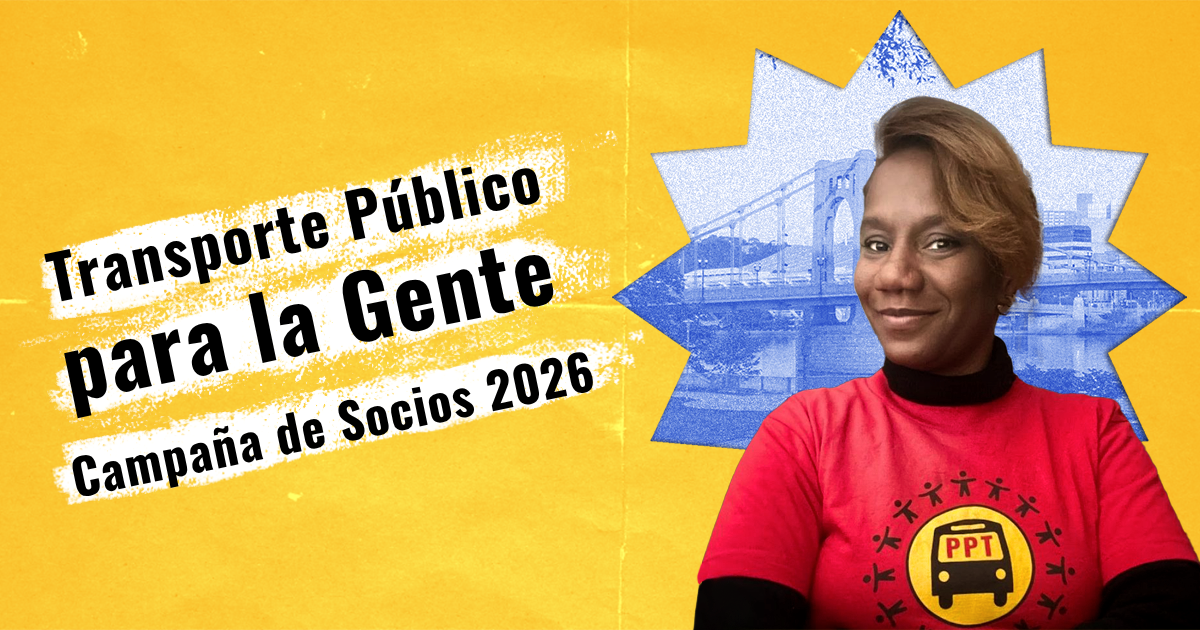
Transporte Público para la Gente: Únete a la campaña de Socios 2026
Me llamo Evelyn Ulysse Alcántara. Uso el transporte público a diario para ir al trabajo, al médico, actividades de ocio, reuniones, llevar a mi hijo al colegio— para todo.
Soy latina y mi inglés no es perfecto, así que cuando me mudé a Pittsburgh me costó usar el transporte público porque había muy poca información disponible en español. Por eso me ofrecí de voluntaria para ayudar como embajadora en los Recorridos de tránsito de PPT. Fue muy frustrante y aislante intentar aprender a usar el sistema de transporte público por mi cuenta. Sabía que si podía hacer algo para apoyar el aprendizaje de mi comunidad, ¡tenía que hacerlo!
Ser miembro de PPT no solo ha mejorado mis propias necesidades de transporte. Me abrió la puerta para ayudarme a marcar la diferencia.
Cuando hubo recortes en el transporte público en Beechview, hubo ocasiones en que el autobús o el Tren no venían—y no sabía la razón, porque los cambios sólo se comunicaban en inglés. Pero hoy, si vas a Steel Plaza o Wood Street Station, ¡escucharás anuncios en español! Y hay instrucciones paso a paso en español en la web de PRT. Esto se debe a que PPT y Casa San José se unieron para dar voz a mi comunidad, para que PRT pudiera entender el verdadero impacto que esto estaba teniendo en nosotros.
Este es el verdadero poder de PPT: realmente escuchan a la gente.
Cuando descubrí que PPT, me pedían testimonios sobre el papel que tiene el transporte público en la vida de las personas, para mostrar lo importante que sería un programa de media tarifa. Sabía que tenía que dar mi testimonio, porque necesitábamos actuar para mejorar el acceso. En aquel entonces solo era una idea y un proyecto, pero hoy es una realidad que lleva el servicio de transporte a la gente.
Me encanta el PPT porque sé de primera mano lo que podemos lograr juntos.
Solo en 2026:
- Llevamos a 120 miembros a Harrisburg para arrojar luz sobre la brecha presupuestaria de 80 millones de dólares y enfatizar la importancia de los servicios para tránsito y viajes compartidos para nuestros representantes.
- Compartimos habilidades y construimos poder con 170 personas de todo el país, compartimos habilidades y construyeron poder en nuestro Entrenamiento de Primavera 2026.
- Formamos a 13 becarios de organización comunitaria en toda la colina del barrio de PGH, y las regiones de Lancaster y Lehigh Valley en Pensilvania.
Por eso quería preguntar: ¿apoyarán el trabajo urgente de PPT haciéndote miembro que paga cuotas hoy?
Puedes apuntarte por solo 2,75 $, ¡el precio actual del billete de autobús del PRT! Ese dinero va directamente a la defensa de un presupuesto de transporte que mueve a TODOS los habitantes de Pensilvania. Todo el mundo merece acceso al transporte público.
¿Nos ayudarás a hacer realidad ese sueño?
The post Transporte Público para la Gente: Únete a la campaña de Socios 2026 appeared first on Pittsburghers for Public Transit.
Pages
The Fine Print I:
Disclaimer: The views expressed on this site are not the official position of the IWW (or even the IWW’s EUC) unless otherwise indicated and do not necessarily represent the views of anyone but the author’s, nor should it be assumed that any of these authors automatically support the IWW or endorse any of its positions.
Further: the inclusion of a link on our site (other than the link to the main IWW site) does not imply endorsement by or an alliance with the IWW. These sites have been chosen by our members due to their perceived relevance to the IWW EUC and are included here for informational purposes only. If you have any suggestions or comments on any of the links included (or not included) above, please contact us.
The Fine Print II:
Fair Use Notice: The material on this site is provided for educational and informational purposes. It may contain copyrighted material the use of which has not always been specifically authorized by the copyright owner. It is being made available in an effort to advance the understanding of scientific, environmental, economic, social justice and human rights issues etc.
It is believed that this constitutes a 'fair use' of any such copyrighted material as provided for in section 107 of the US Copyright Law. In accordance with Title 17 U.S.C. Section 107, the material on this site is distributed without profit to those who have an interest in using the included information for research and educational purposes. If you wish to use copyrighted material from this site for purposes of your own that go beyond 'fair use', you must obtain permission from the copyright owner. The information on this site does not constitute legal or technical advice.
 This site is not the official webpage of the Industrial Workers of the World.