You are here
News Feeds
Gas lobby bid to halt home electrification falls flat as Labor says it will stay the course
State government says it has no plans to water down or pause a regulated phaseout of gas from homes and businesses, despite the bidding of one of Australia's largest gas infrastructure corporations.
The post Gas lobby bid to halt home electrification falls flat as Labor says it will stay the course appeared first on Renew Economy.
NSW government must withdraw support for Narrabri gas, after Santos admits project depends on high gas prices
Lock the Gate Alliance says Santos CEO Kevin Gallagher’s admission that the Narrabri gas project will be economically unviable without high gas prices should prompt the NSW Government to withdraw its support for the project.
Energy Analysts Call Utah Coal Terminal Funding “A High-Risk Gamble”
A new report by the Institute for Energy Economics and Financial Analysis (IEEFA) calls a plan to spend $54 million of Utah public funds on coal export terminals in Oakland, California, and Longview, Washington, “a high-risk gamble to spend … money on out-of-state projects that could leave rural Utah with limited economic benefits — even if the coal terminals are eventually built.”
EEFA analyzed a recent report commissioned by the Rural Utah Infrastructure Coalition (RUIC) which recommended investing 80% of the funds ($43.2M) in Oakland and the remainder in Longview. IEEFA’s verdict is summed up in the title of its report, “Extensive financial risks and delays loom as Utah considers investing in coal export terminals that would divert funding from in-state needs.”
Ironically, the report commissioned by RUIC to justify investment in coal export terminals is full of red flags in IEEFA’s view:
The [Norda Stelo] report details a multitude of risks for investing in these projects, including:
- Far higher costs, hundreds of millions of dollars more than estimated by advocates
- Construction timelines at least two to three years longer than currently stated
- Lack of well-capitalized, experienced investors, including mining companies, commodity trading firms, or railroads that could see these projects through
- The very early-stage engineering status of the projects, especially Longview, greatly increasing the odds of delays and cost overruns
- Many potential bottlenecks that could sharply curtail export tonnage, including rail congestion, limited and inflexible terminal space, and loading equipment limitations
- International coal market risks
- Organized and influential state and local opposition in both California and Washington that has stopped previously proposed coal export projects
The report by the IEEFA, “which provides independent, evidence-based financial analysis of global energy markets, investment trends, and policies,” aligns closely with analysis of the Norda Stelo report published by No Coal in Oakland on September 8, 2026.
Though it matters very much to West Oakland residents and workers, the IEEFA didn’t comment on the open air stockpiles in which terminal operators plan to store as much as 300,000 tons of coal on the proposed terminal site — scrapping the empty promises and implications in conceptual drawings and legal filings with which developers marketed their dystopian project 8-11 years ago. It’s fair to assume that this looming threat flew under the IEEFA’s radar because the health and safety of Californians is not the State of Utah’s financial concern.
On the other hand, the IEEFA report details project risks that No Coal in Oakland did not raise in its ‘hot off the press’ analysis of the $488,000 RUIC-commissioned study.
For example, IEEFA cited the risk of increase in the already jaw-dropping OBOT construction cost estimate floated by Norda Stelo, reasoning that there are “significant and interrelated risk factors: additional equipment and construction cost inflation, unforeseen engineering challenges, rising interest rates, […] project delays [, and] the extremely limited size of the coal terminal site…”
IEEFA also called out “lack of well-capitalized, experienced investors” as a “financial red flag”; and the Norda Stelo admission that “rail congestion associated with BNSF and UP services to Californian west coast ports is increasing, with dwell times exceeding eight days at several ports” and “two rail bottlenecks near the Donner Pass that have ‘single-track tunnels with potential waiting and weather / rockslide / washout stoppages.’”
The independent IEEFA report then ends with a bang:
At this early stage of development, and given the absence of solid commitments from any financially strong and experienced commercial backers, these projects pose substantial risks to the RUIC’s money—risks that should not be borne by rural citizens of Utah.
The question now is whether Utah’s Community Impact Board (CIB) — the government entity that will decide whether or not to fund the risk-riddled OBOT project — will be gulled by RUIC’s smoke-and-mirror application for over $50,000,000 in public money … or whether they will act in the best interest of the people of Utah.
Stay tuned. The CIB meets next on October 1st, and it’s not yet clear whether they will evaluate the application for funding out-of-state coal terminals at that meeting, or whether RUIC will engineer a delay as the coalition of mining counties licks the wounds inflicted on its case by the IEEFA report.
A full PDF version of the IEEFA report is available here.
Image: State Capitol of Utah. Image credit: Strobel Adventures, via Wikimedia, CC BY-SA 4.0.
Lake Powell Drops to Record-Low Levels
The effects of a meager mountain snowpack across the Upper Colorado Basin in winter 2025-2026 had made their way downstream to Lake Powell by summer.
DIY Filter Systems Improve Air Quality in Classrooms
Tests in university classes show that simple, low-cost systems can remove airborne particles with little disruption from fan noise.
Currents in an Arctic Sea Accelerate the Sinking of Carbon-Carrying Phytoplankton
Documenting the seasonal fate of these tiny marine organisms is a step toward understanding how ecosystems in the world's fastest-warming region may change as ice recedes.
Delaying Cherry Blossom to Reduce Frost Damage
A new study found more than half of the city’s bike-share trips replace car trips, with each bike reducing annual CO2 emissions by up 120 kilograms (kg) per year.
Adding Limestone to Mississippi River Basin Farmlands Acts as a Major Carbon Sink, Study Finds
In a discovery as broad and far-reaching as the Big Muddy itself, a new, Yale-led study says farmers along the Mississippi River Basin are storing more carbon dioxide (CO2) in the soil than they are emitting when they add limestone to their fields, an agricultural practice known as “liming.”
Past Emissions From Top Polluters Will Continue Warming the Planet for Decades to Come
If someone leaves the faucet running in your bathroom and the house floods, it’s easy to assign responsibility for the damage.
Inside the fight to stop prepaid disconnections | Solar Insiders
Original Power is leading a push to protect people using prepaid meters from being disconnected when temperatures rise above 40ºC.
The post Inside the fight to stop prepaid disconnections | Solar Insiders appeared first on Renew Economy.
Out Now: Low-tech Magazine Volume IV
Low-tech Magazine presents the fourth volume in the chronological book series. It contains twenty articles that were published online between 2022 and 2026. Three earlier volumes collect articles written and published online between 2007 and 2021, which are also bundled in the “Compressed Edition”.
This new volume is a bit different from the earlier books: eight of the articles are DIY guides or manuals, and we have grouped them together in the second part of the book. This volume covers the period that Marie Verdeil joined Low-tech Magazine, which partly shifted the focus from writing articles to building prototypes inspired by historical research. These prototypes also led us to conduct workshops in universities and participate in museum exhibitions.
As is the case with all of our books, the articles have been edited and improved compared to the original web versions. Some articles gained extra or better images. We rewrote two manuals, based on further experiences we gained since the publication of the originals. The book has 500 pages and contains 405 images in black and white.
You can order Low-tech Magazine Volume IV at our online bookstore, available as paperback and hardcover. The ebook is not yet available.
Image: Low-tech Magazine Volume IV (2022-2026). Photo: Juliette Demaret. Contents table ARTICLES:- The Revenge of the Hot Water Bottle
- When Lethal Weapons Grew on Trees
- What if We Replace Guns and Bullets with Bows and Arrows?
- Can We Make Bicycles Sustainable Again?
- Low-tech Magazine: The Comic
- Direct Solar Power: Off-Grid Without Batteries
- Plastic Waste in the Fuel Tank?
- How to Escape From the Iron Age?
- Communal Luxury: The Public Bathhouse
- The Compressed Book Edition
- How to Dress and Undress your Home
- Rediscovering the Handcart
- How to Build a Small Solar Power System
- How to Build an Electrically Heated Table
- How to Build a Solar Powered Electric Oven
- How to Brew Solar Powered Coffee
- Winter is Coming: Build a Solar Powered Foot Stove
- How to Assemble an Electric Heating Element from Scratch
- How to Build a Practical Household Bike Generator
- Human Powered Air Compressor and Energy Storage System
With contributions by: Kris De Decker, Marie Verdeil, Guillaume Lion, Kozimo, Andy Lagzdins.
The book design is a collaborative effort by Laia Comellas, Marie Verdeil, and Johanna Gratzer. Marie Verdeil made the cover, Vaiva Vinskaitė did the typesetting.
Earlier volumes:- Low-tech Magazine Volume I: paperback / hardcover.
- Low-tech Magazine Volume II: paperback / hardcover.
- Low-tech Magazine Volume III: paperback / hardcover.
- The Compressed Edition: paperback / hardcover.
- The Comments: paperback / hardcover.
- Thematic book series.
Patrons have free access to all ebooks, and early access to print books at a reduced price. They also receive exclusive content, which includes previews of new building projects and behind-the-scenes news.
Image: Low-tech Magazine Volume I, II, III & IV (2022-2026). Photo: Juliette Demaret.Vertical-axis floating wind turbines may be tested in Australian offshore renewable zone
Swedish floating wind innovator may build a 20 MW demonstration project in Australia using its unique vertical-axis turbines.
The post Vertical-axis floating wind turbines may be tested in Australian offshore renewable zone appeared first on Renew Economy.
STATEMENT: Pitkin County votes to approve special use permit for operations of Maroon Bells Scenic Area
DENVER — Pitkin County commissioners voted unanimously today, September 23, to approve a special use permit for the county to take over daily operations of the Maroon Bells Scenic Area from the U.S. Forest Service (USFS) starting in 2027. The permit, which does not specify how many acres of public land the county would manage, still needs final approval from USFS and the United States Department of Agriculture (USDA).
The Forest Service says the Maroon Bells Scenic Area runs at a deficit of more than $300,000 a year, and White River National Forest officials cited budget constraints, hiring difficulties, and deferred maintenance as reasons it can no longer afford to manage the area. Pitkin County Open Space and Trails has been partnering with the federal government at Maroon Bells for decades and the county has the resources and experience to take on day-to-day operations. But to help cover operating costs, the county has proposed increasing the vehicle day-use fee from $10 to $30 and the nightly campground fee from $15 to $33.
Last week, USFS said it would add a 15-day public comment period before approving the permit, changing its original plan to approve it without public input. The Forest Service intends to approve the permit using a categorical exclusion, which allows the agency to bypass the environmental review usually required under the National Environmental Policy Act. As of today, USFS has not released a map of the permit area.
Center for Western Priorities released the following statement from Aaron Weiss, executive director for the Center for Western Priorities:
“The Forest Service actually listened to the public and plans to open a comment period, and that’s an important precedent to uphold. But a comment period only works if people know what they’re commenting on. We still haven’t seen a map or been told how many acres the county would manage. The public can’t meaningfully weigh in when they don’t even know the scope of this proposal.
“Pitkin County is stepping in because the federal government failed to fund one of the most iconic landscapes in the country. Handing operations of public lands to whoever wants to cover the bill sets a dangerous precedent. It’s only a matter of time until an agreement like this one comes to a county that isn’t interested in prioritizing conservation and recreation—and the Trump administration is eager to privatize our public lands whenever it can. Congress sets the Forest Service’s budget, and it’s Congress’s job to fund our public lands so the federal government can manage them for everyone.”
The Forest Service comment period has not yet been published in the Federal Register.
Learn more:
- Forest Service adds comment period for PitCo’s Maroon Bells operations takeover — Aspen Journalism
- Advocates are concerned that Maroon Bells move signals shift towards privatization — Aspen Public Radio
- Amid restructuring talk, Forest Service says it can no longer manage popular Maroon Bells recreation area — Aspen Public Radio
- Pitkin County and U.S. Forest Service Explore Expanded Partnership for Management of Maroon Bells Scenic Area — Pitkin County
- Forest Service plan would cut the public out of Maroon Bells management decision — Westwise
- The Maroon Bells belong to everyone. Why are we treating them like a business? — Westwise
The post STATEMENT: Pitkin County votes to approve special use permit for operations of Maroon Bells Scenic Area appeared first on Center for Western Priorities.
Origin dusts off plan for one of Australia’s biggest peaking power plants, using gas and diesel
Origin Energy, the country's biggest retailer and already the owner of the biggest gas generation portfolio, unveils plans for one of the biggest peaking plants in Australia.
The post Origin dusts off plan for one of Australia’s biggest peaking power plants, using gas and diesel appeared first on Renew Economy.
From the Mountains to the Coast: Communities Exchange Birdwatching Tourism Experiences in Oaxaca, Mexico
Germany unveils plan to end use of fossil fuels in energy sector by 2045
Germany wants to stop using fossil fuels in its energy sector by 2045 at the latest, with plans for how to do that set out in the country’s transition roadmap published on Wednesday on the sidelines of the UN General Assembly in New York.
The blueprint focuses on electrifying transport, home heating and industry, while gradually replacing fossil fuel power generation with renewables. Renewables supplied about 55% of Germany’s electricity last year and the government wants that to reach at least 80% by 2030.
All coal-fired power stations – which generated almost a quarter of Germany’s electricity in 2025 – must close by 2038 at the latest. That deadline has been set in German law since 2020, but the roadmap says the government is exploring the possibility of bringing the end date forward to 2035.
New gas-fired plants that receive state funding must be “hydrogen-ready” and run on climate-neutral fuels by 2045. The roadmap does not specify what those fuels are but they generally include biofuels and green hydrogen.
At the same time, Berlin wants to install 2,000 more wind turbines and reduce the need for power plants by boosting the use of batteries.
UN SUMMIT LIVE: UN chief says world has tools to end the fossil fuel age
Speaking at the UN chief’s climate summit in New York, environment minister Carsten Schneider said the plan will allow Germany to lower its imports of fossil fuels and reduce its dependence on “supply chains vulnerable to geopolitical crisis” – and called on more countries to do the same.
“It is important to ensure that transitioning away from fossil fuels remains high up on the international agenda,” he said, adding that Germany would seek to “improve the overall framework” for mobilising more funds to help developing countries phase out fossil fuels.
“We want to enable countries to chart their own course towards energy security and prosperity,” he said.
On Tuesday, addressing the UN General Assembly, UN Secretary-General António Guterres urged all countries to submit national roadmaps to end the production and consumption of fossil fuels with “clear timelines and protection for affected workers and communities”.
A group of around 80 countries led a failed push at last year’s COP30 in Belém to create a global roadmap on transitioning away from fossil fuels. While the initiative was not adopted at the summit, some countries like France and the Netherlands opted to move forward with their own national plans.
Subsidies for EVs and heat pumpsTo cut reliance on petrol for transport, the German government says it will make available 2.8 billion euros to subsidise the cost of buying electric vehicles for lower and middle income households.
Official projections suggest that by 2035, every new car sold in Germany will be electric, according to the document. Freight, shipping and aviation are expected to shift to a mix of electric vehicles, “sustainable” biofuels and hydrogen-based fuels.
For homes, the roadmap relies mainly on replacing gas and oil boilers with heat pumps, backed by state subsidies. Anyone who installs a new gas or oil heating system will have to use a rising share of “climate-neutral fuels” from 2029, reaching 60% by 2040. A proposed quota would require fuel suppliers to switch entirely to climate-neutral heating fuels from 2045.
Industry is expected to decarbonise by switching to electricity and hydrogen, becoming more energy efficient, and capturing carbon where emissions are hard to avoid.
UN backs push to upgrade grids slowing clean power uptake in Africa and SE Asia
Schneider said the roadmap is not just a climate strategy, but also an economic policy strategy. “The money we currently spend on importing oil and gas will increasingly flow into local value creation,” he added in a written statement. “Moving away from fossil fuels combines independence, affordability and climate protection”.
In 2024, Germany spent about 76 billion euros on importing fossil fuels. Around two-thirds of that went on oil and petroleum products, and the rest on gas and coal.
Campaigners call for faster phase-outReactions to the roadmap from analysts and campaigners were mixed – both praising the country’s initiative for launching its plan voluntarily but also calling for an even faster fossil fuel phase-out.
Jennifer Morgan, former German climate envoy, said the roadmap is a “welcome step” but to truly deliver, the strategy should be backed by “a faster, more deliberate and just phase-out, paired with the rollout of green electrification”.
Laurie Van Der Burg, public finance lead at campaign group Oil Change International, said Germany deserves credit for publishing the roadmap, but its efforts are “not commensurate with the reality of the crisis, or its responsibility as a wealthy, historic emitter”. She urged the country to end its financing for fossil fuels, strengthen the roadmap and redirect public money toward renewable energy.
Germany is the third European country to publish a national fossil fuel transition roadmap following France and the Netherlands. France has set end dates for coal (2030), oil (2045) and gas (2050), though its plan mostly brings together existing policies. The Dutch government has not set a binding end date for the country’s fossil fuel production and use, indicating only that it should be “minimised” by 2050.
Linda Kalcher, executive director at think-tank Strategic Perspectives, said the targets in the three national roadmaps still fall short of what is needed to achieve energy security, but they still send a powerful message to fossil fuel exporters. “A huge share of the European market is planning for a future in which demand for coal, oil and gas declines,” she added.
The post Germany unveils plan to end use of fossil fuels in energy sector by 2045 appeared first on Climate Home News.
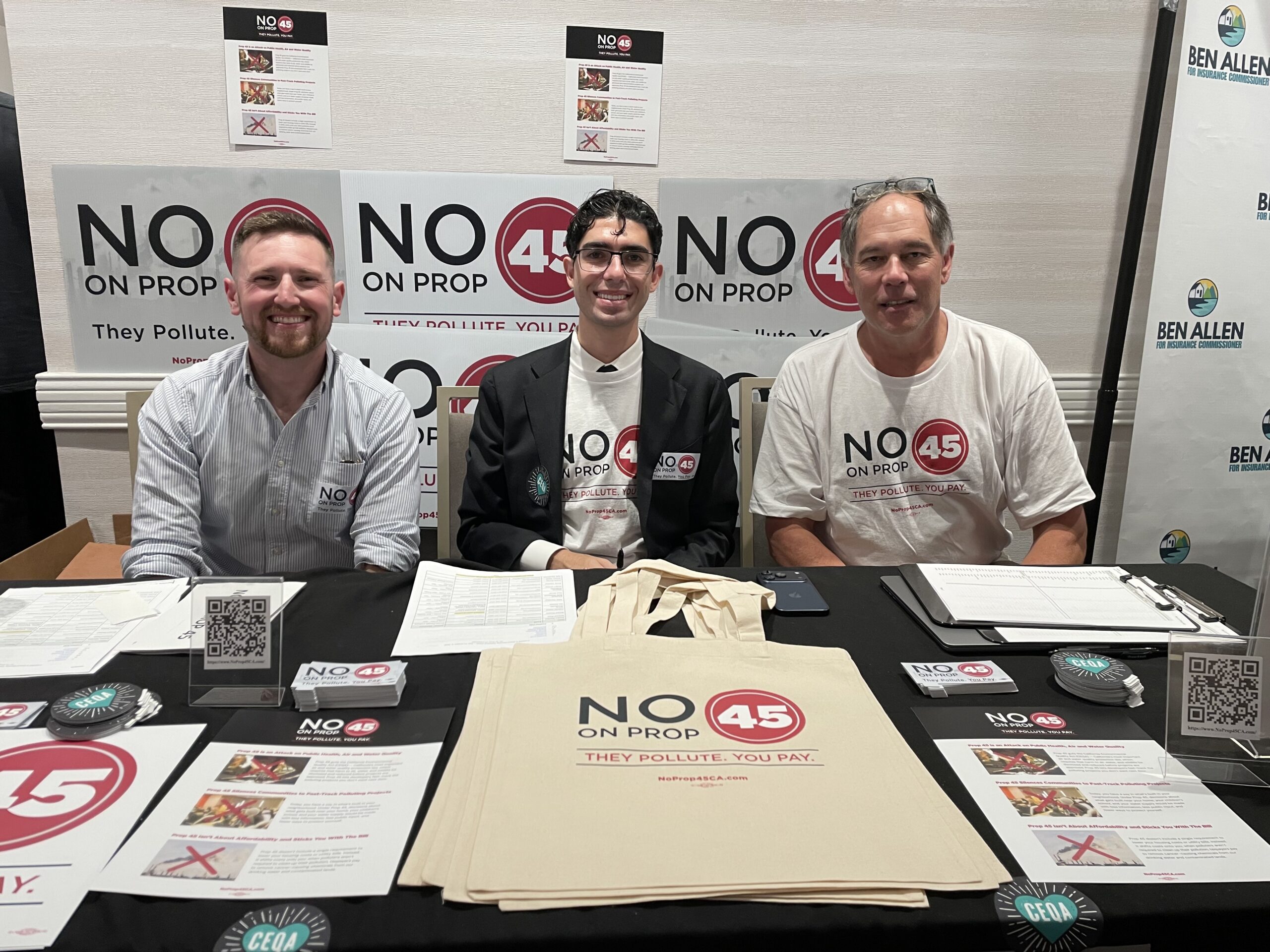
Vote No on Prop 45: Rolling Back CEQA Is A Proposition Californians Can’t Afford
Updated on September 23 to include links and additional information. Originally published on January 16, 2026.
For advocates working at the intersection of environmental protection and climate-smart growth, the California Environmental Quality Act (CEQA) has long been a source of both pride and frustration. While it has been a critical tool to protect our natural and working lands, its procedural delays have often been used to stall projects essential to a low-carbon future: dense infill housing and transit-oriented development in our existing communities.
In July 2025, however, at the urging of Governor Newsom, the California legislature passed some of the most impactful changes to CEQA since its inception. Taken together, the two bills (AB 130 and SB 131) provide robust statutory CEQA exemptions for infill housing and housing element rezonings, require the state to map infill areas where exemptions would apply, and narrow the scope of the administrative record, helping to curtail anti-housing litigation.
Despite these monumental changes that address the barriers to critical infill development, California’s business lobby and sprawl developers were left unsatisfied. Now, they are proposing a ballot initiative that would make far more radical changes to the law. After gathering enough signatures to qualify for the November ballot, this is now called Proposition 45.
While the rhetoric of the measure (initially called Building an Affordable California Act, or BACA) seems to be aligned with urbanist goals and those of the broader abundance and affordability movements, the actual policy details and mechanics of the initiative—and the progress we’ve already achieved in the legislature last year—suggest that the costs it brings far outweigh any potential benefits.
Below, we outline seven reasons why the measure should be rejected (click to read more):
1. Major Reforms Have Already Been EnactedFor years, a primary objective for California’s urbanists was to stop the abuse of environmental law against projects that genuinely help the environment: dense, transit-oriented housing.
In a landmark shift for the state, that goal has largely been realized. Following years of advocacy by urbanists, the legislature passed a clean statutory CEQA exemption for infill housing. AB 130, which Greenbelt Alliance was proud to support, is already being utilized across California, allowing builders to move forward with climate-friendly housing in high-opportunity areas like Palo Alto or Beverly Hills without the threat of being endlessly delayed by the environmental review process. While there is room for technical refinements, the fundamental issue at hand—the misuse of environmental laws to delay environmentally-friendly housing projects—has largely been addressed.
As the saying goes, “the devil is in the details”, and that’s certainly true for the BACA initiative. While modest on the surface, BACA creates a completely new set of rules for what it calls “essential” projects. So what, exactly, is an “essential project”?
The list is incredibly broad. Under Article 2, Section 21013, “essential projects” include housing, water, transportation, clean energy, transmission, broadband, and healthcare infrastructure. In practice, this definition encompasses a wide range of large-scale developments. For example, new freeways and existing freeway expansions would qualify as “essential transportation” projects; large greenfield sprawl developments would be treated as “essential” housing projects; and new dams and reservoirs would qualify as “essential” water projects. The definition even includes all “related and ancillary infrastructure,” meaning that highway interchanges, utility extensions, and water pipelines that enable sprawl developments also receive streamlined approval. All of these are enormous projects in terms of size and scale, with major potential environmental impacts. Yet, just like an apartment building in an urban area, under BACA, they would qualify for a significantly truncated review process.
In effect, this new CEQA process mirrors the fundamental flaw of its predecessor. While the old system failed to exempt low or no-impact projects from excessive review, the new one errs in the opposite direction, fast-tracking high-risk developments with significant potential for harm.
3. All Timelines Are Not Created EqualThe BACA initiative imposes strict timelines for this new class of projects that it deems “essential”: the environmental review process can take no more than one year. On the surface, a one-year limit on an Environmental Impact Report (EIR) seems reasonable. And for certain projects, like an apartment building on a parking lot in downtown San Francisco, or a townhome development in an LA suburb, it would be.
However, the measure’s definition of “essential” includes highways, dams, large-scale subdivisions, and other major projects. The environmental review required for projects at this scale cannot be done in a single year. Surveying hundreds if not thousands (or even tens of thousands) of acres of undisturbed and undeveloped land for species nesting patterns and habitat, water pollution impacts, and other environmental concerns physically cannot be accomplished within the timeframe laid out in the initiative. By forcing these projects into such a condensed timeline, we will be creating a system that overlooks genuine environmental harm in favor of speed.
For projects with unambiguous environmental benefits, such as housing developments within already urbanized areas, such speed makes sense. Many of the project types considered by this measure do not have the same clear, unambiguous benefits.
4. Restrictive AlternativesOne of CEQA’s most critical tools for preventing environmental harm is its alternative analysis provision, which allows for the identification of better project locations and designs. Currently, CEQA requires agencies to analyze a “reasonable range of alternatives” that could reduce environmental impacts, including different sites, reduced intensity options, and designs that avoid sensitive resources. This is how agencies can say, “this housing should be built downtown on a parking lot instead of on farmland,” or “this highway expansion has an alternative transit solution.”
BACA restricts this to just three options: the proposed project, one alternative designed by the applicant themselves (which doesn’t even need to be at a different location), and “no project.” The applicant’s alternative can be a slightly modified version of their original proposal on the same site. This eliminates the core mechanism for steering projects away from environmentally sensitive locations toward more appropriate sites, exactly the tool needed to prevent sprawl, protect open space, and ensure development happens in the right places.
5. The Evidentiary StandardMaybe the most radical change incorporated in the ballot measure is to CEQA’s standard of review. Right now, CEQA allows a lead agency (generally a city or county) to use its own discretion to explore project alternatives and negotiate environmental mitigations. BACA proposes to eliminate this by requiring that environmental impacts only be found significant if they violate objective, quantifiable standards already in existing law when the project was proposed, which doesn’t sound inherently unreasonable!
However, the measure doesn’t actually require jurisdictions to adopt such standards; instead, it exploits their absence. If numerical thresholds don’t already exist for resources like oak woodlands, groundwater, or wildlife corridors, impacts to them essentially can’t be found significant regardless of severity. A genuine objective standards approach would mandate jurisdictions adopt protective thresholds and update them as science improves. This measure rewards weak standards, freezes them at application date, and prevents improvements based on new knowledge.
6. Ballot Box PermanenceFinally, one of the greatest flaws of the measure is its rigidity. Should it pass, BACA would require a 2/3rds vote of the legislature to amend.
California has a long, storied history with ballot box governance, where initiatives become impossible to adjust as new problems arise. The 2/3rds requirement virtually guarantees the law could never be changed, regardless of what issues may arise. An unchangeable measure, with foreseeable negative impacts for the state, may have lasting consequences for generations.
Some of the project types included in this measure, such as clean energy or transmission infrastructure, may benefit from the types of streamlining being considered if careful, targeted changes were made. Rather than a broad, clunky initiative that will be extremely difficult to change, we should advocate for those reforms through the legislative cleanup process already underway.
7. The Costs Are Just Too HighCalifornia faces converging affordability crises: insurers fleeing the state, utility rates climbing, and municipal budgets straining under unsustainable costs. All of these issues stem from the same source: decades of sprawling outward, often into fire-prone areas, leaving us with infrastructure we cannot afford to maintain and risks we cannot afford to insure.
BACA will accelerate these failures by trading short-term speed for permanent costs. By gutting CEQA’s alternatives analysis—the primary tool for steering projects away from costly, high-risk locations—this limits agencies to the developer’s preferred site, one alternative the developer designs themselves, and “no project.” It freezes environmental standards at the date of application, rewarding jurisdictions with weak protections. And it requires agencies to approve permits within strict timelines regardless of fiscal consequences, because most cities lack the quantitative standards BACA requires to find fiscal impacts “significant.”
The result: even if we build some things faster today, we’ll be paying the tab forever. Even more homes in fire zones will continue to destabilize our insurance markets. More infrastructure extensions will push up our utility rates. More sprawling subdivisions that generate less revenue than they cost to maintain will ensure even higher taxes. BACA promises affordability through speed but delivers the opposite: cheaper to build, but financially ruinous to sustain.
At a time when people are struggling to make ends meet, and when the federal government is doing all it can to roll back our environmental protections, the last thing we need is to double down on the failed policies we have tried for decades and know do not work.
Proposition 45 will hurt the environment and your wallet.
Greenbelt Alliance strongly opposes Proposition 45 and urges voters to vote NO on 45 this November.
The post Vote No on Prop 45: Rolling Back CEQA Is A Proposition Californians Can’t Afford appeared first on Greenbelt Alliance.
New analysis of Hunter coal history shows mine approvals don’t guarantee job security
Coal mining companies shed thousands of jobs with little warning during the Hunter’s last coal downturn, and an extension to Hunter Valley Operations can’t substitute a proper plan to protect workers, says Hunter Renewal.
Can Teshekpuk Lake, a Vital Arctic Refuge, Be Saved? Gerrit Vyn Hopes His Images Will Help
Act 181 and Criterion 8C: A New Mechanism to Maintain Forests and Habitat
Pages
The Fine Print I:
Disclaimer: The views expressed on this site are not the official position of the IWW (or even the IWW’s EUC) unless otherwise indicated and do not necessarily represent the views of anyone but the author’s, nor should it be assumed that any of these authors automatically support the IWW or endorse any of its positions.
Further: the inclusion of a link on our site (other than the link to the main IWW site) does not imply endorsement by or an alliance with the IWW. These sites have been chosen by our members due to their perceived relevance to the IWW EUC and are included here for informational purposes only. If you have any suggestions or comments on any of the links included (or not included) above, please contact us.
The Fine Print II:
Fair Use Notice: The material on this site is provided for educational and informational purposes. It may contain copyrighted material the use of which has not always been specifically authorized by the copyright owner. It is being made available in an effort to advance the understanding of scientific, environmental, economic, social justice and human rights issues etc.
It is believed that this constitutes a 'fair use' of any such copyrighted material as provided for in section 107 of the US Copyright Law. In accordance with Title 17 U.S.C. Section 107, the material on this site is distributed without profit to those who have an interest in using the included information for research and educational purposes. If you wish to use copyrighted material from this site for purposes of your own that go beyond 'fair use', you must obtain permission from the copyright owner. The information on this site does not constitute legal or technical advice.
 This site is not the official webpage of the Industrial Workers of the World.