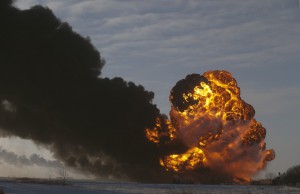
Lockdown Defends the Albany Bulb! More Support Needed

From the Earth First! Newswire - May 16, 2014

Disclaimer: The views expressed here are not the official position of the IWW (or even the IWW’s EUC) and do not necessarily represent the views of anyone but the author’s.

A lockdown at the Albany Bulb ensured defense of the land for one more day yesterday.

Activist with the IWW Environmental Caucus and EF!er, Elliot Hughes, explained, “Today, I locked down to a backhoe and negotiated with Albany police that the Amber’s house and the two barricaded roads leading to it would not be demolished for the day after hearing cops threaten to demolish her house early in the morning. We need support to stop the eviction of the Albany Bulb ASAP!.”

The Albany Bulb is, according to its declaration, “an Autonomous Zone, a space where Art and Music continue to flourish, where People assemble Freely, where Dogs run unleashed, and where long-term Residents can continue to maintain and improve their Homesteads.”

The Bulb is known has been known as an anarchic place for a long time. Tolerance for camping has allowed human and nonhuman inhabitants to live and flourish among the tidal mudflats, sub tidal eel grass and salt marsh gum plants. The area is populated by barn owls, snakes, hawks, songbirds, and black-tailed hares, along with vegetation like Himalayan blackberries, acacia trees, and palms.

According to the website, Share the Bulb, “Over the past three decades, Nature and a particularly resourceful group of homeless people have reclaimed the Bulb as a wild space and a community space. The combination of reclaimed nature, community, and outsider art have made this former dump one of the most beautiful peninsulas into the San Francisco Bay, and has attracted daily dog-walkers, day-strollers, curious wanderers, picnickers, and others to an amazing place that reminds us of the many ways humans need the wild”

Last November, the state tried to forcibly evict the bulb, leading to barricades and an encampment. Residents sued the city to halt the eviction, and the suit was settled last month.

Join Energy Justice Summer in Northeast Pennsylvania!

By Alex Lotorto - www.energyjusticesummer.org, May 14, 2014

Disclaimer: The views expressed here are not the official position of the IWW (or even the IWW’s EUC) and do not necessarily represent the views of anyone but the author’s.

About

We are young organizers who care deeply about social justice and human rights. We seek a world where everyone has access to sustainable energy and no one suffers unjustly because of our fossil fuel economy. We believe that fracking presents a grave threat to people everywhere, especially those on the frontlines of extraction. To create a just energy future, we must stop fracking.

This summer, SustainUS and Energy Justice Network are launching a joint project called “Energy Justice Summer” to work in solidarity communities directly impacted by fracking in Pennsylvania. Here’s what we have planned:

  • COMMUNITY WORKSHOPS: We’ll host workshops with experts to teach residents how to monitor the environmental and socioeconomic impacts of fracking and organize to stop them.
  • STUDENT TRAININGS: We’ll convene students across the Northeast and prepare them to launch campaigns against fracking on campus this fall. 
  • IMPACTFUL RESEARCH: We’ll analyze violations of five gas companies, creating valuable materials for regulatory appeals and legal fights. We will show that rural poverty has increased since shale development has begun. Finally, we will report on the feasibility of a just transition away from fracking toward a green economy in Northeast Pennsylvania.
  • CREATIVE ACTIONS: We'll support ongoing fights to stop expansion of natural gas infrastructure, including the Cove Point LNG export terminal and other export transmission facilities.

By supporting and joining our campaign, you will help to stop fracking and bring about a more just energy future. From the frontlines of fracking in Pennsylvania to the devastation of Typhoon Haiyan in the Philippines, people are suffering because of continued fossil fuel extraction. We need to show that fracking is unacceptable and that young people will stand in solidarity with the communities most impacted. We need Energy Justice Summer.

Associated Pennsylvania State College and University Faculties (APSCUF) Position Statement on Hydraulic Fracturing (Fracking)

Disclaimer: The views expressed here are not the official position of the IWW (or even the IWW’s EUC) and do not necessarily represent the views of anyone but the author’s.

The ad hoc committee, by majority, supports the position that PASSHE (Pennsylvania State System of Higher Education) campuses are not appropriate locations for hydraulic fracturing (fracking), that given the environmental and health hazards of the fracking process, including all of its infrastructure and associated enterprises, its presence on PASSHE campuses is inconsistent and potentially deleterious to the PASSHE educational mission as well as to the health and welfare of PASSHE community members. 

A growing body of research is beginning to quantify and characterize the negative environmental, societal, economic, and ecological impacts on those close to such activities. Local impacts include but are not limited to gas migration, air pollution, and surface and near-surface water quality degradation as well as potential chronic impacts to air, water, landscapes, habitat, and ecosystems. Shale gas development in the United States) states, “Having one of these sites near a home, school or business can be distracting, inconvenient, annoying, and disruptive” (Soeder (2012).

Moreover, APSCUF opposes SB 367--the Indigenous Mineral Resources Development Act--as inconsistent with the PASSHE education mission for the same reasons and because it effectively pits some PASSHE campuses against others for revenue which could accrue to the permitting of fracking operations on PASSHE lands.  Such potential competition, or implementation of SB 367 in any form, could accelerate the presence of such operations--including pipeline construction, compressor infrastructure, waste management, heavy industrial truck traffic, and thereby increase exposure to pollution and hazards for members of PASSHE communities. 

Lastly, APSCUF takes a position against a PASSHE contribution to climate change, as induced by increased greenhouse gas emissions, as this is also inconsistent with a mission committed to the educations and welfare of future citizens of the Commonwealth.

Capital Blight: Who’re You Calling “Immigrant”, Pilgrim?

By x344543, May 5, 2014

Disclaimer: The views expressed here are not the official position of the IWW (or even the IWW’s EUC) and do not necessarily represent the views of anyone but the author’s.

A recent article on thinkprogress.org details a jingoist anti-immigration group’s efforts to wrap itself in a green cloak and (once again) obfuscate the real cause of environmental destruction. The (inaccurately named) organization in question, “Californians for Population Stabilization” (CAPS) attempted to use Earth Day (April 22) to argue that the primary cause of ecological destruction is immigration (read: an influx of poor brown skinned people from south of the US-Mexican border, naturally).

This tired old dog has been asked to hunt so many times, it’s hard to see how anyone could imagine that it can, but sure as I write these words, there it is.

I’ll admit that this is a bit of a trigger for me. I am, by any standards you could imagine, the descendents of varying strains of white, central European and Mediterranean immigrants of several generations back (five or six in most cases), but my ancestors (Jews, Irish, and Hungarians) suffered greatly at the hands of more dominant empires among those regions, so perhaps it has imbued me with a stronger sense of empathy for the downtrodden peoples in what currently constitutes “America”. I don’t take too kindly to insulting racist propaganda—even if it tries to fly a green flag, and CAPS certainly fits that description.

Chicago IWW Statement on May Day Arrests

Statement by the Chicago IWW - May 5, 2014

It is the official position of the Chicago branch of the Industrial Workers of the World (IWW) that the actions of the Chicago Police Department (CPD) and the marshals affiliated with Service Employees International Union (SEIU) and the Illinois Coalition for Immigrant and Refugee Rights (ICIRR) at the May 1st March to Stop Deportations were grossly inappropriate and condemnable. In collusion with the CPD, these marshals singled out and physically restrained two activists, leading to their arrests. While the arrests occurred, the marshals attempted to surround and enclose members of the IWW’s Red and Black Brigade contingent of the march, blocking their freedom of movement. The marshals also directed other participants to move past the enclosed contingent, preventing the other marchers from showing solidarity with the arrestees.

Jose “Zé” Garcia and Anne Meredith Wooton, the activists arrested during the march, have the full support of the Chicago branch of the IWW. Zé was released without charges, and Anne Meredith is facing misdemeanor charges. Zé is an outspoken advocate against ICIRR’s reformist policies, and actively spreads awareness of their tactics against dissenters. They are currently in the midst of fighting their own deportation. These facts, along with witness testimonials, suggest that these arrests may have been politically motivated. ICIRR’s official statement is that it was not their intention for these arrests to occur, while SEIU has not, to our knowledge, commented on the incident.

The actions of the marshals enabled the arrests. It is important that public marches be open to all who wish to participate without fear of state harassment, repression, and persecution. Above all, no one should be singled out for arrest based on their residency status—especially at a march against deportations. Given the historical legacy of May Day, it is crucial that anti-authoritarian and dissenting voices not be silenced by the state or its collaborators. If organizers expect broad participation at marches in the future, they must ensure that marshals do not aid in arrests and that solidarity with anyone who may be arrested is allowed. The IWW will always stand by the principle that an injury to one is an injury to all.

Zé has set up a GoFundMe page where you can read their personal account of the incident and donate to, in their own words, “help me fight my deportation so I can continue my fight against a brutal and illegitimate regime, my fight against the sellouts, my fight against EVERY deportation.”

Federal Pipeline and Oil-by-Rail Regulator Making 9% Staff Cut, Confounding Experts

Federal Pipeline and Oil-by-Rail Regulator Staff Cut, Confounds Experts - Job cuts come at a time when PHMSA is struggling to regulate the nation’s aging pipeline network and new pipelines tied to the oil and gas boom.

By Elizabeth Douglass - Inside Climate News, April 24, 2014

Disclaimer: The views expressed here are not the official position of the IWW (or even the IWW’s EUC) and do not necessarily represent the views of anyone but the author’s.

If employees accept all of the available buyouts, PHMSA will shrink to a full-time staff of 386, putting it 112 jobs short of its approved payroll for the current fiscal year.

The federal regulator for petroleum pipelines and oil-toting railcars is offering employee buyouts that could shrink the agency’s staff by 9 percent by mid-June—a step that has confounded observers because the agency is widely regarded as being chronically understaffed.

Pipeline and Hazardous Materials Safety Administration (PHMSA) spokesman Damon Hill said the buyout offers are meant to “help the agency manage attrition in areas where a large and growing number of employees are eligible for retirement by offering an inducement for a limited number of employees to voluntarily retire or resign.”

Hill said PHMSA is continuing to hire in key areas at the same time. “I understand how some folks may be looking at [the buyout effort], but it’s part of an overall plan to retain expertise and plan for retention and things like that,” he said. “There is some good that comes out of this.”

Still, the job cuts come at a time when PHMSA is already under considerable duress. Politicians and the public have been pushing the agency to more rigorously regulate the nation’s aging pipeline network as well as the many new pipelines tied to surging domestic oil and natural gas production. A spate of damaging pipeline spills and oil-by-rail accidents is adding to the workload, exposing PHMSA’s shortcomings and intensifying scrutiny of the agency.

An Interview With Staughton Lynd About the Labor Movement

By Andy Piascik - ZComm.net, April 30, 2014

Disclaimer: The views expressed here are not the official position of the IWW (or even the IWW’s EUC) and do not necessarily represent the views of anyone but the author’s.

For more than 50 years, Staughton Lynd has been a leading radical in the United States. He was an engaged supporter of the Black Liberation Movement in the Deep South in the early 1960’s, most notably as coordinator of the Freedom Schools during Mississippi Summer in 1964. He was an active opponent of US aggression in Indochina, including as chairperson of the first national demonstration against the war in Vietnam in April 1965.[1] In recent decades, Lynd has been an attorney representing prisoners, particularly at the Ohio State Penitentiary in Youngstown, and has written a book, a play and numerous articles about the 1993 uprising at the Southern Ohio Correctional Facility in Lucasville.[2]

Since the late 1960’s, Lynd has also been deeply involved in the labor movement as an activist, attorney and prolific writer.[3] Inspired by Marty Glaberman, Stan Weir and Ed Mann,[4] Lynd has been a passionate and prolific proponent of decentralized, rank-and-file driven unionism. In November 2014, Haymarket Books will publish a book by Lynd entitled Doing History from the Bottom Up: On E.P. Thompson, Howard Zinn, and Rebuilding the Labor Movement from Below and a new edition of his book Solidarity Unionism: Rebuilding the Labor Movement from Below with an introduction by radical labor scholar and activist Immanuel Ness will be published by PM Press in Spring 2015.

Piascik: What is your general view of the state of organized labor in the United States today?

Lynd: My general view, like that of everyone else, is that the labor movement is in catastrophic decline. My particular view is that the reason for this decline is not the Supreme Court, or the McCarthy period, or anything that might be remedied by changing the top leadership of unions, but the model of trade union organizing that has existed in all CIO unions since 1935. The critical elements of this model are: 1) Exclusive representation of a bargaining unit by a single union; 2) The dues check-off, whereby the employer deducts dues for the union from the paycheck of every member of the bargaining unit; 3) A clause prohibiting strikes and slowdowns for the duration of the contract; 4) A “management prerogatives” clause giving the employer the right to make investment decisions unilaterally.

In combination these clauses in the typical CIO contract give the employer the right to close the plant and prevent the workers from doing anything about it. So long as collective bargaining agreements conform to this template, the election of a Miller, a Sadlowski, a Carey, a Sweeney, or a Trumka will not bring about fundamental change.

Piascik: You have written extensively about the working class upheaval of the 1930’s, both the early years of the decade and the formation of the CIO.[5] How and why was the CIO consolidated as a top-down organization?

Lynd: It tends to be forgotten that the CIO was created by John L. Lewis. There is now a significant body of scholarship to the effect that 1) Lewis centralized the administration of the UMW so as to minimize the traditional influence of local unions and ran the national union in an altogether high-handed manner; 2) Lewis went out of his way to assure the business community that if they bargained with the CIO such phenomena as wildcat strikes would become a thing of the past; 3) many liberals and radicals such as Roger Baldwin of the ACLU opposed the Wagner Act, believing correctly that the result would be exactly what has occurred and that alternatives such as the Progressive Miners in southern Illinois would be steamrollered; 4) contrary to popular belief, the revival of unionism among miners began from below before the passage of the National Recovery Act with its Section 7 during the Spring of 1933 and the long-lasting miners’ strike the following summer was created and persisted in by rank-and-file miners despite endless attempts by Lewis and his lieutenant Philip Murray to settle it from above.

Piascik: You consistently underscore the importance of local initiatives. What do such initiatives look like in practice and why might they be more fruitful than national reform campaigns?

Lynd: At first glance any imaginable agglomeration of local groups appears helpless in contrast to gigantic international corporations. Indeed, in my early struggles with this dilemma, I highlighted the absence in the steel industry in the 1930s of effective coordination between new local unions improvised by the rank and file in a variety of locations.

The same problem presents itself today as low-wage workers in a variety of communities are simultaneously assisted, but also managed by, existing national unions like the UFCW and SEIU. For the moment, the unions say they only want to help these workers win specific demands through direct action. Down the road, however, these same unions may seek to make local direct actions serve as stepping stones to their familiar objective: exclusive bargaining status, complete with dues check-off and no-strike clause.

Official Tipped Off Hess Rail Yard About Oil-Carrier Inspection

By Cole Stangler - In These Times, April 29, 2014

Disclaimer: The views expressed here are not the official position of the IWW (or even the IWW’s EUC) and do not necessarily represent the views of anyone but the author’s.

Emails obtained by In These Times show a cozy relationship between North Dakota’s oil industry and a chief federal inspector charged with monitoring the safety of shipping crude oil by rail. The emails cast serious doubts on the integrity of the federal government’s supposed crackdown on the industry’s shoddy shipping practices—a subject of growing concern in the midst of a largely unregulated, and in some cases, deadly, transport boom.
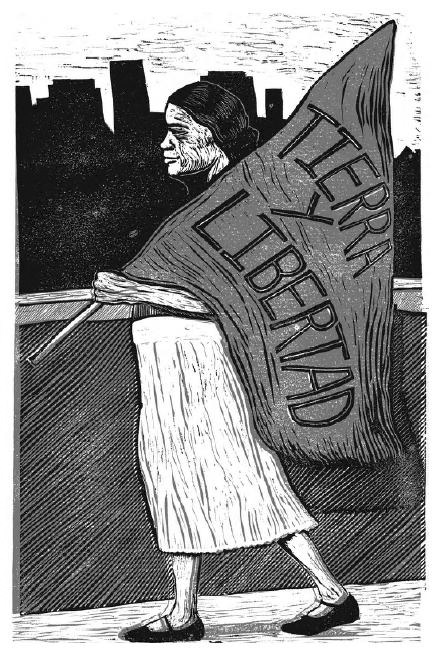
Last August, the Pipeline and Hazardous Materials Safety Agency (PHMSA) and Federal Railroad Administration announced they were rolling out the “Bakken Blitz”—a crackdown on shippers and carriers that mislabel their cargo. Federal hazmat regulations require trains carrying oil to properly classify and identify their shipments with placards. These practices are supposed to ensure that oil is safely packaged before being shipped. They’re also aimed at informing railroad personnel and, in the event of a mishap, any emergency responders. Regulators introduced the Blitz just one month after the Lac Mégantic disaster, when a runaway freight train carrying oil exploded in the small Quebec town, killing 47 people. In that case, Canadian safety investigators found American shippers in North Dakota’s Bakken region had understated the volatility of the oil that ignited and destroyed much of Lac Mégantic’s downtown area. Improper classification caused the shipment to be transported in an improper package. Emergency responders, too, were caught by surprise at how quickly the fire spread and how long it burned.

As part of the Department of Transportation’s new enforcement effort, PHMSA officials show up unannounced at rail facilities to conduct classification inspections—at least that’s what an agency spokesperson told In These Times at first. An email obtained through a Freedom of Information Act request strongly suggests that Kipton Wills, Central Region Director of PHMSA's Office of Hazardous Materials Enforcement, pre-arranged at least one of his agency’s visits to a Hess Corp. rail yard in Tioga, North Dakota, last October.

“We will accommodate your request to inspect trucks at the Tioga Rail Terminal,” Jody Schroeder, the rail terminal supervisor, wrote in an email to Wills dated October 3, 2013—five days before the inspection took place. “At your convenience please let me know your schedule for this event.”

Schroeder later confirmed that Wills reached out to him about the visit.

Earlier this month, PHMSA spokesperson Gordon Delcambre told In These Times that such inspections are impromptu. “They’re unannounced,” he said. “[Inspectors] figure out who they’re going to visit ahead of time, make plans, go to the area and then start knocking on doors.”

Indeed, this is normal procedure. The agency’s handbook notes “the policy of the PHMSA hazardous materials enforcement program is to conduct unannounced inspections.” Exceptions can include cases of “apparent imminent danger to enable the company to correct the danger,” instances where special preparations, records and equipment are necessary, and cases where “giving advance notice would enhance the probability of an effective and thorough inspection.”

Read the entire article here.

How This U.S. Rail Safety Measure Has Been Delayed for 44 Years … And Counting

By Justin Mikulka - DeSmog Blog, April 30, 2014

Disclaimer: The views expressed here are not the official position of the IWW (or even the IWW’s EUC) and do not necessarily represent the views of anyone but the author’s.

On August 20, 1969, two Penn Central commuter trains collided head-on near Darien, Conn. Four people were killed and 43 were injured. The crash led the National Transportation Safety Board (NTSB) to recommend that railroads implement new safety technology called positive train control — a system for monitoring and controlling train movements to increase safety.

The NTSB first recommended positive train control in 1970. In 2008, after another fatal train collision that killed 25 people, Congress finally passed the Rail Safety Improvement Act, which mandated positive train control be implemented by the railroad industry by the end of 2015.

Fast-forward another six years to multiple congressional hearings in recent months, during which the railroads have informed Congress that positive train control simply won’t be implemented by the end of 2015. It’s been 44 years since the NTSB first recommended positive train control to improve rail safety in the U.S. and it is still not being used.

Looking at the way the positive train control scenario has played out for the past 44 years offers valuable lessons on how the U.S. is now dealing with safety regulations for shipping oil by rail.

Last week, the NTSB held a two-day forum on rail safety regarding the transportation of crude oil and ethanol. One of the main topics was how to improve rail tank car safety and what to do with the DOT-111 tank cars currently being used to ship crude oil and ethanol.

Much like positive train control, the NTSB has been recommending for decades that the DOT-111 tank cars not be used for ethanol and crude oil transportation due to the high risks they pose in derailments.

So why hasn’t anything been done? Mostly because of opposition by oil and gas industry groups, such as the American Petroleum Institute (API).

Arriving at May Day: Lockdowns, Throwdowns, and Direct Action

By the Earth First! Journal Staff - Earth First! Journal, May 1, 2014

Disclaimer: The views expressed here are not the official position of the IWW (or even the IWW’s EUC) and do not necessarily represent the views of anyone but the author’s.

When the Global Climate Convergence announced the Earth Day to May Day series of events and actions, it revealed a gap between daily reality and Hallmark posturing. More than 100 actions—such as the occupation of the DEQ in Portland, Oregon, by Rising Tide—have taken place in dozens of cities as part of the Climate Convergence.

Over the last few days, IWW fellow workers in California have protested the Koch Bros PetCoke Facility in Pittsburg, the Chevron Refinery in Richmond, and Crude by Rail at the Union Pacific’s Ozal Train Yard in Martinez.

One Wob organizer named Elliot Hughes U-locked himself to the gate of the Koch Brothers facility to halt business as usual. “Our goal is the liberation of the people on the planet that is our home. With the increasing amount of industrial disasters, we cannot wait any longer because the health and safety of all workers of the world is on the line.”

EF! shares numerous crucial membranes with the IWW and the labor movement, dating back to Judi Bari’s founding of the IWW timber workers local #1 in Northern California in the late 1980s. The goal of uniting loggers against Maxxam’s junk bond dealing, land grabbing, and clear cutting was to restore timber lands to the public interest. While some hardcore EF!ers were repulsed by the notion of chatting up loggers, let alone working to move timber lands into the hands of communities that would take part in “sustainable logging,” most agreed that the terms were vastly superior to clear cutting old growth.

Indeed, growth from the Redwood Summer movement at the turn of the 1990s fed the entire radical movement, developing critical understandings that would be cultivated and emerge in Seattle 1999 and again during Occupy. According to stories passed down to us over the years, activists being shot at in Northern California’s redwood forest by the same loggers they were trying to organize later on that night in the barroom would, ten years down the line, take part in the free states of Cascadia, and the No Borders Camp of the Sonoran desert five years later.

In the words of Buenaventura Durutti, “The bourgeoisie might blast and ruin its own world before it leaves the stage of history. We carry a new world here, in our hearts. That world is growing in this minute.” The inter-generational movement of Earth First! grows in the interstices of stories and ideologies, yet we often lag behind when it comes to social analysis.

Pages

The Fine Print I:

Disclaimer: The views expressed on this site are not the official position of the IWW (or even the IWW’s EUC) unless otherwise indicated and do not necessarily represent the views of anyone but the author’s, nor should it be assumed that any of these authors automatically support the IWW or endorse any of its positions.

Further: the inclusion of a link on our site (other than the link to the main IWW site) does not imply endorsement by or an alliance with the IWW. These sites have been chosen by our members due to their perceived relevance to the IWW EUC and are included here for informational purposes only. If you have any suggestions or comments on any of the links included (or not included) above, please contact us.

The Fine Print II:

Fair Use Notice: The material on this site is provided for educational and informational purposes. It may contain copyrighted material the use of which has not always been specifically authorized by the copyright owner. It is being made available in an effort to advance the understanding of scientific, environmental, economic, social justice and human rights issues etc.

It is believed that this constitutes a 'fair use' of any such copyrighted material as provided for in section 107 of the US Copyright Law. In accordance with Title 17 U.S.C. Section 107, the material on this site is distributed without profit to those who have an interest in using the included information for research and educational purposes. If you wish to use copyrighted material from this site for purposes of your own that go beyond 'fair use', you must obtain permission from the copyright owner. The information on this site does not constitute legal or technical advice.