You are here
News Feeds
Climate change is a key challenge for Bangladesh’s new government
Crossposted from the Daily Observer
Written by Amanullah Porag, 350 Bangladesh Coordinator and Youth for NDCs Founder/Executive Director
The Bangladesh Nationalist Party’s (BNP) victory in the country’s first democratic elections in 17 years was built on promises to restore democracy, stabilize the economy, and reform governance. But the new government has another urgent mandate: to protect people from a climate crisis that has driven at least 10 million Bangladeshis from their homes. For us, climate protection is a matter of national survival. With a staggering two-thirds of the country less than 15 feet above sea level, it is estimated that by 2050, one in seven people in Bangladesh will be displaced by climate change. For many years, I’ve worked with farmers who have lost their lands and homes because of encroaching sea waters. Most of them are forced to eke out a living in the sweltering streets of Dhaka, or else migrate abroad. We went to the polls hoping to correct past injustices-not just political corruption, but also systemic injustices that determine who suffers when floods destroy homes, when heatwaves turn factories into boiling rooms, when rising seas swallow farmland.
The BNP’s campaign manifesto included surprisingly clear environmental commitments: a “National Green Mission” that includes 25 million trees over five years, green jobs for youth, and a concrete target of 20% renewable electricity by 2030. Especially for a youth electorate starved of change, those green commitments matter. The question now is whether these promises will survive the BNP’s contact with power. A 20% renewable energy target by 2030 is not insignificant. If achieved, it can begin to transform an energy sector too long dominated by mega fossil fuel projects that have left people stranded with costly, unreliable electricity they can’t afford, and the country with debt it can’t pay. Unfortunately, the BNP also emphasized oil and gas exploration and refinery expansion as part of Bangladesh’s energy security measures. If the new government continues to lean into fossil fuels, it will fall prey to the same corrupt forces that doomed the nation. It should instead reform procurement, modernize grid infrastructure, and dismantle distortions that locked Bangladesh into expensive power deals.
Sure, planting trees is a good policy. But climate justice requires more. It means protecting coastal communities without displacing them for infrastructure projects. It means ensuring river erosion victims receive rehabilitation, not just temporary relief. It means designing urban heat action plans that protect workers and low-income communities. It means ending environmentally destructive projects that undermine long-term resilience. Bangladesh does not fall short on climate rhetoric, but on implementation failures. If the BNP wants to redefine governance, climate policy is where that promise will be tested most visibly. In its first 100 days, the new government must demonstrate its seriousness in addressing the energy and climate crisis that is eroding our capacity for progress.
First, it must audit all existing power purchase agreements and move to lower electricity prices. Second, it must revise the energy master plan, aligning it with climate science, economic rationality, and a just transition framework. Third, it must operationalize the national climate plan-moving beyond targets to delivery strategies, budget alignment, and accountability mechanisms. The greatest risk now is complacency. Governments often begin with reformist language but gradually slide into short-term stabilization politics, negotiated deals, and environmentally risky mega-projects justified in the name of development. We cannot allow that to happen again.
This is not yet a moment for antagonism. Youth activists, climate researchers, policy practitioners, and civil society are not adversaries of the newly elected government. Many of us have worked on climate governance and adaptation planning long before this election. If the BNP is serious about its green commitments, climate advocates stand ready to support with research, monitoring, implementation, and community engagement. But support does not mean silence. It means measurable progress, transparency, and accountability. It means speaking up when commitments drift.
The BNP’s victory reshaped the political landscape. Now it must decide whether it will reshape Bangladesh’s climate trajectory. This government has inherited more than power. It has inherited responsibility in one of the most climate-exposed countries on Earth. The elections are over-but Bangladesh’s climate test has just begun.
The post Climate change is a key challenge for Bangladesh’s new government appeared first on 350.
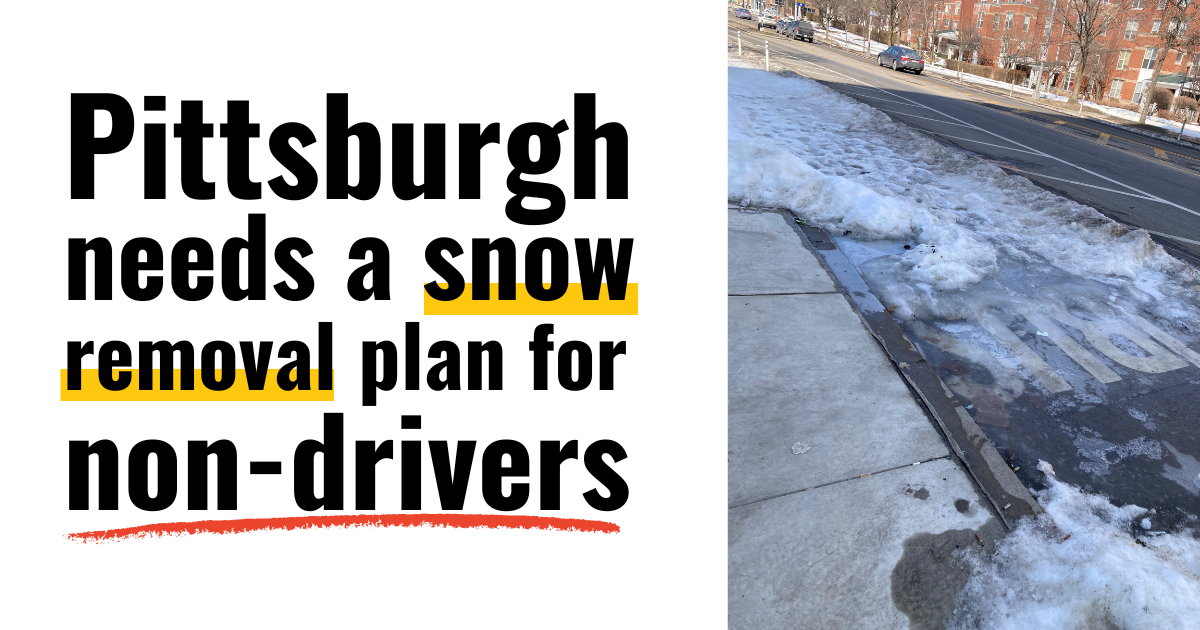
Tell the City of Pittsburgh: We Need A Snow Removal Plan for Non-Drivers
Image Description: an image of a Pittsburgh bus lane covered in ice and snow, next to bold black text reading “Pittsburgh needs a snow removal plan for non-drivers”.
This post was written by Alisa Grishman, Founder of Access Mob Pittsburgh, with support from Pittsburghers for Public Transit, Pittsburgh Center for Disability Justice, and BikePGH.
Even in snow, all Pittsburghers deserve the freedom to move.
Tell City leaders to develop a snow removal plan for all!On January, 25th, 2026, the City of Pittsburgh experienced a significant snowstorm. Since that event, our region has had persistently below-freezing temperatures- ensuring that unplowed, unshoveled snow remained where it fell for more than two weeks. Throughout this time, snow and ice have obstructed key sidewalk corridors, piled up in front of bus stops, and rendered curb cuts on street corners entirely inaccessible.
For the 30% of Pittsburghers who are non-drivers, the snowstorm and the City’s resulting inaction has been a prolonged disaster.
Thousands of residents have been stranded, unable to leave their homes and safely access their grocery stores, medical appointments, schools and jobs. And people with disabilities have been disproportionately harmed by this failure to properly address snow conditions because there has simply been no accessible way to navigate our City’s right of ways under these conditions. Those who did venture out were forced to walk or roll on the street alongside active traffic, putting themselves into danger in order to access their daily needs.
Our City’s lack of a pedestrian snow removal plan has become very apparent through this experience.
Tell City leaders to develop a snow removal plan for all!The City failed to enforce statutes requiring property owners to shovel their sidewalks. Bus stops remain uncleared even two weeks later, and snow plows focused on clearing streets for single occupancy vehicles without regard to buses’ access to the curb. Worse of all, snow plows throughout the City used ADA curb ramps and sidewalks as storage space for large piles of ice and snow.
How can the City keep our rights-of-way accessible to all after snowfall?Access Mob, Pittsburghers for Public Transit, Pittsburgh Center for Disability Justice and BikePGH recommend that the City of Pittsburgh Develop a Pedestrian Snow Preparedness Plan. This plan must do the following:
- Set clear roles within the City and County as to who is responsible for different aspects of snow removal. At present, the Department of Public Works is responsible for streets, and the Department of Mobility and Infrastructure cites property owners for failure to shovel sidewalks. There must be a specific agency charged with overseeing pedestrian right-of-way snow clearing efforts.
- Support the passage of Councilwoman Barb Warwick’s legislation for a Right-of-Way Accessibility Needs Inventory.
- Partner with Pittsburgh Regional Transit to identify and ensure clearing of high volume bus stops, stops serving critical infrastructure such as hospitals, schools, and grocery stores, and stops with frequent ramp deployments.
- Formalize a relationship between the City and the County for collaborating around snow removal in pedestrian thoroughfares in the event of an extreme weather emergency.
- Prohibit plowing snow onto curb cuts at crosswalks.
- Update snow removal procedures at bus stops. Require roads and sidewalks at bus stops be cleared to the curb.
- Ensure that walking routes to our public schools are clear and usable for the students and parents who are required to walk.
- Ensure sidewalks on bridges are clear, which may involve creating maintenance agreements with adjacent municipalities.
- Create a program that would incentivize residents to go out into their communities and remove snow in vital locations such as curb ramps and bus stops. (In New York City, the Department of Sanitation has an ongoing program wherein residents can apply to be an Emergency Snow Shoveler. In the event of a heavy snowfall, this network can be activated and shovelers are paid $19.14/hour to shovel out curb ramps, crosswalks, bus stops, and fire hydrants. On February 4, 2026, Philadelphia announced that it, too, would be implementing a similar program focusing on curb ramps throughout the city.)
- Promote the Snow Angels program and incentivize participation.
- Develop a media package (social, print, and televised) to educate property owners on their responsibilities in regards to snow removal, emphasizing why it is so important to do it properly.
We urge City and County leaders to treat this moment with the seriousness it demands and to act now in preparation for future moderate and severe snow events. Mayor O’Connor has rightly recognized the need to invest in additional plows and equipment; that commitment must be matched by a comprehensive, enforceable sidewalk, bus stop and curb ramp snow removal strategy that prioritizes people who walk, use mobility devices, and rely on public transit. The failures of this storm response were not merely inconveniences—they created dangerous, exclusionary conditions that cut thousands of Pittsburghers off from work, healthcare, and community life.
Access Mob, Pittsburghers for Public Transit, Pittsburgh Center for Disability Justice and BikePGH respectfully request a meeting with the Mayor’s Office and City Council to discuss these recommendations and to collaborate on a clear, accountable plan for implementation. Pittsburgh can and must do better, and we stand ready to work with City leaders to ensure our City is accessible, equitable, and safe for all residents—no matter the weather.
Take action: tell City Council to develop a snow removal plan that serves non-drivers!The post Tell the City of Pittsburgh: We Need A Snow Removal Plan for Non-Drivers appeared first on Pittsburghers for Public Transit.
Why climate change is making us re-think growth and progress
The cyclone-induced flood that destroyed rice farms across Sumatra, Indonesia in late-November last year, doesn’t show up in any economic model. Neither do the weeks families spent in emergency shelters, or the infections from contaminated water, or the lost harvests farmers will spend years repaying.
People wade through the floodwater in the aftermath of flash floods at Tukka village, Central Tapanuli, North Sumatra province, on December 2, 2025. Photo: YT HARIONO / AFP via Getty Images
What does show up is Indonesia’s 5.11% GDP growth in 2025, a number widely deemed as proof the country was thriving. Ironically, the 51.8 trillion rupiah ($3.2 billion) the government is spending to rebuild what the floods destroyed is not really registered as a loss, in the language of economics. Recovery from massive destruction now counts as progress, as long as money changes hands.
This is a core flaw at the heart of how we measure progress in our current global economic and political systems. And now a new study involving 68 climate scientists from 12 countries, reveals we’ve been drastically underestimating the economic toll of climate change.
What we actually mean by “growth”We hear about progress and economic growth constantly. From headlines to election promises and budget announcements. It’s presented as proof a country is doing well, and if the country is doing well, our lives must be improving too.
In practice, growth actually measures almost entirely one number: GDP, or gross domestic product. It adds up the total value of goods and services produced in a country over a given period. When GDP rises, businesses are assumed to be producing more, hiring more workers, paying more wages. When it falls in hard times, like during the 2009 global financial recession and COVID-19., companies cut back, jobs vanish, incomes shrink.
This pattern has made GDP become the dominant yardstick of success. Governments pursue it, economists track it, politicians campaign on it. What began as a technical economic measure has become shorthand for whether a society is moving forward or falling behind.
Which means key government decisions including budgets, rest on economic models built around the GDP. These models shape how much governments spend on healthcare, housing, schools, transport, climate action and other public services to make life better for ordinary citizens.
But…the calculations are wrongDespite their widespread use, economists have long acknowledged that GDP doesn’t measure wellbeing, health, inequality, or quality of life, the actual, vital indicators that show whether people are doing well.
Now, a study led by the University of Exeter has revealed that these models have an additional, critical blind spot: they fail to account for the cascading shocks of climate change which are the extreme events and tipping points that can rapidly unravel livelihoods, infrastructure, and entire economies.
Most economic models treat climate damage as slow, gradual, manageable. They focus on global average temperatures, which are projected to rise steadily from around 1.2°C of heating today toward 2°C in coming decades, and estimate damages based on those smooth trends.
But that’s not how climate impacts unfold in the real world.
Climate change doesn’t raise your local temperature by 1.5°C and wait politely for you to adapt. It floods your city on a Tuesday in March. It burns your forest in a week. It kills your crop in a single heatwave while economists debate smooth curves and average temperatures.
The study shows that we and the systems we rely on suffer most from such sudden shocks and local and regional disasters, not from small, gradual shifts in global average temperaturs. A sudden flood destroys crops, leading to food prices spiking. Power stations go offline so factories shut down. Heatwaves overwhelm hospitals and workers fall ill. Roads and ports close, breaking supply chains. One shock triggers another in what the researchers call “cascading failures.”
A million deaths can look like growth if you measure it soGoing a step further, the study also argues that GDP-based metrics give a fundamentally warped picture of progress because they miss what matters most to people: lives, health, ecosystems, social stability. In fact, after disasters, GDP can even rise because rebuilding and emergency spending count as ‘economic activity’. Destruction can register as success, and this is dangerous.
For instance, in the US, climate-related costs – including disaster recovery, repairs, and surging insurance premiums- are responsible for $7.7 trillion, or 36%, of the country’s GDP since 2000, meaning a significant chunk of what we call “growth” is actually disaster recovery spending.
LAKE LURE, NORTH CAROLINA – SEPTEMBER 28: The Rocky Broad River flows into Lake Lure and overflows the town with debris from Chimney Rock, North Carolina after heavy rains from Hurricane Helene on September 28, 2024, in Lake Lure, North Carolina. Approximately six feet of debris piled on the bridge from Lake Lure to Chimney Rock, blocking access. (Photo by Melissa Sue Gerrits/Getty Images)
What broken models actually cost us
By missing the cascading failures and compounding shocks that define climate risk, today’s economic models create a false sense of safety. Precise-looking numbers incentivise governments and investors into delaying action — playing down impacts, skipping hard choices, and chasing short-term wins like political successes over long-term protection for citizens. Meaning we skip early planning and investment. We leave people unprotected. Governments underfund prevention while spending vastly more on disaster response after it’s too late.. For example, Hurricane Maria killed nearly 3,000 people in Puerto Rico in 2017 and caused $90 billion in damage. The island had received minimal pre-disaster mitigation funding because models suggested the risk was manageable. Pakistan’s 2022 floods displaced 33 million people and caused $30 billion in damage; early warning infrastructure that could have saved lives had gone unfunded for years.
Destroyed homes and vehicles sit in floodwaters after Hurricane Maria in this aerial photograph taken above Hamacao, Puerto Rico, on Monday, Sept. 25, 2017. Photo: Alex Wroblewski/Bloomberg
By the time governments react, lives are already lost, damage costs have skyrocketed, and recovery drags on for years while displaced families wait for aid that’s never sufficient. Prevention looks expensive until disaster strikes, but when it does then recovery costs six times than what prevention would have required. And this is crucial extra public money that could have been spent on schools, hospitals, housing, and the basic services communities need to thrive.
The consequences of this miscalculation are staggering. The study’s findings reveal that missing catastrophic shocks and cascading failures could lead to GDP losses as high as 50% between 2070 and 2090–losses that don’t appear in the models guiding policy decisions today.
The alternative already existsIf growth is supposed to mean progress, then our metrics must reflect the conditions that make life better — safety, health, stability, and jobs. And there are ways to measure these conditions directly: is housing affordable? Do people have access to clean air and water? Are we prepared for climate disasters?
The pieces for such a different approach are already in place. UN Secretary-General António Guterres has warned that the world’s accounting systems fail to place real value on the environment, and that the global economy must stop rewarding pollution and waste disguised as production and growth.
Around the world, governments, economists, governments and researchers are testing and developing alternative measures of progress that incorporate long and healthy life indicators including environment and social factors like the Human Development Index and Genuine Progress Indicator, inclusive wealth measures that track natural and human capital alongside economic production, and emerging climate-risk-adjusted indicators like Climate Risk Index designed to reflect the he human and economic toll of extreme weather that existing models ignore.
What’s needed now is for decision-makers to abandon the incomplete and dangerous models currently shaping vital societal decisions that don’t serve the world we live in now, and move toward more realistic and inclusive measures that also account for the reality of the climate crisis. Investors, too, should recognize that every dollar flowing into fossil fuel infrastructure today accelerates the very shocks that will destroy portfolio value tomorrow.
Indonesia’s GDP may be rising, but families are still repaying loans for harvests that have drowned. India is losing more people to pollution each year while economists celebrate a ‘booming’ economy. These oppositions may have found a place in our current accounting systems, but they mustn’t in our real lives.
Sources:
- The public is losing patience with promises of economic growth – Public Finance, July 2025. https://www.publicfinance.co.uk/opinion/2025/07/public-losing-patience-promises-economic-growth
- GDP Over Breath: How Systemic Failure Chokes India’s $5 Trillion Dream – ESG News, January 16, 2026. https://www.esgnews.earth/latest-news/gdp-over-breath-how-systemic-failure-chokes-indias-5-trillion-dream/16263.html
- Indonesia Expects $3 Billion Rebuild After Deadly Floods – Insurance Journal, December 8, 2025. https://www.insurancejournal.com/news/international/2025/12/08/850172.htm
- Mortality in Puerto Rico after Hurricane Maria – The New England Journal of Medicine. https://www.nejm.org/doi/full/10.1056/NEJMsa1803972
The post Why climate change is making us re-think growth and progress appeared first on 350.
The Hub 2/13/2026: Clean Air Council’s Weekly Round-up of Transportation News
“The Hub” is a weekly round-up of transportation related news in the Philadelphia area and beyond. Check back weekly to keep up-to-date on the issues Clean Air Council’s transportation staff finds important.
Register here for Transit Equity Day: Workshop & Celebration! Join Clean Air Council and Transit Transit Forward Philadelphia to celebrate on 2/21 with food, speakers, and community activities. Register and learn more here!
Happy Valentine’s Day! Download Valentines for your favorite public transit rider from the Council here.
NBC Philadelphia: AI-powered cameras on SEPTA buses have led to thousands of tickets – SEPTA buses have been capturing footage of drivers idling or parking in bus lanes throughout the city, and more than 112,000 citations have been issued in the past seven months as a result. Cameras are on more than 100 SEPTA buses with routes in Center City and University City. AI-powered cameras identify cars parked illegally in bus lanes or stops, and footage is sent to PPA officers for review. Bus routes with ticket enforcement have gotten 3-6% faster, with citywide bus route travel times having slowed during the same time period. The bill for the first seven months of this program is nearly $2.8 billion, with fees from drivers reaching $4.3 million. The agency says the focus of this program is to increase compliance, not increase revenue for the PPA.
PhillyVoice: Philly to put up ‘No Stopping’ signs along bike lanes citywide after receiving $1 million from PennDOT – Philadelphia is replacing signs across the city to better protect cyclists. Signs in bike lanes currently instruct drivers not to park, but as part of a $27 million funding package, they will be replaced with ones that also instruct drivers not to illegally stop in bike lanes. The funding package uses revenue from red light cameras to pay for traffic safety upgrades.
Image Source: The City of Philadelphia6ABC: Controller says speed cushions installed at Philadelphia schools not done to standards – In the summer and fall of 2025, 140 speed cushions were inspected at 44 schools by the Philadelphia City Controller. Only two had height and length measurements within the specified range. 95% of the inspected speed cushions were too steep, and homeowners had been reaching out to 311 to report noise, drivers swerving to avoid them, and vehicle damage. It’s unclear if the city will be forced to pay to repair the cushions or how much the total bill would be. A copy of the published report can be found here.
Other StoriesThe Inquirer: $29M in federal and private funds to go toward Delaware River watershed projects
SEPTA: New Bus & Metro Schedules, Feb. 22 & 23 & New Regional Rail Schedules
6ABC: Portion of MLK Drive in Philadelphia closed until further notice due to emergency maintenance
WHYY: Judge orders Trump administration to restore funding for rail tunnel between New York and New Jersey
6ABC: Study finds parts of country have large gaps in charging infrastructure
GAIA Welcomes COP31 Zero Waste Priority, Calls for Climate Finance to Scale Solutions
PRESS STATEMENT
Feb 13, 2026
GAIA welcomes the COP31 Presidency’s decision to prioritize zero waste and waste methane reduction—a critical and timely step toward accelerating climate action and advancing a just transition for frontline communities.
Mariel Vilella, Director of GAIA’s Global Climate Program, said:
“Recognizing zero waste as a top climate priority is both urgent and overdue. Waste methane is a super-pollutant driving near-term warming, yet zero waste solutions—like composting, recycling, and organic waste treatment—can reduce methane emissions by up to 95% and cut total waste-sector emissions by more than 1.4 billion tonnes. These solutions deliver cleaner air, jobs, healthier communities, and stronger local economies, while ensuring a just transition for waste workers and marginalized communities.
“Türkiye has a unique opportunity to lead by elevating zero waste as a core climate solution, mobilizing finance toward implementation, and demonstrating scalable, equity-driven models. Across the globe, communities are already showing what works—from Dar es Salaam diverting 100% of organic waste from 4,500 households, to Brazil’s 20+ waste picker organisations supported with USD 70M, and 37 Philippine cities committed to cutting 70% of methane emissions from waste by 2030.
“Climate finance must shift from harmful disposal practices, like waste-to-energy incineration, to community-led zero waste initiatives that deliver results on the ground. Zero waste is not only a climate solution—it is a justice-centred development opportunity. The time to act is now.”
Additional information about zero waste in practice across the world
Across Latin America, Africa, and Asia, local governments and community organizations are demonstrating that zero waste systems can deliver rapid, equitable climate solutions. The cases of Buenos Aires (Argentina), Quezon City (Philippines), and Accra (Ghana) illustrate how decentralized, community-based organic waste management creates green jobs, reduces methane emissions, and strengthens local governance. These examples show that solutions already exist, but scaling them requires supportive policies, networks, and financial backing. (GAIA Zero Waste Business Models)
Additional transformative examples worldwide include:
- Dar es Salaam, Tanzania: The Bonyokwa ward zero waste model collects 1.74 tonnes daily from 4,500 households, achieving 95% source segregation and 100% organic waste diversion, cutting 16.4 tonnes of methane annually.
- Brazil: Over 20 waste picker organisations, including in São Paulo and Brasília, are implementing organic waste recycling systems under the National Strategy for Municipal Biowaste, supported with over USD 70M in funding.
- Philippines: The Zero Waste Cities Network now includes 37 cities committed to cutting 70% of methane emissions from waste by 2030. The Philippine National Waste Workers Alliance (PNWWA) unites 1,000+ workers advocating for labour rights and safe working conditions.
- Durban, South Africa: Food waste from the Warwick markets is composted for the Durban Botanic Garden, reducing landfill costs (~USD 93/ton) and creating jobs. The project is scaling to three markets and eventually all nine city markets.
- Accra, Ghana: Green Youth Africa Organization (GAYO) integrates 600 informal waste workers into municipal waste systems, reducing burning and improving livelihoods.
- Europe: Nearly 500 municipalities are committed to zero waste under the Zero Waste Cities Certification. Highlights include Milan collecting 95 kg of organics per person annually, Salacea (Romania) increasing separate collection from 1% to 61% in three months, and Partizanske (Slovakia) reducing residual waste by 57 kg per person within a year.
MEDIA CONTACT:
Sonia Astudillo, Global Climate Communications Officer | +639175968286 | sonia@no-burn.org
GAIA is a network of grassroots groups as well as national and regional alliances representing more than 1000 organizations from over 100 countries. With our work we aim to catalyze a global shift towards environmental justice by strengthening grassroots social movements that advance solutions to waste and pollution. We envision a just, Zero Waste world built on respect for ecological limits and community rights, where people are free from the burden of toxic pollution, and resources are sustainably conserved, not burned or dumped. www.no-burn.org
The post GAIA Welcomes COP31 Zero Waste Priority, Calls for Climate Finance to Scale Solutions first appeared on GAIA.
EPA revokes its Endangerment Finding, dismantling the legal basis for U.S. climate pollution limits
GAIA condemns the Environmental Protection Agency‘s (EPA) official revocation of its 2009 Endangerment Finding (“Finding”) under Section 202(a) of the Clean Air Act. The Finding was based on decades of overwhelming scientific evidence and legal precedent that greenhouse gas emissions (GHG) endanger public health and welfare. The administration argued that the Clean Air Act does not give it legal authority to regulate GHG, thereby destroying the legal foundation upon which vital climate protections were based.
By decoupling greenhouse gas emissions from the documented harm they do to human and environmental health, the administration is flinging open the door for massive deregulation at the federal level. Their initial stated intent for revoking the Finding is to gut motor vehicle emissions regulations. But it won’t stop there.
On Wednesday, the day before officially revoking the Finding, the administration continued to prop up the coal industry in an Executive Order requiring the Pentagon to source energy from coal-fired power plants, following up on their June 2025 proposed “Repeal of Greenhouse Gas Emissions Standards for Fossil Fuel-Fired Electric Generating Units.”
For GAIA and our members working at the intersection of waste and environmental justice, this revocation will limit the tools we have to hold polluters accountable and to protect our communities, and especially Black, Brown, and Indigenous communities where polluting infrastructure is most often sited.
The waste sector is one of the biggest emitters of methane, a greenhouse gas with 82.5 times the warming potential of CO₂ over a 20-year period. Ending the Finding will take away the authority of the EPA to regulate methane and co-pollutants from landfills, incinerators, and other waste facilities. Additionally, this will stall progress toward true zero waste systems, such as organics diversion, composting, and nontoxic reuse, that cut methane at the source while advancing climate, health, and equity goals.
Plastics production and disposal are exponentially expanding GHG emitters. If plastics were a country, it would be the world’s fifth-largest GHG emitter. Without EPA authority to regulate GHG emissions, the plastics and petrochemical industry will be free to expand all of the processes–including pyrolysis and gasification–that release extensive GHG emissions, in addition to using toxic chemicals.
This decision is so egregious that numerous organizations have promised to sue the administration, which GAIA fully supports.
The post EPA revokes its Endangerment Finding, dismantling the legal basis for U.S. climate pollution limits first appeared on GAIA.
As EPA Revokes Endangerment Finding, EJ Organizations Continue Fight to Protect Communities From Climate Chaos & Hold EPA Accountable
FOR IMMEDIATE RELEASE
Coalition of environmental justice networks representing millions of frontline and fenceline communities demand justice: Revoking the Endangerment Finding and vehicle standards is unacceptable and we will keep fighting for our rights.Press Contacts:
Ashley Sullivan, ashley.sullivan@weact.org, (917) 837-1183 (WE ACT/EJLF)
Isella Ramirez, info@movingforwardnetwork.com, (323) 854-1857 (MFN)
Prerna Sampat. press@ceed.org, (CEED/Platform for a Just Climate)
Kayla Ritchie, kayla@unbendablemedia.com, (CJA)
Stephanie Herron, sherron@comingcleaninc.org. 802-251-0203 ext.707 (EJHA)
NATIONWIDE – Today, the Trump administration’s Environmental Protection Agency (EPA) announced its final decision to revoke the Endangerment Finding and vehicle emissions regulations. In response, the coalition made up of, the Moving Forward Network (MFN). Climate Justice Alliance (CJA). Platform for a Just Climate (formerly referred to as the Equitable & Just National Climate Platform), Environmental Justice Health Alliance for Chemical Policy Reform (EJHA), and the Environmental Justice Leadership Forum (EJLF) shares that the injustice shown through this decision only strengthens our resolve to hold the EPA accountable to its mission to protect human health and the environment, while continuing to fight to protect the communities we represent across the U.S.
Last September, the coalition submitted written comments to the proposed repeal-signed by 100 organizations and individuals, alongside a powerful collection of testimonies that capture the real-world impacts of climate and transportation pollution, and frontline and fenceline communities’ need for robust environmental and health protections. As the coalition underscored. the EPA must be held accountable for violating its mission, by prioritizing the corporate polluter agenda while putting millions of lives at risk. This administration must answer for its betrayal of the public, especially environmental justice communities, who continue to be put in the greatest danger. With this decision on the heels of the EPA’s 55th anniversary, the coalition furthers our call on the Agency to renew its commitment to environmental justice, restore essential funding, and ensure protections for current and future generations.
“The Endangerment Finding ensures that the EPA can do its job to protect our health and well-being by curbing pollution. By revoking this, the administration continues to show that their priorities are grounded in sacrificing our health, endangering communities and commodifying the Earth for more corporate extraction and profits, at the expense of our future.” – Mar Zepeda Salazar, Legislative Director, Climate Justice Alliance
“One year ago, Trump rolled into office with a barrage of executive orders tearing down environmental protections and making corporate polluters’ toxic wishlist into his top priority. Now, Trump’s EPA is rolling back a critical scientific determination, the endangerment finding, opening the door to more pollution, more asthma attacks, more heat-related illnesses, and more fires and storms fueled by climate change in our communities. But here is what this Administration needs to know: we’re still here, we’re still united, and we are still resisting these attacks on environmental justice communities. We refuse to accept a future where our communities are turned into sacrifice zones so corporate polluters can profit.” – Byron Gudiel, Executive Director, Center for Earth Energy & Democracy (CEED), convener of the Platform for a Just Climate.
“The EPA’s repeal of the Endangerment Finding is a harmful step backward for communities that have shouldered the greatest pollution burdens for generations. Environmental justice communities remain on the frontlines of air and climate hazards, and this rollback threatens to deepen those inequities. The EPA’s mission is to protect human health and the environment, and that responsibility must be fulfilled equitably across all communities. We will continue to speak out and organize for a safe, just, and healthy future where our communities can truly thrive.” – Denise Patel, Director of Organizing, WE ACT for Environmental Justice, Environmental Justice Leadership Forum
“The revoking of the Endangerment Finding and the vehicle standards puts American lives at risk. We will continue to uplift the EPA’s mission to protect human health and the environment. We continue to be committed to fighting for clean air and a healthy environment. Justice is in the air.” – Isella Ramirez, Moving Forward Network
“EPA has the authority and moral obligation to do more, not less, to reduce the harms from toxic air pollution and climate change, both of which are disproportionately concentrated in poor and primarily of color neighborhoods. Instead of protecting public health, protecting the environment and creating a 21st century economy based on innovation and collective care instead of extraction and sacrifice zones, this administration wants to take us back to a time before the EPA existed- when rivers caught on fire, children were poisoned by lead, smog choked communities, and average life expectancy in the U.S. was about five years shorter. Communities like the ones that make up EJHA who are poisoned by industrial and vehicle pollution are sick and tired of sacrificing our families’ health for the profits of corporate polluters”. – Stephanie Herron, Environmental Justice Health Alliance for Chemical Policy Reform (EJHA)
Additional Background:
The comments shared by this coalition provide a specific rationale for opposing the EPA’s flawed decision rescind its 2009 Endangerment Finding and GHG Vehicle Standards. This includes that:
- This decision denies the lived experience, backed by science, of the effects of
pollution on public health, the environment, and the climate.
- This decision does not consider the targeted and harmful effects that this “historic deregulation” effort will have on workers.
- This decision is based on flawed science.
- This decision is unlawful.
- This decision does not consider the benefits of climate and environmental protection.
The EPA was built 55 years ago in response to the organizing and advocacy efforts from communities across the country as a call to protect human health and the environment, and serves several critical functions, including developing and enforcing regulations, providing grants, and studying environmental impacts. Since the beginning of the second Trump administration, we have witnessed dozens of unprecedented EPA rollbacks of hard-fought, peer-reviewed, research-based, and life-saving regulations, as well as the termination of millions of dollars in critical grants. For these reasons, the coalition demands that the EPA be held accountable for its deadly decision to rescind the Endangerment Finding and vehicle emissions standards.
About This CoalitionCenter for Earth, Energy & Democracy (CEED) is a convener of the Platform for a Just Climate and is a member of the Climate Justice Alliance (CJA) and the Environmental Justice Leadership Forum (EJLF).
The Platform for a Just Climate is a coalition of EJ groups and national environmental organizations from across the country united around a shared commitment to ending the environmental racism that has left economically disadvantaged communities, Indigenous communities, Black communities, and communities of color exposed to disproportionate levels of toxic pollution and bearing the brunt of the climate crisis. Our coalition has stood strong for over five years around our shared vision for a just climate future — and our platform has grown to include over 300 co-signer organizations from all over the country.
The Environmental Justice Leadership Forum (EJLF) is a national coalition of nearly 40 organizations in 22 states who work to ensure that a diverse grassroots perspective is reflected in federal, state, and local programming and policy decisions. Organizations are based in red, blue, and swing states, including those in Appalachia, the Deep South, Northwest, Midwest, Northeast and Southwest regions. EJLF members represent Black, Latinx, Indigenous and low-income communities in large cities to rural areas. These groups are actively working together to advance key climate justice and environmental policy to ensure the protection and advancement of communities of color and low-income communities throughout the U.S. The EJLF is hosted by WE ACT for Environmental Justice. Learn more at ejforum.org and follow us @ejforum.
The Moving Forward Network (MFN) is a national network of over 50 member organizations that centers grassroots, frontline-community knowledge, expertise, and engagement from communities across the US that bear the negative impacts of the global freight transportation system. MFN builds partnerships between these community leaders, academia, labor, big green organizations, and others to protect communities from the impacts of freight. Its diverse membership facilitates an integrated and geographically dispersed advocacy strategy that incorporates organizing, communications, research, legal and technical assistance, leadership development and movement building. This strategy respects multiple forms of expertise and builds collective power. The Moving Forward Network is a project of Windward Fund
Climate Justice Alliance (CJA) formed in 2013 to create a new center of gravity in the climate movement by uniting frontline communities and organizations into a formidable force. Our translocal organizing strategy and mobilizing capacity is building a Just Transition away from extractive systems of production, consumption and political oppression, and towards resilient, regenerative and equitable economies. We believe that the process of transition must place race, gender and class at the center of the solutions equation in order to make it a truly Just Transition.
Environmental Justice Health Alliance for Chemical Policy Reform is a national network of grassroots Environmental and Economic Justice organizations and advocates in communities that are disproportionately impacted by toxic chemicals from legacy contamination, ongoing exposure to polluting facilities and health-harming chemicals in household products. EJHA supports a just transition towards safer chemicals and a pollution-free economy that leaves no community or worker behind. The EJHA network model features leadership of, by, and for Environmental Justice groups with support from additional allied groups and individual experts.
The post As EPA Revokes Endangerment Finding, EJ Organizations Continue Fight to Protect Communities From Climate Chaos & Hold EPA Accountable appeared first on CEED.
TRUMP REPEALS CRITICAL ENDANGERMENT FINDING FURTHERING THE ADMINISTRATION’S CLIMATE CHAOS PLAN
PHILADELPHIA, PA (February 12, 2026) – Today, EPA Administrator Lee Zeldin announced the repeal of the Endangerment Finding and greenhouse gas standards for vehicles. This 2009 finding solidified that greenhouse gases endanger human health and safety by worsening climate change. The finding, based on decades of scientific consensus, is a ruling that has been the basis for the U.S. federal government’s authority to regulate greenhouse gas emissions. By repealing the Endangerment Finding and greenhouse gas standards for vehicles, the Trump administration is acting on its climate chaos agenda and undercutting EPA’s ability to protect health and the environment.
Lawrence Hafetz, Clean Air Council’s Legal Director, issued the following statement:
“The Endangerment Finding has been the backbone of climate policy for 17 years, protecting us from air pollution that endangers public health and welfare — including greenhouse gases that are driving climate change. By repealing the finding, we are sweeping the single deadliest type of pollution, climate pollution, under the rug. Deadly floods, droughts, wildfires, and hurricanes are harming our health, our communities, and our economy. This climate chaos plan is decimating the EPA’s ability to act when we need protections more than ever.”
PRESS RELEASE: Civil Society Organisations Raise Alarm Over Exclusion of Farmers from Regional Seed Strategy Discussions in West and Central Africa
Thiès, Senegal, 12 February 2026
The Alliance for Food Sovereignty in Africa (AFSA), in collaboration with civil society organisations and farmers from West and Central Africa, has expressed deep concern about the sub-regional workshop on the seed sector organised in Abidjan by CORAF (West and Central African Council for Agricultural Research and Development) and FAO (Food and Agriculture Organisation of the United Nations) from 11 to 13 February 2025.
While recognising the importance of regional dialogue on seed systems, AFSA and its partners warn that the current process risks violating farmers’ rights by marginalising the peasant seed systems that are the foundation of food production in Africa. Their rights are, in fact, guaranteed internationally by major legal instruments, namely the United Nations Declaration on the Rights of Peasants and Other People Working in Rural Areas (UNDROP) and Article 9 of the International Treaty on Plant Genetic Resources for Food and Agriculture (ITPGRFA).
The workshop, which aims to define regional strategies for the seed sector, has largely excluded peasant organisations and civil society actors with long experience of peasant seed systems, including community seed banks and seed boxes, seed fairs and participatory seed development initiatives throughout the region.
“Any seed strategy that excludes farmers and their organisations is fundamentally flawed,” said Alihou Ndiaye, coordinator of the West African Farmers’ Seed Committee (COASP), a member organisation of AFSA. “Farmers are not peripheral actors. They are the guardians and innovators of the seed systems that feed Africa. Policies must be developed with them, not for them.”
AFSA also expressed concern about the continued use of the term “informal seeds” in policy discussions, even though African Union processes under the Comprehensive Africa Agriculture Development Programme (CAADP) recognise peasant seed systems as essential to agricultural transformation and climate resilience.
According to recent African Union studies, between 80 and 90 per cent of the seeds used by African farmers come from peasant seed systems, but these systems remain poorly supported, if at all, by policies and regulations.
“To label farmers’ seeds as ‘informal’ or inferior is to ignore the reality that these systems provide the majority of seeds used in Africa,” said Famara Diédhiou, coordinator of the AFSA seed working group. “Farmers’ seeds are diverse, resilient and adapted to local conditions. The African Union’s CAADP process now recognises farmers’ seed systems and indigenous seed systems as essential to Africa’s agricultural future, and regional strategies must align with this shift by recognising farmers as the legitimate custodians of our seed diversity.”
Civil society organisations have also criticised current proposals to simplify certification systems, which risk treating farmers’ varieties as inferior. Instead, they advocate for regulatory systems based on equal recognition, but with rules adapted to the nature and diversity of farmers’ seed systems.
CSOs and POs remain very vigilant about the threat posed by UPOV to the seed system in African countries, whose governments are under constant pressure from agribusiness lobbies. This requirement is non-negotiable, as Jean-Paul Sikeli of COPAGEN put it: “We cannot allow the UPOV regime to destroy Africa’s genetic heritage. Our seed systems must protect diversity and farmers’ rights, not impose industrial uniformity.”
AFSA and its partner organisations call on CORAF, FAO and regional institutions to ensure that future processes fully include farmers’ organisations and civil society, to align strategies with the African Union’s new policy directions, and to strengthen peasant seed systems as the foundation of resilient African food systems.
“The future of seeds in Africa cannot be decided in rooms where farmers are absent,” added Mr Ndiaye. “If we want resilient food systems, farmers must be at the centre of policy and investment decisions.”
AFSA and allied organisations remain ready to engage constructively with regional institutions to develop inclusive, farmer-centred seed policies across Africa.
###
See AFSA’s Position Statement here.Media contacts:
Famara Diedhiou, Alliance for Food Sovereignty in Africa (AFSA) famara.diedhiou@afsafrica.org, WhatsApp +221 77 539 89 28
Jean Paul Sikeli, Coalition for the Protection of African Genetic Heritage (COPAGEN) sikelijeanpaul3@gmail.com, WhatsApp +225 05 92 50 06
Trump EPA Misses Legal Deadline to Reduce Deadly Air Pollution
Broad coalition of groups condemns illegal inaction, puts EPA on legal notice.
WASHINGTON, D.C. — February 11, 2026
The Trump administration’s Environmental Protection Agency (EPA) has failed to meet a Feb. 7 deadline to designate areas in violation of the strengthened 2024 national air quality standard for soot, as required under the Clean Air Act. These designations are the first step toward bringing dangerous soot pollution levels down into compliance with that health-based standard, which the EPA projects will save thousands of lives annually.
Yesterday, nearly 20 health, community, and environmental groups around the country officially put the EPA on notice of their intent to pursue legal action unless the EPA issues the overdue designations.
“The EPA’s inaction isn’t just illegal; it’s a reckless forsaking of human health,” said Seth Johnson, senior attorney at Earthjustice. “The 2024 soot standard is the law, supported by EPA’s own scientific evidence, so this is an indefensible move. It is absolutely EPA’s legal responsibility to designate the areas that are not in compliance so that they can start taking the commonsense steps the Clean Air Act requires to ensure all Americans breathe clean air. Implementing the 2024 standard is not about assigning blame, it’s about saving lives.”
Last year, EPA reversed course and asked a federal court to strike down the updated National Ambient Air Quality Standard limit for PM2.5, also known as soot, which EPA strengthened in 2024. The rule requires reductions in the amount of deadly pollution in the air people breathe to protect people’s health. The EPA did not dispute the overwhelming scientific evidence supporting the more protective standard and projects the 2024 standard will save 4,500 lives in 2032 alone.
“As physicians, nurses and respiratory therapists who treat patients with lung disease, we know air pollution kills,” said Dr. Alison Lee, MS, ATSF, chair of the American Thoracic Society Environmental Health Policy Committee. “Exposure to particulate matter pollution triggers asthma attacks, chronic obstructive pulmonary disease exacerbations, heart attacks, emergency room visits, hospitalizations, and premature death. The EPA has a duty to protect the American public from the dangers of air pollution by ensuring all communities meet the existing pollution standards.”
Health, environmental, and community groups, along with a coalition of states led by California, have asked the federal court to uphold the 2024 standard. The case is pending, and the 2024 soot standard remains in effect.
The Clean Air Act requires EPA to designate areas that are in violation of the standard as “nonattainment” and put them on a path to clean air, but the agency has failed to do so by the legally required deadline. The most recent official data shows over 75 million people live in counties that have air quality that violates the 2024 soot standard. Read more about Earthjustice’s analysis of EPA’s failed implementation.
Soot pollution stems largely from burning fossil fuels for electricity, manufacturing, transportation, and agriculture. It causes premature death and is further linked to cancer, asthma attacks, and hospitalizations and emergency room visits for severe heart and lung diseases.
See national data on soot and smog pollution.
The groups sending the letter announcing possible legal action are Alliance of Nurses for Healthy Environments, American Lung Association, American Public Health Association, American Thoracic Society, Center for Biological Diversity, Northeast Ohio Community Resilience Centre (Cleveland, OH), Rio Grande International Study Center (Laredo, TX), RiSE4EJ (Kansas City, KS & MO), and Sierra Club, all represented by Earthjustice; NRDC (Natural Resources Defense Council); Environmental Defense Fund; Citizens for Pennsylvania’s Future, Clean Air Council, Conservation Law Foundation, and Michigan Environmental Council, all represented by Clean Air Task Force; and CleanAIRE NC, Savannah Riverkeeper, and Georgia Interfaith Power & Light, all represented by Southern Environmental Law Center.
“By failing to make timely designations, EPA has once again failed to take mandatory action to safeguard public health under the Clean Air Act and instead subverts its obligation to regulate air pollution and hold polluters accountable,” said Hayden Hashimoto, attorney at Clean Air Task Force. “EPA’s own findings show that reducing soot pollution would save thousands of lives, yet the Trump administration’s EPA has ignored the science in its efforts to dismantle Clean Air Act regulations. EPA’s inaction blatantly disregards the law it claims to be following – and our communities will suffer.”
“The 2024 PM2.5 standard represents a step towards stronger public health protections, especially for communities who are disproportionately harmed by continuous exposure to particulate matter. Delaying designations puts Midwest communities that need it the most at continued risk and represents a step backwards for ensuring that no community, and no child, is left to breathe unhealthy air regardless of their zip code,” said Beto Lugo Martinez, of RiSE4EJ, a Kansas City-based group.
“Nurses witness firsthand the toll that air pollution, especially particle pollution, has on people’s health,” said Katie Huffling, DNP, RN, CNM, FAAN, executive director of the Alliance of Nurses for Healthy Environments. “Nurses advocated for a strong and health protective PM2.5 standard because the science is clear – soot pollution harms health. It is critical that EPA fulfill its legal obligation to protect communities across the country from hazardous air pollution.”
“Particle pollution kills thousands of people in the United States each year,” said Harold Wimmer, president and CEO of the American Lung Association. “The Lung Association and other health organizations championed these limits on soot because the science is clear: they will save lives and prevent asthma attacks. But that promise is only fulfilled if EPA does its job and ensures that places with unhealthy levels of soot put in place measures to clean it up. EPA’s failure to take this step on time means people will suffer health harms that should have been prevented.”
“Particulate matter pollution can cause asthma attacks, chronic obstructive pulmonary disease exacerbations, heart attacks, strokes, lung cancer and premature death. It can harm even the healthiest, but millions of individuals across the U.S. are at greater risk if they have respiratory disease or are one of the nearly 25 million Americans with asthma. PM exposure also disproportionately impacts the health of low-income and minority communities, who often live near polluting sources,” said Dr. Georges C. Benjamin, executive director of the American Public Health Association. “EPA must act now to designate areas that are not meeting the 2024 standards and hold them accountable to protect the public’s health.”
“Every day of the Trump EPA’s illegal delay is another day that over 75 million people across the country are exposed to soot pollution that kills, causes cancer, and chokes lungs,” said Ryan Maher, a staff attorney at the Center for Biological Diversity. “Instead of shielding children, the elderly and pregnant people, who are all especially vulnerable to soot pollution, the EPA is protecting only the profits of the industries creating the filthy air.”
“Trump’s EPA is trying to weaken a life-saving health standard and keep the public in the dark about where the air is unsafe — so polluters can dodge the cleanup the law requires,” said John Walke, senior attorney and director of federal clean air at NRDC. “That’s like disabling the smoke detector and telling families to sleep through the danger.”
“EPA’s attempt to delay or dodge its obligation to give states the tools they need to reduce deadly soot pollution puts Southern communities at even greater risk, especially communities of color and those living below the poverty line often surrounded by industry,” said Caroline Cress, senior attorney for the Southern Environmental Law Center. “Cities including Atlanta, Augusta, and Charlotte can’t afford for EPA to continue to push off designating these areas where people are already suffering from the serious health risks of breathing unhealthy air.”
“The Clean Air Act is not a suggestion; it is a mandate to protect the very air we breathe,” said Jeffrey Robbins, executive director of CleanAIRE NC. “By missing this deadline, the EPA is effectively choosing to leave millions of Americans in the dark about the safety of their air while delaying the urgent work of reducing deadly soot pollution.”
“Augusta communities have some of the highest asthma rates in the nation, and our health suffers because of poor air quality,” said Tonya Bonitatibus of Savannah Riverkeeper. “Instead of protecting human health, EPA is catering to industry and ignoring the very real risks communities are facing. Our children’s health and ability to breathe should take priority over industry saving money on air quality control controls.”
“EPA’s delay is unlawful and deadly,” said Rachel Briggs, staff attorney at Conservation Law Foundation. “Soot pollution kills, and every day the agency fails to act is another day communities are left unprotected. The law is clear, the science is clear, and EPA must do its job.”
“When people inhale soot, the particles are so small that they can pass through the lungs directly into a person’s bloodstream,” said Lawrence Hafetz, legal director of Clean Air Council. “The EPA ignoring its duty to identify areas with illegally high soot levels means more unnecessary funerals, heart attacks, and cardiovascular disease, as well as more children sickened with asthma.”
“Delaying action on deadly soot pollution is a moral and regulatory failure that puts communities of color and vulnerable families at greater risk,” said Codi Norred, executive director of Georgia Interfaith Power & Light. “Caring for our shared Sacred Earth means ensuring that no one is forced to sacrifice their health just to breathe. Everyone deserves the right to clean air.”
“Soot is one of the deadliest types of pollution, and it puts people across the country at increased risk of serious illnesses and early deaths,” said Richard Yates, clean power attorney at Environmental Defense Fund. “EPA’s designation of areas is essential to efforts to limit this pollution in the air we breathe. But EPA has now entirely failed to make any designations – leaving numerous counties with unhealthy levels of soot. EPA must take the actions required by law to protect communities nationwide from this dangerous pollution.”
The Lilongwe Declaration on agroecology-based School and College meals
We, the over 80 delegates from Kenya, Uganda and Malawi, including educators, school administrators, entrepreneurs, researchers, civil society organisations, development partners, and policy actors, convened in Lilongwe, Malawi, on 22nd January 2026, to deliberate on ‘Agroecology-based School and College Food Procurement Systems in East and Southern Africa’
WE THANK the Government and People of Malawi for the warm welcome and support we have received during this event. We also appreciate the International Development Research centre of the Canadian government and their partners for making this event possible, and urge them to continue supporting the development of agroecology-based school meal programmes in Africa.
We RECOGNIZE that school meal programmes across our three countries play a critical role in advancing nutrition, education, gender equality, social protection and local economic development, particularly for children from marginalized and food-insecure households. We further acknowledge that these programmes operate within complex and evolving contexts, shaped by climate change, rising food prices, environmental degradation, policy gaps, and structural inequalities.
We note that:
- Malawi is implementing multi stakeholder school meals system, while confronting constraints related to agricultural productivity, procurement systems, and institutional coherence
- Uganda relies largely on community- and parent-led school feeding arrangements, in the absence of a comprehensive national policy, resulting in uneven access, nutritional disparities, and heavy burdens on households.
- Kenya has articulated strong policy ambitions through its National School Meals and Nutrition Strategy and emerging agroecology frameworks, yet continues to face challenges related to funding stability, climate shocks, and farmer–school coordination.
Across all three countries, we recognize that women, youth, and other marginalized groups remain central to food production and preparation, yet continue to be underrepresented in decision-making and benefit-sharing within school food systems.
Guided by the principles of agroecology, food sovereignty, participatory action research (PAR), and gender equality and social inclusion (GESI), we affirm that school meal programmes are strategic leverage points for transforming local food systems, strengthening resilience, and advancing social justice across Africa.
OUR SHARED REGIONAL VISION
We collectively envision school and college meal systems in Malawi, Uganda and Kenya that are:
- Agroecology-based, environmentally sustainable, and climate-resilient
- Home-grown and territorially embedded, prioritizing local producers and local markets
- Inclusive and gender-transformative, ensuring equitable participation and benefits
- Educationally integrated, linking food, learning, culture, and livelihoods
- Institutionally supported, through coherent policies, adequate financing, and accountable governance
COMMITMENT
- We affirm agroecology as a scientific, practical, cultural, and political approach that supports biodiversity, nutrition, climate adaptation, and community agency. We commit to:
- Advancing agroecological production as a preferred foundation for school and college food supply
- Promoting diversified, indigenous, and culturally appropriate foods across menus
- Integrating school gardens, food forests, and Integrated Land Use Design (ILUD) as learning and food production spaces in all three countries
- We recognize that sustainable school feeding depends on short, transparent, equitable, sustainable and inclusive supply chains. We therefore commit to:
- Strengthening direct linkages between schools, smallholder farmers, cooperatives, aggregators, and territorial markets in Kenya, Uganda and Malawi
- Supporting procurement mechanisms that are flexible enough to accommodate small-scale, seasonal, and agroecological production
- Reducing over-reliance on imported or conventionally produced foods while safeguarding food quality, safety, and reliability.
- We acknowledge that unequal power relations continue to shape access, participation, and benefits within school feeding value chains. We commit to:
- Ensuring women’s leadership and decision-making power in procurement committees, producer organisations, and school governance structures
- Creating meaningful opportunities for youth employment, entrepreneurship, and skills development across the value chain
- Applying an intersectional GESI lens that recognizes how gender, age, disability, poverty, and geography interact to shape exclusion
- We recognize the role of producers, entrepreneurs, processors, traders, caterers, and service providers in making school feeding systems viable. We commit to:
- Supporting agroecology-aligned enterprises
- Promoting appropriate technologies for storage, processing, clean cooking, and post-harvest loss reduction
- We reaffirm the value of participatory, action-oriented research in generating locally relevant solutions. We commit to:
- Co-producing knowledge with schools, farmers, communities, and policymakers across the three countries
- Using evidence to refine models, inform policy dialogue, and guide scaling strategies
- Ensuring that research outputs are accessible, context-sensitive, and usable by all stakeholders.
- We recognize that agroecology-based school feeding requires enabling policy and institutional environments. We commit to:
- Advocating for integration of agroecology into school feeding programmes in Malawi, Uganda & Kenya
- Strengthening coordination among the actors involved in school feeding programmes
- Promoting transparent, accountable, and participatory governance of school feeding systems.
CALL TO ACTION
We call upon:
- Governments of Kenya, Uganda and Malawi to provide sustained political, policy, institutions and financial support for agroecology-based home-grown school feeding
- Farmers and producer organisations to organize collectively and engage proactively with schools
- Civil society organisations to facilitate inclusion, capacity building, and policy advocacy
- Researchers to facilitate the generation of data that support evidence based design of agroecology-based school feeding models
- Development partners to support long-term, locally grounded, and gender-transformative food system transition.
Done on 22nd January 2026, Lilongwe, Malawi
There’s a New Storymap for the NMS Watersheds Alliance!
Clean Air Council and the Naamans, Marcus Hook, Stoney Creek (NMS) Watersheds Alliance are excited to announce the launch of the new NMS Watersheds Storymap! The storymap is an ArcGIS platform that shares the history, geography, and importance of the NMS Watersheds, as well as the story of the creation of the NMS Watersheds Alliance, and the accomplishments and goals of the group.
Take a Sneak Peak!
The Naamans Creek, Marcus Hook Creek, and Stoney Creek Watersheds
Naamans Creek, Marcus Hook Creek, and Stoney Creek (NMS) are part of the Delaware River Watershed and represent the last unprotected subwatershed area in Delaware County. The NMS watersheds are situated in and around the municipalities of Marcus Hook, Trainer, Upper and Lower Chichester, and Bethel Township.
Healthy watersheds are an essential foundation for healthy communities and ecosystems. These subwatersheds are a critical and valuable part of our local communities, but are also subject to ongoing pollution and contamination from local industrial sites. Petrochemical processing plants, refineries, tank farms, and other industrial facilities can leave behind legacy contaminants that persist in local ecosystems. Stormwater runoff can carry pollutants such as oil, gasoline, heavy metals, and other toxins that degrade water quality, harm local wildlife, and even impact drinking water. If left unaddressed, these issues can lead to further harm of the watershed, including reduced biodiversity and diminished access to the natural spaces that residents depend on for physical and mental well-being.
The Creation of the NMS Watersheds Alliance
In 2024, with the support of the Clean Air Council and Marcus Hook Area Neighbors for Public Health, residents came together to develop a local watershed group to protect the NMS subwatershed areas. The NMS Watersheds Alliance is a nonpartisan group of residents committed to the protection, restoration, and conservation of the Naamans, Marcus Hook, and Stoney Creek (NMS) watersheds. The Alliance aims to encourage community stewardship and to promote connection, enjoyment, and respect of the watershed by all who live, work, play, and visit. NMS Watersheds Alliance initiatives address conservation, recreation, and water pollution issues in the watershed through outreach and education, advocacy, and stewardship.
Learn more about the NMS Watersheds Alliance by checking out our new brochure!
Introducing the NMS Watersheds Storymap
To tell the unique story of the NMS and virtually bring people into the watershed, the NMS Watersheds Alliance launched the Naamans, Marcus Hook and Stoney Creek Watersheds Alliance Storymap in early 2026. The creation of this storymap provides visualization of the watershed for residents and serves as an important tool for understanding our local water resources. The storymap details the history and geography of the NMS creeks, Delaware River Watershed, and pollution threats the NMS faces.
Residents can take a virtual tour of the watershed and learn more about the NMS Watersheds Alliance’s initiatives. This includes storm drain marking workshops, tree plantings, creek clean-ups, stream salinity testing, revitalization of local parks, advocating for the mitigation of pollution in our local streams, and more! The NMS Watersheds Alliance will regularly update the storymap with new projects, initiatives, and information about our creeks and watersheds. Check out the storymap to visit the NMS Watersheds virtually and learn more!
Get Involved with the NMS Watersheds Alliance! Follow us on Facebook to stay up to date, and if you’d like to join the NMS Watersheds Alliance’s monthly meetings, contact Alyssa Felix-Arreola at afa@cleanair.org.
Nueva Presidencia para las negociaciones del Tratado global de plásticos
PARA SU PUBLICACIÓN INMEDIATA: 7 de febrero de 2026
Ginebra, Suiza – El 7 de febrero, los Estados Parte se reunieron en Ginebra, Suiza, en el marco del INC-5.3 para elegir a una nueva Presidencia de las negociaciones del Tratado de plásticos.
El anterior Presidente, el embajador Luis Vayas Valdivieso de Ecuador, anunció formalmente su renuncia a finales del año pasado, generando un vacío de liderazgo en un momento decisivo del proceso. Durante su gestión, las negociaciones fueron objeto de reiteradas críticas por la falta de transparencia, lo que socavó aún más la frágil confianza de los países y de los observadores en el proceso. De manera sistemática, la Presidencia se alineó con el mínimo común denominador, pese al aumento de la ambición por parte de la mayoría de los Estados.
Ahora que el embajador Julio Cordano, Chile, asume la conducción del proceso, la membresía de GAIA le insta a trazar un rumbo distinto al de su antecesor y a restablecer la confianza mediante la recuperación de la transparencia, el ejercicio de una conducción neutral, la habilitación de una toma de decisiones eficaz y la garantía de un acceso y una representación adecuados de la sociedad civil en las negociaciones. Pero lo más importante, deberá sostener la ambición asumida por los Estados Parte desde el inicio del proceso: entregar al mundo un tratado que aborde el ciclo de vida completo de los plásticos, desde la extracción hasta la disposición final, priorizando la ciencia independiente, los derechos humanos y el liderazgo del Sur Global por sobre los intereses corporativos y de los petroestados.
Larisa de Orbe, Acción Ecológica México:
“El Sur Global ha sido históricamente una de las regiones más afectadas por el ciclo de vida de los plásticos, y por eso ha liderado las metas más ambiciosas. La nueva Presidencia debe reconocer este liderazgo y garantizar que su voz sea escuchada.”
Cecilia Bianco, Taller Ecologista:
“La Presidencia debe asegurar el cumplimiento de la Resolución 5/14 sobre el ciclo de vida de los plásticos, desde la extracción de materias primas hasta la disposición final. Es esencial reducir la producción de plásticos mediante metas globales vinculantes.”
Jam Lorenzo, BAN Toxics:
“La elección de una nueva Presidencia es un paso importante, pero un tratado que aborde todo el ciclo de vida de los plásticos solo será posible si los Estados dejan de proteger a los grandes contaminadores. Proteger la salud humana y el ambiente debe ser el objetivo central.”
Shahriar Hossain, Bangladesh:
“En esta etapa de las negociaciones, lo que falta no es evidencia, sino ambición. La ciencia es clara y los impactos son innegables. Se necesita voluntad política colectiva para lograr un tratado vinculante y creíble que actúe en el origen del problema.”
Robert Kitumaini Chikwanine, SOPRODE RDC:
“La sociedad civil aporta las voces de las comunidades afectadas, conocimiento independiente y la vigilancia necesaria para un tratado creíble. La Presidencia debe garantizar nuestro acceso y asegurar un proceso transparente e inclusivo.”
Kwame Ofori, Ako Foundation:“Para millones de personas que sufren a diario el impacto de la contaminación plástica, este liderazgo es lo que determinará si la ciencia, la justicia y los medios de subsistencia se garantizan o se retrasan”.
Frankie Orona, Society of Native Nations:
“Los Pueblos Indígenas y las comunidades en primera línea viven a diario los impactos de la contaminación plástica. Su participación es esencial para que sus derechos, saberes y realidades no queden relegados frente a los intereses de los contaminadores.”
Contacto de prensa:
Camila Aguilera | camila@no-burn.org | +56 9 8913 6198
###
GAIA es una alianza mundial de más de 1000 grupos de base, organizaciones no gubernamentales y personas de más de 90 países. Con nuestro trabajo, buscamos impulsar un cambio global hacia la justicia ambiental mediante el fortalecimiento de los movimientos sociales de base que promueven soluciones a los residuos y la contaminación. Imaginamos un mundo justo y sin basura cero, basado en el respeto por los límites ecológicos y los derechos de las comunidades, donde las personas estén libres de la carga de la contaminación tóxica y los recursos se conserven de manera sostenible, sin quemarse ni tirarse a la basura.
The post Nueva Presidencia para las negociaciones del Tratado global de plásticos first appeared on GAIA.
Countries Adopt New Chair of Plastics Treaty Negotiations
FOR IMMEDIATE RELEASE: February 7, 2026
Geneva, Switzerland– Member States convened in Geneva, Switzerland, on the 7th of February for INC-5.3 to elect a new Chair of the plastics treaty negotiations. Today they formally elected Julio Cordano, diplomat and Director of Environment, Climate Change, and Oceans at the Ministry of Foreign Affairs of Chile.
The previous Chair, Ambassador Luis Vayas Valdivieso of Ecuador, formally announced his resignation as Chair late last year, creating a leadership vacuum during a pivotal moment in the treaty process. Under his watch, the negotiations were frequently criticized for a lack of transparency, breaking down the already fragile trust countries and Observers had in the process. The Chair consistently catered to the lowest common denominator, despite growing ambition amongst a majority of countries.
As Mr. Cordano takes the helm of the treaty process, GAIA members are urging him to chart a different course from his predecessor and restore trust by reestablishing transparency, promoting neutrality, enabling effective decision-making, and ensuring that civil society has appropriate access and representation in the talks. Most critically, he must uphold the ambition Member States committed to at the outset of this process: to deliver the world a treaty that addresses the full life cycle of plastics, from extraction to disposal, prioritising independent science, human rights, and Global South leadership over corporate and petro-state interests.
Jam Lorenzo, BAN Toxics, Philippines: “The election of the new Chair is an important step towards progress, but a treaty that addresses the full lifecycle of plastics can only be achieved if Member States cease to protect the interests of plastic polluters. The impacts of plastic throughout its lifecycle are undeniable, and Member States need to be united in the central goal of protecting human health and the environment if we want an effective global plastics treaty.”
Shahriar Hossain, ESDO, Bangladesh: “At this stage in the negotiations, ambition, not evidence, is the missing ingredient. The science is settled, impacts are undeniable, and the moment now calls for collective political will. A credible, legally binding treaty must address plastic pollution at its source while safeguarding equity and human health.”
Robert Kitumaini Chikwanine, SOPRODE DRC: “Civil society brings the voices of affected communities, independent expertise, and the vigilance necessary for a credible treaty. The Chair must guarantee our access and ensure a transparent and inclusive process.”
Kwame Ofori, Ako Foundation, Ghana: “To millions of people who experience the impact of plastic pollution on a daily basis, this leadership is what will decide whether science, justice, and livelihoods are secured or delayed.”
Larisa de Orbe, Acción Ecológica México: “The Global South has historically been one of the regions most affected by the plastic life cycle, which is why it has taken the lead in setting the most ambitious targets. The new Presidency must recognise the region’s leadership and ensure that its voice is heard.”
Cecilia Bianco, Taller Ecologista, Argentina: “The Chair must ensure compliance with Resolution 5/14 on the life cycle of plastics, from raw material extraction to final disposal. It is essential that the treaty address the reduction of plastic production with binding global targets.”
Frankie Orona, Society of Native Nations: “Indigenous Peoples and frontline communities are living with the impacts of plastic pollution every day. Indigenous Peoples participation is essential to ensure lived realities, the rights and knowledge of Indigenous Peoples are not sidelined in favor of polluter interests.
Press contact:
Claire Arkin | claire@no-burn.org | +1 973 444 4869
###
GAIA is a worldwide alliance of more than 1,000 grassroots groups, non-governmental organizations, and individuals in over 90 countries. With our work, we aim to catalyze a global shift towards environmental justice by strengthening grassroots social movements that advance solutions to waste and pollution. We envision a just, zero waste world built on respect for ecological limits and community rights, where people are free from the burden of toxic pollution, and resources are sustainably conserved, not burned or dumped.
The post Countries Adopt New Chair of Plastics Treaty Negotiations first appeared on GAIA.
Water bankruptcy: how fossil fuels are destroying the world’s water supply
The climate crisis doesn’t always arrive as a sudden headline-grabbing disaster. Sometimes, it creeps up quietly: in shrinking rivers, failing wells, and communities being forced to “use less” of what they barely have. But make no mistake: what looks like scarcity is actually theft. Theft of a stable climate. Theft of reliable rainfall. Theft of the water systems that have sustained life for millennia.
A new report from the UN University Institute for Water, Environment and Health (UNU-INWEH) “Global Water Bankruptcy: Living Beyond Our Hydrological Means in the Post-Crisis Era” warns that the world has entered an era of “global water bankruptcy.” It means we are using and damaging freshwater systems faster than nature can replenish them and in many places, the damage is irreversible.
This is what the climate crisis looks like when it hits the systems that sustain life. And it’s being driven by the same forces destroying our climate: fossil fuel extraction, industrial agriculture, and an economic system that treats nature as an infinite resource to exploit for profit.
From “Crisis” to “Bankruptcy”. What’s the difference?For decades, policymakers and researchers have described global water challenges as a “water crisis” or “water scarcity.” But scholars have long warned that this crisis framing fails to capture the reality of long-term, structural decline. The word “crisis” sounds temporary. Bankruptcy means something more permanent and more concerning. It describes a system that’s been used up so badly that it can no longer simply bounce back.
The UNU report documents a scale of loss that makes this distinction unavoidable:
- Roughly 70% of the world’s major aquifers (underground layers of rock and soil that store water) are in long-term decline.
- Rivers that once flowed to the sea now run dry for months each year.
- Over half of the world’s large lakes have lost water since the early 1990s.
- The world has lost an estimated 410 million hectares of natural wetlands over the past five decades, nearly the size of the entire European Union. These were ecosystems that once stored water, buffered droughts, and regulated local climates.
Perhaps most alarming, the world has lost more than 30% of its glacier mass since 1970. These “frozen water towers” once released meltwater during dry seasons, sustaining billions of people. Their disappearance is the liquidation of nature’s water savings account — with no mechanism for repayment.
Almost all the world’s glaciers are shrinking and fast. Credit: Copyright 2011 Michael C Smith
Bankruptcy essentially means you can’t restore what’s been permanently lost. Compacted (squeezed out) aquifers can never store water again. Extinct species don’t return. Glaciers that took millennia to form won’t regrow in our lifetimes.
Fossil Fuels > The Climate Crisis > Water CollapseWater bankruptcy is being locked in by climate breakdown, which in turn is driven overwhelmingly by the burning of fossil fuels i.e. coal, oil, and gas. Here’s how climate change is destroying our water systems:
- Rising temperatures intensify the water bankruptcy spiral: Every fraction of a degree of global warming increases evaporation from soils, rivers, and reservoirs. Hotter air sucks moisture from the land, turning what would have been manageable dry spells into devastating droughts. The report documents how drought is increasingly “anthropogenic”, meaning it’s not just about lack of rainfall, but about human-caused warming, land degradation, and over-extraction combining to create permanent water deficits.
An Indian man takes bath under the tap of a water tanker on a hot day in Ahmadabad, India. Heat wave conditions prevailed as temperature rises in many parts of India. (AP Photo/Ajit Solanki)
- Extreme rainfall creates the cruel paradox – floods without recharge: At the same time, climate change is intensifying rainfall. Storms arrive in violent bursts that flood cities and wash water away before it can infiltrate soils. More than half of global agricultural land is now moderately or severely degraded, meaning it cannot absorb and store water. Communities experience the cruel paradox of flooding and water shortage in the same year or sometimes in the same month.
- Melting glaciers: short-term surge, long-term catastrophe: Glacier melt illustrates the danger of mistaking short-term increases for security. As glaciers melt faster, rivers may briefly swell. But once glaciers shrink past critical thresholds, dry-season flows collapse permanently. For the 1.5 to 2 billion people who depend on glacier-fed river systems such as the Indus, Ganges-Brahmaputra, and Andean rivers, this means water supplies that sustained entire civilizations are disappearing.
- Industrial agriculture and extractive industries devour and pollute water: Around 70% of global freshwater withdrawals go to agriculture, much of it for water-intensive monocultures in regions that cannot sustain them. Meanwhile, mining, fossil fuel operations, and industrial pollution render vast volumes of remaining water unusable. Water may still exist on paper, but functionally it is gone, too contaminated for drinking, farming, or healthy ecosystems.
The scale of water bankruptcy is quite extensive and ever- growing:
- Nearly 4 billion people experience severe water scarcity at least one month per year
- 2.2 billion people still lack safely managed drinking water
- 3.5 billion lack safely managed sanitation
- Over 1.8 billion people were living under drought conditions in 2022-2023
- Drought-related damages cost over $307 billion per year worldwide — more than the annual GDP of three-quarters of UN member states.
But statistics only tell part of the story. Water bankruptcy shows up in daily realities no one should have to face. Farmers watch wells fail after generations of reliability and go into debt drilling deeper into aquifers that will soon collapse. Girls walk farther for water instead of attending school. Informal settlement residents pay more for less reliable water from tanker trucks while wealthy neighbourhoods maintain green lawns. Entire communities are forced to move as water sources disappear. Rising food prices as irrigation fails and harvests decline, pushing the poorest households into deeper poverty and hunger.
Young women and girls carry water in Nigeria. Credit: Flickr
And here’s the brutal irony: the communities facing water bankruptcy today are often those who’ve contributed least to the climate crisis but are protecting the water systems everyone depends on like Indigenous water guardians stewarding watersheds, small-scale farmers practicing sustainable agriculture and communities resisting extractive industries and defending rivers from pollution.
Their knowledge and their resistance are being ignored while their water is being stolen by the same systems driving climate chaos.
The Fossil Fuel Era Has to End NowEvery year governments delay ending coal, oil, and gas, ordinary people pay the price, not in abstract climate targets, but in higher food prices, worsening health, lost livelihoods, and growing insecurity. Water bankruptcy is another consequence that makes those costs impossible to ignore.
The solution is not complicated. End fossil fuel expansion. Phase out coal, oil, and gas. Invest in clean energy and resilient, public, community-led water systems. Set binding limits on industrial water extraction. Align climate policy with the reality that there is no livable future without functioning water systems.
What happens next depends on whether leaders continue protecting polluters or finally choose people, justice, and a livable planet.
Sources
- Global Water Bankruptcy Report – UNU-INWEH (2026)
- Fossil Fuels Did This: How the Industry Drives Drought – 350.org
- The Planetary Boundaries Framework – Stockholm Resilience Centre
- Water Conflict Chronology – Pacific Institute
- UN 2023 Water Conference Outcomes
The post Water bankruptcy: how fossil fuels are destroying the world’s water supply appeared first on 350.
Abolish ICE Abolish DHS! From the Clinton Assault to Bush to Obama to Trump to Biden The Strategy Center renews its call for Open borders and Amnesty for all.
In solidarity with social movements in Minneapolis, the family and friends of Keith Porter Jr., and all those murdered and disappeared by ICE and DHS The Strategy Center renews its solidarity and call for open borders and amnesty.
We too, will be on the frontlines with the rest of LA today as we all participate in one of the largest general strikes in the history of the U.S.—a well-deserved vote of no confidence in the federal government as it makes moves to open fascism that has been a bipartisan project of the U.S. for as long as the country itself has existed.
We’re deeply disappointed in the way that the city has mishandled funds, continues to pay half of the city budget to the LAPD, while the LAPD chief announces that, in defiance with an LA county ordinance, he will not enforce any measures that prevent ICE from murdering and disappearing BIPOC community members.
We continue to work with organizations in the Police Free LAUSD coalition to protect programs like BSAP, to fight for a complete defund to the LA School police, to protect LGBTQ students and to fight against ICE activities in and around LAUSD schools and our neighborhoods.
We are from the radical Afrocentric ant-imperialist traditions of caring about all of the oppressed people and the true slogan “an injury to one is an injury to all.
We call on those today whose righteous anger we share, to remember the Black students and adults and Black/African immigrants who are kidnapped every day by the LAPD, County Sheriffs, and ICE, put in holding cells for crimes the system makes up, with no bail, guilty until guilty.
We cry for the houseless of all races. We cry for our Latinx, Somali, and all oppressed sisters, brothers, and siblings. We use those tears as fuel for our rage and our resistance.
This is a long fight against fascism. We will march with everyone, bring our bodies to the larger cause. We offer our Strategy and Soul Movement Center as a safe place for those who want to change the world to gather, eat, talk, get respite, resilience, talk about strategy and tactics and closer alliances, and build the will and encouragement for us to fight on together.
The time for all hands on deck to stop the U.S. imperialist white settler state and its world genocide is not just now but has been now for the past few decades.
Students involved in our Strategy & Soul Social Justice group are fired up, members of the Strategy Centers chapter of South Central Power Up e-bike library are fired up, and friends of the Strategy and Soul Bookstore are ready for the fight.
We’ll see you out there,
In solidarity, the strategy center team.
Channing, Eric, Akunna, Barbara, Pau, Clinton, and many more members of The Strategy Center.
The post Abolish ICE Abolish DHS! From the Clinton Assault to Bush to Obama to Trump to Biden The Strategy Center renews its call for Open borders and Amnesty for all. first appeared on The Labor Community Strategy Center.
ICE Out: Strike Solidarity Statement
Image Description: Black and yellow text reads “ICE OUT” on a pixelated gray and black gradient background.
Organizing around transit justice is about ensuring that all people have the freedom to move—to travel safely and with dignity everywhere we need to go. All communities should have the ability to freely access their places of school and work, grocery stores, healthcare, and places of recreation and play.
ICE as an institution is structurally in opposition to that freedom of movement. It is a state instrument of violence, of repression and fear, of incarceration and isolation. We have seen the ways that they have systematically targeted our community of transit riders, which are disproportionately people of color, disabled people, low-income people, and immigrants.
We are humbled by the solidarity, courage and organizing muscle of all those in Minneapolis, and particularly celebrate the leadership of Amalgamated Transit Union Local 1005 in protecting transit riders and workers from state-sactioned violence. We endorse the call for a National Strike on Friday, Jan 30th, and support the organizing at the County, State and Federal levels to defend against, to defund and abolish ICE.
We also stand in support of the proposed Allegheny County ordinance that would prohibit County employees and resources from assisting ICE, and protecting equal access to County services without regard to immigration status (real or perceived).
We encourage our community to sign onto a petition & pressure Allegheny County Council to support this ordinance. Click the button to tell Allegheny County Council that ICE is not welcome here.
No County Collaboration with ICEThe post ICE Out: Strike Solidarity Statement appeared first on Pittsburghers for Public Transit.
Call for Facilitators: Training of Trainers (ToT) on Integrating Agroecology into African Territorial Markets
The Alliance for Food Sovereignty in Africa (AFSA) invites applications from qualified and experienced facilitators to support the delivery of a Training of Trainers (ToT) on Integrating Agroecology and Sustainable Food Systems into African Territorial Markets, scheduled for 18th–20th February 2026 in Entebbe, Uganda.
This Training of Trainers is part of AFSA’s African Agroecological Entrepreneurship (AAE) initiative and aims to strengthen the capacity of national partners and territorial market actors to advance agroecology-driven, inclusive, and resilient territorial market systems across Africa.
AFSA is seeking facilitators with strong experience in agroecology, sustainable food systems, territorial markets, participatory training, and adult learning methodologies. Applicants may apply to facilitate one or more sessions and must clearly indicate the specific session(s) of interest by title, demonstrating relevant prior experience aligned to those sessions.
Application Requirements
Interested applicants should submit:
- A signed cover letter indicating the session(s) of interest;
- A brief technical proposal (maximum 2 pages) outlining relevant experience and proposed facilitation approach;
- A Curriculum Vitae (CV);
- Two samples of relevant facilitation or training work (where applicable);
- A financial proposal indicating facilitation fees (USD), inclusive of all costs.
Submission Details
Applications should be submitted by email to afsa@afsafrica.org no later than 6th February 2026 (5:00 pm EAT).
Email subject line:
Facilitator Application – Training of Trainers (ToT) on Integrating Agroecology and Sustainable Food Systems into African Territorial Markets
For detailed information on the scope of work, session descriptions, and qualifications, applicants are encouraged to consult the full Terms of Reference.
Download Terms of Reference Here84% of us want nature protected, even if it slows economic growth
This is a guest article written by Jean McLean, Director of Engagement at the Green Economy Coalition (GEC), a global movement for green and fair economies.
Results from the Green Economy Coalition’s latest Global Green Attitudes Survey reveal a loud and consistent demand: People around the world, want more radical and transformative government action – not just on the environment, but on the economic systems driving the climate and nature breakdown.
And they don’t just want small “green tweaks” either, they want economies reshaped to serve the people and the planet, not pollution and profit.
Despite today’s shaky politics, the survey, which polled over 10,000 people across 10 countries, is clear: support for climate action is strong across countries and income levels. What’s missing now isn’t public backing, its political courage.
A tougher political context, but public support for climate action hasn’t weakenedCompared to the same survey in 2024, the political and economic context has become even more challenging. Since our first wave of research, the cost-of-living crisis has continued to bite. Trump’s re-election has emboldened right-wing populists and their pro–fossil fuel agenda, while “green hushing” has crept into government, corporate, and even civil society spaces, with sustainability quietly reframed, deprioritised, or hidden.
Yet even in this climate of economic anxiety and political retrenchment, our survey found that the public has not turned away from environmental action. Instead, people increasingly recognise that today’s economic model is failing them as well as the planet — driving inequality, locking in pollution, and leaving households exposed to rising costs and environmental risk.
And crucially, the survey shows just how deep that support runs: 84% of people globally would choose stronger environmental protection even at the cost of slowed economic growth.
People want a real change in the system, not just a tweakThe polling reveals a powerful and consistent message: people want governments to lead a systemic economic transformation, not rely on voluntary action or individual sacrifice.
- 88% of people globally say governments should be doing more to combat climate change.
- 82% support prioritising public investment in clean energy, even when this requires significant government spending.
These are not abstract environmental preferences. They reflect a growing understanding that public investment, regulation, and economic planning are essential to building resilient, fair economies: ones that deliver decent jobs, affordable energy, and healthy environments.
And yet, only 42% of people believe their government is taking more action now than last year to protect the environment. The result is a widening credibility gap between what people know is needed and what governments are prepared to do.
Reclaiming economies means governments stepping up for the climateCrucially, the survey shows that people do not see the green transition as something households can, or should, carry alone. The biggest barrier to more sustainable choices is not apathy or unwillingness, but lack of government support, cited by 52% of respondents globally.
This is especially pronounced in lower-income countries, where citizens are often most exposed to environmental harm while having the least influence over global economic rules. In countries such as Nigeria, Turkey, and South Africa, over 60% identify government inaction as the main obstacle.
When asked what would help, people pointed to:
- Better laws and stronger regulation
- Increased funding for environmental programmes
- Support for green jobs and environmentally responsible businesses
In other words, people are asking governments to reclaim their role in shaping the economy, rather than outsourcing responsibility to individuals and markets that reward pollution and short-term profit.
Trust in leaders is collapsing, but people still want ambitious actionTrust in political leadership remains worryingly low. Just 39% of people globally trust political leaders to make the right decisions for a sustainable future. But this collapse in trust has not dampened ambition.
Instead, people are calling for bold reforms that challenge business-as-usual: stricter regulation of pollution, stronger accountability for corporations, and public investment to steer economies towards long-term wellbeing, even if this means economic trade-offs in the short term.
This reflects a growing public understanding that an economy designed around endless growth, extraction, and inequality is neither sustainable nor desirable. People are ready for a new direction — one that measures success by health, resilience, and shared prosperity, not just GDP.
The public has spoken, now it’s time our governments deliveredTaken together, the findings leave no room for doubt. Governments already have a clear public mandate to act on climate, on nature, and on the economy itself.
Reclaiming our economies means:
-
- putting people and the planet back at the centre of decision-making.
- using public policy to reward care, restoration, and long-term value and to hold polluters to account.
- moving beyond rhetoric, towards real investment, regulation, and reform.
People are already doing their part. They are ready for change. The question is whether political leaders are willing to listen, and to finally use the tools they have to build economies that work for everyone.
What do we want? Economies that serve people and the planet. When do we want them? Now.
DOWNLOAD THE RESEARCH
The post 84% of us want nature protected, even if it slows economic growth appeared first on 350.
8 reasons to celebrate on this International Day of Clean Energy
The world can feel like it’s moving in two directions at once. One day, leaders talk about climate action and the next, we see fresh drilling pushes and new fossil deals, from the Arctic to Asia and South America. But the bigger truth is this: the ground is shifting beneath the polluter industry, because the world is leaving fossil fuels behind and already rapidly moving onto clean, renewable energy.
That’s why January 26, the International Day of Clean Energy, is fitting a moment to celebrate progress, and to double down on a just energy transition that works for everyone. Here are eight reasons we should feel hopeful today:
1. Clean energy is winning the investment raceClean energy isn’t “emerging” anymore, it’s already outcompeting fossil fuels. The International Energy Agency projects around $2.2 trillion in clean energy investment in 2025, compared to roughly $1.1 trillion going into oil, gas, and coal. That’s the transition happening in real time. And it’s not slowing down: clean investment has outpaced fossil investment for years, and the gap keeps widening as technology improves and costs fall.
2. More governments are organizing to phase out fossil fuelsDespite weak consensus outcomes at the annual UN talks, COP30, in Brazil this past November, the diplomatic track is shifting. During the Summit, more than 80 countries from the Global South and Global North jointly called for a roadmap to phase out coal, oil, and gas. That matters because it shows unanimous agreement isn’t a necessary condition for political momentum for climate action. Countries are increasingly treating fossil fuel phaseout as a shared destination, and building the political alignment to get there. For instance, A growing “coalition of the willing” is building real phaseout architecture. Hosted by Colombia and the Netherlands’, the world’s first conference on Transitioning Away from Fossil Fuels this year in April aims to design “legal, economic, and social pathways” for a just transition beyond coal, oil, and gas. The goal isn’t a theoretical one-size-fits-all exit, it’s a practical, achievable roadmap tied to jobs, protection, and real opportunity.
3. The clean transition is becoming common-sense economicsInvestor behavior too, is shifting in a clear direction. Not because “green” is fashionable, but because fossil-heavy assets look increasingly risky in a changing world. In a Morgan Stanley survey of 950+ major investors, most said they plan to increase sustainable investing over the next two years. The logic is straightforward: future-ready assets look safer and more profitable over time, while fossil dependence creates volatility, stranded assets, and reputational risk.
4. The rules are tightening for fossil fuel companiesBig investors are no longer willing to bankroll fossil companies that can’t prove they have a credible plan for the transition. That shift is already visible: in December 2025, Swedish pension fund AP7 cut off investments in companies it judged incompatible with climate goals. This is how the phaseout accelerates in practice, not just through speeches, but through capital discipline. “Business as usual” is becoming a financial liability, not a safe bet.
5. Courts and legal standards are shifting toward climate accountabilityThe legal “reasonableness standard” is moving upward, closer to what climate science actually requires. On July 23, 2025, the International Court of Justice issued a landmark advisory opinion strengthening what states owe on climate action, including on fossil fuel production and subsidies. It’s not binding, but it’s directional: the legal centre just shifted. That means more pressure, more scrutiny, and more risk for governments and corporations that keep expanding fossil fuels.
6. People are choosing solutions that improve life, not just emissions graphsClean energy is not only about cutting carbon. It’s about making daily life safer and more affordable: lower bills, cleaner air, and resilience in the face of energy and price shocks. When communities can generate and control power locally, through distributed solar, storage, and public renewables, they’re less exposed to global fuel price spikes and corporate profiteering. The transition becomes real when people can feel it: stability, dignity, and control over essential services like energy.
7. Even conservative energy authorities have drawn a line on new fossil supplyCampaigners and climate activists aren’t the only ones saying “stop drilling.” Even the International Energy Agency, one of the world’s most mainstream energy institutions, has made the case in its Net Zero pathway: a future where no new oil and gas fields should be approved for development beyond those already committed. That’s not radical politics. It’s basic risk management in a world that can’t afford more fossil lock-in. The safest investment now is building the clean energy system faster.
8. Clean energy could save us trillions, and it’s already getting cheaperA fast energy transition is now the cheapest option on the table. A University of Oxford study found shifting to renewables by 2050 could save the global economy at least $12 trillion in energy system costs, even before counting avoided climate disasters. That’s because renewables are technologies, not commodities: costs fall as we scale. Over the last decade, solar fell ~90%, wind ~70%, and battery storage ~85% — while the sun and wind stay free.
As we celebrate real progress toward a 100% renewable future, we can’t forget this: climate disaster is already here, and stopping fossil fuel expansion is the bare minimum for survival.
Clean energy is rising. But so are floods, fires, heatwaves, bill shocks, and fossil disasters. So the path forward has to do two things at once: end the harm, and build the alternative.
1) Stop the harm: no new fossil fuel expansionGovernments and regulators must stop approving new oil, gas, and coal projects — and end fossil subsidies. When floods, fires, heatwaves, or bill shocks hit, alongside the media, we must connect the dots fast: this damage is driven by political choices that protect polluters. Courts must enforce climate and liability laws, hold governments and companies accountable for harm, and unlock compensation through litigation. Insurers must price climate risk honestly, withdraw cover from new fossil projects, and stop shielding polluters from the real costs of their damage.
2) Make polluters payFossil fuel companies shouldn’t profit while communities pay the price. Governments must enforce real accountability through liability, levies, and an end to fossil impunity — so recovery and resilience are funded by those who caused the damage.
3) Deliver the Right to EnergyGovernments, regulators, utilities, and cities must deliver affordable, resilient clean power people can feel. That means investing in distributed renewables, storage, and grids — plus tools like lifeline tariffs and free basic electricity where possible.
4) Move money to the futureInvestors, banks, and insurers must stop financing expansion and shift capital toward clean energy solutions that are credible, community-backed, and built to last.
5) Let’s organize to make the transition unstoppableWe make the shift away from fossil fuels real by organizing locally and forcing decision-makers to act. When a crisis hits, we show up, naming who’s responsible and demanding protection and justice.
This is how we win: make fossil expansion harder, and make real alternatives easier.
DEMAND A FOSSIL FREE FUTURE NOW
The post 8 reasons to celebrate on this International Day of Clean Energy appeared first on 350.
Pages
The Fine Print I:
Disclaimer: The views expressed on this site are not the official position of the IWW (or even the IWW’s EUC) unless otherwise indicated and do not necessarily represent the views of anyone but the author’s, nor should it be assumed that any of these authors automatically support the IWW or endorse any of its positions.
Further: the inclusion of a link on our site (other than the link to the main IWW site) does not imply endorsement by or an alliance with the IWW. These sites have been chosen by our members due to their perceived relevance to the IWW EUC and are included here for informational purposes only. If you have any suggestions or comments on any of the links included (or not included) above, please contact us.
The Fine Print II:
Fair Use Notice: The material on this site is provided for educational and informational purposes. It may contain copyrighted material the use of which has not always been specifically authorized by the copyright owner. It is being made available in an effort to advance the understanding of scientific, environmental, economic, social justice and human rights issues etc.
It is believed that this constitutes a 'fair use' of any such copyrighted material as provided for in section 107 of the US Copyright Law. In accordance with Title 17 U.S.C. Section 107, the material on this site is distributed without profit to those who have an interest in using the included information for research and educational purposes. If you wish to use copyrighted material from this site for purposes of your own that go beyond 'fair use', you must obtain permission from the copyright owner. The information on this site does not constitute legal or technical advice.
 This site is not the official webpage of the Industrial Workers of the World.