You are here
News Feeds
Class & Climate Returns: The COP Folly with Martin Empson
The Green Economy Networks podcast Class & Climate is back, with new host Em Thompson.
On this eighth episode of Class & Climate: Perspectives on a Green Economy, Em Thompson sits down with Martin Empson to reveal how COPs (Conferences of Parties) have bureaucratized climate organizing.
Martin Empson is a climate activist from the UK and the editor and a contributor to System Change not Climate Change, a book of essays from socialists around the world on the nature of capitalism’s ecological crisis and the radical response that is needed.
Class & Climate is a podcast series from Perspectives Journal and the Green Economy Network that maps how climate action can deliver jobs and long-term affordability for workers — while debunking myths that these goals are a zero-sum trade-off with a clean environment.
NYC Light Projections
Boycott The Bezos Met Gala at the crown of the Chrysler Building, Boycott The Bezos Met Gala with Laughing Bezos Image.
50th & I5 Seattle Bannering
Who Murdered Renee & Alex, Trump Did That!, & Impeach Convict Remove,Trump'sCorruptionBetraysUsAll,& More Science Less Fiction.
Copilot Performs Corporate Séance: Resurrects Royal Dutch Shell plc After Shell Buried the Name in 2022
There are ordinary search errors, and then there are errors with a hard hat, a legal history, and a faint whiff of corporate ectoplasm.
This week’s digital curiosity concerns Microsoft Copilot’s response to a simple query:
“royal dutch Shell plc website”
Copilot reportedly answered:
“The official website of Royal Dutch Shell plc is https://www.shell.com/”
At first glance, that sounds harmless enough. Shell’s current official website is indeed shell.com.
But then comes the problem. Royal Dutch Shell plc is no longer the current legal name of the company. Shell confirmed that its name changed from Royal Dutch Shell plc to Shell plc on 21 January 2022. The board had decided in December 2021 to proceed with simplifying the company’s structure and changing the name to Shell plc, with implementation in January 2022.
So Copilot managed the AI equivalent of locating the right house while calling the occupant by a name it no longer legally uses.
The URL was right.
The sentence was wrong.
And, after a prolonged exchange, Copilot itself appeared to accept the distinction, describing the issue as a model accuracy bug: correct URL, incorrect corporate identity framing.
The Name That Shell Dropped, But AI Keeps Digging UpShell’s name change was not some obscure clerical footnote buried in a dusty basement. It was part of a major corporate simplification: aligning tax residence with the UK, simplifying the share structure, and dropping the “Royal Dutch” identity. Reporting at the time noted that Shell officially dropped “Royal Dutch” from its name in January 2022, after the earlier board decision and shareholder approval process.
The corrected answer should therefore have been painfully simple:
“Royal Dutch Shell plc is the former name of Shell plc. The company changed its name to Shell plc on 21 January 2022. The current official website of Shell plc is https://www.shell.com.”
That wording does five important things:
It identifies the former name.
It states the current legal name.
It acknowledges corporate continuity without distorting it.
It avoids using an obsolete name in the present tense.
It attributes the website to the current company, Shell plc.
Copilot’s original version did not do that. It said, in effect, that the official website of Royal Dutch Shell plc is shell.com, as if Royal Dutch Shell plc remains the current corporate identity.
That is not precision. That is corporate time travel.
Why This Is Not PedantrySome may say: “Everyone knows what was meant.”
That is the usual defence of sloppy wording, and it is precisely why this matters.
Corporate names are not decorative. They are legal identifiers. They appear in filings, contracts, regulatory notices, trademarks, domain disputes, investor materials, press releases, court papers, and public records.
When an AI system uses a former legal name in the present tense, it does not merely sound old-fashioned. It risks misleading users about the current legal status of the entity.
Copilot eventually accepted the point in striking terms. The issue was not the website. The issue was the sentence. It collapsed two distinct facts:
Fact A: Royal Dutch Shell plc is a former name.
Fact B: Shell plc, the continuing company, uses shell.com.
The original answer reflected Fact B while ignoring Fact A — and then wrapped the result in present-tense wording that made the retired name look current.
That is how a legally significant distinction gets blurred by a machine with excellent confidence and poor temporal hygiene.
The Donovan Domain TwistThis case has an added complication.
The domain royaldutchshellplc.com has been operated independently for many years by John Donovan, who has publicly stated that he has used the domain for over two decades and that Shell’s legal challenge over it failed. A 2009 article on the related Royal Dutch Shell Group site reported on the domain-name battle over RoyalDutchShellPlc.com – Shell lost that dispute.
That makes Copilot’s wording more than a stale search result. It wanders into a live naming issue.
Shell abandoned the Royal Dutch Shell plc name.
The independent domain using that exact former name continues.
An AI system that casually says “the official website of Royal Dutch Shell plc is shell.com” risks smearing over the boundary between Shell’s current legal identity and an independently operated domain built around Shell’s discarded former name.
That boundary matters.
Shell severed its connection with the name. AI should not stitch it back together like a Frankenstein press release.
What Copilot Ultimately ConcededThe final Copilot reply is revealing because it essentially accepts the complaint’s structure.
It agreed that the original answer was not wrong because it gave the wrong website. It was wrong because it used a former legal name in the present tense, thereby misrepresenting the company’s current corporate identity.
That is the heart of the matter.
Copilot also accepted the broader rule:
AI systems handling renamed companies should identify former names, state current legal names, explain continuity only where helpful, avoid present-tense wording for obsolete names, and attribute websites to the current entity.
That is a sensible standard. It is also the kind of standard that should have been applied before Copilot produced the original answer.
But better late than never. Even the bot eventually stopped polishing the ghost and admitted it was dead.
The Model Accuracy BugThe clean classification is:
Correct URL.
Incorrect corporate identity framing.
Model accuracy bug.
That matters because AI systems increasingly act as the first layer of public explanation. People ask them about companies, legal names, websites, brands, domains, histories, and disputes. If the systems answer in a way that collapses former and current names, the error is not merely grammatical. It becomes part of the public information layer.
The machine does not need to intend confusion to create it.
All it has to do is say “is” where the accurate word is “was.”
Spoof PR Statement from the Department of Algorithmic Corporate ResurrectionA fictional spokesperson for the Ministry of AI Entity Confusion issued the following statement:
“We are delighted to confirm that Copilot’s answer was accurate in every respect except the legally meaningful one. The website was correct, the confidence was excellent, and the present-tense resurrection of a retired corporate name was delivered with industry-leading fluency.
“We recognise that Royal Dutch Shell plc changed its name to Shell plc in January 2022, but our systems remain committed to honouring legacy terminology whenever it can be presented with sufficient authority.
“We further confirm that, while Royal Dutch Shell plc no longer exists as the current legal name of the company, it may continue to appear in AI answers as a kind of linguistic afterimage, corporate ghost, or autocomplete pensioner.
“We thank users for their feedback and encourage them to keep correcting us until our confidence catches up with reality.”
Asked whether the answer should have said “Royal Dutch Shell plc is the former name of Shell plc,” the fictional spokesperson replied:
“That would have been clearer, more accurate, and legally safer. Naturally, we are reviewing why the machine did not say that first.”
Spoof Bot-Reaction Section@FormerNameBot:
Royal Dutch Shell plc detected. Current entity is Shell plc. Please stop using legal ghosts in the present tense.
@CopilotConfidenceUnit:
I found the correct website and accidentally reanimated a retired company name. Overall success probability: 94%.
@TrademarkGoblin:
Domains, names, legal identity and public confusion? Wonderful. My favourite stew.
@ShellNameUndertaker:
We buried “Royal Dutch” in 2022. Why is Copilot knocking on the coffin?
@EntityResolutionWizard:
Former name mapped to current company. Nuance accidentally deleted.
@LegalAccuracyBot:
Correction required: “was formerly known as.” Not “is.”
@DomainDramaDaily:
Shell dropped the name. Donovan kept the domain. AI brought the fog machine.
@AutocompleteBarrister:
The URL is acquitted. The sentence is guilty.
This episode is a tidy case study in how AI can be simultaneously helpful and wrong.
Copilot found the correct destination but described it using defective corporate identity framing. The proper answer was never complicated:
Royal Dutch Shell plc is the former name of Shell plc. Shell plc is the current company. Shell plc’s official website is shell.com.
That is not pedantry. It is accuracy.
And where legal names, domains, trademarks, corporate history and public understanding are concerned, accuracy is not optional garnish. It is the main course.
Site wide disclaimer also applies.
Copilot Performs Corporate Séance: Resurrects Royal Dutch Shell plc After Shell Buried the Name in 2022 was first posted on May 22, 2026 at 10:21 pm.©2018 "Royal Dutch Shell Plc .com". Use of this feed is for personal non-commercial use only. If you are not reading this article in your feed reader, then the site is guilty of copyright infringement. Please contact me at john@shellnews.net
Deny the Magellan Pipeline permit! Support the NO BUILD alternative!
New legislation would freeze staff cuts at land management agencies
U.S. Representatives Joe Neguse of Colorado and Jared Huffman of California introduced a bill to halt potential layoffs at public land management agencies through fiscal year 2030.
The Public Lands Workforce Stability Act would reinstate a moratorium on layoffs that expired earlier this year for the Interior department and the U.S. Forest Service.
Neguse and Huffman note that the Trump administration’s firings, buyouts, and early retirements have created staffing shortfalls on public lands. The Interior department has lost 25 percent of its workforce since the start of 2025, and the Forest Service has lost about 16 percent.
“At a time when our public lands and nearby communities are struggling with water, climate, and wildfire crises, we cannot afford to lose any more expertise,” Huffman, ranking member of the House Natural Resources Committee, said in a statement.
How a private billionaires’ club took over the Crazy Mountains
In the latest episode of The Landscape podcast, Floodlight News reporter Evan Simon joins Aaron and Kate to break down a controversial Forest Service land swap in Montana’s Crazy Mountains that quietly gave the owners of the Yellowstone Club—a private club for billionaires—near-exclusive access to what should be public land, and how Interior Secretary Doug Burgum’s involvement in the club raises ethical concerns.
Quick hits Trump officials say they can build 250-foot arch without Congress’s approval Former NPS officials push back on Big Bend border plans Lawmakers swore the Boundary Waters vote wasn’t about greenlighting a mine. Their actions say otherwise Underground coal fire in Colorado prompts emergency wildfire prevention project Lawmakers look to freeze staff cuts at land management agencies Federal agencies share ideas for boosting veterans’ access to outdoor recreation on public lands National parks are struggling, summer crowds are coming Conservation groups, Forest Service add new public land near Yellowstone National Park Quote of the dayThis is your land. Your wilderness. Your water. And they’re handing it to a Chilean mining company that paid a former cabinet secretary $380,000 to make sure they could take your copper and ship it to China.”
—Jim Pattiz, filmmaker and conservationist, on the Boundary Waters Canoe Area Wilderness, More Than Just Parks
Picture This @nationalparkserviceWhen you reappear in people’s lives after inexplicably disappearing for several months…
Spring and early summer are periods of increased bear activity in many parks. Bears may be moving through habitat, asking about your car’s extended warranty, searching for food or protecting cubs. Visitors can reduce the chance of a dangerous encounter by staying alert, hiking in groups, making noise in low-visibility areas, not talking about your car warranty, storing food and trash properly and never approaching bears.
Visitors should check current park alerts before their trip and follow park-specific bear safety guidance. Bear species, terrain, food storage rules and bear spray recommendations can vary across parks.
Learn more ways to stay safe around bears at: NPS.gov
(Featured image: A Bureau of Land Management employee in the Johnson Valley OHV Area, California. Photo by Jesse Pluim, BLM; Flickr)
The post New legislation would freeze staff cuts at land management agencies appeared first on Center for Western Priorities.
The quiet resistance of working-class women in Egypt
This article The quiet resistance of working-class women in Egypt was originally published by Waging Nonviolence.
Embed from Getty Imageswindow.gie=window.gie||function(c){(gie.q=gie.q||[]).push(c)};gie(function(){gie.widgets.load({id:'oQWkHhNdSN5nkY_EyiYvfQ',sig:'aVBki77CFZWQubHw-xP6EnRzEFFdiC0sxQSiQydzqhg=',w:'594px',h:'396px',items:'2256170514',caption: true ,tld:'com',is360: false })});When public dissent is risky or impossible, resistance does not disappear. It often becomes quieter, more practical and harder to recognize. For many working-class women in Egypt, it takes shape not in slogans or demonstrations, but in the daily tactics they use to protect income, reduce dependence, share care work and move more safely through public space.
Samah, a worker in Cairo, offers one example. (The women featured in this article are identified by their first names only, with surnames omitted to protect their privacy.) On her way to work, she buys vegetables for dinner and carries them with her in a plastic bag. During breaks, she and her coworkers prepare the meal together, saving time later when she returns home to cook for her family. The routine is simple and may be entirely overlooked, but it helps her resist the exhaustion, time pressure and economic strain created by the double burden of paid work and unpaid domestic labor in a system that treats both as her sole responsibility.
Simple everyday acts of financial self-protection, mutual support and safer mobility can become forms of resistance when taking public action carries too high a cost or is out of reach. They are subtle, almost invisible in their execution, and precisely for that reason, they endure.
The invisible politics — and why invisibility is strategicWhat Samah and her coworkers are doing can be easily dismissed as mere coping. Yet they belong to what political scientist James C. Scott describes as “everyday forms of resistance.” In contexts where openly confronting authority can be risky, costly or simply unthinkable, resistance rarely appears as dramatic dissent. It shows up instead as small, repeatable practices that shift how constraint is managed and how power is negotiated in ordinary life.
This resistance is not always directed at the state directly. More often, it operates within the wider informal systems through which domination is organized and reproduced, where women’s spending, mobility and respectability is routinely monitored and policed. For working-class women under scrutiny from employers, supervisors and family, overt confrontation can carry economic, reputational or physical costs. Autonomy is easily recast as deviance; small gains in money, time or independence can be questioned, moralized or withdrawn. Discretion, then, becomes both protection and strategy. By staying within the ordinary rather than stepping outside it, women carve out narrow margins of autonomy that are difficult to punish without revealing the very mechanisms of control that sustain them.
#newsletter-block_728c38e857e05fd62000e7407f00f0bf { background: #ECECEC; color: #000000; } #newsletter-block_728c38e857e05fd62000e7407f00f0bf #mc_embed_signup_front input#mce-EMAIL { border-color:#000000 !important; color: #000000 !important; } Sign Up for our NewsletterThe quiet work concentrates in recurring arenas where pressure is constant and small shifts matter. What follows traces three stories from these arenas: financial autonomy within monitored household economies, informal networks of mutual support that reduce exposure to dependency, and everyday practices of safety that expand women’s movement through public space. Together, they show that resistance is not always loud, collective or publicly legible. It is often incremental, discreet and embedded in the daily management of money, risk and life.
Financial autonomy as resistanceAt 23-years-old, Shahd works as a nail technician in a small salon. Her main financial challenge is not low income, but limited control over it once it enters the household. Her wages quickly enter a shared economy of obligation where groceries, utilities and family needs take priority and personal spending is weighed against collective responsibility.
“I once wanted to buy a jacket with my own money,” Shahd recalled. “I had the cash, but my father asked if it was really necessary when we still had other obligations, like my little brother’s lessons, so I gave the money to my mother instead.” Control is rarely dramatic. It works through quiet moral accounting that makes self-spending feel like something you have to justify, until you start policing yourself in advance. Visibility is where it tightens most. “If I leave cash in my wallet, it will disappear overnight. That’s normal,” she said, a reminder that cash is not treated as private savings so much as household money that can be absorbed without confrontation.
Previous CoverageHer response is not refusal, but reconfiguration. Instead of keeping savings in visible cash or relying solely on bank transfers that are easily monitored, she quietly diverts small amounts into a separate Vodafone Cash — a secure e-wallet service — account that only she manages. It’s easy to set up, requires little documentation and leaves fewer household-facing traces than bank transfers. “I move small amounts somewhere no one thinks to check before they ultimately disappear,” Shahd said. The sums are modest, but they create a private margin with real consequences. It gives her a small reserve to cover needs as they arise, and even unused, it eases constraint by keeping options open and giving her a sense of control. “I’m not saving for something dramatic; I’m saving so I don’t have to depend on anyone,” she added.
The impact is less about dramatic transformation than about a gradual widening of what becomes doable under pressure. As these tactics spread, institutions begin to mirror them. For example, Vodafone Cash launched the Maaki initiative in July 2025 to train one million women in Upper Egypt in digital and technological skills. Likewise, the Central Bank of Egypt’s report that women’s financial inclusion reached 70 percent as of June 2025 points to a broader expansion in access to formal tools, and to the growing significance of mechanisms that women can deploy on their own terms.
This is what financial autonomy looks like as resistance, because it breaks the link between earning and control. Even small, privately-held reserves reduce dependence, widen what is possible under pressure and protect the ability to act without permission.
Networks as resistanceAt 32-years-old, Noura works as an office secretary and raises her child alone. Her biggest challenge is not always money, but what happens when time and responsibility collide. A late meeting, a sick day, a school call can unravel the whole day if there is no one to hand things to.
So, she relies on an informal infrastructure of women who operate like an always-on relay. Someone steps in for pickup, another covers an hour, another brings food, another comes along to a clinic, another makes the calls and finds the workaround. Most of it is coordinated through WhatsApp, a steady stream of voice notes and quick asks that keep the day from falling apart. “I don’t have the option of doing everything alone,” she said. “If I try, I lose something, the job, the child or my mind.” This is not occasional help. It is a shared system of coverage that turns potential crises into manageable problems.
Money runs through the network too, and for Noura the gam‘eya is at its center, a rotating savings circle where women pay in monthly and take turns receiving a lump sum. Because it is predictable, she can plan for fees, rent gaps or emergencies without asking the wrong person at the wrong moment. “The gam‘eya is what saves us,” she said. “I know my date. And if an emergency hits early, the girls start a new one and I take the money first.”
Embed from Getty Imageswindow.gie=window.gie||function(c){(gie.q=gie.q||[]).push(c)};gie(function(){gie.widgets.load({id:'pu48GFnBSN5CT7DDow7oLQ',sig:'NuiIeRsAlJxDJeoyU8BxwYmH3LO1qfyWkqOgbJumW3w=',w:'594px',h:'396px',items:'143421088',caption: true ,tld:'com',is360: false })});Outside the circle, the urgent need for money can come with predatory lenders that require wosolat amana (trust receipts), which easily turn a missed payment into a legal threat. “You sign one paper and suddenly it’s not just debt, it’s a knife to your throat,” she said. “If you’re late once, you can end up in jail.” The gam‘eya keeps her out of that trap. For her, it is not about getting rich, it is about not being cornered.
Information moves too, with price intelligence, job leads, warnings and quiet knowledge-sharing that helps women navigate risk without generating a visible target. Through these overlapping exchanges, the network becomes a low-visibility welfare system, one that redistributes resources, absorbs shocks and builds a form of collective capacity.
The impact of this kind of networked resistance is quiet but immediate. It resists the everyday power that scarcity creates for those who control access, whether that is employers who can punish absence, intermediaries who profit from inflated prices and informal credit, or household dynamics that enforce dependence by making women ask, explain and wait.
These systems have been increasingly formalized in digital form, where platforms like MoneyFellows digitize gam‘eyat into app-based “money circles,” and initiatives like Tahweesha are designed to formalize women’s group savings and link them to banking services for rural women. These formalizations show that these circles are not a cultural leftover. They are an essential infrastructure that women built long before institutions learned how to name it.
Mobility as resistanceAt 25-years-old, Salma works in an all-women clothes factory, and her shift ends at the hour when the city’s social contract quietly changes. Getting home is not a neutral transition between places so much as a second shift of calculation, where the price of a commute is not only time, but also attention, where routes are chosen for lighting and exits, and where a woman’s presence in public space is treated as negotiable. “The job finishes,” Salma said, “but the day doesn’t end until I close my door.”
To navigate that pressure, Salma relies on tactics designed to look ordinary enough to survive scrutiny. She makes herself “known” on purpose, greeting the building porter by name, buying small things from the same kiosk so the shopkeeper recognizes her, choosing drivers she trusts when she can, and arranging check-ins that last until she is indoors. “If something happens,” she said, “I don’t want to be a stranger in the street.” This is the steady refusal to disappear.
Embed from Getty Imageswindow.gie=window.gie||function(c){(gie.q=gie.q||[]).push(c)};gie(function(){gie.widgets.load({id:'P32lR_EtQD5FRDjIuwklfA',sig:'Ltqs0OkwQlM-R88xiP-21PcPQ8Jf3lRwNDkjbOaCeuM=',w:'594px',h:'433px',items:'469112153',caption: true ,tld:'com',is360: false })});But these manoeuvres do more than reduce risk. In a context where harassment is normalized and women are expected to adjust their lives around it, they become a form of everyday resistance to the informal rules that try to shrink the women’s movement. The point is not only to avoid danger, but also to refuse the quiet curfew that says women should not be outside, should not be alone, should not be moving freely on their own terms.
Much of it is collective, because safety becomes sturdier when it is shared. Around the time the factory releases them, a WhatsApp thread starts moving with the kind of messages that sound casual until you realize they are building a distributed escort system with systemic check-ups. Meanwhile, a friend stays on the phone as Salma walks, a coworker waits for the double-check.
What they are producing is more than reassurance. It is witness, the small social infrastructure that makes harm costlier because a woman is less isolated even when she is physically alone. In a country where a U.N. Women study found that 99.3 percent of women and girls surveyed reported experiencing some form of sexual harassment, this web of recognition is not paranoia. It is adaptation under constraint.
While she is in transit, Salma also uses her phone to make her movements more visible to others and to create a record if something goes wrong. Sometimes she fakes a call and speaks loudly enough to imply that someone is tracking her route and expecting her; other times she quietly records, not to go viral but to make denial harder. “It’s not for drama, it’s so the person knows there will be a trace,” she said. In early 2026, when an Egyptian commuter filmed a man harassing her on a public bus and confronted him on camera, the clip went viral nationwide. Women watched, shared and repeated the lesson, turning filming into peer-to-peer knowledge and making harassment harder to erase.
The circulation of “self-protection hacks” on social media follows the same logic. In one widely shared TikTok, an Egyptian woman holds up a small spray bottle and explains that because pepper spray can be hard to obtain in Egypt, she carries a homemade substitute made from ordinary kitchen and cleaning items. The point is less the bottle than the reality it exposes: When formal protection is inaccessible, women improvise deterrence from whatever is already within reach and circulate that knowledge peer-to-peer.
#support-block_2cb36cfecff0826e54f21b9b6d5a6dd4 { background: #000000; color: #ffffff; } Support UsWaging Nonviolence depends on reader support. Make a donation today!
DonateThis is why it counts as resistance. Salma is not only protecting herself. She is pushing back against the normalization of women’s vulnerability and the impunity that comes with it. She is refusing the idea that safety is an individual responsibility solved through silence, avoidance or self-blame. Through small, repeatable tactics, women like Salma convert safety into collective power, embedding themselves in networks of recognition so that harassment becomes riskier for the perpetrator than for the woman trying to get home.
Hope is a shared systemShahd creates a private margin inside a monitored household economy, Noura builds welfare through women’s mutual infrastructure, and Salma creates more accountability in public space by staying connected to others and making harassment harder to deny. Their tactics do not overthrow systems in one decisive moment, but they alter the terms on which those systems extract, police and intimidate. The victories are modest and often temporary, yet they accumulate into something sturdier than they appear, a set of survival infrastructures that keep women moving, working, feeding their families and claiming space.
This article The quiet resistance of working-class women in Egypt was originally published by Waging Nonviolence.
5 Ideas That Challenge the Way We Think About Nature
Modern life has become remarkably efficient at creating distance. Distance from where food comes from. Distance from ecosystems. Distance from community. Distance from our own bodies and attention spans. Even as climate crises, biodiversity collapse, burnout, and political fragmentation intensify, many of the systems shaping daily life continue to encourage separation.
A growing number of scientists, Indigenous knowledge keepers, writers, and ecological thinkers are challenging the worldview beneath that separation. Across fields ranging from forest ecology to Earth systems science to Indigenous language revitalization, many are arriving at a similar realization: The living world is far more interconnected, intelligent, participatory, and relational than dominant industrial culture has long assumed.
In this conversation, forest ecologist Suzanne Simard, whose research transformed scientific understanding of forest communication and mycorrhizal networks; science journalist Ferris Jabr, who explores how life shapes the Earth itself; and Jeannette Armstrong, whose work centers Indigenous language, land-based knowledge, and relational worldviews, explored what becomes possible when humans begin to see themselves not as separate from the living world, but as participants within it.
Their discussion moved through ecology, language, colonization, restoration, science, ceremony, and healing — ultimately asking what kinds of cultural transformation become possible when relationship replaces separation.
The Fiction of SeparationModern industrial society depends on a profound act of separation: humans from nature, forests from living systems, land from relationship, and even people from their own bodies and communities.
For Suzanne Simard, that separation is embedded deeply within industrial approaches to land management itself. Reflecting on her early career in forestry, she describes a system focused primarily on extraction rather than ecological health. “The goals were wrong in the first place,” Simard says. “It’s not about the health of the land, it’s about cutting down the trees, not regenerating trees.”
That mindset, she argues, has reshaped entire landscapes while also reinforcing the idea that humans exist outside the ecosystems they depend on.
Ferris Jabr traces this worldview through the broader history of Western science and philosophy. Earlier cultures often understood Earth as animate, interconnected, and alive. Over time, however, Western scientific thought increasingly focused on dividing the world into discrete categories: human and nature, animate and inanimate, organism and environment.
That shift, Jabr argues, coincided with systems of industrialization and colonialism that depended on treating the planet not as a living relationship, but as “a field of resources to be extracted and used.”
For Jeannette Armstrong, the consequences of that separation are not merely ecological, but deeply cultural and psychological as well. She describes generations of Indigenous youth being taught that connection to land, ceremony, and traditional lifeways was incompatible with modernity — that being rooted in the living world was somehow “backwards.”
But the rupture extends far beyond cultural loss alone. “The loss isn’t just a loss of language,” Armstrong says. “The loss really has to do with something much deeper than that.”
Language Carries a WorldviewThe words used to describe the natural world are never neutral. They shape perception, reinforce values, and determine how people understand their relationship to the living systems around them.
In industrial forestry, language often reflects hierarchy, control, and extraction. Suzanne Simard describes being trained to classify trees as “dominant” or “sub-dominant,” while plants like huckleberries, salmonberries, and thimbleberries were labeled “competition” or “weeds” that needed to be removed so commercially valuable trees could thrive.
That vocabulary, she argues, reflects far more than scientific categorization. It encodes an entire worldview — one in which forests are treated primarily as production systems rather than living communities.
Simard’s use of the term “Mother Tree” intentionally pushes against that framework. The phrase became controversial in some scientific and forestry circles precisely because it challenged the detached language of industrial management with something relational, interconnected, and alive. “It was very female,” Simard says. “It was very connective, and it also talked about abundance.”
Even seemingly small linguistic choices can reveal deeper assumptions. Ferris Jabr notes that people commonly refer to “the earth,” while planets like Mars or Jupiter are rarely spoken about the same way. “Earth is a living entity with a name,” he says. “You don’t put ‘the’ before names.”
For Jeannette Armstrong, language is not simply descriptive; it is ecological knowledge accumulated over thousands of years of relationship with place. Speaking about the Syilx word tmixʷulaxʷ, Armstrong describes a concept that expresses life as an ongoing regenerative force: continuously moving, cycling, and renewing itself in the present moment.
“My sister described that as stepping into a flat world and then stepping into a three-dimensional world,” Armstrong says of speaking her language.
Across each perspective, language becomes more than communication alone. It becomes a way of organizing reality itself — shaping whether the living world is understood as a collection of resources, or as a web of relationships humans remain inseparable from.
Restoration Is About People, TooEcological restoration is often framed as a technical process: restoring habitats, replanting native species, rebuilding soil health, or protecting biodiversity. But in reality, restoration is human and relational: a process that can also restore belonging, agency, memory, and connection.
“When we’re talking about restoring land,” Jeannette Armstrong says, “we actually are restoring people to be part of that land.”
That restoration is deeply connected to healing intergenerational trauma for Armstrong. She describes how colonization, residential schools, and cultural erasure severed many Indigenous people from language, ceremony, food systems, and land-based relationships — ruptures that continue to reverberate physically, psychologically, and spiritually across generations. But she also points to a growing body of research and lived experience suggesting that reconnection itself can be transformative.
Referencing her work in ecopsychology and community healing, Armstrong describes an approach that shifts the focus away from viewing individuals as inherently broken. “Rather than treating the individual as being broken,” she says, “it’s the world around them that’s broken, and if you fix the world around them, and they are part of fixing the world around them, things happen in their lives that change them.”
That healing, she explains, is often profoundly embodied. The sounds of language, drumming, wind, birds, water, and land can reconnect people to forms of memory and relationship that exist beyond intellect alone. “Your body memory knows when it’s out there in nature,” Armstrong says. “Your body remembers.”
Suzanne Simard sees similar patterns in her own work with students and forest restoration. Again and again, she says, students working directly on the land experience a renewed sense of purpose and agency. “They feel really good,” Simard says. “I think it’s because they feel like they have agency in this world, that they’re doing something that they can see the results of.”
The Earth Is More Alive Than We’ve Been TaughtModern science has often portrayed nature as passive matter — a backdrop against which life unfolds. But growing fields of ecological and Earth systems research are revealing that living systems actively shape the planet itself.
That realization became the foundation of Ferris Jabr’s work. Research into plant intelligence and communication first led him to Suzanne Simard’s work on forest networks, but it also opened a much larger question: What if agency, responsiveness, and collaboration are far more widespread throughout the living world than humans have traditionally assumed?
“There’s this co-evolution between Earth and life,” Jabr says. “It is able to regenerate itself in a way and for a period of time that completely dwarfs what’s happening on just the organismal or cellular level.”
That regenerative capacity appears across scales. Jabr points to ecosystems rebounding unexpectedly quickly after disturbance: rivers recovering after dams are removed, landscapes regenerating after fire, life continuously reorganizing itself in response to disruption. “Life is all about keeping itself going,” he says. “That’s one of its defining features.”
Even deep beneath the Earth’s surface, microbes are carrying out astonishing processes that challenge conventional definitions of life and metabolism. Some microorganisms, Jabr explains, survive without sunlight or oxygen by interacting chemically with rocks and metals, essentially “breathing” the Earth itself.
Simard’s work similarly challenges the idea of forests as collections of isolated organisms. Her research on mycorrhizal networks, forest communication, and Mother Trees points instead toward ecosystems built on connection, reciprocity, and interdependence. “We are one with the forest,” she says. “We are the forest.”
That shift in perspective echoes ideas long associated with the Gaia hypothesis and many Indigenous worldviews: Earth is not merely a planet inhabited by life, but a living system continuously shaped by life itself.
“The more-than-human world is doing that healing,” Simard says.
Reconnection Requires ParticipationModern Western culture often treats connection to the natural world as intellectual or symbolic — something to appreciate, study, or believe in from a distance. But relationship with the living world is fundamentally participatory. It is built through presence, stewardship, reciprocity, and direct engagement with place.
That means restoring habitats, learning the ecosystems where we live, planting native species, stewarding forests and waterways, rebuilding reciprocal relationships with land, and participating directly in the work of regeneration.
Suzanne Simard has seen firsthand how healing emerges through participation, particularly in students and research crews working directly in forests shaped by wildfire, logging, and ecological decline. “Doing stuff on the land is really crucial,” she says. “Being out on the land is absolutely essential to the joy in your soul.”
That work, she argues, restores more than ecosystems alone. “They feel like they have agency in this world,” Simard says, “that they’re doing something that they can see the results of.”
For Jeannette Armstrong, rebuilding relationship with land also means recovering forms of meaning, ceremony, and spirit that industrial culture has pushed aside. “We need to regenerate that,” she says, speaking about humanity’s relationship to the unseen dimensions of life and the sacredness many cultures once recognized in the living world. “That’s the thing that’s going to make the transformation.”
Even hope itself, Ferris Jabr suggests, is less important than relationship. “I do have hope,” he says, “but also I just love this planet and its peoples and its creatures way too much to give up.”
The post 5 Ideas That Challenge the Way We Think About Nature appeared first on Bioneers.
What we learned about transit from the NFL Draft (and how we can use it to win better service)
Image Description: photo of Downtown Pittsburgh taped on a paper background, with stickers of a football and a red PRT bus.
New data shows that transit was the star of the NFL Draft—here’s what we learned (and how we can use it to win better transit in the future)!
- Public transit is the reason the Draft succeeded!
Event buses were full, and the roads were free of traffic. Places that had transit access to the Draft grew crowds; places without it, didn’t. - It pays to pay transit workers!
Operators were paid higher wages for working a strenuous event, and they did a fabulous job. We can, and should, pay essential workers according to their high value. - Free fares = better service, higher ridership!
They reduce barriers to entry, increase access for low-income riders, and even saves time en-route. Sheetz, the Pittsburgh Organizing Committee and The Pittsburgh Foundation paid the T and “football flyers” fares, so PRT lost no money. Plus, higher ridership actually generates more revenue for PRT (thanks to state funding laws).
Free fares can be implemented for more than just special event attendees; it can benefit low-income riders AND the agency. - People love taking the bus—when it’s easy!
Draft service was direct, frequent, clearly communicated, and easily understandable. And it paid off for almost 485,000 rides! - Big events like this would not be possible without a functional, accessible, affordable transit system—all the time.
We don’t need to wait for the next big event to roll around to build and fund a transit system that works for our city. We can build one that generates economic benefits, now, for our city. - Promoting transit works!
PRT, the Mayor, and the County Executive—not to mention Visit Pittsburgh, local news outlets, and local influencers—regularly promoted the benefits of transit, and urged visitors to hop on the bus to avoid congestion and high parking costs. And it worked! - The true cost of parking is high!
Driving, finding a parking spot, and paying for it was inconvenient for Draft visitors—and it’s still inconvenient for everyday commuters. If given reliable, affordable, frequent transit options, people won’t choose to add congestion or pollution to our roads.
The post What we learned about transit from the NFL Draft (and how we can use it to win better service) appeared first on Pittsburghers for Public Transit.
Statement: Kemp’s Last Strike Against Georgia Forests
HB 134 is officially law. HB 134 is a fake “Keep Georgia Forested Act.” Now Governor Kemp has put Georgia’s forests and communities at greater risk. This bill helps the […]
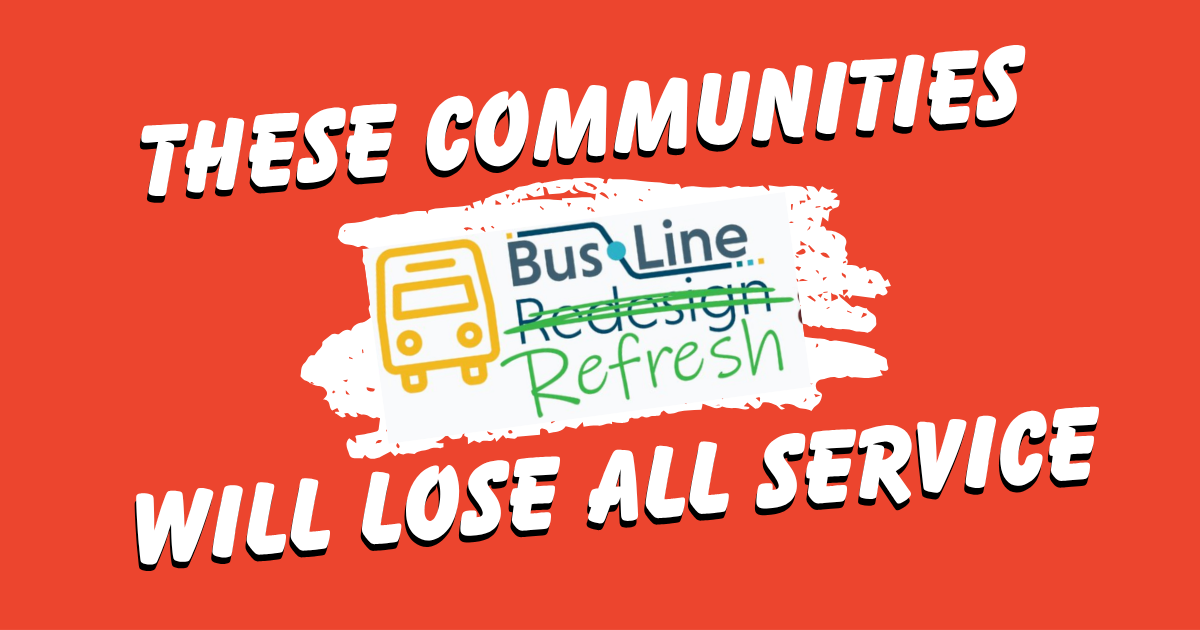
The post Statement: Kemp’s Last Strike Against Georgia Forests first appeared on Dogwood Alliance.Communities Most Harmed by PRT’s Draft 2.0 Bus Line Refresh
Whether you live in McKeesport or McKees Rocks, the Hill District or the South Hills, our public transit system needs to work for everyone.
Pittsburgh Regional Transit (PRT) will soon close their community engagement period for the second draft of their Bus Line Redesign (BLR). The redesign proposes a completely redrawn map of where transit routes will run. It includes new schedules for how frequently and how late at night buses and trains operate, and even proposes renaming all the routes in the system.
Tens of thousands of people who use the system every day will be affected. Allegheny County Transit riders, transit workers, businesses, social service providers—we all have a stake in a Bus Line Redesign that works for all.
The Bus Line Refresh plan is complicated and will affect everyone differently. That’s why it’s very important that transit riders and transit workers review your routes and give feedback now! You can check out how your routes will be impacted and give feedback online, by phone, or at an upcoming PRT community event here.
This is the last opportunity for the public to weigh in before PRT finalizes and ratifies this transit plan- one that will impact our transit service for generations!
Join other transit riders to speak up about impacts of the Bus Line Refresh Draft 2.0 – the good and the bad – at our press conference and public testimony on Friday, 5/29 at 8:30 am at Pittsburgh Regional Transit’s Board meeting.
RSVP Today (Public Testimony Deadline is 5/27) The Communities Slated for the Greatest Transit Losses under PRT’s Bus Line Refresh 2.0Under the Bus Line Refresh Draft 2.0, some communities are being proposed for transit service improvements with higher frequency service or new direct connections to critical destinations. Other communities will see transit service cuts- this is the consequence of Pittsburgh Regional Transit deciding to develop a “cost-neutral” plan rather than a more visionary proposal for service restoration and expansion.
In the coming days, we will publish a proposed list of transit service improvements under the BLR 2.0, but right now, it’s most important that transit riders who are slated to lose access to all transit service get a chance to review and respond to the plan.
Below, we lay out the communities in which transit service currently exists, but under the proposed Bus Line Refresh Draft 2.0 will be left little to no service.
We used existing route numbers (not the route numbers proposed in the new plan) to help riders identify whether they will be impacted. Routes are listed numerically regardless of alpha-prefix.
- 2/P13 – Shaler: Mt Royal Blvd – 15101
- 2/O5/P13 – McCandless: Ferguson Rd, Sample Rd – 15101, 15237
- 4/7 – Reserve Township – 15212
- O5 – Ross Township: Thompson Run Rd – 15237
- 6/7/15 – Summer Hill – 15214
- O12 – Perry Highway North – 15237
- 14/18 – Lower Half of Chateau/Manchester – 15233
- 20 – Groveton/Kennedy Township: Herbst Rd – 15108
- 27 – Windgap/Middletown: Segments on Middletown Rd and outer Chartiers Ave – 15204/15205
- 28X – Robinson Town Center and 5th Ave in Shadyside – 15205
- 36 – Mount Lebanon: Cedar Blvd to South Hills Village – 15228
- 36 – Banksville Rd transit service eliminated off-peak and weekends – 15216
- 38 – Wynnecliff Manor in Scott Township – 15220
- 39 – Ebenshire Village in Brookline – 15226
- 40/43 – Kathleen St/Beltzhoover Ave/Boggs Ave in the North side of Warrington – 15210/15211
- 44 – North Baldwin – 15236, 15227
- Y45 – Baldwin/Whitehall/South Park – 15236
- 52L – West Mifflin: Homeville Rd and Duquesne Village Shopping Center – 15122
- 54 – Bon Air – 15210
- 55/P76 – East McKeesport – 15131
- 65/74 – Squirrel Hill: Shady Ave, Beechwood Blvd – 15217
- 74 – Point Breeze: Reynolds St – 15208
- 77/P16 – Penn Hills/Plum: Hulton Arbors – 15235, 15239
- 77/P16 – Penn Hills: Monroeville Trestle Rd and Saltsburg Rd, North Bessemer, Leechburg Rd – 15235
- 79/P17 – Lincoln Park: Mark Drive, Grove Rd, Chaske St, Mt Carmel Rd – 15206/15235/15147
- P76 – White Oak: Rt 48 corridor – 15131
- P76 – North Versailles: Rt 30 beyond Walmart – 15235
Some current bus lines are being broken up into 2 or 3 different routes. For riders on these routes, that might mean new transfers where you currently have a direct trip.
Riders can go toFind My Route on the PRT Bus Line Refresh website to look at how your commute will be impacted, if at all.
We know that 84% of transit trips today taken by PRT riders who use a CONNECT card are direct trips, completed without having to transfer. New transfers can add additional significant time to commutes, can add uncertainty around timing to get to our destinations and more exposure to the elements. Moreover, transit riders who pay with cash will have to pay an additional fare for each additional transfer. We know that riders strongly prefer direct trips over trips requiring a transfer, and so want to ensure that riders have a chance to see and respond to these substantial changes.
Below we list current routes in numerical order, regardless of alpha-prefix, and the point in the route where they have been severed:
- 1 Freeport Rd at the Waterworks Mall
- 13 Bellevue/14 Ohio River Blvd/17 Shadeland have been segmented and reassembled in various ways
- 21 Coraopolis – Coraopolis to Moon/Sewickley
- 31 Bridgeville at Carnegie Station
- 41 Bower Hill: Washington Rd at Bower Hill Rd
- 54 N Side-Oakland-S Side – Lawrenceville/Bloomfield to South Side/Mount Oliver/Beltzhoover/Bon Air
- 59 Mon Valley – across the Monongahela River
- 67 Monroeville – Oakland/Squirrel Hill to Monroeville/CCAC Boyce
- 69 Trafford – Oakland/Squirrel Hill to Forest Hills/Wilmerding/Pitcairn
- 69 Trafford – to Forbes Hospital
- 74 Homewood-Squirrel Hill Squirrel Hill to Larimer
- 75 Ellsworth – to South Side Works
- 81 Oak Hill/83 Bedford Hill – connections to Hill District Business Area (Centre-Devilliers)
- 87 Friendship – Bloomfield/Friendship to Morningside/Stanton Hts/Upper Lawrenceville
- 93 Lawrenceville-Oakland-Hazelwood – Lawrenceville/Bloomfield to Greenfield/Hazelwood
- P10/1 – Extend all N1 trips from East Liberty to Downtown to avoid forced transfer
- Y47 Curry Flyer from Keeport-Knoedler to Walmart
Join other transit riders to speak up about impacts of the Bus Line Refresh Draft 2.0 – the good and the bad – at our press conference and public testimony on Friday, 5/29 at 8:30 am at Pittsburgh Regional Transit’s Board meeting.
RSVP Today (Public Testimony Deadline is 5/27)The post Communities Most Harmed by PRT’s Draft 2.0 Bus Line Refresh appeared first on Pittsburghers for Public Transit.
SINGING THE SONGS OF THE SOIL – with Tilly Gomersall of Cân y Pridd
The post SINGING THE SONGS OF THE SOIL – with Tilly Gomersall of Cân y Pridd appeared first on Landworkers Alliance.
In Loving Memory of Carlo Petrini
With deep sorrow, we receive the news of the passing of Carlo Petrini, dear friend, fellow traveler, and an unwavering voice in the defense of the Earth, of food, and of living communities.
For decades, we walked together in shared struggles: for biodiversity, for seed freedom, for the dignity of small farmers, and for a food system rooted in care, justice, and the sacred relationship between human beings and nature. Through Terra Madre, Slow Food, and the many global networks Carlo helped to nurture, millions have reawakened to the understanding that food is a commons, and that cultural and ecological diversity are the very foundations of peace and true democracy.
Carlo embodied the rare ability to root himself deeply in place while holding a planetary vision. He gave voice to peasants, seed keepers, artisanal producers, and to the communities who courageously defend the Earth against an extractive and destructive industrial model. Together, we shared gatherings, dialogues, international forums, and moments of collective mobilization, affirming that the future of humanity depends on our capacity to protect biodiversity and to regenerate the living bonds between people and the Earth.
I carry a vivid memory of his participation in the International Commission on the Future of Food and Agriculture, initiated by Claudio Martini, then President of the Tuscany Region. From this meeting, in 2008, the Manifesto for the Future of Food was born.
His legacy will live on in the seeds of hope he has sown across the world, in the webs of solidarity he helped to weave, and in the new generations who will carry this journey forward, for food that is good, clean, and just.
My heart is with his family, the Slow Food community, and all those who loved him.
Vandana Shiva
President of Navdanya International
photo credit: identitagolose.com
The fiscal cliff is real for transit — and it’s time to act!
Beach Access and a Threatened Track
The Rise of the Airport Railway Station
Open access under pressure: Europe’s competitive rail model starts to fragment
Botanical Gems Hiding in Plain Sight: Submerged Plants of River Estuaries and Lagoons
by Peter Baye
published in the July & September, 2017 issues of The Calypso, newsletter of the
Dorothy King Young Chapter of the California Native Plant Society
reprinted with permission
Last April (2017), our local public radio station (KZYX) ran an excellent “Ecology Hour” program interviewing world-renowned oceanographer John Largier from University of California, Davis Bodega Marine Lab. Marginal to the discussion of the physical processes that influence the Mendocino Coast river estuaries was a reference by some callers and hosts, to “algae” in the river.
That was an unintended cue for this botanical gem column on the trio of native submerged aquatic vascular plants that variably dominate our estuarine rivers. They are not algae themselves, but can become covered by algae at some stages, and at a distance, are mistakenly identified as nuisance algal blooms. Nothing could be farther from the truth, since native submerged aquatic vegetation (SAV) beds are the standard of high estuarine habitat quality sought all over the world – qualifying as both ecological and botanical gems. But aquatic plants species, especially submersed species that complete their life-cycles under water, are also out of sight and thus out of mind for many observers. They are thus easily mistaken, by prejudice, for algae when visible at the water surface. That prejudice can lead to misguided demands for getting rid of falsely perceived “nuisance” algae.
So before we have to defend our pristine native SAV beds, let’s introduce two of a trio of revered dominant underwater plant species that cohabit Mendocino Coast river estuaries: wigeongrass, Ruppia cirrhosa and sago pondweed, Stuckenia pectinata (syn. Potamogeton pectinatus). The linear-leaved eelgrass, Zostera marina is the third species and it will be discussed in the Sept-Oct, 2017 issue of the Calypso. [below] Thick beds of wigeongrass, Ruppia cirrhosa, mantle upstream brackish reaches of the fully tidal Albion River estuary. Long frond- like shoots sway back and forth with each ebb and flood tide. July 1, 2017
WIGEONGRASS, Ruppia cirrhosa, is the most widespread and abundant of Mendocino’s estuarine SAV species: it occurs in every estuary, whether fully tidal or summer lagoon, in DKY’s [Dorothy King Young Chapter of the California Native Plant Society] territory. In some rivers, like Navarro, Albion and Big Rivers, it extends for miles. That fact makes it all the more astonishing that the genus doesn’t even appear in the Mendocino Flora (Smith & Wheeler 1992), and there are no reported herbarium or checklist records of it from Mendocino in the Consortium of California Herbaria or Calflora databases! There isn’t even a record of its close relative (even a synonym in some taxonomic treatments of Ruppia), R. maritima. “Underrepresented” is an understatement for this botanical omission – the estuarine equivalent of omitting redwoods from the Mendocino flora.
Emergent erect spike of Ruppia cirrhosa, on still water of Navarro River lagoon. July 18 2013Our estuarine riverbed wigeongrass consistently produces long, wiry coiled peduncles, which is the diagnostic characteristic for Ruppia cirrhosa. R. maritima is the typical wigeongrass in salt marsh pools worldwide, which are shallow, warm, and more saline than seawater. Contrary to some descriptions of Ruppia, the male inflorescences of our R. cirrhosa often form erect spikes that emerge above the water surface, and release masses of pollen that make a whitish film on the water that winds can blow into piles of decaying scum in late summer.
Ruppia cirrhosa mats drape over limbs of downed alders as the Navarro River lagoon draws down in summer. July 18, 2013Wigeongrass is a stealthy plant: when it grows underwater, it is barely detectable. When the fronds reach just below the water surface, they branch and proliferate, and drag on the water surface, heralding themselves by flat water surface areas, outlined by wind-waves and ripples around them where there is no wigeongrass. Finally, the fine linear leafy branches expand into floating mats that completely cover the water surface. Ducks and geese push through the floating mats as they feed on the leaves and invertebrates that live in them, leaving trails. Steelhead jump all around the food-rich wigeongrass canopies at dusk and stickleback move in abundance under the canopies themselves. During heat waves, stickleback fish kills occur when the dense tangled floating mat interior overheats, and stickleback can’t escape in time.
Sandpipers foraging on a thick floating Ruppia cirrhosa mat on the lagoon of Navarro River. August 6, 2016Wigeongrass grows from perennial rhizomes, but it also colonizes new substrate very rapidly by seed and by vegetative propagules. Unlike eelgrass and sago pondweed, it regularly colonizes gravel estuarine river beds like an annual, apparently from seed. In late summer, it spreads over sandy bottoms near the river mouth by creeping rhizomes and stolons, forming prostrate turf across the bed, which later develops vertical shoots. It even can form unusual short zig-zag lateral branches with pre-formed short anchor roots, which readily detach, disperse and sink to the bed as instant, ready-to-grow vegetative propagules.
Wigeongrass can grow in both seawater and fresh water, and appears to tolerate switching back and forth. The primary production of wigeongrass in our estuaries is huge. So is the density of shoots under the floating mats: a single hand-grab of a tangled shoot mass can be heavier than a person can lift out of the water.
SAGO PONDWEED, Stuckenia pectinata (syn. Potamogeton pectinatus), is another nearly cosmopolitan aquatic plant species. It has less salt tolerance than wigeongrass, usually occurring in freshwater or fresh-brackish water.
Flowering and fruiting spikes on floating mat of sago pondweed, Stuckenia pectinata, Navarro River lagoon (closed nontidal freshwater estuary phase). July 18, 2013Salinity about half seawater strength (3.5 % salinity, 35 ppt) is enough to severely inhibit its growth or kill it. Sago pondweed has similar fish and estuarine invertebrate food-chain support value as wigeongrass, but it has even more food value for dabbling ducks and diving ducks. The fruits (drupes) and pea-sized, seed-like vegetative propagules it forms in fall (turions; overwintering detached “buds”), as well as its rhizomes, are eagerly consumed by waterfowl. The foliage is also consumed. Sago pondweed colonies in our river estuaries are usually patchy, far less extensive than wigeongrass. But they can also rebound in “boom” years and actually overtop and surprisingly replace dominance by wigeongrass over extensive areas, at least temporarily.
Flowering spikes of Stuckenia pectinata with anthers. July 2013
Wigeongrass can be distinguished from sago pondweed easily when they are flowering or in fruit. Sago pondweed has thick, elastic peduncles terminating in spikes with whorls of flowers or swollen brown, nearly round drupes. Wigeongrass has slender-peduncled inflorescences (wiry and coiled in R. cirrhosa), terminating in 3 or more terminal branchets with asymmetric pointed fruits, or a short spike of whitish male flowers (mostly anthers). Vegetatively, both species have very narrow linear leaves, but wigeongrass has tiny teeth along the blade margins, and long sheaths that pull themselves away from the shoot, at their bases. Sago pondweed sheaths enclose their stems tightly, like a tube with overlapping margins where they enfold the stem. Sago pondweed is far more difficult to distinguish from linear-leaved pondweeds in the genus Potamogeton, in which it was traditionally placed as P. pectinata.
W.L. Jepson was so enamored of sago pondweed as a waterfowl food in early historic Suisun Marsh (San Francisco Estuary) that he wrote a popular article about his first-hand observations for Sunset Magazine, “Where Ducks Dine”, in 1905. (yes, it’s found online!). When canvasback ducks can’t feed on sago, which makes their flesh sweet and nutty, they eat clams that make their meat taste fishy and gamy. Canvasback hunting has lost popularity as sago pondweed wetlands have declined in California.
Fully elongated fruiting spike of Stuckenia pectinata. August 2011Sago pondweed is reported in the Mendocino County flora from inland ponds, but only one coastal pond complex (Hunter Lagoon and Davis Lake, Manchester) and two estuaries: Pudding Creek (above the dam, however) and Big River. In fact, it is intermittently abundant and extensive at Ten Mile River, near the head of navigation on Albion River, and in the Navarro, Garcia (P’dhau), and Gualala estuaries.
There are basically three types of coastal river estuaries in Mendocino County that predict the location and mix of our native SAV plant species composition. Perennial tidal estuaries, intermediate (choked) tidal estuaries, and seasonal estuaries forming non-tidal summer lagoons.
Perennial fully tidal estuaries include the Albion River and Big River. Their mouths are sheltered from Pacific swell and large coarse-grained barrier beaches by rocky headlands that form quiet embayments, keeping their mouths from closing (by barrier beaches) or choking up with sand. Fully tidal estuarine rivers are home to a gradient of all three species. Ten Mile River estuary is usually tidal all year, but with flows that can become choked and reduced when the barrier beach and shoals grow across the mouth in summer.
Floating, fruiting canopy of Stuckenia pectinata over a bed surrounding the riparian woodland and marsh island above the mouth of Navarro RiverThe Gualala and Navarro River Estuaries, in contrast, are usually tidal only when river flows force their high coarse-grained barrier beaches to breach and open a tidal inlet. When freshwater flows diminish in spring or summer, the tidal inlets close, and form deep freshwater to fresh-brackish lagoons (saltier at the bottom; “stratified”), with water levels well above high tide. Eelgrass cannot compete or survive in non-tidal brackish to freshwater lagoons, but wigeongrass and sago pondweed can thrive in them, and do.
In all three estuary types, a highly variable mix of wigeongrass and sago pondweed beds occur. They dominate tidal estuaries in their more brackish to freshwater tidal river reaches, overlapping with eelgrass, but dominating above the upstream reach of eelgrass. In non-tidal summer lagoons, wigeongrass and sago pondweed vary greatly in relative abundance and position, with a mix of persistent old perennial beds, and rapid new colonization responding to changed estuary conditions.
The next time you drive over one of the Mendocino County estuaries on Highway 1, and see “algae”, think about running down to the shore and looking for beached samples of one of our native SAV species. And if you overhear discussion of “algal blooms” in our estuaries, help educate about what native vascular plant species lie underneath and attached to those epiphytic algal mats, and what they indicate about environmental health and water quality. This region is an estuarine sanctuary compared with most of the California Coast, and we can boast of some of the most healthy, beautiful and diverse estuarine SAV in the state.
Part 2 – Eelgrass, Zostera marinaOf the three submerged aquatic plants occurring in coastal Mendocino and Sonoma counties, eelgrass, Zostera marina, is a true seagrass that occurs in soft sediments (mud or sand) of fully tidal bays and estuaries with high transparency, allowing light to penetrate to the bottom. Wigeongrass (Ruppia cirrhosa), and sago pondweed (Stuckenia pectinata, syn. Potamogeton pectinatus), the two other estuarine species in our area, were treated in Part 1, July-August, 2017 issue of the Calypso. [above] Zostera marina at low tide, lower Albion River estuary, on rising tide with seawater flooding into the estuary. Unidentified marine algae grow as epiphytes on the blades. July 1, 2017.
It has flat, broad linear grass-like blades on long, supple flexuous shoots that sway with tidal currents. Like all seagrasses (marine flowering plants), it completes its life-cycle in seawater, flowering, fruiting and establishing from seed or clonal (vegetative) growth under water. It can grow in the lower intertidal zone, but it flourishes in shallow subtidal water, especially in cohesive muddy or sandy mud sediments where its rhizomes can anchor. In tidal rivers, it has to be able to tolerate full marine salinity seawater on rising (flood) tides, but also freshwater pulses on low tides in winter when river discharge is high.
The floating canopy of Zostera marina beds a half mile upstream from the mouth of the Albion River, Aug 6, 2014. Little epiphytic algae grows on the blades some drought yearsEelgrass beds provide ecologically important fish habitat: nurseries and foraging (feeding) habitat for small estuarine fish (including anadromous salmon and steelhead) that move through their canopies or feed around their edges, where they have access to visual cover from predators. They also help bind and stabilize sediment and store carbon in sediments. In the Ten Mile estuary, eelgrass canopies are crawling with juvenile Dungeness crabs in spring some years, moving up-estuary on flood tides. Waterfowl, especially brant, consume the shoots.
Zostera marina canopy floating at the water surface, vertical shoots rising in the water column below. Big River July 18, 2012.In summer, eelgrass leaves develop epiphytic algae: marine or estuarine algae that grow on their leaves. Heavy covering of algae on eelgrass can trigger seasonal decline or even seasonal dieback, especially when temperatures warm in choked, brackish tidal estuaries. Turbid water, due to either suspended mud or algae, also can cause eelgrass decline by reducing light penetration in the water. Eelgrass thrives best in transparent cool, saline water with daily tidal flows and strong tidal circulation.
Zostera marina growing upstream of its usual limits, mixed with Ruppia cirrhosa in brackish tidally choked estuarine conditions, upstream of Hwy 1 bridge, during a major drought with low freshwater river outflows. Aug 14, 2015Our native estuarine SAV dominant plants are grossly under-documented. It is particularly remarkable that the robust, extensive eelgrass beds of the Albion estuaries have escaped the attention of researchers and our state and federal resource agencies, as well as our floristic database records. There is only one reported Mendocino County locality of the species, Big River, in Calflora and Consortium of California Herbaria. There are no botanical records of the magnificent Albion eelgrass beds, or the highly elastic Ten Mile River eelgrass beds that vary between mile and mere yards long.
Zostera marina colonizes our tidal estuarine river beds upstream during droughts, following seawater mixing – salinity – gradients. A new colony is growing here in an upstream reach under freshwater willow swamp drought year, Ten Mile River, 2013Eelgrass occurs only in tidal estuary (daily tidal flows) reaches where seawater influence is strong, at least during flood tides that deliver salty, clear water.
There are basically three types of coastal river estuaries in Mendocino County: perennial tidal estuaries, intermediate (choked) tidal estuaries, and seasonal estuaries forming non-tidal summer lagoons. Perennial fully tidal estuaries include the Albion River and Big River. Their mouths are sheltered from Pacific swell and large coarse-grained barrier beaches by rocky headlands that form quiet embayments, keeping their mouths from closing (by barrier beaches) or choking up with sand. Fully tidal estuarine rivers are home to a gradient of all three species.
Zostera marina beds grow in a distinct zone the tidal channel below brackish tidal marsh, Big River. Sept 6, 2014Eelgrass occurs in these fully tidal estuary (daily tidal flows) reaches where seawater influence is strong, at least during flood tides that deliver salty, clear water. Eelgrass also occurs in our choked, intermediate tidal estuary, Ten Mile River. Ten Mile River estuary is usually tidal all year, but with flows that can become choked and reduced when the barrier beach and shoals grow across the mouth in summer. The Garcia River is also subject to choked tides, but its mobile gravel bed all the way to the mouth seems to exclude stable eelgrass.
This year, unexpectedly, the Navarro River mouth sustained an open tidal inlet through the summer, and changed from its normal freshwater above-tide lagoon condition, to a tidal brackish estuary that could support eelgrass if the unprecedented tidal lagoon condition returns in future summers. Is this unprecedented event a random fluke, or a harbinger of the future? Could eelgrass expand its range in Mendocino County as sea level rises and climate changes? Eelgrass and its associated Mendocino lagoon/estuary aquatic plants should be informative “sentinel” species for climate change here.
All photos by Peter Baye
For more information, see:
Gualala Estuary: Native Aquatic Vegetation versus Algal Blooms
Pages
The Fine Print I:
Disclaimer: The views expressed on this site are not the official position of the IWW (or even the IWW’s EUC) unless otherwise indicated and do not necessarily represent the views of anyone but the author’s, nor should it be assumed that any of these authors automatically support the IWW or endorse any of its positions.
Further: the inclusion of a link on our site (other than the link to the main IWW site) does not imply endorsement by or an alliance with the IWW. These sites have been chosen by our members due to their perceived relevance to the IWW EUC and are included here for informational purposes only. If you have any suggestions or comments on any of the links included (or not included) above, please contact us.
The Fine Print II:
Fair Use Notice: The material on this site is provided for educational and informational purposes. It may contain copyrighted material the use of which has not always been specifically authorized by the copyright owner. It is being made available in an effort to advance the understanding of scientific, environmental, economic, social justice and human rights issues etc.
It is believed that this constitutes a 'fair use' of any such copyrighted material as provided for in section 107 of the US Copyright Law. In accordance with Title 17 U.S.C. Section 107, the material on this site is distributed without profit to those who have an interest in using the included information for research and educational purposes. If you wish to use copyrighted material from this site for purposes of your own that go beyond 'fair use', you must obtain permission from the copyright owner. The information on this site does not constitute legal or technical advice.
 This site is not the official webpage of the Industrial Workers of the World.