You are here
News Feeds
The never-ending struggle to protect Georgia’s most popular beach
Barrier islands like Tybee Island, off the coast of Georgia, should naturally accumulate sand from islands farther north, but human activity — development on the island, building sea walls and jetties, creating shipping channels — has disrupted that process. As a result, barrier islands are constantly losing sand, and the beaches are constantly being washed away by the relentless tide.
To address the problem, the Army Corps of Engineers has, since the 1970s, been dredging up sand and depositing it onto beaches up and down the east coast. On Tybee, which sits just south of the mouth of the Savannah River, beach renourishment happens every seven years. The natural sand-sharing there is further interrupted by the shipping channel that cuts between Tybee and its neighbors to the north.
In the winter of 2019 and 2020, the Corps placed 1.3 million cubic yards of sand on the Tybee Island beach. More than half of that sand is gone now. On one stretch near the DeSoto Beach Hotel, the dune looks like it’s been chopped in half with a giant knife, ending in a 5-foot cliff instead of a gradual slope.
“It’s extremely stark and startling to see up close and personal,” said city manager Bret Bell. “You can see the vegetation. It’s bisected in half. You can see the roots coming out of the dune system.”
It’s not just the dune grasses. In some places, the tide and storms have cut into sea turtle nests buried in the dune. Businesses are feeling the pinch too. The dramatic erosion has forced chair and umbrella rental operations off the beach in some places, Bell said, and the DeSoto has lost bookings due to the poor state of the beach in front of its doors.
All told, the erosion puts the island itself — and the mainland — at risk. The sea level is rising about half an inch a year due to climate change.
“It is really our only protection against the encroaching oceans,” Bell said. “Storm surge would inundate our island if it weren’t for the mitigating effects of the beach and our dune system.”
Tybee Island is due for renourishment again this winter. Planning began when the last renourishment ended, Bell said, and the city, Chatham County, and the state of Georgia have worked since then to set aside enough funds to cover 40 percent of the $20 million price tag — the required local match funding for the federal beach renourishment program. But Congress underfunded that program, according to Bell, and Tybee was left off the project list.
“All of a sudden, all of these beach communities started really competing for the limited amount of funding that there was,” he said.
City officials continued to lobby, residents launched a letter-writing campaign, and members of Georgia’s congressional delegation visited the island to see the stark beach erosion. Then, in September, came a development Bell called a “miracle”: The Corps redirected leftover funds from other projects to Tybee. Work is slated to begin this winter.
When it does, the Corps plans to try something new. When the agency dredges the Savannah River shipping channel, it will deposit that sand in the shallows off Tybee’s beach instead of pumping it offshore. The goal is to minimize the wave action that eats away at the beach and allow the sand to travel more like it naturally would without the interruption of the shipping channel.
“That really is expected to extend the life of our nourishment,” Bell said. “So instead of the next nourishment happening in seven years, it might be 10 years.”
Update: This story has been updated to reflect how the Army Corps of Engineers is funding the Tybee Beach renourishment.
This story was originally published by Grist with the headline The never-ending struggle to protect Georgia’s most popular beach on Oct 7, 2026.
Q&A with Chloe St. Germain-Vermillion, Coastal Bird Technician
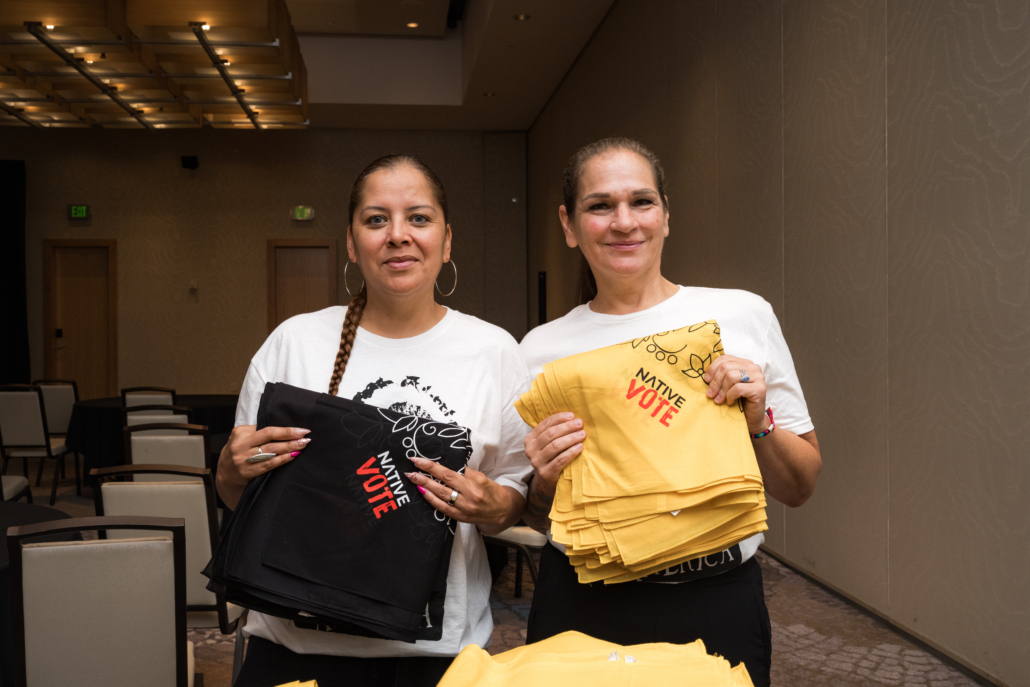
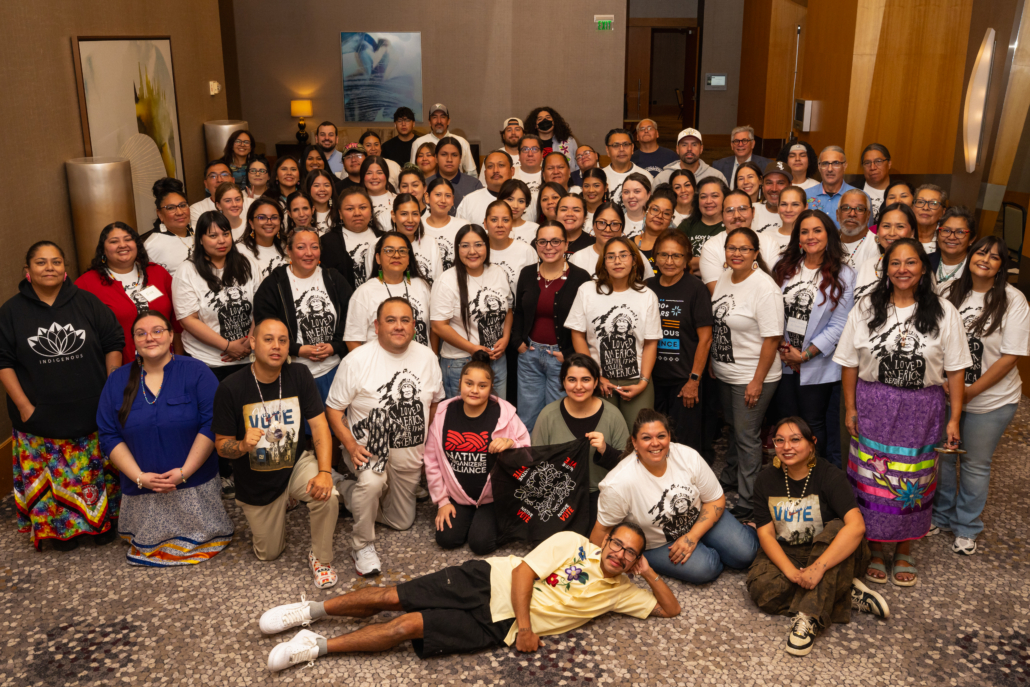
80 Native leaders and organizers working to get out the vote!
We brought 80 Native leaders and organizers from 24 different communities to Detroit for a Know Your Rights and Civic Engagement training to learn and unite for our communities.
Our Native partner organizations and leaders have been practicing traditional relational organizing from Alaska to North Dakota to North Carolina to the Navajo Reservation, holding conversations with 1,500 of their neighbors and relatives as part of our Seven Generations Community Survey project. We covered the cost of lodging, food, and travel for participants from across Turtle Island. And we’re continuing to support organizing on the ground with paid NOA Organizing Fellows who will work with Tribes and partner organizations on non-partisan civic engagement through Election Day and beyond.
At the training, we shared our collective history of organizing for voting rights. We learned skills for maintaining a peaceful atmosphere at the polls and to prepare to respond to forms of voter suppression — including de-escalating potential conflicts.
This work is powerful. Ensuring the safety of our communities when they vote, protecting air, water, land, and sacred places is not a small task. It’s a mission with meaning and purpose in honor of our ancestors, our relatives, and generations to come.
It’s also spiritually uplifting. It’s rewarding. The sense of empowerment is contagious. Everyone is a teacher and an organizer.
The photos and testimonies from some of the 80 Native leaders and organizers who came to Detroit for our recent Voting rights training speak for themselves.
“My priority ballot issue is to encourage our Two-Spirit and Native LGBTQ+ community members to be part of the voting process, to ensure they have a plan… to make informed decisions… Being able to be engaged in this way is really important.” – Elton Naswood, Diné,LGBTQ2S Center for Equity
“I think it’s really valuable work… representation does matter, to have my children see me in these types of roles and that I make my time and space valuable.” – Blaine Parce, Assiniboine and Sioux of the Fort Peck Tribe
“It was so cool to meet other Native people across the country doing the same work.” – Kaia Aiello, White Mountain Apache, Arizona Native Vote
“This election is very important for Crow Country. We really hope to get more Native Americans in office… everything sacred is on the ballot.” – David Blaine, Crow Nation
The post 80 Native leaders and organizers working to get out the vote! appeared first on Native Organizers Alliance.
Fracking Hazards Obscured in Failure to Disclose Wells – Bloomberg
Seeking to quell environmental concerns about the chemicals it shoots underground to extract oil and natural gas, Apache Corp. (APA) told shareholders in April that it disclosed information about “all the company’s U.S. hydraulic fracturing jobs” on a website last year.
Actually, Apache’s transparency was shot through with cracks. In Texas and Oklahoma, the company reported chemicals it used on only about half its fracked wells via FracFocus.org, a voluntary website that oil and gas companies helped design amid calls for mandatory disclosure.
0:49
Aug. 14 (Bloomberg) — U.S. Representative Diana DeGette, a Democrat from Colorado, talks about regulation of the energy fracking industry. She spoke with Bloomberg’s Benjamin Haas on June 6. (Source: Bloomberg)
Rex Tillerson, the CEO of Exxon Mobil Corp., has praised the website and called for extending its voluntary approach to disclosure overseas. Photographer: F. Carter Smith/Bloomberg
“FracFocus is just a fig leaf for the industry to be able to say they’re doing something in terms of disclosure,” said U.S. Representative Diana DeGette, a Colorado Democrat. Photographer: Chip Somodevilla/Getty Images
Energy companies failed to list more than two out of every five fracked wells in eight U.S. states from April 11, 2011, when FracFocus began operating, through the end of last year, according to data compiled by Bloomberg. The gaps reveal shortcomings in the voluntary approach to transparency on the site, which has received funding from oil and gas trade groups and $1.5 million from the U.S. Department of Energy.
“FracFocus is just a fig leaf for the industry to be able to say they’re doing something in terms of disclosure,” said U.S. Representative Diana DeGette, a Colorado Democrat. DeGette, along with Pennsylvania Senator Robert Casey, introduced legislation in March 2011 that would require companies to disclose fracking chemicals. The bills haven’t advanced in either the House or Senate.
With FracFocus, “companies that want to disclose can do it but the other ones don’t have to,” DeGette said.
85% FrackedBloomberg compared oil and gas well records from eight states — Arkansas, Colorado, Louisiana, Montana, Oklahoma, Texas, Utah and Wyoming — against disclosures that companies made for those states on FracFocus. While the state data didn’t reveal whether wells were fractured, regulators in each state said that at least 85 percent of their wells were fracked. The Congressional Research Service puts the national estimate at more than 90 percent.
In the eight states, companies told regulators that 18,158 wells were readied for production or were newly producing from April 11, 2011 through Dec. 31, 2011. They disclosed 8,555 of them on FracFocus. If 85 percent of the total wells were fracked, that means 45 percent of the fracks weren’t disclosed on the website.
Bloomberg’s analysis, covering states that accounted for 64 percent of U.S. gas production in 2010, shows the difficulty of getting a full picture of the industry’s transparency. Because there’s no official national database of fracked wells, Bloomberg chose states that had reliable records on when gas and oil wells started producing or were completed — that is, made ready to flow — and thus were candidates for posting on FracFocus.
No ReportsOil and gas companies have gotten better at listing their fractured wells on the website over time, said Dan Whitten, a spokesman for America’s Natural Gas Alliance, one of two industry groups that help pay operational costs for the website. Some states now require companies to make disclosures on FracFocus, he said.
“ANGA operators are committed to transparency, and support public disclosure of the additives used in the hydraulic fracturing process,” Whitten said in an e-mail. “If you were to look at a complete timeframe of FracFocus, you would see a progressively higher rate of participation.”
Companies participating in the voluntary system agree to disclose information about wells on the website once they have been fractured, which is the start of the completion process. Data from three other leading states — New Mexico, North Dakota and Pennsylvania — are incomplete or don’t list well-completion dates. For Texas, Bloomberg used the date companies submitted completion reports, which are supposed to be filed within 30 days.
Half UnreportedMore than half of new wells went unreported on FracFocus in each of three states: Texas, Oklahoma and Montana. In all, 1,126 companies had at least one well in the analysis period. While it’s possible that some companies didn’t use hydraulic fracturing, the data show that 1,038 of them, or 92 percent, didn’t report any wells on the website.
In hydraulic fracturing, companies blast millions of gallons of water, sand and chemicals deep underground to break up rock formations and free oil and gas. The technique has unlocked vast new sources of energy. At the same time, concerns center on the hundreds of chemicals — including known carcinogens — used in the process.
Contamination ConcernsHomeowners in Pennsylvania, Texas and Wyoming have complained that their well water was contaminated with chemicals or methane gas from nearby frack jobs. The U.S. Environmental Protection Agency last year linked the method to contaminated drinking water in Pavillion, Wyoming; the agency is now retesting some of those findings. The EPA has little authority to regulate fracking; Congress in 2005 stripped it of most such power.
States have responded in various ways. Pennsylvania officials require that companies disclose chemicals within 60 days after fracking. New York has a moratorium on the practice until its environmental impact can be determined. Vermont has banned it outright. Texas began mandating disclosure of fracking chemicals this year, after officials determined that operators were voluntarily reporting about half their fracked wells to FracFocus, according to the Texas Railroad Commission, which regulates oil and gas wells.
Oil and gas executives say the FracFocus website helps eliminate the need for any new federal oversight that might unify the regulatory approach.
‘Positive Thing’“Rome wasn’t built in a day,” said Cal Cooper, manager of special projects for Apache. “This is a positive thing. It shows industry can get its act together and make things happen in a short amount of time.”
Apache hadn’t reported some wells in Texas that received only minor frack treatments, Cooper said — though he said they should have been disclosed on the site. The company also struggled to get some of its contractors to disclose their chemicals, he said. Both issues have been addressed, he said.
“We certainly expect to post all of our 2012 frack jobs in the U.S. on FracFocus,” he said. The company is updating its 2011 disclosures on the site as well, “and we fully expect to reach our goal of 100 percent disclosure from Jan. 1, 2011,” Cooper said.
Some of the largest oil and gas companies posted more complete data to the site. For example, Royal Dutch Shell Plc (RDSA), Europe’s top oil producer, disclosed fracking chemicals for 107 wells in the eight states during the analysis period. The company reported 115 wells to state regulators, records show. Shell reported all its fracked wells to the website, said Kelly Op De Weegh, a Shell spokeswoman, indicating that eight of the wells weren’t fractured.
Chesapeake’s ReportingFor the same period in 2011, Chesapeake Energy Corp. (CHK), the second-biggest U.S. gas producer, disclosed information on 85 percent of the 1,148 wells listed for it in the eight states. Most of the missing wells were fractured before Feb. 15, 2011, when the company started reporting to FracFocus, said Michael Kehs, a company spokesman.
Chesapeake’s own records show it has withheld FracFocus reports on 10 wells fracked since it began disclosing on the website, Kehs said. In each case, there are unresolved discrepancies in information provided by contractors that did the fracking, he said.
“Chesapeake has reported 99 percent of our wells to FracFocus since the initiative was launched,” Kehs said.
Companies’ ChoiceWhile FracFocus was designed to display all wells fracked in 2011, its voluntary approach allows companies to choose when they want to begin reporting. ConocoPhillips (COP), the largest independent oil and gas producer by market value, decided to report only wells fracked after April 30, 2011, said Davy Kong, a company spokeswoman. That decision left 86 wells from the period Bloomberg examined that were fracked prior to May 2011 unreported, according to data the company provided.
Exxon Mobil Corp. (XOM), the biggest oil company by market value, didn’t publish 28 percent of the 856 wells listed in records for the eight states. Rex Tillerson, the CEO of the Irving, Texas- based company, has praised the website and called for extending its voluntary approach to disclosure overseas.
Exxon focused on training staff to file the necessary data during the first half of last year, said Jeff Neu, an Exxon spokesman. In the year’s second half, the company reported more than 80 percent of its fracked wells, and it expects to report all of them going forward, he said.
“Today, we have monitoring tools in place that show we are meeting that expectation,” Neu said.
Lowest RatesAmong the largest operators, the companies with the lowest rates of disclosure in the eight states were Midland, Texas- based Concho Resources Inc. (CXO), which reported none of its 160 wells to the website, and SandRidge Energy Inc. (SD), which didn’t disclose 84 percent of its 779 wells. QEP (QEP) Resources Inc. reported 74 of 153 wells listed in state records. Apache was fourth lowest.
Concho executives wanted to wait until various state regulators finalized their own reporting requirements before it began disclosing its chemicals, said Steven H. Pruett, the company’s senior vice president of corporate development. As of February, 2012, when Texas and New Mexico began mandating disclosures, the company has reported all its chemicals on frack jobs, he said.
SandRidge, based in Oklahoma City, began reporting all its frack jobs in Texas to FracFocus on Jan. 1, 2012, and those in Oklahoma and Kansas on March 1, 2012, Kevin White, a spokesman, said in a telephone interview. The company made only a few earlier reports, he said. SandRidge doesn’t drill in other states.
“We’re comfortable that we weren’t doing anything to the environment whether you had filing or not,” he said.
All CompletionsQEP began submitting reports to FracFocus in the third quarter of last year, said Noel Ryan, a spokesman for the Denver-based company. “QEP currently registers all new well completions on this database,” he said.
Continental (CLR) Resources Inc. didn’t report 54 of its 64 wells in the eight-state group. The company didn’t immediately require staffers to list wells on FracFocus, said Mike Cantrell, the Oklahoma City-based company’s vice president for government and regulatory affairs.
Cantrell initially said Continental began disclosing all its wells on Nov. 1, 2011. Data show the company reported only six out of 20 wells it completed in November and December 2011. In a subsequent e-mail, Cantrell said that three of those 20 wells weren’t fracked, and said the company didn’t begin reporting fracks in its south region, which includes Oklahoma, until January 2012.
Missing ThirdOf 22 companies with at least 150 wells in the eight states from April 2011 through December 2011, 11 didn’t disclose a third or more of them on FracFocus, the data show.
“The data is so incomplete, it doesn’t help,” said Shane Davis, research manager for the Rocky Mountain chapter of the Sierra Club, which supports stronger state and federal regulation of fracking. Davis said he has studied more than 1,000 drilling-related spills in Colorado.
For members of the public, the website can be frustrating. Wendy Leonard wanted to know about wells in her area after she saw one being drilled near her children’s school in Erie, Colorado. She asked state regulators, who referred her to FracFocus, she said.
Found Nothing“And then I’d go home and wouldn’t find anything,” she said. Leonard and her family ended up moving to a town an hour away because of health concerns related to fracking, she said.
FracFocus is operated by two groups: the Groundwater Protection Council, a group of state water officials; and the Interstate Oil and Gas Compact Commission, an association of states that produce the fuels. The council’s own analysis shows that about half the wells that have been fracked in the U.S. have been reported through the site, said Mike Nickolaus, special projects director for the GWPC.
“Companies can take it or leave it where it’s voluntary, but we see more and more companies using FracFocus to say, ‘This is a good mechanism for us to get our information out there and be transparent,”’ Nickolaus said.
The website’s operational costs, which total “a few hundred thousand dollars” a year for server space and site maintenance, according to Mike Paque, executive director of the GWPC, are paid for partly by America’s Natural Gas Alliance and the American Petroleum Institute, two Washington-based industry groups.
Industry Benefit“We’re unapologetic about the industry cost-sharing on FracFocus because they get a big benefit from the website,” Paque said in a telephone interview. There’s no penalty for failing to participate, he said.
Public money helped create FracFocus. From 2009 to 2011, the U.S. Department of Energy gave grants totaling $3.84 million to the GWPC, records show. About $1.5 million of that sum was used to develop the website, according to Paque. The government plans additional grants for the GWPC totaling $2.12 million through 2014, Energy Department documents show.
Since the website’s inception, seven states, including Texas, Pennsylvania and Colorado, have either allowed or required companies to use FracFocus to fulfill disclosure mandates. The federal Bureau of Land Management, which oversees oil and gas rights on 700 million acres — more than four times the size of Texas — is considering adopting FracFocus as the basis for chemical disclosures by companies operating on its land.
Trade SecretsGaps remain on the website even when wells are disclosed. Companies skip naming certain chemicals when they decide that revealing them would give away what they consider trade secrets. Many of the wells that are listed on FracFocus have at least one or two chemicals marked confidential. Others have far more.
Nine undisclosed chemicals were pumped into Marathon Oil Corp. (MRO)’s Cherry Bilsky well in Gonzales County, Texas, between San Antonio and Houston, according to the website. The company also withheld the amounts of eight other chemicals used in the well. The purpose of one product, identified only as “EXP- F1008-10,” is listed as “experimental.”
“Marathon Oil provides the fullest amount of information that has been provided by our suppliers for each fracturing job,” said Lee Warren, a spokeswoman for the company, in an e- mail. Some suppliers consider detailed listings of certain chemicals or specific ratios proprietary, she said.
Information RequirementsAll operators are required by law to keep detailed product information for each additive, and make it available to first responders and medical providers in cases of emergency, Warren said.
In May, Pennsylvania regulators issued violations after a pit for holding waste fluid from fracked wells in Tioga County leaked into the vicinity of the Rock Run stream and the surrounding landscape. The Responsible Drilling Alliance, an activist group that tried to figure out what was in the fluids, was stymied when it checked FracFocus, said Ralph Kisberg, the group’s cofounder.
That’s because EQT Corp. (EQT), the Pittsburgh-based company that operates the Tioga wells, omitted some information about its chemicals. Of five wells it disclosed in the county, one didn’t include any identification numbers for the chemicals, and four others provided no information about the quantities of chemicals used.
‘PR Effort’“There are mistakes; some of the data is incomplete,” said Kisberg, of Williamsport, Pennsylvania. “We see FracFocus as a PR effort to placate people.”
EQT staffers made some errors in manually transferring data into the FracFocus system, said Natalie Cox, the company’s director of communications. After Bloomberg News asked about the incomplete disclosures, EQT fixed the errors, Cox said. The company is committed to fully disclosing its fracking fluids, she said.
States that require companies to disclose on FracFocus are adopting the website’s limitations. In North Dakota, where fracking has turned the state into the biggest U.S. oil- producing state after Texas, regulators mandate disclosure on the website within 60 days of a well’s completion.
“We require whatever FracFocus requires,” said Alison Ritter, a spokeswoman for the state Department of Mineral Resources’ Oil and Gas Division. “Whatever their rules are, those are our rules in terms of reporting.”
Private DatabaseThe website isn’t searchable by chemical, or by date. State regulators who wish to check whether companies are making their required disclosures face a time-consuming task. The website doesn’t make its underlying database available to the public.
Improvements are planned for this autumn that will allow users to search by chemical name, chemical abstract number and date. The groups that maintain the website are talking with industry representatives and state officials about how to give regulators in states that require posting on FracFocus access to the database, said Nickolaus, the GWPC’s special projects director.
It remains unclear whether the database will ever be downloadable for the general public. Nickolaus said that’s “not a specific goal of the system.”
Not releasing the database was a prerequisite that companies insisted on before they’d participate, he said.
To contact the reporters responsible for this story: Benjamin Haas in New York at bhaas7@bloomberg.net Jim Polson in New York at jpolson@bloomberg.net Phil Kuntz in New York at pkuntz1@bloomberg.net Ben Elgin in San Francisco at belgin@bloomberg.net
Fracking Hazards Obscured in Failure to Disclose Wells – Bloomberg.
Fracking Operations Run Roughshod over Pennsylvania Homeowners
On a recent trip to western Pennsylvania, I visited a man who lived along a leafy country road. He showed me around the house he had built for his wife and three sons and said he wanted to raise his family in a quiet rural area. He thought he had the perfect spot until an energy company showed up on his property and said it had the rights to drill for natural gas beneath his land. Although he owned his land and home—and paid taxes on them—he could not protect his property from a drill pad, wells and a pipeline he did not want.
Soon tractor trailers began delivering compressors the size of shipping containers, tanker trucks hauled in fracking chemicals, and workers built an industrial drill pad near his house. The last straw came when the company hired security guards to patrol the area—and stationed them right in the middle of the family’s yard.
There was nothing the man could do to stop them.
Every affected family that I met with in western Pennsylvania said they felt displaced on their own property after natural gas companies muscled their way into backyards and fields. Existing health or environmental safeguards are too weak, and poorly enforced. Instead, gas companies are allowed to run roughshod over homeowners and their communities.
Fracking operation, including wastewater pit, next to corn field. Photo: Melanie Blanding
Pennsylvania is no stranger to fossil fuel development. The first oil discovered in America was found in Oil Creek in 1859, and Standard Oil built its empire on the state’s oil fields. Coal has been mined in the region for decades, and old mine shafts dot the landscape.
Local residents told me they thought natural gas would be the next wave in a familiar tide. Most were used to seeing the occasional “donkey” oil pumps bobbing up and down on a hillside, and figured natural gas operations would have a similar profile.
But once drilling began, they realized that fracking goes way beyond anything they had seen before. Instead of a single donkey, a drill site can be the size of several football fields. Half of it may consist of a huge pit holding water and wastewater. When a well is fracked, operators run compressors 24 hours a day for days. People told me their houses shook the entire time.
Even people who gave energy companies the right to drill on their property are overwhelmed by the scale of industrial development. One man told me, “My dad allowed oil drilling on his land years ago, and he got income from the company. It was just one pump out there. It wasn’t a big deal.” He figured he would follow in his father’s footsteps, but then the massive fracking equipment arrived, and he realized he had been boxed into a corner.
Many oil and gas companies turn out to be careless and furtive neighbors. Homeowners are especially concerned about the chemicals sitting in the giant open wastewater pits called impoundments. Yet the oil and gas industry has resisted every attempt to make companies more transparent, and as a result, too few states require them to disclose the chemicals used in fracking fluids, even in some cases to doctors trying to find out why people may be suffering from medical conditions. Standards for managing and reporting on toxic wastewater are too lax and companies sometimes flout the rules. The Pittsburgh Tribune-Review reported that one company worker was dumping fracking wastewater right into a local river.
This isn’t an isolated incident. Researchers at PennEnvironment Research and Policy Center found that of the 4,596 fracking sites operating in Pennsylvania between 2008 and 2011, companies violated environmental laws 3,355 times. Some companies see the meager fines levied against them as a cost of doing business. Homeowners, meanwhile, pay the price in polluted air, contaminated water, and decimated property values.
Strong national standards could help protect residents from reckless companies and ineffective state regulators. Yet Senator Hoeven (R-ND) recently introduced a bill that would make it harder for the federal government to regulate fracking. Big Oil’s giant lobbying association, the American Petroleum Institute, welcomed the bill, but many local residents will not. Americans should be protected from the hazards of fracking no matter what state they call home.
NRDC is helping achieve that. We are fighting to put stronger state and national safeguards in place, and we created the Community Fracking Defense Project to help local communities to define their own fracking ordinances.
Lawmakers may sit in Harrisburg or Washington and say there is no need for environmental standards, but people living next door to leaking wastewater pits and polluting wells know better. It’s time we honor their experience and start holding companies accountable.
Chesapeake Testing ‘Green’ Fracking Fluids in Shale Wells – Bloomberg
SAFE comments: Development of environmentally friendly constituents for “slick water” used in fracking does not eliminate, reduce or otherwise rectify that highly saline and radioactive materials, in addition to volatile chemicals inherent in petroleum harvesting, will still come up with the waste water. No amount of “green” fluid injected into the ground can prevent these constituents from coming back up in the flowback.
Chesapeake Energy Corp. (CHK), the second- largest U.S. natural gas producer, is testing hydraulic- fracturing fluids composed solely of environmentally-benign components in wells.
Chesapeake plans to develop a 100 percent green mixture of fluids used to fracture gas and oil formations underground, Jody C. Jones, the company’s manager of environmental and regulatory affairs, said today during a gathering of energy-industry executives in Columbus, Ohio.
Hydraulic fracturing, or fracking, involves using high- pressure jets of water, sand and chemicals to smash fissures into rocks so gas and oil may flow. Current fluid formulations often include hazardous components such as hydrochloric acid or diesel fuel and environmentalists say the practice poses a threat to water supplies. Chesapeake, based in Oklahoma City, is testing various green recipes in several shale formations that Jones declined to identify.
“It’s not quite there yet,” Jones said at the Utica Shale Development & Growth Forum sponsored by IQPC Ltd. “The main concern with testing something like this is you just spent $4 to $6 million to drill a well and taking an untested frack system and shooting it down a well could ruin a reservoir and you’d be throwing away all that money.”
Chesapeake is experimenting with green fracking fluids to minimize threats from surface spills near lakes, creeks and rivers that abut drilling sites, Jones said. Such formulations also would reduce workers’ exposure to potentially harmful substances, he said.
Bacteria SlimeSome of the world’s largest fracking-service providers have been working on ways to offer more environmentally friendly fluids. Halliburton Co. (HAL), the world’s largest fracking company, now offers “CleanStim,” which uses food-safe ingredients to stifle the growth of subterranean bacteria that can form a thick slime and impede oil and gas flow.
Halliburton has also developed a process using ultraviolet light to kill bacteria in the fracking fluid, pairing the technology with a recycling process called “CleanWave” that uses an electrical charge to separate contaminants and clean the water.
Baker Hughes Inc. (BHI), the world’s third-largest provider of fracking services, offers a fluid called “VaporFrac” that replaces almost all of the water used in fracking with nitrogen- based foam.
Chesapeake rose 1.3 percent to $19.54 at the close in New York.
Exxon Mobil Corp (XOM) is the biggest U.S. gas producer.
To contact the reporter on this story: Joe Carroll in Chicago at jcarroll8@bloomberg.net
To contact the editor responsible for this story: Susan Warren at susanwarren@bloomberg.net
Chesapeake Testing ‘Green’ Fracking Fluids in Shale Wells – Bloomberg.
Oil and Gas Leases: Issues and Considerations
Leases do not include the same information that companies give to their shareholders. Landowners are not told the actual risks associated with hydraulic fracturing. There are ways to challenge a lease if a company was not honest about the risks associated with the processes involved in fracking.
The following document regarding gas leasing practices provides important insight into issues to be considered regarding leasing and what is often omitted in leasing offers. The entire content of “Drilling Doublespeak” can be obtained for download at the following link:
http://static.ewg.org/pdf/Drilling_Doublespeak.pdf
SAFE has been examining leases, and is working toward building this page as one that will help you assess your own lease for language that protects you (issues such as burden of proof , compensation for damages). Please check back on this page as we update this information.
Contact Our Legal Committee
L. Cook
legal@dontfractureillinois.net
SAFE has seen a lease that explained the lessee’s rights as follows:
“with the exclusive right for the purpose of exploring *** and operating for and producing *** and the exclusive right *** to inject water, brine and other fluids into the subsurface strata, as well as any industry enhanced recovery methods.”
Note the use of the relatively innocuous sounding term “other fluids” after “water” and “brine” and also note the use of the term “industry enhanced recovery methods”. The lessor explained to us that they were not told that horizontal high-volume, high-pressure hydraulic fracturing could be used on his property.
If this language was intended to encompass horizontal fracking, it is far from a model of clarity and is misleading.
Royalties
Other lease specify royalties that are calculated “at the wellhead.” This means that no matter what is stated anywhere else in the lease, “at the wellhead” means the company is entitled to take all costs (i.e., any cost it can think of) out of its profits before it calculates any royalties.
Pipelines
Leases typically have paragraphs that sound like care is taken regarding pipelines, e.g., that pipelines will be buried below the plow line in crop fields. Yet those leases do not say that pipelines must be buried in a location that is not a crop field. This means they reserve the right to run a pipe line through your yard if they want to.
Damage Clauses
The “famous” liquified damages clause limits any damages payable to you (for any damages, of any kind, ever) to $5,000. We have even seen damage limits as low as $3,000.
Hold Harmless and Indemnify
Perhaps worse, the “hold harmless and indemnify” clause says no matter what happens, you, the landowner, is liable: for injury, damage to the land, to property or anything else. We have a signed copy of one of those leases. The Johnson County clerk’s office has many, many of these leases filed.
FAQ
Will Not Signing a Lease Prevent Drilling?
Q. I am an owner of an oil/gas lease with Next Energy, LLC. They have sent us a form that requests to change the original lease to allow horizontal drilling. With everything I have read, I have not signed it as yet. Will my not signing (my brother and sister haven’t either) prevent anything?
A. First, we need to know how the mineral rights are owned, before we can answer the question about you and your brother/sister not signing the lease. If they own any of the rights, and none of you have signed the lease, then yes, that can make a difference. The issue is a little complex, but basically it is this: In contract law, an issue has to be “within the contemplation of the parties” when they sign a contract for there to have been a “meeting of the minds.” If there has not been a meeting of the minds, there is a very good argument that a contract is invalid.
I am assuming that the contract that was originally signed was before horizontal fracking became an issue? If that is the case, then the parties had no way of knowing that the oil and gas company could potentially use fracking on their property, and therefore did not sign a lease with any intention of allowing horizontal fracking to take place. Therefore, there was no meeting of the minds, and if the oil and gas company does not get an amendment signed, and goes ahead with fracking anyway, they run the risk of being taken to court for an injunction forcing them to stop operations after they have already committed serious time and money and materials to the project.
So, NextEnergy is covering their bases and trying to get the amendment signed. Now, I must warn you they may try to bully you into it, by threatening you and saying they have the right to do it anyway, so you might as well sign. DO NOT fall for it. This is a standard tactic. They may also say you might as well sign, because they can drill on your neighbor and steal your gas, so you might as well sign. NOT TRUE. There IS something called forced pooling in Illinois, but if by some chance they get any gas or oil from under you, they have to pay you for it, no matter where they drill. And right now IDNR is not allowing forced pooling anyway, and has not even issued one permit for forced pooling in all this time. I talked to IDNR about this myself. So do not fall for that one either.
Threatened to Sign A Lease
Q. My husband’s family has been presented with leases for their surprise inheritance of indivually-small shares in mineral rights under some property in southern Illinois. Ugh! I’m a member of a grassroots fractivist group in Colorado and am appalled. I thought it was a load of frack-fluid when the landman told my husband that if he didn’t sign the lease, my husband would become like a part owner of the drilling company and would incur expenses of drilling before receiving any royalties.
This sounds crazy, but it’s what the landman told us; he even sent us a copy of a letter to someone owning property in Louisiana (not Illinois) to present the idea. Also, I’ve heard from an attorney in Colorado that it is possible, but he’s not familiar with Illinois laws.
Can you help me with this? Have you heard this before? I haven’t had any luck in looking at the Illinois oil & gas regs.
A Chicago (where I grew up) attorney offered to check into it for $300-$400/hour; I’d have to sell my house to afford that. We’re contemplating the HORRIBLE idea of signing the lease and donating any royalties (expected to be very, very minimal – but even if they were huge) to fractivist organizations, including SAFE. Another HORRIBLE idea is to sell our house and try to hide the money if there’s any profit, rent an apartment, declare bankruptcy, and then sign the lease.
By the way, we’re so impressed with the SAFE newsletter, actions, number of volunteers, etc. Kudos! We wish you the very best – a statewide ban – of course!
A. This is the most ridiculous thing I’ve heard yet. No, you do not become part owner of the drilling company just because you do not sign a lease, and it is legally impossible to “draft” someone into becoming part of any company; no, you do not incur expenses of drilling before receiving any royalties just because you do not sign the lease. Yes, it is a load of frack fluid.
The only grain of truth in it is, if you DO sign a lease expecting to receive royalties, and the lease says your royalty is computed at the well head, they get to deduct all kinds of expenses before computing the royalties.
I would doubt anything the landmen say; I would doubly doubt any copies of letters they say they sent, as this is easily faked; and I would especially doubt anything they say they sent to Louisiana, as Louisiana is under Neopolitan law, unlike the rest of the US, and their laws do not apply to us.
Cabot’s Methodology Links Tainted Water Wells to Gas Fracking – Bloomberg
Halliburton’s Radioactive Frack Rod Found Alongside Texas Highway After Going Missing
Holy frack that was close!
Public relations people and top-level executives at Halliburton, one of the world’s largest oilfield services companies, are likely breathing a sigh of relief after the oilfield services company found a radioactive rod that it lost last month, the Guardian reports. The seven-inch rod of americium-241/beryllium was found alongside a Texas highway some miles away from where it was being used to locate oil and gas deposits eligible for fracking.
Previously, members of the FBI, the Texas National Guard and Halliburton had been searching for the radioactive tool that is classified as a “category 3” source of radiation and could prove fatal if held for an extended period of time. It is the first incident of a lost radioactive tool of its kind in the past five years, according to the Nuclear Regulatory Commission, Bloomberg reports.
But radioactive materials sometimes do turn up in unexpected places. In 2010, Italy experienced the worst radiological incident in its history when a shipping container arrived in the port city of Genoa with unsafe levels of radiation, WIRED reports. The source turned out to be a radioactive rod not much larger than a pencil.
Still, concerns over safety violations are nothing new for Halliburton. The conglomerate once led by former Vice President Dick Cheney faced criticism for its role in BP’s 2010 Deepwater Horizon spill after reports emerged that it provided faulty cementing in constructing the well. More recently, critics have raised concerns over the effects its fracking fluid has on nearby drinking water, even prompting one executive to publicly drink Halliburton fluid to prove that its ingredients are benign .
Halliburton’s Radioactive Rod Found Alongside Texas Highway After Going Missing.
Italy earthquakes = FRACKING! Two DOZEN people dead in two weeks !! – YouTube
Two DOZEN people killed in since May 20, 2012 (the first large 6.0M+ at this location)…At the epicenter — drilling / pumping / fracking operation .
The days of denying — by so-called ‘professionals’ — are over. Coordinates for this recent 5.8M today (5/29/2012) from USGS:
44.814°N, 11.079°E
USGS stats: http://earthquake.usgs.gov/earthquakes/recenteqsww/Quakes/usb000a1mn.php
download google earth for FREE here … http://earth.google.com
At least 15 people dead THIS time (5.8M on 5/29/2012)
http://www.cnn.com/2012/05/29/world/europe/italy-earthquake/index.html
7 dead on May 20, 2012:
http://en.wikipedia.org/wiki/2012_Emilia_earthquake
Category:
5/29/2012 — Italy earthquakes = FRACKING! Two DOZEN people dead in two weeks !! – YouTube.
#fracking #humaninducedearthquakes #Italy #Earthquakes #frackingandearthquakes
No fracking for ten years – says EU Commissioner for Energy – Local – Leitrim Obse
No fracking for ten years – says EU Commissioner for Energy – Local – Leitrim Observer.
Senator Paschal Mooney with EU Commissioner for Enerfy G�nther Oettinger.
Published on Saturday 29 September 2012 09:00
EU Commissioner for Energy Gúnther Oettinger has informed Drumshanbo Senator Paschal Mooney that no decisions should be taken on hydraulic fracturing or “fracking” for ten years.
The Commissioners opinion was in response to a serious of questions from Senator Mooney at a meeting of Joint Oireachtas Committee on Transport Energy and Communications which the Commissioner attended during his visit to Ireland last week.
In a series of questions submitted by Senator Mooney to the Commissioner about the EU Commissions Policy on fracking Commissioner Gúnther Oettinger replied that he believed no decisions should be taken until the environmental impact of fracking was established and that could take between five and ten years. He further informed Senator Mooney that he was already in discussions with scientists and those with technical expertise and has opened a dialogue with the Polish Government where fracking has already commenced. The Commissioner revealed that the extraction of shale gas could be chemical free in a number of years which is a major point of controversy and he intended visiting the United States next Spring to see at first-hand how shale gas is extracted.
“I welcome this recognition by EU Energy Commissioner of the sensitivities involved over this controversial process” stated Senator Mooney. “The Commissioner is obviously aware of the adverse environmental impact of current practices associated with the extraction of shale gas. The Commissioner is proceeding cautiously before coming to any conclusions. I am delighted that the person charged with Energy Policy in the European Union is consulting widely with the scientific technical and political community as part of an on-going process and I am now confident that the Energy Commissioner will not rush into a decisions that would harm the environment as a result of the fracking process” concluded the Leitrim Senator.
Meanwhile, Sinn Féin MEP and Environment Committee member, Martina Anderson last week voted in the European Parliament against the exploration and extraction of shale gas.
Speaking from Brussels she welcomed the outcome of the vote. “Among the encouraging proposals voted by the Environment Committee are; mandatory environmental impact assessments for fracking projects, the exclusion of EU funding for the shale gas industry and the obligation for fracking companies to declare which chemicals are used in the fracking process.”
“Given the associated risks with the process used to extract shale gas known as hydraulic fracturing or ‘fracking’, it is baffling that a more robust system of regulation is not already in place. Local communities’ concerns regarding the environment and public health must outweigh any commercial and monetary incentives for large gas companies.”
“The very real and dangerous risks of water contamination and noise pollution from fracking have the potential to seriously damage both agriculture and tourism – two very important sectors of Ireland’s economy. Even before exploration of the gas begins an Environmental Impact Assessment should be an absolute necessity. There is too much at stake to continue with these risks.”
“Indeed, at a time when we are quickly heading towards a point-of-no-return with climate change and the environment, it seems that we’re missing the bigger picture. With an agreed upon need to reduce greenhouse gas emissions, it is essential that we move away from the business-as-usual use of fossil fuels and towards renewable energies and a greener, safer and more sustainable economy.”
#FrackingChemicals #EuropeanUnionNoFracking #FrackingMoratorium #banfracking #media #EU #FrackingintheEuropeanUnion #moratorium
Pennsylvania State Representative Jesse White calls for probe of Dept of Environmental Protection wa
The Pennsylvania Department of Environmental Protection has created incomplete lab reports and used them to dismiss complaints that Marcellus Shale gas development operations have contaminated residential water supplies and made people sick, according to court documents and other sources.
As a result, state Rep. Jesse White, D-Cecil, today called on state and federal law enforcement agencies to investigate the DEP for “alleged misconduct and fraud” described in sworn depositions in a civil case currently in Washington County Common Pleas Court.
“This is beyond outrageous,” Mr. White said in a press release. “Anyone who relied on the DEP for the truth about whether their water has been impacted by drilling activities has apparently been intentionally deprived of critical health and safety information by their own government.”
The DEP quickly responded Mr. White’s statements in an email to the Post-Gazette.
Department spokesman Kevin Sunday said the DEP’s testing lab received a “glowing” review last year in a peer review by the Association of Public Health Laboratories.
He added, “Jesse White is ideologically opposed to responsible drilling regulations which is evidenced by, among other things, his vote against Act 13,” a state law that regulates Marcellus Shale drilling and gas production.
“The battery of analyses we order during investigations are thorough and give us the results we need to make sound determinations, which we fully stand behind,” Mr. Sunday said.
“DEP takes very seriously instances where we do determine gas migration has occurred from drilling — this administration issued the largest single civil penalty in the history of the state’s oil and gas program last year for such a case.”
Mr. White’s call for an investigation came after the release of two depositions of DEP employees, one of whom, Taru Upadhyay, the division director of DEP’s Bureau of Laboratories, said the department’s lab reports to property owners didn’t contain a full array of contaminants found by the lab’s testing.
Mr. White said there’s no excuse for withholding some of the water test results because they could hold the key to residents’ water supply problems.
“If these allegations are true, there needs to be a thorough and objective investigation to determine if someone belongs in a jail cell,” he said.
In her deposition, Ms. Upadhyay said the department’s oil and gas division directed the lab to generate water test reports to homeowners that omitted the full menu of findings for heavy metals, including lithium, cobalt, chromium, boron and titanium, some of which are human carcinogens, as well as volatile organic compounds that are associated with hydraulic fracturing fluids.
Those metals are Marcellus Shale markers, found in the shale layer a mile or more underground in Pennsylvania. They are released by hydraulic fracturing or “fracking” of the shale and can be carried by flowback fluids to the surface.
Finding them and certain volatile organic compounds in the water test results would link contamination of groundwater to gas well drilling and fracking operations, said John Smith, an attorney with Smith Butz, a firm representing eight people in the Washington County case against Range Resources and 12 of its subcontractors. Their case contends that they face serious health problems and increased cancer risk due to exposure to toxic chemicals in their air and well water near Range’s Yeager drill site in Amwell.
“Despite these significant health consequences, the DEP purposely never considered information concerning all of these metals in each of the plaintiffs’ water supplies before making any of its determinations and purposely failed to alert the plaintiffs to their presence,” said Mr. Smith in a court filing Wednesday.
Kendra Smith, another Smith Butz attorney, today sent a 10-page letter to DEP Secretary Michael Krancer about the incomplete test results and requested a review of the practice. She sent copies of the letter to state Attorney General Linda Kelly; the U.S. Environmental Protection Agency, Region III; David Hickton, U.S. Attorney for the Western District of Pennsylvania; and five state legislators.
According to the deposition transcript, Ms. Upadhyay said the DEP’s state laboratory tests water samples for a full battery of contaminants, but at the direction of the department’s Office of Oil and Gas Management, limits the number of contaminants reported to the oil and gas division and the property owner.
In a second deposition filed in the case, John Carson, a DEP water quality specialist, said a special lab code for Marcellus Shale water contamination complaints is used statewide. He also said the department failed to provide its water quality specialists with training to help them interpret the lab reports and identify contaminants that could signal Marcellus Shale-related impacts.
A Post-Gazette review of DEP water quality reports generated under the department’s “942 Suite Code” found that those reports didn’t disclose all of the contaminants found in well water samples. The water complaints in these cases were dismissed because the abbreviated reports did not support the property owner complaints in Amwell, Washington County, the Woodlands area in Butler County, and Dimock in Susquehanna County.
Ms. Upadhyay’s statements came in response to questions from Ms. Smith and are contained in a 336-page transcript of her deposition taken Sept. 26 for an Environmental Hearing Board case. The case, brought by Loren Kiskadden of Amwell, alleges that DEP’s investigation of his well-contamination complaint was inaccurate and incomplete.
The depositions were filed as supporting documents in the related Washington County Court case. In that case, four homeowners, including Mr. Kiskadden, who live near the Yeager well site, allege their private water supplies were contaminated and they suffered a variety of health problems.
Range, owner of the Yeager well site, has denied any responsibility for any contamination from its operations, which included three wells, a 13 million-gallon impoundment and a drill cuttings pit.
By Don Hopey / Pittsburgh Post-Gazette
First Published November 1, 2012 6:17 pm
State representative calls for probe of DEP water testing reports – Pittsburgh Post-Gazette.
#ContaminatedWater #MarcellusShalerelatedimpacts #Pennsylvania #PennsylvaniaDepartmentofEnvironmentalProtection #DEPwaterqualityreports #DEP #MarcellusShale #misconductandfraud
Big storms and fracking: what’s at stake?
Here in Washington, D.C. the winds are fast, furious, and loud as we await the brunt of Hurricane Sandy. Winds have been clocked up to 90 mph as the storm hits land with the lowest pressure ever recorded in the northeast. Images of a crane dangling off a Manhattan skyscraper are as scary as the reports that flooding will occur as far north as Vermont and New Hampshire.
West Virginia, Pennsylvania, and eastern Ohio are all expected to be hit by the storm. What could it mean for fracking sites in the Marcellus shale?
One of the greatest risks at these sites are spills and what is called “stormwater runoff.”
Under the Clean Water Act, there is something called the Spill Prevention, Control, and Countermeasure (SPCC) rule which includes requirements for oil spill prevention, preparedness, and response to prevent oil discharges to navigable waters and adjoining shorelines. The rule requires specific facilities to prepare, amend, and implement spill prevention plans. Sounds like a no-brainer. But in Fiscal Year 2011, EPA officials visited 120 sites oil and gas development sites and found 105 were out of compliance– 87.5%. (Note: these do not have to be oil production sites. For example, natural gas pads may have enough fuel for drill rigs stored on site to trigger this requirement.)
Almost every single oil and gas site inspected lacked a mandatory spill prevention plan meant to protect our rivers and streams. This is an unacceptable flouting of our environmental laws.
In addition to a spill prevention plan, oil and gas companies should have something called a Storm Water Pollution Prevention Plan. During a rainstorm, flowing water can pick up pollutants along the way, including toxic materials like fracking chemicals or fracking waste. Most companies are required by the Clean Water Act to get a stormwater permit by submitting a Storm Water Pollution Prevention Plan outlining precautions the company will take to avoid illegal discharge of pollutants and impacts to nearby rivers and streams. Ensuring prevention of stormwater run-off is not rocket science. It requires simple measures such as sufficient berms and containment systems. But the oil and gas industry is exempt from having to get a permit, which means regulators do not have to approve a pollution prevention plan–or even see if a company really has one for each site.
This is all increasingly terrifying as Sandy bears down on the Marcellus region, where there are many open pits filled with fracking and related waste. Because the oil and gas industry is also exempt from our hazardous waste laws, no one knows exactly how dangerous the waste at any particular site might be, but we know it can be very toxic and also radioactive. NRDC opposes storing of fracking and production waste in these open air pits, but it is still allowed.
What does a flooded wellpad look like? Here is a photo of a flooded wellpad in Bradford County, Pennsylvania, after Tropical Storm Lee in September, 2011:
Photo credit: Carol French, used with permission.
And here is a photo of how dangerously close millions of gallons of potentially toxic fracking waste can be to homes, in this case in Washington County, Pennsylvania:
Photo credit: Robert Donnan, used with permission.
NRDC opposes having dangerous fracking waste stored so close to people’s homes. Hurricane Sandy is terrifying for many reasons. For people living next to fracking waste sites, one of them is that the storm may flood these sites and cause toxic substances to flow onto their land, their home, or their farm. It is well past due for the toxic waste loophole for the oil and gas industry to be closed.
Big storms and fracking: what’s at stake? | Amy Mall’s Blog | Switchboard, from NRDC.
#StormWaterPollutionPreventionPlan #frackingwaste #HurricaneSandy #Control #flooding #stormwaterrunoff #Bigstormsandfracking #easternOhio #Pennsylvania #SpillPrevention #andCountermeasureSPCCrule #WestVirginia
The world without solar and wind?
This is a re-post from The Climate Brink
Twenty years ago, wind, solar and other non-hydro renewables were close to a rounding error. In 2005 they supplied a mere 2.0% of the world’s electricity generation. By 2015 that had risen to 6.8%, and by 2025 it was up to 19.8%. According to the IEA Electricity 2026 outlook, non-hydro renewables will supply around 21.8% of global electricity in 2026, edging past natural gas (21.6%) to become the second-largest source of power after coal.1
That is a remarkable pace of growth from an industry that barely existed two decades ago. But not everyone is impressed; many commenters on social media have responded to these figures by pointing out that despite the growth of renewables, fossil fuel generation continues to grow as well. They aren’t wrong; global coal generation set a record in 2024. Gas generation reached a new high in 2025.
Their point is that clean energy isn’t replacing fossil fuels at all. It’s simply being piled on top of them to feed an ever-growing appetite for electricity, making this an “energy addition” rather than an energy transition. Global fossil electricity generation around 50% higher today than it was in 2005. Coal generation rose by 3,300 TWh and gas by 3,200 TWh. The world burns more coal for power now than it did when wind and solar started taking off.
This argument has been made in the past both by skeptics of growth and by energy systems modelers. The historian Jean-Baptiste Fressoz argues in More and More and More (2024) that “far from the industrial era passing through a series of transformations, each new phase has in practice remained almost wholly entangled with the previous one.” Coal mining created a huge new demand for timber for pit props, while the oil age ran on steel made with coal. Vaclav Smil has made the same point about today’s clean energy boom more bluntly: ”We use more fossil fuels today than at any time in history… Renewables are not replacing fossil fuels; are joining them.”
The question of counterfactualsThe problem with the “addition” argument is that it compares the world today with the world in 2005, rather than with the world as it would have been without clean energy. Electricity demand has not grown because wind turbines and solar panels were built. It has grown because of what the IEA describes as “rising consumption from industry, electric vehicles, air conditioning and data centers”. Demand growth is located overwhelmingly in emerging and developing economies, which accounted for about 80% of global demand growth in 2025 and an average of 95% over the past decade.
Global electricity demand rose by 75% (13,600 TWh) between 2005 and 2025. That demand had to be met by something. Wind and solar supplied 5,400 TWh of new demand, hydro 1,500 TWh, bioenergy and other renewables 530 TWh, nuclear 85 TWh, and fossil fuels the remaining 6,100 TWh. But over the past decade the balance has shifted sharply toward clean energy. Since 2015, wind and solar supplied 57% of demand growth, compared with 29% for fossil fuels. And in 2025, according to Ember’s Global Electricity Review 2026, “wind and solar grew by 841 TWh, meeting 99% of global electricity demand growth”.
A 2024 study by Brantley Liddle found that “intermittent renewables (solar and wind) have unitary displacement effect.” In other words, each unit of wind and solar power displaced about one unit of coal and oil generation. Fossil generation has kept rising in many years because demand has grown faster than clean energy could be added. That is very different from clean energy failing to displace anything.
And electricity demand will continue to rapidly grow, particularly if we succeed in reducing global emissions by electrifying sectors of the economy that currently burn fossil fuels. Most scenarios where we reach net zero emissions involve a doubling or tripling of electricity generation.
So if we want to assess the real world emissions impact of wind and solar buildout over the past 20 years, the right question to ask is not “did fossil use go down?” but rather “how much higher would it have been?”
A world without wind and solarTo answer this, I built a counterfactual for the global power sector in which wind and solar (and geothermal, which is less than 2% of the total) stopped growing in 2005. In every separate country, their generation is held at 2005 levels, while electricity demand, nuclear, hydro and bioenergy follow their real-world paths.2 The missing clean generation has to come from somewhere, and in this counterfactual it comes from fossil fuels.
The key choice is which fossil fuels are used to fill in the gap. A wind farm in China or India displaces coal, while one in Texas or the UK mostly displaces gas. So rather than assuming a single global fossil mix, the analysis fills each country’s gap with that country’s own coal, gas and oil mix in each year, using data for about 200 countries from Ember. This keeps real-world coal-to-gas switching like what occurred during the US shale gas boom in place, rather than crediting it to renewables.3
Without wind and solar growth since 2005, global power-sector CO2 emissions in 2025 would have been 28% higher, at 16.9 billion tonnes rather than 13.2 billion. This adds up to 3.7 billion tonnes avoided in 2025, which is about three-quarters of the total CO2 US emissions that year (or roughly 1.5x EU emissions).
Between 2006 and 2025, wind and solar avoided about 23 billion tonnes of CO2. The biggest assumption I’ve made is what fossil fuel fills in the gap: if every missing kilowatt-hour had come from gas, avoided emissions would be 15 billion tonnes, while if it was all coal it would have been 30 billion.
This lines up almost exactly with Ember’s own estimate. Using a simpler method (and a 2000 baseline rather than 2005 baseline), Ember’s Global Electricity Review 2026 found that “had wind and solar not grown since 2000, fossil generation would have been 30% higher in 2025, and emissions 28% higher.”
While its true that global electricity emissions have yet to clearly peak, it may well be imminent; emissions went down in 2025 and may be on track to decline in 2026 as well, though rapid increases in demand from vehicle electrification and data centers have made this a bit more challenging.4 But there are many countries in which electricity emissions have already peaked and declined substantially, and where clean energy has played a key role in those declines.
Already replacing fossil fuels in some countriesGlobally, clean energy has not yet led to fossil fuel use peaking in the electricity sector. In 2025, fossil generation was essentially flat (down ~0.3%). But that global total hides a lot of country-level variability. In many wealthier economies, where demand has grown more slowly, clean energy has driven real emissions reductions (even when accounting for the outsourcing of some industrial production).
Between 2005 and 2025, power-sector CO2 emissions fell by 75% in the UK, 55% in the European Union and 37% in the United States.
The reasons why differ from place to place:
-
In the EU, wind and solar account for about 85% of the decline (512 of 601 million tonnes), even though falling nuclear output pushed emissions up by about 100 million tonnes.
-
In the UK, the decline had three main drivers: wind and solar (56 million tonnes), lower domestic generation (58 million tonnes, partly because the UK now imports more power), and the near-elimination of coal, which went from 45% of UK fossil generation to effectively zero (36 million tonnes).
-
In the US, switching from coal to cheaper natural gas cut emissions by 682 million tonnes, slightly more than wind and solar (606 million tonnes), while a 12% rise in electricity use added 352 million tonnes. Coal’s share of US fossil generation fell from 69% to 29%.
Without wind and solar growth, EU power emissions would have fallen by only about 16% since 2005 rather than 55%, US emissions by about 17% rather than 37%, and UK emissions by about 53% rather than 75%. In these regions clean energy has not just met new demand, its actually pushed fossil generation down.
What about temperatures?Avoided emissions translate into avoided warming, but the story here has an important twist. Coal plants don’t just emit CO2. They also emit sulfur dioxide, which forms aerosols that reflect sunlight and cool the planet. A world with more coal would also have had more of this aerosol pollution and the cooling it causes, though exactly how much depends on the use of scrubbers, the sulfur content of the coal, and a number of other factors.
To capture the complex dynamics here, I ran the counterfactual emissions (CO2, sulfur dioxide, nitrogen oxides, black and organic carbon, and methane leaked from coal mines and gas supply chains) through the FaIR climate model, using a 841 parameter ensemble constrained to match the climate sensitivity and carbon cycle feedback values assessed in the IPCC AR6 as well as observed warming.
The CO2 avoided by solar and wind growth between 2005 and 2025 has prevented about 0.01C of warming. Adding the methane that would have leaked from the extra coal mining and gas production, the gross effect is larger still. But the extra sulfur that would have been emitted by fossil fuels in that counterfactual world would have masked most of that for now. Taking everything together, the net avoided warming in 2025 is only about 0.002C (−0.008 to +0.009C).
However, this comparison is a bit apples and oranges. Aerosols wash out of the atmosphere within days to weeks, while CO2 persists for centuries (and the warming from CO2 for millennia). Once the extra aerosols clear, the avoided warming from wind and solar deployment to date settles at about 0.01C by 2035. Cooling from sulfur pollution depends on how much is being emitted in a given year, while the warming from CO2 depends on how much has built up over time. So while a new coal plant (in our counterfactual world) would lead to an immediate spike of cooling sulphate aerosols, that effect would be overtaken by warming from CO2 – which will persist long after the coal plant is closed and the cooling from sulfur emissions is gone. Trading a small, temporary cooling from air pollution for permanent warming is a bad bargain, and it comes with catastrophic public health costs of breathing that pollution.
These warming numbers are modest, but they reflect only 20 years of deployment. Much of it is also very recent: 60% of all the emissions wind and solar avoided came in the last five years. The world has emitted roughly 2,600 billion tonnes of CO2 since 1850, so 23 billion tonnes is just under 1% of that total.
More importantly, the 0.01C is only the effect to-date of what has been built so far, assuming the counterfactual world’s extra emissions stopped at the end of 2025. In reality, the wind and solar fleet will keep running and keep growing. At today’s rate, each additional year of operation avoids roughly 3.7 billion tonnes of CO2, and that rate is rising quickly as deployment accelerates.
Addition and displacement at the same timeClean energy has been an addition to the global power system, but not in the sense the critique implies. It has been added alongside rapidly growing demand that would have existed anyway, and it has displaced fossil generation that would otherwise have been built and burned. Both things are true at once, which is why fossil use can rise while clean energy is still cutting emissions.
Without the wind and solar built since 2005, the world’s power plants would be emitting 28% more CO2 today. Over the long term, the world would be warmer. The warming avoided so far is small (and partly hidden by the side effects of cleaner air), but it grows with every year that clean energy continue producing power. Many countries have already seen their power sector emissions decline, the world as a whole appears to now be on the cusp of absolute declines in electricity sector emissions.
Methods, code and data for this analysis are available over at my GitHub.
1 The 2026 breakdown here is: 10.3% of global generation from solar, 9.1% from wind, 2.2% from bioenergy, and 0.3% from geothermal. Note that the analysis later in the piece looking at what would have happened without clean energy growth excludes bioenergy from its analysis, given the complexity of emissions accounting there.
2 There is a mechanism by which clean energy could in principle add to demand: if cheap wind and solar lower electricity prices, people and firms may use more power. That rebound effect is real, but it would need to be enormous to account for demand growth on the scale seen, and lower cost power can also enable emissions reductions through increased electrification (heat pumps, EVs, etc.). Accounting for a rebound would at most modestly reduce the avoided emissions we estimate.
3 Additional methodological details: Europe is treated as a single interconnected grid, so that Scandinavian wind displaces German and Polish coal and gas rather than fossil plants Sweden doesn’t have. Plants can’t run above realistic capacity factors; where existing plants would be maxed out, the model builds new ones in the fuel each country has been adding. Emissions are calculated from combustion emission factors that vary by country and year, drawn from CEDS, the US EIA and Chinese official statistics, and are net of the emissions from manufacturing the wind turbines and solar panels themselves.
4 Not all electricity demand increases are a bad thing from an emissions standpoint. Vehicle electrification is driving more demand growth than data centers globally, and that demand is coming at the direct expense of oil consumption (and associated emissions).
Truchas to Costilla Headwaters Active Management Project: Review of EA
By KAY MATTHEWS
The Carson National Forest is proposing a huge, forest management project on the Questa and Camino Real Ranger Districts called “Truchas to Upper Costilla Headwaters Active Management Project.” It includes 491,942 acres across all of the Questa district south to the village of Truchas on the south end of the Camino Real. The stated goal of the project is to restore a more natural fire regime to the landscape over a 10-year period.
It appears to be promulgated by two directives: the Enchanted Circle Priority Landscape on the west side of the Sangre de Cristos that was listed as one of the 10 most threatened forest areas for catastrophic fire in the country; and “April 4, 2025 the Secretary of Agriculture determined that the Forest Service may carry out Authorized Emergency Actions under section 40807 of the Infrastructure Investment and Jobs Act (PL 117-58) on National Forest System lands that are either, (1) rated as very high or high for wildfire risk or (2) experiencing declining forest health, at risk of experiencing substantially increased tree mortality over the next 15 years from insect and disease infestation, or contain hazard trees posing an imminent risk to public health, infrastructure, and safety.” This is the directive that causes worry under Trump’s Secretary of Agriculture for its potential use for more industrial logging in national forests.
Most of the people I’ve spoken with were unaware of the project until the Carson released the Draft Environmental Assessment (EA). Under Public Involvement in the EA it says that the Carson convened a group of stakeholders that “included State and County entities, Pueblos, two watershed-based groups, and the Philmont Scout Ranch.” This was the Enchanted Circle Treatment Mapping Work Group that met to identify shared forest treatment and restoration priorities. They reference the Appendix for more detailed information of the group’s work. Normally, before the Trump administration’s evisceration of the NEPA process (National Environmental Policy Act), the first step in the EA or EIS process is to send out a scoping letter to all its stakeholders with an outline of the proposed project soliciting input. This step seems to have been excluded in for this project. I’m not assailing the Enchanted Circle Treatment Mapping Work Group, that no doubt contributed informed input to the project, just questioning the process.
The EA includes maps that show the proposed areas for treatment. One map color codes them for forest type: mixed conifer, frequent fire; mixed conifer with aspen; montane/subalpine grassland; piñon juniper sage; piñon juniper woodland; ponderosa pine forest; riparian; sagebrush; sparsely vegetated; spruce fur forest. Another map then rates these designated areas with fuels treatment priorities. On the Questa District, with which I’m less familiar, there are several relatively small areas in first priority red, east of the village of Questa in mixed conifer with aspen and south in the piñon juniper sagebrush. On the Camino Real District, first priority is east of Taos near SH 64 in sagebrush scrubland, near Picuris Pueblo, along SH 518, and with most of the first priority in the southern part of the district in ponderosa pine.
Treatments will include a variety of types: hand or mechanical tree felling on slopes less that 40 percent; tree felling mainly by hand, on steep slopes followed by cable yarding; mechanical tree felling that will include harvesters and forwarders or tree-bunchers; hand thinning with material left for fuelwood gathering; and prescribed fire preparation that will include pruning of ladder fuels, tree thinning mastication, chipping, snag mitigation; and brush removal.
Prescribed fire will be used on 112,865 acres utilizing pile burning to remove slash or fuels created by forest thinning; jackpot (vegetative fuels) burning to remove surface fuels; and broadcast burning to apply fire across the broad area of a burn unit. Prescribed fire would continue over a long-time frame of over 10 years to mimick the natural fire intervals in each forest type. Total prescribed fire acres will vary widely year to year based on weather conditions, funding, and other factors.
There is much more in the EA on post-disturbance treatment, the transportation system, i.e., the use of existing roads, temporary roads, and new roads. If you have a special concern you can easily read through the first 30 pages of the EA to find the section that applies. There are community members who are opposed to the thinning and burning projects that have already occurred on the districts, so the thought of commercial logging probably raises some hackles. In one of the Action Alternatives that was rejected, the Forest Service argued that, following the guidelines of the Carson Forest Land Management Plan, most the of the material will be valued as fuelwood, while the larger timber can be milled for lumber or vigas. The value of larger trees can help offset the cost of proposed treatments, allow additional acres to be treated, and provide economic opportunity to local businesses.
The EA notes the forest restoration and wildland/urban interface projects that have already been implemented, many of which we’ve covered in La Jicarita: Las Trampas; Kiowa Sant Cristobal Wildland/Urban Interface; Pueblo Ridge; and McGaffey Ridge. Community stewardship projects such as the leñero program could continue to achieve the purpose and need of the project. With the knowledge gained by the people who’ve been working in the forest, hopefully the Forest Service will actively seek their participation in on-the-ground decisions as to specific treatment areas and methods. The recently rejuvenated Tres Rios Watershed Coalition, which organized back in 2018 to promote restoration projects within the larger Embudo Valley watershed, recently recommended specific areas of concern in its comments on the EA. Hopefully other organizations or individuals can provide this on-the-ground feedback in the comments. In an article in the Taos News, Carson Forest Planner Peter Rich told the group that had gathered for a Taos Valley Watershed Coalition to discuss the Truchas to Costilla project: ” . . . the proposal is a ‘map of opportunities; it’s not a map of proposed projects.’ He said boundaries could change based on additional wildlife or archaeological surveys, as well as ‘based on who’s available to do the work and what capability people have, and then where we get money.’ The tools used to accomplish the desired outcome could vary, too, but ‘where we’re trying to get to doesn’t change.’”
Congress Still Has Time to Deliver Conservation Wins
Lost and Found: Tracking an American Oystercatcher with GPS/GSM Technology
Lawsuit Targets Utah Oil Highway Threatening World-Renowned Nine Mile Canyon – 10.6.26
FOR IMMEDIATE RELEASE
October 6, 2026
Contacts:
Grant Stevens, Communications Director, Southern Utah Wilderness Alliance (SUWA); (319) 427-0260; grant@suwa.org
Mike Hansen, Nine Mile Canyon Coalition, (801) 916-2491, jmichaelhansen@gmail.com
Deeda Seed, Center for Biological Diversity, (801) 803-9892, dseed@biologicaldiversity.org
SALT LAKE CITY, UT —The Nine Mile Canyon Coalition, Southern Utah Wilderness Alliance, and Center for Biological Diversity today sued the Trump administration’s Bureau of Land Management for approving construction of a hydrocarbon highway through Utah’s scenic, culturally and historically significant Gate Canyon in eastern Utah.
The project would straighten 6 miles of what is currently a scenic, winding, gravel road through Gate Canyon and involves the blasting and destruction of 100-foot tall canyon walls, damaging Native rock imagery, Utah history, and habitat for threatened wildlife.
“This lawsuit challenges the Trump administration’s disgraceful plan to transform a quiet backcountry road into a highway clogged with speeding oil tanker trucks,” said Deeda Seed, senior Utah campaigner at the Center for Biological Diversity. “Blasting through Gate Canyon’s walls will be a disaster for nearby animals, including threatened Mexican spotted owls. We’re going to court to protect this irreplaceable cultural treasure and the animals calling it home.”
Gate Canyon is located in Utah’s West Tavaputs Plateau region, between the towns of Myton and Wellington. It feeds into Nine Mile Canyon — a world-renowned archaeological area that contains more than 10,000 unique, irreplaceable cultural, historical and archaeological resources. The proposed route of the highway, designed to accommodate 70-foot oil tankers, cuts directly through the rugged landscape and will fundamentally alter the character of Gate Canyon.
“In the words of Joni Mitchell, the BLM has approved the ‘paving of paradise.’ But instead of putting in a parking lot, the BLM has given its OK to the building of a highway to carry crude oil from the Uinta Basin to Carbon County,” said J. Michael Hansen, president of the Nine Mile Canyon Coalition. “It’s like constructing a highway through the Louvre Museum.”
Today’s lawsuit challenges the BLM’s rushed and behind-closed-doors environmental review for failing to disclose or analyze the threats of increased traffic and canyon blasting on wildlife, the area’s rock imagery, historic axle grease inscriptions and scenery, and for failing to consider alternative, less damaging routes.
The BLM also ignored its own resource management plans that require protecting the area’s cultural and scenic values and violated the federal National Historic Preservation Act and the Endangered Species Act. The bureau failed to consider the project’s threats to Mexican spotted owls, despite the fact that the cliffs near the proposed blasting areas are identified as potential owl habitat.
“The BLM knew that prior versions of this same proposal were extremely controversial and faced fierce public headwinds,” said Landon Newell, staff attorney with the Southern Utah Wilderness Alliance. “This time around, instead of facing the public, they hid their decision and rushed their analysis and approval, all under the guise of Trump’s “Energy Dominance” agenda.”
The project, known as the “Wells Draw Road Amendment – Gate Canyon,” was proposed by Duchesne County and approved by the BLM on April 28, 2026. It is intended to provide an alternative route for transporting oil out of the Uinta Basin. The current backcountry road would be transformed to accommodate 70-foot oil tanker trucks traveling to the oil fields and transloading facilities in Carbon County, Utah. If the destruction of Gate Canyon moves forward, as many as 1,000 vehicles could pass through each day — the equivalent of “[a] tanker truck every 7 minutes,” according to news reports.
This marks the third attempt by Duchesne County to destroy Gate Canyon. In 2015 and 2022, the BLM received similar applications to realign Gate Canyon Road, but those projects were abandoned amid significant public opposition. The BLM quietly posted the latest iteration of the project in March 2026 without issuing public notice or opening a formal comment period. After learning of the project, conservation groups quickly requested that the BLM allow for public participation opportunities in the decision-making process. The agency denied those requests and quickly approved the project in late April.
Nine Mile Canyon is often referred to as “the world’s longest art gallery” because of its extensive collection of rock imagery and archeological sites. Previous BLM studies describe the area as containing “a significant and high density of historic, cultural, and archeological sites joined together in several overlapping historic landscapes” and saying it “is known to contain the country’s highest concentration of rock imagery panels, remnants of the prehistoric Archaic, Fremont, and Ute cultures…The rock structural remains of Fremont homes, granaries, and ‘forts’ are more visible in Nine Mile Canyon than almost anywhere in the Fremont cultural area.”
###
The Southern Utah Wilderness Alliance (SUWA) is a nonprofit organization with members and supporters from around the country dedicated to protecting America’s redrock wilderness. From offices in Moab, Salt Lake City, and Washington, DC, our team of professionals defends the redrock, organizes support for America’s Red Rock Wilderness Act, and stewards a world-renowned landscape. Learn more at www.suwa.org.
The post Lawsuit Targets Utah Oil Highway Threatening World-Renowned Nine Mile Canyon – 10.6.26 appeared first on Southern Utah Wilderness Alliance.
Chapters’ Corner, October 2026
Protecting the Platte: 50 Years of Conservation, Collaboration, and Change
Pages
The Fine Print I:
Disclaimer: The views expressed on this site are not the official position of the IWW (or even the IWW’s EUC) unless otherwise indicated and do not necessarily represent the views of anyone but the author’s, nor should it be assumed that any of these authors automatically support the IWW or endorse any of its positions.
Further: the inclusion of a link on our site (other than the link to the main IWW site) does not imply endorsement by or an alliance with the IWW. These sites have been chosen by our members due to their perceived relevance to the IWW EUC and are included here for informational purposes only. If you have any suggestions or comments on any of the links included (or not included) above, please contact us.
The Fine Print II:
Fair Use Notice: The material on this site is provided for educational and informational purposes. It may contain copyrighted material the use of which has not always been specifically authorized by the copyright owner. It is being made available in an effort to advance the understanding of scientific, environmental, economic, social justice and human rights issues etc.
It is believed that this constitutes a 'fair use' of any such copyrighted material as provided for in section 107 of the US Copyright Law. In accordance with Title 17 U.S.C. Section 107, the material on this site is distributed without profit to those who have an interest in using the included information for research and educational purposes. If you wish to use copyrighted material from this site for purposes of your own that go beyond 'fair use', you must obtain permission from the copyright owner. The information on this site does not constitute legal or technical advice.
 This site is not the official webpage of the Industrial Workers of the World.