You are here
News Feeds
Thailand: Assembly of the Poor (AOP) protests the EU-Thailand free trade negotiations, denounces backdoor manoeuvres to join UPOV 1991
According to AOP, these negotiations could pave the way for amendments to laws that would facilitate accession to the 1991 International Convention for the Protection of New Varieties of Plants (UPOV 1991).
The post Thailand: Assembly of the Poor (AOP) protests the EU-Thailand free trade negotiations, denounces backdoor manoeuvres to join UPOV 1991 appeared first on La Via Campesina - EN.
CS Energy cuts losses with payout for Callide explosion, remains committed to sweating old coal plants
State-owned utility cuts full-year loss after lifting generation and collecting a one-off insurance payment for the 2021 coal plant explosion that nearly crashed the grid.
The post CS Energy cuts losses with payout for Callide explosion, remains committed to sweating old coal plants appeared first on Renew Economy.
Advocates Warn Short-Term Transit Cuts Could Foreshadow Deeper Long-Term Slashing
“Unprecedented” reductions to federal transit and rail dollars in the latest stopgap bill could offer a taste of even steeper cuts to come, advocates fear — unless Americans demand stable funding for the shared transportation options we deserve, and on which our economy depends.
More than a hundred members of the American Public Transportation Association descended on Washington earlier this month to protest Congress’s decision to let billions of dollars for multimodal transportation lapse under a recent stopgap spending bill to fund the nation’s surface transportation programs until December 11.
That “fly-in” brought agencies, transit equipment manufacturers and more face-to-face with well over 100 lawmakers, who were forced to pass that extension because they’d failed to negotiate a bill to replace the Infrastructure Investment and Jobs Act, or IIJA. The IIJA had previously been set to expire September 30.
Rather than simply copying and pasting that law for a few more months, though, Congress opted to exclude programs subject to the wonky funding mechanism known as “advanced appropriations.” That category disproportionately includes programs that benefit shared modes, while leaving most highway dollars untouched.
APTA — which represents agencies as well as private-sector interests that benefit from transit — estimates that public transit funding will take a 20 percent hit under the measure, and passenger rail will lose a staggering 81 percent of its formerly-guaranteed funding. And if the bill that replaces the IIJA or a subsequent extension mirrors it, the resulting loss of funding could devastate our collective transportation future.
“We’ve never seen an authorization act that has cut funding,” said Ward McCarragher, APTA’s vice president of government affairs. “This is a first.”
Recommended What You Missed in the Transportation Reauthorization This Summer Kea Wilson September 16, 2026McCarragher explained that, while advocates have lauded the IIJA for making historic investments into mobility options besides driving, billions of those dollars were only guaranteed through the original five-year duration of the law. That left the door open for Congress to cut them now.
That’s because Congress funded a lot of discretionary programs using “advanced appropriations,” a novel funding strategy that critics argue is intended only for emergency situations where non-recurring programs need a chunk of guaranteed money for a few years, after which they’re expected to lapse.
But transit advocates argue that between sky-high traffic deaths, an escalating affordability crisis, a climate catastrophe and more, America is experiencing an ongoing transportation emergency — and as long as that emergency still rages, Congress must extend advanced appropriations for programs that could help address it.
“There have been some transit critics who said that this was intended as only a one-time investment, that this is not the way we’ve ever managed the transportation programs,” McCarragher added. “[But] you can’t address decades of underinvestment in public transit with a one-time, five-year investment — not when we’ve spent the last 50 years under-investing in the program.”
Many highway programs, by contrast, receive guaranteed funds under the IIJA, even though drivers haven’t paid enough in gas taxes and other road user fees to cover their costs for decades. The endless highway spending that followed has failed to deliver the congestion, safety, or affordability benefits that its backers promise.
Worse, legislators originally designed many of the specific programs slashed by the extension bill to address America’s most urgent transportation needs.
Popular competitive grant programs to make streets safer, eliminate deadly railroad crossings, and give cities direct funds to build multimodal infrastructure have all been at least temporarily chopped, with total cuts amounting to a staggering $36.8 billion, the National League of Cities recently estimated.
To be fair, some car-focused programs, such as the Bridge Formula and Investment Program, ended up in the budgetary crosshairs, too.
But Kevin X. Shen of the Union of Concerned Scientists noted that Congress made those cuts “without any measures to prioritize roadway maintenance over expensive expansions,” and that they’re unlikely to achieve the legislative body’s budgetary goals. That’s especially urgent against the backdrop of widespread attacks on shared mobility, which APTA says returns $5 to the economy for every public dollar invested — but whose benefits vanish when the money disappears.
“Regardless of budgetary mechanisms, in the end, a cut is a cut,” Shen continued. “Communities across the country will feel this in the coming months, amid tight budgets, high gas prices, and strained transit services.”
Recommended Good Public Transit + Good Public Funding = Good Public Health Jack Guan May 1, 2026Despite setbacks this fall, McCarragher and his fellow APTA advocates aren’t giving up on restoring what public transit has lost. After the “fly-in,” many left their meetings with congresspeople feeling optimistic about the future.
“We got broad support for the effort to restore [this funding], and I think there’s going to be a renewed effort to address this issue as we turn to December,” McCarragher said. “I think they recognize the great economic benefit of these investments … beyond just the impact to the riders themselves. Every billion dollars invested [in transit] creates more than 41,000 jobs. [These are] the things that lawmakers have really taken hold of and recognized as important, not only for transit riders but for the broader U.S. economy.”
And even if their message didn’t land this time, advocates will almost certainly get a few more bites at the apple.
Because they’re so difficult to negotiate, federal transportation bills are notorious for needing endless extensions to keep America moving, and some suspect the IIJA will require several more before a replacement bill is finally passed. And in the meantime, the midterms are nigh — which means voters have a unique chance to voice their support for better policies.
“I think the timing is perfect for every citizen to engage with their members of Congress as we head into an election in November,” McCarragher added. “There are many opportunities to get their attention on this issue, and demand that Congress restore these funds in December for public transit and passenger rail … We [need to] create that bridge, so that when we complete the long-term authorization, Congress will have an opportunity then to continue to build upon the success we’ve had and strengthen our economy.”
We Don’t Need to Ban Pick Up Trucks to Take Action on Vehicle Safety
A version of this article recently appeared on Love of Place. It is republished with permission.
The New York Times recently ran a big expose about how big trucks and SUVs are killing Americans. According to their analysis, these large cars lead to between 200 and 400 extra deaths a year, although they said it was a conservative estimate. Even Trump commented about it, along with GM CEO Mary Barra.
This did not surprise me. Federal agencies, like the National Highway Traffic Safety Administration, have known about the increased risk since at least 2015, when they published a research review (though their estimate was higher than the Times.) The Detroit Free Press also found the same thing when they conducted a similar study about a decade ago.
I wrote a book about all this that was published a good six years ago and have traveled quite extensively speaking about it since. Along the way, other credible agencies, like the Insurance Institute for Highway Safety and Consumer Reports, have done studies and come to similar conclusions. I don’t think there’s any debate that larger vehicles are killing people on the roads. This finding has been replicated so many times.
This has been an open secret for a long time. And in fact, when I was working on my book, I found experts that had warned about SUVs and pickups killing pedestrians as far back as the 1990s. But then everyone forgot.
The only reason the New York Times was able to do the kind of study they did, is because a few years back, Consumer Reports took it upon themselves to gather all the data about hood heights for consumer cars and trucks. Prior to that, no one had that data. It just wasn’t tracked because it wasn’t considered a consumer feature.
When I wrote my book, I went around with a tape measure to see how tall grilles of cars were. The Detroit Free Press did the same thing in their analysis and actually theirs was a lot more rigorous than mine. They went to dealerships to do the measurements, in order to assure tire pressure etc. wouldn’t interfere with the results.
One thing that is annoying about this discussion, though, is that whenever I try to bring this up, reactionary people freak out because they think I want to BAN PICKUP TRUCKS.
I basically agree that an idea that extreme is a political nonstarter. However, there are about 1 million intermediary steps we could address short of that could help minimize the risks large consumer vehicles pose to innocent people, without making it impossible for plumbers and landscapers to do their jobs.
The good news is, just last week for the first time NHTSA unveiled its first ever pedestrian safety rankings for cars. I like to think my work helped contribute to this ridiculously modest reform.
While it’s good that there is finally an acknowledgment of these risks, the new rating is a half measure at best. Instead of making pedestrian impacts part of the well known “five-star” rating system, they way they do in Europe and parts of Asia, NHTSA created this dumb little side measure — a separate category — for pedestrian safety that won’t appear on the hood of cars in the dealership. They’ll just be displayed on NHTSA’s website.
I assume they added a pedestrian safety rating but then hid it away to capitulate to some American auto companies that are heavily invested in pickup trucks, like General Motors. Still, at least they finally did something.
Nobody’s asking me. I’m just a person with a blog and middling following. But if I were president of the universe, here are the additional half-measures (short of banning pickup trucks I would take:
1. Ban after-market vehicle modifications — or at least regulate them moreIt’s one thing that pickup trucks roll off the factory floor with 55-inch grilles; that’s a bad thing. But we allow any rando to buy an after-market lift kit and jack it up even more — enough so that entire standing adults will be invisible at close range.
Not only is lifting a pickup dangerous to everyone, it’s more dangerous to the drivers themselves, because it becomes really top heavy and is more likely to roll over, which is likely to cause a fatality. There’s a reason racing cars have a very low center of gravity.
Some states do regulate after market vehicle modifications like this, or like “bull bars” which eliminate the crumple zone on cars — no bueno. They also pose additional risks to pedestrians, which is why they are banned in other countries, like the UK. Even the states that do regulate this kinda stuff are very hands off, which I can sort of understand, to be honest.
Rather than making police responsible for this kind of thing, we should just not allow third parties to sell after-market products the threaten public safety. We regulate vehicles for safety and crash impacts; you shouldn’t be able to just undo that with some dumb $150 kit you bought online. It’s dangerous to you and to others.
Short of that, we should at least stop purchasing these kind of after-market kits for public fleets. I saw bull bars on Portland police cars the last time I was there, which is disappointing because they’re a “Vision Zero” city, which means they ostensibly care about traffic safety.
Taxpayers shouldn’t be asked to pay extra for vehicle features that make public cars less safe, and which also could put them on the hook for extra damage if someone is struck and the agency is sued — something that happens to police departments a lot.
Some will claim they need them to move a car off the road or something; if so, they could just have them on one vehicle they use for that purpose. Not every vehicle needs them. In my opinion, though, police just use bull bars to make their cars more military/intimidating looking, which is bad for public relations anyway.
2. Regulate grille heights — or at least require front cameras if notMany of the best selling pickup trucks in America now have 55-inch grilles. That’s tall enough to obscure the average standing 4th grader, not to mention anyone in a wheelchair. This might not be the hugest deal in the world in like a rural setting or on a highway, but it becomes a big deal in parking lots and cities, and these things are everywhere.
One option is that we could just require car companies to lower hood heights and make them more sloping, and car like which would be way safer. The shape of the hood alone has a surprisingly large impact on survival. IIHS finds box-y grilles are 45 percent more deadline.
Car companies are resistant to changing that, though, because it messes with the appearances of the trucks — the “face.”
The National Association of City Transportation Officials, for example, says there should be a “direct vision” requirement, meaning you should be able to see what’s right in front of your car. Unfortunately, our regulatory agencies are loaded with a bunch of auto industry veterans and political hacks, so that may be too much to ask.
Failing that, we should at least require front cameras instead of having all these people just flying blind with the huge front blind zone.
Some places in Europe are doing more to try to counteract the growth of monster SUVs and pickups. They’ve proposed things like higher license fees for large cars, higher parking prices. I think a few places in the U.S. have discussed this, but I don’t know how far we will get with that.
3. Don’t buy pick-ups for public fleets (unless they’re seriously needed)I was driving through Parma, Ohio last week and I noticed a police car that was actually a pickup truck. All I could think was “why?!” The boring answer is that public agencies get “upsold” by car dealers the same way average Joes and Janes do. I swear: every time I see a police department with SUVs or pickup trucks, I make a mental note not to vote for their next levy.
And police departments are just one agency. Parks departments etc, should scrutinize these purchases a little more, too. If they legitimately need an F-250 because they’re hauling logs or something, fine. But if they’re not, maybe it’s overkill, and a golf cart could do the job just as well — or a Kei car.
One thing you might notice about these proposals is they’re all very modest. And still, we don’t seem to be able to muster the political will to do any of it.
I wish people would quit yelling at me and acting like I have the power to Ban Pickup Trucks just because I have been trying to raise attention to this overall issue. But that doesn’t mean we don’t have any power to improve the situation short of a full-on ban. In fact, the low hanging fruit is practically on the ground — and we still seem to lack the will to act.
At least the Infrastructure Investment and Jobs Bill included a provision that will make Automatic Emergency Braking and Automatic Pedestrian Detection standard on new vehicles. This is not nothing. What people who don’t follow this stuff closely don’t understand is that we actually have a lot of power to shape safety outcomes. It just takes a lot of pretty boring and reasonable little reforms — if we could just muster the courage and interest to do them.
Tuesday’s Headlines Look to the Future
- The Brookings Institute calls for a new paradigm in transportation, one that prioritizes prosperity and public health. This will involve various levels of government working together to address longer and longer commutes, the rising expense of car ownership and traffic death rates that remain far too high.
- Cities can’t keep widening freeways indefinitely, and subways and light rail are too slow to span sprawling megalopolises. That means high-speed rail is the future of regional transportation, according to Jonathan English. (The Transit Brief)
- Sen. Cory Booker (D-NJ) introduced a bill to spend $300 billion over 10 years on transit-oriented affordable housing. (NJ.com)
- Transportation Secretary Sean Duffy is backing a bill from Sen. Bill Haggerty (R-Tenn.) that ties federal transit funding to crime rates and security infrastructure like cameras and fare gates. (Metro)
- “Smart headlights” that automatically steer blinding beams away from oncoming traffic have been approved for U.S. vehicles. (New York Times)
- Lloyd Alter argues that transportation, housing, energy, etc. should not be in silos, but all fall under the umbrella of the “built environment.” (Carbon Upfront!)
- SEPTA bus ridership has risen by double digits since the Philadelphia transit agency adjusted its routes. (Tribune)
- Massachusetts is providing free transit passes for residents 75 and up who don’t drive. (WBUR)
- The L.A. Metro bought 220 battery-electric buses. (Clean Technica)
- The first section of Denver’s East Colfax bus rapid transit line has opened. (ABC 7)
- A Pierce County, Washington sales tax referendum would increase Tacoma bus service by 50 percent. (The Urbanist)
- Bad drivers in Nevada are costing themselves and everyone else money. (Governing)
- An Aloha State News columnist believes the success of Honolulu’s Skyline should be judged by jobs, not riders.
- Salem, Oregon is lowering the speed limit on residential streets to 20 miles per hour. (Statesman Journal)
- Amtrak’s new Airo trains debut Wednesday on the Cascades line. (Oregon Public Broadcasting)
- Some European cities are providing tax incentives or even paying people cash to bike to work. (Momentum)
- Barcelona recently joined the ranks of cities that no longer require parking for downtown apartments. (El Pais)
- Singapore is not playing when it comes to inconsiderate transit riders. (CNN)
Germany smashes PV record, produces three times more solar power than Australia so far this year
New report shows Germany generated as much solar energy by end of September as in whole of 2025 - and almost three times more than Australia over the same period.
The post Germany smashes PV record, produces three times more solar power than Australia so far this year appeared first on Renew Economy.
Experts to examine gasfield impacts on health at Western Downs conference
Experts, health professionals and gasfields residents will gather at a conference in Chinchilla to discuss the public health impacts of Queensland’s coal seam gas industry.
Owner of Australia’s largest wind farm seeks federal approval for one of its biggest batteries, in coal country
Plans by the owner of Australia's biggest wind farm to build a new stand-alone battery, with a capacity of up to 1 gigawatt and four hours of storage, join federal queue.
The post Owner of Australia’s largest wind farm seeks federal approval for one of its biggest batteries, in coal country appeared first on Renew Economy.
Scorecard reveals crisis of confidence among wind and solar investors, not a lack of capacity
A new scorecard tracking progress of the renewable energy sector against government targets reveals a crisis of confidence among wind and solar investors.
The post Scorecard reveals crisis of confidence among wind and solar investors, not a lack of capacity appeared first on Renew Economy.
Summit Gathers Indigenous and Local Communities to Save Peatlands in Thunder Bay
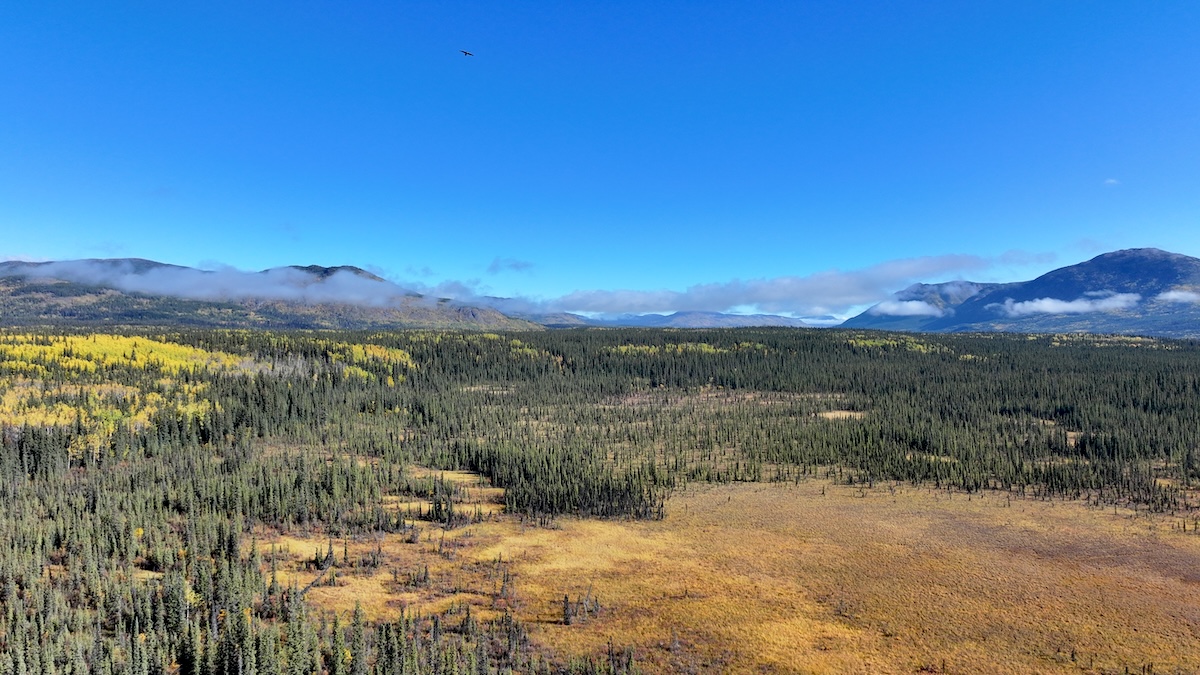
Living Peatlands Gathering in Thunder Bay, Ontario, October 3 to 5, 2026 brings delegates from the South Pacific, Aotearoa, Canada, Finland, Alaska, the UK, California and other geographies to gather and discuss the urgency of protection and restoration of peatlands as a part of the Snowchange Climate Breakthrough Initiative.
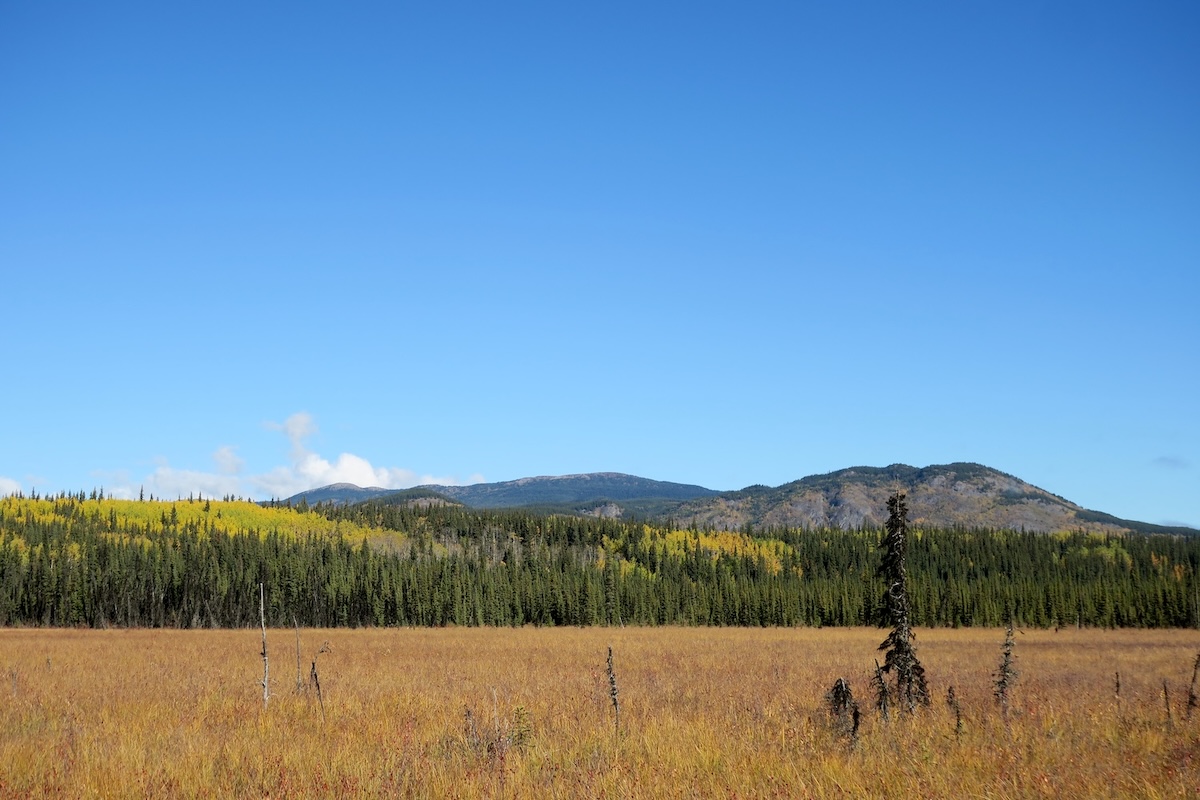
Tahltan peatland at 30 mile, BCWe’ll learn about important methods and approaches to peatland and wetland conservation and restoration from across the Living Peatlands Initiative network. We hope to not only learn from each other, but also to identify ways to deepen coordination to support healthy peatlands and wetlands across the circumpolar region and worldwide.
In 2024, Snowchange Cooperative received a Climate Breakthrough Initiative Award to expand on its successful peatland restoration work in Finland through a circumpolar and circumboreal network.
This network connects local efforts and action to conserve and restore peatlands by supporting the work of hubs in Canada, northern MN, northern Europe, and the Pacific. By linking these hubs, Snowchange aims to foster knowledge sharing, strengthen Indigenous and local governance, and protect and restore peatlands to preserve or renew their healthy ecosystem function.
In 2025, the first Living Peatland hubs in northern MN (Sax Zim Bog) and northern Canada (Gwich’in settlement area) were announced and an exchange visit was held in Finland, where representatives from North America learned about Snowchange’s approach to peatland restoration.
In 2026, we have been broadening connections, developing a website and communication campaign, and deepening discussions in anticipation of the gathering in Thunder Bay.
We will report the results from the gathering in October and look forwards to all delegations to Thunder Bay!
30-mile peatland, BCIt’s been 10 years since the blackout of South Australia – could it happen again?
What happened 10 years ago to cause South Australia to go system black? And what would happen today if the conditions that occurred then were to be repeated?
The post It’s been 10 years since the blackout of South Australia – could it happen again? appeared first on Renew Economy.
ProPublica’s New Project
The American Oil Industry’s Playbook, Illustrated: How Drillers Offload Costly Cleanup Onto the Public
Oil executive Tom Ragsdale walked away from his old wells, making the pollution left behind the state of New Mexico’s problem. His tactics, however, are ubiquitous in the industry.
by Mark Olalde, illustrations by Peter Arkle, special to ProPublica
Co-published with Capital & Main
December 30, 2024, 5:00 am
ProPublica is a nonprofit newsroom that investigates abuses of power. Sign up for Dispatches, a newsletter that spotlights wrongdoing around the country, to receive our stories in your inbox every week.
In December 1990, officials in the federal agency tasked with regulating offshore oil and gas drilling received a memo with a dire warning: America faced a ticking time bomb of environmental liability from unplugged oil and gas wells, wrote the agency’s chief of staff. Those wells and their costly cleanup obligations were being concentrated in the hands of cash-strapped drillers at the same time as production was shrinking. (The document, unearthed by public interest watchdog organization Documented, was shared with ProPublica and Capital & Main.)
More than three decades later, little action has been taken to heed that warning, and the time bomb is threatening to explode.
Read More
SwitchedOn podcast: The inexperienced volunteers who put an entire suburb on the path to electrification
A four-year grassroots campaign has transformed into a major ARENA-backed pilot to help up to 1,000 Canberra households go electric.
The post SwitchedOn podcast: The inexperienced volunteers who put an entire suburb on the path to electrification appeared first on Renew Economy.
“Fight and Win”: Author John Hanson on the 1934 Teamsters Strike in Minneapolis
For Immediate Release: White Mesa Utes Invite Public to 10th Annual Spiritual Walk and Protest against Energy Fuels’ uranium mill/dump and mines, October 17th
FOR IMMEDIATE RELEASE
September 29, 2026
White Mesa Concerned Community
protectwhitemesa.org
MEDIA ADVISORYContacts:
Yolanda Badback, White Mesa Concerned Community, (435) 459-2461, ybadback427@gmail.com
Bradley Angel, Greenaction for Health & Environmental Justice, (415) 722-5270, bradley@greenaction.org
Photos and video (free for media use): https://bit.ly/White-Mesa-2025-Photos
White Mesa Ute Invite Public to Join 10th Annual Spiritual Walk to Protest Energy Fuels Uranium Mill
What: A rally and spiritual walk to protect the White Mesa Ute Community’s health, water, air, land, culture, and sacred sites from the Energy Fuels uranium mill located just north of our reservation and just east of Bears Ears National Monument. The community-led walk protests the mill operating as an international dumping ground for radioactive waste. We walk in solidarity with our relatives across Indian Country, and with people across Utah, the Southwest, and the world, from Japan to Europe to Madagascar, suffering due to radioactive materials destined to be processed and buried at the mill near our community. Please join us.
When: Saturday, October 17, 2026, 11 a.m. MDT rally followed by spiritual walk to the Energy Fuels uranium mill, about five miles on relatively flat pavement. Wear comfortable shoes and bring plenty of water. Limited number of vehicle seats available for elders and those not able to walk the whole way.
Where: The White Mesa Ute Community Center in White Mesa, Utah, off Highway 191. The community center is on the west side of the highway. Turn west at the gas station and go one block south.
Why: The Ute Mountain Ute Community of White Mesa and the Ute Mountain Ute Tribe’s Environmental Programs Department are concerned about contamination from the uranium mill and desecration of sacred sites. This is our 10th year of leading the rally and walk to the mill. The uranium mill, owned by Energy Fuels Resources, is also where uranium ore from the Pinyon Plain Mine, near the Grand Canyon, is trucked more than 300 miles for processing; Native American tribes, including the Havasupai Tribe, strongly oppose that mine. Amid the administration and the State of Utah’s push to boost uranium and nuclear power, more uranium is trucked from the Energy-Fuels-owned La Sal Mines Complex about 60 miles to the mill, and at least 72 new mining claims have been staked on lands cut from Bears Ears National Monument. Trucks hauling uranium ore are a constant presence on Highway 191 through our community, the same road our children travel to school, and at least two uranium haul trucks have crashed on the Navajo Nation this year. The waste from all this uranium-ore processing is dumped in pits near our community. As far away as Madagascar, Indigenous people strongly oppose Energy Fuels’ operations.
Quotes:
“They want to expand the mill’s waste pits south towards our reservation. We are standing up and doing whatever we can to stop that from happening. We are a small community. We cannot do this alone. Please come join our walk and show the state of Utah and the world that we’ve had enough. Our children need clean water to drink and clean air to breathe. Your radioactive waste is not welcome here.” –Yolanda Badback, White Mesa Concerned Community cofounder
“The water under the mill is becoming more and more polluted and is moving toward our community. The acidity of the water is increasing, and heavy metals are rising. We used to drink the spring water for ceremonial purposes. We don’t do
that anymore. We used to hunt for animals near our homes; we used to gather plants for baskets, and to eat. We don’t do that anymore as well.” –Anferny Cly, White Mesa Concerned Community
###
White Mesa Concerned Community is a grassroots group of concerned citizens of the Ute Mountain Ute community of White Mesa, Utah, located south of Energy Fuels’ uranium mill. We work to inform our people and protect our community, health, water, air, land, culture, and sacred sites from toxic contamination.
The 10th Annual Rally and Spiritual Walk is sponsored by the White Mesa Concerned Community and the Ute Mountain Ute Tribe’s Environmental Programs Department.
Event co-sponsors:
Ah Mut Pipa Foundation, Bears Ears Inter-Tribal Coalition, Bidii Roots, Children for a Safe Environment, Diné Care, Gila River Alliance for a Clean Environment, Grand Canyon Trust, Greenaction for Health and Environmental Justice, Haul No!, HEAL Utah, Indigenous Environmental Network, Moab Mutual Aid, Multicultural Alliance for a Safe Environment, National Parks Conservation Association, New Mexico Social Justice and Equity Institute, Northern Arizona American Indian Movement, Nuclear Information and Resource Service, PANDOS, Red Water Pond Road Community Association, Sierra Club Utah Chapter, SLC Air Protectors, Southern Utah Wilderness Alliance, Uranium Watch, University of Utah Environmental Justice Clinic.
Click here to download this Press release in PDF Format
When Home is Not Safe
Open House
Crossing the Line
Ascension Saint Agnes nurses win first contract
Ambassador details how U.S. fuel blockade harms Cuban health
Pages
The Fine Print I:
Disclaimer: The views expressed on this site are not the official position of the IWW (or even the IWW’s EUC) unless otherwise indicated and do not necessarily represent the views of anyone but the author’s, nor should it be assumed that any of these authors automatically support the IWW or endorse any of its positions.
Further: the inclusion of a link on our site (other than the link to the main IWW site) does not imply endorsement by or an alliance with the IWW. These sites have been chosen by our members due to their perceived relevance to the IWW EUC and are included here for informational purposes only. If you have any suggestions or comments on any of the links included (or not included) above, please contact us.
The Fine Print II:
Fair Use Notice: The material on this site is provided for educational and informational purposes. It may contain copyrighted material the use of which has not always been specifically authorized by the copyright owner. It is being made available in an effort to advance the understanding of scientific, environmental, economic, social justice and human rights issues etc.
It is believed that this constitutes a 'fair use' of any such copyrighted material as provided for in section 107 of the US Copyright Law. In accordance with Title 17 U.S.C. Section 107, the material on this site is distributed without profit to those who have an interest in using the included information for research and educational purposes. If you wish to use copyrighted material from this site for purposes of your own that go beyond 'fair use', you must obtain permission from the copyright owner. The information on this site does not constitute legal or technical advice.
 This site is not the official webpage of the Industrial Workers of the World.