You are here
News Feeds
End Sanctions Now - U.S. Economic Warfare Has Made Venezuela’s Earthquake Catastrophe Worse
CODEPINK extends our deepest condolences to the people of Venezuela following the devastating earthquakes that have taken hundreds of lives, injured thousands, and left entire communities in urgent need of assistance. Our hearts are with the families mourning loved ones, the first responders risking their lives, and all those working tirelessly to rescue survivors and begin the difficult process of recovery.
For years, CODEPINK has opposed the U.S. policy of sanctions, economic coercion, and regime change directed at Venezuela because these policies have inflicted immense suffering on ordinary people while failing to achieve their stated goals. Today’s catastrophe makes clear what we have long argued: when a country is deliberately weakened through economic warfare, its ability to prepare for, respond to, and recover from disasters is also weakened. The United States has a responsibility to help address the humanitarian consequences of the policies it has imposed.
We call on the Trump administration to provide immediate, massive humanitarian assistance in coordination with Venezuelan authorities. Aid must be unconditional, strictly civilian in nature, and must never be used as a pretext for military intervention or political interference. Too often, we’ve seen the U.S. and other Western countries exploit natural disasters like this in order to deepen foreign control. In Haiti, the U.S. and its allies have repeatedly pushed militarization and politically conditioned aid instead of genuine recovery led by the country itself. In this moment, the world must refuse to allow Venezuela to be forced down the same path.
We also call on the administration to immediately lift all U.S. sanctions on Venezuela and release Venezuelan funds under U.S. jurisdiction so they can be used for emergency relief, reconstruction, and recovery.
This is the time for cooperation, compassion, and respect for Venezuela’s sovereignty. We urge the international community to support relief efforts and stand with the Venezuelan people as they rebuild their homes, their communities, and their future.
Too Big to Fail? Why Obama’s Presidency Sucked
Exploring Kentucky One Cup at a Time
A few weeks ago, I found myself driving through Grayson, Kentucky, the kind of small-town stop you don’t always plan but often ends up staying with you. After a few hours on the road, I pulled over for what I thought would be just a cup of coffee and some rest. Instead, it turned into something much more.
I stepped into the Nook & Cranny Coffeehouse, and almost immediately, it felt like I had walked into a story already in motion. There was, of course, the warm atmosphere and the smell of fresh coffee—this always bring me home (there is nothing like the smell of fresh coffee!). But I ended up talking with one of the owners, Jeremy Wells, who shared how he and his wife Nicole built this place together. Their vision was to create something rooted in the community with locally sourced coffee, pastries and paninis, and a place for meaningful connection.
Because that’s the thing about a local coffee shop—it’s never just about the coffee.
Still, let me say this: the coffee is amazing. It’s roasted just a couple of blocks away at Goose Bridle Coffee, a family-run roastery led by Will Stevens. And in that moment, sitting there with my cup, I couldn’t help but think of how special it felt to be in a place like this, where everything connects—the people, the businesses, the community.
Nook & Cranny is also part of the Kentucky Coffee Trail, something I’ve now added to my list to explore this year. But honestly, even before I knew about the trail, I already understood what it stood for.
An independent coffee shop in a small town can tell you everything about a place—if you pay attention. The decorations, the announcements on the walls, the menu, the rhythm of people coming and going throughout the day—it’s all a reflection of the community.
I learned that when I first moved to Kentucky in 2012.
Coming from Brooklyn, New York, everything felt different. It was a new world for me and my family, and like many people starting over, I was searching for something familiar and somewhere I could feel grounded. I found that place in a local coffee shop in Corbin.
That shop became my refuge.
It’s where I made friends, where I filled out job applications, where I sat quietly when I needed a moment to breathe. But it was also where I began to understand the community around me. In the mornings, there were Bible study groups gathered around tables. Later, you might find a knitting circle. In the afternoons, high school students would come in to work on homework. And at different hours, friends would meet before heading out to the back roads, coffee in hand.
Over time, I realized this was a rhythm you can find in so many small towns across Eastern Kentucky. And after visiting many places over the years, I’ve seen it again and again.
That’s why, this spring, when I attended a showcase for new businesses and came across the team behind the Kentucky Coffee Trail, something immediately clicked.
They described their idea like this: a great cup of coffee can bring people together, strengthen communities, and spark pride in the places we call home.
I didn’t just understand that—I had lived it.
What better way to explore communities than by visiting their local coffee shops? These spaces are more than businesses—they’re part of the local economy, a hub for connection, and a place where other small businesses show up too, whether through products on the shelves or flyers on the bulletin board.
Since launching their app in April 2026, the Kentucky Coffee Trail has already grown—bringing together around 50 local shops across 9 regions, with over 100,000 posts shared by visitors exploring these spaces. The app itself offers travel plans, games, and even a store, creating different ways for people to engage. It invites you to become part of something, to support and help build a new kind of economy rooted in small towns.
And maybe that’s what stayed with me the most.
This isn’t just about coffee. It’s about connections. It’s about community. It’s about belonging.
So, here’s my invitation: get your passport, start the journey, and be part of this movement—one sip at a time:
Explore the Kentucky Coffee Trail website
Listen to the Kentucky Coffee Trail podcast
The post Exploring Kentucky One Cup at a Time appeared first on Mountain Association.
Everglades Advocates Respond to Press Conference With DeSantis, Federal Officials at ‘Alligator Alcatraz’
Florida Gov. DeSantis, White House Border Czar Tom Homan and Florida State Board of Immigration Enforcement Executive Director Anthony Coker said today at a news conference that they have zero detainees at the ICE detention center in Big Cypress National Preserve.
The groups suing to enforce environmental laws at the year-old facility — which underwent zero environment review — issued the following statements:
“This outrageously expensive internment camp inflicted documented harm on the Everglades, and Gov. DeSantis and Attorney General Uthmeier are trying to sweep it under the rug. We won’t allow it. The public deserves a full, transparent assessment of the extent of the damage at ‘Alligator Alcatraz.’ We are poised to return to court to defend the Everglades and demand full remediation of the harm,” said Eve Samples, executive director of Friends of the Everglades.
“Overwhelming opposition has forced Trump and DeSantis to scamper away from Alligator Alcatraz with their tails between their legs,” said Elise Bennett, Florida and Caribbean director and an attorney at the Center for Biological Diversity. “Now we’ll make sure they clean up their mess and work to protect the entire site so a twisted boondoggle like this one never again darkens the doorstep of Big Cypress.”
“The governor’s press conference confirmed the theory of our case. This facility was coordinated between the state and the Department of Homeland Security behind closed doors, built without public scrutiny, and operated in secrecy,” said Paul J. Schwiep of Coffey Burlington and counsel for Friends of the Everglades and the Center for Biological Diversity. “Now the administration believes it can quietly walk away and leave its mess for others to clean up. The law will not allow them to escape accountability. We will ask the courts to ensure that the environmental damage is fully addressed, that the site is restored, and that no future administration can repeat this mistake.”
“If there’s one thing we’ve learned over the past year, it’s that state and federal officials say one thing to the public and another thing in court. We intend to hold their feet to the fire in a court of law,” said Tania Galloni, managing attorney for Earthjustice’s Florida regional office.
“Let’s wait and see what they tell the court under oath,” said Scott Hiaasen of Coffey Burlington.
Background
Friends of the Everglades, represented by Earthjustice and Coffey Burlington attorneys Paul Schwiep and Scott Hiaasen, along with the Center for Biological Diversity, sued in June 2025 to enforce a law that requires review of environmental impacts under the National Environmental Policy Act before major federal projects are approved. The Miccosukee Tribe of Indians of Florida joined the lawsuit to protect tribal rights.
CEPR Calls for a Full Lifting of Sanctions in Response to Venezuela Earthquakes
The Center for Economic and Policy Research (CEPR) is calling for the US and other countries to lift all sanctions against Venezuela in the wake of Wednesday’s devastating earthquakes. The ability of governments, civil society, and individuals to provide funds and humanitarian support to Venezuela will be severely hindered while these sanctions remain in place, CEPR experts warned.
“We have seen in previous instances how US sanctions have restricted and hampered earthquake relief efforts,” CEPR Director of International Policy Alex Main said. “Most immediately, the Trump administration can avoid the kinds of mistakes made by the previous administration in response to the Syria earthquake in 2023, when lives were lost due to the Biden administration’s belated and limited sanctions waivers. The Venezuelan government must be free to receive and allocate earthquake relief and to send humanitarian support to those who need it. Current US and other sanctions threaten to hobble the overall earthquake response.”
While the Trump administration has issued a series of general licenses to allow foreign businesses and banks to operate in Venezuela in spite of US sanctions, the continued existence of these sanctions significantly discourages international economic and financial actors from expanding operations there.
Research by CEPR economists and other international sanctions experts has shown that overcompliance leads to sanctions having a harsher and broader impact than policy-makers may expect, as aid groups, corporations, and other foreign actors pull back out of fear of running afoul of sanctions. Despite the changed nature of the US-Venezuela relationship following the US abduction of President Nicolás Maduro amid a military raid on Caracas, the Trump administration maintains many sanctions that could hinder foreign aid and relief efforts. Similarly, the governments of the United Kingdom and Portugal should act immediately to secure the release of billions of dollars of Venezuelan assets held by the Bank of England and Novo Banco so that these financial resources, which are the property of the Venezuelan state, can be deployed to support humanitarian and reconstruction efforts.
“We must remember that Venezuela suffered the worst depression in the history of the world, without a war, due to illegal US economic sanctions,” said Mark Weisbrot, CEPR Co-Director. “IMF data shows a loss of 74 percent of GDP in eight years. This deadly destruction was not a mistake, but an expected result that would happen to any country that was cut off by sanctions from the international financial system, and also from the vast majority of its foreign exchange earnings from exports.
“Tens of thousands, and more likely hundreds of thousands, of Venezuelans died as a result of those sanctions. The United States is therefore obligated to help prevent further loss of life in Venezuela,” he said.
Immigrants’ Rights Advocates Applaud Permanent Closure of Everglades Detention Center, Cruelly Dubbed ‘Alligator Alcatraz’
Immigrants’ rights advocates applaud the announced closure of the notorious Everglades detention center, cruelly dubbed “Alligator Alcatraz,” known for the horrific and unsafe conditions faced by immigrants being held there.
Florida Governor Ron DeSantis announced the closure during a press conference today, just days after reports emerged that people detained at the facility were being transferred to other ICE detention facilities ahead of hurricane season. The American Civil Liberties Union, ACLU of Florida, and Americans for Immigrant Justice had sued over the facility last July, challenging the lack of access to legal counsel and violations of due process for people held there.
The site is a hastily constructed facility on an abandoned airstrip in the middle of the wetlands in Ochopee. It was built out of shoddy tents and trailers, and surrounded by alligators, pythons, mosquitos, and swampland, and at serious risk of dangerous flooding. The lawsuit was brought on behalf of detainees held there, on behalf of a class, and legal service providers with clients there.
While pleased with news of the detention center’s permanent closure, the groups also urge caution.
“The fact that this site ever existed is a travesty, given the cruelty behind it, horrific conditions, and blatant violations of due process. We challenged the Trump administration and the State of Florida over the facility, and now celebrate its closure,” said Carmen Iguina González, deputy director for immigration detention with the ACLU’s National Prison Project. “However, the nightmarish scene found at ‘Alligator Alcatraz’ is not wholly unique and reflects systemic patterns of abuse at other ICE detention facilities nationwide. We remain very concerned that people may be transferred to other sites with sordid and dangerous conditions, and we will continue to monitor this situation.”
“With its official closure, 'Alligator Alcatraz' seals its reputation as a ruinous venture. This detention center stands as a monument to what happens when a state government abandons its conscience in service of a federal cruelty agenda. The DeSantis administration deliberately built a detention facility in the middle of the Everglades — not despite the harsh conditions, but because of them — and spent over $1 billion of Florida taxpayers' money to do it,” said Keisha Mulfort, deputy executive director and strategy officer of the ACLU of Florida. “That is not governance; that is cruelty dressed up as policy, and complicity dressed up as leadership. In spite of this, hundreds of thousands of Floridians protested, organized, called their legislators, and refused to look away. They made this moment possible, and we should name that clearly: this is what accountability looks like when the government won't hold itself accountable. As people are transferred to other facilities, the abuses do not disappear — they relocate. The ACLU of Florida will follow. We will not allow this administration, or any administration, to simply shuffle the harm out of sight and call it progress. Our vigilance does not end with a closure. It deepens.”
“Closing this facility is an important step, but the government's obligation to respect due process does not end at the facility gates. Constitutional rights must follow every person wherever they are detained," said Paul R. Chavez, Director of Litigation & Advocacy at Americans for Immigrant Justice. "These failures are not an isolated case — they reflect systemic failures throughout our immigration detention system. We remain deeply concerned that people transferred out of this facility will continue to face mistreatment and civil rights violations in other detention centers. Americans for Immigrant Justice will continue to defend due process, offer free legal representation to low-income immigrants and stand strong with our immigrant neighbors, friends, and their families.”
Voting Rights Groups Applaud Ruling Declaring 2026 Executive Order Interference with Voter Rolls and Mail-In Ballots Unconstitutional and Unlawful
A federal court today declared unconstitutional key portions of President Trump’s executive order restricting mail voting. The executive order, issued in March 2026, unlawfully attempted to seize control of elections by ordering the Department of Homeland Security to compile a list of U.S. citizens and by directing the U.S. Postal Service to restrict mail voting. The decision came in a case brought by 23 states and the District of Columbia, led by California.
The court declared that Sections 2 and 3 of the executive order are legally void and barred federal agencies from using the executive order as a basis to interfere with how plaintiff states maintain their voter rolls or conduct mail voting. The court’s ruling also blocked the U.S. Postal Service from withholding mail ballots from voters not on an approved list in the plaintiff states.
The court is also considering a separate legal challenge to the executive order brought by a coalition of nonpartisan voting rights groups in the case LWVMA, et al., v. Trump, et al.
That suit was filed by the League of Women Voters of Massachusetts, the League of Women Voters, Association of Americans Resident Overseas (AARO), U.S. Vote Foundation, OCA – Asian Pacific American Advocates (OCA), and Delta Sigma Theta Sorority, Inc.
They are represented by the American Civil Liberties Union (ACLU), ACLU of Massachusetts, Brennan Center for Justice, Legal Defense Fund (LDF), Asian Americans Advancing Justice – AAJC (Advancing Justice – AAJC), and LatinoJustice PRLDEF.
Attorneys and plaintiffs in the voting rights group case issued the following joint statement:
“As this ruling makes clear, President Trump’s executive order from March 2026 attempting to seize control of elections is unconstitutional and dangerous.
“This ruling is a critical step in preserving free and fair elections. The court rightly recognized that the President and the executive branch lack both the legal authority and the capacity to compile a complete and accurate list of U.S. citizens or eligible voters in every state. The ruling also rightly recognizes that the U.S. Postal Service has no authority to limit the distribution of mail ballots.
“The court has yet to rule on our request to block the executive order’s provisions on mail voting on behalf of a nonpartisan coalition of voting rights groups. The same reasoning underpinning today’s decision should hold in our case. President Trump’s unlawful executive order violates the separation of powers, threatens the integrity of our elections, and must be enjoined from taking effect in the upcoming primary and midterm elections.”
Baltimore nurses announce one-day strike for patient and staff retention
As Nigeria rails at loss and damage “mirage”, fund boss assures money is coming
After a four-year set up period, a fund to help vulnerable countries respond to climate impacts is facing criticism from Nigeria’s environment minister over delays in delivering aid, while its chief executive says the first disbursements will be made by the end of the year.
At an event at London Climate Action Week on Tuesday, Nigerian environment minister Balarabe Abbas Lawal said that whenever he goes to UN climate summits “we talk about loss and damage funds, and all these years nothing has been translated into action”.
He added that the fund currently “looks like a mirage”, and said that “a number of our governments are beginning to believe that COPs are just talk shops”.
The idea of addressing the loss and damage caused by climate change was first discussed at COP13 in 2007. A fund was agreed to at COP27 in 2022 to help vulnerable countries respond to climate emergencies, and it was officially set up the next year. Since then, the fund’s board and management have been working out the details of how it will work.
Ibrahima Cheikh Diong, a banker from Senegal, was appointed CEO in 2024. Referring to Lawal’s frustration, Diong told Climate Home News on Thursday that the fund is “moving according to plan”.
A call for funding requests, launched at COP30, closed on June 15. Projects – including those to strengthen responses to floods in Bangladesh and Lagos and improve water infrastructure in Jamaica – bid for a combined $250 million. Diong said that the fund’s board would decide which projects to fund at its next board meeting in the Philippines, starting on July 8.
“We hope that by the end of the year we can begin then to make the decision and see the funds going, so hopefully the frustration for Nigeria will be reduced”, he said, adding that “every time wasted, when it comes to loss and damage, is lives not saved”.
Funding concernsWhile climate campaigners have called for tens of billion of dollars of funding a year, wealthy nations have promised the fund $822 million and delivered just $449 million – with countries like Italy, France and Luxembourg failing to pay in full.
A briefing paper prepared by the fund’s secretariat earlier this year warned that, unless fresh contributions are secured, the fund could run out of resources by the end of 2027.
Fund for Responding to Loss and Damage Executive Director Ibrahima Cheikh Diong at COP29 in Baku, Azerbaijan on November 12, 2024 (Photo: IISD/ENB | Mike Muzurakis)Diong said that the fund intends to hold a replenishment round, where governments promise money, next year. In the meantime, as public finance “is being very difficult to mobilise”, the fund is looking at other sources of funding.
“What exactly that source of funding will be, we have to look at the potential, look at the feasibility and so on”, he said, so the fund can keep up with demand.
In an open letter in April, a group of climate campaigners called for developed countries to increase contributions to the Loss and Damage fund and introduce taxes on fossil fuel companies, financial transactions, luxury air travel and wealth to help finance it.
“Rich countries must be held strictly accountable for the devastation they have caused,” said Climate Action Network International head Tasneem Essop. “Their failure to fulfill their responsibility to the loss and damage fund is not just an oversight; it is a shameful betrayal of humanity.”
The post As Nigeria rails at loss and damage “mirage”, fund boss assures money is coming appeared first on Climate Home News.
US Customs Blocks Copper Imports Over Allegations of Slave Labor
On June 16, 2026, US Customs and Border Protection, citing “use of forced labor in their production,” effectively blocked imports of copper mined by Serbia Zijin Copper D.O.O, a mine operating in Serbia but largely owned by China-based Zijin. The mining company has a history of labor abuses.
The Zijin copper mine complex is located in the Eastern part of Serbia, in the City of Bor, home to about 28,000 Serbians. Production has skyrocketed in recent years.
The United Nations Special Rapporteur on human rights and the environment named Bor one of the most polluted places on earth. Most recently, Serbian labor inspectors found the company failed to take action to protect workers from heavy metal contamination.
Bor, Serbia literally lies in the shadow of a copper mine A History of Labor AbusesBorder Patrol’s order is the newest development in a litany of concerns about labor abuses at the Serbia Zijin copper mine. It adds a new layer of worry that workers may be exposed not only to unsafe working conditions but also coercion and control that violates basic human rights.
There have been numerous reports of abysmal working conditions and abuses at the mine, which uses both Serbian and Chinese labor.
Most recently, Serbian labor inspectors found the company failed to take action to protect workers from heavy metal contamination.
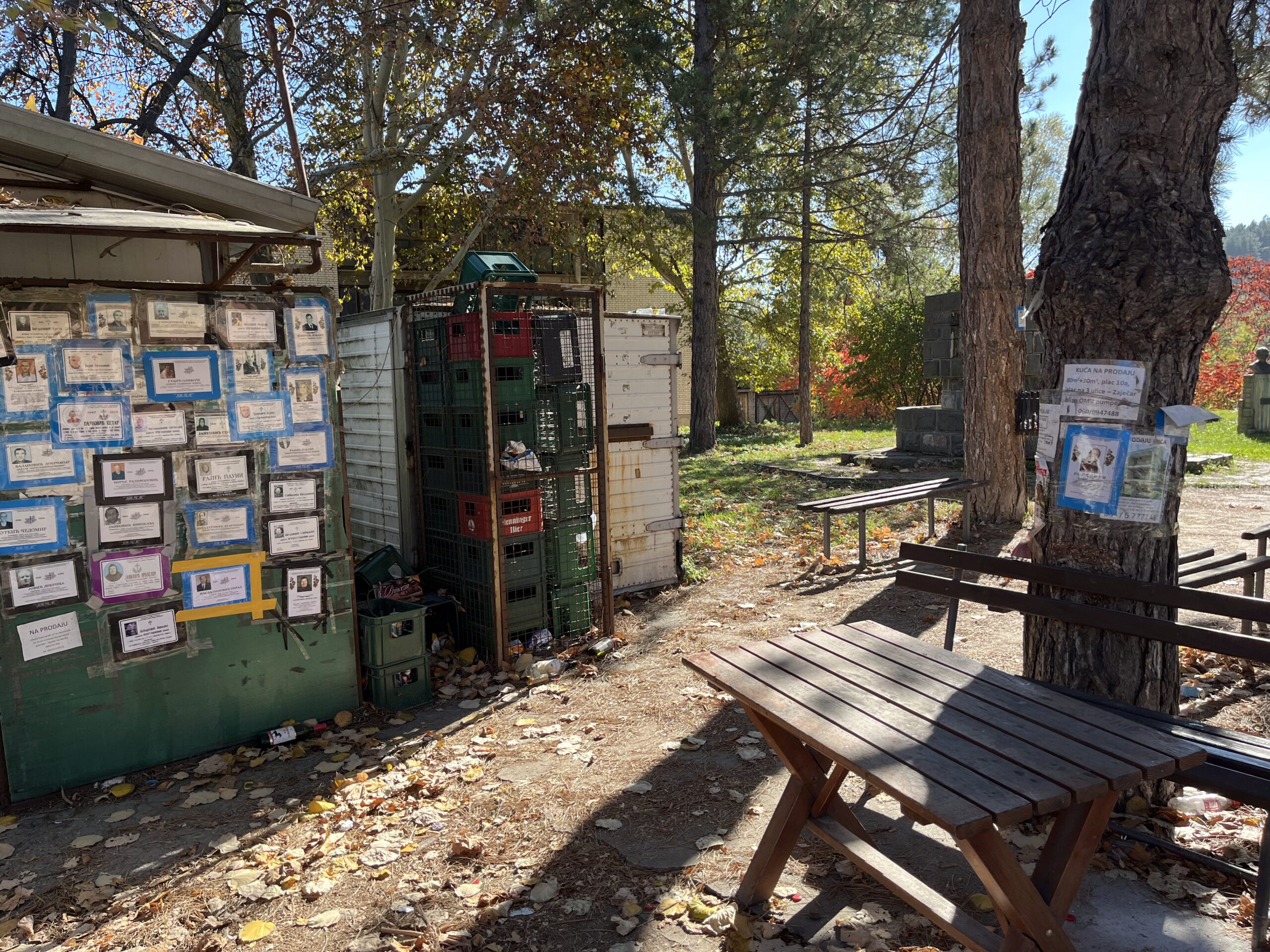
Harm to Public HealthDuring a visit to Bor last year, I heard first hand how the continued pollution is impacting the lives and livelihoods of the residents of the city and surrounding communities. In Serbia, it is common to post obituaries in public spaces, and I saw bulletin boards in Bor and surrounding areas packed with pictures of the recently deceased.
A bulletin board with tributes to deceased residents.A report from January 2024 revealed frequent spikes in sulfur dioxide levels around the city. Sulphur dioxide can contribute to respiratory problems, as well as acid rain. The study also found fine particulate matter, PM10, containing heavy metals including lead, cadmium, nickel, and arsenic.
A WHO study found a correlation between air pollution in Serbia and the exacerbation of cardiovascular issues.
Workers and Residents Caught in the Minerals ConflictWorkers in the copper mining complex and the residents of Bor are on the front lines of the geopolitical competition for minerals and metals.
But this goes beyond politics. Workers have a basic right to safety and dignity. So do communities.
Human rights abuses remain common at mines around the world. Human rights need to be taken seriously no matter who owns a mine, and no matter where it is located.
Read more about the impacts of copper mining in Bor.
The post US Customs Blocks Copper Imports Over Allegations of Slave Labor appeared first on Earthworks.
BLM Targets Iconic Redrock Landscapes for Oil and Gas Leasing and Development
The Bureau of Land Management (BLM) is accepting scoping comments on a proposal to sell 44 parcels spanning more than 74,000 acres of public land in Utah for oil and gas development. This sale is an especially bad one for redrock country as it includes a large block of parcels in the northern Dirty Devil region, parcels atop Horse Bench on the West Tavaputs Plateau, parcels scattered throughout the southern Uinta Basin, and several more in the Hatch Point region, just east of Bears Ears National Monument.
The public comment period is open through Thursday, July 16. Please tell the agency to keep oil and gas development out of Utah’s wild places.
The BLM has chosen exceptionally inappropriate places for its lease sale. The Dirty Devil parcels are located only a few miles west of the Horseshoe Canyon unit of Canyonlands National Park, immediately north of the Dirty Devil Wilderness Study Area. This region is expansive, remote, and wild.
The parcels atop Horse Bench on the West Tavaputs Plateau overlook the Desolation Canyon stretch of the Green River. To access the plateau, oil tanker trucks and other vehicles would have to pass through Utah’s famed Nine Mile Canyon—often referred to as “the world’s longest art gallery” due to its more than 10,000 unique cultural, historical, and archaeological resources.
The Hatch Point parcels are located near the mouth of Trough Springs Canyon, south of Moab, and encompass the scenic Kane Springs Canyon. This rugged landscape is home to a diversity of wildlife, including the threatened Mexican spotted owl, and provides expansive views of the nearby Bears Ears region.
In its haste to align itself with the Trump administration’s priorities, the BLM has elevated fossil fuel extraction as a primary use of our public lands, even in the face of worsening climate change. With your help, SUWA will challenge this latest proposal and hold the BLM accountable for its failure to follow the law.
The post BLM Targets Iconic Redrock Landscapes for Oil and Gas Leasing and Development appeared first on Southern Utah Wilderness Alliance.
Skeptical Science New Research for Week #26 2026
Paleorecords inform the limits of Indo-Pacific coral reef survival under accelerating sea-level rise, Ramos et al., Nature Communications
Here, we compile and evaluate standardized Holocene vertical accretion rates and coral community structure data from 288 Indo-Pacific paleo-reef records across 92 sites to examine intrinsic and extrinsic drivers of accretion. Our findings reveal that reef formation and long-term accretion are determined by a complex interplay between sea-level change and eco-geomorphological factors. Maximum vertical accretion rates indicate that many Indo-Pacific reefs do not have the capacity to keep pace with projected rates of sea-level rise, particularly under high-emissions scenario (76% of reef sites). Critical thresholds suggest that reef accretion is very unlikely (>90% probability) to be maintained when relative sea-level rise rate exceeds 5.3 mm yr−1, a scenario likely to be surpassed within ~35 years. Without substantial reductions in global emissions, many coral reefs face increasing risk of submergence, structural collapse and loss of critical ecosystem services, especially where modern coral communities differ from predominantly competitive Holocene assemblages and are increasingly dominated by weedy taxa.
Wild Ruminants as a Natural Source of Methane: A Global Gridded Emissions Estimate, Yazbeck et al., Journal of Geophysical Research Biogeosciences
Methane (CH4) is a greenhouse gas that contributes to climate change, but its global estimates are still uncertain. While livestock are known to produce large amounts of methane, wild animals also emit methane during digestion. In this study, we estimate methane emissions from wild ruminants worldwide using a new spatial data set. We combine global information on species distributions and population sizes with a relationship that links body mass to methane emissions and estimate emissions across the globe. Our results suggest that wild ruminants emit about 2.95 Tg (Tg) of methane per year globally. This estimate is lower than values derived from the IPCC Tier 1 method (∼15 Tg yr−1) but is consistent with previous body-mass-based studies. Although uncertainties remain, mainly in population data and seasonal variability, this work provides a transparent baseline estimate of methane emissions from wild ruminants that can support global methane budget studies and atmospheric modeling.
Reversal of the ITCZ Shift During the Satellite Era, Shrestha et al., Geophysical Research Letters
Roughly one-third of the global precipitation originates from the deep tropics where the Intertropical Convergence Zone (ITCZ) plays a central role. Even small shifts in this narrow band of intense rainfall can drive major regional hydrological changes both at seasonal and longer timescales, as exemplified by the prolonged Sahel drought of the late 20th century. Studies have attributed the southward migration of the ITCZ during the late 20th century to a larger concentration of aerosols over the Northern Hemisphere (NH) at the time. A growing record of observations now reveal a northward migration of the ITCZ over the past four decades that is, a reversal in the ITCZ shift trend. In this study, we find that both a reduction in aerosols over the NH along with a global increase in greenhouse gases have contributed to this recent reversal in the ITCZ shift. The northward displacement of the ITCZ over the satellite era aligns with observed hemispheric asymmetries in Earth's albedo trends and reinforces model projections of further northward shifts in the decades ahead.
Modelling the effect of awareness on the spread of misinformation, Caceres et al., Royal Society Open Science
We propose a model showing that taking an active role in stopping the spread of misinformation reduces its impact. To do this, we generalize the Maki–Thompson rumour model, where the population consists of spreaders, ignorants and stiflers. Spreaders try to spread the rumour through directed contacts. When a spreader contacts an ignorant, the ignorant becomes a spreader; otherwise, the initiating spreader becomes a stifler. In finite populations, the process reaches an equilibrium in which every individual is either a stifler or an ignorant. Our generalization adds a class of aware individuals who recognize the information as false. In a passive role, an aware individual exposed to misinformation simply avoids spreading it. In an active role, the aware individual not only refuses to propagate the rumour but also stops the spread by the contacting person. For homogeneously mixed populations, we prove limit theorems for the final proportion of ignorants as a function of the proportion of aware individuals and the probability of acting actively or passively. For populations represented by random networks, we perform computational analyses to compare both scenarios and find that propagation decreases sharply in active environments, with the largest differences occurring when awareness is about 30–40%.
From this week's government/NGO section:Lethal humidity and the systemic risks of climate change, Robert Glasser, Australian Strategic Policy Institute
The author uses ‘lethal humidity’ as a focal concept, but focuses primarily on the broad category of extreme humid-heat events that are increasingly approaching, and in some regions exceeding, that threshold. It focuses on the rising threat posed by extreme humid heat, both as a stand-alone climate hazard and as part of a more complex pattern of interconnected hazards intensified by climate change. He highlights the accelerating effects of extreme humid-heat occurrences and how they will both amplify and be amplified by other climate-related events happening simultaneously or consecutively. The main objective is to show that those effects are not isolated; they cascade through societies, magnified by other climate hazards, such as storms and flooding.Renewables shield Spanish consumers from elevated gas prices, Chris Rosslowe, Ember
As Europe is hit by its second gas price shock in five years, Spain demonstrates the ability of renewable energy to shield against volatile costs. Spain has pursued a strategic expansion of renewable energy since before the gas crisis of 2021-2024, and reinforced this approach following the Iberian blackout of April 2025. This strategy is proving its worth as Spanish consumers continue to benefit from low-cost electricity despite elevated gas prices. Building on this, Spain’s response to the 2026 energy crisis recognizes the importance of electrification to drive deeper reductions in fossil import dependency. 115 articles in 63 journals by 704 contributing authorsPhysical science of climate change, effects
Episodic Slowdown of Global Warming by a Multiyear La Niña, Iwakiri & Kohyama, Journal of Climate 10.1175/jcli-d-25-0686.1
Limited impact of Greenland meltwater on abruptness and reversibility of future Atlantic overturning changes, Mehling et al., Science Advances Open Access pdf 10.1126/sciadv.aed2633
Long-Term Trends and Variability in Arctic Mixed Layer Depth, Eisner et al., Journal of Geophysical Research Oceans Open Access 10.1029/2026jc024063
Multi-scale drivers of compound day-night heatwaves in Shanghai, China (1873–2023): The role of asymmetric warming, oceanic modes, and urbanization, LIANG et al., Advances in Climate Change Research Open Access 10.1016/j.accre.2026.04.012
North Atlantic Sea Surface Temperature Variability: Impacts, Mechanisms, and Challenges, He et al., Wiley Interdisciplinary Reviews Climate Change Open Access 10.1002/wcc.70077
Physical processes leading to extreme day-to-day temperature change – Part 2: Future climate change, Hamal & Pfahl, Refubium (Universitätsbibliothek der Freien Universität Berlin) Open Access pmh:oai:refubium.fu-berlin.de:fub188/52806
Recent Weakening of the Global Radiative Feedback, Loon et al., ArXiv.org Open Access pdf pmh:oai:arXiv.org:2603.12515
Reversal of the ITCZ Shift During the Satellite Era, Shrestha et al., Geophysical Research Letters Open Access 10.1029/2026gl123402
The Nonmonotonicity of Moist-Adiabatic Warming, Miyawaki, Journal of the Atmospheric Sciences 10.1175/jas-d-25-0099.1
Most cited from this section, published 2 years ago:
Radiative Heating of High-Level Clouds and Its Impacts on Climate, Journal of Geophysical Research Atmospheres, 10.1029/2024jd040850 12 cites.
Observations of climate change, effects
Air temperature trend analysis for the Cananéia–Iguape Coastal System (São Paulo State, Brazil), 1981–2022, using reanalysis products evaluated against surface observations, Baratto et al., Dynamics of Atmospheres and Oceans Open Access 10.1016/j.dynatmoce.2026.101676
Anthropogenic and natural drivers of the Earth's radiation budget changes in South and Southeast Asia (2001?2022), CHEN et al., Advances in Climate Change Research Open Access 10.1016/j.accre.2026.06.009
Disentangling internal and external impacts on increasing compound heat waves over the Yangtze River valley, Xie et al., Weather and Climate Extremes Open Access 10.1016/j.wace.2026.100927
Emergence of Subsurface Warming in the Southern Ocean Gateway Between New Zealand and Antarctica, Ferola et al., Geophysical Research Letters Open Access 10.1029/2025gl121465
Extreme sea level changes along the China coast under rising sea levels in 1980–2024, Wang et al., Advances in Climate Change Research Open Access 10.1016/j.accre.2026.06.013
Heatwaves enable wildfire activity in the western United States, Kalashnikov et al., Science Advances Open Access 10.1126/sciadv.aea1277
Projections Versus Observations of Extreme Temperatures Over Land During 2006–2023, Qin et al., Journal of Geophysical Research Atmospheres 10.1029/2025jd046261
Spatial and Temporal Dynamics of Drought, Heatwave and Compound Extremes in Saudi Arabia From 1984 to 2023: A Comprehensive Analysis, Kamruzzaman, International Journal of Climatology 10.1002/joc.70404
Most cited from this section, published 2 years ago:
Rapid summer Russian Arctic sea-ice loss enhances the risk of recent Eastern Siberian wildfires, Nature Communications, 10.1038/s41467-024-49677-0 36 cites.
Instrumentation & observational methods of climate change, effects
Evaluation of ERA5, ERA5-Land, CERRA and NEWA datasets in reproducing observed near-surface wind speeds across Spain, Plaza-Martín et al., Advances in Climate Change Research Open Access 10.1016/j.accre.2026.04.011
Observed Trends and Variability in the Water Masses of the Southern Ocean, Wyatt et al., Journal of Geophysical Research Oceans 10.1029/2025jc023852
Most cited from this section, published 2 years ago:
CODC-v1: a quality-controlled and bias-corrected ocean temperature profile database from 1940–2023, Scientific Data, 10.1038/s41597-024-03494-8 20 cites.
Modeling, simulation & projection of climate change, effects
Escalating Hydroclimatic Extremes and Volatility in the UK Under 2°C and 4°C Warming, He et al., Earth s Future Open Access 10.1029/2025ef007156
High-Resolution Climate Simulations Over the Eastern Mediterranean Black Sea Region Using the Pseudo-Global Warming Method With a CMIP6 Ensemble: Wind Energy Resource Availability, Cetin et al., Journal of Geophysical Research Atmospheres Open Access 10.1029/2025jd045816
Projected Changes in Extratropical Cyclone Activity Under Climate Change Scenario in East Asia, Byun et al., Journal of Geophysical Research Atmospheres 10.1029/2025jd045725
Reduced Future North Atlantic Eddy-Driven Jet Variability in High-Resolution, Fully Coupled Global Climate Models, Baker et al., Journal of Climate Open Access 10.1175/jcli-d-25-0418.1
Most cited from this section, published 2 years ago:
Changes in the Typhoon Intensity under a Warming Climate: A Numerical Study of Typhoon Mangkhut, Journal of Climate, 10.1175/jcli-d-23-0567.1 10 cites.
Advancement of climate & climate effects modeling, simulation & projection
Bias correction of CMIP6 models using quantile delta mapping for projecting future IDF curves: case study of the hyderabad metropolitan region, Saravanan & Ji, Theoretical and Applied Climatology 10.1007/s00704-026-06366-w
Development of a PCA-based climatic similarity index to enhance weather file selection criteria for climate-based daylight modelling simulations in tropical climates, Aw et al., Scientific Reports Open Access pdf 10.1038/s41598-026-58112-x
Machine Learning Eliminates Reanalysis Warm Bias and Reveals Weaker Winter Surface Cooling Over Arctic Sea Ice, Hossain et al., Geophysical Research Letters Open Access 10.1029/2025gl121289
Projections Versus Observations of Extreme Temperatures Over Land During 2006–2023, Qin et al., Journal of Geophysical Research Atmospheres 10.1029/2025jd046261
Most cited from this section, published 2 years ago:
Incorporation of RCM-simulated spatial details into climate change projections derived from global climate models, Climate Dynamics, 10.1007/s00382-024-07258-3 7 cites.
Cryosphere & climate change
Aufeis in a warming world: Global patterns, processes, and environmental implications, Li et al., Earth-Science Reviews 10.1016/j.earscirev.2026.105590
Chaotic fluctuations in Greenland ice streams limit predictability of ice sheet collapse, Kypke et al., Earth System Dynamics Open Access 10.5194/esd-17-769-2026
Past, present and future Greenland Ice Sheet surface melt, 1500–2200 CE, Hanna et al., Nature Reviews Earth & Environment 10.1038/s43017-026-00800-3
Understanding slow glacier flow under climate change: A case study on Vernagtferner, Austria, Dobler et al., cryosphere Open Access 10.5194/tc-20-2531-2026
Most cited from this section, published 2 years ago:
Tipping point in ice-sheet grounding-zone melting due to ocean water intrusion, Nature Geoscience, 10.1038/s41561-024-01465-7 28 cites.
Sea level & climate change
Emergent decadal predictability in Antarctic contribution to sea-level rise, McCormack et al., Nature 10.1038/s41586-026-10614-4
Extreme sea level changes along the China coast under rising sea levels in 1980–2024, Wang et al., Advances in Climate Change Research Open Access 10.1016/j.accre.2026.06.013
Most cited from this section, published 2 years ago:
A framework for physically consistent storylines of UK future mean sea level rise, Climatic Change, 10.1007/s10584-024-03734-1 9 cites.
Paleoclimate & paleogeochemistry
Commentary: Reframing Massive Carbon Input During the PETM and a Grand 66 Million Year Geoscience Puzzle, Dickens, Geophysical Research Letters Open Access 10.1029/2026gl124011
Paleorecords inform the limits of Indo-Pacific coral reef survival under accelerating sea-level rise, Ramos et al., Nature Communications Open Access 10.1038/s41467-026-74612-w
Rapid warming in South America during the last deglaciation, Ampuero et al., Nature Communications Open Access pdf 10.1038/s41467-026-74093-x
Most cited from this section, published 2 years ago:
Controlling factors for the global meridional overturning circulation: A lesson from the Paleozoic, Science Advances, 10.1126/sciadv.adm7813 8 cites.
Biology & climate change, related geochemistry
Conspecific density and reproductive trade-offs govern population response to climate in a clonal wildflower, Loesberg & Williams, Journal of Ecology Open Access 10.1111/1365-2745.70376
Eastern and southern Asian gymnosperms are doomed to extinction under climate change, Tang et al., Communications Earth & Environment Open Access pdf 10.1038/s43247-026-03759-7
Extreme weather effects on marine predator breeding outcomes in a global climate change hotspot, Sojitra et al., Science Advances Open Access pdf 10.1126/sciadv.aea3220
On the collapse of an endemic reef-building coral species, Morais et al., Marine Environmental Research Open Access 10.1016/j.marenvres.2026.108201
Projected Impacts of Climate Change on Interactions Between Plants and Avian Frugivores Across the Americas, Rabeau et al., Global Ecology and Biogeography Open Access pdf 10.1111/geb.70271
Projecting biodiversity change to support climate-smart ocean planning in Portugal, julien et al., npj Ocean Sustainability Open Access 10.1038/s44183-026-00216-y
Significant Coastal Dune Loss Challenges California's Climate Resilience and Biodiversity Goals, Baxter et al., Earth s Future Open Access 10.1029/2025ef007790
Temperate local extinctions from climate change are outpacing tropical extinctions, Murali et al., Nature Climate Change 10.1038/s41558-026-02669-y
Tropical climate modes control strength and distribution of thermal stress mitigation in a coral reef refugia, Camelia et al., Scientific Reports Open Access pdf 10.1038/s41598-026-52941-6
Variation in bud set phenology, autumn frost tolerance and non-structural carbohydrates among white spruce seed sources on climate-contrasted test sites: implications for assisted migration, Analy et al., Frontiers in Forests and Global Change Open Access pdf 10.3389/ffgc.2026.1753580
Most cited from this section, published 2 years ago:
Cumulative risk of future bleaching for the world’s coral reefs, Science Advances, 10.1126/sciadv.adn9660 75 cites.
GHG sources & sinks, flux, related geochemistry
Aerosol source apportionment modelling using a coupled regional–urban scale system, Caspel et al., Atmospheric chemistry and physics Open Access pdf 10.5194/acp-26-8575-2026
Cross-stressor resilience of soil microbial growth and carbon metabolism under climate change, Li et al., Ecology Open Access 10.1002/ecy.70439
Dissecting mesopelagic particulate organic carbon budgets in the North Atlantic: A mechanistic diagnosis and evaluation of PISCESv2_RC, Orihuela-García et al., Biogeosciences Open Access 10.5194/bg-23-4083-2026
Dissimilar roles of aerosols, nitrogen deposition and ozone on the terrestrial carbon sink in China during 2010–2020, Xie et al., Atmospheric chemistry and physics Open Access 10.5194/acp-26-5925-2026
Divergent responses of soil organic and inorganic carbon driven by land use during coastal reclamation, Zhai et al., Nature Communications Open Access 10.1038/s41467-026-74876-2
Efficient preservation of old methane-derived organic carbon in deep-sea surface sediments, Bao et al., Nature Communications Open Access 10.1038/s41467-026-74250-2
Greenhouse gas emissions from freshwater wetlands of the Doon Valley, Northwest Himalaya, India, Baiswar et al., Scientific Reports Open Access pdf 10.1038/s41598-026-50605-z
Hotspots of Arctic and sub-Arctic marine sediment organic carbon are dominated by the Baltic, Barents and Chukchi Seas, Langley et al., Communications Earth & Environment Open Access pdf 10.1038/s43247-026-03720-8
Long-term multiple global change interactions amplify belowground carbon allocation, Chen et al., Nature Climate Change 10.1038/s41558-026-02678-x
National pathways of land-use CO? emissions in the 21st century, Zhang et al., Nature Communications Open Access 10.1038/s41467-026-74836-w
Quantifying and Mapping Regional C, N and P Stocks From Temperate Fens, Bogs, and Forested Peatlands Using Detailed Peat Bathymetry, Arsenault et al., Journal of Geophysical Research Biogeosciences Open Access 10.1029/2025jg009407
Role of Future Climate Change, Air Pollution Control and Methane Mitigation in Driving Hydroxyl Radical (OH) and Methane Lifetime, Chua, Open MIND Open Access pmh:10.5281/zenodo.18894153
Wild Ruminants as a Natural Source of Methane: A Global Gridded Emissions Estimate, Yazbeck et al., Journal of Geophysical Research Biogeosciences Open Access 10.1029/2026jg009855
Most cited from this section, published 2 years ago:
Global turnover of soil mineral-associated and particulate organic carbon, Nature Communications, 10.1038/s41467-024-49743-7 184 cites.
CO2 capture, sequestration science & engineering
Geomechanical characterization of reservoir and caprock integrity for CO2 sequestration assessment in the Jaisalmer Basin, India, Hembram et al., Journal of Earth System Science 10.1007/s12040-026-02797-1
Most cited from this section, published 2 years ago:
The effects of policy uncertainty and risk aversion on carbon capture, utilization, and storage investments, Energy Policy, 10.1016/j.enpol.2024.114212 12 cites.
Decarbonization
Sector-specific carbon emission trajectories in Beijing (2025–2035): a STIRPAT–LEAP coupled framework for identifying optimal decarbonization pathways, ZHANG et al., Frontiers in Environmental Science Open Access pdf 10.3389/fenvs.2026.1834206
Strong plans, weak levers: Identifying institutional limits to reducing car dependence in Finland, Lyly & Ghorbani, Energy Research & Social Science Open Access 10.1016/j.erss.2026.104737
Most cited from this section, published 2 years ago:
Worldwide greenhouse gas emissions of green hydrogen production and transport, Nature Energy, 10.1038/s41560-024-01563-1 86 cites.
Geoengineering climate
Compensation of Ocean Latent Heat to Stratospheric Aerosol Injection Induced Cooling and Its Comparison to Volcanic Aerosols, Gao et al., Journal of Geophysical Research Oceans 10.1029/2025jc023882
Most cited from this section, published 2 years ago:
Diminished efficacy of regional marine cloud brightening in a warmer world, Nature Climate Change, 10.1038/s41558-024-02046-7 20 cites.
Black carbon
Investigation of Black Carbon characteristics over the Arctic: Contribution of fossil fuel and biomass burning, Kumar & Srivastava, Atmospheric Environment 10.1016/j.atmosenv.2026.122188
Insights into spring dust aerosol trends over North China from CMIP6 historical simulations and multi-source observations, Sha et al., Atmospheric Research 10.1016/j.atmosres.2026.109163
Reversal of the ITCZ Shift During the Satellite Era, Shrestha et al., Geophysical Research Letters Open Access 10.1029/2026gl123402
Substantial Diel Changes of Cloud Adjustments to Aerosols in Ship-Tracks, Yuan et al., Geophysical Research Letters Open Access 10.1029/2026gl121979
Most cited from this section, published 2 years ago:
Why does stratospheric aerosol forcing strongly cool the warm pool?, Atmospheric chemistry and physics, 10.5194/acp-24-7203-2024 3 cites.
Climate change communications & cognition
Climate advocacy and activism by scientists: A narrative review, Finnerty et al., PLOS Climate Open Access pdf 10.1371/journal.pclm.0000942
Crowdsourcing Activities for Climate Change Mitigation—Implementation, Opportunities, and Prospects, Wechsler et al., Weather Climate and Society 10.1175/wcas-d-25-0086.1
Disagreement among friends: a collaboration-based framework for reducing polarization on climate change, McGrath, Environmental Politics 10.1080/09644016.2026.2683947
Governmental efficacy is a key psychological pathway to climate action, Goldwert et al., Communications Earth & Environment Open Access pdf 10.1038/s43247-026-03743-1
Green Is the New Bad Libertarian Populism and the Edgar Friendly Style of Climate Denial, Bellolio, Environmental Politics 10.1080/09644016.2026.2691473
Identifying Flawed Reasoning in Contrarian Claims about Climate Change, Flack et al., Environmental Communication 10.1080/17524032.2026.2663476
Modelling the effect of awareness on the spread of misinformation, Caceres et al., Royal Society Open Science Open Access 10.1098/rsos.252404
The relationship between future anxiety and global climate change awareness among physiotherapy students in Turkey: a cross-sectional study, Akaras & Sözlü, BMC Medical Education Open Access 10.1186/s12909-026-09696-5
Most cited from this section, published 2 years ago:
Widespread misestimates of greenhouse gas emissions suggest low carbon competence, Nature Climate Change, 10.1038/s41558-024-02032-z 47 cites.
Agronomy, animal husbundry, food production & climate change
Carbon storage, climate resilience, and livelihoods in coffee agroforestry systems: a systematic review, Omer et al., Frontiers in Forests and Global Change Open Access pdf 10.3389/ffgc.2026.1865283
Impact of land use change on the long-term economic value of carbon sequestration in Central Alborz, Iran, Joloro et al., Scientific Reports Open Access pdf 10.1038/s41598-026-58621-9
Regional variability in climate stress, adaptation strategies and resilience among smallholder maize farmers in Tanzania: a systematic review, Amanje & Zhou, Frontiers in Climate Open Access pdf 10.3389/fclim.2026.1787495
The future fate of Somali upwelling productivity and the implications for fisheries under climate change, Jacobs et al., Scientific Reports Open Access pdf 10.1038/s41598-026-55455-3
Most cited from this section, published 2 years ago:
Greenhouse gas mitigation on croplands: clarifying the debate on knowns, unknowns and risks to move forward with effective management interventions, Carbon Management, 10.1080/17583004.2024.2365896 23 cites.
Hydrology, hydrometeorology & climate change
Climatology and trends of annual maximum subdaily precipitation in the western United States, Kalashnikov et al., Weather and Climate Extremes Open Access 10.1016/j.wace.2026.100915
Comparative hydro-climatic datasets for catchment-wise linked water fluxes and storage changes across South America, Zarei & Destouni, Frontiers in Environmental Science Open Access pdf 10.3389/fenvs.2026.1764771
Contesting “climate solutionism”: Critical perspectives from the water-climate nexus, Wilson & Shah, Global Environmental Change Open Access 10.1016/j.gloenvcha.2026.103185
Differential impacts of vegetation greening on evapotranspiration components across climate zones and vegetation types in China, Huo et al., Agricultural and Forest Meteorology 10.1016/j.agrformet.2026.111309
Escalating Hydroclimatic Extremes and Volatility in the UK Under 2°C and 4°C Warming, He et al., Earth s Future Open Access 10.1029/2025ef007156
Synergistic pathways to mitigate climate and water scarcity risks, Lv et al., Nature Sustainability 10.1038/s41893-026-01880-1
Water-Limited to Energy-Limited: Seasonal Transitions in Evapotranspiration Controls Across Southern Peninsular India Under Climate Change, Hasanapuram et al., Journal of Atmospheric and Solar-Terrestrial Physics 10.1016/j.jastp.2026.106876
Most cited from this section, published 2 years ago:
Phase and Amplitude Changes in Rainfall Annual Cycle Over Global Land Monsoon Regions Under Global Warming, Geophysical Research Letters, 10.1029/2024gl108496 13 cites.
Climate change economics
Climate change as a macro-financial risk multiplier: evidence from private sector credit in fragile sub-Saharan Africa, Mohamed et al., Frontiers in Climate Open Access pdf 10.3389/fclim.2026.1872050
Comprehensive national climate damage assessments framework applied to the UK, Rising et al., Nature Climate Change 10.1038/s41558-026-02665-2
Reconciling fiscal resilience with low-carbon energy goals: Sri Lanka's carbon-aligned fuel pricing, Heenkenda & Park, Energy Policy 10.1016/j.enpol.2026.115458
Most cited from this section, published 2 years ago:
The impact of air transportation, trade openness, and economic growth on CO2 emissions in Saudi Arabia, Frontiers in Environmental Science, 10.3389/fenvs.2024.1366054 20 cites.
Climate change mitigation public policy research
Abating industrial nitrous oxide emissions in the United States: legal, economic and scientific dimensions, Kanter et al., Climate Policy Open Access pdf 10.1080/14693062.2026.2662997
Beyond innovation and finance: Reviewing 25 years of United States climate change adaptation foreign aid objectives across 117 projects, Hooshmandi & Sovacool, Climate and Development 10.1080/17565529.2026.2681023
Editorial: A strategic nexus for enhancing system resilience: advancing energy efficiency, reducing carbon emissions, managing water resources, and controlling air pollution in the industrial sector, Wang & Shao, Frontiers in Environmental Science Open Access pdf 10.3389/fenvs.2026.1835218
Evaluation of household electricity cost burden under Japan's green transformation, Zhou et al., Energy Policy 10.1016/j.enpol.2026.115360
Fire risk mitigation underpins durable Nature-based Climate Solutions in the Amazon, Hari et al., Communications Earth & Environment Open Access pdf 10.1038/s43247-026-03765-9
Just-ish Transition: Rethinking justice in practice in South Korea's coal phase-out, Lee et al., Energy Research & Social Science Open Access 10.1016/j.erss.2026.104744
The possible institutionalisation of the carbon removal budget concept across the UNFCCC, UNCBD, and corporate net-zero strategies, Bencini & Iozzelli, Environmental Science & Policy Open Access 10.1016/j.envsci.2026.104390
Most cited from this section, published 2 years ago:
Effect of renewable energy subsidy policy on firms’ total factor productivity: The threshold effect, Energy Policy, 10.1016/j.enpol.2024.114241 33 cites.
Climate change adaptation & adaptation public policy research
Analyzing climate risks in the Indian automotive sector using a capability based approach, Gund et al., Frontiers in Climate Open Access pdf 10.3389/fclim.2026.1790120
Beyond innovation and finance: Reviewing 25 years of United States climate change adaptation foreign aid objectives across 117 projects, Hooshmandi & Sovacool, Climate and Development 10.1080/17565529.2026.2681023
Building climate resilience: a systematic literature review of climate change adaptation efforts in Norwegian municipalities, Bakke & Sydnes, Climate Risk Management Open Access 10.1016/j.crm.2026.100847
Global Renewable Energy Infrastructure Resilience Under Climate Risks, Hong et al., Risk Analysis Open Access 10.1111/risa.70273
Rewriting the climate social contract: adaptation, equity, and indigenous rights in Aotearoa New Zealand, Parsons, Global Environmental Change Open Access 10.1016/j.gloenvcha.2026.103161
Spatiotemporal evolution of cumulative power shortage risks in China under 2 °C warming, Wu et al., Advances in Climate Change Research Open Access 10.1016/j.accre.2026.06.016
What climate adaptation can learn from evolutionary adaptation, Waananen et al., Conservation Biology Open Access 10.1111/cobi.70343
Most cited from this section, published 2 years ago:
Cross-border dimensions of Arctic climate change impacts and implications for Europe, Wiley Interdisciplinary Reviews Climate Change, 10.1002/wcc.905 9 cites.
Climate change impacts on human health
Association of short-term ambient heat exposure with maternal anxiety for fetal health: examining the role of heatwave and climate change risk perception, WU et al., Advances in Climate Change Research Open Access 10.1016/j.accre.2026.06.007
Global heat stress intensification and its expanding footprint on the human population, Emerton et al., Nature Climate Change Open Access 10.1038/s41558-026-02670-5
Integrating the Health Sector Into Nationally Determined Contributions: Challenges, Opportunities and Pathways for Climate Resilient Health Systems, Manyele & Anicetus, Climate Resilience and Sustainability Open Access pdf 10.1002/cli2.70044
Most cited from this section, published 2 years ago:
Climate change is aggravating dengue and yellow fever transmission risk, Ecography, 10.1111/ecog.06942 15 cites.
Climate change & geopolitics
Testing Arctic exceptionalism under global tensions: climate change, geopolitics, and the strategic value of the Northern Sea Route, Chen et al., Humanities and Social Sciences Communications Open Access pdf 10.1057/s41599-026-07384-9
Climate change impacts on human culture
Most cited from this section, published 2 years ago:
Climate change to exacerbate the burden of water collection on women’s welfare globally, Nature Climate Change, 10.1038/s41558-024-02037-8 36 cites.
Other
A Conceptual Integration of Climate Justice: Taxonomy of Climate Justice Integrating Theory and Policy Practice, Anjum & Aziz, Wiley Interdisciplinary Reviews Climate Change 10.1002/wcc.70078
Assessing early oil industry awareness of the impacts of fossil fuels on coral reefs using a novel AI agent, Franta et al., npj Ocean Sustainability Open Access pdf 10.1038/s44183-026-00215-z
From helicopter to satellite science: shifting climate research practices in Khumbu, Nepal Himalaya, Stuart et al., Frontiers in Earth Science Open Access 10.3389/feart.2026.1781604
New list of political jobs at science agencies called ‘weird and capricious’, Mervis, Science 10.1126/science.aej7945
Russia plans deep quest for ‘endless oil’, Dobrovidova, Science 10.1126/science.aej7952
Most cited from this section, published 2 years ago:
Observations of diapycnal upwelling within a sloping submarine canyon, Nature, 10.1038/s41586-024-07411-2 25 cites.
Informed opinion, nudges & major initiatives
Europe must seize the moment to lead on free and open science, [authors did not process], Nature 10.1038/d41586-026-01953-3
The future of global ocean observations: five scenarios, Lehman et al., npj Ocean Sustainability Open Access pdf 10.1038/s44183-026-00219-9
‘Alternative COP’ must drive real, cooperative change in climate action, [authors did not process], Nature Open Access pdf 10.1038/d41586-026-01423-w
Most cited from this section, published 2 years ago:
Making Global Climate Action work for nature and people: Priorities for Race to Zero and Race to Resilience, Environmental Science & Policy, 10.1016/j.envsci.2024.103803 14 cites.
Book reviews
Rejecting climate doomism, Jacques, Environmental Politics 10.1080/09644016.2026.2687244
Why heritage sites are at risk in a warming world — and how to save them, Megarry, Nature 10.1038/d41586-026-01956-0
Articles/Reports from Agencies and Non-Governmental Organizations Addressing Aspects of Climate Change
Powering Down Prices: Policy Solutions to Lower California’s Electricity Rates, Travis Ritchie and Ethan Elkind, The Center for Law, Energy and the Environment, UC Berkeley Law
The authors seek to develop actionable solutions to reduce electricity rates in California while furthering the state’s clean energy and climate goals. The Center for Law, Energy and the Environment at UC Berkeley Law (CLEE) convened electricity and utility experts to identify pragmatic and impactful ideas and to assess potential solutions to address electricity affordability in California. Additional research and outreach with stakeholders and decisionmakers led to the development and implementation of the analysis and practical solutions contained herein. Potential reforms include the California Legislature and Public Utilities Commission could limit the use of single-issue ratemaking mandates and tracking accounts, absent extraordinary circumstances. The legislature could increase public and public-private partnership funding of utility capital expenditures. The legislature could direct the public utilities commission to consider further reducing return on equity (in whole or in part), including a split return on equity with a lower return on wildfire mitigation plan and utility infrastructure undergrounding capital expenditures. State and local governments could increase logistical and financial support for community hardening to protect communities and redirect utility mitigation expenses toward efforts that reduce liability. The legislature or leading stakeholders could research and propose longer-term governance reform of the CPUC, including potential measures such as splitting its jurisdiction between energy and other sectors and altering the quasi-judicial processes.Climate risk in global data center markets, First Street
The authors quantify physical climate risk across 97 investible data center markets and the implications for their underwriting, financing, and valuation. Climate risk already impacts data center markets. Approximately 54% of global capacity operates under chronic stress conditions such as extreme heat or water scarcity, while 79% is exposed to acute hazards, including flood, wind, or wildfire. These risks do not affect all markets equally, creating widening gaps in operating performance, financing conditions, and long-term valuation outcomes, as assets in higher-exposure locations face sustained cost pressures, greater outage risk, and increasing pressure on cash-flow durability. Despite this, climate risk remains underpriced. Markets with similar demand and infrastructure fundamentals are being underwritten as equivalent, even as their long-term cost structures and reliability profiles diverge. This misalignment is beginning to show up in net operating income stability, insurance availability, debt capacity, refinancing terms, and exit valuations. For investors, lenders, and operators, the implications for data centers are clear: climate risk is no longer peripheral. It is a core driver of operating performance, valuation, and credit quality for data centers as an asset class, and it has to be built directly into underwriting, pricing, and capital allocation.Renewables shield Spanish consumers from elevated gas prices, Chris Rosslowe, Ember
As Europe is hit by its second gas price shock in five years, Spain demonstrates the ability of renewable energy to shield against volatile costs. Spain has pursued a strategic expansion of renewable energy since before the gas crisis of 2021-2024, and reinforced this approach following the Iberian blackout of April 2025. This strategy is proving its worth as Spanish consumers continue to benefit from low-cost electricity despite elevated gas prices. Building on this, Spain’s response to the 2026 energy crisis recognizes the importance of electrification to drive deeper reductions in fossil import dependency.Fixing Climate Communications. Moving beyond narrow narratives to power durable progress, Potential Energy Coalition
Data shows that telling simple, human stories about the impact of an overheating planet on people’s everyday lives is the single best way to power new progress. The authors conducted extensive global research to identify the narratives best positioned to grow the audience; drive increased issue prioritization; inform public dialogue and decision-making; inspire leaders to champion climate solutions; and permeate new media and culture. With the right message, climate change can once again become a broadly relevant public issue. Climate action can become a top citizen priority, a top policy priority, and a message that spreads. The support is still there.Fact Sheet | Critical Mineral Deep Dive: Lithium, Nicole Pouy, Environmental and Energy Study Institute
Lithium is a U.S. Geological Survey-designated critical mineral. It is used in high-performance batteries for electric vehicles, grid storage systems, and consumer electronics, as well as in the production of metals, ceramics, and pharmaceuticals. It is classified by the U.S. Department of Energy as “highly critical” in the medium term (through 2035) due to its importance for energy applications and exposure to supply chain risks.Fact Sheet | Critical Mineral Deep Dive: Cobalt, Laura Gries, Environmental and Energy Study Institute
Cobalt is a U.S. Geological Survey-designated critical mineral. It is widely used in lithium-ion batteries for electric vehicles and electronics, and in superalloys for aerospace and industrial applications. The U.S. Department of Energy (DOE) classifies cobalt as having medium to high importance to the clean energy transition through 2035.Prospects for U.S.-Saudi Nuclear Energy Cooperation, Christopher Blanchard and Paul Kerr, Congressional Research Service
The 119th Congress is engaging the Trump Administration with regard to U.S. policy toward Saudi Arabia's National Project for Atomic Energy and proposals for U.S.-Saudi nuclear energy cooperation. During Saudi Crown Prince Mohammed bin Salman Al Saud's visit to the United States in November 2025, the United States and Saudi Arabia signed a "Joint Declaration on the Completion of Negotiations on Civil Nuclear Energy Cooperation." Questions surrounding nuclear safeguards, monitoring, and potential production or supply of nuclear fuel are central to the debate in Congress over possible U.S.-Saudi nuclear cooperation. Unless waived, a provision of current law (P.L. 116-92, §1264; 42 U.S.C. §2153 note) restricts the executive branch from submitting a Nuclear Proliferation Assessment Statement (NPAS) required for congressional review of 123 agreements for countries, like Saudi Arabia, that have not agreed to certain international safeguards. Published excerpts of an Administration report to Congress waiving this restriction state that a draft U.S.-Saudi 123 agreement would be implemented with a Bilateral Safeguards Agreement that, "with the involvement" of the International Atomic Energy Agency (IAEA), would employ not yet publicly specified "additional safeguards and verification measures to the most proliferation sensitive areas of potential nuclear cooperation."Advanced Geothermal Energy Is Widely Available, Clean, and Maybe Cheap Enough to Make a Big Impact, Robin Gaster, Information Technology and Innovation Foundation
Three advanced geothermal technologies—Enhanced Geothermal Systems (EGS), Advanced Geothermal Systems (AGS), and Superhot Rock Geothermal (SHR)—are poised to transform geothermal from a niche resource into a significant contributor to the U.S. energy mix. EGS produces energy at commercial scale by drilling deeper and applying techniques from oil and gas fracking to geothermal. It has enormous potential. Traditional geothermal faces limitations in identifying and exploiting underground water or brine reservoirs. EGS instead works with hot dry rocks much further underground. Fervo is the industry leader in EGS. It has generated energy at commercial scale and found commercial demand for its output. Its technology is advancing rapidly, and it is successfully funding development with outside capital. However, EGS understandably still relies on clean energy mandates and federal subsidies. More cost reductions will come as the technology scales, and EGS appears to be on the path to price/performance parity with fossil fuels and cheap renewables.Electric Collective: Europe's Clean Energy Future Without Russia, European Council on Foreign Relations, Szymon Karda?
Following Russia’s all-out invasion of Ukraine, the EU and member states embarked on “energy diplomacy” in search of new international supplies of energy. Between 2021 and 2026, the EU successfully diversified its sources of energy and reduced its' dependence on Russian fossil fuels. It began working more closely with partners around the world on clean electricity imports and critical raw materials. However, structural weaknesses remain for the EU, including a paucity of clean energy agreements and a preponderance of gas deals locking Europeans into fossil fuel reliance. Most energy diplomacy was undertaken by individual member states. Europeans are therefore currently missing out on the energy security benefits of joint action led either by the EU or by collectives of member states. To strengthen their international energy cooperation, the EU and its member states should agree a high-level energy diplomacy framework, conclude more binding agreements that incorporate clean energy components and complete the phase-out of Russian fossil fuels.Lethal humidity and the systemic risks of climate change, Robert Glasser, Australian Strategic Policy Institute
The author uses ‘lethal humidity’ as a focal concept, but focuses primarily on the broad category of extreme humid-heat events that are increasingly approaching, and in some regions exceeding, that threshold. It focuses on the rising threat posed by extreme humid heat, both as a stand-alone climate hazard and as part of a more complex pattern of interconnected hazards intensified by climate change. He highlights the accelerating effects of extreme humid-heat occurrences and how they will both amplify and be amplified by other climate-related events happening simultaneously or consecutively. The main objective is to show that those effects are not isolated; they cascade through societies, magnified by other climate hazards, such as storms and flooding.United States Data Center Energy Usage Report: 2025 Update, Smith et al., Lawrence Berkeley National Laboratory
The authors update the 2024 Data Center Energy Usage Report (2024 Report) and estimate that data centers could account for 11.8% of total U.S. electricity by 2030. The estimate also includes a range of scenarios that indicate the energy use could be between 9.5 and 15.3% of total U.S. electricity use by 2030. In comparison, the 2024 Report estimate range was 6.7% to 12.0% of total U.S. electricity by 2028. About New ResearchClick here for the why and how of Skeptical Science New Research.
SuggestionsPlease let us know if you're aware of an article you think may be of interest for Skeptical Science research news, or if we've missed something that may be important. Send your input to Skeptical Science via our contact form.
Previous editionThe previous edition of Skeptical Science New Research may be found here.
EWG testimony before the California Senate Health Committee on AB 2244, to create a ‘non-ultraprocessed’ food label
Thank you for the opportunity to testify. My name is Scott Faber, and I am testifying on behalf of the Environmental Working Group, a national environmental health organization and a sponsor of AB 2244. I am also an adjunct professor of law at Georgetown University Law Center, where I teach food and farm law. Prior to joining EWG, I was the vice president for federal affairs for the Consumers Brand Association.
The overwhelming scientific evidence shows that ultraprocessed foods have been linked to serious health harms ranging from diabetes to dementia.
Processed foods are part of a healthy diet. But ultraprocessed foods, or UPFs, are different from processed foods because they have been engineered in ways that make our food not just delicious but literally irresistible.
Consumers are increasingly trying to avoid UPFs, and there are many processed foods in the grocery store that are not ultra-processed and are lower in saturated fat, sodium, and added sugars. However, consumers are struggling to distinguish between UPFs and these healthier processed foods.
The voluntary, non-UPF seal authorized by AB 2244 will help consumers by applying the definition you created in AB 1264 to the marketplace, and by asking grocers to make these non-UPF options easier to find. Minimally processed foods like olive oil, nuts and pasteurized milk are all non-UPF options eligible for the non-UPF seal.
California’s definition of UPF closely tracks the consensus definition published by UPF experts in May, which recommends that UPFs be defined as food containing a “cosmetic” additive, such as flavors, synthetic colors, stabilizers, thickeners, and emulsifying agents.
Let me reiterate: The non-UPF seal authorized by AB 2244 is completely voluntary.
By contrast, many other countries, including Mexico and Canada, have required a mandatory warning on the front of unhealthy processed foods.
Let’s help consumers build healthier diets. I urge you to support AB 2244 to help consumers find better options for their families.
Thank you for the opportunity to testify.
Areas of Focus Food & Water Food Ultra-Processed Foods Regional Issues California Press Contact Iris Myers iris@ewg.org (202) 939-9126 June 25, 2026ICYMI: Political pressure on Sites Reservoir and how one Delta impacts 27 million people
In a revealing commentary published by Maven’s Notebook, Eric Buescher of San Francisco Baykeeper and Chris Shutes of the California Sportfishing Protection Alliance criticize Governor Newsom and other political figures’ efforts to push through the multi-billion dollar Sites Reservoir project despite extensive evidence that it would seriously harm waterways and ecosystems, a conclusion reached by the State Water Resources Control Board’s Administrative Hearings Office (AHO).
The authors describe attempts by the Governor and other powerful politicians to pressure the AHO into retracting its evidence-based findings on the project’s environmental impacts as “overt political meddling.
Buescher and Shutes note that these actions represent a troubling attempt to undermine neutral decision-making bodies and disregard impartial scientific expertise. Rather than yielding to political pressure, they argue that the Sites Project Authority should take the AHO’s findings seriously.
Read the full piece here.
Listen to a New Episode of The Climate Dispatch, the official Sierra Club California podcast featuring Restore the Delta!
In the latest episode of The Climate Dispatch, Sierra Club California’s official podcast, we take listeners inside California’s Sacramento-San Joaquin Delta, an estuary that provides drinking water to 27 million people, supports millions of acres of farmland, and serves as a critical habitat for hundreds of species.
Alongside our Director of Policy and Programs, Morgen Snyder, and our Delta Science Program Manager, Spencer Fern, this episode highlights Stockton’s waterways and the surrounding Bay-Delta to explore the complexity of the remarkable ecosystem.
Along the way, scientists, advocates, and local anglers who depend on the Delta, such as Bud Chaddock, share what they’ve witnessed firsthand: the impacts of declining water quality, harmful algal blooms, disappearing fish populations, and decades of water diversion.
Listen to the full episode here.
###
Hill Day 2026: Building Momentum for Energy Efficiency
Throughout the day, participants engaged on several core priorities. These included the continued importance of the Weatherization Assistance Program (WAP), the need for stable and effective implementation of the ENERGY STAR® Program amid its transition to the Energy Department and the importance of sustained federal investment in energy efficiency programs in Fiscal Year 2027. Hill Day also served as a platform to reinforce broader themes. Energy efficiency is not only a cost-saving measure for households and businesses; it is also a job creator, a key contributor to grid reliability, and a practical way to support growing electricity demand, including from data centers and electrification. Equally important were the relationships strengthened during the day. By engaging directly with congressional offices, participants helped deepen connections that will support continued dialogue in the months ahead. For many offices, particularly newer staff, these conversations also helped build a stronger understanding of how efficiency programs function and why they matter. Hill Day also demonstrated the value of alignment across industry, advocates, and stakeholders. A unified presence reinforces that energy efficiency is a broadly supported, bipartisan solution that delivers tangible benefits. That visibility helps ensure that efficiency remains part of the policy conversation throughout the policymaking process. Looking ahead, the work continues. The conversations initiated during Hill Day create a foundation for ongoing engagement, follow-up, and collaboration with policymakers. As legislative and appropriations processes move forward, maintaining that momentum will be essential. The success of Hill Day 2026 reflects the collective effort of participants who brought expertise, perspective, and a shared commitment to advancing practical energy solutions. Their engagement helps ensure that energy efficiency remains central to building a more affordable, reliable, and resilient energy system.
Press Release: Conservation groups challenge Montana DEQ’s violation of rights to know and participate in permitting process around Blackfoot River gold mine
For immediate release: June 25, 2026 Media Contacts: Derf Johnson, MEIC | djohnson@meic.org | 406-443-2520 Andrew Gorder, CFC, andrew@clarkfork.org Additional Community Contact: Jerry O’Connell, Big Blackfoot Riverkeeper, joconnell5613@gmail.com Conservation groups challenge Montana DEQ’s violation of rights to know and participate in permitting process around Blackfoot River gold mine HELENA – Yesterday, MEIC and Clark …
The post Press Release: Conservation groups challenge Montana DEQ’s violation of rights to know and participate in permitting process around Blackfoot River gold mine appeared first on Montana Environmental Information Center - MEIC.
Alberta must remain part of Canada
Supreme Court Sides with Monsanto in Roundup Case, Shielding Pesticide Companies from Failure-to-Warn Lawsuits
Today, the U.S. Supreme Court issued a deeply troubling ruling in Monsanto v. Durnell, siding with Monsanto and holding that federal pesticide law preempts state law failure-to-warn claims. The decision deals a major blow to families, farmworkers, and communities who rely on state courts to seek justice when toxic pesticide exposure causes serious illnesses. It also marks a major win for Monsanto and other pesticide manufacturers seeking to avoid accountability in litigation involving Roundup and other dangerous chemicals.
“Today’s ruling allows Monsanto and other chemical companies to avoid responsibility when their labels leave people unprotected from serious harm,” said Patti Goldman, Senior Attorney at Earthjustice. “The fact that EPA approved a pesticide label does not mean a product is safe, and it should not become a shield for companies that fail to warn about cancer risks, neurological harm, and other serious dangers.”
The ruling rests on Monsanto’s argument that state failure-to-warn claims impose labeling obligations in addition to what the EPA has required. However, EPA’s approval of a pesticide is often based on limited information at a single point in time, while the science around pesticide harms continues to develop. In cases involving Roundup, state court litigation helped reveal that Monsanto knew more about cancer risks than it disclosed and failed to provide adequate warnings to the public. By precluding these claims, the Supreme Court has eliminated an important backstop that protects people when federal regulation and oversight falls short.
Federal pesticide law provides no compensation for people injured by toxic pesticides, which means state courts have often been the only place families can recover medical costs, lost income, and damages for life-altering harm. Without state failure-to-warn claims, companies will have little incentive to ensure their pesticides will avoid causing harm.
Congress should pass legislation overriding this decision and making clear that no court ruling can strip people of their right to hold pesticide manufacturers accountable under state law when federal oversight falls short. After recently eliminating pesticide immunity language from the House Farm Bill, Congress should also ensure that no future rider or bill creates a legislative backdoor for chemical companies to secure immunity from state failure-to-warn claims.
Supreme Court Sells Out American People to Foreign Chemical Corporations
Public health leaders and food experts joined America’s small farmers and regenerative agriculture experts to eviscerate today’s bipartisan Supreme Court decision, which they believe sells out the American people to foreign chemical corporations. The decision takes away the rights of family members and those who have died or are sick from glyphosate exposure to hold Bayer/Monsanto legally accountable. The decision was a major victory for Big Poison, which sought immunity from liability.
Below are reactions from policy experts and grassroots leaders.
We’re profoundly disappointed that the Supreme Court has restricted farmers' and consumers’ ability to hold pesticide manufacturers accountable for the harm their toxic products have caused. Now, Congress has a moral responsibility to put people’s health over pesticide industry profits by codifying a legal pathway for those hurt by toxic pesticide exposure. The public will continue demanding change until the EPA takes toxic pesticides off the market for good and Congress invests in the transition to a clean, healthy organic food system that doesn’t depend on toxic pesticides.
- Jason Davidson, Senior Food and Agriculture Campaigner at Friends of the Earth
The Supreme Court’s ruling in favor of foreign chemical companies, which essentially allows them immunity from lawsuits, is a travesty against the American Constitution and federal and state laws. Not only does it remove our Seventh Amendment right to seek justice, but it also allows chemical companies to continue to poison the American people and our soils with impunity. Citizen scientists, activists, and farmers everywhere will only get louder and more creative because of this ruling.
- Zen Honeycutt, Moms Across America
Today’s ruling sets a dangerous precedent by elevating regulatory approval above judicial review and citizen access to justice. The separation of powers exists to provide independent oversight and protect against regulatory capture. No agency should have the final word on corporate accountability when products designed to kill are released into the environment and used throughout our food system.
- Elizabeth Kucinich, human and ecological security specialist, former Director of Policy at the Center for Food Safety
The Supreme Court has chosen to interpret FIFRA in a way that serves corporate interests at the expense of states' rights and public welfare.
- Charles Eisenstein, writer and former speech writer, RFK Jr for President
President Trump campaigned on MAHA and then filed legal briefs protecting Bayer-Monsanto from farmers who got cancer because of their products. That’s a serious betrayal. There's a real awakening happening in this country around food safety and toxic chemicals, and this court ruling cannot stop that. We're going to keep fighting to help farmers transition away from these pesticides, and to hold the corporations that profit from them accountable.
-Tim Ryan, former ten-term member of Congress (D-OH)
It's awful news that the Supreme Court and the Trump Administration sided with Bayer over thousands of Americans who say the company's products caused their cancers. This decision will make it harder for people to hold corporations accountable in the U.S.
- Stacy Malkan, Co-founder, editor, U.S. Right to Know
For decades, Republicans have preached about the importance of states’ rights and “pro-life values,” but today’s ruling in favor of Bayer-Monsanto’s right to shield themselves from cancer lawsuits is more proof that this is just empty rhetoric from a morally bankrupt party and a Supreme Court that continues to put corporate profits over the health of Americans.
- David Murphy, founder of United We Eat, former finance director for RFK, Jr’s presidential campaign
Supreme Court Gives Pesticide Corporations Immunity from Cancer Lawsuits
Today, the U.S. Supreme Court sided with pesticide manufacturer Bayer in Monsanto Company v. Durnell, ruling that federal law preempts lawsuits brought by cancer patients who allege its Roundup product was to blame for their disease. The Trump administration sided with Bayer in the litigation. The ruling extends this legal shield to all pesticide corporations, leaving patients harmed by these toxic agricultural chemicals without the recourse of litigation that has cost Bayer billions of dollars.
Meanwhile, Senator Cory Booker’s introduced Pesticide Injury Accountability Act would restore the right to sue over pesticide harms.
In response, Food & Water Watch Legal Director Tarah Heinzen issued the following statement:
“Once again, the Supreme Court has sided with big business over people and the environment. Today’s ruling is a disaster for public health — and it has Trump’s name written all over it. If one needed any further proof that the president’s feigned mission to ‘Make America Healthy Again’ was a farce, today’s decision is all the evidence needed. Trump has been all too willing to endorse Bayer’s crusade to pollute with impunity, while the administration doubles down on a failed pesticide regulatory scheme.
“Industrial agriculture is poisoning America. The fight against toxic pesticides does not end here. Congress must pass the Pesticide Injury Accountability Act to safeguard access to justice for all harmed by these toxic chemicals, and a Farm Bill that finally puts public health first. Until then, the Supreme Court has shut the courthouse doors to tens of thousands of sick and suffering Americans.”
Today’s ruling comes despite a litany of evidence suggesting that glyphosate, the key ingredient in Bayer’s ubiquitous Roundup pesticide, is carcinogenic, and that the Environmental Protection Agency’s pesticide registration process is fatally flawed. The World Health Organization has defined glyphosate as a probable carcinogen since 2015. Roundup is the most widely used pesticide in the United States.
The decision completes Bayer’s yearslong, well-financed quest to stifle cancer lawsuits cutting into its bottom line. Since purchasing Monsanto in 2018, Bayer has spent over $11 billion settling over 100,000 cancer lawsuits related to Roundup. Bayer has been pushing widely-opposed Cancer Gag Act bills nationwide, seeking to shield pesticide corporations from health-related lawsuits in multiple states and Congress. So far this year, the immunity legislation has failed in 11 states and was stripped from the House Farm Bill and left out of the Senate version.
Pages
The Fine Print I:
Disclaimer: The views expressed on this site are not the official position of the IWW (or even the IWW’s EUC) unless otherwise indicated and do not necessarily represent the views of anyone but the author’s, nor should it be assumed that any of these authors automatically support the IWW or endorse any of its positions.
Further: the inclusion of a link on our site (other than the link to the main IWW site) does not imply endorsement by or an alliance with the IWW. These sites have been chosen by our members due to their perceived relevance to the IWW EUC and are included here for informational purposes only. If you have any suggestions or comments on any of the links included (or not included) above, please contact us.
The Fine Print II:
Fair Use Notice: The material on this site is provided for educational and informational purposes. It may contain copyrighted material the use of which has not always been specifically authorized by the copyright owner. It is being made available in an effort to advance the understanding of scientific, environmental, economic, social justice and human rights issues etc.
It is believed that this constitutes a 'fair use' of any such copyrighted material as provided for in section 107 of the US Copyright Law. In accordance with Title 17 U.S.C. Section 107, the material on this site is distributed without profit to those who have an interest in using the included information for research and educational purposes. If you wish to use copyrighted material from this site for purposes of your own that go beyond 'fair use', you must obtain permission from the copyright owner. The information on this site does not constitute legal or technical advice.
 This site is not the official webpage of the Industrial Workers of the World.