You are here
News Feeds
Wednesday’s Headlines Come Not to Bury Caesar
- Like a Roman emperor, President Trump is obsessed with all manner of monuments and other public buildings. Unlike Rome, though — which built 186,000 miles of roads throughout Europe— he seems entirely uninterested in public transportation, refusing to distribute grants or move projects forward. (WBUR)
- In fairness, the Trump administration is prepared to fund some passenger rail and bus rapid transit … but they plan to privilege communities with high marriage and birth rates. (Politico)
- Trump signed an executive order during a visit to Nebraska allowing everyone who drives a diesel vehicle to use tax-free fuel meant for farmers. But it won’t help lower prices much, because the real culprit is a lack of supply. (WRAL)
- Transit is often difficult for seniors to use at a time when many stop driving and need it the most. (The Conversation)
- Walkable cities are usually more enjoyable for drivers, too. (Streetsblog USA)
- Antonia Malchik ties the tactics AI companies are using to the ones used by the automobile industry to overcome opposition in the early 20th century. (Trespassing)
- New walking and biking projects in Seattle’s Pinehurst neighborhood can help health the scars left by I-5. (Seattle Bike Blog)
- Apparently nobody really knows when Maryland’s Purple Line will open. (Maryland Matters)
- Amtrak’s second daily train between Pittsburgh and New York City will launch Nov, 18. (Tribune-Review)
- A new California law lets Valley Transportation Authority employees move into affordable apartments built on VTA-owned land. (San Jose Spotlight)
- Some jerk in Nashville set up a device that screeches at people whenever they walk down the sidewalk in front of his house. (WKRN)
- Electric vehicle sales hit a record high in Europe, but have yet to put much of a dent in car-related emissions. (Transport & Environment)
- Asia’s new high-speed metros could represent a paradigm shift for urban rail because they’re fast enough to compete with highways. (The Transit Brief)
- At 200 miles, Japan’s longest walking trail connects six cities, rural villages, beaches, mountains and historic sites. (Euro News)
NYC to Test-Run Bus-Mounted Cameras To Catch Bike Lane Blockers
The city and state are gearing up to use the MTA’s existing bus-mounted cameras to ticket drivers who illegally park in bike lanes, more than three years after state legislators gave the city Department of Transportation and MTA authority to do so.
DOT and the MTA have have had the power to ticket drivers for blocking bus lanes, blocking bus stops and double parking on bus routes and blocking bike lanes since the state expanded the on-board bus camera system to allow for enforcement outside of bus lanes in 2023. The agencies refer to the whole system as automated camera enforcement, or ACE.
RecommendedSay Cheese! State Budget Lets MTA Bus Cameras Zap Bus, Loading Zone and Bike Lane Blockers
Dave Colon May 1, 2023
ACE cameras have ticketed drivers for the three bus-related offenses since August 2024, starting with 623 buses on 14 routes. The program has since grown to cover 2,000 buses on 70 routes.
But in all of that time, the agencies have never ticketed drivers in bike lanes, despite having the authority to do so. Last year, the MTA did not directly address Streetsblog’s question of why the bike lane enforcement hadn’t begun, but suggested it was more focused on getting more cameras onto more buses rather than expanding what the cameras could do.
Now though, the agency said it’s ready to start using the awesome powers of cameras to get drivers out of bike lanes.
“We’ve tested this on the ACE system hardware and look forward to advancing a public pilot with DOT,” said MTA spokesperson Eugene Resnick.
RecommendedOut Of Focus: MTA Slow-Walking Bike Lane Bus-Mounted Camera Enforcement
Dave Colon September 29, 2025
The MTA and DOT needed to collaborate to piece together the new ticketing system. The MTA is responsible for installing the cameras on buses, and those cameras have to capture a driver committing the same traffic infraction over a five minute period. DOT employees then review and process the resulting camera footage. The city told Streetsblog that it recently completed an internal bike lane enforcement test in its own back-end, and will soon begin a public pilot.
“We’ve recently worked with MTA to complete a successful test of this concept with its ACE system and look forward to advancing a public pilot as soon as possible,” said DOT spokesperson Vin Barone.
Both DOT and street safety advocates have pursued camera enforcement against bike lane blockers for years.
In 2021, the city asked vendors for ideas on how they would set up a system to automatically ticket bike lane scofflaws, despite the fact that the agency would ultimately require Albany’s permission to ding drivers. The 2023 state budget finally expanded the authority of bus cameras to monitor traffic infractions outside the bus lane.
RecommendedDOT Wants Cameras to Catch Bike-Lane Blockers (But Will Albany Allow It?)
Julianne Cuba September 24, 2021
Camera enforcement works. MTA Executive Vice President for Buses Frank Farrell credited ACE for helping buses hit their highest citywide speed in four years this August. And in Hoboken, automated cameras that ticketed drivers in bike lanes cut the number of cars in bike lanes by 59 percent during a 2025 pilot. The Square Mile City also found that 93 percent of drivers who received a ticket for blocking a bike lane didn’t pick up a second one.
Advocates who have waited patiently for the enforcement to finally begin praised the forward movement, but also called for a clearer public timeline and for the state legislature to further expand camera enforcement to cover parking violations.
“We’re excited to hear that testing has concluded on automated bike lane enforcement under ACE, but we need a clear and transparent timeline for swift implementation,” said Michael Sutherland, the senior policy and legislative analyst at Open Plans.
“Once live, this enforcement will have a major positive impact for cyclist safety; every day without it means another day that cyclists’ safety is at risk. These camera programs work, proven by the massive success of the ACE, red light, and speed camera programs, and we also urge the state to expand automated enforcement to parking violations with S8665/A5440.”
RecommendedHoboken’s Camera Program Got Drivers Out of Bike and Bus Lanes — But New Mayor Won’t Commit
Kevin Duggan January 20, 2026
Pittsburgh Goes All-In On ‘Week Without Driving’ By Celebrating New Bus Lanes
Pittsburgh is shouting for car-free travel options — and as city leaders install new bus lanes, actions are speaking even louder than words.
Steel City leaders and transit advocates gathered last week to celebrate Week Without Driving, the annual nationwide event bringing awareness to the pitfalls of American car dependency. The convening occurred next to one of the city’s newest bus lanes, still shiny from their installation in August.
“This is the result of transit riders, people without cars, being put at the center of public policy,” said Dan Yablonsky, the digital organizing director of Pittsburghers for Public Transit.
Student, senior, and disability advocates were among the crowd calling for improved car-free travel options in Pittsburgh last week.Week Without Driving began in 2021 to show local leaders the challenges that their non-driving constituents experience regularly. Elected officials, transportation planners and policymakers are all encouraged to hang up the keys for a week and put themselves in their neighbors’ shoes — and on their bikes, buses and trains.
“For people who can grab their keys and go, transportation often isn’t a major concern,” according to the campaign’s website. “But for those of us who can’t drive or can’t afford to, transportation is something we think about daily.”
While the week traditionally highlights the burden of getting around for the one-third of Americans who can’t drive, Pittsburghers highlighted the potential to improve other mobility options — and the progress their city has already made.
“Riders are really excited about these lanes,” Yablonsky said. “The buses breeze by these previously congested roadways that always made [trips] late or unreliable.”
Jacob Evangelista, a safe streets advocate and student at the University of Pittsburgh, speaks as a public bus passes by on a newly-installed bus lane.It’s no secret that frequency and reliability can make or break how well a transit system works — and by extension, how willing people are to ride it. Very few people will willingly wait for a bus that takes an hour to arrive, or one they’re not certain is coming at all.
By contrast, the kind of bus lanes winning applause in Pittsburgh can insulate transit from car traffic, ensuring on-time pickups and faster drop-offs for riders. Put another way: more bus lanes plus more transit riders equals less driving.
Pittsburgh’s new red paint runs along the University Line, a proposed rapid bus corridor operated by Pittsburgh Regional Transit. The line will feature upgraded shelters, real-time arrival screens and safer walk and bike connections, as well as the bus lanes. The University Line will serve one of Pittsburgh’s most important corridors, connecting the University of Pittsburgh and the Downtown, Uptown, and Oakland neighborhoods.
The bus lanes are not done yet, with several blocks still awaiting upgrades, and a highly-anticipated expansion still in the planning stage. Still, Yablonsky says Pittsburghers are feeling the investment.
“It’s night and day,” he said.
Pittsburgh is upgrading a series of bus corridors in Downtown, Uptown, and Oakland neighborhoods, with future expansions being planned. Map: Pittsburgh Regional Transit via Remix
Pittsburgh’s Week Without Driving celebration also marked city leaders’ commitment to expanding car alternatives — even as their federal and state counterparts disappoint.
Rather than encouraging the development of bus lanes, the Trump administration spent its summer urging lawmakers to “prioritize [spending for] motor vehicle travel” and dismissing bike lanes as tools of harmful “DEI” initiatives. Meanwhile, Congress just passed an extension of its transportation spending bill — but not without gutting transit funding first.
Allegheny County Executive Sara Innamorato reaffirms the county’s commitment to fully-funded public transit in her country.Pennsylvania legislators have played a similar card for years. State funding for public transit has dropped to what advocates describe as “crisis levels”, ensuring service cuts, layoffs, and even trains catching on fire.
Like many other cities, that’s effectively left Pittsburgh to fend for themselves. But as Allegheny County Executive Sara Innamorato pointed out at the event, local governments aren’t powerless to improve transit and deter driving — even without much help from higher levels of government.
“We will keep pushing for [state funding],” said Innamorato. “We will not pause until we get the funding that our neighbors deserve to build the transit system that works for all of us.”
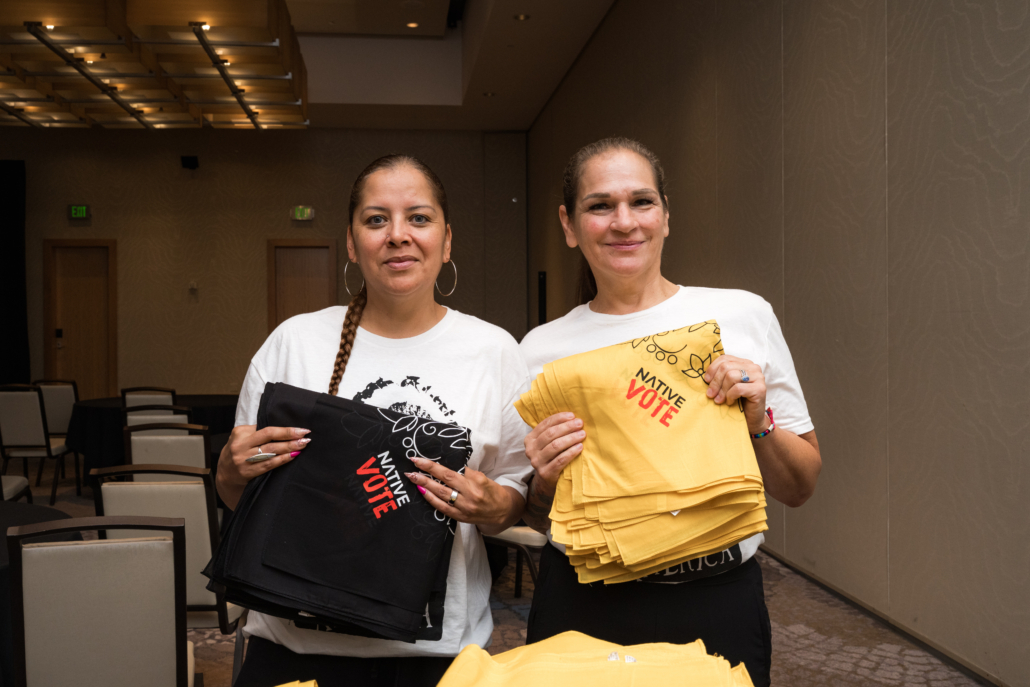
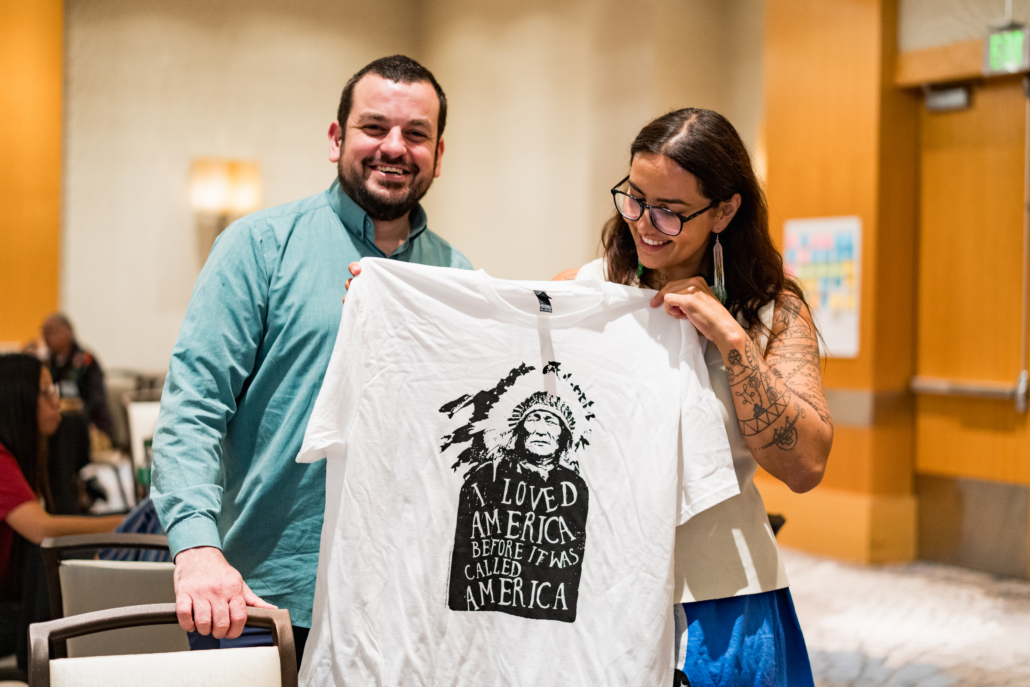
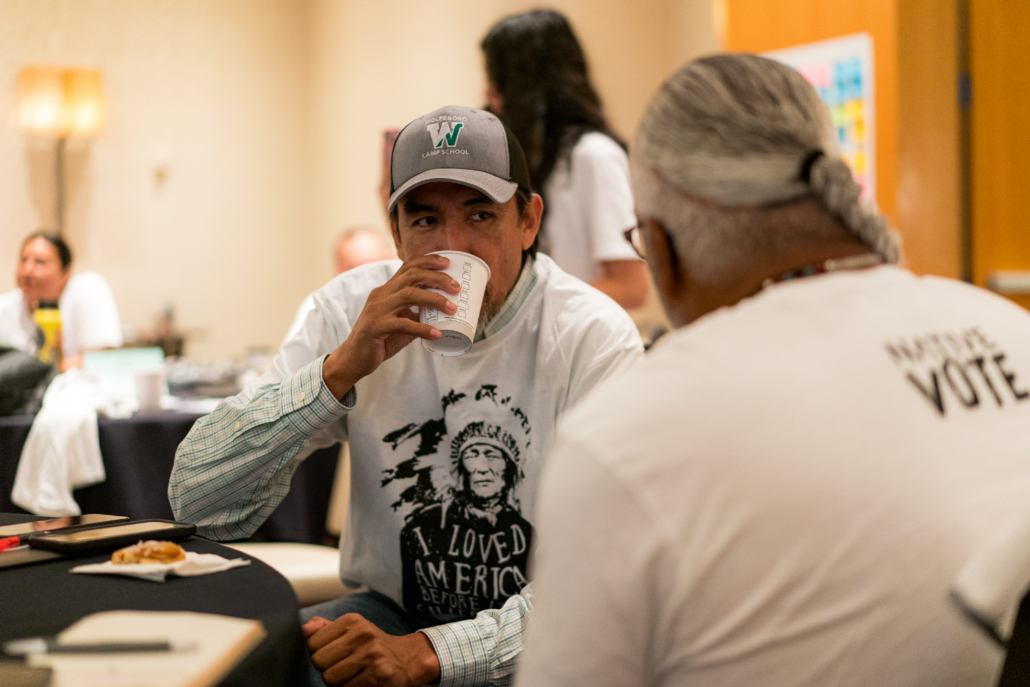
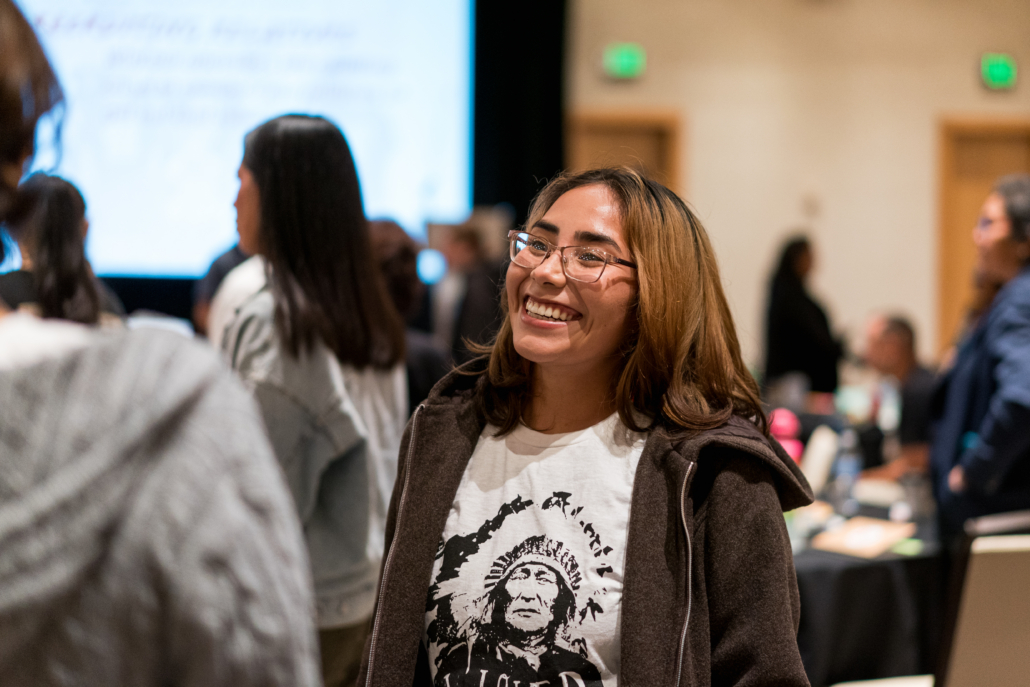
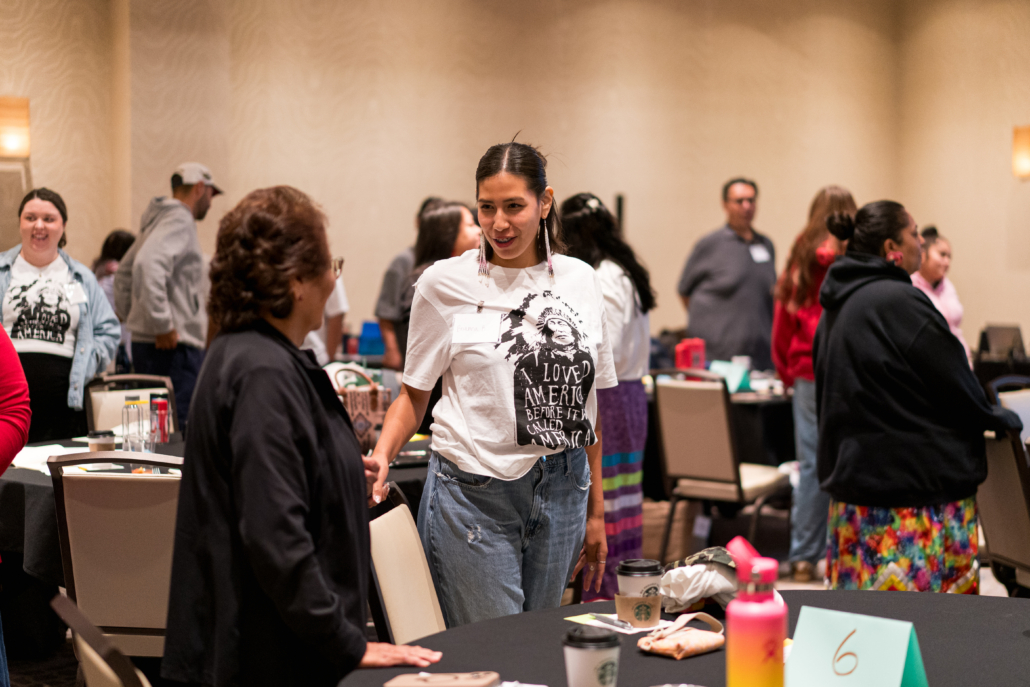
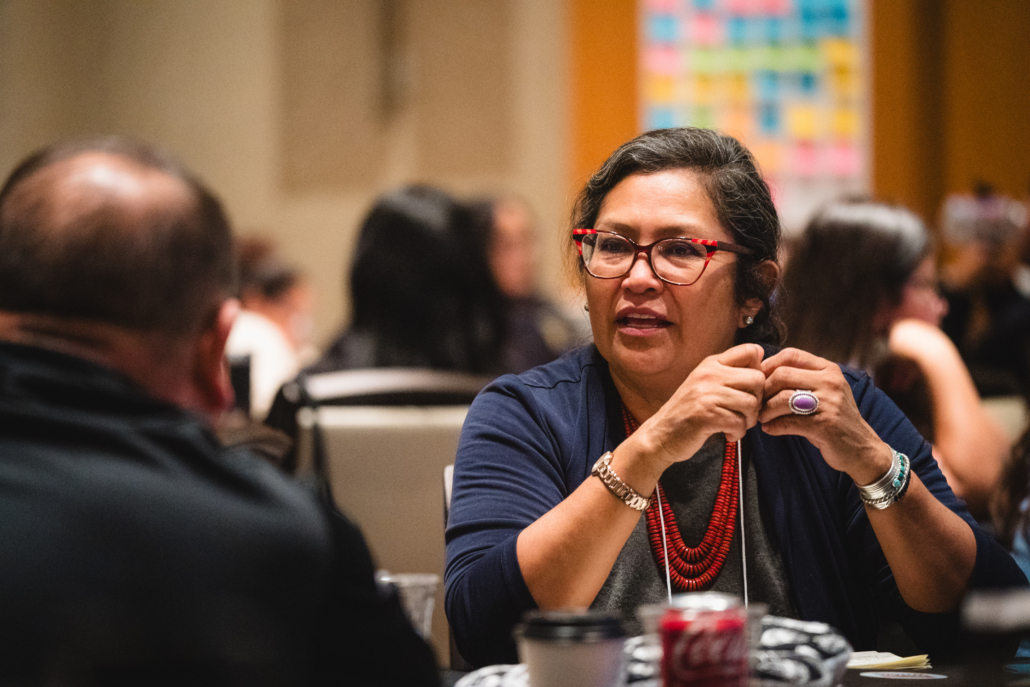
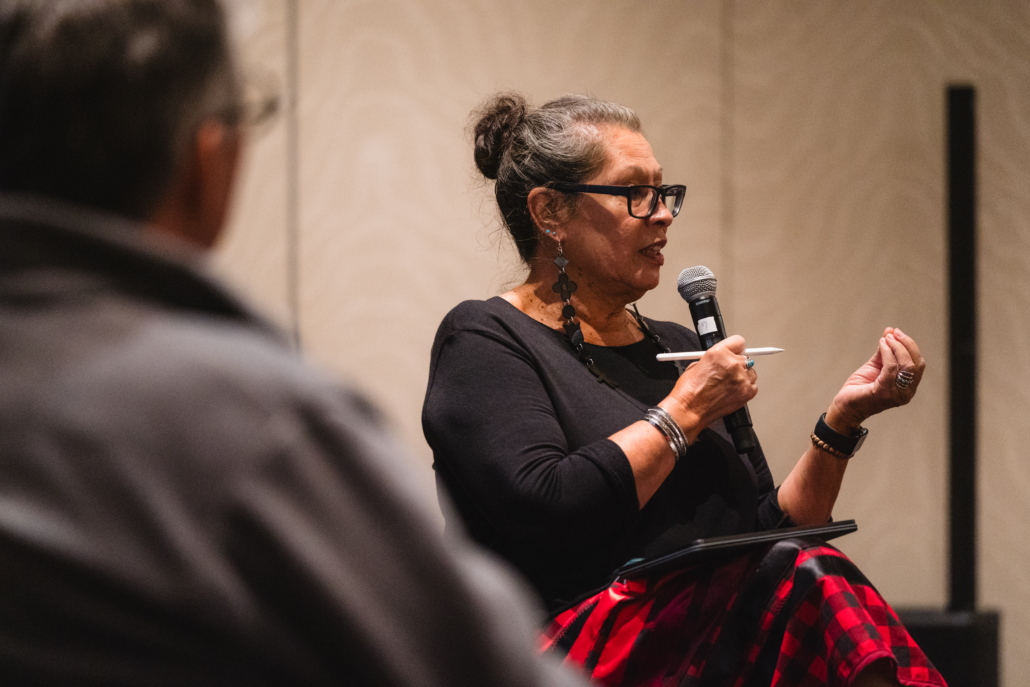
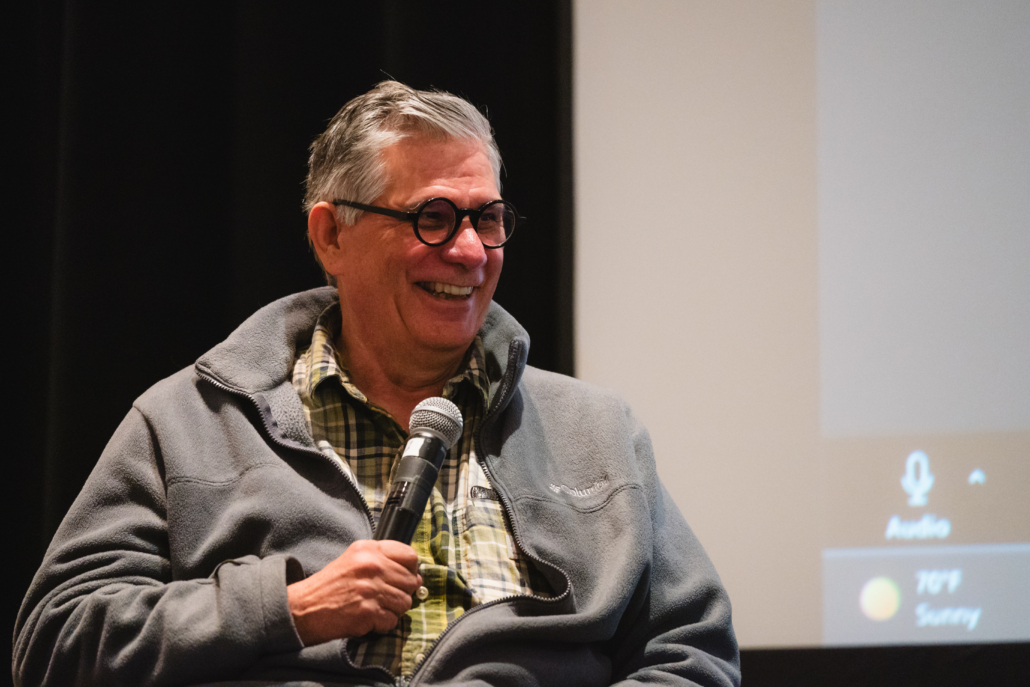
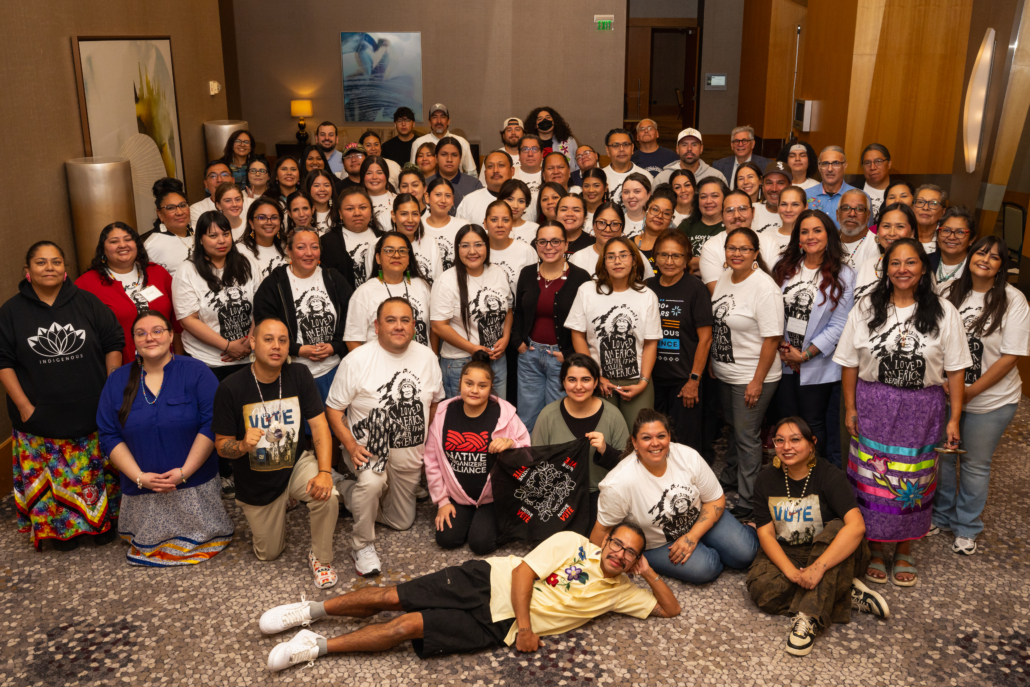
80 Native leaders and organizers working to get out the vote!
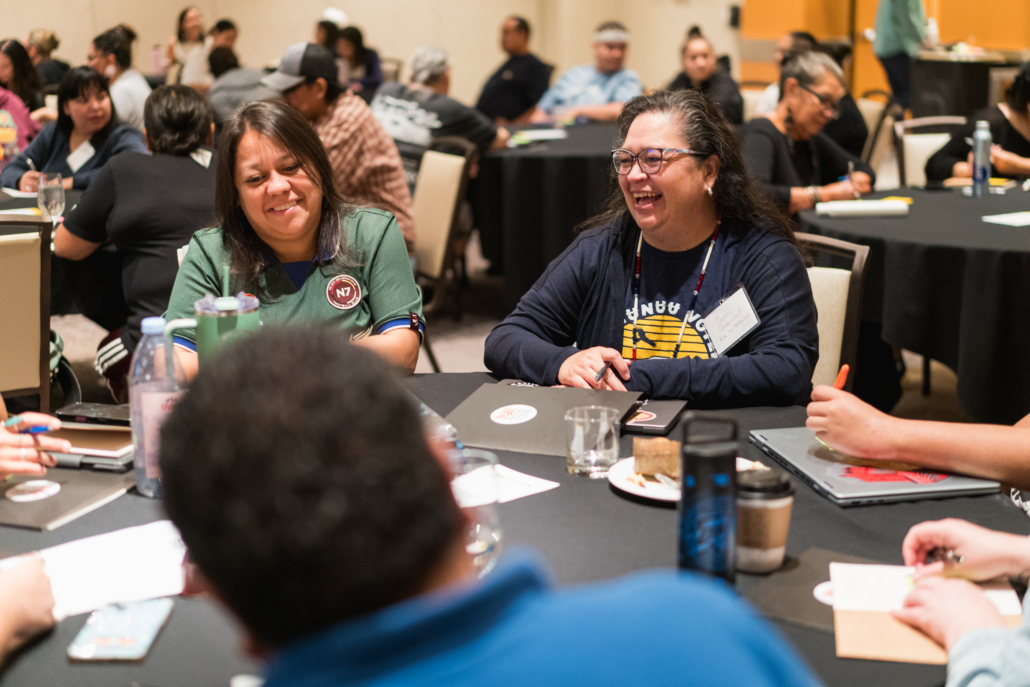
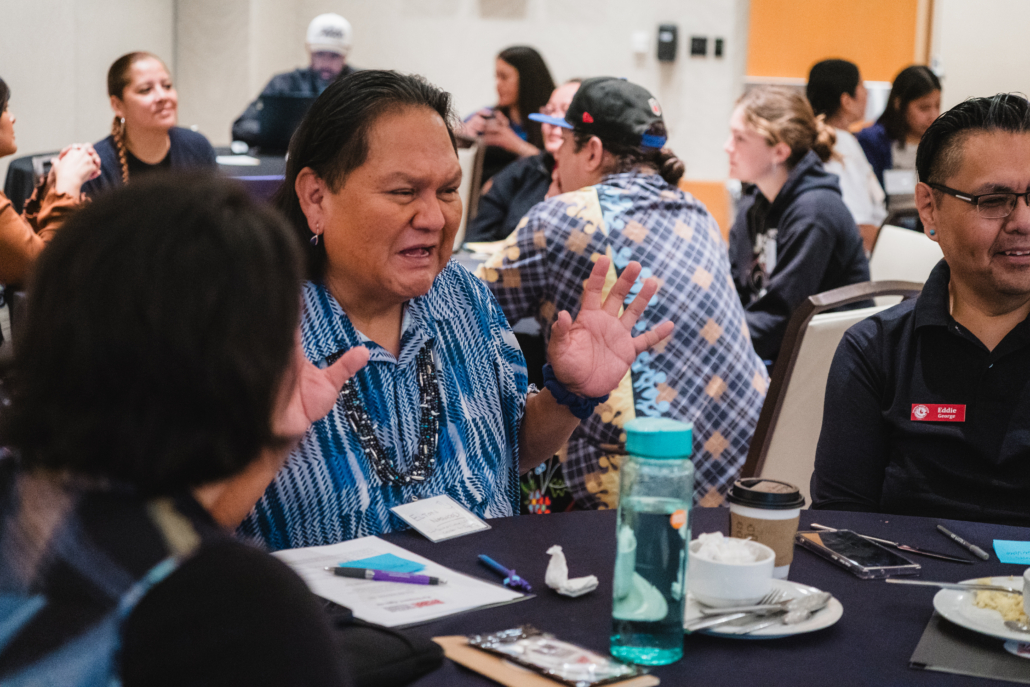
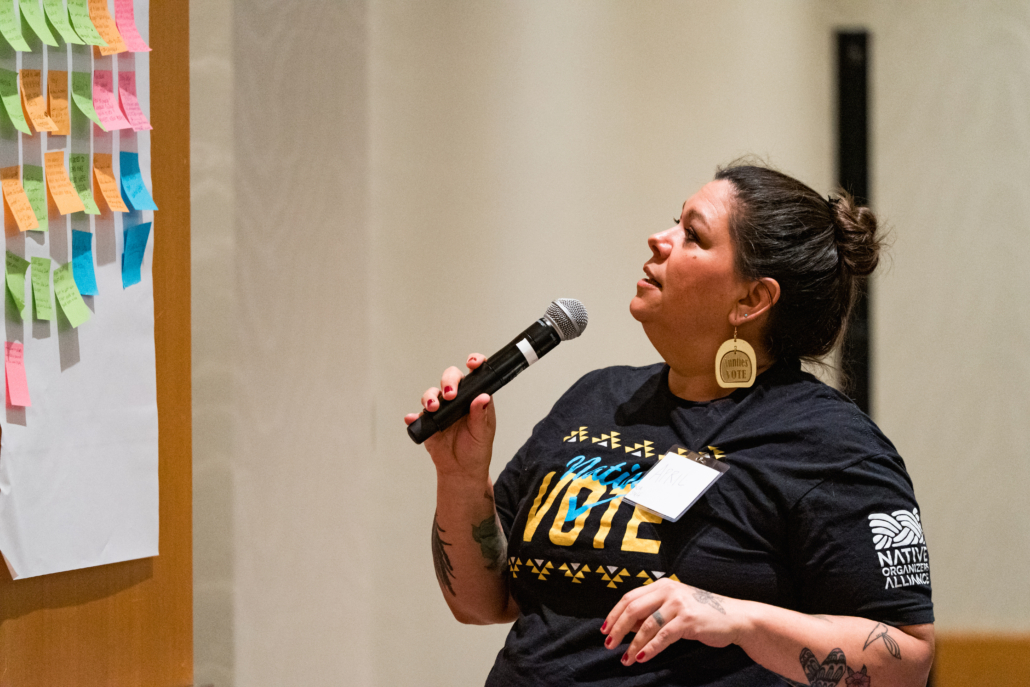
We brought 80 Native leaders and organizers from 24 different communities to Detroit for a Know Your Rights and Civic Engagement training to learn and unite for our communities.
Our Native partner organizations and leaders have been practicing traditional relational organizing from Alaska to North Dakota to North Carolina to the Navajo Reservation, holding conversations with 1,500 of their neighbors and relatives as part of our Seven Generations Community Survey project. We covered the cost of lodging, food, and travel for participants from across Turtle Island. And we’re continuing to support organizing on the ground with paid NOA Organizing Fellows who will work with Tribes and partner organizations on non-partisan civic engagement through Election Day and beyond.
At the training, we shared our collective history of organizing for voting rights. We learned skills for maintaining a peaceful atmosphere at the polls and to prepare to respond to forms of voter suppression — including de-escalating potential conflicts.
This work is powerful. Ensuring the safety of our communities when they vote, protecting air, water, land, and sacred places is not a small task. It’s a mission with meaning and purpose in honor of our ancestors, our relatives, and generations to come.
It’s also spiritually uplifting. It’s rewarding. The sense of empowerment is contagious. Everyone is a teacher and an organizer.
The photos and testimonies from some of the 80 Native leaders and organizers who came to Detroit for our recent Voting rights training speak for themselves.
“My priority ballot issue is to encourage our Two-Spirit and Native LGBTQ+ community members to be part of the voting process, to ensure they have a plan… to make informed decisions… Being able to be engaged in this way is really important.” – Elton Naswood, Diné,LGBTQ2S Center for Equity
“I think it’s really valuable work… representation does matter, to have my children see me in these types of roles and that I make my time and space valuable.” – Blaine Parce, Assiniboine and Sioux of the Fort Peck Tribe
“It was so cool to meet other Native people across the country doing the same work.” – Kaia Aiello, White Mountain Apache, Arizona Native Vote
“This election is very important for Crow Country. We really hope to get more Native Americans in office… everything sacred is on the ballot.” – David Blaine, Crow Nation
The post 80 Native leaders and organizers working to get out the vote! appeared first on Native Organizers Alliance.
Trump Must Reimburse Treasury for Public Funds Wasted on Partisan Ads
Facing significant backlash to his recent TV ads, Trump recently declared he will no longer use taxpayer funds to pay for partisan advertisements. He has not indicated that he will reimburse the U.S. Treasury for public funds wasted so far.
Public Citizen has filed multiple complaints against the Trump administration for using taxpayer dollars for the ads, which lavishly praise the character of Trump and boost congressional Republicans ahead of the midterm elections. AdImpact estimates $10.1 million in taxpayer funds was spent on the production and airing of these ads. The complaints allege that the payments violate federal laws against using taxpayer funds for “propaganda” purposes and the involvement of White House staff in producing and distributing the ads violate the Hatch Act.
Craig Holman, Ph.D., government affairs lobbyist with Public Citizen, issued the following statement:
“It apparently took weeks for the Trump administration to realize it is illegal to use taxpayer dollars to pay for campaign commercials.
“But what of the millions of taxpayer dollars already spent on these self-adulation campaign ads? The act of having wasted taxpayer dollars on these ads remains a violation of law. At the very least, Trump and his administration must reimburse the Treasury and face the consequences for violating federal law and the Hatch Act.”
After October 7, I learned that movements need grief spaces
This article After October 7, I learned that movements need grief spaces was originally published by Waging Nonviolence.
Since the massacres on Oct. 7, now three years ago, the news has brought a steady stream of horror and broken promises. The ceasefire in Gaza has been broken thousands of times; the ceasefire with Iran only holds until the next strike. Many of us have responded by going numb or turning away. Over these three years, I’ve come to believe that collective mourning can help movements build sturdier organizing infrastructure, move through paralysis and numbness, and get back to the long-term work of creating systemic change.
I’ve spent nearly two decades living and working as a human rights defender, mostly in Palestine and Israel. For years, I responded to atrocities the way much of the dominant organizing culture did at the time: strategically. I prepared statements, launched campaigns and mobilized our base. I worked through several wars and the ongoing ethnic cleansing and genocide. Even though my colleagues and I were often physically together, we rarely had the opportunity to collectively mourn. In fact, mourning was often seen as something only the privileged could afford. As organizers and solidarity activists, we were the ones who needed to push past the pain and keep mobilizing.
And then, after each war, large swaths of colleagues and organizers would burn out, and our movement would suffer a setback. Movement researchers Paul Gorski and Cher Chen, studying U.S. human rights and social justice activists, found that an estimated 50 to 60 percent of organizers eventually walk away from movement work and never return, burned out by a culture that treats overwork and self-sacrifice as necessary. That culture also leaves no room to mourn and process the secondary trauma that accumulates, hastening burnout. These kinds of cycles make it especially hard for movements seeking systemic change to sustain themselves.
#newsletter-block_df468591cfe12f9c48e21bb5b68a8027 { background: #ECECEC; color: #000000; } #newsletter-block_df468591cfe12f9c48e21bb5b68a8027 #mc_embed_signup_front input#mce-EMAIL { border-color:#000000 !important; color: #000000 !important; } Sign Up for our NewsletterWhen Hamas attacked Israel in October 2023 and I was waiting in anticipation of the retaliation against Gaza, I knew I couldn’t respond with the same kind of organizing strategy that we usually use: preparation of advocacy statements, social media campaigns and fundraising appeals. I knew that while some people should and would continue that work, there also needed to be spaces for organizers and our base to mourn. And so, on Oct. 8, I opened a space for collective mourning online, sharing it in the many community, political and religious groups I was a part of, for anyone who needed somewhere to process what they were witnessing and feeling. Dozens of people joined: primarily my Jewish community at first, and then people from many faiths and chapters of my life, from Palestine to Palo Alto.
As the assault on Gaza and the genocide continued, the room stayed open. More colleagues, including community organizers, artists, chaplains and psychologists, joined me in facilitating, and we held space for hundreds of people from across our communities to mourn together. We formed a collective called the Social Change Sanctuary and developed a format that included facilitation and participation from attendees. Over time, we were invited to hold spaces for other communities in mourning. We’ve held spaces to grieve the ongoing genocide; climate catastrophes like the fires in Los Angeles; ICE raids, arrests and murders; and the war on Iran.
The Social Change Sanctuary hosts an Interdependence Day circle in 2025. (Alison Avigayil Ramer)Participants repeatedly shared the difference it made in their lives to know they had a consistent space to mourn.
“In daily life, when something hurts, I turn away, I distract myself,” one participant told us. “But the collective mourning practice helped me move through the frozenness that constant news induced — helped me stop doomscrolling — and I’m able to return to my work.”
That participant went on to organize her community and raised $20,000 for refugees in Gaza.
Another participant returned to their role as a chaplain, and extended her work to include “movement chaplaincy” holding one-on-one spaces for people doing solidarity work.
Many participants also shared how witnessing the news with others enabled them to feel the emotions provoked by the headlines, leaving them feeling less isolated and more connected. That is co-regulation happening at the communal level, increasing people’s capacity. People who could barely stay in the room during the earliest, rawest sessions after Oct. 7 can now sit with the news longer, witness without shutting down and understand what is theirs to carry and what is not.
A historical movement of mournersWhile many of the collective mourning groups that have come together in recent years are new, they’re built on generations of organizing that already knew how to fold community care and grief into the work itself.
Previous CoverageDuring the civil rights movement, Southern organizers mourned the murdered publicly and loudly, treating funerals as organizing events rather than sites of private grief to be managed quietly. Decades later, AIDS activists advocating for government support built the NAMES Project Quilt, which memorialized the dead one quilt square at a time. And ACT UP’s “political funerals,” where activists carried the actual ashes of the dead to the White House lawn, were a vigil and a protest at the same time.
For years, Black Lives Matter’s Los Angeles chapter has opened its meetings and protests with a mourning ritual in which members stand in a circle and speak aloud the names of people killed by police, while one person at the center pours out water for each name and the group answers “ashe” after every pour.
Over the past three years, IfNotNow, a Jewish organization that mobilized thousands to oppose the genocide in Gaza, has built something they call ceasefire circles: small, ongoing groups organized around what researchers studying the practice term “solidaristic grief,” designed less as a single vigil than as a longer-term way of holding people inside the movement over time.
In February, as ICE violence escalated, a coalition that included the NDN Collective, the Brave Heart Society, the Indigenous Protector Movement, the American Indian Movement, Sunrise Movement and Project South circulated a public toolkit for grieving those killed by federal agents, built explicitly so that any group, anywhere, could hold its own public mourning.
How mourning helps us keep goingIn an environment dominated by negative news, many of us are starting to turn away, rather than experiencing a kind of secondary, media-induced trauma that can leave us anxious, depressed or numb.
Both avoidance and numbness are the nervous system’s way of protecting us — an involuntary, evolutionarily produced reaction. They are also what makes the news cycle so useful to the people who want to immobilize us and our movements. Steve Bannon named the strategy “flood the zone.” Scholars of authoritarianism describe this as a deliberate exploitation of the public’s limited attention, engineered to produce fatigue and an inadequate or absent response. The aim is to overwhelm and exhaust the opposition.
We do not need to feel guilty for having this response, but we do need a way through it. So we ran an experiment: Could listening to the news become an opportunity for co-regulation instead of dysregulation?
Collage of grief practices from Minneapolis after federal agents shot and killed Renee Good and Alex Pretti in January 2026. (Art: Alison Avigayil Ramer / Photo: Lorie Shaull)We called the practice Good Mourning. We held the 30-minute practice once a week for 40 weeks with six to 10 people. For 15 minutes, we listened to the day’s news together, usually “Democracy Now!,” mixed with music. People wrote, drew, danced or sat still while they listened. Then, for the other half of the session, we turned to each other and shared what moved through us, without offering to fix or resolve anything.
Why listen to the news at all? It may seem like a counterintuitive ask of people who are already overwhelmed by news. But tuning out isn’t a neutral act for organizers. If we numb ourselves to avoid the pain, we also lose contact with the reality we’re trying to change. We lose sight of the people being harmed, the urgency and the stakes. Scrolling by yourself doesn’t help either; it keeps the nervous system braced without ever letting it process.
But practices like Good Mourning offer a third option: Take in the news deliberately, in a bounded container, alongside others, with room for the body to respond. This helps us stay informed and connected to what’s happening without being flooded by it, and that connection is what fuels action.
“I started Good Mourning because I wanted to hold myself accountable to listening to the news, instead of giving in to the temptation to block it out completely,” Eva Orbuch, a community organizer and one of the founders of Good Mourning, told me recently. “It became so much more — a community, a creative practice, a way to take in the news mindfully, a place to recommit to what supports my own resilience and makes things a little better in the world.”
Talking about the news activates the same analytical mind that has been narrating the news to us all week. But moving the body or creating something, even just doodling, helps us use another part of the brain to process it. That’s the basic premise of expressive arts therapy: Grief and trauma often live below language, stored in the body as tension or bracing, and adding expressive arts to the practice of listening to the news helps us move through it.
Listening together also creates an opportunity to co-regulate communally. Stephen Porges’ polyvagal theory describes how nervous systems calibrate against each other: Being near someone else in a state of relative safety can shift your own breathing and stress response toward theirs. A structured, repeated practice gives that calibration somewhere to happen, week after week.
“The practice helps me to compost whatever I’m holding, and to move through all the grief,” one participant said.
Making your own Good Mourning practiceThis year, several of my friends contacted me before Oct. 7. “What could we possibly do this year? I’m tired of organizing events,” an organizer who has held dozens of peace vigils in the past year told me.
“Why don’t we create our own space for collective mourning?” I offered. We can look at some of the stories, news and art from the day together. Make something of our own?
She agreed.
#support-block_5ff39021481b2a0e77a0248db2c04ce8 { background: #000000; color: #ffffff; } Support UsWaging Nonviolence depends on reader support. Make a donation today!
DonatePerhaps this is also a practice that can accompany you. Creating your own space for collective mourning doesn’t require much. Ideally, form a small group and commit to 30 minutes. Read the news to each other, or play it aloud, mixed with music, or anything that isn’t just more thinking. Invite people to pair the listening with something for the body, like movement, drawing or dancing. Then turn to each other and share your grief, without trying to resolve it, fix it or offer advice. At the end, share one way you will nourish yourself and others in this hard time, and wish each other well.
This simple act of witnessing your community in grief has been powerful for so many. Perhaps it can be a way for you and your community to move through mourning and keep on mobilizing.
This article After October 7, I learned that movements need grief spaces was originally published by Waging Nonviolence.
Truchas to Costilla Headwaters Active Management Project: Review of EA
By KAY MATTHEWS
The Carson National Forest is proposing a huge, forest management project on the Questa and Camino Real Ranger Districts called “Truchas to Upper Costilla Headwaters Active Management Project.” It includes 491,942 acres across all of the Questa district south to the village of Truchas on the south end of the Camino Real. The stated goal of the project is to restore a more natural fire regime to the landscape over a 10-year period.
It appears to be promulgated by two directives: the Enchanted Circle Priority Landscape on the west side of the Sangre de Cristos that was listed as one of the 10 most threatened forest areas for catastrophic fire in the country; and “April 4, 2025 the Secretary of Agriculture determined that the Forest Service may carry out Authorized Emergency Actions under section 40807 of the Infrastructure Investment and Jobs Act (PL 117-58) on National Forest System lands that are either, (1) rated as very high or high for wildfire risk or (2) experiencing declining forest health, at risk of experiencing substantially increased tree mortality over the next 15 years from insect and disease infestation, or contain hazard trees posing an imminent risk to public health, infrastructure, and safety.” This is the directive that causes worry under Trump’s Secretary of Agriculture for its potential use for more industrial logging in national forests.
Most of the people I’ve spoken with were unaware of the project until the Carson released the Draft Environmental Assessment (EA). Under Public Involvement in the EA it says that the Carson convened a group of stakeholders that “included State and County entities, Pueblos, two watershed-based groups, and the Philmont Scout Ranch.” This was the Enchanted Circle Treatment Mapping Work Group that met to identify shared forest treatment and restoration priorities. They reference the Appendix for more detailed information of the group’s work. Normally, before the Trump administration’s evisceration of the NEPA process (National Environmental Policy Act), the first step in the EA or EIS process is to send out a scoping letter to all its stakeholders with an outline of the proposed project soliciting input. This step seems to have been excluded in for this project. I’m not assailing the Enchanted Circle Treatment Mapping Work Group, that no doubt contributed informed input to the project, just questioning the process.
The EA includes maps that show the proposed areas for treatment. One map color codes them for forest type: mixed conifer, frequent fire; mixed conifer with aspen; montane/subalpine grassland; piñon juniper sage; piñon juniper woodland; ponderosa pine forest; riparian; sagebrush; sparsely vegetated; spruce fur forest. Another map then rates these designated areas with fuels treatment priorities. On the Questa District, with which I’m less familiar, there are several relatively small areas in first priority red, east of the village of Questa in mixed conifer with aspen and south in the piñon juniper sagebrush. On the Camino Real District, first priority is east of Taos near SH 64 in sagebrush scrubland, near Picuris Pueblo, along SH 518, and with most of the first priority in the southern part of the district in ponderosa pine.
Treatments will include a variety of types: hand or mechanical tree felling on slopes less that 40 percent; tree felling mainly by hand, on steep slopes followed by cable yarding; mechanical tree felling that will include harvesters and forwarders or tree-bunchers; hand thinning with material left for fuelwood gathering; and prescribed fire preparation that will include pruning of ladder fuels, tree thinning mastication, chipping, snag mitigation; and brush removal.
Prescribed fire will be used on 112,865 acres utilizing pile burning to remove slash or fuels created by forest thinning; jackpot (vegetative fuels) burning to remove surface fuels; and broadcast burning to apply fire across the broad area of a burn unit. Prescribed fire would continue over a long-time frame of over 10 years to mimick the natural fire intervals in each forest type. Total prescribed fire acres will vary widely year to year based on weather conditions, funding, and other factors.
There is much more in the EA on post-disturbance treatment, the transportation system, i.e., the use of existing roads, temporary roads, and new roads. If you have a special concern you can easily read through the first 30 pages of the EA to find the section that applies. There are community members who are opposed to the thinning and burning projects that have already occurred on the districts, so the thought of commercial logging probably raises some hackles. In one of the Action Alternatives that was rejected, the Forest Service argued that, following the guidelines of the Carson Forest Land Management Plan, most the of the material will be valued as fuelwood, while the larger timber can be milled for lumber or vigas. The value of larger trees can help offset the cost of proposed treatments, allow additional acres to be treated, and provide economic opportunity to local businesses.
The EA notes the forest restoration and wildland/urban interface projects that have already been implemented, many of which we’ve covered in La Jicarita: Las Trampas; Kiowa Sant Cristobal Wildland/Urban Interface; Pueblo Ridge; and McGaffey Ridge. Community stewardship projects such as the leñero program could continue to achieve the purpose and need of the project. With the knowledge gained by the people who’ve been working in the forest, hopefully the Forest Service will actively seek their participation in on-the-ground decisions as to specific treatment areas and methods. The recently rejuvenated Tres Rios Watershed Coalition, which organized back in 2018 to promote restoration projects within the larger Embudo Valley watershed, recently recommended specific areas of concern in its comments on the EA. Hopefully other organizations or individuals can provide this on-the-ground feedback in the comments. In an article in the Taos News, Carson Forest Planner Peter Rich told the group that had gathered for a Taos Valley Watershed Coalition to discuss the Truchas to Costilla project: ” . . . the proposal is a ‘map of opportunities; it’s not a map of proposed projects.’ He said boundaries could change based on additional wildlife or archaeological surveys, as well as ‘based on who’s available to do the work and what capability people have, and then where we get money.’ The tools used to accomplish the desired outcome could vary, too, but ‘where we’re trying to get to doesn’t change.’”
Why Protecting the Midwest’s Last Roadless Forests Matters More Than Ever
Can a Sweltering Summer Create an Autumn of Opportunity for the Transition?
Recent months have reinforced the case for accelerating action on the energy transition and climate, particularly from a European perspective.
Let’s list the reasons why:- this summer has been like no other in Europe, with five major heatwaves across the continent and provisional data from the UK Met Office showing temperatures in London approximately 4°C above the long-term baseline average (1991-2020);
- internationally, 2026 has been marked by a series of extreme weather events, from the tragic landslide in Nepal caused by a melting glacier to a deadly winter storm bringing widespread fatalities across North America;
- all this against the backdrop of a super El Niño likely to generate even more extreme weather across the globe in the coming months;
- growing recognition, reflected in UK Energy Security and Net Zero Secretary of State Miatta Fahnbulleh’s warning that the war in Iran and closure of the Strait of Hormuz have shown how exposure to global fossil fuel markets raises energy costs;
- the war has also led to an explosion in electric vehicle sales, particularly in Asia. Across the first half of 2026, electric car sales in Europe grew around 35-40% compared with the same period in 2025; in the UK it’s up about 25% over the same period;
- according to WindEurope, Europe installed 8.8GW in the first half of 2026, a 30% increase on H1 2025. Renewables provided 53.1% of electricity generated by the UK’s Major Power Producers between March and May, with renewable generation up 22% year on year.;
- a breakthrough on the costs of energy storage, with global benchmark costs for four-hour battery storage projects falling by 27% year-on-year in 2025.
On the face of it, the case for accelerating the transition has never been stronger. But despite this, the state of multilateral action on climate change can probably be summed up by the collective shrug in response to the Climate Summit convened by the outgoing UN Secretary-General in New York on 23 September. In his final UNGA week, Antonio Guterres again argued that fossil fuel expansion “defies science, economics and common sense”. In language reflecting an increasing sense of alarm and urgency, he talked about this being the last generation “who can avert climate catastrophe”.
The weakened state of climate multilateralism is often attributed to a geopolitical environment in which political consensus has fractured and climate science is more openly challenged. This is evident not only in North America but in several European countries. But are there still opportunities this autumn for the pendulum to swing back towards concerted policy action that reflects the favourable platform that science, technology and economics are providing?
All roads on climate tend to lead to the COP, which this year will meet in Antalya, Turkey, from 9-20 November. COP31 will feature an unusual co-hosting arrangement between Turkey and Australia, alongside a pre-COP meeting hosted by Fiji and Tuvalu from 5-8 October. Crucially, the Pacific gathering will give small island states a platform to highlight the existential threat posed by climate change.
As for COP31 itself, the co-hosts face the challenge of providing a central focus for a COP where no single major negotiated decision is expected and which is being described as an “implementation COP”. But two key themes are emerging:
- a “35 by 35” global electrification target, designed to accelerate the transition by increasing the share of global final energy demand met by electricity to 35% by 2035, up from the present 20%;
- ecosystem resilience, and the impact of severe climate shocks on food and water systems.
Serious discussion of both issues will be welcome. Yet many increasingly view the COP process, and the wider UN system, as unable to move beyond being a talking shop. Which is why, perhaps even more than is usual at a COP, some of the more consequential action in Antalya may take place in the margins outside the formal negotiations.
This would be consistent with the most significant outcomes from COP30 in Belém, with the emergence of two separate “coalitions of the willing” to work on international roadmaps: to transition away from fossil fuels (TAFF); and to halt and reverse global deforestation.
This TAFF initiative in particular will be put to the test of COP politics, even if it’s not on the formal agenda. Twelve months on from its birth in Belém, and seven months since the coalition of nearly 60 countries met in Santa Marta, Colombia, to kickstart work on a global TAFF process, there will be pressure to start turning high-level ambitions into concrete plans. This will mean attention on the Netherlands, which co-hosted Santa Marta with a Colombian government that has since been replaced by a new administration not committed to the initiative, and Ireland and Tuvalu, which will host a “Santa Marta 2.0” in the Pacific next July. These governments will want to show whether their initiative can work alongside the COP process and even restore some faith in the value of international cooperation to tackle global challenges. Other members of the coalition may also face questions about whether their domestic policies match their claims to international leadership: from the UK Government, which will also take on the G20 presidency in 2027, to Canadian and Australia governments, where fossil fuel production policy is moving in a different direction.
Looking beyond COP31, there are still grounds for optimism, whether through existing institutions or coalitions such as TAFF. The possibility, if recent reports are to be believed, that China could host COP33 in 2029 could be a game-changer, another Paris moment for the UNFCCC and multilateralism to demonstrate that it can deliver more than rhetoric. But back in the present, the science is making clear that delaying meaningful action, even now, will only do further harm. As the Belém Declaration on a TAFF spelled out nearly 12 months ago, action needs to be accelerated.
As progressives gather in Antalya, they may therefore do well to keep two overarching priorities at top of mind.
First, revisit the Belém Declaration as a constant reminder that limiting global temperature rises requires a “shared determination to work collectively towards a just, orderly and equitable transition away from fossil fuels”. This work will require, as the Declaration detailed, a focus on economic diversification, reducing structural dependence on fossil fuel revenues and phasing out inefficient fossil fuel subsidies. Progressive policymakers will also need to consider how to support a step-change in finance for the Global South, given the vulnerability of many emerging and developing economies to both the transition and the physical impacts of climate change. The work that has begun since the Santa Marta conference – both in the Santa Marta workplan and the separate but closely linked Brazilian COP Presidency TAFF exercise – will give policymakers the tools to start implementing TAFF in practice. That collective effort can begin in the discussions in and around COP31, even if not yet in the formal negotiations.
Second, one of the most positive developments this year has been the reframing of climate around energy security, risk and resilience. The statement by the UK Prime Minister at the same UNGA week where the UN Secretary-General’s Climate Summit yielded little tangible progress, that “the climate crisis is now a national security threat for countries around the world”, is a sign of an evolving narrative. As is this line from the recent Green Central Banking newsletter: “maybe resilience, for lack of a better word, is a new, pragmatic way to ensure climate action and collaboration still take place in an ever more geopolitically fragmented world.”
COP delegates will also be mindful that they are convening just after the US mid-terms on 3 November.
Many of the underlying conditions (economic, technological and scientific) are in place for governments to make this autumn one of significant progress on climate ambition. The case for framing the transition around economic opportunity and 21st-century energy security is clear. Policymakers may remain cautious in the current geopolitical environment; but this is time to seize the moment.
The post Can a Sweltering Summer Create an Autumn of Opportunity for the Transition? appeared first on Carbon Tracker Initiative.
AFSA Releases Its 2025–2026 Annual Report: African Solutions, Collective Action and Food Sovereignty
The Alliance for Food Sovereignty in Africa (AFSA) is pleased to release its 2025–2026 Annual Report, documenting a year of collective action to advance agroecology, defend farmers’ rights and strengthen community-led food systems. Covering 1 July 2025 to 30 June 2026, the report marks the first year of implementation of AFSA’s 2025–2029 Strategic Framework. It brings together achievements, experiences and lessons from an alliance of 48 member organisations, showing how local knowledge and community leadership inform action from farmers’ fields to national, regional and global policy spaces.
The report highlights efforts to protect farmers’ rights to save and exchange seeds, advance agroecology in climate policy, celebrate African food cultures and strengthen local economies. Key developments include the Seed Is Life and My Food Is African campaigns, Healthy Soil Healthy Food work across six countries, and support for 222 agroecological enterprises and 21 territorial markets. Member stories bring these achievements to life: young farmers and women restoring land and water systems in Zambia, communities expanding farmer-led agroecology across West Africa, and farmers in Malawi rebuilding soil fertility and improving maize harvests through locally produced organic manure. Together, these experiences demonstrate the practical value of African-led solutions for livelihoods, resilience and food sovereignty.
Reflecting on the communities behind this work, AFSA Board Chairperson Rev. Dr. Tolbert Thomas Jallah Jr. writes: “Their experiences remind us that food sovereignty is not simply a policy aspiration; it is lived every day through the stewardship of land, seeds, biodiversity, livelihoods and human dignity.” General Coordinator Dr. Million Belay sets out the ambition guiding the alliance: “Our task is not only to respond to crisis, but to build power, alternatives and hope.”
Alongside these achievements, the report shares the challenges, institutional developments and lessons shaping AFSA’s next steps, including the need to translate policy commitments into implementation and sustain investment in community-led change. AFSA thanks its members, communities, partners, donors and allies for their commitment and invites policymakers, researchers, civil society and the wider public to explore and share the report.
Hundreds of Organizations Oppose Endangered Species Attacks in Permitting Legislation
More than 200 conservation organizations sent a letter today urging Congress to oppose the “Bipartisan American Affordability and Jobs Act of 2026,” introduced by Sens. Sheldon Whitehouse (D-RI), Martin Heinrich (D-NM), Shelley Moore Capito (R-WV), and Mike Lee (R-Utah). The bill includes sweeping attacks on the Endangered Species Act that would gut protections for nearly every endangered species across the country.
The legislation would weaken the Act’s gold-standard “best available science” mandate, making it substantially harder to protect imperiled species and the places they live. It would also surrender authority to states to conduct Section 7 consultations — one of the most important safeguards against harm from federal agency actions.
“We don’t have to choose between protecting our most endangered animals and plants and building a clean energy future,” said Stephanie Kurose, deputy director of government affairs at the Center for Biological Diversity. “Hollowing out the Endangered Species Act only benefits energy-hungry data centers and the fossil fuel industry while leaving monarchs, manatees, and countless other species to pay the ultimate price.”
The bill also includes judicial review provisions that would make meaningful review of certain Endangered Species Act challenges much more difficult.
“Friends of the Earth US is proud to stand beside our NGO partners in the fight to uphold our country’s bedrock environmental laws,” said Hallie Templeton, legal director for Friends of the Earth. “It’s paramount that Congress keeps things in perspective as it continues to navigate our desperate need for a clean energy future. There is no reason to throw endangered species under the bus to secure what falls short of even a half-measure approach to achieving justly sourced, renewable energy access and affordability.”
Today’s letter notes that “real environmental champions do not trade away the world’s strongest conservation law in pursuit of a legislative mirage that does nothing more than grease the wheels for pipelines, data centers, petrochemical buildouts, and the next generation of energy-guzzling tech infrastructure.”
The Cerrado Is Not for Sale
Where does one begin, writing about the Cerrado? For the people of Maranhão, a state in Brazil’s northeast, it is not a landscape but the ground of life itself. No biome is more careful with what it has. You can read this in its plants: their roots first go deep in search of water, and only then do they reach for the sky. The Cerrado is where we begin, and where we return.
350.org team with local community members in Maranhão. Photo: 350 Brasil
Going homeEvery July and December, during the school holidays, families who had left for the big cities to work and study would make their way home. Most of those homes were in the Cerrado. They came back for what the cities could not give them: healthy food, clean air, silence, family and old friends, rivers, streams and forests, the games of childhood, a youth and innocence they had left behind.
For generations, the rivers carried them. They rise in the chapadas, the Cerrado’s high plateaus, and run down to the bays of São Marcos and São José de Ribamar, on the coast of the state capital, São Luís. The Mearim, the Itapecuru, the Parnaíba, the Munim, the Preguiças: these rivers bound the countryside to the city. Along the way, by water or by road, people gathered native fruits, bacuri, murici, buriti, pequi. There was enough for everyone. That sense of abundance never quite leaves you, even decades on.
The gas arrivesBut that abundance now belongs to the past. One of the reasons is gas extraction in the Cerrado of Maranhão by the energy company Eneva, which bears down on the traditional and quilombola communities of the Mearim Valley. Eneva may argue that when it took over its gas-fired power project in Santo Antônio dos Lopes, the environmental licensing was already complete. Yet no one told the traditional and quilombola communities what a project like this would mean for them. What would it do to their groundwater and their rivers? To the air, the soil, their crops? To their bodies and their minds? To the forests, the wildlife, their right to the land itself?
Eneva cannot claim ignorance. The company recently gave back gas exploration blocks that overlapped the Krenyê Indigenous land and the Peixes quilombola territory. It knows. And still it holds on to the blocks it bought in Capinzal do Norte, where several quilombola communities live. And still it behaves as though nothing is wrong in the quilombola communities of Lima Campos.
Another auction, the same mindsetThe auction planned for October reveals, once more, a way of doing business that looks past people and nature so long as the profits add up. One of the blocks on offer overlaps quilombola territories in the municipality of Vargem Grande. It also reaches into the Munim River basin, which gives water to towns and villages across eastern Maranhão. And once again, the communities were not asked first, as international law requires.
Activists stand in front of the Presidential palace, telling Brazilian President to end oil exploration in Cerrado. Photo: 350 Brasil
Those who would sell it off have learned the opposite lesson. They reach for the profit first, and leave the people who live on this land to deal with what is left behind.
The post The Cerrado Is Not for Sale appeared first on 350.
Arrests made as Border Patrol cuts down iconic tree to clear way for border wall
On Monday, contractors knocked down an iconic “grandmother” cottonwood tree on federal land in the San Rafael Valley near Lochiel, Arizona to clear the way for border wall construction. Armed Border Patrol agents cleared an encampment of about 50 people who had gathered to try to protect the cottonwood after three others had already been felled. All four trees were estimated to be as many as 250 years old. The protesters’ efforts included taking turns camping in the tree itself to ensure it was occupied at all times for more than 70 days. Ten protesters were cited and at least another 12 were arrested, including the person who was camped in the tree itself at the time and was forcibly removed from the tree using a cherry picker.
“We are resolute,” said Kate Scott, one of the protesters. “This movement is not going anywhere. They have cut down our grandmother, but her roots are within us.” A similar continual-occupation protest is also happening in a tree on the Mexican side of the border, and a demonstration at the local Bureau of Land Management office is planned for later this week to protest the agency’s recent land closure orders related to border wall construction in the area.
The Border Patrol’s actions fit with a pattern of using the southern border to militarize national public lands, as Center for Western Priorities Creative Content and Policy Manager Lilly Bock-Brownstein wrote in a Westwise blog post earlier this year. “If the administration continues on its current course, these iconic landscapes will continue to be collateral damage,” Bock-Brownstein wrote. “Border security should not require the permanent sacrifice of America’s public lands, and it should not come at the cost of the heritage and economies of the communities that surround them.”
Quick hits Analysis: 99% of commenters oppose motorized use changes in forests Native nations sue over Endangered Species Act changes Supreme Court grapples with case on holding Big Oil liable for climate change NPS denies request to maintain water stations along Arizona-Mexico border for migrants Winter is coming, and Crater Lake National Park is in trouble Residents express worries about copper mine’s return Judge jails man in moose abuse case and warns: Wyoming values wildlife Heinrich: Repealing the roadless rule ignores public approval Quote of the dayThe Roadless Rule is overwhelmingly popular, including with sportsmen, anglers, campers and recreators. It is so popular that the administration knows it will lose if it consults the public on dismantling it. Thus, the administration is simply refusing to hold public meetings at all. That is not only insulting—it is undemocratic. And it is a failure to listen to the people these lands belong to.”
—U.S. Senator Martin Heinrich of New Mexico, The Hill
Picture This @rockynps“I’m so glad I live in a world where there are Octobers.”
— L. M. Montgomery
October is a special time of the year in Rocky Mountain National Park. Enjoy shades of green, gold, orange, red, and purple throughout the park.
Image Credits: NPS
Featured image: San Rafael Valley border wall construction in southern Arizona. Russ McSpadden, Center for Biological Diversity
The post Arrests made as Border Patrol cuts down iconic tree to clear way for border wall appeared first on Center for Western Priorities.
Solar panels have (another) surprising side effect: Stopping dust storms in their tracks
Solar farms in desert areas could reduce dust pollution in cities downwind, according to a new Chinese study. The findings reveal unexpected synergies between renewable energy development and cleaner air, suggesting that solar’s air quality benefits go beyond reduced pollution from fossil fuel burning.
During springtime in the Gobi Desert, strong winds pick up desert dust and transport it hundreds of kilometers to the east and southeast to some of China’s largest urban centers. As China cleans up its air quality by reducing fossil fuel use, dust is becoming a larger proportion of remaining air pollution, and one that is harder to address.
Solar development in the Gobi Desert—where 42 solar farms cover a total of more than 13,000 square kilometers—is already improving downwind air quality, with the potential for even greater future benefits, the new analysis suggests.
Scientists already suspected that solar farms could help dampen dust pollution, but no one had yet conducted a quantitative analysis using true-to-life assumptions incorporating all of the possible mechanisms that regulate desert dust emissions.
In the new study, a combination of satellite observations and computer modeling reveals that existing solar farms reduce springtime dust emissions from the Gobi Desert by 352,400 metric tons per month.
.IRPP_ruby , .IRPP_ruby .postImageUrl , .IRPP_ruby .centered-text-area {height: auto;position: relative;}.IRPP_ruby , .IRPP_ruby:hover , .IRPP_ruby:visited , .IRPP_ruby:active {border:0!important;}.IRPP_ruby .clearfix:after {content: "";display: table;clear: both;}.IRPP_ruby {display: block;transition: background-color 250ms;webkit-transition: background-color 250ms;width: 100%;opacity: 1;transition: opacity 250ms;webkit-transition: opacity 250ms;background-color: #eaeaea;}.IRPP_ruby:active , .IRPP_ruby:hover {opacity: 1;transition: opacity 250ms;webkit-transition: opacity 250ms;background-color: inherit;}.IRPP_ruby .postImageUrl {background-position: center;background-size: cover;float: left;margin: 0;padding: 0;width: 31.59%;position: absolute;top: 0;bottom: 0;}.IRPP_ruby .centered-text-area {float: right;width: 65.65%;padding:0;margin:0;}.IRPP_ruby .centered-text {display: table;height: 130px;left: 0;top: 0;padding:0;margin:0;padding-top: 20px;padding-bottom: 20px;}.IRPP_ruby .IRPP_ruby-content {display: table-cell;margin: 0;padding: 0 74px 0 0px;position: relative;vertical-align: middle;width: 100%;}.IRPP_ruby .ctaText {border-bottom: 0 solid #fff;color: #0099cc;font-size: 14px;font-weight: bold;letter-spacing: normal;margin: 0;padding: 0;font-family:'Arial';}.IRPP_ruby .postTitle {color: #000000;font-size: 16px;font-weight: 600;letter-spacing: normal;margin: 0;padding: 0;font-family:'Arial';}.IRPP_ruby .ctaButton {background: url(https://www.anthropocenemagazine.org/wp-content/plugins/intelly-related-posts-pro/assets/images/next-arrow.png)no-repeat;background-color: #afb4b6;background-position: center;display: inline-block;height: 100%;width: 54px;margin-left: 10px;position: absolute;bottom:0;right: 0;top: 0;}.IRPP_ruby:after {content: "";display: block;clear: both;}Recommended Reading:Here’s a way to make dust fly off the surface of solar panels—without water
Several mechanisms contribute to this effect. Arrays of solar panels increase the roughness of the terrain, slowing wind speed near the ground so that the wind picks up less dust. The solar panels also stabilize the soil itself, in part by increasing vegetation cover.
Solar farms also act as windbreaks, shifting local wind patterns and resulting in less dust blown downwind—an estimated 131,400 metric tons less dust each month.
China aims to reach net-zero carbon emissions by the 2060, a target that would require increasing the area covered by solar farms in the Gobi Desert by eleven-fold. With 140,000 square kilometers of the desert covered by solar panels, dust emissions from the Gobi Desert would fall by 12% and transport downwind by 21% compared to a scenario without solar farms, the researchers calculated. That’s an order of magnitude greater benefit than today’s solar farms yield.
What’s more, climate change is likely to make dust pollution worse by increasing wind speeds.Without the additional solar farms, springtime dust emissions form the Gobi Desert are likely to increase by 13%, and downwind transport by 27%. So the dampening effect of solar farms is likely to be even more sorely needed in the future.
Less dust in the air would be especially noticeable in big cities downwind. With future solar development, average springtime concentrations of larger dust particles could fall across northern China by about 14%.
In turn, those improvements would bump most of China’s northern cities up a tier in the World Health Organization’s air quality rating system. What’s more, both today and under future solar development, solar panels would have their greatest effect on days when dust pollution is at its worst, underlining the unexpected contribution of solar energy to respiratory health, the researchers say.
Source: Hao Y. et al. “Dust Pollution Mitigation by Solar Farm Deployment in Northern China.” Geophysical Research Letters 2026.
Image: ©Anthropocene Magazine (AI-generated)
As Deforestation Surges, Indonesia Hinders Access to Forest Data
Indonesia is obstructing access to government data on the state of its forests. The new restrictions come as the country witnesses a surge in deforestation.
October 6 Green Energy News
Headline News:
- “Climate Change Takes Center Stage In SCOTUS Battle Over Oil Companies” • The City of Boulder and Boulder County, Colorado, in 2018 sued major fossil-fuel producers. They allege the companies “knowingly caused and contributed” to climate change by promoting fossil fuels. The case is before the US Supreme Court. [ABC News]
Impacted forest (Dan West, Colorado State Forest Service)
- “Aula Energy Plans 1.8-GWh battery To ‘Optimise’ 330 MW Solar Farm” • Aula Energy, owner of one of Australia’s biggest solar farms, has revealed plans to add a 1.8 GWh battery energy storage system at a site in central west New South Wales. It is seeking to overcome limitations associated with the intermittent nature of solar energy. [pv magazine Australia]
- “Climate Damage Already ‘Locked In’ – But These 10 Insights Show Our Future Is Still Being Decided” • The 10 New Insights In Climate Science report points to a “narrowing window for action” but one that is still open, showing us what is already locked in, what can still be avoided, and where policy can have the greatest effect. [Euronews]
- “BYD Commercial Vehicle Sales Up 113% In September” • Sales of BYD’s commercial vehicles, all EVs, look great now. BYD has separated reporting them into bus sales and non-bus sales, but we can combine them. BYD’s total was 6,848, 194.8% more than the 2,323 sold in August 2026 and 113.3% more than the 3,210 sold in September 2025. [CleanTechnica]
- “The EPA Cooks The Books And The Planet” • The Trump EPA went past repealing the 2024 power plant standards. It issued a new proposal purporting to find that the EPA lacks any authority to regulate power plants’ climate pollution under the Clean Air Act. The proposal is yet another step on this administration’s campaign against climate action. [CleanTechnica]
For more news, please visit geoharvey – Daily News about Energy and Climate Change.
Ontario education workers: CUPE says no work-to-rule, will strike on day one
As CUPE and the four Ontario teachers’ unions announce their plans for strike votes in November, CUPE-OSBCU, the union representing 57,000 Educational Assistants, caretakers, office...
The post Ontario education workers: CUPE says no work-to-rule, will strike on day one first appeared on Spring.
Ghosts from the Riverbed: Europe’s New Divides
As the fever dream of this summer’s scorching heat slowly subsides, nightmares from Europe’s past are lingering in waking life in the form of warships, bombs, and catapult stones. Still, a shared understanding of history remains elusive despite physical evidence of all that befell the continent. And while some of the walls that separated us have crumbled, new divides are forming in front of our very eyes.
London’s unforgiving, sun-bleached summer of 2026 has a dystopian, hallucinatory quality. As I write this, the city has not seen proper rain in 45 days. We swelter, unused to high temperatures. Air-conditioning in private homes is rare. People are suffering from sleep deprivation. Underground trains and buses are like ovens. A hosepipe ban has turned English lawns into dusty deserts of parched yellow and trees are shedding leaves to survive. We watch in horror as wildfires devour vast areas of France and seemingly everywhere else further south. Reports suggest that almost half a million hectares of European land have been consumed by flames so far this year.
Email exchanges with friends across the European continent frequently start and end with the weather. A distinguished university professor in Timișoara, in Romania, reports living as if under house arrest, with temperatures rising into the 40s. “In the end we will probably have a repeat of the 1980s,” she writes, “when, albeit for different reasons, there were constant power and running water cuts”. Our conversations about climate are increasingly coloured by a fatalism which seems, in many ways, more difficult to argue against than climate denial.
Skeletons of the pastMeanwhile, the falling waters of the Danube, Europe’s great East-West thoroughfare, are peeling back layers of European history in a way which makes the physical vulnerability of our present difficult to separate from the traumas of our past. In Hungary, the riverbed has surrendered centuries-old catapult stones and a live wartime bomb, causing a temporary bridge closure in Budapest. Further downstream, the wreck of a cargo ship materialised in Croatia, and the ancient remains of a woolly mammoth surfaced in Bulgaria. Most striking of all, a fleet of World War II German warships emerged from the river’s former depths in Prahovo, Serbia. Skeletons of the European past have never seemed so close to the surface.
Elsewhere, history is yielding its secrets through deliberate excavations. Joint archaeological teams from Poland and Ukraine are searching for the mass graves of up to 100,000 Poles murdered by the Ukrainian Insurgent Army in the Volyn Oblast during the last two years of the Second World War. This vast project is, in some ways, a belated example of the type examined by Katherine Verdery in her seminal book The Political Lives of Dead Bodies: Reburial and Postsocialist Change (1999).
In some ways, the passage of time and the exigencies of economic survival have achieved more progress towards reconciliation than the activities of expensive and sometimes self-serving international bodies set up to forge it.
The people of Eastern Europe, Verdery argued, suffered “cosmic disorientation” after the collapse of the Soviet Union. In order to re-anchor their sense of history, they turned to exhuming, moving, and reburying historical figures and national heroes, as well as counting victims of mass executions in an effort to reframe versions of the past they had lived with since the end of the Second World War. The materiality of dead bodies seemed to promise an “objective truth” in contrast to narratives coloured by communist ideology.
Ukraine may be spurred to cooperate with Poland by its desire to join the European Union, but “objective truth” requires more than a body count. Having witnessed perhaps the largest and certainly the most technologically advanced effort in human history, conducted on the territories of at least four of its successor states, and still ongoing, former Yugoslavia illustrates the limitations of such endeavours. Causes and effects of past events continue to be disputed to the extent that makes the idea of a shared, agreed version of history seem like a naïve dream. In some ways, the passage of time and the exigencies of economic survival, involving trade, shared infrastructure projects, or cross-border employment, have achieved more progress – however painfully slow – towards reconciliation than the activities of expensive and sometimes self-serving international bodies set up to forge it.
I am drawn to contested versions of history by the invitation to consider the current state of the East-West divide in Europe, and its transformations in the last 15 years. The evidence of this summer’s parched landscapes leads me to wonder if the North-South division is not already more critical. The seemingly unstoppable mass migration patterns are certainly speaking in its favour. Britain’s departure from the European Union in 2020 was largely driven by fears of uncontrolled immigration, yet when it comes to global movement, post-Brexit Britain and the rest of Europe continue to share the same problems. Desperate people walking and sailing into Europe from Sub-Saharan Africa or Taliban-ruled Afghanistan do not worry if their biometric passports are EES or ETA compliant.
Europe “as it used to be”In an episode from the 2010 UK election campaign, broadcast live on British television, 65-year-old lifelong Labour supporter Gillian Duffy challenged the then prime minister Gordon Brown by highlighting immigration issues. “But all these Eastern Europeans that are coming in, where are they flocking from?” she asked. Brown offered a predictably anodyne public response. Some moments later, being driven away and forgetting that his microphone was still on, he commented to his aide that the conversation was a disaster and that Duffy was “just a sort of bigoted woman”.
The comment derailed Brown’s campaign by its suggestion of political arrogance, yet the so-called “Bigotgate”, highly damaging at the time, seems almost quaint today. Even the language used to depict the threat of immigration belongs to a simpler world. Instead of “flocking”, with its suggestion of birds that can potentially fly away as easily as they arrived, we now hear threats of biblical deluge, conquest and population replacement. The most prejudiced Brexiteers sometimes hint at nostalgia for the Polish plumbers of yesteryear and even a degree of envy for those plumbers’ as yet unspoiled homeland.
It might seem paradoxical that Poland, historically one of Europe’s most significant exporters of labour, is also one of the most vocal opponents of southern migration. It is not without its support in western social media, where countries such as Poland, Hungary, or the Baltic republics are often mentioned not as “New Eastern Europe” but as Europe “as it used to be”, evoking postcard images tinged with the sepia tones of false memory. Such nostalgia is often a conservative fantasy, a coping mechanism for the West’s own identity crisis and its diminishing social cohesion.
In 2022, I published Iron Curtain, a novel set in the mid-1980s, the dog days of communism. Its story linked an unnamed Soviet satellite state with Britain in the grips of its yuppie revolution under its Iron Lady Margaret Thatcher. I had lived through the era but the experience of recreating it on the page seemed at times as challenging as researching the French Revolution. In 1986, I arrived in London from socialist Yugoslavia, a country enjoying freedoms unimaginable further east and officially not behind the Iron Curtain. As a student I had criss-crossed Europe by train. Britain was less easily accessible. Airplane tickets were expensive and a single telephone call from London to my parents in Belgrade cost more than my current monthly mobile phone bill. We were so paralysed by the need to be succinct that our conversation often consisted of the same basic phrases, reassuring each other that everything was all right. Our steadiest link consisted of weekly letters: one means of communicating which has since become both more expensive and more unreliable.
What resurfaced with those memories, more than almost anything else, is a sense of the sheer physical distance between East and West, a void that is no longer there. My British students hop on an airplane to spend a weekend in Riga or Budapest with less forethought than, at their age, I gave to spending 48 hours in my grandparents’ village a hundred kilometres south of Belgrade. Could the distinction between East and West still be relevant, on either side of wherever that divide might lie now, when a whole generation of what would have been East Europeans has grown up benefiting from freedom of movement, buttressed by budget flights and a shared digital space?
Nostalgia is often a conservative fantasy, a coping mechanism for the West’s own identity crisis and its diminishing social cohesion.
Recycled conceptsIndeed, it sometimes seems that the East now has an advantage even beyond the conservative longing for an impossible return to safe, homogenous, and traditional societies. In The Historical Novel (1937), György Lukács described how an awareness of Europe was formed by the mass marches of the Napoleonic Wars, taking millions of people for the first time across their country’s border. Something similar happened at the beginning of this century, now in a benign context, when the borders of Western Europe opened to labourers from the East.
As reverse brain drain started to occur more recently, the West to East knowledge transfer brought with it an economic and digital boom in cities as far apart as Tallinn, Warsaw, and Cluj. It would appear that any notion of a simple binary opposition pitching a rich, democratic West against an impoverished East – unfree until 1989, then for many years lagging behind – has been replaced by a more complex, fluid set of ideas and values.
The concepts of East and West are still recycled, even if the West is no longer so sure of its progressive ideas; and the East is more ready to resist what it sees as western cultural impositions; and even if we are no longer so certain where exactly we are talking about when we talk about East and West. Again, it is in former Yugoslavia, once perceived as “the West in the East”, that the West continues to assert its superiority most confidently, even running Bosnia like an EU colony through its own appointed viceroy. The notion of “the Western Balkans”, now a common reference for those regional states still not in the EU, is part consolation prize, part insult. It is an oxymoronic designation devised by outsiders, and it makes no geographic sense other than to define a hole in Europe’s Balkan bagel.
Viewed from the West, this area is still routinely described in tones that are more redolent of Bismarck than of contemporary European debate. This is illustrated by a quote from a recent report published by the Robert Schuman Foundation: “In the Balkans, borders, regimes, dynasties, alliances and even the names of states are constantly changing … It is clear that today, Balkans or not, the region wants to be European. Yet will all these countries, having barely regained their sovereignty, easily accept Community rules which by definition imply limits to national sovereignty? Will the Community model suit them? After centuries of dependence, will they be able to tolerate a new form of federalism? And finally, can the European Union overcome the Balkan curse?”
There is profound irony in the fact that the report’s authors, the French centre-right politicians Jean Bizet and Fabrice Hugot, worry about the Balkan ability to accept limits to national sovereignty just at the moment when Western European nations are putting forward greater demands for sovereign border controls. To borrow their gothic turn of phrase, the curse may be European and not Balkan.
However, and whenever, the war in Ukraine ends, that new demarcation – between what Putin calls the ‘collective West’ and the shrunken, Russia-dominated East – seems likely to remain.
A new West?Of course, it is impossible to discuss shifts in mutual perceptions between East and West while ignoring the fact that there is war in the East. I have argued elsewhere that the Iron Curtain was removed in 1989 only to divide Europe again in February 2022, this time several hundred miles further east from the Szczecin-Trieste line made famous by Churchill’s speech. However, and whenever, the war in Ukraine ends, that new demarcation – between what Putin calls the “collective West” and the shrunken, Russia-dominated East – seems likely to remain.
As we look at the parched earth of the South and the newly dug trenches of the East, yet another difference of perspective emerges from the geopolitical vice. It is the contrast between those countries in the European Union with direct memories of the Soviet Union and all too concrete fears of Russia, and those countries further West, with populations much more concerned with Israel and Palestine than they are with Ukraine. Their peoples are more influenced by the post-colonial priorities of the Global South than by fears of Moscow. To them, Gaza seems closer than Kyiv. It is easier, in light of such a divergent sense of existential threat, to pinpoint the “New East” than it is to locate the “New West”.
This article first appeared in New Eastern Europe. It is republished here with permission.
Inevitable: You Show Up
Apologies for invoking again the awful noise that never stops. But a month before mid-terms, a fascist feckless clown show run by the dumbest people ever churns on with lies, bribes, cruelty, crude racism; their flailing leader grows daily more perilous; and fiery patriots remind us we cannot grow weary. Oddly, we find solace in Lindsey Graham's 2016 prophesy to the GOP: "If we (choose) Trump, we will get destroyed, and we will deserve it." God: "And in the fullness of time...."
Because we are well and truly beyond the looking glass, an actual, NYTPitchbot-likeTimes headline just posited that "some conservatives are having second thoughts" about Trump - this, even as he continues obliterating every institution of democratic governance, bars press outlets, ignores court rulings, betrays allies, courts autocrats, spews profanities online and at rallies, turns the election into a reality show and the Oval Office into a bordello, and shovels over $1.8 billion into junk vanity projects as his approval plunges to 26% on the economy and his brain dissolves into mashed potatoes. "Second thoughts?"
Decades ago, Robert Reich warned an American economy moving increasingly overseas through the 1970s was creating a two-tired society of a few rich winners and too many left-behind Americans whose anger, resentment and historic racism could be easily manipulated by a savvy carnival barker hungry for power - especially with a right-wing SCOTUS willing to give him almost total immunity for his boundless crimes. The grim result: What Timothy Snyder calls unprecedented "superpower suicide," wherein a major country quickly crashes and burns due to incompetence at all the "basic instruments of state power."
Now, facing "the mid-term music," the GOP flounders through "a five-alarm fire," pulling out lies, bribes, denial. They "must WIN" by using "every tool" - vote early, absentee, in person, by mail (or ICE thugs). Rick Wilson: "Oh, NOW mail-in ballots AREN'T a scam? Sweaty Don is nervous." They hype a duplicitous White House App: "365 Days of Wins." Trump offers a stream of paltry bribes: $90 to 20 million seniors to offset higher Medicare costs he caused, $500 to a million "excess" Obamacare fees, $5,000 to every American adult if Republicans win, conjuring a shameless Oprah-like spectacle: "You get a car, and you get a car..."
The alleged master of the Art of the Deal grows cringey and desperate, as do his boasts. At a recent rally: "I know more about inflation, I know more about everything than anyone in this room, anybody anywhere in the world." Of his two-day "emotional support" debacle of a Texas convention, he claimed 107 million views compared to the NFL's 25 million; the reality was his 3.3 million vs. their 25 million views, with even Ken Paxton secretly complaining, "It dropped our numbers." One viral meme tells the tale: A sign with sky-high gas prices, an angry MAGA voter, and the text, "Turns out my truck doesn't run on liberal tears."
In 2015, Trump packed a rally in Mobile ALA with over 30,000 fans; last week, at a high school gym with mostly empty upper tiers, people began streaming out as he bragged the economy is "booming," with new plants "everywhere." Later, he stubbornly insisted, "There are no empty seats" and his rallies are "HOTTER than ever," so nothing to see here except mashed potatoes. "Just pretend I’m on the ballot," he pleaded, a loser's losing message amidst the debacles he's forged. In need of safe harbor, his itinerary in "a red-state October blitz" is almost entirely in deep-red states he once won by double digits: Texas, Oklahoma, Nebraska, Kansas.
In Ohio this weekend, he raved Democrats' "transgender for everybody" policies would “mutilize your children," he has "record-winning numbers," "Talafreako" (in Texas, not Ohio) is a "vaygan" who "eats a piece of lettuce all day long" but he's now "gone full on eating meat" to get elected so he goes to barbecues where he's "throwing up all the time." He rambled, ranted, cursed, flaunted "the utter disdain for the office he holds and the people hes supoosed to serve." NYTPitchbot: "Whether it’s Obama saying 'Yes We Can” or Donald Trump saying 'We're gonna shove it up their ass,' both presidents adopted divisive slogans."
Beyond the rallies, the carnage persists. Millions have lost SNAP benefits. Many thousands, caught in our immigration atrocities, endure "quiet reckonings with what the country has become.” The Atlantic profiled the Ohio truck driver who hit and killed Haitian student Pierre Damas Bel in an apparent suicide; he is haunted by a young man who “would have been a model citizen,” who had to charge his own ankle monitor, who "was hurting - we did not do right by him.” War agit-prop still spews. So does cultural appropriation: Park rangers blast regime theft of Smokey the Bear, a forest fire refugee: "Only you can prevent fascist liars." "Zoologically-deficient hacks" have also dropped AI slop of USA-themed penguins in Greenland, where they don't live; some suggest they "shouldn’t have dismantled the Department of Education so quickly."
Surreal dissonance flourishes. Because they are "committed to leading the world in Gold Standard Science," other regime goons are bravely charging ahead to "MAKE AMERICA HEALTHY, SAFE, AND BEAUTIFUL" with an executive order to "ELIMINATE FOREIGN, INVASIVE TICKS AND MOSQUITOES" to "restore enjoyment of the great outdoors" through "safe and effective technology-enabled methods," thus rebuilding "public trust in science." Too little, too late? Still, their effort aligns nicely with Press Barbie's move to Fox News, per The Borowitz Report, "as a stepping-stone" to acquiring the requisite “warrior ethos" to become Secretary of Defense. And that profound disconnect is alive and festering in the incoherent child king somehow still babbling about "the golden age of America.”
Declaiming, “Watch for the ‘Midterm Surprise!’,” he just boasted his sparse rally crowds are "unbelievable!" He even added for the 8,726th time his now parody-level, "Nobody has ever seen anything like it"and raved the GOP is “flipping races all over the place.” As a public service, Aaron Rupar, who's borne witness to years of this insanity, urges we read the transcript of his recent Time interview to grasp "the grave cognitive impairment" of "random brain firings" like, "I just got a tariff from Lindsey Graham" and "100 million people watched the midterm convention." Observers: "He’s like a criminally inclined rutabaga with some language skills" and "He looks like an attendant just asked him if he wants pudding or Jello and he’s mad he has no idea what those are."
Sunday night, Indivisible hosted a "Hands Off Our Vote" event in New York to prep for Oct. 17's No Kings and the election. Despite our fatigue - from lying, thieving, genocidal rants, fucking ballrooms - a fiery Mark Ruffalo vowed to "Hulk-out" to convey his rage. "We are so tired, but we can't give up now," he said. "They want to keep us afraid. Their only weapon is our fear. But we're inevitable." He recalled meeting with activist Harry Belafonte a few years ago and asking, "How are we going to know what to do? When are we going to know when it's our calling? And he said, 'Brother, you’ll know. And then you go. You show up.’“
Robert De Niro, out of furious fucks to give, raged at policies crazy, cruel and increasingly unpopular. "Power...to...the...people," he intoned. "It isn't just a slogan. It's the founding principle of our nation." So what do those now unduly empowered do? he asked. "They try to take our votes away. Are you kidding me?" (Ghost of Travis Bickle) "Hands Off Our Vote. Lemme put it another way - keep your fucking hands off our vote," he seethed. Then he led the crowd in an explosive call-and-response to "spineless officials, the Supreme Court, masked ICE thugs," finally "that coward, that fucking piece of shit Donald Trump. When he tries to take our voice and power away, what do we tell him?" To each, he bade,"Keep your fucking hands off our vote!" and take back the House, the Senate, our country. In brief, show up.
- YouTube www.youtube.com
Trump's middle-school level AI images feature headless penguins in Greenland, where they don't live. Truth Social post
Union nurses reinstated at Prime hospital in Illinois
Pages
The Fine Print I:
Disclaimer: The views expressed on this site are not the official position of the IWW (or even the IWW’s EUC) unless otherwise indicated and do not necessarily represent the views of anyone but the author’s, nor should it be assumed that any of these authors automatically support the IWW or endorse any of its positions.
Further: the inclusion of a link on our site (other than the link to the main IWW site) does not imply endorsement by or an alliance with the IWW. These sites have been chosen by our members due to their perceived relevance to the IWW EUC and are included here for informational purposes only. If you have any suggestions or comments on any of the links included (or not included) above, please contact us.
The Fine Print II:
Fair Use Notice: The material on this site is provided for educational and informational purposes. It may contain copyrighted material the use of which has not always been specifically authorized by the copyright owner. It is being made available in an effort to advance the understanding of scientific, environmental, economic, social justice and human rights issues etc.
It is believed that this constitutes a 'fair use' of any such copyrighted material as provided for in section 107 of the US Copyright Law. In accordance with Title 17 U.S.C. Section 107, the material on this site is distributed without profit to those who have an interest in using the included information for research and educational purposes. If you wish to use copyrighted material from this site for purposes of your own that go beyond 'fair use', you must obtain permission from the copyright owner. The information on this site does not constitute legal or technical advice.
 This site is not the official webpage of the Industrial Workers of the World.