You are here
News Feeds
New research: It’s time to treat ultra-processed foods like tobacco
A special health journal issue on ultra-processed food, or UPF, calls for bold policy action to address the growing public health crisis – and that efforts focused solely on personal responsibility are likely to fail.
The collection of 17 studies and editorials, just published in the American Journal of Public Health, brings together breaking research on the health harms of UPF.
The issue also sheds light on the tobacco industry’s lasting negative impact on today’s food landscape. It also shows why it might be time to start treating UPF with the same public health concern as tobacco, and shares policy and legal strategies that can help.
Health harms of UPF keep piling upThese studies add to a robust body of evidence linking UPF to chronic diseases like cancer, depression, Type 2 diabetes, and heart, kidney and gastrointestinal diseases.
One study provides new evidence that UPF could contribute to cognitive decline in older adults. It found that people who consumed the highest amount of UPF were at 58% higher risk of dementia, compared to those who consumed the lowest amount of UPF.
Researchers also call out the threats to public health from the UPF industry, which drives global plastic pollution, environmental degradation and greenhouse gas emissions.
Get your free guide: EWG's Guide to Food Additives Tobacco research reshaped the U.S. food systemMultiple studies published in the special issue reviewed internal tobacco industry documents to reveal how it transformed the U.S. food system – for the worse.
In the 1980s, major tobacco companies like R.J. Reynolds and Philip Morris acquired food and beverage giants like Kraft, Del Monte and Nabisco, bringing their research and technology with them to develop harmful UPF.
The new studies show that the tobacco industry used consumer research on cigarettes to help with developing new ultra-processed products for kids, including Lunchables. Food companies created “king size” and “light” versions of snack foods, mimicking “king size” and “slim” cigarettes.
The tobacco industry also revived its playbook for fighting public health protections.
When experts began to sound the alarm about the health risks of smoking, the tobacco industry responded with what would become its signature script: deny harm, manufacture uncertainty with biased research and use political influence to prevent government action.
Some of the biggest producers of UPF are now using these tactics in seeking to block state food chemical laws.
It’s not you – it’s the UPFAn unhealthy diet is often framed as a personal failure. But in fact, many structural factors impact our ability to eat well.
The journal issue authors argue that ultra-processed foods are prominent in our diets because they are widely available, relatively affordable and highly palatable.
UPF make up an estimated 73% of the U.S. food supply, and a new study from the special issue finds our food landscape is not changing for the better. During the past 20 years, the growth of restaurants and fast-food locations in so-called “food swamps” has far outpaced the growth of healthy grocery retailers.
Ultra-processed foods also tend to be more affordable than less processed alternatives. As a result, avoiding UPF may take more time, money and careful planning. These expectations are unrealistic, if not impossible, for households already experiencing food insecurity or concerned about the cost of groceries.
As several authors write, some UPF should be considered addictive. One study found that 90% of food with addictive potential were ultra-processed, and new polling shows that 70% of people believe UPF are addictive. These qualities likely stem from the “consumer-driven product development” the tobacco industry used to create foods with maximum pleasure and appeal.
Policies for less processed foodBased on the parallels between UPF and tobacco, the path forward is policy – not personal responsibility.
The study authors recommend a range of interventions, including:
- A clear and scientifically supported federal definition of UPF, based on the NOVA classification system, that works for practical policy applications
- Front-of-pack labeling requirements and marketing restrictions, with a focus on child-targeted marketing
- Legal action by state attorneys general against food companies on behalf of the public, with settlement funds directed to health initiatives
- Institutional procurement and other policies that limit UPF and provide more minimally processed foods in places like schools.
Meaningful progress may be possible. A national survey featured in the special journal issue found broad bipartisan public support for a range of governmental and legal interventions to address the health harms of UPF.
What you can do nowSolving our UPF problem requires large, systemic change. In the meantime, people still need help shopping for their families.
Check ingredient lists and nutrition facts, usually found on the back of food packages. Look for more whole foods and avoid longer lists of additives and chemicals you probably wouldn’t find in a home kitchen.
For extra help, take a look at EWG’s Food Scores, which provides ratings for more than 150,000 foods and drinks based on nutrition, ingredients and processing. Food Scores also flags unhealthy UPF and can help with identifying healthier alternatives.
Shoppers on the go can also use EWG’s Healthy Living app.
Finally, follow Fed UP! – a new coalition of scientists, researchers and public health advocates dedicated to exposing the harms of UPF and showing how our food system shapes our health.
Areas of Focus Ultra-Processed Foods Authors Sarah Reinhardt, MPH, RDN June 3, 2026Egdon seeks to keep abandoned Lincolnshire well pad
The company that gave up on oil operations in the protected landscape of the Lincolnshire Wolds is now trying to keep the abandoned well pad.
The Lincolnshire Wolds National Landscape at Biscathorpe.Photo: SOS Biscathorpe
Egdon Resources has applied for planning permission to retain the former Biscathorpe oil compound near Louth, including hardstanding, surrounding earth mounds, security gates and fencing, access track and drain.
It said the site would be used by the landowner, F Wallis & Sons, for agricultural purposes.
Egdon said in a statement that Lincolnshire County Council planners had already “agreed in principle” to the proposal.
A public consultation is now underway. Comments must be submitted to Lincolnshire County Council by the end of this month (Tuesday 30 June 2026).
Egdon announced in December 2025 that it had abandoned an appeal against the refusal of planning permission for oil production and further drilling at Biscathorpe.
The company said in April 2026 it would be decommissioning the oil well at the site.
But this week news emerged about the new plans for Biscathorpe.
Egdon said retaining the well pad would avoid the need for 738 heavy goods vehicle movements over a period of 10 weeks.
But local opponents have said the application, if approved, would save Egdon the cost of restoring the site to farmland, required in a planning permission granted in 2018. It would also turn what had been described as a temporary operation into a permanent development.
Amanda Suddaby, of the local campaign group, SOS Biscathorpe, said:
“While it is unsurprising to us that Egdon would prefer to leave the infrastructure in place rather than incur the cost and effort of restoring the site, we don’t believe those commercial considerations should influence the planning decision.
“The proposal now before the Council risks turning what was presented as a temporary development into a permanent foothold in the landscape.
“Of principal concern is the fact that retaining the wellsite pad keeps alive the possibility of future oil and gas development at Biscathorpe should political, regulatory or commercial circumstances change.
“While no such proposal is currently before the Council, retaining the site would make future development proposals significantly easier.
“Once the site is fully restored, any future developer would need to start again and make an entirely new case for development whereas retaining the infrastructure leaves the door open and preserves a platform for future proposals.”
The Biscathorpe site is in the protected Lincolnshire Wolds National Landscape, the new name for areas of outstanding natural beauty.
A new law requires public bodies to “seek to further” the statutory purposes of Protected Landscapes” when considering planning applications.
Government advice said public bodies should seek to avoid harm and contribute to the conservation and enhancement of the natural beauty, special qualities and key characteristic of protected landscapes”.
Ms Suddaby said:
“For years local communities were assured that this development was temporary and that, once operations ended, the site would be restored to agricultural land. That promise was central to the original planning permission and seemed to offer a guarantee that the development would leave no lasting visual impact on the protected National Landscape.
“Additionally, retaining a substantial area of hardstanding in the National Landscape could encourage other forms of development that would not otherwise arise at this location. However, the over-riding issue is that infrastructure which was expressly permitted on a temporary basis is now being proposed for permanent retention.”
She also said:
“It is troubling that the planning documents state that the principle of retaining the site has already been agreed with County Council officers – even before public consultation.
“If commitments that were central to the original planning permission can be set aside in this way, local residents are entitled to ask what confidence they can ever place in planning conditions intended to protect landscapes and communities.
“This application is ultimately about trust. The original permission was granted on the basis that the development was temporary and the land would be fully restored. The time has come for those commitments to be honoured.”
SOS Biscathorpe is urging residents and supporters of the Lincolnshire Wolds National Landscape to object to the application and call for the site to be restored in accordance with the original planning permission.
The group said the decision on the application would test whether commitments made during the planning process could be relied upon when development proposals were approved.
At the time of writing, there were 12 objections to the new application.
In its supporting statement, Egdon said Nottinghamshire County Council had granted planning permission in 2025 for the retention of another former Egdon wellsite, at Kirklington, near Newark. Since then, Newark and Sherwood District Council have confirmed that two steel framed buildings could be installed on the site without planning permission. (The Kirklington site is not in a National Landscape.)
Egdon also said the Biscathorpe scheme would include planting a 940m2 of native hedgerow around the site area to increase biodiversity and provide visual screening to the fencing. The company said this would achieve the minimum 10% net gain for habitats and hedgerows required by law.
Other abandoned sitesOther recently abandoned oil and gas sites have still not been restored to farmland, as required by conditions in their original applications.
DrillOrDrop is monitoring progress to restore the Broadford Bridge oil site in West Sussex and the Preston New Road shale gas site in Lancashire.
At the Harlequin well site, Radcliffe-on-Trent, Nottinghamshire, the site was turned into a dog exercise track after five planning permissions for exploration expired without a well being drilled.
The National Planning Policy Framework requires mineral planning authorities to “provide for restoration and aftercare at the earliest opportunity, to be carried out to high environmental standards, through the application of appropriate conditions”.
Former Harlequin pad, now covered in artificial grass and used as a dog exercise area.Nobody knows the future of energy
This is a re-post from The Climate Brink by Andrew Dessler
I’ve long been struck by how hard it is to predict the evolution of our energy system, even a few years in advance, never mind 25 or 30 years. I still remember the “peak oil” craze in the mid 2000s, when people were telling me the end of oil was nigh. It sounded convincing right up until it turned out to be wrong.
In this post, let me show you how bad previous predictions have been for the electricity sector.
evolution of our energy system in 6 chartsEach plot below shows annual predictions of how a particular source of electricity will evolve as well as what actually happened. The data come from the Energy Information Administration and cover the U.S. electricity sector.
We’ll start with coal. In the first plot, the black line shows actual U.S. coal-fired electricity generation. The colored lines are predictions made each year since 2008.
In 2008, coal was expected to produce increasing amounts of electricity into the future. Instead, it immediately started to decline and it took until 2023 before the EIA began to predict a long-term decline in coal, despite the fact that coal had been declining for 15 years.
Natural gas, by contrast, has generated an increasing share of U.S. electricity. This is largely due to the tidal wave of cheap natural gas from fracking. The predictions, on the other hand, did not anticipate this.
The takeaway here is that predicting the evolution of our energy system is not just hard in the long run, e.g., thirty years from now, but it’s hard even in the short run.
If we combine coal and gas, the forecasts look better. This reflects the fact that natural gas was replacing coal, so that the overestimate for coal was cancelled to some extent by the underestimate for natural gas.
But even for the combined category, the forecasts vary widely.
Here’s solar (including both utility and residential solar):
And here’s wind:
For both energy sources, predictions before 2015 were really bad.
Across all energy sources, the 2023 and 2025 forecasts differ sharply from the 2026 forecast. The predictions made for 2023/2025 assume Biden’s Inflation Reduction Act, while 2026 predictions assume the reversal of those policies.
The difference between 2023/2025 and 2026 is an estimate of the role that politics plays in the future evolution of our electricity sector. Because we cannot confidently predict who will win future elections or what their policies will be, this is a very good reason why it’s so hard to predict the future of our energy system.
the cost of energyWhy is it so hard to predict the energy mix in our electricity system? One big reason is that it is hard to predict the future rate of innovation. We can see this in a plot of the cost of energy1:
You can see that the price of wind and solar plummeted in the early 2010s, reflecting enormous innovation in the production of renewable energy. That was not predicted by most mainstream forecasts (as confirmed by predictions of wind and solar above).
There has also been a lot of innovation in fossil fuel production, most importantly hydraulic fracturing and horizontal drilling. These technologies drove down the cost of natural gas in the late 2000s and changed the economics of electricity generation almost overnight. Coal plants that had looked like safe long-term investments suddenly faced a cheaper competitor. Yet this, too, was largely missed. In the late 2000s, many utilities were still trying to build coal plants, unable to see that coal was entering a precipitous decline.
TXU didn’t see the end of coal coming. Most of these plants were never built.And, as wind and solar costs fell, renewables began taking market share too. Coal was not beaten by a single technology; it was beaten by a sequence of technologies that forecasters failed to anticipate.
Based on economics, coal is now a stone-cold loser. Its remaining advantage is not cost, speed of construction, or flexibility. It is politics. The Trump Administration is forcing coal-fired plants to stay open and some recent reporting suggests these interventions are raising costs for consumers.
In the competition between solar, wind, and natural gas, solar and wind are the cheapest. The combination of low costs, short construction times, and natural gas’ price volatility gives wind and solar a huge market advantage, explaining their exponential growth. Yes, solar and wind are coming for natural gas.
The plot also shows the profound disadvantage nuclear faces. Nuclear energy costs nearly $200/MWh, around four times the cost of wind and solar. And it takes a decade or two to get it online. Without government mandates or heavy policy support, I believe there is little likelihood that we will see a nuclear renaissance.
what are the implications of this?Much of the debate in climate policy centers on the cost, difficulty, and timeline for phasing out fossil fuels in order to achieve net zero. You constantly hear pundits and analysts throwing around eye-popping numbers, confidently claiming, e.g., that “it will cost XXX trillions of dollars to reach net zero in our economy by 2050.”
from McKinseyBut if the forecasting failures of the last twenty years have taught us anything, it’s this: we simply have no idea how much decarbonization will cost.
You should treat numbers like McKinsey’s estimate above as guesses. They could be right, but historically speaking, they probably aren’t. To summarize, here are the reasons why the true cost of reaching net zero remains so uncertain:
-
We can’t predict the foundational energy mix: As the charts above show, our ability to forecast the trajectory of the electricity sector even a few years out is abysmal. If forecasters cannot accurately predict the baseline scenario (how much wind, solar, or natural gas will be on the grid), it seems unlikely they will be able to make accurate predictions of how much additional solar and wind will be needed in 2050 to reach net zero.
-
Innovation shatters financial models: Long-term cost forecasts rely heavily on estimates of how fast innovation will occur. Such predictions are incredibly hard to make. Almost no one foresaw the exponential drop in the price of solar energy since the late 2000s, nor did experts predict the current plummeting costs of battery storage. Falling battery costs could reshape the electricity system.
-
Geopolitics rewrites the math: External shocks can alter energy economics overnight. Few energy forecasts anticipated wars in Ukraine and Iran, both of which are going to have an enormous impact on our energy mix going forward.
Overall, the uncertainty in these long-term forecasts is enormous. And if history is any guide, the errors are not random. They usually point in the same direction: they overestimate the cost of the energy transition.
One reason is that traditional forecasting models tend to assume slow, steady technological progress. But energy technologies do not always improve that way. Solar, wind, batteries, and fracking all show that costs can change fast when conditions line up. Most models, which assume gradual change, will miss these breaks.
Another problem is that fossil fuels are often treated as stable, low-risk alternatives. They are not. Their prices can swing wildly, and their supply chains are exposed to wars, political instability, and global market shocks. Those costs are real and hard to predict, so they are left out of these estimates.
That is the central point: estimates of the cost of the energy transition should be treated as conditional guesses built on assumptions about technology, fuel prices, politics, and geopolitics, all of which have repeatedly surprised us.
The lesson of the last twenty years is not that the energy transition will be easy or hard — we really don’t know. Anyone claiming to know the cost decades in advance should be treated with skepticism.
Code to reproduce the plots can be found here.
Thanks for reading The Climate Brink! Subscribe for free to receive new posts and support our work.
related thingsIs nuclear energy the answer? Nope.
Is renewable energy cheaper than fossil fuels? Yup.
An explanation of how renewable energy saves you money. It’s not that complicated unless you’re being paid to push fossil fuels. Then it’s very complicated.
If you’re looking for a new Substack on energy, check out Bright Spots by Jan Rosenow. This recent post discusses how renewables change the price of energy.
Do you want to see how each U.S. state’s mix of electricity has changed? Brendan Pierpont has you covered here.
1 I’m using levelized cost of energy (LCOE) as my measure of the cost to produce power from each source. I understand the limitations of LCOE, but for an energy developer, LCOE is the number that counts. Yes, wind and solar are intermittent, but that’s a grid problem. All that matters to the developer is which low-LCOE energy source they can build.
Nurses at Washington D.C.’s largest hospital call on leadership to reverse planned cuts to maternal health
Two visions of the US will compete at the World Cup
This article Two visions of the US will compete at the World Cup was originally published by Waging Nonviolence.
Embed from Getty Imageswindow.gie=window.gie||function(c){(gie.q=gie.q||[]).push(c)};gie(function(){gie.widgets.load({id:'X7KS77oeS09TUSm5YDUzXA',sig:'uenPcZZpWTx2Ow0TwtuuFc7x_42LbpEbmfmTltLjQAQ=',w:'594px',h:'409px',items:'2276949828',caption: true ,tld:'com',is360: false })});
As the United States prepares to co-host the 2026 World Cup with Mexico and Canada, the world’s biggest sporting event will unfold in a volatile domestic and international context. Eleven U.S. cities are hosting “the beautiful game” against a backdrop of militarized law enforcement — including over 167,000 Immigration and Customs Enforcement (ICE) arrests in and around the host cities since last January — war with Iran, labor strife, and attacks on civil and political rights. With millions traveling to the region and billions more tuning in, the tournament — coinciding with the U.S.’s 250th anniversary — offers a rare opportunity for diverse sectors to elevate democratic values, expose the Trump administration’s propaganda and make its repression backfire.
Civic leaders in the United States are already capitalizing on this opportunity. A big tent coalition, backed by the Horizons Project that I co-lead — bringing together artists, labor, faith organizations, small businesses, veterans’ groups, legal advocates and youth activists — has launched a No ICE in the Cup campaign to build cross-sector, cross-ideological support for a tournament where all can participate without fear of violence or repression. Other community groups have joined forces on the “Our Copa” campaign, which includes a pledge to stop ICE raids during the World Cup, lift travel bans on Haiti, Iran, Cote d’Ivoire and Senegal, and let fans celebrate safely.
How autocrats use the World CupGovernments have long used mega-sporting events to bolster legitimacy, nationalist pride and power. Through “sportswashing,” authoritarian regimes in particular exploit the global spectacle to distract from repression and corruption while presenting an image of competence and national greatness.
FIFA, which has an extensive record of corruption and human rights controversies, has often enabled these dynamics.In 1978, Argentina’s military dictatorship used the World Cup to present the country as united and orderly while a “Dirty War” saw tens of thousands disappeared, tortured and killed. The regime invested heavily in propaganda while temporarily pausing repression around stadiums and hotels to avoid international scrutiny. A clandestine torture center operated less than a mile from the national stadium, at the Escuela Superior de Mecánica de la Armada (ESMA), where political prisoners could hear cheering crowds during the final match.
Vladimir Putin similarly used the 2014 Winter Olympics and the 2018 World Cup to generate nationalist fervor and bolster domestic support for the annexation of Crimea while obscuring repression at home. Ahead of the 2022 World Cup, Qatar spent over $220 billion on infrastructure to polish its image amid blatant human rights abuses, including migrant worker deaths, labor exploitation and restrictions on LGBTQ+ expression.
#newsletter-block_b54bfb04f7e82e4592b06965f70069a7 { background: #ECECEC; color: #000000; } #newsletter-block_b54bfb04f7e82e4592b06965f70069a7 #mc_embed_signup_front input#mce-EMAIL { border-color:#000000 !important; color: #000000 !important; } Sign Up for our NewsletterThe Trump administration has also turned to sportswashing. Unlike Qatar’s monarchy or the defunct Argentine junta, however, it is much less concerned with its international reputation. Instead, the World Cup offers a way to distract from the economic impact of the Iran War and build support for the administration’s domestic agenda, including restrictions on voting rights. Its coincidence with Trump’s Christian nationalist “Freedom 250” program advances this agenda, even if the tournament’s global, pluralistic character sits uneasily with MAGA’s more xenophobic elements.
Mega-sporting events thus create a paradox for authoritarian and wannabe authoritarian leaders. On the one hand, they offer an extraordinary opportunity for spectacle, nationalism and financial enrichment. On the other hand, they intensify media scrutiny and pressure from civil society. This creates opportunities for dissent and for movements to mobilize in order to make state propaganda backfire, raising the costs of repression and strengthening democratic forces.
Pro-democracy mobilization at the World CupBecause the World Cup creates a global media spectacle and often becomes all-consuming for host countries, it creates ideal conditions for public dissent. When Brazil hosted the 2014 World Cup, the tournament became a focal point for mass mobilization amid concerns over corruption, inequality and authoritarian policing. Organizers effectively linked lavish stadium spending to failing public services and condemned police violence under President Dilma Rousseff, helping reshape public debate around democratic accountability.
In Argentina, the Mothers of the Plaza de Mayo mobilized to expose forced disappearances and state terror to domestic and international audiences. They deliberately marched during the tournament near areas frequented by foreign reporters, while human rights groups distributed lists of the disappeared and launched the “Football yes, torture no” campaign.
Recent U.S. football activism has been deeply connected with the politics of authoritarian immigration enforcement. In LA, the Angel City Football Club and Los Angeles Football Club spoke out against ICE during the height of the mass deportations in 2025.
Stadiums and fan spaces as sites of civic powerFootball culture — with its chanting, parody, songs, costumes and memes — has been key to building civic power and undermining authoritarian narratives. While autocrats use the World Cup to fuse patriotism with regime loyalty, football fans, described as the “largest international social movement,” have used joy, humor and spectacle to expose abuses and build forms of civic pride outside of state control. Matches gather entire communities in stadiums — emotionally charged spaces where even small acts of dissent, such as coordinated chants, banners and silence during national anthems — can have cascading effects.
Protesters flood the Seoul Plaza in South Korea during the 2002 World Cup. (Wikimedia)Under martial law in Poland, stadiums became centers of anti-communist resistance during the 1982 World Cup. Fans chanted anti-regime slogans and displayed banners for the banned Solidarność trade union, defying threats that their “hooliganism” would be punished by military courts. Football culture helped sustain the Polish opposition’s morale in the face of repression and contributed to the broader civic infrastructure that supported Poland’s 1989 democratic transition. Similar dynamics were visible in Chile under Augusto Pinochet. In South Korea, which co-hosted the 2002 World Cup, millions of red-clad “Red Devils” took part in street cheering, helping normalize large-scale public assembly after decades of authoritarian rule. Their efforts informed later mobilizations, including the candlelight protests that removed President Park Geun-hye.
American activists have also used humor to mock authoritarian absurdities, such as when President Trump was being awarded the inaugural FIFA peace prize last December in Washington, D.C. In response, residents kicked footballs at a “wall of ICE” while dancers performed nearby.
Although athletes are technically banned from engaging in political speech at the Olympics and World Cup, they have often used their platform to advance social and political causes. Many are familiar with the 1968 Mexico City Olympics, when U.S. sprinters Tommie Smith and John Carlos raised black-gloved fists on the podium to protest racial injustice.
During the Qatar World Cup, European teams attempted to wear “OneLove” armbands supporting LGBTQ+ rights; FIFA’s threats only amplified criticism of the federation and Qatar. Iranian players also remained silent during their national anthem in solidarity with protesters after Mahsa Amini’s killing. Both before and during the 2026 Winter Olympics, multiple Team USA athletes spoke out against ICE policies, including cross-country skiing star and Minnesotan Jessie Diggins, who expressed solidarity with protesters after the killings of Reneé Good and Alex Pretti.
Activating broad coalitionsMega-events depend on vast infrastructure, from construction and transit to hospitality and security. This creates leverage for key “pillars of support,” especially labor and business, whose cooperation is essential for the games to run smoothly. This dependence helps explain why labor and human rights issues have been so central to democratic organizing around the World Cup in Qatar, Russia and South Africa.
No Ice in the Cup organized a soccer tournament on May 31. (Kisha Bari)More generally, mega-events enable the formation of large, diverse coalitions composed of otherwise unlikely allies. Returning to the example of Brazil, in 2014 activists mobilized a big tent of public transit activists, labor unions, students, favela groups, Indigenous activists and anti-police violence organizations. These disparate groups united around their shared opposition to corruption and “crony capitalism.”
Today, the global Dignity 2026 Coalition — comprising over 120 civil society organizations, including the AFL-CIO, the ACLU, Human Rights Watch and the NAACP — is pressuring FIFA and the Trump administration to uphold democratic freedoms during the World Cup. AFL-CIO President Liz Shuler called on FIFA leadership to keep DHS and ICE agents out of host cities, while other major unions, such as UNITE Here Local 11 in Los Angeles, have threatened strikes along similar lines. Meanwhile, in partnership with the No ICE in the Cup campaign, local businesses in U.S. host cities have organized a “Welcome Standard” pledge to create safe and welcoming environments for the millions of fans, community members, visitors and workers taking part in the tournament. The active sign-on campaign, which includes legal training and support for local businesses, will channel patrons to participating businesses. Faith groups have also joined the action, with Interfaith Alliance offering “Preach and Teach” resources for pastors, imams, rabbis and other faith leaders to use during the period of the World Cup.
Two visions of the US clashThe Trump administration is using the 2026 World Cup to stage a patriotic spectacle that glorifies the president, promotes his policy agenda and showcases America’s 250th anniversary — even as it demonizes those who love football. Indeed, most host cities are home to large immigrant communities who live in fear of racial profiling, inhumane detention and summary deportation. The present moment thus reflects a clash between two visions of the United States: a narrow, exclusionary vision based on white, Christian identity politics, and an inclusive vision reflected in the World Cup itself, one of a pluralistic society shaped by immigration and diversity.
#support-block_1887800b3a5adb8286e80c763affb071 { background: #000000; color: #ffffff; } Support UsWaging Nonviolence depends on reader support. Make a donation today!
DonateThe World Cup has created a major opening for pro-democracy groups across sectors, geographies and ideologies to unite and ensure that it is not weaponized to advance the administration’s propaganda or anti-democratic agenda. In the United States, where football is gaining in popularity and many fans root for both the U.S. team and their countries of origin, the tournament is a time of sportsmanship and camaraderie. It offers an opportunity to remind fans at home and abroad of the power of ordinary people coming together in joyful competition, the central theme of a recent community youth soccer tournament in New York City.
Finally, the World Cup provides an opportunity to connect the dots between militarized law enforcement and efforts to restrict voting rights. These efforts are especially urgent ahead of the midterm elections; the same coalitions mobilizing around the World Cup can help defend states and localities in the face of federal attacks on free and fair elections. More than ever, ordinary people must insist that “fair play” also applies to how Americans choose their leaders. They can harness the energy and enthusiasm surrounding the World Cup and America’s 250th anniversary to imagine and build a more free and democratic United States.
This article Two visions of the US will compete at the World Cup was originally published by Waging Nonviolence.
Food Tank Explains: Agroforestry
This article is part of Food Tank’s primer series, “Food Tank Explains.” Each installment unpacks the ideas, innovations, and challenges shaping today’s food and agriculture systems, offering clear insights into complex topics. To explore more articles in the series, click here.
Agroforestry is a land management system that integrates trees with crops or livestock, delivering benefits for food security, environmental outcomes, and farm incomes.
Unlike monocultures, where a single crop is grown over large areas, agroforestry allows different biological systems to interact and strengthen one another, mimicking natural ecosystems. Tree roots release carbon into the soil, improving soil health, and reduce erosion by helping to support soil structures. The trees provide fodder for livestock and corridors for wildlife, while the animals enrich the soil and help with seed dispersal.
Canadian forester John Bene coined the term “agroforestry” in 1973, calling for global recognition of the key role trees play on farms. But, according to World Agroforestry (ICRAF), the practice has ancient origins steeped in local wisdom and traditional knowledge from around the world.
East Amazon communities adopted agroforestry 4,500 years ago, according to research published in Nature Plants, cultivating multiple crops alongside edible forest species. Farmers in West Africa have practiced the parkland system, one of the oldest agroforestry techniques, for over 1,000 years, growing crops like millet and sorghum beneath scattered baobabs and shea trees.
Modern agroforestry systems vary widely across regions and communities, reflecting differences in environmental conditions, cultural traditions, available resources, and local needs.
Agroforestry systems can strengthen food security by increasing and diversifying yield and by improving the availability of micronutrient-rich fruits, seeds, and nuts during lean growing periods, Todd Rosenstock, Director of CGIAR Climate Action, tells Food Tank. They can also serve as an important source of income diversification, and help generate sales that enable the purchase of further food products.
A women’s cooperative, founded by a Lenca community in Honduras, grows fair trade organic coffee under fruit-bearing trees like mango, plantain, and jackfruit. This increases crop diversity and yield, providing the cooperative with fruits that they can barter or sell at the market.
Multi-species, multi-storied, and multi-purpose gardens located close to home are common to many parts of Indonesia. Referred to as “home gardens,” these plots were historically producing foods for home consumption. Now, home gardens play a fundamental role in providing income. They are also considered to have the highest biodiversity of any human-created ecosystem.
In South and Southeast Asia, rotational farming is deeply rooted in traditional knowledge, philosophy, and spirituality, and provides a crucial source of livelihood and food security for millions of people. Prasert Tralkansuphakon, Chair of Pgakenyaw Association for Sustainable Development and Inter Mountain People Education and Culture Association in Thailand, describes agroforestry as a means of producing both food and income “in a traditional and innovative way, managed both by humans and nature, or [just] by humans, but in a natural way.”
As farmers face more frequent extreme weather events, some agroforestry systems seek to offer protection while others help improve resiliency. Windbreaks include linear tree plantings that shelter crops and soil from wind, snow, and dust. In silvopasture systems, which integrate trees and livestock, trees provide animals essential shade and shelter from extreme heat.
Karina Gonçalves David, Co-founder of ProNobis Agroflorestal, tells Food Tank that the agroforestry system on her family’s farm helps their crops withstand extreme weather. By forming a protective microclimate, the system shields crops from winter freezes, limits soil erosion, and increases the soil’s water-holding capacity.
And ICRAF research suggests that agroforestry is linked with benefits for planetary health including prevention of both air pollution and heat exposure for farmworkers, and regulation of solar radiation and wind.
To expand agroforestry more widely, researchers suggest pairing locally adapted practices with stronger support systems. CIFOR-ICRAF calls for investments in extension services, market development, and institutional capacity, while Cornell University researchers suggest that integrated landscape management can help align efforts among farmers, researchers, policymakers, and the private sector to address persistent barriers.
Articles like the one you just read are made possible through the generosity of Food Tank members. Can we please count on you to be part of our growing movement? Become a member today by clicking here.
Photo courtesy of Christopher Stites
The post Food Tank Explains: Agroforestry appeared first on Food Tank.
Customer experience, better modeling can boost demand-side portfolio: report
The Brattle Group’s report lays out a framework for increasing demand-side resources to mitigate the impacts of load growth, variable renewables and distributed electrification.
The fight to protect Oregon’s Climate Protection Program continues
Funding Solutions for Fire and Heat at Sonoma Luncheon
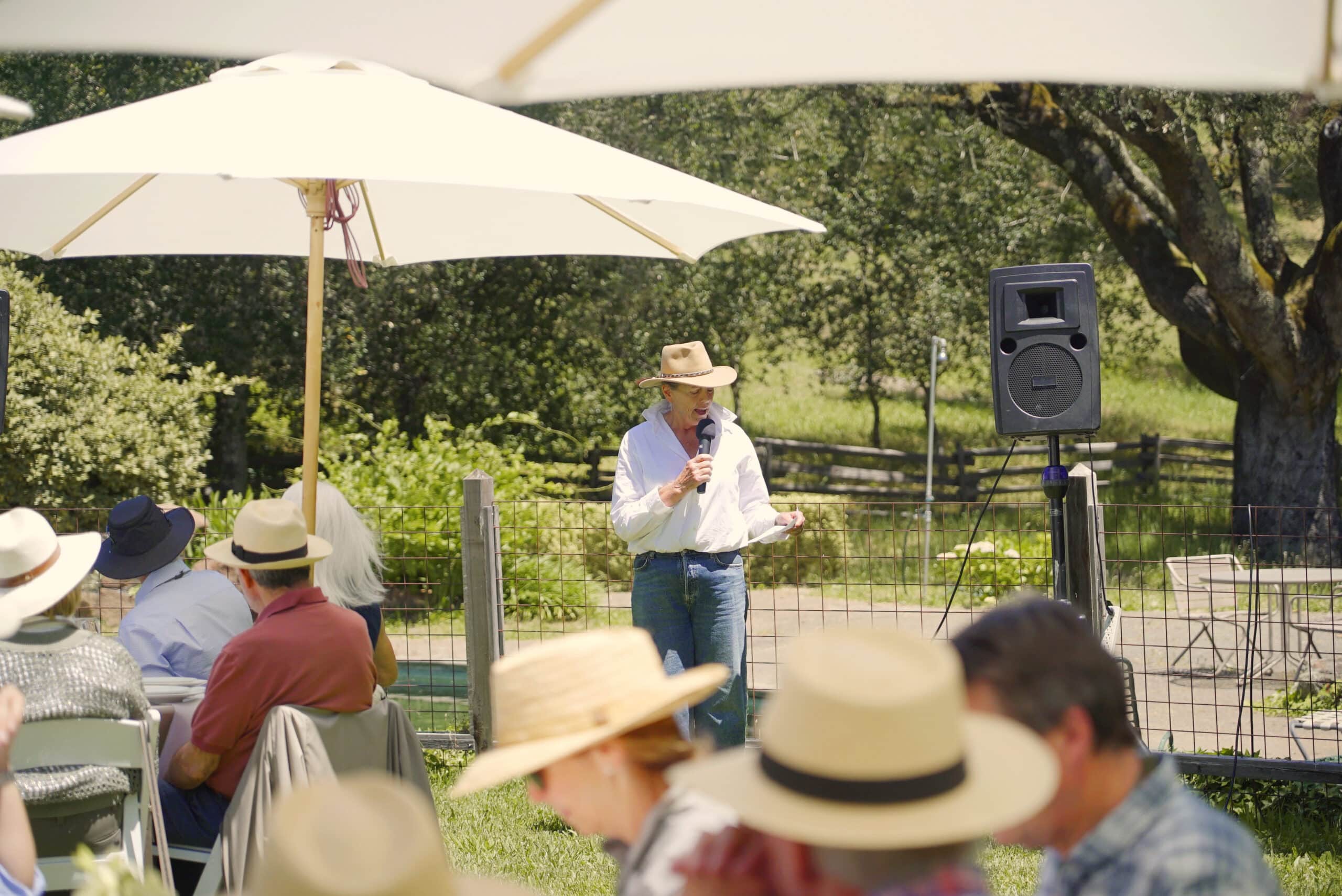
On May 16th, 2026, dozens of supporters gathered at the beautiful Oak Hill Farm in Glen Ellen, shared food grown just a few steps from the table, and talked about one of the most pressing challenges of our time: how do we protect our communities from the growing threats of wildfire and extreme heat?
During our traditional Annual Sonoma Leadership Council Luncheon, supporters raised over $150,000, surpassing our goal in 20% and making it one of our best fundraising events ever, to fund climate resilience work underway across the Bay Area. A huge thank you to our incredible host and supporter, Arden Bucklin-Sporer.
The funds raised at the event will go toward concrete, on-the-ground work:
- Expanding wildfire buffer strategies countywide and helping homeowners take proactive mitigation steps.
- Advancing zoning policies that steer development away from the highest-risk areas.
Strengthening local Fire Safe Councils with coordination and resources. - Running community workshops that help Southwest Santa Rosa residents recognize heat risks early and protect their health.
- Creating opportunities for young people to take an active role in shaping climate solutions in their own neighborhoods.
We’ve captured some wonderful moments from the day—view event photos here.
Focusing on Solutions for Wildfire ResilienceAfter years of devastating fires in Sonoma County, the question is no longer whether the threat is real; it’s what to do about it. The Sonoma Luncheon has become a hub for discussing this topic and the cutting-edge solutions that are emerging in the region.
Over the past several years, Greenbelt Alliance partnered with the Sonoma County Agricultural Preservation and Open Space District and local organizations to develop the Interwoven Greenbelt Buffer—a first-of-its-kind, landscape-scale approach to wildfire risk reduction.
Rather than treating parcels of land in isolation, the model uses data and cross-sector collaboration to “weave together” conserved lands, working agricultural lands, and developed neighborhoods into coordinated buffer zones. The goal: reduce wildfire intensity before it reaches homes, protect biodiversity and farmland, and shift communities from reactive disaster response to proactive, landscape-level prevention.
It’s a scalable concept, and one that could serve as a model not just for Sonoma County, but for fire-prone communities across California and the Western US.
Rising Threat of Extreme HeatAs a major driver of intensifying fires, extreme heat is becoming one of the region’s most dangerous public health threats. Over the past decade, Southwest Santa Rosa alone has seen nearly 10,000 heat-related emergency room visits.
In response, Greenbelt Alliance is partnering with Latino Service Providers to develop a community-led Extreme Heat Action Plan for Southwest Santa Rosa, one of our Resilience Hotspots. The effort, supported by the Governor’s Office of Land Use and Climate Innovation, centers the people most affected—agricultural workers, families, and youth— in designing the solutions. It’s a process built on community knowledge, cultural responsiveness, and local leadership.
Our Marin Resilience Manager Jessie Rountree put it simply at the luncheon: climate solutions aren’t just possible. They’re already happening.
Help Make a DifferenceAs we look ahead, we invite you to continue standing with us in this critical work. With your support, we can expand these solutions across the region and safeguard the places we all love.
Every year, we host this event for our Sonoma Leadership Council, a group of supporters in the North Bay who donate $1,000 or more annually towards the work we do in the region. Our work would not be possible without our donors, and this is a great opportunity to thank them and help raise funds for ongoing projects in Sonoma County and beyond. If you would like to donate toward our work or join our Sonoma Leadership Council, click here.
Thank you again to our wonderful supporters for helping us work to build a safer and more resilient Sonoma County!
The post Funding Solutions for Fire and Heat at Sonoma Luncheon appeared first on Greenbelt Alliance.
Trump and Burgum divert park fees to D.C. ahead of July 4
The Trump administration is redirecting at least $90 million in National Park Service fee revenue toward projects in Washington, D.C., tied to the nation’s 250th anniversary on July 4. According to the Washington Post, the spending includes a $1.6 million fireworks display, more than five times the typical Fourth of July fireworks budget, and roughly $76 million for repairs and “beautification” projects such as work on the Lincoln Memorial Reflecting Pool.
The money is coming from a portion of park entrance fees that federal law allows the National Park Service to spend outside the parks where the fees were collected. Trump administration officials, including Interior Secretary Doug Burgum, have defended the spending as legal and part of broader efforts to prepare the nation’s capital for President Donald Trump’s America 250 celebrations. But diverting dollars to D.C. will have negative impacts on the rest of the national park system, which faces a maintenance backlog estimated at about $24 billion.
Several park officials told the Post that they had recently been informed there was little or no funding available for projects at their own parks. A letter sent by senior agency officials to staff in April said that parks should not expect any money from a contingency fund to cover unforeseen costs, because that money is being diverted to pay for the nation’s 250th anniversary and projects in D.C.
Quick hits The state of the nation’s public lands We’re having our worst wildfire year in a decade, and it’s probably going to get worse Opinion: Improve county and Forest Service wildfire plans Trump goes all in on OHV use on public lands, worrying conservationistsGearJunkie | Outdoor Life | Idaho Capital Sun
BLM to hold largest oil and gas lease sale in Colorado history Interior department’s slavery exhibit removals probed by courtBloomberg Law | Courthouse News
Fast-tracked logging project on Yellowstone’s northern border draws pushbackMontana Public Radio | Inside Climate News
Experts are concerned about how staff cuts in public-lands agencies will impact firefighting Quote of the dayAt [Backcountry Hunters and Anglers] we advocate for access every single day, but motorization in these backcountry lands is not the same thing as access… Access means conserving access for hunters and anglers in perpetuity for our future generations.”
—Jack Polentes, policy and government relations senior manager for Backcountry Hunters and Anglers, Outdoor Life
Picture This @COParksWildlifeTFW someone says they want to skip work and go fishing
THIS WEEKEND IS FREE FISHING WEEKEND. On June 6-7, 2026, anyone can fish for free, and the fishing license and Habitat Stamp requirements are waived: https://cpw.info/4u6rbdn
Feature image: Lincoln Memorial Reflecting Pool; Source: Doug Burgum via X
The post Trump and Burgum divert park fees to D.C. ahead of July 4 appeared first on Center for Western Priorities.
Investor climate group closes down, blaming “limits” of shareholder activism
In 2021, amidst a wave of corporate net-zero targets, a campaign group called Investors for Paris Compliance was set up in British Columbia, aiming to use investor pressure to hold Canadian companies to account on their climate promises.
In the five years since, the group has notched up several wins: pressuring National Bank into providing $20 billion of finance to renewable energy, getting Royal Bank of Canada to improve its green finance labels and persuading 20-25% of investors to regularly back climate proposals at annual general meetings (AGMs) for shareholders.
But last month, the group’s then executive director Matt Price put out a statement saying it was shutting down. Despite some progress, Price explained, his organisation had concluded that “investor accountability has reached its limits”.
Companies and their investors often understand that climate change threatens the economic system, Price said. But, he added, they do not respond adequately because they are worried that, if they do, their competitors will not put in as much effort and could therefore gain a financial advantage.
This “tragedy of the commons” situation cannot be fixed by shareholder advocacy, Price said, but instead needs litigation, regulatory action and accountability mechanisms. “Some of our team will take those things on in new initiatives,” he said.
Price’s words echo the findings of a London School of Economics (LSE) report published last month, based on workshops with asset owners and managers in New York, Amsterdam, London and Singapore.
Government policy keyThe LSE report noted that “action by investors on climate change is severely constrained by their duties, the limited tools at their disposal and the pathways of technology development”. To be effective, pressure from climate-conscious investors must be coupled with government policy that incentivises green investment and technological innovation, the authors concluded.
An investigation by the Guardian recently found that, despite overwhelming shareholder support for its climate action plan, Australian mining company BHP has carried on buying polluting diesel trucks instead of electric ones. The Australian government subsidises diesel, saving BHP hundreds of millions of dollars a year.
As EU acts to stop greenwash, funds drop climate claims from their names
Lindsey Stewart, director of institutional insights for investment research firm Morningstar, told Climate Home News that investor activism does work but it “doesn’t do everything that people expected it to do towards the beginning of the 2020s”.
“There is a limit to what can be achieved by minority shareholders exercising their votes and engaging with companies. Quite a lot, it does seem, is reliant on the legal and regulatory framework,” he said, adding that the closure of Investors for Paris Compliance shows this “realisation is sinking in a lot more than perhaps it was in 2020, 2021, 2022”.
Decline of investor activismStewart said that in the early 2020s, investor activists were pushing companies for “things that were sort of already on the regulatory conveyor belt anyway”, like companies setting targets for their operational (Scope 1 and 2) emissions, disclosing their carbon footprints, and assessing their exposure to risk from climate change.
With this low-hanging fruit picked, green-minded investors have moved on to make demands that are more controversial and have received less support from other investors, he said. He gave examples of just transition reporting, green capital expenditure financing ratios for banks and disclosing emissions from the use of products a company sells, known as Scope 3 emissions.
On top of this, Stewart said, there has been pressure from the “right-wing political establishment in the US” against investors taking climate change into consideration. BlackRock, which manages $9.5 trillion of assets, has walked back its climate commitments after pressure from US Republicans.
More fundamentally, Stewart described the idea that fossil fuel majors would dismantle their oil and gas business and transform into renewables companies as a “pipe dream on the part of environmentalists”. “Why would they have the skill or capability, or even the stakeholder backing, to completely transform a business of that size?” he asked.
Shareholder activism is only possible at privately owned and listed companies, while most investment in oil and gas is now coming from state-owned companies, like Saudi Arabia’s Aramco. In 2025, less than a quarter of investment was from oil majors like BP and Shell.
Business backlash shows powerYet despite the uphill climb, Mark van Baal defends shareholder activism. He runs an Amsterdam-based campaign group called Follow This, which has tried to get investors to vote for pro-climate resolutions at the AGMs of oil and gas multinationals.
He accepts that success peaked around 2021, but says the effort oil and gas firms are now putting into winning over shareholders and discouraging pro-climate resolutions – which he characterised as “the Empire Strikes Back” – shows the power of shareholder activism, which was previously underestimated.
Mark van Baal is the head of Follow This (Photo: Follow This)In January 2024, ExxonMobil sued Follow This, aiming to block the group’s climate resolution. Fearing the case would end up in the Supreme Court, where conservative judges could set an anti-climate precedent, Follow This withdrew the resolution.
But, said van Baal, although the legal battle created a “chilling effect among investors”, it is a “proof point that shareholder pressure works and that they’re really afraid of the shareholders”.
Vote, don’t sellStewart and van Baal both agreed that selling, or threatening to sell off shares is not an effective way to change a company’s behaviour.
It allows less climate-conscious investors to buy the shares, they said, adding that there is no evidence that threats to sell shares and therefore lower the valuation over climate concerns have influenced company management.
Van Baal said the share price is set by short-term traders, not long-term shareholders like the pension funds he works with.
How Shell is still benefiting from offloaded Niger Delta oil assets
Nonetheless, investors’ engagement should be forceful, van Baal insisted – and not just within their comfort zone of talking to management about sustainability behind closed doors without voting for it at AGMs. “Shareholder democracy is the only democracy where voting is called escalation,” he said.
The Follow This website says that only investors can stop fossil fuel companies destroying the planet. “Marches didn’t change their minds. Lawsuits didn’t stop them. But shareholders can,” it trumpets.
But van Baal told Climate Home News this wording is “too strong” and may have to be revised, adding that shareholder activism just “fits me more than gluing myself to roads” and is a tactic he “stumbled on” 11 years ago.
Legal, political and investor activism can reinforce each other, he added. When Friends of the Earth sued Shell alleging inadequate climate action, for example, the green group’s lawyers cited the company’s rejection of a Follow This resolution as evidence. “The pressure needs to come from all sides,” van Baal said.
The post Investor climate group closes down, blaming “limits” of shareholder activism appeared first on Climate Home News.
7 states sue Trump administration over TotalEnergies offshore wind lease buyout
The lawsuit calls the deal a “sham settlement agreement to unlawfully cancel an offshore wind lease and redirect the money paid for the lease to a separate, unauthorized use favored by the President.”
Cropped 3 June 2026: Highway through the Amazon | El Niño impact | State of CO2 removal
We handpick and explain the most important stories at the intersection of climate, land, food and nature over the past fortnight.
This is an online version of Carbon Brief’s fortnightly Cropped email newsletter.
Subscribe for free here.
RECORD-LOW LOSS: Amazon deforestation rates have fallen to their lowest level since 2019, according to a report covered by Agence France-Presse. The newswire called the figures “good news” for president Luiz Inácio Lula da Silva, but said the rate of deforestation is still “breathtaking”, with five trees felled every second, on average. Separately, a report from Rainforest Foundation Norway found that the “currently anticipated growth in Brazilian beef production may lead to deforestation of ~57,000km2 in the Amazon by 2034”.
ROAD AND RAIL: The Brazilian government will invest $75m into a new highway “cutting through the Amazon rainforest”, reported Deutsche-Welle. The Associated Press said the administration also announced an environmental protection plan to “safeguard the forest from potential impacts from the highway”, but added that environmentalists still fear the move “could speed up Amazon deforestation”. Separately, Inside Climate News reported on a Brazilian supreme court ruling that has brought a 965km railway through the Amazon “one step closer to reality”.
BANNED IMAGES: Mongabay reported that “Brazil’s Congress has passed a bill prohibiting environmental agencies from using satellite images to restrict the commercial use of illegally deforested lands”. According to the outlet, supporters say that “satellite-only enforcement infringes upon farmers’ right to a fair defense”, while critics argue that the bill will “weaken environmental protection” and “create unsafe conditions” for Brazil’s federal environmental police. Separately, the Brazilian government has committed more than $600m (£446m) to “foster ecological investment in the Amazon region”, according to the Associated Press.
El Niño forecast and extreme heat‘SUPER’ STRESSED: The predicted “super” El Niño event would add stress to an “already dysfunctional and fragile global food system”, wrote the University of Sussex’s Prof Benjamin Selwyn in a commentary in the Conversation. He added that “El Niño alters rainfall, shifts jet streams and raises global temperatures”, all of which could damage harvests this summer. Reuters noted that the forecast for the phenomenon is “particularly worrying”, due to the predicted strength of the event and the contribution of climate change.
HEAT BURDEN: “Scorching temperatures” in India have “disrupted daily life across several northern states”, said the Washington Post. The outlet added: “Some farmers have switched to nighttime work to avoid scorching temperatures as a heatwave grips large parts of India.” The heatwave is also affecting Nepal, as high temperatures have “added burdens to public health, education, agriculture, livestock, environment, employment and public infrastructure”, reported Nepal News.
‘MIND-BOGGLING’ HEAT: Meanwhile, a “heat dome” over western Europe broke UK temperature records for the month of May. Carbon Brief summarised how the “mind-boggling” heatwave was covered in both national and international press. Agence France-Presse wrote that parts of Italy approved rules limiting work in conditions “with prolonged exposure in the sun” during the hottest part of the day. The newswire added: “Farmers reported accelerated harvests as temperatures went beyond 30C across the region.”
News and views- SNAKEBITE DANGER: “The risk of snakebites is increasing across the world as reptiles shift their habitats to cope with rising temperatures and growing human pressures,” according to new research covered in the Guardian. It added that human-snake interactions are “forecast to become more pronounced”.
- RICE RISK: “Several parts” of China are experiencing heavy rains early this year, “raising risks for agriculture and disaster management”, wrote Bloomberg. This includes “key grain-producing provinces”, as well as areas that grow rice, vegetables and fruit, added the outlet.
- DATA DROUGHT: Chile’s Quilicura wetland, just north of Santiago, is drying up as “datacentres have drained water from drought-stricken wetlands, consuming billions of litres annually”, said the Guardian. It noted that the area is home to Latin America’s “largest concentration of datacentres”.
- ACCOUNTING TRICK: A group of scientists have called on the Irish government to reject a proposal that would allow the livestock to use a metric called GWP* to measure methane emissions, reported Inside Climate News. According to the outlet, they warned that this “accounting trick” would “downplay” the industry’s emissions. (See Carbon Brief’s explainer on GWP* for more information.)
This week, Carbon Brief unpacks three key findings from the third edition of the “state of carbon dioxide removal” report.
Global carbon dioxide removal (CDR) will need to increase fourfold by 2050 if the world is to have a chance of limiting global warming to 1.5C by 2100, said a new report.
Nearly all pathways to meeting the Paris Agreement’s highest ambition of keeping global temperatures to 1.5C above pre-industrial levels in 2100 involve CDR techniques – ranging from tree-planting to sucking CO2 from air with machines.
This is in addition to steep and immediate emissions cuts.
Scientists expect carbon emissions to push warming beyond 1.5C in the decade ahead, meaning that the target can only be achieved via large-scale CDR.
Here, Carbon Brief pulled out three key findings from the third state of CDR report.
‘Novel’ CDR is small, but growingThe report said that, at present, “99.9%” of existing CDR is conventional, land-based techniques, such as tree-planting and ecosystem restoration.
The world currently removes 2.2bn tonnes of CO2 (GtCO2) per year, equivalent to around 5% of gross global CO2 emissions.
The largest contributors to removing CO2 from the atmosphere are China, the US, the EU, Brazil and Russia, largely through tree-planting (afforestation) and forest restoration (reforestation).
“Novel” CDR, such as biochar and direct air capture, currently removes just 2m tonnes of CO2 annually at present, according to the report.
These methods have been growing at a rate of 40% per year – which is “insufficient for the scale-up required to meet the Paris temperature goal”, said the report.
Current ambition will not lead to net-zeroThe report examined several scenarios where global temperature rise is limited to “well below” 2C by 2100, including a current ambition scenario and a highest-possible ambition scenario.
The current ambition scenario was based on “nationally determined contributions”, or NDCs, which countries submit periodically to the UN Framework Convention on Climate Change (UNFCCC).
Under this scenario, the report projected a total of 5.9GtCO2 of CDR by 2050 and 12GtCO2 by 2100. This scenario would result in end-of-century warming of 1.7-2.7C.
Importantly, the report said, current ambition does not result in the world reaching net-zero CO2 levels, “meaning that global temperatures would continue to rise” – albeit more slowly – beyond 2100.
Under the highest-possible ambition scenario, CDR scales up to 8.8GtCO2 by mid-century and 15.3GtCO2 by the end of the century. This results in global temperatures peaking at 1.7-1.8C around 2050 and the world achieving net-zero emissions around that time.
Reducing emissions now lowers the need for future CDRWhile many countries include some amount of CDR in their NDCs, there is currently a large gap between the amount of CDR pledged and the amount that will be needed to limit global temperature rise to 1.5C by the end of the century, said the report.
This quantity is referred to as the “CDR gap” – the difference between what is pledged and what is needed.
The size of the CDR gap is dependent on both the pledges made by countries and the choice of the “benchmark” scenario against which they are measured.
Current NDCs and other country submissions to the UNFCCC total 2.5GtCO2 per year of removals in 2030 and 3.6GtCO2 per year in 2050. Using the highest-ambition scenario as a benchmark, this gives a CDR gap of 0.3GtCO2 in 2030 and 5.2GtCO2 in 2050, according to the report.
By comparison, a 10-year delay in implementing ambitious emissions reductions will result in the need to remove at least an additional 150GtCO2 from the atmosphere, compared to the most ambitious scenario.
This Spotlight is adapted from Carbon Brief’s Q&A on the state of CDR report. You can read the article in full here.
Watch, read, listen‘DEVASTATING’ DATA: Grist reported on a proposed Utah datacentre that could be “devastating” to the ecology of the Great Salt Lake – the largest saline lake in the world.
ECO-OIL: The Times explained how a new synthetic oil, grown in a lab in north-west England, could be used as a substitute for palm oil.
EL NIÑO IMPACTS: An interactive piece from BBC News described how the forecasted “super” El Niño could impact global climate and weather in the coming months.
‘BATTERY COWS’: The Guardian covered work from the Bureau of Investigative Journalism that found a “huge rise” in factory-style dairy farming of “battery cows” in the UK.
New science- Greenhouse gas emissions from rice paddies have doubled globally over the past six decades | Nature Food
- Climate change will shift the timing and location of hailstorms – increasing the risk of damage to winter crops, such as wheat, but decreasing the risk to summer crops, such as maize | Nature Climate Change
- Wind turbines in western Europe put more than 100m migratory birds “at risk” of collision annually, but this number can be lowered through limiting energy production at strategic times | Nature Sustainability
- 2-5 June: UN expert meeting on food and agriculture | Rome
- 5 June: World environment day
- 8-18 June: Subsidiary body meetings of the UNFCCC | Bonn, Germany
- 15-19 June: Meeting of the parties to the UN Convention on the Law of the Sea | New York City
- 16-18 June: Our Ocean Conference | Mombasa, Kenya
Cropped is researched and written by Dr Giuliana Viglione, Aruna Chandrasekhar, Daisy Dunne and Orla Dwyer. Please send tips and feedback to cropped@carbonbrief.org
The post Cropped 3 June 2026: Highway through the Amazon | El Niño impact | State of CO2 removal appeared first on Carbon Brief.
The Real Story Behind Trump’s Latest AI executive order is what it leaves out
Contact: Kayla Ritchie | kayla@unbendablemedia.com
In response to Trump’s latest artificial intelligence executive order, Mar Zepeda Salazar, Policy Director at the Climate Justice Alliance, a coalition representing nearly 100 frontline community-based and supporting networks across the country released the following statement:
“The latest AI Executive Order is being couched in terms of US dominance, cybersecurity, and national competitiveness. But for the communities living near data centers, gas plants, and transmission corridors, the real story is the collateral damage that will be left in its wake because of what this order leaves out.
No mandatory environmental review. No energy or water use disclosures. No Tribal consultation. No cumulative impact analysis. No legal protections for communities.
Accelerated AI and data center infrastructure buildout will only raise our electricity bills, increase pressure for new fossil fuel plants, drain our water supplies, and expand polluting industry — disproportionately sited near rural, Black, Brown, Indigenous, and low-income communities.
At a time when the climate crisis and public health emergencies continue to accelerate with little to no end in sight, we will continue to demand strong mandatory safeguards, licensing requirements, environmental protections, and community protections for the people of this country. Nothing less will do.”
The post The Real Story Behind Trump’s Latest AI executive order is what it leaves out appeared first on Climate Justice Alliance.
Most World Cup Host Cities Are Pedestrianizing Streets This Summer – But Not Boston
In a few days, host cities across North America will welcome huge World Cup crowds by pedestrianizing major streets – and in some cases, entire neighborhoods – to keep traffic jams out of the fan parades and festivals associated with the international event.
Boston will not be among them.
On Tuesday, the City of Boston and MBTA announced a compromise plan for managing heavy crowds around South Station that would keep Summer Street open to vehicular traffic on some – but not all – World Cup match days.
Mayor Wu’s administration had been fighting the T to keep Summer Street open to cars and trucks amidst the thousands of soccer fans that are expected to converge at South Station as they wait to board trains to Foxboro.
In the compromise plan announced Tuesday, Summer Street will be pedestrianized between Dorchester Avenue and Atlantic Avenue for eight hours on four match days: Saturday June 13, Friday the 19th, Monday the 29th, and for the quarter-final match on Thursday July 9.
For matches held on Thursday the 16th, Thursday the 23rd, and Sunday the 26th, the city plans to keep the northern lanes of Summer Street open to cars for the convenience of people who desire to drive through thick crowds of soccer fans into one of the most congested districts of the city.
But drivers should be warned: “the direction of travel will be coordinated based on the demands of the respective day and time,” and the city and the T may add “additional temporary traffic restrictions and lane closures to accommodate crowd management,” according to a press release that the MBTA and City of Boston issued yesterday.
Summer Street will also be entirely closed for an indeterminate period on all seven match days “while the MBTA sets up the temporary security screening and queuing space” outside South Station.
Other cities have more serious game plansBoston’s nearest World Cup peer city, New York, recently announced a major transit-focused transportation plan for match days that will ban private cars and truck deliveries from numerous busy streets around Midtown Manhattan, even though the actual games are happening six miles away in New Jersey.
New York Mayor Zohran Mamdani last week announced that on World Cup match days, the city will expand bus-only lanes throughout Midtown Manhattan and transform 42nd Street – a major cross-town connection – to a bus-only corridor.
In a striking contrast to Mayor Wu’s approach, Mamdani’s administration is also planning to create large car-free pedestrian zones on the streets around Penn Station so that thousands of soccer fans will have plenty of space as they wait for trains to New Jersey.
New York had also previously announced plans to transform 50 streets near schools into car-free “soccer streets” this summer.
In another contrast with Boston, Philadelphia is also coordinating its World Cup traffic planning with its preparations for a surge of tourism for the 250th anniversary of the Declaration of Independence.
Philadelphia will close several Lemon Hill roadways to vehicular traffic for the duration of its World Cup fan festival, and it will also pedestrianize the outer lanes of Benjamin Franklin Parkway, the grand boulevard between Center City and the Philadelphia Museum of Art, for the entire summer.
The city is also pitching in $450,000 to subsidize additional PHLASH bus service between the fan festival in Lemon Hill and the central city.
Even the two World Cup host cities in Texas are taking a more enlightened approach to transportation.
Houston is pedestrianizing roughly 30 blocks of streets in its East Downtown district for daily World Cup “fan festivals” in June and July.
In Dallas, where games will take place in a suburban stadium about 17 miles from the city center, the city will close several downtown streets near its World Cup broadcasting center in the downtown convention center, and on several blocks around the city’s fan festival in the state fairgrounds.
In major win for U.S. consumers, FDA approves first new sunscreen ingredient in 25 years
WASHINGTON – In a landmark decision for public health and consumer protection, the Food and Drug Administration today finalized its approval of the first new ultraviolet filter in more than 25 years deemed a safe and effective active ingredient in U.S. sunscreens.
The chemical, bemotrizinol, also known as BEMT, will give American consumers access to a level of ultraviolet A protection that has until now been unavailable on U.S. store shelves. The regulatory review process leading up to this approval took more than two decades.
Bemotrizinol offers a stable non-mineral option that doesn’t break down in the sun, unlike one of two previously approved UVA filters, avobenzone.
Sunscreen products formulated with non-mineral active ingredients are often the consumer’s preference. That’s because mineral-based sunscreens often leave a white cast on the skin, a quality that doesn’t work for many people, especially people of color.
The Environmental Working Group, which since 2019 has urged the agency to allow bemotrizinol to be added to sunscreens, hailed the decision a monumental victory for health and wellness.
Closing the UVA gap“This is a great day for American consumers and everyone who has fought to improve sunscreen options and close the UVA protection gap in U.S. sunscreens,” said David Andrews, Ph.D., chief science officer at EWG.
“For decades, Americans have used outdated sunscreen tech while the rest of the world moved forward. The approval of bemotrizinol will help change that. The FDA’s go-ahead will finally bring more effective, safer sun protection to American store shelves.
“This is a win that has been a long time coming,” said Andrews.
What sunscreens deliverTraditional U.S. sunscreens excel at blocking the radiation that causes visible sunburns, ultraviolet B rays. But they routinely fail to shield against deep-penetrating UVA rays, which drive premature aging, suppress the immune system and are the primary contributor to skin cancer, according to the American Cancer Society.
Skin cancer is the mostly commonly diagnosed cancer in the U.S., claiming more than one life every hour, with estimates of over 200,000 cases of both types of melanoma predicted in 2026, according to the Melanoma Research Foundation.
EWG’s peer-reviewed research found U.S. sunscreens deliver on average just 24% of the UVA protection implied by their sun protection factor, or SPF, labels. Most Americans reaching for high-SPF products get just a fraction of the protection they believe they’re buying.
Today’s approval is the most significant step in a generation toward fixing that problem.
“For too long, American consumers have been applying sunscreen and believing they were fully protected, not knowing that their product was delivering far less UVA protection than the label implied,” said Alexa Friedman, Ph.D., senior scientist at EWG.
“Bemotrizinol changes the calculus of sun care. It is highly photostable, meaning it won’t break down when hot summer sun hits your skin – unlike avobenzone, currently the only non-mineral filter in the U.S. that provides meaningful UVA coverage,” she said.
“And it provides strong, stable broad-spectrum protection against both UVA and UVB radiation. Better yet, unlike the older non-mineral filters, it can be combined with zinc oxide to provide strong broad spectrum protection with less white cast.
“American consumers deserve access to the best available sun protection. Today they’re finally getting closer to it,” added Friedman.
What is bemotrizinol and why is it better?Bemotrizinol has been used safely in sunscreens across Europe and Asia since 1999 under brand names including Tinosorb® S by BASF and Parsol® Shield by DSM. The ingredient has amassed a 27-year safety track record abroad, though some of those jurisdictions have weaker data requirements than the U.S.
The original application for FDA approval was filed in 2005 under a regulatory process that has since been discontinued. One company, DSM, submitted its most recent request to the FDA in 2024, under an updated regulatory process established by the CARES Act. It has taken more than two decades of regulatory review to reach today’s approval.
Data submitted to the FDA confirms that at concentrations up to 6%, bemotrizinol is minimally absorbed through the skin, with average absorption levels below the concentration the FDA considers indicative of systemic exposure. Compare that to oxybenzone, which was detected in blood at 515 times the FDA’s threshold of concern after a single weekend of application. Bemotrizinol does not meaningfully enter the bloodstream.
The FDA’s review also included a two-year animal study that found no evidence of cancer-causing effects when bemotrizinol is applied to skin. A multigenerational reproductive study found no harmful effects on reproductive outcomes or offspring development.
Skin irritation tests found bemotrizinol was not irritating at permitted concentrations.
The European Union’s Scientific Committee on Consumer Safety reached the same conclusions as far back as 1999.
Crucially, bemotrizinol solves problems current U.S. sunscreen ingredients cannot.
Zinc oxide and avobenzone are the only two UV filters in U.S. sunscreens that provide meaningful UVA protection. But avobenzone is chemically unstable – it breaks down in sunlight, reducing its effectiveness precisely when it is needed most. Avobenzone’s breakdown products have been linked to allergic reactions.
Zinc oxide, for all its ability to provide the most stable, balanced broad-spectrum UVA and UVB protection, leaves a white cast after it’s been applied.
Until today, the FDA had proposed that only sunscreens containing zinc oxide and titanium dioxide – both mineral ingredients – would be generally recognized as safe and effective.
What comes nextToday’s approval of bemotrizinol triggers 18 months’ exclusive marketing rights in the U.S. of Parsol Shield, a proprietary bemotrizinol formulation.
After that period, other manufacturers may use it in their formulations, driving broader availability and more competitive pricing.
Consumers shopping for sunscreen with bemotrizinol should look for “bemotrizinol” or “BEMT” in the active ingredients list or the trade name Parsol Shield on product packaging. It may also be listed by its internationally standardized name, bis-ethylhexyloxyphenol methoxyphenyl triazine.
EWG will update its Guide to Sunscreens as products with bemotrizinol reach the market.
In the meantime, EWG’s top recommendation for daily use remains mineral sunscreens formulated with zinc oxide, which provide the most stable and balanced broad-spectrum UVA and UVB protection currently available on U.S. shelves.
Good news – but a broken system remainsToday’s approval is cause for genuine celebration. It is also a reminder of how far the U.S. regulatory system still has to go.
Even with bemotrizinol added to the mix, U.S. sunscreen formulators will have access to 16 approved UV filters. European formulators have access to approximately 30.
In 2019 and again in 2021, the FDA proposed meaningful reforms to sunscreen regulation that included stronger UVA standards, SPF value limits, better labeling and updated safety data requirements. None of those reforms has been finalized.
Other sunscreen manufacturers have so far been unwilling to produce the safety data the FDA needs to approve additional new filters.
“This approval is a triumph of consumer advocacy, but it also shines a harsh spotlight on a federal system stuck in neutral,” said Melanie Benesh, EWG’s vice president for government affairs.
“Meanwhile, sunscreen manufacturers are refusing to provide the FDA with safety data for other UV filters, prioritizing corporate secrecy over public health. American consumers are then left with fewer options than people in Europe and Asia have had for decades.
“Congress must step in. We need binding deadlines for chemical testing and real enforcement to pull non-compliant, unsafe products from the market entirely. American families have waited long enough.
“Companies must also do more. Manufacturers of additional sunscreen filters available internationally should request market access from the FDA and provide the FDA with the necessary data so consumers have more options,” Benesh added.
How to navigate store shelvesWhile bemotrizinol products make their way to store shelves, the best sunscreen is the one that actually gets used. Here’s how to choose strong sun protection today:
Prioritize zinc oxide. Mineral sunscreens with zinc oxide provide the most stable, balanced broad-spectrum UVA and UVB protection available and are EWG’s top recommendation for daily use.
For non-mineral sunscreens, look for products formulated with 3% avobenzone and check EWG’s Guide to Sunscreens for options that meet EWG’s safety and efficacy standards.
Avoid oxybenzone and octinoxate, which are linked to hormone disruption, and skip products with undisclosed “fragrance.”
Be wary of high SPF numbers. SPF 50 blocks 98% of UVB rays. SPF 100 blocks just 1% more. The negligible difference can create a false sense of security, since high-SPF products often provide no better UVA protection than lower-SPF alternatives.
Use EWG’s tools. Shoppers can search the 2026 Guide to Sunscreens, use the EWG Healthy Living app to scan products while they shop, and look for the EWG Verified® mark, which requires sunscreens to exceed both U.S. and European UVA protection standards.
###
The Environmental Working Group is a nonprofit, non-partisan organization that empowers people to live healthier lives in a healthier environment. Through research, advocacy and unique education tools, EWG drives consumer choice and civic action. Visit www.ewg.org for more information.
Areas of Focus Personal Care Products Sunscreen Bemotrizinol offers stronger UVA protection, closing decades-old protection gap with sunscreens sold abroad Press Contact Iris Myers iris@ewg.org (202) 939-9126 June 9, 2026
U.S. to Dismantle System Tracking Atlantic Currents That Are at Risk of Collapse
The Trump administration is moving to dismantle an ocean observation system consisting of more than 900 instruments in the Pacific and Atlantic oceans. Data supplied by the system has been used to study key Atlantic currents that increasingly appear in danger of collapse as the climate warms.
DTE Energy partners with LG to deploy 6 GWh of battery storage
By 2042, DTE expects to have more than 2.9 GW of energy storage on its system, more than doubling its current storage capacity.
New York City’s Black-crowned Night Herons Are Vanishing—and Could Totally Disappear in a Decade, a New Study Reveals
Rutas basura cero: una iniciativa regional para visibilizar experiencias de reúso y gestión sostenible de residuos
Con el objetivo de fortalecer y dar visibilidad a experiencias locales que promueven la prevención y gestión responsable de residuos, la iniciativa Rutas basura cero seleccionó una serie de recorridos presenciales ejecutados por organizaciones locales en distintos países de América Latina.
La propuesta surge en un contexto de creciente preocupación por la crisis de los residuos y los impactos ambientales, sociales y económicos asociados al actual modelo de producción y consumo. Frente a este escenario, las estrategias de basura cero han demostrado ser una alternativa efectiva para reducir la generación de residuos mediante prácticas de reducción, reúso, reciclaje y compostaje, al tiempo que promueven la justicia ambiental y el fortalecimiento de las economías locales.
En particular, los sistemas de reúso y rellenado están cobrando cada vez más relevancia como soluciones replicables y escalables para avanzar hacia comunidades más saludables y sostenibles. Sin embargo, muchas de estas experiencias continúan siendo poco conocidas fuera de sus zonas, lo que limita su potencial de incidencia y réplica.
Para revertir esta situación, el proyecto Rutas basura cero impulsa recorridos presenciales coordinados por organizaciones locales, que permiten a tomadores de decisiones, representantes de gobiernos, académicos, líderes sociales y otros actores clave conocer de primera mano iniciativas exitosas en funcionamiento.
Las rutas incluyen visitas a proyectos con al menos un año de trayectoria y resultados comprobables, vinculados a prácticas como el rellenado de envases, el lavado y reutilización de utensilios, el compostaje descentralizado y el cooperativismo. Además, cada experiencia es documentada mediante registros audiovisuales que pasan a integrar una base regional de casos de éxito.
La iniciativa busca generar espacios de intercambio entre experiencias consolidadas y actores estratégicos, así como producir materiales que contribuyan a la difusión y sistematización de aprendizajes sobre modelos basura cero en la región.
A continuación, compartimos las organizaciones e iniciativas seleccionadas que forman parte de esta primera edición de Rutas basura cero:Entrejardines nos lleva a la compostera y huerta comunitaria del barrio La Floresta en Quito, luego pasamos por Pure!, una empresa de turismo que comparte cómo ha adoptado prácticas de reúso y segregación en origen dentro de su oficina, y terminamos en el restaurante Pim’s donde conocemos cómo gestionan sus residuos sólidos y orgánicos.
La Asociación Defensores Monumento Zona de los Santos, nos muestra cómo están trabajando para preservar una zona de alta biodiversidad a través del manejo de residuos de subproductos de procesos de cultivo de café como el que hacen en CoopeTarrazu y Coopedota. Luego terminamos con una parada en el Centro de acopio Preserve Planet (CAPP) para saber más sobre segregación de residuos y recuperación de tapas de refrescos.
Fundación Lenga nos traslada a la zona más austral del Chile donde iniciamos el recorrido en Compost Coiron y su proyecto de gestión de residuos orgánicos, donde además nos cuentan cómo el turismo influye en el colapso del vertedero municipal de Puerto Natales. En Punta Arenas, conocemos el laboratorio textil Puro Viento, una iniciativa de reuso que utiliza residuos textiles y gigantografías publicitarias para hacer artículos como mochilas, estuches, entre otros. Finalmente, llegamos a Puerto Williams para saber más sobre la iniciativa municipal de gestión de residuos.
The post Rutas basura cero: una iniciativa regional para visibilizar experiencias de reúso y gestión sostenible de residuos first appeared on GAIA.
Pages
The Fine Print I:
Disclaimer: The views expressed on this site are not the official position of the IWW (or even the IWW’s EUC) unless otherwise indicated and do not necessarily represent the views of anyone but the author’s, nor should it be assumed that any of these authors automatically support the IWW or endorse any of its positions.
Further: the inclusion of a link on our site (other than the link to the main IWW site) does not imply endorsement by or an alliance with the IWW. These sites have been chosen by our members due to their perceived relevance to the IWW EUC and are included here for informational purposes only. If you have any suggestions or comments on any of the links included (or not included) above, please contact us.
The Fine Print II:
Fair Use Notice: The material on this site is provided for educational and informational purposes. It may contain copyrighted material the use of which has not always been specifically authorized by the copyright owner. It is being made available in an effort to advance the understanding of scientific, environmental, economic, social justice and human rights issues etc.
It is believed that this constitutes a 'fair use' of any such copyrighted material as provided for in section 107 of the US Copyright Law. In accordance with Title 17 U.S.C. Section 107, the material on this site is distributed without profit to those who have an interest in using the included information for research and educational purposes. If you wish to use copyrighted material from this site for purposes of your own that go beyond 'fair use', you must obtain permission from the copyright owner. The information on this site does not constitute legal or technical advice.
 This site is not the official webpage of the Industrial Workers of the World.