You are here

coal

No plan for the Valley; No plan for the workers; No plan for the climate

By IWW Melbourne - Australia IWW, March 15, 2017

As the closure of the Hazelwood power plant looms closer, it is becoming increasingly clear that the government has no transition plan for the LaTrobe Valley. It's imperative that the workers in the valley develop a program of their own to transition away from coal.

The behemoth is shutting down. Completed in 1971, Hazelwood - the Soviet-era beast of a power plant that produces up to a quarter of the state's energy - is scheduled to shut in the next few weeks.

Following the privatisation of the energy industry and years of official neglect, this is just "Another kick in the guts for the Latrobe Valley," as the CFMEU's mining and energy president puts it. The Andrews State Government has, at the last minute, shown some interest in the almost 1000 workers set to lose employment, offering grants and funding amounting to $226 million. The federal government is still scrambling to respond. 

The remaining three plants in the valley remain in a precarious position. Brown coal is plentiful in the valley, but so dirty and so low in value that there's virtually no export market for the product. It's burnt there or it's not burnt at all. But the plants haven't been updated for years, and even basic maintenance is lax, allegedly contributing to the horrific fires that burnt through the Valley two years ago. In the face of climate change, coal - and brown coal especially - is rapidly becoming a "stranded investment" that can't turn a profit and which no one will buy.

This is a good thing for the planet's climate and - in the long run - for our communities. It's also been predicted for years. So why isn't there a transition plan for the LaTrobe Valley?

Successive governments have been in denial about the realities of a shifting energy market, pinning hopes on pipedreams like clean coal and carbon sequestration.

Investment that could have been directed at rebuilding grid infrastructure to better suit renewables has instead been sunk into the pockets of multinational companies without ties to the local communities, and who answer to no one but their shareholders. Even the comparitively progressive Andrews government has, until very recently, shown no interest in the Valley - but their response has been a piecemeal kneejerk reaction to pressure bought to bear by workers. There remains no plan for the Valley.

There is no escaping the realities of climate change. Coal is going out of business - and not before time! Nevertheless, unless a thoughtfully planned and executed transition to a coal-free economy is rapidly developed, the region which has underpinned Victoria's economic development throughout the 20th and 21st centuries will once again be burnt. This plan could take many forms, but the decision must be made by those wo work and live in the Valley. Groups like voices of the valley and the earthworker cooperative are the only hope for a democratic, truly just transition out of coal for the LaTrobe Valley. Workers can't rely on the government - state or federal - to do the job for them.

End Coal actions: from Wales to Westminster

By staff - Reclaim the Power, February 22, 2017

150 people gathered on the beach by Aberthaw power station to demand Green jobs now – Close Aberthaw, on Saturday 28th January. People gathered to demand that Aberthaw power station close and that jobs are found for the current highly skilled employees in the green economy. After a rousing rally with music and food on the beach, the gathered crowd walked to the main entrance of the power station.

RWE npower were expecting us, and as a result there were no works vehicle movements for at least 4 hours, at an entrance which normally has HGVs every few minutes. Gathering at the power station was effective in raising awareness of the issues as well as causing Aberthaw to cancelled all deliveries and the removal of coal ash.

Demo on the beach

Marianne Owens from the PCS union said, “It’s working class people who suffer from this dirty energy,” as she addressed the crowd from the sea wall. She demonstrated that moving to green energy would create more jobs than exist in the fossil fuel industry.

As Chris and Alyson Austin held hands and addressed the crowd, Alyson described how dust from Ffos-y-fran opencast coal mine pervades her house. Communities living near opencast coal mines now experience similar illnesses to deep miners when underground mines operated.

Anne Harris from the Coal Action Network said, “Saturday’s demonstration at Aberhaw power station sent a clear signal to its operators RWE npower and the government, that the public demand that this power station is promptly closed. Children, working people, pensioners, Welsh people and those from as far away as Machylleth and London gathered on the beach.”

There were a number of angry local residents at the demonstration who feel like they’ve been sacrificed to this power station, as highlighted by this comment on the Coal Action Network’s web page about the protest local resident. Roy Shropshire said, “We have lived in Rhoose for almost 40 years, complained many times to the EPA/NRW [Environment Agency and National Resources Wales] of what we considered to be unacceptable levels of pollution… Clearly, there has been a failure to inform us of the known dangers and a disregard to our health and well being. Clearly, those responsible should now be made accountable.”

RWE’s Aberthaw power station kills 400 people a year, 67 of them in Wales, as it pumps out huge quantities of toxic nitrogen oxide. The government lost a case at the European Court of Justice for allowing the power station to poison so many people. UK government had given RWE npower an exemption to EU air quality rules, which should never have been granted.

Trump Just Signed Away Underground Coal Mining Jobs

By Nick Mullins - The Thoughtful Coal Miner, February 18, 2017

Before coal miners begin rejoicing the end of “Obama’s War on Coal,” they should realize the war on their jobs isn’t over—that war began well before Barack Obama took the oath of office.

Amid the name calling, political propaganda, and willful ignorance that came as a result of coal industry’s “War on Coal” campaign, many Appalachian miners forgot a very important fact, their jobs have always been considered overhead on the company’s quarterly statements. Their job, like any other overhead such as the cost of supplies, fuel, equipment etc., is a drain on the company’s overall profit. Within our system of capitalism and free market economics, businesses must continually seek to reduce expenses (overhead) so they can increase their quarterly returns, satisfy their stockholders, and  compete with other companies on a global scale.

As Bruce Stanley stated in the new documentary film Blood on the Mountain, “Coal doesn’t want you to have a job, because coal does better if you don’t have a job.  That’s benefits that don’t have to be paid, that’s salaries that don’t have to be paid, that’s so when you’re broken and busted you don’t have to be cared for.”

If anything, Trump’s signature paved the way to reducing mining jobs in Appalachia by opening the floodgates on surface mining, a highly productive form of mining that requires fewer miners who can be paid lower wages. If a coal company can make a higher profit by surface mining, why would they be inclined to open and operate as many underground mines?

This has not been a win for coal miners, this has been another win for coal companies.

Don’t delay – ditch coal

By Anne Harris - Red Pepper, January 26, 2017

“It cannot be satisfactory for an advanced economy like the UK to be relying on polluting, carbon intensive 50-year-old coal-fired power stations,” said Amber Rudd in 2015, then Secretary of State for Energy and Climate Change.

Coal is the greatest historical cause of climate change and currently the government is asking for submissions to its coal phase-out consultation. This could close all UK coal power stations in 2025. But the Coal Action Network say 2025 is too late, power stations must close sooner.

Communities in the UK, Russia and Colombia are breathing the dust from extensive opencast coal mines which power the UK’s remaining nine coal power stations. For those living closest to the mines and the people most directly affected by climate change, 2025 feels very far away. Many of these people’s homes and livelihoods will no longer exist by then.

Amber Rudd also said, “To set an example to the rest of the world, the UK also has to focus on where we can get the biggest carbon cuts, swiftly and cheaply.” Yet the consultation document only mentions coal power stations. We need a complete phase-out. This means ending the London Stock Exchange’s financing of global coal mining companies such BHP Billiton, Glencore and Anglo-American who operate Cerrejón coal mine in Colombia that deprives the surrounding area of water.

The government and power companies are failing coal workers by not acknowledging the inevitable end of the coal industry. In dialogue with the unions they must make appropriate plans to re-train their current, highly skilled, workforce for a green economy. There is no reason for workers to be left on the shelf. Short term there is a clear need for work by to restore the dangerous abandoned coal mines which litter the coal regions in Wales and Scotland. 

The government is currently asking for submissions to its coal phase-out consultation. Members of the public are taking to the streets to make their submissions with their bodies, to say “Don’t delay – ditch coal!” at two upcoming protests.


The first is at Aberthaw power station, South Wales, on Saturday 28 January. Aberthaw kills 400 people a year through its toxic nitrogen oxide (NOx) fumes. It is the dirtiest power station in Europe in terms of this pollutant. In the first half of 2016 it emitted almost four times as much NOx as permitted by European Union air quality regulations.

Pollution from Aberthaw contributes to respiratory illnesses for people living across South Wales, and as far away as Bristol and Pool, causing asthma symptoms, bronchitis in children and adults, hundreds of hospital admissions, and low birth weight in babies.

The Coal Action Network, Reclaim the Power, United Valleys Action Group and Bristol Rising Tide are heading to Aberthaw on the 28 January to say “Close Aberthaw – Green Jobs now”.

The consultation closes, 8 February 2017, Coal Action Network will gather outside the Department of Business Enterprise and Industrial Strategy, who will decide the future of coal. 2,900 small clay figurines will be assembled, acknowledging the lives which could be saved every year once we ditch coal.

A broad campaign against the coal industry stopped the last waves of planned new coal power stations. Another can end the industry completely.

For more details about coal and the protests see www.coalaction.org.uk

Inside the coal industry’s rhetorical playbook

By Steve Schwarze, Jennifer Peeples, Jen Schneider, and Pete Bsumek - The Conversation, January 8, 2017

If citizens have heard anything about the upheaval in the U.S. coal industry, it is probably the insistence that President Obama and the EPA have waged a “war on coal.” This phrase is written into President-elect Donald Trump’s energy platform, which promises to “end the war on coal.”

The often repeated slogan indexes a set of attitudes and assumptions about government regulation and environmentalism. The foremost if the belief that the (liberal, overreaching) federal government has it out for coal and the American way of life that coal supports.

If only the coal industry could get government and its regulations off their backs, the argument goes, thousands of jobs and our economy would come roaring back, a pledge Trump made during his campaign while touring Appalachian coal country. After the election, Trump doubled down on this rhetoric, saying that, “On energy, I will cancel job-killing restrictions on the production of American energy – including shale energy and clean coal – creating many millions of high-paying jobs.”

Yet most analysts agree that the major front in the “war on coal” lies within the market itself. Natural gas production, experiencing explosive growth thanks to the rapid expansion of hydrofracturing, has dealt the biggest blow to King Coal and explains coal’s loss of market share for power generation.

Still, the “war on coal” rhetoric persists. But why? We investigated the public communication strategies used by the industry and found some consistent patterns.

Clean energy: The challenge of achieving a ‘just transition’ for workers

By Sophie Yeo - Carbon Brief, January 4, 2017

Tackling climate change is good for the economy, good for business and good for people. This is the narrative often pushed out by campaigners, researchers and governments around the world.

But while measures to curb emissions and reduce the impacts of rising temperatures will be good for the many, the few who work in industries affected by climate policies risk losing their livelihoods as the economy leans increasingly upon renewable energy.

Around the world, there is a growing movement demanding a “just transition” for the workforce, so that workers are not left in the cold as fossil fuels become consigned to the past.

Peabody and the Navajo tribe

Arizona’s Navajo tribe is one example of a community already fighting for a just transition. This Native American group signed a lease in 1964 allowing Peabody Energy, America’s largest coal company, to mine for coal on reservation lands. Now, 50 years later, many are battling against the impacts of this deal.

When they signed the lease, the company agreed to “employ Navajo Indians when available in all positions for which…they are qualified”. Since then, Peabody has been a major employer of tribe members — 90% of the 430-person workforce of its Kayenta mine are native people.

Yet, while Peabody has provided jobs and money, poverty rates on the Navajo Nation Reservation are more than twice as high as the Arizona state average, and benefits have come at the expense of the local environment.

The Navajo tribe has seen their water sources dwindle as Peabody has used the reservation’s aquifer to turn coal into slurry and pump it down a pipeline. Coal plants surrounding the reservation have polluted the air, clouding the view of the nearby Grand Canyon and other national parks. It is also a source of CO2, the primary contributor of human-caused climate change.

Members of the Navajo tribe, alongside the Hopi tribe that also lives in the area, are calling for a “just transition” away from coal — one that will see old jobs tied to the polluting coal industry replaced with clean and profitable work.

One group, the Black Mesa Water Coalition, is trying to create economic opportunities that will help to release the community from its reliance on coal. For instance, they have tried to revive the traditional Navajo wool market, developing partnerships with wool buyers and organising an annual Wool Buy.

It has also started a solar project, which aims to install a series of 20MW to 200MW solar installations on abandoned coal mining land, transforming the reservation’s old role as an energy provider.

The idea has gone global. In Ghana, for instance, the government has developed a programme to plant more trees, simultaneously improving the landscape, providing jobs, and offering a diversified source of livelihoods for farmers. Peasant farmers and the rural unemployed were involved in planting species such as teak, eucalyptus, cassia and mahogany, generating 12,595 full-time jobs.

In Port Augusta, a town of 14,000 people in South Australia, there is a plan underway to install a solar thermal plant to replace the town’s coal industry. This became even more urgent after the Alinta power station announced that it would close, potentially putting 250 jobs at risk.

If You Really Want to Help Appalachia

By Nick Mullins - The Thoughtful Coal Miner, December 30, 2016

I’ve been writing this blog for 6 years now, working to hammer home many points. The most important have included the coal industry’s means of winning the hearts and minds of our mountain communities, and how people in the environmental camps have ignored the industry’s acculturation of Appalachian values.

Since leaving the coal industry, I’ve tried to get folks to understand that we Appalachians, coal miner’s especially, do not respond to traditional environmentalist messaging. At minimum, those who agree with the environmental concerns are not going to push their throats further into the coal industry’s blade. More often, they will join in the socialized ridicule of those who are being othered, i.e. the environmentalists. What is needed is for people to understand the issues and the way we have been manipulated and controlled, then apply it to their own communication strategy.

As a 9th generation Appalachian and the 5th generation of my family to have worked in the mines, I can say with confidence that no outside organization will ever be successful in turning the tide in Appalachia. We have been fighting the coal industry for 150 years and fighting poverty for the last 50+. Millions of dollars have been funneled in through organizations like the Appalachian Regional Commission, and yet we are still fighting the same battles.

So if you really want to help Appalachia, you’ll help us help ourselves.

The first step is to tear down the coal industry’s facade of benevolence, and remind people of the industry’s history in our region. Many people already distrust the industry, but will fight for it in the face of an outside threat. Coal mining is part of our identity, and the coal industry has spun the “War on Coal” to be a threat to that identity. The result, as Dr. Shannon Bell has stated in her book Fighting King Coal, is the cultural hegemony of our region.

So what do we do to fix it since there’s no silver bullet?

It will take a lot, there’s no doubt about it, but the best place to to start is with educating the public. In a technological world where audio/visual has become the primary means of conveying a message, we must embrace it. This is why I focused a bit on film and broadcast journalism during my recent studies at Berea College. Just as I was re-entering the world from four years of college, some wonderful folks had already done a lot of work before me and the documentary film Blood on the Mountain was in the process of being released.

I believe the film has become the best means to help tear down the industry’s previously mentioned facade of benevolence towards Appalachia. It shows the true history of coal and how they have maintained control of us, even in contemporary times, dividing our communities, destroying the unions, and raping our lands.

In many ways, the film embodies the very mission I have dedicated this blog—and my life—to achieving . When I was asked by the filmmakers to be interviewed for the film, and later to help get it out to as many people as possible,  I saw it as a perfect opportunity to bring real tangible change to my mountain home.

The next phase of the film is coming, but we need the funding to accomplish it. We want to take this film into as many union halls, churches, homes, and community centers as possible FOR FREE . We want to turn it into a tool that can be used not only in Appalachia, but in any area where people face the same issues we face with corporate corruption.

The coal industry has ruled our lives under false illusions and economic control. We can break free, but people, both in Appalachia and outside of Appalachia, must better understand the mechanisms of control through which industries operate, and understand how we can empower entire Appalachian communities to fight against them. I wish I could say that the past 15 years of activism in the region have accomplished this in some small way, but the region’s continued support of men like Mitch McConnell—and now Jim Justice and Donald Trump—is pretty strong evidence to the contrary.

It pains me to think of the amount of time and money that has been invested in so many organization’s “grassroots” campaigns, only to see these kinds of outcomes. We are overdue for this new strategy.

We have launched a Kickstarter to fund Blood on the Mountain’s public outreach campaign. Our goal is $25,000 and it is all or nothing, meaning, unless we raise the full amount, we don’t get anything. We are going to use the funds we received to create a curricula and educational materials to complement the film, and we will use the remaining funds to get the film into Appalachian communities—FOR FREE.

Based on the size of your donation, you can receive DVD copies of the documentary, digital access to it, other documentaries such as The Appalachians and Coal Country,  and many other wonderful rewards. So please, give what you can give and advocate to help us raise money for this outreach. Given the divisiveness of our recent election, we need this film to bring people together, now, more than ever.

So please, please share this post and the Kickstarter link far and wide. Donate/purchase a copy of the film and more.

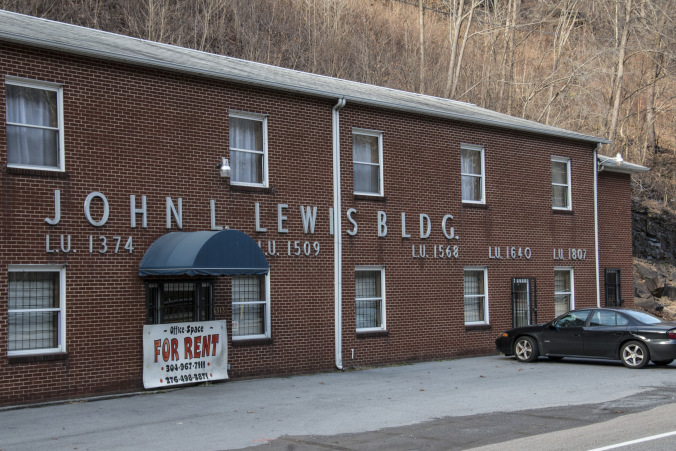
Without the Union…

By Nick Mullins - The Thoughtful Coal Miner, December 20, 2016

By the time I started my coal mining “career” in 2007, the union was all but gone in southwestern Virginia, eastern Kentucky, and southern West Virginia. I had been raised union and knew the benefits that came with it, but in its absence, I ended up joining thousands of other young men naive enough to believe we didn’t need a union. It  didn’t take long to realize how much control the coal companies had regained over all of our lives.

At one time, it seemed as though there were more union miners than non-union in central Appalachia. Throughout the mid-1970s and 80s, dozens of large union mining complexes (mines with attached coal preparation facilities and rail service) were operating in the region. These complexes employed thousands of men, and many women.

As I understood it, life was good for those who worked at the complexes. Miners made a union wage, had union benefits including guaranteed days off, voluntary overtime, excellent retirement and healthcare benefits, and worker’s rights that enhanced the safety culture at the mine. The sheer size of the complexes also gave the miner’s many amenities not found at smaller truck mines, including large “clean” and “dirty” locker rooms with heated floors, showering facilities, and even paved parking lots. But they weren’t to last. The seams that supported larger facilities were rapidly depleted as more mechanized forms of mining, such as long wall systems, were being implemented.

And then the coal markets busted.

West Virginia, “Identity Decline” and Why Democrats Must Not Look Away From the Rural Poor

Trump, Putin and the Pipelines to Nowhere

By Alex Steffin - Medium, December 15, 2016

You can’t understand what Trump’s doing to America without understanding the “Carbon Bubble”

If you’re an American, you’re likely misinformed about the most dire crisis in our world.

American journalists, pundits and media executives have largely convinced themselves that climate change is not a serious political issue, because they think the polls tell them that. A majority of American voters regularly tell pollsters they don’t think climate change is a critically important election issue, so therefore the media decides it must not be an important political issue at all.

Unfortunately, that conventional wisdom blinds us to both to the actual bedrock reality of this era, and to — as I see it — the defining aim of the in-coming Trump administration: delaying climate action.

Trump has surrounded himself with more oil industry and oil industry connected people than any president in history (even George W. Bush). You can’t understand what’s going on with Trump unless you understand the oil industry… and you can’t understand the oil industry without understanding climate change.

Understanding Climate Change

In case you’re just joining us here on Earth, we’re making the planet hotter. The science is incontrovertible that by burning fossil fuels, we’re changing the planet’s climate. Because the consequences worsen dramatically as we emit more climate pollution and the planet gets hotter, every nation on Earth agreed last year in Paris to hold that temperature rise to two degrees Celsius (2ºC).

This means we must limit the total amount of CO2 and other greenhouse pollution we put into the sky: we have to meet a “carbon budget.” To meet that budget, we have to radically cut greenhouse gas emissions — burning way less oil, coal and gas — in the next two decades, and set the global economy on a steep path to zero emissions.

Again, the American media has failed to convey the magnitude of the costs of unchecked global warming. Those costs are profound already, today, as the Arctic heatwave, Syrian civil war, bleaching of the Great Barrier Reef, worsening storms, droughts, wildfires and freak weather events all show. Those costs will only grow, and they will grow more dire, more quickly as the planet heats.

At the same time, the innovations we need to create zero-carbon prosperity are already here. From plummeting costs for solar, wind, electric vehicles and green buildings to better approaches to urban planning, agriculture and forestry, we already have the tools we need to start building a much more prosperous world, producing hosts of new companies and millions of jobs. Indeed, a giant building boom is what successful climate action looks like.

Because we have no real choice but to act — and, in fact, climate action will make most people not only safer, but better off — big changes are coming, far sooner than most Americans understand.

But some people totally understand: the ones who stand to lose money from these changes.

Pages

The Fine Print I:

Disclaimer: The views expressed on this site are not the official position of the IWW (or even the IWW’s EUC) unless otherwise indicated and do not necessarily represent the views of anyone but the author’s, nor should it be assumed that any of these authors automatically support the IWW or endorse any of its positions.

Further: the inclusion of a link on our site (other than the link to the main IWW site) does not imply endorsement by or an alliance with the IWW. These sites have been chosen by our members due to their perceived relevance to the IWW EUC and are included here for informational purposes only. If you have any suggestions or comments on any of the links included (or not included) above, please contact us.

The Fine Print II:

Fair Use Notice: The material on this site is provided for educational and informational purposes. It may contain copyrighted material the use of which has not always been specifically authorized by the copyright owner. It is being made available in an effort to advance the understanding of scientific, environmental, economic, social justice and human rights issues etc.

It is believed that this constitutes a 'fair use' of any such copyrighted material as provided for in section 107 of the US Copyright Law. In accordance with Title 17 U.S.C. Section 107, the material on this site is distributed without profit to those who have an interest in using the included information for research and educational purposes. If you wish to use copyrighted material from this site for purposes of your own that go beyond 'fair use', you must obtain permission from the copyright owner. The information on this site does not constitute legal or technical advice.