By Paul Arbair - Paul Arbair, June 12, 2017
 Donald Trump’s decision to withdraw the United States from the Paris Agreement on climate change has sparked a global uproar. Yet America’s reluctance to reduce its use of fossil fuels is, in fact, logical. Not only because of the U.S. president’s overt denial of man-made climate change, but also and more fundamentally because it reflects America’s historical essence and trajectory.
So he did it. Donald J. Trump, 45th president of the United States of America, finally announced his decision to withdraw his country from the Paris Agreement on climate change. According to the White House occupant, this agreement negotiated by the Obama administration was a ‘bad deal’ for America, undermining its competitiveness and jobs, costing millions to its taxpayers, imposing disproportionate and unfair restrictions on its carbon emissions, and weakening its sovereignty. This agreement, he said, “is less about the climate and more about other countries gaining a financial advantage over the United States”. It is “a massive redistribution of United States wealth to other countries”, and “the American family will suffer the consequences in the form of lost jobs and a very diminished quality of life.” Such a bad deal is unacceptable to a president who has pledged to ‘Make America Great Again’ and to put America and its workers first.
Obviously, Trump’s core supporters have cheered this momentous decision. The billionaire real estate mogul-turned-president, they say, has made good on a pledge he made during last year’s campaign, showing once again that he meant what he said. The rest of America, on the other hand, as well as much of the world, couldn’t be more outraged. By reneging on its commitment to help fight climate change alongside the international community, America is abdicating its claim to global leadership, many argue. By joining the group of countries that are not signed up to deal reached in the French capital in December 2015, a group that so far comprises only Nicaragua and Syria, it is even turning into a ‘rogue state’, some suggest. A state that rejects science, progress and enlightened values, choosing instead a one-way trip back to the ‘Dark Ages’. A state that cannot anymore be relied upon, as German Chancellor Angela Merkel put it just a few days ago, or even that represents a growing danger to the world. Sad!
In the U.S., Trump’s announcement has triggered a sharp reaction from cities, states and businesses, which have vowed to meet U.S. climate commitments regardless of what Washington says or does. More than 1,000 city mayors, state governors, college and university leaders, businesses, and investors signed a “We Are Still In” open letter to the international community, saying they are committed to delivering concrete carbon emissions reductions that will help meet America’s emissions pledge under the Paris Agreement. Billionaire and former New York City mayor Michael Bloomberg even promised to provide up to $15 million in funding that he says the United Nations will lose as a result of President Trump’s decision to pull out from the climate deal. Emblematic CEOs such as Tesla’s Elon Musk and Disney’s Robert Iger announced they would quit Trump advisory councils, and anti-Trump demonstrations have been held across the country.
Outside the U.S., the reaction has been no less virulent, and Donald Trump’s decision has been vehemently condemned across the international community. Emmanuel Macron, the young and newly elected French president, rebuked his U.S. counterpart in a televised speech – the first speech ever given in English by a French President from the Elysée Palace – condemning his decision as a historic “mistake” and issuing a call to “make our planet great again“. This call, a direct jibe at Trump’s ‘Make America Great Again’ election slogan, went immediately viral on social media… The leaders of the European Union and China, backed by India and Japan, announced they would fully implement the Paris Agreement despite Washington’s withdrawal. The deal, they insisted, is not up for renegotiation, despite what the U.S. president might say. Trump’s decision, many observers suggested, could actually trigger a wide-ranging geopolitical shake-up that would isolate the U.S., or even make it a ‘global pariah’, and hand China a chance for global leadership.
Beyond America’s geopolitical standing and diplomatic reputation, the reactions to Donald Trump’s decision have of course focused on what it may mean for the planet’s climate. A number of observers have suggested that the American president might actually be doing the world and global climate a favour: outside of the Paris deal, the U.S. will not be in a position to block progress as it has done so many times in the past on climate negotiations, and the rest of the world will therefore be able to step up its efforts. The ‘climate revolution’ they say, is already unstoppable anyway, including in the U.S. The stunning growth of renewable energies, fuelled by rapid technological progress and by their falling costs, will ensure that the ‘decarbonisation’ of the global economy accelerates in the coming years, whatever Mr. Trump may say or do.
Most analysts and climate activists, however, consider that the U.S. withdrawal will severely undermine the international community’s fight against climate change. The disengagement of the world’s only superpower and current second largest CO2 emitter – and by far the biggest carbon polluter in history – might in fact weaken the Paris Agreement in many ways. Not only because it may reduce incentives for some countries that only reluctantly signed up to the deal to meet their voluntary emissions reductions pledges, but also because it may slow down the pace of technological progress needed to enable the transition to ‘clean energy’. The U.S. indeed remains the world’s technological powerhouse, and a lot of the ‘solutions’ required to accelerate the deployment and use of renewable energies (e.g. concerning electricity storage or carbon capture) are expected to come from its research labs and tech companies. Without sufficient political support and government funding, these solutions may take longer to be developed, or even never emerge. In addition, America’s withdrawal will also undermine the Green Climate Fund, which aims to help developing countries reduce emissions and adapt to the changes already set in motion by past emissions, and to which the U.S. was the largest contributor in absolute terms. Trump’s decision, hence, appears to many as an irresponsible move, a ‘moral disgrace’ or even a ‘crime against humanity’. Future generations will reap catastrophes and conflicts, and “people will die” because of this reckless withdrawal, some have warned.






 Having survived the financial meltdown of 2008, corporate capitalism and the financial masters of the universe have made a triumphant return to their "business as usual" approach: They are now savoring a new era of wealth, even as the rest of the population continues to struggle with income stagnation, job insecurity and unemployment.
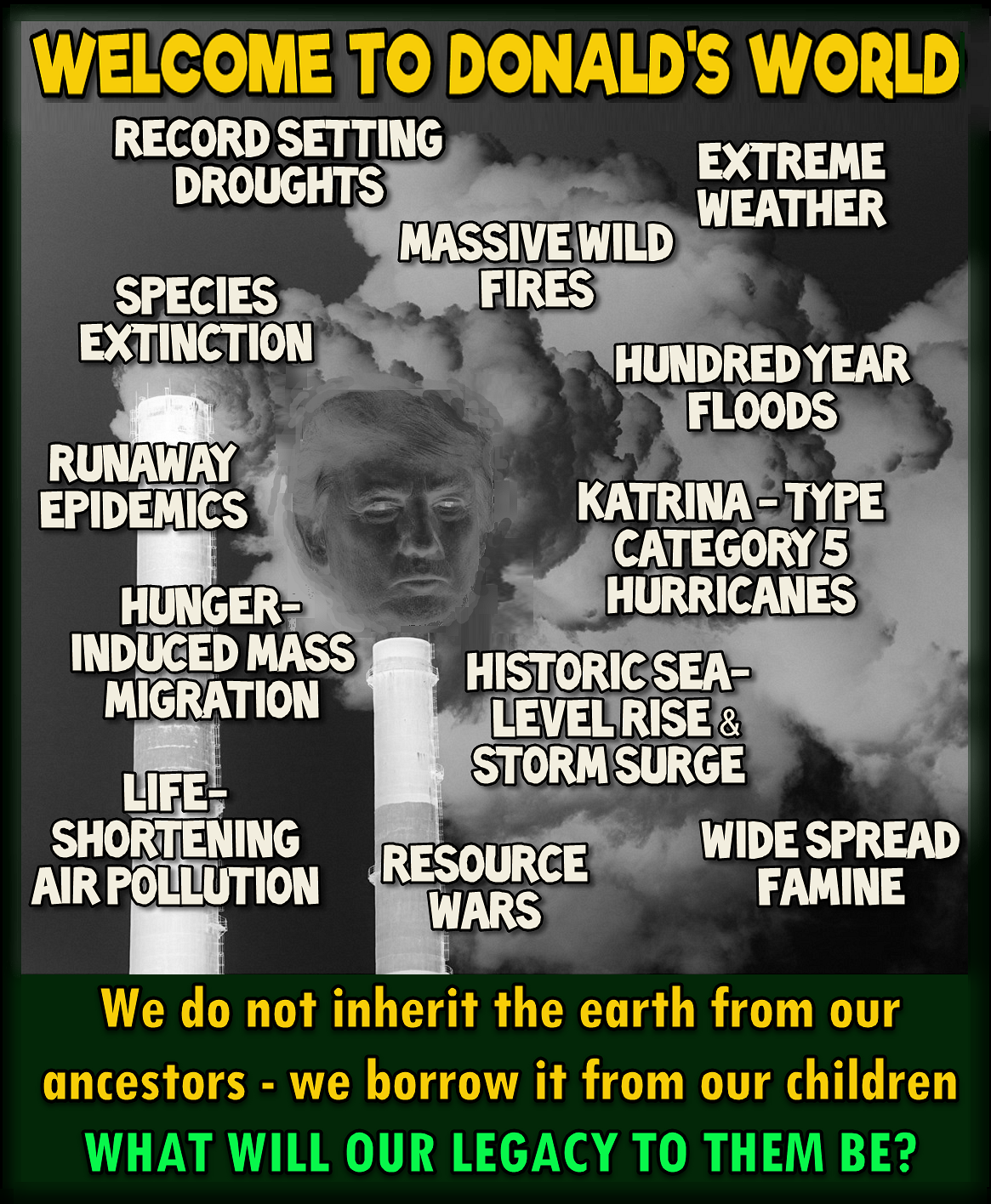 The reactions to President Donald J Trump's reckless and unstrategic decision to pull the US out of the Paris Agreement are numerous and range from condemnation to disdianful. We present an extensive but far from exhaustive collection here:
 The United States has denounced the Paris climate agreement, cancelled all the measures decided by the United States in application of this agreement and withdrew from the Green Fund for the Climate. These are the major decisions that Donald Trump finally announced, on Thursday, June 1, after a long period of suspense.
 The world surely is approaching a danger point when the abrogation of an inadequate agreement is cursed as a disaster.
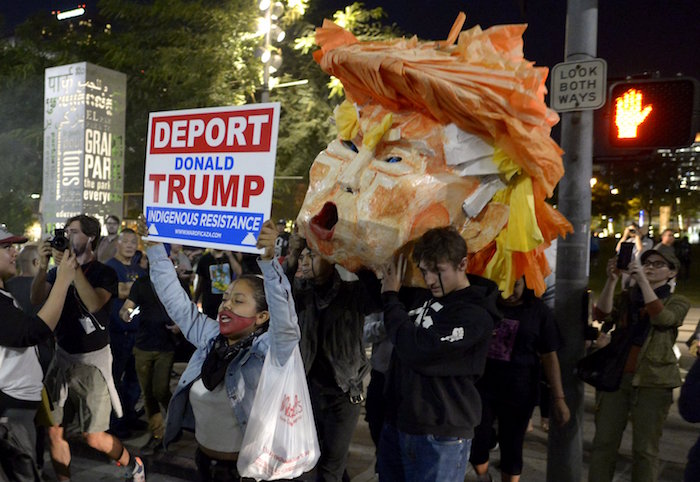 “We’re getting out!” President Trump declared before the press and a knot of governmental officials who had gathered in the White House Rose Garden on June 1. “In order to fulfill my solemn duty to protect America and its citizens, the United States will withdraw from the Paris Climate Accord.”
 President Donald Trump’s decision to withdraw from the Paris climate agreement follows the path of previous presidents who have undermined international climate agreements. We disagree with Trump but it is important to understand his actions in the context of the history of the United States regarding previous climate agreements. Once again, the political problems in the US are bigger than Trump. His action brings greater clarity to the inability of the US government to confront the climate crisis and clarifies the tasks of people seeking smart climate policy.
 We live in times where there seems to be a crisis in just about everything – from the so called financial sector, through the contemporary mass migratory processes, to the severe corrosion of the social fabric. The ruling elites, devoted to the dominant doctrine of economism, advocate for the priority that should be given to the economy, many activists struggle for the humane treatment of migrants, while growing numbers of new age mysticists call for escapism and individual salvation.
 With Trump’s decision to formally withdraw from the Paris Agreement, he has put an end to months of apparent indecision. This withdrawal does not dissolve the agreement, which still includes nearly every nation on the planet, but it is hard to imagine how an already weak agreement can be expected to slow—not to mention reverse—greenhouse gas emissions without the participation of the United States. Seeing this decision as anything other than a nail in the coffin of the global climate regime is nothing but wishful thinking.
 The global warming situation is absolutely crazy.
  This site is not the official webpage of the Industrial Workers of the World.