






You are here
global warming
 The farm crisis is real, as is the climate crisis. Left unchecked, the climate crisis will dramatically deepen the income crisis on Canada’s farms as farmers struggle to deal with continued warming, more intense storms, and increasingly unpredictable weather. It is clear that climate change represents a major challenge to agriculture, but it also represents an opportunity.
 The phenomenon of heat stress refers to heat received in excess of that which the body can tolerate without physiological impairment. It is one of the major consequences of global warming. By 2030, the equivalent of more than 2 per cent of total working hours worldwide is projected to be lost every year, either because it is too hot to work or because workers have to work at a slower pace. This report shows the impact of heat stress on productivity and decent work for virtually all countries in the world. It presents innovative solutions based on social dialogue to promote occupational safety and health for the most vulnerable groups of workers.
 Courtesy Will Steffen et al.
  Sadly, we are becoming used to seeing headlines about the costs of fighting climate change-related wildfires, hurricanes, and floods – most recently, the record wildfire season of 2017. These news reports usually discuss loss in terms of the value of insurance claims – for example, “
 Discussion document submitted to Labor for Our Revolution (LFOR):
 Review of: Christophe Bonneuil and Jean-Baptiste Fressoz, The Shock of the Anthropocene: the Earth, history and us (London: Verso, 2017)
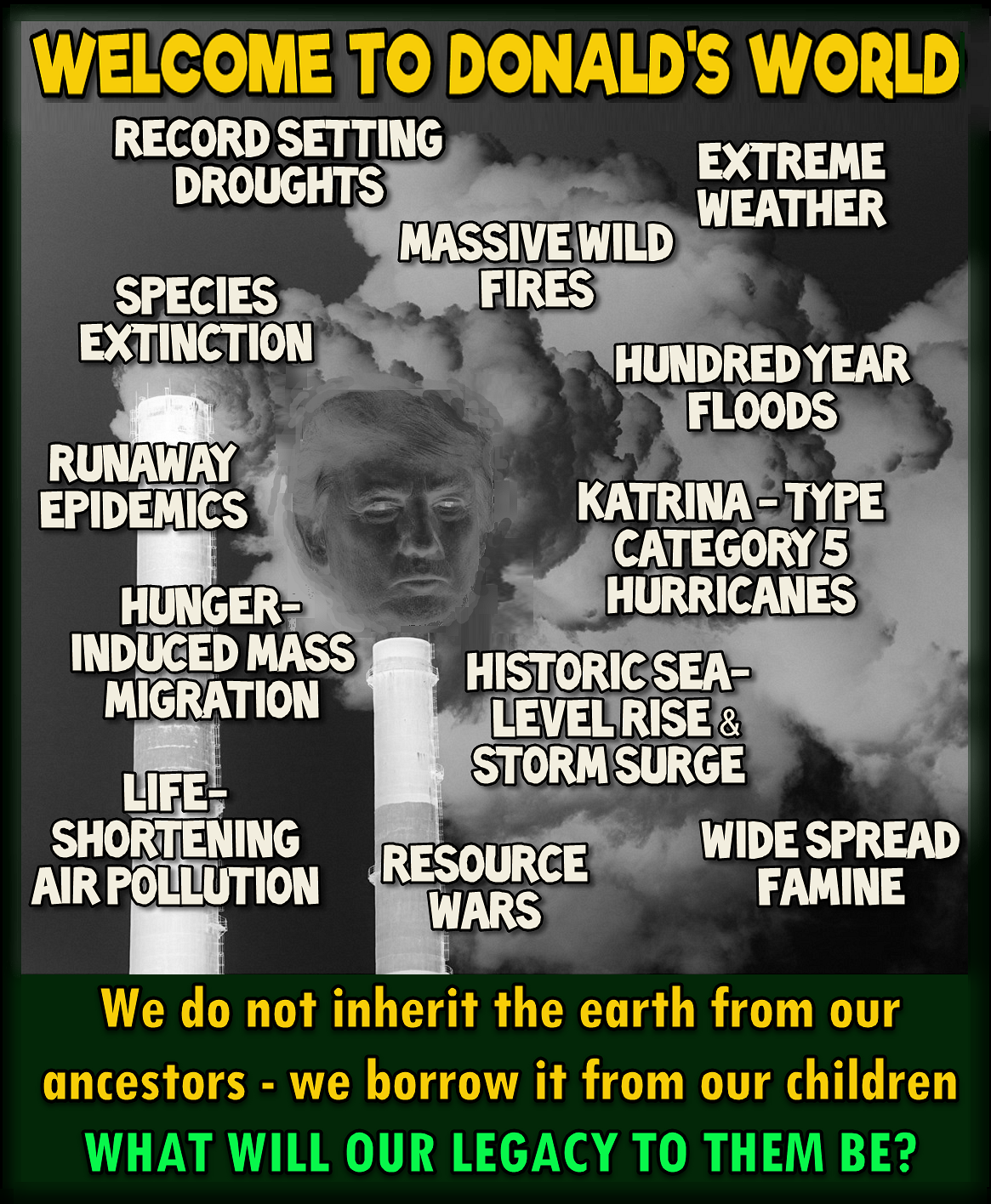 The Trump administration’s plans to rebuild infrastructure in the United States have been leaked, and it appears to be as bad as feared. At least three-quarters of intended funding will go toward corporate subsidies, not actual projects. It is possible that no funding will go directly toward projects.
The Fine Print I:
Disclaimer: The views expressed on this site are not the official position of the IWW (or even the IWW’s EUC) unless otherwise indicated and do not necessarily represent the views of anyone but the author’s, nor should it be assumed that any of these authors automatically support the IWW or endorse any of its positions.
Further: the inclusion of a link on our site (other than the link to the main IWW site) does not imply endorsement by or an alliance with the IWW. These sites have been chosen by our members due to their perceived relevance to the IWW EUC and are included here for informational purposes only. If you have any suggestions or comments on any of the links included (or not included) above, please contact us.
The Fine Print II:
Fair Use Notice: The material on this site is provided for educational and informational purposes. It may contain copyrighted material the use of which has not always been specifically authorized by the copyright owner. It is being made available in an effort to advance the understanding of scientific, environmental, economic, social justice and human rights issues etc.
It is believed that this constitutes a 'fair use' of any such copyrighted material as provided for in section 107 of the US Copyright Law. In accordance with Title 17 U.S.C. Section 107, the material on this site is distributed without profit to those who have an interest in using the included information for research and educational purposes. If you wish to use copyrighted material from this site for purposes of your own that go beyond 'fair use', you must obtain permission from the copyright owner. The information on this site does not constitute legal or technical advice.
 This site is not the official webpage of the Industrial Workers of the World.