By Lois Ross - Rabble.Ca, January 24, 2017
 Small farmers face pretty much the same issues no matter what part of the world they happen to till -- access to land, seed, financing and more.
I learned that lesson while rolling through the hills of northern Nicaragua, acting as an interpreter for a brigade of Canadian farmers hoping to transfer their skills to support local farmers. At that time mechanization for many small farmers in Nicaragua seemed to be the main impediment. But thinking back to the exchanges I translated, the lack of tractors, chemicals and artificial fertilizers presented challenges but also possibilities to explore.
How do you grow food in a world where resources are limited? For small farmers in developing regions, resources have always been limited. These Canadian and Nicaraguan farmers wanted to learn from each other, and the challenges each group faced related to producing food, farming methods, and taking care of the soil and their communities. The question was how best to do this in a global system based on profit and not on stewardship. At the end of the brigade's stay, it would be fair to say that the Canadians learned as much if not more than their Nicaraguan counterparts. Both realized that the problems facing agriculture were much larger than farmers themselves. Still, they persevered.
These progressive farmers knew that agriculture could be part of the solution -- for community, health, food security and much more.
Agriculture and climate change
Despite the attempts of certain farm groups, for many years agricultural practices in so-called developed nations have been environmentally destructive. We have been told that the industrial model of agriculture is necessary to ensure production and food security. It's an old story, one that has created a false reality. And the North has promoted that false reality. Aid programs targetting developing nations have long tried to transfer the industrialized model to smaller, poorer countries. Industrial agriculture has been supported as the only model that is successful. The costs have been huge.
The time has come to look at how agriculture might actually be a huge part of climate change mitigation.
Agriculture can reduce greenhouse gas emissions, but it is going to mean putting stewardship and food production ahead of profit and expansion. It is possible.
In the '70s and '80s we were told that organic farming was impossible, that crops would be lost to weeds, that a farmer would go bankrupt, that people would end up starving -- that organic farming was just not possible. Now huge corporations are trying to sell us organic food produced on the other side of the planet. Parts of the organic model have been conveniently skipped -- the part about local production for social, economic and environmental reasons. Essentially the agroecological principles of organic farming are removed when it becomes based on imported food and corporate farming. These are the same practices that increase greenhouse gas emissions as opposed to reducing them.
These days terms like carbon sequestration, biodynamic agriculture, Demeter farming, holistic management, regenerative agriculture, perennial polyculture, and permaculture are entering the ag lexicon -- phrases that are all related to practices consistent with agroecology that link agriculture and climate change.






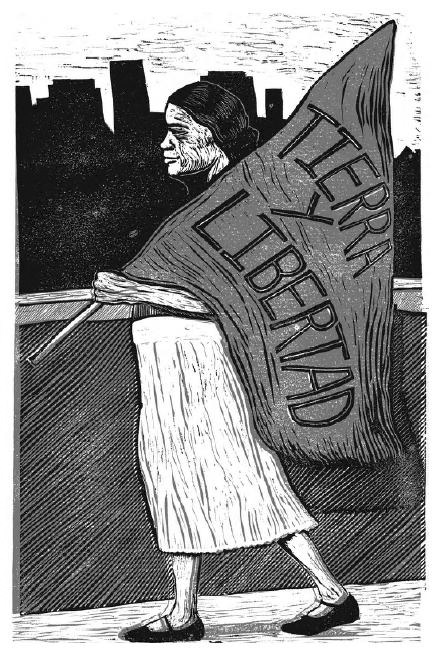 Washington’s long-term plan has been to restructure indigenous agriculture across the world and tie it to an international system of trade based on export-oriented mono-cropping, commodity production for the international market and indebtedness to international financial institutions (IMF/World Bank).
 Based on the video Together we can cool the planet! co-produced by La Vía Campesina and GRAIN in 2015, we have created a comic book to support training activities of social movements and civil society organisations around climate change. This comic book looks at how the industrial food system impacts our climate and also explains what we can do to change course and start cooling the planet.
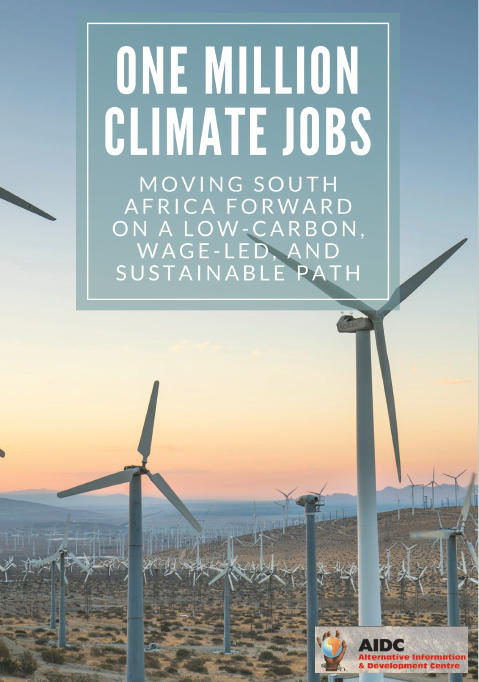 The One Million Climate Jobs Campaign is an alliance of labour, social movements and popular organisations in South Africa that is campaigning for the creation of a million climate jobs as part of a collective approach to the crisis of unemployment and climate change. The Campaign was launched in 2011 and since then has been mobilising thousands of South Africans around real solutions to slowing down climate change, protecting the natural environment, improving the quality of life for all and moving towards a sustainable development path. Climate change will exacerbate inequality and poverty because it reduces access to food, water, energy and housing. Thus it is vital that social justice struggles around these issues incorporate struggles around climate change.
 ABSTRACT:
 For over three years, the workers at
  October 29: Day of the Campesino Seed
 THE HAGUE – Navdanya, the organization founded and led by Vandana Shiva, is co organizing, along with multiple civil society organizations, the Monsanto Tribunal and People’s Assembly to take place at the Hague from 14 to 16 October 2016. The Monsanto Tribunal will hold Monsanto accountable for their crimes against humanity, human rights violations and ecocide, in tandem with the People’s Assembly, a gathering of leading movements and activists working to defend our ecosystem and food sovereignty, to lay out the effects of industrial agrochemicals on our lives, our soils, our atmosphere and climate. Over 800 organizations from around the world are supporting and participating in this process while over 100 people’s assemblies and tribunals are being held across the world.
 US agriculture giant Monsanto has agreed to a US$66 billion takeover by German chemical and pharmaceutical company Bayer. If the deal is approved by international regulators, Bayer-Monsanto will become the world’s biggest agribusiness, controlling 29 percent of the global seed market and 24 percent of pesticides.
 This site is not the official webpage of the Industrial Workers of the World.