






You are here
anarcho-syndicalism
 James Rowan began organizing in the Lumber Industry for the IWW as early as 1916, witnessed the Everett Massacre, and became involved in the great IWW LWIU organizing campaigns from 1917-23. During this time he became to be known as the "Jesus of the Lumberjacks".
 From the series The Question of Decentralization [part 6 out of 7]
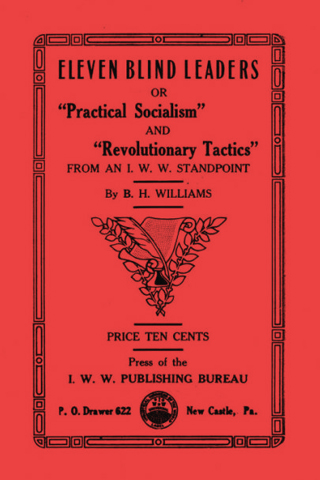 This is a pamphlet from the IWW's official publishing bureau in 1910 about elections, the state, cooperatives, and the IWW. It begins as a polemic against 11 socialist thinkers of the time in the US, and makes arguments against coops as a strategy, labor legislation, and the idea that the state can be used to create a socialist society in favor of revolution by industrial unions.
 The Fine Print I:
Disclaimer: The views expressed on this site are not the official position of the IWW (or even the IWW’s EUC) unless otherwise indicated and do not necessarily represent the views of anyone but the author’s, nor should it be assumed that any of these authors automatically support the IWW or endorse any of its positions.
Further: the inclusion of a link on our site (other than the link to the main IWW site) does not imply endorsement by or an alliance with the IWW. These sites have been chosen by our members due to their perceived relevance to the IWW EUC and are included here for informational purposes only. If you have any suggestions or comments on any of the links included (or not included) above, please contact us.
The Fine Print II:
Fair Use Notice: The material on this site is provided for educational and informational purposes. It may contain copyrighted material the use of which has not always been specifically authorized by the copyright owner. It is being made available in an effort to advance the understanding of scientific, environmental, economic, social justice and human rights issues etc.
It is believed that this constitutes a 'fair use' of any such copyrighted material as provided for in section 107 of the US Copyright Law. In accordance with Title 17 U.S.C. Section 107, the material on this site is distributed without profit to those who have an interest in using the included information for research and educational purposes. If you wish to use copyrighted material from this site for purposes of your own that go beyond 'fair use', you must obtain permission from the copyright owner. The information on this site does not constitute legal or technical advice.
 This site is not the official webpage of the Industrial Workers of the World.