You are here

ecosocialism

Time to Pull the Plugs

By Andreas Malm - ROARMag, December 2017

Our best hope now is an immediate return to the flow. CO2 emissions have to be brought close to zero: some sources of energy that do not produce any emissions bathe the Earth in an untapped glow. The sun strikes the planet with more energy in a single hour than humans consume in a year. Put differently, the rate at which the Earth intercepts sunlight is nearly 10,000 times greater than the entire energy flux humans currently muster — a purely theoretical potential, of course, but even if unsuitable locations are excluded, there remains a flow of solar energy a thousand times larger than the annual consumption of the stock of fossil fuels.

The flow of wind alone can also power the world. It has nothing like the overwhelming capacity of direct solar radiation, but estimates of the technically available supply range from one to twenty-four times total current energy demand. Other renewable sources — geothermal, tidal, wave, water — can make significant contributions, but fall short of the promises of solar and wind. If running water constituted the main stream of the flow before the fossil economy, light and air may do so after it.

On the 800th Anniversary of the Charter of the Forest

By Peter Linebaugh - CounterPunch, November 20, 2017

A Keynote Address, Delivered in the State Rooms at the House of Commons, 7 November 2017.

Two winds have propelled me here to you, to this House of Commons.

One wind, a hurricane and diabalo, brought flood and fire threatening the destruction of petrochemial civilization, call it capitalism. Homelessness or prison accompany the wind from, Detroit, Michigan, to Houston, Texas, from Puerto Rico in the Caribbean to northern California at the Pacific edge.

A second gentler, softer wind, a zephyr, has renewed my spirit from the Lacandón jungle in Chiapas where the Zapatistas have vowed to protect the forest and reclaim the land, or from the Great Plains of the American continent where pipe lines of oil and gas endanger the pollution of land and the rivers.  Encampments of indigenous people and their allies by prayer and by protest have become, in their words, “water protectors.”

Then, day before yesterday on Guy Fawkes Day, with some merry companio

An old oak tree in Sherwood Forest gave Robin Hood a safe house.  He told Little John that he and his merry companions (here I quote the 14th century Geste of Robin Hood) shall not rob the “husbonde that tylleth with his plough” or the “gode yeman that walketh by grene wode shawe.”ns of the indigenous people of these islands, I visited Sherwood Forest and Laxton parish in Nottinghamshire.

Laxton with its common and open fields, you know, is the oldest surviving system of agriculture based on the commons, similar to the ejido, or commons, of Mexican villages.  One of its commoners, Stuart Rose by name, took us ‘round.  By curious historical coincidence Laxton lent its name to the town of Lexington in Massachusetts where in 1775 the “shot was fired that was heard around the world.”

This was day before yesterday and since then revolutionary thoughts perforce have come to mind as I have journied at last to you here in this House.  Actually, your House provided me, a stranger, with a kind of home, because it was in its public gallery that my mother and father visited regularly in the years between 1947 and 1953 to listen to you.  Through the blinding pea soup fogs and in the pinching system of food rationing they were nourished by crystal clear words, both soft and gentle – that zephyr again – of Aneurin Bevan on behalf of housing and health care for all.  I was old enough to feel their passions and to identify with the protagonist of these words, the common people, because, as I was informed by my upper class school chums, as an American I, too, was “common.”

So, propelled by these winds of disaster and memories of defense I have become one of the scholarly vectors of a planetary discussion of the commons that began before 6 November 1217 when the Charter of the Forest was sealed and has continued ever since.  We do that work again for commons of housing and health care for all as we commemorate the Charter of the Forest, the little companion to the bigger, Magna Carta.

“It will be noticed how the word ‘common’ and its derivatives … appear and re-appear like a theme throughout the centuries,” wrote Edgell Rickword in The Handbook of Freedom, a book found in the kit of the boys going off to war in 1939.  “It was for the once vast common lands that the peasants took up arms; it was as the ‘true commons’ that they spoke of themselves when they assembled, and it was the aspiration of men not corrupted by petty proprietorship ‘that all things should be common.’”

William Blake said that “the whole duty of man is art and all things common.”

Climate Summit’s Solution to Global Warming: More Talking

By Pete Dolack - CounterPunch, November 24, 2017

The world’s governments got together in Germany over the past two weeks to discuss global warming, and as a result, they, well, talked. And issued some nice press releases.

Discussing an existential threat to the environment, and all who are dependent on it, certainly is better than not discussing it. Agreeing to do something about it is also good, as is reiterating that something will be done.

None of the above, however, should be confused with implementing, and mandating, measures that would reverse global warming and begin to deal concretely with the wrenching changes necessary to avoid flooded cities, a climate going out of control, mass species die-offs and the other rather serious problems that have only begun to manifest themselves in an already warming world.

The 23rd Conference of the Parties to the United Nations Framework Convention on Climate Change (UNFCCC), or COP23, wrapped up on November 17 in Bonn. Fiji was actually the presiding country, but the conference was held in Bonn because Fiji was not seen as able to accommodate the 25,000 people expected to attend. The formal hosting by Fiji, as a small Pacific island country, was symbolic of a wish to highlight the problems of low-lying countries, but that this was merely symbolic was perhaps most fitting of all.

These conferences have been held yearly since the UNFCCC was adopted in 1992 at the Rio Earth Summit. Two years ago, at COP21 in Paris, the world’s governments negotiated the Paris Accord, committing to specific targets for reducing greenhouse-gas emissions. Although capping global warming at 2 degrees Celsius (as measured from the 19th century as the Industrial Revolution took off around the world) has been considered the outer limit of “safe” warming, a goal of halting global warming at 1.5 degrees was adopted at Paris. The catch here is that the goals adopted are far from the strength necessary to achieve the 2-degree goals, much less 1.5 degrees.

Before we explore that contradiction, let’s take a brief look at the self-congratulatory statements issued at the Bonn conference’s conclusion.

Nature Lovers May #OptOutside on Black Friday, but They Consume Resources Year-Round

By Matthew Klingle - Common Dreams, November 26, 2017

While shoppers scramble for Black Friday bargains this year, outdoor retailer REI is closing its 154 U.S. stores. This is the third consecutive year that the Seattle-based company will ignore the frenzy that traditionally marks the start of the holiday shopping season. REI’s nearly 12,000 employees will get a paid holiday and will not process any online orders.

Instead, REI exhorts workers and customers to get outside with family and friends. #OptOutside, a Twitter hashtag that REI coined to promote its anti-Black Friday, has been widely adopted by outdoor lovers, as well as environmental groups and businesses that partner with REI to promote this event.

The campaign has drawn international praise from the advertising industry and has become a yearly phenomenon. State parks from Oregon to Indiana, often in concert with local nonprofits, offer free admission and other perks on Black Friday. This year REI is launching an “experiential search engine” where users can share photos and video of their favorite outdoor destinations, augmented with information such as directions to trailheads or events celebrating our nation’s public lands.

Many observers have praised REI for mixing business savvy with crunchy acumen. But how did REI and other outdoor companies align themselves with conservation? How do they square selling expensive apparel and promoting carbon-spewing tourism with their customers’ love for the outdoors? And how radical is “Green Friday,” especially if the OptOutsiders are carrying backpacks stuffed with the latest gear made from precious petroleum, rare metals and pricey fibers?

The answer is that shoppers have long expressed their affection for nature in what they buy. Consumption and environmental concerns, past and present, fit together as snugly as a foot in a beloved hiking boot.

Climate Crisis and Managed Deindustrialization: Debating Alternatives to Ecological Collapse

By Richard Smith - Common Dreams, November 21, 2017

On Monday November 13th, climate scientists from the Tyndal center for Climate Change Research at the University of East Anglia presented their carbon emissions research to the UN climate negotiators at Bonn Germany. The data were shocking: After three years in which human-caused emissions appeared to be leveling off, global CO2 emissions are now rising again to record levels in 2017. Global emissions are on course rise this year by 2%. China’s emissions are projected to rise by 3.5%. These may sound like small numbers but to climate scientists these are huge because if we’re to keep global temperatures from rising by more than 2 degrees Centigrade, those emissions need to be falling sharply, not just leveling off, let alone rising. Colorado State University climate scientist Scott Denning said “We’ve got to cut emissions by half in the next decade, and by half again in the next two decades, as well. The fact that it’s going up is like a red flag flashing light on the dashboard.”

"The problem is, we live in an economy built on perpetual growth but we on a finite planet with limited resources and sinks."

The same day, the journal BioScience published a letter by more than 15,000 scientists from around the world that looks back at the human response to climate change and other environmental challenges in the 25 years since another large group of scientists published the 1992 “World Scientists Warning to Humanity.”  

This time the scientists wrote in part: "Since 1992, with the exception of stabilizing the stratospheric ozone layer, humanity has failed to make sufficient progress in generally solving these foreseen environmental challenges, and alarmingly, most of them are getting far worse." If we don’t take immediate steps, “soon it will be too late to shift course away from our failing trajectory, and time is running out. " The goal of the letter, said William Ripple, distinguished professor in the college of Forestry at Oregon State University, and lead author of the new warning, is to "ignite a wide-spread public debate about the global environment and climate."

Ripple is right. We need a conversation, a global public debate about the global environment and how to save the planet, and we need to begin it right now.

Scientists Issue Dire Warning on Climate Change & Key Researcher Urges “Changes in How We Live”

Kevin Anderson interviewed by Amy Goodman - Democracy Now!, November 15, 2017

AMY GOODMAN: This is Democracy Now!, democracynow.org. I’m Amy Goodman. We’re broadcasting live from the U.N. climate summit in Bonn, Germany. The International Energy Agency predicts U.S. oil production is expected to grow an unparalleled rate in the coming years, even as the majority of scientists worldwide are saying countries need to cut down on fossil fuel extraction, not accelerate it. Meanwhile, a group of 15,000 scientists have come together to issue a dire “second notice” to humanity, 25 years after a group of scientists issued the “first notice” warning the world about climate change.

This comes as a major new study says European governments have drastically underestimated the methane emissions from gas. The report finds European Union nations can burn gas and other fossil fuels at the current rate for only nine more years before these countries will have exhausted their share of the Earth’s remaining carbon budget necessary to keep temperature rise below 2 degrees Celsius, or 3.6 degrees Fahrenheit.

Well, we’re joined now by the co-author of that report, one of the world’s leading climate scientists. He traveled here from England by train, refuses to fly because of its massive carbon footprint. Kevin Anderson is deputy director of the Tyndall Centre for Climate Change Research and professor of energy and climate change at the University of Manchester in Britain, co-author of the major new report entitled “Can the Climate Afford Europe’s Gas Addiction?”

Kevin Anderson, welcome back to Democracy Now! It’s great to have you with us. So, there’s so much to talk about. First, you took a train here, not a plane?

KEVIN ANDERSON: Yes. I always try and travel either by train or by ship, often by container ship. It’s not that I think the emissions necessarily from me or any other individual are, in themselves, really important. But I think it is really necessary, for those of us who judge that climate change is a huge and serious issue, that we demonstrate that in our own lives, and that we don’t just demonstrate it in what we do, but you try and push that agenda more widely, amongst our own colleagues, with our own universities, and then, of course, hopefully, eventually, that governments pick these things up and then scale up policies to drive this behavioral change at a national and then, hopefully, a global level.

AMY GOODMAN: You have coined the term “the climate glitterati.” What do you mean?

KEVIN ANDERSON: I think there have been—for many years, there have been people, you know, the great and the good, in the climate world. And they have certainly tried very hard to address the issue of climate change, though I think, with the latest data, we can see that emissions are going up, even this year, in 2017. So, fundamentally, they and the rest of us have actually failed in delivering what we expected to or what we hoped for.

But this particular group, I think, have done remarkably well out of the climate change world, if you like, out of all of these, the COPs or negotiations, the engagement with policymakers, the trips to Davos and so forth. And I think, in doing that, in being part of the status quo, they have actually misunderstood that a significant part of the problem when it comes to climate change is making changes in how we live our lives today, particularly those of us who are the very high emitters. About 50 percent of global emission has just come from about 10 percent of the global population. And the climate glitterati are quite clearly—and I include myself there—are in that particular group. And we have to demonstrate leadership in what we do. And I think if people are going to take our very careful analysis seriously, then we have to lend that analysis credibility by demonstrating that we are adjusting our own lives accordingly.

Abrupt Climate Justice

By John Foran - Resilience, November 16, 2017

Three of the most intense hurricanes ever recorded just ripped through Puerto Rico and the southern US – within weeks of each other! Ash rained from the sky in Seattle and Portland for weeks. Record monsoons swept through Asia. Parts of Sierra Leone and Niger are underwater. San Francisco recorded its hottest day ever and Europe endured a triple-digit heat wave they called “Diablo.” The fucking devil is here man, and its name is climate change. – Wendy & Jesse & Hayley & Teresa, “Face Down Climate Change,” Slingshot issue 125 (Autumn 2017)

I recently attended a talk by Guy McPherson, generally acknowledged as the doyen –some consider him the “superhero” – of the abrupt climate change [ACC] thesis [note to readers:  I understand that Guy McPherson can be a “polarizing” figure for some in the Resilience community; I ask only that you read my essay with the usual care, and stay focused on the nuances of my argument!).  I only came across this debate because I met – to my great good fortune – Shanelle LeFage, a millennial expert on it, and have subsequently followed her leads into the literature, discussed below.  As I learned more, I began to realize something that I had always intimated:  the science is grimmer than any of us know…

This has important implications for how those of us in the global climate justice movement approach our work, that it’s high time we tease out and engage with.

We need to overhaul our economy to meet the challenges of the 2020s

By Mathew Lawrence - Red Pepper, November 16, 2017

British capitalism is deeply dysfunctional. We have the richest region in Europe – inner London – but most British regions are now poorer than the European average. The UK’s productivity performance has been abject for a decade. We are in the middle of the longest stagnation in earnings for 150 years. Young people today are set to be poorer than their parents and poverty rates are rising. The environmental impacts of our economy are damaging and unsustainable. In short, while the UK retains significant endowments and capabilities, our economic model is failing too many people and needs radical reform.

The case for change is compounded by the challenges confronting the country in the decades ahead. Brexit is the most obvious disruptive force, and whatever relationship emerges with the EU, it is bound to have critical implications for our future prosperity.   Yet even as the UK negotiates its new relationship with Europe, an accelerating wave of economic, social and technological change will reshape the country, in often quite radical ways.  Brexit then is only the firing gun on a wider decade of disruption.  Four trends stand out that will shape the course of the 2020s: technological transformation, demographic change, the evolution of globalisation, and growing ecological crisis.  

First, ongoing technological change has the potential to reshape the economy, driving economic, social and political realignments. The accelerating capability of AI and robotics is likely to shrink the areas in which humans have comparative advantages over machines. This does not mean a post-human economy is imminent. Indeed, given the UK’s woeful performance on investment and productivity, it is the relative absence of robots that is the more obvious concern on current trends. Yet the increasing capability of machines is likely to reshape how we work. The greater risk is then not mass technologically-induced unemployment but a paradox of plenty, a world in which we are richer in aggregate but poorer in average, as the gains of automation flow disproportionately to the highly-skilled and capital grows its share of national income at the expense of labour. It is a future in which who owns the robots comes to own the world.  The continued rise of digital platform monopolies – the dominant organisational form of contemporary capitalism – is likely to further concentrate economic gains.

Crucially, the machine age will be human shaped. The pace and distributional effect of automation is driven by a series of factors that public policy profoundly shapes.  The technical capacity to automate is only one. The relative cost of labour and capital, the costs of technological adoption relative to the benefits, the ethical and regulatory norms governing the use of technology all impact on whether roles are actually automated and to what effect. The impact of technologies, in other word, is not a directionless, impersonal phenomenon but rather one embedded and shaped by our collective institutions, cultures, and politics. New models ownership of technologies, data and equity is therefore a fruitful avenue to explore to ensure the machine age is one where abundance is matched with justice.

Climate Crisis and Managed Deindustrialization: Debating Alternatives to Ecological Collapse

By Richard Smith - Common Dreams, November 21, 2017

On Monday November 13th, climate scientists from the Tyndal center for Climate Change Research at the University of East Anglia presented their carbon emissions research to the UN climate negotiators at Bonn Germany. The data were shocking: After three years in which human-caused emissions appeared to be leveling off, global CO2 emissions are now rising again to record levels in 2017. Global emissions are on course rise this year by 2%. China’s emissions are projected to rise by 3.5%. These may sound like small numbers but to climate scientists these are huge because if we’re to keep global temperatures from rising by more than 2 degrees Centigrade, those emissions need to be falling sharply, not just leveling off, let alone rising. Colorado State University climate scientist Scott Denning said “We’ve got to cut emissions by half in the next decade, and by half again in the next two decades, as well. The fact that it’s going up is like a red flag flashing light on the dashboard.”

"The problem is, we live in an economy built on perpetual growth but we on a finite planet with limited resources and sinks."

The same day, the journal BioScience published a letter by more than 15,000 scientists from around the world that looks back at the human response to climate change and other environmental challenges in the 25 years since another large group of scientists published the 1992 “World Scientists Warning to Humanity.”  

This time the scientists wrote in part: "Since 1992, with the exception of stabilizing the stratospheric ozone layer, humanity has failed to make sufficient progress in generally solving these foreseen environmental challenges, and alarmingly, most of them are getting far worse." If we don’t take immediate steps, “soon it will be too late to shift course away from our failing trajectory, and time is running out. " The goal of the letter, said William Ripple, distinguished professor in the college of Forestry at Oregon State University, and lead author of the new warning, is to "ignite a wide-spread public debate about the global environment and climate."

Ripple is right. We need a conversation, a global public debate about the global environment and how to save the planet, and we need to begin it right now.

On the 800th Anniversary of the Charter of the Forest

By Peter Linebaugh - CounterPunch, November 20, 2017

A Keynote Address, Delivered in the State Rooms at the House of Commons, 7 November 2017.
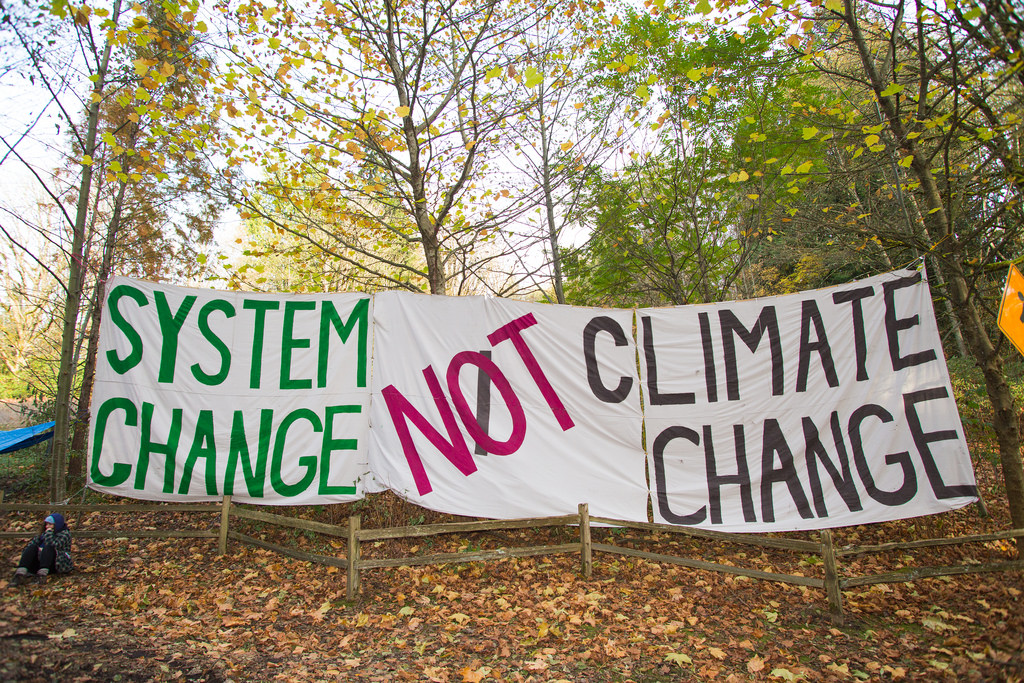
Two winds have propelled me here to you, to this House of Commons.

One wind, a hurricane and diabalo, brought flood and fire threatening the destruction of petrochemial civilization, call it capitalism. Homelessness or prison accompany the wind from, Detroit, Michigan, to Houston, Texas, from Puerto Rico in the Caribbean to northern California at the Pacific edge.

A second gentler, softer wind, a zephyr, has renewed my spirit from the Lacandón jungle in Chiapas where the Zapatistas have vowed to protect the forest and reclaim the land, or from the Great Plains of the American continent where pipe lines of oil and gas endanger the pollution of land and the rivers.  Encampments of indigenous people and their allies by prayer and by protest have become, in their words, “water protectors.”

Then, day before yesterday on Guy Fawkes Day, with some merry companio

An old oak tree in Sherwood Forest gave Robin Hood a safe house.  He told Little John that he and his merry companions (here I quote the 14th century Geste of Robin Hood) shall not rob the “husbonde that tylleth with his plough” or the “gode yeman that walketh by grene wode shawe.”ns of the indigenous people of these islands, I visited Sherwood Forest and Laxton parish in Nottinghamshire.

Laxton with its common and open fields, you know, is the oldest surviving system of agriculture based on the commons, similar to the ejido, or commons, of Mexican villages.  One of its commoners, Stuart Rose by name, took us ‘round.  By curious historical coincidence Laxton lent its name to the town of Lexington in Massachusetts where in 1775 the “shot was fired that was heard around the world.”

This was day before yesterday and since then revolutionary thoughts perforce have come to mind as I have journied at last to you here in this House.  Actually, your House provided me, a stranger, with a kind of home, because it was in its public gallery that my mother and father visited regularly in the years between 1947 and 1953 to listen to you.  Through the blinding pea soup fogs and in the pinching system of food rationing they were nourished by crystal clear words, both soft and gentle – that zephyr again – of Aneurin Bevan on behalf of housing and health care for all.  I was old enough to feel their passions and to identify with the protagonist of these words, the common people, because, as I was informed by my upper class school chums, as an American I, too, was “common.”

So, propelled by these winds of disaster and memories of defense I have become one of the scholarly vectors of a planetary discussion of the commons that began before 6 November 1217 when the Charter of the Forest was sealed and has continued ever since.  We do that work again for commons of housing and health care for all as we commemorate the Charter of the Forest, the little companion to the bigger, Magna Carta.

Pages

The Fine Print I:

Disclaimer: The views expressed on this site are not the official position of the IWW (or even the IWW’s EUC) unless otherwise indicated and do not necessarily represent the views of anyone but the author’s, nor should it be assumed that any of these authors automatically support the IWW or endorse any of its positions.

Further: the inclusion of a link on our site (other than the link to the main IWW site) does not imply endorsement by or an alliance with the IWW. These sites have been chosen by our members due to their perceived relevance to the IWW EUC and are included here for informational purposes only. If you have any suggestions or comments on any of the links included (or not included) above, please contact us.

The Fine Print II:

Fair Use Notice: The material on this site is provided for educational and informational purposes. It may contain copyrighted material the use of which has not always been specifically authorized by the copyright owner. It is being made available in an effort to advance the understanding of scientific, environmental, economic, social justice and human rights issues etc.

It is believed that this constitutes a 'fair use' of any such copyrighted material as provided for in section 107 of the US Copyright Law. In accordance with Title 17 U.S.C. Section 107, the material on this site is distributed without profit to those who have an interest in using the included information for research and educational purposes. If you wish to use copyrighted material from this site for purposes of your own that go beyond 'fair use', you must obtain permission from the copyright owner. The information on this site does not constitute legal or technical advice.


