You are here
News Feeds
Join Vision! – Coalition manager
Towhee Terrace Takes FLIGHT at Debs
Delta Flows: The tunnel, an audit, an election, the unending loop
By: Barbara Barrigan-Parrilla
Our team has been working tirelessly to defend the Delta and our communities against the Delta Conveyance Project (DCP).
While we have secured victories in the courts regarding bond financing, the Delta Stewardship Council (DSC) has unfortunately approved the California Department of Water Resources’ (DWR) Certification of Consistency for the proposed the DCP, even though the project fails to meet the co-equal goals of protecting the Delta and reducing water reliance on the Delta.
Last week, Restore the Delta along with Tribes, expert witnesses and multiple coalition partners also filed rebuttal testimony with the Administrative Hearing Office for the State Water Resources Control Board (SWRCB). In our testimony, we disputed numerous claims made by DWR regarding the “merits” and planning for the DCP.
A revelatory point in our case elucidates how hundreds of thousands of impacted water users, both local residents and Tribes, were written out of the footprint of the project as a way for DWR to bypass investigating any harm and having to provide the appropriate level of mitigation. Our argument is that DWR must prove that with the Change in Point of Diversion they are proposing – allowing for two new intakes along the Sacramento River in the North Delta – would not negatively impact water users in the Delta watershed.
But importantly, the effort doesn’t end there if we are to prevent the tunnel from being frontloaded in continuing business for the next Governor, whoever that may be.
We have two important items that you can help take action on by calling your State Senators and Assemblymembers.
Supporting a DWR financial audit
Assembly Member Rhodesia Ransom has been the primary legislative proponent of an audit of DWR for its spending on the DCP. To date, DWR “has spent over $700 million on planning and public engagement related to the Delta Conveyance Project and past iterations of the project. Despite this substantial expenditure, critical public information remains inaccessible, and significant questions remain unanswered—particularly regarding whether DWR has done its due diligence to ensure the fiscal integrity of the project, and whether hundreds of millions of dollars are being appropriately allocated,” alleviating financial pressure and impact on ratepayers, and any risks that could be attributed to California ratepayers and property taxpayers.
The next Joint Legislative Audit Committee is scheduled to meet June 1. Although the hearing time and agenda have not yet been made public yet, we are asking our supporters to call their State Senator and Assembly Members to express their support of the audit, even if they are not part of the Audit Committee since elected officials should ALL be advocating for financial accountability of DWR.
If you don’t know who your representatives are, you can find them here. Next, call their office to voice your support for the DWR Audit. Here’s a script that you can opt to use:
“I expect Senator/Assembly Member [Official’s Name] to support the audit of the Department of Water Resources and their spending on the Delta Conveyance Project. Please urge your colleagues on the Audit Committee to support this important audit. The Delta Conveyance Project is set to financially mirror the out of control spending on High Speed Rail, and without benefit for increased water delivery.”
It is our duty to keep the legislature accountable, and we must make sure they hear us and our concerns about the impact of failed water planning. A bad project like the DCP should not be left on the books for our next governor.
We are also hoping that our supporters can take the time on June 1 to join us to voice support with the committee. Although these hearings can be long and difficult with the public usually being relegated to only stating whether or not they support the item without additional commentary, it is important for us to have a sizable presence. We know that water contractors and special interest water industry leaders will all appear in large numbers (as they did last year) to oppose financial transparency. We’ve learned time and time again that “big water” provides fat paychecks for those who thwart public interest, protection of the Delta, and responsible water management in California.
A huge thank you to Assemblymember Ransom for her efforts to lead and bring accountability to the project. Once we learn more, we will continue to share updates about the audit and the hearing schedule.
Opposition to AB2215
The State Water Contractors are advancing AB2215 as a legislative solution to DWR’s expired water rights for the State Water Project and the DCP, rather than through proper procedure at the State Water Board. The bill, authored by Assemblymember Calderon, is moving for a floor vote in the Assembly and could happen at any time. If it passes, it will then move to the State Senate.
Now that you know who your State Senator and Assemblymember are (if you didn’t already), here’s a script you can use to call their office about opposing AB2215:
“I am calling to ask that you oppose AB2215 and legislative interference in water rights, especially in relation to the Delta Conveyance Project. The Delta Conveyance Project is a $100 billion boondoggle that California cannot afford. I ask that you side with our community that will be negatively impacted by this project rather than State Water Contractors who continuously work to undermine transparency and full inclusion of Californians in water management. The tunnel is a dangerous symptom of ineffective California water management.”
The Legislature, in many ways, is still beholden to Governor Newsom, and the special interests that have driven his failed water policies for the Bay-Delta watershed, urban water users, and San Joaquin Valley drinking water communities. His intent is clear – leave the system filled with bad projects and programs to drive this failed water agenda forward, despite whoever becomes the next Governor.
In a recent press release, Governor Newsom provided more political spin that falls short of stating what the true devastating impact of the DCP would be and what it really means for Californians. While the administration celebrates restoring salmon habitat on the Klamath River, it also champions a massive tunnel project that would divert freshwater away from the Delta and further threaten fish populations and the communities that rely on a healthy bay-delta with adequate water flows.
It is time to stop the machine. Raise your voices and help us fight for the watershed, the Delta, fisheries, Tribes, Delta farming communities, the San Francisco Bay, and the people throughout the state who are impacted one way or another by the Delta Tunnel Boondoggle.
Lawmakers and Advocates Demand Reforms from PJM, Regional Grid Manager
BALTIMORE, MD — PJM Interconnection (PJM), the regional grid operator for Maryland and a dozen other states, is holding its annual conference at the Baltimore Marriott Waterfront from May 11 to 13. State lawmakers and advocates held a press conference today on the sidewalk outside the hotel to call out PJM’s mismanagement of the grid, which has led directly to surging energy prices.
“Maryland families are already seeing higher electric bills, driven in part by rapid growth in energy-hungry data centers. Ratepayers shouldn’t have to compete with global corporations for power,” said Senator Katie Fry Hester (D-Maryland).
“Pennsylvania produces the energy that powers much of the PJM region, yet our residents should not be asked to subsidize the explosive growth of private data centers,” said Rep. Danielle Otten (D-Pennsylvania). “We need fairness and accountability — making sure new industrial demand brings new supply with it. Protecting reliability while keeping electricity affordable is essential for our households, our manufacturers, and our economic future.”
“Clean energy is chomping at the bit to lower energy bills, but PJM is artificially slowing clean energy from coming onto the grid in order to benefit fossil fuel interests,” said Delegate Lorig Charkoudian (D-Maryland).
“PJM needs to more swiftly and efficiently greenlight clean energy projects and hold data centers responsible for paying for their own energy needs instead of further burdening already stretched ratepayers,” said Senator Shelly Hettleman (D-Maryland)
PJM’s policies are delaying lower-cost clean energy projects while keeping more expensive power sources on the system – contributing to higher electricity bills across the region. A recent analysis found that if PJM were to allow more clean energy to connect to the grid, it would save each of its customers $500 a year in reduced energy bills. Advocates shared recent cost savings from clean energy in other regions, such as Massachusetts’ recent announcement that residents are saving $1.4 billion over the next 20 years with the completion of the Vineyard Wind offshore wind project. Meanwhile, PJM is forcing ratepayers to pay coal plants just south of Baltimore hundreds of millions of dollars to stay open, when cleaner alternatives would be less expensive.
“PJM is failing us not by accident, but by design. It has been co-opted by fossil fuel energy generators and utilities and is quickly being overtaken by Big Tech and their data center companies as well. All the while, PJM’s members have been raking in massive revenues due to energy market dysfunction. PJM won’t help energy bills decrease until there is meaningful governance reform within PJM. And, they missed an opportunity by selecting their Board Chair and interim President as their new President and CEO just last month,” said Jake Schwartz, Federal Campaigns Manager for Chesapeake Climate Action Network.
“If PJM were truly focused on lowering soaring energy bills, the solution would be clear: invest in clean energy. Instead, PJM continues to prioritize energy sources that are neither clean nor affordable, while Marylanders face growing pressure from rising utility, fuel, and healthcare costs. It’s time for PJM to listen to its customers and deliver the reliable, affordable clean energy Maryland families deserve,” said Rebecca Rehr, Director of Climate Policy & Justice for Maryland LCV.
Find a recording of today’s press conference here.# # #
The post Lawmakers and Advocates Demand Reforms from PJM, Regional Grid Manager appeared first on Chesapeake Climate Action Network.
‘Just’ Cruising Around Copenhagen? Insights at the nexus of queer intimacy and public green area management
Trump’s deals extort trade partners for mining company profits. There is a better way.
This is part two of a two-part series on the Trump Administration’s mineral trade deals. Read part one here.
New mineral trade “deals” that the Trump administration is pushing are extortion, not foreign policy. A deal being considered between Zambia and the United States that would make lifesaving medical aid contingent on access to minerals is just the latest in a series of these exploitative deals, including between the U.S. and Indonesia and the U.S., Rwanda, and the Democratic Republic of the Congo (DRC).
Holding a sustainable future hostageThe minerals that the Administration demands, often called critical minerals, are used for renewable energy and military technologies. Mining and processing minerals has severe negative impacts on communities, Indigenous Peoples, ecosystems, the climate, and water. Making sure a renewable energy future is truly just and sustainable means cutting back on the need for newly mined minerals wherever possible, and investing in recycling, reuse, and other circular economy solutions. But the Trump administration seems more interested in profits for mining companies and a limitless supply of minerals for war.
Exploiting a war in Rwanda and the DRCEarthworks and allies in civil society voiced our concerns in a letter to an administration forcing critical minerals deals upon other countries. Like the Zambian proposal, many of these “deals” more resemble extortion than equitable trade policy, much less how one would treat a partner nation.
For example, the Strategic Partnership Agreement between the DRC, Rwanda, and the United States tries to leverage a peace deal in the recent war between Rwanda and the DRC as a means to secure exclusive rights for mining companies to access DRC’s minerals–namely cobalt. The war has killed at least 7,000 people and displaced at least 600,000 (as of March 2026).
According to Public Citizen, the core purpose of this Agreement is to make sure mining companies access the DRC’s minerals the United States government wants for war, energy, and other applications. The Agreement is arguably unconstitutional in both countries, and the process is deeply undemocratic. It creates a shopping list of mine sites where the United States subsidizes companies and investors to choose, or refuse, DRC’s minerals. The deal worsens the DRC’s economic reliance on industrial-scale mining, without suitably consulting the artisanal miner collectives who would most stand to benefit from high labor, environmental, and human rights safeguards that could be implemented as part of a truly equitable trade deal.
Exploitation disguised as trade agreementsBefore the Supreme Court struck down the Trump administration’s so-called reciprocal tariffs, the Administration signed Agreements on Reciprocal Trade (ARTs) with many nations. These deals generally insisted on several commitments that tend to benefit various pharmaceutical, tech, mining, and oil companies.
For minerals, the most recent ART with Indonesia removes any trade restrictions for U.S. imports and compels Indonesia to “facilitate U.S. investment in its territory to mine, extract, refine, process, transport, distribute, and export critical minerals.” Unlike the DRC SPA, the Indonesia deal did not give U.S. companies the right of first refusal to Indonesia’s nickel. Yet, the deal clearly encourages U.S. companies to invest in more Indonesian nickel. As of this writing, Indonesia has neither ratified nor annulled their ART.
Increasing Indonesian nickel production also increases risks to communities. Earthworks recently released research on the risks to communities, workers and the environment of mine waste from nickel processing. Multiple tailings failures at nickel industrial parks have resulted in flooding and multiple worker deaths. We are calling for a moratorium on permitting new tailings facilities until the Indonesian government can hold operators accountable and achieve proper oversight. Nickel production in Indonesia has also been connected with displacement, deforestation, and water contamination.
Building off centuries of inequalityTrade between countries in the Global North and Global South has been unequal for centuries. Even though many Asian, African, and Latin American countries won their independence from colonial governments, the economies designed to extract resources from some countries while making profits for others remain. The result is that residents of our trading partners live with mining impacts while mining companies make a profit and the U.S. sells weapons to its military and others’.
A future built on something betterEquitable and sustainable trade policy requires acknowledging that the US government, historically and regularly, prioritizes companies that take advantage of extraction-affected communities, including in Global North countries. The status quo remains fundamentally unjust. In building a better system, governments must, among other things, prioritize Free, Prior, and Informed Consent for Indigenous Peoples; community consultation; best available technologies; low- and zero-waste plans; and enforceable high labor, environmental, and governance standards. We must demand reparations for chattel slavery, colonialism, and the climate crisis, and ensure newly-generated wealth stays within the communities and countries with whom the U.S. trades.
People in the DRC, Indonesia, and everywhere else have the right to healthy, dignified lives. They have the right to governments responsive to their interests. Advocates in the Global North must commit to solidarity with mining-affected communities and their organizations, like those in the DRC, Indonesia, and elsewhere are fighting for that future and standing up to irresponsible mining that threatens their homes and families. As the Trump administration intensifies that threat, people and organizations in the United States must speak up for our shared future too.
The post Trump’s deals extort trade partners for mining company profits. There is a better way. appeared first on Earthworks.
Demanding minerals in exchange for lives in Zambia
This is part one of a two-part series on the Trump administration’s mineral trade deals. Read part two here.
A trade deal proposed by the United States could end life-saving humanitarian aid to Zambia unless the United States gets access to minerals, which are useful for renewable energy, military technology, and more. Like the other so-called critical minerals “deals” that the Trump administration is signing, this agreement would be extortion, not foreign policy.
On 16 March, The New York Times broke the story that the Trump administration was considering withholding foreign aid–specifically HIV treatment and tuberculosis and malaria medications. More than 1 million Zambians rely on these medications. According to a draft U.S. State Department memo, the administration is considering cutting off decades of life-saving medical aid unless the Zambian government gives the United States more access to their minerals.
An economy dependent on miningZambia, a country of about 20 million people located in south-central Africa, is largely dependent on mining as an economic driver dating back to the beginning of British colonial rule. Reliance on a destructive and dirty extraction-based economy is common in formerly colonized countries, which also often rely on humanitarian aid due to the inequality established by centuries of imperialism.
Now, Zambia is seeking to capitalize on the increased demand for mining linked to minerals for the renewable energy transition. Currently, Zambia produces 3% of the global copper supply and it aims to triple that by 2031. It is also investing in and expanding production of other key minerals for the renewable energy transition, including cobalt manganese, nickel, lithium, and graphite extraction.
Cutting a lifeline for millionsThe threat to cut lifesaving medical aid programs is devastating and dangerous. The U.S. President’s Emergency Plan for AIDS Relief (PEPFAR), which was founded by George W. Bush, has saved more than 26 million lives and prevented 8 million babies from being born with HIV. Access to medicine, driven by grassroots advocates around the world, has changed HIV from a death sentence to a treatable condition. Medications are expensive, but reliable treatment can transform lives and stop the spread of the virus.
In Zambia, more than 1.2 million people have received lifesaving medications through PEPFAR. Cutting that lifeline would be in line with previous Trump administration policy: DOGE’s cuts to USAID could needlessly result in death for more than 14 million people by 2031.
Threatening the lives of millions of people in a foreign country is not a trade deal. Reducing PEPFAR and other aid would guarantee worsening poverty and mass death in Zambia and surrounding areas. These cuts would have disastrous consequences not only for Zambia, but for other African countries, and U.S. interests in the region for decades.
Pushback from global civil societyOn March 26, more than ninety public health, environmental, development, and faith organizations, including Earthworks, signed onto a letter criticizing the Zambia “proposal” and arguing that any critical minerals policy should prioritize job creation and environmental and sustainable development for both countries. Four days later, the State Department responded in a predictably antisemetic and condescending way, saying we are “a predictable roster of woke advocacy groups, George Soros–backed organizations.”
Denial and insults from the Trump AdministrationShortly after The New York Times broke the story, the State Department’s Bureau of African Affairs, called it “fake news.” The State Department went on to say, “unequivocally, we are not seeking anything at Zambia’s expense” only to later demand that “the Government of Zambia must make accountability reforms and take steps to modernize its key industries, including mining. Otherwise, private sector investment in Zambia will not happen.” This condescending tone is unsurprising from an administration that regularly insults Black, Indigenous, and other People of Color, and Global South (particularly African) countries.
On 20 April PEPFAR’s chief science officer Mike Reid resigned from his post in protest of the extortion proposal. Reid explained his reasoning in a Substack post. He wrote, “When access to treatment or prevention becomes entangled with access to critical minerals or geopolitical positioning, the work is no longer what it claims to be…It is a different model. And I do not believe that model is consistent with the purpose of global health. I do not believe it serves patients, or countries, or ultimately even the long-term interests of the United States.”
And on 5 May the foreign minister of Zambia, Mulambo Haimbe, criticized the U.S. for the proposed deal. Zambia, he said, “takes the view, first and foremost, that Zambians must have a say on how her critical minerals are used.”
A call for solidarityPeople in Zambia, like people everywhere, have the right to healthy, dignified lives. They have a right to a sovereign government that can respond to their needs. Communities on the frontlines of mining in Zambia are standing up for a more sustainable future built on respect for human rights and the environment. As the Trump administration’s actions intensify the threat of increased harms from mining, people and organizations in the United States must add our voices.
The post Demanding minerals in exchange for lives in Zambia appeared first on Earthworks.
The Henry Ford Brings Farm to School Film to New York City
On May 13, 2026, The Henry Ford is hosting a screening of their new film documenting the success of their Farm to School Lunch Across America initiative in New York City.
The event, taking place at the Tribeca Film Center, begins at 6:30PM ET. A panel discussion featuring author and nutritionist Marion Nestle, Chef Michel Nischan of Wholesome Wave, former USDA Midwest Public Affairs Director Alan Shannon, and journalist Kate Bittman will kick off the evening. This will be followed by a screening of the documentary “The Henry Ford’s Farm To School Lunch Across America” and a reception.
“This documentary is more than a film—it is an invitation. Through Farm to School Lunch Across America, we are shining a light on communities proving that school meals can nourish students, strengthen local economies, and support farmers caring for the land,” Spence Medford, Senior Vice President and Chief Advancement Officer for The Henry Ford, tells Food Tank. “Our hope is to spark a national conversation around school-supported agriculture and inspire more communities to adapt what’s already working.”
The Henry Ford’s program brings together culinary experts and chefs, farmers, food advocates, and policymakers to amplify the importance of fresh, seasonal meals for students across the United States. Through this work, they try to underscore the need for free, regeneratively grown school lunches for all.
The pilot program, launched in 2024, reached seven schools in six communities to connect farmers, chefs, and fresh food resources during National Farm to School Month in October. During visits, a film crew captured model school meal programs and interviewed chefs, including Alice Waters and Rick Bayless, along with school meal leaders and innovators.
Articles like the one you just read are made possible through the generosity of Food Tank members. Can we please count on you to be part of our growing movement? Become a member today by clicking here.
Photo courtesy of the U.S. Department of Agriculture
The post The Henry Ford Brings Farm to School Film to New York City appeared first on Food Tank.
AI Companies Are Recklessly Racing Toward a Cybersecurity Crisis
Google researchers announced Monday that cybercriminals recently used an artificial intelligence model to help create a dangerous zero-day vulnerability capable of exploiting computer networks at scale, marking what experts say is a major turning point in the cybersecurity landscape. A “zero-day” vulnerability is a hidden flaw or weakness in software that hackers discover before the company or public knows about it or has a fix available. It’s considered especially dangerous because attackers can exploit the flaw immediately, giving defenders “zero days” to protect themselves.
The findings come as leading AI companies, including Anthropic and OpenAI, continue developing increasingly advanced models capable of identifying and exploiting critical software vulnerabilities. Google warned that malicious actors are already using AI to increase the speed, scale, and sophistication of cyberattacks, while researchers have observed state-backed hacking groups linked to China, Russia, and North Korea leveraging AI technologies to automate and refine offensive cyber operations. The developments have intensified concerns that powerful AI systems are being deployed faster than governments and regulators can establish meaningful safeguards to prevent catastrophic misuse.
In response to the growing concerns, Public Citizen’s AI governance and technology policy counsel, J.B. Branch, issued the following statement:
“Cybersecurity experts are sounding the alarm, yet AI companies continue racing to release increasingly powerful models with little regard for the societal consequences. It is unthinkable and irresponsible to release technologies capable of destabilizing critical systems and then worry about the fallout afterward. Americans are increasingly rejecting this destabilizing AI arms race. We need enforceable AI regulations that require rigorous safety testing, independent review, and meaningful oversight before these systems ever reach the public. Regulators cannot remain in a perpetual game of catch-up while Big Tech gambles with the safety and stability of modern society.”
Northern Corridor Highway Risks Irreversible Harm to Mojave Desert Tortoise – 5.11.26
ADVOCATES FOR THE WEST
CENTER FOR BIOLOGICAL DIVERSITY
CONSERVE SOUTHWEST UTAH
CONSERVATION LANDS FOUNDATION
SOUTHERN UTAH WILDERNESS ALLIANCE
THE WILDERNESS SOCIETY
WILDEARTH GUARDIANS
FOR IMMEDIATE RELEASE
May 11, 2026
Northern Corridor Highway Risks Irreversible Harm to Mojave Desert Tortoise – 5.11.26 Conservation Groups Amend Lawsuit over Federal Agencies’ Failure to Protect Threatened Wildlife in Reapproving Controversial HighwayContacts:
Grant Stevens, Communications Director, Southern Utah Wilderness Alliance (SUWA); (319) 427-0260; grant@suwa.org
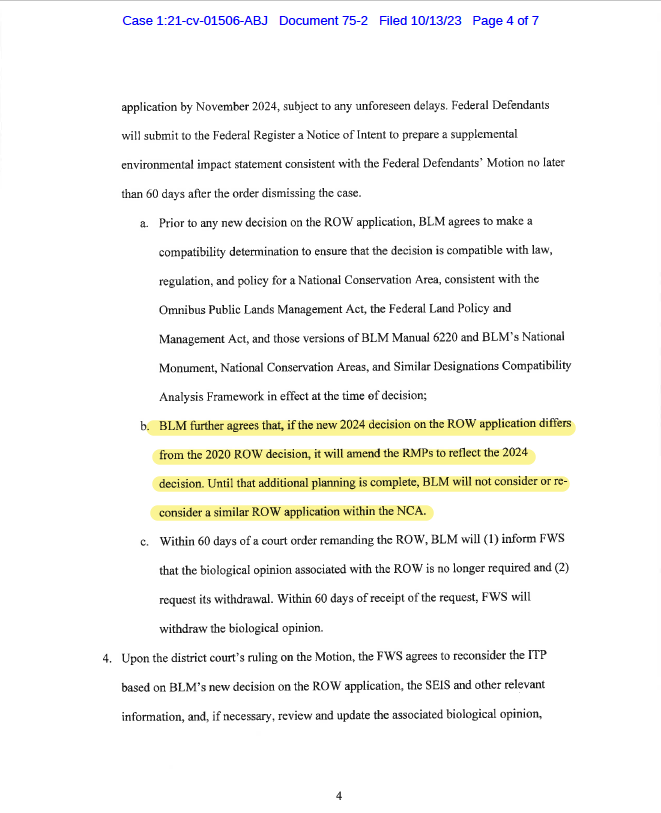
Washington, DC – Conserve Southwest Utah, along with six Utah-based and national conservation organizations, amended their February lawsuit today over the Bureau of Land Management (BLM) and U.S. Fish and Wildlife Service’s failure to adequately protect the threatened Mojave desert tortoise when reapproving the Northern Corridor Highway in January 2026. The long-opposed highway would tear through critical habitat for the Endangered Species Act (ESA)-protected tortoise within Red Cliffs National Conservation Area near St. George, Utah.
In addition to other laws, the newly filed complaint alleges new violations of the ESA by the Fish and Wildlife Service and BLM — including for the unlawful disposal of lands purchased using federal funding intended to protect the tortoise to make way for the highway. Fish and Wildlife Service’s final environmental analysis supporting the land disposal was issued on the same day in February 2026 that the conservation groups, represented by Advocates for the West, filed their lawsuit challenging the illegal highway’s reapproval. The amended complaint was filed now to comply with the required 60-day notice to federal agencies of ESA violations.
“The proposed Northern Corridor Highway would carve through one of the last strongholds of the threatened Mojave desert tortoise, permanently destroying the very habitat this species needs to survive,” said Stacey Wittek, Conserve Southwest Utah’s Executive Director. “St. George can have smart economic growth without accelerating the irreversible loss of a species already on the brink of extinction.”
The Mojave desert tortoise is a keystone species, providing the supporting structure and stability for its desert environment. Its population decline signals significant risk for the overall ecological health of the desert. The number of tortoises within the core of the Red Cliffs Desert Reserve has declined over 50% since 1998, and the proposed Northern Corridor Highway would bisect the only remaining high-density cluster of tortoises in the Reserve.
“The federal agencies’ environmental analysis has shown that punching a high-speed highway through Red Cliffs National Conservation Area would permanently eliminate designated tortoise habitat and increase threats like wildfire and invasive species,” said Hannah Goldblatt, staff attorney at Advocates for the West and counsel for the conservation groups. “Moving forward anyway ignores both science and the law — and pushes the Mojave desert tortoise closer to extinction.”
Conservation groups’ amended complaint follows the U.S. District Court’s issuance of an injunction this March prohibiting the Utah Department of Transportation (UDOT) from starting construction-related activities that would cause irreparable harm to the ESA-protected tortoise.
A Route Rejected Seven Times
The Department of the Interior has rejected the controversial Northern Corridor Highway route seven times, determining that it would be “biologically devastating” to the threatened Mojave desert tortoise.
Since 2006, local residents have also strongly opposed the highway, pointing out transportation alternatives outside of Red Cliffs National Conservation Area that would do a better job of relieving traffic congestion, supporting economic growth and protecting wildlife, scenic beauty and local access to trails.
Despite the immense local opposition, the BLM and Fish and Wildlife Service approved a right-of-way for the Northern Corridor Highway in the final days of the first Trump administration. Conservation groups sued, arguing that the approval violated multiple federal laws.
In 2021, 6,800 acres west of St. George designated “Zone 6” were added to the Red Cliffs Desert Reserve as mitigation for the Northern Corridor Highway. Zone 6 contains the Greater Moe’s Valley outdoor recreation area, and its ownership is split between the BLM and the state Trust Lands Administration. While conservation groups support protection of the Moe’s Valley area for both recreation and conservation, they agree with federal agencies’ assessment that its geographic isolation from the rest of the tortoise’s protected habitat, along with other factors, diminishes its conservation value and does not adequately offset the damage caused by the Northern Corridor Highway.
Conservation groups’ 2021 lawsuit resulted in a settlement agreement and a U.S. District Court decision sending back the project’s right-of-way approval for reconsideration. Agencies acknowledged that the approval did not comply with the law and required additional environmental analysis in light of recent wildfires that further degraded Mojave desert tortoise habitat and native vegetation. After updating its environmental analysis, the BLM rejected the project in late 2024.
The agency’s2024 Supplemental Environmental Impact Statement found the project would permanently eliminate designated critical tortoise habitat, increase wildfire probability and frequency, spread noxious weeds and invasive plants, and harm more cultural and historical resources than any alternative considered.
In October 2025, the BLM said it would reconsider the highway right-of-way application after UDOT argued that the federally endorsed alternative was not economically viable, despite documented environmental and community costs associated with the Northern Corridor.
Abandoning their previous scientific findings, the BLM and Fish and Wildlife Service reapproved the Northern Corridor Highway in January 2026. The decision reverses federal agencies’ December 2024 rejection of the same proposal and marks the eighth time the controversial highway has been considered.
Conservation groupssued in February 2026, challenging federal agencies’ reapproval of UDOT’s highway proposal for violating multiple federal laws, including the Omnibus Public Land Management Act, Land and Water Conservation Fund Act, Endangered Species Act, and National Environmental Policy Act.
About Red Cliffs National Conservation Area
The 44,724-acre Red Cliffs National Conservation Area overlaps the larger Red Cliffs Desert Reserve, which is jointly managed by the BLM, the Fish and Wildlife Service, the state of Utah, Washington County, and local municipalities. The reserve was established under a 1995 Habitat Conservation Plan as a compromise to protect roughly 61,000 acres of public lands for the threatened Mojave desert tortoise while allowing development on about 300,000 acres of state and private land. Congress designated the Red Cliffs National Conservation Area in 2009 to “conserve, protect, and enhance for the benefit and enjoyment of present and future generations the ecological, scenic, wildlife, recreational, cultural, historical, natural, educational, and scientific resources” of the public lands within the unit.
The region supports key populations of the threatened Mojave desert tortoise and other at-risk plants and animals, including the Gila monster, burrowing owl, and kit fox. Researchers say the Mojave desert tortoise is on a path to extinction, and its habitat in southwest Utah –– which houses some of the densest tortoise populations –– is especially vulnerable amid rapid growth in the region.
Additional Information and Resources:
- Informational website: protectredcliffs.com
- Lawsuit Challenges Illegal Highway Through Utah’s Red Cliffs National Conservation Area – February 4, 2026
- Federal Agency Re-Approves Highway Through Red Cliffs National Conservation Area, Abandons Own Scientific Findings – January 21, 2026
- BLM Again Considering Four-Lane Highway Through the Red Cliffs National Conservation Area – October 7, 2025
- Decades-Long Highway Fight Ends with Victory for Red Cliffs NCA – December 20th, 2024
- Local and National Organizations Applaud Plan Signaling Denial of Highway Right-of-Way – November 7, 2024
- Conservation Organizations Respond to Washington County’s Continued Attacks on Red Cliffs National Conservation Area – August 7, 2024
- Federal Agencies Release Draft Supplemental Environmental Impact Statement on a Highway Right-of-Way Through Red Cliffs National Conservation Area – May 9, 2024
- BLM and FWS Press Release – November 15, 2023
- Report – Washington County at a Crossroads: An analysis of the proposed Northern Corridor Highway project in Southwest Utah
- Summary of Desert Tortoise Study in Red Cliffs NCA: Population Trends, Threats to Persistence, and Conservation Significance
###
The Southern Utah Wilderness Alliance (SUWA) is a nonprofit organization with members and supporters from around the country dedicated to protecting America’s redrock wilderness. From offices in Moab, Salt Lake City, and Washington, DC, our team of professionals defends the redrock, organizes support for America’s Red Rock Wilderness Act, and stewards a world-renowned landscape. Learn more at www.suwa.org.
The post Northern Corridor Highway Risks Irreversible Harm to Mojave Desert Tortoise – 5.11.26 appeared first on Southern Utah Wilderness Alliance.
MEDIA ADVISORY
ALBANY, N.Y. – State lawmakers and public health advocates will hold a rally at the New York Capitol on Wednesday, May 13, from 1 to 2 p.m. EST, to urge passage of legislation to ban the use of the toxic herbicide paraquat, a chemical linked to Parkinson’s disease.
Momentum for the bill is building in the New York Legislature. The Assembly version of the paraquat ban bill, A.10074A, was reported to the floor calendar last week. The identical Senate version, S.9094A, is slated for consideration by the Senate Environmental Conservation Committee soon.
WHO
Assemblymember Linda Rosenthal (D/WF-Assembly District 67), bill sponsor
Sen. Pete Harckham (D/WF-40th Senate District), bill sponsor
Dr. Rebecca Gilbert, Ph.D., chief mission officer, American Parkinson Disease Association
Mike Mooney, former landscaper living with Parkinson’s disease
Wes Gillingham, organic farmer, Northeast Organic Farming Association of New York
Sarah Teale, an Emmy-nominated documentary filmmaker and farm owner, who discovered that 36 of her neighbors and her husband, Gordon Chaplin, had Parkinson’s disease. They are all from a small farming community in Hebron, N.Y., where paraquat was widely used.
Jud Eson, an artist living with Parkinson’s disease and member of the Albany Parkinson’s disease community involved at the Capital District YMCA
Nancy Eson, wife and care partner of Jud Eson
Representatives from the Environmental Working Group, The Michael J. Fox Foundation and the Parkinson’s Foundation will emcee the event.
WHAT
Rally urging passage of legislation to ban paraquat in New York.
WHEN
Wednesday, May 13, from 1 to 2 p.m. EST
WHERE
3rd floor staircase, outside of the Assembly Lobby, inside New York State Capitol, Albany, N.Y.
WHY
Paraquat is one of the most toxic herbicides still in use in the U.S. and has been associated with a significantly increased risk of Parkinson’s disease.
The chemical has been banned in more than 70 countries over its outsize risks to human health, including in China, where most of it is produced. Advocates and lawmakers urge swift legislative action to protect public health, farmworkers and communities across New York.
###
The Environmental Working Group is a nonprofit, non-partisan organization that empowers people to live healthier lives in a healthier environment. Through research, advocacy and unique education tools, EWG drives consumer choice and civic action.
Areas of Focus Paraquat Lawmakers, advocates to rally at New York Capitol supporting ban on toxic Parkinson’s pesticide Press Contact Alex Formuzis alex@ewg.org (202) 667-6982 May 11, 2026Donald Trump’s chaotic mess: When U.S. power serves the ‘sultan,’ global rules erode
By Christopher Collins, Cascade Institute
The version of record of this column appeared in The Conversation.
Historically, the United States hasn’t always been easy to deal with, but it was consistent. Even countries that disagreed with American policies knew there was a logic underlying its actions, and this predictability gave the country some credibility.
But now, under U.S. President Donald Trump’s second administration, American foreign policy has become haphazard and contradictory, driven by a leader who believes his ability to exercise power around the world is constrained only by his own morality.
This is new and, for observers around the world, perplexing. As Canadian Prime Minister Mark Carney recently said: “Washington has changed. There is almost nothing normal now in the United States.”
Trump maelstromSome, like U.S. Vice President JD Vance, are labouring to erect a retroactive, pseudo-intellectual scaffolding around this chaotic mess, seeking to frame it as a coherent doctrine. But it’s become increasingly clear there’s no grand plan, just a Trumpian maelstrom of impulsive reactions, extractive transactions and personal grudges that shift with the news cycle.
To understand this political dysfunction, a German thinker from more than 100 years ago, Max Weber, offers a helpful guide.
Most famous today for his theory of “the Protestant work ethic,” Weber’s writing also explored the concept of “patrimonialism.”
This is a system of governance in which a ruler treats the state as personal property, governs by whim and uses the state’s resources to reward cronies and enrich family. Drawing largely on his understanding of the Ottoman Empire, Weber called the most extreme form of this system “sultanism.”
Reading Weber today, it seems the best description of how the U.S. engages the wider world could be termed “sultanism with American characteristics.”
Loyalty over experienceConsider Iran. Following the start of Operation Epic Fury, the Trump administration cycled through so many conflicting war aims that CNN was able to assemble a montage of the contradictions.
Senior administration officials worked feverishly to build a strategy around the operation, but it soon became clear that this “war of choice” was started based on little more than the president’s whim.
Weber’s framework extends to the people around Trump. In sultanistic systems, staff are selected based on loyalty, not merit, and serve the ruler, not the state.
As Weber wrote, this leads to “an administration and a military force which are purely personal instruments of the master.”
We see this pattern vividly illustrated by the Trump administration’s approach to staffing senior roles, including those leading high-stakes diplomatic negotiations.
Look at Steve Witkoff, a real estate developer and longtime Trump friend with no foreign policy experience, who has served as the administration’s lead envoy on some of the most sensitive negotiations in the world.
Or Jared Kushner, the president’s son-in-law, who, despite having no background in foreign policy, was entrusted with key roles in Middle East diplomacy, while his investment firm pursues deals with the same Gulf states he is negotiating with on behalf of his country.
Serving the sultanThese are not appointments that a merit-based system would produce. But right now in America, officials serve the sultan, not the republic, which is why their speeches are regularly given for an “audience of one.”
Furthermore, in seeking the sultan’s favour, appointees regularly debase themselves on television, such as when Kevin Warsh, Trump’s pick to be the next head of the Federal Reserve, refused to admit Trump lost the 2020 election.
This sultanistic pattern of rewarding loyalty and punishing defiance is expanding. Federal disaster relief, long treated as a non-partisan obligation of the government, has become a stark illustration of this logic.
Since the start of his second term, Trump has approved just 23 per cent of disaster funding requests from blue states, compared to 89 per cent for red states. In some cases, the conditionality for disaster aid has been made explicit: for example, in 2025, as fires ravaged Los Angeles, Trump threatened to withhold aid unless California enacted voter ID laws — a condition with no relationship to disaster recovery.
This fear of punishment also helps explain why, fearing for their businesses, many media companies are bowing to “the court of King Trump.”
‘Orgy of corruption’Finally, Weber’s framework sheds light on what may be the most defining feature of the Trump administration: a blurring of the lines between public office and private enrichment. Under sultanism, the distinction between the ruler’s personal wealth and the state’s treasury is, at best, notional.
Trump and his team have governed accordingly, with perhaps the most egregious example being hundreds of millions of dollars of insider trading around the Iran war. In a healthy democracy, this “orgy of corruption” would be investigated and prosecuted. But in a patrimonial system this is simply how things work: the state exists to serve the ruler and his inner circle.
This is what the world must now manage. A sultanistic system does not respond to appeals to shared values or long-standing agreements. It responds to leverage, personal relationships with the ruler and transactional incentives.
Policymakers and business leaders increasingly understand they are dealing with a court that rewards fealty and punishes defiance. That’s why the Swiss gave Trump a gold bar in exchange for lower tariffs, and why the Qataris gave him a “palace in the sky.”
In 2026, appeals to shared democratic values or common national interests are pointless; bring the sultan something he wants or face punishment. Weber helps explain why.
The post Donald Trump’s chaotic mess: When U.S. power serves the ‘sultan,’ global rules erode appeared first on Cascade Institute.SUWA Statement on the Trump Administration’s Rescission of the BLM Public Lands Rule – 5.11.26
May 11, 2026 – FOR IMMEDIATE RELEASE
SUWA Statement on the Trump Administration’s Rescission of the BLM Public Lands Rule – 5.11.26 The Rule reiterated that conservation is one of many uses of the nation’s public landsContacts:
Grant Stevens, Communications Director, Southern Utah Wilderness Alliance (SUWA); (319) 427-0260; grant@suwa.org
Washington, DC – The Department of the Interior has announced the rescission of the Bureau of Land Management’s (BLM) Public Lands Rule. Among other things, the Rule reiterated that conservation is a key component of the BLM’s multiple-use mission and ensured that the agency consistently managed for that use. Below is a statement from SUWA Legal Director Steve Bloch and additional information.
“America’s wildest public lands face unprecedented threats from the Trump administration and its repeated decisions to prioritize fossil fuel development and extractive industry over clean water, wildlife habitat, and wild open spaces. This is especially the case in Utah, where Trump’s policies are having direct and irreversible impacts on the nation’s redrock wilderness,” said Steve Bloch, legal director for the Southern Utah Wilderness Alliance (SUWA). “The Public Lands Rule reiterated that the Bureau of Land Management (BLM) had to put conservation on equal footing with other uses and laid out a framework for the agency to restore degraded landscapes and protect intact public lands for current and future generations. Americans and Utahns widely supported the Rule and we are deeply disappointed to see the Trump administration’s shortsighted effort to undo it. Our work to Protect Wild Utah continues, undeterred.”
Additional information:
The Public Lands Rule established a “… framework to ensure healthy landscapes, abundant wildlife habitat, clean water, and balanced decision-making on our nation’s public lands.” It did not preclude any uses on BLM-managed public lands; it puts conservation on equal footing with grazing, mining, and energy production, and promoted restoration, provided for responsible development, and conserved intact healthy landscapes. The Rule was the product of an extensive, years-long public process with multiple in-person and online meetings and opportunities for public comment. 92% of the comments received by BLM supported the Rule.
The Public Lands Rule is the subject of litigation brought by Republican-led states and industry groups in several federal district courts around the country; additional information can be found here. In February 2025, Congresswoman Celeste Maloy (UT-02) and Congressman Russ Fulcher (ID-01) re-introduced the Western Economic Security Today (WEST) Act; this federal legislation would require the Director of the BLM to withdraw the Rule. Senator John Curtis (R-UT) is an original co-sponsor of S.530 (WEST Act of 2025), companion legislation in the Senate, which was introduced in February 2025.
- BLM’s webpage on the Public Lands Rule.
- SUWA’s 9.10.25 Statement on the Trump Administration’s Plan to Rescind the Bureau of Land Management’s (BLM) Public Lands Rule; Advocacy Action from SUWA during the public comment period
- 10.1.24 Press Release – Utah and National Conservation Groups Move to Defend Balanced Management of Public Lands from Mining and Oil Industry Lawsuit
- SUWA’s 4.18.24 Statement when the Final Rule was announced.
- “The BLM Public Lands Rule is a common-sense solution” June 25, 2023 Editorial from the Salt Lake Tribune
- 3.30.23 SUWA Statement on the Proposed Rule; Advocacy Action from SUWA during the public comment period
- Information regarding public comments received by BLM – 92% of which were supportive.
- Utah-specific polling data from the 2024 Conservation in the West Poll, which shows a clear and resounding preference for conservation when voters are given a choice over how public lands are used.
###
The Southern Utah Wilderness Alliance (SUWA) is a nonprofit organization with members and supporters from around the country dedicated to protecting America’s redrock wilderness. From offices in Moab, Salt Lake City, and Washington, DC, our team of professionals defends the redrock, organizes support for America’s Red Rock Wilderness Act, and stewards a world-renowned landscape. Learn more at www.suwa.org.
The post SUWA Statement on the Trump Administration’s Rescission of the BLM Public Lands Rule – 5.11.26 appeared first on Southern Utah Wilderness Alliance.
Les dissidents de Tchernobyl ou comment la catastrophe nucléaire soviétique a forgé l’opposition dans le bloc communiste
Quarante ans après l’explosion de la centrale nucléaire de Tchernobyl, la politique de dissimulation menée par l’URSS et ses “satellites” – notamment la Bulgarie – montre comment le secret a alimenté la méfiance tout en mobilisant scientifiques et militants. Leur action a contribué à faire naître des mouvements écologistes qui ont soutenu l’opposition démocratique dans l’ensemble du bloc communiste de l’époque.
À 1 h 23 du matin, le 26 avril 1986, le réacteur n° 4 de la centrale nucléaire de Tchernobyl, alors en URSS, connaît une défaillance catastrophique avant d’exploser, soufflant une partie des installations et laissant le site éventré. Le cœur du réacteur, laissé à nu, libère de grandes quantités de substances radioactives dans l’atmosphère. Dans les mois qui suivent, plus de 200 000 personnes sont évacuées des zones environnantes.
Porté par les vents, le nuage radioactif contamine de vastes régions d’Europe, avec des retombées particulièrement importantes en Ukraine, en Biélorussie et en Russie. Les émissions se poursuivent jusqu’au 5 mai, formant des nuages de césium-137 et d’autres isotopes, dont la concentration diminue avec la distance mais affecte néanmoins de très larges territoires. Le nuage atteint les Balkans le 1er mai.
À l’époque, Dimitar Vatsov était un lycéen de 15 ans à Sofia. “Juste après les pluies radioactives, le Komsomol [l’organisation de jeunesse du Parti communiste soviétique] a envoyé ma classe travailler aux champs”, se souvient-il. “Chaque matin, un bus venait nous chercher pour récolter des épinards et de la ciboulette.”
Jusqu’au 7 mai, les autorités bulgares ne firent aucune annonce publique concernant la catastrophe. Selon les déclarations officielles ultérieures, la contamination environnementale était minime et ne nécessitait aucune mesure particulière. Pourtant, quatre camarades de classe de Vatsov décédèrent d’un cancer dans les années qui suivirent.
Cette expérience l’a profondément marqué. Aujourd’hui philosophe et professeur à la Nouvelle université bulgare de Sofia, il a lancé à l’automne dernier un séminaire entièrement consacré aux conséquences de la catastrophe de Tchernobyl en Bulgarie, réunissant historiens, journalistes et physiciens nucléaires.
“La Bulgarie a été le seul pays du bloc socialiste à ne prendre aucune mesure après la catastrophe”, explique-t-il. Bien que le pays ne se classe qu’au huitième rang des pays les plus exposés aux radiations selon un rapport de l’ONU, il a enregistré le taux le plus élevé de cancers de la thyroïde chez les enfants en dehors de l’ex-URSS. “En tant que philosophe, cette singularité m’a conduit à réfléchir à la vérité, à l’éthique du discours politique et, plus largement, au cynisme du régime communiste de l’époque.”
Le black-out bulgareAprès l’accident de Tchernobyl, l’information a été étroitement filtrée dans les pays du bloc de l’Est afin de minimiser les risques de contamination tout en préservant le prestige de l’URSS. En Tchécoslovaquie, le mot katastrofa a été soigneusement évité dans les premières phases, auquel on a préféré le terme havárie (“accident”), utilisé sans qualificatif. Les rapports officiels mettaient en avant l’expertise et l’héroïsme soviétiques, la maîtrise rapide de l’incident et l’exagération supposée des faits par les “médias impérialistes occidentaux”. Toutefois, la Bulgarie s’est distinguée comme le pays où la censure était la plus stricte et où aucune action significative n’a été entreprise.
“Ceaușescu – l’un des dictateurs les plus autoritaires de l’époque – a averti les Roumains dès le 2 mai du risque de contamination. En Yougoslavie, on demanda aux femmes enceintes et aux enfants de rester à l’intérieur et l’on recommanda des précautions de base, comme laver les aliments frais. En Bulgarie, ce fut un black-out total”, raconte Vatsov.
On ne nous disait rien, on devait simplement obéir. Ce n’est que des années plus tard que j’ai compris l’ampleur réelle de la catastrophe – Petko Kovatchev
Le physicien nucléaire Gueorgui Kaschiev, alors employé à la centrale de Kozlodouy, dans le nord-ouest de la Bulgarie, se souvient très bien de ces journées : “La seule information que nous ayons reçue était qu’il y avait eu un incendie à Tchernobyl et qu’il avait été éteint”.
Grâce à une grande antenne installée sur son immeuble, Kaschiev captait cependant la télévision yougoslave. “Des informations venues de Suède et de Finlande ont rapidement permis de comprendre que l’incident était bien plus grave que ce qui était reconnu officiellement. Les médias occidentaux diffusaient des images satellites américaines montrant le réacteur détruit, des cartes retraçant le nuage radioactif et des reportages indiquant que la Yougoslavie avait envoyé des avions pour évacuer ses ressortissants qui étudiaient à Kiev.”
Fin avril, Kaschiev et ses collègues comprirent que le nuage se dirigeait vers la Bulgarie. Entre le 1er et le 2 mai, les niveaux de radiation atteignirent jusqu’à dix fois le niveau naturel, en particulier après les pluies. Face au silence persistant des autorités, l’information se diffusa de manière informelle : des ingénieurs avertirent leurs proches de prendre des précautions élémentaires, souvent accueillies avec incrédulité. Des analyses ultérieures d’échantillons alimentaires, notamment du lait provenant de fermes des environs, confirmèrent une contamination extrême.
Des documents d’archives accessibles aujourd’hui montrent que le gouvernement bulgare suivait de près l’évolution de la catastrophe et l’étendue de la contamination en Europe et en Bulgarie, et analysait la presse étrangère, les rapports de renseignement et les mesures quotidiennes de radiation sur l’ensemble du territoire. Pour Vatsov, le Politburo du Parti communiste bulgare craignait qu’une révélation de l’ampleur réelle de la contamination ne provoque la panique et des troubles politiques, comme cela s’était produit en Pologne : “Au-delà de cette première explication, je ne peux que qualifier cette attitude de défaillance morale de la part des élites dirigeantes, qui ont fait preuve d’un profond mépris à l’égard du reste de la population”.
Petko Kovatchev, militant écologiste effectuant alors son service militaire obligatoire, se souvient que l’armée réagit rapidement : “Du jour au lendemain, nous avons cessé de consommer des produits frais et mangions uniquement des conserves au réfectoire. Les activités extérieures furent annulées et nous reçûmes l’ordre de mesurer les niveaux de radiation autour de la base avec des compteurs Geiger”.
Ces mesures ne s’accompagnèrent toutefois d’aucune explication. “On ne nous disait rien, on devait simplement obéir. Ce n’est que des années plus tard que j’ai compris l’ampleur réelle de la catastrophe.”
Le cynisme de la nomenklaturaLa gestion des conséquences de Tchernobyl en Bulgarie révéla des inégalités flagrantes dans l’accès à l’information et à la protection sanitaire. Au sommet se trouvait la nomenklatura – hauts responsables du parti, police politique, cadres administratifs et officiers militaires. Durant la crise, ils bénéficièrent d’un accès privilégié à des repas et des provisions distribués via l’hôtel d’État Rila, au centre de Sofia. Le Politburo recevait de l’eau minérale provenant de sources profondes et des aliments importés – agneau australien, légumes d’Égypte et d’Israël – afin d’éviter toute contamination.
Selon Vatsov, l’élite de cette nomenklatura – environ 300 personnes – ne fut jamais en danger, des mesures spéciales ayant été prises pour assurer leur sécurité et leur bien-être : “L’armée appliquait des mesures moins strictes, mais suffisantes pour réduire l’exposition. Le reste de la population, lui, fut maintenu dans une ignorance totale.”
La décision de maintenir le défilé du 1er mai 1986 – au cours duquel de nombreux enfants ont paradé dans les rues de Sofia malgré la menace de pluies radioactives – symbolise ce cynisme. Par chance, la manifestation a débuté à 11 heures, alors que le nuage radioactif n’a atteint le territoire bulgare que dans l’après-midi, au plus tôt vers 14 heures.
De nombreux événements sportifs de propagande ont également été organisés dans tout le pays, ainsi que des travaux forcés encadrés par des brigades de jeunesse, composées principalement de jeunes âgés de 15 à 25 ans. Ces “volontaires” étaient tenus, au moins deux fois par an, d’effectuer des tâches physiquement éprouvantes telles que des travaux agricoles ou de construction. On estime qu’environ 365 000 jeunes ont été exposés de cette manière.
Le 10 mai, après une réunion au ministère de l’Énergie à Sofia, Kaschiev rend visite à sa belle-sœur. Des enfants jouent dehors devant l’immeuble, tandis que les adultes discutent tranquillement. Lorsqu’il les exhorte à garder les enfants à l’intérieur et à ne pas les laisser jouer dans le bac à sable, son avertissement est rejeté. “On m’a accusé de vouloir semer la panique”, raconte-t-il. “Quelqu’un a même insinué que j’étais sans doute un agent occidental et a menacé de me dénoncer aux autorités.”
Dans tous les pays du bloc de l’Est, malgré des mesures souvent insuffisantes, les défilés du 1er mai furent maintenus. En Pologne également, les célébrations eurent lieu comme prévu, tandis que le gouvernement niait publiquement tout risque sanitaire. Dans le même temps, les autorités polonaises distribuaient de l’iode et limitaient la vente de lait. La distribution rapide d’iode, commencée le 29 avril dans l’après-midi, est souvent citée comme une réponse exemplaire à une urgence radioactive : en trois jours, 18,5 millions de personnes – adultes et enfants – reçurent un comprimé d’iode.
Scientifiques et activisme environnementalJuste après la chute du régime, Kovatchev apprit davantage sur la catastrophe de Tchernobyl et ses conséquences grâce à une exposition organisée par des physiciens de l’université de Sofia. Sous le communisme déjà, certains d’entre eux faisaient partie de réseaux écologistes informels qui deviendraient plus tard Ecoglasnost, organisation que Kovatchev rejoignit comme étudiant.
Fondée au printemps 1989, quelques mois avant la chute du communisme, Ecoglasnost était un mouvement civique axé sur la protection de l’environnement, né du climat de libéralisation politique inspiré par la glasnost soviétique. À l’automne, Ecoglasnost organisait des pétitions et des manifestations publiques, dont le rassemblement du 3 novembre à Sofia, considéré comme l’une des premières mobilisations civiques ouvertes contre le régime communiste. Le mouvement a rapidement élargi ses revendications aux libertés civiles et aux réformes démocratiques.
En décembre 1989, il est devenu la première organisation politique non communiste officiellement reconnue en Bulgarie. Il a ensuite joué un rôle clé dans la structuration de l’opposition démocratique en rejoignant l’Union des forces démocratiques. Il a également initié les premières inspections de la centrale de Kozlodouy.
L’engagement de la communauté scientifique dans les luttes environnementales contribua à l’affaiblissement du régime dans ses dernières années. Cette implication s’était déjà manifestée en 1987 à Roussé, dans le nord du pays. À l’époque, la pollution atmosphérique provenant d’une usine chimique située de l’autre côté de la frontière roumaine avait déclenché de vastes protestations. De ce mouvement naquit le Conseil public pour la protection de l’environnement de Roussé, première organisation informelle tolérée sous le communisme, qui joua un rôle décisif dans les premières mobilisations nationales et la transition démocratique.
À la même période, la découverte de matières radioactives sous forme de “particules chaudes” en Bulgarie – preuve de l’ampleur de la catastrophe de Tchernobyl – incita plusieurs physiciens à surveiller étroitement la crise et à en étudier les conséquences. L’exposition de l’Université de Sofia visitée par Kovatchev en décembre 1989 était le fruit de ce travail.
Des mouvements similaires émergent dans d’autres pays du bloc socialiste, comme la Hongrie et la Tchécoslovaquie, mêlant engagement scientifique et prise de conscience écologique et démocratique.
Les préoccupations environnementales sont devenues un élément moteur, exprimant des exigences de responsabilité et de transparence. Ce phénomène a nourri les réseaux réformistes qui ont ensuite contribué à façonner la transition négociée de la Hongrie vers la démocratie.
Alors que les niveaux de radiation augmentaient à la fin du mois d’avril et au début du mois de mai 1986, des scientifiques et des professionnels de santé hongrois documentaient la contamination et échangaient des informations de manière informelle, tandis que la communication officielle demeurait limitée et rassurante. L’écart croissant entre le savoir des experts et le discours public a créé une dissonance morale chez ces professionnels, tiraillés entre leur intégrité scientifique et leur loyauté envers l’État. Dans ce contexte, les préoccupations environnementales sont devenues un élément moteur, exprimant des exigences de responsabilité et de transparence. Ce phénomène a nourri les réseaux réformistes qui ont ensuite contribué à façonner la transition négociée de la Hongrie vers la démocratie.
Dans l’ancienne Tchécoslovaquie, la catastrophe de Tchernobyl a également contribué à galvaniser les mouvements écologistes, qui sont devenus par la suite des acteurs clés de la Révolution de velours en 1989. Bien que le régime fût l’un des plus répressifs du bloc de l’Est, il tolérait davantage l’activisme environnemental que la dissidence politique ouverte, considérant les préoccupations liées à la pollution, à la contamination de l’eau ou à la dégradation des paysages comme relativement inoffensives et difficiles à censurer.
La seconde vague de contaminationFaute de mesures prises par les autorités bulgares, vaches, moutons et chèvres continuèrent à paître sur des pâturages contaminés et à consommer des fourrages radioactifs jusqu’au printemps 1987. Les produits laitiers issus de cette chaîne alimentaire restèrent en circulation, entraînant une “seconde vague” de contamination estimée à près de 30 % de l’exposition totale. Cette situation – unique dans l’histoire de Tchernobyl – explique en partie les taux exceptionnellement élevés de cancers de la thyroïde chez les très jeunes enfants en Bulgarie.
La physicienne retraitée Liliana Prodanova, à l’époque chercheuse à l’Institut de physique de l’état solide, n’a appris la gravité de la situation qu’à la mi-mai. “Mon mari était vice-recteur de l’Université technique de Sofia. Moi-même, je me spécialisais dans la recherche sur le silicium, nous comprenions donc parfaitement les implications de cette contamination. Nous avons pris des précautions discrètes, comme laver systématiquement les aliments. Nous avons aussi retiré la terre contaminée autour de notre maison de campagne. Cette année-là, nous n’avons rien planté.”
Elle se souvient que des amis leur demandaient souvent de mesurer la radioactivité des yaourts destinés aux enfants, à l’aide des instruments de l’institut. “Nous le faisions discrètement, sans demander d’autorisation officielle.”
La nomenklatura, en revanche, était parfaitement consciente des risques. Elle testait les produits laitiers qu’elle consommait et importait le reste de l’étranger. À la périphérie de Sofia, les pâturages autour du palais royale de Vrana – alors occupé par des responsables du parti – furent fauchés en mai pour éviter la contamination. Le foin fut ensuite redistribué à des coopératives d’élevage fournissant la capitale, qui produisirent ensuite des produits laitiers contaminés.
Les physiciens de la centrale de Kozlodouy utilisèrent un des laboratoires pour développer leurs propres instruments de mesure, se souvient Kaschiev. Ils conçurent notamment un dispositif permettant d’évaluer l’exposition de la thyroïde aux radiations. “Ceux qui n’avaient pris aucune précaution début mai, en particulier les personnes parties en vacances à ce moment-là, ont été exposés à des niveaux de contamination jusqu’à 10 000 fois supérieurs aux nôtres. Début mai, j’ai fait des réserves de fromage et de lait en poudre. Cela nous a probablement protégé de la seconde vague”, explique-t-il.
Les dissidents de TchernobylIl n’existait pas de dissidents en Bulgarie avant l’accident de Tchernobyl, assure Vatsov. “La prise de conscience d’avoir été trompé par les autorités et exposé à de graves risques sanitaires a façonné l’engagement politique de toute une génération, en particulier au sein de la communauté scientifique.”
Kaschiev, dont l’engagement politique et le parcours professionnel a été déterminé par la catastrophe, est un exemple emblématique. Sa colère face aux défaillances morales et politiques du régime l’a conduit à se spécialiser dans la sûreté nucléaire. À partir de la fin des années 1980, il est passé de la physique des réacteurs à l’évaluation des risques, d’abord comme employé à l’intérieur de la centrale, puis comme enseignant universitaire et inspecteur nucléaire. En 1997, il a été nommé directeur du laboratoire national de régulation nucléaire de Bulgarie.
Dans d’autres pays socialistes, la catastrophe de Tchernobyl devint également un catalyseur de l’opposition au régime. En Pologne, elle donna naissance à un puissant mouvement antinucléaire. Les craintes liées à la catastrophe se transformèrent rapidement en opposition au projet de centrale nucléaire de Żarnowiec, déclenchant des protestations nationales impliquant groupes écologistes, militants locaux et dissidents tels que Lech Wałęsa, futur premier président démocratiquement élu du pays.
Lors d’un référendum organisé en 1990 en même temps que les élections locales, plus de 86 % des votants rejetèrent le projet de Żarnowiec, entraînant son abandon définitif. Comme le souligne le politologue Kacper Szulecki, ces mobilisations ont à la fois reflété et accéléré de profondes transformations sociales et générationnelles, tout en sapant davantage la légitimité de Moscou en Pologne.
Si la catastrophe a laissé une empreinte durable dans la société bulgare, elle n’a pas débouché sur un vaste mouvement antinucléaire. La centrale de Kozlodouy, modernisée et toujours en activité, est largement perçue comme une source de fierté nationale et une garantie d’indépendance énergétique. La gestion catastrophique de Tchernobyl a surtout mis en lumière l’indécence et le cynisme du régime communiste, ainsi que l’irrationalité de son idéologie.
En décembre 1991, après la chute du régime, la Cour suprême de Sofia condamne l’ancien ministre de la Santé Lyubomir Shindarov et l’ancien vice-Premier ministre Grigor Stoichkov, accusés d’avoir délibérément trompé la population, pour négligence criminelle. Après un long processus d’appel, leurs peines sont réduites respectivement à deux et trois ans de prison. Ils restent les seuls hauts responsables du régime bulgare à avoir été réellement poursuivis et condamnés pour la gestion de la catastrophe de Tchernobyl.
Pour le physicien nucléaire Atanas Krastanov, jeune chercheur dans les années 1980 et témoin de la mauvaise gestion de la catastrophe par les autorités, l’énergie nucléaire en tant que telle n’est pas le problème. “L’accident de Tchernobyl fut avant tout le résultat d’une erreur humaine” estime Krastanov, précisant “qu’il ne s’agissait pas à l’origine d’une explosion nucléaire, mais d’une explosion thermique due à une accumulation de pression”. Aujourd’hui, Krastanov travaille comme expert au Centre de prévention des catastrophes, accidents et crises de la mairie de Sofia. Il a récemment participé à l’écriture d’un film documentaire sur le sujet, dont la sortie est prévue à l’automne 2026.
Quel avenir pour le nucléaire ?Le militant écologiste Petko Kovatchev, proche de l’ONG Za Zemiata et de réseaux antinucléaires, conteste cette lecture : “L’argument de l’erreur humaine n’est pas valable”, affirme-t-il, car “la plupart des accidents industriels et nucléaires ont pour origine une erreur humaine. Cela ne signifie pas que le nucléaire soit sûr”. Il ajoute que le soutien populaire à l’énergie nucléaire en Bulgarie repose principalement sur des préoccupations liées à l’indépendance énergétique et au faible coût de l’électricité, plutôt que sur des considérations scientifiques ou éthiques.
Dans ce contexte, la construction d’une nouvelle centrale nucléaire à Béléné, dans le nord de la Bulgarie, pourrait encore voir le jour. Malgré une forte opposition des organisations environnementales et des populations locales, un référendum national organisé en 2013 a approuvé le projet. Abandonné puis relancé à plusieurs reprises – principalement pour des raisons géopolitiques, le projet initial impliquant un réacteur russe de troisième génération – il pourrait désormais être confié à la société française Framatome et à l’américain General Electric.
Le projet de vente à l’Ukraine des réacteurs déjà construits sur le site de Béléné, dans le but de remplacer la centrale de Zaporijjia actuellement sous contrôle russe, a finalement été abandonné. Le dernier gouvernement a même envisagé de faire de ce projet de centrale une source d’électricité pour de futurs data centers.
La gestion catastrophique de Tchernobyl a surtout mis en lumière l’indécence et le cynisme du régime communiste, ainsi que l’irrationalité de son idéologie.
Par ailleurs, deux nouveaux réacteurs sont prévus sur le site de Kozlodouy, construits par des entreprises canadiennes. Mise en service en 1970, la centrale n’exploite aujourd’hui que ses deux réacteurs les plus récents, datant de 1988 et 1993. Les plus anciens ont été arrêtés dans les années 2000 sous la pression de l’Union européenne, qui avait conditionné l’adhésion de la Bulgarie à leur fermeture.
Autrefois décrite comme l’une des centrales nucléaires les plus dangereuses au monde, Kozlodouy répond aujourd’hui à l’ensemble des exigences de sûreté de l’Agence internationale de l’énergie atomique (AIEA). Le site accueille également une installation de stockage de déchets nucléaires, dont la mise en service est prévue pour 2027. Les militants écologistes dénoncent toutefois régulièrement le manque de transparence entourant les décisions industrielles, les incidents et les accidents affectant la centrale.
Gueorgui Kaschiev se montre très critique à l’égard de la gouvernance nucléaire en Bulgarie. Pour lui, le projet de Béléné relève de la “catastrophe financière” et constitue un véhicule à des détournements de fonds publics. À Kozlodouy, il pointe une dégradation des conditions : hausse des coûts des pièces de rechange et de la maintenance, baisse de la production d’énergie en dessous des recommandations internationales, et défaillances techniques telles que des fuites dans le générateur de vapeur du réacteur n° 6. “La culture de la sûreté se détériore clairement”, avertit-il.
Cet article a été réalisé dans le cadre du projet PULSE, une initiative européenne qui soutient les collaborations journalistiques transnationales. Andrea Braschayko, Martin Vrba, and Daniel Harper y ont contribué.
Two videos about the Atlantic Meriodonal Overturning Circulation (AMOC)
These videos include personal musings and conclusions of the creators and climate scientists Dr. Adam Levy and Dr. Ella Gilbert. It is presented to our readers as an informed perspective. Please see video description for references (if any).
ClimateAdam - Our Oceans Are Tipped To Collapse: Can we still act?Climate change is driving a crucial ocean current close to collapse. As global warming heats our planet, it's slowing down the vast Atlantic Meridional Overturning Circulation - or AMOC. And scientists fear that it could reach a tipping point - effectively shutting down this ocean circulation, and causing rapid climate change and disasters across the world: brutally cold European winters; sea level surges in America; and disrupted monsoon rains. But what do we actually understand about our risks of an AMOC tipping point? How big are the risks as our climate changes? And can we still act to protect ourselves?
Support ClimateAdam on patreon: https://patreon.com/climateadam
Dr Gilbz - This critical climate system is tipping…. Or is it?The Atlantic Meridional Overturning Circulation - or AMOC - is one of the world's most vital ocean currents, transporting water, heat and carbon around the planet. It's part of the "global conveyor belt" that keeps our planet moving.
And scientists are warning that it could be weakening - with terrible consequences for humanity.
But... is it?? What's behind the contrasting headlines? Let's dig in
Support Dr Gilbz on patreon: https://patreon.com/Dr_Gilbz
Are Trump’s nuclear plans illegal?
The so-called “Rubber-Stamp Rule”, an effort by the Trump administration to “Make America Nuclear Again”, violates key components of the Atomic Energy Act (AEA) and Energy Reorganization Act, according to comments filed this week by 13 organizations including the Nuclear Information and Resource Service (NIRS) and Beyond Nuclear. The Nuclear Regulatory Commission’s (NRC) proposed rule will allow reactor designs that the Department of Energy (DOE) and Department of Defense (DOD) have approved to bypass required safety reviews by the NRC.
In a separate comment filing in March, 11 state attorneys general concurred with the organizations’ findings that the Department of Energy ‘s new policy to exclude “pilot reactors” from both NRC licensing and environmental reviews violates existing law. In that case, the Department of Energy announced, in violation of federal law, that it would exempt previously untested reactors that it approves to be built and operated from any review of their environmental impacts.
“Along with the DOE’s environmental ‘free pass’ policy, the whole ‘expedited licensing’ regime the administration is attempting to set up appears to be illegal,” said Tim Judson, executive director of NIRS and co-author of comments filed to the NRC. “The White House is trying to create a ‘regulatory tunnel’ around NRC’s safety regulations. That would mean DOE’s biases and obviously false assumptions about the safety of nuclear power plants become the new normal, exposing the public to unacceptable dangers to our health and safety.”
The NRC’s proposed regulation would allow companies that want to build a nuclear reactor of the same design as one DOE has previously approved to merely submit documentation of that approval and claim that the previously built reactor “is safe.” Such companies would likely never have to go through a detailed safety review by NRC to build and operate such reactors. In 1974, Congress amended the Atomic Energy Act to prohibit such a scheme.
“Fifty years ago, the Atomic Energy Commission was abolished because they became too much of a promoter and lost the confidence of Congress and the public over safety,” said Paul Gunter, director of the reactor oversight project at Beyond Nuclear. “The NRC was established to provide a regulator that prioritizes safety and is obligated not to take shortcuts for a production agenda. Instead, half a century later, we are on the same dangerous collision course, casting aside the NRC in favor of the DOE, which doesn’t have the experience or the staff to get the industry in line with safety and security. This capitulation to the Trump agenda could lead to the NRC being abolished altogether, because nobody will have confidence in them.”
The groups also told NRC that it cannot simply “rubber-stamp” reactors that the military builds, either. “And while the law allows the DOD to build its own nuclear reactors,” said Tim Judson of NIRS, “it does not allow the NRC to skip safety reviews for civilian nuclear plants just because they use the same designs. The military routinely exposes its personnel to dangers that civilians are supposed to be protected from.”
“In its eagerness to short-circuit reactor safeguards, the Trump administration is once again doing what it does best – demonstrating a complete disregard for the law,” said Linda Pentz Gunter, executive director of Beyond Nuclear. “But nuclear technology is too inherently dangerous to operate as an outlaw. Ignoring those dangers will put millions of Americans at risk of another catastrophic nuclear accident.”
- NIRS, BN, et al comments on NRC Proposed Rule — https://www.nirs.org/wp-content/uploads/2026/05/DocketID_NRC-2025-1503_Comments_-BeyondNuclear-NIRS-etal.pdf
- Comments on DOE Categorical Exclusion Policy — https://www.nirs.org/wp-content/uploads/2026/03/2026.03.04-NIRS-et-al-Comments-re-DOE-categorical-exclusion-for-advanced-nuclear-reactors.pdf
Asian Forests Grow Increasingly Silent as Gibbon Trafficking Hits an All-Time High
For well over a year now, the Save the Gibbons Alliance, a group of small-ape conservationists and media professionals focused on protecting these long-armed primates from illegal trade, has been tracking a worrying problem. They’ve documented at least one gibbon-smuggling incident per month, either at a southeast Asian airport or an Indian one, each involving multiple gibbon babies or juveniles. News reports of these seizures in the local media are often accompanied by heartbreaking images of distressed or dead gibbon babies, stuffed into check-in or carry-on baggage.
“The level of complexity and organization that needs to be involved in this is just huge,” says Dr. Susan Cheyne, senior lecturer in primate conservation at the Oxford Brookes University and a member of the Save the Gibbon Alliance.
Some months the number of seizure incidents has gone up to three or four. These confiscations have happened either during departure from Kuala Lumpur International Airport in Malaysia or from Suvarnabhumi Airport in Bangkok, Thailand, or upon arrival at various Indian airports.
This frequency of gibbon confiscations “is not something we’ve seen commonly in the past,” says Kanitha Krishnasamy, Southeast Asia director for TRAFFIC, a nongovernmental organization monitoring the illegal wildlife trade.
A recent report by TRAFFIC sheds light on the scale of the trade in the past decade (2016 – 2025). According to data they provided, some of which was collected after the report, 93 trafficked gibbons were confiscated across south and southeast Asia in 2025 alone.
“It’s the highest number of gibbons we’ve seen confiscated in the last 10 years,” says Krishnasamy. This number — which includes gibbons kept as pets as well as those being smuggled across international borders via air, sea, and land — amounts to a third of the gibbons seized in the previous nine years (2016-2024).
In the past decade, Indonesia has had the highest number gibbon-confiscation incidents and individuals seized, partly due to the robust domestic trade and in part due to increased attention by authorities. But more recently India and Malaysia have emerged at the heart of international gibbon-smuggling attempts.
According to TRAFFIC 33 gibbon-smuggling incidents were recorded in the past 10 years, most of which involved multiple animals at a time. Of these India was involved in 26 attempts as the destination (or possible mid-transit) country, while Malaysia was involved in 20 incidents as the source or transit point for gibbons trafficked from Indonesia and other southeast Asian range countries.
“In the past we’ve seen countless species from India being trafficked into the southeast Asian market,” says Krishnasamy. “We seem to be seeing something different now — gibbons and other mammals sourced from southeast Asia headed to the Indian market.
The Singing ApesGibbons are small, agile apes, found in 11 countries across Asia, from northeast India to the western islands of Indonesia. They are known for their loud, melodious calls known as “songs” that reverberate through forests. Of the 20 recognized gibbon species, the International Union for Conservation of Nature lists five as critically endangered, 14 as endangered, and one as vulnerable due to severe habitat loss and poaching for the illegal pet trade.
View this post on Instagram
A post shared by Dr. Jane Goodall (@janegoodallinst)
The two subspecies of siamang — the largest gibbons (in size) — are the most trafficked. “Over 30% of confiscations involve siamangs,” says Krishnasamy.
Other gibbon species that appear often in international trade include agile gibbons (Hylobates agilis), lar gibbons (H. lar), and Javan gibbons (H. moloch). “The majority of gibbons that turn up in trade are most likely to have come from Indonesia or Malaysia,” confirms Cheyne.
The Convention on International Trade in Endangered Species lists all gibbon species under what’s known as Appendix I, which offers them the highest level of protection and prohibits their commercial trade internationally. The apes are also protected under national law in their respective countries, making it illegal to hunt, capture, own, or trade them. If people are arrested and prosecuted for violating these statutes, punishment can include fines and years of imprisonment. Yet according to experts, enforcement remains woefully weak.
“There is a lack of capacity to take these cases to prosecution and to effectively investigate the trade networks,” says Cheyne.
What Is Driving the Demand?Krishnasamy posits two reasons for the skyrocketing demand for gibbons from India.
“Either there is some sort of a fad of people wanting to keep gibbons as pets in India, or they are heading to facilities like zoos, safaris, or potentially even breeding facilities,” she says. “Which of the two is actually happening requires deeper investigation in India.”
She shares the example of the Teenage Mutant Ninja Turtles franchise, which influenced the turtle trade, or the Harry Potter series, which has led to an increase in the illegal trade in owls. “It’s hard to say what is driving this particular trend where gibbons are concerned,” she says.
Indian lawyer Pawan Sharma is the founder of Resqink Association for Wildlife Welfare, a rescue and rehabilitation facility located on the outskirts of Mumbai that provides medical care to the gibbons and other wildlife confiscated at the city’s airport. “We have seen more than 300 species intercepted at the airport, from anacondas to Komodo dragons,” says Sharma, adding that some Indians have a voracious appetite for exotic pets.
Online marketplaces provide a major platform for wildlife trade. Social media giant Meta recently shut down nine Indonesian Facebook groups — consisting of thousands of members — which were involved in the trade of endangered wildlife, including gibbons.
However, with criminals always staying one step ahead of the law, some traffickers have moved to more discreet modes of communication. Sharma cites the example of Google Pay being used by traffickers to talk to prospective buyers.
“A large part of the illegal wildlife trade is ultimately driven by human behavior,” says Cheyne. “It is, unfortunately, just another manifestation of the human desire for something different.”
Sourcing the GibbonsKrishnasamy elaborates on the complexity of the trafficking process.
“It takes time, effort and connections to locate the gibbons in the forest, track them, capture them, transport them to middlemen — one or several — pack them and move them across international borders,” she says. “Not just at the point of exit from Malaysia or Thailand, but also identifying the people carrying and receiving them at the other end, and how to ensure safe passage,” she adds. “All this points to organized criminality.”
Female gibbons reproduce slowly and have a single baby once every two or three years. In most cases, mothers are killed to obtain infants. “If the group is without an adult female, it may allow an opportunity for a new adult female to come in or the group may break down,” says Cheyne.
Indiscriminate shooting could also result in the death of other individuals in the group. Rescued gibbon babies have often been found with pellets lodged in them.
“Ultimately there’s a knock-on consequence for gibbons in the wild,” adds Cheyne.
With a high death rate during the smuggling process, traffickers capture multiple gibbon babies from the wild for the transaction to remain profitable.
“They calculate that 90% of the gibbon babies will die,” says Sinan Serhadli, who is affiliated with two gibbon conservation projects in Asia. Even with this high mortality rate, the trade remains profitable for the traffickers, he adds.
Modes of TraffickingIn addition to trafficking by air, smuggling across international borders also happens by land and sea, which is harder to monitor.
“We’ve seen many cases of wildlife smuggling through land borders,” says Krishnasamy, who points to the Mekong region (which includes Thailand, Laos, Myanmar, Vietnam and Cambodia) and the Malay Peninsula (which includes southern Thailand and peninsular Malaysia).
The borders between India, Myanmar, and Bangladesh are also porous. Serhadli says about five western hoolock gibbons (Hoolock hoolock) are currently being rehabilitated at a facility in Bangladesh. They were confiscated from commuter buses and appeared to be heading to India.
The Strait of Malacca, a narrow stretch of water separating the island of Sumatra and Peninsular Malaysia, is emerging as another hotspot for wildlife trade, with Medan, a city in northeast Sumatra, becoming a key transit hub.
“A lot of wildlife from Sumatra is being brought to Medan,” says Serhadli. “It then goes over the Strait of Malacca either to Thailand or to Malaysia, and then via plane to India.”
In 2025 16 gibbon babies, along with dozens of other wild animals, were confiscated from a boat in the Strait of Malacca.
“This [seizure] is just the tip of the iceberg,” says Serhadli. Only three gibbons survived the ordeal and are currently undergoing rehabilitation at a facility run by the Orangutan Information Centre in northwest Sumatra.
Panut Hadisiswoyo, founder of OIC, says that he has spoken to Malaysian authorities about the urgent need to monitor the Strait of Malacca. “We need to work together to watch the Malacca Strait and prevent the wildlife trade,” he says.
The Next StepsKrishnasamy wants people to realize that gibbon trafficking is a crime.
“It’s a well-planned illegal operation that harms not just threatened species, but also the carriers who are caught,” she says. These carriers are often low-income people, not those who profit most from the crimes. She hopes there will be increased cooperation between the countries involved, particularly on in-depth investigations.
In an effort to curb the increasing wildlife trafficking at Malaysian airports, TRAFFIC recently conducted a training session for nearly 200 frontline airport personnel to help them identify and respond to wildlife trafficking.
Reacting to the rise in wildlife trafficking via Indian airports, the Directorate of Civil Aviation issued a directive in July 2025 placing the full responsibility — including costs — of repatriating trafficked wildlife on the airline that carries the animals into the country. This has created additional pressure on inbound airlines to improve monitoring and checks. Lawyer Sharma confirms that the repatriations are already being done.
Still, many questions remain unanswered. What happens to the gibbons once they are sent back? Do they survive the repatriation process? Do they reach a rehabilitation facility, or do they end up getting trafficked again?
“Ultimately, we have to tackle demand,” says Cheyne. “There are people that take gibbons from the wild, there are those that sell them, there are those that buy them, there are those who live next to a forest and have them — it’s important to identify the different groups because they need to be targeted differently,” she adds. “If there’s no market for these animals, people will stop taking them out of the wild.”
Republish this article for free! Read our reprint policy. Previously in The Revelator:The Exotic Pet Trade Harms Animals and Humans. The European Union Is Studying a Potential Solution
The post Asian Forests Grow Increasingly Silent as Gibbon Trafficking Hits an All-Time High appeared first on The Revelator.
Trump Put the Arctic Refuge Up for Sale: Here’s the Stakes
On June 5, the administration plans to move forward with a new oil and gas lease sale in the Arctic National Wildlife Refuge. It’s a decision that, on its face, feels like a step backward—opening the door to industrial development in one of the most intact and ecologically important landscapes in the United States.
But let’s zoom out for a moment. Because yes, the Arctic Refuge is facing a single bad decision right now. But it has also been at the center of a decades-long effort to answer a much bigger question: What do we choose to protect, and why?
For more than 40 years, people all over the country have come together to defend the Refuge. Indigenous leaders, scientists, outdoor enthusiasts, veterans, faith communities, and everyday advocates have all played a role in shaping a shared understanding that this place absolutely cannot be measured in barrels of oil.
At the heart of the Refuge is the coastal plain, often described as its biological core. Each spring, the Porcupine Caribou herd migrates hundreds of miles to this narrow stretch of land to give birth, drawn by the conditions that have sustained them for generations. The Gwich’in people, whose culture and food security are deeply tied to the caribou, call this place “the sacred place where life begins.” Polar bears den along its coastline, while millions of migratory birds fan out from here to every corner of the country.
Photo: Alaska Wilderness League StaffIt’s a powerful reminder that even the most remote landscapes are connected to our daily lives in ways we don’t always see.
That’s why this year we’re asking people to take their advocacy beyond their backyards. You don’t have to live in Alaska—or ever set foot in the Arctic Refuge—to have a stake in what happens there. If you care about public lands, local communities, clean water, wildlife, and a stable climate, this fight is yours too. Decisions made about leasing in the Arctic don’t stay contained to one place; they shape how public lands are managed across the country. And we’re already seeing that ripple effect.
Just last week, protections for the Boundary Waters Canoe Area Wilderness were rolled back, opening the door to mining in one of the most beloved landscapes in the Lower 48. When an administration is willing to put a place as ecologically rich and culturally sacred as the Arctic Refuge on the table for drilling, it sends a clear signal: no place is off-limits.
Protecting the Arctic Refuge is about setting a standard for every wild place we value.
Efforts to industrialize the Refuge have consistently run into real-world barriers. Previous lease sales failed to generate significant interest from the oil and gas industry. Major financial institutions have pulled back from Arctic drilling, in a sign that they are aware of both economic and reputational risks. And as energy markets continue to evolve, the long-term viability of projects like this looks increasingly uncertain.
Which is to say, this push to lease the Refuge isn’t only at odds with public opinion, but also out of step with where the world is headed.
That doesn’t make the lease sale any less serious. But it does remind us that change is already emerging, and that sustained public pressure has played a meaningful role in getting us here.
For AWL, this moment is one chapter in a much longer story. For decades, we’ve worked alongside the Gwich’in people and partners across the country to protect the Refuge—through advocacy, education, and organizing that connects people to what’s at stake.
Photo: Michael Block for the Arctic Defense CampaignThe upcoming lease sale is a reminder that progress isn’t always linear. Wins can be followed by setbacks, and protections can be challenged. But it’s also a reminder of how much has already been built: A broad, diverse movement that recognizes the Arctic Refuge is not a distant wilderness, but a shared responsibility.
So while June 5 may mark another attempt to open this landscape to drilling, it doesn’t define the outcome.
The future of the Arctic Refuge is still being written—by the people who care about it, speak up for it, and continue to show that some places are worth more than what can be extracted from them.
And that’s something worth holding onto.
Santa Marta was a learning moment for how to shape inclusive just transitions
Hina West is managing director of Climate Strategies.
The first Global Conference on Transitioning away from Fossil Fuels, organised by Colombia and the Netherlands, in Santa Marta late last month convened nearly 60 countries, as well as activists, Indigenous peoples, the private sector and academia. The aim of this historic event was to build a “coalition of the willing” driving action for fossil fuel phase-out beyond the UN climate process.
The stakes could not have been higher. As the planet grapples with catastrophic warming, economic instability and geopolitical conflicts fuelled by fossil fuel dependence, this conference represented a rare opportunity to reshape global energy governance, putting science and justice at the core.
For decades, fossil fuel phase-out has been the elephant in the room at climate COPs. Now is finally the time to have this conversation, with Santa Marta as the starting point.
So, what’s needed for this process to succeed? In the days preceding the political conference, all the different social group chapters – including academia, labour, private sector, civil society and Peoples (including Indigenous Peoples, Afro-descendant Peoples, peasants, frontline collectives and youth, among others) – developed ambitious recommendations to inform this new multilateral process.
As one of the co-hosts of the academic dialogue, I have learned a clear lesson on what is needed for Santa Marta to create actual breakthroughs for the global energy transition.
Looking where it mattersAs someone working at the climate science-policy interface, I believe that science-based evidence is a crucial pathway towards implementing just, orderly and equitable transitions away from fossil fuels.
Yet, as Santa Marta convened colleagues from all over the world, we heard a clear call from representatives of regions directly impacted by the fossil fuel economy: We are over-diagnosed. The evidence is all here, and what we need now is action.
This is a humbling call for the research community: while we remain committed to the creation of knowledge, how can we ensure that these efforts lead to practical outcomes?
As we explored within the academic dialogue ahead of and at Santa Marta, international support for Just Transitions does not often strengthen the capacity of local actors (who are at the frontline) to develop and deliver just transition strategies. If the Santa Marta process wants to translate high-level commitments into credible and effective transition strategies, it must address this gap.
Our discussion created a series of recommendations to address the challenge. Among them, we see the need for stronger collaborative governance across all scales and regions – from the global to the local and including South-to-South partnerships – that explicitly supports the local delivery of transition pathways. This is a gigantic task, made harder by the limited resources available.
Today, climate finance remains systematically skewed towards technical and infrastructural investment, at the expense of social and justice programmes. Current regulatory frameworks and investment criteria must be redesigned so that following Just Transition goals brings financial returns, to ensure that resources are directed where they are most needed. Grant-based mechanisms and highly concessional finance must also be strengthened.
Social dialogue and public participationLocal communities and livelihoods must be placed at the centre of this process, to ensure that interventions are inclusive, aligned with territorial development strategies, and comprehensively address transition impacts (including informal and gendered work).
This requires strong mechanisms for social dialogue and public participation, to be established early on and maintained throughout the implementation of Just Transition strategies. These can take different forms, such as legally binding participation frameworks, public interest committees and community-led advisory bodies.
Grassroots communities must be recognised as co-producers of knowledge, not as consultees or receivers of information. This is also applicable to the Santa Marta process.
Climate scientists call for fossil fuel transition roadmaps
An expected highlight of this conference was the inclusion of underrepresented groups, including subnational governments, frontline communities, and Indigenous Peoples. Their active participation is crucial to ensure that the transition strategies discussed are not just technically sound, but socially just and locally relevant. These voices must be at the heart of the conference’s final outcomes.
Nevertheless, Santa Marta was only the starting point of this ambitious multilateral process, and also in itself, not free from controversies. The transition away from fossil fuels will bring many uncertainties which require continuous learning and adaptation.
What next?Taking a ‘build the ship as we sail it’ approach to this new layer of cooperation did not come without friction – be it from balancing Global South and North representation and short input deadlines, to knowing who had charge of the pen before, during and after the creation of our chapter’s output report, intended to feed into the subsequent high-level segment.
I believe that robust, inclusive and context-specific analysis is essential for Just Transition planning and implementation. But as the expert community, we must provide this with solidarity, humility, and willingness to learn from those at the frontline of the transition.
Many learnings surfaced regarding methodology and decision-making, and enhancing overall transparency and inclusivity for the next pre-science convening (and the broader event), currently mooted to be happening in Ireland, with the diplomatic gathering in Tuvalu, at some point next year.
Türkiye’s COP31 presidency and IEA join forces on clean energy push
As we look towards the multilateral milestones ahead – Bonn, Tuvalu, Antalya – the message from Santa Marta is clear. This international momentum must be laser-focused on ensuring practical outcomes on the ground.
What we need now is not another layer of dialogue or more diagnosis, but concrete action: binding and consistent commitments, robust and accountable governance, and finance that prioritises people and the planet. The future we want is within reach, and we have more than enough evidence to demonstrate it, but we need our resources and efforts to be aligned where it matters.
The post Santa Marta was a learning moment for how to shape inclusive just transitions appeared first on Climate Home News.
Pages
The Fine Print I:
Disclaimer: The views expressed on this site are not the official position of the IWW (or even the IWW’s EUC) unless otherwise indicated and do not necessarily represent the views of anyone but the author’s, nor should it be assumed that any of these authors automatically support the IWW or endorse any of its positions.
Further: the inclusion of a link on our site (other than the link to the main IWW site) does not imply endorsement by or an alliance with the IWW. These sites have been chosen by our members due to their perceived relevance to the IWW EUC and are included here for informational purposes only. If you have any suggestions or comments on any of the links included (or not included) above, please contact us.
The Fine Print II:
Fair Use Notice: The material on this site is provided for educational and informational purposes. It may contain copyrighted material the use of which has not always been specifically authorized by the copyright owner. It is being made available in an effort to advance the understanding of scientific, environmental, economic, social justice and human rights issues etc.
It is believed that this constitutes a 'fair use' of any such copyrighted material as provided for in section 107 of the US Copyright Law. In accordance with Title 17 U.S.C. Section 107, the material on this site is distributed without profit to those who have an interest in using the included information for research and educational purposes. If you wish to use copyrighted material from this site for purposes of your own that go beyond 'fair use', you must obtain permission from the copyright owner. The information on this site does not constitute legal or technical advice.
 This site is not the official webpage of the Industrial Workers of the World.