By Natalie Knight - Rabble.ca, June 13, 2014
Disclaimer: The views expressed here are not the official position of the IWW (or even the IWW’s EUC) and do not necessarily represent the views of anyone but the author’s.
 The following is a speech by Natalie Knight delivered at "Decolonization 101," a panel organized by Streams of Justice on June 2, 2014. The panel took place at Grandview Baptist Church, Unceded Coast Salish Territories.
I want to acknowledge that we are on occupied and unceded Coast Salish territories which are Tsleil-Waututh, Musqueam, and Skxwú7mesh-ulh Úxwumixw lands.
On February 26 of this year, an Inuk woman named Loretta Saunders was found murdered and dumped on the side of the road in Salisbury, New Brunswick. Her death raised a national conversation about violence against Indigenous women. It is a deeply sad loss, and an acute effect of colonialism. And I also wonder about the reasons why Loretta received a more mainstream response than others or those that can't even be reported, those deaths that are basically sanctioned by the police. Loretta was in university and maybe it was easier for Canada's white-dominated society to recognize her and her violent absence. Maybe an Inuk woman who goes to university is more comprehensible than the over 1,000 missing and murdered Indigenous women who have been documented in the recent RCMP report, and the many Indigenous women still in certain shadows, including those missing and murdered below the colonial border.
In a series of online articles, Indigenous activists and writers expressed outrage, love, and wrote to contextualize Loretta Saunders within a much larger web of daily assault against Indigenous people, particularly Indigenous women, that goes unseen. Siku Allooloo wrote a piece called "From Outrage to Radical Love," which starts by saying: "I've been in a building rage. I am outraged at the status quo, at the overwhelming rate of gender violence and murder suffered by Indigenous women and girls in this country. I am disgusted with the lived experience of that; of gender violence as a pervasive experience that the majority of Indigenous women and young girls face in various forms throughout our lifetimes."
Siku Allooloo goes on to argue for the power of love to bind Indigenous people together in the face of horrific violence. And we definitely need more love. But I want to linger on this "building rage" that she had because I feel it and I don't actually want to transform that rage into anything other than a decolonized class war that finds its power in leadership by militant Indigenous and racialized women.
But looking for Indigenous and racialized women leadership is not ultimately about identity. It's not about just centring some voices who don’t get heard and asking others to be quiet and listen. It's not about making adjustments in representational democracy or ensuring that we have the right ratios of identities in our spaces, it's not just about breaking the visible signs of white supremacy by assimilating some racialized people into spaces that haven't actually changed. Decolonization is instead about breaking the entire system that creates and maintains identity categories that act to severely limit class solidarity. It is also about refusal, dissonance, and an unrelenting commitment to remaking myself, my relationships, and politics along lines that I can't really predict and that won’t be recognized by whatever dominant social structures are around. For me this is the power of decolonization, and in the settler colonial state of Canada, it might be the only way to revitalize class politics that reflect our real lived lives and are relevant to a much larger international class war.






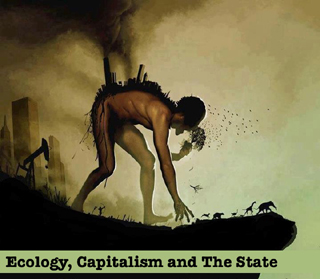 Modern civilisation as we know it faces a number of major threats. Escalating economic inequality and an increasingly atomised society could lead to large-scale social breakdown. The depletion of natural resources is having a profound effect on the environment. As climate change continues to worsen, the ecosystems upon which human and non-human life depend are subjected to intolerable conditions. States across the globe have long since acquired the means by which to exterminate the species several times over, and given the continued plundering of natural resources in the pursuit of profit, the possibility of a nuclear war over what's left doesn't seem too unlikely.
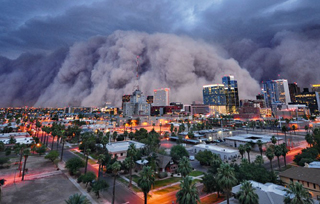 The
The  Doro-Mito, a sister union of Doro-Chiba, have been repeatedly waging strikes against re-opening of rail truck near Fukushima Daiichi Nuclear Power Plant. This struggle of rail workers in their own workplace against radiation-exposed work immensely shook Iwaki City where many of “Fukushima Liquidators” (nuclear plant workers to settle the catastrophe) live. We sincerely ask you, friends all over the world, to support this struggle and urge you to fight with us.
 But certainly for the present age, which prefers the sign to the thing signified, the copy to the original, representation to reality, the appearance to the essence… illusion only is sacred, truth profane. Nay sacredness is held to be enhanced in proportion as truth decreases and illusion increases, so that the highest degree of illusion comes to be the highest degree of sacredness.
 In a
In a  A crew of nine marijuana legalization canvassers walked off their jobs and into the Portland office of the Industrial Workers of the World June 5, looking to form a union.
 As unfettered capitalism with all its’ unsustainable methodologies of unlimited growth and consumption drives the planet ever closer to environmental catastrophe is there anything that can be done to reverse the damage and put economic activity on a long term sustainable basis?
 This site is not the official webpage of the Industrial Workers of the World.