






You are here
green syndicalism
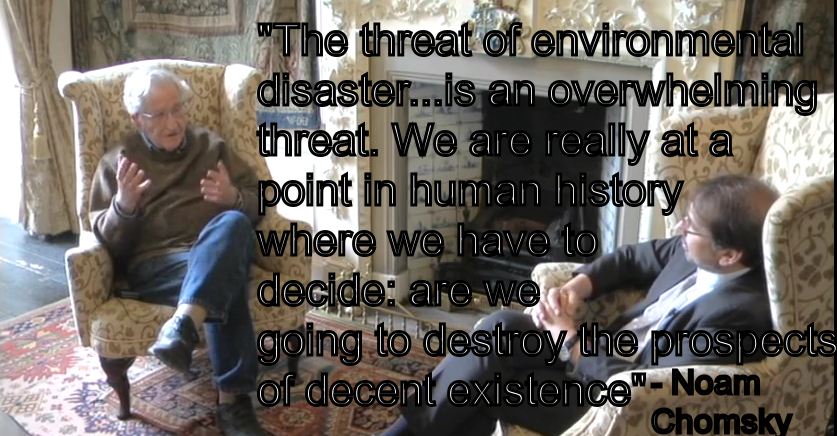 Aggressive militarism continues to emanate from the office of the presidency and the US government itself. With drone strikes in foreign countries, an “
 The “jobs versus environment” debate is often seen as a fundamental division between labor and environmentalists, most recently emerging in the fight over the Keystone XL pipeline. Despite
  When the union leaders' payoffs by the bosses has begun,
 Nowadays it sounds so familiar, almost natural: the mutually exclusive demands and apparently opposing agendas of labor and the environmentalist movement. But in fact, this artificial division is nothing more than a crucial neoliberal strategy to divide two of the most powerful social movements of the industrial era, whose alliance could be a dangerous liaison with the capacity to call into question the very essence of the capitalist “treadmill of production.” It is thus essential that labor and environmental/public health organizations gain a historical perspective on their current state of conflict and become aware of the revolutionary potential of a common political project.
 At the first World Social Forum at the end of the 1990’s, participants started looking for alternatives. There are a lot of authors who started to theorize about different forms of economies. They started to rescue the idea of solidarity economy, based on the experience of cooperatives, indigenous practices, practices from different parts of the world and different economies.
 Since I published a response to David Walters rather dubiously reasoned editorial
  What if we build it and they don’t come? That was the experience of the left during the crisis - decades had been spent building organisations and a model of how crisis would create revolution but when the crisis arrived the left discovered that the masses weren’t convinced. The expected pattern of crisis leading to small strikes and protests, then to mass strikes and riot and then perhaps to general strike and revolution didn’t flow as expected. Under that theory the radical left would at first be marginal but then as conditions drove class militancy to new heights the workers disappointed by reformist politicians and unions leaders would move quickly to swell its ranks.
 No longer dominated by the traditional “Big Green” groups that were taking big donations from corporate polluters, the new environmental movement is broader, more assertive and more creative. With extreme energy extraction and climate change bearing down on the world, environmental justice advocates are taking bold actions to stop extreme energy extraction and create new solutions to save the planet. These
  This paper has been prepared to assist unions and their close allies who wish to better understand the impacts of shale gas drilling, or “fracking,” and want to develop a position or approach to fracking that protects workers, communities, and the environment. It begins with a summary of the shale gas industry’s global expansion, and then looks at the opposition to fracking that has emerged in a number of key countries. A preliminary profile of the anti-fracking movement highlights the goals and characteristics of this movement as well as the issues that lie at the heart of the resistance.
 A recent spate of high-profile campaigns against projects based on extracting raw materials has opened up an important new dynamic within the broad processes of change sweeping South America. Understanding their nature and significance is crucial to grasping the complexities involved in bringing about social change and how best to build solidarity with peoples’ struggles.
The Fine Print I:
Disclaimer: The views expressed on this site are not the official position of the IWW (or even the IWW’s EUC) unless otherwise indicated and do not necessarily represent the views of anyone but the author’s, nor should it be assumed that any of these authors automatically support the IWW or endorse any of its positions.
Further: the inclusion of a link on our site (other than the link to the main IWW site) does not imply endorsement by or an alliance with the IWW. These sites have been chosen by our members due to their perceived relevance to the IWW EUC and are included here for informational purposes only. If you have any suggestions or comments on any of the links included (or not included) above, please contact us.
The Fine Print II:
Fair Use Notice: The material on this site is provided for educational and informational purposes. It may contain copyrighted material the use of which has not always been specifically authorized by the copyright owner. It is being made available in an effort to advance the understanding of scientific, environmental, economic, social justice and human rights issues etc.
It is believed that this constitutes a 'fair use' of any such copyrighted material as provided for in section 107 of the US Copyright Law. In accordance with Title 17 U.S.C. Section 107, the material on this site is distributed without profit to those who have an interest in using the included information for research and educational purposes. If you wish to use copyrighted material from this site for purposes of your own that go beyond 'fair use', you must obtain permission from the copyright owner. The information on this site does not constitute legal or technical advice.
 This site is not the official webpage of the Industrial Workers of the World.