

Eco-Syndicalism

By Nick Djinn Kappos - May 16, 2015

Disclaimer: The views expressed here are not the official position of the IWW (or even the IWW’s EUC) and do not necessarily represent the views of anyone but the author’s.

As a very ecologically minded Syndicalist, I am sympathetic to and often supportive of some of the Green and Primitivist value systems. The condition that we leave the earth in is the single most important issue facing humanity, even before egalitarian social relations and economic equality/abundance....which I also consider very important. Future generations are not going to congratulate us for acquiring great wealth and status if we leave them a toxic wasteland where they are struggling to find clean water and survive.

That said....I don't think humanity will move backwards without destroying itself. The masses will not voluntarily give up their comforts, especially in a controlled consumer environment where they control the access to food and water. People will consume what is fed to them, since the alternative inside of cities is starvation. People fortunate enough to have yards or sunlit space can grow more of their own food and we can have community gardens....total sustainability is something only the dedicated few will strive for. You could spend your whole life trying to prepare for an ecological collapse, only to find that you are not protected from drought or toxic rain as the rest of the population keeps fucking the place up. I do think that there are advantages to having autonomous communities that live closer to the land and each other. I feel like we could accomplish more to change things by being involved with the rest of society, perhaps building experimental communities just outside of smaller University towns.

Without access to technology we will not be able to put up much of a fight. They just roll over and destroy indigenous communities who lack the tools to fight back. Even just having internet and CB radio would give communities the opportunity to call for help and let the world know what is happening. Technology might be the death of us, but I also think we have an opportunity to do it better.

I won't really consider ourselves to be an evolved or enlightened society until we can produce everything we need sustainably, thinking 7 (or more) generations ahead. Cities that are too densely populated to provide their own food and water locally will inherently adopt exploitative and imperialist agendas. To maintain the import of resources and the export of waste, we must necessarily dominate and exploit the surrounding areas or foreign lands. There is no way around this until we reach a point where we can sustainably produce our own food and water and material goods locally without poisoning ourselves. We can't continue to poison our oceans, clear cut our forests, strip mind our hillsides, and not have it bite us in the ass later....probably as our children are growing up.

Consumer choice isn't really much of a choice. You are either going to pay 3x as much for some eco-friendly products that you can only afford if you are wealthy, or you are going to buy all the same crap that the corporations provide to everyone else. If a few people escape the city, the masses of people will still be stuck and continue to perpetuate the system. The only way out of this that I can personally see, short of killing ourselves, is to put the means of production back into the hands of the people while guiding and encouraging a trend towards sustainability and egalitarian social relationships. If we produced for our own communities as local communities, we could make better and more ethical decisions than would be made by mega-corporations who only care about the bottom line and do not have to live inside of the conditions they create.

I think we should acquire and control our own technology and render the old powers obsolete...and while keeping our sustainable technology, I think we should plant a lot more trees and make our living environment greener, with an emphasis on fruit bearing plants and trees that are freely available to the entire community. I think we could live better if we lived in smaller well networked pod-communities where you could easily walk to most of the places you would need to visit in a day. I envision lite rail systems that connect communities, made in a way that does not cut eco-systems in half. I think we could use a combination of common earth elements and plant resins and fibers for our building materials, instead of cutting down forests. I think we should keep the internet and make it free for everyone to access, and utilize that technology to network local communities with the larger society, and individuals with each other. I think we should get to a point where we can produce everything we need locally without reliance on imports shipped halfway across the world. I think we can reduce our need for cars and traffic, while still having a few vehicles for specialty purposes. You just wouldn't require one to do everything you need to do in a day. I think that if we are not packed like sardines into cities and if we have access to the land and means of production, that we can easily produce more than enough food for everyone and then some. I think we could easily house everyone for a lot less than we are all paying in rent if we abolished the banks and landlord control of our living areas. I think we could realistically aim for a 12 hour work week in our lifetime, and build our communities for social interaction instead of mass consumerism. I think we could have fewer stores and less pavement, and still be able to affordably produce every consumer item we would ever need.

All of these things are possible, but they will never be given to us unless we create it for ourselves.

A Houston Wobbly’s Reflection on the USW Strike

By Adelita - Unity and Struggle, May 11, 2015

Disclaimer: The views expressed here are not the official position of the IWW (or even the IWW’s EUC) and do not necessarily represent the views of anyone but the author’s.

Unions’ power is in decay and lately have been resorting to more creative methods in order to remain relevant. We’ve seen the Democrats putting their money behind the Service Employees International Union’s (SEIU) Fight For $15 in Houston at the same time attempting to “turn Texas blue.” But this dependency of unions like SEIU and the United Steel Workers (USW) on the Democratic Party means they are severely limited in what they are willing to do in the realm of tactics. This along with union density being sharply in decline, as well as union power being undermined by Right-to-Work spreading to states like Indiana, Michigan, and Wisconsin, means the unions are not up for waging anything close to a class struggle. Instead unions like the USW maintain their position as representing only certain interests and timidly bargaining around them.
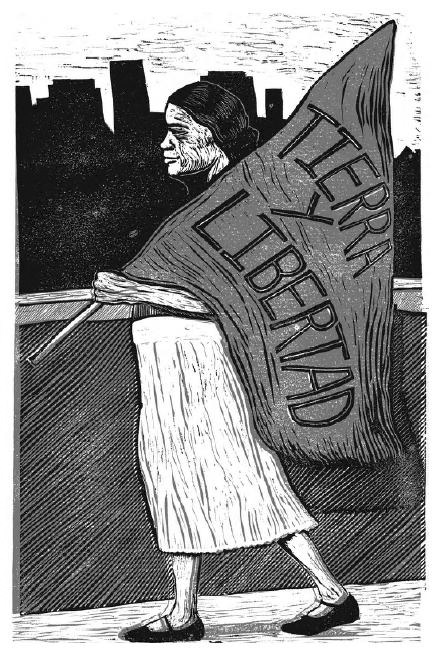
Texas, like other Right-to-Work states, has a working class that is almost entirely disconnected with their own fighting traditions. There is no real culture of workers resistance, union or not, nor is there any historical memory of fighting strikes. However, recently in Houston we have seen a few significant developments unfolding in labor starting with the immigrant rights movement and detention center hunger and labor strikes, the Maximus Coffee strike and lockout at the end of 2013, the ongoing Fight For $15 “movement” and its semi-annual spectacles, and the most recent and equally significant, the USW refinery strikes. These developments are very exciting for Houston not simply because of the lack of historical memory of struggle to draw from, but also due to the high density of industry in Houston which is unlike most of the country.  This makes Houston a critical choke point for US capital and thus pivotal for workers struggle nationally.

Houston’s remarkably large industrial sector provides a lot of semi-skilled labor opportunities and has been instrumental in Houston’s ability to float the crisis better than most of the country. This and the extremely low levels of reproduction of the class, especially of black and immigrant people who make up the unskilled, low-wage, and casualized sectors of the economy. This leaves refinery work to be primarily composed of white and US-born Latino workers.

When the USW strike started it was the first strike the refineries and their workers saw in 30 years. Yet the USW was unable to carry out a successful strike nationally or locally. This is due to union decline mentioned above, but also because one-third of the oil industry is unorganized (many of which are contract workers). Also, the relationship between the USW and the Obama administration impacted the overall strategy of the strike. Only 5,000 workers were pulled out, a mere ten percent of all union workers, while local union leaders claimed this was part of their strategy. Overall this affected only about 20% of production which is pretty insignificant and we realized quickly that most workers had little to no information about the strike or negotiations. Locally the USW’s timidness looked like a handful of workers carrying signs at each gate while being unable to block scabs from crossing, or from even standing or parking on company property. The international didn’t even use their massive treasury to support their striking members.  It was clear that the USW was not in a position to be able to wage a political struggle against oil because they are beholden to the ruling party.

Support Farm Workers in NW Washington – Boycott Sakuma Berries

By Whatcom-Skagit GMB, IWW - Portland IWW, May 6, 2015

Disclaimer: The views expressed here are not the official position of the IWW (or even the IWW’s EUC) and do not necessarily represent the views of anyone but the author’s.

Fellow Workers,

The Whatcom-Skagit general membership branch of the Industrial Workers of the World is urging everyone to join us in a boycott campaign in support of farm workers of the Familias Unidias por la Justicia (FUJ) union in NW Washington.

For decades now, the farm workers at Sakuma Brothers berry farm in Skagit County have endured inadequate housing, systematic wage theft, and racist abuse from supervisors, among many other problems. In the summer of 2013, the farm workers at Sakuma Brothers Farms went on strike and formed a union, Familias Unidas por la Justicia, of over 450 indigenous Triqui and Mixteco berry pickers. After a series of strikes there was a written agreement between Sakuma and FUJ. However, Sakuma reneged on their word to the workers. After Sakuma broke promises they made during a negotiation session, the farm workers of Familias Unidas por la Justicia voted to endorse a public boycott of Sakuma, Driscoll’s berries and Haagen-Dazs ice cream (both are major buyers/packers of Sakuma berries) until the labor dispute is resolved and the workers have a contract recognizing their union.

The workers want a fair wage, health insurance, and respect on the job. In court, Familias Unidas has been recognized as a union with the right to organize and represent workers collectively. They have won landmark victories, including a settlement in which workers were collectively paid $500,000 in back wages and two rulings preventing Sakuma from changing their housing and hiring policies illegitimately. On the farm itself they have won several gains, such as the ability to take lunch breaks. However, these gains on the farm are now slipping as they have in the past. On February 3rd a farm workers tribunal took place in Olympia and members of FUJ spoke to state legislators about wage theft and working conditions at Sakuma Brothers Farm. The tribunal is an independent hearing by community judges that examines and provides judgments relative to human rights, labor rights, and civil rights abuses and the rights of peoples. The Farmworker Tribunal seeks to document and expose violations of state laws, civil rights, labor rights and human rights in Washington State’s Agricultural Industries. On March 17th in Toppenish the Washington State Supreme Court heard oral arguments in a case (Demetrio et al. v. Sakuma Brothers Farms). This case will decide whether farm workers who are paid piece rate should also be compensated for rest breaks, as are wage workers in Washington State. The decision in this case will impact all Washington farm workers.

The farm workers at Sakuma are fighting against injustice on behalf of farm workers everywhere. We are reaching out to IWW branches to actively support these workers. Some ways that your group can support the farm workers is by promoting the boycott, picket stores that carry Driscoll’s, Haagen-Dazs and Sakuma Berry products, and supporting other groups’ boycott activities in your communities. The struggle of Families Unidas por la Justicia for dignity and justice in their workplace continues and it falls on everyone’s shoulders to support the people whose labor sustains us.

Solidarity,
Whatcom-Skagit GMB, IWW
Contact Info:
Email: iwwbellingham@gmail.com
Facebook: Whatcom-Skagit IWW

Union Member Risks Arrest at Arc Logistics, Opposes TPP and Fossil Fuel Exports

By Wes Kempfer - Portland Rising Tide, May 7, 2015

Disclaimer: The views expressed here are not the official position of the IWW (or even the IWW’s EUC) and do not necessarily represent the views of anyone but the author’s.

Tim Norgren of Stevenson, WA, and Laborers International Union of North America member is locked to a barrel at Arc Logistics Partners’ Portland Terminal to draw a clear connection between fossil fuel exports and trade agreements like the TPP, and to call for action to put a stop to both.

Tim is supported by the climate justice group Portland Rising Tide. The crowd is gathered at Arc Logistics to support Tim and draw the connections between existing & proposed fossil fuel infrastructure and the Trans-Pacific Partnership, a secretive trade deal being pushed by many politicians including Democrats Senator Wyden, Representative Blumenauer, Representative Bonamici, and President Obama.

Many environmental and labor groups oppose the Trans-Pacific Partnership (TPP) on the grounds that it is written and promoted by the fossil fuel industry and American Legislative Exchange Council, gives multinational corporations more rights than communities here in the US, sends jobs overseas, and jeopardizes worker and environmental protections around the Pacific Rim.

The AFL-CIO opposes the TPP and is holding a rally today at 4:30pm at the Sentinel Hotel to tell President Obama, who is in Portland to speak on trade agreements, to stand up for workers and the environment. “I’m locked down today in part because climate change is an issue of survival inextricably linked to so-called ‘free trade’ globalization efforts like the TPP.

While many of us strongly appreciate President Obama’s willingness to bring the climate crisis into the national debate, he has been unwilling to connect major fossil fuel exports to the TPP or veto the Keystone XL pipeline,” said Tim Norgren.

With proposals by major Alberta Tar Sands investor Pembina Pipeline Corporation for a propane (derived from fracked gas in Alberta, Canada) export terminal in Portland, the Jordan Cove Natural Gas terminal proposed in Coos Bay, a proposed natural gas terminal in Warrenton, as well as already-operating Arc Logistics and Port Westward oil-by-rail terminals, Oregonians are concerned that the Trans Pacific Partnership will promote more export terminals, send domestic energy overseas to fuel jobs in countries with lower workers’ rights standards, and hasten climate change.

At a time when scientists tell us we need to leave most fossil fuels *in the ground* to prevent disastrous climate change and runaway global warming, this is completely unacceptable. Tim hopes this action will send a message to union leaders and politicians alike that everyday workers want sustainable jobs.

“I’m also taking this action to let my union, the Laborers International Union of North America, know that it has rank and file members who are willing to stand up not only for prevailing wage contracts, but for the survival and rights of all workers, rather than support those who would see minimum wage remain at poverty levels while jobs are freely outsourced to foreign factories with subsistence wages and no safety or emissions standards whatsoever. All they offer us in return is a chance to build infrastructure for an economy based on environmentally destructive resource extraction, and that’s just not sustainable.”

May Day #ShutItDown Communique and Banner Drop Photos!

By x363464 - IWW Environmental Unionism Caucus, April 29, 2015

Disclaimer: The views expressed here are not the official position of the IWW (or even the IWW’s EUC) and do not necessarily represent the views of anyone but the author’s.

In preparation for May Day protests, a determined unionist dropped a banner early this morning reading "May Day #SHUTITDOWN!" at 17th and Broadway. This Banner was intentionally dropped near Latham Square, the site of the 1946 Oakland General Strike, in hopes to revive the tactic. We think it is the most effective tool for working class people to achieve their demands for a living wage, against police violence, and against austerity and gentrification. We hope to shut down the city this May Day to show the world that the workers are the ones that run the system and it is time to stop it's exploitation and stop the destruction of the working class, poor, and the planet we inhabit.

May Day ‪#‎SHUTITDOWN‬ Full Schedule and Posters!
https://maydayshutitdown.wordpress.com/2015/04/24/may-day-shutitdown-full-schedule-and-poster/

Share and invite your friends!

All around the world May Day has been a day for direct action, reclaiming the streets, speaking out against injustice. Systematic racism, police violence, environmental catastrophes, and economic inequality are some of the many oppressions that are destroying our lives and the planet we live on. May Day should always be the day to take it to the next level and #shutitdown. We cannot continue to live this way and May Day we say ENOUGH IS ENOUGH.

Challenging the Industrial Narrative: Railroad workers are increasingly rejecting the old “jobs versus environment” story

By Trish Kahle - Jacobin, April 25, 2015; image by Jon Flanders

Disclaimer: The views expressed here are not the official position of the IWW (or even the IWW’s EUC) and do not necessarily represent the views of anyone but the author’s.

On July 6, 2013, the air brakes failed on an unmanned, seventy-four-car train carrying Bakken crude oil, sending the train cascading into the Quebec town of Lac-Mégantic, where it derailed and exploded. Forty-seven people were killed, and nearly half of the downtown was destroyed in the initial blast. In total, twenty-six thousand gallons of oil spilled into the nearby Chaudière River, and soil around the town was toxic to depths of several feet.

The catastrophe in Lac-Mégantic proved to be only the first in a series of high-profile explosions. Last year, there were thirty-eight derailments across the United States and Canada that caused blasts or tank ruptures. With scenes of toxic black smoke billowing above the nation’s grasslands and residents fleeing in terror, the vehicles at the center of the lethal phenomenon were given a new name: “bomb trains.

Yet rarely did the workers conducting and maintaining the North American rail system enter the conversation. Railroad Workers United (RWU) — a solidarity organization for railroaders across the industry’s dozen or so unions — saw an opportunity to fight for safer working conditions and build alliances with a public that fears further derailments, deaths, and ecological devastation.

One early result of that effort came last month, when the RWU brought railroad workers, environmentalists, and other labor and community activists together for two conferences — one in Richmond, California, the other in Olympia, Washington — to discuss the intersection of labor and environmental justice issues.

The conferences, as organizers readily noted, weren’t necessarily breaking new ground. They drew inspiration from earlier labor-environmental coalitions, which have a rich if overlooked history, particularly in heavy industry.

But even with the guidance the past can provide, workers and environmentalists must live in the present, where a ravaged labor movement has struggled even to win defensive battles and the environmental movement debates its strategy and future. Forging solidarity across traditional divides will be crucial in revivifying the labor movement and fighting climate change.

To that end, I recently interviewed three conference participants — RWU General Secretary Ron Kaminkow; Sierra Club community organizer Ratha Lai; and Ross Grooters, an Iowa-based locomotive engineer, environmentalist, and RWU member — about the state of the labor-environmental alliance, the working conditions on the nation’s railroads, and their vision for the future. The interviews have been edited for length and clarity.

Let’s Not Forget Our Brothers on the W&LE - Fighting for All of Us!

J. P. Wright - Railroad Workers United, April 23, 2015

Disclaimer: The views expressed here are not the official position of the IWW (or even the IWW’s EUC) and do not necessarily represent the views of anyone but the author’s.

While the fight against the BNSF attempt at engineer only operations was big time news amongst rail workers, our brothers at the Wheeling and Lake Erie (W&LE) remain on the front lines of this critical battle, soldiering on in relative obscurity.

For several years the W&LE has been aggressively pushing engineer-only trains, and the conductors and engineers said “no thanks”. On September 13, 2013, the carrier began to run engineer-only with a manager behind the throttle, no less. In response, the BLET represented members of BOTH crafts – conductors and engineers - went on strike September 20, 2013. The strike shut down the regional carrier’s operations in Ohio and Pennsylvania before the 100+ union members were ordered back to work by a temporary restraining order.

Since that time, the W&LE remains intransigent on the engineer-only issue. The workers there remain defiant, but they have now gone seven years without a raise. Simply put, the W&LE is attempting to economically bludgeon our brothers and sisters into submission. They are no doubt feeling the pain; who wouldn’t? This is an outrage!!!

If the W&LE has their way, the major Class 1 railroads will get a much needed boost in their attempts to run engineer-only. So the stakes for all of us rail workers is a no-brainer. By logical extension, the general public has a vested interest in safe railroading operations. As some state legislatures and corporations are trying to housebreak our unions at best and bust them at worst, this is one of several battlefronts that the entire working class has a stake in. They deserve and need the solidarity and support from all of us -- rails, other workers, and the general public.

At the BLET convention last October, a rank & file delegate proposed the following resolution from the floor. It carried with unanimous support (minus one “No” vote). RWU encourages all railroaders of all unions - BLET or otherwise - to push adoption of similar resolutions in your respective locals. Then forward them on to RWU. We will send them on to the Local #292 leadership to let them know they are not alone, and that we all have their backs.

“If It Isn’t Rank and File, It Isn’t Anarchist”

By Anarchist Materialism - Anarchist Materialism, April 20, 2015

Disclaimer: The views expressed here are not the official position of the IWW (or even the IWW’s EUC) and do not necessarily represent the views of anyone but the author’s.

“Our duty, which was the logical outcome of our ideas, the condition with which our conception of revolution and re-organisation of society imposes on us, namely, to live among the people and to win them over to our ideas by actively taking part in their struggles and sufferings” — Errico Malatesta

In order for the Anarchist movement to mature in this country, we must address a particularly troubling dilemma.  Are we to continue our historical struggle within the working class or do we evolve into a professional class of labor organizers and bureaucrats?? Addressing this question isn’t only about disagreements in methods but in affirming an anarchist conception of organization from the base.  Whether in garment factories and ports or in hotels and retail, our focus on the rank and file has always been obvious–without the revolutionary self organization of the workers, we will never overthrow this unjust system of economic and political domination.

Unfortunately there exists a layer of self proclaimed anarchists as well as other leftists today who have not only chosen to separate themselves from the rank and file, but to defend their activity as a strategic form of social insertion.  Such a view is heavily deluded and guided in no small part by years of NGO influence on social movements.  In the current political environment, there are anarchist staffers in every union imaginable from the SEIU and UFCW to the UAW and UNITE HERE.

Students interested in labor are directly recruited out of universities into internships with Jobs with Justice and other business unions, while militant rank and file workers are tempted off the shop floor with higher pay and benefits.

Though this sad state of affairs shows a severe weakness of the left in offering alternatives, it is also a deliberate tactic of the union leadership.  By placating agitated workers with radical staff who “get it”, the union leadership is able to control mobilization and to later use their staffers to push through harmful cuts and “reforms.”

Organizing Against Climate Catastrophe

By Paul Messersmith-Glavin - Institute for Anarchist Studies, April 15, 2015

Disclaimer: The views expressed here are not the official position of the IWW (or even the IWW’s EUC) and do not necessarily represent the views of anyone but the author’s.

The forces responsible for changing the climate and endangering the future of humanity have names. Names such as: Chevron and Exxon Mobil, Saudi Aramco and Petroleos de Venezuela. They are the predominant groups responsible for playing havoc with our collective future. In fact, two-thirds of historic carbon dioxide and methane emissions can be attributed to exactly ninety entities. They are based in forty-three countries and extract resources from every oil, natural gas, and coal rich region in the world. They process the fuels into products that are sold to consumers in every nation on the planet. Of the top 85 emitters, 54 are in industrialized countries and 31 are in developing nations.[2] Knowing who and where they are demonstrates that an end to the problem is within our reach. In order to stop global climate change all we need to do is put pressure on these isolated entities, right?

Wrong. While these are the primary economic forces responsible for climate change, it would be a mistake to think if we stop these particular companies from conducting business as usual, we can solve the problem. They are only the most public faces of a system that goes much deeper.

Naming the responsible parties should not lead to a reformist strategy of regulating or even abolishing these companies. That would not be ultimately effective because they operate within a system that rewards their behavior. Very similar groups would emerge to fulfill these roles. What must be addressed and confronted is the social and economic system of capitalism that makes their work possible. This is the true enemy. The driving force of climate change is the capitalist profit motive and confronting this effectively will require massive grassroots local organizing with an international perspective. It will require developing an extra-legal movement, one that does not play by the rules of established power. It necessitates a revolutionary focus, and attention to how the systems and structures of racism, patriarchy and the nation state intersect with and reinforce capitalist social relations. It will require working with a broad cross-section of the population, learning from folks outside established radical circles, educating ourselves and others, while moving with hundreds, thousands, and ultimately millions of people to fundamentally transform society. The civilization that gets us out of the climate crisis will be different than the one that has gotten us into it.

Many questions arise: what is required to create such a mobilization? How does social change happen, and can it happen quickly enough to prevent further catastrophic change? Simply having access to the science is not enough; activists battle conflicting and politically driven media messages alongside feelings of despair and apathy born of disempowerment. A new, ecologically minded paradigm will require not just information but an expanded and critical economic analysis, as well as shared assumptions about collective power and the experience of working together from the ground up.

In the Pacific Northwest of the US, several organizations have been working on responding to the crisis. Three groups working closely together in Portland, Oregon have been experimenting with new models. These groups offer ideas for organizers through their experimentation with different approaches to outreach, education, and mobilization.

A radical critique of science: writing the next chapter

By Gabriel Levy - People and Planet, April 13, 2015

Disclaimer: The views expressed here are not the official position of the IWW (or even the IWW’s EUC) and do not necessarily represent the views of anyone but the author’s.

Social and labour movements need a coherent critique of science and technology, it was argued at a meeting in London on Saturday.

On a practical level, battles against damaging technologies have often been waged separately from each other, and cover1could do more to reinforce each other, it was pointed out.

This includes technologies deployed by corporate power in an anti-natural, anti-human way (e.g . “extreme energy” or genetic engineering of people or crops), technologies of social control (e.g. anti-crowd hardware or electronic surveillance), and technologies that harmed workers’ health and/or reinforced their exploitation (e.g. hazardous chemicals or building practices).

The use, misuse and abuse of science in developing these technologies is crucial. And the meeting highlighted the history of the British Society for Social Responsibility in Science (BSSRS), that in the 1970s and 80s successfully mobilised scientists to work with labour and protest movements. It considered the lessons of this experience for activists today.

The gathering (title: Radical Science and Alternative Technology) was organised by the Breaking the Frame group, and featured talks by veteran BSSRS activists and by present-day campaigners. Here are my impressions of an inspiring day’s discussion. (Stuff will be posted on the Breaking the Frame site and the BSSRS archive site, and I’ll update this post when I hear about that.)

Pages

The Fine Print I:

Disclaimer: The views expressed on this site are not the official position of the IWW (or even the IWW’s EUC) unless otherwise indicated and do not necessarily represent the views of anyone but the author’s, nor should it be assumed that any of these authors automatically support the IWW or endorse any of its positions.

Further: the inclusion of a link on our site (other than the link to the main IWW site) does not imply endorsement by or an alliance with the IWW. These sites have been chosen by our members due to their perceived relevance to the IWW EUC and are included here for informational purposes only. If you have any suggestions or comments on any of the links included (or not included) above, please contact us.

The Fine Print II:

Fair Use Notice: The material on this site is provided for educational and informational purposes. It may contain copyrighted material the use of which has not always been specifically authorized by the copyright owner. It is being made available in an effort to advance the understanding of scientific, environmental, economic, social justice and human rights issues etc.

It is believed that this constitutes a 'fair use' of any such copyrighted material as provided for in section 107 of the US Copyright Law. In accordance with Title 17 U.S.C. Section 107, the material on this site is distributed without profit to those who have an interest in using the included information for research and educational purposes. If you wish to use copyrighted material from this site for purposes of your own that go beyond 'fair use', you must obtain permission from the copyright owner. The information on this site does not constitute legal or technical advice.
