

You are here

Donald Trump

The Trump Admin’s Misleading Justifications for Repealing This Oil Train Safety Rule

By Justin Mikulka - DeSmog Blog, December 10, 2017

On December 4, the Department of Transportation (DOT) announced it would repeal a critical safety regulation for modern braking systems on the same oil trains which have derailed, spilled oil, caught fire, exploded, and even killed dozens in multiple high profile accidents in recent years. 
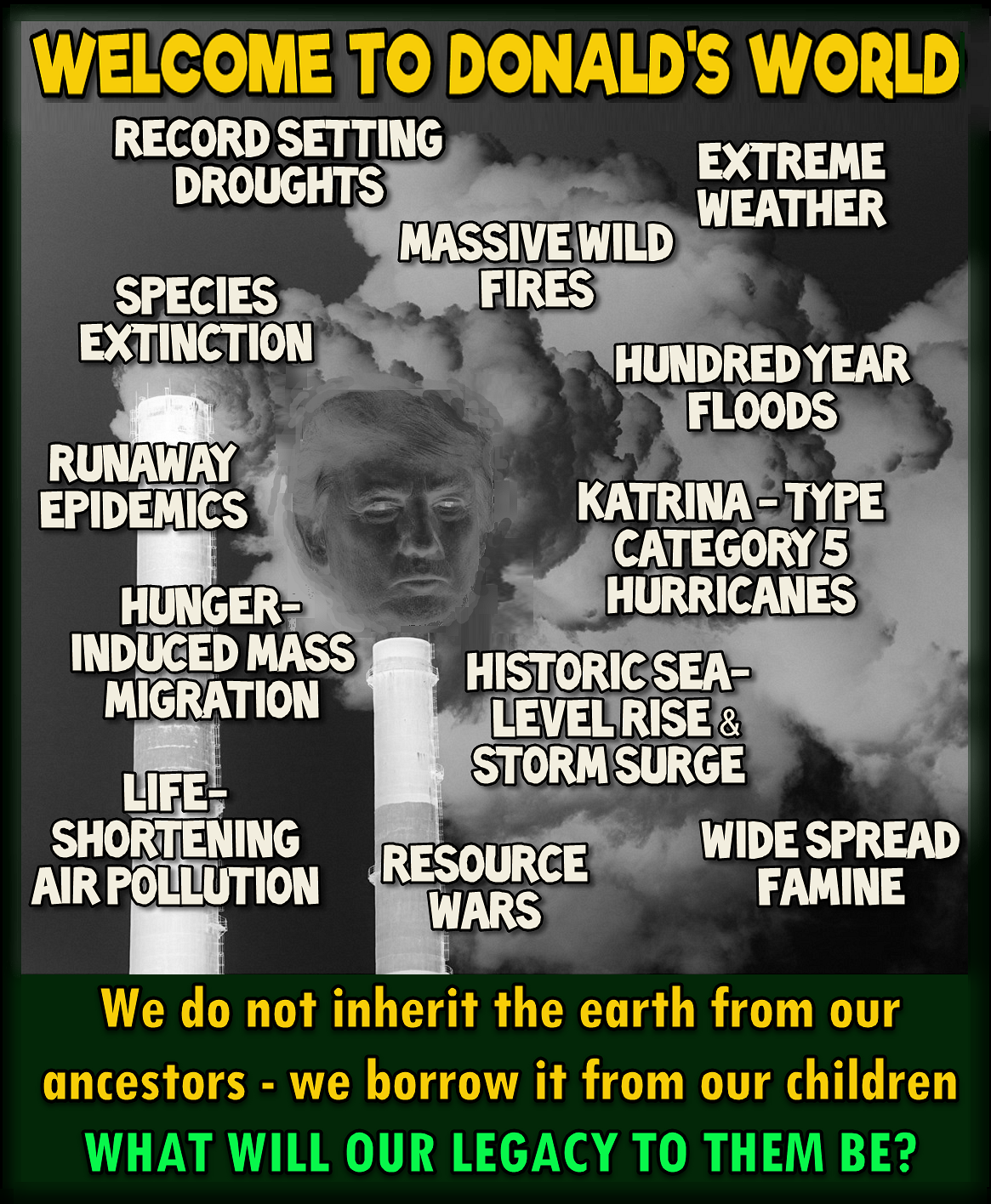
The regulation, released by the DOT's Pipeline and Hazardous Materials Safety Administration in mid 2015, required that oil trains have modern electronically controlled pneumatic (ECP) braking systems by 2021. However, in the latest iteration of its review process for this rule, the DOT is now doing an about-face.

Why would the DOT, as the regulator responsible for protecting 25 million people who live along railroad tracks carrying oil trains, reverse course on a technology hailed as “the greatest safety improvement” for modern trains? Let's take a look at corporate influence on the regulatory process.

In 2015, shortly after these regulations were announced, Matthew Rose, CEO of oil-by-rail leader BNSF, stated that the rail industry would not accept the requirement for ECP brakes, telling an audience at the annual Energy Information Administration conference that “the only thing we don’t like about [the new regulation] is the electronic braking” and “this rule will have to be changed in the future.”

Two years later, Rose appears to have been granted his wish.

The GOP Tax Bill Assaults the Planet as Well as the Poor

By Basav Sen - Common Dreams, December 5, 2017

If you are an average American, your government has just declared war against you. Unless you happen to be an oligarch. I’m talking, of course, about the monstrosity of a tax bill that Congress looks set to pass.

With good reason, only about one-third of Americans support the bill, since its primary purpose is to cut taxes for corporations and fabulously wealthy people at all costs.

The costs are high indeed, since the bill systematically raises taxes on struggling lower to middle income people. It gets rid of taxpayers’ ability to deduct state and local taxes paid from their taxable income, which is a form of double taxation. While this increases everyone’s taxes, struggling working people will feel the pain of this double taxation more than oligarchs. Make the Poor (and the Middle Class) Pay Again. And Again.

It also ends the deductibility of large medical expenses, effectively a large tax increase for the seriously ill, especially the uninsured or underinsured among them. Make the Sick Bankrupt Again.

In an all-out assault on higher education, it turns tuition reductions or waivers for graduate student teaching and research assistants into taxable income, a move that would make graduate school unaffordable for most people. Make America Uneducated Again.

The bill also gets rid of tax-exempt bonds for affordable housing construction, which are used to finance more than half of affordable rental units built each year. Make Housing Unaffordable Again.

In fact, it raises taxes on most people in so many ways that it is disingenuous to even call it a tax cut. This bill is a massive tax increase on most of us.

Lost in the debate around the tax bill, however, are provisions that will make more wind-reliant Iowans and Texans jobless, leave more hurricane-struck Puerto Ricans without access to basic necessities, poison more African-Americans with toxic fumes, and submerge more Native Alaskan villages, just to enrich a particular subset of oligarchs.

The tax bill kills the modest tax credits for solar and wind power, effectively raising taxes retroactively on renewable energy developers. It also kills the tax credit for electric cars, but does not touch the much larger subsidies for fossil fuels. Make Fossil Fuel Barons Rich Again, by subsidizing them while raising their competitor’s taxes.

These changes in energy tax credits will hurt many more people than just the owners of solar and wind companies. Solar and wind energy create many, many more jobs — hundreds of thousands more — than coal, even though they account for much smaller share of our overall energy mix than fossil fuels. If the intent of the tax bill truly were to create jobs, it would reinstate the solar and wind tax credits and eliminate fossil fuel subsidies, not the other way round. Make Americans Jobless Again.

Remake Puerto Rico’s power grid and create a universal basic income

By Elsie Bryant  - Climate Change News, December 6, 2017

Hurricane Maria, which made landfall at the end of September, left the island of Puerto Rico without energy, as more than three-quarters of its energy infrastructure was lost to the storm.

As Puerto Ricans sought help in restoring power to the people, for green energy enthusiasts, the destruction of Hurricane Maria was an opportunity to rethink – not just rebuild – Puerto Rico’s energy infrastructure by going off-grid with solar energy.

Puerto Rico has a once in a lifetime opportunity to rethink how it gets electricity”, wrote Earther journalist, Brian Kahn; “Solar industry wants to build Puerto Rico’s grid of the future” was the Bloomberg headline. Even the energy and environment minister for the Maldives, Thoriq Ibrahim, weighed in: “Puerto Rico hurricane shows islands must have renewable energy,” he wrote. Elon Musk has been one of the more prominent players in the space, with his company Tesla offering solar systems and batteries.

While any move away from fossil fuels is welcome, we need to think bigger about what resilience could mean for Puerto Rico. There’s an even larger opportunity here to transform Puerto Rico, where before the natural disaster happened, an economic and social crisis has been playing out for nearly a decade.

Puerto Rico’s economy has been in recession for over 10 years, the population is in drastic decline and the household income is less than half of what it is in the poorest US state. All the while, the island’s debt burden continues to grow, making private firms very rich. A resilient Puerto Rico needs not just a new grid but a new economic system, one that is localised and community driven, with Puerto Ricans owning and managing those resources.

This is not a vision that Puerto Ricans are waiting for the wider world to bring to them. Ángel Figueroa Jaramillo, head of Utier, the electrical workers’ union in Puerto Rico, told reporters “solar power and wind power in Puerto Rico is really the key to the future of the island’s energy independence”, adding that “all the alternatives have to be owned by the community”.

The benefits of community ownership are clear when the evidence shows that some of the most resilient communities following the hurricane were cooperatives such as the Cooperativa de Vivienda Ciudad Universitaria. The co-op is a community of over 1000 people, who as the Orlando Sentinel reported, “learned to formalise the neighbour-to-neighbour mentality so well that in situations of crisis – such as this one – they don’t have to wait for the government to show up or feel the need to flee”.

Thinking even more radically, the gains of a commons-based solar network, could be extended by advocating that dividends from any energy sold back to the grid could be redistributed to every Puerto Rican as a basic income.

Why Redneck Revolt Says Deal With Racism First, Then Economics

By Zenobia Jeffries - Yes! Magazine, November 29, 2017

Moved by the need for control, for an unchallenged top tier, the power elite in American history has thrived by placating the vulnerable and creating for them a false sense of identification—denying real class differences where possible.
—Nancy Isenberg, White Trash: The 400-Year Untold History of Class in America

There is no shortage of media commentary discrediting “identity politics,” particularly the focus on Black, Latinx, LGBTQ, and immigrant communities calling for justice and equity. Economics is our real problem, a counter argument goes, not race, sex, gender, citizenship. But as author Nancy Isenberg points out in White Trash, “identity has always been a part of politics.”

Laws have been written to oppress and exploit particular identities—Native Americans, Black Americans, Asians, homosexuals, transgender, and women—in a successful effort to maintain a system of White supremacy. Yet, members of these communities have worked for the rights and equality of everyone. In turn, White allies have joined in these anti-racism fights.

The Redneck Revolt is one such organization. The self-described anti-capitalist, anti-racist, anti-fascist group challenges working-class White people to stand against White supremacy.

I recently talked to Brett, one of the members who heads up the network’s Southeast Michigan Chapter. (Because of hostilities toward the organization, Redneck Revolt members use only their first names publicly.) There are about 40 chapters nationwide. He explained why the group focuses on anti-racism rather than economics even though it seeks out white working-class and poor people in economically struggling rural areas.

EPA Holds Lone Hearing on Clean Power Plan Repeal

By Kevin Ridder - Appalachian Voices, December 1, 2017

Scott Pruitt has been trying to get rid of the Obama administration’s Clean Power Plan even before he was head of the U.S. Environmental Protection Agency. And in October, he unveiled his proposed repeal, telling a crowd of eastern Kentucky coal miners that the Clean Power Plan “was not about regulating to make things regular. It was about regulating to pick winners and losers.”

But by repealing the plan and his management of the EPA in general, what is Pruitt doing if not favoring fossil fuels over renewables?

For the proposed repeal, it seems a cornerstone of his strategy is to make sure the public has as little voice as possible in the process. While the Obama administration held 11 public listening sessions and four public hearings nationwide before finalizing the Clean Power Plan in 2015, Pruitt has scheduled only one public hearing for its proposed repeal.

Survival on the island of the portable generator

By Judith Lavoie - Socialist Worker, November 28, 2017

IT IS now more than two months after Hurricane Maria struck, and Puerto Rican society is completely reliant on portable electrical generators.

Businesses and services that we thought were back to normal frequently have to close up shop because their generators break down or are in need of maintenance or repair. Everywhere you go, almost all the businesses that are open are only open part time--and even these have to open and close depending on when electricity is available to them.

Doctors have to postpone critical medical services such as CT scans because some generators simply can't sustain the machines.

These days, when we make any kind of plans, they are always tentative, because an unexpected power outage can quickly force us to cancel. These power outages can happen because of yet another failure in the electrical grid or because someone's generator has failed--yet again.

The government insists that 50 percent of homes have had electrical services re-established. They arrive at this percentage by taking the total amount of electricity being generated and estimating the number of homes served based on the island's maximum electrical load.

"This isn't the way it is done," said Matthew Cordaro, a trustee of the Long Island (N.Y.) Power Authority, told El Nuevo Dia. "The first thing you have to do is figure out how many of the distribution lines reach customers and how many have been re-established...What electricity is being generated and sent to the network is not actually being tracked. Instead of this, chaos reigns."

At the beginning of November, in the midst of the controversy about how they calculated the number of homes connected to the grid, the U.S. Department of Energy stopped counting the number of homes without electric service in Puerto Rico altogether.

Trump’s war on science

By Cliff Connor - Socialist Alternative, November 27, 2017

— Cliff Conner is currently writing a book entitled “The Tragedy of American Science.”

How loathsome is the Trump administration? Let me count the ways. On second thought, let me not—it would take too long. But one important threat it poses to the United States and the world is to the integrity of American science. Earlier this year, on Earth Day, April 22, hundreds of thousands of people responded to that danger by participating in the March for Science in Washington, D.C., and 600 other cities and towns across the country. How has American science fared since then?
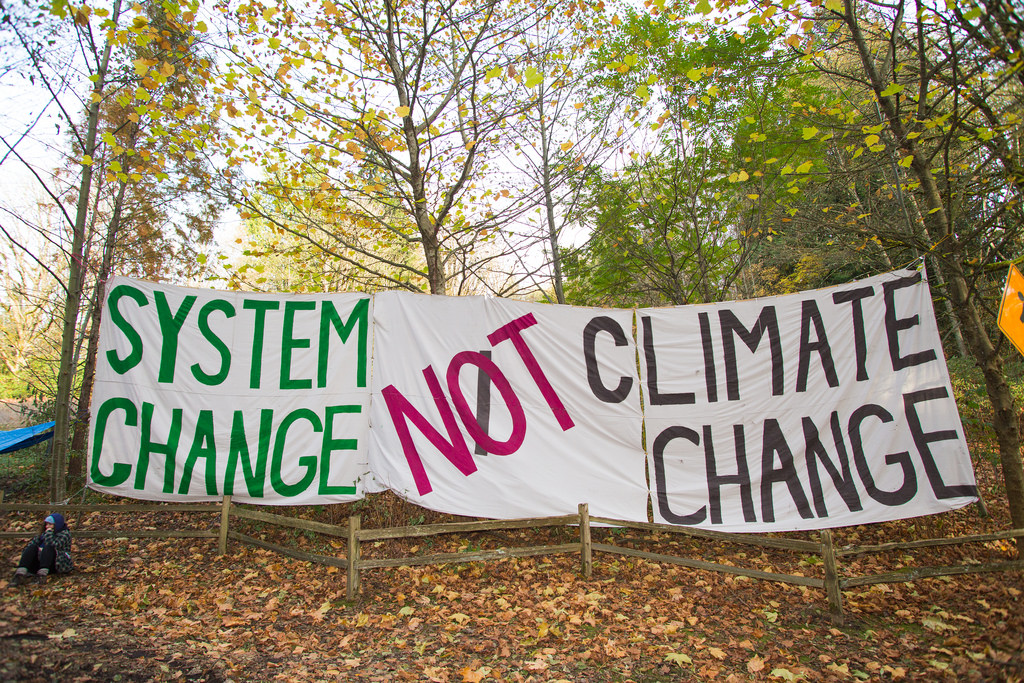
Many right-wing politicians and public intellectuals are torn between repugnance for Donald Trump’s truculent ignorance and exuberance at the prospect that he can help them accomplish their goal of “dismantling the administrative state.” Trump’s first year in office helped advance their strategy of destroying public faith in “big government” by discrediting it. Not only are the Trump administration’s various agencies and cabinet offices laughably incompetent and ethically compromised; the office of the presidency itself has forfeited all claim to the respect of intelligent citizens.

The offensive against “big government” is driven by billionaire donors who finance right-wing think tanks, political campaigns, and media outlets. Their single-minded goal is to reduce their taxes and roll back governmental regulation of their businesses, especially with regard to environmental and public health protection. Their crusade against federal regulatory powers entails going to battle against empirical reality, rationality, knowledge, and expertise—in short, they have declared war against science.

The deregulation of corporate activities that have compromised the credibility of American science did not begin with Trump. Nor was it exclusively a Republican political project; the Carter, Clinton, and Obama administrations all likewise furthered the deregulation agenda.

It should not be forgotten that many of the environmental rules and regulations Trump’s team has rescinded were only put in place by Obama in the closing days of his eight-year tenure as president. All they accomplished was to provide easy targets for Trump to knock over. The tawdry assemblage of antiscience policymakers appointed by Trump, however, amounts to a reductio ad absurdum of the whole process.

Climate Summit’s Solution to Global Warming: More Talking

By Pete Dolack - CounterPunch, November 24, 2017

The world’s governments got together in Germany over the past two weeks to discuss global warming, and as a result, they, well, talked. And issued some nice press releases.

Discussing an existential threat to the environment, and all who are dependent on it, certainly is better than not discussing it. Agreeing to do something about it is also good, as is reiterating that something will be done.

None of the above, however, should be confused with implementing, and mandating, measures that would reverse global warming and begin to deal concretely with the wrenching changes necessary to avoid flooded cities, a climate going out of control, mass species die-offs and the other rather serious problems that have only begun to manifest themselves in an already warming world.

The 23rd Conference of the Parties to the United Nations Framework Convention on Climate Change (UNFCCC), or COP23, wrapped up on November 17 in Bonn. Fiji was actually the presiding country, but the conference was held in Bonn because Fiji was not seen as able to accommodate the 25,000 people expected to attend. The formal hosting by Fiji, as a small Pacific island country, was symbolic of a wish to highlight the problems of low-lying countries, but that this was merely symbolic was perhaps most fitting of all.

These conferences have been held yearly since the UNFCCC was adopted in 1992 at the Rio Earth Summit. Two years ago, at COP21 in Paris, the world’s governments negotiated the Paris Accord, committing to specific targets for reducing greenhouse-gas emissions. Although capping global warming at 2 degrees Celsius (as measured from the 19th century as the Industrial Revolution took off around the world) has been considered the outer limit of “safe” warming, a goal of halting global warming at 1.5 degrees was adopted at Paris. The catch here is that the goals adopted are far from the strength necessary to achieve the 2-degree goals, much less 1.5 degrees.

Before we explore that contradiction, let’s take a brief look at the self-congratulatory statements issued at the Bonn conference’s conclusion.

This is Caguas: “Centro de Apoyo Mutuo”

By Mutual Aid Disaster Relief - It's Going Down, November 26, 2017

The rest is Puerto Rico.

Centro de Apoyo Mutuo, Centers for Mutual Aid, exist as raised fists across the island landscape of post hurricane Irma, post hurricane Maria Puerto Rico.

In the narrow, colorful streets of Caguas, a building seized and defended by community is being painted by Centro organizers and a Mutual Aid Disaster Relief medical and systems crew from the main land.

Outside, a tuff tank 400 gallon buffalo awaits the systems teams’ erection of the high volume modular water filtration system and pump which will fill it with potable water for the community, creating a resource on lands reclaimed by autonomous Apoyo Mutuo community members.

By 2pm it is pumping heavily, spilling treated water from the mouth of a hose until long after sunset.

Apoyo Mutuo seized the space a month and a half ago. A month ago they defended it from policia who demanded to know their individual names.

“We just kept responding that our name is Centro de Apoyo Mutuo.”

At 8, a crowd fills the parking lot sharing donuts cut in halves with the opening scenes of a documentary on a history of direct action occupations in Puerto Rico playing on the concrete wall of the lot in front of the building.

Community members spend the following two hours taking turns at the pump and watching the buffalo fill. An Apoyo Mutuo comrade laid out their mission for us at the community kitchen where solidarity work and mutual aid feeds 300 people every day.
“We are changing the way we relate to each other. Thats what we want. To change the behaviors we have learned through capitalism.”

We parted with the crew of community members from Centro de Apoyo Mutuo late in the night after helping paint the new community kitchen space, building a compost toilet and pumping hundreds of gallons of potable drinking water into a common tank.

This is the work of actualization.

This is the dream of a new Puerto Rico being manifested by autonomous direct action.

We saw Puerto Rico's struggle to survive

By Monique Dols and Lance Selfa - Socialist Worker, November 20, 2017

ALMOST TWO months after Hurricane Maria struck Puerto Rico, the island is adjusting to a new reality.

As one activist we met put it, Hurricane Maria ripped the leaves off the trees--and also ripped away the thin veil that barely concealed widespread poverty and immiseration.

The first few weeks after the storm were a period in which people worked just to ensure the safety of their families, comrades and loved ones, using alternative methods of communication to reach people in different areas. With very little support from the government, people pooled their resources to clean out their homes and try to salvage what was salvageable.

As of mid-November, about two-thirds of the island's residents remained without electricity. Although authorities are promising to restore power to 95 percent of residents by mid-December, attempts to repair the electrical grid have already run into many problems and breakdowns.

As a result, many people must rely on power generators for electricity, polluting the air with sound and exhaust. Without reliable electricity, people struggle to preserve and cook food, clean their clothing and keep desperately needed medicine such as insulin.

While 75 percent of the island reportedly had running water as this article was being written, people still line up for hours for bottled water--because it's suspected that water from the tap isn't safe to drink in the wake of the storm. In the Rio Piedras area of San Juan, the tap water ran blue as it flowed from faucets, according to residents.

Shortages of certain products roll through at different moments, creating spikes in prices. For example, right before we arrived, there was a shortage of mosquito repellant, which is now a necessity on the island.

The informal death toll is now around 900, but is likely more since communication is still spotty, reporting is low, and the medical system is still in a state of crisis.

Yet despite this latter crisis, the U.S. Navy medical ship, the USS Comfort--which, when we were there, was anchored in San Juan's port where cruise ships usually dock--is woefully underserving the sick people of Puerto Rico.

With doctors at Centro Médico in San Juan, the main hospital for the island, still operating by flashlight at times, many people wanted to know what you had to do to get admitted to the USS Comfort. The authorities had set up a couple of tents on the promenade next to the dock, and we saw dozens of people--some with walkers or oxygen tanks--lining up in the sweltering heat, presumably seeking treatment.

The common understanding on the island is that the local and federal governments have completely abandoned ordinary Puerto Ricans.

Pages

The Fine Print I:

Disclaimer: The views expressed on this site are not the official position of the IWW (or even the IWW’s EUC) unless otherwise indicated and do not necessarily represent the views of anyone but the author’s, nor should it be assumed that any of these authors automatically support the IWW or endorse any of its positions.

Further: the inclusion of a link on our site (other than the link to the main IWW site) does not imply endorsement by or an alliance with the IWW. These sites have been chosen by our members due to their perceived relevance to the IWW EUC and are included here for informational purposes only. If you have any suggestions or comments on any of the links included (or not included) above, please contact us.

The Fine Print II:

Fair Use Notice: The material on this site is provided for educational and informational purposes. It may contain copyrighted material the use of which has not always been specifically authorized by the copyright owner. It is being made available in an effort to advance the understanding of scientific, environmental, economic, social justice and human rights issues etc.

It is believed that this constitutes a 'fair use' of any such copyrighted material as provided for in section 107 of the US Copyright Law. In accordance with Title 17 U.S.C. Section 107, the material on this site is distributed without profit to those who have an interest in using the included information for research and educational purposes. If you wish to use copyrighted material from this site for purposes of your own that go beyond 'fair use', you must obtain permission from the copyright owner. The information on this site does not constitute legal or technical advice.
