You are here

Industrial Workers of the World (IWW)

Richmond IWW Stands in Solidarity with Virginia Pipeline Resisters

By Joe Sabo - Richmond IWW, March 12, 2018
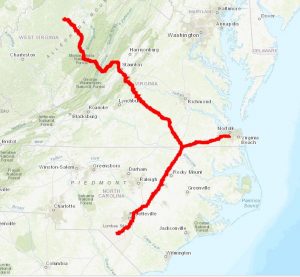
The Richmond General Membership Branch (GMB) of the Industrial Workers of the World (IWW) Stands in Solidarity with Resistance to the Atlantic Coast Pipeline and Mountain Valley Pipeline and the Movement for Environmental Justice.

Whereas: Dominion Energy, EQT Midstream Partners, and their corporate and banking partners are guilty of and complicit in surveying without consent, property rights loss, decline in property values, construction of over-sized extreme-pressure pipelines on unstable terrain, water contamination, forest fragmentation, endangerment of at-risk species, harm to the natural resources relied upon by the working class, insufficient emergency preparedness, and the jeopardization of the cultural and natural history of the Commonwealth of Virginia in their efforts to construct the Atlantic Coast Pipeline (ACP) and the Mountain Valley Pipeline (MVP); and

Whereas: The coal, oil, and gas industry, and many other unsustainable industries, sacrifice the health and safety of the working class and poor communities, especially many indigenous communities and communities of color. These communities are subject to environmental racism and classism and are often ignored and violated during the permitting process of such projects; and

Whereas: These communities often are forced to defend themselves with direct action which puts them at greater risk of violence and incarceration from the state and private security; and

Whereas: Contrary to the woefully inadequate assessments of greenhouse gases emitted by the ACP and MVP made by the Federal Energy Regulatory Commission (FERC), the construction of these pipelines will contribute to the acceleration of already dangerous levels of currently existing greenhouse gas emissions which are contributing to the already dangerous effects of climate change, which could lead to a dead planet with no jobs; and

Whereas: Water protectors have supported regulatory and judicial efforts to halt the ACP and MVP but acknowledge that direct action in the form of resistance camps and other tactics will also be needed to shut down construction of the pipelines to protect the water and natural resources such as the rivers, mountain passes, and agricultural areas that the working class in the area depend upon; and

Whereas: Neither the ACP nor the MVP will provide anywhere near the number of permanent union jobs the promoters of these projects promise they will; and

Whereas: More permanent union jobs can be created at union wages by decommissioning oil pipelines and upgrading water pipeline infrastructure, such as in Flint, Michigan. LiUNA and many labor unions currently have jobs working in the renewable energy sector such as solar, wind, and hydroelectric and could organize for a rapid transition of energy production and manufacturing to be safe for the workers, the surrounding communities and the environment. Though these renewable energy jobs are currently, typically non-union, trade unions, if so determined, could easily develop a successful green energy organizing program, using solidarity unionism, which would revitalize the currently struggling labor movement. Far more jobs currently exist in the growing renewable energy sector than in the declining fossil fuel sector. Also, these pipeline projects will not deliver the promised “energy security” or “energy independence” promised by their promoters, including the Building Trades officials among them, and;

Whereas: Many unions, including the IWW, ILWU, ATU, APWU, LiUNA-City Employees Local 236, CWA, UE, SEIU, NNU, Pride at Work, A. Phillip Randolph Institute, the Asian Pacific American Labor Alliance, the Coalition of Black Trade Unionists, the Coalition of Labor Union Women, the Labor Council for Latin American Advancement, Labor for Standing Rock, and many members of other Labor organizations have already publicly stated opposition to pipelines; and

Whereas: President Donald Trump’s executive orders that dismantle environmental regulation and ostensibly “clear a path” for the completion of the aforementioned pipelines are contradictory in nature and are designed primarily to divide workers and environmentalists over the false dichotomy of “jobs versus the environment”; and

Whereas: Virginia’s elite leadership, notably former Governor Terry McAuliffe and current Governor Ralph Northam, as well as a large majority of Dominion-funded legislators in Richmond, many of whom are so-called “environmentally friendly” Democrats, have repeatedly ignored the wishes of the People of the Commonwealth of Virginia to enact and enforce legislation that curbs the destructive actions of Dominion Energy; now, therefore be it

Resolved, that the Richmond GMB of the IWW:

1. reaffirms the IWW’s opposition to the construction of the Dakota Access Pipeline and the Keystone XL Pipeline as well as officially declares its opposition to the construction of the Atlantic Coast Pipeline and the Mountain Valley Pipeline; and

2. donates $100 to the ACP/MVP resistance camp supply fund and urges our Union’s members, the Labor Movement, and the working class to make Dominion Energy and EQT Midstream Partners struggle for every mile of pipeline, and to pass resolutions like this one, and donate, join, and organize in solidarity with the resistance to ACP and MVP and the movement for environmental justice, locally and abroad; and

3. calls on rank and file members of the Building Trades, Teamsters, International Brotherhood of Boilermakers, the Laborers’ International Union of North America, and other unions who have declared support for these pipelines and other unsustainable projects to implement Green Bans and take direct action by striking and/or slowing down in solidarity with the communities resisting the MVP and ACP and other projects that are exploitive of the working class and the planet we inhabit; and

4. calls on the working class, unions, and the unsustainable companies that employ them, including Dominion Energy and EQT Midstream Partners, as well as their financial supporters, such as Virginia-based Union Bank & Trust, to develop and rapidly implement a “Just Transition” plan for workers in unsustainable industries, such as pipeline and oil industry workers, to be trained and given union jobs in the green energy sector; and

5. reaffirms our belief and commitment to revolutionary industrial unionism, environmental justice, and community self-defense with our goal to “organize as a class, take possession of the means of production, abolish the wage system, and live in harmony with the Earth.”

The Teacher Strike in West Virginia: Interview with IWW Teacher Michael Mochaidean

By Radical Education Department - It's Going Down, March 12, 2018

The Radical Education Department talks with West Virginia wobbly Michael Mochaidean, who has also spoken with IGD several times, about the recent teachers’ strike.

West Virginia has been rocked by a statewide strike by teachers, bus drivers, and other school employees.  Today, March 2nd, the strike enters its seventh day.

Beginning on February 22nd, workers shut down public schools in all 55 of West Virginia’s counties, rejecting abysmal and declining teacher pay and the state’s attack on public employees’ health insurance.  The Industrial Workers of the World (IWW), one of the unions helping to organize the strikers, reports the following worker demands:

  • A natural gas severance tax that creates a self-sustaining source of revenue for PEIA [Public Employees Insurance Agency] and public employee pay.

  • No regressive taxes, which ultimately affect working-class families more than the wealthy elite.

  • A permanent tabling to any and all legislation pertaining to co-tenancy and joint development, which allow large natural gas industries to engulf local landowners.

  • A pay raise of 5% per year over the next half decade.

  • A permanent tabling to any and all legislation pertaining to charter schools, voucher systems, and any attempts to privatize public schools.

On February 27th, Governor Justice announced an agreement with three of the major teacher unions in the state: a 5% pay increase for teachers as well as a 3% increase for state employees generally. Union officials and the governor alike pleaded for school employees to return to work, despite the fact that key demands remain unmet.

On March 1st, however–defying the governor and official union leaders–teachers refused to return to work, swarming the capitol and chanting “It’s not over.”

Meanwhile, that same day, even the modest pay raise was refused in the state legislature.

(Following) is an interview conducted via email between John Schultz of RED and Michael Mochaidean, a West Virginia teacher and member of the IWW.

West Virginia: Extend the Strike, Build Long Term Power

By West Virginia IWW members - It's Going Down, February 26, 2018 (includes a February 27 update, below)

What follows is a proposal for how to extend the strike unfolding in West Virginia. To hear our interview with a striking teacher, go here.

Donate Here
Download and Print PDF Here

The statewide strike of teachers in West Virginia that started on February 22nd is a model for teachers and other working-class people across the US of how we can struggle together for what we need. It is a desperately needed example of mass working-class solidarity in a time when the rich are attempting to fracture us even more. It is also an important model of the kinds of strikes we can wage when we realize that the existing labor laws (the same ones that the rich are trying to destroy anyways) are traps designed by the rich to tie our arms behind our backs and hold us back.

Some teachers and supporters in West Virginia are organizing through the IWW to spread a revolutionary unionist perspective in the current strike, to expand the strike and strengthen the militant mood of the teachers, and to build for long-term organization that is not reliant on politicians or bureaucrats. They will begin by distributing a leaflet to encourage teachers and other members of the working class to extend and expand the current struggle, and they will be looking for openings to expand on that organizing.

You can support their organizing by donating here. Funds raised will be used to print agitational materials, to cover travel costs related to organizing, to rent spaces or cover child-care for meetings, and to cover other costs related to building a militant and organized presence among teachers and working-class people in West Virginia.

The text of the leaflet they will be distributing is below. We also welcome anyone in West Virginia, or any teachers anywhere, or anyone else, to download the PDF and distribute it in your workplaces, schools, churches, and neighborhoods.

The Power of Working Class Solidarity

What Do We Face?

Jim Justice and the Republican-dominated legislature seek to cut state funding to the Public Employees Insurance Agency (PEIA), increasing premiums over the next several years, and eliminating teacher seniority while opening up the possibility of charter schools to privatize public education in areas in most need of quality public servants. The goal for this legislature is to utterly decimate public sector labor, reap obscene profits through private charter school investments which lack accountability measures, and ultimately reduce the quality of education in the state.

We know that both Democrats and Republicans no longer have a need for a highly-educated workforce. Instead, they seek to create a system of obedient workers who can perform the menial tasks asked of them by their corporate masters without questioning the powers that be. Careers that provide meaningful employment with a steady wage and quality health care no longer exist for the many. They have been replaced, over the course of the past few decades, with a series of half-hearted promises by both parties. If we do not act NOW to halt this reactionary legislation, we will ultimately lose our future – our children’s future – to big business and the corporate-controlled parties.

In sum, we face the daunting challenge to confront elitism in our political party system and the legislation they seek to create. BUT, we cannot create a new destiny simply by voting out one party and replacing it with another. For substantive change to occur, we must FIRST organize around our common destiny as workers.

Do treeplanters suffer from Stockholm syndrome?

By x377547 - SITT-IWW, February 19, 2018

A portrait of the industry of treeplanting

While it used to be a dignified and respectable way to earn your life, treeplanting is now nothing but a way to live counter-culture for wanderers and students who seek an alternative to the minimum wage. Nowadays, the possibility of escaping the threshold of poverty is only attainable for the best of us, who endure a very long season from west to east of the country. There is no mistaken it, wages have not risen for a long time. When we ask why, we are always met with the same answer: there is not enough money, or we are told to shut up.

The ultra-competitive practices of the industry are to blame. For all these years, companies have ferociously maintained their market share, at the expense of our wages. They often leave thousands of dollars to win their submission. This represents the amount of money that separates the lowest submission of their closest competitor. And if the other companies that pay up to the standard of the industry find themselves incapable of offering lower costs, then where did they cut? In our safety? In our kitchen budget? In our wages?

Monopoly capitalism and the rise of syndicalism

By Mark Leier - reprinted by Libcom.Org, January 27, 2018

A portion of the first chapter of labour historian Mark Leier’s 1990 book Where the Fraser River Flows: The Industrial Workers of the World in British Columbia, which may serve as an introduction to the IWW’s syndicalist ideas and practices, as well as what conditions brought about the revolutionary union in the first place.

(Note: Besides the final paragraph, ~3,200 of the last words were left out for the sake of being concise. What was left out went further in depth about how "the essence of the new system of production was [...] in increasing the division of labour and in reducing the initiative of the workers over the work process," showing how some tried to achieve this.)

By the last years of the nineteenth century, many American and Canadian workers were keenly aware that the craft unions affiliated to the American Federation of Labor and the Trades and Labor Congress of Canada would not alter the basic relations between capital and labour. Unions could continue to carve out better wages for their members, but they would not help the mass of workers who were not organized. Nor would they work to abolish the unjust system of capitalism. At the same time, the socialist movement was isolated from the working class and its daily struggles. Prompted by the Western Federation of Miners and the left wing of the Socialist Party of America, unionists and radicals tried to create a new organization that would be able to unite all workers and work towards revolution as the only way to solve labour’s problems once and for all. Late in 1904, workers from the American Labor Union, the United Railway Workers, the Amalgamated Society of Engineers, and the Brewery Workers met to begin the formation of “a labor organization that would correspond to modern industrial conditions.” In January 1905, several delegates drew up a manifesto which would lay the foundation for a revolutionary industrial union. The manifesto decried the power of monopoly capitalism and outlined the fundamental changes in the labour process which accompanied it. As machines replaced skilled workers, the tradesman was “sunk in the uniform mass of wage slave. . . . Laborers are no longer classified by differences in trade skill, but the employer assorts them according to the machines to which they are attached.” Trade unions could not address this problem; at best, they could offer “only a perpetual struggle for slight relief within wage slavery.” The manifesto ended with a call for unionists and radicals to assemble in Chicago that June to create a new labour organization.1

By early morning on 27 June 1905, Brand’s Hall in Chicago was filled with tobacco smoke and people. More than two hundred delegates had shown up in response to the January manifesto.

New Forms of Worker Organization: The Syndicalist and Autonomist Restoration of Class Struggle Unionism (Ness)

By Henry Laws - LibCom.Org, January 19, 2018

This is the first book to compile workers’ struggles on a global basis, examining the formation and expansion of radical unions in the Global South and Global North.

Bureaucratic labor unions are under assault. Most unions have surrendered the achievements of the mid-twentieth century, when the working class was a militant force for change throughout the world. Now trade unions seem incapable of defending, let alone advancing, workers’ interests.

As unions implode and weaken, workers are independently forming their own unions, drawing on the tradition of syndicalism and autonomism—a resurgence of self-directed action that augurs a new period of class struggle throughout the world. In Africa, Asia, the Americas, and Europe, workers are rejecting leaders and forming authentic class-struggle unions rooted in sabotage, direct action, and striking to achieve concrete gains.

The tangible evidence marshaled in this book serves as a handbook for understanding the formidable obstacles and concrete opportunities for workers challenging neoliberal capitalism, even as the unions of the old decline and disappear.

Read the report (PDF).

Refusing the Fascist Future: An Interview with Shane Burley

By Anti-Fascist News - It's Going Down, December 17, 2017

So where did the Alt Right come from?

The Alt Right really comes from a few converging political movements, both inside and outside the U.S.  The real beginnings of this goes back to France in the 1960s when a number of far-right intellectuals laid the groundwork to “rebrand” fascist ideas using the language of the left.  The European New Right, led by figures like Alain de Benoist and Guillume Faye, used the language of the New Left, appropriated the arguments of post-colonialist and national liberation movements, and attempted to engage in a type of “cultural struggle” as proposed by Italian Marxist Antonio Gramsci.  Their ideas really were to pick up where the German Conservative Revolutionary movement and Radical Traditionalist thinkers like Julius Evola left off and argue for a going after the culture with nationalist values.  If they change the way that Europeans think about the world, and think about themselves, maybe this can allow a radical shift in politics down the line.

They argued that they were “anti-colonialist” and that white European nations had been “colonized” by forced of “globalist” capitalism and modernity.  Their argument was then for “Ethnopluralism,” a sort of “nationalism for all peoples,” that could then fight the destructive elements of modern multiculturalism, internationalism, and capitalism.  This approach avoided racial slurs, violent white nationalist politics, and the baggage of fascist political parties, and really laid a heavy intellectual groundwork for a new generation of fascists who wanted to appear as academics rather than Klansman.

The next is really paleoconservatism, a sort of far-right American conservatism that defined itself in opposition to the hawkish foreign policy of the neoconservatives that were coming into power inside the GOP in the 1980s.  They saw themselves as a part of the “Old Right,” which was likely a fantasy rather than a reality, which was isolationist, traditional, and America First.  The paleocons were aggressively conservative on social issues, especially in reaction to queer rights and the AIDs crisis of the 1980s, and were reactionary on racial issues.  Pat Buchanan was the best known of these figures, though he was moderate by their standards.

Worker Solidarity with Camp Makwa and the Movement for Environmental Justice

By the Twin Cities GDC - It's Going Down, December 14, 2017

On Tuesday, December 5, 2017, the Twin Cities IWW unanimously passed a resolution reaffirming the IWW’s opposition to the construction of the Dakota Access Pipeline and the Keystone XL Pipeline as well as officially declaring its opposition to the construction of the Enbridge Line 3 Pipeline. The Twin Cities IWW pledged material support to water protectors, rejecting Enbridge’s arguments that the pipeline is necessary for jobs and prosperity for working class people, and put forward a vision of a “Just Transition” to a sustainable economy.

The resolution pledged two donations of $100 each to the legal defense fund and the supply fund of Camp Makwa, a resistance camp using direct action to protect the land and water that Anishinaabe people and other working class Minnesotans depend on. The resolution further endorsed the Black Snake Killaz Circuit, a series of fundraising concerts for Camp Makwa running across the Twin Cities and other towns in Minnesota and Wisconsin throughout the winter.

No Jobs on a Dead Planet

In the resolution, the Twin Cities IWW rejected the attempts by Enbridge and certain unions to paint the pipeline as good for workers. Instead, the resolution focuses on the harm that the oil industry does to its workers, surrounding communities, and the environment.

Enbridge’s existing Line 3 is the cause of the largest inland oil spill in US history, spilling 1.7 million gallons of oil into the Prairie River in 1991. In 2007, tragedy struck in Minnesota again with a pinhole leak explosion in Clearbrook, killing two workers, sparking a large fire, and spilling 15,000 gallons. This spill burned for three days, contaminating the air in the surrounding community. In 2010, Enbridge’s Line 6B pipeline also spilled, releasing around a million gallons of oil into Talmadge Creek and the Kalamazoo River and causing 30,000-50,000 houses to evacuate—and leaving twice as many without clean drinking water. In the aftermath of these spills, union workers have spoken out against Enbridge for failing to clean up their mess which has resulted in birth defects, illness, cancer, and death of both humans and animals in the area of the disaster.

In addition to these specific acts of negligence, the resolution noted the way in which the oil industry exposes working class communities and especially communities of color and indigenous people to the worst risks. These communities are often ignored and their well-being violated during the permitting process for pipelines and other infrastructure projects. For example, pipeline routes often avoid wealthier or majority-white towns and are directed rather through poorer areas, especially near indigenous land. This was the case with the Dakota Access Pipeline, and the same pattern can be seen with Line 3.

The resolution further emphasizes the reality of climate change, an accelerating trend that is already disrupting and destroying lives, economies, ecologies, and communities around the world. As the resolution notes, “there are no jobs on a dead planet.”

Faced with environmental dangers on a local and global scale, and unable to stop the lobbying power of well-connected companies, marginalized communities of workers are left with few choices except direct action. Water protectors face violence from the state and private security to defend the land and the people who live on it from the harm done by the oil industry.

Growing Connections Between the Far-Right and J20 Prosecution

By the collective - It's Going Down, December 13, 2017

Almost 200 people face upwards of 60 years in prison for taking part in a demonstration against Trump’s inauguration and collectively are all being charged with breaking the same 5 windows of banks and corporate stores. The mass of people arrested on January 20th were swept up in a police kettle which lasted for hours, and ended in the police sexually assaulting and raping arrestees as a sadistic form of group punishment.

Central to the State’s narrative, is that everyone that took part in the anti-capitalist and anti-fascist march that led to the breaking of only a handful of windows was in fact part of a criminal conspiracy. In lieu of evidence, the State argues that the wearing of masks, black clothing, and even chanting similar chants or smiling while witnessing property destruction all constitute evidence in this regard. If the State succeeds, most of the defendants face literally a life sentence, and the State will be given a dangerous new precedent for future repression.

Banner Drop Against Columbus Murals at University of Notre Dame

By the collective - Rising Tide Michiana, December 8, 2017

“South Bend, Indiana”—Studying for their final exams, University of Notre Dame students in the library on Friday morning looked up and saw a banner unfurled from the second-floor balcony. The banner proclaimed,

This is Potawatomi land! F*ck the KKKolumbus murals!

The message comes as students have been organizing against murals displayed by the entrance of the university’s main administrative building. According to a pamphlet issued by Notre Dame, the nineteenth-century murals “create a heroic impression” of Christopher Columbus, despite the conqueror’s record of mass enslavement and murder. Moreover the paintings portray indigenous people in ways that Native American students say are stereotypical and insulting.

Students are collecting signatures for a petition titled “Dear Father Jenkins, The Murals Must Go.” Signed by more than 600 people, the petition argues, “The Native persons are depicted as stereotypes, their destruction is gilded over, and their slavery is celebrated. The murals commemorate and laud the beginning of the centuries-long systematic removal of Native American persons and culture from the United States.”

Pages

The Fine Print I:

Disclaimer: The views expressed on this site are not the official position of the IWW (or even the IWW’s EUC) unless otherwise indicated and do not necessarily represent the views of anyone but the author’s, nor should it be assumed that any of these authors automatically support the IWW or endorse any of its positions.

Further: the inclusion of a link on our site (other than the link to the main IWW site) does not imply endorsement by or an alliance with the IWW. These sites have been chosen by our members due to their perceived relevance to the IWW EUC and are included here for informational purposes only. If you have any suggestions or comments on any of the links included (or not included) above, please contact us.

The Fine Print II:

Fair Use Notice: The material on this site is provided for educational and informational purposes. It may contain copyrighted material the use of which has not always been specifically authorized by the copyright owner. It is being made available in an effort to advance the understanding of scientific, environmental, economic, social justice and human rights issues etc.

It is believed that this constitutes a 'fair use' of any such copyrighted material as provided for in section 107 of the US Copyright Law. In accordance with Title 17 U.S.C. Section 107, the material on this site is distributed without profit to those who have an interest in using the included information for research and educational purposes. If you wish to use copyrighted material from this site for purposes of your own that go beyond 'fair use', you must obtain permission from the copyright owner. The information on this site does not constitute legal or technical advice.