

You are here

climate justice

The enemy is not the climate; it’s capitalism

By Michael Gasser - Santa Cruz Ecological Justice, August 22, 2016

In a new article in the New Republic, 350.org founder Bill McKibben, probably the world’s most influential climate activist, argues that World War III has begun and that the enemy is climate change.

He goes on to say that we are losing the war, that we should learn from the experience of World War II, that by retooling industry as we did then we can win the war. In making this case, he is largely adopting the position that has been promoted since 2014 by The Climate Mobilization (TCM). A few days after McKibben’s article appeared, TCM’s co-founder Ezra Silk published an extensive “Victory Plan”, which outlines the steps needed to “restore a safe and stable climate”, “reverse ecological overshoot”, and “halt the 6th mass extinction”.

Before going on to say what I think is wrong with McKibben’s and TCM’s position, I want to make it clear that there is much that is certainly right about it. Above all, they recognize the seriousness of the crisis, the fact that many people who are aware of climate change under-estimate the seriousness, and the need for drastic action to solve the crisis.

The problem is that what they are arguing for is not nearly drastic enough. This is because their “war” is against nature, and as such it ultimately relies on technological fixes, rather than challenges to the political and economic system. McKibben rests much of his case on the well-known work of Stanford University engineer Mark Z. Jacobson and his colleagues, who have argued that renewable technologies could replace those based on fossil fuels in the United States within decades. While Jacobson has his critics, his work is undeniably important. What his work shows — and he himself agrees — is that the main obstacles to solving the crisis are not technological but rather political and economic. The question is who controls the technology.

If this is so, then we must look for the enemy elsewhere. In what must be the best-known of all books written on the climate crisis and its causes, This Changes Everything: Capitalism vs. the Climate, author Naomi Klein spells it out pretty clearly. The enemy (of the climate and hence of us) is capitalism. Although Klein does not go into much detail about what she actually means by “capitalism”, a number of ecosocialist writers have filled this gap. For an excellent overview, suitable for those who know little about the science of climate change and/or little about capitalism, see David Klein and Stephanie McMillan’s  Capitalism and Climate Change: the Science and Politics of Global Warming. A common theme in this work and others, especially Richard Smith’s Green Capitalism: the God that Failed and Daniel Tanuro’s Green Capitalism: Why It Can’t Work, is that capitalism, by its very nature, is completely incompatible with a just and sustainable future. If capitalism has a “solution” for the climate crisis, one can only imagine a dystopian world where elites survive in isolated islands of livability, protected from the masses of climate refugees on the outside.

Capital Blight News #118

Compiled by x344543 - IWW Environmental Unionism Caucus, August 24, 2016

A supplement to Eco Unionist News:

Lead Stories:

The Man Behind the Curtain:

Green is the New Red:

Capital Blight News #117

Compiled by x344543 - IWW Environmental Unionism Caucus, August 17, 2016

A supplement to Eco Unionist News:

Lead Stories:

The Man Behind the Curtain:

Green is the New Red:

Greenwashers:

Disaster Capitalism:

Other News:

For more green news, please visit our news feeds section on ecology.iww.org; Twitter #IWWEUC; Hashtags: #greenunionism #greensyndicalism #IWW. Please send suggested news items to include in this series to euc [at] iww.org.

Capital Blight News #116

Compiled by x344543 - IWW Environmental Unionism Caucus, August 10, 2016

A supplement to Eco Unionist News:

Lead Stories:

The Man Behind the Curtain:

Green is the New Red:

Greenwashers:

Disaster Capitalism:

Other News:

For more green news, please visit our news feeds section on ecology.iww.org; Twitter #IWWEUC; Hashtags: #greenunionism #greensyndicalism #IWW. Please send suggested news items to include in this series to euc [at] iww.org.

More Farmers, Better Food: A framework for British Agricultural Policy

By the Land Workers' Alliance - August 2016

The UK’s small-scale, ecological and family farms are at the heart of our rural culture and communities; they create employment, protect cherished landscapes and provide a huge amount of the food we eat. However, in the past, the UK’s farming strategies have undermined domestic production of healthy, affordable food and left many small farms unfairly disadvantaged in the market place.
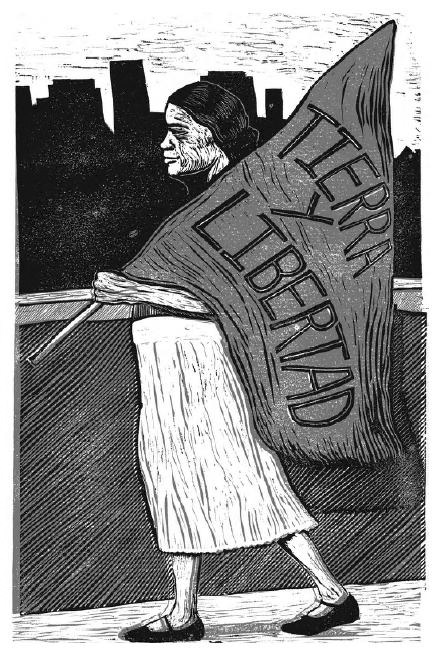
The task of creating a post-Brexit ‘British Agricultural Policy’ that support producers, protects the environment and prioritizes access to healthy, nutritious food for all is a complex but essential one. It represents a great opportunity if the Government is ready to listen to the needs of all stakeholders and put in place a truly long-term plan for environmental, social and economic resilience.

In order to contribute to this debate, The Landworkers’ Alliance proposes 8 points that we believe must be integral to forthcoming policy. Over the next 6 months we will carry out an in-depth consultation among our members to draw up a more comprehensive policy proposal that addresses the needs of food producers in the UK. We will also work with other organizations to draw up a framework for a ‘Peoples’ Food Policy’ that can address the systemic inequalities and misguided policies currently afflicting the food and farming sectors.

Download ‘More Farmers, Better Food – A framework for British Agricultural Policy’ here:

Capital Blight News #115

Compiled by x344543 - IWW Environmental Unionism Caucus, August 2, 2016

A supplement to Eco Unionist News:

Lead Stories:

The Man Behind the Curtain:

Green is the New Red:

Greenwashers:

Disaster Capitalism:

Other News:

For more green news, please visit our news feeds section on ecology.iww.org; Twitter #IWWEUC; Hashtags: #greenunionism #greensyndicalism #IWW. Please send suggested news items to include in this series to euc [at] iww.org.

Tunisia: on the frontlines of the struggle against climate change

By Hamza Hamouchene - ROARmag, July 28, 2016

Kerkennah is a group of islands lying off the east coast of Tunisia in the Gulf of Gabès, around 20km away from the mainland city of Sfax. The two main islands are Chergui and Gharbi. When approaching the islands by ferry, one is struck by a curious sight: the coastal waters are divided into countless parcels, separated from one another by thousands of palm tree leaves. This is what Kerkennis call charfia, a centuries-old fishing method ingeniously designed to lure fish into a capture chamber from where they can be easily recovered.

As the land is arid, agricultural activity is limited to subsistence farming. For the islanders fishing is one of the key economic activities, but for big multinational corporations it is the exploitation of oil and gas.

Despite a new article in the Tunisian constitution stipulating state sovereignty over natural resources and transparency in the related contracts, oil and gas companies continue to garner obscene profits and enjoy impunity. At the same time, local communities continue to shoulder the externalized social and environmental costs of this industry.

The Kerkennah archipelago is being doubly dispossessed and doubly threatened: first by the effects of disruptive global warming and second by the extractive operations of oil and gas companies, bent on making super-profits at the expense of the archipelago’s development. Caught in the intricate web of capitalist globalization, the collision between neoliberalism and climate change is potentially disastrous for the people of Kerkennah.

Capital Blight News #114

Compiled by x344543 - IWW Environmental Unionism Caucus, July 27, 2016

A supplement to Eco Unionist News:

Lead Stories:

The Man Behind the Curtain:

Green is the New Red:

From the Tar Sands to ‘Green Jobs’? Work and Ecological Justice

By Greg Albo and Lilian Yap - The Bullet, July 12, 2016

The ecological and social implications of climate change have – or should – become a central parameter for all discussions of work and capitalism. It is generally agreed that reliance on the burning of fossil fuels as the pre-eminent energy source for production and consumption over the history of capitalism is the critical factor in the ruinous greenhouse gas emissions triggering global warming, which would become irreversible if the earth's atmosphere were brought to a ‘tipping-point’. The leading scientific estimates project that a rise in average global temperatures of 2°C (and now often just 1.5°C) is the threshold for irreversible climate change; that this can be expected from an accumulation of 1 trillion metric tonnes of carbon in the atmosphere; that we are approaching 600 million tonnes; and that the carbon ‘tipping-point’ may well be reached in 30 years unless carbon emissions can be reduced by 2-5% per year (and now often even more severe reductions).[1] The unrelenting build-up of greenhouse gases has led to the jarring conclusion, drawn by climatologists, ecological militants and union activists, that an exit from reliance on fossil fuels for energy needs to occur with some urgency.

In Canada, the hyper-development of the Alberta tar sands, as well as the intensifying exploitation of both conventional and unconventional fossil fuel deposits across the country, has opened a major political divide over climate change strategies and their implications for work.[2] On the one side, the oil industry, governments and many workers in the oil and gas sectors have sought to lock-in the further tar sands development. They have argued that this could be done through a strategy of carbon intensity (more output per unit of carbon emitted from fossil fuels burned) by ‘green growth’ and a range of ‘market ecology’ measures to shift consumer behaviour toward energy saving. On the other side, many Aboriginal nations and ecological and labour organizations have pushed for a transition to an ‘ecologically-sustainable’ economy built around ‘green’ technologies, a renewable energy regime and ‘green jobs’ that would ‘de-carbonize’ production processes. (For the Aboriginal nations, this also could involve reclamation, if on an entirely different foundation, of traditional territories and economies.) This could be accomplished, it is argued, through ‘Keynesian-style’ public policies that build non-market institutions that embed and guide capitalist markets along a more sustainable and equitable growth path – in effect an ‘institutional ecology’.[3]

For reasons of both theoretical clarity and the political injunction to address climate change, the varied strategies for ‘greening work’ need dissection. If the levels of carbon emissions are to be stabilized, it will be necessary to not be limited by plans acceptable to the capitalist classes and their interest in endless accumulation. An ambitious vision of possible eco-socialist alternatives for Canada needs, we argue, to connect the restructuring of work to wider transformations in the socio-ecological system. This is a key task of the growing movement, in Canada and globally, to stop the tar sands and stand for climate justice.

Capital Blight News #113

Compiled by x344543 - IWW Environmental Unionism Caucus, July 19, 2016

A supplement to Eco Unionist News:

Lead Stories:

The Man Behind the Curtain:

Green is the New Red:

Pages

The Fine Print I:

Disclaimer: The views expressed on this site are not the official position of the IWW (or even the IWW’s EUC) unless otherwise indicated and do not necessarily represent the views of anyone but the author’s, nor should it be assumed that any of these authors automatically support the IWW or endorse any of its positions.

Further: the inclusion of a link on our site (other than the link to the main IWW site) does not imply endorsement by or an alliance with the IWW. These sites have been chosen by our members due to their perceived relevance to the IWW EUC and are included here for informational purposes only. If you have any suggestions or comments on any of the links included (or not included) above, please contact us.

The Fine Print II:

Fair Use Notice: The material on this site is provided for educational and informational purposes. It may contain copyrighted material the use of which has not always been specifically authorized by the copyright owner. It is being made available in an effort to advance the understanding of scientific, environmental, economic, social justice and human rights issues etc.

It is believed that this constitutes a 'fair use' of any such copyrighted material as provided for in section 107 of the US Copyright Law. In accordance with Title 17 U.S.C. Section 107, the material on this site is distributed without profit to those who have an interest in using the included information for research and educational purposes. If you wish to use copyrighted material from this site for purposes of your own that go beyond 'fair use', you must obtain permission from the copyright owner. The information on this site does not constitute legal or technical advice.
