

You are here

Latin America

Part of the 1st Ecosocialist International

By various - Ecosocialist Horizons, November 2017

It has been one year since “The Calling of the Spirits” in Monte Carmelo, Lara, when, with spirited minds and seeds in our hearts, we initiated a convocation titled “The Cry of Mother Earth.” Those who responded to this cry are now here: around 100 people from 19 countries and five continents, 12 original peoples from Our America, and ecosocialist activists from 14 states of Venezuela. We are here in the Cumbe* of Veroes, cradled in the enchanted mountains of Yaracuy, where the guardian goddess of nature lives. From the 31st of October until today, the 3rd of November, 2017, we have done the work demanded of us: the articulation of a combined strategy and plan of action for the salvation of Mother Earth.

We have made the decision and the collective commitment to constitute the First Ecosocialist International: To reverse the destructive process of capitalism; to return to our origins and recuperate the ancestral spirituality of humanity; to live in peace, and end war.

We recognize that we are only a small part of a spiral of spirals, which has the profound intention to expand and include others until all of us are rewoven with Mother Earth; to restore harmony within us, between us, and among all the other sister beings of nature.

The First Ecosocialist International is not just another meeting, nor another conference of intellectuals to define ecosocialism. We believe that ecosocialism will define itself to the extent that it is reflected and conceptualized in praxis; based on what we do and what we are. Nor is the First Ecosocialist International a single organization or a rubber stamp in constant danger of becoming a bureaucracy. It is a common program of struggle, with moments of encounter and exchange, which anyone may join, by committing themselves to fulfilling one or more of the various actions agreed upon here in order to relieve our Mother Earth. No person or process can be owner or protagonist of that which is done and achieved collectively.

We invite all peoples, movements, organizations, collectives and beings in the world to join the First Ecosocialist International, and to undertake the collective construction of a program for the salvation of Mother Earth. By restoring a lost spirituality we may arrive at a new one; a new and sometimes ancient ecosocialist ethic, sacred and irreverent, fed by the sun of conscience. We are recreating our spirituality with a new imagination and a new heartbeat, which may carry us to unity and diversity. The understanding and practice of this new spirituality will have the power to repel empire and capitalism which are powered by greed, and it will be able to strengthen our peoples and cultures which are conditioned by necessities. Because right now we are not living – we are merely surviving. We confront a contradiction: restore life, or lead it to extinction. We must choose.

We don’t have any doubts. We are radicals; we shall return to our roots and our original ways; we shall see the past not only as a point of departure but also as a point of arrival.

A collective birth towards a loving upbringing; we are an immortal embryo… Let’s dream, and act, without sleeping!

Read the report (PDF).

Digging Free of Poverty

By Thea Riofrancos - Jacobin, August 15, 2017

On March 8, 2012, a few hundred marchers set out from Pangui, Ecuador, a town in the southeastern Amazon, near the construction site of the massive, open-pit Mirador Mine. Just days earlier, a consortium of Chinese state-owned companies had signed a contract to exploit the mine’s copper reserves, the first agreement of its kind in the country’s history.

The demonstrators zigzagged through the southern Andes, where more mines are planned throughout the highland wetlands, which supply water to rural farmers and urban consumers. Reinforcements from the northern Amazon joined the march along the way, intentionally traversing the route of crude oil that has for decades flowed through notoriously faulty pipelines. After a seven-hundred-kilometer trek, on foot and in unwieldy caravans, the two-week long March for Water, Life, and the Dignity of Peoples reached its end in Quito, where the state coffers, voters, and armed forces form the complex of economic incentives, democratic legitimacy, and military repression that activists contend keeps the country’s extractive model in motion.

In their words and imagery, marchers proposed an alternative model: a post-extractive vision in which the polity was not a machine that ran on fossil fuels but a plural collectivity of cultures and ecosystems.

By the time they arrived in the capital city, their numbers had swelled to twenty-five thousand.

Xapuri Declaration: “We reject any form of climate colonialism”

By Chris Lang - Redd Monitor, June 20, 2017

From 26 to 28 May 2017, a meeting took place in Xapuri, in the state of Acre, Brazil. The meeting brought together Apurinã, Huni Kui, Jaminawa, Manchineri and Shawadawa indigenous peoples, representatives of traditional communities, rubber tappers, academics and supporting organisations. The meeting’s theme was, “The effects of environmental / climatic policies on traditional populations”.

The meeting was supported by Friends of the Earth International, the Indigenous Missionary Council (CIMI), the Rosa Luxemburg Foundation and the World Rainforest Movement.

In a short report about the meeting, Daniel Santini of the Rosa Luxemburg Foundation, writes that the participants reject the term “carbon credits”, because they are actually “pollution credits”. Trading pollution makes the climate problem worse by giving the illusion that something is being done, when in fact it allows pollution to continue.

Santini writes,

Instead of policies based on restrictions on the way of life of traditional peoples, the participants argued that the political-economic model of occupation of the region should be changed, with the suspension of generous public financing for agricultural expansion, industrial logging, and monoculture tree plantations.

Days before the meeting, in Rio Branco, the capital of Acre, corporate and state government representatives met to discuss the Carbon Offsetting and Reduction Scheme for International Aviation (CORSIA). This is the aviation industry’s disastrous proposal to continue polluting, while using carbon credits to “offset” its emissions.

The World Bank is in talks with the International Civil Aviation Organization about using REDD credits in CORSIA.

Acre is one of the states from which California is looking to buy REDD credits as part of its cap-and-trade scheme. In April 2016, Dave Clegern, a Public Information Officer at the California Air Resources Board, said that,

“The projects that we’re looking at are supported by the locals. They are what is known as sector-based projects, which means that they would be run in conjunction with the government of that country which would provide the opportunity for regular monitoring, verification of the quality of the offsets.”

REDD-Monitor asked Clegern some questions about this statement, including whether a process of free, prior, and informed consent had been carried out about REDD in Acre. And if not, which “locals” was Clegern talking about?

REDD-Monitor is still waiting for Clegern’s reply.

Reclaiming Public Services: How cities and citizens are turning back privatisation

Edited by Satoko Kishimoto and Olivier Petitjean - Transnational Institute, June 2017

You would be forgiven, especially if you live in Europe, to think that public services are by nature expensive, inefficient, maybe even somewhat outdated, and that reforming them to adapt to new challenges is difficult. It would seem natural to assume – because this is what most politicians, media and so-called experts tell us continuously – that we, as citizens and users, should resign ourselves to paying ever higher tariffs for services of an ever lower standard, and that service workers have no choice but to accept ever more degraded conditions. It would seem that private companies will inevitably play an ever larger role in the provision of public services, because everything has a price, because politicians have lost sight of the common good and citizens are only interested in their own individual pursuits.

This book, however, tells a completely different story. Sometimes it may feel as though we are living in a time when profit and austerity are our only horizons. In reality, below the radar, thousands of politicians, public officials, workers and unions, and social movements are working to reclaim or create effective public services that address the basic needs of people and respond to our social, environmental and climate challenges. They do this most often at the local level. Our research shows there have been at least 835 examples of (re)municipalisation of public services worldwide in recent years, some of them involving several cities. In total there have been more than 1600 cities in 45 countries involved in (re)municipalisation. And these (re)municipalisations generally succeed-ed in bringing down costs and tariffs, improving conditions for workers and boosting service quality, while ensuring greater transparency and accountability.

Read the text (PDF).

A Deadly Shade of Green: Threats to Environmental Human Rights Defenders in Latin America

By staff - Center for International Environmental Law, et. al., Summer 2016

On 3 March 2016, a wave of indignation and repudiation swept the world, condemning the brutal and cowardly assassination of Berta Cáceres, a Honduran environmental activist and community leader who inspired thousands of people through her work promoting the rights of the Lenca people.

Her death came amid a growing number of attacks against human rights defenders, particularly campaigners peacefully defending the environment, the right to land and the rights of indigenous peoples. This situation is not limited to Honduras, but can be seen throughout the continent, in Colombia, Brazil, Peru, Mexico, Guatemala, and Ecuador. This long list is being added to by an increasing number of countries that seem willing to put economic interests before those of people and territories. Reports from numerous organizations confirm a steady deterioration of the situation, highlighting the fact that Latin America has become the most dangerous region in the world for environmental activists.

Various types of attack have been committed against campaigners and their organizations. They range from surveillance campaigns, harassment, and being discredited in the media and social networks, to physical assaults, acts of torture, enforced disappearances and assassinations. In addition, there is widespread corruption and impunity in many countries where relations between state and non-state actors are often ambiguous. We should note, in particular, the attacks against female human rights defenders, who face threats of sexual violence and smear campaigns based on their gender. All of this is exacerbated by the context of increasing criminalization of social protest, and use of the law to suppress dissent in Latin American and Caribbean societies.

Despite the grim outlook, there are reasons to remain optimistic. Civil society has never looked so strong, organized and determined. International solidarity strengthened by the globalization of exchanges between people and organizations makes it possible to bring these struggles out of isolation, and demand accountability to ensure the effective implementation of human rights commitments.

Read the report (EN PDF) | (ES PDF).

The Colombian Left: Brief Comments About Evolution, Revolution, and Devolution

By Macros Restrepo - Miami IWW, February 13, 2015

Disclaimer: The views expressed here are not the official position of the IWW (or even the IWW’s EUC) and do not necessarily represent the views of anyone but the author’s.

Eyes have been on Colombia recently with news of negotiations between guerilla organizations like the FARC and the Colombian government along with electoral attempts by the left to find a foothold in power. In South Florida, Colombia makes its impact both in our communities and the strong economic and political ties to the region. We are sharing a piece by Macros Restrepo that looks back at the process that led the left in Colombia to this moment and its impact on the potential for a more liberated society. His article highlights contradictions as sections of the left moving to integrate with the state and its living authoritarian practices. In exploring the counterproductive aspects of recent left history in Colombia he aims us at a better direction.  
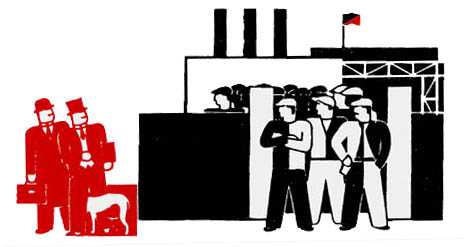
The political left in Colombia faces major challenges from within as well as from outside enemies.

The murder of Carlos Pedraza in late January of this year once again puts the reality of armed violence against leftist social and political movements in Colombia up front. Pedraza, a member of Congreso de los Pueblos was forcefully disappeared on January 19 and shot to death with a bullet to the head 24 hours later.

Left leaning social and political movements are tangled in an old struggle, going back to the 1980s, to separate themselves from ongoing accusations of being nothing more than unarmed stooges or undercover agents of the remaining guerrilla movements, the FARC and the ELN.

These accusations from local, national political and private sector representatives, right wing media pundits, the military and paramilitary organizations continue despite the ongoing changes within Colombia’s political left.

Venezuelan Workers Occupy Abandoned Clorox Plant

By staff - HR Reporter, September 29, 2014

Disclaimer: The views expressed here are not the official position of the IWW (or even the IWW’s EUC) and do not necessarily represent the views of anyone but the author’s.

VALLES DEL TUY, Venezuela (Reuters) — Hundreds of workers on Friday were occupying two plants belonging to Clorox Co, the U.S. cleaning products maker that has left Venezuela because of the difficult economic conditions.

"We've temporarily occupied the plant because the boss has abandoned it," said Luis Pinango, one of more than 200 workers mounting a round-the-clock vigil at one of Clorox's plants in the Valles del Tuy district to the south of Caracas.

There was a similar situation at the second plant in central Carabobo state, said workers. They were furious at learning they had lost their jobs via a recorded phone message.

In the latest sign of dissatisfaction from private businesses with President Nicolas Maduro's running of the South American OPEC nation's economy, Clorox announced its exit on Monday, saying its business was not viable and that it would sell its assets.

Thousands of Workers Begin Strike at World’s Biggest Copper Mine

By Cecilia Jamasmie - Mining.Com, September 22, 2014

Disclaimer: The views expressed here are not the official position of the IWW (or even the IWW’s EUC) and do not necessarily represent the views of anyone but the author’s.

Close to 2,800 miners at Chile's Escondida, the world's biggest copper mine, began a 24-hour “warning” strike on Monday morning as they seek to negotiate better working conditions, Publimetro reports (in Spanish).

Workers belonging to the Sindicato No. 1 union said if talks with the mine owners, BHP Billiton (ASX:BHP) and Rio Tinto (LON:RIO), don’t bear fruit, they’ll stage an indefinite stoppage beginning Wednesday morning.

The 1.2 million tonnes a year operation, located in Chile's Atacama Desert, also provides around 1,900 contract workers with full time jobs.

The news did not affect the red metal prices. London copper futures, in fact, fell to their weakest level in months, losing 1.46% to trade at $6,735 a tonne by 0648 GMT. Earlier they had fallen falling to $6,722.50, the lowest since June.

So far this year copper prices have tumbled more than 8%.

Escondida’s Sindicato No. 1 union carried out a similar 24-hour stoppage over pay and conditions last year. That dispute was quickly settled, but during a two-week strike in the summer of 2011 output of more than 40,000 tonnes of copper was lost, forcing operator BHP to declare force majeure.

News of the strike comes not long after BHP said the mine could substantially increase total output next year to 1.27 million tonnes.

The mine which also produces gold and silver as by-products plays a key role in the Chilean economy, accounting for about for 2.5% of the country's gross domestic product. According to Rio Tinto’s website, in 2012 the mine generated 5% of global copper production and around 15% of the South American nation output.

South America: How "Anti-Extractivism" Misses the Forest for the Trees

By Frederico Fuentes - Truthout, May 26, 2014

Disclaimer: The views expressed here are not the official position of the IWW (or even the IWW’s EUC) and do not necessarily represent the views of anyone but the author’s.

A recent spate of high-profile campaigns against projects based on extracting raw materials has opened up an important new dynamic within the broad processes of change sweeping South America. Understanding their nature and significance is crucial to grasping the complexities involved in bringing about social change and how best to build solidarity with peoples’ struggles.

Many of the campaigns that target specific mining, oil, agribusiness or logging ventures share common elements. They have raised public awareness around a variety of important environmental issues such as water scarcity, forest preservation and sustainable land usage.

In some cases, particularly in Ecuador and Bolivia, these campaigns have influenced existing discussions on issues such as climate change, the rights of Mother Earth and the kinds of alternative development models needed to achieve radical change.

Another common aspect has been the central role played by rural indigenous communities. This is due not only to the fact many of these extractive ventures occur in indigenous territories, but also the leading role indigenous movements have played in recent years in the global environment movement.

As a result, issues such as indigenous autonomy and the right to prior consultation on ancestral lands before embarking on extractive projects have become increasingly intertwined with debates over resource extraction and the environment.

Pages

The Fine Print I:

Disclaimer: The views expressed on this site are not the official position of the IWW (or even the IWW’s EUC) unless otherwise indicated and do not necessarily represent the views of anyone but the author’s, nor should it be assumed that any of these authors automatically support the IWW or endorse any of its positions.

Further: the inclusion of a link on our site (other than the link to the main IWW site) does not imply endorsement by or an alliance with the IWW. These sites have been chosen by our members due to their perceived relevance to the IWW EUC and are included here for informational purposes only. If you have any suggestions or comments on any of the links included (or not included) above, please contact us.

The Fine Print II:

Fair Use Notice: The material on this site is provided for educational and informational purposes. It may contain copyrighted material the use of which has not always been specifically authorized by the copyright owner. It is being made available in an effort to advance the understanding of scientific, environmental, economic, social justice and human rights issues etc.

It is believed that this constitutes a 'fair use' of any such copyrighted material as provided for in section 107 of the US Copyright Law. In accordance with Title 17 U.S.C. Section 107, the material on this site is distributed without profit to those who have an interest in using the included information for research and educational purposes. If you wish to use copyrighted material from this site for purposes of your own that go beyond 'fair use', you must obtain permission from the copyright owner. The information on this site does not constitute legal or technical advice.
