You are here

COP21

Paris climate talks produce hot air

By Carl Sack - Socialist Action, January 20, 2016

Photo: Demonstration for climate justice near the Arc de Triomphe in Paris, Dec. 12. David Sassoon / Inside Climate News

After 10 days of talks at the COP 21 climate conference in Paris, negotiators from 195 countries celebrated the adoption of an agreement that calls for a goal of limiting global warming to 1.5o Centigrade above pre-industrial levels.

On one hand, the agreement goes farther than any previous accord to acknowledge the need for a rapid reduction of greenhouse gas emissions. Its preamble includes the “principle of equity” that rich countries must do more than poor countries. It even pays lip service to indigenous rights, gender equality, and a “just transition of the workforce.” It calls for holding the global average temperature “well below 2o C above pre-industrial levels”—the suicidal temperature ceiling advocated by the U.S. and European countries—and aspires to limit the temperature rise to 1.5o C. Many poorer nations pushed for the 1.5o target.

On the other hand, despite the enlightened preamble, the document is utterly empty of any concrete measures to curb planet-destroying carbon emissions. It relies on countries to set their own “intended nationally determined contributions” or INDCs, which are to be updated every five years. The language used is revealing; INDCs are voluntary pledges that are non-binding and therefore have no real impact.

The agreement does not lay out any roadmaps for how individual countries will achieve their pledges. It fails to even mention reducing the consumption of fossil fuels beyond a vague reference to “domestic mitigation measures.” Even if all countries were to follow through on all of the pledges made just prior to the Paris conference, scientists at the Potsdam Institute for Climate Impact Research peg the result as a disastrous 2.7o C warming by the year 2100—just 0.9 degrees below the “business-as-usual” scenario.

Worse, like its predecessors, the Paris agreement endorses counterproductive market-based carbon-trading schemes. Carbon markets introduced under the Kyoto Protocol (called the “Clean Development Mechanism”) have attracted rampant corruption, promoted big development projects like hydropower dams that displaced sustainable communities, and ultimately collapsed due to a lack of demand for carbon offsets. Forest protection credits, sold as carbon offsets under the UN REDD program, have accelerated corporate land grabs in developing countries and hastened the conversion of natural forests into private monoculture tree plantations.

Provisions of the agreement could also be interpreted as promoting speculative carbon-capture technologies and risky geo-engineering schemes.

NASA climate scientist James Hansen called the agreement “a fraud” and “a fake.” “It’s just bullshit for them to say: ‘We’ll have a 2C warming target and then try to do a little better every five years.’ It’s just worthless words. There is no action, just promises,” Hansen said in an interview with The Guardian. Hansen supports a carbon tax with public redistribution of the proceeds as a means of curbing fossil fuel use.

Perhaps proving Hansen’s point, the Paris talks do not seem to have spurred any immediate action to curb emissions by the world’s worst polluters. In fact, just before the Paris talks, President Barack Obama signed a transportation bill including a provision that fast-tracks environmental review of new oil and gas pipelines and strictly limits lawsuits aimed at stopping such projects. Just after the talks, he signed a spending bill that ended the 40-year-old oil export ban, allowing U.S. fossil fuel corporations to ship crude oil overseas.

Making the Promises Real: Labor and the Paris Climate Agreement

By Jeremy Brecher - Labor Network for Sustainability, January 20, 2016

As nearly 200 nations gathered in Paris approved the UN Climate Change Agreement, the AFL-CIO issued a statement that broke new ground on climate. While the AFL-CIO opposed the Kyoto climate agreement and never supported the failed Copenhagen agreement, it “applauded the Paris climate change agreement as “a landmark achievement in international cooperation” and called on America “to make the promises real.”

Although it has frequently pointed out the harm that workers and communities might face from climate protection policies, the AFL-CIO has never proposed a “just transition” plan to protect them. Its Paris statement noted that “workers in certain sectors will bear the brunt of transitional job and income loss.” Recognizing that reality, it endorsed the Paris agreement’s recognition of “the imperatives of a just transition of the workforce and the creation of decent work and quality jobs.” It called for investment in the affected communities and “creating family-supporting jobs like those that will be lost.”

This statement lays the groundwork for organized labor to take a new approach to climate change. How can labor now move forward to implement that approach? What should labor’s post-Paris climate program be?

Jobs, justice, climate: The struggle continues

By Martin Empson - International Socialism, January 6, 2016

A review of Paul Hampton, Workers and Trade Unions for Climate Solidarity: Tackling Climate Change in a Neoliberal World (Routledge Studies in Climate, Work and Society, 2015), £90

The complete and utter failure of the world’s governments to take meaningful action on climate change was once again apparent at the COP21 talks in Paris in December 2015. In Britain, the Conservative government was barely into its new term before it announced policies that undermined even the minimal commitments its predecessors had made. Their policies favoured fracking and other fossil fuels over renewable energy, airport and road expansion over public transport, and introduced reductions in funding that should have helped insulate homes.

Discussions about how we get a sustainable society—reduce emissions and force action upon unwilling governments—are ever more important. For socialists one key aspect of this debate in recent years has been the question of climate jobs and the role of trade unions.

Paul Hampton is head of research and policy for the Fire Brigades Union. His new book begins by locating the source of the climate crisis with capitalism. While noting that capitalism is a system based on the accumulation of wealth for the sake of accumulation, with inevitable environmental impacts, he also points out that the increased use of machinery to increase relative surplus value in the exploitative ­relationship between capital and worker also has an environmental aspect. Thus, the ­“technological revolution”, powered by the burning of fossil fuels for energy, is part of what Hampton calls the “subsumption of climate to capital”. The importance of fossil fuels lies in their “flexibility, fitting capitalist society’s particular relationship to nature” and their centrality to the capitalist economy is the outcome of the development of capitalism, rather than “market forces or pluralistic decision-making”. Thus Hampton argues climate change cannot be seen as a result of “market failure”, as mainstream economists like Nicolas Stern argue, but as a result of how capitalism works. To avoid runaway climate change a “critique of capitalism…is the logical starting point”.

How does this fit in with the role of trade unions—which tend not to be revolutionary anti-capitalist organisations? The first point that Hampton makes is that unions, and by extension, workers have mostly been overlooked in “mainstream social science”. Bosses are often discussed as “climate actors”, those with the potential to enact changes such as reduction of emissions. But the people they employ are often ignored.

This is a mistake for two reasons. The first is that, as Hampton points out, workers have a vested interest in dealing with climate change because they are not only “likely to be among those most vulnerable to the physical impacts of climate change and to have fewer resources to adapt” but they are “also likely to be the victims of government policies designed to tackle climate change, especially those that shift the costs of mitigation and adaption from capital onto labour” (p39). It is for the latter reason that socialists and environmental activists must argue for a “just transition”, so that those who face losing jobs because of action on climate change, such as the closure of a highly polluting factory or the transition from fossil fuel generation to renewable energy, do not lose out.

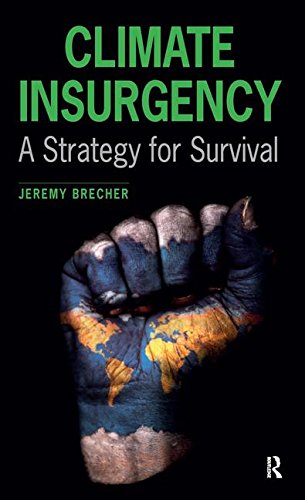
Climate Insurgency After Paris

By Jeremy Brecher - CounterPunch, January 11, 2016

In December of 2015 – the earth’s hottest year since recordkeeping began — 195 nations met in Paris to forge an agreement to combat global warming. The governments of the world acknowledged their individual and collective duty to protect the earth’s climate — and then willfully refused to perform that duty. What did they agree to, and how should the people they govern respond?

The 195 nations meeting in Paris unanimously agreed to the goal of keeping global warming “well below 2 degrees Celsius” and to pursue efforts “to limit the increase in temperatures to 1.5 degrees Celsius.” Despite that goal, the Paris agreement also permits the greenhouse gas (GHG) emissions that cause global warming to continue rising.

Under the Paris agreement, governments put forward any targets they want – known as Intended Nationally Determined Contributions (INDCs) – with “no legal requirement dictating how, or how much, countries should cut emissions.”[1] These voluntary commitments don’t come into effect until 2020 and generally end in 2025-2030.

Today there are 400 parts per million (ppm) of carbon in the atmosphere, far above the 350 ppm climate scientists regard as the safe upper limit. Even in the unlikely event that all nations fulfill their INDC pledges, carbon in the atmosphere is predicted to increase to 670 ppm by the end of this century.[2] The global temperature will rise an estimated 3.5 degrees Celsius (6.3 degrees Fahrenheit) above pre-industrial levels.[3] For comparison, a 1-degree Celsius increase has been enough to cause all the effects of climate change we have seen so far, from Arctic melting to desertification. In short, the agreement authorizes the continued and even increased destruction of the earth’s climate.

US negotiators were adamant that the agreement must not include any binding restrictions on emissions. Secretary of State John Kerry told fellow negotiators that he “wished that we could include specific dates and figures for emissions cuts and financial aid” to developing countries, but “this could trigger a review by the US Senate that could scuttle the entire agreement.”[4] When US lawyers discovered a phrase declaring that wealthier countries “shall” set economy-wide targets for cutting their GHG pollution, Kerry said, “We cannot do this and we will not do this. And either it changes or President Obama and the United States will not be able to support this agreement.” “Shall” was changed to “should” without so much as a vote.[5]

The breathtaking gap between the Paris agreement’s aspiration to hold global warming below 2 degrees Celsius and the agreement’s actual commitments is indicated by an analysis by Climate Interactive and MIT Sloan. The current US pledge to drop GHG emissions 26 percent below 2005 levels by 2025, along with the pledges of other countries, will lead to a global temperature increase of 3.5 degrees Celsius (6.3 degrees Fahrenheit) above pre-industrial levels. To reduce warming to 1.8 degrees Celsius (3.2 degrees Fahrenheit) will require the US to increase its INDC from 26 percent below 2005 levels to 45 percent by 2030, and for other countries to make comparable reductions.[6]

Under the Paris agreement countries will monitor their emissions and reconvene every five years starting in 2023 to report on the results and perhaps ratchet up their INDCs. This has been characterized as creating a “name-and-shame” system of global peer pressure, “in hopes that countries will not want to be seen as international laggards.”[7]

On the last day of the Paris summit, a panel of leading scientists evaluated what would be necessary to achieve its targets. Prof. Hans Schellnhuber of the Potsdam Institute for Climate Impact Research said that to reach the 2-degree target the world would have to get CO2 out of its system by 2070. To reach the 1.5-degree target it would have to eliminate CO2 emissions by 2050. Johan Rockstrom of the Stockholm Resilience Center said that for any chance of reaching 1.5 degrees, the richest nations need to reach zero fossil fuel use by 2030.[8]

Unify Fights Against Austerity and Climate Change

By Asbjørn Wahl - Social Europe, December 18, 2015

The Climate Summit in Paris has once again reminded us of how vulnerable we are on planet earth. However, humanity is faced with a number of deep and challenging crises: economic, social, political, over food – and, of course, over climate change, which is threatening the very existence of millions of people. These crises have many of the same root causes, going to the core of our economic system.

Strong vested interests are involved. It is thus an interest-based struggle we are facing. All over the world, people are organizing and fighting against the effects of the crises. Trade unions are heavily involved in many of these struggles, and so are many other movements – single-issue as well as broader social movements. Increasingly, our entire social model, the way we produce and consume, is under question. The way out of these crises requires a system change and this can only be achieved if we are able considerably to shift the balance of power in society. This leaves us with the challenge of unifying movements and continuing struggles – particularly to bring anti-austerity together with the struggle against climate change.

Agreement, But No Solution

At the recent Paris Summit (COP21), the first ever truly global agreement to fight the climate crisis was concluded. Governments have been negotiating for more than 20 years (more or less since the Rio Summit in 1992) in order to achieve that. During this period, however, greenhouse gas (GHG) emissions have not been cut. Quite the opposite. Emissions have increased immensely, by more than 60 per cent. Transport emissions have increased 120 per cent over the last 30 years, and they are still rising all over the world – even at a rate that outweighs cuts in other economic sectors.

The stated aim of the Paris agreement is ambitious. The target of keeping global warming below 2oC was strengthened, so that governments should now “pursue efforts” to limit the temperature increase to 1.5oC above pre-industrial levels. The weakness of the agreement is that there is a huge gap between this aim and the measures agreed upon to reach it. Based on the voluntary pledges (so-called Intended Nationally Determined Contributions – INDCs) from all countries on how much they are prepared to cut their emissions, we are so far on course for a temperature increase of 3-4oC. This means climate catastrophe.

We Are Mother Earth’s Red Line: Frontline Communities Lead the Climate Justice Fight Beyond the Paris Agreement

By staff - It Takes Roots to Weather the Storm - January 2016

The Paris Climate Agreement of December 2015 is a dangerous distraction that threatens all of us. Marked by the heavy influence of the fossil fuel industry, the deal reached at the United Nations Framework Convention on Climate Change (UNFCCC) never mentions the need to curb extractive energy, and sets goals far below those needed to avert a global catastrophe. The agreement signed by 196 countries does acknowledge the global urgency of the climate crisis, and reflects the strength of the climate movement. But the accord ignores the roots of the crisis, and the very people who have the experience and determination to solve it.

Around the world, negotiators use the term “red line” to signify a figurative point of no return or a limit past which safety can no longer be guaranteed. Our communities, whose very survival is most directly impacted by climate change, have become a living red line. We have been facing the reality of the climate crisis for decades. Our air and water are being poisoned by fossil fuel extraction, our livelihoods are threatened by floods and drought, our communities are the hardest hit and the least protected in extreme weather events—and our demands for our survival and for the rights of future generations are pushing local, national, and global leaders towards real solutions to the climate crisis.

We brought these demands to the UNFCCC 21st Conference of Parties (COP21) as members of the delegation called “It Takes Roots to Weather the Storm.” Grassroots Global Justice Alliance (GGJ), the Indigenous Environmental Network (IEN), and the Climate Justice Alliance (CJA) organized the delegation, which included leaders and organizers from more than 100 US and Canadian grassroots and Indigenous groups. We helped to mobilize the thousands of people who took to the streets of Paris during the COP21, despite a ban on public protest—and amplified the pressure that Indigenous Peoples, civil society, and grassroots movements have built throughout the 21 years of UN climate talks.

The Paris Agreement coming out of the COP21 allows emissions from fossil fuels to continue at levels that endanger life on the planet, demonstrating just how strongly world leaders are tied to the fossil fuel industry and policies of economic globalization. The emphasis within the UNFCCC process on the strategies of carbon markets consisting of offsets and pollution trading created an atmosphere within the COP21 of business more than regulation. The result is a Paris Agreement that lets developed countries continue to emit dangerously high levels of greenhouse gasses; relies on imaginary technofixes and pollution cap-and-trade schemes that allow big polluters to continue polluting at the source, and results in land grabs and violations of human rights and the rights of Indigenous Peoples. Our analysis of the Paris Agreement echoes critiques from social movements around the world, led by those most impacted by both climate disruption and the false promises that governments and corporate interests promote in its wake.

“Frontline communities” are the peoples living directly alongside fossil-fuel pollution and extraction—overwhelmingly Indigenous Peoples, Black, Latino, Asian and Pacific Islander peoples in working class, poor, and peasant communities in the US and around the world. In climate disruption and extreme weather events, we are hit first and worst.

We are Mother Earth’s red line. We don’t have the luxury of settling for industry or politicians’ hype or half measures. We know it takes roots to weather the storm and that’s why we are building a people’s climate movement rooted in our communities. We are the frontlines of the solution: keeping fossil fuels in the ground and transforming the economy with innovative, community-led solutions.

Floods, climate change and job cuts

By Martin Empson - One Million Climate Jobs, December 28, 2015

In 2015 Britain has seen repeated flooding causing large-scale damage. Tens of thousands of people have had to evacuate their homes, suffered days without power and seen their homes and businesses destroyed as storms repeatedly hit the country. In the latest bout of flooding, thousands of people in Manchester, Leeds and York have been hit, sometimes with the worst floods ever, as rivers broke banks.

Trade unions that represent workers in the emergency services have repeatedly warned of the impacts of austerity measures on their ability to deal with flooding and other severe weather.

Unison, for instance, which represents workers at the Environment Agency, reported how cuts would reduce its ability to prevent and respond to flooding and tidal surges. In 2012/13 the grant was £124 million less than in 2009/10.

Staff numbers at the Agency have been reduced by around 1000. The November 2015 autumn statement pledged that the Agency would have its funding for flood defences “preserved”, but the rest of its budget would decrease by 15%. The government claims that it is protecting front line services that respond to emergencies and help prevent flooding, but cutting behind the scenes staff and resources hit the ability of workers to deal with crises, and the ability to make long term plans for future, worsening, weather.

The Fire Brigades Union (FBU) has also highlighted the way that cuts will affect its ability to respond to emergencies such as flooding. In response to the most recent floods the FBU said that “threats posed by such large scale floods are beyond the capacity of local services to cope. The impact of massive cuts to funding of the country’s fire and rescue service is being felt by all firefighters, including those who are aiding flood rescue.”

Simon Hickman, Manchester FBU Brigade Organiser, whose members were on the front line dealing with floods in Salford said, “We’re stretched to the limit with the lack of resources due to the cuts, and we’ve just been told that £15.8 million is to be cut locally. It is bad enough this time but it will be far worse next time. We had 56 fire engines available, the majority were committed to incidents. Yet we are told we may be cut down to as few as 30 at night time, which will remove any resilience in the future”.

Even Coastguard services have been cut back.

Prime Minister David Cameron has expressed sympathy with victims, and celebrated the work of the emergency workers. But his government’s policies have made the situation far worse. Back in 2011, the then Tory-Liberal coalition government announced an 8 percent cut (£540 million) in spending on flood defences. Government policies that favour the fossil fuel industry, such as fracking, will only increase emissions leading to further climate change and more frequent floods.

The government is well aware of the increased risks of flooding because of climate change.  Almost a decade ago, in 2006, Nicolas Stern wrote an extensive report into the economic impacts of climate change for the then Labour government which warned that “Infrastructure damage from flooding and storms is expected to increase substantially” unless there were flood management policies that could avoid this. In purely economic terms, Stern saw the situation as getting far worse as global warming increased, warning that

“The costs of flooding in Europe are likely to increase, unless flood management is strengthened in line with the rising risk. In the UK, annual flood losses could increase from around 0.1% of GDP today to 0.2 – 0.4% of GDP once global temperature increases reach 3 to 4°C.”

These floods are not “unprecedented” they are the new norm. Climate change means that we are going to see more frequent and more extreme flooding. In order to protect lives, homes and businesses we need to reverse the cuts to emergency services and the Environmental Agency and increase funding.

We also need investment that can reduce the impact of climate change. Writing in The Guardian, environmental campaigner George Monbiot has shown that planting trees can help the soil absorb water. Rather than cuts, we should be creating jobs that can save lives, protect property and reduce the impact of climate change.

But we also need to drastically reduce emissions of greenhouse gases that cause climate change. This is why the Campaign against Climate Change, with seven national trade unions, and the National Union of Students are calling for One Million Climate Jobs. The creation of such jobs, through investment in renewable energy, insulation schemes, public transport and energy reduction could reduce emissions from the UK by 86% in twenty years. The trade union movement recognises that climate change is no longer an abstract discussion, but a reality. Dealing with it can help create jobs and improve society.

In 2014 David Cameron told flooded communities in the South-West that “money was no object” in helping them recover from that year’s floods. In 2016 we must hold him to that statement and demand the sort of investment that can prevent future disasters.

EcoUnionist News #84

Compiled by x344543 - IWW Environmental Unionism Caucus, December 29, 2015

The following news items feature issues, discussions, campaigns, or information potentially relevant to green unionists:

Lead Stories:

Ongoing Mobilizations:

COP21 and Paris:

The Thin Green Line:

Bread and Roses:

An Injury to One is an Injury to All:

Disaster Capitalism:

Carbon Bubble:

Just Transition:

Other News:

For more green news, please visit our news feeds section on ecology.iww.org; Twitter #IWWEUC; Hashtags: #greenunionism #greensyndicalism #IWW. Please send suggested news items to include in this series to euc [at] iww.org.

Bay Area protests Paris climate talks

By Jeff Mackler - Socialist Action, December 21, 2015

The Bay Area IWW sponsored this event, and IWW EUC members participated in its organizing:

Organized by a broad coalition of environmental, social justice, labor, antiwar, anti-racist, and faith-based groups across Northern California, some 3000 mobilized on Saturday, Nov. 21, to demand immediate action to stop and reverse global warming and associated climate-change-influenced catastrophes.

The mobilization was part of the worldwide effort to protest the Nov. 30–Dec. 12 UN COP21 Paris climate conference, where little or no substantial actions were expected to stop and reverse the climate crisis.

Major organizing efforts began here some five months ago, an important factor that made the Oakland march and rally the largest in the U.S. to date among the many planned in cities across the country both before and after the UN-sponsored Paris talks.

Some 200 groups endorsed this action, initiated and sponsored by the Northern Climate Climate Mobilization. Fifty to sixty dedicated activists, representing almost as many organizations, met bi-weekly for months and then weekly to broaden and build this essential “movement of movements” to demand immediate action to eliminate fossil fuel-based energy systems and rapidly replace them with 100 percent clean, safe, and sustainable alternatives to “Defend the Planet.”

In fact, “Defend the Planet” against corporate and government polluters soon became the eye-catching focus of coalition flyers and of the eight-foot advertisements that were posted at seven BART (Bay Area Rapid Transit) train stations, at a cost of $7000. There was little or no doubt among the coalition activists that the consequences of the corporate polluter profit-driven polices to increase fossil-fuel extraction, and the government’s associated actions to promote these policies, threaten life on earth.

The high-spirited and colorful march was led by some 100 Native American Idle No More frontline community activists from Sonoma County to San Jose. It contained new, diverse—but still only modest—representation from the critically necessary sectors of the country’s labor, youth, and oppressed nationalities. The multi-cultural outpouring, included several bands and singing groups, youth contingents, socialist contingents, LGBT groups, high school student organizations, and more.

Speakers at the rally included the main leaders of the San Francisco and Alameda country labor councils, an IBEW local president, and a key representative of the California Nurses Association. All these organized modest contingents of workers in the mile-long march from the Lake Merritt Amphitheater to Oakland’s Frank Ogawa/Oscar Grant Civic Center Plaza. Keynote speaker May Boeve, national executive director of 350.org, stressed the need for a united mass movement to challenge the governments worldwide whose UN climate proposals fall far short of the measures needed to stop and reverse the horrific consequences of global warming.

The adopted demands included opposition to oil wars, racism, the Trans Pacific Partnership (TPP) agreement, corporate and government-backed and implemented policies that foster increased, not decreased, fossil-fuel extraction as well demands for reparations to fund poor nations around the world to guarantee the introduction of sustainable energy systems, a just job transition for all workers at union wages, civil and democratic rights for all in a world where Black Lives Matter, for immigrant rights, and an end to environmental racism.

Following a month of democratic discussion and debate, these points of unity and demands were hammered out and adopted unanimously, an indication of the growing radicalization and sophistication of the climate-crisis movement. Indeed, the ideas presented by the local chapter of System Change Not Climate Change and various socialist groups found a hearty reception among virtually all the activist participants. See the full demands and points of unity at NorCalClimateMob.net.

A spirited and enthusiastic post-Nov. 21 evaluation meeting on Dec. 3 attributed the fact that this year’s march was not qualitatively different in size from last year’s Sept. 21 effort to the relative lack of national coordination.

It was noted that local climate actions initiated by national 350.org were organized mostly on a last-minute basis and on a number of different dates before and after the Paris talks. In contrast, last year’s Northern California mobilization significantly benefited from the “wind in our sails” flowing from the New York City mobilization of 400,000 organized by the People’s Climate March.

This year’s relatively diffuse choice of mobilization dates and organizing activity limited most U.S. actions to a few hundred participants at best. The post-COP 21 Dec. 12 national and international mobilizations promoted by 350.org and other world environmental organizations have been called to make the point that an ongoing movement is sorely need “through” Paris and afterward.

At the close of the UN conference, 350.org leaders are expected to set a national date for coordinated May 2015 spring regional mobilizations in some nine to 12 U.S. cities.

Meanwhile, the Nor Cal Climate Mob, as this new Oakland-based united front mass action coalition is popularly known, voted unanimously at its Dec. 3 evaluation meeting to continue its efforts through the spring actions.

The S.F. Bay Area branch of Socialist Action played an important role in helping to initiate the Nor Cal Climate Mob and build its September 2014 and November 2015 marches. Socialist Action’s tent was a popular rally attraction, with activists purchasing some $150 in Socialist Action newspapers and pamphlets. Forty-two participants, mostly youth, signed our mailing list for more information and to meet Socialist Action members.

EcoUnionist News #83

Compiled by x344543 - IWW Environmental Unionism Caucus, December 22, 2015

The following news items feature issues, discussions, campaigns, or information potentially relevant to green unionists:

Lead Stories:

Ongoing Mobilizations:

COP21 and Paris:

The Thin Green Line:

Bread and Roses:

Pages

The Fine Print I:

Disclaimer: The views expressed on this site are not the official position of the IWW (or even the IWW’s EUC) unless otherwise indicated and do not necessarily represent the views of anyone but the author’s, nor should it be assumed that any of these authors automatically support the IWW or endorse any of its positions.

Further: the inclusion of a link on our site (other than the link to the main IWW site) does not imply endorsement by or an alliance with the IWW. These sites have been chosen by our members due to their perceived relevance to the IWW EUC and are included here for informational purposes only. If you have any suggestions or comments on any of the links included (or not included) above, please contact us.

The Fine Print II:

Fair Use Notice: The material on this site is provided for educational and informational purposes. It may contain copyrighted material the use of which has not always been specifically authorized by the copyright owner. It is being made available in an effort to advance the understanding of scientific, environmental, economic, social justice and human rights issues etc.

It is believed that this constitutes a 'fair use' of any such copyrighted material as provided for in section 107 of the US Copyright Law. In accordance with Title 17 U.S.C. Section 107, the material on this site is distributed without profit to those who have an interest in using the included information for research and educational purposes. If you wish to use copyrighted material from this site for purposes of your own that go beyond 'fair use', you must obtain permission from the copyright owner. The information on this site does not constitute legal or technical advice.