You are here

agricultural workers and peasants

Largest-ever European food sovereignty gathering kicks off in Romania

By staff - La Via Campesina, October 25, 2016

Cluj-Napoca, October 25th – the largest-ever European meeting on food sovereignty starts today, as over 500 people from over 40 countries gather to discuss how to reclaim our ever-more corporate-controlled food and farming system. [1]

The second European Nyéléni Forum for Food Sovereignty runs from October 26-30, and brings together farmers, fisherfolk, pastoralists, gardeners, food and agricultural workers, researchers, activists and many more.

For Jyoti Fernandes, peasant farmer from the UK and coordination committee member for the European Coordination Via Campesina, « the convergence here in Cluj of so many sectors and constituencies of society is essential in transforming and strengthening our food systems in Europe, based on agroecology. From the farm to the plate, the economic, environmental, social and public health stakes of food production must mobilize all levels of society – local, national and international. Here, in Nyéléni Europe, this is happening.»

 Stanka Becheva, food and farming campaigner at Friends of the Earth Europe said: “The food fight is on against agribusiness mega-mergers, which would rubber-stamp industrial farming. The diversity and size of the movement assembled here this week shows the strength of the food sovereignty movement, and how it is ready to push for better farming for people and planet.”

The forum features a “peasants’ market”, film screenings, and site visits to local peasants demonstrating sustainable local farming methods and environmental justice struggles including the highly controversial proposed gold mine at Roșia Montană.

Themes discussed at the forum include models of food production and consumption, food distribution, the right to natural resources and the commons, and how to improve work and social conditions in food and agricultural systems.

Spokespeople from a variety of professions and backgrounds are available for interview in person or on the phone in English, Romanian, French, German, Turkish, Spanish, Dutch etc.

List of spokespeople: https://docs.google.com/document/d/1KIbHCiXgkwY5eKUYkX5sVweaFDsM3IxxZ_21abhxOBI/edit?usp=sharing

Declaration of LVC Delegation to the 2016 World Social Forum

By La Via Campesina - August 14, 2016

We not only believe that another world is necessary, the members of La Vía Campesina are already building a better world."

--Carlos Marentes, co-coordinator of the North America Region of LVC

We, representatives of member organizations of La Vía Campesina from the North America Region (Union Paysanne from Quebec, National Farmers Union, Canada, National Family Farm Coalition, Rural Coalition and Border Agricultural Workers Project from United States), accompanied by LVC members from Europe, Palestine and Brazil took part in the World Social Forum in Montreal, Quebec from August 9-14, 2016.  

We were graciously hosted by the Union paysanne and reaffirmed our support for their struggle to end the syndicate-monopoly control of agriculture in Quebec, adding our voice to the demand that "There is no Food Sovereignty without Peasant sovereignty". 

In our press conference of August 11th, Maxime Laplante declared: "The Quebec situation is extremely particular in that there is in Quebec only one organization having the right to represent farmers here, to negotiate with the government or to intervene in the management of marketing plans, marketing, etc. That organization is the Union des Producteurs Agricoles (UPA). It is the only organization with the legal right to represent farmers." 

La Via Campesina North America woman coordinator and vice-chair of the National Family Farm Coalition Dena Hoff stated: ''The whole region of La Via Campesina stands behind Union paysanne in its demands for recognition by the government of Quebec as the voice of the peasants struggling for food sovereignty." 

The LVC delegation participated enthusiastically in the opening march, in many workshops, panels and assemblies on the themes of food sovereignty, the right to food, post extractive societies, agro-ecology and peoples agrarian reform, and the future of the WSF, among many topics, together with allies like ETC Group, Grain, Climate Space, the Indigenous Environmental Network (IEN), Global Justice Now, USC Canada, SUCO, Why Hunger, Grassroots Global Justice Alliance, Global Forest Coalition, Focus on the Global South, Development and Peace, Inter-Pares, Vigilance OGM Québec, and others. 

As Dena Hoff, stated: "The fight for food sovereignty will be won with a million grassroots efforts". 

At a time of deepening crises in the world, including massive suffering of migrants fleeing war, increasing poverty and hunger, extreme weather events, corporate driven land and resource grabs, the expansion and consolidation of big agribusiness and monocultures of feed and fuel plantations across the planet, we declare our firm commitment as LVC to the life-or-death struggle for food sovereignty, a peoples agrarian reform, seed and biodiversity sovereignty, the democratization of the food system and the strong defense of human rights. 

We question the use of the concept of "agro-ecology" and climate buzzwords that are removed from the context of food sovereignty and used as a means of justifying an expansion of  "green washing" or for NGO fund raising.  We insist that agro-ecology signifies a validation of small and medium scale farming, peasant-led research and innovation, and it signifies the integration of traditional practices, and peasant and rural community control of our seeds. 

Food sovereignty is the right of farmers and eaters to control their own food production, processing and distribution with culturally appropriate foods and equitable compensation and dignity for food providers. We assert that small-scale farming, fishing, herding, hunting and gathering are essential in the struggle to bring relief to climate change and continue feeding humanity.  We seek access to land for all, especially youth with the drive to feed their communities. We seek an end to the invasion of GMO seeds into our territories and we demand the right of farmers to continue to produce, save and share their own seeds.  We say  "No" to corporate agriculture and say "Yes" to the people of the land and to the peasant way.  

LVC also publically criticized the Canadian Government because many leaders of important social movements were unable to attend the WSF as many hundreds of visas were denied, including the visas of two of the peasant leaders in our delegation.  

We have also taken the opportunity provided by the WSF 2016 to express our solidarity with all the movements currently fighting against violence, dispossession, exclusion and the attacks against the democratic rights of people. We specially expressed our solidarity with the struggle of the Palestinian people against the oppression, and exploitation at the hands of Zionist Settler Colonialism, the struggle of our compañeras and compañeros of the Landless Movement of Brazil against the recent State Coup, the First Nations courageous struggle against the threats to the integrity of their land posed by tar-sand exploitation, pipelines and other destructive actions by capital, and the fight against the increasing violence against black people and therefore we fully support the Black Lives Matter Movement. 

¡GLOBALIZE THE STRUGGLE, GLOBALIZE HOPE! 

Given in Montreal, Quebec, on August 14, 2016

Dakota Access Pipeline: Statement by Border Agricultural Workers

By Border Agricultural Workers - La Via Campesina, September 7, 2016

STATEMENT IN SOLIDARITY WITH THE STANDING ROCK SIOUX TRIBE AND THEIR STRUGGLE TO PROTECT THEIR WATER, THEIR NATURAL RESOURCES AND THEIR TERRITORIES

ON BEHALF of the Border Agricultural Workers of the US-México region, we express our solidarity with your struggle to oppose the Dakota Access Pipeline to protect your sacred natural resources and your territories. Two of our leaders, Rosemary Martínez and Joseph Martínez will be with you to not only participate in your historic struggle but also to learn how to best support your movement.

AS MIGRANT agricultural workers, we know fist hand the destruction caused by greediness and hunger for more and more profits by corporate capital, to our Mother Earth and all the sacred elements of life.

Commercial and industrial agricultural not only exploit us in the fields, buy also inflict a severe damage to nature. For this reason,we identify with your just cause.

OUR MESSAGE to the Government is clear: Instead of being accomplices of the Dakota Access Pipeline that is a threat to the Sacred Land of the Standing Rock Sioux Tribe, the Federal Government should stop the Dakota Access Pipeline and ensure that the sovereignty of the Sioux is respected.

WE ALSO make a call to all the social movements and the people of good will to join a firm and resolute solidarity with your struggle to protect the water, the natural resources and your Sacred Land.

WHEN OUR two leaders return to El Paso, they will inform us of your movement and then we will be ready to plan further and more effective actions in solidarity with your inspiring struggle.

"We want to come out stronger and have our rights respected"

By staff - La Via Campesina, February 22, 2017

Speaking with Inmaculada Ibáñez Vargas from Vía Campesina Europe, just months before the International Peasant Movement's Seventh Conference.

As part of the preparatory process for Vía Campesina's International Conference, which will take place in July in the Basque Country, the women's articulation group from Vía Campesina held a meeting at the organisation ANTA in El Salvador. 

Andalusian Inmaculada Ibáñez, member of the women's articulation group and leader of the women's faction of the Coordinadora Agricultores Ganaderos (a major farmer organisation in Spain), spoke with Radio Mundo Real about the main topics that will be covered by the event. These will be angled from a peasant and popular feminism perspective.

She stressed, in particular, the lack of rights she witnessed granted to peasants in El Salvador and the negative impact this can have. Her visit to El Salvador was her first visit to Latin America. She also mentioned that as part of its Seventh Conference, Vía Campesina sets out to make the role of female peasants more visibile in food production.

In the interview, Inmaculada said that what is often called the "primary sector is extremely important because we are talking about food production".

When asked about the situation faced by migrants who are attempting to get to Europe and the obstacles they encounter when trying to reach the EU, Inmaculada recalled that both Spain and Brussels have signed a series of agreements that allow migrants to gain access to their territories.

"We want to come out stronger and have our rights respected", said Inmaculada in her conversation in El Salvador, where she was speaking about the desired outcome of the peasant conference in the Basque Country.

Inmaculada said that the lack of protection rights and social security enjoyed by peasant men and women in Central America constituted one of the starker contrasts between European peasants and their American counterparts.

She concluded by saying: "when people like us who work in the fields have rights, this doesn't just improve our life quality but also the life quality of the population as a whole, because we are feeding the world and this is extremely important".

“WTO, Out! Building Alternatives”: La Via Campesina to organise Peoples’ Summit during WTO’s XI Ministerial Conference in Argentina

By staff - La Via Campesina, November 17, 2017

15 November 2017: La Via Campesina is calling upon social movements and civil society organisations of the world to mobilise and organise our resistances against the World Trade Organisation (WTO) and Free Trade Agreements (FTAs), build solidarity alliances and to participate in the People’s Summit “WTO, Out! Building alternatives”, from the 10-13 December coinciding with the XI WTO Ministerial in Buenos Aires, Argentina.

A preliminary agenda of the summit is available here. As you may note, this is currently only available in Spanish. We will make the English version available shortly.

For the first time since its inception, the World Trade Organization (WTO) is planning to meet in Latin America. From the 10th to the 13th of December, Mauricio Macri’s government will host the WTO’s 11th Ministerial Conference in Buenos Aires, Argentina. Entrepreneurs, ministers, chancellors, and even presidents will be there. To do what? To demand more “freedom” for their companies, more “ease of doing business” for exploiting workers, peasants, indigenous people, and taking over land and territories. In other words, less “restrictions” on transnational wastage.

Since its beginnings in 1995 as derivative of General Agreement on Tariff and Trade (GATTs), the World Trade Organization has promoted the most brutal form of capitalism, better known as trade liberalization. At successive Ministerial Conferences, the WTO has set out to globalise the liberalisation of national markets, promising economic prosperity at the cost of sovereignty. In more or less the same terms, by its “liberalization, deregulation and privatization”, which is called Package of Neoliberalism, WTO has encouraged the multiplication of free trade agreements (FTAs) between countries and regional blocs, etc. On this basis and by making use of governments that have been co-opted, the world’s largest transnational corporations (TNCs) are seeking to undermine democracy and all of the institutional instruments for defending the lives, the territories, and the food and agricultural ecosystems of the world’s peoples.

In the previous Ministerial Conference (MC) in Nairobi in 2015, WTO had made six decisions on agriculture, cotton and issues related to LDCs. The agricultural decisions cover commitment to abolish export subsidies for farm exports, public stock-holding for food security purposes, a special safeguard mechanism for developing countries, and measures related to cotton. Decisions were also made regarding preferential treatment for least developed countries (LDCs) in the area of services and the criteria for determining whether exports from LDCs may benefit from trade preferences.

This year, with Macri Inc. in the Casa Rosada (Government House in Argentina), the coup leader Michel Temer in the Palacio del Planalto (the official workplace of the president of Brazil), and Brazilian Roberto Azevedo as its Director General, the WTO wants to return to the subject of agriculture, to put an end to small-scale fishing, and to make progress with multilateral agreements such as the misnamed General Agreement on Trade in Services (GATS). Notwithstanding the misleading protectionist statements coming from Washington and London, the WTO will meet again to try to impose the interests of capital at the cost of Planet Earth, of the democratic aspirations of the world’s peoples, and of life itself.

Via Campesina, Bali Declaration: World Bank and IMF represent the interests of agribusiness, they should GO!

By La Via Campesina - La Via Campesina, October 11, 2018

We, the peasant women and men of La Via Campesina – a global movement comprising 182 peasant organisations from 81 countries – who have assembled in Bali this week and representing peasant and indigenous peoples of Asia, Africa, Europe and Americas, are unanimously and emphatically denouncing the ongoing Annual Meeting of World Bank and IMF.

La Via Campesina responds to COP23 calling for Peasant Agroecology

By Bernd Schmitz and Paula Gioia - La Via Campesina, November 9, 2017

Peasants, small farmers and Indigenous peoples ‘feed the world and cool the planet.’ This is what the global peasant movement, La Via Campesina, has come to Bonn, Germany, to put onto the agenda at the COP23 climate meetings — both in the official space and at the People’s Climate Summit where social movements met to strategize for alternatives to capitalism and its climate crisis.

According to ETC Group, peasants and Indigenous peoples are the sole food providers for 70 percent of the world’s population, and they use only 30 percent of the earth’s natural resources to get all of the food to the table.

“No chemical has ever touched our soil. We have held onto our traditional seeds which withstand many of the climate challenges we are facing”, explained Michaelin Sibanda, a young peasant from Zimbabwe Smallholder Organic Farmers Forum (ZIMSOFF). “We know that, to have healthy food and healthy ecosystems, we need to have healthy soil.”

The principles of agroecology help to conserve water, soils and seeds. But, for La Via Campesina, agroecology is also political: “It is proven that there is resilience in agroecology, and resilience is also resistance — it relates to the way we organize collectively and bring together concrete proposals for change that are sustained by work and struggle in our different territories,” explained Jesús Vázquez, a young organizer and activist from the Organization Boricuá of Agroecology in Puerto Rico. In September 2017, Puerto Rico was devastated by two, back-to-back hurricanes which severely undermined all aspects of life on the island, including food production. Vázquez continued,

“In the context of these hurricanes, we have witnessed that agroecological practices are more resistant to extreme weather phenomena, they bring resilience. Many roots and tubers, have pulled through the disaster. Many peasants and farmers are already back in the fields planting and cultivating despite the fact that the Secretary of Agriculture says that agriculture is completely devastated throughout the island. We are here to remind governments that the change must be systemic.”

La Via Campesina and their allies’ proposals for addressing the climate crisis get to the root cause of the problem — corporate control over decision-making and the resulting processes of land and water grabbing, peasant criminalization and human rights abuses in the transnational supply chains used to produce food. “At the climate negotiations, governments are putting forward false solutions. We call them false because these proposals do not bring real change but, rather, bolster corporate profits,” said Fanny Metrat, from the French peasant organization Confédération Paysanne. “Carbon markets, geoengineering, so-called climate smart agriculture are being promoted by the same people who are also promoting emission-intensive livestock production and an export-based industrial agriculture which requires massive amounts of fossil fuels. It is a big contradiction,” she explained.

At COP23, these contradictions are becoming clear. The German government, a big promoter of green economy, has positioned itself as spearheading efforts to address climate change while also expanding the production of coal—the dirtiest fossil fuel on the planet. The international delegation of La Via Campesina members joined the over 4.000 people strong Ende Gelände (‘Here, and No Further’) march and civil disobedience action against Germany’s largest mining company, KWE, strengthening the message that the most important action to address climate crisis is to keep fossil fuels in the ground.

Bernd Schmitz, from the Arbeitsgemeinschaft bäuerliche Landwirtschaft (AbL) the farmer member organization of La Via Campesina in Germany, underlined the need for changes in Germany. Speaking to journalists, Schmitz said,

“The consequences of global warming are felt all over the world. In Germany, we have had extreme droughts in some regions and extreme rains in others. This year, because of severe hailstorms, we lost nearly all fruit production in some areas of Germany! The government is too slow to respond to the problem. The AbL contends that smallholder agriculture, which includes a localized food chain and ecological food production, helps to solve the problem. This system uses less fossil energy, reducing the emission of dangerous greenhouse gases. Small farmers around the world urgently need support to feed people and maintain their livelihoods in the context of climate change.”

La Via Campesina has been joined by other frontline communities, including from within the It Takes Roots delegation of impacted communities based in the United States and also the fisherfolk and peasants within the Global Convergence for Land and Water Struggles. A representative of the West African contingent of the Convergence, Massa Koné, from Mali, was clear about the importance of working with allies to address climate change and multiple injustices: “As grassroots organizations, we have similar perspectives on the problems and what we need to do about them. La Via Campesina allows our communities to be heard. Our call for system change is urgent because the damage is growing. Commons, including land, forests and water, must be protected and restored to the people. We need to work together with our allies to be prepared for climate change.”

“WTO Kills Peasants! 21 Years is Enough!! WTO Out of Agriculture!!!” La Via Campesina to step up its resistance during the XI Ministerial Conference

By Francés: Claude Girod, et. al. - La Via Campesina, December 10, 2017

A large delegation of La Via Campesina comprising peasants, rural workers, indigenous peoples, women and youth from around the world will converge outside the venue of the 11th Ministerial Conference of the World Trade Organisation (WTO), which is scheduled to take place in Buenos Aires, Argentina from the 10th to13th December.

During the week of the conference, La Via Campesina (LVC) will mobilise, organise and join social movements and allies to expose the devastative effects that WTO has had on peasant agriculture and to reiterate our long-standing demand of 21 years, to oust the multilateral trade body from any discussions and decisions regarding agriculture.

La Via Campesina, a global peasant movement with more than 180 member organisations from 79 countries, has consistently demanded to take agriculture out of the WTO’s scope. Instead it has demanded a systemic change that brings about food sovereignty to the worlds peoples. Once again the rallying call from the global peasants’ movement is “For Food Sovereignty, WTO Out of Agriculture!”.

Since its beginnings in 1995 as derivative of General Agreement on Tariff and Trade (GATTs), the World Trade Organization has promoted the most brutal form of capitalism, better known as trade liberalization. At successive Ministerial Conferences, the WTO has set out to globalise the liberalisation of national markets, promising economic prosperity at the cost of sovereignty. In more or less the same terms, by its “liberalization, deregulation and privatization”, which is called Package of Neoliberalism, WTO has encouraged the multiplication of free trade agreements (FTAs) between countries and regional blocs, etc. In this context, with help from governments that have been co-opted, the world’s largest transnational corporations (TNCs) continue to expand globally and are blatantly undermining democracy and all of the institutional instruments that are meant to defend the lives, the territories, and the food and agricultural ecosystems of the world’s peoples.

Through AoA (Agreement on Agriculture) regulated in the WTO, peasant communities become the most disadvantaged because they have minimal capital resources and little or no protection from national governments as WTO prohibits any protection that stand in the way of market liberalisation. Its role was replaced and eroded by corporations with large capital resources, slowly forming a monopoly scheme. As a result, peasants have to deal with dangerous implications such as land grabbing, criminalization, environmental pollution and the importation of agricultural products.

In the previous Ministerial Conference (MC) in Nairobi in 2015, WTO had made six decisions on agriculture, cotton and issues related to LDCs. The agricultural decisions cover commitment to abolish export subsidies for farm exports, public stock-holding for food security purposes, a special safeguard mechanism for developing countries, and measures related to cotton. Decisions were also made regarding preferential treatment for least developed countries (LDCs) in the area of services and the criteria for determining whether exports from LDCs may benefit from trade preferences.

In the 11th Ministerial Conference the WTO wants to return to the subject of agriculture in relation to public stock-holding, to put an end to small-scale fishing, and to make progress with multilateral agreements such as the misnamed General Agreement on Trade in Services (GATS). Notwithstanding the misleading protectionist statements coming from the developed countries, the WTO will meet again to try to impose the interests of capital at the cost of Planet Earth, of the democratic aspirations of the world’s peoples, and of life itself.

On ‘Food Sovereignty Day’ La Via Campesina launches publication that calls for a massive change in the current agro-food systems

By staff - La Via Campesina, October 16, 2017

Harare, 16th October 2017: Today, on the International Day of Action for Peoples’ Food Sovereignty and against Transnational corporations, La Via Campesina officially launches its new publication “Struggles of La Vía Campesina for Agrarian Reform and the Defense of life, Land and Territories” that argues for a massive change in the current agro-food system, if we have to overcome the food, climate, poverty, financial, economic and democratic crises facing the planet and its people.
With the aim of strengthening the convergence of struggles, we will demonstrate in this publication that this change must be based on an integral and popular agrarian reform within the framework of Food Sovereignty.

The concepts, strategies and struggles have undergone many changes within La Via Campesina, partly as a result of the current context, but also as a result of collective processes at the grassroots level in territories that are rich in historical, cultural, political and economic diversity. In this respect, it is evident that integral and popular agrarian reform is understood to be a process for the building of Food Sovereignty and dignity for the people.

Working on the basis of this conceptual framework, in which agrarian reform is presented as a defense and a recovery of land for Food Sovereignty, and as a people’s process, this publication will be structured as follows:

Firstly, chapters 2 and 3 present La Via Campesina’s analysis of the global context we are currently facing and the form in which capital is appropriating territories. What developments have led to this unprecedented level of land grabbing, land concentration and eviction of people from their territories? To which actors do we refer when we speak of “capital”? What is the political framework that favours these processes on a global level? What are the consequences for the food and agricultural system? And how is that reflected in our territories?

La Via Campesina’s concept of integral and popular agrarian reform, developed in this context, will be presented in Chapter 4. How has the concept been modified from a vision of land distribution to a territorial vision? What were the most important milestones? Beginning with the question “How, in today’s world, can we achieve a change in the paradigm towards Food Sovereignty and agrarian reform?” we will present, in chapter 5, the strategies of La Via Campesina, which include direct actions and bottom up praxis, alternative communications and research, and political intervention on a national and international level.

While the analysis focuses more on global processes, the interviews held with leaders of La Via Campesina’s member organisations from different continents and regions show the multidimensional mechanisms which specifically affect territories. They also reflect the way in which the diversity of cosmovisions in territories which are so historically, culturally, politically and economically diverse (which can also be seen in their terminology) has enriched and extended La Via Campesina’s construction of visions.

Because the aim of the publication is to summarise these aspects as a whole from the perspective of La Via Campesina’s organisations, it is not possible to enter into each issue in depth. Therefore, at the end of each chapter we provide suggestions for further reading, which will be a useful starting point for acquiring more in depth knowledge of the issues discussed here.

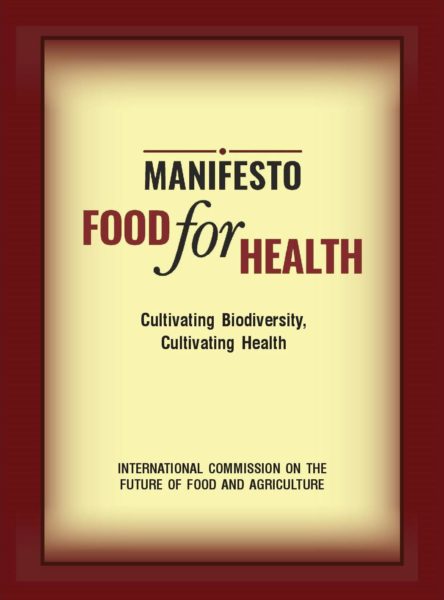
Food for Health Manifesto

By Renata Alleva, et. al. - Navdanya International, 2019

The Food for Health Manifesto aims to give voice, hope and future to all those who wish to commit themselves to act and consume in keeping with a new sustainable food for health paradigm. Additionally, this Manifesto is intended to be used as a tool to help mobilize the urgent transition to local, ecological and diversified food systems. The Manifesto asserts that health, starting with the soil, to plants, animals and humans must be the organizing principle and the aim of agriculture, commerce, science, of our lives and of international trade and aims to create convergence between consumers, producers and stakeholders for a common vision of sustainable development in line with the Millenium Development Goals.

Read the report (Link).

Pages

The Fine Print I:

Disclaimer: The views expressed on this site are not the official position of the IWW (or even the IWW’s EUC) unless otherwise indicated and do not necessarily represent the views of anyone but the author’s, nor should it be assumed that any of these authors automatically support the IWW or endorse any of its positions.

Further: the inclusion of a link on our site (other than the link to the main IWW site) does not imply endorsement by or an alliance with the IWW. These sites have been chosen by our members due to their perceived relevance to the IWW EUC and are included here for informational purposes only. If you have any suggestions or comments on any of the links included (or not included) above, please contact us.

The Fine Print II:

Fair Use Notice: The material on this site is provided for educational and informational purposes. It may contain copyrighted material the use of which has not always been specifically authorized by the copyright owner. It is being made available in an effort to advance the understanding of scientific, environmental, economic, social justice and human rights issues etc.

It is believed that this constitutes a 'fair use' of any such copyrighted material as provided for in section 107 of the US Copyright Law. In accordance with Title 17 U.S.C. Section 107, the material on this site is distributed without profit to those who have an interest in using the included information for research and educational purposes. If you wish to use copyrighted material from this site for purposes of your own that go beyond 'fair use', you must obtain permission from the copyright owner. The information on this site does not constitute legal or technical advice.

